FYI. The University of Edinburgh and Napier University have teamed up to create Litlong, a website and mobile app that lets you explore Edinburgh and its rich literary tradition. Writes the Scottish newspaper The National:
From Sir Walter Scott to Dame Muriel Spark, Ian Rankin and many others, the city of Edinburgh has inspired countless writers over the centuries.
Now students, visitors and readers around the world will be able to explore the capital’s literary highlights via a free interactive app containing a staggering 50,000 book excerpts.
The app guides users to 1,600 locations in the city made famous by writers from Robert Louis Stevenson to Irvine Welsh, then highlights what they wrote about these parts of the city.
The resource, called LitLong, has excerpts from classic and contemporary texts so users can experience the Unesco City of Literature’s attractions.
Made with “natural language processing technology informed by literary scholars’ input,” Litlong draws on digital collections from across the world, including the British Library, the National Library of Scotland, and Project Gutenberg. Access Litlonghere.
If you would like to sign up for Open Culture’s free email newsletter, please find it here. It’s a great way to see our new posts, all bundled in one email, each day.
If you would like to support the mission of Open Culture, consider making a donation to our site. It’s hard to rely 100% on ads, and your contributions will help us continue providing the best free cultural and educational materials to learners everywhere. You can contribute through PayPal, Patreon, and Venmo (@openculture). Thanks!
Neil Young has always been an artist in conversation with the world around him—a troubadour, truth-teller, town crier, and chronicler of the excesses and evils of his age. His is not always a subtle art, but is often all the better for it. When he speaks out in song, people listen. And though Canadian, he’s done as much as any American songwriter of his generation to crystalize the U.S.’s seemingly perpetual domestic and foreign conflicts.
Young often works quickly and to spec, so to speak, to the needs of the moment. (He wrote his classic After the Gold Rush album in three weeks.) 1970’s Kent State-shooting response “Ohio” is plain-spoken and spare, its most indelible line a stark newspaper headline: “Four dead in Ohio.” It’s such an effectively poignant treatment that the song still resonates deeply forty-seven years later in a recent cover by Gary Clark, Jr. Young reportedly wrote the song in fifteen minutes.
His early 70s songs “Southern Man” and “Alabama” inspired one of the most famous, and famously misunderstood, feuds in rock history when Lynyrd Skynyrd responded with “Sweet Home Alabama.” Ronnie Van Zandt claimed he wrote the song as a joke, and he and Young were always mutual admirers and friends. But Young’s deservedly angry lyrics made millions of people furious in return. (He has since looked back on “Alabama” with some regret, calling it, “not fully thought out” and saying it “ richly deserved the shot” Van Zandt took at him.)
As a longtime fan of Young’s loose, noisy, abstract psychedelic garage rock and of his tender acoustic ballads, I feel that it’s profoundly reductive to call him a protest singer. He’s had a long and incredibly varied career, which he now invites us to survey, all of it, with the release of the Neil Young Archives, a smart, chronologically-organized online catalog spanning over 50 years, 39 studio albums, records made with Buffalo Springfield and CSNY, ten unreleased albums, and a few unreleased films.
The archive, Young says, “is designed to be a living document, constantly evolving and including every new recording and film as it is made.” All of this music is currently free, until June 30th, though you’ll have to create an account. After that date, users can subscribe for an unspecified but “very modest” cost.
The breadth of Young’s songwriting interests is on full display, from gentle love songs to dusty western sagas. In each decade, however, he has never hesitated to get political when he feels the call. And when Neil Young writes a protest song, he goes all in.
He’s taken in the past few years to writing entire protest albums. There’s the 2006 Iraq War protest, Living with War, a rush release Young penned quickly and recorded in only 9 days after seeing a USA Today headline. It went on to earn a Grammy nomination.
There’s the 2015 The Monsanto Years, recorded with his recent band Promise of the Real (which includes Willie Nelson’s sons Lukas and Micah). Recorded in live sessions at a converted movie theater, the album prompted Billboard to solicit responses from the corporations Young takes to task, including not only Monsanto but also Starbucks, Chevron, and Walmart.
The Visitors, Young’s new album with Promise of the Real, released just yesterday, may not be a full protest album, but it does have some straightforward protest songs, “Already Great” (top) contains the lyrics “You’re already great / You’re the promised land / You’re the helping hand” and ends with chants of “Whose streets? Our streets!” The track “Children of Destiny,” with its earnestly patriotic video (above) recalls, in some respects, Bruce Springsteen’s anthem “The Rising,” but with unambiguously lefty messaging referencing, among other things, the brutally repressed Standing Rock protests and the need to “stand up for the land.”
Young looks around him and looks ahead even when he’s looking back, seeking out new sounds, styles, recording techniques and technologies. Fittingly, on the day of The Visitors’ release, Young announced the Archives, which provides, as he wrote in a tweet, “fans & music historians with access to all of my music and to my entire archives in one location.” True to his forward-looking vision, he has updated the sound quality of these recordings to suit the needs of a digital age.
Rather than succumbing to the trend of streaming services’ low quality mp3s—a phenomenon he has long fought—Young offers all of this music at the highest quality possible, “not compromised,” he writes on the site, “by compression schemes to save memory.” He promises “the clarity richness, transparency, and detail of the original performance.” He doesn’t promise that the hundreds of live, studio, and unreleased songs in the archive merit this careful, high-tech treatment, but if you’re a Neil Young fan, you’re already convinced most of them do, from the most earnest political anthems to the quietest ballads and most raucous free-form jams.
Twenty some years before a young engineer named Ray Tomlinson invented email, writer Kurt Vonnegut invented bee-mail in “The Drone King,” a story that didn’t see the light of day until his friend and fellow author Dan Wakefield unearthed it while going through old papers for a new Vonnegut collection.
The collection’s co-editor, Vonnegut scholar Jerome Klinkowitz, estimates that it was written in the early 50s, likely before the publication of his first novel, Player Piano, in 1952.
Several of his favorite themes crop up, too: the enthusiasm of the misguided entrepreneur, the battle of the sexes, and technology taken to absurd extremes (i.e. bees delivering scraps of messages in soda straws tied to their thoraxes).
If we’re not mistaken Indianapolis, Vonnegut’s boyhood home, now host to his Memorial Library, puts in an unbilled appearance, as well. The story’s Millennium Club bears an uncanny resemblance to that city’s Athletic Club, now defunct.
The self-pitying male haplessness Vonnegut spoofs so ably feels just as skewer-able in the post-Weinstein era, though the doddering black waiter’s dialect is rather queasy-making, especially in the mouth of the white narrator reading the story, above.
You can buy “The Drone King” as part of Kurt Vonnegut Complete Stories collection or read it free onlinehere. The Atlantic was also good enough to create an audio version. It’s excerpted up top. And it appears in its entirety right above.
Though more than a century of musical change has passed since its infamously near-riotous debut at the Théâtre des Champs-Élysées, The Rite of Spring remains a formidable challenge for any conductor. “I remember the first time I conducted the ‘Rite’ more than half a century ago,” the late Rafael Frühbeck de Burgos told The Los Angeles Times in 2013, the year of the pagan ballet and orchestral work’s centenary. “I needed two weeks to prepare it. This piece, no matter how many times you have performed it, is a monster who can eat you in one moment. There are so many places that are dangerous. This will never be a normal piece.”
Seiji Ozawa, who has recorded The Rite of Spring with the Chicago and Boston Symphony Orchestras, knows that full well. In Absolutely on Music, his book of conversations with novelist Haruki Murakami, he addresses the “fiasco” of that very first performance: “The piece itself is partly to blame, but it could well be that the orchestra wasn’t fully prepared to perform it. The piece is full of musical acrobatics. I wish I had asked Pierre Monteux about it directly. We were very close for a while.” He means the conductor of The Rite of Spring’s debut, who went on to record it in 1929, just as soon as electronic microphones made it possible to do so.
So, however, did Stravinsky himself, whose own 1929 recording with the Walther Straram Concerts Orchestra, performing again in the Théâtre des Champs-Élysées, you can hear at the top of the post. But this record, as Peter Gutmann writes at Classicalnotes.net, is “not by the composer of the Rite. No, I haven’t uncovered a fraud. It’s indeed Stravinsky who wields the baton, but in the 16 years since the premiere he had undergone a vast change of artistic personality. No longer the wild firebrand who had scandalized musical society, he had converted to neoclassicism, and that’s just the type of reading he leads here – dispassionate, manicured and reticent, with the final sacrificial dance downright labored.” You can compare Stravinsky’s first recording to Monteux’s first recording, with the Grand Orchestre Symphonique, just below.
That 1929 record hardly marked the end of Monteux’s relationship with the piece: “When Stravinsky first played him the music for The Rite, Monteux had to go and sit down in another room, concluding that he would stick to conducting Brahms,” writes WQXR’s Phil Kline. But after first conducting it, he worked with the composer on score touch-ups and became the leading proponent of The Rite as a concert work,” ultimately recording it not just once but four times. Recent generations, of course, have mostly come to know The Rite of Spring through Leopold Stokowski’s version in Disney’s Fantasia, a rendition Stravinsky called “execrable.” But if the sheer, brutal-seeming unconventionality of the piece shocked its Parisian audience in 1913, we in the 21st century, listening to the many interpretations that have come out in the past 89 years, might well find ourselves startled at how many possibilities The Rite of Spring still contains.
Based in Seoul, Colin Marshall writes and broadcasts on cities and culture. His projects include the book The Stateless City: a Walk through 21st-Century Los Angeles and the video series The City in Cinema. Follow him on Twitter at @colinmarshall or on Facebook.
Got a knack for drawing, painting, sculpting, creating handmade objects of any kind? You’re maybe more likely to monetize your skill—with an Etsy or Pinterest account, for example—than move to New York and try to make a go of it. Were such convenient means of setting up shop available in the late 40’s, when Andy Warhol studied art education and commercial art at the University of Pittsburgh and Carnegie Mellon University, respectively, one wonders whether the often bedridden, introverted artist might have found it more appealing to work from home in Pittsburgh, and stay there.
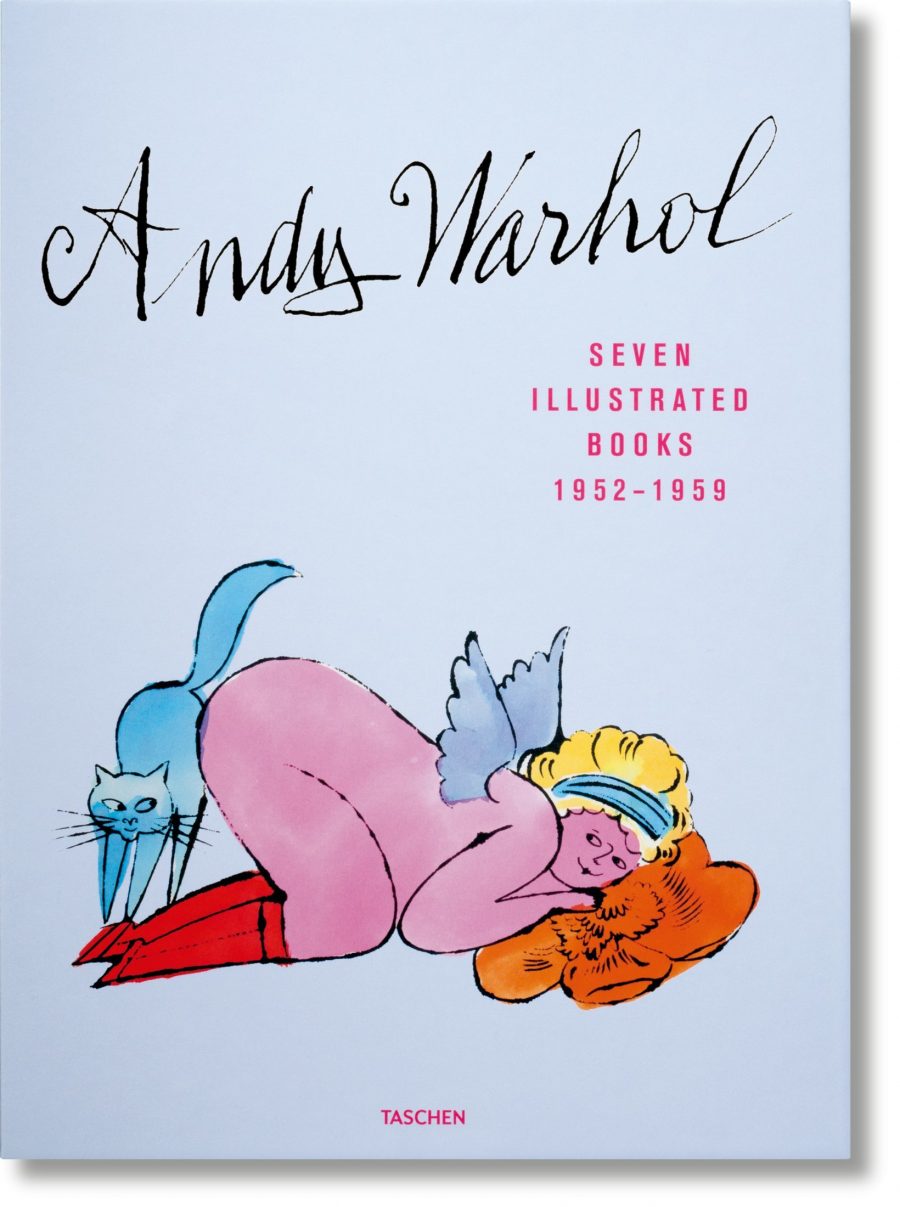
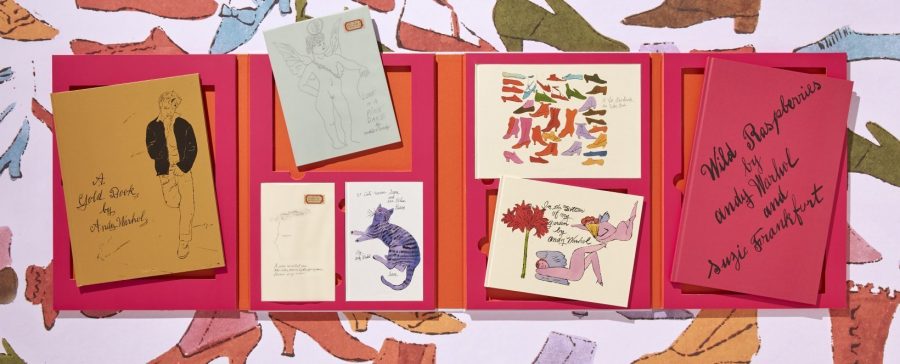
Instead, he moved to New York and became a successful commercial artist by using his illustration skills to market himself. Before he was a “bellwether of post-war and contemporary art” with those famous silkscreen paintings in the 60s; before he made those famous films, discovered (and invented the concept of) art stars, and managed the Velvet Underground, Warhol created seven handmade books “as part of his strategy to woo clients and forge friendships.” So writes Taschen books, who have collected and reprinted Warhol’s art books in a single edition. (Five of the seven have never before been republished.)
Warhol reserved the signature books for “his most valued contacts. These featured personal, unique drawings and quirky texts revealing his fondness for—among other subjects—cats, food, myths, shoes, beautiful boys, and gorgeous girls.”
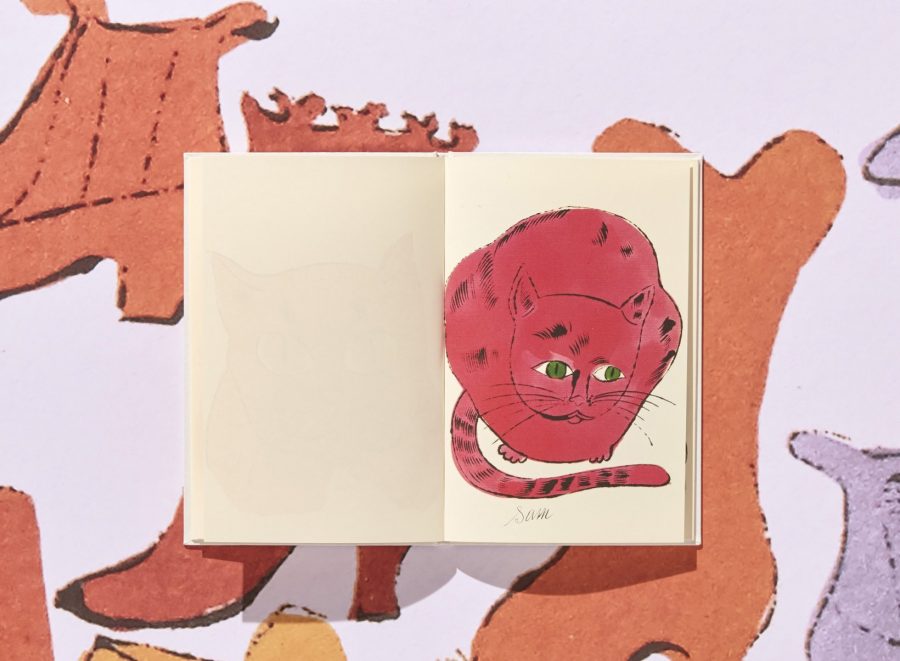
They are intimate and charming, showing a side of the artist we don’t often see—but one we do see of so many contemporary illustrators. His hand-drawn illustrations have a very 21st century feel to them in their obsession with cats, cakes, fashion, and happy, nude zaftig beauties. Created between 1952 and 59, they could have come from any number of illustration or design sites. It’s easy to imagine a current-day Warhol making a living selling work like this online.
Had he been able to do so, might he have become a different kind of artist entirely? It’s impossible to say. I can imagine a number of people for whom I might buy copies of Love Is a Pink Cake, 25 Cats Named Sam, or À la Recherche du Shoe Perdu, as a holiday gift. But Warhol didn’t make copies of these books. He saved the mass production for his later gallery work. Instead the handmade calling cards remain “little-known, much-coveted jewels in the Warhol crown,” early examples of “the artists’ off-the-wall character as well as his accomplished draftsmanship, boundless creativity, and innuendo-laced humor.”
New York, New York—there are many ways of assessing whether or not you’ve “made” it here—these days it includes an appearance on photographer Brandon Stanton’s wildly popular blog, Humans of New York, in which a spontaneous street portrait is anchored by a personal quote or longer anecdote.
Following several books and a UN-sponsored world tour to document humans in over twenty countries, the project has morphed into a 13-episode docu-series as part of Facebook’s original video content platform.
Aided by cinematographer Michael Crommett, Stanton elicits his customary blend of universal and specific truths from his interview subjects. Extending the moment into the video realm affords viewers a larger window onto the complexities of each human’s situation.
Take episode four, “Relationships,” above:
An ample, unadorned woman in late-middle age recalls being swept off her feet by a passion that still burns bright…
An NYU grad stares uncomfortably in her purple cap and gown as her divorced parents air various regrets…
A couple with mismatched views on marriage are upstaged by a spontaneous proposal unfolding a few feet away…
La Vie en Rose holds deep meaning for two couples, despite radically different locations, presentations, and orientations.
A little girl has no problem calling the shots around her special fella…
I love you, New York!!!
Other themes include Money, Time, Purpose, and Parenting.
One of the great pleasures of both series and blog is Stanton’s open-mindedness as to what constitutes New York and New Yorkers.
Some interviews take place near such tourist-friendly locales as Bethesda Fountain and the Washington Square Arch, but just as many transpire alongside noticeably Outer Borough architecture or the blasted cement heaths aproning its less sought after public schools.
Below, Stanton explains his goal when conducting interviews and demonstrates how a non-threatening approach can soften strangers to the point of candor.
Earlier this week we featured the Foreign Service Institute’s list of languagesranked by how long they take to learn. Now that you have a sense of the relative life investment required to learn the tongue or tongues of your choice, how about a few words of advice on how to start? Or perhaps we’d do better, before the how, to consider the why. “A lot of us start with the wrong motivation to learn a language,” says Benny Lewis in his TED Talk “Hacking Language Learning.” Those motivations include “just to pass an exam, to improve our career prospects, or in my case for superficial reasons, to impress people.”
Real language learning, on the other hand, comes from passion for a language, for “the literature and the movies and being able to read in the language, and of course, to use it with people.” But Lewis, who now brands himself as “The Irish Polyglot,” says he got a late start on language-learning, convinced up until his early twenties that he simply couldn’t do it.
He cites five flimsy defenses he once used, and so many others still do, for their monolingualism: lack of a “language gene or talent,” being “too old to learn a second language,” not having the resources to “travel to the country right now,” and not wanting to “frustrate native speakers” by using the language before attaining fluency.
None of these, however, seem to have occurred to Tim Doner, who went viral at sixteen years with a video wherein he spoke twenty languages that he taught himself. He discusses that experience, and the fascinations and techniques that got him to that point and now well past it, in his talk “Breaking the Language Barrier.” At first put off by the drudgery of French classes in school, he only began to grasp the nature of language itself, as a kind of system breakable into masterable rules, when he began studying Latin.
Wanting to understand more about the conflict between Israel and Palestine, Doner decided to find his way into the subject through Hebrew, and specifically through rap music recorded in it. Using language study as a means of dealing with his insomnia, he discovered techniques to expand into other linguistic realms, such as the method of loci (i.e., remembering words by associating them with places), learning vocabulary in batches of similar sounds rather than similar meanings, and seeking out the foreign-language learners and speakers all around him — a relatively easy task for a New Yorker like Doner, but applicable nearly everywhere.
In “How to Learn Any Language in Six Months,” Chris Lonsdale delivers, and with a passion bordering on fury, a set of useful principles like “Focus on language content that is relevant to you,” “Use your new language as a tool to communicate from day one,” “When you first understand the message, you will unconsciously acquire the language.” This resonates with the advice offered by the much more laid-back Sid Efromovich in “Five Techniques to Speak any Language,” including an encouragement to “get things wrong and make mistakes,” a suggestion to “find a stickler” to help you identify and correct those mistakes, and a strategy for overcoming the pronunciation-hindering limitations of the “database” of sounds long established in your brain by your native language.
Your native language, in fact, will play the role of your most aggressive and persistent enemy in the struggle to learn a foreign one — especially if your native language is as widely used, to one degree or another, as English. And so Scott Young and Vat Jaiswal, in their talk “One Simple Method to Learn Any Language,” propose an absolute “no-English rule.” You can get results using it with a conversation partner in your homeland, while traveling for the purpose of language-learning, and especially if you’ve relocated to another country permanently.
With the rule in place, you’ll avoid the sorry fate of one fellow Young and Jaiswal know, “an American businessman who went to Korea, married a Korean women, had children in Korea, lived in Korea for twenty years, and still couldn’t have a decent conversation in Korean.” As an American living in Korea myself, I had to laugh at that: I could name at least three dozen long-term Western expatriates I’ve met in that very same situation. In my case, I spent a few years developing self-study habits for Korean and a couple other languages while still in America, and so didn’t have to implement them on the fly after moving here.
Even so, I still must constantly refine my language-learning strategy, incorporating routines like those laid out by English polyglot Matthew Youlden in “How to Speak any Language Easily”: seeking out exploitable similarities between the languages I know and the ones I want to know better, say, or finding sources of constant “passive” linguistic input. Personally, I like to listen to podcasts not just in foreign languages, but that teach one foreign language through another. And just as English-learners get good listening practice out of TED Talks like these, I seek them out in other languages: Korean, Japanese, Spanish, or wherever good old linguistic passion leads me next.
Based in Seoul, Colin Marshall writes and broadcasts on cities and culture. His projects include the book The Stateless City: a Walk through 21st-Century Los Angeles and the video series The City in Cinema. Follow him on Twitter at @colinmarshall or on Facebook.
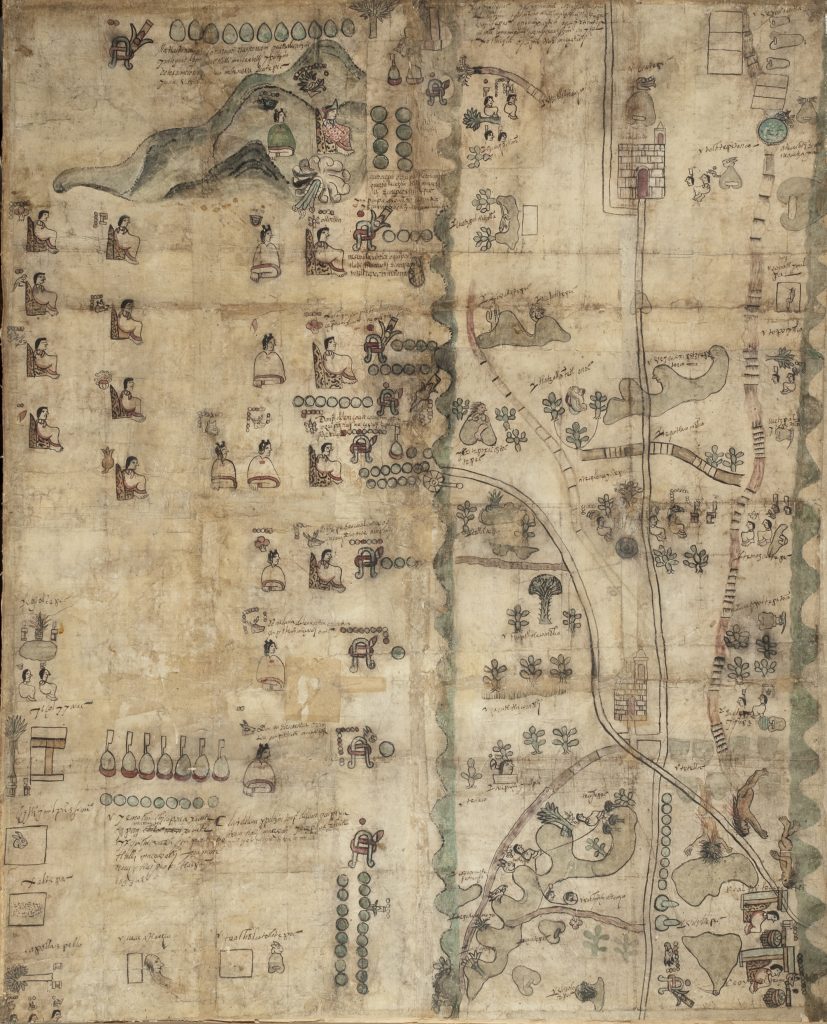
To paraphrase Donald Rumsfeld, there are known knowns in the art world, and there are unknown knowns. The Codex Quetzalecatzin, a rare colored Mesoamerican manuscript, recently went from a unknown known (a French collector owned it, and before them William Randolph Hearst, and many others, for several centuries) to a known known (the French collector donated it to the Library of Congress).
Better still, the Library has scanned the illustrated document–essentially a map of Mexico City and Puebla, drawn up for both Spanish colonizers and indigenous people to lay claim to the land–in super hi-res for the public and scholars worldwide to pore over. It dates from between 1570 and 1595.
According to John Hessler of the Library’s Worlds Revealed blog, the map depicts the land owned by the de Leon family.
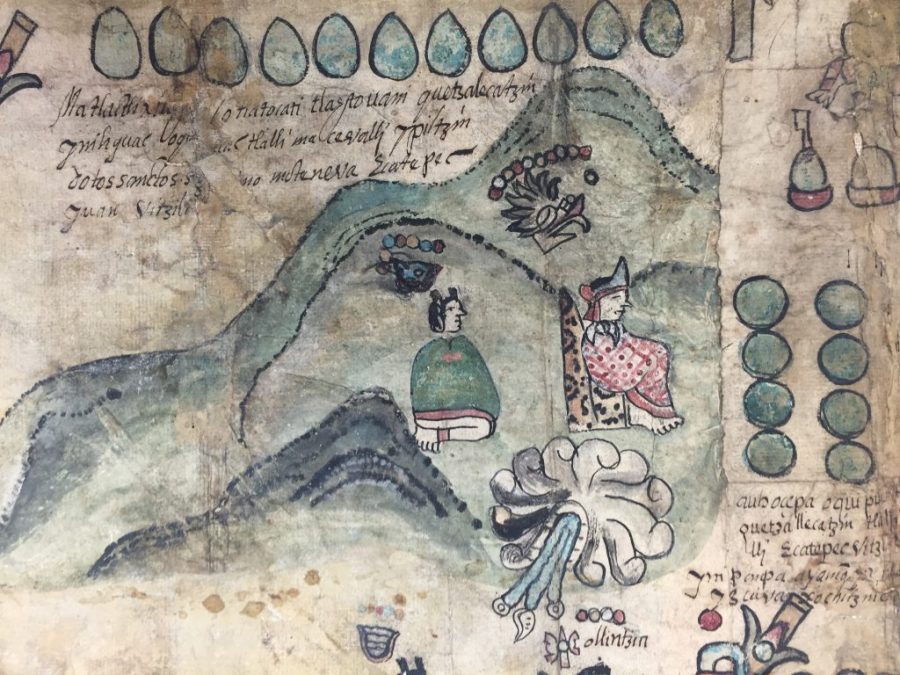
As is typical for an Aztec, or Nahuatl, codex of this early date, it relates the extent of land ownership and properties of a family line known as “de Leon,” most of the members of which are depicted on the manuscript. With Nahuatl stylized graphics and hieroglyphs, it illustrates the family’s genealogy and their descent from Lord-11 Quetzalecatzin, who in 1480, was the major political leader of the region. It is from him the Codex derives one of its many names.
The map is one of 450 surviving pictorial manuscripts of the Mesoamerican period, and contains natural pigments such as Maya blue and cochineal red (made from insects).
If it wasn’t so tied in to bloody Spanish colonialism, you could say the Codex looks like a video game map, a la Legend of Zelda. But instead it shows a region in transition, between the old order and a new world populated by Catholic churches, and is all the more fascinating.
Ted Mills is a freelance writer on the arts who currently hosts the artist interview-based FunkZone Podcast and is the producer of KCRW’s Curious Coast. You can also follow him on Twitter at @tedmills, read his other arts writing at tedmills.com and/or watch his films here.
From the 1950s through the 1970s, Brutalist architecture flourished in North America and Europe (both West and East) and many countries beyond. Made out of raw concrete, Brutalist buildings–usually municipal buildings, campuses, and housing projects–have an almost unfinished look to them. The first and most famous example of this architectural style is the Unité d’habitation, the housing complex built by Le Corbusier in Marseille between 1947 and 1952.
Though Brutalism has since fallen out of fashion, it might be poised for a comeback, especially if this new espresso machine is any indication. After a successful Kickstarter campaign this summer (raising $145k), the Norwegian-Californian design firm Montaag Products is putting the finishing touches on a brutalist espresso maker.
They wanted to design a machine made out of “completely honest materials.” Hence the raw concrete. Inside the espresso maker, however, they’ve used materials typically found inside $1300 Italian machines, according to Food & Wine. You can pre-order the machine at Indiegogo for $799. It should be ready in March (or thereabouts).
If you would like to sign up for Open Culture’s free email newsletter, please find it here. It’s a great way to see our new posts, all bundled in one email, each day.
If you would like to support the mission of Open Culture, consider making a donation to our site. It’s hard to rely 100% on ads, and your contributions will help us continue providing the best free cultural and educational materials to learners everywhere. You can contribute through PayPal, Patreon, and Venmo (@openculture). Thanks!
I left much of my reading of C.S. Lewis behind, but one quote of his will stay with me for life: “It is a good rule,” he advised, “after reading a new book, never to allow yourself another new one till you have read an old one in between.” I believe his advice is invaluable for maintaining a balanced perspective and achieving a healthy critical distance from the tumult of the present.
Reading works of ancient writers shows us how alike the mores and the crises of the ancients were to ours, and how vastly different. Those similarities and differences can help us evaluate certain current orthodoxies with greater wisdom. And that’s not to mention countless historians, novelists, poets, playwrights, critics, and philosophers from the past few hundred years, or several decades, who have much to teach us about where our modern ideas came from and how much they’ve deviated from their precedents.
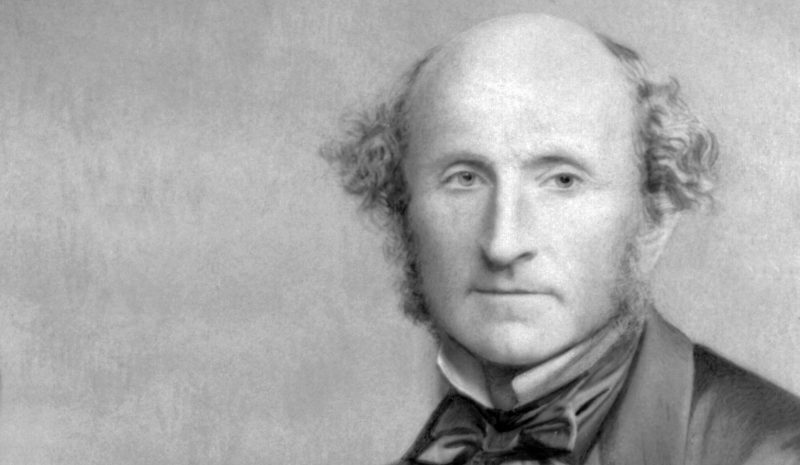
For example, 19th century liberal political philosopher John Stuart Mill is now widely admired by conservative and libertarian writers and academics as a proponent of individual economic liberty, the free market, and a flat tax. And they are not wrong, he was all of that, in his early thought. (Mill later supported several socialist causes.) Many of his other political views might be denounced by quite a few as the excesses of campus activist leftism. Adam Gopnik summarizes the Victorian philosopher’s generous slate of positions:
Mill believed in complete equality between the sexes, not just women’s colleges and, someday, female suffrage but absolute parity; he believed in equal process for all, the end of slavery, votes for the working classes, and the right to birth control (he was arrested at seventeen for helping poor people obtain contraception), and in the common intelligence of all the races of mankind. He led the fight for due process for detainees accused of terrorism; argued for teaching Arabic, in order not to alienate potential native radicals.…
Can people to Mill’s left on economics learn something from him? Sure. Can people to his right on nearly everything else learn a thing or two? It’s worth a shot. Mill championed engaging those with whom we disagree (he greatly admired Thomas Carlyle; the two couldn’t have been more different in many respects). He also argued vigorously for “’liberty of the press’ as one of the securities against corrupt or tyrannical government.” Before nodding your head in agreement—read Mill’s arguments. He might not agree with you.
And what did John Stuart Mill read? In Chapter One of his autobiography, Mill gives a detailed account of his classical education from ages 3–7, during which time he read “the whole of Herodotus,” “the first six dialogues of Plato,” “part of Lucian,” all in their original Greek, of course, as any young gentleman of the time would. Mill’s father, Scottish philosopher James Mill, intentionally set out to create a genius with this advanced course of study.
Lapham’s Quarterlyexcerpted the passage, and turned the many books Mill mentions into a list called “Early Education.” You can find all of the titles below, including the ancients mentioned and over two dozen “modern” works (that is, since the time of the Renaissance) Mill read as a child in English, including Cervantes’ mammoth Don Quixote. Most of us will have to make do with translations of the Greek texts, but take heart, even Mill “learnt no Latin until my eighth year.” The list shows not only Mill’s daunting precocity, but also how essential classical texts were to well-educated Europeans of any age.
It also highlights what kinds of texts were valued by Mill’s society, or at least by his father. All of the authors but one are men, all of them are Europeans, most of the works are histories and biographies. Given Mill’s broad views, his own recommended reading list might look different. Nonetheless, Mill’s account of his extraordinary early years gives us a fascinating look at the relative breadth of a liberal education in 19th century Britain. What ancient authors did you read as a young student? Or do you read now, between books, essays, articles, or Twitterstorms du jour?
In Greek
Aesop–The Fables
Xenophon–The Anabasis, Memorials of Socrates, The Cryopadeia
Herodotus–The Histories
Diogenes Laertius–some of The Lives of Philosophers
Lucian–various works
Isocrates–parts of To Demonicus and To Nicocles
William Robertson–The History of America, The History of the Reign of the Emperor Charles V, The History of Scotland During the Reigns of Queen Mary and King James VI
David Hume–The History of England
Edward Gibbon–The History of the Decline and Fall of the Roman Empire
Robert Watson–The History of the Reign of Philip II, King of Spain
Robert Watson and William Thompson–The History of the Reign of Philip III, King of Spain
Nathaniel Hooke–The Roman History, from the Building of Rome to the Ruin of the Commonwealth
Charles Rollin–The Ancient History of the Egyptians, Carthaginians, Assyrians, Babylonians, Medes and Persians, Macedonians and Grecians
Plutarch–Parallel Lives
Gilbert Burnet--Bishop Burnet’s History of His Own Time
The Annual Register of World Events, A Review of the Year (1758–1788)
John Millar–An Historical View of the English Government
Johann Lorenz von Mosheim–An Ecclesiastical History
Thomas McCrie–The Life of John Knox
William Sewell–The History of the Rise, Increase, and Progress of the Christian People Called Quakers
Thomas Wight and John Rutty–A History of the Rise and Progress of People Called Quakers in Ireland
Philip Beaver–African Memoranda
David Collins–An Account of the English Colony in New South Wales
George Anson–A Voyage Round the World
Daniel Defoe–Robinson Crusoe
The Arabian Nights and Arabian Tales
Miguel de Cervantes–Don Quixote
Maria Edgeworth–Popular Tales
Henry Brooke–The Fool of Quality; or the History of Henry, Earl of Moreland
Americans have long considered New York City, at least during its relatively inexpensive eras or in its relatively expensive areas, a haven for every type of artist and members of all subcultures. The density of its population, by American standards, also presents its denizens with the opportunity to cross between one artistic or subcultural realm and another with ease — or with geographical ease, anyway. Few New York figures crossed as many such boundaries as creatively in the early 20th century as a Cedar Rapids-born writer and photographer named Carl van Vechten.
“When Van Vechten first arrived in New York, in 1906, there were few signs that he would ever attempt to appoint himself bard of Harlem,” writes Kelefa Sanneh in a New Yorker piece on Van Vechten’s life. “He was a self-consciously sophisticated exile from the Midwest, and he was quickly hired by the Times as a music and dance critic.” In addition, to his criticism, “he also published a series of mischievous novels that were notable mainly, one critic observed, for their ‘annoying mannerisms.’ ” (The critic? Probably the author himself.) And the longer Van Vechten lived in New York, “the more interested he became in the sights and sounds of Harlem, where raucous and inventive night clubs were thriving under Prohibition.”
The white Van Vechten wrote a novel about black life in Harlem, insisting on a title that I doubt I can even type here. It expressed what Sanneh calls “his conviction that Negro culture was the essence of America,” which went with “his simultaneous fascination with the avant-garde and the broadly popular; and his string of sexual relationships with men, which were an open secret during his life. Van Vechten’s tastes were varied: his bibliography includes an erudite cultural history of the house cat, and in his later decades he became an accomplished portrait photographer.” Black, white, or otherwise, nearly every major figure in the American culture of the day seems to have sat for his camera: actors, writers, musicians, intellectuals, architects, magnates, and many other types besides.
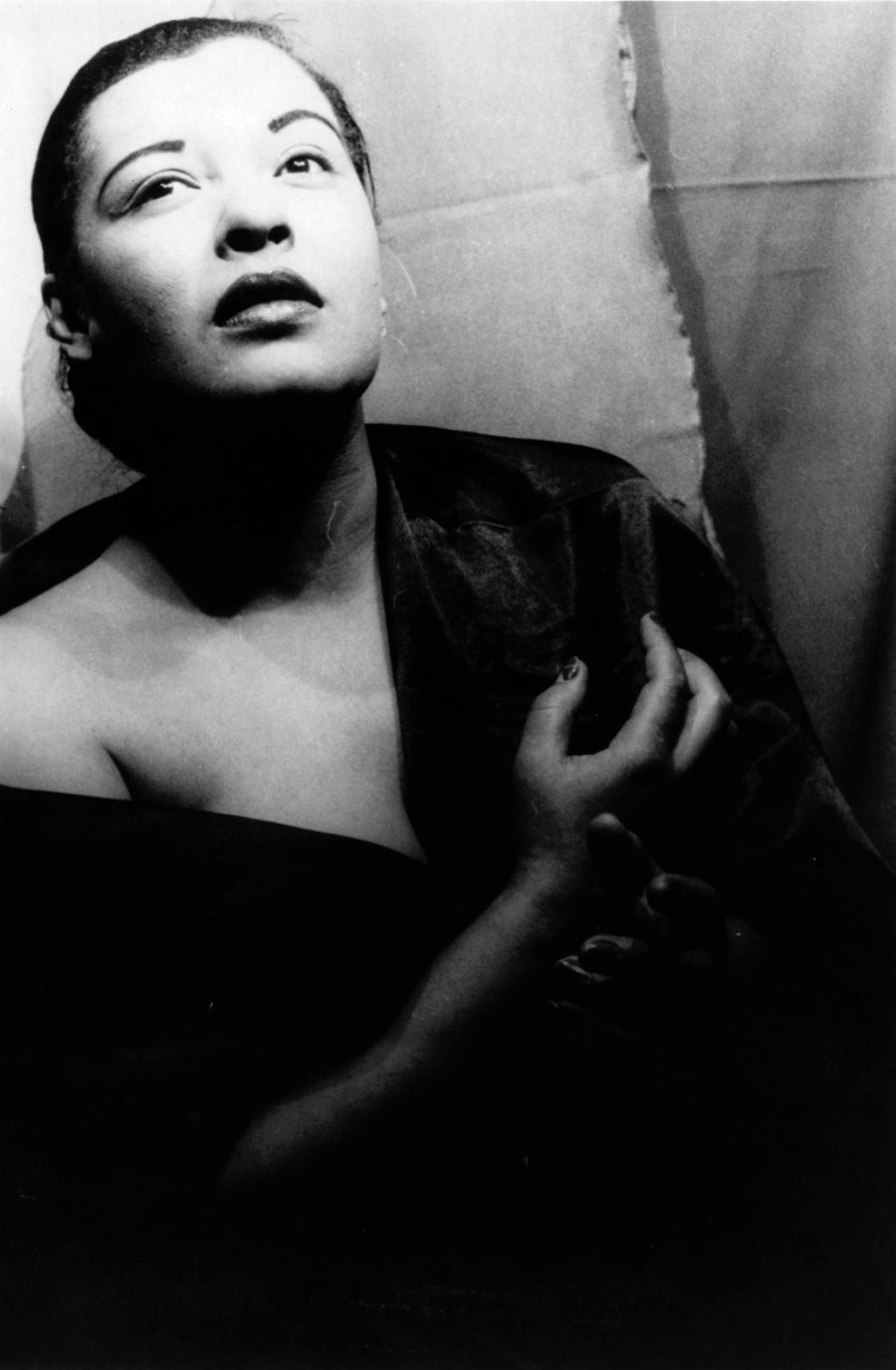
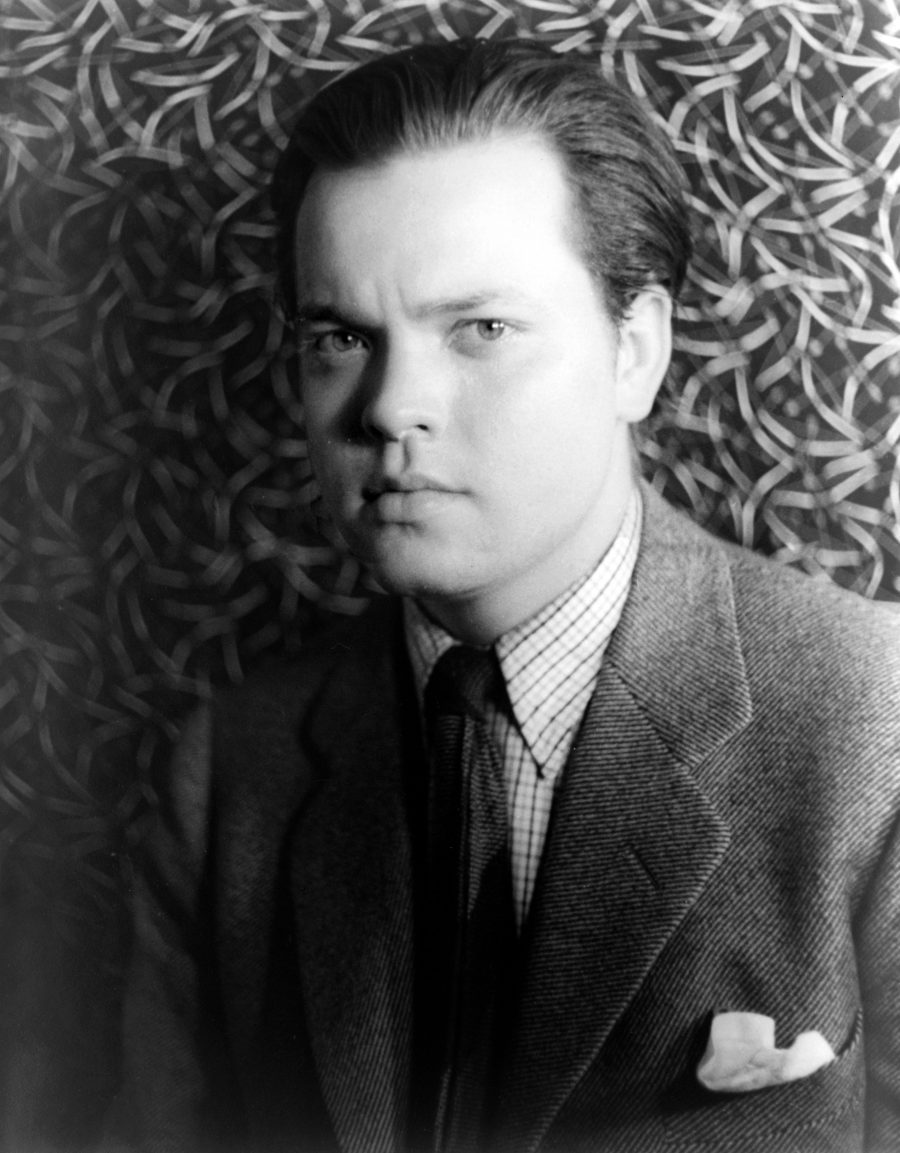
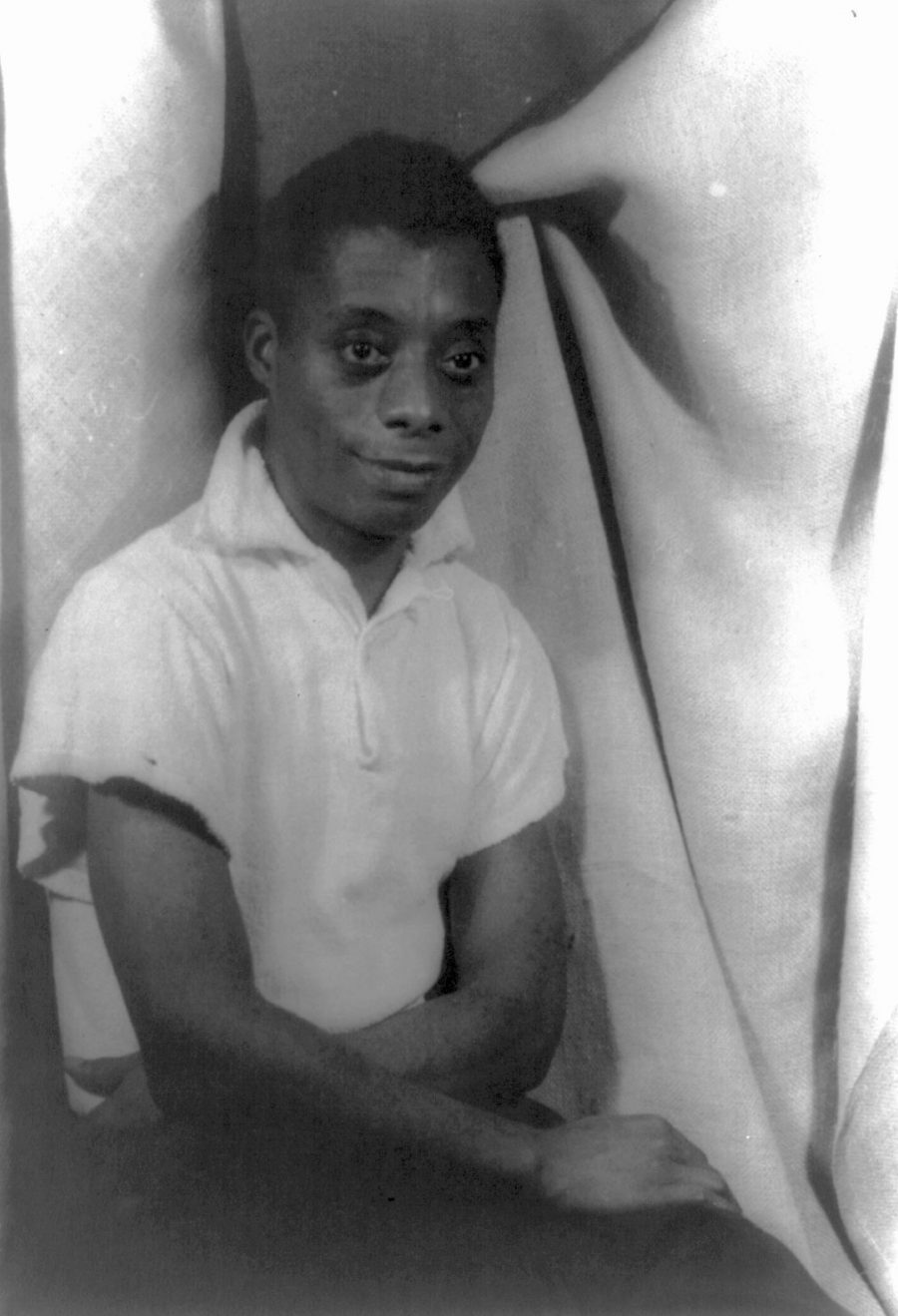
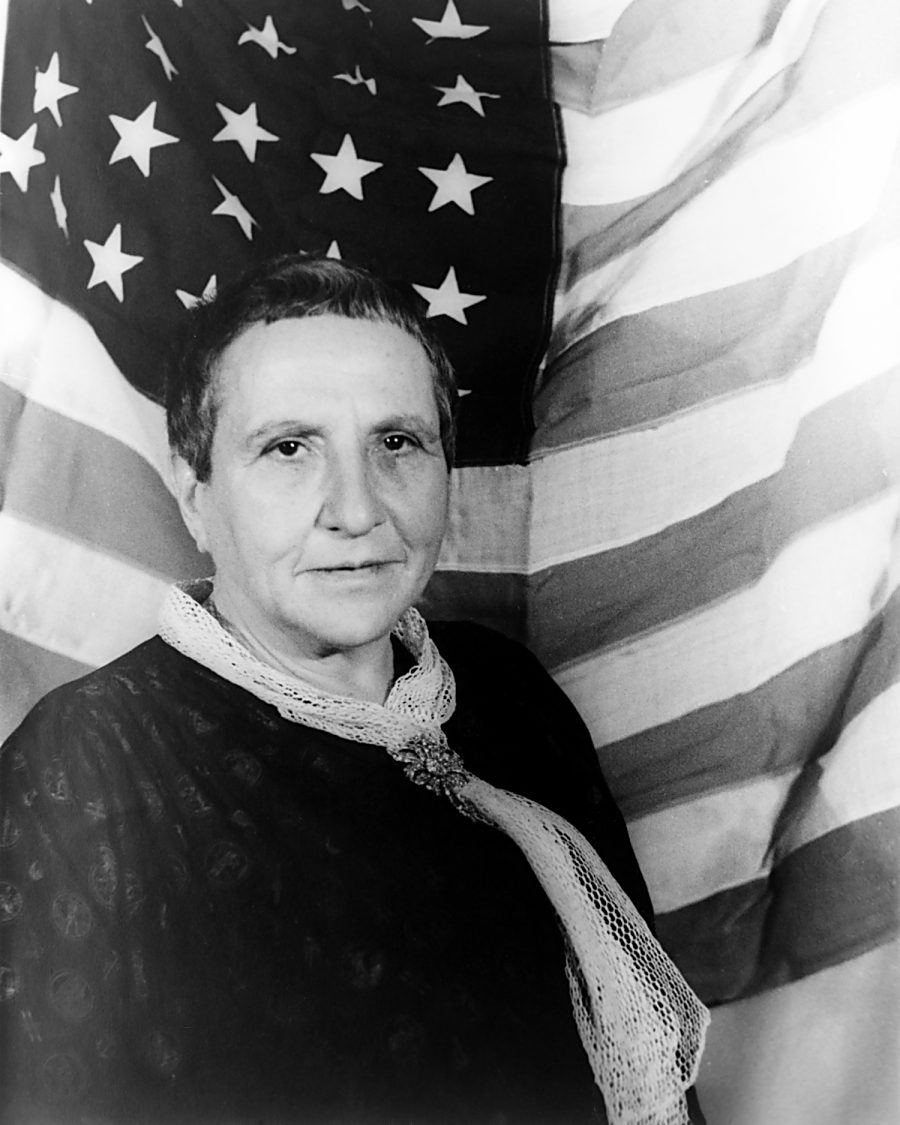
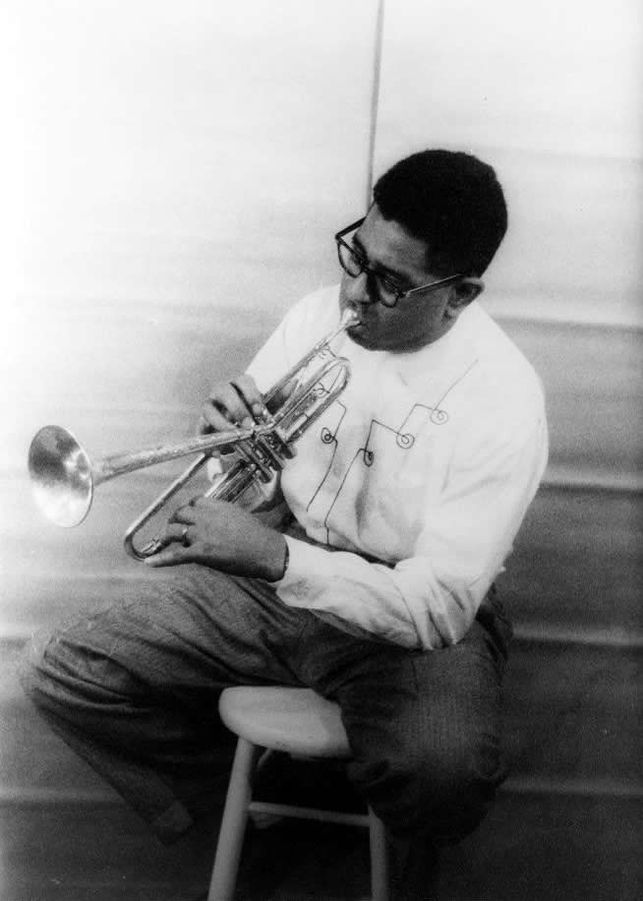
Some of the subjects of Van Vechten’s over 9,000 portraits, all browsable online at Yale’s Beinecke Rare Book and Manuscript Library, were his friends: Gertrude Stein, and Langston Hughes, for instance, both of whom expressed great enthusiasm for Van Vechten’s writing on black culture. Others created that black culture, now known as the Harlem Renaissance: Dizzy Gillespie, Billie Holliday, James Baldwin. Others made up the culture of global celebrity, then only in its infancy: Orson Welles, Lotte Leyna, Laurence Olivier.
They, and more so Van Vechten himself, knew that to become an icon in the 20th century, you needed to do much more than excel in the human realm: you had to transcend it, ascending into that of the image. If you sufficiently fascinated Van Vechten, it seems, he was only too glad to help you on your way there. See thousands of his portraits at this Yale website.
Portraits in order of appearance on this page include: Billie Holliday, Orson Welles, James Baldwin, Gertrude Stein, and Dizzy Gillespie. All come courtesy of the Van Vechten Collection at Library of Congress.
Based in Seoul, Colin Marshall writes and broadcasts on cities and culture. His projects include the book The Stateless City: a Walk through 21st-Century Los Angeles and the video series The City in Cinema. Follow him on Twitter at @colinmarshall or on Facebook.
We're hoping to rely on loyal readers, rather than erratic ads. Please click the Donate button and support Open Culture. You can use Paypal, Venmo, Patreon, even Crypto! We thank you!
Open Culture scours the web for the best educational media. We find the free courses and audio books you need, the language lessons & educational videos you want, and plenty of enlightenment in between.