Captivating Collaboration: Artist Hubert Duprat Uses Insects to Create Golden Sculptures

Once upon a time, the lar­vae of the Cad­dis Fly were con­sid­ered pret­ty unas­sum­ing crea­tures, fresh­wa­ter dwellers whose appeal was lim­it­ed to trout and trout fish­er­men. That is until French artist Hubert Duprat came along with an aes­thet­ic offer they could­n’t refuse.

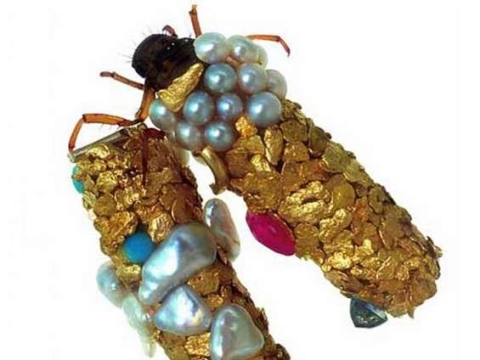
Left to their own devices, Cad­dis lar­vae con­struct pro­tec­tive cas­es from nat­ur­al mate­ri­als found in their habi­tat, patch­ing small pieces togeth­er with silken thread. A chance encounter with some prospec­tors at a riv­er in south­west­ern France led Duprat to won­der how the Cad­dis lar­vae might adapt if gold fig­ured more promi­nent­ly among their build­ing sup­plies. Thus began The Won­der­ful Cad­dis Worm: Sculp­tur­al Work in Col­lab­o­ra­tion with Tri­chopteras, an ongo­ing artis­tic exper­i­ment in a care­ful­ly con­trolled, sci­en­tif­ic set­ting.

Basi­cal­ly these birds are spin­ning their own gild­ed cages with what­ev­er lux­u­ry mate­ri­als Duprat intro­duces into their arti­fi­cial envi­ron­ment. The result­ing jew­el encrust­ed cre­ations would not be out of place in a Madi­son Avenue win­dow, though it’s pos­si­ble a near­sight­ed dowa­ger might mis­take the tiny jew­el­er for a cock­roach.

hubert-duprat

Whether or not one would opt to wear one of these blinged-out insect cas­ings were mon­ey no object, one has to admit their engi­neer­ing is a most unusu­al feat. It would make for one humdinger of a Sci­ence Fair project if only Duprat had­n’t patent­ed the tech­nique in 1983.

via Laugh­ing Squid

Relat­ed Con­tent:

Pi in the Sky: The World’s Largest Ephemer­al Art Instal­la­tion over Beau­ti­ful San Fran­cis­co

Artists Turn Weath­er Data into Swirling “Liv­ing Por­traits” of Con­ti­nen­tal U.S. Wind Pat­terns

Ayun Hal­l­i­day is slow­ly fig­ur­ing out how a writer home­schools a graph­ic nov­el enthu­si­ast in sub­jects of a sci­en­tif­ic nature. Fol­low her @AyunHalliday

Eric Clapton Tries Out Guitars at Home and Talks About the Beatles, Cream, and His Musical Roots

“Brown­ie” Fend­er Stra­to­cast­er:

Eric Clap­ton recent­ly allowed a cam­era crew into his Lon­don home for an inti­mate talk. The pur­pose was to demon­strate a new series of high-priced, lim­it­ed-edi­tion repro­duc­tions of some of his most famous gui­tars, which will soon go on sale to ben­e­fit his Cross­roads Cen­tre in Antigua. But as Rolling Stone not­ed in a recent online piece, the con­ver­sa­tion went much deep­er.

In the video above, Clap­ton tries out a repli­ca of an ear­ly sun­burst Fend­er Stra­to­cast­er, nick­named “Brown­ie,” that he pur­chased in 1967 and played with Derek and the Domi­noes. The orig­i­nal gui­tar, which had a heav­i­ly worn maple neck that Clap­ton attached to a Fend­er Tele­cast­er body dur­ing his days with Blind Faith, was sold at auc­tion in 1999 for $497,500. The repli­cas were made by the Fend­er Cus­tom Shop and will sell for $15,000. In the video, Clap­ton plugs the gui­tar into a 1950s-era Fend­er “Tweed Twin” ampli­fi­er and tries it out, play­ing a few blues lines and rem­i­nisc­ing about his ear­ly Stra­to­cast­er-play­ing influ­ences: Bud­dy Hol­ly, Bud­dy Guy and Jimi Hen­drix.

Mar­tin 000–28 and 000–45:

Above, Clap­ton tries out a pair of acoustic gui­tars made in his hon­or by Mar­tin & Co. He talks about his ear­ly infat­u­a­tion with Mar­tin gui­tars, which he devel­oped after hear­ing oth­er musi­cians talk about them and after see­ing footage of Big Bill Broonzy play­ing the 000–28 mod­el. Unlike the oth­er “Cross­roads Col­lec­tion” gui­tars, the Mar­tins were appar­ent­ly not mod­eled after indi­vid­ual gui­tars Clap­ton once played, but were instead hand­made to his spec­i­fi­ca­tions. The Cross­roads mod­el 000–28 will sell for $6,000 and the 000–48 will be offered in two edi­tions made with dif­fer­ent mate­ri­als, one for $13,000 and the oth­er for $50,000.

“Lucy” Gib­son Les Paul:

Per­haps the most inter­est­ing of the three videos involves a gui­tar Clap­ton is not usu­al­ly asso­ci­at­ed with: a Gib­son Les Paul. The gui­tar is a repro­duc­tion of a heav­i­ly worn 1957 cher­ry-red gui­tar Clap­ton bought in about 1967, when he was tour­ing Amer­i­ca with Cream. He gave the gui­tar to George Har­ri­son of the Bea­t­les, who nick­named it “Lucy” and played it on the White Album and Let it Be. When Clap­ton accept­ed Har­rison’s request to play lead gui­tar on the record­ing of “While My Gui­tar Gen­tly Weeps,” he played it on Lucy. In the video, Clap­ton rem­i­nisces about the Bea­t­les ses­sion and talks about the ampli­fi­er he used dur­ing his days with John May­al­l’s Blues­break­ers and the ones he used after­wards. Har­ri­son briefly loaned the orig­i­nal Lucy Les Paul back to Clap­ton, who played it dur­ing his famous Rain­bow Con­cert in 1973, but the gui­tar still belongs to the Har­ri­son estate. The Gib­son-made repli­cas will sell for $15,000 each.

via Rolling Stone

Relat­ed Con­tent:

A Young Eric Clap­ton Demon­strates the Ele­ments of His Sound

Eric Clap­ton and Steve Win­wood Join Forces at the His­toric Blind Faith Con­cert in Hyde Park, 1969

New Stamp Collection Celebrates Six Novels by Jane Austen

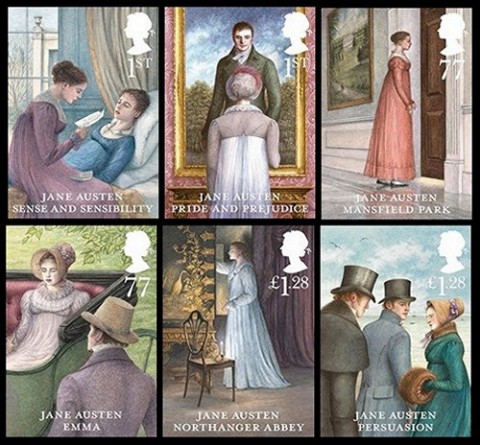
jane-austen-stampsOn Jan­u­ary 28, 2013, lit­er­a­ture fans cel­e­brat­ed the 200th anniver­sary of Jane Austen’s beloved nov­el, Pride and Prej­u­dice.  The cel­e­bra­tion has appar­ent­ly spilled into Feb­ru­ary now that the Roy­al Mail has announced the release of a stamp col­lec­tion com­mem­o­rat­ing Jane Austen’s six nov­els: Sense and Sen­si­bil­i­ty, Mans­field Park, Emma, Northang­er Abbey, Per­sua­sion, and Pride and Prej­u­dice.

Said a spokesman for the postal sys­tem: “When you think of great British authors, Jane Austen inevitably comes to mind. Her nov­els have con­tributed immea­sur­ably to British cul­ture over the last two cen­turies.”

Angela Bar­rett illus­trat­ed the new set of stamps, which can be pur­chased online by UK res­i­dents for £5.30 includ­ing VAT. A pre­vi­ous stamp set came out in 1975, to mark the bicen­ten­ni­al of Jane Austen’s birth.

Note: Austen’s six nov­els can be down­loaded from our Free Audio Books and Free eBooks col­lec­tions, along with many oth­er great works.

via Austen Prose

Relat­ed Con­tent:

Read Jane Austen’s Man­u­scripts Online

Jane Austen’s Fight Club, Com­ing to a The­atre Near You

by | Permalink | Make a Comment ( 3 ) |

Discover Ansel Adams’ 226 Photos of U.S. National Parks (and Another Side of the Legendary Photographer)

Ansel Adams

Amer­i­cans ven­er­ate the work of Ansel Adams but tend to get over­ex­posed to the usu­al Adams prints in den­tists’ wait­ing rooms, cor­po­rate offices, and oth­er anes­thet­ic spaces. At least that’s been my expe­ri­ence. It’s easy to for­get how much Adams’ work vital­ly defined the 20th cen­tu­ry per­cep­tion of the Amer­i­can West, as much as Fred­er­ic Rem­ing­ton’s defined that of the 19th.

Wednes­day, in hon­or of what would have been Adams 111th birth­day, we post­ed a fas­ci­nat­ing 1958 doc­u­men­tary to rein­tro­duce you to the Adams you may have thought you knew—“musician, moun­taineer, writer, teacher, pho­tog­ra­ph­er.” In the midst of redis­cov­er­ing Adams our­selves, we stum­bled upon an incred­i­ble trove of images at the Nation­al Archives—226, to be exact—taken at the behest of the Nation­al Park Ser­vice in 1941.

The pur­pose was to cre­ate a pho­to mur­al for the Depart­ment of the Inte­ri­or Build­ing in Wash­ing­ton, DC with the theme “nature as exem­pli­fied and pro­tect­ed in the U.S. Nation­al Parks.” While WWII put a stop to the project, the pho­to archive Adams left behind still makes an excel­lent case for the fed­er­al preser­va­tion of these land­scapes (or what’s left of them today). This is the kind of pro­pa­gan­da I can get behind.

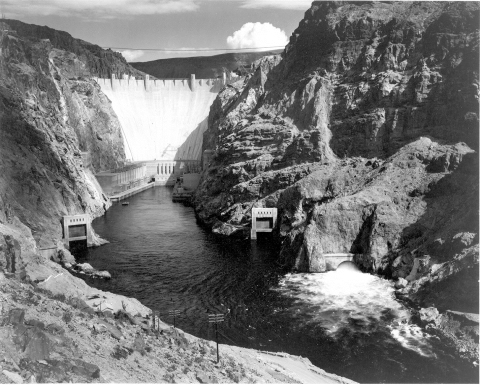
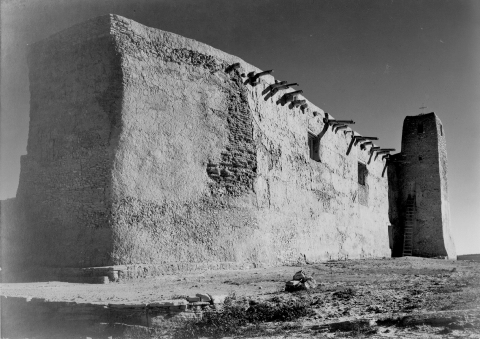
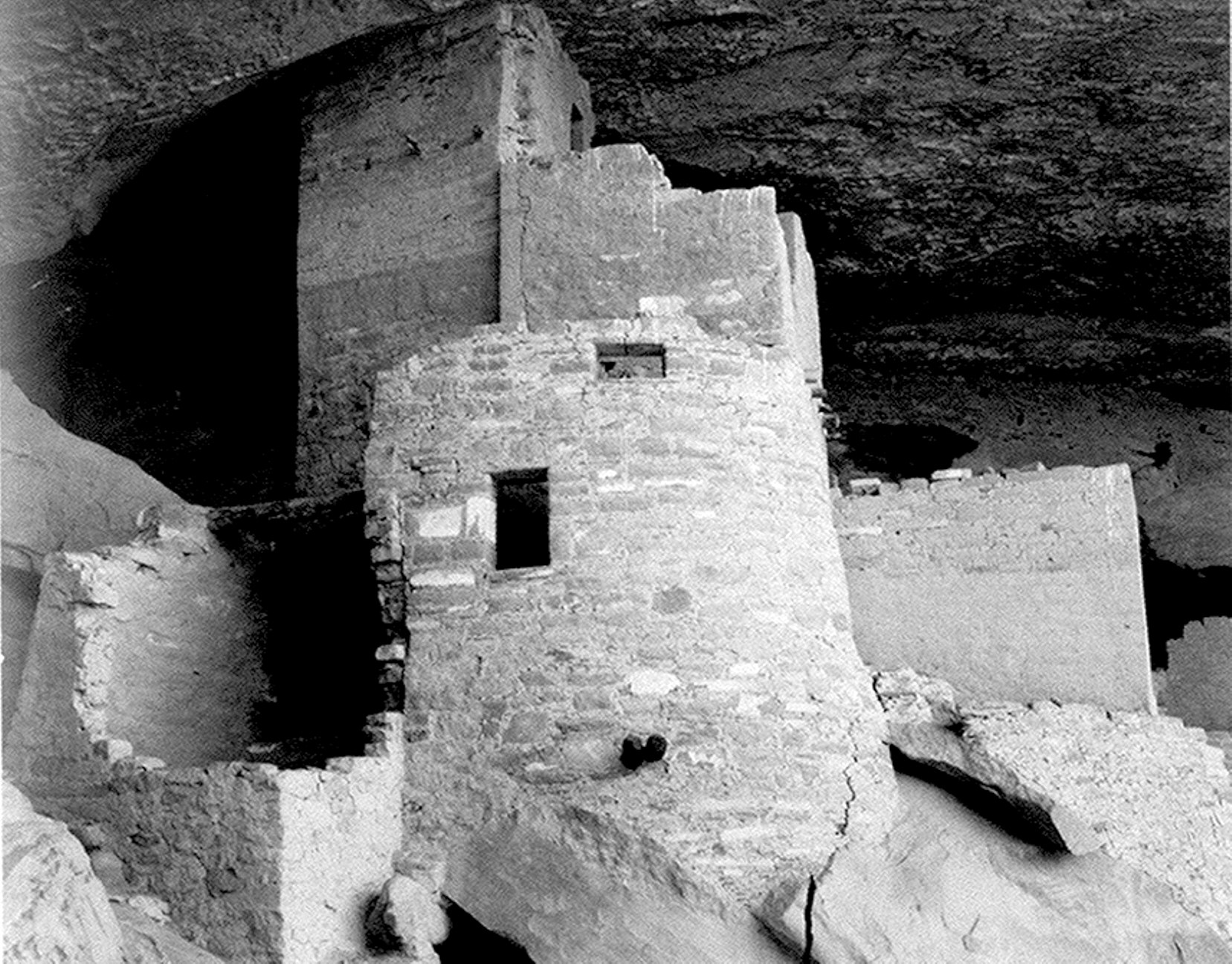
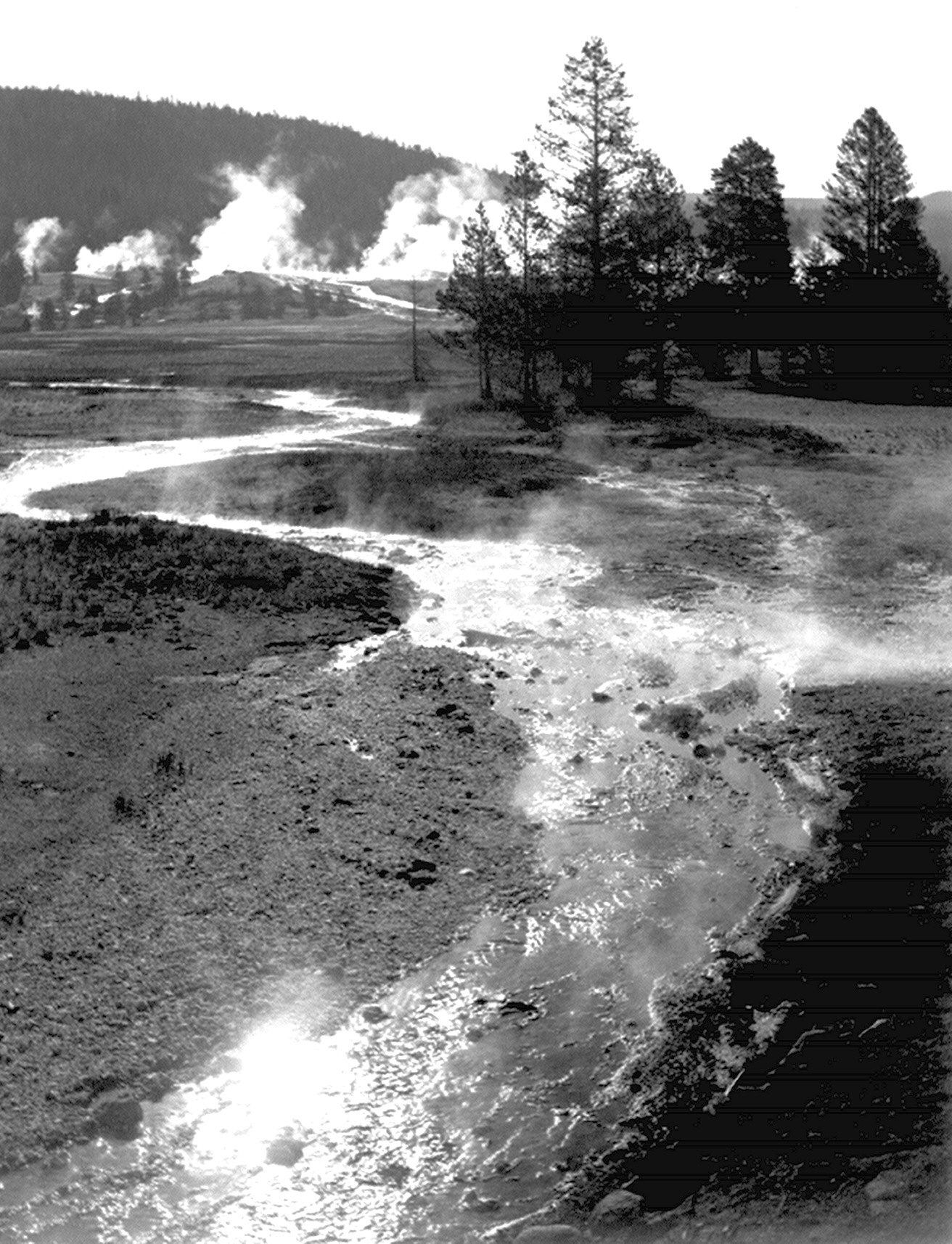
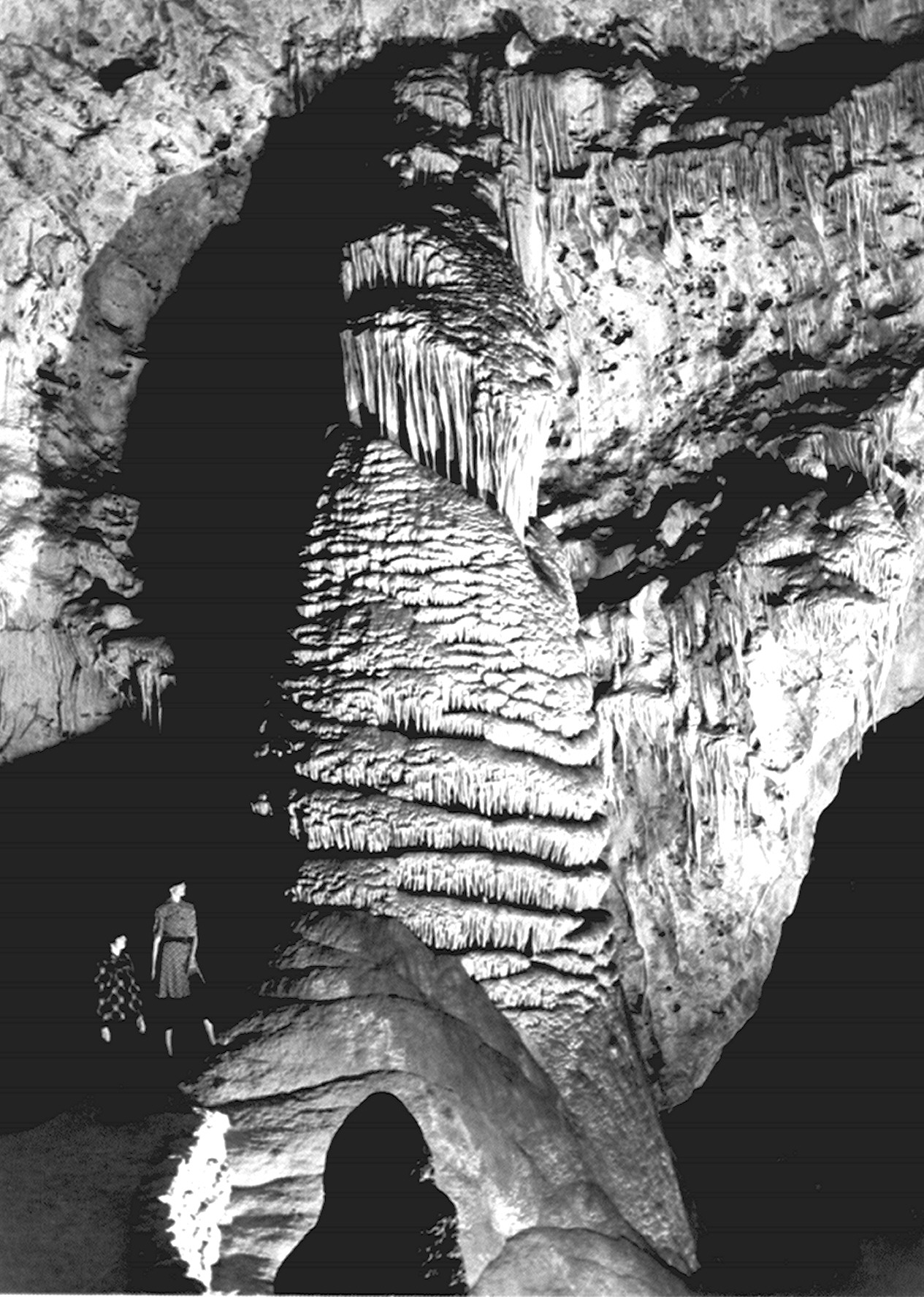
The image above is 79-AAB‑1 in the archive, or more pro­saical­ly, “Boul­der Dam, 1941.” Adams pho­tographed grand land- and desertscapes all over the West and South­west, includ­ing the Grand Canyon, Mesa Verde, Death Val­ley, Yel­low­stone, Yosemite, Carls­bad Cav­erns, and land belong­ing to Nava­jo and Pueblo Indians—such as image #79-AAA‑6 (below), or “Church, Aco­ma Pueblo,” tak­en in Aco­ma Pueblo, New Mex­i­co.

Ansel Adams2

Like most of Adams’ work, these images are mon­u­men­tal­ly breath­tak­ing in all their high-con­trast vast­ness. Most of them are signed or cap­tioned by Adams. You can browse the archives, view all of the pho­tos, and order prints through the Nation­al Archives web­site.

Relat­ed Con­tent:

Extreme Pho­tog­ra­phy: Shoot­ing Big Climbs at Yosemite

Alfred Stieglitz: The Elo­quent Eye, a Reveal­ing Look at “The Father of Mod­ern Pho­tog­ra­phy”

Watch as Nation­al Geo­graph­ic Pho­tog­ra­ph­er Steve McCur­ry Shoots the Very Last Roll of Kodachrome

Josh Jones is a writer, edi­tor, and musi­cian based in Wash­ing­ton, DC. Fol­low him @jdmagness

Richard Dawkins Dies (Not Really) and Meets His Maker in a New NSFW Animation

When Christo­pher Hitchens died, it did­n’t take long for humorists to imag­ine the com­ic sce­nario: what hap­pens when the surly athe­ist comes face to face with God? It’s amus­ing to con­sid­er. And when it comes to Richard Dawkins, the humorists aren’t wait­ing for the biol­o­gist’s demise to play things out. In Kevin Breen’s South Park-style trib­ute, Dawkins arrives at the Gates of Heav­en, only to dis­cov­er that God exists after all. When the “Man in the Sky Who Saves Amer­i­ca, Bless­es the Queen” asks Dawkins for his reac­tion, the author of The God Delu­sion gives him an ear­ful. The stri­dent lan­guage is pure Dawkins. Actu­al­ly, his lines are sound bites tak­en from recent Dawkins speech­es. In 2006, a stu­dent famous­ly asked Dawkins “What If You’re Wrong [About the Exis­tence of God], and the Oxford biol­o­gist replied with lines that sound famil­iar.

In this clip, crit­ics will find anoth­er rea­son not to like Dawkins; fans will find anoth­er rea­son to adore him. But, what did Richard Dawkins think? “Fun!,” he wrote, as he post­ed it to his Face­book page.

Note: This video con­tains some strong lan­guage. It’s basi­cal­ly NSFW.

Relat­ed Con­tent:

Alan Watts and His Zen Wis­dom Ani­mat­ed by Cre­ators of South Park

The Unbe­liev­ers, A New Film Star­ring Richard Dawkins, Lawrence Krauss, Wern­er Her­zog, Woody Allen, & Cor­mac McCarthy

Christo­pher Hitchens: No Deathbed Con­ver­sion for Me, Thanks, But it was Good of You to Ask

by | Permalink | Make a Comment ( 5 ) |

The Photographer Reveals the Philosophy, Techniques & Artistry of Edward Weston (1948)

He’s been gone 55 years, but the Amer­i­can West we see in our mind’s eye still owes much to Edward West­on’s pho­to­graph­ic eye. Yet because he worked in more or less every one of the known forms of his day — por­trait, land­scape, still-life, scenes in a vari­ety of tones, and beyond — we tend to think we know West­on’s work when we’ve only seen a frac­tion of it. You can get a sense of the scope of his career by watch­ing The Pho­tog­ra­ph­er above. Pro­duced in 1948, the final year of West­on’s career, the half-hour doc­u­men­tary can thus exam­ine near­ly his entire body of work. The true West­on afi­ciona­do should note that it also exam­ines his home and his cats. (The lat­ter get into the for­mer by way of a cat door made from an old lens board.)

If you have an inter­est in twen­ti­eth-cen­tu­ry Amer­i­can pho­tog­ra­phy, West­on’s name often comes up. But you may also rec­og­nize the name of the film’s direc­tor, Willard Van Dyke. A one­time appren­tice of West­on’s, Van Dyke made the intro­duc­tion between the mas­ter and Ansel Adams, thus form­ing a con­nec­tion between two men who visu­al­ly defined Amer­i­ca. Along with fel­low San Fran­cis­co pho­tog­ra­ph­er Imo­gen Cun­ning­ham, the three would form the Mod­ernist Group f/64. Van Dyke made The Pho­tog­ra­ph­er under the ban­ner of the Unit­ed States Infor­ma­tion Agency, and it has the feel of faint­ly pro­pa­gan­dis­tic opti­mism you’d thus expect, but the film has much to show and say about West­on’s meth­ods and the Cal­i­forn­ian nat­ur­al world he so strik­ing­ly cap­tured.

You will find The Pho­tog­ra­ph­er list­ed in our col­lec­tion of Free Doc­u­men­taries Online, part of our col­lec­tion 4,000+ Free Movies Online: Great Clas­sics, Indies, Noir, West­erns, Doc­u­men­taries & More.

Relat­ed con­tent:

The Cre­ative Process of Ansel Adams Revealed in 1958 Doc­u­men­tary

Hen­ri Carti­er-Bres­son and the Deci­sive Moment

Errol Mor­ris: Two Essen­tial Truths About Pho­tog­ra­phy

Col­in Mar­shall hosts and pro­duces Note­book on Cities and Cul­ture and writes essays on lit­er­a­ture, film, cities, Asia, and aes­thet­ics. He’s at work on a book about Los Ange­les, A Los Ange­les Primer. Fol­low him on Twit­ter at @colinmarshall.

Watch Huell Howser’s Decades of Television Travels Online. It’s California Gold!

When tele­vi­sion broad­cast­er Huell Hows­er passed away last month, we South­ern Cal­i­for­ni­ans real­ized just how far his per­sona reached. The cliché “larg­er than life” seems, in this light, almost apt; it describes his famous­ly vol­u­ble enthu­si­asm, larg­er than the broad­ly local life he explored on cam­era. Though fol­low­ers iden­ti­fy Cal­i­for­ni­a’s Gold as Howser’s flag­ship series, he host­ed spe­cial­ized ones as well, such as Down­town, focus­ing on Los Ange­les’ his­toric core, Cal­i­for­ni­a’s Mis­sions (sub­ject obvi­ous), and Road Trip, which took him far­ther afield. Above, you’ll find an episode of Cal­i­for­ni­a’s Gold shot in Palm Springs. Hows­er hap­pened to own a home out there, but more to the point, so did Frank Sina­tra; it’s the Chair­man of the Board­’s house that Hows­er devotes his con­sid­er­able curios­i­ty to walk­ing through and find­ing out every­thing about. Below, you can join him for a look at Vin­cent Price’s art col­lec­tion on a Vis­it­ing… broad­cast that con­tains an inter­view Hows­er record­ed with Price back in the eight­ies.

“I don’t have an agent,” said Hows­er in a 2009 Los Ange­les Times pro­file. “I don’t have a man­ag­er, I don’t have a press agent, I don’t have a wardrobe guy, a make­up guy, a park­ing space, a dress­ing room. It’s basi­cal­ly me and a cam­era­man and an edi­tor and a cou­ple of guys in the office. I can go out between now and noon and do a full 30-minute show just talk­ing to peo­ple on the street and have it on the air tonight.” You can watch all these shows on Chap­man Uni­ver­si­ty’s new Huell Hows­er Archive; just click on a series title under the “Shows” col­umn, then through to each episode’s indi­vid­ual post. For a pub­lic tele­vi­sion icon, Hows­er had a pro­duc­tion sen­si­bil­i­ty ide­al­ly suit­ed for the inter­net, domain of the cheap and cheer­ful — well, domain of the cheap, any­way. “We have shrugged our way into a world where every­one is sup­posed to be a crit­ic of every­thing, all the time,” actor Thomas Lennon wrote in a remem­brance titled “Why Huell Hows­er Was the Oppo­site of the Inter­net.” “Huell, on the oth­er hand, would get into his car, dri­ve for hours, and show us things… just so he could tell us how won­der­ful they were.”

Col­in Mar­shall hosts and pro­duces Note­book on Cities and Cul­ture and writes essays on lit­er­a­ture, film, cities, Asia, and aes­thet­ics. He’s at work on a book about Los Ange­les, A Los Ange­les Primer. Fol­low him on Twit­ter at @colinmarshall.

George Martin, Legendary Beatles Producer, Shows How to Mix the Perfect Song Dry Martini

George Mar­tin knows some­thing about mix­ing. The Bea­t­les trust­ed him to mix their albums, decid­ing which ingre­di­ents to leave in, and which ones to leave out. (Take for exam­ple this lost gui­tar solo from “Here Comes The Sun.”) The record pro­duc­er, some­times known as the Fifth Bea­t­le, has taste. No one dis­putes that. So let’s let him mix us the per­fect dry gin mar­ti­ni and issue an amus­ing word of cau­tion. Hope you’re tak­ing care­ful notes.…

Relat­ed Con­tent:

William Faulkn­er’s Hot Tod­dy Recipe

Gui­tarist Randy Bach­man Demys­ti­fies the Open­ing Chord of ‘A Hard Day’s Night’

Peter Sell­ers Reads “A Hard Day’s Night” in Shake­speare­an Mode

« Go BackMore in this category... »
Quantcast