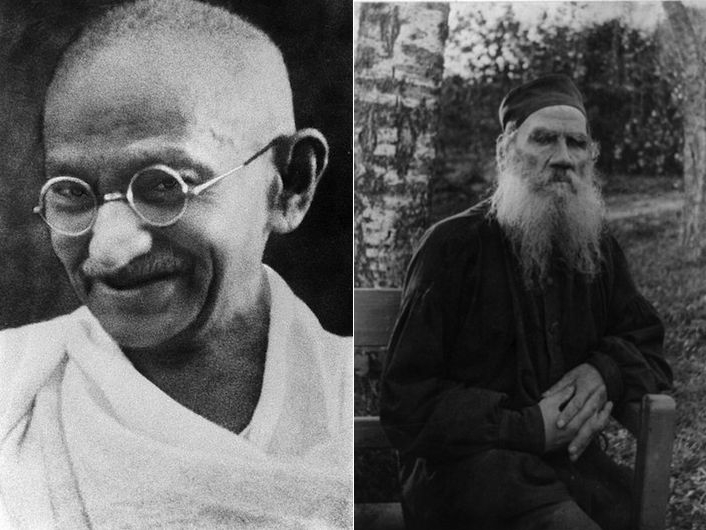
Tolstoy and Gandhi Exchange Letters: Two Thinkers’ Quest for Gentleness, Humility & Love (1909)

Gandhi.Tolstoy

Some of the most rig­or­ous moral thinkers of the past cen­tu­ry have spent time on the wrong side of ques­tions they deemed of vital impor­tance. Mohan­das Gand­hi, for exam­ple, at first remained loy­al to the British, man­i­fest­ing many of the vicious prej­u­dices of the Empire against Black South Africans and lob­by­ing for Indi­ans to serve in the war against the Zulu. Maya Jasanoff in New Repub­lic describes Gand­hi dur­ing this peri­od of his life as a “crank.” At the same time, he devel­oped his phi­los­o­phy of non-vio­lent resis­tance, or satya­gra­ha, in South Africa as an Indi­an suf­fer­ing the injus­tices inflict­ed upon his coun­try­men by both the Boers and the British.

Gandhi’s some­time con­tra­dic­to­ry stances may be in part under­stood by his rather aris­to­crat­ic her­itage and by the warm wel­come he first received in Lon­don when he left his fam­i­ly, his caste, and his wife and child in India to attend law school in 1888. And yet it is in Lon­don that he first began to change his views, becom­ing a staunch veg­e­tar­i­an and encoun­ter­ing theos­o­phy, Chris­tian­i­ty, and many of the con­tem­po­rary writ­ers who would shift his per­spec­tive over time. Gand­hi received a very dif­fer­ent recep­tion in Eng­land when he returned in 1931, the de fac­to leader of a bur­geon­ing rev­o­lu­tion­ary move­ment in India whose exam­ple was so impor­tant to both the South African and U.S. civ­il rights move­ments of suc­ceed­ing decades.

One of the writ­ers who most deeply guid­ed Gandhi’s polit­i­cal, spir­i­tu­al, and philo­soph­i­cal evo­lu­tion, Leo Tol­stoy, expe­ri­enced his own dra­mat­ic trans­for­ma­tion, from land­ed aris­to­crat to social rad­i­cal, and also renounced prop­er­ty and posi­tion to advo­cate stren­u­ous­ly for social equal­i­ty. Gand­hi eager­ly read Tolstoy’s The King­dom of God is With­in You, the novelist’s state­ment of Chris­t­ian anar­chism. The book, Gand­hi wrote in his auto­bi­og­ra­phy, “left an abid­ing impres­sion on me.” After fur­ther study of Tolstoy’s reli­gious writ­ing, he “began to real­ize more and more the infi­nite pos­si­bil­i­ties of uni­ver­sal love.”

It was in Eng­land, not India, where Gand­hi first read “A Let­ter to a Hin­du,” Tolstoy’s 1908 reply to a note from Indi­an rev­o­lu­tion­ary Tarak­nath Das on the ques­tion of Indi­an inde­pen­dence. Tol­stoy divides his lengthy, thought­ful “Let­ter” into short chap­ters, each of which begins with a quo­ta­tion from the Vedas. “Indeed,” writes Maria Popo­va, the mis­sive “puts in glar­ing per­spec­tive the nuance­less and hasty op-eds of our time.” It so affect­ed Gand­hi that, in 1909, he wrote to Tol­stoy, thus begin­ning a cor­re­spon­dence between the two that last­ed through the fol­low­ing year. “I take the lib­er­ty of invit­ing your atten­tion to what has been going on in the Trans­vaal for near­ly three years,” begins Gandhi’s first let­ter, some­what abrupt­ly, “There is in that Colony a British Indi­an pop­u­la­tion of near­ly 13,000. These Indi­ans have, for sev­er­al years, labored under var­i­ous legal dis­abil­i­ties.”

The prej­u­dice against col­or and in some respects against Asians is intense in that Colony….The cli­max was reached three years ago, with a law that many oth­ers and I con­sid­ered to be degrad­ing and cal­cu­lat­ed to unman those to whom it was applic­a­ble. I felt that sub­mis­sion to a law of this nature was incon­sis­tent with the spir­it of true reli­gion. Some of my friends and I were and still are firm believ­ers in the doc­trine of non­re­sis­tance to evil. I had the priv­i­lege of study­ing your writ­ings also, which left a deep impres­sion on my mind.

Gand­hi refers to a law forc­ing the Indi­an pop­u­la­tion in South Africa to reg­is­ter with the author­i­ties. He goes on to inquire about the authen­tic­i­ty of the “Let­ter” and asks per­mis­sion to trans­late it, with pay­ment, and to omit a neg­a­tive ref­er­ence to rein­car­na­tion that offend­ed him. Tol­stoy respond­ed a few months lat­er, in 1910, allow­ing the trans­la­tion free of charge, and allow­ing the omis­sion, with the qual­i­fi­ca­tion that he believed “faith in re-birth will nev­er restrain mankind as much as faith in the immor­tal­i­ty of the soul and in divine truth in love.” Over­all, how­ev­er, he express­es sol­i­dar­i­ty, greet­ing Gand­hi “fra­ter­nal­ly” and writ­ing,

God help our dear broth­ers and co-work­ers in the Trans­vaal! Among us, too, this fight between gen­tle­ness and bru­tal­i­ty, between humil­i­ty and love and pride and vio­lence, makes itself ever more strong­ly felt, espe­cial­ly in a sharp col­li­sion between reli­gious duty and the State laws, expressed by refusals to per­form mil­i­tary ser­vice.

The two con­tin­ued to write to each oth­er, Gand­hi send­ing Tol­stoy a copy of his Indi­an Home Rule and the trans­lat­ed “Let­ter,” and Tol­stoy expound­ing at length on the errors—and what he saw as the supe­ri­or characteristics—of Chris­t­ian doc­trine. You can read their full cor­re­spon­dence here, along with Tolstoy’s “Let­ter to a Hin­du” and Gandhi’s intro­duc­tion to his edi­tion. Despite their reli­gious dif­fer­ences, the exchange fur­ther gal­va­nized Gand­hi’s pas­sive resis­tance move­ment, and in 1910, he found­ed a com­mu­ni­ty called “Tol­stoy Farm” near Johan­nes­burg.

Gand­hi’s views on African inde­pen­dence would change, and Nel­son Man­dela lat­er adopt­ed Gand­hi and the Indi­an inde­pen­dence move­ment as a stan­dard for the anti-apartheid move­ment. We’re well aware, of course, of Gand­hi’s influ­ence on Mar­tin Luther King, Jr. For his part, Gand­hi wrote glow­ing­ly of Tol­stoy, and the mod­el the nov­el­ist pro­vid­ed for his own anti-colo­nial cam­paign. In a speech 18 years lat­er, he said, “When I went to Eng­land, I was a votary of vio­lence, I had faith in it and none in non­vi­o­lence.” After read­ing Tol­stoy, “that lack of faith in non­vi­o­lence vanished…Tolstoy was the very embod­i­ment of truth in this age. He strove uncom­pro­mis­ing­ly to fol­low truth as he saw it, mak­ing no attempt to con­ceal or dilute what he believed to be the truth. He stat­ed what he felt to be the truth with­out car­ing whether it would hurt or please the peo­ple or whether it would be wel­come to the mighty emper­or. Tol­stoy was a great advo­cate of non­vi­o­lence in his age.”

Relat­ed Con­tent:

Hear Gandhi’s Famous Speech on the Exis­tence of God (1931)

Albert Ein­stein Express­es His Admi­ra­tion for Mahat­ma Gand­hi, in Let­ter and Audio

Leo Tolstoy’s Masochis­tic Diary: I Am Guilty of “Sloth,” “Cow­ardice” & “Sissi­ness” (1851)

Josh Jones is a writer and musi­cian based in Durham, NC. Fol­low him at @jdmagness

Jack Kerouac’s Poetry & Prose Read/Performed by 20 Icons: Hunter S. Thompson, Patti Smith, William S. Burroughs, Johnny Depp & More

Image by Tom Palum­bo, via Wiki­me­dia Com­mons

Last year, we fea­tured a few read­ings and per­for­mances of the work of Jack Ker­ouac by musi­cians like Pat­ti Smith, John Cale, Thurston Moore, and Joe Strum­mer. Those tracks got laid down for 1997’s Ker­ouac: Kicks Joy Dark­ness, a trib­ute to the author of On the Road and The Dhar­ma Bums and an Amer­i­can cul­tur­al pres­ence as res­o­nant as they come. Now, you can lis­ten to the whole thing on Spo­ti­fy (whose free soft­ware you can down­load here) and rev­el in ren­di­tions of Ker­ouac’s poet­ry and prose by an even wider selec­tion of beloved alter­na­tive musi­cians: War­ren Zevon, Pearl Jam’s Eddie Ved­der, REM’s Michael Stipe, Son­ic Youth’s Lee Ranal­do show up on the ros­ter, to name but a few.

It also fea­tures con­tri­bu­tions from a great many sub­cul­ture-defin­ing non-musi­cians, includ­ing writ­ers like Hunter S. Thomp­son and William S. Bur­roughs, come­di­an Richard Lewis, actor Matt Dil­lon, poet Mag­gie Estep, and a gen­uine Beat emi­nence like Lawrence Fer­linghet­ti. It even brings in cul­tur­al fig­ures who, though known for oth­er pur­suits, also estab­lished enough of a side career in music to hold their own in the record­ing stu­dio, like John­ny Depp and The Bas­ket­ball Diaries author Jim Car­roll. We even hear Ker­ouac as inter­pret­ed with the help of no less a life­long musi­cian — and no less unex­pect­ed a musi­cian on an album like this — than Aero­smith’s Steven Tyler.

“Four­teen of the 25 tracks on this 79½-minute disc are drawn from Ker­ouac’s poet­ry book Pomes All Sizes,writes All Music Guide’s William Ruhlmann. “The rest come from his nov­els (noth­ing from On the Road, though) and let­ters, with some unpub­lished work also includ­ed.” Ruhlmann points out Ker­ouac’s own lack of enthu­si­asm for rock and pref­er­ence for jazz, high­light­ing Ranal­do, Zevon, Dil­lon, and Lewis’ con­tri­bu­tions as clos­est to the man’s own sen­si­bil­i­ty. But alto­geth­er, he writes, they “present a good sam­pling of Ker­ouac’s lit­er­ary con­cerns, and, whether appro­pri­ate or not, the record­ings demon­strate his exten­sive influ­ence” — a per­fect demon­stra­tion of how the cool of one era can inspire the cool of anoth­er.

Ker­ouac: Kicks Joy Dark­ness will be added to our list of col­lec­tion, 1,000 Free Audio Books: Down­load Great Books for Free.

Relat­ed Con­tent:

Jack Kerouac’s Poems Read by Pat­ti Smith, John Cale & Oth­er Cul­tur­al Icons (with Music by Joe Strum­mer)

Jack Ker­ouac Lists 9 Essen­tials for Writ­ing Spon­ta­neous Prose

Pull My Daisy: 1959 Beat­nik Film Stars Jack Ker­ouac and Allen Gins­berg

Jack Ker­ouac Reads from On the Road (1959)

Jack Kerouac’s Naval Reserve Enlist­ment Mugshot, 1943

Col­in Mar­shall writes on cities, lan­guage, Asia, and men’s style. He’s at work on a book about Los Ange­les, A Los Ange­les Primer, and the video series The City in Cin­e­ma. Fol­low him on Twit­ter at @colinmarshall or on Face­book.

New Research Shows How Music Lessons During Childhood Benefit the Brain for a Lifetime

As a some­time musi­cian, it’s only nat­ur­al that I want my four-year-old daugh­ter to take an inter­est in music. Sure, it’s a fun bond­ing activ­i­ty, and sure, there may be a bit of a stage dad lurk­ing inside me at times. But I’m also con­vinced of the tan­gi­ble ben­e­fits play­ing a musi­cal instru­ment can have on one’s per­son­al devel­op­ment. New sci­ence, it seems, backs up this intu­ition. The Wash­ing­ton Post report­ed last year on a recent study from North­west­ern Uni­ver­si­ty which found that “Music train­ing not only helps chil­dren devel­op fine motor skills, but aids emo­tion­al and behav­ioral mat­u­ra­tion as well.”

This may not come as a sur­prise. And yet, the details of the study pro­vide insights our intu­itions about the pow­er of musi­cal edu­ca­tion may lack. For one thing, as you can see in the CNN report above, the ben­e­fits of learn­ing to play music as a child can last for decades, even if some­one hasn’t picked up an instru­ment since those ear­ly lessons. As Dr. Nina Kraus, direc­tor of Northwestern’s Audi­to­ry Neu­ro­science Lab­o­ra­to­ry, explains, good musi­cal tim­ing is strong­ly cor­re­lat­ed with read­ing skills and gen­er­al men­tal acu­ity. Accord­ing to a co-author of the study, James Hudzi­ak, pro­fes­sor of psy­chi­a­try at the Uni­ver­si­ty of Ver­mont, ear­ly musi­cal train­ing was shown to have “accel­er­at­ed cor­ti­cal orga­ni­za­tion in atten­tion skill, anx­i­ety man­age­ment and emo­tion­al con­trol.” These brain changes can accom­pa­ny us well into old age.

Anoth­er, Cana­di­an study, pub­lished in Feb­ru­ary in the The Jour­nal of Neu­ro­science, found that child­hood music lessons boost the abil­i­ty of old­er adults to hear speech, a skill that begins to weak­en lat­er in life. The study found “robust” evi­dence that “start­ing for­mal lessons on a musi­cal instru­ment pri­or to age 14 and con­tin­u­ing intense train­ing for up to a decade appears to enhance key areas in the brain that sup­port speech recog­ni­tion.” Even music lessons tak­en lat­er life can help reha­bil­i­tate the brains of old­er adults. “The find­ings,” writes Sci­ence Dai­ly, “under­score the impor­tance of music instruc­tion in schools and in reha­bil­i­ta­tive pro­grams for old­er adults.”

Music teach­ers cer­tain­ly need this kind of evi­dence to bol­ster sup­port for ail­ing pro­grams in schools, and musi­cal­ly-inclined par­ents will cheer these find­ings as well. But before the stage par­ent in you begins enrolling your kid in every music les­son you can fit into the sched­ule, take heed. As Dr. Kraus dis­cov­ered in the North­west­ern study, forc­ing kids to show up and par­tic­i­pate under duress won’t exer­cise their brains. Real, active engage­ment is key. “We like to say that ‘mak­ing music mat­ters,’” says Kraus, “because it is only through the active gen­er­a­tion and manip­u­la­tion of sound that music can rewire the brain.” While musi­cal train­ing may be one par­tic­u­lar­ly enjoy­able way to strength­en cog­ni­tion, it isn’t the only way. But even if they don’t stick with it, the kids will­ing to put in the hours (and yes, the longer the bet­ter) will expe­ri­ence pos­i­tive change that lasts a life­time.

Relat­ed Con­tent:

Play­ing an Instru­ment Is a Great Work­out For Your Brain: New Ani­ma­tion Explains Why

The Neu­ro­science of Drum­ming: Researchers Dis­cov­er the Secrets of Drum­ming & The Human Brain

This is Your Brain on Jazz Impro­vi­sa­tion: The Neu­ro­science of Cre­ativ­i­ty

Josh Jones is a writer and musi­cian based in Durham, NC. Fol­low him at @jdmagness

Kurt Vonnegut Creates a Report Card for His Novels, Ranking Them From A+ to D

I love turn­ing teenagers on to the work of author Kurt Von­negut.

I want their minds to be blown the way mine was at 15, when I picked up Slap­stick, his 8th nov­el, for rea­sons I no longer remem­ber. It wasn’t on rec­om­men­da­tion of some beloved teacher, nor was there any Von­negut on our home shelves, despite the fact that he was a local author. What­ev­er drew me to that book, thank god it did. It was the begin­ning of a life­long romance.

What grabbed me so? His genius idea for bestow­ing an arti­fi­cial extend­ed fam­i­ly on every cit­i­zen, via the assign­ment of mid­dle names:

 I told him, ‘your new mid­dle name would con­sist of a noun, the name of a flower or fruit or nut or veg­etable or legume, or a bird or a rep­tile or a fish, or a mol­lusk, or a gem or a min­er­al or a chem­i­cal ele­ment — con­nect­ed by a hyphen to a num­ber between one and twen­ty.’ I asked him what his name was at the present time.

  ‘Elmer Glenville Gras­so,’ he said.

  ‘Well,’ I said, ‘you might become Elmer Uranium‑3 Gras­so, say. Every­body with Ura­ni­um as a part of their mid­dle name would be your cousin.’

This held enor­mous appeal for me as the only child of an only child. Lone­some No More!

It also con­tained the most won­der­ful pro­fan­i­ty I had ever heard:

You ask him his mid­dle name, and when he tells you “Oys­ter-19” or “Chickadee‑1” or “Hol­ly­hock-13” you say to him: Buster — I hap­pen to be a Uranium‑3. You have one hun­dred and nine­ty thou­sand cousins and ten thou­sand broth­ers and sis­ters. You’re not exact­ly alone in this world. I have rel­a­tives of my own to look after. So why don’t you take a fly­ing fuck at a rolling dough­nut? Why don’t you take a fly­ing fuck at the moooooooooooon?

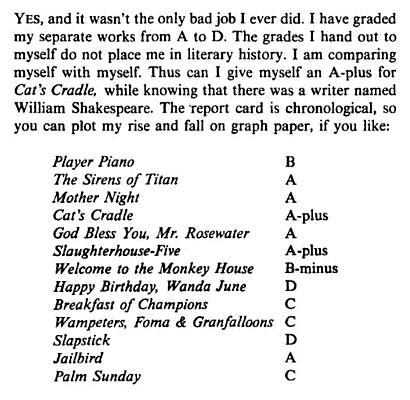
Imag­ine my dis­may when just two books lat­er, Von­negut gave Slap­stick the low­est pos­si­ble mark in a lit­er­ary self eval­u­a­tion pub­lished in Palm Sun­day, below.

Vonnegut grades

He wasn’t describ­ing the dif­fer­ence between a B and a B+. In Vonnegut’s mind, Slap­stick was a D. In oth­er words, a min­i­mal­ly accept­able, deeply below aver­age per­for­mance.

(Slaugh­ter­house Five, which also con­tains the rolling dough­nut line, received an A+. Break­fast of Cham­pi­ons, my oth­er favorite, earned a C.)

He lat­er reflect­ed to jour­nal­ist Char­lie Rose that he’d been over­ly hard on the title. But the crit­ics had trashed it when it first appeared, and pre­sum­ably crit­ics knew best. So much for Von­negut the rebel and class clown. This was a clear case of give the teacher the answer you think she wants.

I give it an A+, and so would you, if you’d dis­cov­ered it when I did.

How about you? Any marks you’d change on Vonnegut’s report card?

Relat­ed Con­tent:

Kurt Vonnegut’s 8 Tips on How to Write a Good Short Sto­ry

Kurt Von­negut Maps Out the Uni­ver­sal Shapes of Our Favorite Sto­ries

Hear Kurt Von­negut Read Slaugh­ter­house-Five, Cat’s Cra­dle & Oth­er Nov­els

Ayun Rasp­ber­ry-19 Hal­l­i­day cel­e­brates the new edi­tion of her book, No Touch Mon­key and Oth­er Trav­el Lessons Learned Too Late. Fol­low her @AyunHalliday

The First Animated Feature Film: The Adventures of Prince Achmed by Lotte Reiniger (1926)


Ear­li­er this week, we fea­tured pio­neer­ing Ger­man ani­ma­tor Lotte Reiniger’s ani­mat­ed sil­hou­ette films, for which she adapt­ed old Euro­pean sto­ries like “Cin­derel­la,” “Thum­be­li­na,” and “Hansel and Gre­tel” into a strik­ing visu­al style — strik­ing now, and even more strik­ing in the 1920s — sim­i­lar to tra­di­tion­al Indone­sian shad­ow pup­pet the­ater. Her work draws plen­ty of mate­r­i­al from folk­tales, but not just those from in and around her home­land (Ger­many). For her most ambi­tious work, for instance, Reiniger looked all the way to Ara­bia, adapt­ing sto­ries from no less ven­er­a­ble a source than One Thou­sand and One Nights. The 65-minute result, 1926’s The Adven­tures of Prince Achmed, stands as the ear­li­est ani­mat­ed fea­ture film. (See a nice clip above. The com­plete film lives on DVD/Blu Ray.)

“For cen­turies Prince Achmed on his mag­ic horse had lived a com­fort­able life as a well-loved fairy tale fig­ure of the Ara­bi­an nights and was well con­tent­ed with that,” Reiniger writes in her intro­duc­tion to the pic­ture. “But one day he was thrown out of his peace­ful exis­tence by a film com­pa­ny which want­ed to employ him and many oth­er char­ac­ters of the same sto­ries for an ani­mat­ed film.” And so, in 1923, it fell to her and a select group of col­lab­o­ra­tors to make that film. They labored for the bet­ter part of three years, not just because of the require­ments of shoot­ing each and every frame by hand but because of the exper­i­men­tal nature of ani­ma­tion itself. “We had to exper­i­ment and try out all sorts of inven­tions to make the sto­ry come alive. The more the shoot­ing of Prince Achmed advanced the more ambi­tious he became.”

At that time, The Adven­tures of Prince Achmed did not, of course, even faint­ly resem­ble any fea­ture yet made. “No the­atre dared show it,” Reiniger writes, “for ‘it was not done.’ ” And so they did it them­selves, screen­ing the film just out­side Berlin, which led to a show in Paris, then one in Berlin prop­er, by which point Prince Achmed and his mag­ic horse were well on their way to a place in the ani­ma­tion his­to­ry books. They near­ly lost that place due to the 1945 bat­tle of Berlin, when the film’s neg­a­tive was lost amid the destruc­tion, but the British Film Insti­tute had made a neg­a­tive of their own for a Lon­don screen­ing, which even­tu­al­ly became the mate­r­i­al for a restora­tion and revival. “The revival was done by the son of the banker who spon­sored the film in 1923,” notes Reiniger. “He had assist­ed in its cre­ation as a small boy. So it was grant­ed to old Prince Achmed to have a hap­py res­ur­rec­tion after almost half a cen­tu­ry” — and he con­tin­ues to win new fans today.

Relat­ed Con­tent:

The Ground­break­ing Sil­hou­ette Ani­ma­tions of Lotte Reiniger: Cin­derel­la, Hansel and Gre­tel, and More

Sita Sings the Blues Now on YouTube

Ear­ly Japan­ese Ani­ma­tions: The Ori­gins of Ani­me (1917–1931)

4,000+ Free Movies Online: Great Clas­sics, Indies, Noir, West­erns, Doc­u­men­taries & More

Col­in Mar­shall writes on cities, lan­guage, Asia, and men’s style. He’s at work on a book about Los Ange­les, A Los Ange­les Primer, and the video series The City in Cin­e­ma. Fol­low him on Twit­ter at @colinmarshall or on Face­book.

William Faulkner Rocked Fourth Grade (1907–1908)

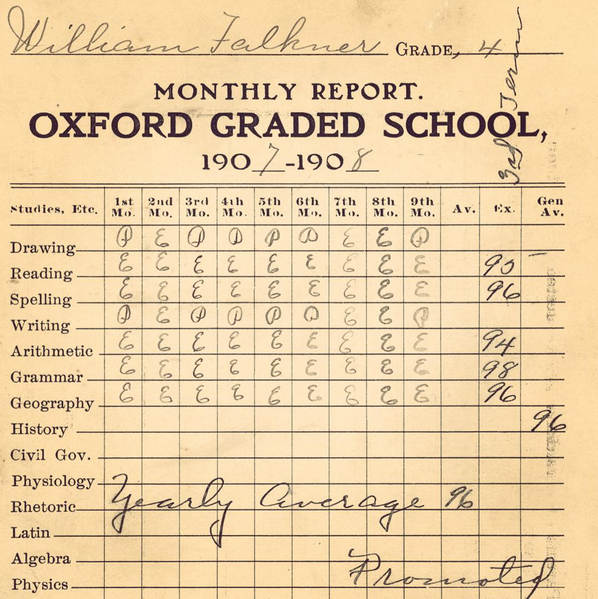
faulkner report card

William Faulkn­er attend­ed the Uni­ver­si­ty of Mis­sis­sip­pi and last­ed only three semes­ters. He skipped class­es, man­aged to pull a D in Eng­lish, and then dropped out in 1920.

A far cry from his aca­d­e­m­ic per­for­mance in 1907–1908 when, as a fourth grad­er, he got most­ly E’s (pre­sum­ably mean­ing “Excel­lent”), a year­ly aver­age of 96, and a high grade of 98 in Gram­mar.

Faulkn­er’s 4th grade report comes to you cour­tesy of The Har­ry Ran­som Cen­ter’s Insta­gram account. Give it a fol­low.

via Bib­liok­lept

Relat­ed Con­tent: 

William Faulkn­er Resigns From His Post Office Job With a Spec­tac­u­lar Let­ter (1924)

William Faulkn­er Out­lines on His Office Wall the Plot of His Pulitzer Prize Win­ning Nov­el, A Fable (1954)

Guide­lines for Han­dling William Faulkner’s Drink­ing Dur­ing For­eign Trips From the US State Depart­ment (1955)

by | Permalink | Make a Comment ( 2 ) |

Albert Einstein​ & Sigmund Freud​ Exchange Letters and Debate How to Make the World Free from War (1932)

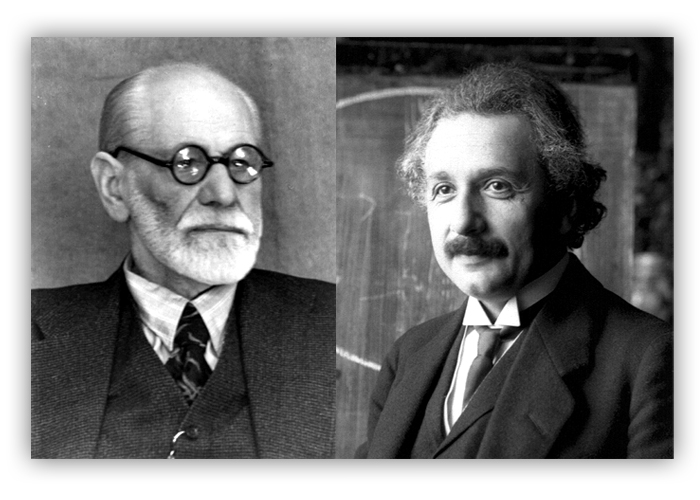
einstein freud

The prob­lem of vio­lence, per­haps the true root of all social ills, seems irre­solv­able. Yet, as most thought­ful peo­ple have real­ized after the wars of the twen­ti­eth cen­tu­ry, the dan­gers human aggres­sion pose have only increased expo­nen­tial­ly along with glob­al­iza­tion and tech­no­log­i­cal devel­op­ment. And as Albert Ein­stein rec­og­nized after the nuclear attacks on Hiroshi­ma and Nagasaki—which he part­ly helped to engi­neer with the Man­hat­tan Project—the aggres­sive poten­tial of nations in war had reached mass sui­ci­dal lev­els.

After Einstein’s involve­ment in the cre­ation of the atom­ic bomb, he spent his life “work­ing for dis­ar­ma­ment and glob­al gov­ern­ment,” writes psy­chol­o­gist Mark Lei­th, “anguished by his impos­si­ble, Faus­t­ian deci­sion.” Yet, as we dis­cov­er in let­ters Ein­stein wrote to Sig­mund Freud in 1932, he had been advo­cat­ing for a glob­al solu­tion to war long before the start of World War II. Ein­stein and Freud’s cor­re­spon­dence took place under the aus­pices of the League of Nation’s new­ly-formed Inter­na­tion­al Insti­tute of Intel­lec­tu­al Coop­er­a­tion, cre­at­ed to fos­ter dis­cus­sion between promi­nent pub­lic thinkers. Ein­stein enthu­si­as­ti­cal­ly chose Freud as his inter­locu­tor.

In his first let­ter to the psy­chol­o­gist, he writes, “This is the prob­lem: Is there any way of deliv­er­ing mankind from the men­ace of war?” Well before the atom­ic age, Ein­stein alleges the urgency of the ques­tion is a mat­ter of “com­mon knowledge”—that “with the advance of mod­ern sci­ence, this issue has come to mean a mat­ter of life and death for Civ­i­liza­tion as we know it.”

Ein­stein reveals him­self as a sort of Pla­ton­ist in pol­i­tics, endors­ing The Repub­lic’s vision of rule by elite philoso­pher-kings. But unlike Socrates in that work, the physi­cist pro­pos­es not city-states, but an entire world gov­ern­ment of intel­lec­tu­al elites, who hold sway over both reli­gious lead­ers and the League of Nations. The con­se­quence of such a poli­ty, he writes, would be world peace—the price, like­ly, far too high for any world leader to pay:

The quest of inter­na­tion­al secu­ri­ty involves the uncon­di­tion­al sur­ren­der by every nation, in a cer­tain mea­sure, of its lib­er­ty of action—its sov­er­eign­ty that is to say—and it is clear beyond all doubt that no oth­er road can lead to such secu­ri­ty.

Ein­stein express­es his pro­pos­al in some sin­is­ter-sound­ing terms, ask­ing how it might be pos­si­ble for a “small clique to bend the will of the major­i­ty.” His final ques­tion to Freud: “Is it pos­si­ble to con­trol man’s men­tal evo­lu­tion so as to make him proof against the psy­chosis of hate and destruc­tive­ness?”

Freud’s response to Ein­stein, dat­ed Sep­tem­ber, 1932, sets up a fas­ci­nat­ing dialec­tic between the physicist’s per­haps dan­ger­ous­ly naïve opti­mism and the psychologist’s unsen­ti­men­tal appraisal of the human sit­u­a­tion. Freud’s mode of analy­sis tends toward what we would now call evo­lu­tion­ary psy­chol­o­gy, or what he calls a “’mythol­o­gy’ of the instincts.” He gives a most­ly spec­u­la­tive account of the pre­his­to­ry of human con­flict, in which “a path was traced that led away from vio­lence to law”—itself main­tained by orga­nized vio­lence.

Freud makes explic­it ref­er­ence to ancient sources, writ­ing of the “Pan­hel­lenic con­cep­tion, the Greeks’ aware­ness of supe­ri­or­i­ty over their bar­bar­ian neigh­bors.” This kind of pro­to-nation­al­ism “was strong enough to human­ize the meth­ods of war­fare.” Like the Hel­lenis­tic mod­el, Freud pro­pos­es for indi­vid­u­als a course of human­iza­tion through edu­ca­tion and what he calls “iden­ti­fi­ca­tion” with “what­ev­er leads men to share impor­tant inter­ests,” thus cre­at­ing a “com­mu­ni­ty of feel­ing.” These means, he grants, may lead to peace. “From our ‘mythol­o­gy’ of the instincts,” he writes, “we may eas­i­ly deduce a for­mu­la for an indi­rect method of elim­i­nat­ing war.”

And yet, Freud con­cludes with ambiva­lence and a great deal of skep­ti­cism about the elim­i­na­tion of vio­lent instincts and war. He con­trasts ancient Greek pol­i­tics with “the Bol­she­vist con­cep­tions” that pro­pose a future end of war and which are like­ly “under present con­di­tions, doomed to fail.” Refer­ring to his the­o­ry of the com­pet­ing bina­ry instincts he calls Eros and Thanatos—roughly love (or lust) and death drives—Freud arrives at what he calls a plau­si­ble “mythol­o­gy” of human exis­tence:

The upshot of these obser­va­tions, as bear­ing on the sub­ject in hand, is that there is no like­li­hood of our being able to sup­press human­i­ty’s aggres­sive ten­den­cies. In some hap­py cor­ners of the earth, they say, where nature brings forth abun­dant­ly what­ev­er man desires, there flour­ish races whose lives go gen­tly by; unknow­ing of aggres­sion or con­straint. This I can hard­ly cred­it; I would like fur­ther details about these hap­py folk.

Nonethe­less, he says weari­ly and with more than a hint of res­ig­na­tion, “per­haps our hope” that war will end in the near future, “is not chimeri­cal.” Freud’s let­ter offers no easy answers, and shies away from the kinds of ide­al­is­tic polit­i­cal cer­tain­ties of Ein­stein. For this, the physi­cist expressed grat­i­tude, call­ing Freud’s lengthy response “a tru­ly clas­sic reply…. We can­not know what may grow from such seed.”

This exchange of let­ters, con­tends Hum­boldt State Uni­ver­si­ty phi­los­o­phy pro­fes­sor John Pow­ell, “has nev­er been giv­en the atten­tion it deserves.… By the time the exchange between Ein­stein and Freud was pub­lished in 1933 under the title Why War?, Hitler, who was to dri­ve both men into exile, was already in pow­er, and the let­ters nev­er achieved the wide cir­cu­la­tion intend­ed for them.” Their cor­re­spon­dence is now no less rel­e­vant, and the ques­tions they address no less urgent and vex­ing. You can read the com­plete exchange at pro­fes­sor Powell’s site here.

Relat­ed Con­tent:

Albert Ein­stein Reads ‘The Com­mon Lan­guage of Sci­ence’ (1941)

Lis­ten as Albert Ein­stein Calls for Peace and Social Jus­tice in 1945

The Famous Let­ter Where Freud Breaks His Rela­tion­ship with Jung (1913)

Sig­mund Freud Appears in Rare, Sur­viv­ing Video & Audio Record­ed Dur­ing the 1930s

Josh Jones is a writer and musi­cian based in Durham, NC. Fol­low him at @jdmagness

The History of Cartography, the “Most Ambitious Overview of Map Making Ever,” Now Free Online

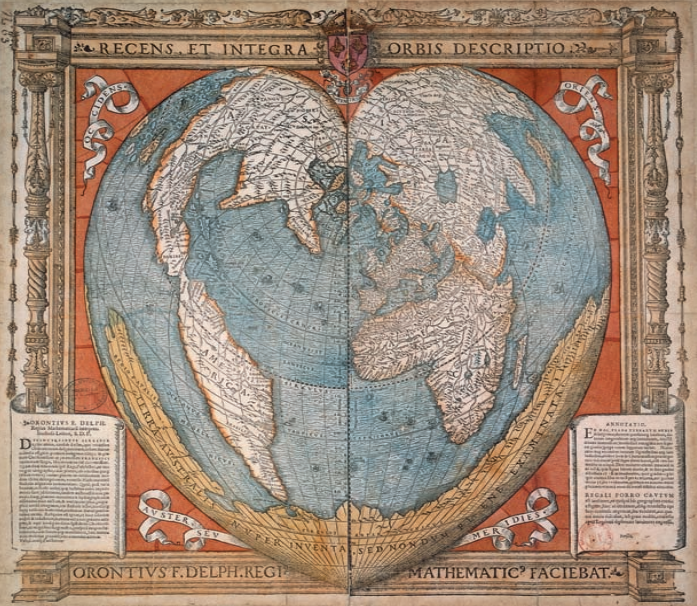
history of cartography2

Worth a quick men­tion: The Uni­ver­si­ty of Chica­go Press has made avail­able online — at no cost — the first three vol­umes of The His­to­ry of Car­tog­ra­phy. Or what Edward Roth­stein, of The New York Times, called “the most ambi­tious overview of map mak­ing ever under­tak­en.” He con­tin­ues:

Peo­ple come to know the world the way they come to map it—through their per­cep­tions of how its ele­ments are con­nect­ed and of how they should move among them. This is pre­cise­ly what the series is attempt­ing by sit­u­at­ing the map at the heart of cul­tur­al life and reveal­ing its rela­tion­ship to soci­ety, sci­ence, and reli­gion…. It is try­ing to define a new set of rela­tion­ships between maps and the phys­i­cal world that involve more than geo­met­ric cor­re­spon­dence. It is in essence a new map of human attempts to chart the world.

If you head over to this page, then look in the upper left, you will see links to three vol­umes (avail­able in a free PDF for­mat). My sug­ges­tion would be to look at the gallery of col­or illus­tra­tions for each book, links to which you’ll find below. The image above, appear­ing in Vol. 2, dates back to 1534. It was cre­at­ed by Oronce Fine, the first chair of math­e­mat­ics in the Col­lège Roy­al (aka the Col­lège de France), and it fea­tures the world mapped in the shape of a heart. Pret­ty great.

Vol­ume 1

Gallery of Col­or Illus­tra­tions

Vol­ume 2: Part 1

Gallery of Col­or Illus­tra­tions (Plates 1–24)
Gallery of Col­or Illus­tra­tions (Plates 25–40)

Vol­ume 2: Part 2

Gallery of Col­or Illus­tra­tions (Plates 1–16)
Gallery of Col­or Illus­tra­tions (Plates 17–40)

Vol­ume 2: Part 3

Gallery of Col­or Illus­tra­tions (Plates 1–8)
Gallery of Col­or Illus­tra­tions (Plates 9 –24)

Vol­ume 3: Part 1

Gallery of Col­or Illus­tra­tions (Plates 1–24)
Gallery of Col­or Illus­tra­tions (Plates 25–40)

Vol­ume 3: Part 2

Gallery of Col­or Illus­tra­tions (Plates 41–56)
Gallery of Col­or Illus­tra­tions (Plates 57–80)

Note: If you buy Vol 1. on Ama­zon, it will run you $248. As beau­ti­ful as the book prob­a­bly is, you’ll prob­a­bly appre­ci­ate this free dig­i­tal offer­ing. The series will be added to our col­lec­tion, 800 Free eBooks for iPad, Kin­dle & Oth­er Devices.

Relat­ed Con­tent:

A Won­der­ful Sci­en­tif­ic Map of the Moon from 1679: Can You Spot the Secret Moon Maid­en?

Galileo’s Moon Draw­ings, the First Real­is­tic Depic­tions of the Moon in His­to­ry (1609–1610)

New York Pub­lic Library Puts 20,000 Hi-Res Maps Online & Makes Them Free to Down­load and Use

by | Permalink | Make a Comment ( 4 ) |

« Go BackMore in this category... »
Quantcast