Mark, Erica, and Brian discuss the HBO Max show out Victorian-era super-powered feminine outcasts, helmed and now abandoned by the creator of Buffy the Vampire Slayer, Firefly, etc. It’s jam packed with steampunk gadgets, fisticuffs, social injustice, and far too many characters and plot threads to keep track of. Given that the season was reduced to a half season in light of the pandemic, does it still work? Does knowing the complaints about Joss Whedon affect our consumption of the show? Is this a faux feminism where women must undergo torture to gain strength?
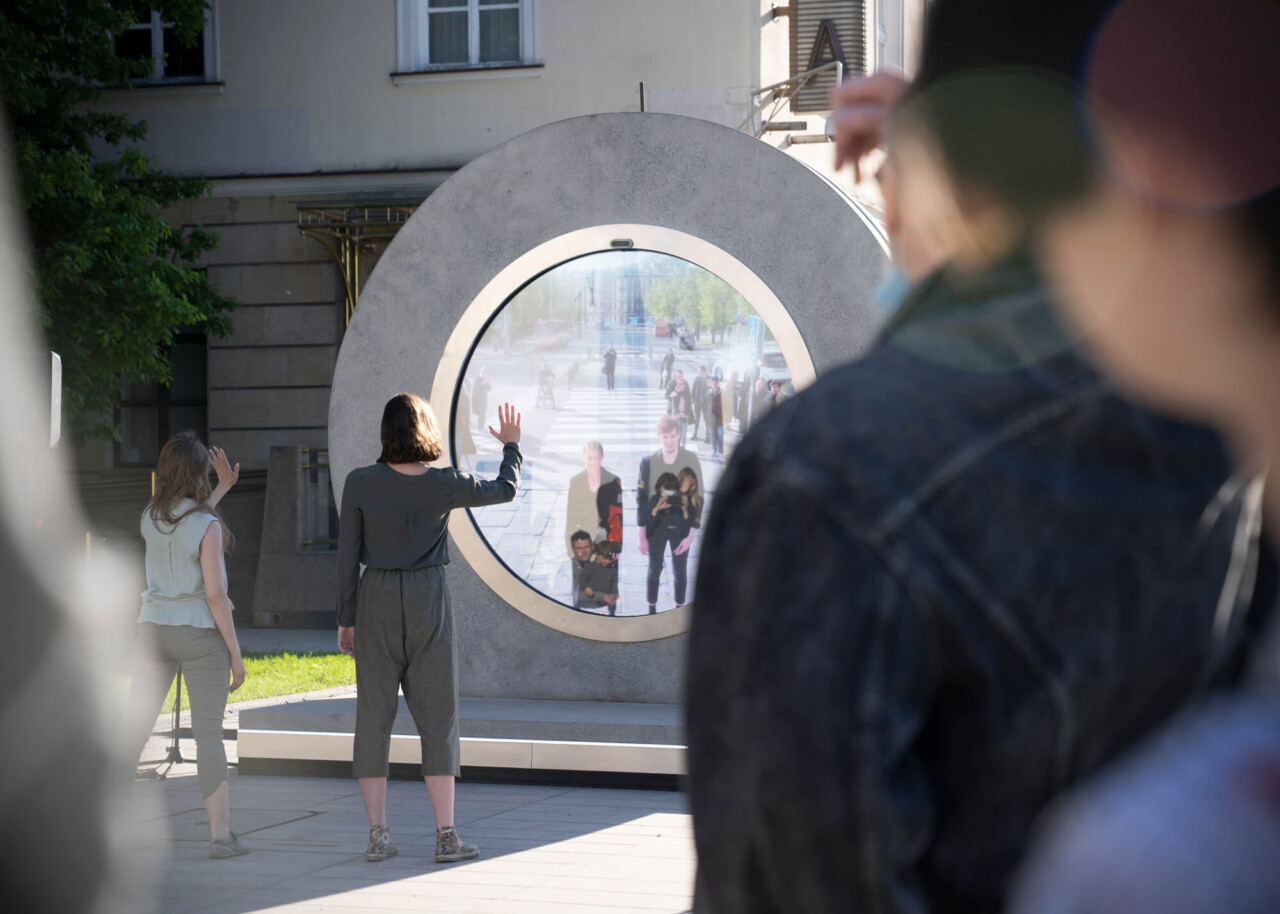
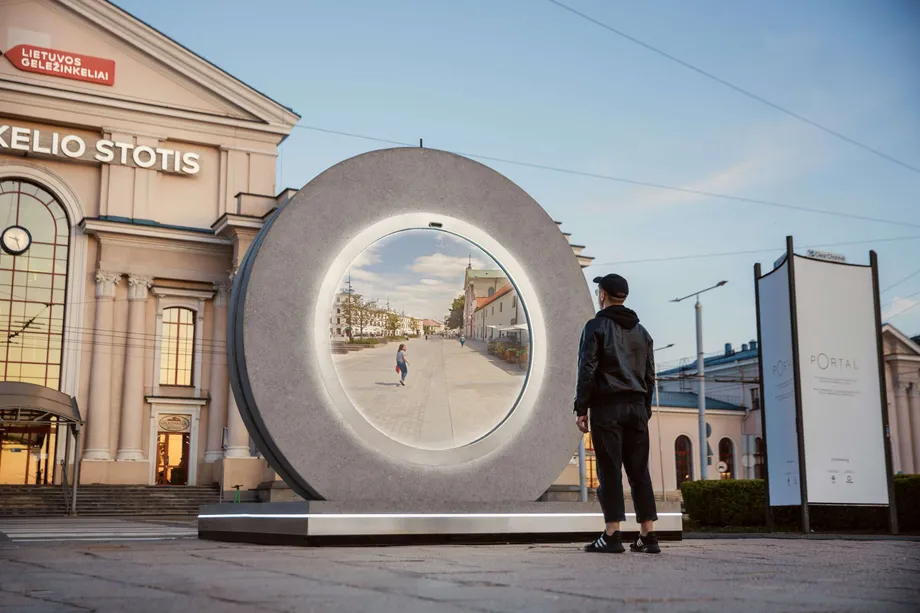
Can we ever transcend our tendency to divide up the world into us and them? The history of Europe, which political theorist Kenneth Minogue once called “plausibly summed up as preparing for war, waging war, or recovering from war,” offers few consoling answers. But perhaps it isn’t for history, much less for theory or politics, to dictate the future prospects for the unity of mankind. Art and technology offer another set of views on the matter, and it’s art and technology that come together in Portal, a recently launched project that has connected Vilnius, Lithuania and Lublin, Poland with twin installations. More than just a sculptural statement, each city’s portal offers a real-time, round-the-clock view of the other.
“In both Vilnius and Lublin,” writes My Modern Met’s Sara Barnes, “the portals are within the urban landscape; they are next to a train station and in the city central square, respectively. This allows for plenty of engagement, on either end, with the people of a city 376 miles apart. And, in a larger sense, the portals help to humanize citizens from another place.”
Images released of the interaction between passerby and their local portal show, among other actions, waving, camera phone-shooting, synchronized jumping, and just plain staring. Though more than one comparison has been made to the Stargate, the image also comes to mind of the apes around the monolith in 2001: A Space Odyssey, reacting as best they can to a previously unimagined presence in their everyday environment.
Ironically, the basic technology employed by the Portal project is nothing new. At this point we’ve all looked into our phone and computer screens and seen a view from perhaps much farther than 376 miles away, and been seen from that distance as well. But the coronavirus-induced worldwide expansion of teleconferencing has, for many, made the underlying mechanics seem somewhat less than miraculous. Conceived years before travel restrictions rendered next to impossible the actual visiting of human beings elsewhere on the continent, let alone on the other side of the world, Portal has set up its first installations at a time when they’ve come to feel like something the world needs. “Residents in Reykjavik, Iceland, and London, England can expect a portal in their city in the future,” notes Barnes — and if those two can feel truly connected with Europe, there may be hope for the oneness of the human race yet.
Based in Seoul, Colin Marshall writes and broadcasts on cities, language, and culture. His projects include the Substack newsletterBooks on Cities, the book The Stateless City: a Walk through 21st-Century Los Angeles and the video series The City in Cinema. Follow him on Twitter at @colinmarshall or on Facebook.
In 2013, French Egyptologist Pierre Tallet discovered in an excavation site near the Red Sea “entire rolls of papyrus, some a few feet long and still relatively intact, written in hieroglyphics as well as hieratic, the cursive script the ancient Egyptians used for everyday communication,” Alexander Stille writes at Smithsonian. The scrolls contained the “Diary of Merer,” the journals of an official who led a transportation crew, and who observed the building of the largest of the pyramids. It has been called “the greatest discovery in Egypt in the 21st century.”
The discovery of the diary entries and other papyri at the site “provide a never-before-seen snapshot of the ancients putting finishing touches on the Great Pyramid.” It is also significant since Tallet found “the oldest known papyri in the world” and has helped give researchers greater insight into how papyrus was used by ancient Egyptians for careful record-keeping — in both the language of priests and scribes and that of ordinary merchants — since around 3000 BC.
Papyrus was “produced exclusively in Egypt, where the papyrus plant grew” notes University of Michigan Libraries, but “papyrus (the writing material) was exported throughout the classical world, and it was the most popular writing material for the ancient Greeks and Romans,” becoming the most used platform for writing by the first century AD. That changed with the introduction of parchment and, later, paper; “the large plantations in Egypt which used to cultivate high-grade papyrus for manufacture disappeared,” as did the knowledge of papyrus-making for around 1000 years.
But papyrus (the paper) has come back, even if wild papyri plants are disappearing as Egypt’s climate changes. While scholars in the 20th century tried, unsuccessfully, to reconstruct papyrus-making using ancient sources like Pliny’s Natural History, Egyptian craftspeople in the 1970s reinvented the process using their own methods, as you can see in the Business Insider video above. “The industry thrived, selling papyrus art to tourists,” the video notes, but it has fallen on hard times as the plants go extinct and demand falls away.
Learn above how modern Egyptian papyrus-makers, scribes, and illustrators ply their trade — a fairly good indicator of how the ancients must have done it. There may be little demand for papyrus, or for parchment, for that matter, and maybe paper will finally go the way of these obsolete communications technologies before long. But as long as there are those who retain the knowledge of these arts, we’ll have an intimate physical connection to the writers, artists, and bureaucrats of empires past.
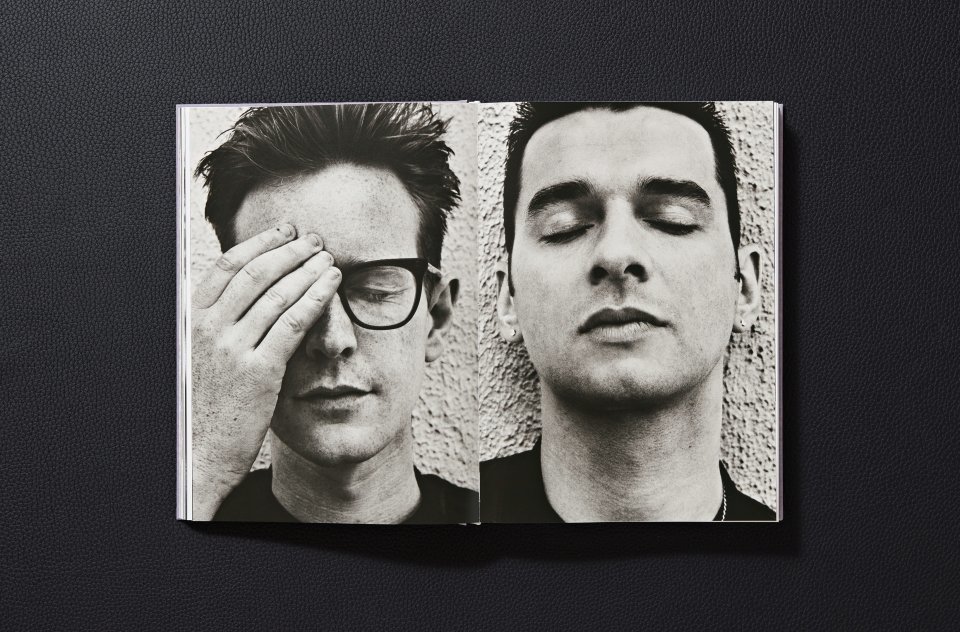
Last year, photographer Anton Corbijn released a new book, MOOD/MODE, showcasing work outside the boundaries of the rock photography world in which he’d made his name. But no matter whom he’s photographing, Corbijn brings a high seriousness to the endeavor that he explains as part of his religious upbringing in the book’s introduction. “My Protestant background always marked & influenced my portrait photography. Mankind. Humanity. Empathy,” he writes, were the ideals he absorbed as a child. Such beliefs “kept me from doing work that lacked a deeper purpose.”
Corbijn grew up in a small village outside Rotterdam, Jean-Jacques Naudet writes. “His father and many other male members of his family were pastors. Life was strict and simple, on Sunday everybody dressed in black. Religion was omnipresent.”
He moved away to the city and began taking photos of the music scene at 17. But the look and feel of his early life never left him. It was this aesthetic that attracted Depeche Mode, one of Corbijn’s longest-running musical collaborators and a band who were no strangers to brooding in black and making religious references and appeals to humanity.
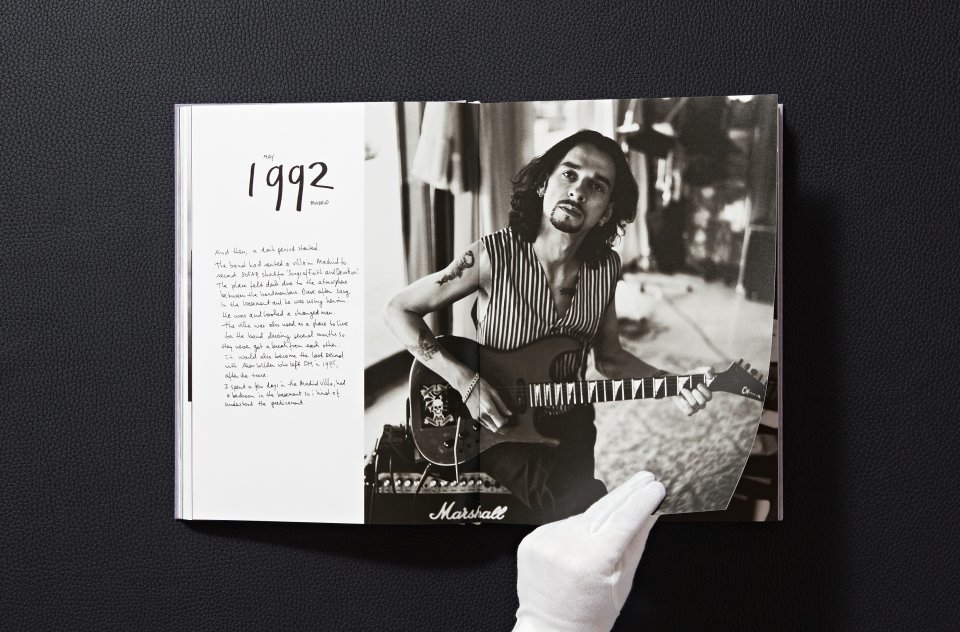
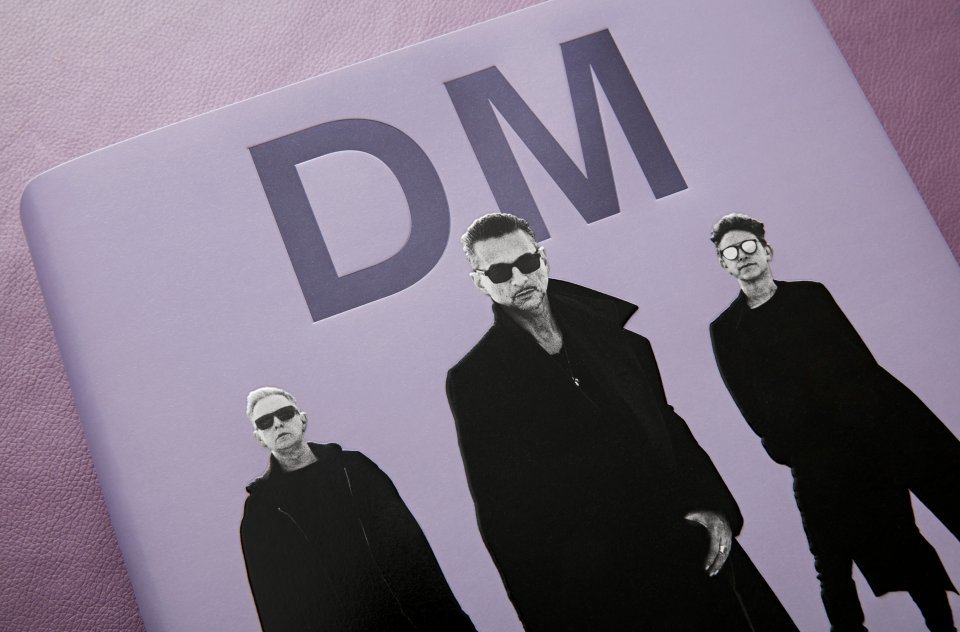
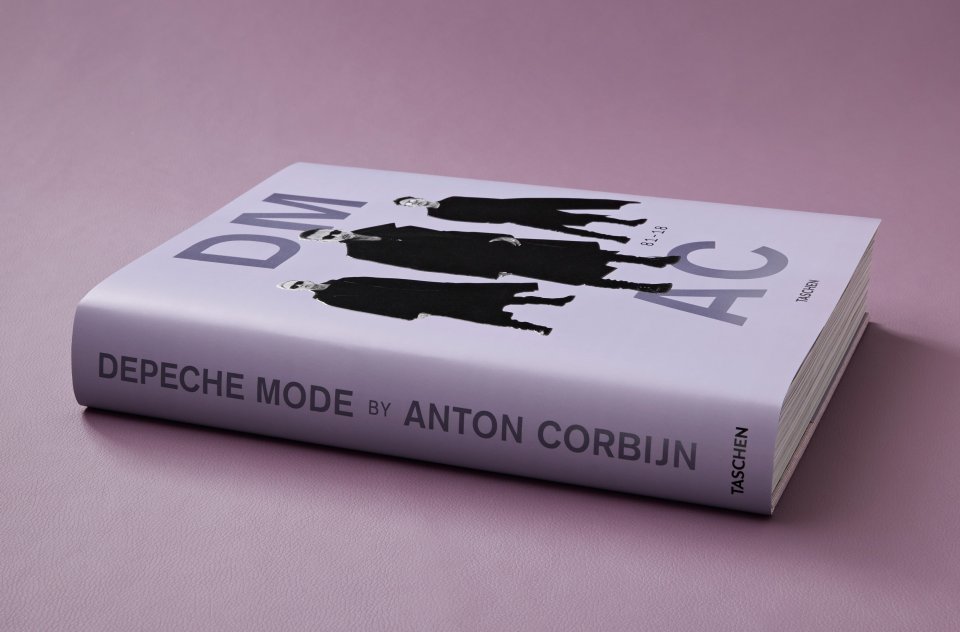
“We were seen as just a pop band,” says Depeche Mode’s Martin Gore. “We thought that Anton had a certain seriousness, a certain gravity to his work, that would help us get away from that.” Corbijn first helped them refine their look in mid-80s and “was able to give the Depeche Mode sound, that we were beginning to create, a visual identity,” says singer Dave Gahan. That identity is now the subject of a new book from Taschen that collects “over 500 photographs from Anton Corbijn’s personal archives,” notes the arts publisher, “some never seen before, as well as stage set designs, sketches, album covers, and personal observations” about the “world’s biggest cult band.”
Corbijn became such an integral part of Depeche Mode’s success, the band considered him “a veritable unseen member of the group,” writes Post-Punk.com, mediating their image not only through photography but also live projections and, of course, music videos. They were able to achieve “a kind of cult status,” says Gore in the mini-documentary above, which also has an interview with Corbijn. The photographer walks us through his history with the legendary synth pioneers (whom he did not like at first), beginning with the first image he shot of them in 1981, when founder Vince Clarke was still in the band.
Clarke leans behind Gahan’s left shoulder, the full band framed by a stone arch. To Gahan’s right is an enormous crucifix. It set a tone for the working relationship to come. “There has to be an element of the person in the photograph,” says Corbijn of his portraiture, “but there also has to be an element of the photographer.” It took another few years after that first shoot, he tells The Guardian, but he realized “how good their music and my visuals actually went together.… They had soul.” You can order a copy of the new book, Depeche Mode by Anton Corbijn from Taschen here.
In recent years, the major cities of Japan have felt as big and bustling as ever. But more than a little of that urban energy has come at a cost to the countryside, whose ongoing depopulation since the Second World War has become the stuff of countless mournful photo essays. Japan is, of course, well-known as the kind of society that keeps a rural train station in service just to take a single pupil to school. But in many of these areas, the day eventually comes when there’s no one left to teach. After not just the students but the faculty and staff have cleared out, what to do with the schools themselves? If you’re anything like Aoki Yohei (known to all as “Yo-chan”), you just move yourself on in.
In one of the school’s many rooms Aoki runs a café, roasting coffee on the premises, and in others he’s set up a hostel. In another space he’s created a recording studio outfitted with guitars, drums, keyboards, and much else besides. This sort of thing would hardly be possible within the confines of a Tokyo apartment, and Aoki accomplished it all after quitting his salaryman job without a plan.
Or rather he did it noupuran, to use one of the many Englishisms he drops in the interview with Tokyo Lens vlogger Norm Nakamura in the video at the top of the post. The school is in Ehime, one of the four prefectures of Shikoku, the second-smallest of Japan’s main islands. Though picturesque, its location is also deep enough in the mountains to seem forbiddingly remote, but the Ehime-born Aoki seems to have had no compunction about it.
Ehime faces the Seto Inland Sea, the areas surrounding which Japanologist Donald Richie described in the 1960s as possessing “the last places on earth where men rise with the sun and where streets are dark and silent by nine at night.” But for Nakamura, nine is the hour to set out in search of unexplained sounds and creepy vibes. Alas, even his best production efforts can’t mask the obvious serenity of the property. He encounters much more eeriness elsewhere on Shikoku: Nagoro Village, the vast majority of whose inhabitants aren’t human beings but fully dressed, scarecrow-like dolls. Each and every one was crafted by Tsukimi Ayano, a native who returned from Osaka to find most everyone she’d known long gone. As for Nagoro’s own elementary school, abandoned for some 20 years now, just wait until you see what “Ayano-san” has done with its gym.
Based in Seoul, Colin Marshall writes and broadcasts on cities, language, and culture. His projects include the Substack newsletterBooks on Cities, the book The Stateless City: a Walk through 21st-Century Los Angeles and the video series The City in Cinema. Follow him on Twitter at @colinmarshall or on Facebook.
Waddles the Duck was born with a mangled left leg. So what does his caretaker–Ben Weinman, the guitarist of Suicidal Tendencies–do? Gets him a 3D printed prosthetic, with the help of Derrick Campana, a Certified Pet Prostheticist at Bionic Pets, notes Laughing Squid. And, for a brief moment, the world’s ok.
If you would like to support the mission of Open Culture, consider making a donation to our site. It’s hard to rely 100% on ads, and your contributions will help us continue providing the best free cultural and educational materials to learners everywhere. You can contribute through PayPal, Patreon, and Venmo (@openculture). Thanks!
It is often claimed that relativism, subjectivism and nihilism are typically modern philosophical problems that emerge with the breakdown of traditional values, customs and ways of life. The result is the absence of meaning, the lapse of religious faith, and feeling of alienation that is so widespread in modernity.
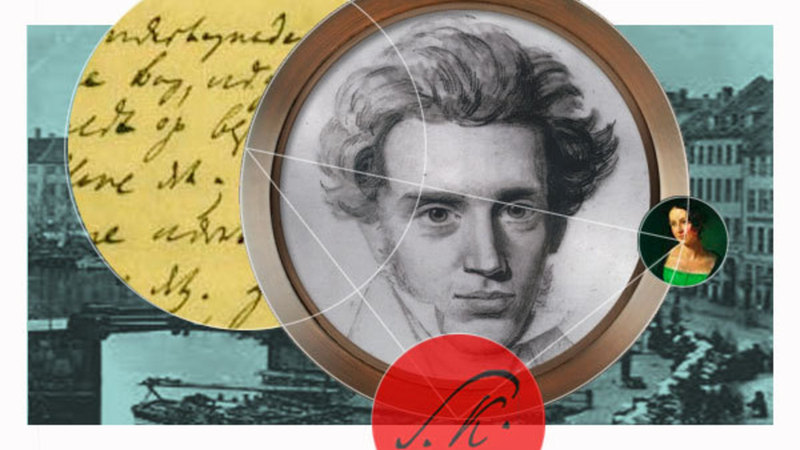
The Danish thinker Søren Kierkegaard (1813–55) gave one of the most penetrating analyses of this complex phenomenon of modernity. But somewhat surprisingly he seeks insight into it not in any modern thinker but rather in an ancient one, the Greek philosopher Socrates.
In this course created by former associate professor at the Søren Kierkegaard Research Centre, Jon Stewart, we will explore how Kierkegaard deals with the problems associated with relativism, the lack of meaning and the undermining of religious faith that are typical of modern life. His penetrating analyses are still highly relevant today and have been seen as insightful for the leading figures of Existentialism, Post-Structuralism and Post-Modernism.
You can take Søren Kierkegaard for free by selecting the audit option upon enrolling. If you want to take the course for a certificate, you will need to pay a fee.
“We don’t make mistakes. We have happy accidents,” the late Bob Ross soothed fans painting along at home, while brushing an alarming amount of black onto one of his signature nature scenes.
His mellow on-camera demeanor and flowing, wet-on-wet oil painting style were perfectly calibrated to help tightly-wound viewers relax into a right-brained groove.
Having collected data on Ross’ evergreen series, The Joy of Painting, they analyzed it for frequency of color use over the show’s 403 episodes, as well as the number of colors applied to each canvas.
For those keeping score, after black and white, alizarin crimson was the color Ross favored most, and 1/4 of the paintings made on air boast 12 colors.
The data could be slightly skewed by the contributions of occasional guest artists such as Ross’ former instructor, John Thamm, who once counseled Ross to “paint bushes and trees and leave portrait painting to someone else.” Thamm availed himself of a single color — Van Dyke Brown — to demonstrate the wipe out technique. His contribution is one of the few human likenesses that got painted over the show’s 11-year public television run.
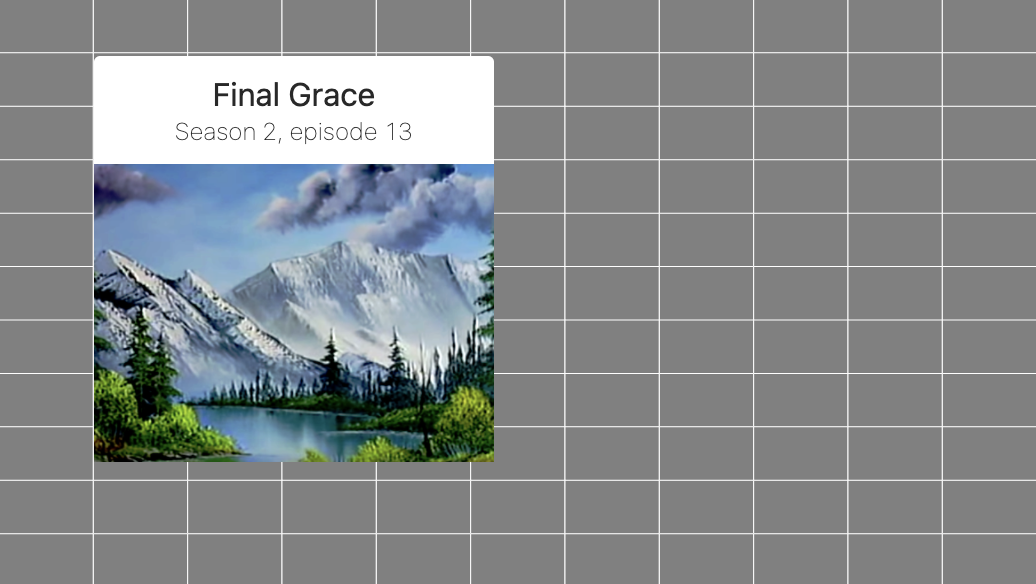
Mouse over a grid of grey rectangles to see the 403 artworks presented in chronological order, along with titles and episode numbers.
(This has all the makings of a thumping good memory game, à laConcentration… flip all the rectangles, study them, then see if you can navigate back to all the cabins or meadows.)
A bar graph, similarly composed of rectangles, reveals the colors that went into each painting.
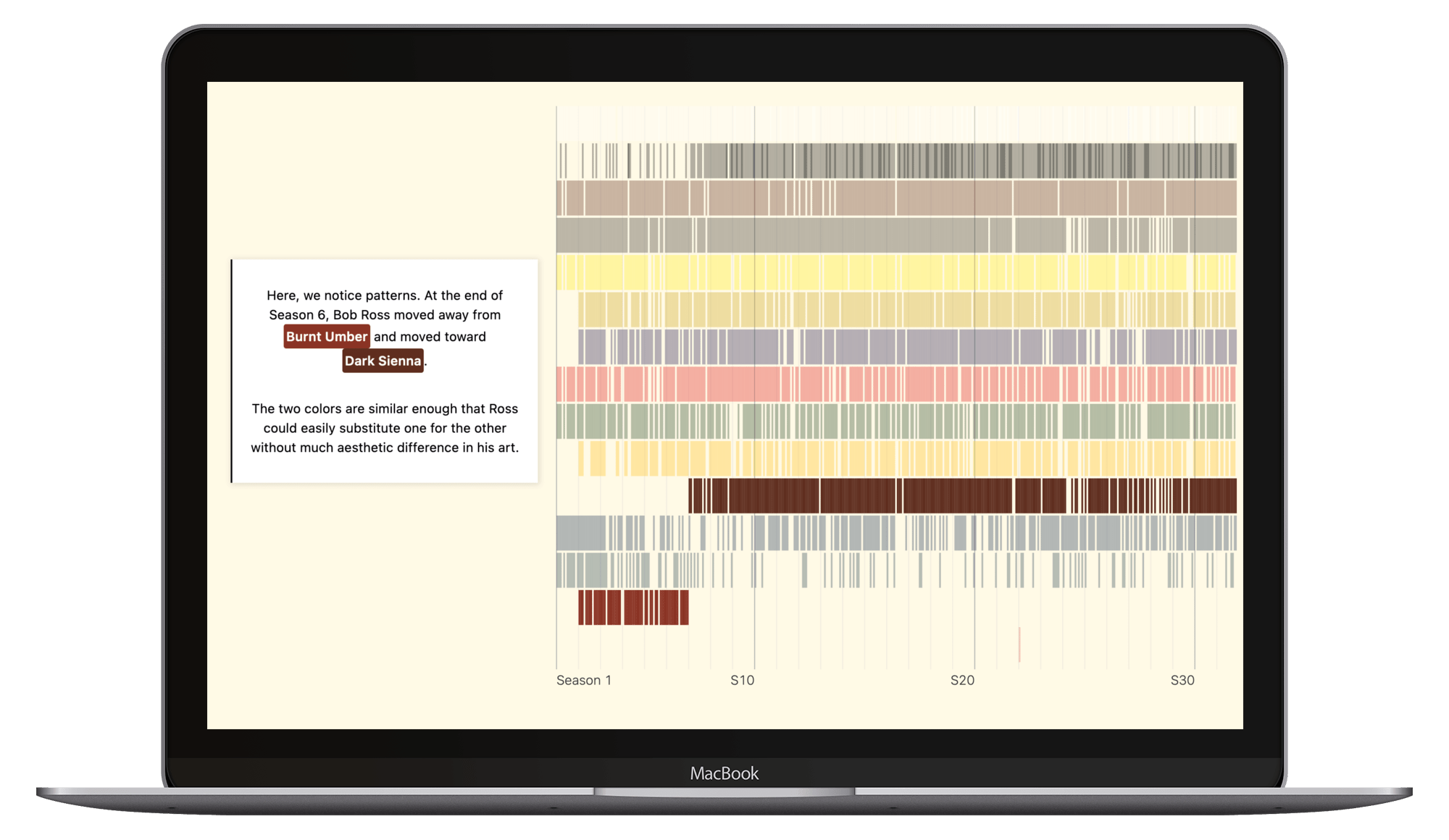
Another chart analyzes Ross’ use of color over time, as he moved away from Burnt Umber and eased up on Pfthalo Green.
Indian Red was accorded but a single use, in season 22’s first episode, “Autumn Images.” (“Let’s sparkle this up. We’re gonna have fall colors. Let’s get crazy.”)
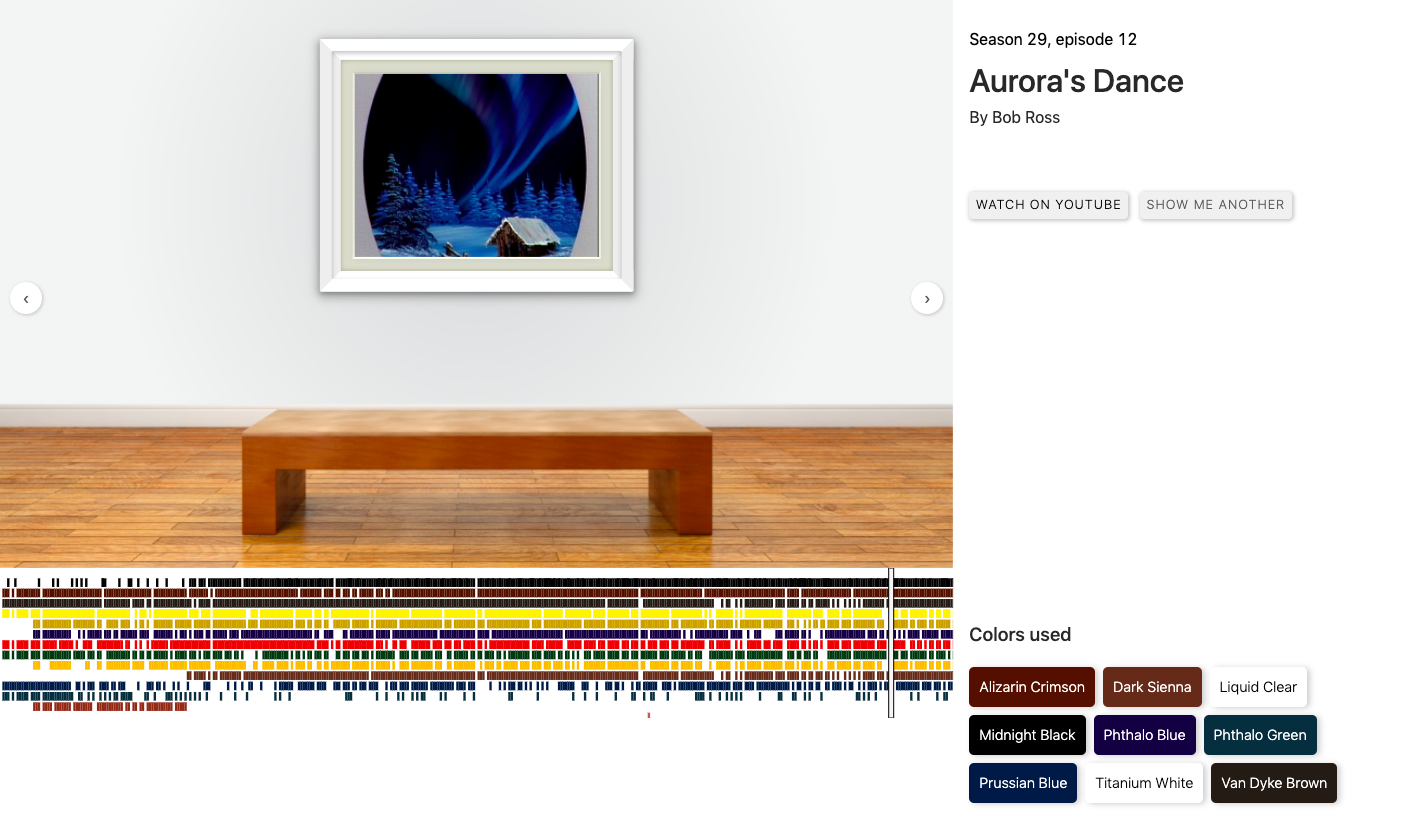
For art lovers craving a more traditional gallery experience, site creator Connor Rothschild has installed a virtual bench facing a frame capable of displaying all the paintings in random or chronological order, with digital swatches representing the paints that went into them and YouTube links to the episodes that produced them.
And for those who’d rather gaze at data science, the code is available on GitHub.
We're hoping to rely on loyal readers, rather than erratic ads. Please click the Donate button and support Open Culture. You can use Paypal, Venmo, Patreon, even Crypto! We thank you!
Open Culture scours the web for the best educational media. We find the free courses and audio books you need, the language lessons & educational videos you want, and plenty of enlightenment in between.