How Joni Mitchell Learned to Play Guitar Again After a 2015 Brain Aneurysm–and Made It Back to the Newport Folk Festival

Joni Mitchell almost quit the music indus­try in 1996, two years after releas­ing what crit­ics called her best album since the 70s, 1994’s Tur­bu­lent Indi­go. “I was in a los­ing fight with a busi­ness that basi­cal­ly, you know, was treat­ing me like an also-ran or a has-been, even though I was still doing good work,” she told an inter­view­er at the time. “Every­thing about the busi­ness dis­gust­ed me.”

But show busi­ness has nev­er real­ly been about the show or the busi­ness for Mitchell. From her deeply per­son­al song­writ­ing to her vocal vul­ner­a­bil­i­ty, she imbues her music with the deep­est parts of her­self. Then there’s her bril­liant­ly idio­syn­crat­ic gui­tar play­ing. “Her gui­tar does­n’t real­ly sound like a gui­tar,” Jef­frey Pep­per Rodgers writes at Acoustic Gui­tar. “The tre­ble strings become a cool-jazz horn sec­tion; the bass snaps out of syn­co­pa­tions like a snare drum; the notes ring out in clus­ters that sim­ply don’t come out of a nor­mal six-string.”

Mitchell “mas­tered the idea that she could tune the gui­tar any way she want­ed,” says David Cros­by. She tuned to “the num­bers in a date… a piece of music that I liked on the radio,” she says. “I’d tune to bird­songs and the land­scape I was sit­ting in.” Try­ing to dupli­cate Mitchel­l’s tun­ings is typ­i­cal­ly a fool’s errand; even she for­gets them. But “Joni’s weird chords,” as she says, are indis­pens­able to her sound. (She also says she’s only writ­ten two songs — one of them her first — in stan­dard tun­ing.)

In 1996, a dig­i­tal gui­tar ped­al that emu­lat­ed her tun­ings and allowed a greater range of sym­phon­ic tones brought her back to the stage. Or, to put it anoth­er way — what brought her back to music was the gui­tar, which is exact­ly what brought her back to the stage at this year’s New­port Folk Fes­ti­val — play­ing her first live set in 20 years after suf­fer­ing a brain aneurysm in 2015. (She last played New­port 53 years ago in 1969.) Noth­ing keeps Joni down for long.

In this case, how­ev­er, Mitchell did­n’t just for­get her tun­ings after her ill­ness. She for­got how to play the gui­tar alto­geth­er. She had to teach her­self again by watch­ing videos of her play­ing online. “I’m learn­ing,” she says in the CBS inter­view at the top. “I’m look­ing at videos that are on the net, to see where to put my fin­gers. It’s amaz­ing… when you have an aneurysm, you don’t know how to get into a chair. You don’t know how to get out of bed. You have to learn all these things again. You’re going back to infan­cy, almost.”

She’s come a long way since 2015, when she could nei­ther speak nor walk, “much less play the gui­tar,” notes NPR. “To be able to recov­er to the point of being able to per­form as a musi­cian is real­ly incred­i­ble,” says Dr. Antho­ny Wang, a neu­ro­sur­geon at Ronald Regan UCLA Hos­pi­tal. “Play­ing an instru­ment and vocal cord coor­di­na­tion, those sort of things are real­ly, super com­plex fine move­ments that would take a long time to relearn.” Mitchel­l’s com­mit­ment to mas­ter­ing her instru­ment again was unflag­ging.

See her above pluck out “Joni’s weird chords” on one of her Park­er Fly gui­tars in a solo sec­tion from the song “Just Like This Train” from Court & Spark. As we not­ed in an ear­li­er post, she was joined at New­port by a host of celebri­ty friends, includ­ing Bran­di Carlile, who sits with her in the CBS inter­view and con­firms the amount of “will and grit” she applied to her recov­ery. She’s sur­vived polio, per­son­al tragedy, the 60s, chain smok­ing, and a debil­i­tat­ing aneurysm: the 78-year-old liv­ing leg­end won’t be with us for­ev­er, but we might expect she’ll have a gui­tar in her hand when she final­ly makes her exit from the music busi­ness for the last time.

via NPR

Relat­ed Con­tent:

Joni Mitchell Sings “Both Sides Now” at the New­port Folk Fes­ti­val: Watch Clips from Her First Full Con­cert Since 2002

Hear Demos & Out­takes of Joni Mitchell’s Blue on the 50th Anniver­sary of the Clas­sic Album

How Joni Mitchell Wrote “Wood­stock,” the Song that Defined the Leg­endary Music Fes­ti­val, Even Though She Wasn’t There (1969)

Josh Jones is a writer and musi­cian based in Durham, NC. Fol­low him at @jdmagness.

Visit Great Cities in the 1920s in Restored Color Film: New York City, London, Berlin, Paris, Venice & More

Woody Allen’s Mid­night in Paris stars Owen Wil­son as a Hol­ly­wood screen­writer on vaca­tion in the French cap­i­tal. Alas, the City of Lights as it is in the twen­ty-first cen­tu­ry does­n’t sat­is­fy him. When he walks his streets he thinks only of the nine­teen-twen­ties, when a trav­el­er in Paris could eas­i­ly cross paths with the likes of Paul Gau­guin, Hen­ri Matisse, and Edgar Degas — as well as expa­tri­ates from Pablo Picas­so and Dju­na Barnes to F. Scott Fitzger­ald and Ernest Hem­ing­way. Or so he imag­ines, at any rate, and so he goes on to expe­ri­ence when he finds him­self trans­port­ed back in time to the city of the “Lost Gen­er­a­tion” at each stroke of mid­night.

With the video above, you, too, can take a trip to nine­teen-twen­ties Paris — as well as nine­teen-twen­ties New York, Chica­go, San Fran­cis­co, Lon­don, Berlin, Stock­holm, Copen­hagen, Ams­ter­dam, Nice, Gene­va, Milan, and Venice. A com­pi­la­tion of peri­od footage sourced from the Prelinger Archives, it light­ly col­orizes, adds ambi­ent sound, and in oth­er ways enhances its dis­parate mate­ri­als to make them feel all of a piece.

And indeed, the clip plays almost as if shot by a sin­gle, and sin­gu­lar­ly ambi­tious, world trav­el­er of one hun­dred years ago. That hypo­thet­i­cal trav­el­er’s world is both ours — filled as it is with such rec­og­niz­able and ever-pho­tograph­able sites as the Eif­fel Tow­er, the gon­do­las of Venice, and the non-latex-clad cyclists of Copen­hagen — and not.

Whether tra­di­tion­al or mod­ern, the dress of every­one on the street looks neater and more for­mal than that worn by urban­ites in the main today. In some cities, horse-drawn car­riages still make their way through the traf­fic of bus­es, trams, and waves of seem­ing­ly iden­ti­cal per­son­al cars. (Ford man­u­fac­tured more than two mil­lion Mod­el Ts in 1923 alone.) The nine­teen-twen­ties brought rapid urban devel­op­ment in both the New World and the Old, as well as rapid devel­op­ment in motion pho­tog­ra­phy. Not for noth­ing was it the decade of the “city sym­pho­ny” film; for equal­ly good rea­son, it remains the decade of which many of us dream, even a cen­tu­ry lat­er, when we want to feel the exhil­a­ra­tion of moder­ni­ty.

Relat­ed con­tent:

Watch 1920s “City Sym­phonies” Star­ring the Great Cities of the World: From New York to Berlin to São Paulo

Expe­ri­ence Footage of Roar­ing 1920s Berlin, Restored & Col­orized with Arti­fi­cial Intel­li­gence

Nerves of Steel!: Watch Peo­ple Climb Tall Build­ings Dur­ing the 1920s.

Great New Archive Lets You Hear the Sounds of New York City Dur­ing the Roar­ing Twen­ties

Footage of Cities Around the World in the 1890s: Lon­don, Tokyo, New York, Venice, Moscow & More

Down­load 6600 Free Films from The Prelinger Archives and Use Them How­ev­er You Like

Based in Seoul, Col­in Mar­shall writes and broad­casts on cities, lan­guage, and cul­ture. His projects include the Sub­stack newslet­ter Books on Cities, the book The State­less City: a Walk through 21st-Cen­tu­ry Los Ange­les and the video series The City in Cin­e­ma. Fol­low him on Twit­ter at @colinmarshall, on Face­book, or on Insta­gram.

Watch 70+ Soviet Films Free Online, Courtesy of Mosfilm, the Hollywood of the Soviet Union

Recent­ly we’ve fea­tured films by Sergei Eisen­stein, a pio­neer of cin­e­ma as we know it, and Andrei Tarkovsky, one of the most respect­ed auteurs in the his­to­ry of the art form. They’re all free to watch on Youtube, as is Sergei Bon­darchuk’s epic adap­ta­tion of War and Peace from the late nine­teen-six­ties and Karen Shakhnazarov’s eight-part Anna Karen­i­na, which came out just a few years ago. For all this we have Mos­film to thank. Once the nation­al film stu­dio of the Sovi­et Union — equipped with the kind of resources that made it more or less the Hol­ly­wood of the U.S.S.R. — Mos­film remains in oper­a­tion as a pro­duc­tion com­pa­ny, as well as a Youtube chan­nel.


Mos­film’s playlist of Sovi­et movies now offers more than 70 Eng­lish-sub­ti­tled fea­tures, each one labeled by genre. The dozen come­dies cur­rent­ly free to watch include Leonid Gaidai’s mas­sive­ly suc­cess­ful crime-and-soci­ety com­e­dy The Dia­mond Arm (1969) and Eldar Ryazanov’s satir­i­cal Car­ni­val Night (1956).

The ver­sa­tile Ryazanov also direct­ed pic­tures of oth­er types for Mos­film, includ­ing the musi­cal Hus­sar Bal­lad (1962) and the melo­dra­ma Rail­way Sta­tion for Two (1982). A vari­ety of gen­res and sub­gen­res: Abram Room’s “love movie” Bed and Sofa (1927), Karen Shakhnazarov’s “mys­tic dra­ma” Assas­si­na­tion of the Tsar (1991), Vladimir Motyl’s “East­ern” (as opposed to West­ern) White Sun of the Desert (1970), and Georgiy Daneliya’s “distopia movie” Kin-dza-dza! (1986).

Of course, one need not search far and wide to see the Sovi­et Union itself described as a dystopia. Few today could deny the fatal flaws of Sovi­et polit­i­cal and eco­nom­ic sys­tems, but then, those flaws were hard­ly unknown to Sovi­et cit­i­zens them­selves, even those in posi­tions of cul­tur­al promi­nence. View­ers today may be sur­prised at just how keen­ly some of these movies (Georgiy Daneliya’s “trag­ic com­e­dy” Autumn Marathon from 1979 being one clas­sic exam­ple) observe the nature of life behind the Iron Cur­tain. In this and oth­er ways, Sovi­et film has a greater vari­ety of sen­si­bil­i­ties and tex­tures than one might expect. And giv­en that Mos­film pro­duced more than 3,000 pic­tures dur­ing the exis­tence of the U.S.S.R. — includ­ing Aki­ra Kuro­sawa’s Der­su Uza­la, from 1975 — there remain many more to dis­cov­er, at least if the upload­ing con­tin­ues apace. View the entire playlist of Sovi­et films with Eng­lish sub­ti­tles here.

Relat­ed con­tent:

Free: Watch Bat­tle­ship Potemkin and Oth­er Films by Sergei Eisen­stein, the Rev­o­lu­tion­ary Sovi­et Film­mak­er

Watch the Huge­ly-Ambi­tious Sovi­et Film Adap­ta­tion of War and Peace Free Online (1966–67)

Watch Andrei Tarkovsky’s Films Free Online: Stalk­er, The Mir­ror & Andrei Rublev

Watch an 8‑Part Film Adap­ta­tion of Tolstoy’s Anna Karen­i­na Free Online

The Top 20 Russ­ian Films, Accord­ing to Rus­sians

Based in Seoul, Col­in Mar­shall writes and broad­casts on cities, lan­guage, and cul­ture. His projects include the Sub­stack newslet­ter Books on Cities, the book The State­less City: a Walk through 21st-Cen­tu­ry Los Ange­les and the video series The City in Cin­e­ma. Fol­low him on Twit­ter at @colinmarshall, on Face­book, or on Insta­gram.

Behold! A Medieval Graphic Novel Carved on an 14th Century Ivory Box

The Châte­laine de Ver­gy, a court­ly romance that was wild­ly pop­u­lar in the mid-13th cen­tu­ry, would’ve made a crowd pleas­ing graph­ic nov­el adap­ta­tion. It’s got sex, treach­ery, a trio of vio­lent deaths, and a cute pup in a sup­port­ing role.

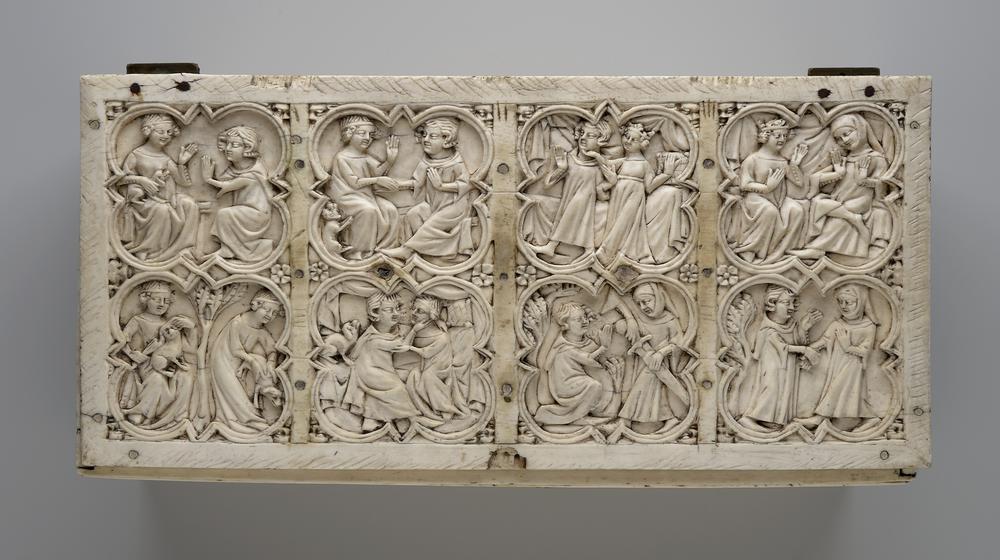
See­ing as how the form had yet to be invent­ed, medieval audi­ences got the next best thing — a Goth­ic ivory cas­ket on which the sto­ry is ren­dered as a series of carved pic­tures that start on the lid and wrap around the sides.

In an ear­li­er video for the British Museum’s Curator’s Cor­ner series, Late Medieval Col­lec­tions Cura­tor Nao­mi Speak­man admit­ted that the pur­pose of such deluxe cas­kets is dif­fi­cult to pin down. Were they tokens from one lover to anoth­er? Wed­ding gifts? Jew­el­ry box­es? Doc­u­ment cas­es?

Unclear, but the intri­cate carv­ings’ nar­ra­tive has def­i­nite­ly been iden­ti­fied as that of The Châte­laine de Ver­gy, a steamy sec­u­lar alter­na­tive to the reli­gious scenes whose depic­tion con­sumed a fair num­ber of medieval ele­phant tusks.

In addi­tion to the ear­ly-14th cen­tu­ry exam­ple in the British Museum’s col­lec­tion, the Cour­tauld Insti­tute of Art’s Goth­ic Ivories data­base cat­a­logues a num­ber of oth­er medieval cas­kets and cas­ket frag­ments depict­ing The Châte­laine de Ver­gi, cur­rent­ly housed in muse­ums in Milan, Flo­rence, Paris, Vien­na, New York City and Kansas.

A very graph­ic nov­e­l­esque con­ceit Speak­man points to in the British Museum’s cas­ket finds the Duke of Bur­gundy break­ing the frame (to use comics ter­mi­nol­o­gy), reach­ing behind the gut­ter to help him­self to the sword the Châtelaine’s knight­ly lover has just plunged into his own breast.

Peer around to the far side of the cas­ket to find out what the Duke intends to do with that sword. It’s a shock­er that silences the trum­pets, qui­ets the danc­ing ladies, and might even have laid ground for a sequel: Chate­laine: The Duke’s Wrath.

Read Eugene Mason’s ear­ly 20th cen­tu­ry trans­la­tion of The Chate­laine of Ver­gi here.

Watch more episodes of the British Museum’s Curator’s Cor­ner here.

Relat­ed Con­tent 

The Book of St Albans, One of the Finest Medieval Man­u­scripts, Gets Dig­i­tized and Put Online

A Medieval Book That Opens Six Dif­fer­ent Ways, Reveal­ing Six Dif­fer­ent Books in One

Behold Medieval Snow­ball Fights: A Time­less Way of Hav­ing Fun

- Ayun Hal­l­i­day is the Chief Pri­ma­tol­o­gist of the East Vil­lage Inky zine and author, most recent­ly, of Cre­ative, Not Famous: The Small Pota­to Man­i­festo.  Fol­low her @AyunHalliday.

Watch Hundreds of Polish Films Free Online: Feature Films, Documentaries, Animations & More

The Pol­ish film indus­try has pro­duced a few inter­na­tion­al­ly-known auteurs, includ­ing Andrzej Waj­da, Krzysztof Kieślows­ki, and Roman Polan­s­ki, but a hand­ful of crit­i­cal­ly-laud­ed direc­tors can­not rep­re­sent the scope of any nation­al cin­e­ma. With­out a wider appre­ci­a­tion of Poland’s film his­to­ry, we lack cru­cial con­text for under­stand­ing its most famous artists. Now, a new archive called 35mm.online gives us hun­dreds of films and ani­ma­tions by Pol­ish film­mak­ers, a unique oppor­tu­ni­ty to immerse one­self in the coun­try’s cin­e­mat­ic art like nev­er before.

Pol­ish film his­to­ry can broad­ly be divid­ed into films made before WWII and those made after, when the coun­try came under strict Com­mu­nist con­trol. The first peri­od includes a silent film indus­try that began with the ori­gins of cin­e­ma itself and made a star of actress Pola Negri, whose films were screened in Berlin with Ger­man-lan­guage title cards. Many movies made in the sound era took direc­tion, no pun intend­ed, from film­mak­er Alek­sander Ford, a cham­pi­on of Com­mu­nist aes­thet­ic the­o­ry. “Cin­e­ma can­not be a cabaret,” he once told the Sovi­et Kino mag­a­zine, “it must be a school.” Ford made real­ist films about social issues and pro­pa­gan­da films dur­ing the war.

In 1945, Ford took con­trol of the Pol­ish film indus­try as direc­tor of the nation­al­ized state pro­duc­tion com­pa­ny, Film Pol­s­ki. The com­pa­ny had a monop­oly on pro­duc­tion, dis­tri­b­u­tion, and exhi­bi­tion, and in Poland, as in most East­ern Bloc nations in the Cold War, the chal­lenge of evad­ing cen­sors put far more pres­sure on film­mak­ers than mar­ket demands. “Under the Com­mu­nist regime,” Dark Kuz­ma writes at Movie Mak­er, “Pol­ish author­i­ties waged war on moviemak­ers.… Any cri­tique of the Sovi­et Union or the Pol­ish Peo­ple’s Repub­lic was silenced,” begin­ning with a 1945 film titled 2x2=4, by Antoni Bohdziewicz.

Ford did­n’t last long as an admin­is­tra­tor, though he returned in the 50s to help advise and over­see pro­duc­tions. Film Pol­s­ki became the Cen­tral Office of Cin­e­matog­ra­phy in 1951, and enforced even stricter con­trols on Pol­ish film­mak­ers. But as con­trol of the film indus­try cen­tral­ized, aca­d­e­m­ic bureau­crats took over for savvy film­mak­ers like Ford. “Pol­ish cen­sors,” Kuz­ma notes, “were high­ly lit­er­ary, capa­ble of deci­pher­ing even the most sophis­ti­cat­ed ‘sub­ver­sions’ in books, news­pa­pers and oth­er writ­ten forms — but they were quite impo­tent when it came to eval­u­at­ing images.”

Pol­ish film­mak­ers could not make any overt nar­ra­tive cri­tiques and “were forced to learn how to say some­thing with­out say­ing it direct­ly, how to depict a real­i­ty that did not offi­cial­ly exist,” says Oscar-nom­i­nat­ed Pol­ish cin­e­matog­ra­ph­er Ryszard Lenczews­ki. Neces­si­ty led to a cre­ative sym­bol­ic lan­guage view­ers had to decode:

This was a respon­si­bil­i­ty we all felt: to cre­ate lay­ered images, images with dou­ble mean­ings that dared view­ers to inter­pret them dif­fer­ent­ly. It was all in the details — like using wider lens­es to show things you would not be able to show any oth­er way. Some­thing may be occur­ring in the back­ground, slight­ly blurred. Some­times all the film needs was to not include some­thing or some­one in the frame. 

The need for clan­des­tine cin­e­mat­ic meth­ods became ful­ly appar­ent in 1982, when a com­mis­sion met and deter­mined even stricter rules for Pol­ish film, par­tial­ly in reac­tion to the film­mak­er Ryszard Buga­jski’s Inter­ro­ga­tion, an unspar­ing depic­tion of “Stal­in-era polit­i­cal life.” (See an excerpt­ed scene at the top). A tran­script of the pro­ceed­ings, which includ­ed Buga­js­ki, made their way out of the coun­try in secret and was report­ed on in The New York Times. Buga­js­ki feared his film would not see release, and he was right, though Inter­ro­ga­tion cir­cu­lat­ed in samiz­dat VHS form for years, attain­ing cult sta­tus. It was even­tu­al­ly released years lat­er and would become one of the most pop­u­lar films of the time.

After Inter­ro­ga­tion, Pol­ish film­mak­ers began to employ even more dis­tinc­tive sym­bol­ic vocab­u­lar­ies, from sci-fi satire in 1984’s huge­ly pop­u­lar Sexmis­sion (trail­er above), to the use of heav­i­ly sat­u­rat­ed col­ors, a fea­ture so many Pol­ish films of the 1980s and 90s share and which char­ac­ter­izes the work of Kieślows­ki, one of the most revered of Pol­ish direc­tors among Pol­ish and non-Pol­ish cinephiles alike. Best known for his ear­ly 90s tril­o­gy Three Col­ors: Blue, Red and White, the direc­tor began using spe­cif­ic col­ors to con­vey mean­ing ear­li­er in his career.

Cam­era oper­a­tor Sła­womir Idzi­ak, who worked on Kieślowski’s 1988 A Short Film About Killing (see trail­er above), remem­bers, “I shot the film in this hideous yel­low-green­ish col­or to sub­tly hint at the direc­tor’s idea that the coun­try could be a killer, just like the main char­ac­ter. I remem­ber one review­er in Cannes writ­ing that because the screen assumes the col­or of urine, it encap­su­lates the real­i­ty of Com­mu­nist Poland. That was beau­ti­ful.”

Film­mak­er Bar­bara Sass went on to make sev­er­al films in which spe­cif­ic col­or plays sig­nif­i­cant roles, start­ing with her 1980, fes­ti­val-win­ning debut, With­out Love. She sur­rounds her yel­low-haired main char­ac­ter, played by Doro­ta Stal­ińs­ka, with a sick­ly hos­pi­tal yel­low, then immers­es her in the dim red light of a pho­to­graph­ic dark­room. Her many lat­er films employed bold uses of col­or to sim­i­lar effect. These films rep­re­sent only a tiny sam­pling of the near­ly 4,000 Pol­ish films host­ed on 35mm.online, a joint project of the Pol­ish Film Insti­tute and “one of Poland’s old­est film stu­dios, Wytwrnia Filmw Doku­men­tal­nych i Fab­u­larnych (WFDiF), (Doc­u­men­tary and Fea­ture Film Stu­dios),” notes The first News

The col­lec­tion includes 160 fea­tures, 71 doc­u­men­taries 474 ani­mat­ed short films, and 10 ani­mat­ed fea­tures.  We’ve bare­ly scratched the sur­face of Pol­ish cin­e­ma his­to­ry and there are hun­dreds of ani­ma­tions yet to watch (read some of their grim descrip­tions at MetaFil­ter). So get to watch­ing at 35mm.online.

Note: To enable Eng­lish sub­ti­tles, click the “Enable Sub­ti­tles” but­ton beneath each film. (The first but­ton.) Then go to the “Sett­tings” but­ton and choose Eng­lish sub­tiles.

via MetaFil­ter

Relat­ed Con­tent:

50 Film Posters From Poland: From The Empire Strikes Back to Raiders of the Lost Ark

An Intro­duc­tion to Stanis­law Lem, the Great Pol­ish Sci-Fi Writer, by Jonathan Lethem

Free Online: Watch Stalk­er, Mir­ror, and Oth­er Mas­ter­works by Sovi­et Auteur Andrei Tarkovsky

Josh Jones is a writer and musi­cian based in Durham, NC. Fol­low him at @jdmagness.

The Book of St Albans, One of the Finest Medieval Manuscripts, Gets Digitized and Put Online

This past month, on the eve of the June 22nd feast of St Alban, the library of Trin­i­ty Col­lege Dublin announced that it had dig­i­tized the “13th cen­tu­ry mas­ter­piece” the Book of St Alban, a rich­ly illus­trat­ed man­u­script that “fea­tures 54 indi­vid­ual works of medieval art and has fas­ci­nat­ed read­ers across the cen­turies, from roy­al­ty to renais­sance schol­ars.”

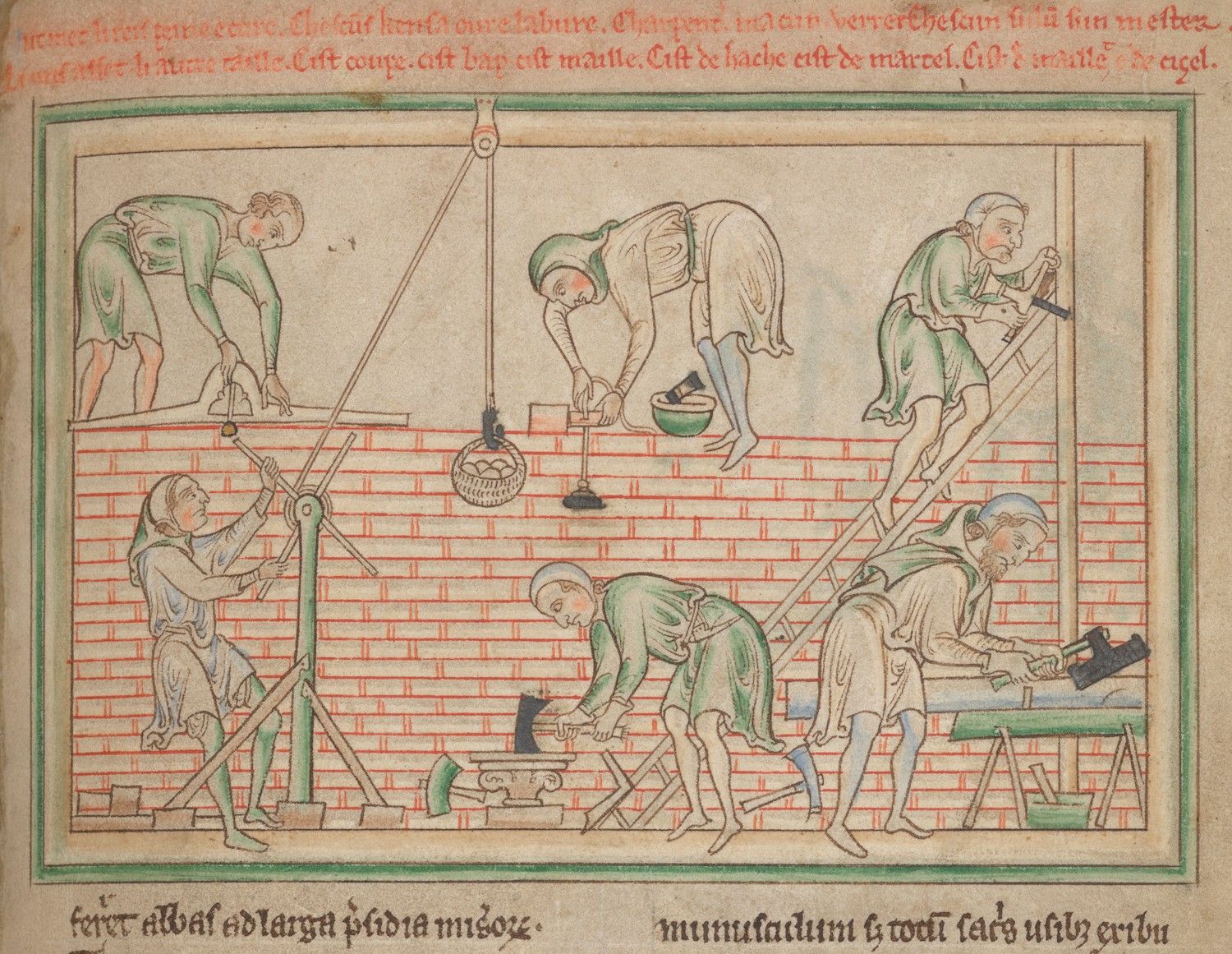
Cre­at­ed by the Bene­dic­tine monk Matthew Paris, the man­u­script “chron­i­cles the life of St Alban,” notes The Irish Times, “and also out­lines the con­struc­tion of St Alban’s Cathe­dral in Hert­ford­shire.” The text and illus­tra­tions explain the ori­gins of a cult of St. Alban, the first Eng­lish mar­tyr, that began to spring up after his 4th cen­tu­ry death.

Accord­ing to the Ven­er­a­ble Bede, the Eng­lish monk who wrote the Eccle­si­as­ti­cal His­to­ry of the Eng­lish Peo­ple, the mar­tyr­dom of Alban involved a few mirac­u­lous events. Sen­tenced to die for his refusal to renounce Chris­tian­i­ty, Alban sup­pos­ed­ly peti­tioned God to dry up the Riv­er Ver so he could more quick­ly reach the place of his exe­cu­tion.

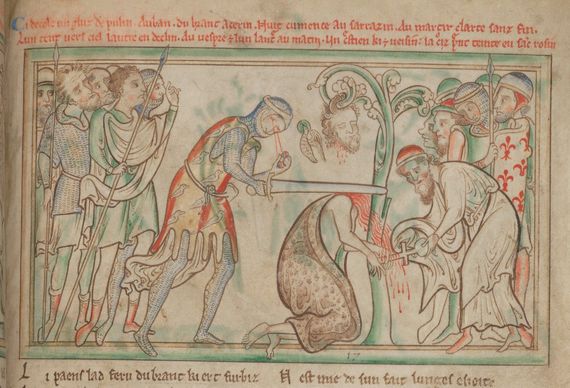
This mir­a­cle caused Alban’s Roman exe­cu­tion­er to fall to his feet, spon­ta­neous­ly con­vert, and refuse to kill the saint. A sec­ond exe­cu­tion­er stepped in to behead them both, where­upon this man’s eyes popped out of his head. “He who gave the wicked stroke,” writes Bede, “was not per­mit­ted to rejoice over the deceased; for his eyes dropped upon the ground togeth­er with the blessed mar­tyr’s head.”

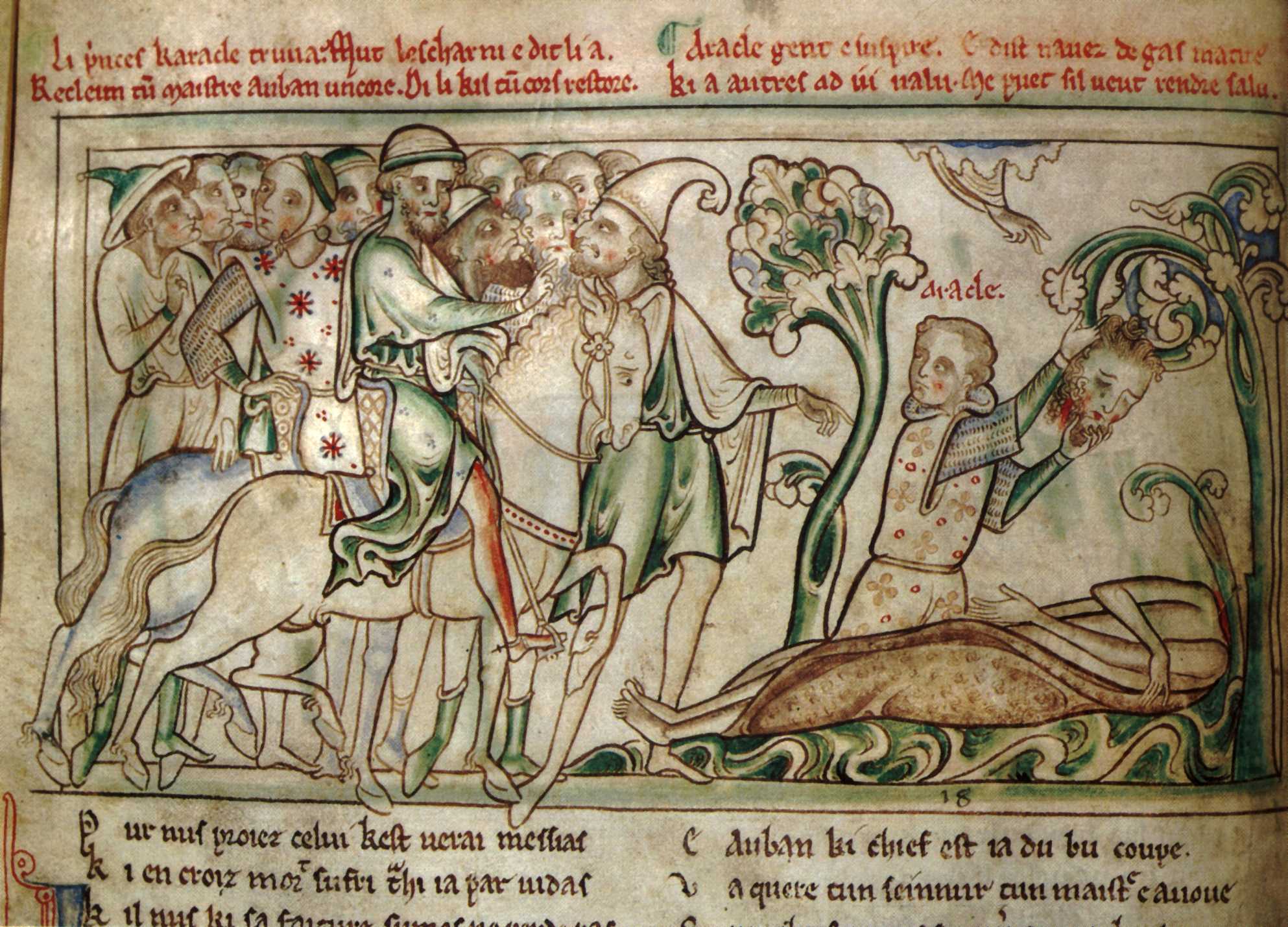
In the illus­tra­tion of this gris­ly sto­ry (top) from the man­u­script, we see the exe­cu­tion­er hold­ing his eyes in his hand, and Alban’s head appears to have been caught by the hair on a tree branch above. Anoth­er illus­tra­tion, fur­ther up, shows a char­ac­ter named Her­a­clius mak­ing off with Alban’s head.

In a lat­er leg­end, Alban’s head rolled to the bot­tom of Holy­well Hill, and a well sprang from where it came to rest. On the sup­posed site of Alban’s exe­cu­tion now stands St Albans Cathe­dral, once St Albans Abbey, where the Book of St Albans remained for 300 years until Hen­ry VIII dis­solved Britain’s monas­ter­ies in 1539.

The book is writ­ten in both Latin and Anglo-Nor­man French, “which made it acces­si­ble to a wider sec­u­lar audi­ence includ­ing edu­cat­ed noble women,” Trin­i­ty Col­lege’s Caoimhe Ni Lochlainn writes. “It was bor­rowed by noble ladies of the peri­od, includ­ing the King’s sis­ter-in-law Count­ess of Corn­wall, Sanchia of Provence, and oth­ers.”

The man­u­script even­tu­al­ly made its way to Trin­i­ty Col­lege Dublin in 1661, where it has remained ever since, and where its “most­ly framed nar­ra­tive scenes” have been admired by a select few. Now every­one can access the book and its illus­tra­tions, made with a “tint­ed draw­ing tech­nique,” Lochlainn notes, “where out­lined draw­ings are high­light­ed with col­ored wash­es from a lim­it­ed palette. This tech­nique was dis­tinct­ly Eng­lish, dat­ing back to the Anglo Sax­on art of the 10th cen­tu­ry.”

See all the gris­ly details of this fas­ci­nat­ing arti­fact at Trin­i­ty Col­lege Dublin’s Dig­i­tal Col­lec­tions, and learn more about the man­u­script in the video just above.

Relat­ed Con­tent:

The Medieval Mas­ter­piece, the Book of Kells, Has Been Dig­i­tized and Put Online

The Illu­mi­nat­ed Man­u­scripts of Medieval Europe: A Free Online Course from the Uni­ver­si­ty of Col­orado

How Illu­mi­nat­ed Medieval Man­u­scripts Were Made: A Step-by-Step Look at this Beau­ti­ful, Cen­turies-Old Craft

Josh Jones is a writer and musi­cian based in Durham, NC. Fol­low him at @jdmagness

Joni Mitchell Sings “Both Sides Now” at the Newport Folk Festival: Watch Clips from Her First Full Concert Since 2002

This week­end, the New­port Folk Fes­ti­val made head­lines when it brought out of retire­ment two music leg­ends. Paul Simon returned to the stage and per­formed “Grace­land,” “The Box­er” and “oth­er clas­sics.” But Joni Mitchell stole the show when she per­formed (with a lit­tle help from Bran­di Carlile) “Both Sides Now,” “Big Yel­low Taxi,” “Just Like This Train” and 10 oth­er songs. Mitchell suf­fered a brain aneurysm in 2015, and had­n’t per­formed a full con­cert since 2002. Hence why the show was a big deal.

Get the full back­sto­ry on the New­port per­for­mance over at NPR.

Just Like This Train

Sum­mer­time

Cir­cle Game

If you would like to sign up for Open Culture’s free email newslet­ter, please find it here. It’s a great way to see our new posts, all bun­dled in one email, each day.

If you would like to sup­port the mis­sion of Open Cul­ture, con­sid­er mak­ing a dona­tion to our site. It’s hard to rely 100% on ads, and your con­tri­bu­tions will help us con­tin­ue pro­vid­ing the best free cul­tur­al and edu­ca­tion­al mate­ri­als to learn­ers every­where. You can con­tribute through Pay­Pal, Patre­on, and Ven­mo (@openculture). Thanks!

Relat­ed Con­tent 

Joni Mitchell Pub­lish­es a Book of Her Rarely Seen Paint­ings & Poet­ry

Joni Mitchell Sings an Aching­ly Pret­ty Ver­sion of “Both Sides Now” on the Mama Cass TV Show (1969)

See Clas­sic Per­for­mances of Joni Mitchell from the Very Ear­ly Years–Before She Was Even Named Joni Mitchell (1965/66)

How Joni Mitchell Wrote “Wood­stock,” the Song that Defined the Leg­endary Music Fes­ti­val, Even Though She Wasn’t There (1969)

Songs by Joni Mitchell Re-Imag­ined as Pulp Fic­tion Book Cov­ers & Vin­tage Movie Posters

When Erik Satie Took a Picture of Debussy & Stravinsky (June 1910)

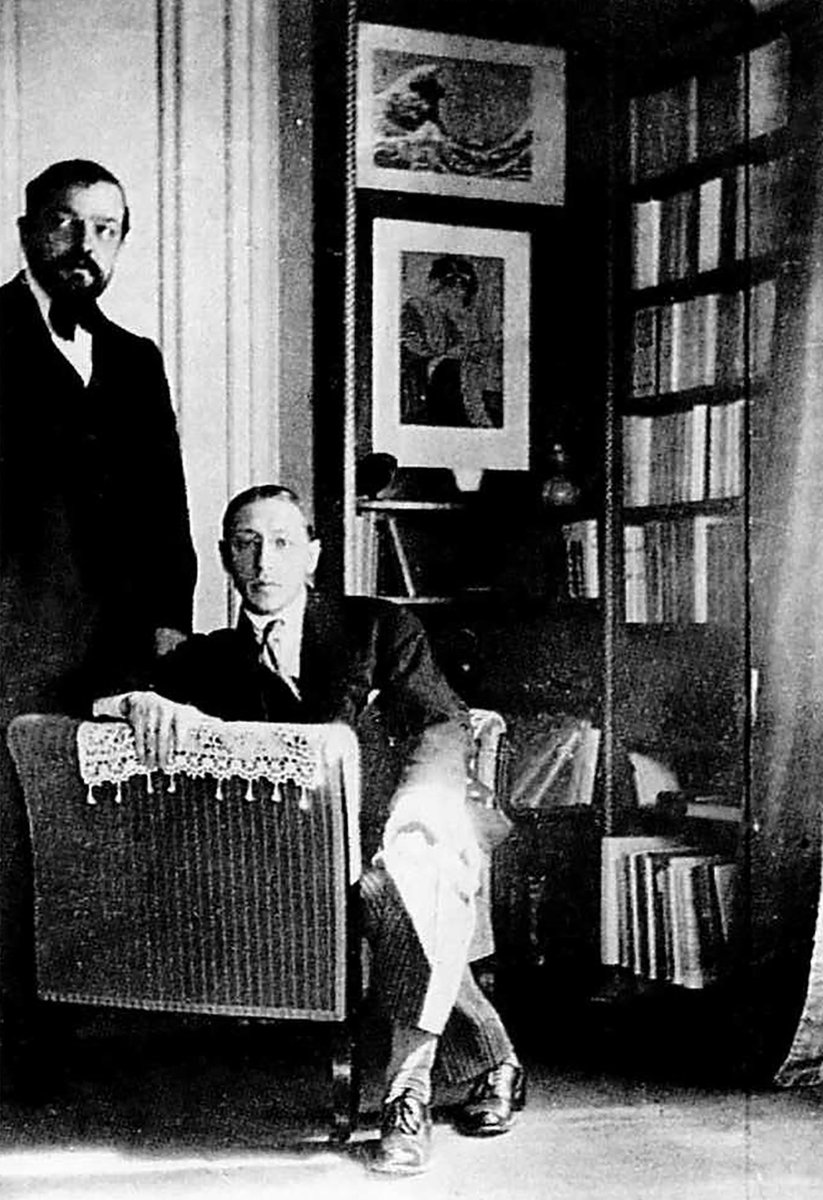
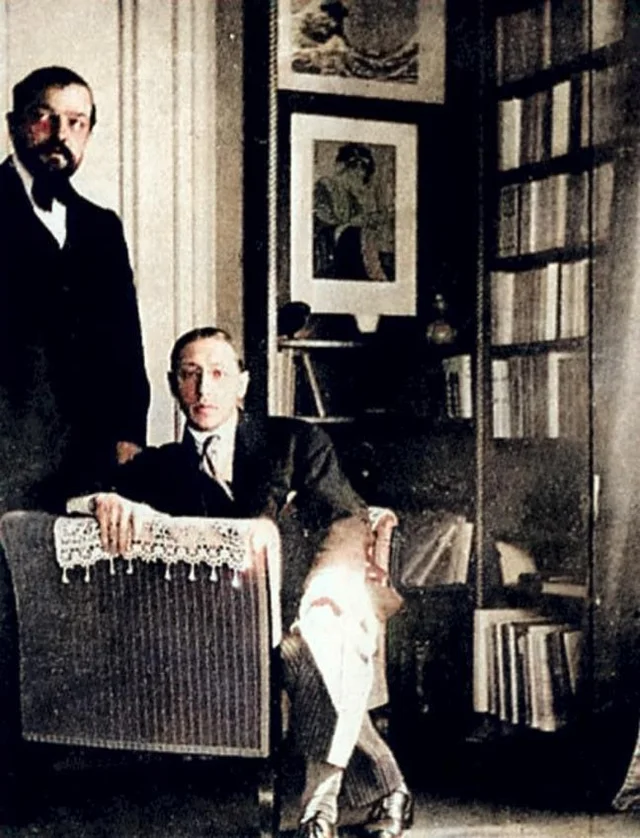
Erik Satie knew his way around not just the piano but the cam­era as well. This is evi­denced by the image above, a 1911 por­trait of Claude Debussy and Igor Stravin­sky. Described by Christie’s as “an out­stand­ing pho­to­graph of the two com­posers in the library at Debussy’s home,” it was tak­en by Satie at the time when Serge Diaghilev’s Bal­lets Russ­es were per­form­ing Debussy’s Jeux and Stravin­sky’s The Rite of Spring. In the back­ground appears what looks like Kat­sushi­ka Hoku­sai’s The Great Wave Off Kana­gawa, a work of art “used by Debussy on the front cov­er of the first edi­tion of his sym­phon­ic sketch­es La mer.”

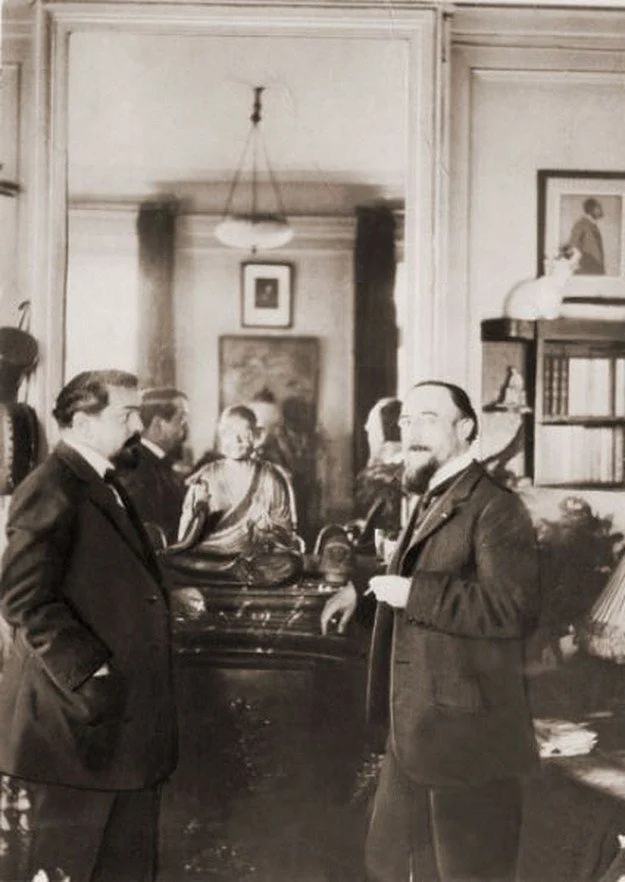
Just above appears anoth­er pic­ture cap­tured in Debussy’s home, this one of Debussy and Satie. “The pho­to was tak­en by Stravin­sky, if my mem­o­ry did­n’t go wrong,” says one com­menter on the r/classicalmusic sub­red­dit. Anoth­er express­es con­fu­sion about the sub­jects them­selves: “I thought they did­n’t like each oth­er?”

One respon­der explains that “they were friends at first, for quite some time, but lat­er their rela­tion­ship got worse.” Debussy’s orches­tra­tion of Satie’s Gymno­pe­dies brought those pieces to promi­nence, but, Satie ulti­mate­ly came to feel that Debussy had been stingy with the fruits of his great suc­cess.

Or so, at any rate, goes one inter­pre­ta­tion of the dis­so­lu­tion of Debussy and Satie’s friend­ship. Dif­fer­ent Red­di­tors con­tribute dif­fer­ent details: one that “every time they met, Satie would praise Rav­el’s music to annoy Debussy,” anoth­er that “Debussy kept a bot­tle of the cheap­est table wine for Satie for when he came over.” It can hard­ly have been easy, even in the best of times, for two of the strongest inno­va­tors in ear­ly-twen­ti­eth-cen­tu­ry music to occu­py the same social space for long stretch­es of time, let alone in com­pa­ny that includ­ed the likes of Rav­el and Stravin­sky. More than a cen­tu­ry lat­er, their artis­tic lega­cies could hard­ly be more assured — as, one faint­ly sens­es when look­ing at these pho­tos, they knew would be the case.

Relat­ed con­tent:

Hear Debussy Play Debussy’s Most Famous Piece, “Clair de lune” (1913)

Hear the Very First Pieces of Ambi­ent Music, Erik Satie’s Fur­ni­ture Music (Cir­ca 1917)

Watch the 1917 Bal­let “Parade”: Cre­at­ed by Erik Satie, Pablo Picas­so & Jean Cocteau, It Pro­voked a Riot and Inspired the Word “Sur­re­al­ism”

The Night When Char­lie Park­er Played for Igor Stravin­sky (1951)

The Great Wave Off Kana­gawa by Hoku­sai: An Intro­duc­tion to the Icon­ic Japan­ese Wood­block Print in 17 Min­utes

Based in Seoul, Col­in Mar­shall writes and broad­casts on cities, lan­guage, and cul­ture. His projects include the Sub­stack newslet­ter Books on Cities, the book The State­less City: a Walk through 21st-Cen­tu­ry Los Ange­les and the video series The City in Cin­e­ma. Fol­low him on Twit­ter at @colinmarshall, on Face­book, or on Insta­gram.

« Go BackMore in this category... »
Quantcast