Every Wes Anderson Movie, Explained by Wes Anderson

That Wes Ander­son is per­haps the most assid­u­ous mak­er of short films today becomes clear when you look close­ly at his recent work. The four adap­ta­tions of “The Won­der­ful World of Hen­ry Sug­ar” and three oth­er Roald Dahl sto­ries he made for Net­flix were pre­sent­ed as a sin­gle anthol­o­gy film; his slight­ly ear­li­er fea­ture The French Dis­patch did­n’t hide the essen­tial sep­a­rate­ness of its sto­ries, each one based on an arti­cle for a fic­tion­al­ized ver­sion of the New York­er. Though both Ander­son­’s fans and crit­ics read­i­ly note the increas­ing­ly elab­o­rate con­struc­tions of his pic­tures, it’s worth remem­ber­ing that his career began with a sim­ple short: the thir­teen-minute black-and-white ver­sion of Bot­tle Rock­et that would evolve into his first full-length work.

Ander­son tells the sto­ry of not just that first fea­ture but also the twelve that would fol­low in the new video from Van­i­ty Fair above, men­tion­ing details even ded­i­cat­ed Ander­so­ni­ans may not know. The orig­i­nal, “very, very, very long” Bot­tle Rock­et script got a severe cut­ting under the guid­ance of Hol­ly­wood pro­duc­er James L. Brooks. Loca­tions for Rush­more were scout­ed based on whether move­ments through them could prop­er­ly be chore­o­graphed to cer­tain British Inva­sion songs.

Ander­son promised the late Gene Hack­man that he’d have a “good time” on The Roy­al Tenen­baums, a promise that went not-quite-ful­filled. When he hired Seu Jorge to sing David Bowie songs for The Life Aquat­ic, he did­n’t know he was already a pop singer in Brazil. When talk­ing to him about The Dar­jeel­ing Lim­it­ed, peo­ple tend to call it “The Dar­jeel­ing Express.”

Many of these rec­ol­lec­tions have to do with his inspi­ra­tions, which for The Dar­jeel­ing Lim­it­ed were spe­cif­ic sub­con­ti­nen­tal films like Jean Renoir’s The Riv­er, Louis Malle’s Phan­tom India, and Satya­jit Ray’s Apu tril­o­gy. Moon­rise King­dom was made pos­si­ble when Ander­son, long res­i­dent in France, came to “see Amer­i­ca like some for­eign coun­try.” Writ­ing The French Dis­patch, he looked to the New York­er as it was under its con­trast­ing first edi­tors, Harold Ross and William Shawn. Aster­oid City orig­i­nat­ed as a kind of trib­ute to the Actors Stu­dio in the nine­teen-fifties. He describes his lat­est pic­ture The Phoeni­cian Scheme as hav­ing been inspired by the work of Luis Buñuel and writ­ten for Beni­cio del Toro, who plays a tycoon out of a “nine­teen-fifties Ital­ian movie” sub­ject to “Bib­li­cal visions” dur­ing his fre­quent brush­es with death. “I haven’t had the moment where I don’t know what I want to do next,” Ander­son says at the end of the video. As sure as film­go­ers may feel that they know just what to expect from him, he sure­ly has many more sur­pris­es in store for us.

Relat­ed con­tent:

Wes Ander­son Explains How He Writes and Directs Movies, and What Goes Into His Dis­tinc­tive Film­mak­ing Style

A Com­plete Col­lec­tion of Wes Ander­son Video Essays

Why Do Wes Ander­son Movies Look Like That?

Wes Ander­son Explains How He Built Aster­oid City, the Fic­tion­al Amer­i­can Desert Town in His New Film

Wes Anderson’s Break­through Film Rush­more Revis­it­ed in Five Video Essays: It Came Out 20 Years Ago Today

Wes Anderson’s First Short Film: The Black-and-White, Jazz-Scored Bot­tle Rock­et (1992)

Based in Seoul, Col­in Marshall writes and broad­casts on cities, lan­guage, and cul­ture. His projects include the Sub­stack newslet­ter Books on Cities and the book The State­less City: a Walk through 21st-Cen­tu­ry Los Ange­les. Fol­low him on the social net­work for­mer­ly known as Twit­ter at @colinmarshall.

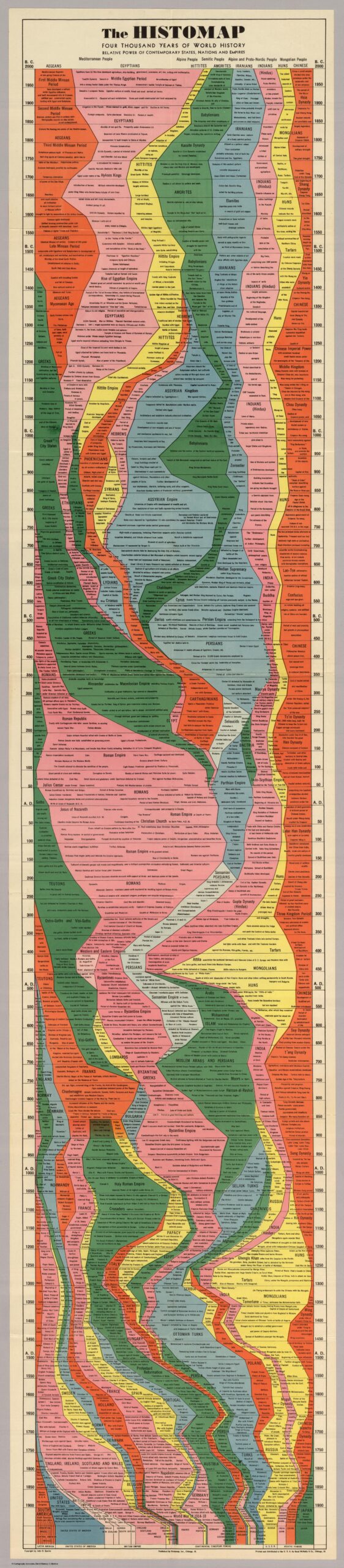
The History of the World in One Beautiful, 5‑Foot-Long Chart (1931)

In the image above, we see an impres­sive pre-inter­net macro-info­graph­ic called a “His­tom­ap.” Its cre­ator John B. Sparks (who lat­er cre­at­ed “his­tom­aps” of reli­gion and evo­lu­tion) pub­lished the graph­ic in 1931 with Rand McNal­ly. The five-foot-long chart—purportedly cov­er­ing 4,000 years of “world” history—is, in fact, an exam­ple of an ear­ly illus­tra­tion trend called the “out­line,” of which Rebec­ca Onion at Slate writes: “large sub­jects (the his­to­ry of the world! every school of phi­los­o­phy! all of mod­ern physics!) were dis­tilled into a form com­pre­hen­si­ble to the most une­d­u­cat­ed lay­man.” Here we have the full descrip­tion of most every polit­i­cal chart, graph, or ani­ma­tion in U.S.A. Today, most Inter­net news sites, and, of course, The Onion.

The sim­i­lar­i­ty here isn’t sim­ply one of form. The “out­line” func­tioned in much the same way that sim­pli­fied ani­ma­tions do—condensing heavy, con­tentious the­o­ret­i­cal freight trains and ide­o­log­i­cal bag­gage. Rebec­ca Onion describes the chart as an arti­fact very much of its time, pre­sent­ing a ver­sion of his­to­ry promi­nent in the U.S. between the wars. Onion writes:

The chart empha­sizes dom­i­na­tion, using col­or to show how the pow­er of var­i­ous “peo­ples” (a qua­si-racial under­stand­ing of the nature of human groups, quite pop­u­lar at the time) evolved through­out his­to­ry.

Sparks’ map, how­ev­er, remains an inter­est­ing doc­u­ment because of its seem­ing dis­in­ter­est­ed­ness. While the focus on racial­ism and impe­r­i­al con­quest may seem to place Sparks in com­pa­ny with pop­ulist “sci­en­tif­ic” racists of the peri­od like Lothrop Stod­dard (whom Tom Buchanan quotes in Fitzgerald’s Gats­by), it would also seem that his design has much in com­mon with ear­ly Enlight­en­ment fig­ures whose con­cep­tion of time was not nec­es­sar­i­ly lin­ear. Fol­low­ing clas­si­cal mod­els, thinkers like Thomas Hobbes tend­ed to divide his­tor­i­cal epochs into ris­ing and falling actions of var­i­ous peo­ple groups, rather than the grad­ual ascent of one race over all oth­ers towards an end of his­to­ry. For exam­ple, poet Abra­ham Cow­ley writes a com­pressed “uni­ver­sal his­to­ry” in his 1656 poem “To Mr. Hobs,” mov­ing from Aris­to­tle (the “Sta­girite”) to the poem’s sub­ject Thomas Hobbes. The move­ment is pro­gres­sive, yet the his­tor­i­cal rep­re­sen­ta­tives of each civ­i­liza­tion receive some equal weight and sim­i­lar empha­sis.

Long did the mighty Sta­girite retain
The uni­ver­sal Intel­lec­tu­al reign,
Saw his own Coun­treys short-liv’ed Leop­ard slain;
The stronger Roman-Eagle did out-fly,
Oft­ner renewed his Age, and saw that Dy.
Mecha it self, in spight of Mahumet pos­s­est,
And chas’ed by a wild Del­uge from the East,
His Monar­chy new plant­ed in the West.
But as in time each great impe­r­i­al race
Degen­er­ates, and gives some new one place:

The peri­od of Cow­ley rec­og­nized the­o­ries of racial, cul­tur­al, and nat­ur­al suprema­cy, but such qual­i­ties, as in Sparks’ map, were the prod­uct of a long line of suc­ces­sion from equal­ly pow­er­ful and note­wor­thy empires and groups to oth­ers, not a social evo­lu­tion in which a supe­ri­or race nat­u­ral­ly arose. Rand McNal­ly adver­tised the chart as pre­sent­ing “the march of civ­i­liza­tion, from the mud huts of the ancients thru the monar­chis­tic glam­our of the mid­dle ages to the liv­ing panora­ma of life in present day Amer­i­ca.” While the blurb is filled with pseu­do­sci­en­tif­ic colo­nial­ist talk­ing points, the chart itself has the dat­ed, yet strik­ing­ly egal­i­tar­i­an arrange­ment of infor­ma­tion that—like much of the illus­tra­tion in Nation­al Geo­graph­ic—sought to accom­mo­date the best con­sen­sus mod­els of the times, dis­play­ing, but not pros­e­ly­tiz­ing, its bias­es.

Note: An ear­li­er ver­sion of this post appeared on our site in 2013.

Relat­ed Con­tent:

180,000 Years of Reli­gion Chart­ed on a “His­tom­ap” in 1943

The Big Map of Who Lived When Shows Which Cul­tur­al Fig­ures Walked the Earth at the Same Time: From 1200 to Present

Joseph Priest­ley Visu­al­izes His­to­ry & Great His­tor­i­cal Fig­ures with Two of the Most Influ­en­tial Info­graph­ics Ever (1769)

10 Mil­lion Years of Evo­lu­tion Visu­al­ized in an Ele­gant, 5‑Foot Long Info­graph­ic from 1931

The His­to­ry of the World in One Video: Every Year from 200,000 BCE to Today

Josh Jones is a writer and musi­cian based in Durham, NC. Fol­low him at @jdmagness

by | Permalink | Make a Comment ( 1 ) |

How the BIC Cristal Ballpoint Pen Became the Most Successful Product in History

If you want to see a tour de force of mod­ern tech­nol­o­gy and design, there’s no need to vis­it a Sil­i­con Val­ley show­room. Just feel around your desk for a few moments, and soon­er or lat­er you’ll lay a hand on it: the BIC Cristal ball­point pen, which is described in the Pri­mal Space video above as “pos­si­bly the most suc­cess­ful prod­uct ever made.” Not long after its intro­duc­tion in 1950, the Cristal became ubiq­ui­tous around the world, so ide­al­ly did it suit human needs at a price that would have seemed impos­si­bly cheap not so very long ago — to say noth­ing of the sev­en­teenth cen­tu­ry, when the art of writ­ing demand­ed mas­tery of the quill and inkpot.

Of course, writ­ing itself was of lit­tle use in those days to human­i­ty’s illit­er­ate major­i­ty. That began to change with the inven­tion of the foun­tain pen, which was cer­tain­ly more con­ve­nient than the quill, but still pro­hib­i­tive­ly expen­sive even to most of those who could read. It was only at the end of the nine­teenth cen­tu­ry, a heady age of Amer­i­can inge­nu­ity, that an inven­tor called John Loud came up with the first ball­point pen.

Though crude and imprac­ti­cal, Loud’s design plant­ed the tech­no­log­i­cal seed that would be cul­ti­vat­ed there­after by oth­ers, like Las­z­lo Biro, who under­stood the advan­tage of using oil-based rather than tra­di­tion­al water-based ink, and French man­u­fac­tur­er Mar­cel Bich, who had access to the tech­nol­o­gy that could bring the ball­point pen to its final form.

Bich (the for­eign pro­nun­ci­a­tion of whose sur­name inspired the brand name BIC) fig­ured out how to use Swiss watch­mak­ing machines to mass-pro­duce tiny stain­less steel balls to pre­cise spec­i­fi­ca­tions. He chose to man­u­fac­ture the rest of the pen out of mold­ed plas­tic, a then-new tech­nol­o­gy. The Cristal’s clear body allowed the ink lev­el to be seen at all times, and its hexag­o­nal shape stopped it from rolling off desks. Its polypropy­lene lid would­n’t break when dropped, and it dou­bled as a clip to boot. What did this “game chang­er” avant la let­tre cost when it came to mar­ket? The equiv­a­lent of two dol­lars. As an indus­tri­al prod­uct, the BIC Cristal has in many respects nev­er been sur­passed (over 100 bil­lion have been sold to date), even by the ultra-high-tech cell­phones or tablets on which you may be read­ing this post. Bear that in mind the next time you’re strug­gling with one, patchi­ly zigzag­ging back and forth on a page in an attempt to get the ink out that you’re sure must be in there some­where.

Relat­ed con­tent:

Wes Ander­son Directs & Stars in an Ad Cel­e­brat­ing the 100th Anniver­sary of Montblanc’s Sig­na­ture Pen

Mont­blanc Unveils a New Line of Miles Davis Pens … and (Kind of) Blue Ink

Ver­meer with a BiC

Neil Gaiman Talks Dream­i­ly About Foun­tain Pens, Note­books & His Writ­ing Process in His Long Inter­view with Tim Fer­riss

Based in Seoul, Col­in Marshall writes and broad­casts on cities, lan­guage, and cul­ture. His projects include the Sub­stack newslet­ter Books on Cities and the book The State­less City: a Walk through 21st-Cen­tu­ry Los Ange­les. Fol­low him on the social net­work for­mer­ly known as Twit­ter at @colinmarshall.

Marie Curie Invented Mobile X‑Ray Units to Help Save Wounded Soldiers in World War I

A hun­dred years ago, Mobile X‑Ray Units were a brand new inno­va­tion, and a god­send for sol­diers wound­ed on the front in WW1. Pri­or to the advent of this tech­nol­o­gy, field sur­geons rac­ing to save lives oper­at­ed blind­ly, often caus­ing even more injury as they groped for bul­lets and shrap­nel whose pre­cise loca­tions remained a mys­tery.

Marie Curie was just set­ting up shop at Paris’ Radi­um Insti­tute, a world cen­ter for the study of radioac­tiv­i­ty, when war broke out. Many of her researchers left to fight, while Curie per­son­al­ly deliv­ered France’s sole sam­ple of radi­um by train to the tem­porar­i­ly relo­cat­ed seat of gov­ern­ment in Bor­deaux.

“I am resolved to put all my strength at the ser­vice of my adopt­ed coun­try, since I can­not do any­thing for my unfor­tu­nate native coun­try just now…,” Curie, a Pole by birth, wrote to her lover, physi­cist Paul Langevin on New Year’s Day, 1915.

To that end, she envi­sioned a fleet of vehi­cles that could bring X‑ray equip­ment much clos­er to the bat­tle­field, shift­ing their coor­di­nates as nec­es­sary.

Rather than leav­ing the exe­cu­tion of this bril­liant plan to oth­ers, Curie sprang into action.

She stud­ied anato­my and learned how to oper­ate the equip­ment so she would be able to read X‑ray films like a med­ical pro­fes­sion­al.

She learned how to dri­ve and fix cars.

She used her con­nec­tions to solic­it dona­tions of vehi­cles, portable elec­tric gen­er­a­tors, and the nec­es­sary equip­ment, kick­ing in gen­er­ous­ly her­self. (When she got the French Nation­al Bank to accept her gold Nobel Prize medals on behalf of the war effort, she spent the bulk of her prize purse on war bonds.)

She was ham­pered only by back­wards-think­ing bureau­crats whose feath­ers ruf­fled at the prospect of female tech­ni­cians and dri­vers, no doubt for­get­ting that most of France’s able-bod­ied men were oth­er­wise engaged.

Curie, no stranger to sex­ism, refused to bend to their will, deliv­er­ing equip­ment to the front line and X‑raying wound­ed sol­diers, assist­ed by her 17-year-old daugh­ter, Irène, who like her moth­er, took care to keep her emo­tions in check while work­ing with maimed and dis­tressed patients.

“In less than two years,” writes Aman­da Davis at The Insti­tute, “the num­ber of units had grown sub­stan­tial­ly, and the Curies had set up a train­ing pro­gram at the Radi­um Insti­tute to teach oth­er women to oper­ate the equip­ment.” Even­tu­al­ly, they recruit­ed about 150 women, train­ing them to man the Lit­tle Curies, as the mobile radi­og­ra­phy units came to be known.

Note: An ear­li­er ver­sion of this post appeared on our site in 2017.

via Brain Pick­ings

Relat­ed Con­tent:

Marie Curie’s Research Papers Are Still Radioac­tive a Cen­tu­ry Lat­er

Marie Curie Became the First Woman to Win a Nobel Prize, the First Per­son to Win Twice, and the Only Per­son in His­to­ry to Win in Two Dif­fer­ent Sci­ences

An Ani­mat­ed Intro­duc­tion to the Life & Work of Marie Curie, the First Female Nobel Lau­re­ate

Marie Curie Attend­ed a Secret, Under­ground “Fly­ing Uni­ver­si­ty” When Women Were Banned from Pol­ish Uni­ver­si­ties

Marie Curie’s Ph.D. The­sis on Radioactivity–Which Made Her the First Woman in France to Receive a Doc­tor­al Degree in Physics

Ayun Hal­l­i­day is an author, illus­tra­tor, the­ater mak­er and Chief Pri­ma­tol­o­gist of the East Vil­lage Inky zine. 

by | Permalink | Make a Comment ( 1 ) |

The Dylatov Pass Incident: Has One of the Biggest Soviet Mysteries Been Solved?

Most of us would go out of our way not to set foot any­where near a place the local natives refer to as “Dead Moun­tain.” That did­n’t stop the Dyat­lov Hik­ing Group, who set out on a six­teen-day ski­ing expe­di­tion across the north­ern Urals in late Jan­u­ary of 1959. Expe­ri­enced and intre­pid, those ten young Sovi­et ski hik­ers had what it took to make the jour­ney, at least if noth­ing went ter­ri­bly wrong. A bout of sci­at­i­ca forced one mem­ber of the group to turn back ear­ly, which turned out to be lucky for him. About a month lat­er, the irra­di­at­ed bod­ies of his nine com­rades were dis­cov­ered scat­tered in dif­fer­ent areas of Dead Moun­tain some dis­tance from their camp­site, with var­i­ous trau­mat­ic injuries and in var­i­ous states of undress.

Some­thing had indeed gone ter­ri­bly wrong, but nobody could fig­ure out what. For decades, the fate of the Dyat­lov Hik­ing Group inspired count­less expla­na­tions rang­ing wide­ly in plau­si­bil­i­ty. Some the­o­rized a freak weath­er phe­nom­e­non; oth­ers some kind of tox­ic air­borne event; oth­ers still, the actions of Amer­i­can spies or even a yeti.

“In a place where infor­ma­tion has been as tight­ly con­trolled as in the for­mer Sovi­et Union, mis­trust of offi­cial nar­ra­tives is nat­ur­al, and noth­ing in the record can explain why peo­ple would leave a tent undressed, in near-sui­ci­dal fash­ion,” writes the New York­er’s Dou­glas Pre­ston. Only in the late twen­ty-tens, when the Dyat­lov Group Memo­r­i­al Foun­da­tion got the case reopened, did inves­ti­ga­tors assess the con­tra­dic­to­ry evi­dence while mak­ing new mea­sure­ments and con­duct­ing new exper­i­ments.

The prob­a­ble caus­es were nar­rowed down to those explained by experts in the Vox video above: a severe bliz­zard and a slab of ice that must have shift­ed and crushed the tent. Dense­ly packed by the wind, that mas­sive, heavy slab would have “pre­vent­ed them from retriev­ing their boots or warm cloth­ing and forced them to cut their way out of the downs­lope side of the tent,” pro­ceed­ing to the clos­est nat­ur­al shel­ter from the avalanche they believed was com­ing. But no avalanche came, and they could­n’t find their way back to their camp in the dark­ness. “Had they been less expe­ri­enced, they might have remained near the tent, dug it out, and sur­vived,” writes Pre­ston. “The skiers’ exper­tise doomed them.” Not every­one accepts this the­o­ry, but then, the idea that knowl­edge can kill might be more fright­en­ing than even the most abom­inable snow­man.

Relat­ed con­tent:

What Caused the Mys­te­ri­ous Death of Edgar Allan Poe?: A Brief Inves­ti­ga­tion into the Poet’s Demise 171 Years Ago Today

The Denali Exper­i­ment: A Test of Human Lim­its

The Curi­ous Death of Vin­cent van Gogh

The Grue­some Doll­house Death Scenes That Rein­vent­ed Mur­der Inves­ti­ga­tions

Archae­ol­o­gists Dis­cov­er 1300-Year-Old Pair of Skis, the Best-Pre­served Ancient Skis in Exis­tence

Based in Seoul, Col­in Marshall writes and broad­casts on cities, lan­guage, and cul­ture. His projects include the Sub­stack newslet­ter Books on Cities and the book The State­less City: a Walk through 21st-Cen­tu­ry Los Ange­les. Fol­low him on the social net­work for­mer­ly known as Twit­ter at @colinmarshall.

Hear What Shakespeare Sounded Like in the Original Pronunciation

What did Shakespeare’s Eng­lish sound like to Shake­speare? To his audi­ence? And how can we know such a thing as the pho­net­ic char­ac­ter of the lan­guage spo­ken 400 years ago? These ques­tions and more are addressed in the video above, which pro­files a very pop­u­lar exper­i­ment at London’s Globe The­atre, the 1994 recon­struc­tion of Shakespeare’s the­atri­cal home. As lin­guist David Crys­tal explains, the theater’s pur­pose has always been to recap­ture as much as pos­si­ble the orig­i­nal look and feel of a Shake­speare­an production—costuming, music, move­ment, etc. But until recent­ly, the Globe felt that attempt­ing a play in the orig­i­nal pro­nun­ci­a­tion would alien­ate audi­ences. The oppo­site proved to be true, and peo­ple clam­ored for more. Above, Crys­tal and his son, actor Ben Crys­tal, demon­strate to us what cer­tain Shake­speare­an pas­sages would have sound­ed like to their first audi­ences, and in so doing draw out some sub­tle word­play that gets lost on mod­ern tongues.

Shakespeare’s Eng­lish is called by schol­ars Ear­ly Mod­ern Eng­lish (not, as many stu­dents say, “Old Eng­lish,” an entire­ly dif­fer­ent, and much old­er lan­guage). Crys­tal dates his Shake­speare­an ear­ly mod­ern to around 1600. (In his excel­lent text­book on the sub­ject, lin­guist Charles Bar­ber book­ends the peri­od rough­ly between 1500 and 1700.) David Crys­tal cites three impor­tant kinds of evi­dence that guide us toward recov­er­ing ear­ly modern’s orig­i­nal pro­nun­ci­a­tion (or “OP”).

1. Obser­va­tions made by peo­ple writ­ing on the lan­guage at the time, com­ment­ing on how words sound­ed, which words rhyme, etc. Shake­speare con­tem­po­rary Ben Jon­son tells us, for exam­ple, that speak­ers of Eng­lish in his time and place pro­nounced the “R” (a fea­ture known as “rhotic­i­ty”). Since, as Crys­tal points out, the lan­guage was evolv­ing rapid­ly, and there was­n’t only one kind of OP, there is a great deal of con­tem­po­rary com­men­tary on this evo­lu­tion, which ear­ly mod­ern writ­ers like Jon­son had the chance to observe first­hand.

2. Spellings. Unlike today’s very frus­trat­ing ten­sion between spelling and pro­nun­ci­a­tion, Ear­ly Mod­ern Eng­lish tend­ed to be much more pho­net­ic and words were pro­nounced much more like they were spelled, or vice ver­sa (though spelling was very irreg­u­lar, a clue to the wide vari­ety of region­al accents).

3. Rhymes and puns which only work in OP. The Crys­tals demon­strate the impor­tant pun between “loins” and “lines” (as in genealog­i­cal lines) in Romeo and Juli­et, which is com­plete­ly lost in so-called “Received Pro­nun­ci­a­tion” (or “prop­er” British Eng­lish). Two-thirds of Shakespeare’s son­nets, the father and son team claim, have rhymes that only work in OP.

Not every­one agrees on what Shake­speare’s OP might have sound­ed like. Emi­nent Shake­speare direc­tor Trevor Nunn claims that it might have sound­ed more like Amer­i­can Eng­lish does today, sug­gest­ing that the lan­guage that migrat­ed across the pond retained more Eliz­a­bethan char­ac­ter­is­tics than the one that stayed home.

You can hear an exam­ple of this kind of OP in the record­ing from Romeo and Juli­et above. Shake­speare schol­ar John Bar­ton sug­gests that OP would have sound­ed more like mod­ern Irish, York­shire, and West Coun­try pro­nun­ci­a­tions, an accent that the Crys­tals seem to favor in their inter­pre­ta­tions of OP and is much more evi­dent in the read­ing from Mac­beth below (both audio exam­ples are from a CD curat­ed by Ben Crys­tal).

What­ev­er the con­jec­ture, schol­ars tend to use the same set of cri­te­ria David Crys­tal out­lines. I recall my own expe­ri­ence with Ear­ly Mod­ern Eng­lish pro­nun­ci­a­tion in an inten­sive grad­u­ate course on the his­to­ry of the Eng­lish lan­guage. Hear­ing a class of ama­teur lin­guists read famil­iar Shake­speare pas­sages in what we per­ceived as OP—using our phono­log­i­cal knowl­edge and David Crystal’s criteria—had exact­ly the effect Ben Crys­tal described in an NPR inter­view:

If there’s some­thing about this accent, rather than it being dif­fi­cult or more dif­fi­cult for peo­ple to under­stand … it has flecks of near­ly every region­al U.K. Eng­lish accent, and indeed Amer­i­can and in fact Aus­tralian, too. It’s a sound that makes peo­ple — it reminds peo­ple of the accent of their home — and so they tend to lis­ten more with their heart than their head.

In oth­er words, despite the strange­ness of the accent, the lan­guage can some­times feel more imme­di­ate, more uni­ver­sal, and more of the moment, even, than the some­times stilt­ed, pre­ten­tious ways of read­ing Shake­speare in the accent of a mod­ern Lon­don stage actor or BBC news anchor.

For more on this sub­ject, don’t miss this relat­ed post: Hear What Ham­let, Richard III & King Lear Sound­ed Like in Shakespeare’s Orig­i­nal Pro­nun­ci­a­tion.

Note: An ear­li­er ver­sion of this post appeared on our site in 2013.

If you would like to sign up for Open Culture’s free email newslet­ter, please find it here. It’s a great way to see our new posts, all bun­dled in one email, each day.

If you would like to sup­port the mis­sion of Open Cul­ture, con­sid­er mak­ing a dona­tion to our site. It’s hard to rely 100% on ads, and your con­tri­bu­tions will help us con­tin­ue pro­vid­ing the best free cul­tur­al and edu­ca­tion­al mate­ri­als to learn­ers every­where. You can con­tribute through Pay­Pal, Patre­on, and Ven­mo (@openculture). Thanks!

Relat­ed Con­tent:

Behold Shakespeare’s First Folio, the First Pub­lished Col­lec­tion of Shakespeare’s Plays, Pub­lished 400 Year Ago (1623)

3,000 Illus­tra­tions of Shakespeare’s Com­plete Works from Vic­to­ri­an Eng­land, Pre­sent­ed in a Dig­i­tal Archive

Take a Vir­tu­al Tour of Shakespeare’s Globe The­atre in Lon­don

Josh Jones is a writer and musi­cian based in Durham, NC. Fol­low him at @jdmagness

by | Permalink | Make a Comment ( 4 ) |

An Introduction to George Orwell’s 1984 and How Power Manufactures Truth

Soon after the first elec­tion of Don­ald Trump to the pres­i­den­cy of the Unit­ed States, George Orwell’s Nine­teen Eighty-Four became a best­seller again. Shoot­ing to the top of the Amer­i­can charts, the nov­el that inspired the term “Orwellian” passed Danielle Steel’s lat­est opus, the poet­ry of Rupi Kaur, the eleventh Diary of a Wimpy Kid book, and the mem­oir of an ambi­tious young man named J. D. Vance. But how much of its renewed pop­u­lar­i­ty owed to the rel­e­vance of a near­ly 70-year-old vision of shab­by, total­i­tar­i­an future Eng­land to twen­ty-first cen­tu­ry Amer­i­ca, and how much to the fact that, as far as influ­ence on pop­u­lar cul­ture’s image of polit­i­cal dystopia, no oth­er work of lit­er­a­ture comes close?

For all the myr­i­ad ways one can crit­i­cize his two admin­is­tra­tions, Trump’s Amer­i­ca bears lit­tle super­fi­cial resem­blance to Ocea­ni­a’s Airstrip One as ruled by The Par­ty. But it can hard­ly be a coin­ci­dence that this peri­od of his­to­ry has also seen the con­cept “post-truth” become a fix­ture in the zeit­geist.

There are many rea­sons not to want to live in the world Orwell imag­ines in Nine­teen Eighty-Four: the thor­ough bureau­cra­ti­za­tion, the lack of plea­sure, the unceas­ing sur­veil­lance and pro­pa­gan­da. But none of this is quite so intol­er­a­ble as what makes it all pos­si­ble: the rulers’ claim to absolute con­trol over the truth, a form of psy­cho­log­i­cal manip­u­la­tion hard­ly lim­it­ed to regimes we regard as evil.

As James Payne says in his Great Books Explained video on Nine­teen Eighty-Four, Orwell worked for the BBC’s over­seas ser­vice dur­ing the war, and there received a trou­bling edu­ca­tion in the use of infor­ma­tion as a polit­i­cal weapon. The expe­ri­ence inspired the Min­istry of Truth, where the nov­el­’s pro­tag­o­nist Win­ston Smith spends his days re-writ­ing his­to­ry, and the dialect of Newspeak, a severe­ly reduced Eng­lish designed to nar­row its speak­ers’ range of thought. Orwell may have over­es­ti­mat­ed the degree to which lan­guage can be mod­i­fied from the top down, but as Payne reminds us, we now all hear cul­ture war­riors describe real­i­ty in high­ly slant­ed, polit­i­cal­ly-charged, and often thought-ter­mi­nat­ing ways all day long. Every­where we look, some­one is ready to tell us that two plus two make five; if only they were as obvi­ous about it as Big Broth­er.

Relat­ed con­tent:

George Orwell Explains How “Newspeak” Works, the Offi­cial Lan­guage of His Total­i­tar­i­an Dystopia in 1984

George Orwell Explains in a Reveal­ing 1944 Let­ter Why He’d Write 1984

George Orwell’s Har­row­ing Race to Fin­ish 1984 Before His Death

George Orwell’s Final Warn­ing: Don’t Let This Night­mare Sit­u­a­tion Hap­pen. It Depends on You!

What “Orwellian” Real­ly Means: An Ani­mat­ed Les­son About the Use & Abuse of the Term

Aldous Hux­ley to George Orwell: My Hell­ish Vision of the Future is Bet­ter Than Yours (1949)

Based in Seoul, Col­in Marshall writes and broad­casts on cities, lan­guage, and cul­ture. His projects include the Sub­stack newslet­ter Books on Cities and the book The State­less City: a Walk through 21st-Cen­tu­ry Los Ange­les. Fol­low him on the social net­work for­mer­ly known as Twit­ter at @colinmarshall.

Talking Heads Release the First Official Video for “Psycho Killer”: Watch It Online

On social media, the Talk­ing Heads teased a major announce­ment on June 5th, lead­ing fans to won­der if a reunion—41 years after their last tour—might final­ly be in the off­ing. As one fan put it, “If this is a tour announce­ment, I am going to freak out!” Alas, we did­n’t quite get that. (Maybe next time!) Instead, we got the first offi­cial music video for “Psy­cho Killer.” Direct­ed by Mike Mills and star­ring Saoirse Ronan, the video helps com­mem­o­rate the band’s first show at CBGB 50 years ago. You can watch the video above, and footage from CBGB in 1975 here.

If you would like to sign up for Open Culture’s free email newslet­ter, please find it here. It’s a great way to see our new posts, all bun­dled in one email, each day.

If you would like to sup­port the mis­sion of Open Cul­ture, con­sid­er mak­ing a dona­tion to our site. It’s hard to rely 100% on ads, and your con­tri­bu­tions will help us con­tin­ue pro­vid­ing the best free cul­tur­al and edu­ca­tion­al mate­ri­als to learn­ers every­where. You can con­tribute through Pay­Pal, Patre­on, and Ven­mo (@openculture). Thanks!

Relat­ed Con­tent 

The Talk­ing Heads Play CBGB, the New York Club That Shaped Their Sound (1975)

A Brief His­to­ry of Talk­ing Heads: How the Band Went from Scrap­py CBGB’s Punks to New Wave Super­stars

Hear the Ear­li­est Known Talk­ing Heads Record­ings (1975)

How Talk­ing Heads and Bri­an Eno Wrote “Once in a Life­time”: Cut­ting Edge, Strange & Utter­ly Bril­liant

Talk­ing Heads Fea­tured on The South Bank Show in 1979: How the Ground­break­ing New Wave Band Made Nor­mal­i­ty Strange Again

CBGB’s Hey­day: Watch The Ramones, The Dead Boys, Bad Brains, Talk­ing Heads & Blondie Per­form Live (1974–1982)


by | Permalink | Make a Comment ( 3 ) |

« Go BackMore in this category... »
Quantcast