Tibetan Musical Notation Is Beautiful

Reli­gions take the cast and hue of the cul­tures in which they find root. This was cer­tain­ly true in Tibet when Bud­dhism arrived in the 7th cen­tu­ry. It trans­formed and was trans­formed by the native reli­gion of Bon. Of the many cre­ative prac­tices that arose from this syn­the­sis, Tibetan Bud­dhist music ranks very high­ly in impor­tance.

As in sacred music in the West, Tibetan music has com­plex sys­tems of musi­cal nota­tion and a long his­to­ry of writ­ten reli­gious song. “A vital com­po­nent of Tibetan Bud­dhist expe­ri­ence,” explains Google Arts & Cul­tures Bud­dhist Dig­i­tal Resource Cen­ter, “musi­cal nota­tion allows for the trans­fer­ence of sacred sound and cer­e­mo­ny across gen­er­a­tions. A means to mem­o­rize sacred text, express devo­tion, ward off fer­al spir­its, and invoke deities.”

Some of these fea­tures may be alien to sec­u­lar West­ern Bud­dhists focused on mind­ful­ness and silent med­i­ta­tion, but to vary­ing degrees, Tibetan schools place con­sid­er­able val­ue on the aes­thet­ic expe­ri­ence of extra-human realms. As Uni­ver­si­ty of Tul­sa musi­col­o­gist John Pow­ell writes, “the use of sacred sound” in Tibetan Bud­dhism, a “Mantrayana” tra­di­tion, acts “as a for­mu­la for the trans­for­ma­tion of human con­scious­ness.”

Tibetan musi­cal nota­tions, Google points out, “sym­bol­i­cal­ly rep­re­sent the melodies, rhythm pat­terns, and instru­men­tal arrange­ments. In har­mo­ny with chant­i­ng, visu­al­iza­tions, and hand ges­tures, [Tibetan] music cru­cial­ly guides rit­u­al per­for­mance.” It is char­ac­ter­ized not only by its inte­gra­tion of rit­u­al dance, but also by a large col­lec­tion of rit­u­al instruments—including the long, Swiss-like horns suit­ed to a moun­tain environment—and unique forms of poly­phon­ic over­tone singing.

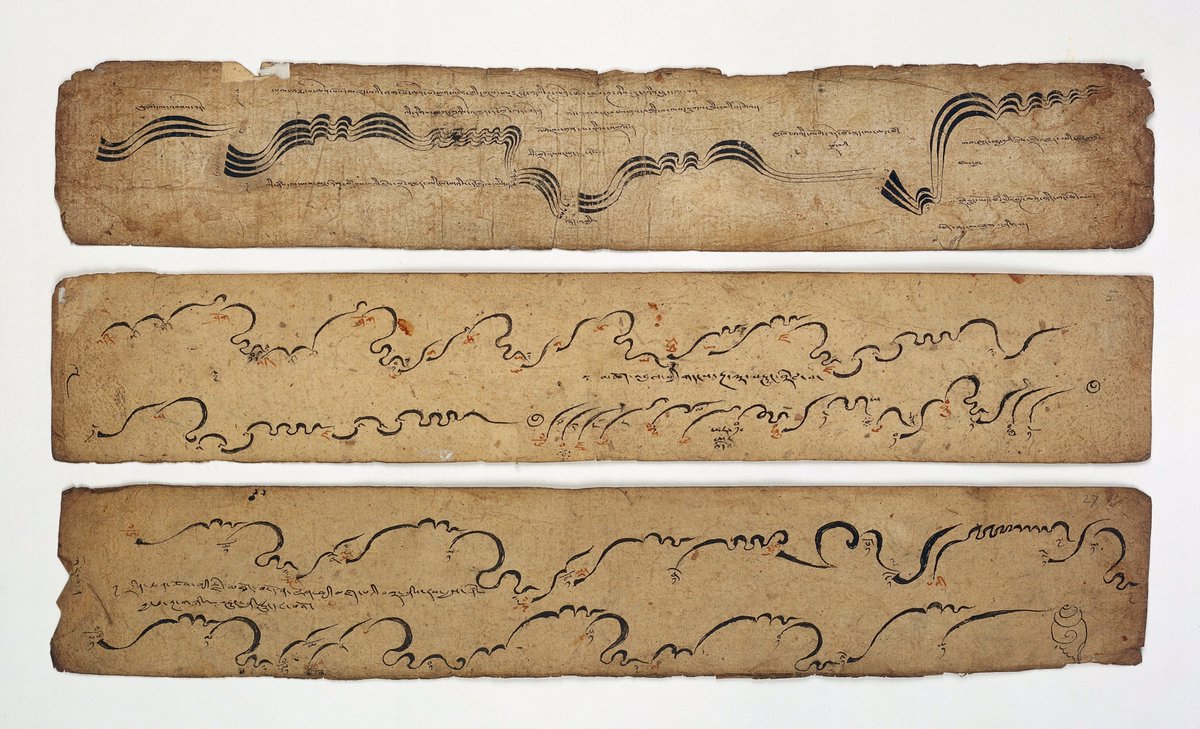
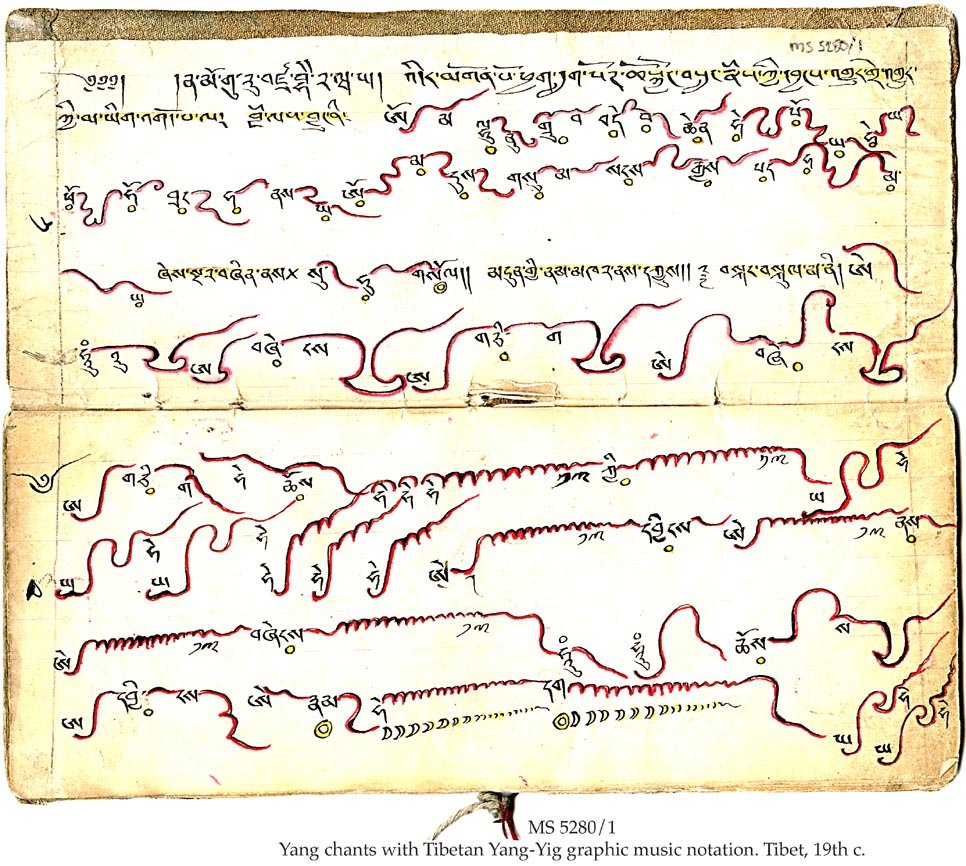
The exam­ples of musi­cal nota­tion you see here came from the appro­pri­ate­ly-named Twit­ter account Musi­cal Nota­tion is Beau­ti­ful and type­face design­er and researcher Jo De Baerde­maek­er. At the top is a 19th cen­tu­ry man­u­script belong­ing to the “Yang” tra­di­tion, “the most high­ly involved and regard­ed chant tra­di­tion in Tibetan music,” notes the Schoyen Col­lec­tion, “and the only one to rely on a sys­tem of nota­tion (Yang-Yig).”

The curved lines rep­re­sent “smooth­ly effect­ed ris­es and falls in into­na­tion.” The nota­tion also “fre­quent­ly con­tains detailed instruc­tions con­cern­ing in what spir­it the music should be sung (e.g. flow­ing like a riv­er, light like bird song) and the small­est mod­i­fi­ca­tions to be made to the voice in the utter­ance of a vow­el.” The Yang-Yig goes all the way back to the 6th cen­tu­ry, pre­dat­ing Tibetan Bud­dhism, and “does not record nei­ther the rhyth­mic pat­tern nor dura­tion of notes.” Oth­er kinds of music have their own types of nota­tion, such as that in the piece above for voice, drums, trum­pets, horns, and cym­bals.

Though they artic­u­late and elab­o­rate on reli­gious ideas from India, Tibet’s musi­cal tra­di­tions are entire­ly its own. “It is essen­tial to rethink the entire con­cept of melody and rhythm” to under­stand Tibetan Bud­dhist chant, writes Pow­ell in a detailed overview of Tibetan music’s vocal and instru­men­tal qual­i­ties. “Many out­side Tibetan cul­ture are accus­tomed to think of melody as a sequence of ris­ing or falling pitch­es,” he says. “In Tibetan Tantric chant­i­ng, how­ev­er, the melod­ic con­tent occurs in terms of vow­el mod­i­fi­ca­tion and the care­ful con­tour­ing of tones.”  Hear an exam­ple of tra­di­tion­al Tibetan Bud­dhist chant just above, and learn more about Tibetan musi­cal nota­tion at Google Arts & Cul­ture.

Note: An ear­li­er ver­sion of this post appeared on our site in 2019.

Relat­ed Con­tent:

Breath­tak­ing­ly-Detailed Tibetan Book Print­ed 40 Years Before the Guten­berg Bible

The World’s Largest Col­lec­tion of Tibetan Bud­dhist Lit­er­a­ture Now Online

Free Online Course: Robert Thurman’s Intro­duc­tion to Tibetan Bud­dhism (Record­ed at Colum­bia U)

Leonard Cohen Nar­rates Film on The Tibetan Book of the Dead, Fea­tur­ing the Dalai Lama (1994)

The Old­est Book Print­ed with Mov­able Type is Not The Guten­berg Bible: Jikji, a Col­lec­tion of Kore­an Bud­dhist Teach­ings, Pre­dat­ed It By 78 Years and It’s Now Dig­i­tized Online

Josh Jones is a writer and musi­cian based in Durham, NC. Fol­low him at @jdmagness

A Grad Student Asks Carl Sagan If He Believes in God (1994)

?si=yeo1Xsu2ZLuCpQbC

Most sci­en­tists are pre­pared to answer ques­tions about their research from oth­er mem­bers of their field; rather few­er have equipped them­selves to answer ques­tions from the gen­er­al pub­lic about what Dou­glas Adams called life, the uni­verse, and every­thing. Carl Sagan was one of that minor­i­ty, an expert “sci­ence com­mu­ni­ca­tor” before sci­ence com­mu­ni­ca­tion was rec­og­nized as a field unto itself. In pop­u­lar books and tele­vi­sion pro­duc­tions, most notably Cos­mos and its accom­pa­ny­ing series Cos­mos: A Per­son­al Voy­age, he put him­self out there in the mass media as an enthu­si­as­tic guide to all that was known about the realms beyond our plan­et. More than a few mem­bers of his audi­ence might well have asked them­selves where does God fit into all this.

One such per­son actu­al­ly put that ques­tion to Sagan, at a Q&A ses­sion after the lat­ter’s 1994 “lost lec­ture” at Cor­nell, titled “The Age of Explo­ration.” The ques­tion­er, a grad­u­ate stu­dent, asks, “Is there any type of God to you? Like, is there a pur­pose, giv­en that we’re just sit­ting on this speck in the mid­dle of this sea of stars?”

In response to this dif­fi­cult line of inquiry, Sagan opens a more dif­fi­cult one: “What do you mean when you use the word God?” The stu­dent takes anoth­er tack, ask­ing, “Giv­en all these demo­tions” — defined by Sagan him­self as the con­tin­u­al hum­bling of human­i­ty’s self-image in light of new sci­en­tif­ic dis­cov­er­ies — “why don’t we just blow our­selves up?” Sagan comes back with yet anoth­er ques­tion: “If we do blow our­selves up, does that dis­prove the exis­tence of God?” The stu­dent admits that he guess­es it does not.

The ques­tion even­tu­al­ly gets Sagan con­sid­er­ing how “the word ‘God’ cov­ers an enor­mous range of dif­fer­ent ideas.” That range “runs from an out­sized, light-skinned male with a long white beard, sit­ting in a throne in the sky, busi­ly tal­ly­ing the fall of every spar­row,” for whose exis­tence Sagan knows of no evi­dence, to “the kind of God that Ein­stein or Spin­oza talked about, which is very close to the sum total of the laws of the uni­verse,” and as such, whose exis­tence even Sagan would have to acknowl­edge. There’s also “the deist God that many of the found­ing fathers of this coun­try believed in,” who’s held to have cre­at­ed the uni­verse and then removed him­self from the scene. With such a broad range of pos­si­ble def­i­n­i­tions, the con­cept of God itself becomes use­less except as “social lubri­ca­tion,” a means of seem­ing to “agree with some­one else with whom you do not agree.” Terms of that mal­leable kind do have their advan­tages, if not to the sci­en­tif­ic mind.

Relat­ed con­tent:

Carl Sagan, Stephen Hawk­ing & Arthur C. Clarke Dis­cuss God, the Uni­verse, and Every­thing Else

150 Renowned Sec­u­lar Aca­d­e­mics & 20 Chris­t­ian Thinkers Talk­ing About the Exis­tence of God

Hear Carl Sagan Art­ful­ly Refute a Cre­ation­ist on a Talk Radio Show: “The Dar­win­ian Con­cept of Evo­lu­tion is Pro­found­ly Ver­i­fied”

Bertrand Rus­sell on the Exis­tence of God & the After­life (1959)

Bertrand Rus­sell and F.C. Cople­ston Debate the Exis­tence of God, 1948

What Is Reli­gion Actu­al­ly For?: Isaac Asi­mov and Ray Brad­bury Weigh In

Based in Seoul, Col­in Marshall writes and broad­casts on cities, lan­guage, and cul­ture. His projects include the Sub­stack newslet­ter Books on Cities and the book The State­less City: a Walk through 21st-Cen­tu­ry Los Ange­les. Fol­low him on the social net­work for­mer­ly known as Twit­ter at @colinmarshall.

A Free Yale Course on Medieval History: 700 Years in 22 Lectures

In 22 lec­tures, Yale his­to­ri­an Paul Freed­man takes you on a 700-year tour of medieval his­to­ry. Mov­ing from 284‑1000 AD, this free online course cov­ers “the con­ver­sion of Europe to Chris­tian­i­ty, the fall of the Roman Empire, the rise of Islam and the Arabs, the ‘Dark Ages,’ Charle­magne and the Car­olin­gian renais­sance, and the Viking and Hun­gar­i­an inva­sions.” And let’s not for­get St. Augus­tine and the “Splen­dor of Byzan­tium.”

You can stream all of the lec­tures above. Or find them on YouTube and this Yale web­site.

The Ear­ly Mid­dle Ages: 284‑1000 will be added to our list of Free His­to­ry Cours­es, a sub­set of our meta col­lec­tion, 1,700 Free Online Cours­es from Top Uni­ver­si­ties. Below, we’ve added a list of the key texts used in the course:

If you would like to sign up for Open Culture’s free email newslet­ter, please find it here. It’s a great way to see our new posts, all bun­dled in one email, each day.

If you would like to sup­port the mis­sion of Open Cul­ture, con­sid­er mak­ing a dona­tion to our site. It’s hard to rely 100% on ads, and your con­tri­bu­tions will help us con­tin­ue pro­vid­ing the best free cul­tur­al and edu­ca­tion­al mate­ri­als to learn­ers every­where. You can con­tribute through Pay­Pal, Patre­on, and Ven­mo (@openculture). Thanks!

Relat­ed Con­tent:

Free Online His­to­ry Cours­es

160,000+ Medieval Man­u­scripts Online: Where to Find Them

The Medieval Mas­ter­piece, the Book of Kells, Is Now Dig­i­tized and Avail­able Online

How to Make a Medieval Man­u­script: An Intro­duc­tion in 7 Videos

How Jackson Pollock Redefined Modern Art: An Introduction

In his life­time, Jack­son Pol­lock had only one suc­cess­ful art show. It took place at the Bet­ty Par­sons Gallery in New York in Novem­ber 1949, and after­ward, his fel­low abstract expres­sion­ist Willem de Koon­ing declared that “Jack­son has final­ly bro­ken the ice.” Per­haps, accord­ing to Louis Menand’s book The Free World: Art and Thought in the Cold War, he meant that “Pol­lock was the first Amer­i­can abstrac­tion­ist to break into the main­stream art world, or he might have meant that Pol­lock had bro­ken through a styl­is­tic log­jam that Amer­i­can painters felt blocked by.” What­ev­er its intent, de Koon­ing’s remark annoyed art crit­ic and major Pol­lock advo­cate Clement Green­berg, who “thought that it reduced Pol­lock to a tran­si­tion­al fig­ure.”

It was­n’t nec­es­sar­i­ly a reduc­tion: as Menand sees it, “all fig­ures are tran­si­tion­al. Not every fig­ure, how­ev­er, is a hinge, some­one who rep­re­sents a moment when one mode of prac­tice swings over to anoth­er.” Pol­lock was such a hinge, as, in his way, was Green­berg: “After Pol­lock, peo­ple paint­ed dif­fer­ent­ly. After Green­berg, peo­ple thought about paint­ing dif­fer­ent­ly.”

When they made their mark, “there was no going back.” Gal­lerist-YouTu­ber James Payne exam­ines the nature of that mark in the new Great Art Explained video above, the first of a mul­ti-part series on Pol­lock­’s art and the fig­ures that made its cul­tur­al impact pos­si­ble. Even more impor­tant than Green­berg, in Payne’s telling, is Pol­lock­’s fel­low artist — and, in time, wife — Lee Kras­ner, whose own work he also gives its due.

We also see the paint­ings of Amer­i­can region­al­ist Thomas Hart Ben­ton, Pol­lock­’s teacher; Mex­i­can mural­ist David Alfaro Siqueiros, in whose work­shop Pol­lock par­tic­i­pat­ed; and even Pablo Picas­so, who exert­ed sub­tle but detectable influ­ences of his own on Pol­lock­’s work. Oth­er, non-artis­tic sources of inspi­ra­tion Payne explores include the psy­cho­log­i­cal the­o­ry of Carl Gus­tav Jung, with whose school of ther­a­py Pol­lock engaged in the late nine­teen-thir­ties and ear­ly for­ties. It was in those ses­sions that he pro­duced the “psy­cho­an­a­lyt­ic draw­ings,” one of sev­er­al cat­e­gories of Pol­lock­’s work that will sur­prise those who know him only through his large-can­vas, whol­ly abstract drip paint­ings. Each rep­re­sents one stage of a com­plex evo­lu­tion­ary process: Pol­lock may have been the ide­al artist for the new, post-war Amer­i­can world, but he hard­ly came ful­ly formed out of Wyoming.

Relat­ed con­tent:

Watch Por­trait of an Artist: Jack­son Pol­lock, the 1987 Doc­u­men­tary Nar­rat­ed by Melvyn Bragg

Watch “Jack­son Pol­lock 51,” a His­toric Short Film That Cap­tures Pol­lock Cre­at­ing Abstract Expres­sion­ist Art on a Sheet of Glass

How the CIA Secret­ly Used Jack­son Pol­lock & Oth­er Abstract Expres­sion­ists to Fight the Cold War

The MoMA Teach­es You How to Paint Like Pol­lock, Rothko, de Koon­ing & Oth­er Abstract Painters

Was Jack­son Pol­lock Over­rat­ed? Behind Every Artist There’s an Art Crit­ic, and Behind Pol­lock There Was Clement Green­berg

Anato­my of a Fake: Forgery Experts Reveal 5 Ways To Spot a Fake Paint­ing by Jack­son Pol­lock (or Any Oth­er Artist)

Based in Seoul, Col­in Marshall writes and broad­casts on cities, lan­guage, and cul­ture. His projects include the Sub­stack newslet­ter Books on Cities and the book The State­less City: a Walk through 21st-Cen­tu­ry Los Ange­les. Fol­low him on the social net­work for­mer­ly known as Twit­ter at @colinmarshall.

The Soviet Union Creates a List of 38 Dangerous Rock Bands: Kiss, Pink Floyd, Talking Heads, Village People & More (1985)

Image by Mario Cas­ciano via Wiki­me­dia Com­mons

Music is dan­ger­ous and pow­er­ful, and can be, with­out intend­ing to, a polit­i­cal weapon. All author­i­tar­i­an regimes have under­stood this, includ­ing repres­sive ele­ments in the U.S. through­out the Cold War. I remem­ber hav­ing books hand­ed to me before the Berlin Wall came down, by fam­i­ly friends fear­ful of the evils of pop­u­lar music—especially punk rock and met­al, but also pret­ty much every­thing else. The descrip­tions in these para­noid tracts of the bands I knew and loved sound­ed so ludi­crous and hyper­bol­ic that I couldn’t help sus­pect that each was in fact a work of satire. They were at the very least anachro­nis­tic, yet ide­al, types of Poe’s Law.

Such may be your reac­tion to a list pub­lished in 1985 by the Kom­so­mol, the Sovi­et youth orga­ni­za­tion formed as the All-Union Lenin­ist Young Com­mu­nist League in 1918. (Find it below.) Con­sist­ing of thir­ty-eight punk, rock, met­al, dis­co, and New Wave bands, the list is not at all unlike the mate­ri­als print­ed around the same time by cer­tain youth orga­ni­za­tions I came into con­tact with.

The mech­a­nisms of state repres­sion in the Sovi­et Union on the eve of per­e­stroi­ka over­matched com­par­a­tive­ly mild attempts at music cen­sor­ship made by the U.S. gov­ern­ment, but the pro­pa­gan­da mech­a­nisms were sim­i­lar. As in the alarmed pam­phlets and books hand­ed to me in church­es and sum­mer camps, the Kom­so­mol list describes each band in obtuse and absurd terms, each one a cat­e­go­ry of the “type of pro­pa­gan­da” on offer.

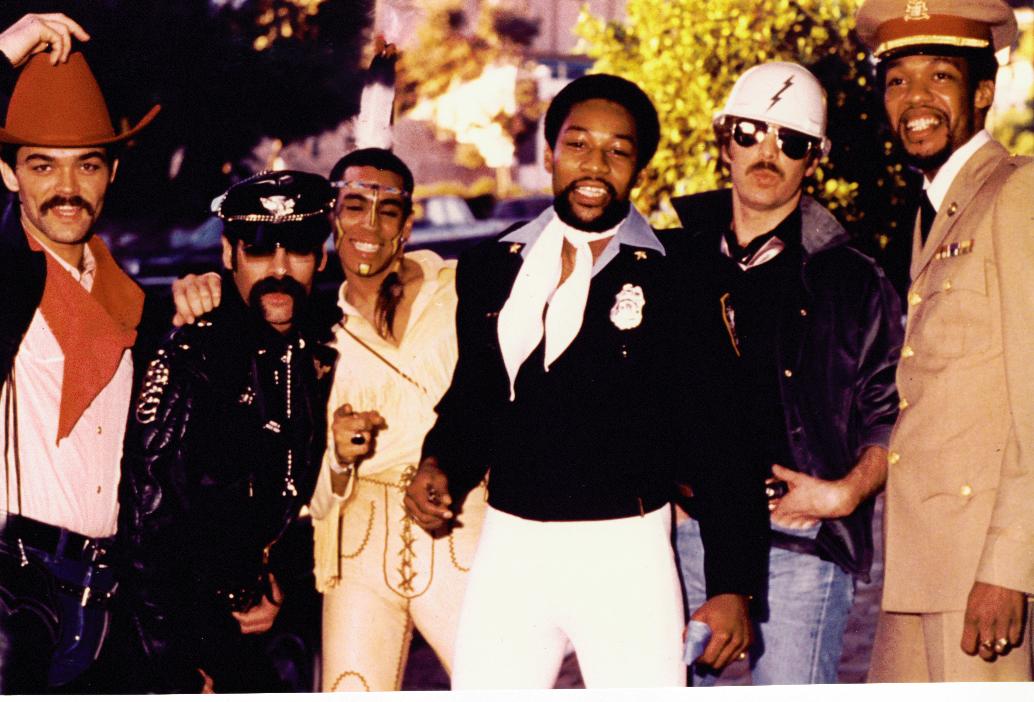
Black Sab­bath, a legit­i­mate­ly scary—and polit­i­cal­ly astute—band gets pegged along with Iron Maid­en for “vio­lence” and “reli­gious obscu­ran­tism.” (Nazareth is sim­i­lar­ly guilty of “vio­lence” and “reli­gious mys­ti­cism.”) A great many artists are charged with only “vio­lence” or with “sex,” which in some cas­es was kind of their whole méti­er. A hand­ful of punk bands—the Sex Pis­tols, the Clash, the Stranglers—are cit­ed for vio­lence, and also sim­ply charged with “punk,” a crime giv­en as the Ramones’ only offense. There are a few odd­ly spe­cif­ic charges: Pink Floyd is guilty of a “dis­tor­tion of Sovi­et for­eign pol­i­cy (‘Sovi­et aggres­sion in Afghanistan’)” and Talk­ing Heads endorse the “myth of the Sovi­et mil­i­tary threat.” A cou­ple hilar­i­ous­ly incon­gru­ous tags offer LOLs: Yazoo and Depeche Mode, two of the gen­tlest bands of the peri­od, get called out for “punk, vio­lence.” Kiss and the Vil­lage Peo­ple (above), two of the sil­li­est bands on the list, are said to prop­a­gate, “neo­fas­cism” and “vio­lence.”

  1. Sex Pis­tols: punk, vio­lence
  2. B‑52s: punk, vio­lence
  3. Mad­ness: punk, vio­lence
  4. Clash: punk, vio­lence
  5. Stran­glers: punk, vio­lence
  6. Kiss: neo­fas­cism, punk, vio­lence
  7. Cro­cus: vio­lence, cult of strong per­son­al­i­ty
  8. Styx: vio­lence, van­dal­ism
  9. Iron Maid­en: vio­lence, reli­gious obscu­ri­tanism
  10. Judas Priest: anti­com­mu­nism, racism
  11. AC/DC: neo­fas­cism, vio­lence
  12. Sparks: neo­fas­cism, racism
  13. Black Sab­bath: vio­lence, reli­gious obscu­ri­tanism
  14. Alice Coop­er: vio­lence, van­dal­ism
  15. Nazareth: vio­lence, reli­gious mys­ti­cism
  16. Scor­pi­ons: vio­lence
  17. Gengis Khan: anti­com­mu­nism, nation­al­ism
  18. UFO: vio­lence
  19. Pink Floyd (1983): dis­tor­tion of Sovi­et for­eign pol­i­cy (“Sovi­et agres­sion in Afghanistan”)***
  20. Talk­ing Heads: myth of the Sovi­et mil­i­tary threat
  21. Per­ron: eroti­cism
  22. Bohan­non: eroti­cism
  23. Orig­i­nals: sex
  24. Don­na Sum­mer: eroti­cism
  25. Tina Turn­er: sex
  26. Junior Eng­lish: sex
  27. Canned Heat: homo­sex­u­al­i­ty
  28. Munich Machine: eroti­cism
  29. Ramones: punk
  30. Van Halen: anti-sovi­et pro­pa­gan­da
  31. Julio Igle­sias: neo­fas­cism
  32. Yazoo: punk, vio­lence
  33. Depeche Mode: punk, vio­lence
  34. Vil­lage Peo­ple: vio­lence
  35. Ten CC: neo­fas­cism
  36. Stooges: vio­lence
  37. Boys: punk, vio­lence
  38. Blondie: punk, vio­lence

The list cir­cu­lat­ed for “the pur­pose of inten­si­fy­ing con­trol over the activ­i­ties of dis­cothe­ques.” It comes to us from Alex­ei Yurchak’s Every­thing Was For­ev­er, Until It Was No More: The Last Sovi­et Gen­er­a­tion, which cites it as an exam­ple, writes one read­er, of “the con­tra­dic­to­ry nature of Sovi­et life, where as cit­i­zens par­tic­i­pat­ed in the rit­u­al­ized, pro for­ma ide­o­log­i­cal dis­course, this very dis­course allowed them to carve out what they called ‘nor­mal mean­ing­ful life’ that went beyond the state’s ide­ol­o­gy.” A large part of that “nor­mal” life involved cir­cu­lat­ing bootlegs of ide­o­log­i­cal­ly sus­pect music on impro­vised mate­ri­als like dis­card­ed and stolen X‑Rays. The Kom­so­mol even­tu­al­ly wised up. As Yur­chak doc­u­ments in his book, they co-opt­ed local ama­teur rock bands and pro­mot­ed their own events as a counter-attack on the influ­ence of bour­geois cul­ture. You can prob­a­bly guess how much suc­cess they had with this strat­e­gy.

See the full list of thir­ty-eight bands and their “type of pro­pa­gan­da” above.

Note: An ear­li­er ver­sion of this post appeared on our site in 2015.

Relat­ed Con­tent:

Frank Zap­pa Debates Whether the Gov­ern­ment Should Cen­sor Music in a Heat­ed Episode of Cross­fire: Why Are Peo­ple Afraid of Words? (1986)

The Sovi­ets Who Boot­legged West­ern Music on X‑Rays: Their Sto­ry Told in New Video & Audio Doc­u­men­taries

Watch the Sur­re­al­ist Glass Har­mon­i­ca, the Only Ani­mat­ed Film Ever Banned by Sovi­et Cen­sors (1968)

The His­to­ry of Sovi­et Rock: From the 70s Under­ground Rock Scene, to Sovi­et Punk & New Wave in the 1980s

Young Pat­ti Smith Rails Against the Cen­sor­ship of Her Music: An Ani­mat­ed, NSFW Inter­view from 1976

Josh Jones is a writer and musi­cian based in Durham, NC. Fol­low him at @jdmagness

by | Permalink | Make a Comment ( 10 ) |

The Genius of Brian Wilson (RIP) and How He Turned “Good Vibrations” Into the Beach Boys’ Pocket Symphony

This week, Bri­an Wil­son became the last of the Wil­son broth­ers to shuf­fle off this mor­tal coil. Den­nis, the first of the Wilsons to go, died young in 1983 — but not before offer­ing this mem­o­rable assess­ment of the fam­i­ly musi­cal project: “Bri­an Wil­son is the Beach Boys. He is the band. We’re his mes­sen­gers. He is all of it. Peri­od. We’re noth­ing.” That was a bit harsh: Den­nis may not have been a vir­tu­oso drum­mer, but Beach Boys enthu­si­asts all cred­it his faint­ly despair­ing songs with enrich­ing the band’s sig­na­ture emo­tion­al land­scape. Bri­an may have writ­ten “God Only Knows,” but he did so with his broth­er Car­l’s voice in mind. And could even Bri­an’s oth­er mas­ter­piece “Good Vibra­tions” have made the same impact with­out the par­tic­i­pa­tion of his much-resent­ed cousin Mike Love?

Still, with­out Bri­an’s orches­tra­tion, the oth­er Beach Boys’ voic­es would nev­er have come togeth­er in the pow­er­ful way they did, to say noth­ing of the con­tri­bu­tions of the count­less stu­dio musi­cians who played on their record­ings. Before “Good Vibra­tions,” nev­er had a pop song owed so much to so many musi­cians — and, at the same time, even more to the fer­tile and uncon­ven­tion­al son­ic imag­i­na­tion of just one man.

Labo­ri­ous­ly craft­ed over sev­en months in four dif­fer­ent stu­dios, it came out in Octo­ber of 1966 as the most expen­sive sin­gle ever pro­duced. Its then-epic length of 3:35 filled Capi­tol Records with doubts about its radio via­bil­i­ty, but that turned out to be an aston­ish­ing­ly brief run­ning time to con­tain the sheer com­po­si­tion­al inten­si­ty that soon got the song labeled a “pock­et sym­pho­ny.”

“Good Vibra­tions” and its myr­i­ad intri­ca­cies are scru­ti­nized to this day, most recent­ly in video essays like the ones you see here. On his Youtube chan­nel Poly­phon­ic, Noah Lefevre calls it “dense enough that you could teach an entire music course on it.” David Hart­ley grants it the sta­tus of “prob­a­bly the most com­plex song ever record­ed,” and even “the first song ever cre­at­ed using copy and paste.” Long before the era of dig­i­tal audio work­sta­tions, Bri­an Wil­son used whol­ly ana­log stu­dio tech­nol­o­gy to string togeth­er “feels,” his name for the dis­parate frag­ments of music in his mind. His method con­tributed to the sym­phon­ic con­struc­tion of “Good Vibra­tions,” and his will­ing­ness to fol­low the mood wher­ev­er it led result­ed in the song’s dis­tinc­tive use of an Elec­tro-Theremin. Despite all this, some lis­ten­ers still ques­tion his cen­tral­i­ty to the Beach Boys’ music; for them, there will always be “Koko­mo.”

Relat­ed con­tent:

Watch Lost Stu­dio Footage of Bri­an Wil­son Con­duct­ing “Good Vibra­tions,” The Beach Boys’ Bril­liant “Pock­et Sym­pho­ny”

How the Beach Boys Cre­at­ed Their Pop Mas­ter­pieces: “Good Vibra­tions,” Pet Sounds, and More

The Beach Boys’ Bri­an Wil­son & Bea­t­les Pro­duc­er George Mar­tin Break Down “God Only Knows,” the “Great­est Song Ever Writ­ten”

Hear the Beach Boys’ Angel­ic Vocal Har­monies in Four Iso­lat­ed Tracks from Pet Sounds: “Wouldn’t It Be Nice,” “God Only Knows,” “Sloop John B” & “Good Vibra­tions”

Enter Bri­an Wilson’s Cre­ative Process While Mak­ing The Beach Boys’ Pet Sounds 50 Years Ago: A Fly-on-the Wall View

Paul McCart­ney vs. Bri­an Wil­son: A Rival­ry That Inspired Pet Sounds, Sgt. Pep­per, and Oth­er Clas­sic Albums

Based in Seoul, Col­in Marshall writes and broad­casts on cities, lan­guage, and cul­ture. His projects include the Sub­stack newslet­ter Books on Cities and the book The State­less City: a Walk through 21st-Cen­tu­ry Los Ange­les. Fol­low him on the social net­work for­mer­ly known as Twit­ter at @colinmarshall.

An Architectural Tour of Taliesin West, Frank Lloyd Wright’s Iconic Desert Home and Studio

By some esti­ma­tions, Frank Lloyd Wright’s Tal­iesin West home-stu­dio com­plex took shape in 1941. But even then, the Ari­zona Repub­lic pre­scient­ly not­ed that “it may be years before it is con­sid­ered fin­ished.” The Tal­iesin West you can see in the new Archi­tec­tur­al Digest video above is unlike­ly to change dra­mat­i­cal­ly over the next few gen­er­a­tions, but it’s also quite dif­fer­ent from what Wright and his appren­tices ini­tial­ly designed and built over their first six years of life and work in the Ari­zona desert. Much of that change has come since Wright him­self last saw Tal­iesin West in 1959, the final year of his life, as the Tal­iesin Insti­tute’s Jen­nifer Gray explains while show­ing the place off.

Wright enthu­si­asts can argue about the degree to which the expan­sions, mod­i­fi­ca­tions, and ren­o­va­tions made by the mas­ter’s dis­ci­ples and oth­ers are in keep­ing with his vision. But in a sense, ongo­ing growth and meta­mor­pho­sis (as well as dam­age and regrowth, result­ing from the occa­sion­al fire) suits a work of archi­tec­ture made to look and feel as if it had emerged organ­i­cal­ly from the nat­ur­al land­scape. Arguably, Tal­iesin West even exhibits a kind of puri­ty not found in oth­er, more famous Wright build­ings, cre­at­ed as it was with­out a client, and thus with­out a clien­t’s demands and dead­lines — not to men­tion with the ben­e­fit of appren­tice labor.

Like Wright’s orig­i­nal Tal­iesin in Spring Green, Wis­con­sin, Tal­iesin West was a home, a stu­dio, and most impor­tant­ly, an edu­ca­tion­al insti­tu­tion. Wright and his stu­dents spent the win­ters there every year from 1935 on, though it was a com­plete­ly unde­vel­oped site at first. Just get­ting there neces­si­tat­ed a vehic­u­lar pil­grim­age, a great Amer­i­can road trip avant la let­tre — and indeed, avant l’au­toroute. While the Wrights stayed at an inn, the appren­tices camped out on-site, liv­ing a hard­scrab­ble but high­ly edu­ca­tion­al exis­tence, devot­ed as it was to build­ing straight from plans that their teacher could have drawn up the day before. Even after Tal­iesin West was basi­cal­ly built, then hooked up to such lux­u­ries as plumb­ing and elec­tric­i­ty, com­mu­nal rig­ors of life there weren’t for every stu­dent. Yet it did have its plea­sures: it’s not every archi­tec­ture school, after all, that has its own cabaret.

Relat­ed con­tent:

Take 360° Vir­tu­al Tours of Frank Lloyd Wright’s Archi­tec­tur­al Mas­ter­pieces, Tal­iesin & Tal­iesin West

12 Famous Frank Lloyd Wright Hous­es Offer Vir­tu­al Tours: Hol­ly­hock House, Tal­iesin West, Falling­wa­ter & More

A Vir­tu­al Tour of Frank Lloyd Wright’s Lost Japan­ese Mas­ter­piece, the Impe­r­i­al Hotel in Tokyo

Inside the Beau­ti­ful Home Frank Lloyd Wright Designed for His Son (1952)

What Frank Lloyd Wright’s Unusu­al Win­dows Tell Us About His Archi­tec­tur­al Genius

How Frank Lloyd Wright’s Archi­tec­ture Evolved Over 70 Years and Changed Amer­i­ca

Based in Seoul, Col­in Marshall writes and broad­casts on cities, lan­guage, and cul­ture. His projects include the Sub­stack newslet­ter Books on Cities and the book The State­less City: a Walk through 21st-Cen­tu­ry Los Ange­les. Fol­low him on the social net­work for­mer­ly known as Twit­ter at @colinmarshall.

Read the Original 32-Page Program for Fritz Lang’s Metropolis (1927)

75388-Lang-525x700

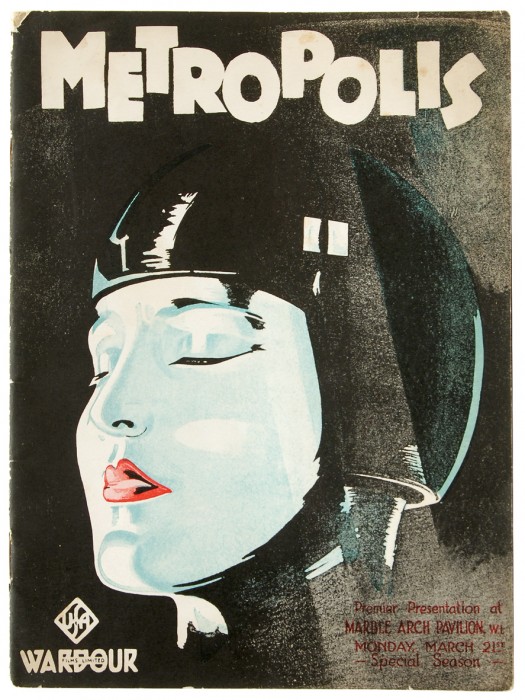
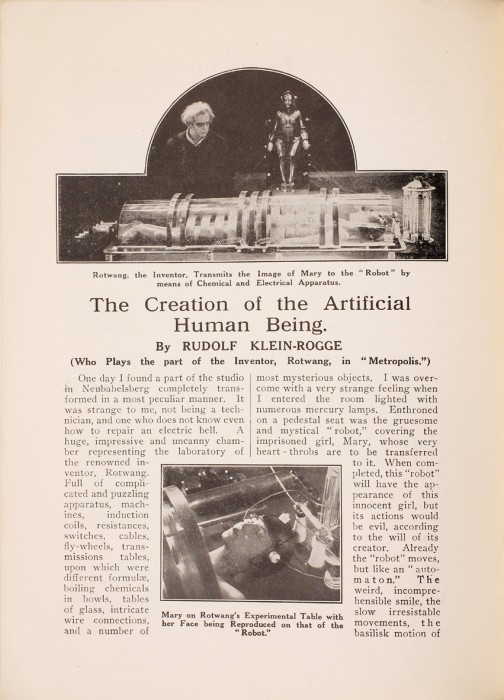
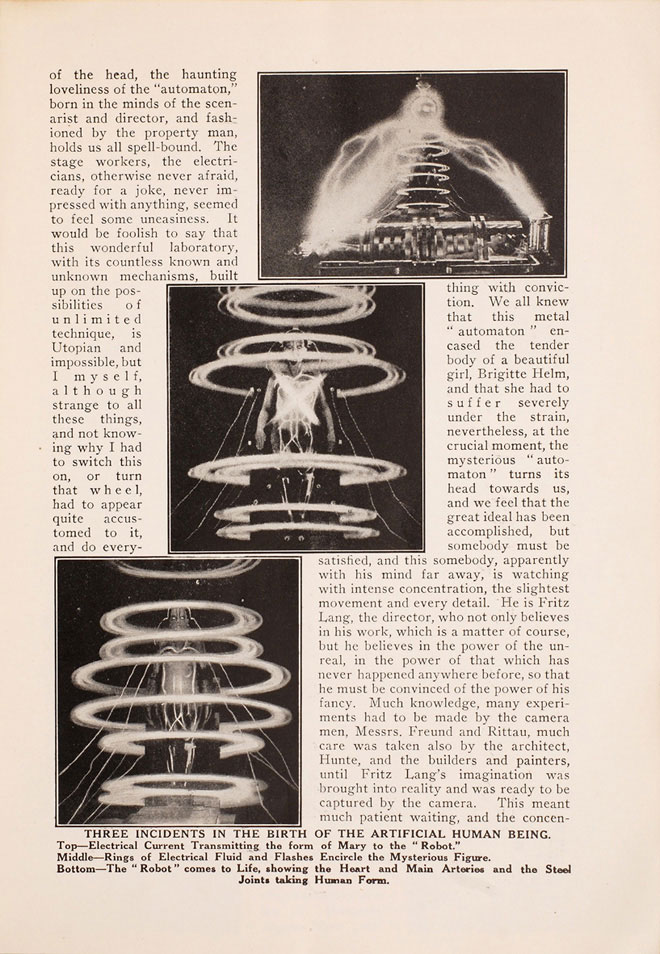
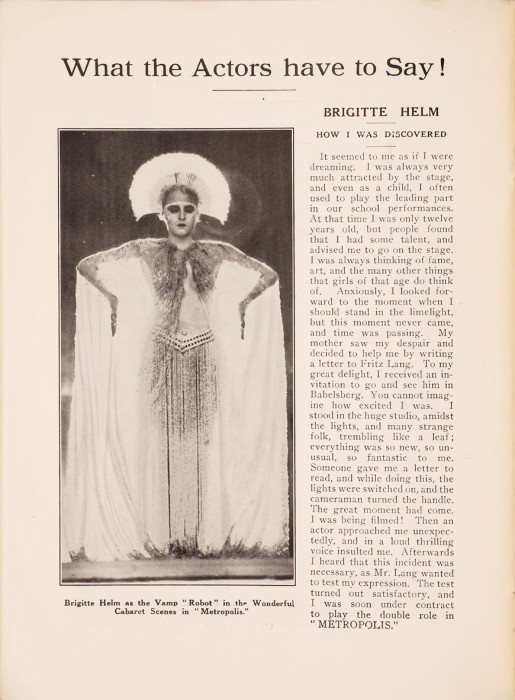
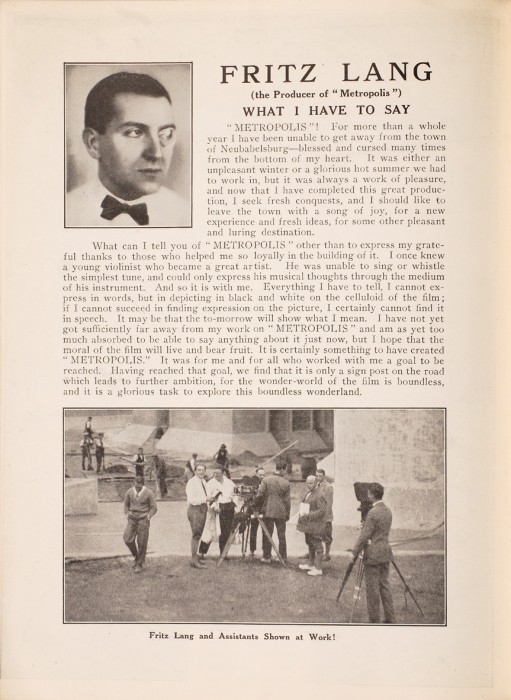
One of the very first fea­ture-length sci-fi films ever made, Fritz Lang’s Metrop­o­lis took a dar­ing visu­al approach for its time, incor­po­rat­ing Bauhaus and Futur­ist influ­ences in thrilling­ly designed sets and cos­tumes. Lang’s visu­al lan­guage res­onat­ed strong­ly in lat­er decades. The film’s rather stun­ning alchem­i­cal-elec­tric trans­fer­ence of a woman’s phys­i­cal traits onto the body of a destruc­tive android—the so-called Maschi­nen­men­sch began a very long trend of female robots in film and tele­vi­sion, most of them as dan­ger­ous and inscrutable as Lang’s. And yet, for all its many imi­ta­tors, Metrop­o­lis con­tin­ues to deliv­er sur­pris­es. Here, we bring you a new find: a 32-page pro­gram dis­trib­uted at the film’s 1927 pre­miere in Lon­don and recent­ly re-dis­cov­ered.

75388_1_Lang-511x700

In addi­tion to under­writ­ing almost one hun­dred years of sci­ence fic­tion film and tele­vi­sion tropes, Metrop­o­lis has had a very long life in oth­er ways: Inspir­ing an all-star sound­track pro­duced by Gior­gio Moroder in 1984, with Fred­die Mer­cury, Lover­boy, and Adam Ant, and a Kraftwerk album.

In 2001, a recon­struct­ed ver­sion of Metrop­o­lis received a screen­ing at the Berlin Film Fes­ti­val, and UNESCO’s Mem­o­ry of the World Reg­is­ter added it to their ros­ter. 2002 saw the release of an excep­tion­al Metrop­o­lis-inspired ani­me with the same title. And in 2010 an almost ful­ly restored print of the long-incom­plete film—recut from footage found in Argenti­na in 2008—appeared, adding a lit­tle more sophis­ti­ca­tion and coher­ence to the sim­plis­tic sto­ry­line.

75388_6_Lang-504x700

Even at the film’s ini­tial recep­tion, with­out any miss­ing footage, crit­ics did not warm to its sto­ry. For all its intense visu­al futur­ism, it has always seemed like a very quaint, naïve tale, struck through with earnest reli­gios­i­ty and inex­plic­a­ble archaisms. Con­tem­po­rary review­ers found its nar­ra­tive of gen­er­a­tional and class con­flict uncon­vinc­ing. H.G. Wells—“something of an author­i­ty on sci­ence fiction”—pronounced it “the sil­li­est film” full of “every pos­si­ble fool­ish­ness, cliché, plat­i­tude, and mud­dle­ment about mechan­i­cal progress and progress in gen­er­al served up with a sauce of sen­ti­men­tal­i­ty that is all its own.” Few were kinder when it came to the sto­ry, and despite its overt reli­gious themes, many saw it as Com­mu­nist pro­pa­gan­da.

75388_7_lang

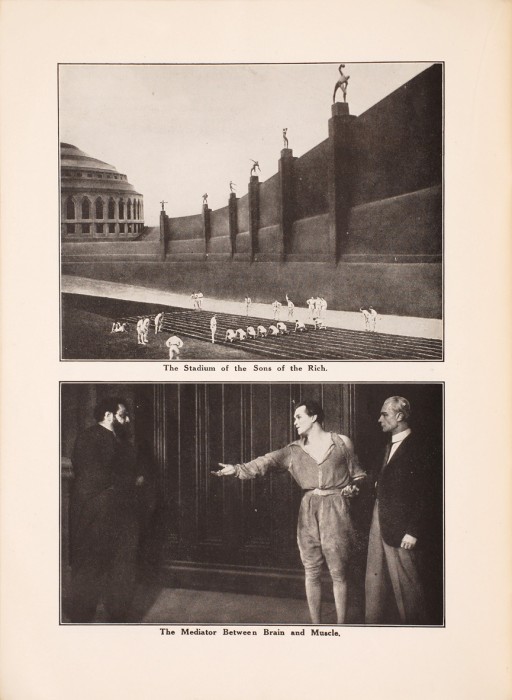
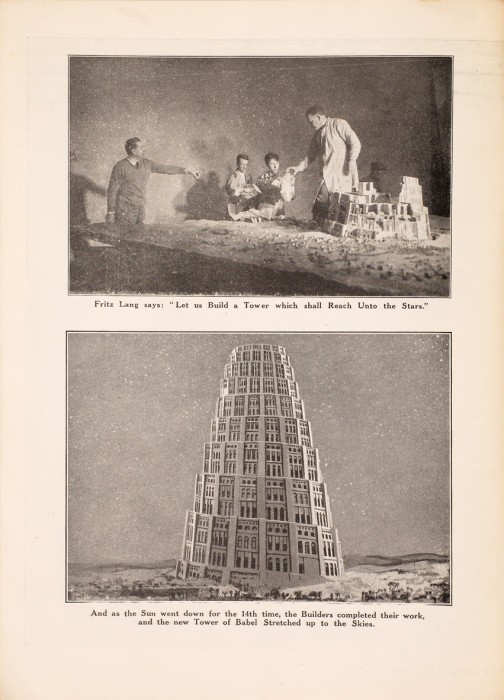
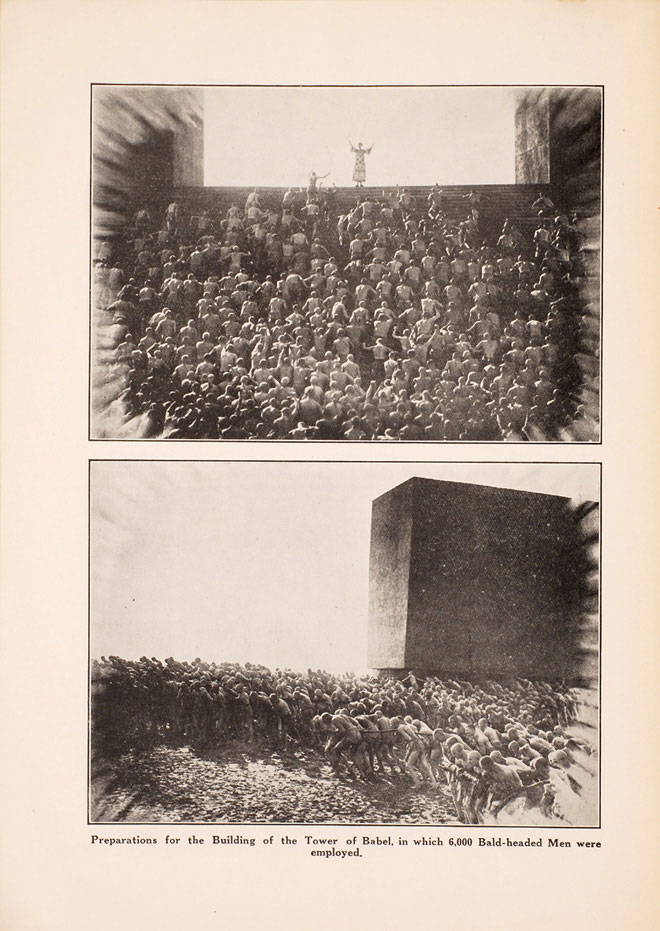
Viewed after sub­se­quent events in 20th cen­tu­ry Ger­many, many of the film’s scenes appear “dis­turbing­ly pre­scient,” writes the Unaf­fil­i­at­ed Crit­ic, such as the vision of a huge indus­tri­al machine as Moloch, in which “bald, under­fed humans are led in chains to a fur­nace.” Lang and his wife Thea von Harbou—who wrote the nov­el, then screenplay—were of course com­ment­ing on indus­tri­al­iza­tion, labor con­di­tions, and pover­ty in Weimar Ger­many. Metrop­o­lis’s “clear mes­sage of clas­sism,” as io9 writes, comes through most clear­ly in its arrest­ing imagery, like that hor­ri­fy­ing, mon­strous fur­nace and the “loom­ing sym­bol of wealth in the Tow­er of Babel.”

75388_26_Lang-512x700

The visu­al effects and spec­tac­u­lar set pieces have worked their mag­ic on almost every­one (Wells exclud­ed) who has seen Metrop­o­lis. And they remain, for all its silli­ness, the pri­ma­ry rea­son for the movie’s cul­tur­al preva­lence. Wired calls it “prob­a­bly the most influ­en­tial sci-fi movie in his­to­ry,” remark­ing that “a sin­gle movie poster from the orig­i­nal release sold for $690,000 sev­en years ago, and is expect­ed to fetch even more at an auc­tion lat­er this year.”

75388_18_Lang-504x700

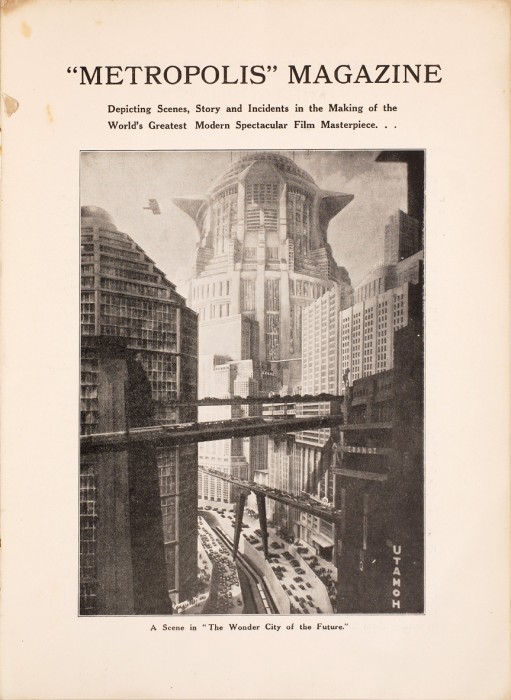
We now have anoth­er arti­fact from the movie’s pre­miere, this 32-page pro­gram, appro­pri­ate­ly called “Metrop­o­lis” Mag­a­zine, that offers a rich feast for audi­ences, and text at times more inter­est­ing than the film’s script. (You can view the pro­gram in full here.) One imag­ines had they pos­sessed back­lit smart phones, those ear­ly movie­go­ers might have found them­selves strug­gling not to browse their pro­grams while the film screened. But, of course, Metrop­o­lis’s visu­al excess­es would hold their atten­tion as they still do ours. Its scenes of a futur­is­tic city have always enthralled view­ers, film­mak­ers, and (most) crit­ics, such that Roger Ebert could write of “vast futur­is­tic cities” as a sta­ple of some of the best sci­ence fic­tion in his review of the 21st-cen­tu­ry ani­mat­ed Metrop­o­lis—“visions… goofy and yet at the same time exhil­a­rat­ing.”

75388_24_Lang-515x700

The pro­gram real­ly is an aston­ish­ing doc­u­ment, a trea­sure for fans of the film and for schol­ars. It’s full of pro­duc­tion stills, behind-the-scenes arti­cles and pho­tos, tech­ni­cal minu­ti­ae, short columns by the actors, a bio of Thea von Har­bou, the “authoress,” excerpts from her nov­el and screen­play placed side-by-side, and a short arti­cle by her. There’s a page called “Fig­ures that Speak” that tal­lies the pro­duc­tion costs and cast and crew num­bers (includ­ing very crude draw­ings and num­bers of “Negroes” and “Chi­nese”). Lang him­self weighs in, lacon­i­cal­ly, with a breezy intro­duc­tion fol­lowed by a clas­sic silent-era line: “if I can­not suc­ceed in find­ing expres­sion on the pic­ture, I cer­tain­ly can­not find it in speech.” Film his­to­ry agrees, Lang found his expres­sion “on the pic­ture.”

75388_10_Lang-511x700

“Only three sur­viv­ing copies of this pro­gram are known to exist,” writes Wired, and one of them, from which these pages come, has gone on sale at the Peter Har­ring­ton rare book shop for 2,750 pounds ($4,244)—which seems rather low, giv­en what an orig­i­nal Metrop­o­lis poster went for. But mar­kets are fick­le, and what­ev­er its cur­rent or future price, ”Metrop­o­lis” Mag­a­zine is invalu­able to cineast­es. See all 32 pages of the pro­gram at Peter Harrington’s web­site.

75388_22_lang

Note: An ear­li­er ver­sion of this post appeared on our site in 2016.

Relat­ed Con­tent:

The 1927 Film Metrop­o­lis Cre­at­ed a Dystopi­an Vision of What the World Would Look Like in 2026–and It Hits Close to Home

Fritz Lang First Depict­ed Arti­fi­cial Intel­li­gence on Film in Metrop­o­lis (1927), and It Fright­ened Peo­ple Even Then

If Fritz Lang’s Icon­ic Film Metrop­o­lis Had a Kraftwerk Sound­track

Behold Beau­ti­ful Orig­i­nal Movie Posters for Metrop­o­lis from France, Swe­den, Ger­many, Japan & Beyond

Josh Jones is a writer and musi­cian based in Durham, NC. Fol­low him at @jdmagness

« Go BackMore in this category... »
Quantcast