“Steady Pushkin, matter-of-fact Tolstoy, restrained Chekhov have all had their moments of irrational insight which simultaneously blurred the sentence and disclosed a secret meaning worth the sudden focal shift,” writes Vladimir Nabokov in his Lectures on Russian Literature. “But with Gogol this shifting is the very basis of his art.” When, “as in the immortal ‘The Overcoat,’ he really let himself go and pottered on the brink of his private abyss, he became the greatest artist that Russia has yet produced.” Tough though that act is to follow, generations of filmmakers around the world have attempted to adapt for the screen that masterwork of a short story about the outerwear-related struggles of an impoverished bureaucrat.
One particular pair of Russian filmmakers has actually spent a generation or two making their own version of “The Overcoat”: the married couple Yuri Norstein and Francheska Yarbusova, who began the project back in 1981.
Their nineteen-seventies short films Hedgehog in the Fog and Tale of Tales had already received international acclaim from both fans and fellow creators of animation (their champions include no less an auteur than Hayao Miyazaki), with distinctively captivating effects achieved through a distinctively painstaking process. Wholly analog, it has grown only more labor-intensive as digital technology has advanced so rapidly over the past few decades — decades that have also brought about great social, political, and economic changes in their homeland.
The Atrocity Guide video above offers a glimpse into Norstein and Yarbusova’s lives and work on the “The Overcoat” — to the extent that the two can even be separated at this point. Once, they were victims of Soviet censorship and suspicion, given the ambiguous morals of their visually lavish productions. Now, in their eighties and with this 65-minute-film nowhere near completion (but five minutes of which you can see in the video above), the problem seems to have more to do with their own artistically commendable but wholly impractical creative ethos. They work to “sadistically high” standards on a film that, as Norstein believes, “should be constantly changing” — while also properly expressing the Gogolian themes of struggle, privation, and futility that can “only be created amid feelings of discomfort and uncertainty” — hence their insistence on staying in Russia.
Based in Seoul, Colin Marshall writes and broadcasts on cities, language, and culture. His projects include the Substack newsletterBooks on Cities, the book The Stateless City: a Walk through 21st-Century Los Angeles and the video series The City in Cinema. Follow him on Twitter at @colinmarshall or on Facebook.
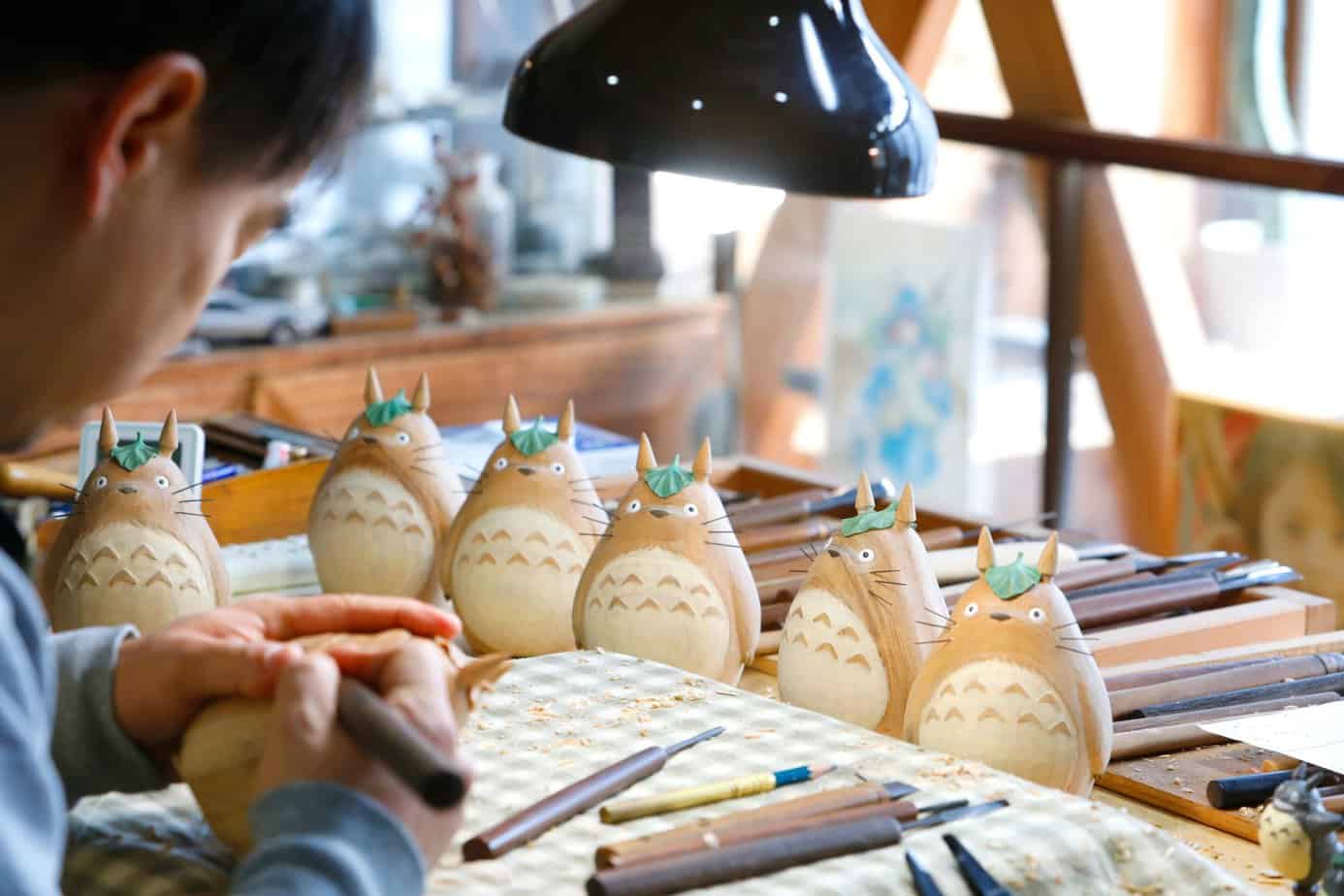
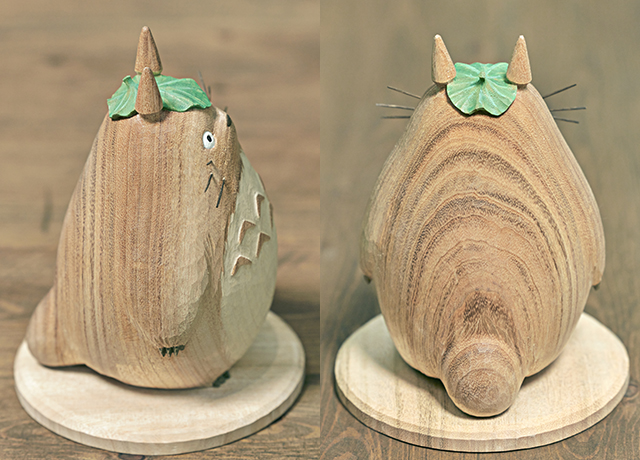
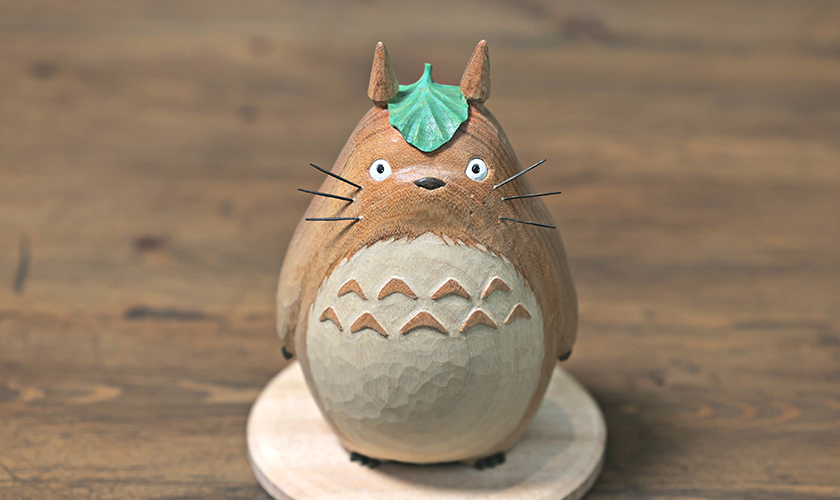
Or, they may be left wishing you’d given them a vastly more huggable machine-made plushie version, especially if you can’t help sucking in your breath every time they start fumbling with that exquisitely crafted ¥330,000 yen heirloom-to-be. (That’s $2341.81 in US dollars.)
Of course, director Hayao Miyazaki’s 1988 animated feature My Neighbor Totorohas legions of fans of all ages, and some will consider themselves quite lucky if they win the lottery that grants them the ability to purchase such a treasure.
They’re not only carved by skilled artisans in Inami, the city of woodcarving, but the wood is also that of a camphor tree — the natural habitat of the mysterious, magical Totoro! (It’s also considered holy by practitioners of the Shinto religion.)
Still, if it’s unclear that the recipient will truly appreciate such thoughtfulness, you’re probably better off going with another offering from Studio Ghibli’s Totoro-themed collaboration with Nakagawa Masashichi Shoten, a purveyor of traditional Japanese crafts.
Perhaps a¥4180 bud vase fired in Ureshino City’s Edo-period Yozan Kiln, featuring Totoro or a cluster of susuwatari, the pom pom-like soot sprites infesting the Kusakabe family’s new home, who also play a part in Spirited Away.
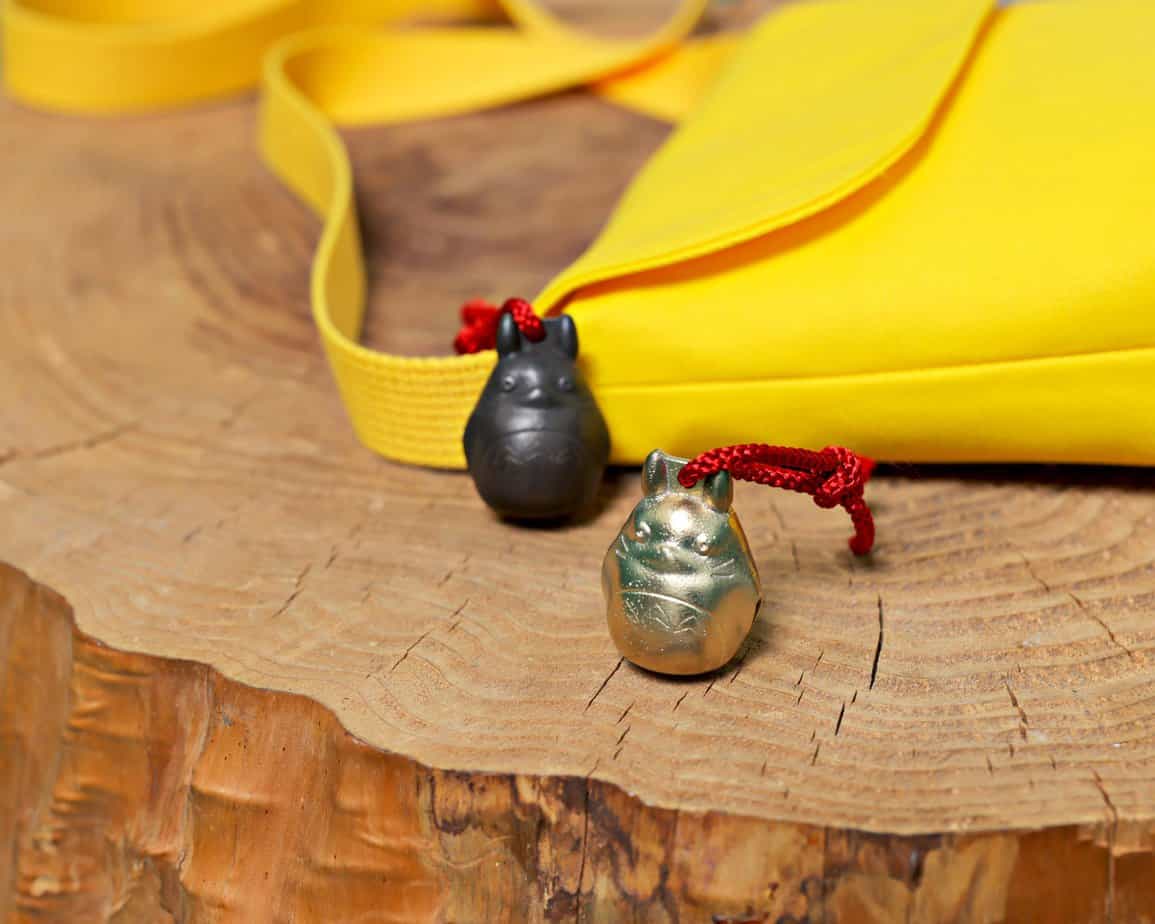
Maybe a tiny Totoro bell amulet, molded by craftsmen in Odawara, celebrated for the quality of their metalwork since the early 1500s, when they outfitted samurai with weapons, armor and helmets?
As one of the leading towns along the trunk road, Yatuso flourished through … production of wrapping paper for the nation-wide famous “Toyama Medicine”. At its golden age, from the Edo Era to the beginning of the Meiji Era in the 19th century, many people were engaged in papermaking by handwork in their homes. Yatsuo Japanese paper was expected to be unbreakable because it was used as package for expensive medicine and at the same time it should look brilliant. It had to be thick and stout so that it could be impervious to water and the label printed on the surface would not be smeared.
The list of Totoro-inspired traditional crafts is impressive. A representative sampling:
Dishtowels made from five layers of Kayaori fabric that “was introduced to Japan during the Nara period and is said to allow wind to pass through but keep mosquitoes out”…
We can now “do to Disney what Disney did to the great works of the public domain before him,” according to Harvard law professor and public domain expert, Lawrence Lessig, hailed by The New Yorker as “the most important thinker on intellectual property in the Internet era.”
Disney has been notoriously protective of its control over its spokesmouse, successfully pushing Congress to adopt the Sonny Bono Copyright Extension Act of 1998, which kept the public’s mitts off of Steamboat Willie, and, more to the point, Mickey Mouse, for 25 years beyond the terms of the Copyright Act of 1976.
Walt Disney embraced the freedom to take, change and return ideas from our popular culture. The rip, mix and burn culture of the Internet is Disney-familiar.
Steamboat Willie wasn’t conjured from thin air either. Its plot and title character were inspired by Buster Keaton’s Steamboat Bill, released two months before Disney’s animated short went into production.
A few caveats for those eager to take a crack at the Mouse…
Steamboat Willie’s newfound public domain status doesn’t give you carte blanche to mess around with Mickey and Minnie in all their many forms.
Stick to the music-loving black-and-white trickster with rubberhose arms, button-trimmed short-shorts, and the distinctly rodent-like tail that went by the wayside for Mickey’s appearance in 1941’s The Little Whirlwind.
Nor can Steamboat Willie-era Mickey become your new logo. Plop the character down in new narratives, yes. Use him in a recognizable way for purposes of advertising unrelated products, no.
Mislead viewers into thinking your mash up is Disney-approved at your own risk. A Disney spokesperson told CNN:
We will, of course, continue to protect our rights in the more modern versions of Mickey Mouse and other works that remain subject to copyright, and we will work to safeguard against consumer confusion caused by unauthorized uses of Mickey and our other iconic characters.
Don’t think they don’t mean it.
Author Robert Thompson, the founding director of Syracuse University’s Bleier Center for Television and Popular Culturetold The Guardian that even though “the original Mickey isn’t the one we all think of and have on our T‑shirts or pillowcases up in the attic someplace,” the company is hypervigilant about protecting its assets:
Symbolically of course, copyright is important to Disney and it has been very careful about their copyrights to the extent that laws have changed to protect them. This is the only place I know that some obscure high school in the middle of nowhere can put on The Lion King and the Disney copyright people show up.
Fumi Games is already poised to take a similar gamble with MOUSE, a blood-soaked, “gritty, jazz-fueled shooter” set to drop in 2025:
If you’re not yet ready to take the plunge, Mickey’s pals Pluto and Donald Duck will join him in the public domain later this decade, so don your thinking caps and mark your calendars.
For a more in-depth look at the ways you can — and cannot — use Steamboat Willie-era Mickey Mouse in your own work, Duke University’s Center for the Study of the Public Domain supplies a very thorough guide here.
Early in his collecting odyssey, animation historian, archivist, and educator Tommy José Stathes earned the honorific Cartoon Cryptozoologist from Cinebeasts, a “New York-based collective of film nerds, vidiots, and programmers investigating the furthest reaches of the moving image universe.”
More recently, George Willeman, a nitrate film expert on the Library of Congress’ film preservation team dubbed him “the King of Silent Animation.”
The seed of Stathes’ enduring passion took root in his 90s childhood, when slapped together VHS anthologies of cartoons from the 30s and 40s could be picked up for a couple of bucks in groceries and drugstores. These finds typically included one or two silent-era rarities, which is how he became acquainted with Felix the Cat and other favorites who now dominate his Early Animation Archive.
He squeezed his parents and grandparents for memories of cartoons screened on television and in theaters during their youth, and began researching the history of animation.
Realizing how few of the early cartoons he was learning about could be widely viewed, he set out to collect and archive as many examples as possible, and to share these treasures with new audiences.
His collection currently consists of some 4,000 animated reels, truffled up from antique shops, flea markets, and eBay. In addition to his Cartoons on Film YouTube channel, he hosts regular in-person Cartoon Carnivals, often curated around holiday themes.
Stathes’ passion project is giving many once-popular characters a second and in some cases, third act.
Take Farmer Alfalfa, (occasionally rendered as Al Falfa), the star of 1923’s The Fable of the Alley Cat, an installment in the Aesop’s Fables series, which ran from 1921 to 1929.
His first appearance was in director Paul Terry’s Down on Phoney Farm from 1915, but as Stathes observes, baby boomers grew up watching him on TV:
Nearly all of these folks who mention the character will also reference ‘hundreds’ of mice. Few may have realized that, while the Farmer Alfalfa cartoons running on television at that time were already old, the films starred one of the earliest recurring cartoon characters, and one that enjoyed an incredibly long career compared with his cartoon contemporaries.
The Fable of the Alley Cat honks a lot of familiar vintage cartoon horns — slapstick, mayhem, David triumphing over Goliath… cats and mice.
Stathes describes it as “a rather sinister day in the life of Farmer Al Falfa — It’s clear that the animal kingdom tends to despise him! — and his documentation is meticulous:
The version seen here was prepared for TV distribution in the 1950s by Stuart Productions. The music tracks were originally composed by Winston Sharples for the Van Beuren ‘Rainbow Parade’ cartoons in the mid-1930s.
The mismatched duo, Mutt and Jeff, got their start in daily newspaper comics, before making the leap to animated shorts.
Animation connoisseurs go bananas for the perspective shift at the 14 second mark of Laughing Gas (1917), a rarity Stathes shares as a reference copy from the original 35mm nitrate form, with the promise of a full restoration in the future.
(A number of Stathes’ acquisitions have deteriorated over the years or sustained damage through improper storage.)
Dinky Doodle and his dog Weakheart were 1920s Bray Studios crowdpleasers whose stint on television is evidenced by the midcentury voice over that was added to Dinky Doodle’s Bedtime Story (1926).
The characters’ creator, director Walter Lantz appears as “Pop” in the above live sequences.
Stathes’ collection also dredges up some objectionable period titles and content, Little Black Sambo, Redskin Blues, and Korn Plastered in Africa to name a few.
Stathes is mindful of contemporary sensibilities, but stops short of allowing them to scrub these works from the historic record. He warns would-be viewers of The Chinaman that it contains a “racist speech balloon as well as an intertitle that was cut from the later TV version for obvious reasons:”
Such was the vulgar terminology in those days. To question or censor these films would be denying our history.
When A Charlie BrownChristmas first aired 58 years ago, few had any confidence that it would be a hit. Its story and animation, bare-bones even by the standards of mid-nineteen-sixties television, made a positive impression on neither CBS’ executives nor on many of the special’s own creators. They didn’t expect that this very simplicity would turn it into a perennial holiday favorite — nor, presumably, that its soundtrack by the Vince Guaraldi Trio would become one of the most beloved Christmas albums in existence. Now that we’re well into the season when the music from A Charlie Brown Christmas is heard every day in homes, cafés, and shopping malls all around the world, why not get an introduction to Guaraldi, the man and his music, from pop culture video essayist Matt Draper?
“Born in San Francisco in 1928, Guaraldi credited his two uncles with sparking his interest in jazz as a child, with the future musician already learning the piano by age seven,” says Draper. After serving in the Korean War and returning home to study music at San Francisco State University, Guaraldi began to “pursue his love of jazz in local clubs.”
He soon formed his trio, and recording their first albums in the mid-nineteen-fifties, he “expanded his use of Latin jazz and bossa nova.” In 1962 Guaraldi scored his first hit with “Cast Your Fate to the Wind,” a single from an album inspired by Marcel Camus’ Black Orpheus. It was a radio broadcast of that song, so the story goes, that caught the ear of Lee Mendelson, who would produce A Charlie Brown Christmas, as he crossed the Golden Gate Bridge in a taxicab.
Mendelson initially commissioned Guaraldi to compose the music for A Boy Named Charlie Brown, a television documentary that ultimately never aired. But its recording sessions brought forth “Linus and Lucy,” which became Peanuts’ de facto theme song, and when Coca-Cola agreed to sponsora Peanuts Christmas special in 1965 — a scant six months before Christmas itself — Guaraldi was called back to score it. “A Charlie Brown Christmas is a rather melancholic story centering on Charlie’s search for meaning and worth in the holiday season,” says Draper, “so it’s fitting that a large portion of Guaraldi’s score is tinged with sadness.” Yet “Guaraldi’s melancholy isn’t overwrought or forced; rather, it’s minor and subtle,” unlike the average film score that tries to “beat its listeners over the head with emotion.”
The soundtrack album, which you can hear (and see accompanied by a Yule fireplace) on the official Vince Guaraldi Youtube channel, offers musical variety from the “ton of swinging style” in its version of “O Tanenbaum” to the “waltz brimming with energy” of “Skating” to “Christmas Is Coming,” with its “hints of rock-and-roll.” In the video just above, composer-Youtuber Charles Cornell explains what makes it “without a doubt, the best Christmas album ever” (a title held along with that of the best-selling jazz album in history after Miles Davis’ Kind of Blue), not least its being less “in-your-face Christmas” than other similarly themed recordings. Yet he also acknowledges that Guaraldi’s most beautiful composition for a Peanuts special isn’t in A Charlie Brown Christmas, but It’s the Great Pumpkin, Charlie Brown, from 1966. When next fall fall rolls around, do make “Great Pumpkin Waltz” the first song you hear.
Based in Seoul, Colin Marshall writes and broadcasts on cities, language, and culture. His projects include the Substack newsletterBooks on Cities, the book The Stateless City: a Walk through 21st-Century Los Angeles and the video series The City in Cinema. Follow him on Twitter at @colinmarshall or on Facebook.
The Beatles or the Stones? We’ve been debating that question for the past 60 years. Above, the London-based company Dog & Rabbit continues the conversation with a clever video that animates Beatles and Stones album covers. From there, all kinds of high jinks ensue.
The “Beatles vs The Stones” animation has won awards at various festivals. Recently made available online, you can watch it above.
Bugs Bunny is a quick-thinking, fast-talking, wascally force of nature, and a preternaturally gifted physical comedian, too.
But unlike such lasting greats as Charlie Chapin and Buster Keaton, it took him a while to find his iconic look.
His first appearance, as “Happy Rabbit” in the 1938 black and white theatrical short, Porky’s Hare Hunt, might remind you of those yearbook photos of celebrities before they were famous.
In a video essay considering how Bugs Bunny’s look has evolved over his eight-decade career, animation fan Dave Lee of the popular YouTube series Dave Lee Down Under breaks down some early characteristics, from an undefined, small body and oval-shaped head to white fur and a fluffy cotton ball of a tail.
His voice was also a work in progress, more Woody Woodpecker than the hybrid Brooklyn-Bronx patois that would make him, and voice actor Mel Blanc, famous.
The following year, the rabbit who would become Bugs Bunny returned in Prest‑o Change‑o, a Merry Melodies Technicolor short directed by Chuck Jones.
A few months later character designer (and former Disney animator) Charlie Thorson subjected him to a pretty noticeable makeover for Hare-um Scare-um, another rabbit hunting-themed romp.
The two-toned grey and white coat, oval muzzle, and mischievous buck-toothed grin are much more aligned with the Bugs most of us grew up watching.
His pear-shaped bod’, long neck, high-rumped stance, and pontoon feet allowed for a much greater range of motion.
A notation on the model sheet alluding to director Ben Hardaway’s nickname — “Bugs” — gives some hint as to how the world’s most popular cartoon character came by his stage name.
For 1940’s Elmer’s Candid Camera, the pink-muzzled Bugs dropped the yellow gloves Thorsen had given him and affected some black ear tips.
Tex Avery, who was in line to direct the pair in the Academy Award-nominated short A Wild Hare, found this look objectionably cute.
He tasked animator Bob Givens with giving the rabbit, now officially known as Bugs Bunny, an edgier appearance.
In the Givens design, Bugs was no longer defined by Thorson’s tangle of curves. His head was now oval, rather than round. In that respect, Bugs recalled the white rabbit in Porky’s Hare Hunt, but Givens’s design preserved so many of Thorson’s refinements—whiskers, a more naturalistic nose—and introduced so many others—cheek ruffs, less prominent teeth—that there was very little similarity between the new version of Bugs and the Hare Hunt rabbit.
Barrier also details a number of similarities between the titular rabbit character from Disney’s 1935 Silly Symphonies short,The Tortoise and the Hare, and former Disney employee Givens’ design.
While Avery boasted to cartoon historian Milt Gray in 1977 that “the construction was almost identical”, adding, “It’s a wonder I wasn’t sued,” Givens insisted in an interview with the Animation Guild’s oral history project that Bugs wasn’t a Max Hare rip off. ( “I was there. I ought to know.”)
Whatever parallels may exist between Givens’ Bugs and Disney’s Hare, YouTuber Lee sees A Wild Hare as the moment when Bugs Bunny’s character coalesced as “more of a lovable prankster than a malicious deviant,” nonchalantly chomping a carrot like Clark Gable in It Happened One Night, and turning a bit of regional Texas teen slang — “What’s up, Doc?”- into one of the most immortal catch phrases in entertainment history.
A star was born, so much so that four directors — Jones, Avery, Friz Freleng and Bob Clampett — were enlisted to keep up with the demand for Bugs Bunny vehicles.
This multi-pronged approach led to some visual inconsistencies, that were eventually checked by the creation of definitive model sheets, drawn by Bob McKimson, who animated the Clampett-directed shorts.
Historian Barrier takes stock:
Bugs’s cheeks were broader, his chin stronger, his teeth a little more prominent, his eyes larger and slanted a little outward instead of in. The most expressive elements of the rabbit’s face had all been strengthened …but because the triangular shape of Bugs’s head had been subtly accentuated, Bugs was, if anything, futher removed from cuteness than ever before. McKimson’s model sheet must be given some of the credit for the marked improvement in Bugs’s looks in all the directors’ cartoons starting in 1943. Not that everyone drew Bugs to match the model sheet, but the awkwardness and uncertainty of the early forties were gone; it was if everyone had suddenly figured out what Bugs really looked like.
Now one of the most recognizable stars on earth, Bugs remained unmistakably himself while spoofing Charles Dickens, Alfred Hitchcock and Wagner; held his own in live action appearances with such heavy hitters as Doris Day and Michael Jordan; and had a memorable cameo in the 1988 feature Who Framed RogerRabbit, after producers agreed to a deal that guaranteed him the same amount of screen time as his far squarer rival, Mickey Mouse.
This millennium got off to a rockier start, owing to an over-reliance on low budget, simplified flash animation, and the truly execrable trend of shows that reimagine classic characters as cloying toddlers.
In 2011, on the strength of her 2‑minute animated short I Like Pandas, an initially reluctant 24-year-old Jessica Borutski was asked to “freshen up” Bugs’ look for The Looney Tunes Show,a series of longer format cartoons which required its cast to perform such 21st-century activities as texting:
I made their heads a bit bigger because I didn’t like [how] in the ’60s, ’70s Bugs Bunny’s head started to get really small and his body really long. He started to look like a weird guy in a bunny suit.
Lee’s Evolution of Bugs Bunny- 80 Years Explained was released in 2019.
In a push led by Looney Tunes Cartoons’ Alex Kirwan—who spearheads the franchise’s current slate of shorts on HBO Max—the beloved animation icons will soon expand into even more content. There’s the upcoming Tiny Toons Loooniversityrevival, a Halloween special, Cartoonito’s Bugs Bunny Builders for kids, and two feature-length animated movies on the way—and we have a feeling that’s not all, folks!
Behold a crowdsourced, collaborative art project where more than 130 animators and filmmakers from 11 different countries joined together and remade a full episode of Frasier. (It’s the finale of Season 1, “My Coffee with Niles.”) The project’s mastermind, Jacob Reed, asked individual artists to animate different scenes, each with a different style, and then he stitched them all together. Above, you can see how everything hangs together.
If you would like to sign up for Open Culture’s free email newsletter, please find it here. It’s a great way to see our new posts, all bundled in one email, each day.
If you would like to support the mission of Open Culture, consider making a donation to our site. It’s hard to rely 100% on ads, and your contributions will help us continue providing the best free cultural and educational materials to learners everywhere. You can contribute through PayPal, Patreon, and Venmo (@openculture). Thanks!
We're hoping to rely on loyal readers, rather than erratic ads. Please click the Donate button and support Open Culture. You can use Paypal, Venmo, Patreon, even Crypto! We thank you!
Open Culture scours the web for the best educational media. We find the free courses and audio books you need, the language lessons & educational videos you want, and plenty of enlightenment in between.