The Jane Austen Fiction Manuscript Archive Is Online: Explore Handwritten Drafts of Persuasion, The Watsons & More

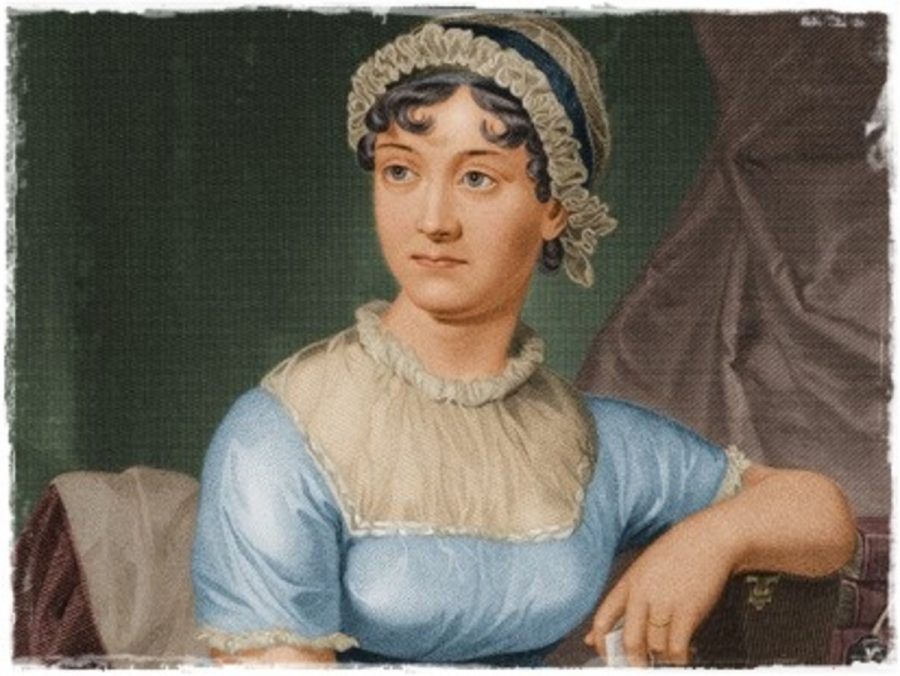
I first came to Jane Austen pre­pared to dis­like her, reared as I had been to think of good fic­tion as social­ly trans­gres­sive, exper­i­men­tal, full of heavy, life-or-death moral con­flicts and exis­ten­tial­ist anti-heroes; of extremes of dread and sor­row or alien­at­ed extremes of their lack. Austen’s char­ac­ters seemed too perky and per­fect, too cir­cum­scribed and whole­some, too untrou­bled by inner despair or out­er calami­ty to offer much in the way of inter­est or exam­ple.

This is an opin­ion shared by more per­cep­tive read­ers than myself, includ­ing Char­lotte Bron­të, who called Pride and Prej­u­dice “an accu­rate daguerreo­type por­trait of a com­mon­place face.” Bron­të “dis­liked [Austen] exceed­ing­ly,” writes author Mary Stolz in an intro­duc­tion to Emma. The author of Jane Eyre pro­nounced that “Miss Austen is only shrewd and obser­vant,” where a nov­el­ist like George Sand is “saga­cious and pro­found.”

A cur­so­ry read­ing of Austen can seem to con­firm Brontë’s faint praise. Con­sid­er the first descrip­tion of her hero­ine match­mak­er, Emma:

Emma Wood­house, hand­some, clever, and rich, with a com­fort­able home and hap­py dis­po­si­tion, seemed to unite some of the best bless­ings of exis­tence, and had lived near­ly twen­ty-one years in the world with very lit­tle to dis­tress or vex her.

No great, shock­ing dis­as­ters befall Emma. She is buf­fet­ed nei­ther by war nor pover­ty, crime, dis­ease, oppres­sion or any oth­er essen­tial­ly dra­mat­ic con­flict. She ends the nov­el join­ing hands in mar­riage with charm­ing gen­tle­man farmer Mr. Knight­ly, con­tent, maybe ever-after, in “per­fect hap­pi­ness.”

Rarely if ever in Austen do we find the tor­ments, spir­i­tu­al striv­ings, sub­lime and grotesque imag­in­ings, pro­to-sci­ence-fic­tion, and world-his­tor­i­cal con­scious­ness of con­tem­po­raries like William Blake, Samuel Tay­lor Coleridge, or Mary Shel­ley. Austen is “famous,” writes Stolz, “for hav­ing lived through the peri­od of the French Rev­o­lu­tion with­out ever men­tion­ing it in her writ­ings.”

To see this as a cri­tique, how­ev­er, is to seri­ous­ly mis­judge her. “She did not deal in rev­o­lu­tions of this order. Not a trav­eled woman, she wrote only of what she knew”: life in Eng­lish coun­try vil­lages, the tra­vails of “love and mon­ey,” as she put it, the every­day long­ings, cour­te­sies, and dis­cour­te­sies that make up the major­i­ty of our every­day lives.

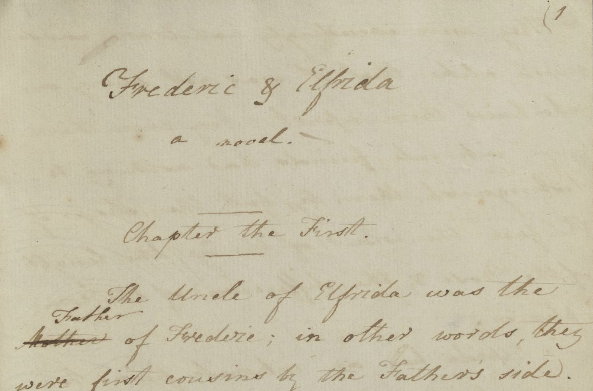
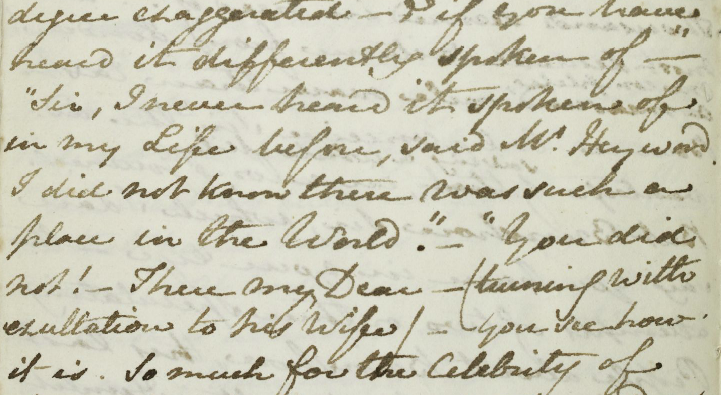
We can see Austen doing just that in her own hand at the Jane Austen’s Fic­tion Man­u­scripts Dig­i­tal Edi­tion. A col­lec­tion of scanned man­u­scripts from the Bodleian, British Library, Pier­pont Mor­gan Library, pri­vate col­lec­tors, and King’s Col­lege, Cam­bridge, this project “rep­re­sents every stage of her writ­ing career and a vari­ety of phys­i­cal states: work­ing drafts, fair copies, and hand­writ­ten pub­li­ca­tions for pri­vate cir­cu­la­tion.”

This is pri­mar­i­ly a resource for schol­ars; much of this work has been pub­lished in print­ed edi­tions, includ­ing the Juve­nil­ia (read some of that writ­ing here) and unfin­ished drafts like The Wat­sons and her last, uncom­plet­ed, nov­el, San­di­ton. (One still-in-print 1975 edi­tion col­lects the three unfin­ished nov­els found at the dig­i­tal col­lec­tion). Each dig­i­tal edi­tion of the man­u­script includes a head note on the tex­tu­al his­to­ry, prove­nance, and phys­i­cal struc­ture, as well as a tran­scrip­tion of the text. There is also an option to view a “diplo­mat­ic edi­tion” that tran­scribes the text with all of Austen’s cor­rec­tions and addi­tions.

Yet any Austen fan will appre­ci­ate see­ing her wit­ty, inci­sive style change and take shape in her own neat script. In an age of super­heroes, his­tor­i­cal and fan­ta­sy epics, and dystopi­an fan­tasies, we are beset by “the big Bow-Wow strain,” as Wal­ter Scott self-effac­ing­ly called his own nov­els. In Austen’s writ­ing, we find what Scott described as an “exquis­ite touch which ren­ders com­mon­place things and char­ac­ters inter­est­ing from the truth of the descrip­tion and the sen­ti­ment.” She wraps her truths in wicked irony and a satir­i­cal voice, but they are truths we rec­og­nize as wise and com­pas­sion­ate in her domes­tic dra­mas and our own.

Austen knew well that her set­tings and char­ac­ters were lim­it­ed. She made no apolo­gies for it and clear­ly needn’t have. “Three or four fam­i­lies in a coun­try vil­lage,” she wrote to her niece Anna, “is the very thing to work on.” She also knew well the uni­ver­sal ten­den­cies that blind us to the vari­ety found with­in the every­day, whether our every­day is a sleepy coun­try vil­lage life or a tech-laden, 21st-cen­tu­ry city.

She almost seems to sigh weari­ly in Emma when she observes, “human nature is so well dis­posed toward those who are in inter­est­ing sit­u­a­tions” … so much so that we fail to notice what’s going on all around us all the time. She wrote nei­ther for mon­ey nor fame, and her work wasn’t even pub­lished with her name until after her death in July 1817, but she has since become fierce­ly beloved for the very qual­i­ties Bron­të dis­par­aged.

Austen didn’t miss a thing, which makes her nov­els as can­ny and insight­ful (and big-screen and fan-fic­tion adapt­able) as when they were first writ­ten over two-hun­dred years ago. Enter the Jane Austen’s Fic­tion Man­u­scripts Dig­i­tal Edi­tion here.

Relat­ed Con­tent:

An Ani­mat­ed Intro­duc­tion to Jane Austen

Down­load the Major Works of Jane Austen as Free eBooks & Audio Books

Jane Austen Used Pins to Edit Her Man­u­scripts: Before the Word Proces­sor & White-Out

Josh Jones is a writer and musi­cian based in Wash­ing­ton, DC. Fol­low him at @jdmagness

In 1886, the US Government Commissioned 7,500 Watercolor Paintings of Every Known Fruit in the World: Download Them in High Resolution

T.S. Eliot asks in the open­ing stan­zas of his Cho­rus­es from the Rock, “where is the knowl­edge we have lost in infor­ma­tion?” The pas­sage has been called a point­ed ques­tion for our time, in which we seem to have lost the abil­i­ty to learn, to make mean­ing­ful con­nec­tions and con­tex­tu­al­ize events. They fly by us at super­hu­man speeds; cred­i­ble sources are buried between spu­ri­ous links. Truth and false­hood blur beyond dis­tinc­tion.

But there is anoth­er fea­ture of the 21st cen­tu­ry too-often unre­marked upon, one only made pos­si­ble by the rapid spread of infor­ma­tion tech­nol­o­gy. Vast dig­i­tal archives of pri­ma­ry sources open up to ordi­nary users, archives once only avail­able to his­to­ri­ans, promis­ing the pos­si­bil­i­ty, at least, of a far more egal­i­tar­i­an spread of both infor­ma­tion and knowl­edge.

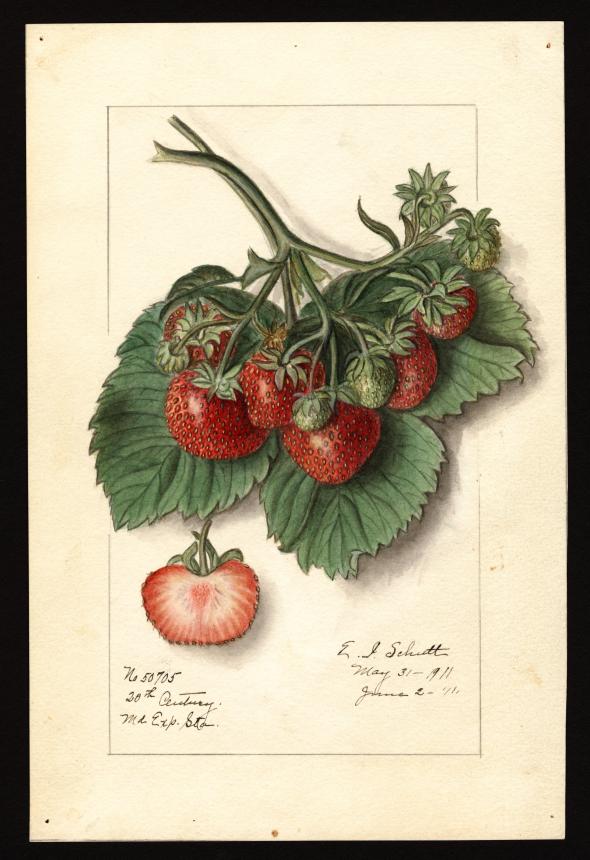
Those archives include the USDA Pomo­log­i­cal Water­col­or Col­lec­tion, “over 7,500 paint­ings, draw­ings, and wax mod­els com­mis­sioned by the USDA between 1886 and 1942,” notes Chloe Ole­witz at Morsel. The word “pomol­o­gy,” “the sci­ence and prac­tice of grow­ing fruit,” first appeared in 1818, and the degree to which peo­ple depend­ed on fruit trees and fruit stores made it a dis­tinc­tive­ly pop­u­lar sci­ence, as was so much agri­cul­ture at the time.

But pomol­o­gy was grow­ing from a domes­tic sci­ence into an indus­tri­al one, adopt­ed by “farm­ers across the Unit­ed States,” writes Ole­witz, who “worked with the USDA to set up orchards to serve emerg­ing mar­kets” as “the country’s most pro­lif­ic fruit-pro­duc­ing regions began to take shape.” Cen­tral to the gov­ern­ment agency’s grow­ing pomo­log­i­cal agen­da was the record­ing of all the var­i­ous types of fruit being cul­ti­vat­ed, hybridized, inspect­ed, and sold from both inside the U.S. and all over the world.

Pri­or to and even long after pho­tog­ra­phy could do the job, that meant employ­ing the tal­ents of around 65 Amer­i­can artists to “doc­u­ment the thou­sands and thou­sands of vari­eties of heir­loom and exper­i­men­tal fruit cul­ti­vars sprout­ing up nation­wide.” The USDA made the full col­lec­tion pub­lic after Elec­tron­ic Fron­tier Foun­da­tion activist Park­er Hig­gins sub­mit­ted a Free­dom of Infor­ma­tion Act request in 2015.

Hig­gins saw the project as an exam­ple of “the way free speech issues inter­sect with ques­tions of copy­right and pub­lic domain,” as he put it. His­tor­i­cal gov­ern­ment-issued fruit water­col­ors might not seem like the obvi­ous place to start, but they’re as good a place as any. He stum­bled on the col­lec­tion while either ran­dom­ly col­lect­ing infor­ma­tion or acquir­ing knowl­edge, depend­ing on how you look at it, “chal­leng­ing him­self to dis­cov­er one new cool pub­lic domain thing every day for a month.”

It turned out that access to the USDA images was lim­it­ed, “with high res­o­lu­tion ver­sions hid­den behind a large­ly untouched pay­wall.” After invest­ing $300,000, they had made $600 in fees in five years, a los­ing propo­si­tion that would bet­ter serve the pub­lic, the schol­ar­ly com­mu­ni­ty, and those work­ing in-between if it became freely avail­able.

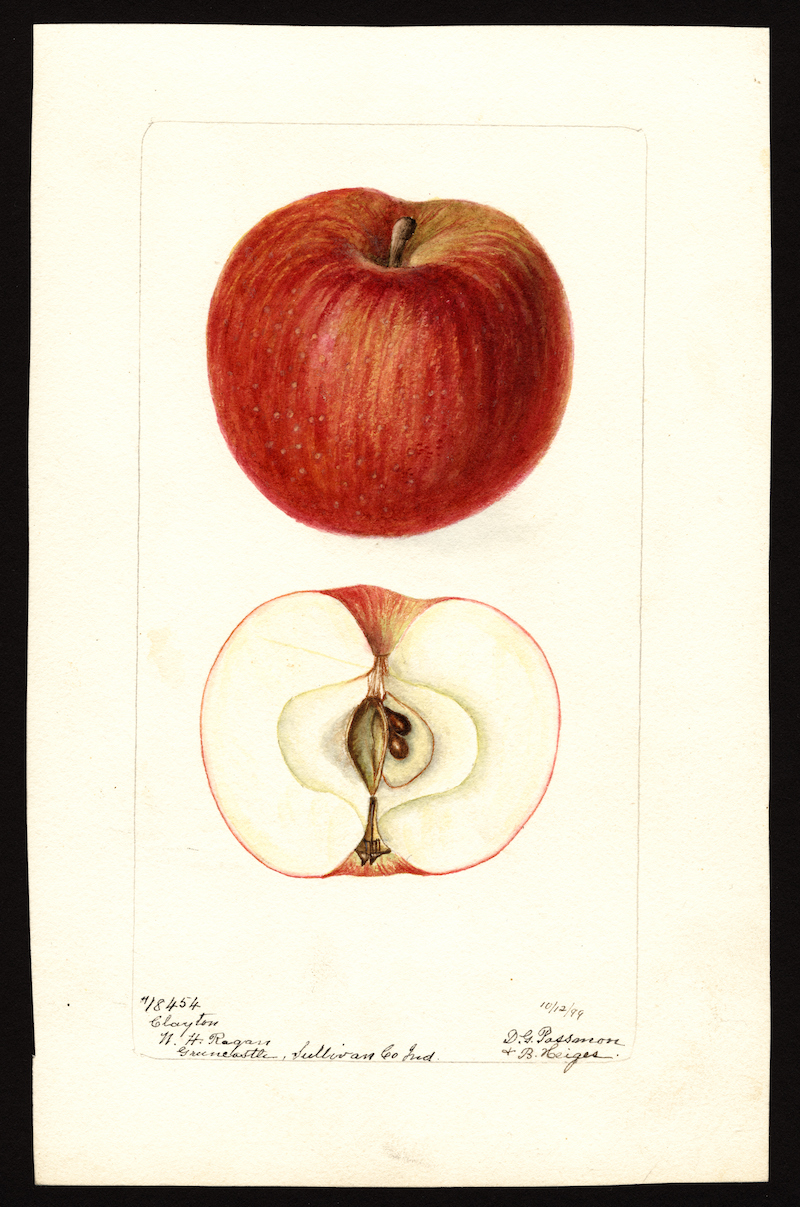
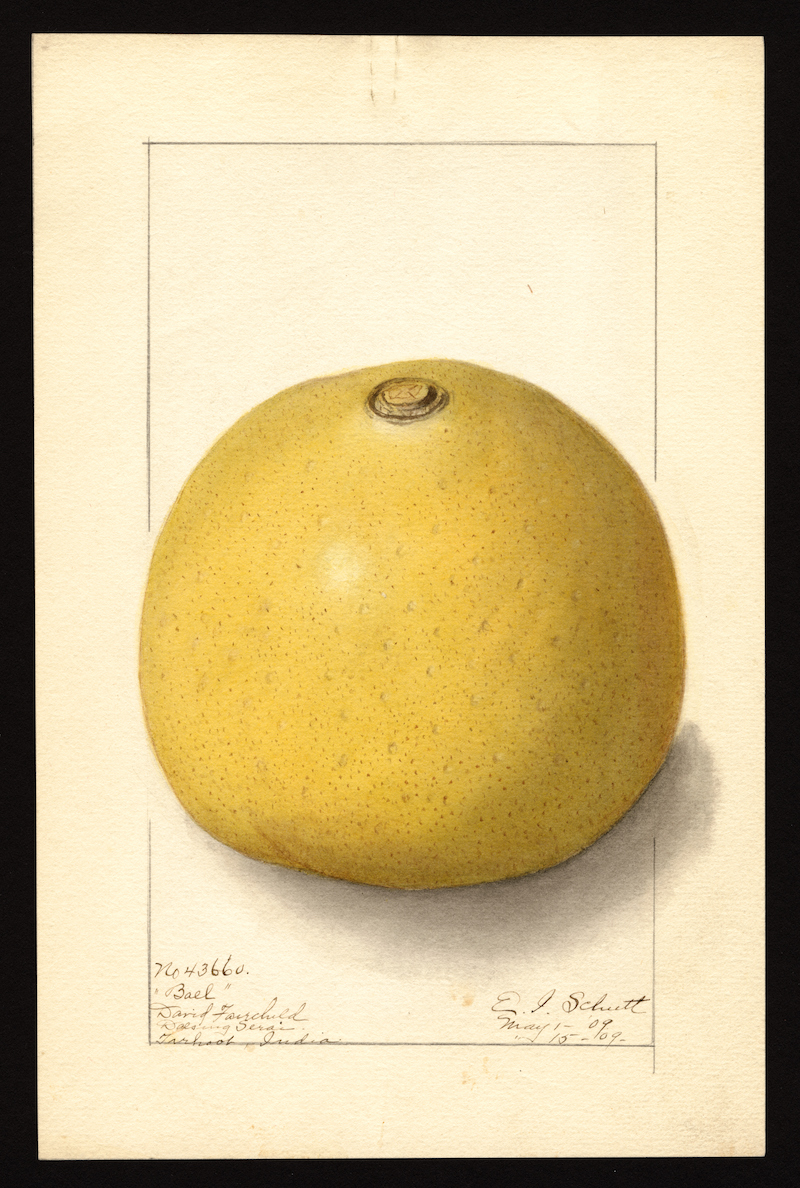
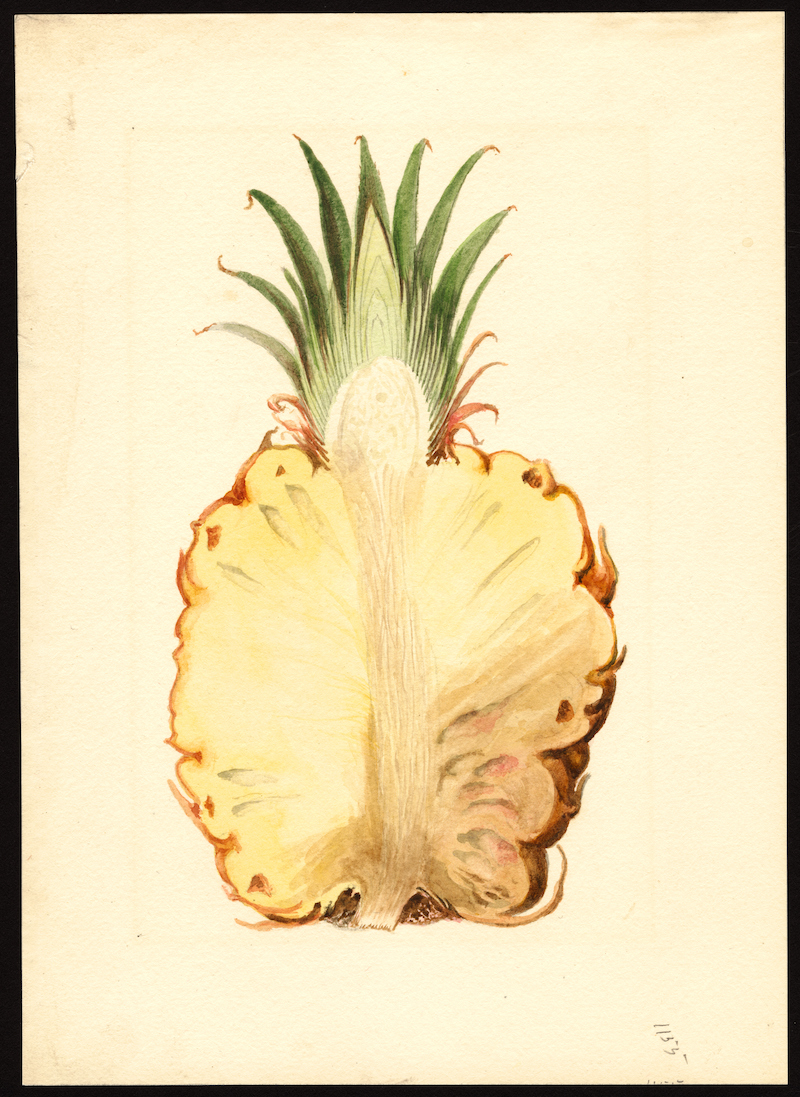
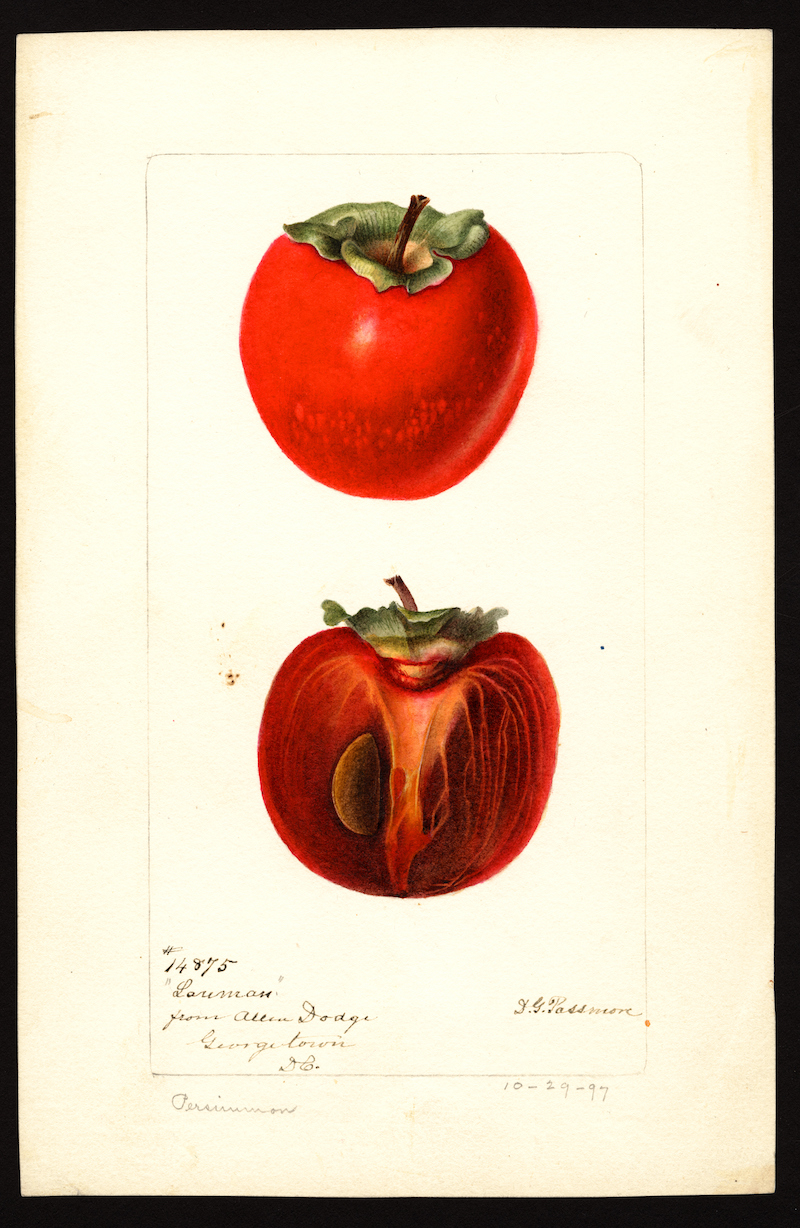
You can explore the entire­ty of this tan­ta­liz­ing col­lec­tion of fruit water­col­ors, rang­ing in qual­i­ty from the work­man­like to the near sub­lime, and from unsung artists like James Mar­i­on Shull, who sketched the Cuban pineap­ple above, Ellen Isham Schutt, who brings us the Aegle marme­los, com­mon­ly called “bael” in India, fur­ther up, and Deb­o­rah Griscom Pass­more, whose 1899 Malus domes­ti­cus, at the top, describes a U.S. pomo­log­i­cal arche­type.

It’s easy to see how Hig­gins could become engrossed in this col­lec­tion. Its util­i­tar­i­an pur­pose belies its sim­ple beau­ty, and with 3,800 images of apples alone, one could get lost tak­ing in the visu­al nuances—according to some very pro­lif­ic nat­u­ral­ist artists—of just one fruit alone. Hig­gins, of course, cre­at­ed a Twit­ter bot to send out ran­dom images from the archive, an inter­est­ing dis­trac­tion and also, for peo­ple inclined to seek it out, a lure to the full USDA Pomo­log­i­cal Water­col­or Col­lec­tion.

At what point does an explo­ration of these images tip from infor­ma­tion into knowl­edge? It’s hard to say, but it’s unlike­ly we would pur­sue either one if that pur­suit didn’t also include its share of plea­sure. Enter the USDA’s Pomo­log­i­cal Water­col­or Col­lec­tion here to new and down­load over 7,500 high-res­o­lu­tion dig­i­tal images like those above.

via Morsel.

Relat­ed Con­tent:

New Archive Dig­i­tizes 80,000 His­toric Water­col­or Paint­ings, the Medi­um Through Which We Doc­u­ment­ed the World Before Pho­tog­ra­phy

Two Mil­lion Won­drous Nature Illus­tra­tions Put Online by The Bio­di­ver­si­ty Her­itage Library

Ernst Haeckel’s Sub­lime Draw­ings of Flo­ra and Fau­na: The Beau­ti­ful Sci­en­tif­ic Draw­ings That Influ­enced Europe’s Art Nou­veau Move­ment (1889)

Josh Jones is a writer and musi­cian based in Durham, NC. Fol­low him at @jdmagness

700 Years of Persian Manuscripts Now Digitized and Available Online

Too often those in pow­er lump thou­sands of years of Mid­dle East­ern reli­gion and cul­ture into mono­lith­ic enti­ties to be feared or per­se­cut­ed. But at least one gov­ern­ment insti­tu­tion is doing exact­ly the oppo­site. For Nowruz, the Per­sian New Year, the Library of Con­gress has released a dig­i­tal col­lec­tion of its rare Per­sian-lan­guage man­u­scripts, an archive span­ning 700 years. This free resource opens win­dows on diverse reli­gious, nation­al, lin­guis­tic, and cul­tur­al tra­di­tions, most, but not all, Islam­ic, yet all dif­fer­ent from each oth­er in com­plex and strik­ing ways.

“We nowa­days are pro­grammed to think Per­sia equates with Iran, but when you look at this it is a mul­ti­re­gion­al col­lec­tion,” says a Library spe­cial­ist in its African and Mid­dle East­ern Divi­sion, Hirad Dinavari. “Many con­tributed to it. Some were Indi­an, some were Tur­kic, Cen­tral Asian.” The “deep, cos­mopoli­tan archive,” as Atlas Obscura’s Jonathan Carey writes, con­sists of a rel­a­tive­ly small num­ber of manuscripts—only 155. That may not seem par­tic­u­lar­ly sig­nif­i­cant giv­en the enor­mi­ty of some oth­er online col­lec­tions.

But its qual­i­ty and vari­ety mark it as espe­cial­ly valu­able, rep­re­sen­ta­tive of much larg­er bod­ies of work in the arts, sci­ences, reli­gion, and phi­los­o­phy, dat­ing back to the 13th cen­tu­ry and span­ning regions from India to Cen­tral Asia and the Cau­cus­es, “in addi­tion to the native Per­sian speak­ing lands of Iran, Afghanistan and Tajik­istan,” the LoC notes.

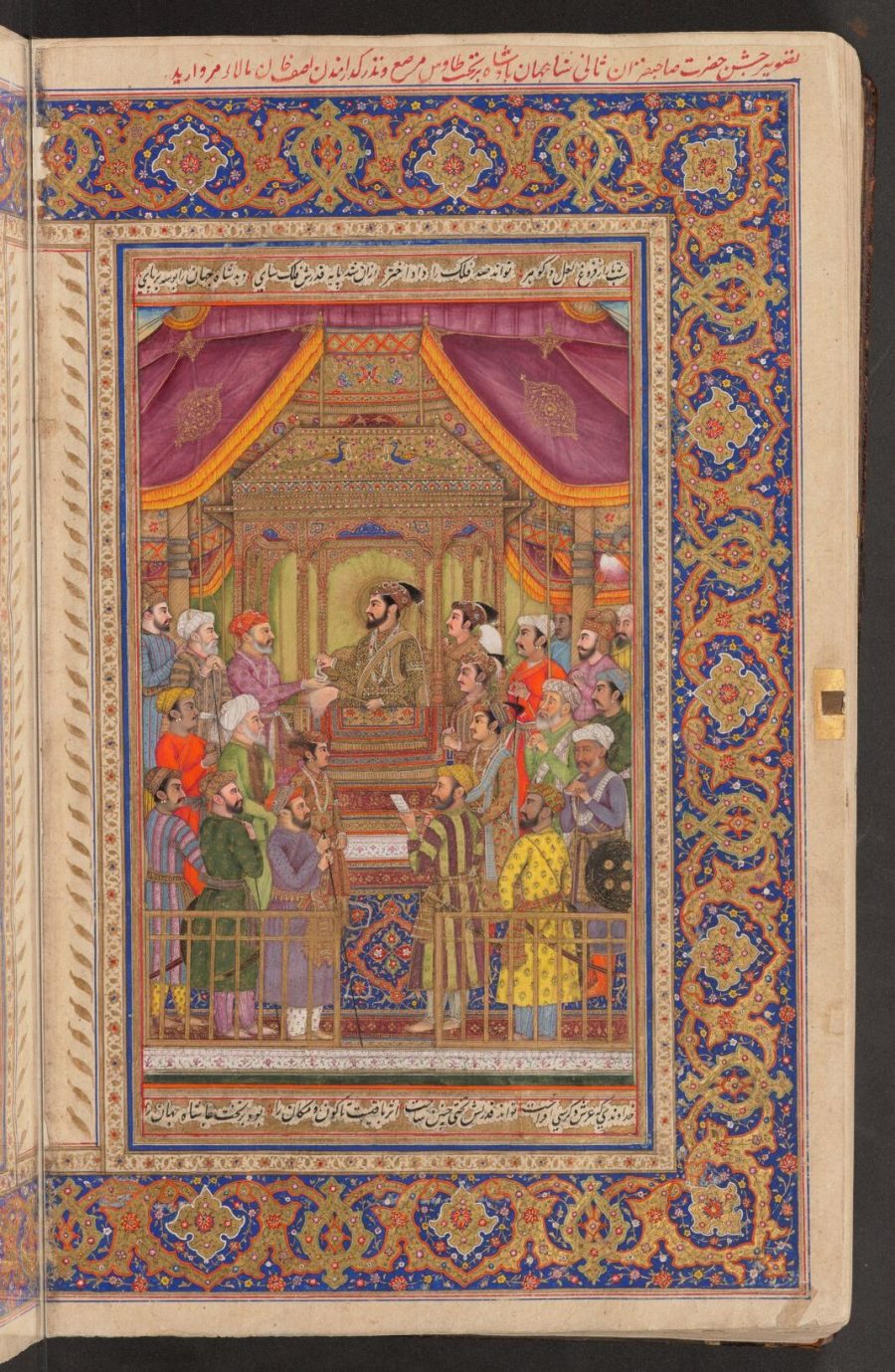
Promi­nent­ly rep­re­sent­ed are works like the epic poem of pre-Islam­ic Per­sia, the Shah­namah, “likened to the Ili­ad or the Odyssey,” writes Carey, as well as “writ­ten accounts of the life of Shah Jahan, the 17th-cen­tu­ry Mughal emper­or who over­saw con­struc­tion of the Taj Mahal.”

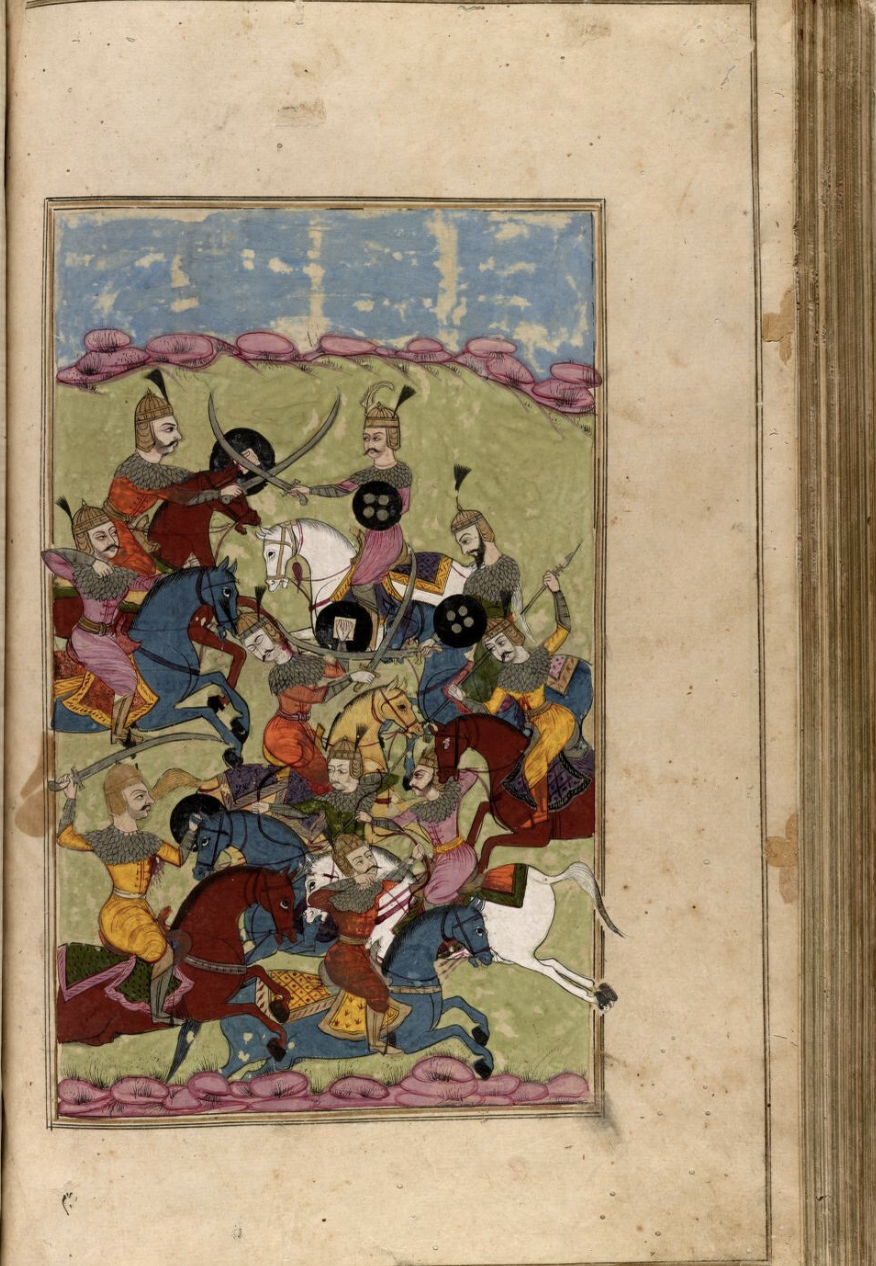
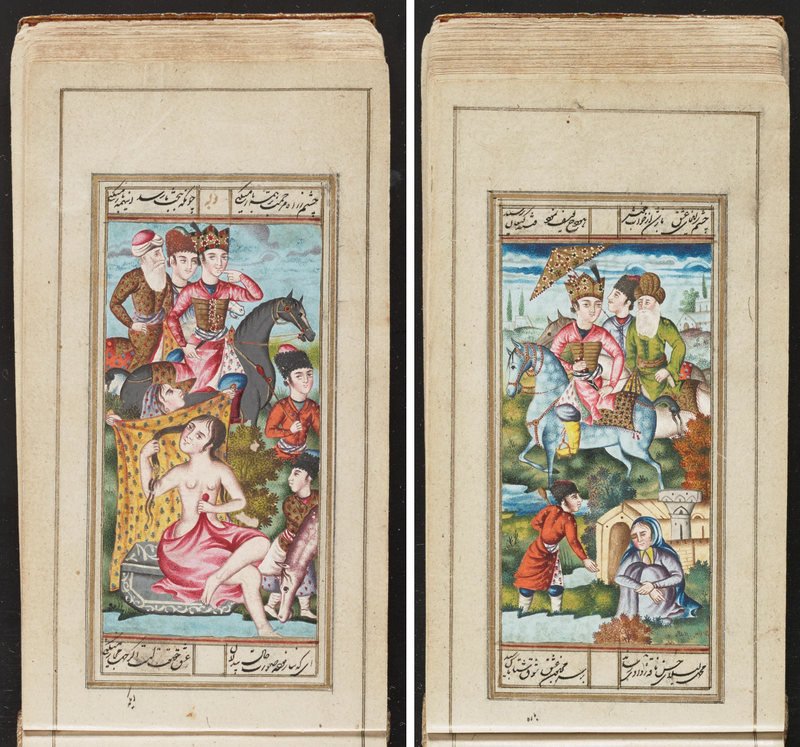
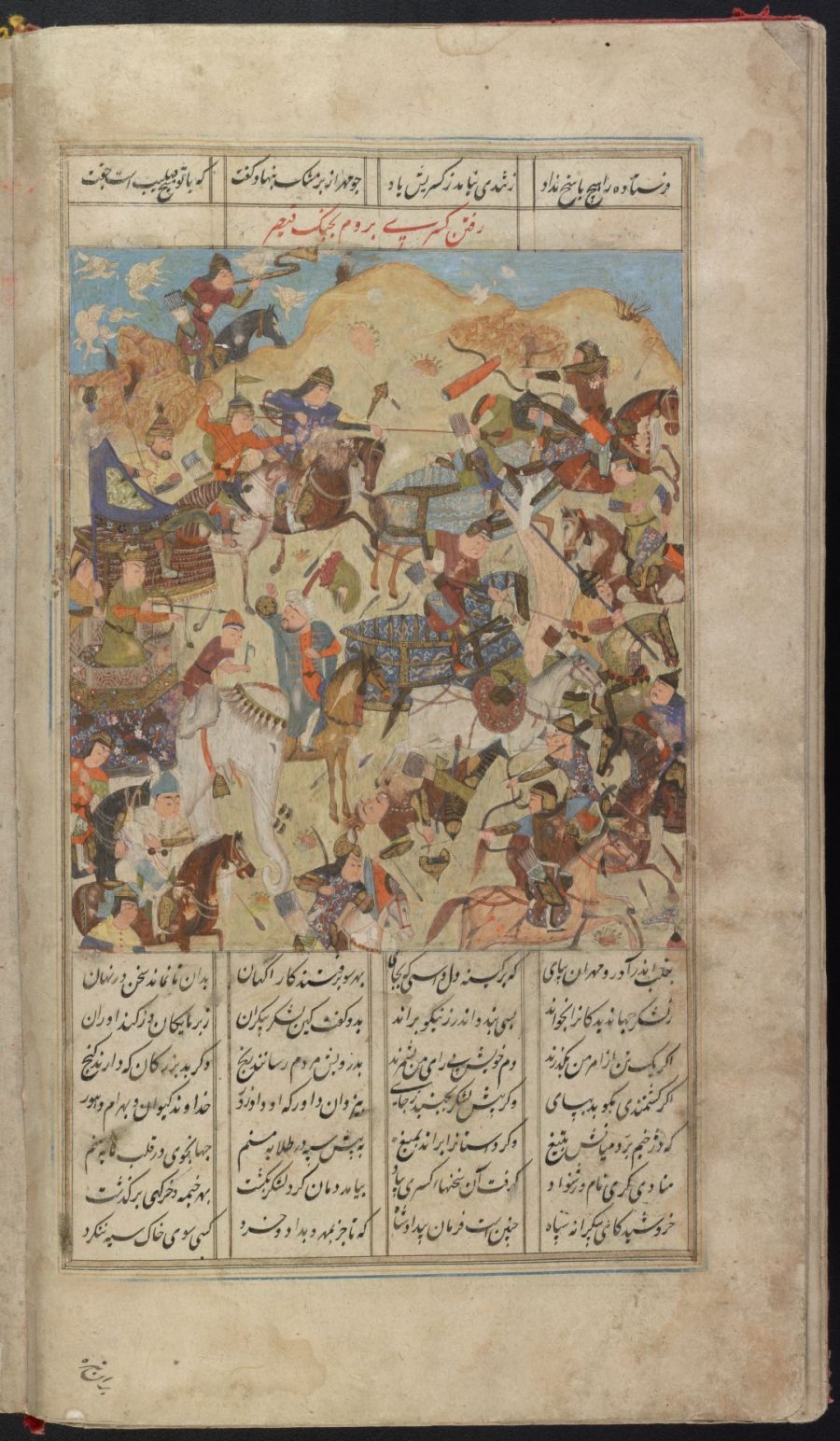
The Library points out the archive includes the “most beloved poems of the Per­sian poets Saa­di, Hafez, Rumi and Jami, along with the works of the poet Niza­mi Gan­javi.” Some read­ers might be sur­prised at the pic­to­r­i­al opu­lence of so many Islam­ic texts, with their col­or­ful, styl­ized bat­tle scenes and group­ings of human fig­ures.

Islam­ic art is typ­i­cal­ly thought of as icon­o­clas­tic, but as in Chris­t­ian Europe and North Amer­i­ca, cer­tain sects have fought oth­ers over this inter­pre­ta­tion (includ­ing over depic­tions of the Prophet Moham­mad). This is not to say that the icon­o­clasts deserve less atten­tion. Much medieval and ear­ly mod­ern Islam­ic art uses intri­cate pat­terns, designs, and cal­lig­ra­phy while scrupu­lous­ly avoid­ing like­ness­es of humans and ani­mals. It is deeply mov­ing in its own way, rig­or­ous­ly detailed and pas­sion­ate­ly exe­cut­ed, full of math­e­mat­i­cal and aes­thet­ic ideas about shape, pro­por­tion, col­or, and line that have inspired artists around the world for cen­turies.

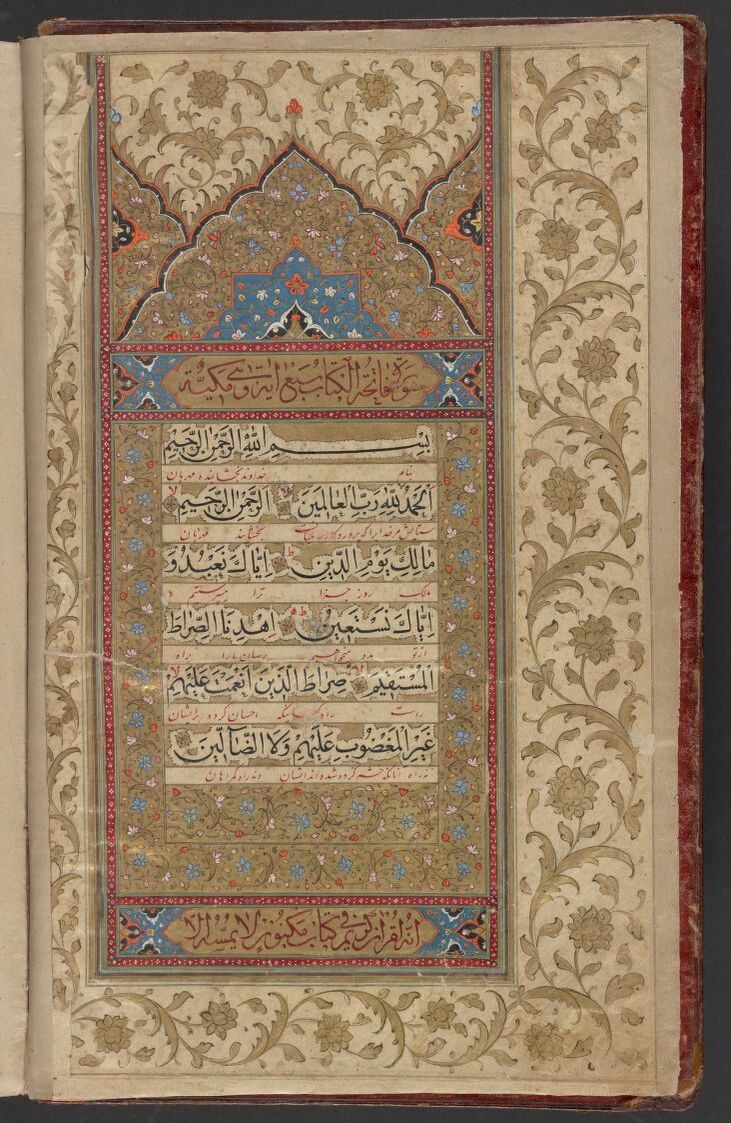
The page from a lav­ish­ly illu­mi­nat­ed Qur’ān, above, cir­ca 1708, offers such an exam­ple, writ­ten in Ara­bic with an inter­lin­ear Per­sian trans­la­tion. There are reli­gious texts from oth­er faiths, like the Psalms in Hebrew with Per­sian trans­la­tion, there are sci­en­tif­ic texts and maps: the Rare Per­sian-Lan­guage Man­u­script Col­lec­tion cov­ers a lot of his­tor­i­cal ground, as has Per­sian lan­guage and cul­ture “from the 10th cen­tu­ry to the present,” the Library writes. Such a rich tra­di­tion deserves care­ful study and appre­ci­a­tion. Begin an edu­ca­tion in Per­sian man­u­script his­to­ry here.

via Atlas Obscu­ra

Relat­ed Con­tent:

15,000 Col­or­ful Images of Per­sian Man­u­scripts Now Online, Cour­tesy of the British Library

The Com­plex Geom­e­try of Islam­ic Art & Design: A Short Intro­duc­tion

800 Illu­mi­nat­ed Medieval Man­u­scripts Are Now Online: Browse & Down­load Them Cour­tesy of the British Library and Bib­lio­thèque Nationale de France

800+ Trea­sured Medieval Man­u­scripts to Be Dig­i­tized by Cam­bridge & Hei­del­berg Uni­ver­si­ties

Josh Jones is a writer and musi­cian based in Durham, NC. Fol­low him at @jdmagness

The Venice Time Machine: 1,000 Years of Venice’s History Gets Digitally Preserved with Artificial Intelligence and Big Data

Along with hun­dreds of oth­er sea­side cities, island towns, and entire islands, his­toric Venice, the float­ing city, may soon sink beneath the waves if sea lev­els con­tin­ue their rapid rise. The city is slow­ly tilt­ing to the East and has seen his­toric floods inun­date over 70 per­cent of its palaz­zo- and basil­i­ca-lined streets. But should such trag­ic loss­es come to pass, we’ll still have Venice, or a dig­i­tal ver­sion of it, at least—one that aggre­gates 1,000 years of art, archi­tec­ture, and “mun­dane paper­work about shops and busi­ness­es” to cre­ate a vir­tu­al time machine. An “ambi­tious project to dig­i­tize 10 cen­turies of the Venet­ian state’s archives,” the Venice Time Machine uses the lat­est in “deep learn­ing” tech­nol­o­gy for his­tor­i­cal recon­struc­tions that won’t get washed away.

The Venice Time Machine doesn’t only proof against future calami­ty. It also sets machines to a task no liv­ing human has yet to under­take. Most of the huge col­lec­tion at the State Archives “has nev­er been read by mod­ern his­to­ri­ans,” points out the nar­ra­tor of the Nature video at the top.

This endeav­or stands apart from oth­er dig­i­tal human­i­ties projects, Ali­son Abbott writes at Nature, “because of its ambi­tious scale and the new tech­nolo­gies it hopes to use: from state-of-the-art scan­ners that could even read unopened books, to adapt­able algo­rithms that will turn hand­writ­ten doc­u­ments into dig­i­tal, search­able text.”

In addi­tion to pos­ter­i­ty, the ben­e­fi­cia­ries of this effort include his­to­ri­ans, econ­o­mists, and epi­demi­ol­o­gists, “eager to access the writ­ten records left by tens of thou­sands of ordi­nary cit­i­zens.” Lor­raine Das­ton, direc­tor of the Max Planck Insti­tute for the His­to­ry of Sci­ence in Berlin describes the antic­i­pa­tion schol­ars feel in par­tic­u­lar­ly vivid terms: “We are in a state of elec­tri­fied excite­ment about the pos­si­bil­i­ties,” she says, “I am prac­ti­cal­ly sali­vat­ing.” Project head Frédéric Kaplan, a Pro­fes­sor of Dig­i­tal Human­i­ties at the École poly­tech­nique fédérale de Lau­sanne (EPFL), com­pares the archival col­lec­tion to “’dark mat­ter’—doc­u­ments that hard­ly any­one has stud­ied before.”

Using big data and AI to recon­struct the his­to­ry of Venice in vir­tu­al form will not only make the study of that his­to­ry a far less her­met­ic affair; it might also “reshape schol­ars’ under­stand­ing of the past,” Abbott points out, by democ­ra­tiz­ing nar­ra­tives and enabling “his­to­ri­ans to recon­struct the lives of hun­dreds of thou­sands of ordi­nary people—artisans and shop­keep­ers, envoys and traders.” The Time Machine’s site touts this devel­op­ment as a “social net­work of the mid­dle ages,” able to “bring back the past as a com­mon resource for the future.” The com­par­i­son might be unfor­tu­nate in some respects. Social net­works, like cable net­works, and like most his­tor­i­cal nar­ra­tives, have become dom­i­nat­ed by famous names.

By con­trast, the Time Machine model—which could soon lead to AI-cre­at­ed vir­tu­al Ams­ter­dam and Paris time machines—promises a more street-lev­el view, and one, more­over, that can engage the pub­lic in ways sealed and clois­tered arti­facts can­not. “We his­to­ri­ans were bap­tized with the dust of archives,” says Das­ton. “The future may be dif­fer­ent.” The future of Venice, in real life, might be uncer­tain. But thanks to the Venice Time Machine, its past is poised take on thriv­ing new life. See pre­views of the Time Machine in the videos fur­ther up, learn more about the project here, and see Kaplan explain the “infor­ma­tion time machine” in his TED talk above.

Relat­ed Con­tent:

How Venice Works: 124 Islands, 183 Canals & 438 Bridges

Venice in Beau­ti­ful Col­or Images 125 Years Ago: The Rial­to Bridge, St. Mark’s Basil­i­ca, Doge’s Palace & More

New Dig­i­tal Archive Puts Online 4,000 His­toric Images of Rome: The Eter­nal City from the 16th to 20th Cen­turies

Josh Jones is a writer and musi­cian based in Durham, NC. Fol­low him at @jdmagness

New Archive Digitizes 80,000 Historic Watercolor Paintings, the Medium Through Which We Documented the World Before Photography

The water­col­or paint­ing has a rep­u­ta­tion for light­ness. It’s a casu­al endeav­or, done in scenic out­door sur­round­ings on sun­lit days. Water­col­ors are the choice of week­end hob­by­ists or chil­dren unready for messier mate­ri­als. Water­col­ors, in oth­er words, are often treat­ed as unse­ri­ous. But for a cou­ple hun­dred years, they served a very seri­ous pur­pose. In addi­tion to being a portable medi­um with an expan­sive range, water­col­ors’ ease made them the pri­ma­ry means of mak­ing doc­u­men­tary images before pho­tog­ra­phy com­plete­ly took over this func­tion by the turn of the 20th cen­tu­ry when portable con­sumer cam­eras became a real­i­ty.

“Before the inven­tion of the cam­era,” explains the Water­colour World, “peo­ple used water­col­ors to doc­u­ment the world. Over the cen­turies, painters—both pro­fes­sion­al and amateur—created hun­dreds of thou­sands of images record­ing life as they wit­nessed it. Every one of these paint­ings has a sto­ry to tell.”

The Water­colour World is a large-scale dig­i­ti­za­tion of thou­sands of water­col­ors found hid­den away in draw­ers all over the UK by for­mer diplo­mat Fred Hohler, who came up with the idea for the project while on a tour of Britain’s pub­lic col­lec­tions.

“The value—and excitement—of the Water­colour World project,” writes Dale Bern­ing Sawa at The Guardian, “is that it views these his­toric paint­ings as doc­u­ments, not aes­thet­ic objects.” That’s not nec­es­sar­i­ly how their cre­ators’ saw them. “A lot of the val­ue in these images is… acci­den­tal. Often it’s the context—replete with tree­lines, snow­lines or waterlines—the artist paint­ed around, for exam­ple, the flower they’d set out to record.” Such acci­den­tal doc­u­men­ta­tion cap­tured one of the first known images of Mount Ever­est, sit­u­at­ed in the back­ground, in a paint­ing from the 1840s. Of course much of the doc­u­men­tary pur­pose was intentional—in land sur­veys and sci­en­tif­ic illus­tra­tions, and in the many paint­ings, like that above from 1833, of Mount Vesu­vius erupt­ing.

These images are becom­ing increas­ing­ly impor­tant to sci­en­tists and his­to­ri­ans as ice-caps melt, his­tor­i­cal sites are bombed or van­dal­ized, and flo­ra and fau­na dis­ap­pear. With a focus on pre-1900 images, the site launched with around 80,000 dig­i­tized water­col­ors, a num­ber that could expand into over a mil­lion, Hohler esti­mates, at which point, it will become an “absolute­ly indis­pens­able tool to help us under­stand today.” As for under­stand­ing the con­text in which these works were created—it’s com­pli­cat­ed. Many of the paint­ings come with a wealth of iden­ti­fy­ing infor­ma­tion. Some of the artists were pro­fes­sion­als, some mil­i­tary drafts­men, botanists, expe­di­tion water­col­orists, and sur­vey­ors.

Some had long, dis­tin­guished careers tak­ing over oth­er coun­tries, like colo­nial British Gen­er­al James Mau­rice Prim­rose, who paint­ed sev­er­al very impres­sive land­scapes in India like 1860’s “In the Neil­gher­ries,” above. And there are also “untold num­bers of ama­teurs,” Sawa writes, “which Hohler sus­pects will turn out to have been most­ly women, unpaid for their time and skill—who picked up a paint­brush to record the world around them.” Who­ev­er these painters were, and what­ev­er moti­vat­ed them to make these works of art, we can be grate­ful that they did, and that these thou­sands of paint­ings, many of which are quite frag­ile, sur­vived long enough for dig­i­ti­za­tion in this impres­sive pub­lic project.

“By mak­ing his­to­ry more vis­i­ble to more peo­ple,” the Water­colour World puts it, “we can deep­en our under­stand­ing of the world.” The UK-based orga­ni­za­tion seeks paint­ings from around the globe; “there are thou­sands of water­colours still to add.” If you have some pre-1900 works to con­tribute, you are encour­aged to get in touch and find out if they’re suit­able for inclu­sion. Enter the Water­colour World here.

via The Guardian

Relat­ed Con­tent:

Vis­it a New Dig­i­tal Archive of 2.2 Mil­lion Images from the First Hun­dred Years of Pho­tog­ra­phy

The Get­ty Dig­i­tal Archive Expands to 135,000 Free Images: Down­load High Res­o­lu­tion Scans of Paint­ings, Sculp­tures, Pho­tographs & Much Much More

Down­load for Free 2.6 Mil­lion Images from Books Pub­lished Over Last 500 Years on Flickr

25 Mil­lion Images From 14 Art Insti­tu­tions to Be Dig­i­tized & Put Online In One Huge Schol­ar­ly Archive

Josh Jones is a writer and musi­cian based in Durham, NC. Fol­low him at @jdmagness

The Lou Reed Archive Opens at the New York Public Library: Get Your Own Lou Reed Library Card and Check It Out

This past Octo­ber marked the fifth anniver­sary of Lou Reed’s death. This month marks what would have been his 77th birth­day. It seems like as good a time as any to revis­it his lega­cy. As of this past Fri­day, any­one can do exact­ly that in per­son at the New York Pub­lic Library. And they can do so with their own spe­cial edi­tion NYPL Lou Reed library card. The NYPL has just opened to the pub­lic the Lou Reed Archive, “approx­i­mate­ly 300 lin­ear feet,” the library writes in a press release, “of paper records, elec­tron­ic records, and pho­tographs, and approx­i­mate­ly 3,600 audio and 1,300 video record­ings.”

These arti­facts span the musi­cian, writer, pho­tog­ra­ph­er, and “tai-chi student”’s life from his 1958 high school band The Shades to “his job as a staff song­writer for the bud­get music label, Pick­wick Records, and his rise to promi­nence through the Vel­vet Under­ground and sub­se­quent solo career, to his final per­for­mance in 2013.”

It is more than fit­ting that they should find a home at the New York insti­tu­tion, in the city where Lou Reed became Lou Reed, “the most lit­er­ary of rock stars,” writes Andrew Epstein for the Poet­ry Foun­da­tion, “one who aspired to make rock music that could stand on the same plane as works of lit­er­a­ture.” See a list of the Lou Reed Archive col­lec­tions below:

  • Orig­i­nal man­u­script, lyrics, poet­ry and hand­writ­ten tai-chi notes
  • Pho­tographs of Reed, includ­ing artist prints and inscrip­tions by the pho­tog­ra­phers
  • Tour itin­er­aries, agree­ments, road man­ag­er notes and paper­work
  • 600+ hours of live record­ings, demos, stu­dio record­ings and inter­views
  • Reed’s own exten­sive pho­tog­ra­phy work
  • Album, book, and tour art­work; mock-ups, proofs and match-prints
  • Lou Reed album and con­cert posters, hand­bills, pro­grams, and pro­mo­tion­al items
  • Lou Reed press for albums, tours, per­for­mances, books, and pho­tog­ra­phy exhibits
  • Fan mail
  • Per­son­al col­lec­tions of books, LPs and 45s

Reed left his first “last­ing lega­cy” at Syra­cuse Uni­ver­si­ty, as Syra­cuse itself affirmed after his death in 2013, as “a crim­i­nal, a dis­si­dent and a poet.” There, he stud­ied under his lit­er­ary hero, Del­more Schwartz, was report­ed­ly expelled from ROTC for hold­ing an unloaded gun to his superior’s head, and was sup­pos­ed­ly turned away from his grad­u­a­tion by police. Once in New York, how­ev­er, Reed not only pilot­ed the Vel­vet Under­ground into ever­last­ing cult infamy, jump­start­ing waves of punk, post-punk, new wave, and a few dozen oth­er sub­gen­res. He also car­ried forth the lega­cy of the New York poet­ry, Epstein argues.

He had “seri­ous con­nec­tions to the poet­ry world”—not only to Schwartz, but also to the Beats and the New York School—to poets who “played a sur­pris­ing­ly large role in the emer­gence of the Vel­vet Under­ground.” Like all great art, Reed’s best work was more than the sum of its “mul­ti­ple and com­plex influ­ences.” But it should be appre­ci­at­ed along­side mid-cen­tu­ry New York poets as much as jazz exper­i­men­tal­ists like Ornette Cole­man and Cecil Tay­lor who inspired his freeform approach. “Reed’s body of work,” writes Epstein, “rep­re­sents a cru­cial but over­looked instance of poetry’s rich back-and-forth dia­logue with pop­u­lar cul­ture.”

Sim­i­lar things might be said about Reed’s engage­ments with film, the­ater, the visu­al arts, and the New York avant-garde gen­er­al­ly, which he also trans­mut­ed and trans­lat­ed into his scuzzy brand of rock and roll. The NYPL archive doc­u­ments his rela­tion­ships with not only his band­mates and manager/patron Andy Warhol, but also Robert Quine, John Zorn, Robert Wil­son, Julian Schn­abel, and Lau­rie Ander­son. And yet, despite the many rivers he wad­ed into in his long career, immers­ing in some more deeply than oth­ers, it was the New York lit­er­ary world whom he most want­ed to embrace his work.

Accept­ing an award in 2007 from Syra­cuse, Reed said, “I hope, Del­more, if you’re lis­ten­ing you are final­ly proud as well. My name is final­ly linked to yours in the part of heav­en reserved for Brook­lyn poets.” Head over to The Library for the Per­form­ing Arts in Lin­coln Cen­ter to get your own Lou Reed library card. If you’re lucky enough to spend some time with this exten­sive col­lec­tion, maybe con­sid­er how all Reed’s work was, in some way or anoth­er, informed by a life­long devo­tion to New York poet­ry.

Relat­ed Con­tent:

Hear Lou Reed’s The Raven, a Trib­ute to Edgar Allan Poe Fea­tur­ing David Bowie, Ornette Cole­man, Willem Dafoe & More

Meet the Char­ac­ters Immor­tal­ized in Lou Reed’s “Walk on the Wild Side”: The Stars and Gay Rights Icons from Andy Warhol’s Fac­to­ry Scene

Lou Reed Sings “Sweet Jane” Live, Julian Schn­abel Films It (2006)

Josh Jones is a writer and musi­cian based in Durham, NC. Fol­low him at @jdmagness

A New Collection of Official, Authorized Prince GIFs!

Tech entre­pre­neur Anil Dash, pod­cast­er, music his­to­ri­an, and advi­sor to the Oba­ma White House’s Office of Dig­i­tal Strat­e­gy, knows his way around Prince’s cat­a­logue.

Less than a year after the icon­o­clas­tic musi­cian left the plan­et, Dash cre­at­ed a guide to help new­bies and casu­al lis­ten­ers become bet­ter acquaint­ed with his oeu­vre:

The nice thing about Prince’s work is that there are no bad start­ing points; if you don’t like what you hear at first, he almost cer­tain­ly made a song in the com­plete oppo­site style as well.

He assem­bled playlists for the Prince-resis­tant, reel­ing ‘em in by cater­ing to var­i­ous tastes, from “riff-dri­ven rock tracks” and elec­tron­i­ca to “Prince for Red­bone fans.”

(Those playlists are also a great ser­vice to those of us whose atten­tion wan­dered in the decades fol­low­ing Prince’s 80’s hey­day.)

Dash has also now done us a sol­id and high­light­ed an offi­cial archive of high-qual­i­ty Prince GIFs, tak­en from his music videos.

Prince was noto­ri­ous­ly pro­tec­tive of his image, and wild as it is, the GIF archive, a col­lab­o­ra­tion with GIPHY, Pais­ley Park and Prince’s estate, col­ors with­in those lines by steer­ing clear of unflat­ter­ing reac­tion shots culled from inter­views, live per­for­mances, or pub­lic appear­ances.

There’s still a broad range of atti­tudes on dis­play, though best get out of line if you’re look­ing for an expres­sion that con­veys “lack of con­fi­dence” or “the oppo­site of sexy.”

The archive is arranged by album. Click on a song title and you’ll find a num­ber of moments drawn from its offi­cial music video.

Any cap­tions come straight from the horse’s mouth. No back­seat cap­tion jock­eys can has cheezburg­er with Prince Rogers Nelson’s image, thank you very much.

Begin your explo­rations of the Prince GIF Archive here.

via Kot­tke

Relat­ed Con­tent:

Watch Prince Play Jazz Piano & Coach His Band Through George Gershwin’s “Sum­mer­time” in a Can­did, Behind-the-Scenes Moment (1990)

Read Prince’s First Inter­view, Print­ed in His High School News­pa­per (1976)

Hear Prince’s Per­son­al Playlist of Par­ty Music: 22 Tracks That Will Bring Any Par­ty to Life

Prince Plays Gui­tar for Maria Bar­tiro­mo: It’s Awk­ward (2004)

Ayun Hal­l­i­day always stood at the back of the line, a smile beneath her nose. Ayun is an author, illus­tra­tor, the­ater mak­er and Chief Pri­ma­tol­o­gist of the East Vil­lage Inky zine.  See her onstage in New York City in Feb­ru­ary as host of  The­ater of the Apes book-based vari­ety show, Necro­mancers of the Pub­lic Domain. Fol­low her @AyunHalliday.

Free: Download Thousands of Ottoman-Era Photographs That Have Been Digitized and Put Online

“Turkey is a geo­graph­i­cal and cul­tur­al bridge between the east and the west,” writes Istan­bul University’s Gönül Bakay. This was so long before Con­stan­tino­ple became Istan­bul, but after the rise of the Ottoman Empire, the region took on a par­tic­u­lar sig­nif­i­cance for Chris­t­ian Europe. “The Turk” became a threat­en­ing and exot­ic fig­ure in the Euro­pean imag­i­na­tion, “shaped by a con­sid­er­able body of lit­er­a­ture, stretch­ing from Christo­pher Mar­lowe to Thomas Car­lyle.” Images of Ottoman Turkey were long drawn from a “mix­ture of fact, fan­ta­sy and fear.”

With the advent of pho­tog­ra­phy in the mid-nine­teenth cen­tu­ry, those images were sup­ple­ment­ed, illus­trat­ed, and coun­tered by prints depict­ing Turk­ish peo­ple both in every­day life cir­cum­stances and in Ori­en­tal­ist pos­es.

In the final decades of the Ottoman Empire, as mod­ern­iza­tion took hold all over Europe, view­ers might encounter pho­tos of women in pos­es rem­i­nis­cent of the Odal­isque and street scenes of bustling, cos­mopoli­tan Con­stan­tino­ple, with signs in Ottoman Turk­ish, Eng­lish, French, Armen­ian, and Greek.

Pho­tos of Enver Pashade fac­to ruler of the Ottoman Empire dur­ing World War I and “high­est-rank­ing per­pe­tra­tor of the Armen­ian geno­cide,” writes Isot­ta Pog­gi at the Getty’s blog—cir­cu­lat­ed along­side images like that below, a group of Turk­ish tourists posed near the Sphinx. These and thou­sands more such pho­tographs of Ottoman Turkey at the turn of the cen­tu­ry and into the first years of the Turk­ish Repub­lic—3,750 dig­i­tized images in total—are now avail­able to view and down­load at the Get­ty Research Insti­tute.

The pho­tos come from French col­lec­tor Pierre de Gig­ord, who acquired them dur­ing his many trav­els through Turkey in the 1980s. They were tak­en by pho­tog­ra­phers, some of whose names are lost to his­to­ry, from all over Europe and the Mediter­ranean, includ­ing Armen­ian pho­tog­ra­phers who played a “cen­tral role,” notes Pog­gi, “in shap­ing Turkey’s nation­al cul­tur­al his­to­ry and col­lec­tive mem­o­ry.” (Read artist Hande Sever’s Get­ty essay on this sub­ject here.) The huge col­lec­tion con­tains “land­mark archi­tec­ture, urban and nat­ur­al land­scape, arche­o­log­i­cal sites of mil­len­nia-old civ­i­liza­tions, and the bustling life of the diverse peo­ple who lived over 100 years ago.”

Despite the loss of mate­ri­al­i­ty in the trans­fer to dig­i­tal, a loss of “for­mat­ting, or sense of scale” that changes the way we expe­ri­ence these pho­tos, they “enable us to learn about the past,” writes Pog­gi, “see­ing Turkey’s diverse soci­ety” as photography’s ear­ly view­ers did, and to bet­ter under­stand the present, “observ­ing how cer­tain sites and peo­ple, as well as social or polit­i­cal issues, have evolved yet still remain the same.” Enter the Pierre de Gig­ord col­lec­tion at the Get­ty here.

via Hyper­al­ler­gic/The Get­ty

Relat­ed Con­tent:

New Archive of Mid­dle East­ern Pho­tog­ra­phy Fea­tures 9,000 Dig­i­tized Images

Venice in Beau­ti­ful Col­or Images 125 Years Ago: The Rial­to Bridge, St. Mark’s Basil­i­ca, Doge’s Palace & More

Tsarist Rus­sia Comes to Life in Vivid Col­or Pho­tographs Tak­en Cir­ca 1905–1915

An Online Gallery of Over 900,000 Breath­tak­ing Pho­tos of His­toric New York City

The Library of Con­gress Makes Thou­sands of Fab­u­lous Pho­tos, Posters & Images Free to Use & Reuse

Josh Jones is a writer and musi­cian based in Durham, NC. Fol­low him at @jdmagness

« Go BackMore in this category... »
Quantcast