An Illustration of Every Page of Herman Melville’s Moby Dick

md489_12112010

Her­man Melville’s Moby Dick, the work he is most known for in death, had the effect in life of ruin­ing his lit­er­ary rep­u­ta­tion and dri­ving him into obscu­ri­ty. This is but one of many ironies attend­ing the mas­sive nov­el, first pub­lished in Britain in three vol­umes on Octo­ber 18, 1851. At that time, it was sim­ply called The Whale, and as Melville.org informs us, was “expur­gat­ed to avoid offend­ing del­i­cate polit­i­cal and moral sen­si­bil­i­ties.” One month lat­er, the first Amer­i­can edi­tion appeared, now titled Moby Dick; Or, The Whale, com­piled into one huge vol­ume, and with its cen­sored pas­sages, includ­ing the Epi­logue, restored. In both print­ings, the book sold poor­ly, and the reviews—save those from a hand­ful of Amer­i­can crit­ics, includ­ing Melville’s fel­low Great Amer­i­can nov­el­ist Nathaniel Hawthorne—were large­ly neg­a­tive.

"God keep me! — keep us all!" murmured Starbuck, lowly.

Anoth­er irony sur­round­ing the nov­el is one near­ly every­one who’s read it, or tried to read it, will know well. We’re social­ized through visu­al media to approach the sto­ry as great, trag­ic action/adventure. As Melville’s friend, pub­lish­er Evert Augus­tus Duy­ck­inck, described it, the nov­el is osten­si­bly “a roman­tic, fan­ci­ful & lit­er­al & most enjoy­able pre­sent­ment of the Whale Fish­ery,” dri­ven by the revenge plot of mad old Cap­tain Ahab. And yet, it is not that at all, or not sim­ply that. Despite the fact that it lends itself so well to adven­tur­ous retelling, the nov­el itself can seem very obscure, pon­der­ous, and digres­sive to a mad­den­ing degree. The so-called “whal­ing chap­ters,” notably “Cetol­ogy,” delve deeply into the lore and tech­nique of whal­ing, the anato­my and phys­i­ol­o­gy of var­i­ous whale species, and the his­to­ry and pol­i­tics of the ven­ture.

Through­out the nov­el, ordi­nary objects and events—especially, of course, the whale itself—acquire such sym­bol­ic weight that they become almost car­toon­ish tal­is­mans and leap bewil­der­ing­ly out of the nar­ra­tive, forc­ing the read­er to con­tem­plate their significance—no easy task. Depend­ing on your sen­si­bil­i­ties and tol­er­ance for Melville’s labyrinthine prose, these very strange fea­tures of the nov­el are either indis­pens­ably fas­ci­nat­ing or just plain excess bag­gage. Since many edi­tions are pub­lished with the whal­ing chap­ters excised, many read­ers clear­ly feel they are the lat­ter. That is unfor­tu­nate, I think. It’s one of my favorite nov­els, in all its baroque over­stuffed­ness and philo­soph­i­cal den­si­ty. But there’s no deny­ing that it works, as they say, “on many lev­els.” Depend­ing on how you expe­ri­ence the book—it’s either an incred­i­bly grip­ping adven­ture tale, or a very dense and puz­zling work of his­to­ry, phi­los­o­phy, pol­i­tics, and zool­o­gy… or both, and more besides….

md001_08052009

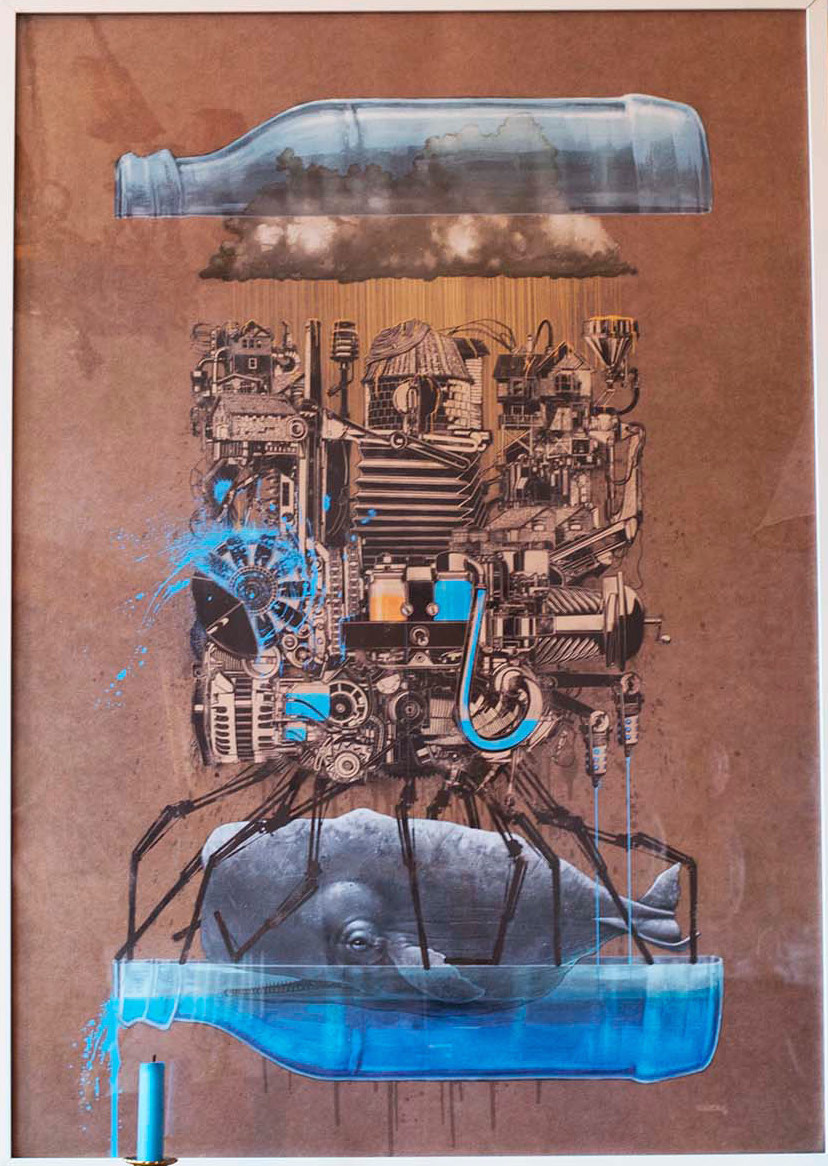
Rec­og­niz­ing the pow­er of Melville’s arrest­ing imagery, artist and librar­i­an Matt Kish decid­ed that he would illus­trate all 552 pages of the Signet Clas­sic paper­back edi­tion of Moby Dick, a book he con­sid­ers “to be the great­est nov­el ever writ­ten.” He began the project in August of 2009 with the first page, illus­trat­ing those famous first words—“Call me Ishmael”—above. (At the top, see page 489, below it page 158, and direct­ly below, page 116). Kish com­plet­ed his epic project at the end of 2010. He used a vari­ety of media—ink, water­col­or, acrylic paint—and incor­po­rat­ed a num­ber of dif­fer­ent graph­ic art styles. As he explains in the com­ments under the first illus­tra­tion, he chose “draw­ing and paint­ing over pages from old books and dia­grams because the pres­ence of visu­al infor­ma­tion on those pages would in some ways inter­fere with, and clut­ter up, my own obses­sive con­trol over my marks.” All in all, it’s a very admirable under­tak­ing, and you can see each indi­vid­ual illus­tra­tion, and many of the stages of draft­ing and com­po­si­tion, at Kish’s blog or on this list we’ve com­piled. (You can also find links to the first 25 pages at bot­tom of this post.) The entire project has also been pub­lished as a book, Moby-Dick in Pic­tures: One Draw­ing for Every Page, a fur­ther irony giv­en the obses­sive lit­er­ari­ness of Melville’s nov­el, a work as obsessed with lan­guage as Cap­tain Ahab is with his great white neme­sis.

md116_12282009

Nonethe­less, what Kish’s project fur­ther demon­strates is the seem­ing­ly inex­haustible trea­sure house that is Moby Dick, a book that so rich­ly appeals to all the sens­es as it also cease­less­ly engages the intel­lect. Kish has gone on to apply his won­der­ful inter­pre­tive tech­nique to oth­er clas­sic lit­er­ary works, includ­ing Joseph Conrad’s Heart of Dark­ness and Ita­lo Calvino’s Invis­i­ble Cities. These projects are equal­ly strik­ing, but it’s Moby Dick, “the great unread Amer­i­can nov­el,” that most inspired Kish, as it has so many oth­er artists and read­ers.

Relat­ed Con­tent:

The Moby Dick Big Read: Celebri­ties and Every­day Folk Read a Chap­ter a Day from the Great Amer­i­can Nov­el

A View From the Room Where Melville Wrote Moby Dick (Plus a Free Celebri­ty Read­ing of the Nov­el)

How Ray Brad­bury Wrote the Script for John Huston’s Moby Dick (1956)

Orson Welles Reads Moby Dick

Josh Jones is a writer and musi­cian based in Durham, NC. Fol­low him at @jdmagness

Whitney Museum Puts Online 21,000 Works of American Art, By 3,000 Artists

soir bleu

Soir Bleu by Edward Hop­per, 1914.

The trend has now become delight­ful­ly clear: the world’s best-known art insti­tu­tions have got around to the impor­tant busi­ness of mak­ing their col­lec­tions freely view­able online. We’ve already fea­tured the Met­ro­pol­i­tan Muse­um of Art, the Los Ange­les Coun­ty Muse­um of Art, the Rijksmu­se­um, and the Nation­al Gallery (as well as new, inter­net-based insti­tu­tions such as the Google Art Project and Art.sy). Today, we bring news that the Whit­ney Muse­um of Amer­i­can Art has joined in as well.

the steerage

The Steer­age by Alfred Stieglitz, 1907.

“Last week, the Whit­ney Muse­um mas­sive­ly over­hauled its online data­base,” writes Hyper­al­ler­gic’s Bec­ca Roth­feld. “The muse­um of Amer­i­can art expand­ed its online col­lec­tion from a pal­try 700 works to around 21,000. The dig­i­tal reserve now includes over 3,000 pieces by Edward Hop­per, in addi­tion to offer­ings from a wide swathe of art from the Unit­ed States, includ­ing the likes of Mike Kel­ley and Mar­tin Wong.” Roth­feld also notes that all this dig­i­ti­za­tion has hap­pened dur­ing the muse­um’s phys­i­cal move, cur­rent­ly under­way, to a build­ing in the Meat­pack­ing Dis­trict with 63,000 com­bined square feet of indoor and out­door gallery space.

morning sky

Morn­ing Sky by Geor­gia O’Ke­effe, 1916.

We non-New York­ers have, of course, already booked our flights to expe­ri­ence the Whit­ney’s new digs. But since the build­ing won’t actu­al­ly open to the pub­lic until May, all of us, no mat­ter where we live, will have to con­tent our­selves for the moment with what the muse­um has put online so far. For­tu­nate­ly, it has put a lot online: you can browse their dig­i­tal col­lec­tions by artist here; you’ll notice a great deal of Jack­son Pol­lock, Geor­gia O’Ke­effe, Edward Hop­per, and Andy Warhol already avail­able for your brows­ing plea­sure.

via Hyper­al­ler­gic

Relat­ed Con­tent:

Where to Find Free Art Images & Books from Great Muse­ums, and Free Books from Uni­ver­si­ty Press­es

The Met­ro­pol­i­tan Muse­um of Art Puts 400,000 High-Res Images Online & Makes Them Free to Use

LA Coun­ty Muse­um Makes 20,000 Artis­tic Images Avail­able for Free Down­load

The Rijksmu­se­um Puts 125,000 Dutch Mas­ter­pieces Online, and Lets You Remix Its Art

The Nation­al Gallery Makes 25,000 Images of Art­work Freely Avail­able Online

The Get­ty Puts 4600 Art Images Into the Pub­lic Domain (and There’s More to Come)

40,000 Art­works from 250 Muse­ums, Now View­able for Free at the Redesigned Google Art Project

Col­in Mar­shall hosts and pro­duces Note­book on Cities and Cul­ture as well as the video series The City in Cin­e­ma and writes essays on cities, lan­guage, Asia, and men’s style. He’s at work on a book about Los Ange­les, A Los Ange­les Primer. Fol­low him on Twit­ter at @colinmarshall or on Face­book.

The Public Domain Project Makes 10,000 Film Clips, 64,000 Images & 100s of Audio Files Free to Use

Sure, we love the inter­net for how it makes freely avail­able so many cul­tur­al arti­facts. And sure, we also love the inter­net for how it allows us to dis­sem­i­nate our own work. But the inter­net gets the most inter­est­ing, I would sub­mit, when it makes freely avail­able cul­tur­al arti­facts with the express pur­pose of let­ting cre­ators use them in their own work — which we then all get to expe­ri­ence through the inter­net. The new Pub­lic Domain Project will soon become an impor­tant resource for many such cre­ators, offer­ing as it does “thou­sands of his­toric media files for your cre­ative projects, com­plete­ly free and made avail­able by Pond5,” an enti­ty that brands itself as “the world’s most vibrant mar­ket­place for cre­ativ­i­ty.”

trip to the moon public domain

So what can you find to use in the Pub­lic Domain Project? As of this writ­ing, it offers 9715 pieces of footage, 473 audio files, 64,535 images, and 121 3D mod­els. “The project includes dig­i­tal mod­els of NASA tools and satel­lites, Georges Méliès’ 1902 film, A Trip To The Moon, speech­es by polit­i­cal fig­ures like Win­ston Churchill and Mar­tin Luther King, Jr., record­ings of per­for­mances from com­posers like Beethoven, and a laid-back pic­ture of Pres­i­dent Oba­ma play­ing pool,” says a post at The Cre­ators Project explain­ing the site’s back­ground.

In the Pub­lic Domain Pro­jec­t’s expand­ing archives you will also find clips of every­thing, from rock­et launch­es to film of old New York to very, very ear­ly cat videos, to, of course, mush­room clouds. I imag­ine that some future Chris Mark­er could make cre­ative use of this stuff indeed, and if they need a score, they could use a con­cer­to for pizzi­ca­to and ten instru­ments, Chopin’s “Noc­turne in E Flat Major,” or maybe “John­ny Get Your Gun.” Alter­na­tive­ly, they could part out the very first doc­u­men­tary and use the Pub­lic Domain Pro­jec­t’s bits and pieces of Dzi­ga Ver­tov’s Man With a Movie Cam­eraWhat­ev­er you want to cre­ate, the usable pub­lic domain can only grow more fruit­ful, so you might as well get mix­ing, remix­ing, and shar­ing, as Pond5 puts it, right away. Vis­it The Pub­lic Domain Project here.

via The Cre­ators Project

Relat­ed Con­tent:

Kandin­sky, Mon­dri­an, Munch & Flem­ing Entered Pub­lic Domain in 2015 — But Welles, Achebe, and “Pur­ple Peo­ple Eater” Didn’t

Sher­lock Holmes Is Now in the Pub­lic Domain, Declares US Judge

The British Library Puts 1,000,000 Images into the Pub­lic Domain, Mak­ing Them Free to Reuse & Remix

A Cab­i­net of Curiosi­ties: Dis­cov­er The Pub­lic Domain Review’s New Book of Essays

Col­in Mar­shall hosts and pro­duces Note­book on Cities and Cul­ture as well as the video series The City in Cin­e­ma and writes essays on cities, lan­guage, Asia, and men’s style. He’s at work on a book about Los Ange­les, A Los Ange­les Primer. Fol­low him on Twit­ter at @colinmarshall or on Face­book.

Jean Cocteau Delivers a Speech to the Year 2000 in 1962: “I Hope You Have Not Become Robots”

Jean Cocteau was a great many things to a great many people—writer, film­mak­er, painter, friend, and lover. In the lat­ter two cat­e­gories he could count among his acquain­tances such mod­ernist giants as Pablo Picas­so, Ken­neth Anger, Erik Satie, Mar­lene Diet­rich, Edith Piaf, Jean Marais, Mar­cel Proust, André Gide, and a num­ber of oth­er famous names. But Cocteau him­self had lit­tle use for fame and its blan­d­ish­ments. As you’ll see in the short film above, “Cocteau Address­es the Year 2000,” the great 20th cen­tu­ry artist con­sid­ered the many awards bestowed upon him naught but “tran­scen­dent pun­ish­ment.” What Cocteau cared for most was poet­ry; for him it was the “basis of all art, a ‘reli­gion with­out hope.’ ”

Cocteau began his career as a poet, pub­lish­ing his first col­lec­tion, Aladdin’s Lamp, at the age of 19. By 1963, at the age of 73, he had lived one of the rich­est artis­tic lives imag­in­able, trans­form­ing every genre he touched.

Decid­ing to leave one last arti­fact to pos­ter­i­ty, Cocteau sat down and record­ed the film above, a mes­sage to the year 2000, intend­ing it as a time cap­sule only to be opened in that year (though it was dis­cov­ered, and viewed a few years ear­li­er). Biog­ra­ph­er James S. Williams describes the doc­u­men­tary tes­ta­ment as “Cocteau’s final gift to his fel­low human beings.”

He reit­er­ates some of his long-stand­ing artis­tic themes and prin­ci­ples: death is a form of life; poet­ry is beyond time and a kind of supe­ri­or math­e­mat­ics; we are all a pro­ces­sion of oth­ers who inhab­it us; errors are the true expres­sion of an indi­vid­ual, and so on. The tone is at once spec­u­la­tive and uncom­pro­mis­ing…

Por­tray­ing him­self as “a liv­ing anachro­nism” in a “phan­tom-like state,” Cocteau, seat­ed before his own art­work, quotes St. Augus­tine, makes para­bles of events in his life, and address­es, pri­mar­i­ly, the youth of the future. The uses and mis­us­es of tech­nol­o­gy com­prise a cen­tral theme of his dis­course: “I cer­tain­ly hope that you have not become robots,” Cocteau says, “but on the con­trary that you have become very human­ized: that’s my hope.” The peo­ple of his time, he claims, “remain appren­tice robots.”

Among Cocteau’s con­cerns is the dom­i­nance of an “archi­tec­tur­al Esperan­to, which remains our time’s great mis­take.” By this phrase he means that “the same house is being built every­where and no atten­tion is paid to cli­mate, atmos­pher­i­cal con­di­tions or land­scape.” Whether we take this as a lit­er­al state­ment or a metaphor for social engi­neer­ing, or both, Cocteau sees the con­di­tion as one in which these monot­o­nous repeat­ing hous­es are “pris­ons which lock you up or bar­racks which fence you in.” The mod­ern con­di­tion, as he frames it, is one “strad­dling con­tra­dic­tions” between human­i­ty and machin­ery. Nonethe­less, he is impressed with sci­en­tif­ic advance­ment, a realm of “men who do extra­or­di­nary things.”

And yet, “the real man of genius,” for Cocteau, is the poet, and he hopes for us that the genius of poet­ry “hasn’t become some­thing like a shame­ful and con­ta­gious sick­ness against which you wish to be immu­nized.” He has very much more of inter­est to com­mu­ni­cate, about his own time, and his hopes for ours. Cocteau record­ed this trans­mis­sion from the past in August of 1963. On Octo­ber 11 of that same year, he died of a heart attack, sup­pos­ed­ly shocked to death by news of his friend Edith Piaf’s death that same day in the same man­ner.

His final film, and final com­mu­ni­ca­tion to a pub­lic yet to be born, accords with one of the great themes of his life’s work—“the tug of war between the old and the new and the para­dox­i­cal dis­par­i­ties that sur­face because of that ten­sion.” Should we attend to his mes­sages to our time, we may find that he antic­i­pat­ed many of our 21st cen­tu­ry dilem­mas between tech­nol­o­gy and human­i­ty, and between his­to­ry and myth. It’s inter­est­ing to imag­ine how we might describe our own age to a lat­er gen­er­a­tion, and, like Cocteau, what we might hope for them.

via Net­work Awe­some

Relat­ed Con­tent:

Jean Cocteau’s Avante-Garde Film From 1930, The Blood of a Poet

The Post­cards That Picas­so Illus­trat­ed and Sent to Jean Cocteau, Apol­li­naire & Gertrude Stein

David Lynch Presents the His­to­ry of Sur­re­al­ist Film (1987)

Josh Jones is a writer and musi­cian based in Durham, NC. Fol­low him at @jdmagness

Batman & Other Super Friends Sit for 17th Century Flemish Style Portraits

SuperHerosFlamands_Batman_RGB1998_011

Por­traits tak­en by Sacha Gold­berg­er at Super Flem­ish

Super­heroes, as you may have noticed, are seri­ous mon­ey­mak­ers these days. It start­ed when Tim Bur­ton res­cued Bat­man from Adam West’s campy clutch­es, pour­ing him into a butch black rub­ber suit that is of a piece with a lean­er, mean­er Bat­mo­bile. Pre­vi­ous­ly unthink­able dig­i­tal spe­cial effects quick­ly replaced all trace of Biff! Pow!! Wham­mo!!! Fran­chise oppor­tu­ni­ties abound­ed as the entire Jus­tice League went on the block.

Hav­ing looked at it from both sides now, I can only con­clude that something’s lost…

…but something’s gained in the por­traits of Sacha Gold­berg­er, a pho­tog­ra­ph­er who har­ness­es the pow­er of 17th  cen­tu­ry Flem­ish school por­trai­ture to restore, nay,  reveal these icons’ human­i­ty.

SuperHerosFlamands_Catwoman_RGB1998_014

The soft­er fab­rics and Ver­meer-wor­thy light­ing of his Super Flem­ish project give his pow­er­ful sub­jects room to breathe and reflect.

Same goes for us, the view­ers.

It’s much eas­i­er to dwell on the exis­ten­tial nature of these myth­ic beings when the White House isn’t explod­ing in the back­ground. There are times when tights need the bal­last that only a pair of pump­kin pants can pro­vide.

sasha-goldberger-spiderman

Gold­berg­er — whose pre­vi­ous for­ays into both super­heroes and Flem­ish por­trai­ture fea­ture his ever-game granny — helps things along by cast­ing mod­els who close­ly resem­ble their cin­e­mat­ic coun­ter­parts. But it’s not just the bone struc­ture. All of his sit­ters dis­play a knack for look­ing thought­ful in a ruff. In the artist’s vision, they are “tired of hav­ing to save the world with­out respite, promised to a des­tiny of end­less immor­tal­i­ty, for­ev­er trapped in their char­ac­ter.”

Find more por­traits over at Super Flem­ish.

Relat­ed Con­tent:

Artist Nina Katchadouri­an Cre­ates Flem­ish Style Self-Por­traits in Air­plane Lava­to­ry

Por­traits of Vice Pres­i­dents with Octo­pus­es on Their Heads — the Ones You’ve Always Want­ed To See

Typed Por­traits of Lit­er­ary Leg­ends: Ker­ouac, Sara­m­a­go, Bukows­ki & More

The Genius of Albrecht Dür­er Revealed in Four Self-Por­traits

Ayun Hal­l­i­day is an author, home­school­er, and Chief Pri­ma­tol­o­gist of the East Vil­lage Inky zine. Fol­low her @AyunHalliday
William Blake Illustrates Dante’s Divine Comedy (1827)

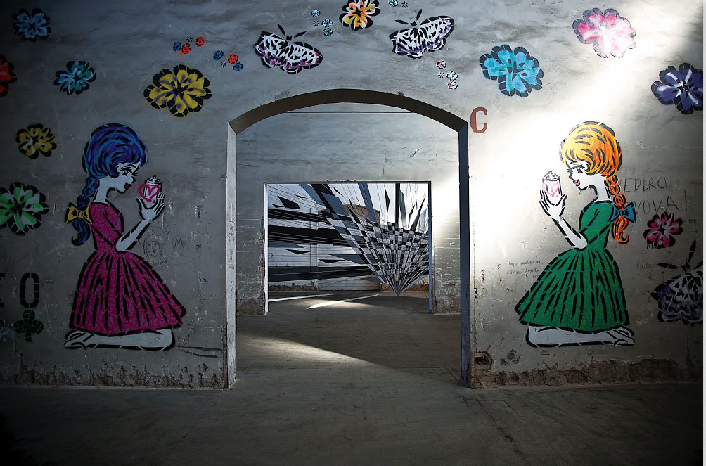
Just over a year ago, we fea­tured John Mil­ton’s Par­adise Lost as illus­trat­ed by William Blake, the 18th- and 19th-cen­tu­ry Eng­lish poet, painter, and print­mak­er who made uncom­mon­ly full use of his already rare com­bi­na­tion of once-a-gen­er­a­tion lit­er­ary and visu­al apti­tude. Blake may have had an obses­sion with Par­adise Lost, as Josh Jones point­ed out in that post, but it hard­ly kept him from illus­trat­ing oth­er texts. Today we have his artis­tic accom­pa­ni­ment to that text that has gone under the hands of Sal­vador Dalí, Gus­tave DoréAlber­to Mar­ti­niSan­dro Bot­ti­cel­li, and Mœbius, to name a few: Dante Alighieri’s Divine Com­e­dy

Blake nev­er com­plet­ed the full set of engrav­ings com­mis­sioned, but only because death itself cut the project short. Still, he man­aged to com­plete sev­er­al water­col­ors and a hand­ful of engrav­ing proofs, all of which have drawn praise not just for the way they evoke the dif­fer­ent envi­ron­ments of the Infer­no, Pur­ga­to­rio, and Par­adiso, but for how they cast a some­times crit­i­cal eye on the the­o­log­i­cal and moral sen­si­bil­i­ties of Dan­te’s orig­i­nal work.

(“Every thing in Dantes Come­dia shews That for Tyran­ni­cal Pur­pos­es he has made This World the Foun­da­tion of All & the God­dess Nature & not the Holy Ghost,” Blake once wrote to him­self in a piece of mar­gin­a­lia often cit­ed by schol­ars of this par­tic­u­lar project.)

Yet Blake and Dante had com­mon ground. “Blake was drawn to the project because, despite the five cen­turies that sep­a­rat­ed them, he res­onat­ed with Dante’s con­tempt for mate­ri­al­ism and the way pow­er warps moral­i­ty — the oppor­tu­ni­ty to rep­re­sent these ideas pic­to­ri­al­ly no doubt sang to him,” writes Maria Popo­va at Brain Pick­ings, who tells more of the sto­ry sur­round­ing Blake’s Divine Com­e­dy. He stopped only when just about to step off this mor­tal coil, a moment in which his­to­ry has remem­bered him say­ing to his wife, “Keep just as you are — I will draw your por­trait — for you have ever been an angel to me.” That por­trait did­n’t sur­vive, but what he com­plet­ed of his Dante illus­tra­tions did, grant­i­ng them the sta­tus of William Blake’s final work — and, giv­en the post-life nature of its sub­ject mat­ter, a suit­able sta­tus indeed.

via Brain Pick­ings

Relat­ed Con­tent:

A Free Course on Dante’s Divine Com­e­dy from Yale Uni­ver­si­ty

William Blake’s Hal­lu­ci­na­to­ry Illus­tra­tions of John Milton’s Par­adise Lost

Mœbius Illus­trates Dante’s Par­adiso

Botticelli’s 92 Illus­tra­tions of Dante’s Divine Com­e­dy

Gus­tave Doré’s Dra­mat­ic Illus­tra­tions of Dante’s Divine Com­e­dy

Alber­to Martini’s Haunt­ing Illus­tra­tions of Dante’s Divine Com­e­dy (1901–1944)

Sal­vador Dalí’s 100 Illus­tra­tions of Dante’s The Divine Com­e­dy

Dante’s Divine Com­e­dy Illus­trat­ed in a Remark­able Illu­mi­nat­ed Medieval Man­u­script (c. 1450)

Col­in Mar­shall hosts and pro­duces Note­book on Cities and Cul­ture as well as the video series The City in Cin­e­ma and writes essays on cities, lan­guage, Asia, and men’s style. He’s at work on a book about Los Ange­les, A Los Ange­les Primer. Fol­low him on Twit­ter at @colinmarshall or on Face­book.

Wonderfully Kitschy Propaganda Posters Champion the Chinese Space Program (1962–2003)

Playmates 80

A joint oper­a­tion of five par­tic­i­pat­ing coun­tries and the Euro­pean Space Agency, the Inter­na­tion­al Space Sta­tion is an enor­mous achieve­ment of human coop­er­a­tion across ide­o­log­i­cal and nation­al bound­aries. Gen­er­a­tions of peo­ple born in the nineties and beyond will have grown up with the ISS as a sym­bol of the tri­umph of STEM edu­ca­tion and decades of space trav­el and research. What they will not have expe­ri­enced is some­thing that seems almost fun­da­men­tal to the cul­tur­al and polit­i­cal land­scape of the Boomers and Gen Xers—the Cold War space race. But it is worth not­ing that while Rus­sia is one of the most promi­nent part­ners in ISS oper­a­tions, cur­rent Com­mu­nist repub­lic Chi­na has vir­tu­al­ly no pres­ence on it at all.

But this does not mean that Chi­na has been absent from the space race—quite the con­trary. While it seems to those of us who wit­nessed the excit­ing inter­stel­lar com­pe­ti­tion between super­pow­ers that the only play­ers were the big two, the Chi­nese entered the race in the 1960s and launched their first satel­lite in 1970. This craft, writes space his­to­ry enthu­si­ast Sven Grahn, “would lead to Chi­na being a major play­er in the com­mer­cial space field.”

Since its launch into orbit, the satel­lite has con­tin­u­ous­ly broad­cast a song called Dong Fang Hong, a eulo­gy for Mao Zedong (which “effec­tive­ly replaced the Nation­al Anthem” dur­ing the Cul­tur­al Revolution—hear the broad­cast here). The satel­lite, now referred to, after its song, as DFH‑1 (or CHINA‑1), marked a sig­nif­i­cant break­through for the Chi­nese space pro­gram, spear­head­ed by rock­et engi­neer Qian Xue­sen, who had been pre­vi­ous­ly expelled from the Jet Propul­sion Lab in Pasade­na for sus­pect­ed Com­mu­nist sym­pa­thies.

Roaming Space 62

Before DFH‑1, the nation­al imag­i­na­tion was primed for the prospect of Chi­nese space flight by images like the poster just above, titled “Roam­ing out­er space in an air­ship,” and designed by Zhang Rui­heng in 1962. This strik­ing piece of work comes to us from Chi­nese Posters, a com­pendi­um of images of “pro­pa­gan­da, pol­i­tics, his­to­ry, art.” Images like this one and that of a Chi­nese taiko­naut at the top—“Bringing his play­mates to the stars”—from 1980, appro­pri­ate imagery from the tra­di­tion­al nian­hua, or New Years pic­ture.

Moon Palace 70

This fan­ci­ful style, which “catered to the tastes and beliefs in the coun­try­side,” became the “most impor­tant influ­ence on the pro­pa­gan­da posters pro­duced by the Chi­nese Com­mu­nist Par­ty,” who began using it in the 1940s. The poster above, “Lit­tle guests in the Moon Palace,” dates from the ear­ly 1970s, after the launch of DFH‑1 and its sis­ter satel­lite SJ‑I (CHINA‑2).

Heaven Increases 89

As you can see from the 1989 poster above—“Heaven increas­es the years, man gets older”—the CCP con­tin­ued to use the nian­hua style well into the eight­ies, but in the fol­low­ing decades, they began to move away from it and toward more mil­i­taris­tic imagery, like that in the image below from 2002. With dif­fer­ent col­ors and sym­bols, it would look right at home on the wall of an armed forces recruit­ing sta­tion in any small town, U.S.A.

Continue the Struggle 02

Like many U.S. advo­cates for space trav­el and explo­ration, such as the increas­ing­ly vis­i­ble Neil deGrasse Tyson, the CCP has used space as a means of pro­mot­ing sci­en­tif­ic lit­er­a­cy. In the poster below, “Uphold sci­ence, erad­i­cate super­sti­tion,” space imagery is used to bring much-per­se­cut­ed Falon Gong adher­ents “back into the fold” and to oppose sci­ence to reli­gious super­sti­tion.

Uphold Science 99

Although some of the imagery may sug­gest oth­er­wise, the Chi­nese space pro­gram has devel­oped along sim­i­lar lines as the U.S.’s, and has been put to sim­i­lar uses. These include the use of space explo­ration as a means of uni­fy­ing nation­al­ist sen­ti­ment, dri­ving sup­port for sci­ence and tech­nol­o­gy fund­ing and research, and push­ing a vision of sci­en­tif­ic progress as the nation­al ethos. In 2012, the same year that Sal­ly Ride—first Amer­i­can woman in space—passed away, Chi­na began select­ing its first female taiko­naut, mak­ing their space pro­gram a venue for increas­ing gen­der equal­i­ty as well.

Warmly Welcome 03

It was only very recent­ly that the Chi­nese space pro­gram suc­cess­ful­ly com­plet­ed its first manned mis­sion, send­ing its first taiko­naut, Yang Liewei, abord the Shen­zhou 5 in a low earth orbit mis­sion. Although the achievement—as you can see in the poster above com­mem­o­rat­ing a vis­it of the taiko­naut to Hong Kong—marked a moment of sig­nif­i­cant nation­al pride, there was one encour­ag­ing sign for the future of inter­na­tion­al coop­er­a­tion: though you can­not see it in the pho­to, Yang wore the flag of the Unit­ed Nations in addi­tion to that of the People’s Repub­lic of Chi­na.

See more of these fas­ci­nat­ing works of pro­pa­gan­da at Chi­nese Posters

Relat­ed Con­tent:

“Glo­ry to the Con­querors of the Uni­verse!”: Pro­pa­gan­da Posters from the Sovi­et Space Race (1958–1963)

Sovi­et Artists Envi­sion a Com­mu­nist Utopia in Out­er Space

Astro­naut Suni­ta Williams Gives an Exten­sive Tour of the Inter­na­tion­al Space Sta­tion

Josh Jones is a writer and musi­cian based in Durham, NC. Fol­low him at @jdmagness

Three Essential Dadaist Films: Groundbreaking Works by Hans Richter, Man Ray & Marcel Duchamp

Icon­o­clas­tic art move­ments need manifestos—to explain them­selves, per­haps, to announce them­selves, sure­ly, but also, per­haps, to soft­en the blow of the work that is to come. In the case of Dadaism, the man­i­festo issued by Tris­tan Tzara in 1918 presents us with a curi­ous para­dox. Tzara expounds at length in sev­er­al thou­sand words on the idea that “DADA DOES NOT MEAN ANYTHING.” In so doing, he tells us quite a bit about what Dada is, and what it is not. It is decid­ed­ly not, he writes, uni­fied by any for­mal the­o­ry: “We have enough cubist and futur­ist acad­e­mies: lab­o­ra­to­ries of for­mal ideas.” It is no friend to the artis­tic estab­lish­ment: “Is the aim of art to make mon­ey and cajole the nice nice bour­geois?” It is cer­tain­ly not “art for art’s sake”: “A work of art should not be beau­ty in itself, for beau­ty is dead.”

So what is this anti art about then? “Spon­tane­ity,” “Active sim­plic­i­ty,” “Dis­gust,” “to lick the penum­bra and float in the big mouth filled with hon­ey and excre­ment.” And many more such provo­ca­tions and images. No man­i­festo is any sub­sti­tute for the work itself, but if any comes close to repli­cat­ing its sub­ject, it is Tzara’s. Immerse your­self in it, and you may be bet­ter pre­pared for Dada artists like Hans Richter, Man Ray, and Mar­cel Duchamp. All three rep­re­sent Dadaism—whatever it is—in at least two ways: 1. Each reject­ed “nice nice bour­geois” cul­tur­al con­ven­tions, oppos­ing them force­ful­ly, and play­ful­ly, in ways both polit­i­cal and aes­thet­ic. 2. Nei­ther con­fined him­self to any one medi­um or school—experimenting freely with paint­ing, sculp­ture, pho­tog­ra­phy, per­for­mance and con­cep­tu­al art, and—for our pur­pos­es today—with film.

At the top of the post, see Hans Richter’s 1927 short film Ghosts Before Break­fast. Here, writes Lori Zim­mer of Art Nerd, “fly­ing hats, float­ing neck ties, [and] stacked guns” illus­trate the state­ment at the film’s open­ing that “even objects revolt against reg­i­men­ta­tion.” We have here a silent cut because, the title informs us, “The Nazis destroyed the sound ver­sion of this film as ‘degen­er­ate art.’” (The film’s orig­i­nal sound con­sist­ed of a sound­track by com­pos­er Paul Hin­demith.) The use of stop-motion ani­ma­tion and inge­nious edit­ing accords with the Muse­um of Mod­ern Art’s con­tention that “the con­flu­ence of tech­nol­o­gy and aes­thet­ic exper­i­men­ta­tion” that film offered “suit­ed the Dadaists’ pas­sion for the machine-made object.” In Richter’s short, such objects refuse to coop­er­ate and play nice with their mak­ers.

Just above, see Man Ray’s short film Le Retour à la Rai­son (“Return to Rea­son”). (The piano score, record­ed live in 2011 in St. Peters­burg, is by Dmitri Shu­bin.) The title of this film, I think, should be read iron­i­cal­ly. Man Ray’s “pure cin­e­ma” active­ly resist­ed the “rea­son” of con­ven­tion­al film pro­duc­tion, with its lin­ear nar­ra­tive log­ic and real­ist com­pla­cen­cy. One might watch his films with the words of Tzara’s man­i­festo in mind: “Log­ic is a com­pli­ca­tion. Log­ic is always wrong. It draws the threads of notions, words, in their for­mal exte­ri­or, toward illu­so­ry ends and cen­tres. Its chains kill, it is an enor­mous cen­tipede sti­fling inde­pen­dence.” In a pre­vi­ous post, Mike Springer described the film as “basi­cal­ly a kinet­ic exten­sion of Man Ray’s still pho­tog­ra­phy,” uti­liz­ing “ani­mat­ed pho­tograms, a tech­nique in which opaque, or par­tial­ly opaque, objects are arranged direct­ly on top of a sheet of pho­to­graph­ic paper and exposed to light.”

Man Ray shared a “fra­ter­nal friend­ship” and an artis­tic sen­si­bil­i­ty with per­haps the most renowned, or infa­mous, of the Dadaists, Mar­cel Duchamp. In addi­tion to star­ring as him­self in a few films, and co-writ­ing the fea­ture length Dadaist film Dreams That Mon­ey Can Buy, Duchamp made his own direc­to­r­i­al con­tri­bu­tions, begin­ning in 1926 with Anémic Ciné­ma, above. (I sug­gest view­ing it with the added, non-orig­i­nal music mut­ed.) Cre­at­ed in Man Ray’s stu­dio, the film con­sists of a series of spin­ning disks, some con­tain­ing French phras­es which may be untrans­lat­able. The whole reel is rem­i­nis­cent of stock scenes of hyp­no­tism in sen­sa­tion­al­ist “bour­geois” movies.

Are Richter, Man Ray, and Ducham­p’s films—in Tzara’s words—“like a rag­ing wind that rips up the clothes of clouds and prayers… prepar­ing the great spec­ta­cle of dis­as­ter, con­fla­gra­tion and decom­po­si­tion”? Such hyper­bol­ic expres­sions only serve to under­line what Ducham­p’s disks set in motion: progress is an illu­sion: “after all every­one dances to his own per­son­al boom­boom, and… the writer is enti­tled to his boom­boom.” If Dadaism cham­pi­ons solip­sism, it also cham­pi­ons the right of artists to their own per­son­al “boom­boom.” In its anar­chic rejec­tion of codes of “progress, law, moral­i­ty and all oth­er fine qual­i­ties,” Dada opened the door for per­son­al free­dom of expres­sion as wide as it would swing, prepar­ing the way for all the sit­u­a­tion­ists, yip­pies, and punks to come.

You can find the films above list­ed in our col­lec­tion, 4,000+ Free Movies Online: Great Clas­sics, Indies, Noir, West­erns, Doc­u­men­taries & More.

Relat­ed Con­tent:

Watch Dreams That Mon­ey Can Buy, a Sur­re­al­ist Film by Man Ray, Mar­cel Duchamp, Alexan­der Calder, Fer­nand Léger & Hans Richter

Man Ray and the Ciné­ma Pur: Four Sur­re­al­ist Films From the 1920s

The ABCs of Dada Explains the Anar­chic, Irra­tional “Anti-Art” Move­ment of Dadaism

Exten­sive Archive of Avant-Garde & Mod­ernist Mag­a­zines (1890–1939) Now Avail­able Online

Josh Jones is a writer and musi­cian based in Durham, NC. Fol­low him at @jdmagness

« Go BackMore in this category... »
Quantcast