Fill Your New Kindle, iPad, iPhone, eReader with Free eBooks, Movies, Audio Books, Online Courses & More

ipadgift-2

San­ta left a new Kin­dleiPad, Kin­dle Fire or oth­er media play­er under your tree. He did his job. Now we’ll do ours. We’ll tell you how to fill those devices with free intel­li­gent media — great books, movies, cours­es, and all of the rest. And if you did­n’t get a new gad­get, fear not. You can access all of these mate­ri­als on the good old fash­ioned com­put­er. Here we go:

Free eBooks: You have always want­ed to read the great works. And now is your chance. When you dive into our Free eBooks col­lec­tion you will find 700 great works by some clas­sic writ­ers (Dick­ens, Dos­to­evsky, Shake­speare and Tol­stoy) and con­tem­po­rary writ­ers (F. Scott Fitzger­ald, Philip K. Dick, Isaac Asi­mov, and Kurt Von­negut). The col­lec­tion also gives you access to the 51-vol­ume Har­vard Clas­sics.

If you’re an iPad/iPhone user, the down­load process is super easy. Just click the “iPad/iPhone” links and you’re good to go. Kin­dle and Nook users will gen­er­al­ly want to click the “Kin­dle + Oth­er For­mats links” to down­load ebook files, but we’d sug­gest watch­ing these instruc­tion­al videos (Kin­dle – Nook) before­hand.

Free Audio Books: What bet­ter way to spend your free time than lis­ten­ing to some of the great­est books ever writ­ten? This page con­tains a vast num­ber of free audio books — 630 works in total — includ­ing texts by Arthur Conan Doyle, James Joyce, Jane Austen, Edgar Allan Poe, George Orwell and more recent writ­ers — Ita­lo Calvi­no, Vladimir Nabokov, Ray­mond Carv­er, etc. You can down­load these clas­sic books straight to your gad­gets, then lis­ten as you go.

[Note: If you’re look­ing for a con­tem­po­rary book, you can down­load one free audio book from Audible.com. Find details on Audi­ble’s no-strings-attached deal here.]

Free Online Cours­es: This list brings togeth­er over 1100 free online cours­es from lead­ing uni­ver­si­ties, includ­ing Stan­ford, Yale, MIT, UC Berke­ley, Oxford and beyond.

These full-fledged cours­es range across all dis­ci­plines — his­to­ryphysicsphi­los­o­phypsy­chol­o­gy, busi­ness, and beyond. Most all of these cours­es are avail­able in audio, and rough­ly 75% are avail­able in video. You can’t receive cred­its or cer­tifi­cates for these cours­es (click here for cours­es that do offer cer­tifi­cates). But the amount of per­son­al enrich­ment you will derive is immea­sur­able.

Free Movies: With a click of a mouse, or a tap of your touch screen, you will have access to 700 great movies. The col­lec­tion hosts many clas­sics, west­erns, indies, doc­u­men­taries, silent films and film noir favorites. It fea­tures work by some of our great direc­tors (Alfred Hitch­cock, Orson Welles, Andrei Tarkovsky, Stan­ley Kubrick, Jean-Luc Godard and David Lynch) and per­for­mances by cin­e­ma leg­ends: John Wayne, Jack Nichol­son, Audrey Hep­burn, Char­lie Chap­lin, and beyond. On this one page, you will find thou­sands of hours of cin­e­ma bliss.

Free Lan­guage Lessons: Per­haps learn­ing a new lan­guage is high on your list of New Year’s res­o­lu­tions. Well, here is a great way to do it. Take your pick of 46 lan­guages, includ­ing Span­ish, French, Ital­ian, Man­darin, Eng­lish, Russ­ian, Dutch, even Finnish, Yid­dish and Esperan­to. These lessons are all free and ready to down­load.

Free Text­books: And one last item for the life­long learn­ers among you. We have scoured the web and pulled togeth­er a list of 200 Free Text­books. It’s a great resource par­tic­u­lar­ly if you’re look­ing to learn math, com­put­er sci­ence or physics on your own. There might be a dia­mond in the rough here for you.

Thank San­ta, maybe thank us, and enjoy that new device.…

If you would like to sign up for Open Culture’s free email newslet­ter, please find it here. It’s a great way to see our new posts, all bun­dled in one email, each day.

If you would like to sup­port the mis­sion of Open Cul­ture, con­sid­er mak­ing a dona­tion to our site. It’s hard to rely 100% on ads, and your con­tri­bu­tions will help us con­tin­ue pro­vid­ing the best free cul­tur­al and edu­ca­tion­al mate­ri­als to learn­ers every­where. You can con­tribute through Pay­Pal, Patre­on, and Ven­mo (@openculture). Thanks!

by | Permalink | Make a Comment ( 20 ) |

Lou Reed Reads Delmore Schwartz’s Famous Story “In Dreams Begin Responsibilities”

Schwartz_Reed


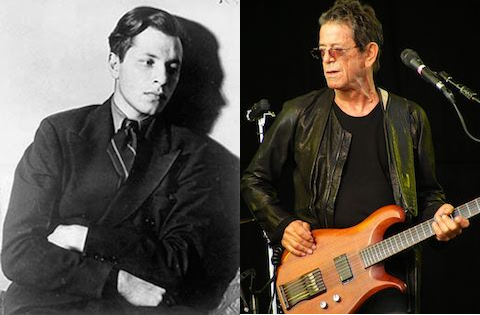
In a gal­lop­ing vignette in Tablet, writer Lee Smith man­ages to evoke the essences of both sen­ti­men­tal tough guy Lou Reed and his lit­er­ary men­tor and hero, “Brook­lyn Jew­ish Trou­ba­dour” Del­more Schwartz. Although Schwartz’s “poet­ry is his real lega­cy,” Smith writes, that rich body of work is often obscured by the fact that “his most famous work is a short sto­ry,” the much-anthol­o­gized “In Dreams Begin Respon­si­bil­i­ties” (1935) It’s a sto­ry writ­ten in prose as lyri­cal as can be—with sen­tences one wants to pause and linger over, read­ing again and again, out loud if pos­si­ble. It’s also a sto­ry in which we see “a direct line… between Schwartz and Reed,” whose song “Per­fect Day” per­forms sim­i­lar kind of mag­i­cal cat­a­logu­ing of urban imper­ma­nence. For Reed, one­time stu­dent of Schwartz at Syra­cuse Uni­ver­si­ty, “Del­more Schwartz is every­thing.”

Reed ded­i­cat­ed the last song, “Euro­pean Son,” on the first Vel­vet Under­ground album to Schwartz, and wrote an elo­quent for­ward to a reis­sue of Schwartz’s first col­lec­tion of sto­ries and poems, also titled In Dreams Begin Respon­si­bil­i­ties. And just above, you can hear Reed him­self read the sto­ry aloud, savor­ing those lyri­cal sen­tences in his Brook­lyn dead­pan. It’s easy to imag­ine Reed writ­ing many of these sen­tences, such was Schwartz’s influ­ence on him. They shared not only com­mon ori­gins, but also a com­mon sen­si­bil­i­ty; in Reed’s songs we hear the echo of Schwartz’s voice, the satir­i­cal world-weari­ness and the lyri­cism and long­ing. In the bio­graph­i­cal doc­u­men­tary Rock and Roll Heart, Reed says that Schwartz showed him how, “with the sim­plest lan­guage imag­in­able, and very short, you can accom­plish the most aston­ish­ing heights.” Read­ing, and lis­ten­ing to Schwartz’s aston­ish­ing “In Dreams Begin Respon­si­bil­i­ties” may help you under­stand just what he meant.

This read­ing has been added to our col­lec­tion, 1,000 Free Audio Books: Down­load Great Books for Free.

Relat­ed Con­tent:

Lou Reed Rewrites Edgar Allan Poe’s “The Raven.” See Read­ings by Reed and Willem Dafoe

Rock and Roll Heart, 1998 Doc­u­men­tary Retraces the Remark­able Career of Lou Reed

Teenage Lou Reed Sings Doo-Wop Music (1958–1962)

Josh Jones is a writer and musi­cian based in Durham, NC. Fol­low him at @jdmagness

Thomas Pynchon’s Gravity’s Rainbow Finally Gets Released as an Audio Book

gravitys rainbow audiobook

A quick heads up for Thomas Pyn­chon fans. Four decades after its pub­li­ca­tion, you can final­ly get Gravity’s Rain­bow as an audio book — pos­si­bly even as a free audio book.

Accord­ing to The New York Times, “Since the mid-1980s, a George Guidall record­ing [of the 1973 nov­el] has been float­ing around, like some myth­i­cal lost rock­et part — no one had heard it, but all Pyn­chon fans knew some­one who knew some­one who had — but in Octo­ber a new ver­sion, autho­rized and rere­cord­ed… — hit the stands.”

The new release, which runs 40 hours and 1 minute, is also nar­rat­ed by Guidall. It’s avail­able on Audible.com. (Hear an audio sam­ple below.) And there’s a way to get it for free. As we’ve men­tioned before, Audi­ble lets you down­load an audio book for free if you sign up for their 30-Day Free Tri­al. And even if you decide to can­cel the tri­al, you can still keep the audio book and pay no mon­ey. That said, I dig Audi­ble’s sub­scrip­tion ser­vice, as I’ve spelled out before, pre­cise­ly because you can get big long audio books for a real­ly rea­son­able price.

Learn more about the Free Tri­al pro­gram here, and to get Grav­i­ty’s Rain­bow, sim­ply click here and then click the “Try Audi­ble Free” link on the right side of the page. NB: Audi­ble is an Amazon.com sub­sidiary, and we’re a mem­ber of their affil­i­ate pro­gram.


Relat­ed Con­tent:

Thomas Pyn­chon Edits His Lines on The Simp­sons: “Homer is my role mod­el and I can’t speak ill of him.”

Take a Cin­e­mat­ic Jour­ney into the Mind of Thomas Pyn­chon and His New Book, Bleed­ing Edge

1,000 Free Audio Books: Down­load Great Books for Free

by | Permalink | Make a Comment ( 3 ) |

Stephen Fry Reads You Have To F**king Eat, the New Mock Children’s Book by Adam Mansbach

The sequel to Adam Mans­bach’s best-sell­ing mock children’s book, Go the F**k to Sleep is out. Say hel­lo to You Have to F**king Eat.

As men­tioned last week, you can down­load a free audio ver­sion read by Break­ing Bad star Bryan Cranston over at Audible.com through Decem­ber 12th. This week, we present a slight­ly more posh ver­sion read by Stephen Fry — the very same Stephen Fry who nar­rat­ed the UK ver­sion of the Har­ry Pot­ter series, not to men­tion an audio ver­sion of Oscar Wilde’s children’s sto­ry “The Hap­py Prince.”  Find more Fry favorites below.

Relat­ed Con­tent:

Stephen Fry: What I Wish I Knew When I Was 18

Stephen Fry Explains Human­ism in 4 Ani­mat­ed Videos: Hap­pi­ness, Truth and the Mean­ing of Life & Death

Shakespeare’s Satir­i­cal Son­net 130, As Read By Stephen Fry

Download Bryan Cranston’s Reading of You Have to F–king Eat as a Free Audio Book (NSFW)

Back in 2011, Adam Mans­bach and Ricar­do Cortés pub­lished the mock chil­dren’s book, Go the F**k to Sleep. And it gained nation­al atten­tion when pirat­ed PDF copies cir­cu­lat­ed on the inter­net, and a read­ing by Wern­er Her­zog made the rounds on YouTube, both of which turned the book into a #1 best­seller on Ama­zon. Now, three years lat­er, Mans­bach is back with a sequel, You Have to F–king Eat. The print edi­tion went on sale today, and, even bet­ter, the audio edi­tion, nar­rat­ed by Break­ing Bad star Bryan Cranston, can be down­loaded for free over at Audible.com. The irrev­er­ent, 4‑minute NSFW read­ing will remain free through 12/12/14.  You can hear a sam­ple above.

If you’re a Cranston fan, you won’t want to miss his more seri­ous read­ing fea­tured on OC last year: Bryan Cranston Reads Shelley’s Son­net “Ozy­man­dias”.

And if you love audio books, you might be inter­est­ed to know that you can down­load anoth­er free audio book of your choice through Audi­ble’s 30-day free tri­al pro­gram. We have details on that here. More free audio books can be found in our col­lec­tion, 1,000 Free Audio Books: Down­load Great Books for Free.

via Laugh­ing Squid

Relat­ed Con­tent:

Watch the Orig­i­nal Audi­tion Tapes for Break­ing Bad Before the Final Sea­son Debuts

Wern­er Her­zog Reads “Go the F**k to Sleep” in NYC (NSFW)

The Complete Ulysses: Alec Baldwin, Garrison Keillor, Bob Odenkirk & Others Read Joyce’s Opus Aloud

Bloom

Per­haps you’ve held off on lis­ten­ing to Re:Joyce, Frank Delaney’s line-by-line, episode-by-episode pod­cast exe­ge­sis of James Joyce’s Ulysses, because you want to lis­ten not just to a break­down of the nov­el, but to the nov­el itself. If so, then boy, have we got anoth­er ongo­ing project for you to fol­low: The Com­plete Ulysses, which has a man­date to record every word of Ulysses as “the first Amer­i­can pro­duc­tion” of the book “using most­ly Amer­i­can and Irish-Amer­i­can actors like Alec Bald­win, John Lith­gow, Jer­ry Stiller, Gar­ri­son Keil­lor, Anne Meara, Wal­lace Shawn, Bob Dishy, Anne Enright, Bob Odenkirk, Pulitzer-Prize-win­ning poet Paul Mul­doon, and Caraid O’Brien as Mol­ly Bloom.” The pro­duc­ers have planned to make avail­able record­ings of each chap­ter as soon as they fin­ish them, “on almost all cur­rent and future audio media.” You can browse the so-far com­plet­ed mate­r­i­al here.

“The project began more than 30 years ago,” says The Com­plete Ulysses’ site, “when [radio sta­tion] WBAI broad­cast a marathon read­ing of Ulysses from the Shake­speare & Co. book­store at 81st and Broad­way in New York.” Book­store own­er Lar­ry Joseph­son “took the idea of a long-form radio read­ing of Ulysses to Isa­iah Shef­fer, then Artis­tic Direc­tor of Sym­pho­ny Space.” This result­ed in Blooms­day on Broad­way, an 18-hour “live, staged read­ing of excerpts from Ulysses and oth­er Irish lit­er­a­ture and song.” Hav­ing then cre­at­ed Radio Blooms­day, a WBAI read­ing series “fea­tur­ing live and pre-record­ed read­ings from Ulysses and lots of oth­er things Irish,” Joseph­son “got the ‘insane’ idea of record­ing the entire book, which will run about 30 hours.”

Ambi­tious, yes, but then the same applies to Re:Joyce, and indeed to Ulysses itself, which you can find in our col­lec­tion of Free eBooks. Joyce has long had a way of inspir­ing cre­ators to exe­cute their own “insane” ideas, and this one in par­tic­u­lar gives his own work a whole new means of expres­sion. Tun­ing into Radio Blooms­day has, for a few years now, appeared as a main­stay on var­i­ous press out­lets’ “what to do on Blooms­day” lists, but with The Com­plete Ulysses, you cer­tain­ly don’t need to wait until June 16 for a Joycean expe­ri­ence; these days, a prop­er­ly equipped iPod can turn every day into Blooms­day.

If you can’t wait for The Com­plete Ulysses to be com­plet­ed, you can always down­load a read­ing of Ulysses in its entire­ty here (in audio for­mat).

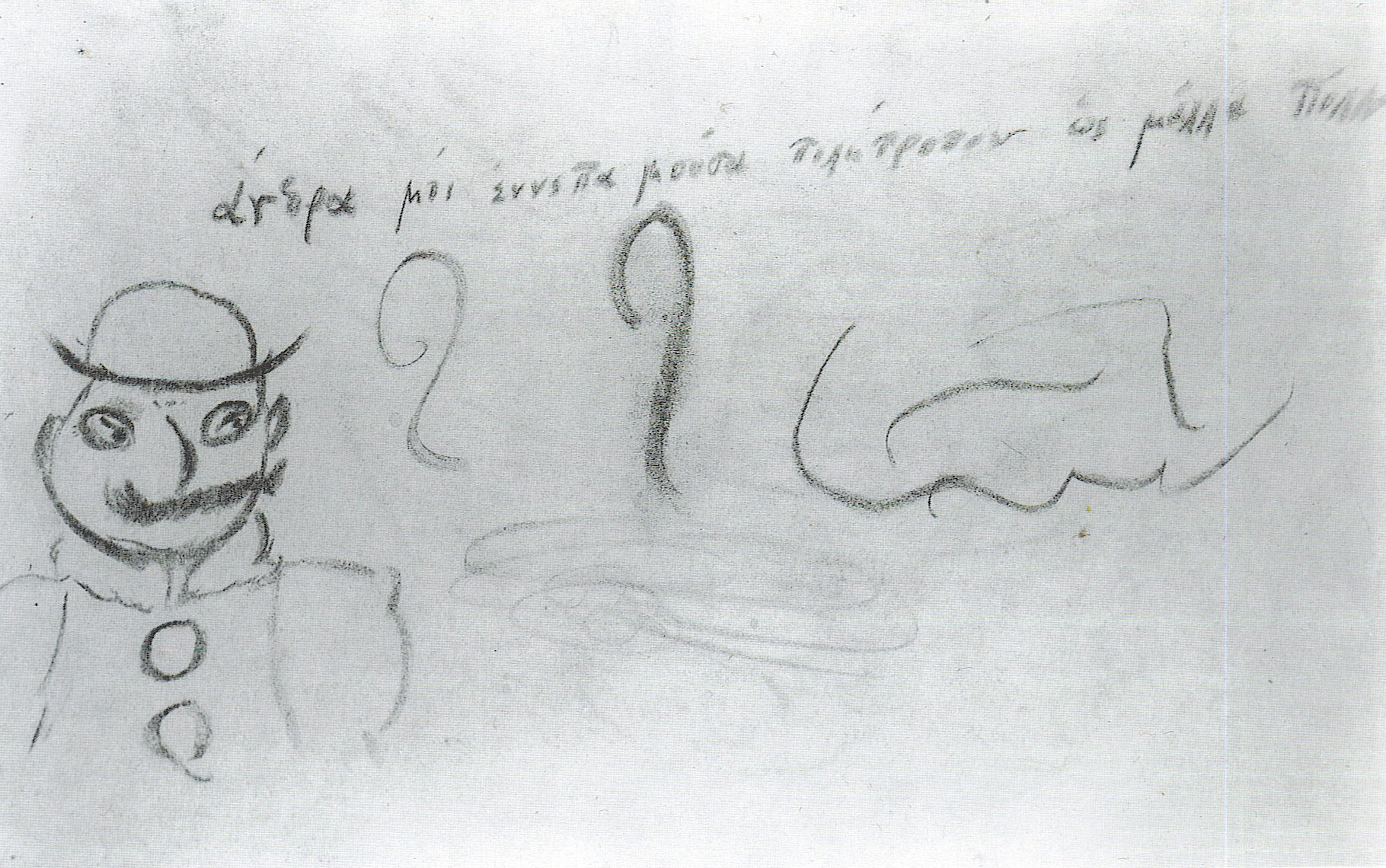
Note: The draw­ing above is none oth­er than Leopold Bloom, drawn by Joyce him­self in 1926, when his eye­sight was fail­ing. We have more on that sto­ry here.

Relat­ed Con­tent:

Every­thing You Need to Enjoy Read­ing James Joyce’s Ulysses on Blooms­day

James Joyce’s Ulysses: Down­load the Free Audio Book

Hen­ri Matisse Illus­trates 1935 Edi­tion of James Joyce’s Ulysses

Col­in Mar­shall hosts and pro­duces Note­book on Cities and Cul­ture and writes essays on cities, lan­guage, Asia, and men’s style. He’s at work on a book about Los Ange­les, A Los Ange­les Primer. Fol­low him on Twit­ter at @colinmarshall or on Face­book.

7 Free Stephen King Stories: Presented in Text, Audio, Web Comic & a Graphic Novel Video


In Stephen King’s first tele­vised inter­view from way back in 1982, the hor­ror writer revealed that he sleeps with the lights on. He may have grown out of the habit by now, but it’s no won­der if he hasn’t. A macabre imag­i­na­tion like his prob­a­bly sees all sorts of creepy things lurk­ing in the dark. In any case, King has cer­tain­ly learned a thing or two since then about mak­ing his fears more mar­ketable. In the past sev­er­al years he’s been pro­mot­ing his work on the Inter­net to reach new audi­ences.

In 2000, his novel­la Rid­ing the Bul­let debuted exclu­sive­ly online, and in 2008 he part­nered with Mar­vel Comics to pro­mote his first col­lec­tion of short sto­ries in six years, releas­ing one short graph­ic video episode at a time adapt­ed from the 56-page novel­la “N.” See all 25 episodes above. It’s a sto­ry, writes Time, “about a psy­chol­o­gist whose obses­sive-com­pul­sive patient is entranced by a mys­te­ri­ous plot of land.” King calls the adap­ta­tion “kind of a video com­ic book,” and while the “point of the exer­cise,” says his edi­tor Susan Moldow,” is to stim­u­late book sales,” I think you’ll agree it’s a pret­ty nifty bit of sto­ry­telling on its own.

King Comic

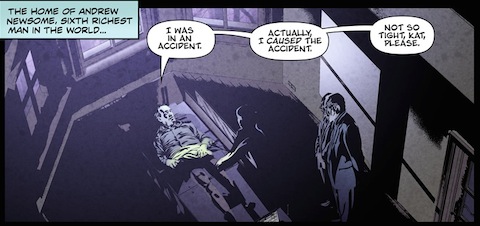
On King’s web­site, you’ll find links to all sorts of mul­ti­me­dia prod­ucts, includ­ing a Life­time orig­i­nal movie, Big Dri­ver, a film titled A Good Mar­riage, now out on video-on-demand, and the lat­est from graph­ic nov­el series Dark Tow­er. You’ll also find a com­ic adap­ta­tion of the short sto­ry “Lit­tle Green God of Agony.” See the first pan­el above, and read the full sto­ry here.

?si=KsluCU7w9DOop4Pv
Long before Youtube and online comics, there was the audio­book. King has nar­rat­ed his own work for years, and it’s also been read by such big names as Kathy Bates, Sis­sy Spacek, Willem Defoe, Anne Heche, Eli Wal­lach, and many more. Just above, hear char­ac­ter actor John Glover—a name you may not know, but a face you’d recognize—read “One for the Road,” a sto­ry from King’s first, 1978, col­lec­tion Night Shift. It’s a vam­pire sto­ry, but a par­tic­u­lar­ly deft one, writes Noah Char­ney at New Haven Review, one that “deals in arche­types that are the heart of good hor­ror fic­tion.” King’s sto­ries, Char­ney asserts, are “beau­ti­ful­ly-writ­ten, high­ly intel­li­gent. They hap­pen to fea­ture mon­sters of all sorts, from nat­ur­al to preter­nat­ur­al, but that is sec­ondary to their core as great sto­ries, well-told.”

King has long defend­ed pop­u­lar fic­tion to the literati—in his accep­tance speech for the Nation­al Book Award, for example—and lashed out at “the keep­ers of the idea of seri­ous lit­er­a­ture,” whom he says “have a short list of authors who are going to be allowed inside.” It may have tak­en a few years, but King got in, even­tu­al­ly pub­lish­ing in such august out­lets as The Atlantic and The New York­er. Read four sto­ries from those pub­li­ca­tions at the links below. And if you’re still in need of a good scare in the days lead­ing up to Hal­loween, make sure to check out “The Man in the Black Suit,” a short film adap­ta­tion of anoth­er sto­ry pub­lished in The New York­er in 1994.

“A Death” (The New York­er, March 2015)

Her­man Wouk Is Still Alive” (The Atlantic, May 2011)

Pre­mi­um Har­mo­ny” (The New York­er, Novem­ber, 2009)

Harvey’s Dream” (The New York­er, June 2003)

Relat­ed Con­tent:

Stephen King Reveals in His First TV Inter­view Whether He Sleeps With the Lights On (1982)

Stephen King’s Top 20 Rules for Writ­ers

Stephen King Cre­ates a List of 96 Books for Aspir­ing Writ­ers to Read

Josh Jones is a writer and musi­cian based in Durham, NC. Fol­low him at @jdmagness.

William Gibson Reads Neuromancer, His Cyberpunk-Defining Novel

With 1984’s Neu­ro­mancer, William Gib­son may not have invent­ed cyber­punk, but he cer­tain­ly crys­tal­lized it. The nov­el exem­pli­fies the tra­di­tion’s man­date to bring togeth­er “high tech and low life,” or, in the words of Gib­son him­self, to explore what “any giv­en sci­ence-fic­tion favorite would look like if we could crank up the res­o­lu­tion.”

It may have its direct pre­de­ces­sors, but Gib­son’s tale of hack­ers, street samu­rai, con­spir­acists, and shad­owy arti­fi­cial intel­li­gences against vir­tu­al real­i­ty, dystopi­an urban Japan, and a vari­ety of oth­er inter­na­tion­al and tech­no­log­i­cal back­drops remains not just arche­typ­al but, unusu­al­ly for old­er tech­nol­o­gy-ori­ent­ed fic­tion, excit­ing.

Now you can not only read Gib­son’s cyber­punk-defin­ing words, but hear them in Gib­son’s voice: a 1994 abridged edi­tion, released only on cas­sette tapes and now long out of print, resides in MP3 form online here .

You can get a taste of this par­tic­u­lar Neu­ro­mancer audio­book and its pro­duc­tion in the clip above. I always appre­ci­ate hear­ing authors read their own work, but peo­ple will sure­ly dis­agree about whether the laid-back tones of a man who often describes him­self as thor­ough­ly un-cut­ting-edge ide­al­ly suit the mate­r­i­al. If you think it does­n’t, or if you don’t like the abridged-ness of this edi­tion, you suf­fer no lack of alter­na­tives: Arthur Addi­son read an unabridged one for Books on Tape in 1997, in 2011 Robert­son Dean read anoth­er one for Pen­guin Audio­books, and in 2012 Jeff Hard­ing did yet anoth­er. (Note: You can down­load the Dean edi­tion for free via Audi­ble if you enroll in their 30 Day Free Tri­al. We have more details on that here.) Those who have found them­selves hooked on the inter­net, in any of its mod­ern forms, will cer­tain­ly hear a lot of pre­science in Gib­son’s con­cep­tion of tech­nol­o­gy as addic­tive drug. But in my expe­ri­ence, cyber­punk sto­ries, too, can prove fierce­ly habit form­ing. Rather than the first cyber­punk nov­el, or the most impor­tant one, or the gen­re’s blue­print, let’s just call Neu­ro­mancer the gate­way.

Relat­ed Con­tent:

Cyber­punk: 1990 Doc­u­men­tary Fea­tur­ing William Gib­son & Tim­o­thy Leary Intro­duces the Cyber­punk Cul­ture

Take a Road Trip with Cyber­space Vision­ary William Gib­son, Watch No Maps for These Ter­ri­to­ries (2000)

Tim­o­thy Leary Plans a Neu­ro­mancer Video Game, with Art by Kei­th Har­ing, Music by Devo & Cameos by David Byrne

William Gib­son, Father of Cyber­punk, Reads New Nov­el in Sec­ond Life

Col­in Mar­shall hosts and pro­duces Note­book on Cities and Cul­ture and writes essays on cities, lan­guage, Asia, and men’s style. He’s at work on a book about Los Ange­les, A Los Ange­les Primer. Fol­low him on Twit­ter at @colinmarshall or on Face­book.

« Go BackMore in this category... »
Quantcast