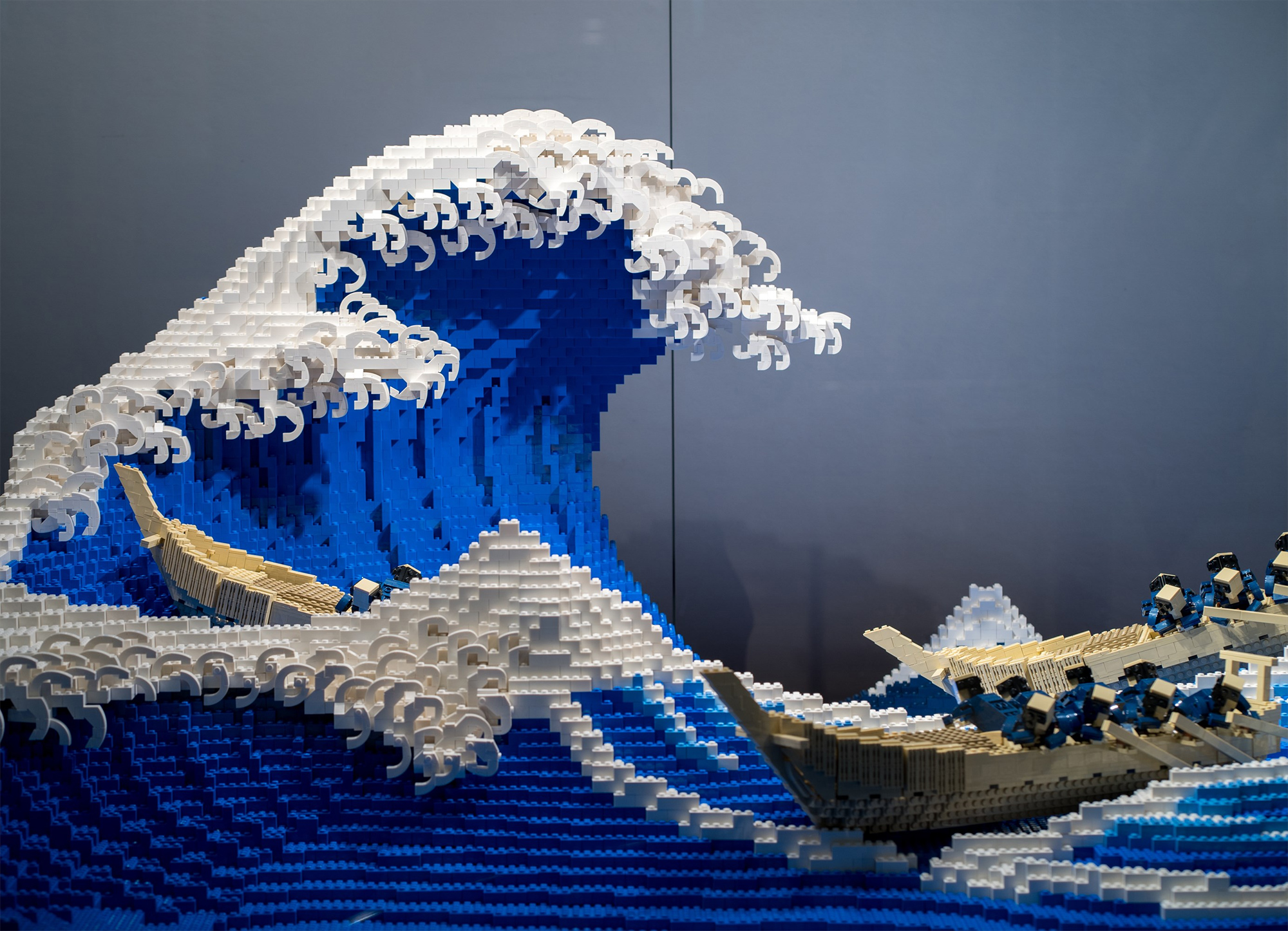
For those with the time, skill, and drive, LEGO is the perfect medium for wildly impressive recreations of iconic structures, like the Taj Mahal, Eiffel Tower, the Titanic and now the Roman Colosseum.
While other LEGO enthusiasts have created excellent facsimiles of famous artworks, doing justice to the curves and implied motion of The Great Wave seems a nearly impossible feat.
Having spent his childhood in a house by the sea, waves are a familiar presence to Mitsui. To get a better sense of how they work, he read several scientific papers and spent four hours studying wave videos on YouTube.
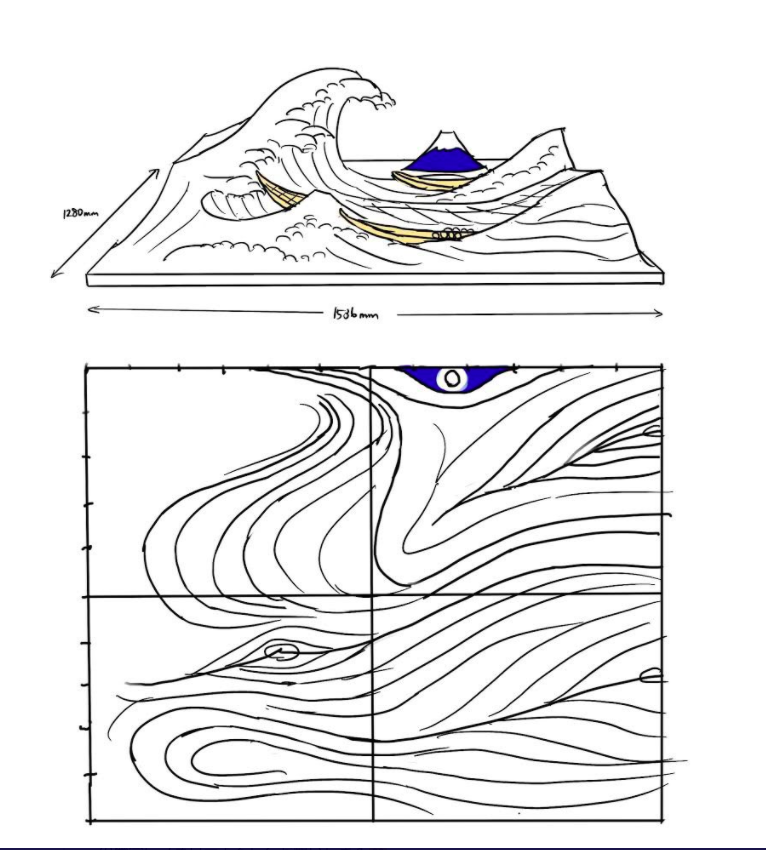
He made only one preparatory sketch before beginning the build, an effort that required 50,000 some LEGO pieces.
His biggest hurdle was choosing which color bricks to use in the area indicated by the red arrow in the photo below. Hokusai had taken advantage of the newly affordable Berlin blue pigment in the original.
Mitsui tweeted:
I tried a total of 7 colors including transparent parts, but in the end, I adopted the same blue color as the waves. If you use other colors, the lines will be overemphasized and unnatural, but if you use blue, the shade will be created just by adjusting the light, and the natural lines will appear nicely. It can be said that it was possible because it was made three-dimensional.
Ayun Halliday is an author, illustrator, theater maker and Chief Primatologist of the East Village Inky zine. She most recently appeared as a French Canadian bear who travels to New York City in search of food and meaning in Greg Kotis’ short film, L’Ourse. Follow her @AyunHalliday.
If MasterClass comes calling, you know you’ve made it. In the five years since its launch, the online learning platform has brought on such instructors as Martin Scorsese, Helen Mirren, Steve Martin, Annie Leibovitz, and Malcolm Gladwell, all of whom bring not just knowledge and experience of a craft, but the glow of high-profile success as well. Though MasterClass’ lineup has expanded to include more writers, filmmakers, and performers (as well as chefs, designers, CEOs, and poker players) it’s long been light on visual artists. But it may signal a change that the site has just released a course taught by Jeff Koons, promoted by its trailer as the most original and controversial American artist — as well as the most expensive one.
Just last year, Koons’ sculpture Rabbit set a new record auction price for a work by a living artist: $91.1 million, which breaks the previous record of $58.4 million that happened to be held by another Koons, Balloon Dog (Orange). This came as the culmination of a career that began, writes critic Blake Gopnik, with “taking store-bought vacuum cleaners and presenting them as sculpture,” then creating “full-size replicas of rubber dinghies and aqualungs, cast in Old Master-ish bronze” and later “giant hard-core photos of himself having sex with his wife, the famous Italian porn star known as La Cicciolina (“Chubby Chick”)” and “simulacra of shiny blow-up toys and Christmas ornaments and gems, enlarged to monumental size in gleaming stainless steel.”
With such work, Gopnik argues, Koons has “rewritten all the rules of art — all the traditions and conventions that usually give art order and meaning”; his elevation of kitsch allows us to “see our world, and art, as profoundly other than it usually is.” Not that the artist himself puts it in quite those words. In his well-known manner — “like a space alien who has spent long years studying how to be the perfect, harmless Earthling, but can’t quite get it right” — Koons uses his MasterClass to tell the story of his artistic development, which began in the showroom of his father’s Pennsylvania furniture store and continued into a reverence for the avant-garde in general and Salvador Dalí in particular. From his life he draws lessons on turning everyday objects into art, using size and scale, and living life with “the confidence in yourself to follow your interests.”
Also new for this holiday season is a MasterClass on storytelling and writing taught by no less renowned a storyteller and writer than Salman Rushdie. The author of Midnight’s Children and The Satanic Verses thus joins on the site a group of novelists as varied as Neil Gaiman, Joyce Carol Oates, Dan Brown, Margaret Atwood, and Judy Blume, but he brings with him a much different body of work and life story. “I’ve been writing, now, for over 50 years,” he says in the course’s trailer just above. “There’s all this stuff about three-act structure, exactly how you must allow a story to unfold. My view is it’s all nonsense.” Indeed, by this point in his celebrated career, Rushdie has narrowed the rules of his craft down to just one: Be interesting.
Easier said than done, of course, which is why Rushdie’s MasterClass comes structured in nineteen practically themed lessons. In these he deals with such lessons as building a story’s structure, opening with powerful lines, drawing from old storytelling traditions, and rewriting — which, he argues, all writing is. To make these fiction-writing concepts concrete, Rushdie offers exercises for you, the student, to work through, and he also takes a critical look back at the failed work he produced in his early twenties. But though his techniques and process have greatly improved since then, his resolve to create, and to do so using his own distinctive sets of interests and experiences, has wavered no less than Koons’. At the moment you can learn from both of them (and MasterClass’ 100+ other instructors) if you take advantage of MasterClass’ holiday 2‑for‑1 deal. For $180, you can buy an annual subscription for yourself, and give one to a friend/family member for free. Sign up here.
Note: If you sign up for a MasterClass course by clicking on the affiliate links in this post, Open Culture will receive a small fee that helps support our operation.
Based in Seoul, Colin Marshall writes and broadcasts on cities, language, and culture. His projects include the Substack newsletterBooks on Cities, the book The Stateless City: a Walk through 21st-Century Los Angeles and the video series The City in Cinema. Follow him on Twitter at @colinmarshall, on Facebook, or on Instagram.
Buckminster Fuller had a difficult time as an inventor in his early years. “Having been expelled from Harvard for irresponsible conduct,” notes The Guardian, “he struggled to find a job and provide a living for his young family in his early 30s.” Despite later successes, and a later reputation as legendary as Nikola Tesla’s, he was often, like Tesla, seen by critics as a utopian visionary, whose visions were too impractical to really change the world.
But his body of work remains a testament to an imagination that rises above the trends of industrial design and engineering. After a period of decline, for example, Fuller’s geodesic domes experienced a revival in the early 2000’s when “aging baby-boomers across America” began “building dream homes in the shape of geodesic domes.” Meanwhile in Cornwall, England, a few years ahead of the curve, Dutch-born businessman and archaeologist-turned-successful-music-producer Sir Timothy Smit broke ground on what would become a far more British use of Fullerist principles.
In the late 90s, Smit started work on an enormous complex of geodesic biomes called the Eden Project, a facility “akin to a quintessentially Victorian creation: the English greenhouse,” which reached its apex in the famed “Crystal Palace” built for the Great Exhibition in Hyde Park in 1851. These were buildings “born out of a playful, decadent imagination—yet in their architecture and design they often opened new pathways for the future.” So too do Fuller’s designs, in an application melding Victorian and Fullerist ideas about curatorship and sustainability.
Looking like “clusters of soap bubbles” the Eden Project slowly rose above an exhausted clay pit and opened in 2001 (see a short time-lapse film of the construction above). Each of the two huge central domes recreates an ecosystem. The Rainforest Biome allows visitors to get lost in nearly 4 acres of tropical forest and includes banana, coffee, and rubber plants. The Mediterranean Biome houses an acre and a half of olives and grape vines. Smaller adjoining domes house thousands of additional plant species. There is a performance space and a yearly music festival; sculptures and art exhibitions in both the indoor and outdoor gardens. The facility has hosted well over a million visitors each year.
In 2016, the Eden Project began planting redwoods, introducing a forest of the North American trees to Europe for the first time. Next year, it will begin drilling for a geothermal energy project to turn heat from the granite underground into power, an undertaking that, unlike fracking, will not release contaminants into the water supply or additional fossil fuels into the air and could power and heat the facility and 5000 additional homes. In 2018, the project began construction on Eden Project North, in Morecambe, Lancashire, with buildings designed to look like giant mussels and a focus on marine environments.
Eden Project International aims to build unique facilities all around the world, “to create new attractions with a message of environmental, social and economic regeneration” and “to protect and rejuvenate natural landscapes.” None of these ambitious expansions use the geodesic domes of the original Eden Project, but that is not a reflection on the domes’ structural soundness. Many other transparent uses of Fuller’s design have encountered difficulties with water tightness and heat flow. The Eden Project’s domes use innovative inflatable, triangular panels instead of glass to solve those problems. Fuller surely would have approved.
The project also represents a poignant personal vindication for the Fuller family. Fuller “vowed to dedicate his life to improving standards of living through good design,” The Guardian writes, after his daughter Alexandra died in 1922. In 2009, his only surviving child, Allegra Fuller Snyder, then 82 and Chairwoman of the Buckminster Fuller Institute, visited the Eden Project. “Of all the projects related to my father’s work,” she remarked afterward, “I would say that this is the one I am most aware of as being a powerful, comprehensive project…. My father would have been just thrilled. He would feel that it is a marvellous application of his thinking.”
Learn more about the Eden Project, which reopens December 3, here. And learn how to “create Eden wherever you are” with the project’s free resources for gardeners at home.
At first glance, Madame Bovary and Blue Velvet would seem to have little in common, as would their creators. But the artistic life Gustave Flaubert led and the one David Lynch now leads share a basic precept: “Be regular and orderly in your life,” as the former once put it, “so that you may be violent and original in your work.” Lynch has spoken about his ways as an artistic creature of habit many times over the years, as demonstrated by the interview clip above. “Some people have heard the story that I went to Bob’s Big Boy for seven years every day at 2:30 and had the same thing,” he told Jay Leno in 1992. “That was my longest habit pattern, I think.”
Lynch’s regularity at that Los Angeles burger joint is just one of the routines that has structured his existence. “I like habitual behavior because it’s a known factor,” he says, “and then your mind is free to think about other things.” When life has an order, he later told Charlie Rose, “then you’re free to mentally go off any place. You’ve got a safe sort of foundation, and a place to spring off from.”
More recently, on a phone Q&A for the David Lynch Foundation, the auteur described his routine thus: “I wake up and I brush my teeth and I use the bathroom. Then I have a cappuccino and some cigarettes. Then I mediate, and then I have either some amrit nectar or a small smoothie with protein powder and blueberries and peaches. And then I go to work.”
However contradictory they may seem, Lynch’s long-standing twin loves of smoking and meditation both express themselves as routine actions. And if the backgrounds of his Youtube videos — including his little-varying daily Los Angeles weather reports — are anything to go by, he performs them in the kind of uncluttered physical space he’s long preferred: “The purer the environment,” as he puts it, “the more fantastic the interior world can be.” His 1980s and 90s comic strip The Angriest Dog in the World took place in such an environment, its nearly unchanging visuals and increasingly bizarre text an artistic correlative to his ideas about daily life and the imagination. But whatever their interest in his methods, Lynch’s fans want to know one thing above all: what the imagination of this least angry of all artists will bring forth next.
Based in Seoul, Colin Marshall writes and broadcasts on cities, language, and culture. His projects include the Substack newsletterBooks on Cities, the book The Stateless City: a Walk through 21st-Century Los Angeles and the video series The City in Cinema. Follow him on Twitter at @colinmarshall, on Facebook, or on Instagram.
Deservedly or not, British care homes have acquired a reputation as especially dreary places, from Victorian novels to dystopian fiction to the flat affect of BBC documentaries. Martin Parr gave the world an especially moving example of the care home documentary in his 1972 photo series on Prestwich Asylum, outside Manchester. The compelling portraits humanize people who were neglected and ignored, yet their lives still look bleak in that austerely post-war British institution kind of way.
One cannot say anything of the kind of the photo series represented here, which casts residents of Sydmar Lodge Care Home in Edgeware, England as rock stars, digitally recreating some of the most famous album covers of all time. This is not, obviously, a candid look at residents’ day-to-day existence. But it suggests a pretty cheerful place. “The main aim was to show that care homes need not be a sad environment, even during this pandemic,” says the photos’ creator Robert Speker, the home’s activities manager.
“Speker tweeted side-by-side photos of the original covers and the Sydmar Lodge residents’ new takes, and the tweets quickly took off,” NPR’s Laurel Wamsley writes. He’s made it clear that the primary audience for the recreated covers is the residents themselves: Isolated in lockdown for the past four months; cut off from visits and outings; suffering from an indefinite suspension of familiar routines.
Speker does not deny the grim reality behind the inspiring images. “Elderly people will remain in lockdown for a long time,” he writes on a GoFundMe page he created to help support the home. “It could be months before the situation changes for them.”
But he is optimistic about his abilities to “make their time as happy and full of enjoyment and interest as possible.” Would that all nursing homes had such a dedicated, award-winning coordinator. Residents themselves, he wrote on Twitter, were “enthused and perhaps a bit bemused by the idea, but happy to participate.” When they saw the results—stunning Roma Cohen as Aladdin Sane, defiant Sheila Solomons as Elvis and The Clash’s Paul Simenon, casual Martin Steinberg as a “Born in England” Springsteen—they were delighted. Four of the home’s carers got their own cover, too, posed as Queen.
Residents, Speker said, were really “having a good giggle about it.” And we can too, as we bear in mind the many elderly people around us who have been locked in for months, with maybe many more months of isolation ahead. Not everyone is as talented as Robert Speker, who did the models’ makeup and tattoos himself (with hair by a care home manager), as well as taking all the photographs and editing the images to convincingly mimic the poses, composition, lighting, font, and color schemes of the originals. But let’s hope his work is a spark that lights up nursing homes and care facilities with all sorts of creative ideas to keep spirits up. See several more covers below and the rest on Twitter.
Fiber artist Bisa Butler’s quilted portraits of Black Americans gain extra power from their medium.
Each work is comprised of many scraps, carefully cut and positioned after hours of research and preliminary sketches.
Velvet and silk nestle against bits of vintage flour sacks, West African wax print fabric, denim and, occasionally, hand-me-downs from the sitter’s own collection.
In The Warmth of Other Sons, a 12-foot, life-sized portrait of an African American family who migrated north in search of economic opportunity, a wary-looking young girl clutches a purse to her chest. The purse is constructed from a commercial wax cotton print titled Michelle Obama’s Bag, which commemorates one of the former First Lady’s trips to Africa.
To wear this pattern…is both to honor and aspire to be ravishingly beautiful and powerful like Michele Obama; It is considered a must-have fashion piece in the wardrobe of stylish women in Abidjan, Lomé, and Lagos.
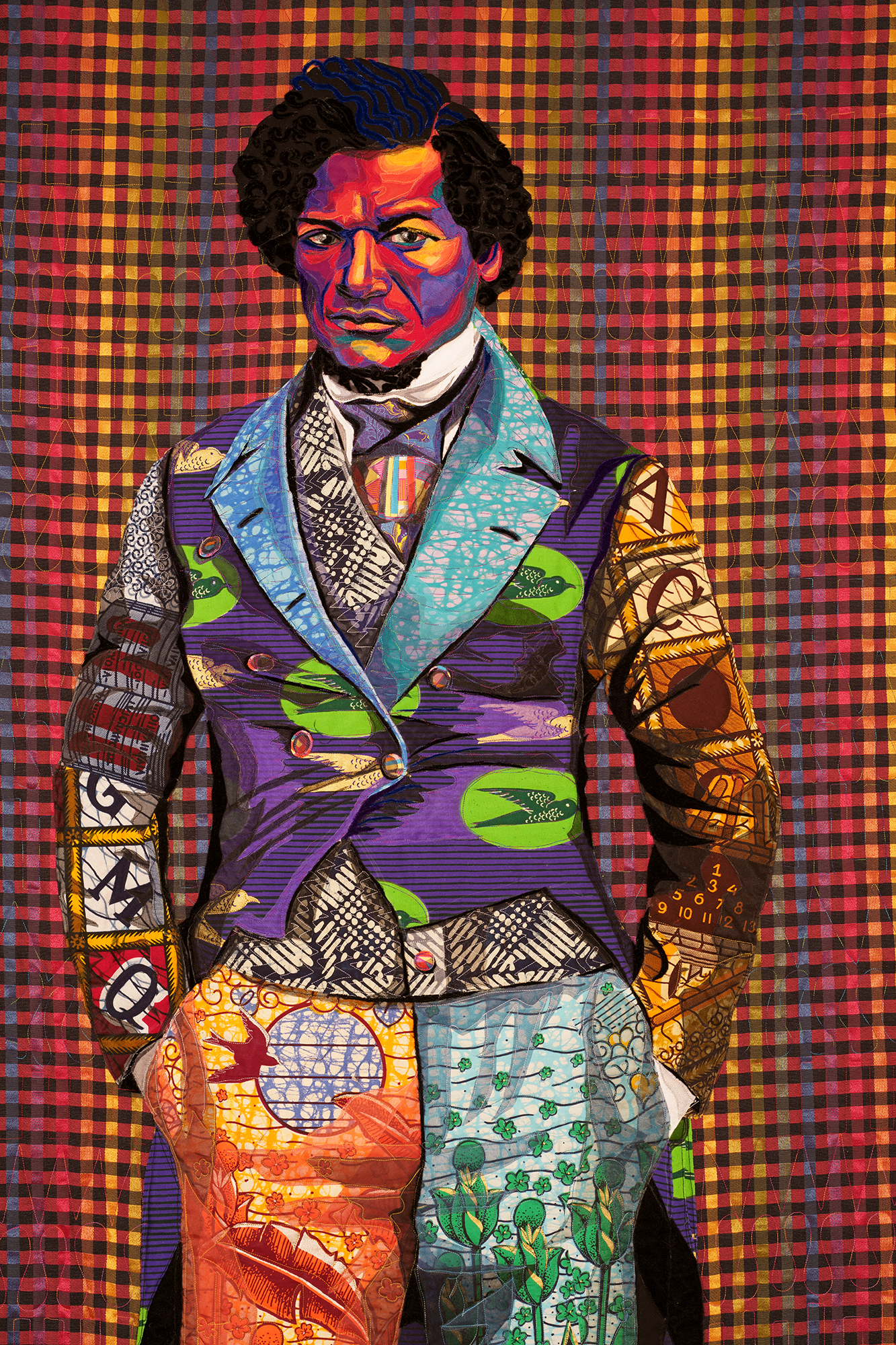
The vibrant colors of Butler’s materials also inform her portraits, particularly those inspired by historical figures whose images are most familiar in black-and-white.
She is also deeply influenced by her undergraduate years at Howard University, where many of her professors were part of the AfriCOBRA artists’ collective. They encouraged students to think of blank canvases as black, rather than white, and to throw out the Beaux Arts palette in favor of West African fabric’s Kool-Aid colors—“bright orange, bright yellow, crimson red, intense blue.”
As she describes in the above video:
The initial start is who’s it gonna be? Then after you choose that person, choose your color scheme. The color scheme is based on what you feel about that person. People have color around them, in them, that is not evidently visible to the naked eye.
The Storm, the Whirlwind, and The Earthquake, her recently completed full-length portrait of a 30-year old Frederick Douglass, reimagines the abolitionist’s 19th-century garb as something akin to a modern day Harlem dandy’s bold embrace of color, pattern, and style, deliberately challenging the status quo. The rich color scheme extends to his skin and the homey background fabric.
Butler, who was raised in an art-filled New Jersey home by a Black American mother and a Ghanian father, also credits her grandmother, the subject of her first quilted portrait, with helping her find her aesthetic.
An early attempt to paint a portrait of her beloved relative (and childhood sewing instructor) resulted in disappointment on both sides. The crestfallen artist’s aunt tipped her off that the older lady’s mental self-picture was that of someone 30 years younger.
Inspired by the collaged work of Romare Bearden, Butler gave it another go, this time in quilted form, taking care to represent her grandmother as an attractive woman in the prime of life. This time her efforts were met with enthusiasm. “I could feel an energy in the room that something new was happening,” Butler recalls.
Whether her subjects are living or dead, Butler strives to bring the same sense of “dignity and regal opulence” to unsung citizens that she does when creating portraits of such famous Americans as Nina Simone, Zora Neale Hurston, Jackie Robinson, Lauren Hill, Josephine Baker, and Jean-Michel Basquiat:
African Americans have been quilting since we were brought to this country and needed to keep warm. Enslaved people were not given large pieces of fabric and had to make do with the scraps of cloth that were left after clothing wore out. From these scraps the African American quilt aesthetic came into being. Some enslaved peoples were so talented that they were tasked for creating beautiful quilts that adorned their enslavers beds. My own pieces are reminiscent of this tradition, but I use African fabrics from my father’s homeland of Ghana, batiks from Nigeria, and prints from South Africa. My subjects are adorned with and made up of the cloth of our ancestors. If these visages are to be recreated and seen for the first time in a century, I want them to have their African Ancestry back, I want them to take their place in American History. I want the viewer to see the subjects as I see them.
Shiryaev’s casual distribution of these efforts on YouTube can make us take for granted just how extraordinary they are. Such recreations would have been impossible just a decade or so ago. But we should not see these as historic restorations. The software Shiryaev uses fills in gaps between the frames, allowing him to upscale the frame rate and make more naturistic-looking images. This often comes at a cost. As Ted Mills wrote in an earlier Open Culture post on Shiryaev’s methods, “there are a lot of artifacts, squooshy, morphing moments where the neural network can’t figure things out.”
But it’s an evolving technology. Unlike wizards of old, Shiryaev happily reveals his trade secrets so enterprising coders can give it a try themselves, if they’ve got the budget. In his latest video, above, he plugs the NVIDIA Quadro RTX 6000, a $4,000 graphics card (and does some griping about rights issues), before getting to the fun stuff. Rather than make old film look new, he’s “applied a bunch of different neural networks in an attempt to generate realistic faces of people from famous paintings.”
These are, Shiryaev emphasizes, “estimations,” not historical recreations of the faces behind Leonardo’s Mona Lisa and Lady with an Ermine, Botticelli’s model for The Birth of Venus, Vermeer’s for Girl with a Pearl Earring, or Rembrandt’s The Night Watch. In the case of American Gothic, we have a photo of the model, artist Grant Wood’s sister, to compare to the AI’s version. Frida Kahlo’s Self-Portrait with Thorn Necklace and Hummingbird gets the treatment. She left perhaps a few hundred photographs and some films that probably look more like her than the AI version.
The GIF-like “transformations,” as they might be called, may remind us of a less fun use of such technology: AI’s ability to create realistic faces of people who don’t exist for devious purposes and to make “deep fake” videos of those who do. But that needn’t take away from the fact that it’s pretty cool to see Botticelli’s Venus, or a simulation of her anyway, smile and blink at us from a distance of over 500 years.
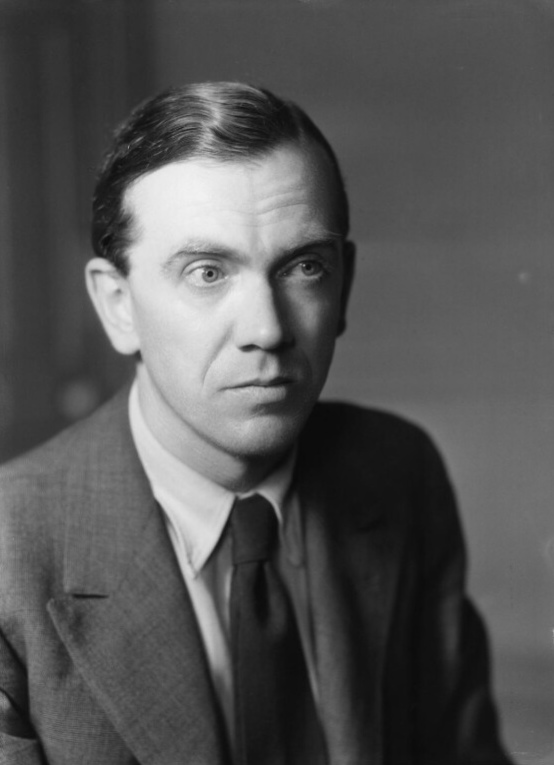
Nobody can write a book. That is, nobody can write a book at a stroke — unless aided by aggressively mind-invigorating substances, and even then they seldom pull it off. As professional writers know all too well, composing just one passable chapter at a sitting demands a Stakhanovite fortitude (or more commonly, a threateningly close deadline). Books are written less one chapter at a time than one section at a time, less one section at a time than one paragraph at a time, less one paragraph at a time than one sentence at a time, and less one sentence at a time than one word at a time. Graham Greene wrote his formidable body of work, more than 50 books, including novels, poetry and short fiction collections, memoirs, and children’s stories, 500 words at a time.
In one of his most beloved novels, 1951’s The End of the Affair, Greene has his writer protagonist Maurice Bendrix describe a working method much like his own:
Over twenty years I have probably averaged five hundred words a day for five days a week. I can produce a novel in a year, and that allows time for revision and the correction of the typescript. I have always been very methodical, and when my quota of work is done I break off, even in the middle of a scene. Every now and then during the morning’s work I count what I have done and mark off the hundreds on my manuscript. No printer need make a careful cast-off of my work, for there on the front page is marked the figure — 83,764.
In his youth, Bendrix notes, “not even a love affair would alter my schedule,” nor could one interrupt the nightly phase of his process: “However late I might be in getting to bed — as long as I slept in my own bed — I would read the morning’s work over and sleep on it.”
Much of a novelist’s writing, he believes, “takes place in the unconscious; in those depths the last word is written before the first word appears on paper. We remember the details of our story, we do not invent them.” Greene, too, set enough store by the unconscious to keep a dream journal. A few year after The End of the Affair, writesThe New Yorker’s Maria Konnikova, “he faced a creative ‘blockage,’ as he called it, that prevented him from seeing the development of a story or even, at times, its start. The dream journal proved to be his savior.”
All of us who write, whatever we write, can learn from Greene’s methods; Michael Korda got to witness them first-hand. In the summer of 1950 he was invited by his uncle, the film producer Alexander Korda, to come along on a French-Riviera cruise with a variety of major industry figures, Greene included. By that point Greene had already written a fair few screenplays, including adaptations of his own novels Brighton Rock and The Third Man. But each morning on the yacht he worked on a more personal project, as the sixteen-year-old Korda watched:
An early riser, he appeared on deck at first light, found a seat in the shade of an awning, and took from his pocket a small black leather notebook and a black fountain pen, the top of which he unscrewed carefully. Slowly, word by word, without crossing out anything, and in neat, square handwriting, the letters so tiny and cramped that it looked as if he were attempting to write the Lord’s Prayer on the head of a pin, Graham wrote, over the next hour or so, exactly five hundred words. He counted each word according to some arcane system of his own, and then screwed the cap back onto his pen, stood up and stretched, and, turning to me, said, “That’s it, then. Shall we have breakfast?” I did not, of course, know that he was completing The End of the Affair.
This working ritual, a Korda describes it, suits the sensibilities of the writer, a convert to Catholicism who dealt with themes of religious practice in his work:
Greene’s self-discipline was such that, no matter what, he always stopped at five hundred words, even if it left him in the middle of a sentence. It was as if he brought to writing the precision of a watchmaker, or perhaps it was that in a life full of moral uncertainties and confusion he simply needed one area in which the rules, even if self-imposed, were absolute. Whatever else was going on, his daily writing, like a religious devotion, was sacred and complete. Once the daily penance of five hundred words was achieved, he put the notebook away and didn’t think about it again until the next morning.
Just as Greene’s adherence to Catholicism lost some of its rigor in his later years (he claimed to have been converted by arguments, then forgotten the arguments), his daily word count decreased. “In the old days, at the beginning of a book, I’d set myself 500 words a day, but now I’d put the mark to about 300 words,” a 66-year-old Greene told the New York Times in 1971. But such are the wages of the novelist’s art, in which Greene felt a demand to “know — even if I’m not writing it — where my character’s sitting, what his movements are. It’s this focusing, even though it’s not focusing on the page, that strains my eyes, as though I were watching something too close.”
Greene wasn’t alone in writing a certain number of words each day. According to a post at Word Counter, Ernest Hemingway got started on his own 500 daily words at first light. Ian McEwan says he aims “for about six hundred words a day and hope for at least a thousand when I’m on a roll.” For the more prolific J.G. Ballard, a thousand was the minimum, “even if I’ve got a hangover. You’ve got to discipline yourself if you’re professional. There’s no other way.” The near-inhumanly prolific Stephen King doubles that: “I like to get ten pages a day, which amounts to 2,000 words,” he says in his memoir On Writing. “On some days those ten pages come easily; I’m up and out and doing errands by eleven-thirty in the morning, perky as a rat in liverwurst. More frequently, as I grow older, I find myself eating lunch at my desk and finishing the day’s work around one-thirty in the afternoon.”
John Updike, no slouch when it came to productivity, recommended writing for a length of time rather than to a number of words. “Even though you have a busy life, try to reserve an hour, say — or more — a day to write,” he says in an interview clip previously featured here on Open Culture. “Some very good things have been written on an hour a day.” At The Guardian, novelist Neil Griffiths discusses his apostasy from the thousand-words-a-day method: “I’m writing a novel — an artistic enterprise, one hopes — but I was measuring my working day by a number.” Switching to the “finish the bit you’re working on” method, he writes, means he doesn’t have “half an eye on what is going to happen in the next bit because without it I’ll never make the day’s 1000. My sole concern is the words before me, however many or few they are, and getting them right before moving on.” And so, it seems, those of us trying to get our life’s work written have two options: do what Graham Greene did, or do the opposite.
Based in Seoul, Colin Marshall writes and broadcasts on cities, language, and culture. His projects include the book The Stateless City: a Walk through 21st-Century Los Angeles and the video series The City in Cinema. Follow him on Twitter at @colinmarshall, on Facebook, or on Instagram.
We're hoping to rely on loyal readers, rather than erratic ads. Please click the Donate button and support Open Culture. You can use Paypal, Venmo, Patreon, even Crypto! We thank you!
Open Culture scours the web for the best educational media. We find the free courses and audio books you need, the language lessons & educational videos you want, and plenty of enlightenment in between.