From Peter Childs (Head of the Dyson School of Design Engineering at Imperial College London) comes a free course that explores creative thinking techniques, and how to apply them to everyday problems and global challenges. The course description for Creative Thinking: Techniques and Tools for Successreads:
In today’s ever-growing and changing world, being able to think creatively and innovatively are essential skills. It can sometimes be challenging to step back and reflect in an environment which is fast paced or when you are required to assimilate large amounts of information. Making sense of or communicating new ideas in an innovative and engaging way, approaching problems from fresh angles, and producing novel solutions are all traits which are highly sought after by employers.
The greatest innovators aren’t necessarily the people who have the most original idea. Often, they are people- or teams- that have harnessed their creativity to develop a new perspective or more effective way of communicating an idea. You can train your imagination to seize opportunities, break away from routine and habit, and tap into your natural creativity.
This course will equip you with a ‘tool-box’, introducing you to a selection of behaviours and techniques that will augment your innate creativity. Some of the tools are suited to use on your own and others work well for a group, enabling you to leverage the power of several minds.
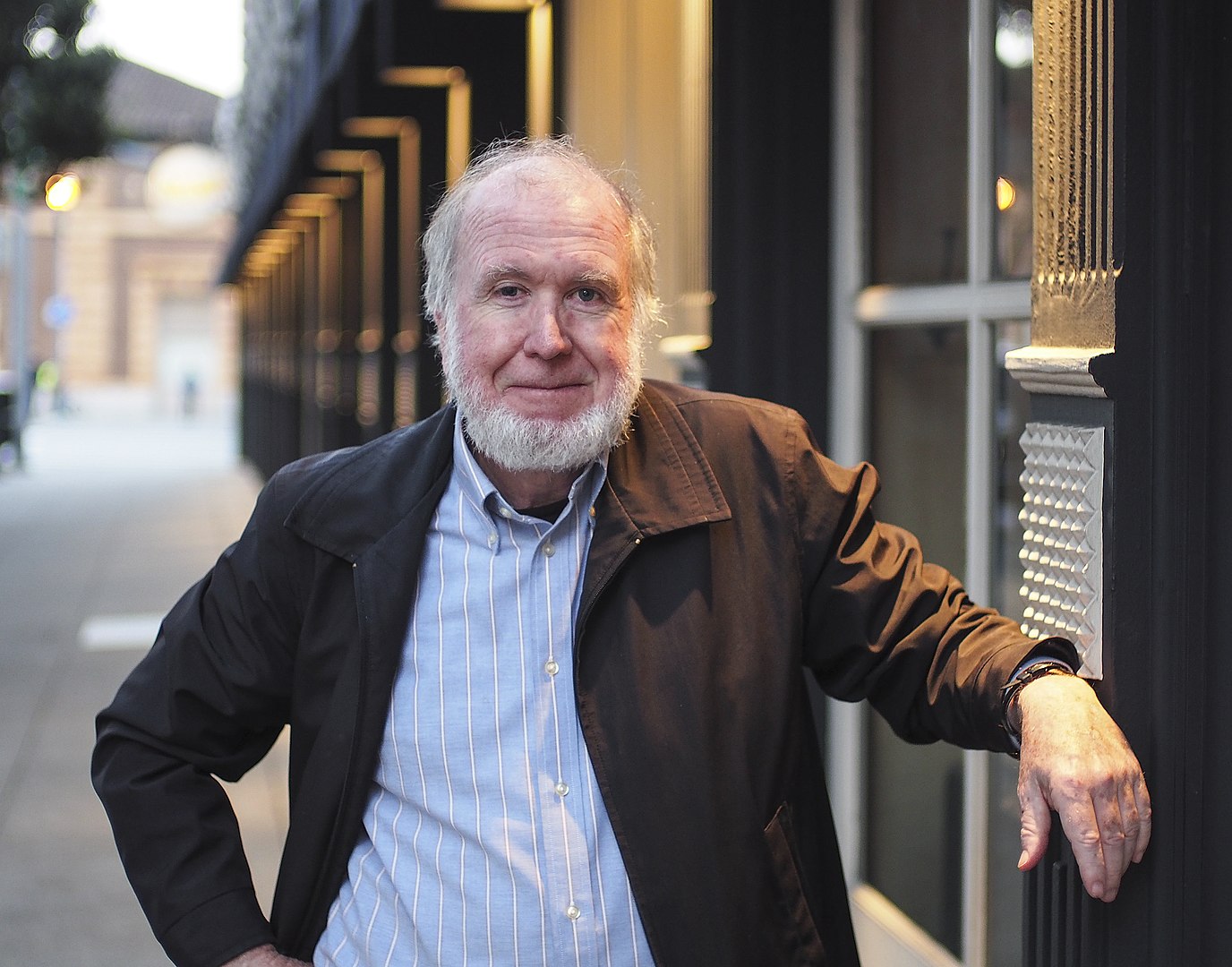
I am a big admirer of Kevin Kelly for the same reason I am of Brian Eno—he is constantly thinking. That thirst for knowledge and endless curiosity has always been the backbone to their particular art forms. For Eno it’s music, but for Kelly it’s in his editorship of the Whole Earth Review and then Wired magazine, providing a space for big ideas to reach the widest audience. (He’s also the reason one of my bucket lists is the Nakasendo, after seeing his photo essay on it.)
“I’m positive that in 100 years much of what I take to be true today will be proved to be wrong, maybe even embarrassingly wrong, and I try really hard to identify what it is that I am wrong about today.”
However, the list is more about wisdom from a life well-spent. Many fall into the art of being a curious human among other humans:
Everyone is shy. Other people are waiting for you to introduce yourself to them, they are waiting for you to send them an email, they are waiting for you to ask them on a date. Go ahead.
The more you are interested in others, the more interesting they find you. To be interesting, be interested.
Being able to listen well is a superpower. While listening to someone you love keep asking them “Is there more?”, until there is no more.
And this is probably the hardest piece of advice these days:
Learn how to learn from those you disagree with, or even offend you. See if you can find the truth in what they believe.
Other bits of advice have to do with creativity and being an artist:
Always demand a deadline. A deadline weeds out the extraneous and the ordinary. It prevents you from trying to make it perfect, so you have to make it different. Different is better.
Don’t be the smartest person in the room. Hangout with, and learn from, people smarter than yourself. Even better, find smart people who will disagree with you.
To make something good, just do it. To make something great, just re-do it, re-do it, re-do it. The secret to making fine things is in remaking them.
Art is in what you leave out.
And some of the more interesting ones are his disagreements with perceived wisdom:
Following your bliss is a recipe for paralysis if you don’t know what you are passionate about. A better motto for most youth is “master something, anything”. Through mastery of one thing, you can drift towards extensions of that mastery that bring you more joy, and eventually discover where your bliss is.
If something fails where you thought it would fail, that is not a failure.
Being wise means having more questions than answers.
I have never met a person I admired who did not read more books than I did.
Every person you meet knows an amazing lot about something you know virtually nothing about. Your job is to discover what it is, and it won’t be obvious.
and finally:
Don’t let your email inbox become your to-do list.
There is a small shift in Kelly’s 2021 list from his 2020 list, like a little more frustration with the world, a need for more order in the chaos. I wonder what his advice will be in a few more years?
Ted Mills is a freelance writer on the arts who currently hosts the Notes from the Shed podcast and is the producer of KCRW’s Curious Coast. You can also follow him on Twitter at @tedmills, and/or watch his films here.
In 2015, 3.8 billion years after “creativity emerged” out of “sheerest emptiness,” Kermit the Frog was tapped to give a talk on creativity at TEDxJackson.
How did a local, one-day event manage to snag such a global icon?
The conference took place 15 years after Henson’s untimely death, leaving Kermit to be animated by Steven Whitmire, the first of two puppeteers to tackle a role widely understood to be Henson’s alter ego.
The voice isn’t quite the same, but the mannerisms are, including the throat clearing and crumpled facial expressions.
Also present are a number of TED Talk tropes, the smart phone prompts, the dark stage, projections designed to emphasize profound points.
A number of jokes fail to elicit the expected laughs … we’ll leave it up to you to determine whether the fault lays with the live audience or the material. (It’s not easy being green and working blue comes with challenges, too.)
Were he to give his TED Talk now, in 2021, Kermit probably wouldn’t describe the audience’s collective decision to “accept a premise, suspend our disbelief and just enjoy the ride” as a “conspiracy of craziness.”
He might bypass a binary quote like “If necessity is the mother of invention, then creativity is the father.”
He’d also be advised to steer clear of a photo of Miss Piggy dressed as a geisha, and secure her consent to share some of the racier anecdotes… even though she is a known attention hog.
He would “transcend and include” in the words of philosopher Ken Wilber, one of many inspirations he cites over the course of his 23-minute consideration of creativity and its origins, attempting to answer the question, “Why are we here?”
Also referenced: Michelangelo, Albert Einstein, Salvador Dali, Charles Baudelaire, Zen master Shunryū Suzuki, mathematician Alfred North Whitehead, author and educator, Sir Ken Robinson (who appears, briefly) and of course, Henson, who applauded the “ridiculous optimism” of flinging oneself into creative explorations, unsure of what one might find.
He can’t wander freely about the stage, but he does share some stirring thoughts on collaboration, mentors, and the importance of maintaining “beginner’s mind,” free of pre-conceptions.
When John Ringling North, then president of Ringling Bros. and Barnum & Bailey Circus, saw a pair of German jugglers and acrobats perform in Spain, he immediately invited them to join “the Greatest Show on Earth.” A brother and sister team, Francis and Lottie Brunn would astonish audiences. In 1950, theater critic Brooks Atkinson called Francis “the greatest juggler of the ages. Not many people in the world are as perfectly adjusted as Mr. Brunn is. He will never have to visit a psychiatrist.” If physical grace and balance are reflective of one’s state of mind, maybe he was right.
When Lottie left the act in 1951, Francis went on to popular fame and even more hyperbolic acclaim. “After he performed before the queen of England in 1963, The Evening Standard called his show ‘almost painfully exciting,’” Douglas Martin writes at The New York Times.
“Trying to describe Brunn’s act is like trying to describe the flight of a swallow,” writes Francisco Alvarez in Juggling: Its History and Greatest Performers. He became a regular performer on The Ed Sullivan Show, “played the Palace with Judy Garland,” notes Martin, “and went twice to the White House, where President Dwight D. Eisenhower proclaimed him the best juggler he had ever seen.”
None of this should bias you toward the television performance, above, of course. (How many jugglers could Eisenhower have seen, anyway?) Judge for yourself. By way of further context, we should note that Brunn was known for perfecting “an austere but demanding minimalism. He was fascinated by controlling just one ball, and virtually compelled audiences to share this fascination.” Or as Brunn put it, “it sounds like nothing, but it is quite difficult to do properly.” As anyone (or virtually everyone) who has tried and failed to juggle can attest, this description fits the art of juggling in general all too well.
Brunn made it look laughably easy: “Large numbers of objects posed scant problem. He was believed to be the first juggler in the world to put up 10 hoops,” Martin writes. He also liked to incorporate flamenco into his act to compound the difficulty and the grace. “I do not consider myself doing tricks,” he said in 1983. “There is one movement for eight minutes. It’s supposed to be, let’s say, like a ballet…. I would love if the audience is so fascinated that nobody applauds in the end.” Brunn, I suspect, never got to hear the sound of stunned silence after his act.
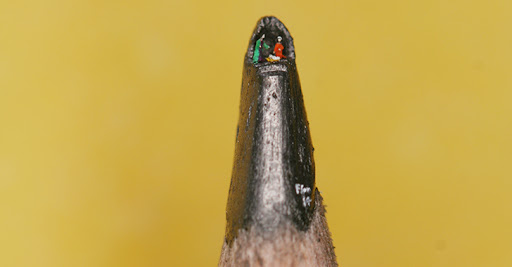
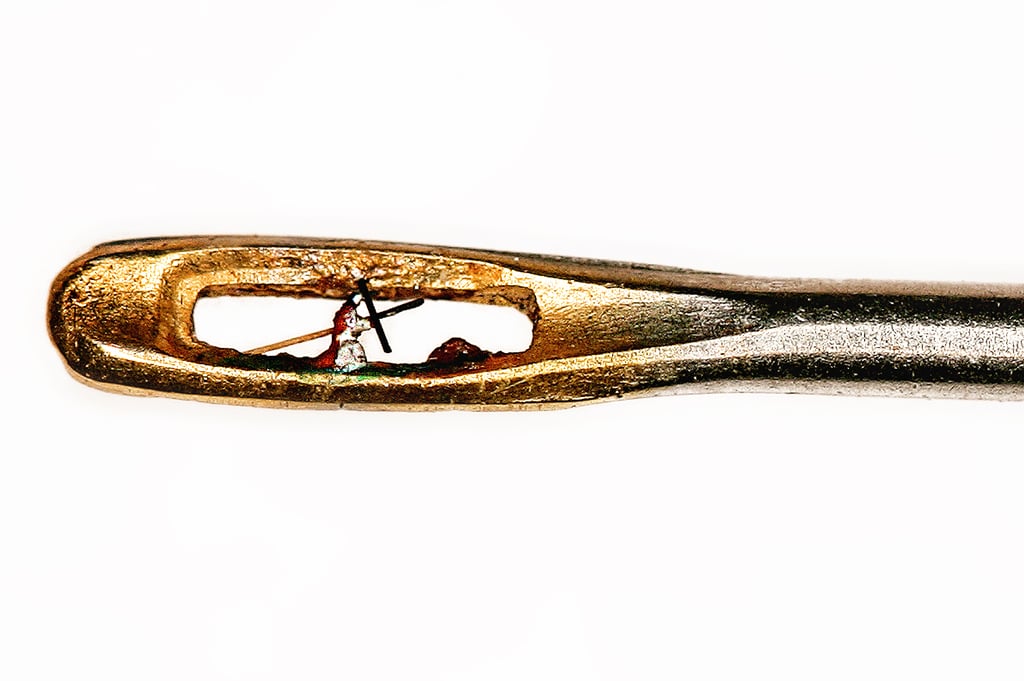
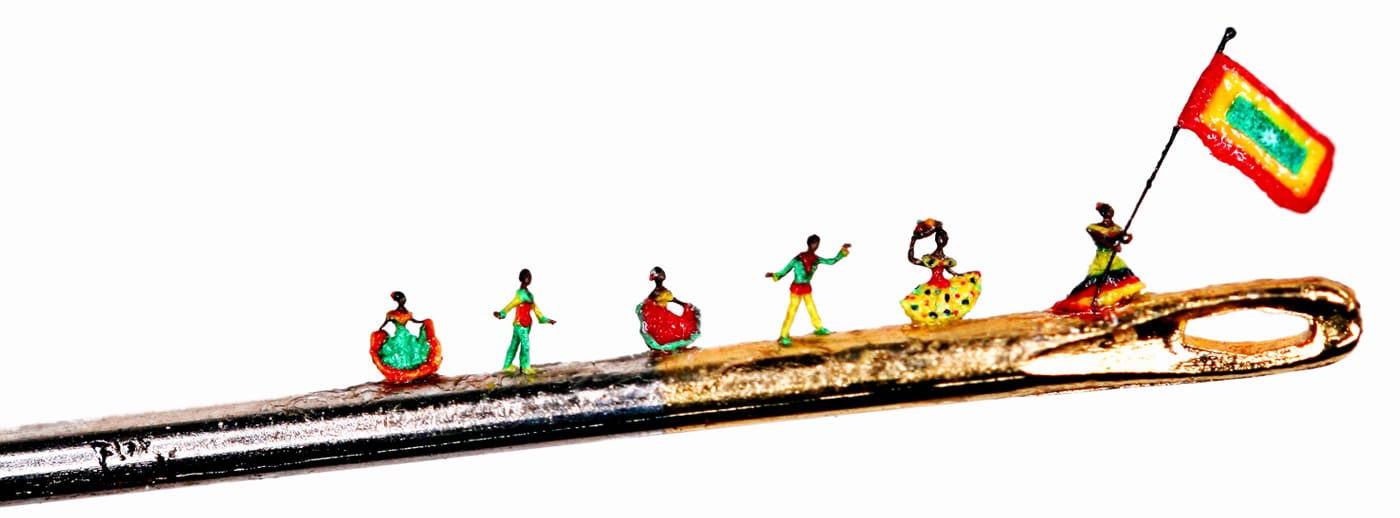
The jury remains out as to the number of angels that can dance on a pin, but self-taught artist Flor Carvajal is amassing some data regarding the number of itty bitty sculptures that can be installed on the tips of matchsticks, pencil points, and — thanks to a rude encounter with a local reporter — in the eye of a needle.
According to Tucson’s Mini Time Machine Museum of Miniatures, where her work is on display through June, The Vanguardia Liberal was considering running an interview in conjunction with an exhibit of her Christmas-themed miniatures. When she wouldn’t go on record as to whether any of the itty-bitty nativity scenes she’d been crafting for over a decade could be described as the world’s smallest, the reporter hung up on her.
Rather than stew, she immediately started experimenting, switching from Styrofoam to synthetic resin in the pursuit of increasingly miniscule manger scenes.
By sunrise, she’d managed to place the Holy Family atop a lentil, a grain of rice, the head of a nail, and the head of a pin.
These days, most of her micro-miniature sculptures require between 2 and 14 days of work, though she has been laboring on a model of Apollo 11 for over a year, using only a magnifying glass and a needle, which doubles as brush and carving tool.
In a virtual artist’s chat last month, she emphasizesthata calm mind, steady hands, and breath control are important things to bring to her workbench.
Open windows can lead to natural disaster. The odds of recovering a work-in-progress that’s been knocked to the floor are close to nil, when said piece is rendered in 1/4” scale or smaller.
Religious themes provide ongoing inspiration — a recent achievement is a 26 x 20 millimeter recreation of Leonardo da Vinci’s Last Supper — but she’s also drawn to subjects relating to her native Columbia, like Goranchacha, the son the Muisca Civilization’s Sun God, and Juan Valdez, the fictional representative of the national coffee growers federation.
See more of Flor Carvajal’s micro-miniatures on her Instagram.
We know you’re Zoomed out, but might you make an exception for the pre-recorded drawing and writing session above with legendary cartoonist and illustrator Lynda Barry?
Under the auspices of Graphic Medicine’s participatory online series, Drawing Together, the notoriously playful Barry led participants through a series of exercises from her book, Making Comics, and seemed genuinely pleased to be back in teaching mode. (All of her in-person classes at the University of Wisconsin have been cancelled until further notice due to the Covid-19 pandemic, as has her usual summer stint at the Omega Institute.)
Barry endeavored to loosen her students up right away, brandishing toys and dancing to an amazing playlist in a friend’s borrowed attic, confiding that the wifi situation here was far superior to that in her old farmhouse.
Teacher divided the large group in half by birthdays, as a way to organize viewing each other’s work after each timed exercise.
This couldn’t quite replicate the experience of the live classroom, where students have the opportunity to handle each other’s work, and more time to take it in, but still fun to see the incredible diversity—and in the case of closed-eye exercises—thrilling similarities on display.
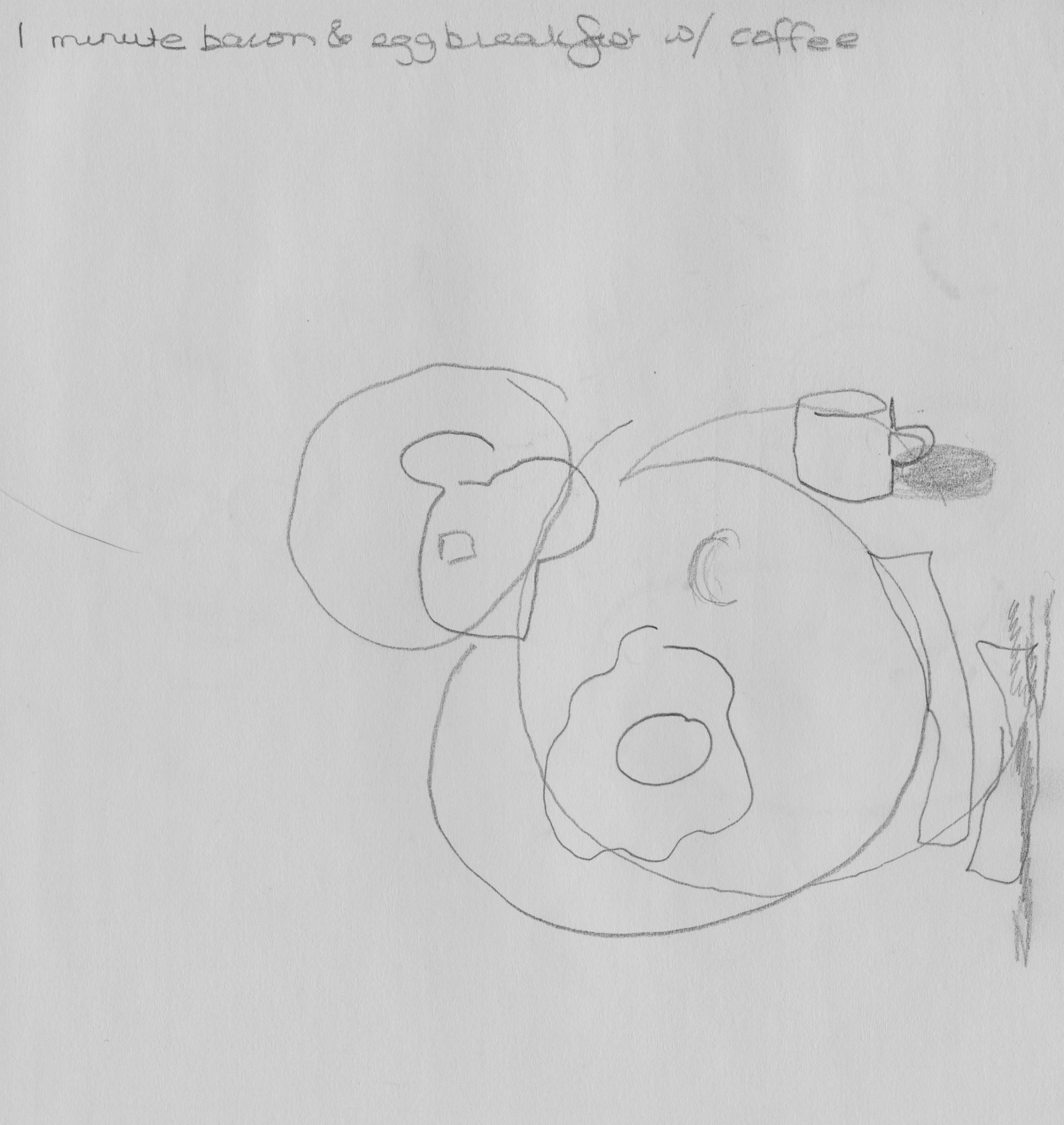
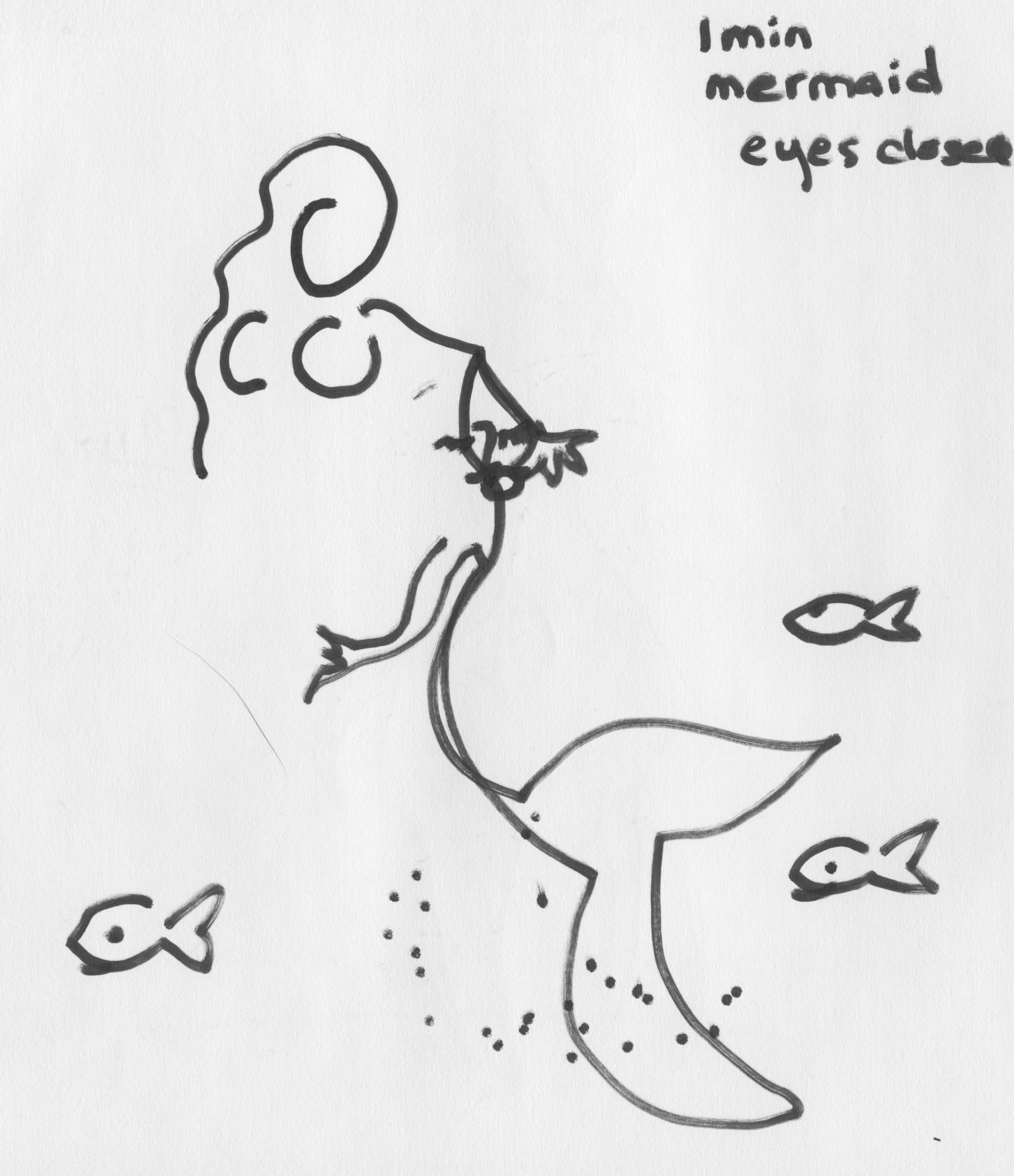
Barry’s delight extended beyond the confines of the page, imitating the way some students beam like swaying sunflowers throughout the 60-second closed eye sessions, while others knit their brows, lower their chins and power through.
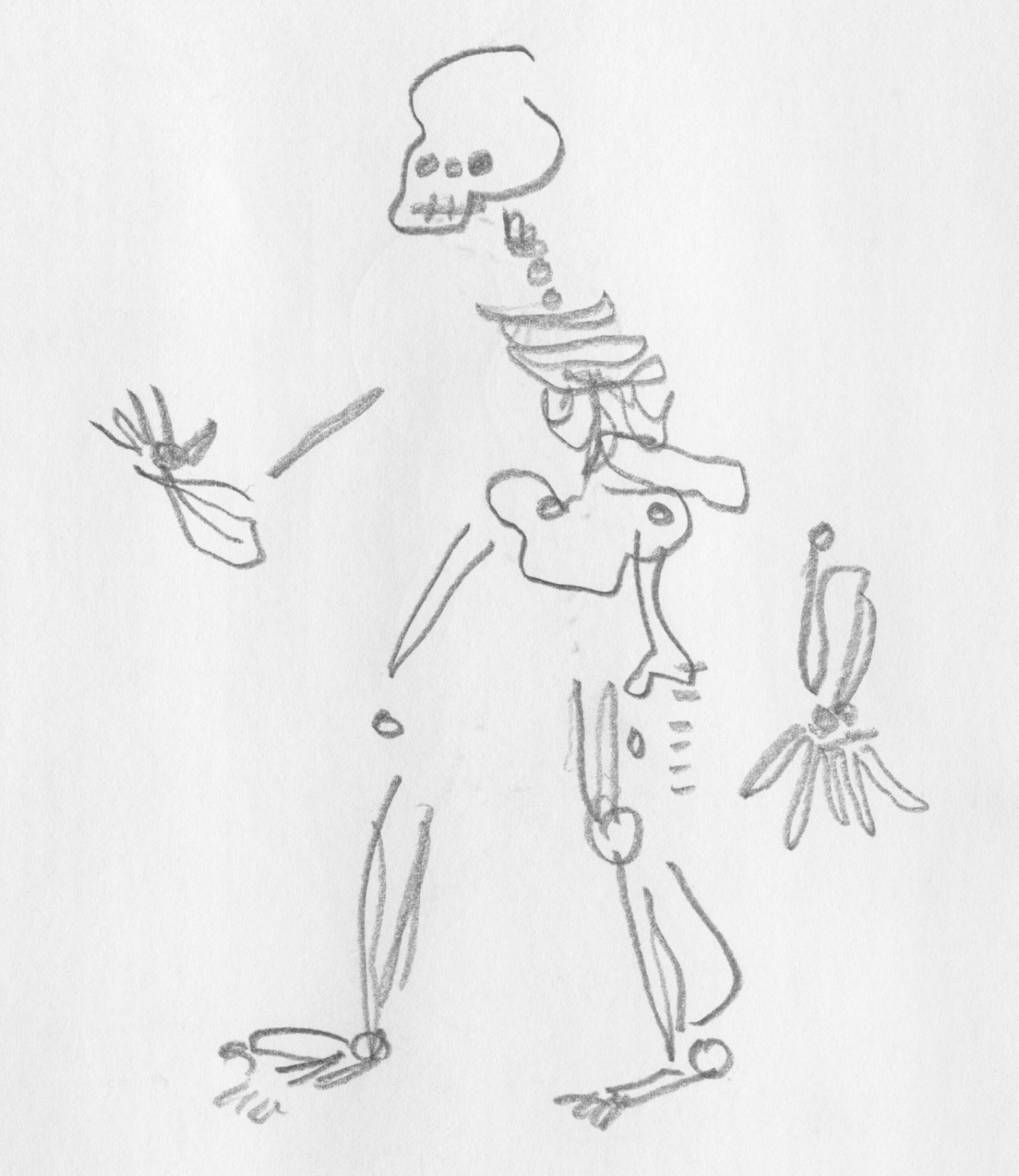
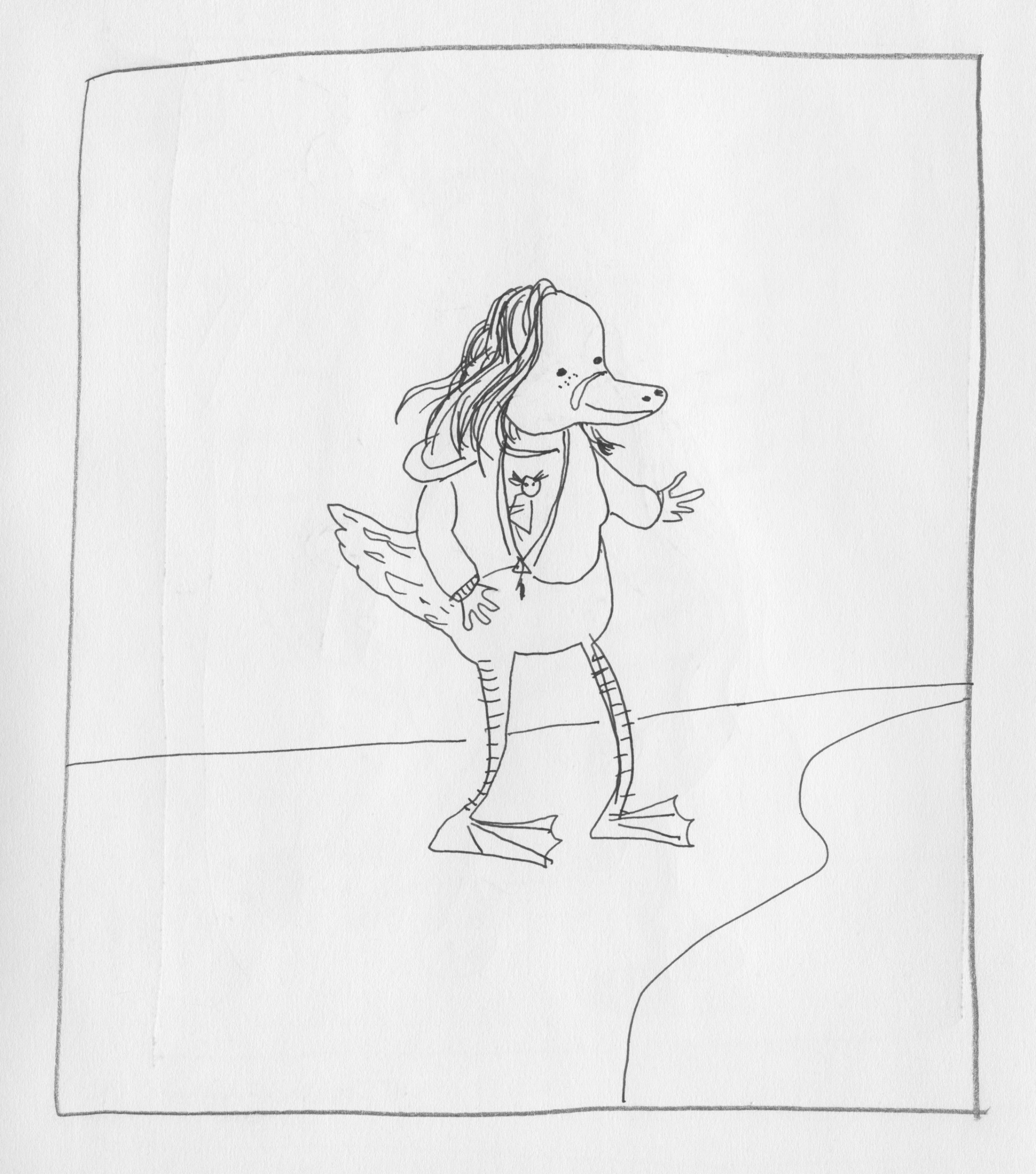
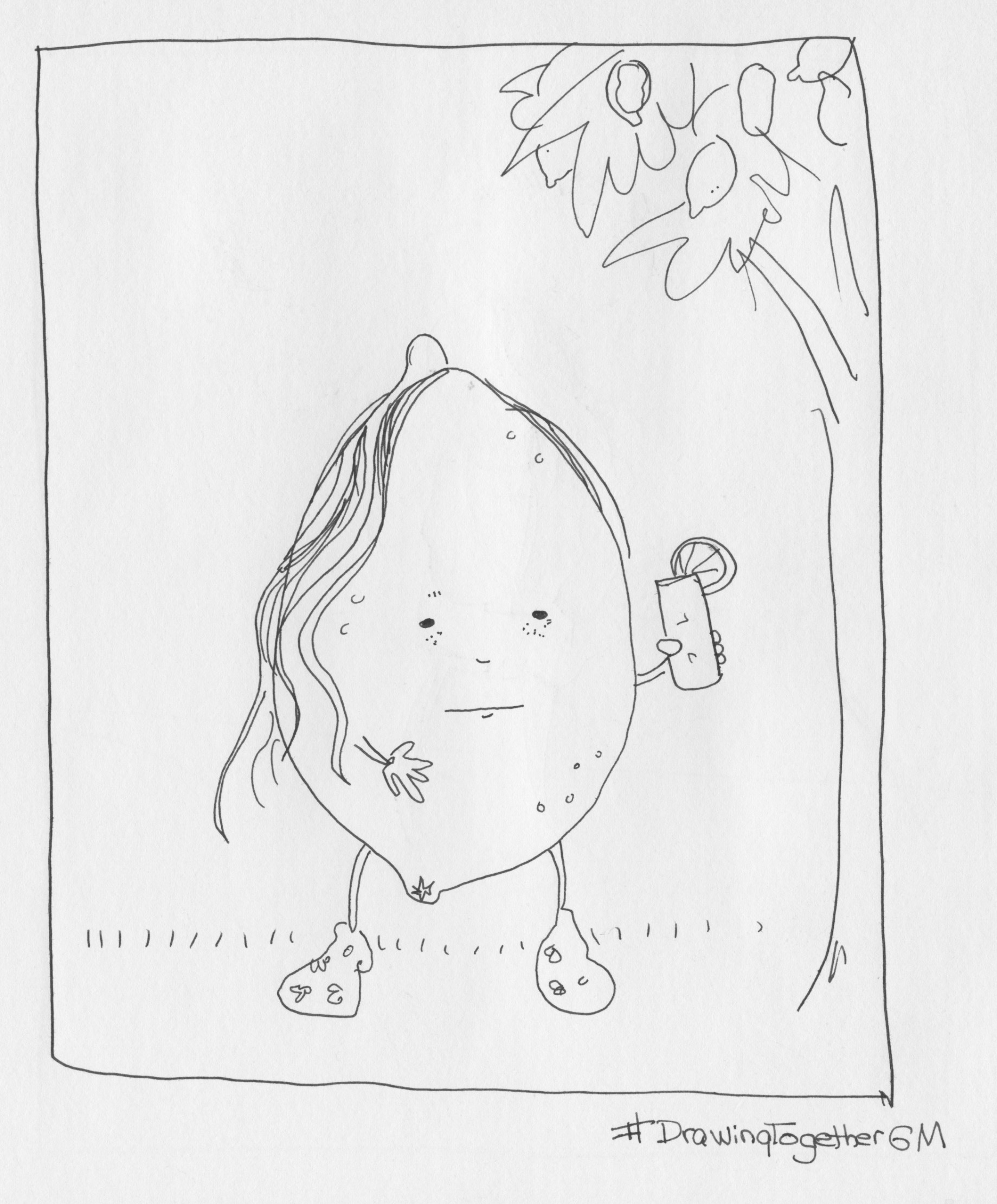
A series of self-portraits followed, with prompts designed to tap into the sort of imaginative powers that frequently seep away in adolescence—draw yourself as an animal, an astronaut, a member of a marching band, any fruit that’s not a banana…
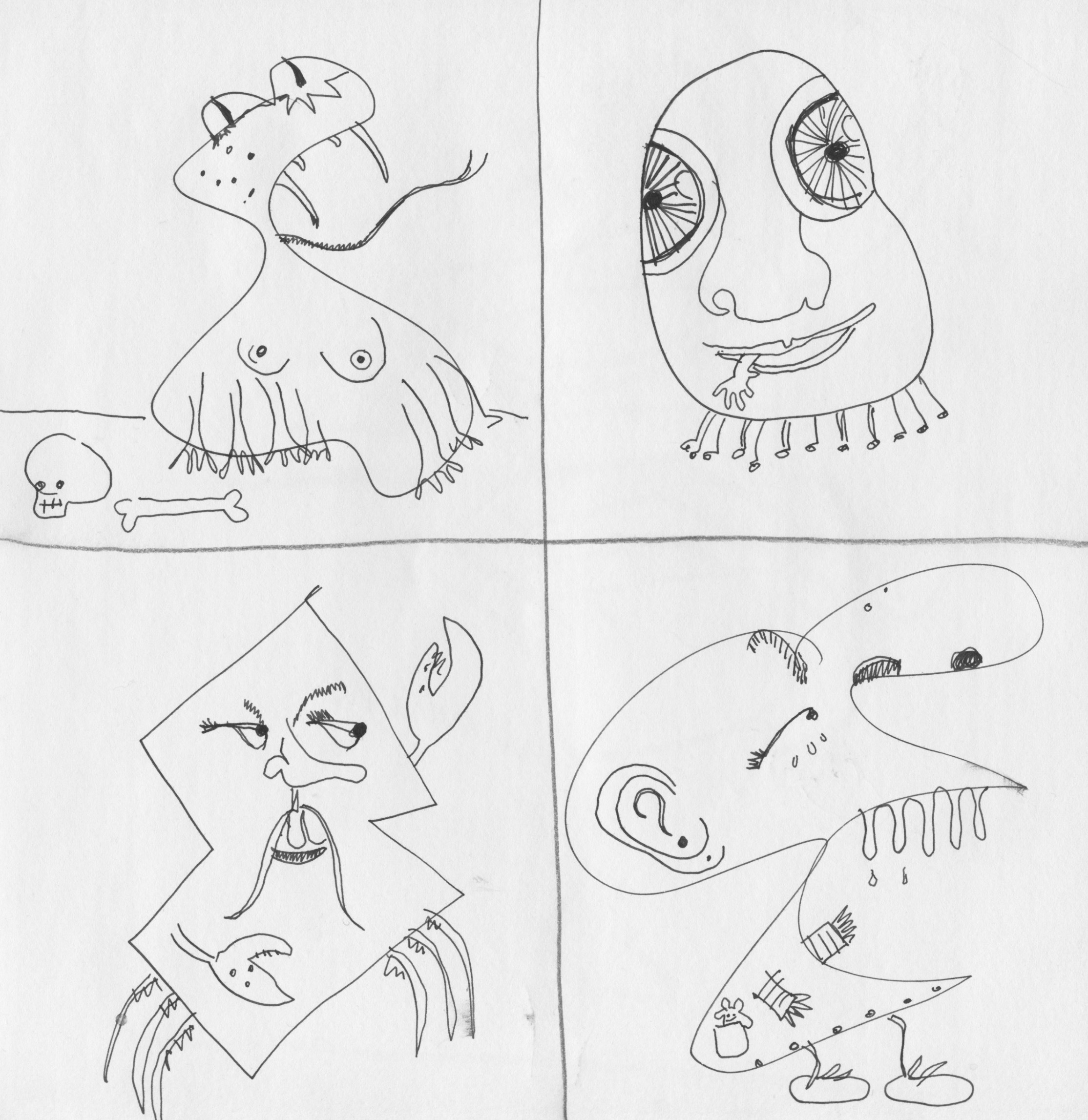
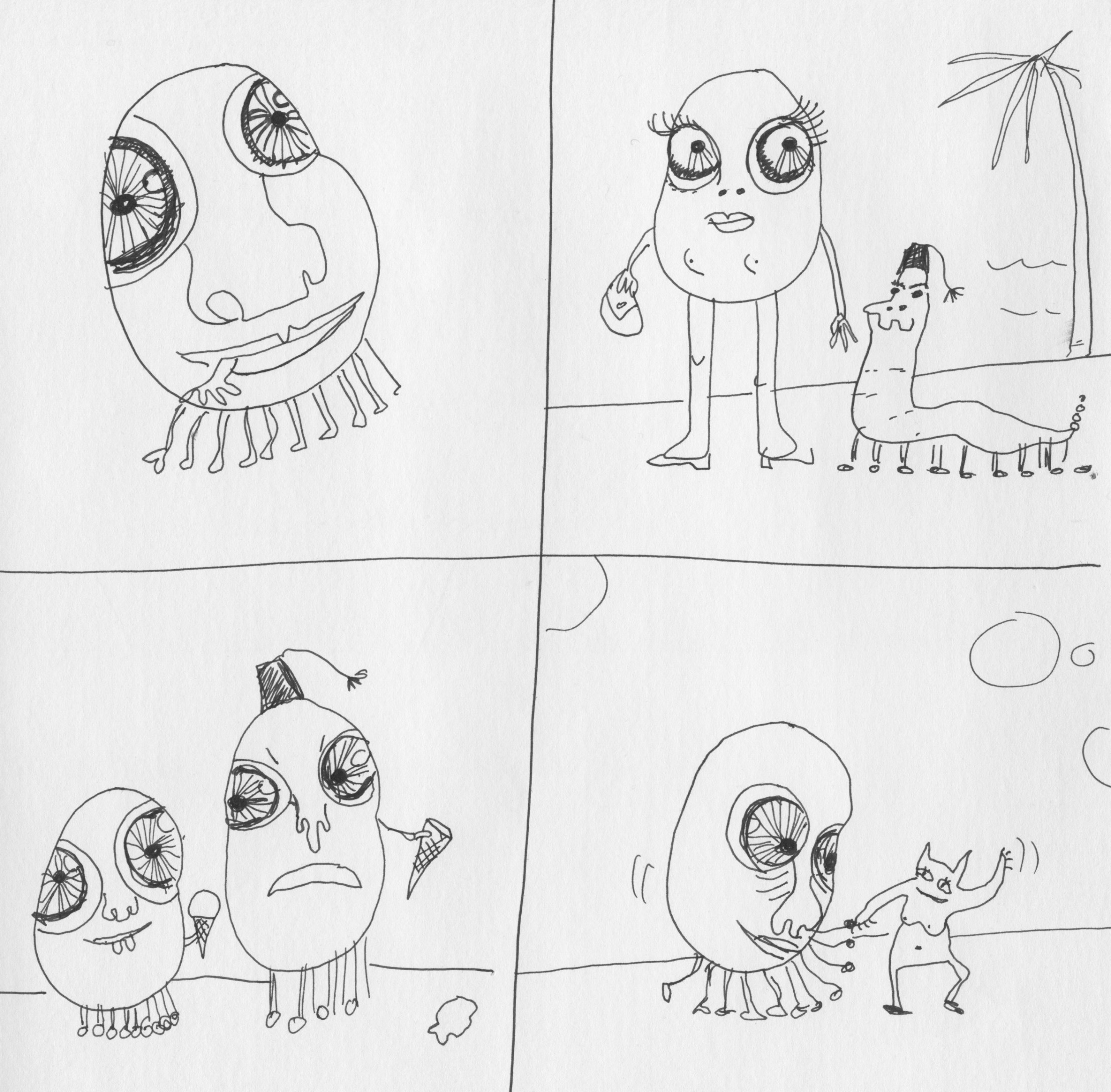
Longer exercises involved turning random squiggles into monsters, with an extra minute granted after the timer went off to add whatever missing things the artist felt each drawing needed, then choosing one of those monsters to star in a family album of sorts.
Barry, who has, over the course of her career, filled a number of panels with hilariously out-of-touch teachers making life a hell for child characters, is audibly appreciative of her students’ efforts, frequently congratulating them for bringing something into the world that didn’t exist a few minutes prior:
This is the thing about comics! They come intact, they come all together and the most important thing you need to do is just make time to draw them, the uninterrupted time, even if it’s just 2 minutes.
Truth!
The final exercise of the day drew on some of the writing techniques Barry featured in Syllabus, with participants, quickly jotting down memories after a prompt, then choosing one to explore more deeply, with special attention devoted to sensory recall.
To play along from home after the fact, you’ll need a couple of hours, ten or so sheets of paper, a pencil or pen (Barry favors black felt tips), and your “original digital devices” (hint: they’re attached to the ends of your arms).
Ayun Halliday is an author, illustrator, theater maker and Chief Primatologist of the East Village Inky zine. She most recently appeared as a French Canadian bear who travels to New York City in search of food and meaning in Greg Kotis’ short film, L’Ourse. Follow her @AyunHalliday.
Was he gay? Asexual? A virgin with a propensity for massive crushes on unattainable women, who engaged prostitutes solely for conversation?
No one can say for sure.
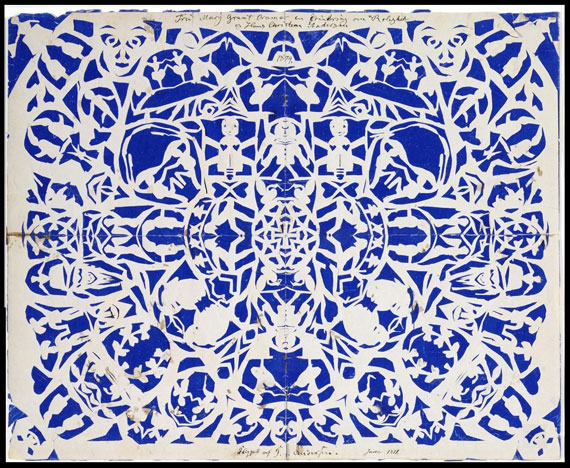
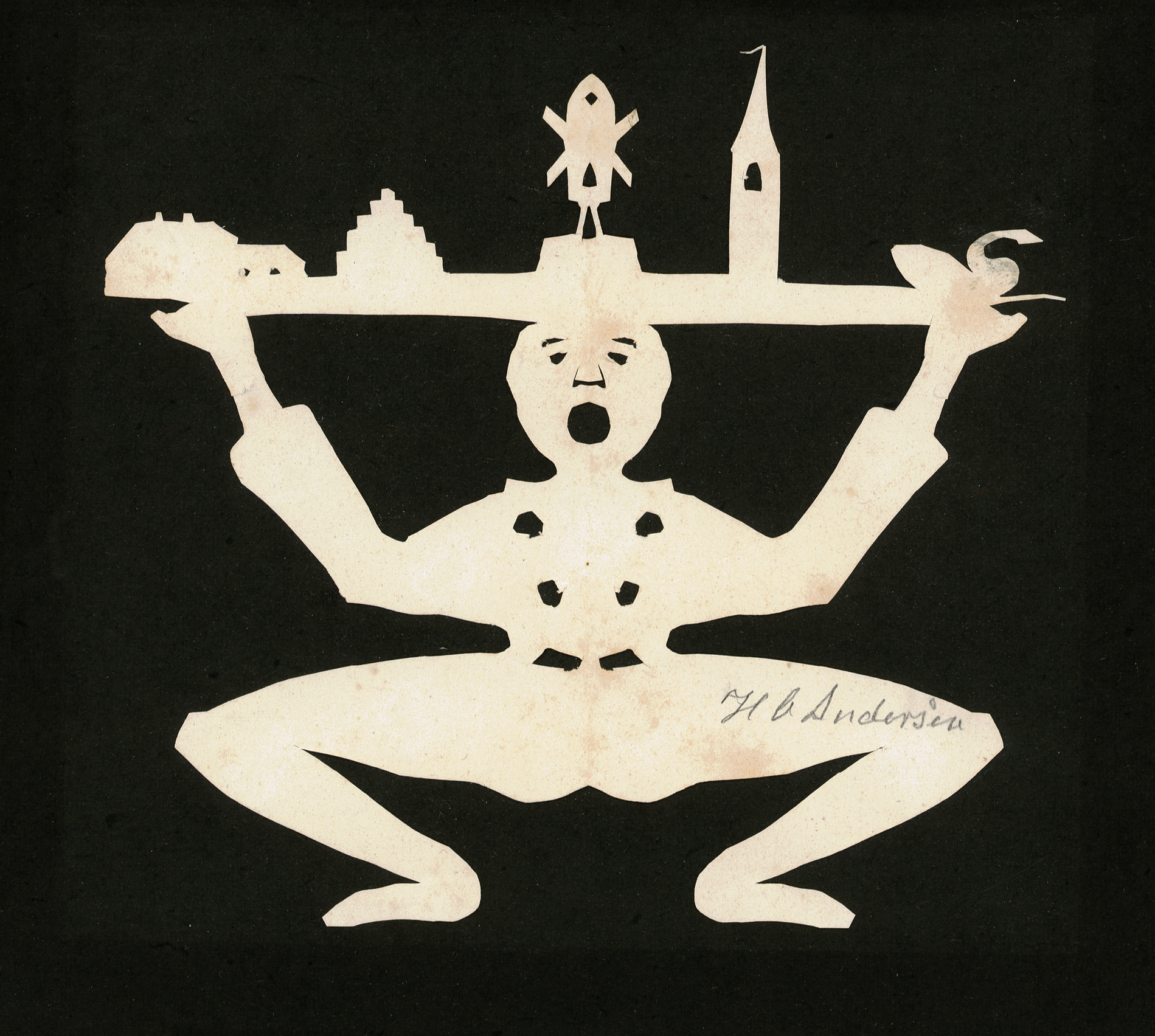
What we know definitively is that he was a jolly and talented paper cutter.
He enchanted party guests of all ages with improvised stories as he snipped away, unfolding the sheet at tale’s end, a souvenir for some lucky young listener.
“You can imagine how many of them must have got torn or creased,” says art historian Detlef Klein, who co-curated the 2018 exhibition Hans Christian Andersen, Poet with Pen and Scissors. “You could often bend the figures a little, blow at them and then move them across the tabletop.”
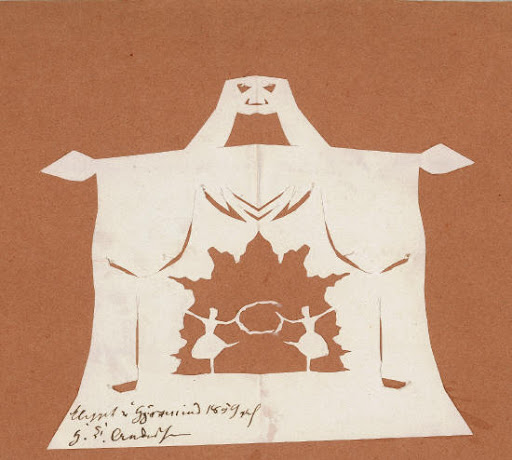
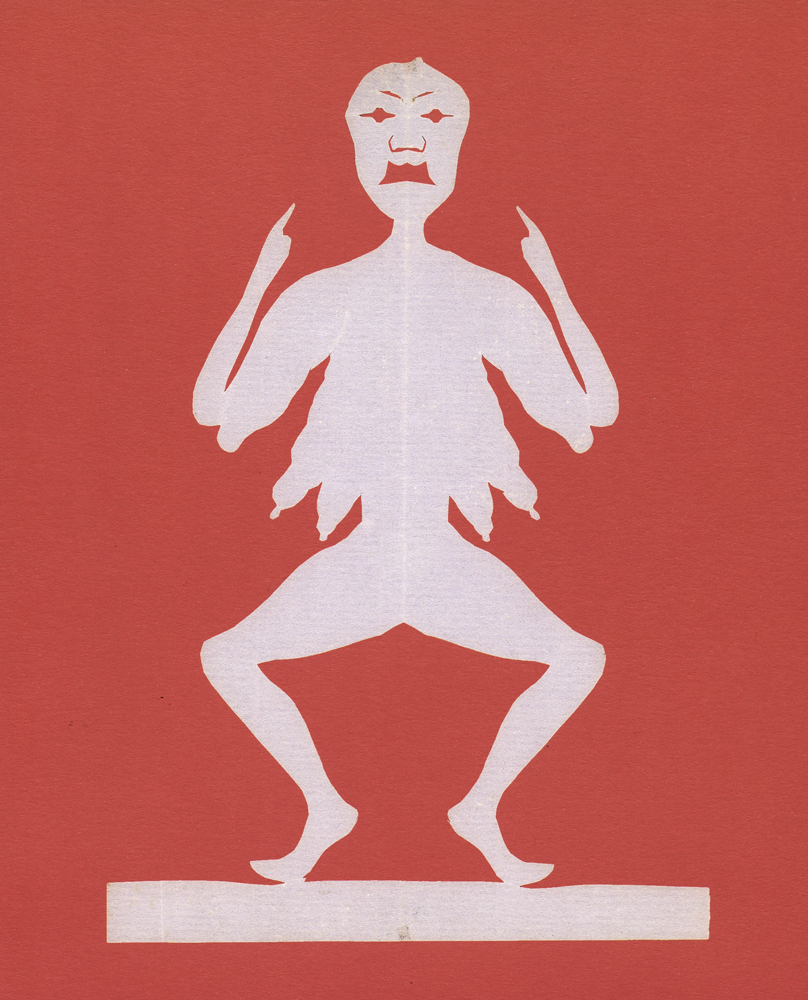
Pierrots, dancers, and swans were frequent subjects. Spraddle-legged creature’s bellies served as proscenium theaters. Even the simplest feature some tricky, spindly bits—tightropes, umbrellas, delicate shoes.…
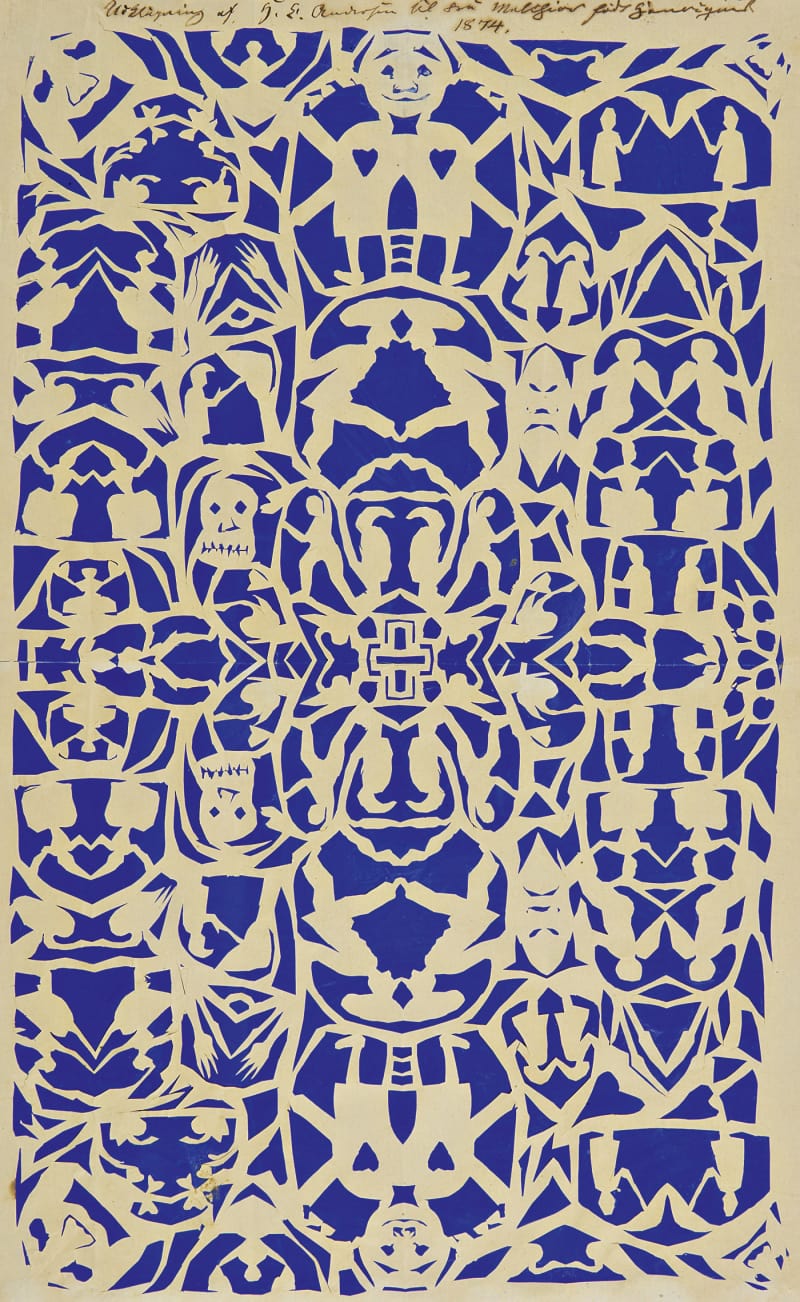
The most intricate pieces, like Fantasy Cutting for Dorothea Melchior below, were thoughtful homemade presents for close friends. (The Melchiors hosted Andersen’s 70th birthday party and he died during an extended visit to their country home.)
The cuttings bring fairy tales to mind, but they are not specific to the published work of Andersen. No Thumbelina. No Ugly Duckling. Not a mermaid in sight.
As Moy McCrory, senior lecturer in creative writing at the University of Derby, writes:
Andersen knew that his written work would outlast him: he was famous and successful, as were his tales. Yet he continued to work in these transient materials, their cheapness and availability making them of no value apart from their appeal to sentiment…Why work in a form that ought to have left no traces? I suggest that this showed how Andersen reacted to his fame, and to his own sense of being forever on the margins of the lived life. He moved amongst the educated and the famous, was friendly with Dickens, was patronized by nobles, but was outside those circles. His education was gained at some pains to himself, years after the usual dates for these activities (he would not even pass nowadays as a “mature student”, since his completion of elementary school only took place when he was a young adult). He was always placed outside the normal bounds of the society he kept.
Readers, we challenge you to play Pygmalion and release a fairy tale based on the images below.
All images, with the exception of The Royal Library Copenhagen’s The Botanist, directly above, are used with the permission of Odense City Museums, in accordance with a Creative Commons License.
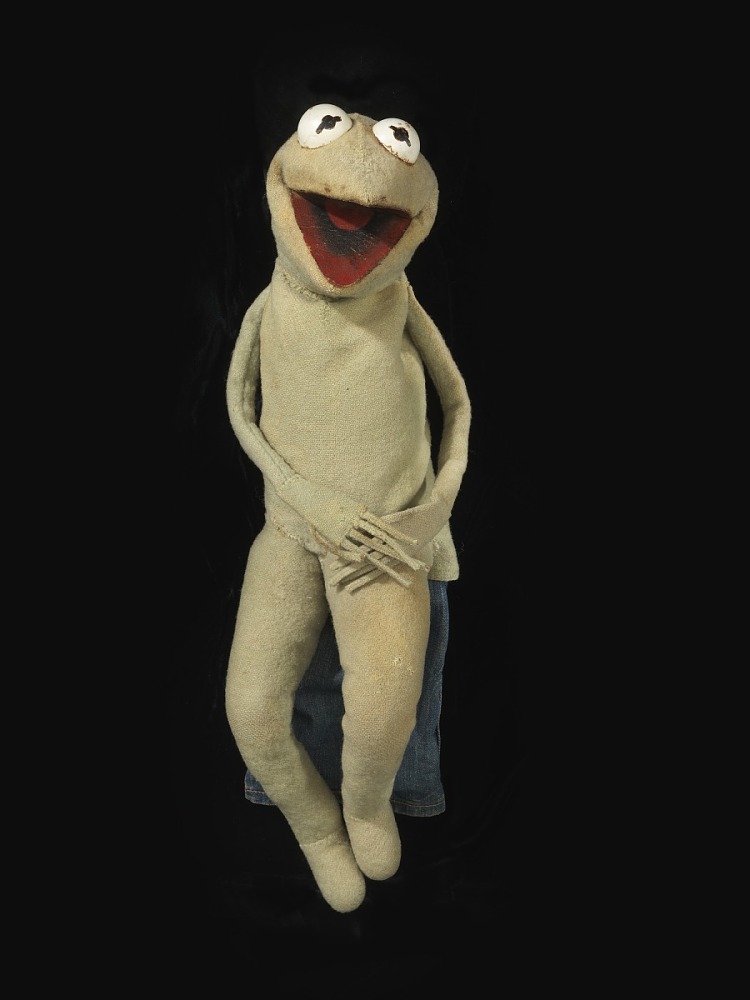
Long before “green” became synonymous with eco-friendly products and production, an 18-year-old Jim Henson created a puppet who would go on to become the color’s most celebrated face from his mother’s cast-off green felt coat and a single ping pong ball.
Kermit debuted in black and white in the spring of 1955 as an ensemble member of Sam and Friends, a live television show comprised of five-minute episodes that the talented Henson had been tapped to write and perform, following some earlier success as a teen puppeteer.
Airing on the Washington DC-area NBC affiliate between the evening news and The Tonight Show, Sam and Friends was an immediate hit with viewers, even if they ranked Kermit, originally more lizard than frog, fourth in terms of popularity. (Top spot went to a skull puppet named Yorick.)
Watching the surviving clips of Sam and Friends, it’s easy to catch glimpses of where both Kermit and Henson were headed.
While Henson voiced Sam and all of his puppet friends, Kermit wound up sounding the closest to Henson himself.
Kermit’s signature face-crumpling reactions were by design. Whereas other puppets of the period, like the titular Sam, had stiff heads with the occasional moving jaw, Kermit’s was as soft as a footless sock, allowing for far greater expressiveness.
Henson honed Kermit’s expressions by placing live feed monitors on the floor so he and his puppeteer bride-to-be Jane, could see the puppets from the audience perspective.
Unlike previously televised puppet performances, which preserved the existing prosceniums of the theaters to which the players had always been confined, Henson considered the TV set frame enough. Liberating the puppets thusly gave more of a sketch comedy feel to the proceedings, something that would carry over to Sesame Street and later, The Muppet Show.
By the 12th episode, Kermit has found a niche as wry straight man for wackier characters like jazz aficionado Harry the Hipster who introduced an element of musical notation to the animated letters and numbers that would become a Sesame Street staple.
We're hoping to rely on loyal readers, rather than erratic ads. Please click the Donate button and support Open Culture. You can use Paypal, Venmo, Patreon, even Crypto! We thank you!
Open Culture scours the web for the best educational media. We find the free courses and audio books you need, the language lessons & educational videos you want, and plenty of enlightenment in between.





.jpg)