The Ancient Egyptians Wore Fashionable Striped Socks, New Pioneering Imaging Technology Imaging Reveals

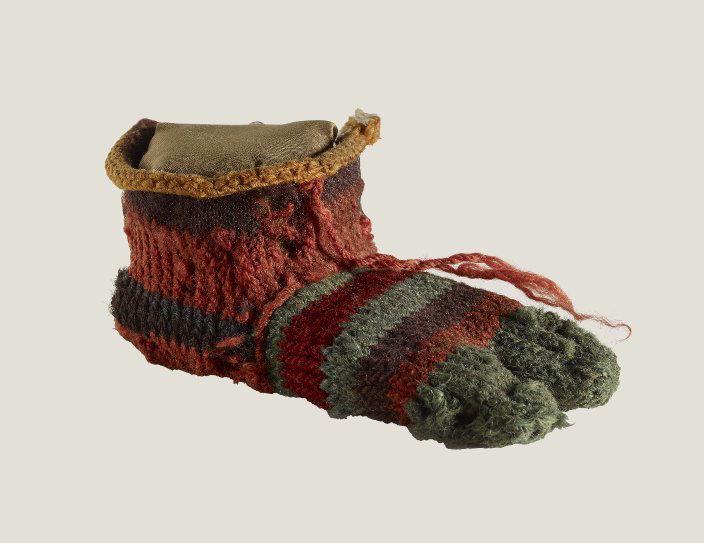
If you grew up in cer­tain decades of the 20th cen­tu­ry, you almost cer­tain­ly spent your child­hood wear­ing striped socks, and you may even have returned to the prac­tice in recent years as they’ve regained their sar­to­r­i­al respectabil­i­ty. But new research has revealed that this sort of mul­ti­col­ored hosiery has a more dis­tant his­tor­i­cal prece­dent than we may imag­ine, one going all the way back to ancient Egypt. The sub­ject of that research, the small sock pic­tured above, evi­dences the fash­ion­abil­i­ty of striped socks among the Egypt­ian youth of more than 1700 years ago, though its own stripes have only recent­ly been revealed by the most mod­ern imag­ing tech­nol­o­gy.

“Sci­en­tists at the British Muse­um have devel­oped pio­neer­ing imag­ing to dis­cov­er how enter­pris­ing Egyp­tians used dyes on a child’s sock, recov­ered from a rub­bish dump in ancient Anti­noupo­lis in Roman Egypt, and dat­ing from 300AD,” writes The Guardian’s Car­o­line Davies. “New mul­ti­spec­tral imag­ing can estab­lish which dyes were used – mad­der (red), woad (blue) and weld (yel­low) – but also how peo­ple of the late antiq­ui­ty peri­od used dou­ble and sequen­tial dying and weav­ing, and twist­ing fibers to cre­ate myr­i­ad col­ors from their scarce resources.”

This and oth­er sim­i­lar­ly advanced research, such as the use of ultra­vi­o­let light and infrared and x‑ray spec­troscopy that found the bright col­ors of ancient Greek sculp­ture, no doubt has us all rethink­ing the broad­ly mono­chro­mat­ic fash­ion in which we’ve long envi­sioned the ancient world.

We may also have to start imag­in­ing it a lit­tle less ele­gant­ly than we have been. “The ancient Egyp­tians employed a sin­gle-nee­dle loop­ing tech­nique, often referred to as nål­bind­ning, to cre­ate their socks,” writes Smith­son­ian’s Kather­ine J. Wu. “Notably, the approach could be used to sep­a­rate the big toe and four oth­er toes in the sock — which just may have giv­en life to the ever-con­tro­ver­sial socks-and-san­dals trend.” It brings to mind the archae­o­log­i­cal research that came out a few years ago sug­gest­ing that the Romans in Britain two mil­len­nia ago may have worn socks with their san­dals as well. That infor­ma­tion has made it to the Wikipedia page specif­i­cal­ly ded­i­cat­ed to socks and san­dals; an enter­pris­ing read­er might have a look at the British Muse­um sci­en­tists’ paper, “A mul­ti­spec­tral imag­ing approach inte­grat­ed into the study of Late Antique tex­tiles from Egypt,” and add in a bit about the ancient wear­ing of striped socks with san­dals as well.

via Smith­son­ian

Relat­ed Con­tent:

How Did the Egyp­tians Make Mum­mies? An Ani­mat­ed Intro­duc­tion to the Ancient Art of Mum­mi­fi­ca­tion

How the Egypt­ian Pyra­mids Were Built: A New The­o­ry in 3D Ani­ma­tion

Try the Old­est Known Recipe For Tooth­paste: From Ancient Egypt, Cir­ca the 4th Cen­tu­ry BC

The Turin Erot­ic Papyrus: The Old­est Known Depic­tion of Human Sex­u­al­i­ty (Cir­ca 1150 B.C.E.)

The Met Dig­i­tal­ly Restores the Col­ors of an Ancient Egypt­ian Tem­ple, Using Pro­jec­tion Map­ping Tech­nol­o­gy

Based in Seoul, Col­in Mar­shall writes and broad­casts on cities, lan­guage, and cul­ture. His projects include the book The State­less City: a Walk through 21st-Cen­tu­ry Los Ange­les and the video series The City in Cin­e­ma. Fol­low him on Twit­ter at @colinmarshall or on Face­book.

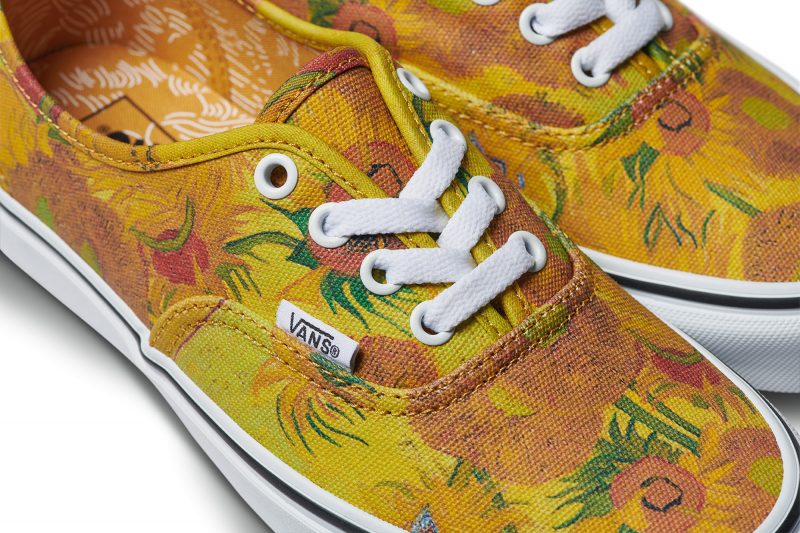
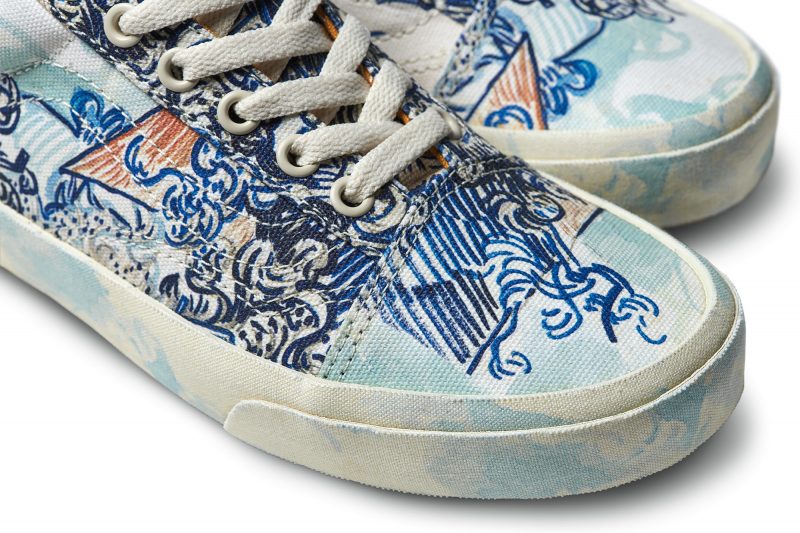
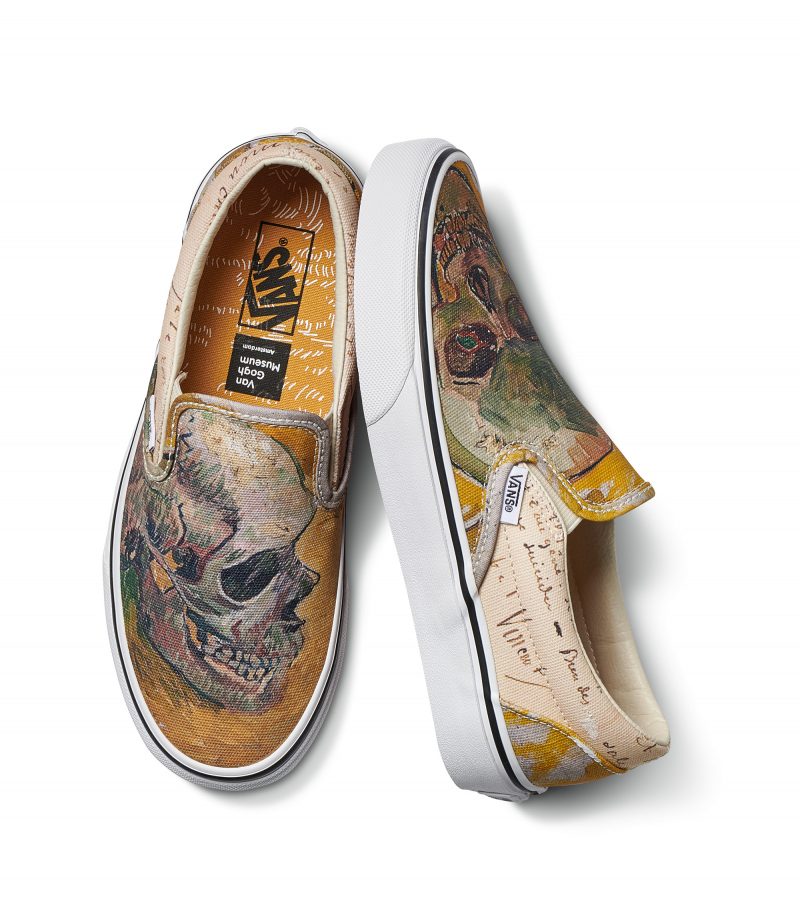
Van Gogh’s Art Now Adorns Vans Shoes

While muse­ums remain free for the most part in Europe and still so pop­u­lar that they are loved bet­ter than lux­u­ry brands (accord­ing to this one arti­cle), fund­ing is not what it used to be. As you might have seen with our posts on Hierony­mus Bosch on (Dr. Marten’s) Boots, wear­able clas­sic art is kind of a thing now.

The Van Gogh Muse­um in Ams­ter­dam announced a series of lim­it­ed-edi­tion Vans (Van Gogh, Vans shoes, get it?!) fea­tur­ing pat­terns based on his paint­ings: “Skull” (1887), “Almond Blos­som” (1890), “Sun­flow­ers” (1889) and van Gogh’s “Self-Por­trait as a Painter” (1887–1888). There’s even a shoe that uses writ­ing from one of his let­ters, includ­ing stamp and address, as a pat­tern.

Would ol’ Vin­cent been hap­py with this, see­ing the pub­lic want to wear his work? He was cer­tain­ly hap­py in that Doc­tor Who episode where he trav­eled for­ward in time to know he hadn’t suf­fered in vain. But would he have liked to see his art wrapped around fans’ bod­ies?

Because the Vans line doesn’t stop at shoes, it fea­tures base­ball hats, t‑shirts, hood­ies, and back­packs. There is undoubt­ed­ly a lot of detail put into them. These aren’t quick knock offs made for a tourist stall. The shoe inte­ri­ors con­tain addi­tion designs, and each prod­uct comes with infor­ma­tion about the work.

And it’s all for a good cause: a por­tion of each sale goes back to the Van Gogh Muse­um to help with fund­ing and preser­va­tion.

That’s a sight bet­ter than 2017’s Van Gogh bags designed by artist/cultural appro­pri­a­tor Jeff Koons for Louis Vuit­ton, for which he slapped some mas­ter­pieces on a $5,000 hand­bag and hung “VAN GOGH” in blocky fake-gold let­ters on the front. (If it makes you feel bet­ter, Louis Vuit­ton burns all its left­over prod­uct lest it fall into the hands of the poors.)

The Vans Van Gogh col­lec­tion store opens August 3, so we can’t even tell you how much these shoes might be. But if the Doc Marten’s are any­thing to go by, they will sell out quick.

Cool way to help fund a muse­um, or just pure com­mod­i­fi­ca­tion? Let us know below.

via This is Colos­sal

Relat­ed con­tent:

Watch the Trail­er for a “Ful­ly Paint­ed” Van Gogh Film: Fea­tures 12 Oil Paint­ings Per Sec­ond by 100+ Painters

Mar­tin Scors­ese Plays Vin­cent Van Gogh in a Short, Sur­re­al Film by Aki­ra Kuro­sawa

Down­load Hun­dreds of Van Gogh Paint­ings, Sketch­es & Let­ters in High Res­o­lu­tion

Ted Mills is a free­lance writer on the arts who cur­rent­ly hosts the artist inter­view-based FunkZone Pod­cast and is the pro­duc­er of KCR­W’s Curi­ous Coast. You can also fol­low him on Twit­ter at @tedmills, read his oth­er arts writ­ing at tedmills.com and/or watch his films here.

Hear David Lynch Read from His New Memoir Room to Dream, and Browse His New Online T‑Shirt Store

We think of David Lynch as a film­mak­er, and right­ly so, but the direc­tor of Eraser­headBlue Vel­vet, and Mul­hol­land Dri­ve has long kept a more diverse cre­ative port­fo­lio. He began as a painter, study­ing at the Penn­syl­va­nia Acad­e­my of the Fine Arts, and has also tried his hand at pho­tog­ra­phymusic, and com­ic strips. More recent­ly, writes the AV Club’s Ran­dall Col­burn, “Lynch has also released his own line of cof­fee, col­lab­o­rat­ed on Twin Peaks-themed beer and skate­boards, and cre­at­ed his own fes­ti­val. His lat­est endeav­or? T‑shirts, which is wild because it’s hard to imag­ine the ever-dap­per film­mak­er ever wear­ing one.”

Per­haps a line of Lynch-approved tra­di­tion­al white shirts, made to be but­toned all the way up even with­out a tie, remains in devel­op­ment. But for now, fans choose from the 57 T‑shirts designs now avail­able at Stu­dio: David Lynch’s Ama­zon store. All suit­able for wear­ing to your local revival house, they include “Turkey Cheese Head,” “Cow­boy,” “Small Dog,”“Small Bark­ing Dog,“and “You Got­ta Be Kid­din’ Me.” What kind of life, now solid­ly into its eighth decade, has both enabled and dri­ven Lynch to make not just so many things, but so many Lynchi­an things? Per­haps we can find a few answers with­in the near­ly 600 pages of Room to Dream, Lynch’s new mem­oir.

“Fans who share Lynch’s plea­sure in mys­tery will approach this book anx­ious­ly, hop­ing that his secrets may some­how be both revealed and sus­tained,” writes the Wash­ing­ton Post’s Charles Arrow­smith of the book, an excerpt of which you can hear read by Lynch him­self above. (He begins by say­ing “I’m going to tell you a sto­ry about my grand­par­ents” and ends with the image of his young self vom­it­ing into a hel­met he’d brought to school for show-and-tell.) And those who fear that the con­ven­tion­al­i­ty of the mem­oir form might flat­ten out Lynch’s idio­syn­crasies can rest assured that “in telling his life sto­ry, Lynch demon­strates the same dis­re­gard for causal­i­ty and tonal con­sis­ten­cy that marks his films.”

Despite includ­ing not just Lynch’s per­spec­tive but the per­spec­tives of many oth­ers (“sur­pris­ing­ly can­did ex-wives, fam­i­ly mem­bers, actors, agents, musi­cians, and col­leagues in var­i­ous fields,” pro­claims the jack­et copy), “Room to Dream pulls off a neat trick in draw­ing back a cur­tain and reveal­ing rel­a­tive­ly lit­tle. Despite the book’s heft, there’s not much to expli­cate the mys­ter­ies of Lynch’s work. But then, for him, the mystery’s the thing. To explain would be to destroy. What we get instead is insight into his cre­ative process.” As ded­i­cat­ed Lynch enthu­si­asts under­stand, the cre­ative process, which through­out his career has led him not to answers but ever more strange­ly com­pelling ques­tions, is every­thing.

Note: When Room to Dream comes out on June 19th, you can down­load the audio­book ver­sion, which Lynch helps nar­rate, for free if you sign up for Audi­ble’s free tri­al pro­gram. We have details on that pro­gram here.

Relat­ed Con­tent:

The Paint­ings of Filmmaker/Visual Artist David Lynch

David Lynch’s Pho­tographs of Old Fac­to­ries

Dis­cov­er David Lynch’s Bizarre & Min­i­mal­ist Com­ic Strip, The Angri­est Dog in the World (1983–1992)

What Makes a David Lynch Film Lynchi­an: A Video Essay

Based in Seoul, Col­in Mar­shall writes and broad­casts on cities and cul­ture. His projects include the book The State­less City: a Walk through 21st-Cen­tu­ry Los Ange­les and the video series The City in Cin­e­ma. Fol­low him on Twit­ter at @colinmarshall or on Face­book.

How Dr. Martens’ Boots Are Made

In recent months, we’ve high­light­ed how Dr. Martens, the icon­ic boot mak­er, has tried to rein­vent itself by cre­at­ing more artis­ti­cal­ly inspired boots, some actu­al­ly adorn­ing the art­work of William Blake, Hierony­mus Bosch, and tra­di­tion­al Japan­ese artists. These aren’t your grand­fa­ther’s Doc Martens, to be sure.

But how­ev­er dif­fer­ent Docs may now look on the out­side, they haven’t changed much on the inside. Just watch the video above, which takes you on a tour of “Dr. Martens’ only UK fac­to­ry on Cobbs Lane in Wol­las­ton, Northamp­ton­shire.” The fac­to­ry “employs 50 work­ers that make about 100,000 pairs of boots per year,” all in the com­pa­ny’s tried and true way.…

If you would like to sup­port the mis­sion of Open Cul­ture, con­sid­er mak­ing a dona­tion to our site. It’s hard to rely 100% on ads, and your con­tri­bu­tions will help us con­tin­ue pro­vid­ing the best free cul­tur­al and edu­ca­tion­al mate­ri­als to learn­ers every­where. You can con­tribute through Pay­Pal, Patre­on, and Ven­mo (@openculture). Thanks!

Relat­ed Con­tent:

Doc Martens Now Come Adorned with William Blake’s Art, Thanks to a Part­ner­ship with Tate Britain

Doc Martens Boots Adorned with Hierony­mus Bosch’s “Gar­den of Earth­ly Delights”

Doc Martens Boots Now Come Adorned with Tra­di­tion­al Japan­ese Art


by | Permalink | Make a Comment ( 2 ) |

How Women Got Dressed in the 14th & 18th Centuries: Watch the Very Painstaking Process Get Cinematically Recreated

We live in an age of con­ve­nience, and one get­ting more con­ve­nient all the time. Few com­par­isons between past and present under­score that quite so much as the morn­ing rou­tine. Hot and cold run­ning water on demand, prop­er­ly appre­ci­at­ed, can seem mirac­u­lous enough, let alone more recent devel­op­ments like the avail­abil­i­ty of high-qual­i­ty cof­fee on every city block. But con­sid­er cloth­ing, the change in whose out­ward appear­ance over the past 700 years or so goes along with an equal­ly dra­mat­ic change in use. We still wear clothes for all the same basic rea­sons we did back then, of course, but what it takes to wear them has dimin­ished to com­par­a­tive effort­less­ness.

These videos, one on get­ting dressed in the 14th cen­tu­ry and one on get­ting dressed in the 18th cen­tu­ry, offer detailed, nar­rat­ed, and cin­e­mat­ic looks at what the process once entailed — or at least what the process entailed for Eng­lish women of a cer­tain class.

The aver­age man in those peri­ods, too, had to deal with much more has­sle putting on his clothes in the morn­ing that he does today, but the female case, with its shift, stays, pet­ti­coats, pock­ets, roll, stock­ings and garters, gown and stom­ach­er, apron, and more besides, required not just a great deal of dis­ci­pline and con­cen­tra­tion on the part of the dress­er but assis­tance from anoth­er pair of hands as well.

You can find more such videos on the fin­er points of wom­en’s dress­ing rou­tines of yore, includ­ing fur­ther expla­na­tions of such ele­ments as pock­ets and busks, on this playlist. The social, tech­no­log­i­cal, and indus­tri­al sto­ries behind why it has all become so much less com­pli­cat­ed over the cen­turies has pro­vid­ed, and will con­tin­ue to pro­vide, the dri­ving ques­tions for many an aca­d­e­m­ic the­sis. But despite the enor­mous reduc­tion in the labor-inten­sive­ness of putting them on, clothes have not, of course, become a per­fect­ly sim­ple mat­ter for we dressers of the com­par­a­tive­ly ultra-casu­al 21st cen­tu­ry. Still, after watch­ing all it took to get dressed those hun­dreds and hun­dreds of years ago, many of us — male or female — might arrive at the thought that we could stand to put just a lit­tle more effort into the job.

via Boing Boing

Relat­ed Con­tent:

What’s It Like to Fight in 15th Cen­tu­ry Armor?: A Sur­pris­ing Demon­stra­tion

An Online Trove of His­toric Sewing Pat­terns & Cos­tumes

The Dress­er: The Con­trap­tion That Makes Get­ting Dressed an Adven­ture

1930s Fash­ion Design­ers Pre­dict How Peo­ple Would Dress in the Year 2000

Based in Seoul, Col­in Mar­shall writes and broad­casts on cities and cul­ture. His projects include the book The State­less City: a Walk through 21st-Cen­tu­ry Los Ange­les and the video series The City in Cin­e­ma. Fol­low him on Twit­ter at @colinmarshall or on Face­book.

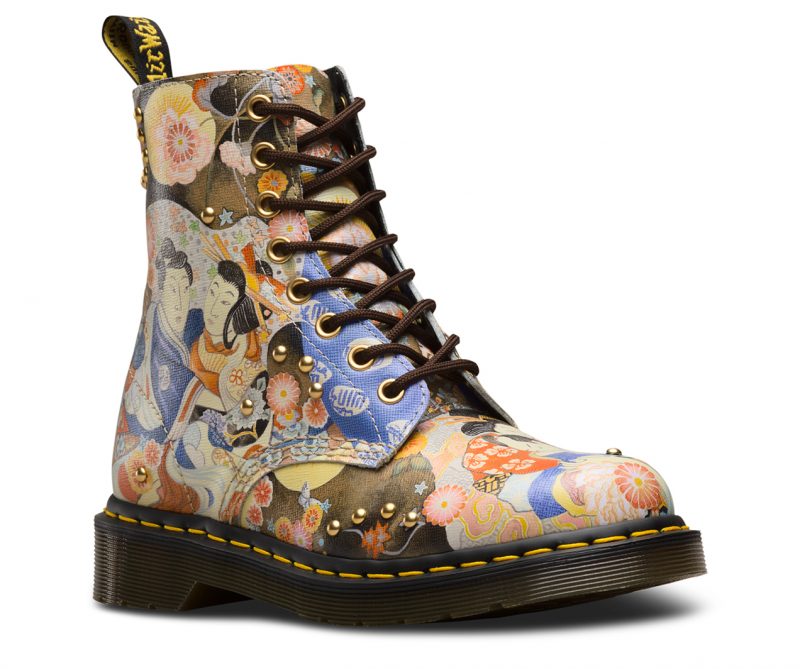
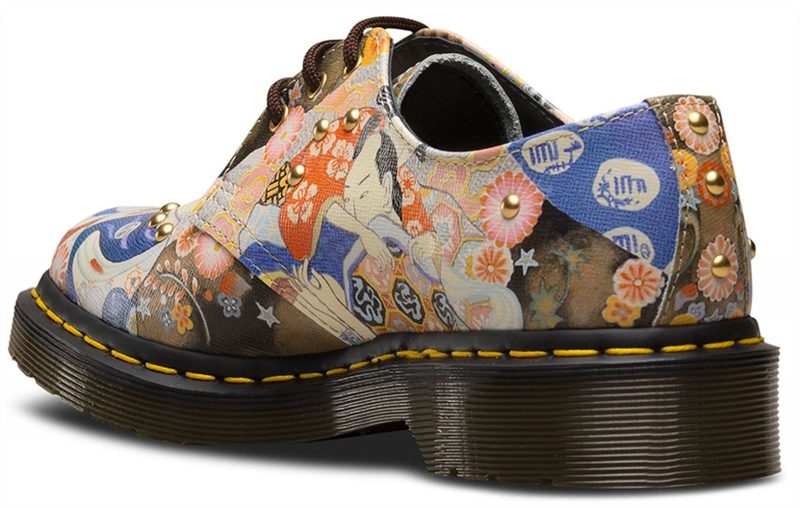
Doc Martens Boots Now Come Adorned with Traditional Japanese Art

In wake of a recent prom cheongsam dust up, it remains to be seen whether Doc Martens’ spe­cial edi­tion East­ern Art shoes and boots will be regard­ed as a mis­step.

Dr. Martens’ Artist Series paid trib­ute to West­ern heavy hit­ters like Hierony­mus BoschWilliam Hog­a­rth, JMW Turn­er, and William Blake.

Those eye-catch­ing kicks may have inspired more than a few fash­ion-con­scious punks to delve into art his­to­ry, but what will consumers—and more impor­tant­ly activists on the alert for cul­tur­al appropriation—make of the East­ern Art line?

The com­pa­ny web­site describes the inau­gur­al design as:

a new homage to tra­di­tion­al Japan­ese art with a fresh, con­tem­po­rary … spin. Fea­tur­ing detailed hand-drawn paint­ings, the art is dig­i­tal­ly print­ed on a tex­tured leather designed to emu­late tra­di­tion­al Japan­ese parch­ment, while gold-tone eye­lets and stud­ding com­plete the look.

One won­ders what led the footwear giant to go with a mish­mash “inspired by” approach, when there are so many won­der­ful Edo peri­od artists who mer­it a boot of their own?

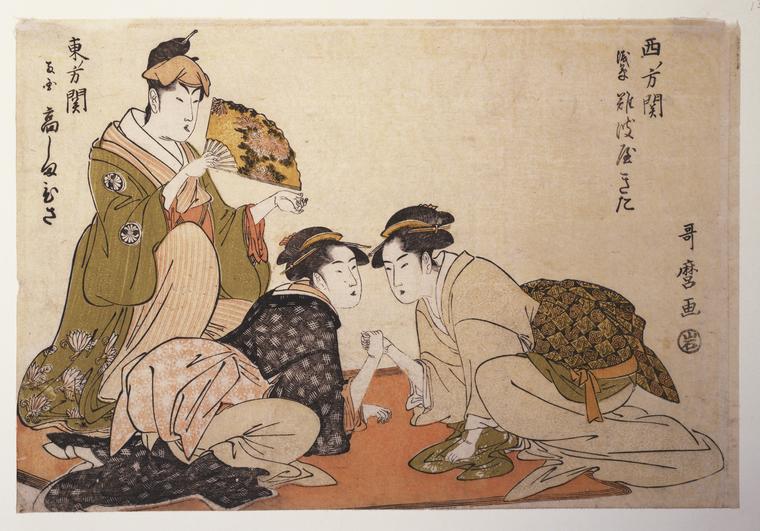
Kat­sushi­ka Hokusai’s The Dream of the Fish­er­man’s Wife (see here) would make for an unfor­get­table toe cap…

Kita­gawa Uta­maro could shod heels and ankles with the float­ing world.

Tawaraya Sōtat­su’s work would eas­i­ly trans­fer from screen to shoe.

Thus far, the lone com­plaints have cen­tered on the pain of break­ing in the new boots, a badge of hon­or among long­time wear­ers of the company’s best-sell­ing 1460 Pas­cal style.

Asia Trend reports that Doc Martens has two shops in Japan, with plans to open more.

If you’re inclined to stomp around in a pair of Dr. Martens 1460 Pas­cal East­ern Art boots or 1461 Oxfords, best place your order soon, as these spe­cial edi­tions have a way of sell­ing out quick­ly.

via MyMod­ern­Met

Relat­ed Con­tent:

Doc Martens Now Come Adorned with William Blake’s Art, Thanks to a Part­ner­ship with Tate Britain

Doc Martens Boots Adorned with Hierony­mus Bosch’s “Gar­den of Earth­ly Delights”

Down­load 2,500 Beau­ti­ful Wood­block Prints and Draw­ings by Japan­ese Mas­ters (1600–1915)

Ayun Hal­l­i­day is an author, illus­tra­tor, the­ater mak­er and Chief Pri­ma­tol­o­gist of the East Vil­lage Inky zine.  Fol­low her @AyunHalliday.

100 Years of Drag Queen Fashion in 4 Minutes: An Aesthetic Journey Moving from the 1920s Through Today

Drag super­star RuPaul’s Drag Race pro­gram can be cred­it­ed with bring­ing his sub­cul­ture to a much wider audi­ence.

For ten sea­sons, view­ers out­side the major met­ro­pol­i­tan areas and select hol­i­day des­ti­na­tions where drag has flour­ished have tuned in to root for their favorite com­peti­tors.

As a result, main­stream Amer­i­ca has devel­oped a much more nuanced appre­ci­a­tion for the labor and artistry behind suc­cess­ful drag per­for­mance and per­son­ae.

Van­i­ty Fair’s “100 Years of Drag Queen Fash­ion,” above, is not so much an evo­lu­tion­ary his­to­ry of the form as a salute to some of its pio­neers, prac­ti­tion­ers, and patron saints.

Each decade opens with a Drag Race alum fac­ing the make­up mir­ror in a rel­a­tive­ly naked state.  Shangela Laquifa Wadley, Raja, and Detox all appear sans fard. Kim Chi’s heav­i­ly made up eyes are eye­lash-free.

The 70’s spin on the late, great Divine is more rem­i­nis­cent of cis-gen­der dis­co queen Don­na Sum­mer than the out­ra­geous plus-sized muse direc­tor John Waters referred to as “the most beau­ti­ful woman in the world, almost.”

As por­trayed in the video below, there’s a strong echo of 1930’s Pan­sy Per­former Jean Malin in RuPaul’s glam­orous pre­sen­ta­tion.

In real­i­ty, the resem­blance is not quite so strong. Although Malin got dolled up in Mae West drag in 1933’s Ari­zona to Broad­way, above, left to his own devices his stage pres­ence was that of an open­ly effem­i­nate gay man, or “pan­sy.” As Pro­fes­sor George Chauncey, direc­tor of Colum­bia University’s Research Ini­tia­tive on the Glob­al His­to­ry of Sex­u­al­i­ties observes in his book, Gay New York:

 His very pres­ence on the club floor elicit­ed the cat­calls of many men in the club, but he respond­ed to their abuse by rip­ping them to shreds with the drag queen’s best weapon: his wit. ‘He had a lisp, and an atti­tude, but he also had a sharp tongue,’ accord­ing to one colum­nist. ‘The wise cracks and inquiries of the men who hoot­ed at his act found ready answer.’ And if hos­tile spec­ta­tors tried to use brute force to take him on after he had defeat­ed them with his wit, he was pre­pared to hum­ble them on those terms as well. ‘He was a huge youth,’ one paper report­ed, ‘weigh­ing 200, and a six foot­er. Not a few pro­fes­sion­al pugilists sighed because Jean seemed to pre­fer din­ner rings to box­ing rings.’ Although Mal­in’s act remained tame enough to safe­guard its wide appeal, it nonethe­less embod­ied the com­pli­cat­ed rela­tion­ship between pan­sies and ‘nor­mal’ men. His behav­ior was con­sis­tent with their demean­ing stereo­type of how a pan­sy should behave, but he demand­ed their respect; he fas­ci­nat­ed and enter­tained them, but he also threat­ened and infu­ri­at­ed them.

We’ve come a long way, baby.

Oth­er leg­endary fig­ures hon­ored by Van­i­ty Fair include Fran­cis Renault (1893–1955), Lav­ern Cum­mings (1925–1991), and Dan­ny LaRue (1927–2009).

Also some gen­der bend­ing lad by the name David Bowie, though if Van­i­ty Fair’s skin­ny Divine caus­es a slight sense of unease, the hideous vinyl rain­coat sport­ed by its snarling, whip-wield­ing Bowie fac­sim­i­le may send fans scut­tling for torch­es and pitch­forks.

As to the future, Joan Jet­son col­lars and pink wed­ding cake wigs appear to be part of drag’s fash­ion fore­cast.

Cis-male skele­tal struc­tures may not always lend them­selves to peri­od-appro­pri­ate female sil­hou­ettes, but the tow­er­ing heels on dis­play are faith­ful to the art of the drag queen, above all else.

Relat­ed Con­tent:

The Muse­um of Mod­ern Art (MoMA) Presents a Free Online Class on Fash­ion: Enroll in Fash­ion as Design Today

Google Cre­ates a Dig­i­tal Archive of World Fash­ion: Fea­tures 30,000 Images, Cov­er­ing 3,000 Years of Fash­ion His­to­ry

Dif­fer­ent From the Oth­ers (1919): The First Gay Rights Movie Ever … Lat­er Destroyed by the Nazis

Ayun Hal­l­i­day is an author, illus­tra­tor, the­ater mak­er and Chief Pri­ma­tol­o­gist of the East Vil­lage Inky zine.  Fol­low her @AyunHalliday.

Dress Like an Intellectual Icon with Japanese Coats Inspired by the Wardrobes of Camus, Sartre, Duchamp, Le Corbusier & Others

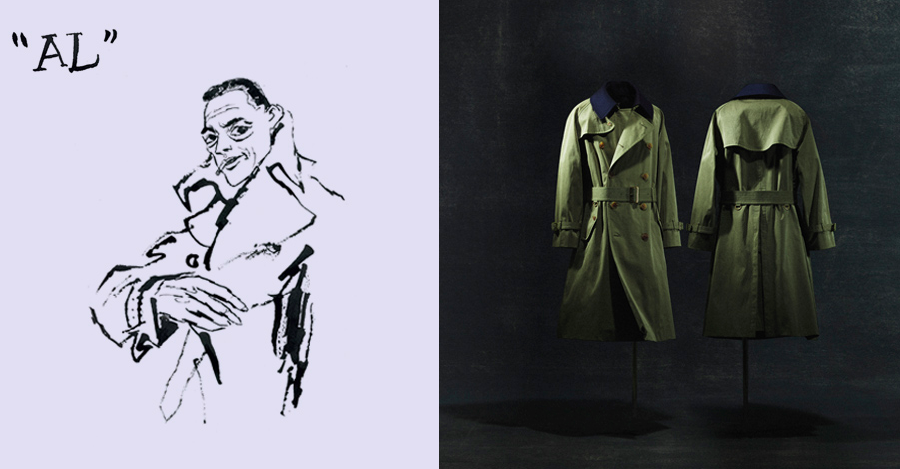
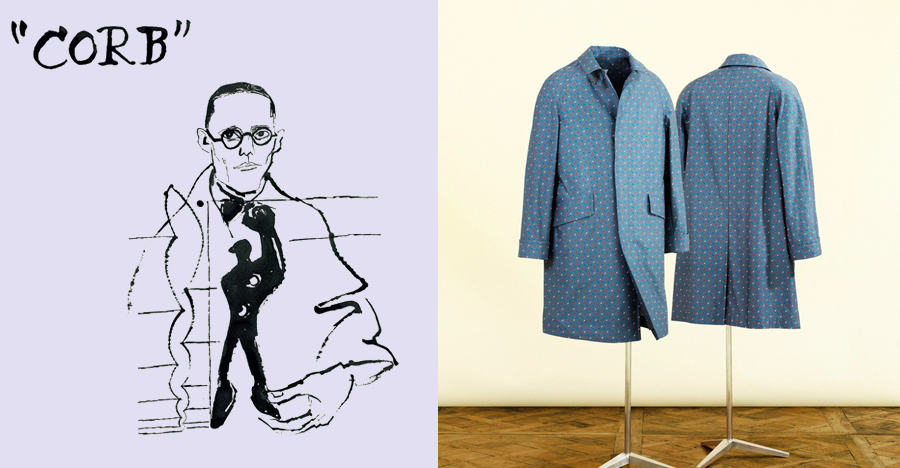
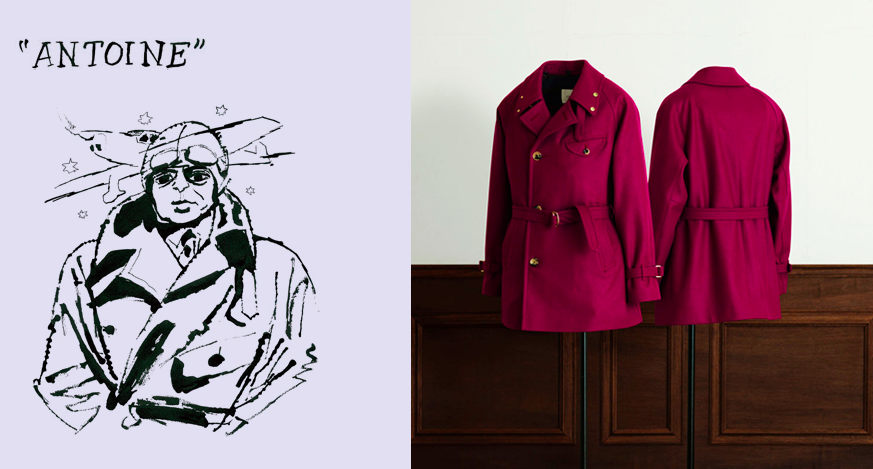
If you fol­low men’s style in the 21st cen­tu­ry, you know that the same names tend to come up as ref­er­ences again and again, from actors like Cary Grant and Steve McQueen to busi­ness­men like Gian­ni Agnel­li and roy­al­ty like Prince Charles. But what if we looked to oth­er, less con­ven­tion­al realms of cul­ture for inspi­ra­tion on what to wear and, more impor­tant­ly, how to wear it? Over the past few years, Japan­ese label Cohérence has done just that, design­ing coats mod­eled after those worn by the likes of Albert Camus, Jean-Paul Sartre, Mar­cel Duchamp, and Le Cor­busier — and improv­ing upon them with new mate­ri­als and details.

“I love Dada and Sur­re­al­ism, jazz music, writ­ers con­nect­ed to the Lost Gen­er­a­tion, and New Wave cin­e­ma. Along with the art and cul­ture, there were also the clothes – the heav­ier fab­rics and fuller sil­hou­ettes,” says Cohérence design­er Ken­taro Nak­ago­mi as quot­ed by men’s style blog­ger Derek Guy of Die, Work­wear! “They were clas­sic, but also mod­ern at the same time.”

If it strikes you as odd that a Japan­ese oper­a­tion would ded­i­cate itself to the styles of par­tic­u­lar cul­tur­al moments in the West, know that mod­ern Japan has quite a his­to­ry of not just repli­cat­ing them but rein­vent­ing them, told most recent­ly by W. David Marx in his book Ame­to­ra: How Japan Saved Amer­i­can Style. Amer­i­cans, thus far, haven’t con­sti­tut­ed a major pres­ence in Cohérence’s col­lec­tions, though the jazz sax­o­phon­ist, clar­inetist, and com­pos­er Sid­ney Bechet did inspire a Bal­macaan.

Though French­men (also includ­ing The Lit­tle Prince author Antoine de Saint-Exupéry and writer-artist-film­mak­er Jean Cocteau) dom­i­nate the label’s list of inspi­ra­tions, it has also made sev­er­al coats in hon­or of Léonard Tsug­uharu Fou­ji­ta, the Japan­ese painter and print­mak­er who in the ear­ly 20th cen­tu­ry brought the artis­tic tech­niques of his ances­tral home­land to his adopt­ed home­land of France. In a way, Fou­ji­ta stands as a sym­bol of the whole project, premised as it is on the union of clas­si­cism and moder­ni­ty as well as exchange between Japan and Europe. And were he around today, Fou­ji­ta, like Cohérence, would sure­ly also have made good use of Insta­gram.

Relat­ed Con­tent:

Recall­ing Albert Camus’ Fash­ion Advice, Noam Chom­sky Pans Glenn Greenwald’s Shiny, Pur­ple Tie

Google Cre­ates a Dig­i­tal Archive of World Fash­ion: Fea­tures 30,000 Images, Cov­er­ing 3,000 Years of Fash­ion His­to­ry

1930s Fash­ion Design­ers Pre­dict How Peo­ple Would Dress in the Year 2000

Vin­tage Lit­er­ary T‑Shirts

Based in Seoul, Col­in Mar­shall writes and broad­casts on cities and cul­ture. His projects include the book The State­less City: a Walk through 21st-Cen­tu­ry Los Ange­les and the video series The City in Cin­e­ma. Fol­low him on Twit­ter at @colinmarshall or on Face­book.

« Go BackMore in this category... »
Quantcast