According to the laws of physics — at least in simplified form — an object in motion will stay in motion, at least if no other forces act on it. That’s all well and good in the realm of theory, but here in the complex reality of Earth, there always seems to be one force or another getting in the way. Not that this has ever completely shut down mankind’s desire to build a perpetual-motion machine. According to Google Arts & Culture, that quest dates at least as far back as seventh-century India, where “the mathematician Brahmagupta, who wanted to represent the cyclical and eternal motion of the heavens, designed an overbalanced wheel whose rotation was powered by the flow of mercury inside its hollow spokes.”
More widely known is the successor design by Brahmagupta’s twelfth-century countryman and colleague Bhāskara, who “altered the wheel design by giving the hollow spokes a curved shape, producing an asymmetrical course in constant imbalance.” Despite this rendition’s memorable elegance, it does not, like the earlier overbalanced wheel, actually keep on turning forever. To blame are the very same laws of physics that have dogged the subsequent 900 or so years of attempts to build perpetual-motion machines, which you can see briefly explained in the TED-Ed video above.
“Ideas for perpetual-motion machines all violate one or more fundamental laws of thermodynamics, the branch of physics that describes the relationship between different forms of energy,” says the narrator. The first law holds that “energy can’t be created or destroyed; you can’t get out more energy than you put in.” That alone would put an end to hopes for a “free” energy source of this kind. But even machines that just keep moving by themselves — much less useful, of course, but still scientifically earth-shattering — would eventually “have to create some extra energy to nudge the system past its stopping point, breaking the first law of thermodynamics.”
Whenever machines seem to overcome this problem, “in reality, they invariably turn out to be drawing energy from some external source.” (Nineteenth-century America seems to have offered endless opportunities for engineering charlatanism of this kind, whose perpetrators made a habit of skipping town whenever their trickery was revealed, some obtaining patents and profits all the while). But even if the first law of thermodynamics didn’t apply, there would remain the matter of the second, which dictates that “energy tends to spread out through processes like friction,” thus “reducing the energy available to move the system itself, until the machine inevitably stopped.” Hence the abandonment of interest in perpetual motion by such scientific minds as Galileo and Leonardo — who must also have understood that mankind would never fully relinquish the dream.
Based in Seoul, Colin Marshall writes and broadcasts on cities, language, and culture. His projects include the Substack newsletterBooks on Cities, the book The Stateless City: a Walk through 21st-Century Los Angeles and the video series The City in Cinema. Follow him on Twitter at @colinmarshall or on Facebook.
Six months before his assassination, Martin Luther King Jr. spoke to students at Barratt Junior High School in Philadelphia, and asked What Is Your Life’s Blueprint?
Addressing the students, he observed: “This is the most important and crucial period of your lives. For what you do now and what you decide now at this age may well determine which way your life shall go. Whenever a building is constructed, you usually have an architect who draws a blueprint. And that blueprint serves as the pattern, as the guide, as the model, for those who are to build the building. And a building is not well erected without a good, sound, and solid blueprint.”
So what makes for a sound blueprint? The civil rights leader had some suggestions:
Number one in your life’s blueprint should be: a deep belief in your own dignity, your own worth and your own somebodiness. Don’t allow anybody to make you feel that you are nobody. Always feel that you count. Always feel that you have worth, and always feel that your life has ultimate significance.
Now that means you should not be ashamed of your color. You know, it’s very unfortunate that in so many instances, our society has placed a stigma on the Negro’s color. You know there are some Negros who are ashamed of themselves? Don’t be ashamed of your color. Don’t be ashamed of your biological features…
Secondly, in your life’s blueprint you must have as the basic principle the determination to achieve excellence in your various fields of endeavor. You’re going to be deciding as the days and the years unfold, what you will do in life — what your life’s work will be.
And once you discover what it will be, set out to do it, and to do it well.
You can read a transcript of the speech here. As a postscript, it’s worth highlighting a remarkable comment left on YouTube, from the student who apparently recorded the speech on October 26, 1967. It reads:
I cannot believe that I found this footage. I am the student cameraman that recorded this speech. I remember this like it was yesterday. I have been telling my boys for years about this and now I can show them. I thought this was lost years ago and am so happy that it survived the years. I was 12 or 13 years old when he can to Barrett and was mesmerized by what he was saying. I can’t wait to share this with my family. Wow I am elated that I found this.
Early in the 20th century, crowds flocked to New York City’s Coney Island, where wonders awaited at every turn.
In 1902, the Brooklyn Daily Eagle published a few of the highlights in store for visitors at Coney Island’s soon-to-open “electric Eden,” Luna Park:
…the most important will be an illustration of Jules Verne’s ‘Twenty Thousand Leagues Under the Sea’, which will cover 55,000 square feet of ground, and a naval spectatorium, which will have a water area of 60,000 square feet. Beside these we will have many novelties, including the River Styx, the Whirl of the Town, Shooting the White Horse Rapids, the Grand Canyon, the ’49 Mining Camp, Dragon Rouge, overland and incline railways, Japanese, Philippine, Irish, Eskimo and German villages, the infant incubator, water show and carnival, circus and hippodrome, Yellowstone Park, zoological gardens, performing wild beasts, sea lions and seals, caves of Capri, the Florida Everglades and Mont Pelee, an electric representation of the volcanic destruction of St. Pierre.
Hold up a sec…what’s this about an infant incubator? What kind of name is that for a roller coaster!?
As it turns out, amid all the exotica and bedazzlements, a building furnished with steel and glass cribs, heated from below by temperature-controlled hot water pipes, was one of the boardwalk’s leading attractions.
Antiseptic-soaked wool acted as a rudimentary air filter, while an exhaust fan kept things properly ventilated.
The real draw were the premature babies who inhabited these cribs every summer, tended to round the clock by a capable staff of white clad nurses, wet nurses and Dr. Martin Couney, the man who had the ideas to put these tiny newborns on display…and in so doing, saved thousands of lives.
Couney, a breast feeding advocate who once apprenticed under the founder of modern perinatal medicine, obstetrician Pierre-Constant Budin, had no license to practice.
Initially painted as a child-exploiting charlatan by many in the medical community, he was as vague about his background as he was passionate about his advocacy for preemies whose survival depended on robust intervention.
Having presented Budin’s Kinderbrutanstalt — child hatchery — to spectators at 1896’s Great Industrial Exposition of Berlin, and another infant incubator show as part of Queen Victoria Diamond Jubilee Celebration, he knew firsthand the public’s capacity to become invested in the preemies’ welfare, despite a general lack of interest on the part of the American medical establishment.
Thusly was the idea for the boardwalk Infantoriums hatched.
As word of Couney’s Infantorium spread, parents brought their premature newborns to Coney Island, knowing that their chances of finding a lifesaving incubator there was far greater than it would be in the hospital. And the care there would be both highly skilled and free, underwritten by paying spectators who observed the operation through a glass window. Prentice notes that “Couney took in babies from all backgrounds, regardless of race or social class:”
… a remarkably progressive policy, especially when he started out. He did not take a penny from the parents of the babies. In 1903 it cost around $15 (equivalent to around $405 today) a day to care for each baby; Couney covered all the costs through the entrance fees.
The New Yorker’s A. J. Lieblingobserved Couney at the 1939 World’s Fair in Flushing, Queens, where he had set up in a pink-and-blue building that beckoned visitors with a sign declaring “All the World Loves a Baby:”
The backbone of Dr. Couney’s business is supplied by the repeaters. A repeater becomes interested in one baby and returns at intervals of a week or less to note its growth. Repeaters attend more assiduously than most of the patients’ parents, even though the parents get in on passes. After a preemie graduates, a chronic repeater picks out another one and starts watching it. Dr. Couney’s prize repeater, a Coney Island woman named Cassatt, visited his exhibit there once a week for thirty-six seasons. Repeaters, as one might expect, are often childless married people, but just as often they are interested in babies because they have so many children of their own. “It works both ways,” says Dr. Couney, with quiet pleasure.
It’s estimated that Couney’s incubators spared the lives of more than 6,500 premature babies in the United States, London, Paris, Mexico and Brazil.
Despite his lack of bonafides, a number of pediatricians who toured Couney’s infantoriums were impressed by what they saw, and began referring patients whose families could not afford to pay for medical care. Many, as Liebling reported in 1939, wished his boardwalk attraction could stay open year round, “for the benefit of winter preemies:”
In the early years of the century no American hospital had good facilities for handling prematures, and there is no doubt that every winter many babies whom Dr. Couney could have saved died. Even today it is difficult to get adequate care for premature infants in a clinic. Few New York hospitals have set up special departments for their benefit, because they do not get enough premature babies to warrant it; there are not enough doctors and nurses experienced in this field to go around. Care of prematures as private patients is hideously expensive. One item it involves is six dollars a day for mother’s milk, and others are rental of an incubator and hospital room, oxygen, several visits a day by a physician, and fifteen dollars a day for three shifts of nurses. The New York hospitals are making plans now to centralize their work with prematures at Cornell Medical Center, and probably will have things organized within a year. When they do, Dr. Couney says, he will retire. He will feel he has “made enough propaganda for preemies.”
Listen to a StoryCorps interview with Lucille Horn, a 1920 graduate of Couney’s Coney Island incubators below.
Author, educator and book restoration expert Sophia Bogle is in a constant race against time. Her mission: to rescue and restore ill-treated books before their lamentable conditions can consign them to the landfill.
To the untrained eye, many of these volumes appear beyond repair, but Bogle has nerves of steel, preternatural patience, surgical precision, and over thirty years of experience.
In the Wired video above, she uses a 106-year-old first edition of Frank L. Baum’s The Lost Princess of Ozto demonstrate some of the steps of her craft — from cutting open an old book’s spine and washing dirty pages to repairing tears and recoloring illustrations.
Prior to taking the final step, she scrawls a hidden message on the backing material of the spine:
I do love the fact that there’s the story in the book, there’s the story of the restoration of the book, there’s the story of who has owned the book and now, I’m just in there just a little bit more.
This playful bit of hard-won license is a far cry from some shady restoration practices she mentions in an interview on the Welcome to Literary Ashland blog, in an attempt to arm the general public with tools for spotting potential fraud:
I am not sure that there is anything in the world that cannot be twisted with evil intent…Swapping out pages with publishers information in order to make the book appear to be a more valuable edition. Scratching out/removing numbers or words for the same purpose. And lastly, swapping out pages to insert the author’s signature. None of those things can be done without intent to defraud and it is the intent that matters most.
Book lovers who have both the time and the temperament for bookbinding, as well as Bogle’s passion for preserving culture one book at a time, might consider applying for a Save Your Books scholarship.
When Caspar David Friedrich completed Der Wanderer über dem Nebelmeer, or Wanderer Above the Sea of Fog, in 1818, it “was not well received.” So says gallerist-Youtuber James Payne in his new Great Art Explained video above, which focuses on Friedrich’s most famous painting. In the artist’s lifetime, the Wanderer in fact “marked the gradual decline of Friedrich’s fortunes.” He withdrew from society, and in 1835, “he suffered a stroke that left the left side of his body effectively paralyzed, effectively ending his career.” How, over the centuries since, did this once-ill-fated painting become so iconic that many of us now see it referenced every few weeks?
Friedrich had known popular and critical scorn before. His first major commission, painted in 1808, was “an altarpiece which shows a cross in profile at the top of a mountain, alone and surrounded by pine trees. Hard for us to understand now, but it caused a huge scandal.” This owed in part to the lack of traditional perspective in its composition, which presaged the feeling of boundlessness — overlaid with “rolling mists and fogs” — that would characterize his later work. But more to the point, “landscape had never been considered a suitable genre for overtly religious themes. And of course, normally the crucifixion is shown as a human narrative populated by human figures, not Christ dying alone.”
It’s fair to say that Friedrich did not do things normally, both philosophically — breaking away, with his fellow Romanticists, from the mechanistic Enlightenment consensus about the world — and aesthetically. The Wanderer (further analyzed in the Nerdwriter video just below) presents a Weltanschauung in which “landscape was a representation of a divine world order, and man was an individual who watches, contemplates, and feels much more than he calculates and thinks.” To achieve his desired effect, Friedrich assembles an imagined vista out of various elements seen around Dresden, presenting it in a manner that combines characteristics of both landscapes and portraits to “create a powerful sense of space” while directing our attention to the lone unidentified figure right in the center.
The “curious combination of loneliness and empowerment” that results is key to understanding not just the priorities of the Romantics, but the very nature of the aesthetic sublime they reverently expressed. To be sublime is not just to be beautiful or pleasurable, but also to exude a kind of intimidating, even fearsome vastness; how it feels to enter the presence of the sublime can never be fully replicated, let alone explained, but as Friedrich demonstrates, it can effectively be evoked. Hence, as Payne points out, the tendency of current media like movie posters to crib from the Wanderer, in service of the likes of Dunkirk, Oblivion, Into Darkness, and After Earth. Determining whether those pictures live up to the ambitions evident in Friedrich’s artistic legacy is an exercise left to the reader.
Based in Seoul, Colin Marshall writes and broadcasts on cities, language, and culture. His projects include the Substack newsletterBooks on Cities, the book The Stateless City: a Walk through 21st-Century Los Angeles and the video series The City in Cinema. Follow him on Twitter at @colinmarshall or on Facebook.
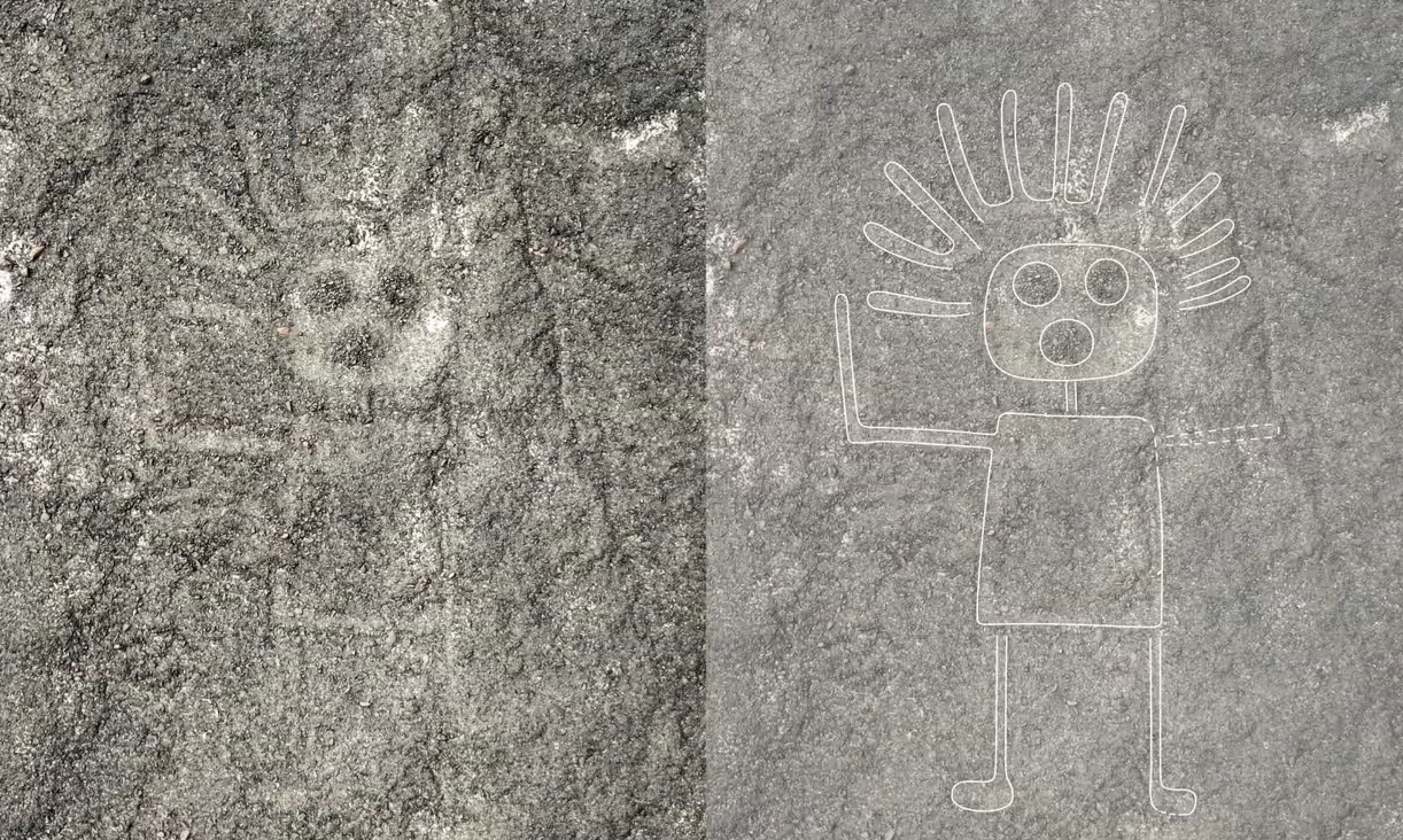
If you made it big in seventeenth-century Bavaria, you showed it by creating a garden with all the plants in the known world. That’s what Johann Konrad von Gemmingen, Prince-Bishop of Eichstätt did, anyway, and he wasn’t about to let his botanical wonderland die with him. To that end, he engaged a specialist by the name of Basilius Besler to document the whole thing, and with a lavishness never before seen in books in its category.
The medieval and Renaissance world had its “herbals” (as previously featured here on Open Culture), many of which tended toward the utilitarian, focusing on the culinary or medical properties of plants; Hortus Eystettensis would take the form at once to new artistic and scientific heights.
When the book came out in 1613, after sixteen years of research and production, von Gemmingen was already dead. But it proved successful enough as a product that Besler made sufficient money to set himself up with a house in a fashionable part of Nuremberg for the price of just five copies — five copies of the extravagant (and extravagantly expensive) hand-colored edition, at least.
Hortus Eystettensis “changed botanical art almost overnight,” writes David Marsh in a detailed blog post on the book’s creation and legacy at The Gardens Trust. “Now, suddenly plants were being portrayed as beautiful objects in their own right,” with depictions that could attain life size, all categorized in a systematic manner anticipating classification systems to come. Marsh sees the project as exemplifying a couple major cultural ideas of its time: one was “the collector’s cabinet of curiosities or wunderkammer, which helped reveal a gentleman’s interest and knowledge of the world around him.” Another was the concept of the perfect garden, which “should, if at all possible, represent Eden and contain as wide a range of plants and other features as possible.”
This level of ambition has always had its costs, to the consumer as well as the producer: Marsh notes that a 2006 replica of Hortus Eystettensis had a price tag of $10,000, though a more affordable edition has since been made available from Taschen, the major publisher most likely to understand Besler’s uncompromising aesthetic sensibility in the craft of books. But you can also read it for free online at an edition digitized by Teylers Museum in the Netherlands, which, in a sense, brings von Gemmingen’s project full-circle: he sought to encompass the whole world in his garden, and now his garden — in Besler’s richly detailed rendering — is open to the whole world.
Based in Seoul, Colin Marshall writes and broadcasts on cities, language, and culture. His projects include the Substack newsletterBooks on Cities, the book The Stateless City: a Walk through 21st-Century Los Angeles and the video series The City in Cinema. Follow him on Twitter at @colinmarshall or on Facebook.
Or, they may be left wishing you’d given them a vastly more huggable machine-made plushie version, especially if you can’t help sucking in your breath every time they start fumbling with that exquisitely crafted ¥330,000 yen heirloom-to-be. (That’s $2341.81 in US dollars.)
Of course, director Hayao Miyazaki’s 1988 animated feature My Neighbor Totorohas legions of fans of all ages, and some will consider themselves quite lucky if they win the lottery that grants them the ability to purchase such a treasure.
They’re not only carved by skilled artisans in Inami, the city of woodcarving, but the wood is also that of a camphor tree — the natural habitat of the mysterious, magical Totoro! (It’s also considered holy by practitioners of the Shinto religion.)
Still, if it’s unclear that the recipient will truly appreciate such thoughtfulness, you’re probably better off going with another offering from Studio Ghibli’s Totoro-themed collaboration with Nakagawa Masashichi Shoten, a purveyor of traditional Japanese crafts.
Perhaps a¥4180 bud vase fired in Ureshino City’s Edo-period Yozan Kiln, featuring Totoro or a cluster of susuwatari, the pom pom-like soot sprites infesting the Kusakabe family’s new home, who also play a part in Spirited Away.
Maybe a tiny Totoro bell amulet, molded by craftsmen in Odawara, celebrated for the quality of their metalwork since the early 1500s, when they outfitted samurai with weapons, armor and helmets?
As one of the leading towns along the trunk road, Yatuso flourished through … production of wrapping paper for the nation-wide famous “Toyama Medicine”. At its golden age, from the Edo Era to the beginning of the Meiji Era in the 19th century, many people were engaged in papermaking by handwork in their homes. Yatsuo Japanese paper was expected to be unbreakable because it was used as package for expensive medicine and at the same time it should look brilliant. It had to be thick and stout so that it could be impervious to water and the label printed on the surface would not be smeared.
The list of Totoro-inspired traditional crafts is impressive. A representative sampling:
Dishtowels made from five layers of Kayaori fabric that “was introduced to Japan during the Nara period and is said to allow wind to pass through but keep mosquitoes out”…
They Might Be Giants achieved pop-cultural immortality when they covered Jimmy Kennedy and music by Nat Simon’s novelty song “Istanbul (Not Constantinople)” in 1990. Key to the the lyrics’ humor is their simultaneous fixation on and apparent disinterest in the reason for the re-naming of the Turkish metropolis. As often as you hear the song — and we’ve all heard it countless times over the past few decades — you’ll learn only that Constantinople became Istanbul, not why. In his new video above, on how the cities of the Roman Empire got their modern names, ancient history YouTuber Garrett Ryan, creator of Youtube channel Told in Stone, provides a little more detail.
“Istanbul seems to be a Turkish rendering of the Greek phrase eis ten polin, ‘into the city,” Ryan says. Other of that country’s urban settlements have names that would be more recognizable to an ancient Roman citizen: “Bursa is Prusa, Smyrna is Izmir, Attaleia is Antalya, Iconium is Konya, and Ancyra is Ankara.”
Iznik was originally called Nicaea, but so was Nice, France (though only the former has the historical distinction of having produced the Nicene Creed). “The French towns Aix and Dax are descendants of the Latin aquae, springs. The same word, literally translated, is behind Baden Baden, Germany, and Bath, England.”
For some cities, the transition from a Roman to post-Roman name didn’t happen in one simple step. It’s well known that, in the days of the Roman Empire, London was called Londinium; what’s less well known is that it also took on the names Lundenwic and Lundenburg in the eras between. And “although the classical name of Paris was Lutetia” — as previously featured here on Open Culture — “the city was already known by the name of a local tribe, the Parisii, by late antiquity.” If you can guess the current names of Forum Traiani, Igilgili, or, Borbetomagus, you’ve got a keener sense of ancient history than most. Modern Western civilization may descend from the Roman Empire, but that legacy comes through much more clearly in some places than others.
Based in Seoul, Colin Marshall writes and broadcasts on cities, language, and culture. His projects include the Substack newsletterBooks on Cities, the book The Stateless City: a Walk through 21st-Century Los Angeles and the video series The City in Cinema. Follow him on Twitter at @colinmarshall or on Facebook.
We're hoping to rely on loyal readers, rather than erratic ads. Please click the Donate button and support Open Culture. You can use Paypal, Venmo, Patreon, even Crypto! We thank you!
Open Culture scours the web for the best educational media. We find the free courses and audio books you need, the language lessons & educational videos you want, and plenty of enlightenment in between.

