The Story of Elizebeth Friedman, the Pioneering Cryptologist Who Thwarted the Nazis & Got Burned by J. Edgar Hoover

Elize­beth S. Fried­man: Sub­ur­ban Mom or Nin­ja Nazi Hunter?

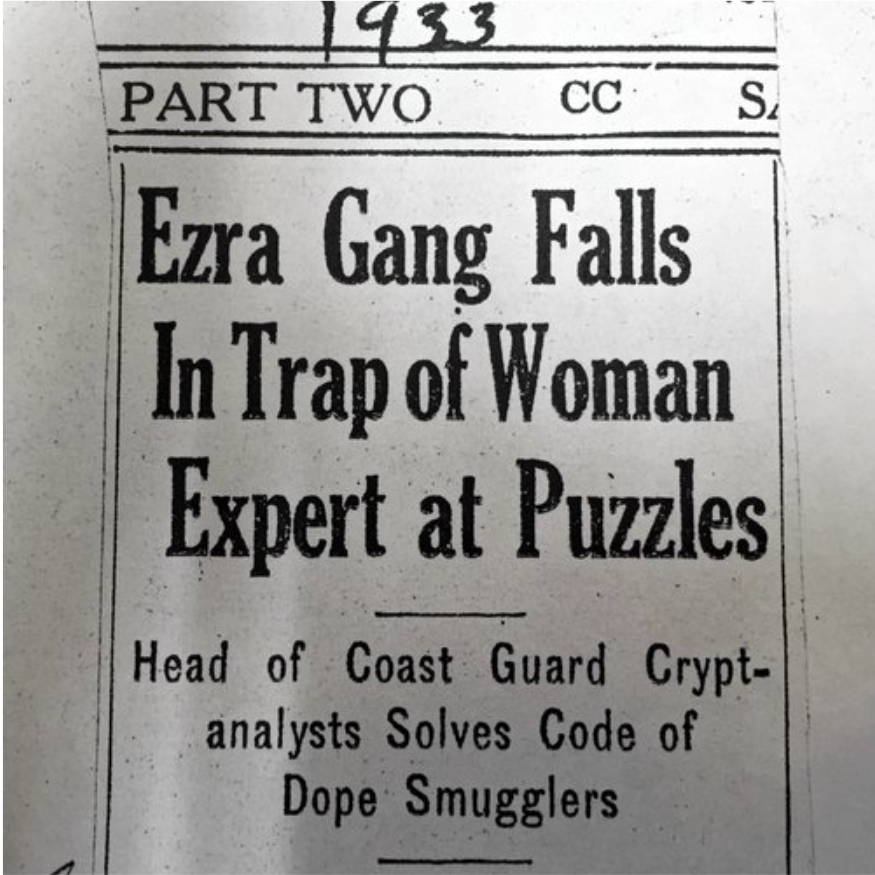
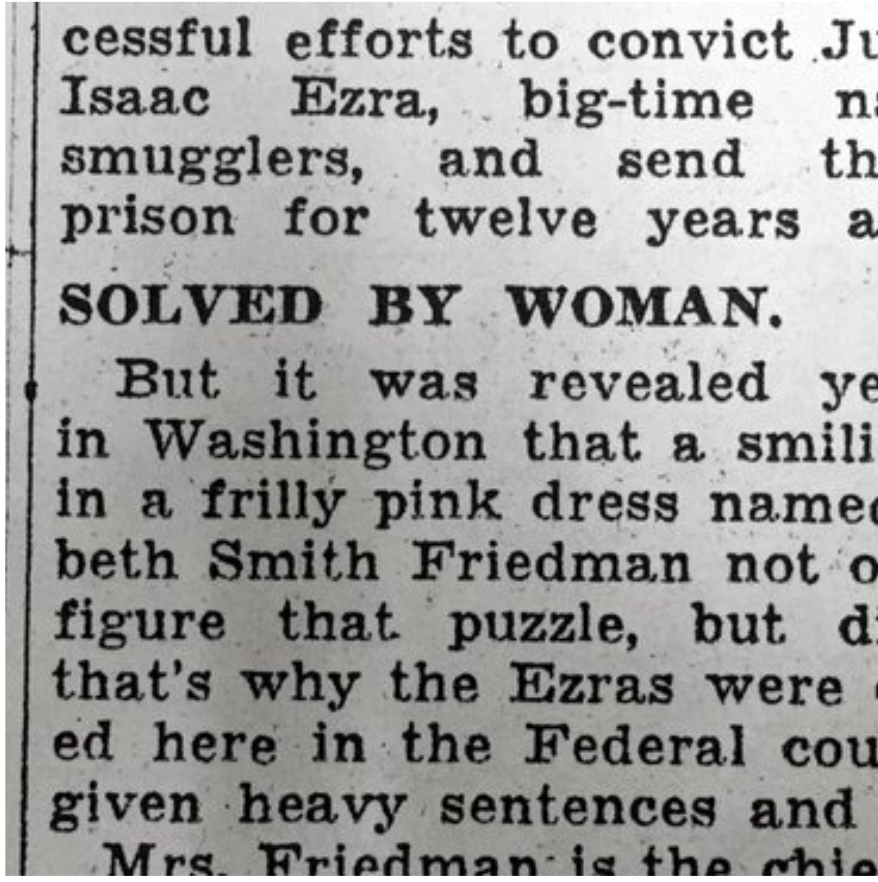
Both, though in her life­time, the press was far more inclined to fix­ate on her lady­like aspect and home­mak­ing duties than her career as a self-taught cryp­to­an­a­lyst, with head­lines such as “Pret­ty Woman Who Pro­tects Unit­ed States” and “Solved By Woman.”

The nov­el­ty of her gen­der led to a brief stint as America’s most rec­og­niz­able code­break­er, more famous even than her fel­low cryp­tol­o­gist, hus­band William Fried­man, who was instru­men­tal in the found­ing of the Nation­al Secu­ri­ty Agency dur­ing the Cold War.

Renowned though she was, the high­ly clas­si­fied nature of her work exposed her to a secu­ri­ty threat in the per­son of FBI direc­tor J. Edgar Hoover.

Hoover cred­it­ed the FBI, and by exten­sion, him­self, for deci­pher­ing some 50 Nazi radio cir­cuits’ codes, at least two of them pro­tect­ed with Enig­ma machines.

He also rushed to raid South Amer­i­can sources in his zeal to make an impres­sion and advance his career, scup­per­ing Fried­man’s mis­sion by caus­ing Berlin to put a stop to all trans­mis­sions to that area.

Too bad no one asked him to demon­strate the meth­ods he’d used to crack these impos­si­ble nuts.

The Ger­man agents used the same codes and radio tech­niques as the Con­sol­i­dat­ed Exporters Cor­po­ra­tion, a mob-backed rum-run­ning oper­a­tion whose codes and ciphers Elize­beth had trans­lat­ed as chief cryp­tol­o­gist for the U.S. Trea­sury Depart­ment dur­ing Pro­hi­bi­tion.

As an expert wit­ness in the crim­i­nal tri­al of inter­na­tion­al rum­run­ner Bert Mor­ri­son and his asso­ciates, she mod­est­ly assert­ed that it was “real­ly quite sim­ple to decode their mes­sages if you know what to look for,” but the sam­ple decryp­tion she pro­vid­ed the jury made it plain that her work required tremen­dous skill. The Mob Museum’s Jeff Bur­bank sets the scene:

She read a sam­ple mes­sage, refer­ring to a brand of whiskey: “Out of Old Colonel in Pints.” She showed how the three “o” and “l” let­ters in “Colonel” had iden­ti­cal cipher code let­ters. From the cipher’s let­ters for “Colonel” she could fig­ure out the let­ter the rack­e­teers chose for “e,” the most fre­quent­ly occur­ring let­ter in Eng­lish, based on oth­er brand names of liquor they men­tioned in oth­er mes­sages. The “o” and “l” let­ters in “alco­hol,” she said, had the same cipher let­ters as “Colonel.” 

Cinchy, right?

Elizebeth’s biog­ra­ph­er, Jason Fagone, notes that in dis­cov­er­ing the iden­ti­ty, code­name and ciphers used by Ger­man spy net­work Oper­a­tion Bolí­var’s leader, Johannes Siegfried Beck­er, she suc­ceed­ed where “every oth­er law enforce­ment agency and intel­li­gence agency failed. She did what the FBI could not do.”

Sex­ism and Hoover were not the only ene­mies.

William Friedman’s crit­i­cism of the NSA for clas­si­fy­ing doc­u­ments he thought should be a mat­ter of pub­lic record led to a rift result­ing in the con­fis­ca­tion of dozens of papers from the cou­ple’s home that doc­u­ment­ed their work.

This, togeth­er with the 50-year “TOP SECRET ULTRA” clas­si­fi­ca­tion of her WWII records, ensured that Elize­beth’s life would end beneath “a vast dome of silence.”

Recog­ni­tion is mount­ing, how­ev­er.

Near­ly 20 years after her 1980 death, she was induct­ed into the Nation­al Secu­ri­ty Agency’s Cryp­to­log­ic Hall of Hon­or as “a pio­neer in code break­ing.”

A Nation­al Secu­ri­ty Agency build­ing now bears both Fried­mans’ names.

The U.S. Coast Guard will soon be adding a Leg­end Class Cut­ter named the USCGC Fried­man to their fleet.

In addi­tion to Fagone’s biog­ra­phy, a pic­ture book, Code Break­er, Spy Hunter: How Elize­beth Fried­man Changed the Course of Two World Wars, was pub­lished ear­li­er this year.

As far as we know, there are no pic­ture books ded­i­cat­ed to the pio­neer­ing work of J. Edgar Hoover….

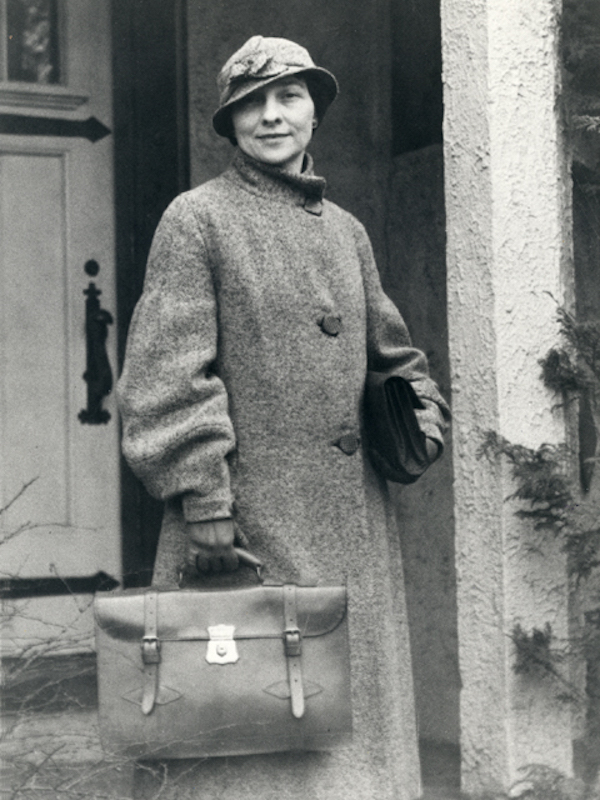
Elize­beth Fried­man, via Wiki­me­dia Com­mons

Watch The Code­break­er, PBS’s Amer­i­can Expe­ri­ence biog­ra­phy of Elize­beth Fried­man here.

Relat­ed Con­tent: 

The Enig­ma Machine: How Alan Tur­ing Helped Break the Unbreak­able Nazi Code

How British Code­break­ers Built the First Elec­tron­ic Com­put­er

Three Ama­teur Cryp­tog­ra­phers Final­ly Decrypt­ed the Zodi­ac Killer’s Let­ters: A Look Inside How They Solved a Half Cen­tu­ry-Old Mys­tery

Ayun Hal­l­i­day is an author, illus­tra­tor, the­ater mak­er and Chief Pri­ma­tol­o­gist of the East Vil­lage Inky zine.  Join her June 7 for a Necro­mancers of the Pub­lic Domain: The Peri­od­i­cal Cica­da, a free vir­tu­al vari­ety hon­or­ing the 17-Year Cicadas of Brood X. Fol­low her @AyunHalliday.

A Short Animation Explores the Nature of Creativity & Invention, with Characters That Look Like Andrei Tarkovsky & Sergei Eisenstein

A gen­tle­man goes to the movies, only to find a mar­quee full of retreads, reboots, sequels, and pre­quels. He demands to know why no one makes orig­i­nal films any­more, a rea­son­able ques­tion peo­ple often ask. But it seems he has run direct­ly into a grad­u­ate stu­dent in crit­i­cal the­o­ry behind the glass. The tick­et-sell­er rat­tles off a the­o­ry of uno­rig­i­nal­i­ty that is dif­fi­cult to refute but also, it turns out, only a word-for-word recita­tion of the Wikipedia page on “Pla­gia­rism.”

This is one of the ironies in “Aller­gy to Orig­i­nal­i­ty” every Eng­lish teacher will appre­ci­ate. In the short, ani­mat­ed New York Times Op-Doc by Drew Christie, an offi­cial Sun­dance selec­tion in 2014, “two men dis­cuss whether any­thing is tru­ly orig­i­nal — espe­cial­ly in movies and books,” notes the Times. The ques­tion leads us to con­sid­er what we might mean by orig­i­nal­i­ty when every work is built from pieces of oth­ers. “In cre­at­ing this Op-Doc ani­ma­tion,” Christie writes, “I copied well-known images and pho­tographs, retraced innu­mer­able draw­ings, then pho­to­copied them as a way to under­score the un-orig­i­nal­i­ty of the entire process.”

From William Bur­roughs’ cut-ups to Roland Barthes’ “The Death of the Author,” mod­erns have only been re-dis­cov­er­ing what ancients accept­ed with a shrug — no one can take cred­it for a sto­ry, not even the author. Barthes argued that “lit­er­a­ture is pre­cise­ly the inven­tion of this voice, to which we can­not assign a spe­cif­ic ori­gin: lit­er­a­ture is that neuter, that com­pos­ite, that oblique into which every sub­ject escapes, the trap where all iden­ti­ty is lost, begin­ning with the very iden­ti­ty of the body that writes.”

In Christie’s short, the smar­tass the­ater employ­ee con­tin­ues quot­ing sources, now from the “Orig­i­nal­i­ty” Wikipedia, now from Mark Twain, who had many things to say about orig­i­nal­i­ty. Twain once wrote to Helen Keller, for exam­ple, out­raged that she had been accused of pla­gia­rism. He came to her defense with an earnest con­vic­tion: “The ker­nel, the soul—let us go fur­ther and say the sub­stance, the bulk, the actu­al and valu­able mate­r­i­al of all human utter­ance — is pla­gia­rism.”

Post­mod­ern sophistry from Mark Twain? Maybe. We haven’t had much oppor­tu­ni­ty to ver­bal­ly spar in pub­lic like this late­ly, unmasked and in search of enter­tain­ment in a pub­lic square. If you find your­self exas­per­at­ed with the stream­ing choic­es on offer, if the books you’re read­ing all start to feel too famil­iar, con­sid­er the infi­nite num­ber of cre­ative pos­si­bil­i­ties inher­ent in the art of quo­ta­tion — and remem­ber that we’re always repeat­ing, replay­ing, and remix­ing what came before, whether or not we cite our sources.

Relat­ed Con­tent: 

Every­thing is a Remix: A Video Series Explor­ing the Sources of Cre­ativ­i­ty

Mal­colm McLaren: The Quest for Authen­tic Cre­ativ­i­ty

Where Do Great Ideas Come From? Neil Gaiman Explains

Quentin Tarantino’s Copy­cat Cin­e­ma: How the Post­mod­ern Film­mak­er Per­fect­ed the Art of the Steal

Josh Jones is a writer and musi­cian based in Durham, NC. Fol­low him at @jdmagness

Download 280 Pictographs That Put Japanese Culture Into a New Visual Language: They’re Free for the Public to Use

“One of the biggest con­sid­er­a­tions when trav­el­ing to Japan is its inscrutable lan­guage,” writes Design­boom’s Juliana Neira. But then, one might also con­sid­er mak­ing that lan­guage more scrutable — and mak­ing one’s expe­ri­ence in Japan much rich­er — by learn­ing some of it. Kan­ji, the Chi­nese char­ac­ters used in the writ­ten Japan­ese lan­guage, may at first look like small, often bewil­der­ing­ly com­plex pic­tures, and many assume they visu­al­ly evoke the mean­ings they express. In fact, to use the lin­guis­tic terms, they’re not pic­tograms, rep­re­sen­ta­tions of thoughts or ideas, but logograms, rep­re­sen­ta­tions of words or parts of words.

Resem­ble minia­ture works of art though they often do, kan­ji aren’t entire­ly unsys­tem­at­ic. This helps begin­ning learn­ers get a han­dle on the first and most essen­tial char­ac­ters of the thou­sands they’ll even­tu­al­ly need to know.

So does the fact that some of them, in ori­gin, real­ly are pic­to­graph­ic — that is, they look like the mean­ing of the word they rep­re­sent — or at least pic­to­graph­ic enough to make them teach­able through images. The Japan­ese word for “moun­tain,” to cite an ele­men­tary exam­ple, is 山; “riv­er” is 川; “tree” is 木. Alas, most of us who enjoy the 山, 川, and 木 of Japan — to say noth­ing of the 書店 and 喫茶店 in its cities — haven’t been able to vis­it them at all in this past pan­dem­ic year.

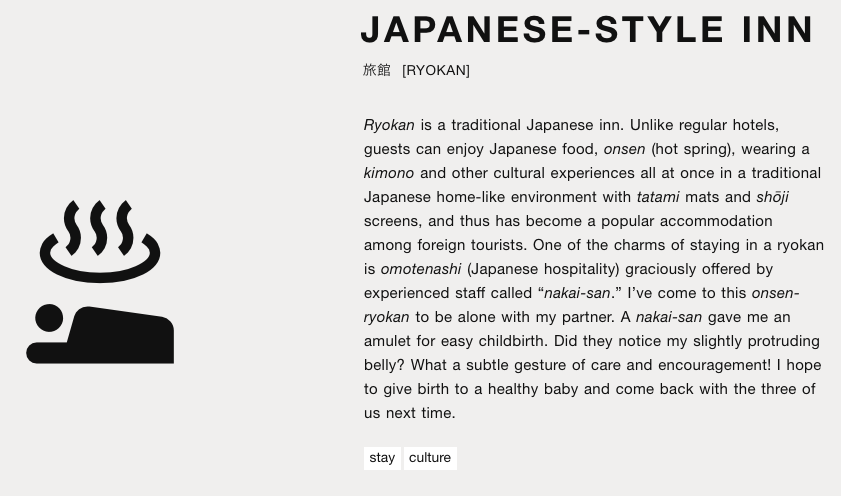
“After expe­ri­enc­ing years of tourism growth, tourists to Japan are down over 95% due to the pan­dem­ic,” writes Spoon & Tam­ago’s John­ny Wald­man. “Graph­ic design­er Kenya Hara and his firm Nip­pon Design Cen­ter have self-ini­ti­at­ed a project to release over 250 pic­tograms — free for any­one to use — in sup­port of tourism in Japan from a visu­al design per­spec­tive.” Col­lec­tive­ly ban­nered the Expe­ri­ence Japan Pic­tograms, these clear and evoca­tive icons rep­re­sent a wide range of the places and activ­i­ties one can enjoy in the Land of the Ris­ing Sun: ski­ing and surf­ing, cal­lig­ra­phy and open-air hot-spring bathing, Gin­za and Asakusa, Toky­o’s Skytree and Osaka’s Tsūtenkaku Tow­er.

The Expe­ri­ence Japan Pic­tograms hard­ly fail to include the glo­ries of Japan­ese cui­sine — sushi, tem­pu­ra, soba, and even the Japan­i­fied han­bāgā — which piques so many for­eign­ers’ inter­est in Japan to begin with. Click on any of them and you’ll see a brief cul­tur­al and his­tor­i­cal expla­na­tion of the item, activ­i­ty, place, or con­cept in ques­tion, along with the rel­e­vant Japan­ese term (in kan­ji where applic­a­ble) and its pro­nun­ci­a­tion. You can also down­load them in the col­or scheme of your choice and use them for any pur­pos­es you like, includ­ing com­mer­cial ones. The more wide­ly adopt­ed they are, the more con­ve­nient Japan­ese tourism will become for those who don’t read Japan­ese. Those who do can hard­ly deny the plea­sure of hav­ing anoth­er Japan­ese lan­guage to learn — and a tru­ly pic­to­graph­ic one at that.

via Spoon & Tam­a­go

Relat­ed Con­tent:

Learn Japan­ese Free

Vin­tage 1930s Japan­ese Posters Artis­ti­cal­ly Mar­ket the Won­ders of Trav­el

Dis­cov­er Iso­type, the 1920s Attempt to Cre­ate a Uni­ver­sal Lan­guage with Styl­ish Icons & Graph­ic Design

The Hobo Code: An Intro­duc­tion to the Hiero­glyph­ic Lan­guage of Ear­ly 1900s Train-Hop­pers

Google Makes Avail­able 750 Icons for Design­ers & Devel­op­ers: All Open Source 

Braille Neue: A New Ver­sion of Braille That Can Be Simul­ta­ne­ous­ly Read by the Sight­ed and the Blind

Based in Seoul, Col­in Mar­shall writes and broad­casts on cities, lan­guage, and cul­ture. His projects include the Sub­stack newslet­ter Books on Cities, the book The State­less City: a Walk through 21st-Cen­tu­ry Los Ange­les and the video series The City in Cin­e­ma. Fol­low him on Twit­ter at @colinmarshall or on Face­book.

A Tour of U.S. Accents: Bostonian, Philadelphese, Gullah Creole & Other Intriguing Dialects

You don’t have an accent — or rather, every­one has an accent, but we don’t notice our own, espe­cial­ly if we asso­ciate most­ly with peo­ple of sim­i­lar cul­tur­al back­grounds. For how­ev­er we might like to describe our­selves, the way we speak reveals who we are: as dialect coach Erik Singer puts it in the Wired video above, “Accent is iden­ti­ty.” Among the forces shap­ing that iden­ti­ty he names not just geog­ra­phy but socioe­co­nom­ic back­ground, gen­er­a­tion, eth­nic­i­ty and race, and oth­er “indi­vid­ual fac­tors.”  The result is that a large and var­ied con­ti­nent like North Amer­i­ca has giv­en rise to a wide vari­ety of accents in the Eng­lish lan­guage alone.

In the video Singer and four oth­er spe­cial­ist lan­guage experts demon­strate a great many of these North Amer­i­can accents, iden­ti­fy­ing the most dis­tinc­tive char­ac­ter­is­tics of each. The clas­sic Boston accent, for exam­ple, is “non-rhot­ic,” refer­ring to the drop­ping of “R” sounds that make pos­si­ble such clas­sic phras­es as “pahk yah cah in Havahd Yard.” It dif­fers in many ways from those com­mon in places like Rhode Island and New York City, rel­a­tive­ly close togeth­er though all three areas may seem: the diver­si­ty of accents on the U.S. east coast ver­sus its more recent­ly set­tled west coast under­scores the fact that region­al accents need time, usu­al­ly a mat­ter of gen­er­a­tion upon gen­er­a­tion, to emerge.

The way Philadel­phi­ans talk illus­trates what Singer calls “the ‘on’ line,” north of which most pro­nounce “on” as if it rhymes with “don,” and south of which — Philly and below — most pro­nounce “on” as if rhymes with “dawn.” You don’t even have to cross the Penn­syl­va­nia bor­der to find anoth­er unique accent. Only in Pitts­burgh do peo­ple “smooth the ‘mouth’ dipthong,” a dipthong being a syl­la­ble com­posed of two dis­tinct vow­els — here, the “ou” in “mouth” — the “smooth­ing out” of which turns it into a sin­gle (and to non-Pitts­burghers, unusu­al-sound­ing) vow­el.

By the end of these 20 min­utes, Singer and his crew have made it only as far as the “Piney Woods Belt” of the Amer­i­can south, whose accents bring to many of our minds the voice of Scar­lett O’Hara and Blanche DuBois. They’ve also touched on such lin­guis­tic curiosi­ties as Gul­lah cre­ole; the Eliz­a­bethan inflec­tion of Ocra­coke Island, North Car­oli­na,” pre­vi­ous­ly fea­tured here on Open Cul­ture; and in some ways the most curi­ous of all, the broad­ly des­ig­nat­ed “gen­er­al Amer­i­can” speech that has emerged in recent decades. This is only the first video of a series [update: it’s now avail­able below], so keep an eye on Wired’s Youtube chan­nel for the next install­ment of the lin­guis­tic jour­ney — and keep an ear out for all the sub­tle vari­eties of Eng­lish you can catch in the mean­time.

Relat­ed Con­tent:

Map­ping the Dif­fer­ences in How Amer­i­cans Speak Eng­lish: A Geo­graph­ic Look at Words, Accents & Dialects

A Brief Tour of British & Irish Accents: 14 Ways to Speak Eng­lish in 84 Sec­onds

One Woman, 17 British Accents

The Speech Accent Archive: The Eng­lish Accents of Peo­ple Who Speak 341 Dif­fer­ent Lan­guages

Meet the Amer­i­cans Who Speak with Eliz­a­bethan Eng­lish Accents: An Intro­duc­tion to the “Hoi Toi­ders” from Ocra­coke, North Car­oli­na

Why Do Peo­ple Talk Fun­ny in Old Movies?, or The Ori­gin of the Mid-Atlantic Accent

Based in Seoul, Col­in Mar­shall writes and broad­casts on cities, lan­guage, and cul­ture. His projects include the Sub­stack newslet­ter Books on Cities, the book The State­less City: a Walk through 21st-Cen­tu­ry Los Ange­les and the video series The City in Cin­e­ma. Fol­low him on Twit­ter at @colinmarshall or on Face­book.

Watch 36 Short Animations That Tell the Origin Stories of Mexico’s Indigenous Peoples in Their Own Languages

In our efforts to pre­serve endan­gered species we seem to over­look some­thing equal­ly impor­tant. To me it is a sign of a deeply dis­turbed civ­i­liza­tion where tree hug­gers and whale hug­gers in their weird­ness are accept­able while no one embraces the last speak­ers of a lan­guage.

 — Wern­er Her­zog, Encoun­ters at the End of the World

Trees and whales aside, we sus­pect the ever quotable Her­zog would warm to fel­low direc­tor Gabriela Badil­lo’s 68 Voic­es, 68 Hearts, a series of one-minute ani­ma­tions that pre­serve indige­nous Mex­i­can sto­ries with nar­ra­tion pro­vid­ed by native speak­ers.

“It was cre­at­ed in order to help fos­ter pride, respect, and the use of indige­nous Mex­i­can lan­guages between speak­ers and non-speak­ers, as well as to help reduce dis­crim­i­na­tion and fos­ter a sense of pride towards all com­mu­ni­ties and cul­tures that are part of the cul­tur­al rich­ness that makes up Mex­i­co,” Badil­lo says in an inter­view with Awasqa.

The project stemmed from a real­iza­tion in the wake of the death of her grand­fa­ther, a Max­canu from Yucatan:

Aside from los­ing a loved one, I real­ized that an enor­mous wis­dom had also been lost: a lan­guage, sto­ries, tra­di­tions and cus­toms, a whole world had dis­solved with him.

Each ani­ma­tion involves col­lab­o­ra­tion with the Nation­al Insti­tute of Indige­nous Lan­guage and the com­mu­ni­ty whose sto­ry is being shared. Com­mu­ni­ty mem­bers choose the sub­ject, then sup­ply nar­ra­tion and trans­la­tion. Their chil­dren draw scenes from the select­ed sto­ry, which steers the style of ani­ma­tion.

Pri­or to being released to the gen­er­al pub­lic, each film is pre­sent­ed to its com­mu­ni­ty of ori­gin, along with a book­let of sug­gest­ed edu­ca­tion­al activ­i­ties for par­ents and teach­ers to use in con­junc­tion with screen­ings. Box­es of post­cards fea­tur­ing art­work from the series are donat­ed to the com­mu­ni­ty school.

Some of the entries, like the above About Earth­quakes and the Ori­gin of Life on Earth, nar­rat­ed in Ch’ol by Euge­nia Cruz Mon­te­jo, pack a mas­sive amount of sto­ry into the allot­ted minute:

They say many years ago Ch’u­j­ti­at, the Heav­en’s lord, cre­at­ed the Earth with 12 immor­tal men to car­ry it. And it is when they get tired that the Earth moves, pro­vok­ing earth­quakes.

At the same time he cre­at­ed the first men, who were ungrate­ful, so Ch’u­j­ti­at sent the flood and turned the sur­vivors into mon­keys, and the inno­cent chil­dren into stars. He then cre­at­ed our first par­ents, na’al, Ixic y Xun’Ok, who mul­ti­plied and pop­u­lat­ed the Earth. 

That’s how life on Earth began.That’s how the Ch’oles tell it.

Vari­ants of “that’s how we tell it” are a com­mon refrain, as in the Cora (also known as Náay­eri) sto­ry of how the Moth­er God­dess cre­at­ed earth (and oth­er gods), nar­rat­ed by Pedro Muñiz López.

Here is the writ­ten ver­sion, in Cora:

E’itɨ tiuséi­jre cháana­ka

Yaapú ti’nyúukari tɨkɨn a’najpú ɨtyáj nái­mi ajnáana Náa­sisaa, Téijkame jemín ɨ cháana­ka ajtá ɨ máxkɨrai, góutaaguaka’a ɨ tabóu­jsimua yaati’xáata tɨkɨn mata’a já guatéchaɨn majtá tyuipuán iyakúi cháana­ka japuá.

Muxáj kɨmen­pú góutaaguaka’a tɨ’kí nájkɨ’ta gojoutyáj­tua. Áuna me’séira aɨjme tabou­jsimua matákua’naxɨ.

Tɨ’kí aɨj­na tanáana Náa­sisaa, ukɨpuapú guatákɨɨnitya’a, yán guajaikagua’xɨjre uyóu­j­mua matɨ’jmí jet­sán guatyáakɨ yán miye’ntiné tajapuá. Kapú aɨn jé’i, matákua’naxɨ máj akábibɨɨ yán juté’e, makaupɨxɨɨ ujet­sé matɨ’jmí chuéj kɨj ten­tyóu metya’úrara, ajtá ɨ Taja’as xu’rabe’táana tiuɨrɨj tyau­tyáj­tua ajpúi tanáana Náa­sisaa tsíikɨri guatyákɨs­ta­ka ukɨpuá kɨmen. Japuan­pú aɨj­na chuéj utía­j­ka tɨ’kí goutaíjte aɨjme tabóu­jsimua guatái­jte máj atapa’tsaren metya’tanya’tɨkɨ’káa ayaapú tiutéjbe máj tiunéi­tan.

Ayaapú tiuséi­jre cháana­ka. Ayáj tigua’nyúukari Náay­eri.

Badillo’s edu­ca­tion­al mis­sion is well served by one of our favorites, The Ori­gin of the Moun­tains. In addi­tion to moun­tains, this Cucapá sto­ry, nar­rat­ed by Inocen­cia González Sainz, delves into the ori­gin of oceans and the Col­orado Riv­er, though fair warning—it may be dif­fi­cult to restore class­room order once the stu­dents hear that tes­ti­cles and ear­wax fig­ure promi­nent­ly.

To watch a playlist of the 36 ani­ma­tions com­plet­ed so far with Eng­lish sub­ti­tles, click here.

68 Voic­es, 68 Heart’s Kick­starter page has more infor­ma­tion about this ongo­ing project. Con­tri­bu­tions will go toward ani­mat­ing sto­ries in the three lan­guages that are at the high­est risk of dis­ap­pear­ing—AkatekoPopolo­ca, and Ku’ahl.

As Badil­lo writes:

When a lan­guage dis­ap­pears, not only a sound, a way of writ­ing, a let­ter or a word goes away. Some­thing much deep­er than just a form of com­mu­ni­ca­tion dis­ap­pears — a way of see­ing and con­ceiv­ing the world, sto­ries, tales, a way of nam­ing and relat­ing to things, an enor­mous knowl­edge that we should relearn because of its deep respect with nature.

via Boing Boing

Relat­ed Con­tent: 

200+ Films by Indige­nous Direc­tors Now Free to View Online: A New Archive Launched by the Nation­al Film Board of Cana­da

Peru­vian Schol­ar Writes & Defends the First The­sis Writ­ten in Quechua, the Main Lan­guage of the Incan Empire

Opti­cal Scan­ning Tech­nol­o­gy Lets Researchers Recov­er Lost Indige­nous Lan­guages from Old Wax Cylin­der Record­ings

Ayun Hal­l­i­day is an author, illus­tra­tor, the­ater mak­er and Chief Pri­ma­tol­o­gist of the East Vil­lage Inky zine. She most recent­ly appeared as a French Cana­di­an bear who trav­els to New York City in search of food and mean­ing in Greg Kotis’ short film, L’Ourse.  Fol­low her @AyunHalliday.

How to Speak: Watch the Lecture on Effective Communication That Became an MIT Tradition for Over 40 Years

In his leg­endary MIT lec­ture “How to Speak,” pro­fes­sor Patrick Win­ston opens with a sto­ry about see­ing Olympic gym­nast Mary Lou Ret­ton at a Celebri­ty Ski Week­end. It was imme­di­ate­ly clear to him that he was the bet­ter ski­er, but not because he had more innate ath­let­ic abil­i­ty than an Olympic gold medal­ist, but because he had more knowl­edge and prac­tice. These, Win­ston says, are the key qual­i­ties we need to become bet­ter com­mu­ni­ca­tors. Inher­ent tal­ent helps, he says, but “notice that the T is very small. What real­ly mat­ters is what you know.”

What some of us know about com­mu­ni­cat­ing effec­tive­ly could fill a greet­ing card, but it’s hard­ly our fault, says Win­ston. Schools that send stu­dents into the world with­out the abil­i­ty to speak and write well are as crim­i­nal­ly liable as offi­cers who send sol­diers into bat­tle with­out weapons. For over 40 years, Win­ston has been try­ing to rem­e­dy the sit­u­a­tion with his “How to Speak” lec­ture, offered every Jan­u­ary,” notes MIT, “usu­al­ly to over­flow crowds.” It became “so pop­u­lar, in fact, that the annu­al talk had to be lim­it­ed to the first 300 par­tic­i­pants.”

Now it’s avail­able online, in both video and tran­script form, in the talk’s final form from 2018 (it evolved quite a bit over the decades). Pro­fes­sor Win­ston passed away last year, but his wis­dom lives on. Rather than present us with a dry the­o­ry of rhetoric and com­po­si­tion, the one­time direc­tor of the MIT’s Arti­fi­cial Intel­li­gence Lab­o­ra­to­ry offers “a few heuris­tic rules” dis­tilled from “prax­is in com­mu­ni­ca­tion approach­es that incor­po­rate Neu­rolin­guis­tics, Lin­guis­tics, Pale­oan­thro­pol­o­gy, Cog­ni­tive Sci­ence and Com­put­er Sci­ence,” writes Min­nie Kasyoka.

Winston’s research on “cre­at­ing machines with the same thought pat­terns as humans” led him to the fol­low­ing con­clu­sions about effec­tive speak­ing and writing—observations that have borne them­selves out in the careers of thou­sands of pub­lic speak­ers, job seek­ers, and pro­fes­sion­als of every kind. Many of his heuris­tics con­tra­dict decades of folk opin­ion on pub­lic speak­ing, as well as con­tem­po­rary tech­no­log­i­cal trends. For one thing, he says, avoid open­ing with a joke.

Peo­ple still set­tling into their seats will be too dis­tract­ed to pay atten­tion and you won’t get the laugh. Instead, open with an anal­o­gy or a sto­ry, like his Mary Lou Ret­ton gam­bit, then tell peo­ple, direct­ly, what they’re going to get from your talk. Then tell them again. And again. “It’s a good idea to cycle on the sub­ject,” says Win­ston. “Go around it. Go round it again. Go round it again.” It’s not that we should assume our audi­ence is unin­tel­li­gent, but rather that “at any giv­en moment, about 20%” of them “will be fogged out no mat­ter what the lec­ture is.” It’s just how the human mind works, shift­ing atten­tion all over the place.

Like all great works on effec­tive com­mu­ni­ca­tion, Winston’s talk illus­trates his meth­ods as it explains them: he fills the lec­ture with mem­o­rable images—like “build­ing a fence” around his idea to dis­tin­guish it from oth­er sim­i­lar ideas. He con­tin­ues to use inter­est­ing lit­tle sto­ries to make things con­crete, like an anec­dote about a Ser­bian nun who was offend­ed by him putting his hands behind his back. This is offered in ser­vice of his lengthy defense of the black­board, con­tra Pow­er­Point, as the ulti­mate visu­al aid. “Now, you have some­thing to do with your hands.”

The talk is relaxed, humor­ous, and infor­ma­tive, and not a step-by-step method. As Win­ston says, you can dip in and out of the copi­ous advice he presents, tak­ing rules you think might work best for your par­tic­u­lar style of com­mu­ni­ca­tion and your com­mu­ni­ca­tion needs. We should all, he empha­sizes, hone our own way of speak­ing and writ­ing. But, “while he nev­er explic­it­ly stress­es the ulti­mate need for rhetor­i­cal devices,” Kasyoka points out, he demon­strates that they are imper­a­tive.

Pro­fes­sor Win­ston mas­ter­ful­ly uses per­sua­sive tech­niques to ham­mer on this point. For exam­ple, the use of anadiplo­sis, that is the rep­e­ti­tion of a clause in a sen­tence for empha­sis, is very man­i­fest in this snip­pet from his talk: “Your careers will be deter­mined large­ly by how well you speak, by how well you write, and by the qual­i­ty of your ideas… in that order.” 

How do we learn to use rhetoric as effec­tive­ly as Win­ston? We lis­ten to and read effec­tive rhetoric like his. Do so in the video lec­ture at the top and on the “How to Speak” course page, which has tran­scripts for down­load and addi­tion­al resources for fur­ther study.

Relat­ed Con­tent:

Lit­er­ary The­o­rist Stan­ley Fish Offers a Free Course on Rhetoric, or the Pow­er of Argu­ments

Nov­el­ist Cor­mac McCarthy Gives Writ­ing Advice to Sci­en­tists … and Any­one Who Wants to Write Clear, Com­pelling Prose

The Shape of A Sto­ry: Writ­ing Tips from Kurt Von­negut

Josh Jones is a writer and musi­cian based in Durham, NC. Fol­low him at @jdmagness

An Animated Introduction to Noam Chomsky’s Groundbreaking Linguistic Theories

Most peo­ple who know Noam Chom­sky know him equal­ly as a giant in aca­d­e­m­ic lin­guis­tics and a long­time left­ist dis­si­dent and polit­i­cal com­men­ta­tor. Only a com­mit­ted few, how­ev­er, read much of his work in either—or both—fields. He is one of those thinkers whose major con­cepts enter the dis­course unmoored from their orig­i­nal con­text. Phras­es like “uni­ver­sal gram­mar” and “man­u­fac­tured con­sent” tend to pop up in all kinds of places with­out ref­er­ence to Chomsky’s mean­ings.

If you sim­ply haven’t got the time to read Chom­sky (and let’s face it, there’s a lot going on in the world these days), you might famil­iar­ize your­self with his media the­o­ry in an amus­ing video here. For an entry into Chomsky’s work in lin­guis­tics, see the brief ani­mat­ed TED-Ed video above. The explain­er revis­its the Chom­skyian rev­o­lu­tion of 1957, when he artic­u­lat­ed his ideas about the uni­ver­sal prop­er­ties of lan­guage in his first book, Syn­tac­tic Struc­tures.

Chom­sky, the video says, explored the ques­tions, “are there uni­ver­sal gram­mar rules and are they hard­wired into our brains?” He did not invent the con­cept of “uni­ver­sal grammar”—the idea can be found in the 13th cen­tu­ry writ­ing of Roger Bacon—but Chomsky’s spe­cif­ic mean­ing of the term applies unique­ly to lan­guage acqui­si­tion. Rather than sug­gest­ing that lan­guage exists as an abstract uni­ver­sal prop­er­ty, Chom­sky argued that its basic struc­ture, shared across the world, derives from struc­tures in the brain that take shape in infan­cy.

Humans phys­i­cal­ly evolved to acquire and use lan­guage in strik­ing­ly sim­i­lar ways that accord with uni­ver­sal­ly observ­able and applic­a­ble rules, Chom­sky argued. As the les­son points out, a claim this broad requires a moun­tain of evi­dence. At the time, many lan­guages around the world had not been suf­fi­cient­ly stud­ied or record­ed. Since Chomsky’s ini­tial argu­ments, ideas about lin­guis­tic sim­i­lar­i­ties have been sig­nif­i­cant­ly revised.

Sev­er­al crit­ics have argued that no amount of data can ever pro­duce “uni­ver­sal” rules. After decades of cri­tique, Chom­sky revised his the­o­ries, explain­ing them in dif­fer­ent terms as “Prin­ci­ples and Para­me­ters” that gov­ern lan­guages. He has fur­ther sim­pli­fied and spec­i­fied, propos­ing one uni­ver­sal cri­te­ri­on: “Recur­sion.” All lan­guages, he argues, can nest ideas inside oth­er ideas.

Recur­sion, too, has been force­ful­ly chal­lenged by the study of an Ama­zon­ian lan­guage that shows none of the char­ac­ter­is­tics Chom­sky glob­al­ly out­lined. The oth­er part of Chomsky’s the­o­ry of uni­ver­sal grammar—the idea that the brain devel­ops innate, iso­lat­ed lan­guage-mak­ing faculties—has also been refut­ed by neu­ro­sci­en­tists, who have not found evi­dence of any such spe­cif­ic struc­tures.

Why, then, is Chom­sky still so crit­i­cal­ly impor­tant to lin­guis­tics, cog­ni­tive sci­ence, and oth­er fields of study? For one thing, his work encour­aged the study of lan­guages that had been neglect­ed and ignored. The debates Chom­sky gen­er­at­ed pushed the field for­ward, and broke the spell of the Behav­ior­ism that dom­i­nat­ed the human sci­ences into the mid-20th cen­tu­ry. Even where he was wrong, or over­con­fi­dent, his work remains an essen­tial ref­er­ence for the kind of think­ing that rev­o­lu­tion­ized lin­guis­tics and brain sci­ence.

Relat­ed Con­tent:

Noam Chom­sky Talks About How Kids Acquire Lan­guage & Ideas in an Ani­mat­ed Video by Michel Gondry

An Ani­mat­ed Intro­duc­tion to Noam Chomsky’s Man­u­fac­tur­ing Con­sent and How the Media Cre­ates the Illu­sion of Democ­ra­cy

Noam Chom­sky Defines What It Means to Be a Tru­ly Edu­cat­ed Per­son

Josh Jones is a writer and musi­cian based in Durham, NC. Fol­low him at @jdmagness

Peruvian Singer & Rapper, Renata Flores, Helps Preserve Quechua with Viral Hits on YouTube

Ten years ago, a study by David Har­mon and Jonathan Loh showed that in 30 years’ time, the world had seen a twen­ty per­cent decline in lin­guis­tic diver­si­ty. Indige­nous lan­guages and local dialects have con­tin­ued to dwin­dle, in the U.S. and around the globe. “There are a lot of pres­sures in the world that are entic­ing or even forc­ing peo­ple to switch from gen­er­al­ly small­er, more geo­graph­i­cal­ly restrict­ed lan­guages, to larg­er lan­guages,” Har­mon told Nation­al Geo­graph­ic, “espe­cial­ly glob­al lan­guages like Man­darin Chi­nese, Eng­lish, or Span­ish.”

This pres­sure has been exert­ed on indige­nous lan­guages for cen­turies. Yet hun­dreds have sur­vived, includ­ing Quechua, a fam­i­ly of lan­guages descend­ed from the Inca, and spo­ken by almost 4 mil­lion peo­ple in Peru alone. With many more speak­ers in Bolivia, Argenti­na, and else­where, it is Latin America’s most wide­ly spo­ken Indige­nous lan­guage.

It may seem to be thriv­ing, but Quechua speak­ers are wide­ly treat­ed with con­tempt in Peru, though they make up rough­ly 13% of the pop­u­la­tion. They are the country’s poor and ignored. Quechua has been gross­ly under­stud­ied in acad­e­mia and until recent­ly has had almost no major media pres­ence.

The language’s absence from cen­ters of pow­er has made it less acces­si­ble to new­er generations—whose par­ents would not teach them Quechua for fear of stig­ma­tiz­ing them—and more like­ly to die out with­out inter­ven­tion. It became “syn­ony­mous with dis­crim­i­na­tion” and “social rejec­tion,” says Hugo Coya, direc­tor of a recent Peru­vian news pro­gram entire­ly in Quechua. Coya aims to change that, as does Peru­vian schol­ar Rox­ana Quispe Col­lantes, who defend­ed the first Quechua doc­tor­al the­sis last year. Their work will sure­ly have sig­nif­i­cant impact, but per­haps not near­ly as much as the debut of a 14-year-old Peru­vian singer and rap­per, Rena­ta Flo­res, who had a viral hit five years ago with her Quechua cov­er of Michael Jackson’s “The Way You Make Me Feel” (top).

Flo­res, now 19, has fol­lowed up with a string of songs in Quechua that have “brought huge suc­cess,” writes Vice, “mil­lions of views on YouTube; fea­tures and inter­views in Peru­vian media and for­eign press like The Clin­ic, Tele­mu­n­do, El Paid, AJ+ Español, CNN, and BBC; fans in Bolivia, Ecuador, Chile, Argenti­na, Guatemala, Domini­can Repub­lic, Cos­ta Rica, Puer­to Rico, Mex­i­co, the Unit­ed States, Spain, Italy, Chi­na, Alge­ria, and count­ing. And with it, Flo­res is chal­leng­ing the very way peo­ple val­ue lan­guages, espe­cial­ly indige­nous ones.” Her music may speak the lan­guage of a spe­cif­ic region, but does so in a glob­al idiom, com­bin­ing “trap, hip-hop, and elec­tron­ic influ­ences with Andean instru­ments.”

Flo­res’ suc­cess in bring­ing such wide­spread atten­tion to Quechua shows anoth­er major cul­tur­al shift of the past few years. Inter­net cul­ture, once assumed to be ephemer­al and of lit­tle last­ing val­ue, has become the coin of the realm, as aca­d­e­m­ic human­i­ties strug­gle, polit­i­cal insti­tu­tions implode, and jour­nal­ism fails. The joke so often goes that his­to­ri­ans of the future will have to fill text­books (or inter­ac­tive vir­tu­al real­i­ty lessons) with tweets, posts, and memes. Viral YouTube stars like Flo­res are also mak­ing his­to­ry, their videos pri­ma­ry doc­u­ments of how a lan­guage that is mar­gin­al­ized in its home coun­try reached out and found mil­lions of fans around the world.

“The mes­sage con­veyed to Quechua speak­ers” by most treat­ments of their cul­ture in Peru, “is that their iden­ti­ties are part of the region’s past,” writes Julie Turke­witz in a New York Times pro­file of Flo­res. Har­mon makes a sim­i­lar con­nec­tion: “there is a strong pos­si­bil­i­ty that we’ll lose lan­guages that peo­ple are using as their main vehi­cle of expres­sion, which they may regard as one of the linch­pins of their self-iden­ti­ty.” When nation­al nar­ra­tives, media, and edu­ca­tion rel­e­gate a con­tem­po­rary lan­guage to a pre-colo­nial past, it tells mil­lions of peo­ple they essen­tial­ly don’t exist in the mod­ern world. Flo­res, who grew up with Quechua, coun­ters that mes­sage with style.

Flo­res and oth­er Quechua singers not only reaf­firm their cul­tur­al iden­ti­ty, but they put their lan­guage in con­ver­sa­tion with con­tem­po­rary pop music and polit­i­cal con­cerns. Tak­ing on “female pow­er, gov­ern­ment cor­rup­tion, war and inter­na­tion­al pop cul­ture polemics,” writes Turke­witz, Flo­res con­tin­ues a lega­cy her one-time musi­cian par­ents helped launch decades ear­li­er, a Quechua-lan­guage blue-rock move­ment called Uch­pa. Now her fam­i­ly helps her record her own songs in their music school. But like most young artists she began with cov­ers. See her play a Quechua ver­sion of “House of the Ris­ing Sun” as a 14-year-old con­test win­ner, fur­ther up; see her very first con­cert, at the same age, in her home­town of Ayacu­cho, below. And see what she’s been up to since then in the videos above and on her YouTube chan­nel.

via NYTimes

Relat­ed Con­tent:

Peru­vian Schol­ar Writes & Defends the First The­sis Writ­ten in Quechua, the Main Lan­guage of the Incan Empire

Opti­cal Scan­ning Tech­nol­o­gy Lets Researchers Recov­er Lost Indige­nous Lan­guages from Old Wax Cylin­der Record­ings

200+ Films by Indige­nous Direc­tors Now Free to View Online: A New Archive Launched by the Nation­al Film Board of Cana­da

Josh Jones is a writer and musi­cian based in Durham, NC. Fol­low him at @jdmagness

« Go BackMore in this category... »
Quantcast