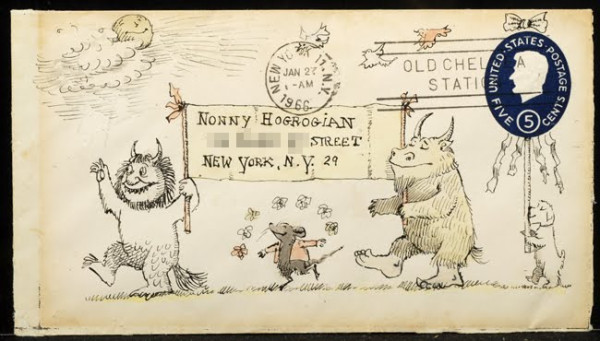
I remember thrilling, as a kid, to the envelope illustrations that the magazines I read ran on their letters pages. Not only would some of these readers (usually readers my age, with a lot of time on their hands) go to the trouble of writing and mailing a physical letter to their periodical of choice, they’d actually get as artistic as possible with the envelope as well. Some even did pretty impressive jobs, though as the envelope-illustrators of our time go, few rank up there with the likes of Maurice Sendak.
“This is how Maurice Sendak sometimes sent his letters,” wrote Letters of Note, tweeting out the image above. “Just imagine getting one.” The author of Where the Wild Things Areand In the Night Kitchen wrote the letter contained in this particular envelope to his fellow children’s book writer-illustrator Nonny Hogrogian, author of One Fine Day and The Contest. Sendak’s close colleagues might have got used to receiving such unconventionally illuminated correspondence, but he also wrote back to each and every one of his young readers, sometimes with similarly prepared correspondence.
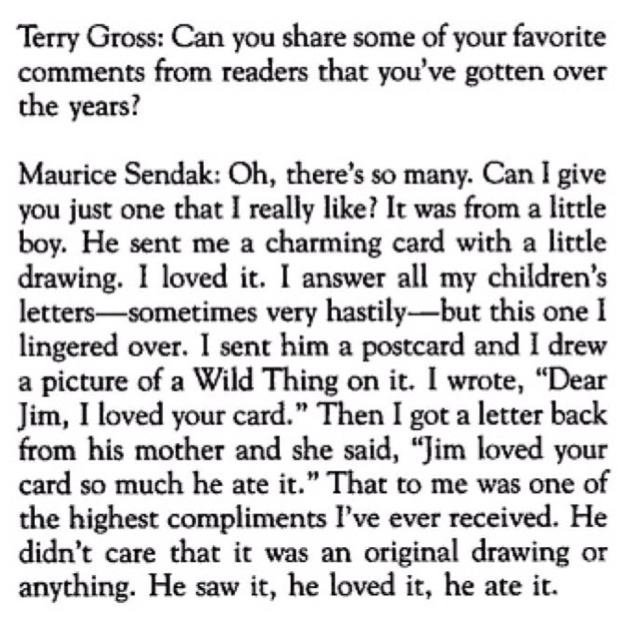
Letters of Notealso tweeted a quote from a Fresh Air interview with Sendak in which Terry Gross asked for his favorite comments from his fans. Sendak told the story of a boy from whom he received “a charming card with a little drawing. I loved it.” In reply, he sent the child a postcard of appreciation and drew a Wild Thing on it, just as he did on the envelope of his letter to Hogrogian. The boy’s mother then wrote back to say her son “Jim loved your card so much he ate it,” which Sendak considered “one of the highest compliments I’ve ever received. He didn’t care that it was an original drawing or anything. He saw it, he loved it, he ate it.”
Some of the most rigorous moral thinkers of the past century have spent time on the wrong side of questions they deemed of vital importance. Mohandas Gandhi, for example, at first remained loyal to the British, manifesting many of the vicious prejudices of the Empire against Black South Africans and lobbying for Indians to serve in the war against the Zulu. Maya Jasanoff in New Republic describes Gandhi during this period of his life as a “crank.” At the same time, he developed his philosophy of non-violent resistance, or satyagraha, in South Africa as an Indian suffering the injustices inflicted upon his countrymen by both the Boers and the British.
Gandhi’s sometime contradictory stances may be in part understood by his rather aristocratic heritage and by the warm welcome he first received in London when he left his family, his caste, and his wife and child in India to attend law school in 1888. And yet it is in London that he first began to change his views, becoming a staunch vegetarian and encountering theosophy, Christianity, and many of the contemporary writers who would shift his perspective over time. Gandhi received a very different reception in England when he returned in 1931, the de facto leader of a burgeoning revolutionary movement in India whose example was so important to both the South African and U.S. civil rights movements of succeeding decades.
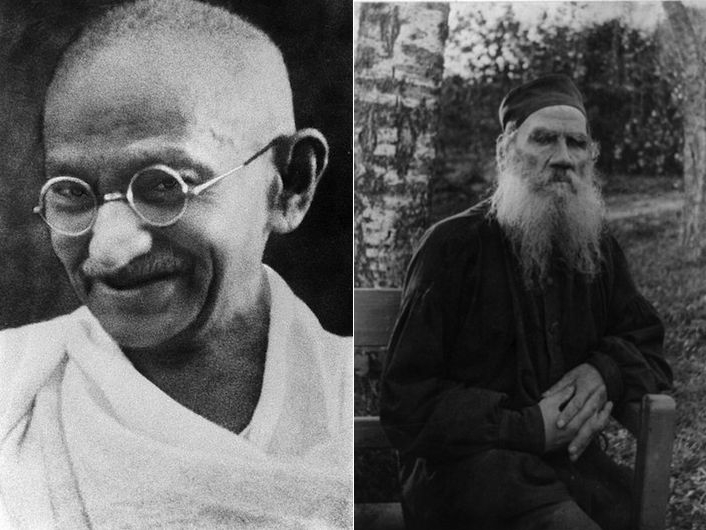
One of the writers who most deeply guided Gandhi’s political, spiritual, and philosophical evolution, Leo Tolstoy, experienced his own dramatic transformation, from landed aristocrat to social radical, and also renounced property and position to advocate strenuously for social equality. Gandhi eagerly read Tolstoy’s The Kingdom of God is Within You, the novelist’s statement of Christian anarchism. The book, Gandhi wrote in his autobiography, “left an abiding impression on me.” After further study of Tolstoy’s religious writing, he “began to realize more and more the infinite possibilities of universal love.”
It was in England, not India, where Gandhi first read “A Letter to a Hindu,” Tolstoy’s 1908 reply to a note from Indian revolutionary Taraknath Das on the question of Indian independence. Tolstoy divides his lengthy, thoughtful “Letter” into short chapters, each of which begins with a quotation from the Vedas. “Indeed,” writes Maria Popova, the missive “puts in glaring perspective the nuanceless and hasty op-eds of our time.” It so affected Gandhi that, in 1909, he wrote to Tolstoy, thus beginning a correspondence between the two that lasted through the following year. “I take the liberty of inviting your attention to what has been going on in the Transvaal for nearly three years,” begins Gandhi’s first letter, somewhat abruptly, “There is in that Colony a British Indian population of nearly 13,000. These Indians have, for several years, labored under various legal disabilities.”
The prejudice against color and in some respects against Asians is intense in that Colony….The climax was reached three years ago, with a law that many others and I considered to be degrading and calculated to unman those to whom it was applicable. I felt that submission to a law of this nature was inconsistent with the spirit of true religion. Some of my friends and I were and still are firm believers in the doctrine of nonresistance to evil. I had the privilege of studying your writings also, which left a deep impression on my mind.
Gandhi refers to a law forcing the Indian population in South Africa to register with the authorities. He goes on to inquire about the authenticity of the “Letter” and asks permission to translate it, with payment, and to omit a negative reference to reincarnation that offended him. Tolstoy responded a few months later, in 1910, allowing the translation free of charge, and allowing the omission, with the qualification that he believed “faith in re-birth will never restrain mankind as much as faith in the immortality of the soul and in divine truth in love.” Overall, however, he expresses solidarity, greeting Gandhi “fraternally” and writing,
God help our dear brothers and co-workers in the Transvaal! Among us, too, this fight between gentleness and brutality, between humility and love and pride and violence, makes itself ever more strongly felt, especially in a sharp collision between religious duty and the State laws, expressed by refusals to perform military service.
The two continued to write to each other, Gandhi sending Tolstoy a copy of his Indian Home Rule and the translated “Letter,” and Tolstoy expounding at length on the errors—and what he saw as the superior characteristics—of Christian doctrine. You can read their full correspondence here, along with Tolstoy’s “Letter to a Hindu” and Gandhi’s introduction to his edition. Despite their religious differences, the exchange further galvanized Gandhi’s passive resistance movement, and in 1910, he founded a community called “Tolstoy Farm” near Johannesburg.
Gandhi’s views on African independence would change, and Nelson Mandela later adopted Gandhi and the Indian independence movement as a standard for the anti-apartheid movement. We’re well aware, of course, of Gandhi’s influence on Martin Luther King, Jr. For his part, Gandhi wrote glowingly of Tolstoy, and the model the novelist provided for his own anti-colonial campaign. In a speech 18 years later, he said, “When I went to England, I was a votary of violence, I had faith in it and none in nonviolence.” After reading Tolstoy, “that lack of faith in nonviolence vanished…Tolstoy was the very embodiment of truth in this age. He strove uncompromisingly to follow truth as he saw it, making no attempt to conceal or dilute what he believed to be the truth. He stated what he felt to be the truth without caring whether it would hurt or please the people or whether it would be welcome to the mighty emperor. Tolstoy was a great advocate of nonviolence in his age.”
The problem of violence, perhaps the true root of all social ills, seems irresolvable. Yet, as most thoughtful people have realized after the wars of the twentieth century, the dangers human aggression pose have only increased exponentially along with globalization and technological development. And as Albert Einstein recognized after the nuclear attacks on Hiroshima and Nagasaki—which he partly helped to engineer with the Manhattan Project—the aggressive potential of nations in war had reached mass suicidal levels.
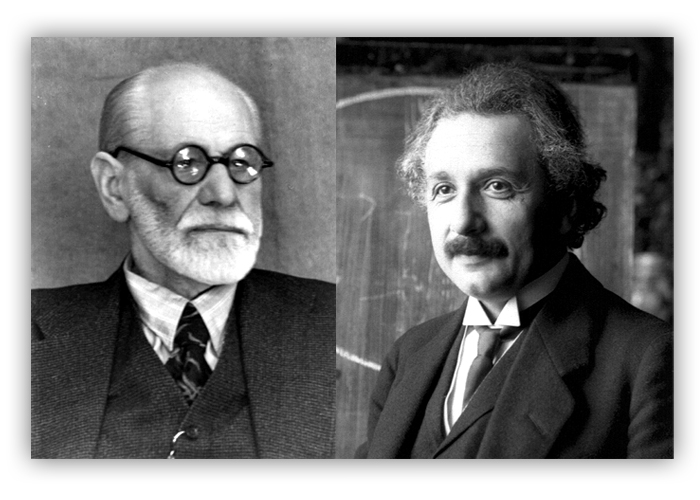
After Einstein’s involvement in the creation of the atomic bomb, he spent his life “working for disarmament and global government,” writes psychologist Mark Leith, “anguished by his impossible, Faustian decision.” Yet, as we discover in letters Einstein wrote to Sigmund Freud in 1932, he had been advocating for a global solution to war long before the start of World War II. Einstein and Freud’s correspondence took place under the auspices of the League of Nation’s newly-formed International Institute of Intellectual Cooperation, created to foster discussion between prominent public thinkers. Einstein enthusiastically chose Freud as his interlocutor.
In his first letter to the psychologist, he writes, “This is the problem: Is there any way of delivering mankind from the menace of war?” Well before the atomic age, Einstein alleges the urgency of the question is a matter of “common knowledge”—that “with the advance of modern science, this issue has come to mean a matter of life and death for Civilization as we know it.”
Einstein reveals himself as a sort of Platonist in politics, endorsing The Republic’s vision of rule by elite philosopher-kings. But unlike Socrates in that work, the physicist proposes not city-states, but an entire world government of intellectual elites, who hold sway over both religious leaders and the League of Nations. The consequence of such a polity, he writes, would be world peace—the price, likely, far too high for any world leader to pay:
The quest of international security involves the unconditional surrender by every nation, in a certain measure, of its liberty of action—its sovereignty that is to say—and it is clear beyond all doubt that no other road can lead to such security.
Einstein expresses his proposal in some sinister-sounding terms, asking how it might be possible for a “small clique to bend the will of the majority.” His final question to Freud: “Is it possible to control man’s mental evolution so as to make him proof against the psychosis of hate and destructiveness?”
Freud’s response to Einstein, dated September, 1932, sets up a fascinating dialectic between the physicist’s perhaps dangerously naïve optimism and the psychologist’s unsentimental appraisal of the human situation. Freud’s mode of analysis tends toward what we would now call evolutionary psychology, or what he calls a “’mythology’ of the instincts.” He gives a mostly speculative account of the prehistory of human conflict, in which “a path was traced that led away from violence to law”—itself maintained by organized violence.
Freud makes explicit reference to ancient sources, writing of the “Panhellenic conception, the Greeks’ awareness of superiority over their barbarian neighbors.” This kind of proto-nationalism “was strong enough to humanize the methods of warfare.” Like the Hellenistic model, Freud proposes for individuals a course of humanization through education and what he calls “identification” with “whatever leads men to share important interests,” thus creating a “community of feeling.” These means, he grants, may lead to peace. “From our ‘mythology’ of the instincts,” he writes, “we may easily deduce a formula for an indirect method of eliminating war.”
And yet, Freud concludes with ambivalence and a great deal of skepticism about the elimination of violent instincts and war. He contrasts ancient Greek politics with “the Bolshevist conceptions” that propose a future end of war and which are likely “under present conditions, doomed to fail.” Referring to his theory of the competing binary instincts he calls Eros and Thanatos—roughly love (or lust) and death drives—Freud arrives at what he calls a plausible “mythology” of human existence:
The upshot of these observations, as bearing on the subject in hand, is that there is no likelihood of our being able to suppress humanity’s aggressive tendencies. In some happy corners of the earth, they say, where nature brings forth abundantly whatever man desires, there flourish races whose lives go gently by; unknowing of aggression or constraint. This I can hardly credit; I would like further details about these happy folk.
Nonetheless, he says wearily and with more than a hint of resignation, “perhaps our hope” that war will end in the near future, “is not chimerical.” Freud’s letter offers no easy answers, and shies away from the kinds of idealistic political certainties of Einstein. For this, the physicist expressed gratitude, calling Freud’s lengthy response “a truly classic reply…. We cannot know what may grow from such seed.”
This exchange of letters, contends Humboldt State University philosophy professor John Powell, “has never been given the attention it deserves.… By the time the exchange between Einstein and Freud was published in 1933 under the title Why War?, Hitler, who was to drive both men into exile, was already in power, and the letters never achieved the wide circulation intended for them.” Their correspondence is now no less relevant, and the questions they address no less urgent and vexing. You can read the complete exchange at professor Powell’s site here.
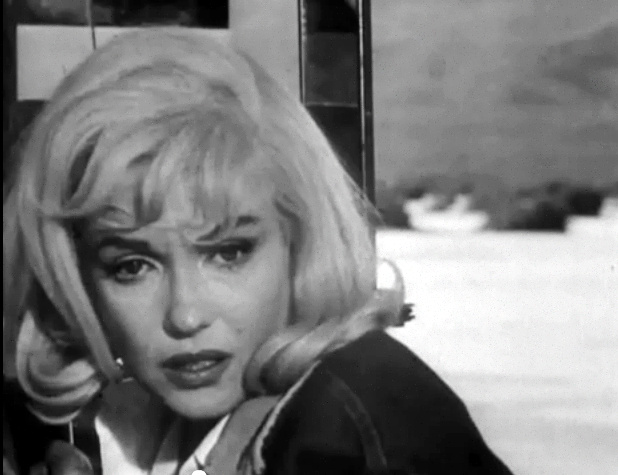
She spent much of that year shooting what would be her final completed movie – The Misfits (see a still from the trailer above). Arthur Miller penned the film, which is about a beautiful, fragile woman who falls in love with a much older man. The script was pretty clearly based on his own troubled marriage with Monroe. The production was by all accounts spectacularly punishing. Shot in the deserts of Nevada, the temperature on set would regularly climb north of 100 degrees. Director John Huston spent much of the shoot ragingly drunk. Star Clark Gable dropped dead from a heart attack less than a week after production wrapped. And Monroe watched as her husband, who was on set, fell in love with photographer Inge Morath. Never one blessed with confidence or a thick skin, Monroe retreated into a daze of prescription drugs. Monroe and Miller announced their divorce on November 11, 1960.
A few months later, the emotionally exhausted movie star was committed by her psychoanalyst Dr. Marianne Kris to the Payne Whitney Psychiatric Clinic in New York. Monroe thought she was going in for a rest cure. Instead, she was escorted to a padded cell. The four days she spent in the psych ward proved to be among the most distressing of her life.
In a riveting 6‑page letter to her other shrink, Dr. Ralph Greenson, written soon after her release, she detailed her terrifying experience.
There was no empathy at Payne-Whitney — it had a very bad effect — they asked me after putting me in a “cell” (I mean cement blocks and all) for very disturbed depressed patients (except I felt I was in some kind of prison for a crime I hadn’t committed. The inhumanity there I found archaic. They asked me why I wasn’t happy there (everything was under lock and key; things like electric lights, dresser drawers, bathrooms, closets, bars concealed on the windows — the doors have windows so patients can be visible all the time, also, the violence and markings still remain on the walls from former patients). I answered: “Well, I’d have to be nuts if I like it here.”
Monroe quickly became desperate.
I sat on the bed trying to figure if I was given this situation in an acting improvisation what would I do. So I figured, it’s a squeaky wheel that gets the grease. I admit it was a loud squeak but I got the idea from a movie I made once called “Don’t Bother to Knock”. I picked up a light-weight chair and slammed it, and it was hard to do because I had never broken anything in my life — against the glass intentionally. It took a lot of banging to get even a small piece of glass — so I went over with the glass concealed in my hand and sat quietly on the bed waiting for them to come in. They did, and I said to them “If you are going to treat me like a nut I’ll act like a nut”. I admit the next thing is corny but I really did it in the movie except it was with a razor blade. I indicated if they didn’t let me out I would harm myself — the furthest thing from my mind at that moment since you know Dr. Greenson I’m an actress and would never intentionally mark or mar myself. I’m just that vain.
During her four days there, she was subjected to forced baths and a complete loss of privacy and personal freedom. The more she sobbed and resisted, the more the doctors there thought she might actually be psychotic. Monroe’s second husband, Joe DiMaggio, rescued her by getting her released early, over the objections of the staff.
You can read the full letter (where she also talks about reading the letters of Sigmund Freud) over at Letters of Note. And while there, make sure you pick up a copy of the very elegant Letters of Note book.
Jonathan Crow is a Los Angeles-based writer and filmmaker whose work has appeared in Yahoo!, The Hollywood Reporter, and other publications. You can follow him at @jonccrow. And check out his blog Veeptopus, featuring lots of pictures of vice presidents with octopuses on their heads. The Veeptopus store is here.
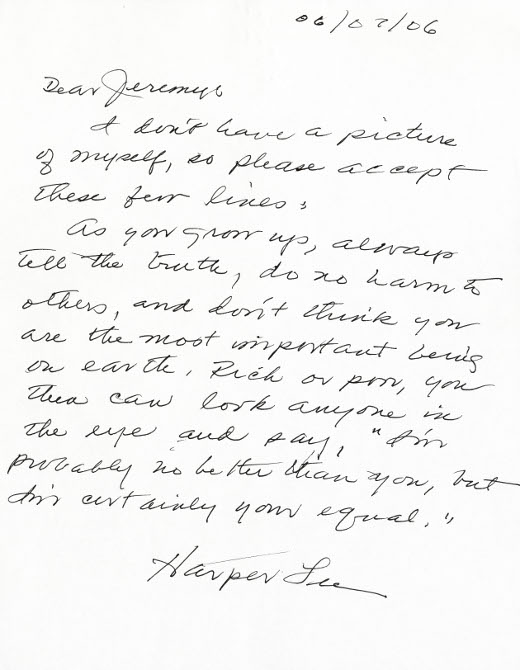
Harper Lee wrote To Kill a Mockingbird in 1960. More than a half decade later, the novel remains one of the most widely-read books in American classrooms. And students still write the 89-year-old author, requesting photographs and autographs.
Occasionally, they get a little more than they bargained for. Take, for example, a student named “Jeremy,” who wrote Lee in 2006 and requested a photo. In return, he got something more valuable and enduring: some pithy life advice. The letter Harper sent to Jeremy reads as follows:
06/07/06
Dear Jeremy
I don’t have a picture of myself, so please accept these few lines:
As you grow up, always tell the truth, do no harm to others, and don’t think you are the most important being on earth. Rich or poor, you then can look anyone in the eye and say, “I’m probably no better than you, but I’m certainly your equal.”
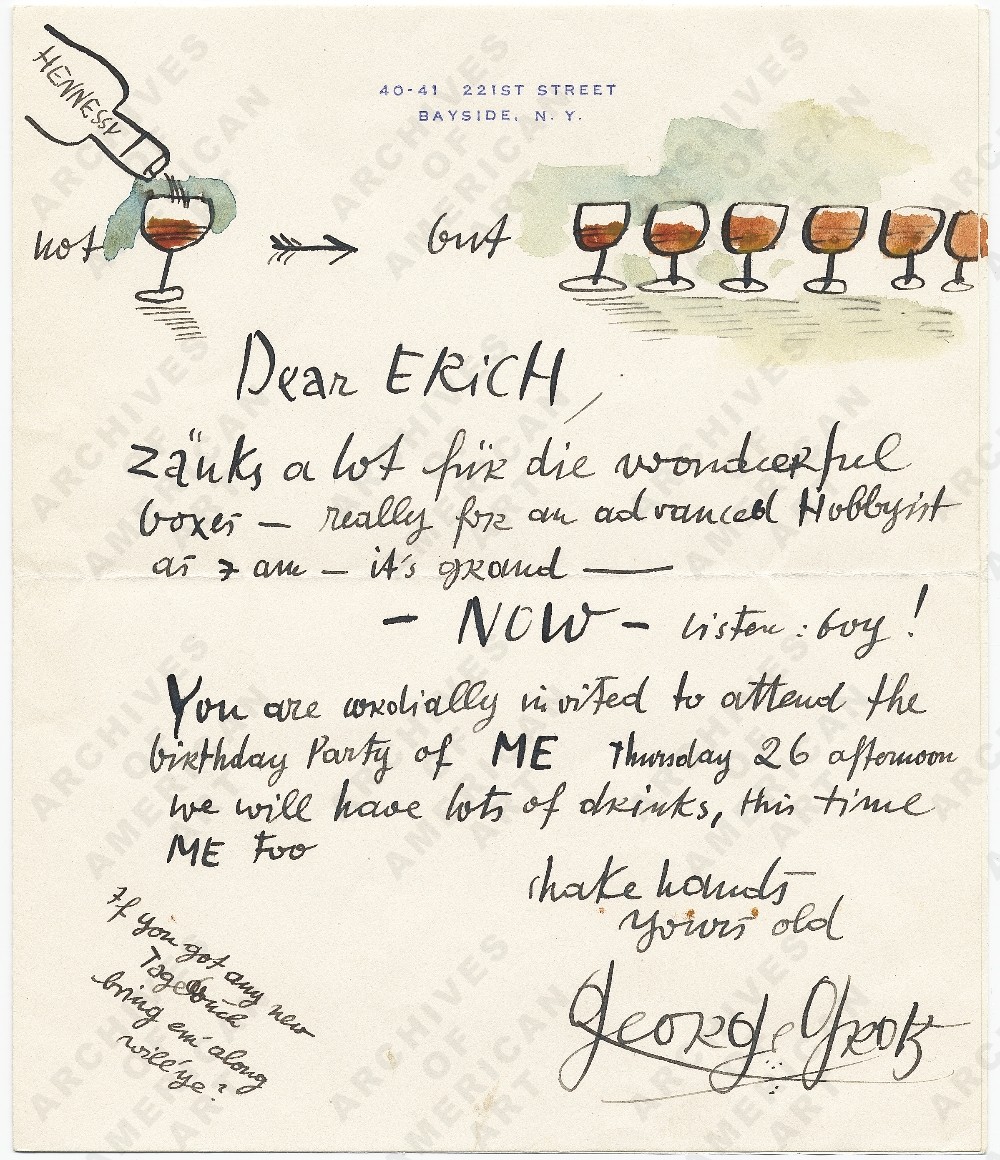
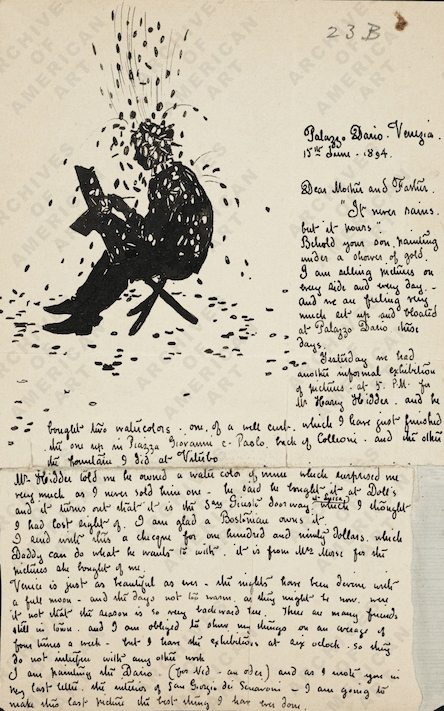
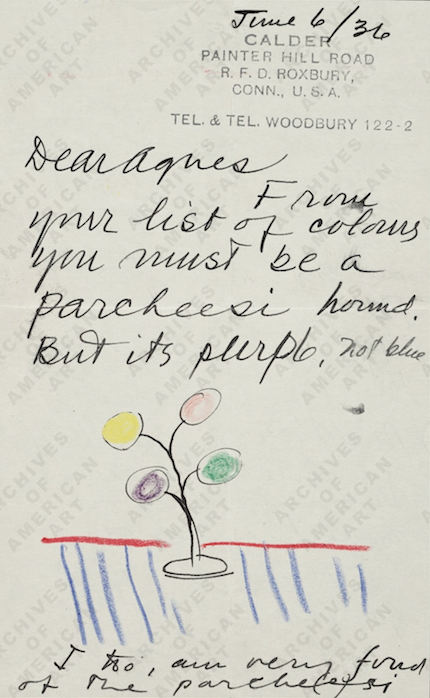
The illustrated letters make for humanizing insights into the private world of artists that we usually only experience through their work.
The 1945 letter from George Grosz to Erich S. Herrmann (above) is to invite his friend (and art dealer) to his birthday party, promising not just one glass of Hennessy, but six (and more). “Listen: boy!” he declares. “You are cordially invited to attend the birthday party of ME.” This was when Grosz was in his 50s and living in Huntington, New York. It should be noted that Grosz met his end falling down a flight of stairs while drunk, but the man knew how to party.
Joseph Lindon Smith was an American illustrator best known for being the artist who traveled to Egypt and documented the excavations at Giza and the Valley of the Kings, very faithful in their representation. But in 1894, this letter finds Smith, 31 years old, living in Paris, trying to make a go of it as an artist, and having enough success to tell his parents: “Behold your son painting under a shower of gold,” he writes. Check out that handwriting: it’s beautiful.
Sculptor Alexander Calderwrote this note to Vassar colleague and friend Agnes Rindge Claflin in 1936, continuing some conversation they were having about color, and noting her choices mark her as a “Parcheesi hound,” and adding that he’s a fan of the game too. The little illustration, which is straight Calder, is cute too. Claflin would later go on to narrate one of MOMA’s first films to accompany an exhibit, Herbert Matter’s 1944 film on Calder, Sculpture and Constructions.
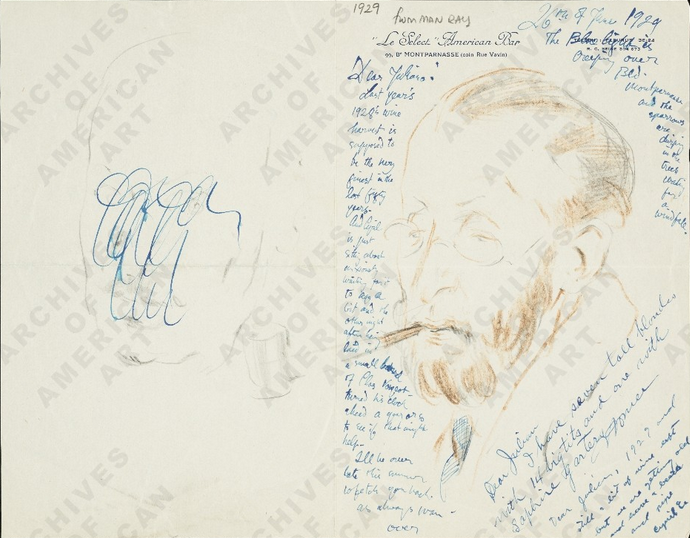
This Man Rayletter to painter Julian E. Levi looks like it has been worried over or recycled—-“Dear Julian” appears several times on the stationery from Le Select American Bar in Montparnasse. It’s a bit difficult to make out all his writing: he starts mentioning “Last year’s 1928 wine harvest is supposed to be the very finest in the last fifty years” at the beginning, but I’m more fascinated with the bottom right: “I have seven tall blondes with 14 big tits and one with sapphire garters.”
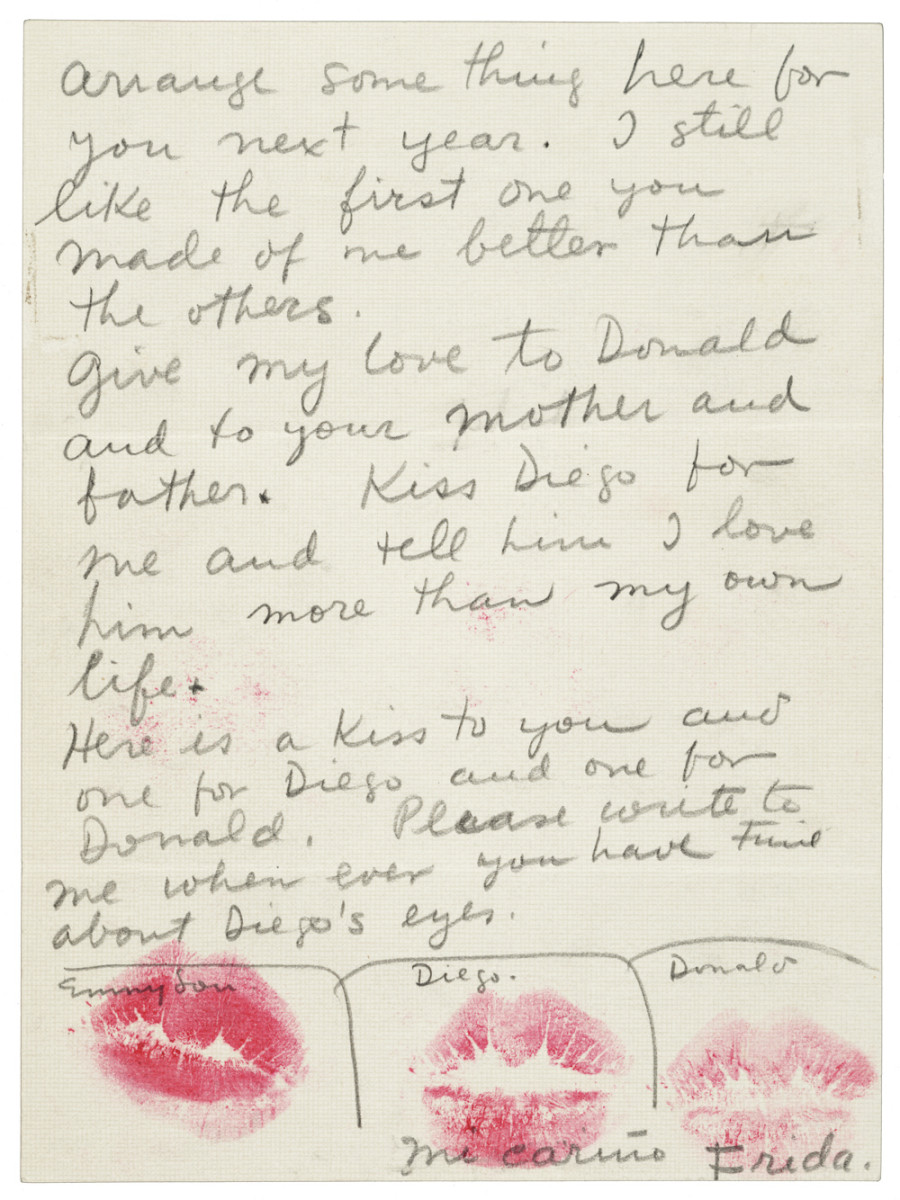
Finally, we close out with a letter Frida Kahlo sent to her friend Emmy Lou Packard in 1940, where she thanked Packard for taking care of Diego during an illness. The letter gets sealed, Priscilla Frank notes at HuffPo, with three lipstick kisses — “one for Diego, one for Emmy Lou, and one for her son.”
There’s plenty more illustrated letters to explore at the Smithsonian site and in Kirwin’s handsome book, featuring artists well known and obscure, but all who knew how to compose a good letter.
Ted Mills is a freelance writer on the arts who currently hosts the FunkZone Podcast. You can also follow him on Twitter at @tedmills, read his other arts writing at tedmills.com and/or watch his films here.
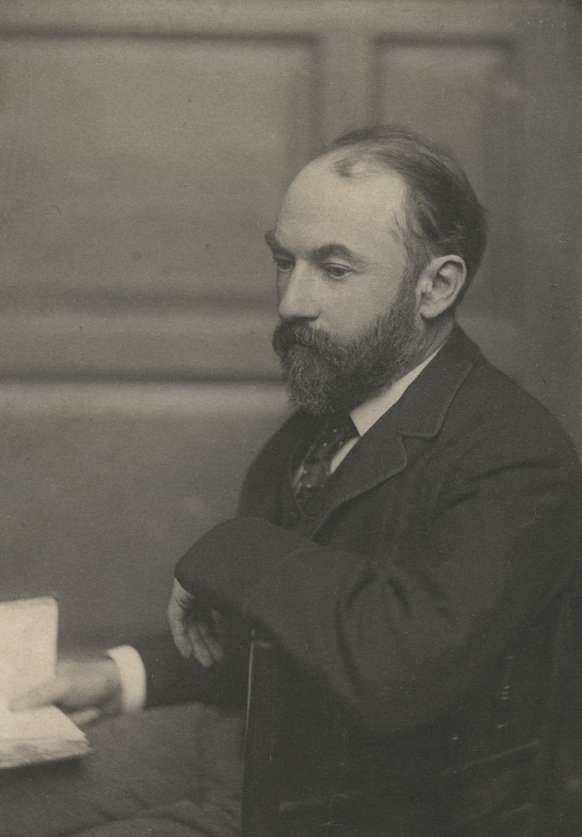
Thomas Hardy—architect, poet, and writer (above)—gave us the fierce, stormy romance Far From the Madding Crowd, currently impressing critics in a film adaptation by Thomas Vinterberg. He also gave us Tess of the D’Urbervilles, The Return of the Native, and Jude the Obscure, books whose persistently grim outlook might make them too depressing by far were it not for Hardy’s engrossing prose, unforgettable characterization, and, perhaps most importantly, unshakable sense of place. Hardy set most of his novels in a region he called Wessex, which—much like William Faulkner’s Yoknapatawpha—is a thinly fictionalized recreation of his rural hometown of Dorchester and its surrounding counties.
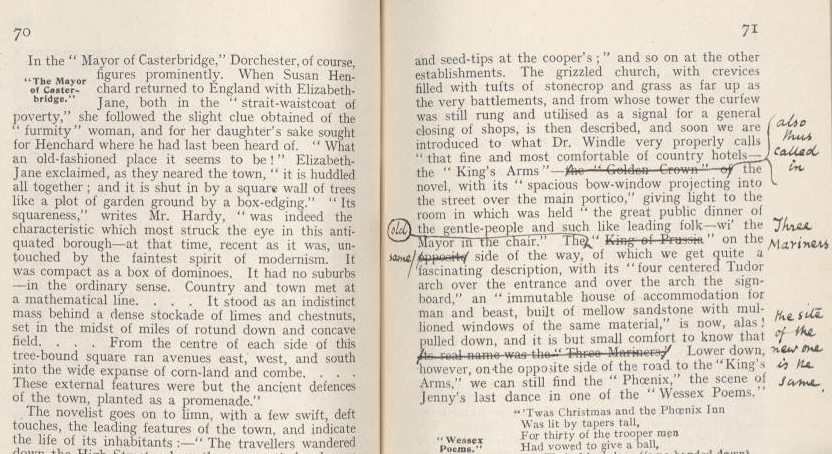
Now, thanks to the University of Texas at Austin’s Harry Ransom Center, we can learn all about this ancient region in South West England, and Hardy’s transmutation of it, through Hardy’s own proof copy of a 1905 book by Frank R. Heath called Dorchester (Dorset) and its Surroundings, with revisions in Hardy’s hand. In the excerpt above, for example, from page 36 of this scholarly work, the author discusses Hardy’s use of Dorchester in The Mayor of Casterbridge and the so-called “Wessex Poems.” In the margins on the right, we see Hardy’s corrections and glosses. Though this may not seem the most exciting piece of Hardy memorabilia, for students of the author and his investment in a rural corner of England, it is indeed a treasure.
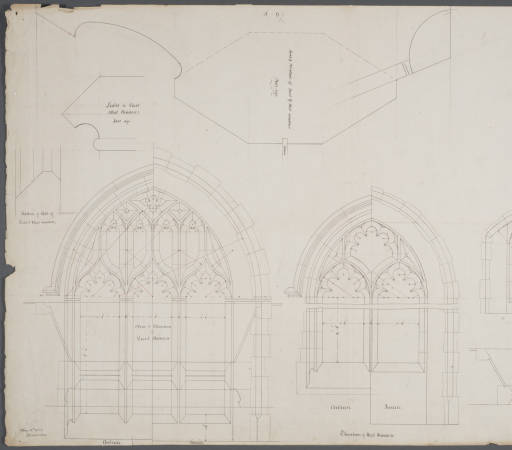
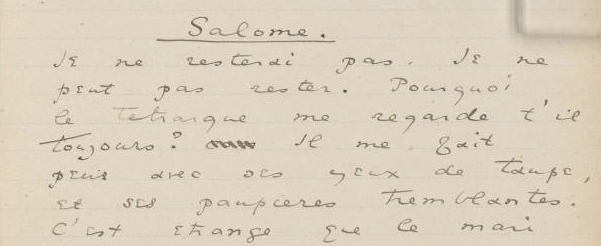
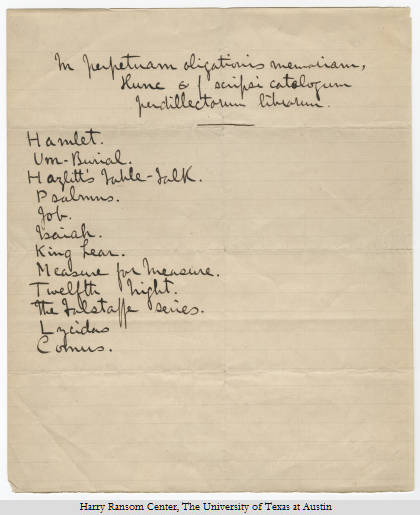
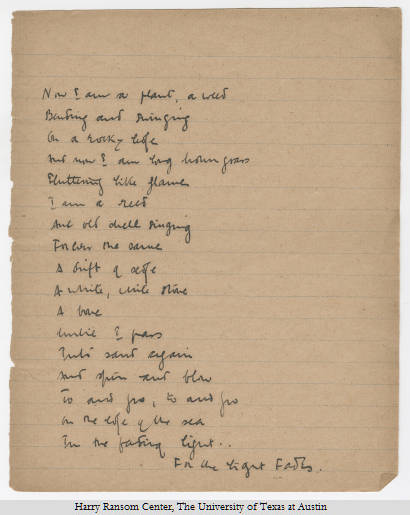
The Hardy archive also contains scans of the author’s correspondence, manuscripts and signed typescripts, and architectural drawings, like that of St. Juliot’s Church in Cornwall, above. This extensive digital Hardy collection is but one of many housed in the Ransom Center’s Project Reveal, an acronym for “Read and View English & American Literature.” Read and view you can indeed, through the intimacy of first drafts, manuscripts, personal writing, and other ephemera.
A few weeks ago, we featured Benedict Cumberbatch’s reading of the letter Alan Turing (whom Cumberbatch portrayed in last year’s The Imitation Game) wrote before his 1952 conviction of “gross indecency.” It came from Letters Live, “a series of live events celebrating the power of literary correspondence” put on by publisher Canongate and Cumberbatch’s production company SunnyMarch and “inspired by Shaun Usher’s Letters of Note” — a site Open Culture readers surely know well by now.
Back in 2013, Josh Jones wrote a post here on Virginia Woolf’s handwritten 1941 suicide note, “a haunting and beautiful document, in all its unadorned sincerity behind which much turmoil and anguish lie.” Having seen that note, perhaps you’d also like to hear it performed. If so, you’ll want to watch the Letters Live video at the top of the post, which offers an interpretation of the To the Lighthouse author’s declaration that “I can’t fight any longer” by Cumberbatch’s Sherlock co-star Louise Brealey.
If you haven’t had your fill of literary correspondence read aloud by these noted British performers, do pay a visit to Letters Live’s Youtube page, where you can also hear Brealey reading letters from Bessie Moore and Clementine Churchill as well as Cumberbatch reading letters from Chris Barker and more from Alan Turing. Watching internet videos of live performances of traditional letters — the mind may reel at all these simultaneous layers of mediation and interpretation, but the pieces of correspondence chosen still speak straight to the heart.
We're hoping to rely on loyal readers, rather than erratic ads. Please click the Donate button and support Open Culture. You can use Paypal, Venmo, Patreon, even Crypto! We thank you!
Open Culture scours the web for the best educational media. We find the free courses and audio books you need, the language lessons & educational videos you want, and plenty of enlightenment in between.
 and In the Night Kitchen
 wrote the letter contained in this particular envelope to his fellow children’s book writer-illustrator Nonny Hogrogian, author of One Fine Day
 and The Contest
 . Sendak’s close colleagues might have got used to receiving such unconventionally illuminated correspondence, but he also wrote back to each and every one of his young readers, sometimes with similarly prepared correspondence.