Before the days of Harry Potter, generations of young readers let their imaginations take flight with The Chronicles of Narnia, a series of seven fantasy novels written by C. S. Lewis. Like his friend J.R.R. Tolkien, Lewis served on the English faculty at Oxford University and took part in the Inklings, an Oxford literary group dedicated to fiction and fantasy.
Published between 1950 and 1956, The Chronicles of Narnia has sold over 100 million copies in 47 languages, delighting younger and older readers worldwide. The seven volumes in the series include:
The Lion, the Witch and the Wardrobe
Prince Caspian: The Return to Narnia
The Voyage of the Dawn Treader
The Silver Chair
The Horse and His Boy
The Magician’s Nephew
The Last Battle
Now, with the apparent blessing of the C.S. Lewis estate, the seven volume series is available in a free audio format. There are 101 audio recordings in total, each averaging 30 minutes and read by Chrissi Hart. Download the complete audio via the web or RSS Feed. Or start listening to the opening chapters of The Lion, The Witch, and The Wardrobe right below.
We have added The Chronicles of Narnia recordings to our collection of Free Audio Books, where you will find many other great classics. h/t metafilter
Let’s let The Paris Review give you the backstory:
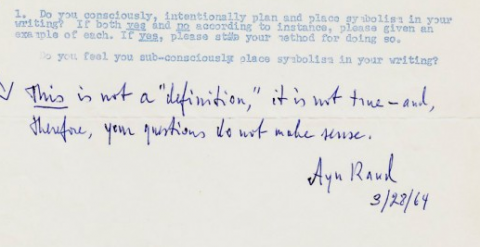
In 1963, a sixteen-year-old San Diego high school student named Bruce McAllister sent a four-question mimeographed survey to 150 well-known authors of literary, commercial, and science fiction. Did they consciously plant symbols in their work? he asked. Who noticed symbols appearing from their subconscious, and who saw them arrive in their text, unbidden, created in the minds of their readers? When this happened, did the authors mind?
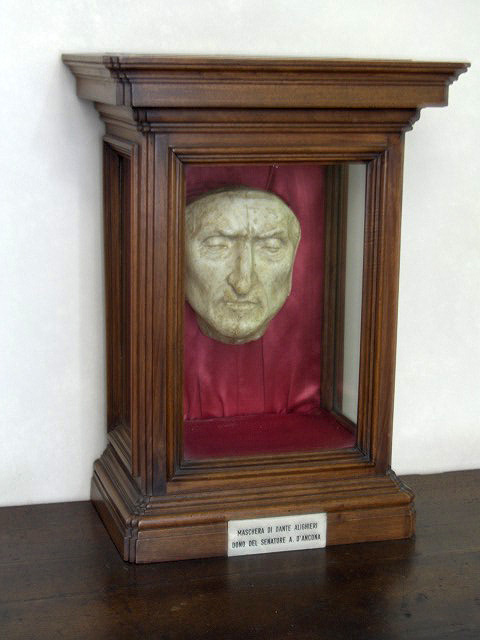
Death masks — they have been around since the days of King Tut in Ancient Egypt, and (perhaps) Agamemnon and Cassandra in Ancient Greece. A way to remember the character and expressions of the dead, this memorial practice continued right down through the Middle Ages when wax and plaster became the materials of choice.
In early 1960, Hunter S. Thompson was just 22 years old and his journalism career was already on the skids. His last two jobs had ended badly. At one place he was fired for insubordination; at the other, for smashing the office candy machine in a fit of rage after it swallowed his money. So he drifted down to San Juan, Puerto Rico, and took a job at a newspaper called El Sportivo. His beat: bowling.
The newspaper went out of business a few months later, but Thompson transformed his experiences into a novel, The Rum Diary. In the prologue he describes the atmosphere of a San Juan newsroom peopled with shiftless expatriates:
They ran the whole gamut from genuine talents and honest men, to degenerates and hopeless losers who could barely write a post card–loons and fugitives and dangerous drunks, a shoplifting Cuban who carried a gun in his armpit, a half-wit Mexican who molested small children, pimps and pederasts and human chancres of every description, most of them working just long enough to make the price of a few drinks and a plane ticket.
Thompson finished the novel in 1961, but his career as a fiction writer was soon eclipsed by a growing recognition of his gift for narrative journalism, and The Rum Diary wasn’t published until 1998. As soon as it came out there was talk of a film adaptation. “Hunter’s dream,” said historian Douglas Brinkley, “was to have The Rum Diary as a movie, because I think he always saw it as a kind of warped Casablanca.”
Thompson killed himself before that dream ever came to fruition. After more than a decade of delays, a film version of The Rum Diaryfinally opened last weekend to mixed reviews and small audiences. Johnny Depp plays the alcoholic newpaperman Paul Kemp as if he were a young Thompson: more laid back than the gonzo journalist of Fear and Loathing in Las Vegas, but with the same peculiar alienation and low, muttering voice. Director Bruce Robinson creates the vivid atmosphere of a Caribbean boomtown inhabited by shady businessmen, clueless tourists, drunken journalists and resentful natives. But the story is like its protagonist: adrift, irresolute.
To learn about Thompson’s early efforts to get the story made into a movie, you can watch The Rum Diary Back Story, filmed from 1998 through 2002 by Wayne Ewing. It documents the author’s initial pride at the long-overdue publication of the novel, followed by his growing frustration with the glacial progress in turning it into a movie. Ewing filmed Thompson at his home in Colorado and in a fireside meeting at Depp’s home in California. In one comical scene (episode eight) Warren Zevon reads aloud an insulting letter Thompson had sent to a producer.
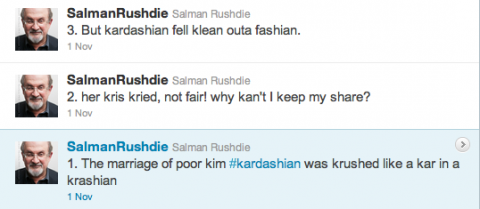
Perhaps you know the backstory; perhaps you don’t. This week, socialite and reality “star” Kim Kardashian announced that her 72-day marriage to Kris Humphries will end in divorce. In response, the tabloids buzzed … and famed author Salman Rushdie (Midnight’s Children, The Satanic Verses and The Moor’s Last Sigh) took to Twitter and offered up a nice little limerick. It starts with the blue section and moves up the page…
A mere twenty months after Joan Didion’s husband, John Gregory Dunne, died of a heart attack, Didion’s only child, Quintana Roo Dunne, contracted pneumonia, lapsed into septic shock and passed away. She was only 39 years old. Didion grappled with the first death in her 2005 bestseller, The Year of Magical Thinking. Now, with her new memoir Blue Nights, she turns to her child’s passing, to a parent’s worst fear realized. In this short film shot by her nephew, director Griffin Dunne, Didion reads from Blue Nights. The scene opens with memories from her daughter’s wedding and ends with some big existential questions and the refrain, “When we talk about mortality we are talking about our children.”
This “audiobook for the eyes,” as Griffin Dunne calls it, runs six plus minutes. The actual Blue Nights audio book is now available on Audible.
A big thanks goes to @opedr for sending the Didion clip our way…
Back by popular demand, and certainly the right video for today’s holiday — the 1953 animated film version of Poe’s “The Tell-Tale Heart,” narrated by James Mason. Upon its release, the film was given a bizarre reception. In the UK, the British Board of Film Censors gave the film an “x” rating, deeming it unsuitable for adult audiences. Meanwhile, “The Tell-Tale Heart” was nominated for the Academy Award for Best Animated Short Film in the US, though it ultimately lost to a Disney production. The film runs a short 7:24, and now appears in our collection of Free Movies Online.
And then we have another small Halloween treat — your favorite actor, Christopher Walken, reading another classic Poe story, The Raven. It’s now added to our collection of Free Audio Books, and don’t miss other readings by Walken right below.
This month marks the 50th anniversary of Catch-22, Joseph Heller’s exuberantly surreal comedy about the insanity of war. The novel grew out of Heller’s experiences as an Air Force bombardier in Europe during World War II. Surprisingly, the author’s own attitude toward the war bore little resemblance to the views of his immortal protagonist, John Yossarian.
“I have no complaints about my service at all,” Heller told Allan Gregg of Canadian public broadcasting in an interview (see above) recorded not long before the author’s death in 1999. “If anything, it was beneficial to me in a number of ways.” Catch-22, he says, was a response to what transpired during the novel’s 15-year gestation: the cold war, the McCarthy hearings–“the hypocrisy, the bullying that was going on in America.”
As E.L. Doctorow told a reporter the day after Heller’s death, “When ‘Catch-22’ came out, people were saying, ‘Well, World War II wasn’t like this.’ But when we got tangled up in Vietnam, it became a sort of text for the consciousness of that time.” The novel went on to sell more than 10 million copies, and its title, as The New York Times wrote in Heller’s obituary, “became a universal metaphor not only for the insanity of war but also for the madness of life itself.”
In the story, Yossarian strives to get himself grounded from future missions, only to come up against the genius of bureaucratic logic:
There was only one catch and that was Catch-22, which specified that a concern for one’s safety in the face of dangers that were real and immediate was the process of a rational mind. Orr was crazy and could be grounded. All he had to do was ask; and as soon as he did, he would no longer be crazy and would have to fly more missions. Orr would be crazy to fly more missions and sane if he didn’t, but if he were sane he had to fly them. If he flew them he was crazy and didn’t have to; but if he didn’t want to he was sane and had to. Yossarian was moved very deeply by the absolute simplicity of this clause of Catch-22 and let out a respectful whistle.
Heller went on to write six more novels, three plays, two memoirs and a collection of short stories, but none were as successful as his debut novel. In later years when Heller was asked why he hadn’t written another book like Catch-22, his stock response was: “Who has?”
We're hoping to rely on loyal readers, rather than erratic ads. Please click the Donate button and support Open Culture. You can use Paypal, Venmo, Patreon, even Crypto! We thank you!
Open Culture scours the web for the best educational media. We find the free courses and audio books you need, the language lessons & educational videos you want, and plenty of enlightenment in between.
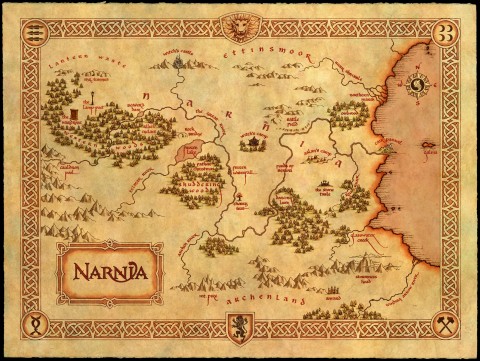 Before the days of Harry Potter, generations of young readers let their imaginations take flight with The Chronicles of Narnia, a series of seven fantasy novels written by C. S. Lewis. Like his friend J.R.R. Tolkien, Lewis served on the English faculty at Oxford University and took part in the Inklings, an Oxford literary group dedicated to fiction and fantasy.