As the co-founders of Impactstory describe it, Unpaywall is “an extension for Chrome and Firefox that links you to free full-text as you browse research articles. Hit a paywall? No problem: click the green tab and read it free!”
Their FAQ gets into the mechanics a little more, but here’s the gist of how it works: “When you view a paywalled research article, Unpaywall automatically looks for a copy in our index of over 10 million free, legal fulltext PDFs. If we find one, click the green tab to read the article.”
While many science publishers put a paywall in front of scientific articles, it’s often the case that these articles have been published elsewhere in an open format. “More and more funders and universities are requiring authors to upload copies of their papers to [open] repositories. This has created a deep resource of legal open access papers…” And that’s what Unpaywall draws on.
This seems like quite a boon for researchers, journalists, students and policymakers. You can download the Unpaywall extension for Chrome and Firefox, or learn more about the new service at the Unpaywall website.
If you would like to support the mission of Open Culture, consider making a donation to our site. It’s hard to rely 100% on ads, and your contributions will help us continue providing the best free cultural and educational materials to learners everywhere. You can contribute through PayPal, Patreon, and Venmo (@openculture). Thanks!
The early years of the Soviet Union roiled with internal tensions, intrigues, and ideological warfare, and the new empire’s art reflected its uneasy heterodoxy. Formalists, Futurists, Suprematists, Constructivists, and other schools mingled, published journals, critiqued and reviewed each other’s work, and like modernists elsewhere in the world, experimented with every possible medium, including those just coming into their own at the beginning of the 20th century, like film and photography.
These two mediums, along with radio, also happened to serve as the primary means of propagandizing Soviet citizens and carrying the messages of the Party in ways everyone could understand. And like much of the rest of the world, photography engendered its own consumer culture.
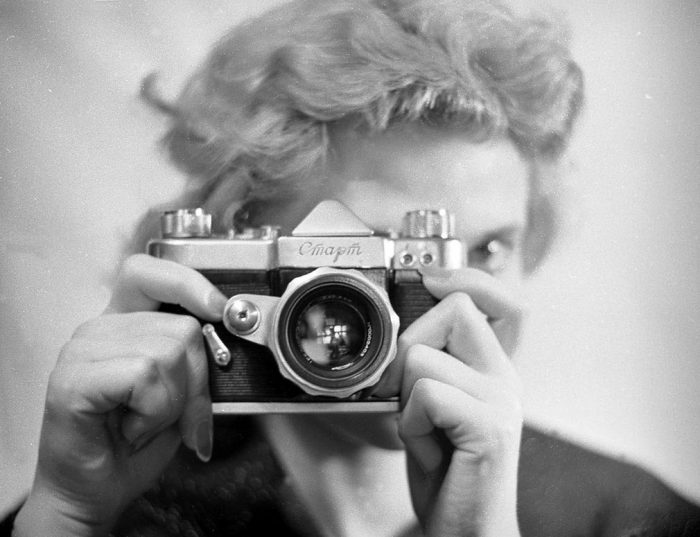
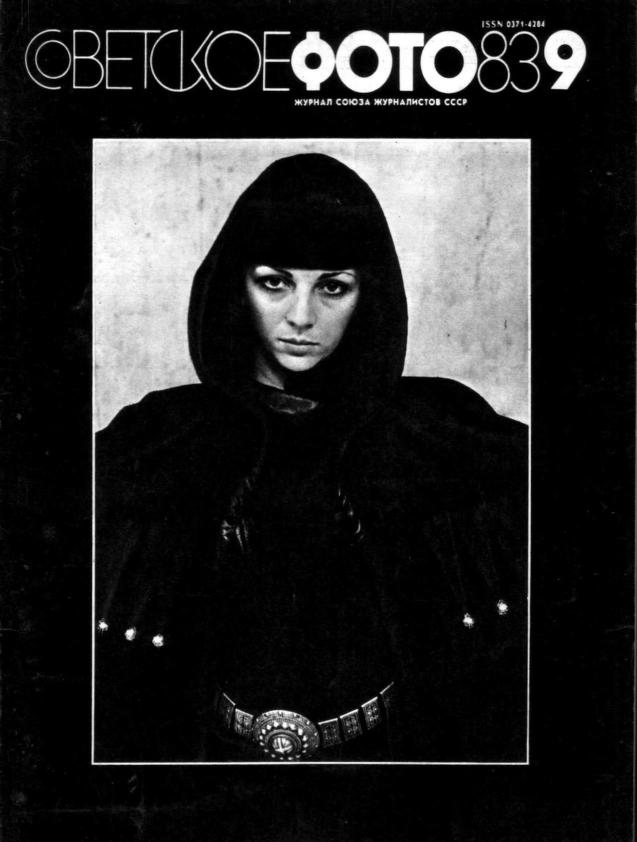
Out of these competing impulses came Soviet Photo (Sovetskoe foto), a monthly photography magazine featuring, writes Ksenia Nouril at the Museum of Modern Art’s site, “editorials, letters, articles, and photographic essays alongside advertisements for photography, photographic processes, and photographic chemicals and equipment.”
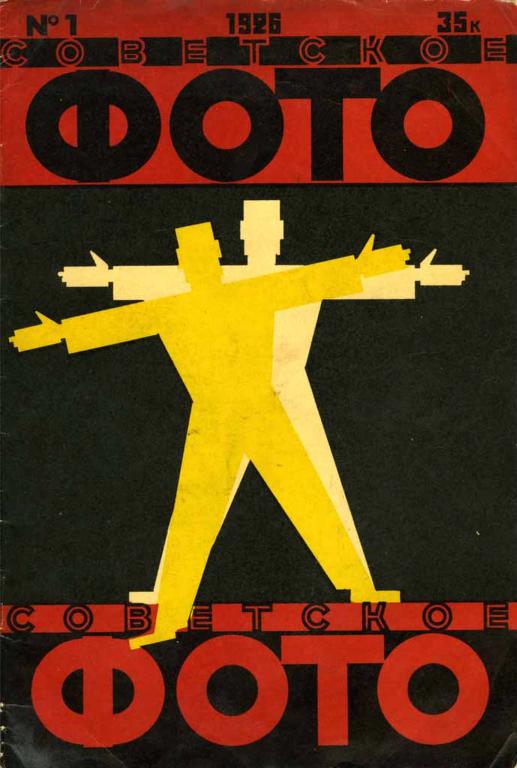
Soviet Photo was not founded by artists, but by a photojournalist, Arkady Shaikhet, in 1926 (see the first issue’s cover at the top). Though its audience primarily consisted of a “Soviet amateur photographers and photo clubs,” its early years freely mixed documentary, didacticism, and experimental art. It published the “works of international and professional photographers” and that of avant-gardists like Constructivist painter and graphic designer Aleksander Rodchenko.
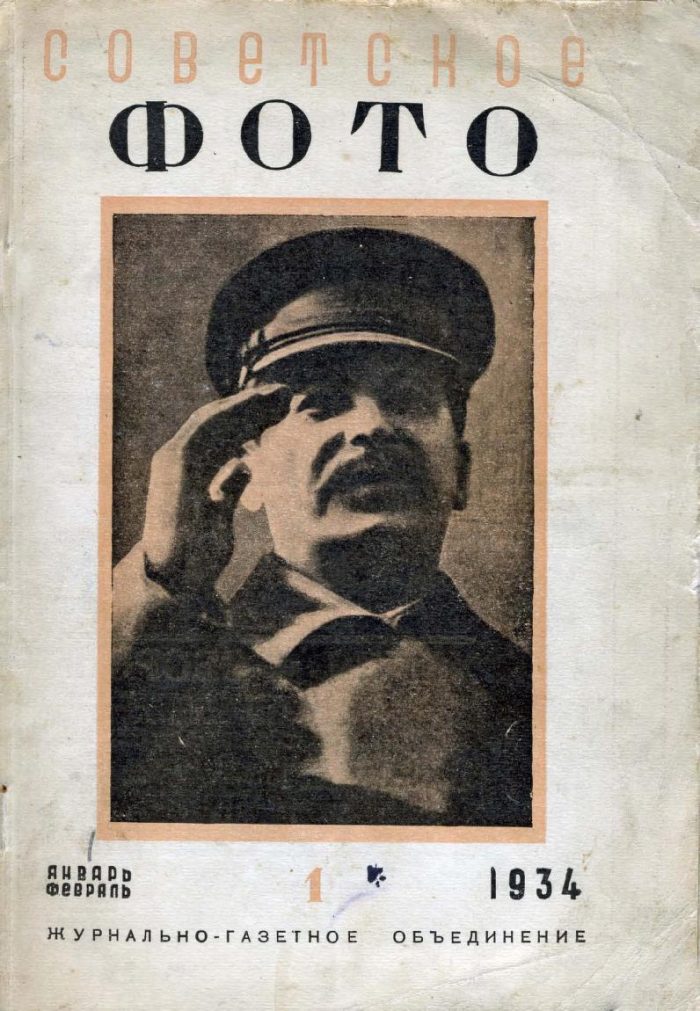
The aesthetic purges under Stalin—in which artists and writers one after another fell victim to charges of elitism and obscurantism—also played out in the pages of Soviet Photo. “Even before Socialist Realism was decreed to be the official style of the Soviet Union in 1934,” Nouril writes, “the works of avant-garde photographers,” including Rodchenko, “were denounced as formalist (implying that they reflected a foreign and elitist style).” Soviet Photo boycotted Rodchenko’s work in 1928 and “throughout the 1930s this state-sanctioned journal became increasingly conservative,” emphasizing “content over form.”
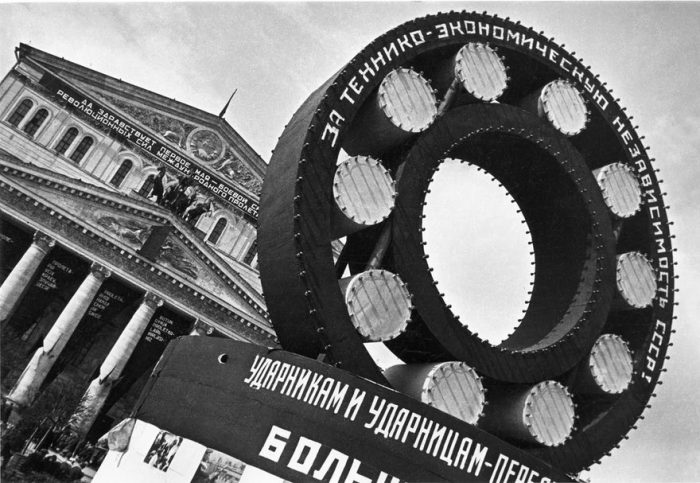
This does not mean that that the contents of the magazine were inelegant or pedestrian. Though it once briefly bore the name Proletarskoe foto (Proletariat Photography), and tended toward monumental and industrial subjects, war photography, and idealizations of Soviet life during the Stalinist years. After the 60s thaw, experimental photomontages returned, and more abstract compositions became commonplace. Soviet Photo also kept pace with many glossy magazines in the West, with stunning full-color photojournalism and, after glasnost and the fall of the Berlin wall, high fashion and advertising photography.
Fans of photography, Soviet history, or some measure of both, can follow Soviet Photo’s evolution in a huge archive featuring 437 digitized issues, published between 1926 and 1991. Expect to find a gap between 1942 and 1956, when publication ceased “due to World War II and the war’s aftereffects.” Aside from these years and a few other missing months, the archive contains nearly every issue of Soviet Photo, free to browse or download in various formats. “Dig deep enough,” writes photo blog PetaPixel, “and you’ll find some really interesting (and surprisingly familiar) things in there.” Enter the archive here.
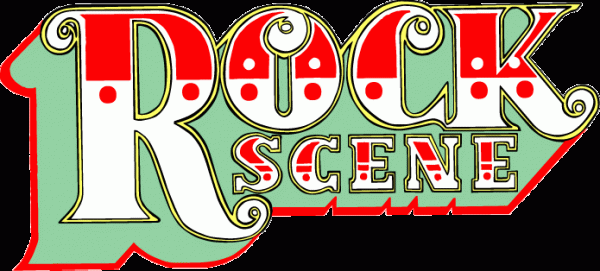
The website RockScenester, assembled by Ryan Richardson, has created a complete online archive of Rock Scene magazine, which ran from 1973 through 1982.
In the book There Goes Gravity: A Life in Rock and Roll, Rock Scene’sco-founder Lisa Robinson writes, the magazine “was printed on cheap paper and the ink came off on your hands.” “It was an irreverent, cult music magazine that documented and glamorized the rise of glamrock and punk rock.” “Part fanzine, part tabloid, Rock Scenewas where you could see what happened before or after the show, particularly at parties and backstage.” “Years after Rock Scenewas out out print,” Robinson continues, “musicians–Michael Stipe, Duran Duran’s Nick Rhodes, Pearl Jam’s Jeff Ament, Thurston Moore, Chrissie Hynde and many others–would tell me that they grew up trying to find it in their small towns.” They wouldn’t have that problem today.
If you would like to support the mission of Open Culture, consider making a donation to our site. It’s hard to rely 100% on ads, and your contributions will help us continue providing the best free cultural and educational materials to learners everywhere. You can contribute through PayPal, Patreon, and Venmo (@openculture). Thanks!
“I’m tired of politics, I just want to talk about my art,” I sometimes hear artists—and musicians, actors, writers, etc.—say. And I sometimes see their fans say, “you should shut up about politics and just talk about your art.” Given the current onslaught of political news, commentary, scandal, and alarm, these are both understandable sentiments. But anyone who thinks that art and politics once occupied separate spheres harbors a historically naïve belief. The arts have always been political, and all the more so during times of high drama and tension like the one we live in now. We can look, for example, to John Milton’s Paradise Lost, Jacques-Louis David’s Death of Marat, or Pablo Picasso’s Guernica, just to mention three particularly striking historical examples.
The political acts of avant-garde artists like Picasso in the 20th century were as much revolutions in form as in content, and we begin to see the most radical statements emerge in the teens and twenties with Dada, Surrealism, and other modernisms: sometimes explicitly political in their orientation—spanning the gamut from anarchism to fascism—sometimes more subtly partisan.
This period was also, perhaps not coincidentally, the Golden Age of the arts journal, when every movement, circle, and splinter group in Europe and the U.S. had its own publication. For many years now, Princeton University’s Blue Mountain Project, a joint effort from “scholars, librarians, curators, and digital humanities researchers,” has archived complete issues of several such journals, and we’ve featured a couple notable examples in previous posts.
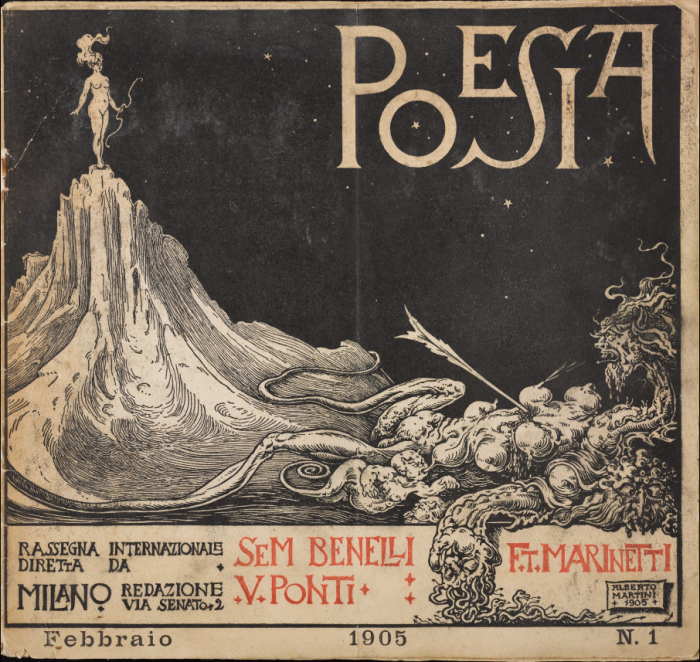
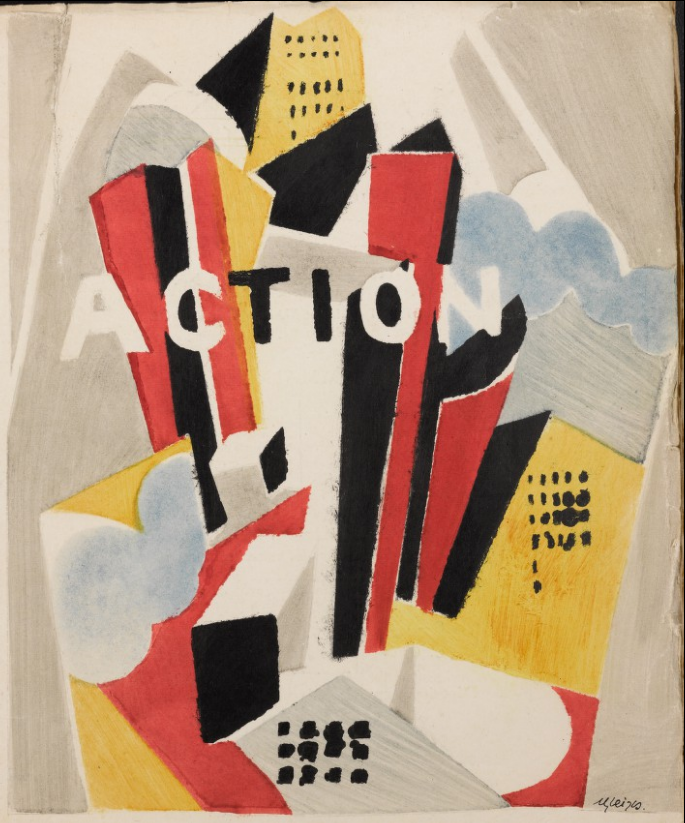
Now we direct your attention to the full online library, where you’ll find issues of Poesia (top), published by F.T. Marinetti between 1905 and 1920. This magazine represents “the transition from Italy’s engagement with an international Symbolist movement to an increasingly nationalist Futurism” and features the work of Marinetti, Alfred Jarry, W.B. Yeats, Paolo Buzzi, Emilio Notte, and James Joyce. Below Poesia, from the other side of the spectrum, we see the cover of a 1920 issue of Action, a “literary and artistic magazine associated with Individualist Anarchism,” and featuring work from writers like André Malraux, Antonin Artaud, and Paul Éluard, and artwork from Demetrios Galanis and Robert Mortier, to name just a few.
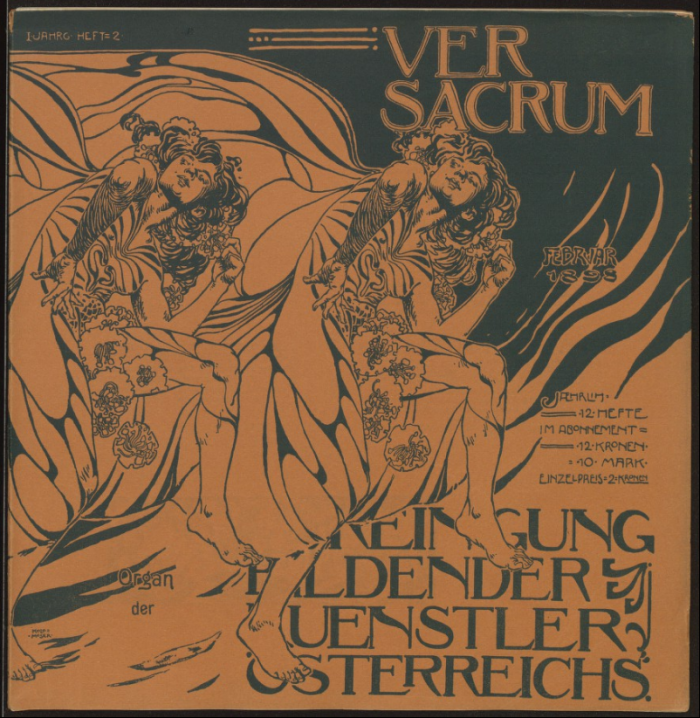
Not every avant-garde arts journal had a clear ideological mission, but they all represented aesthetic programs that strongly reacted against the status quo. The artists of the so-called Vienna Secession broke away from Association of Austrian Artists to protest its conservatism. Their journal, Ver Sacrum, further up, joined the flowing, intricate, and passionate designs of Art Nouveau and German Jugendstil artists, who created the look of the Weimar Republic and the Jazz Age. Contributors included Gustav Klimt, Koloman Moser, and Josef Hoffmann.
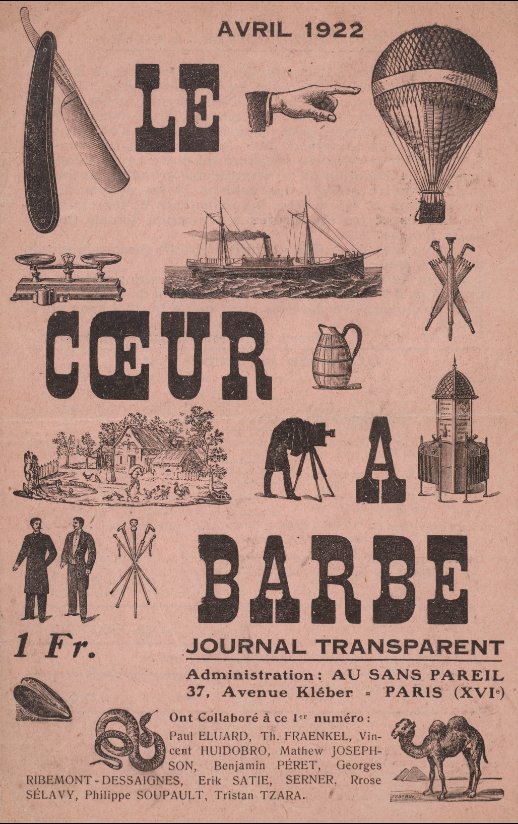
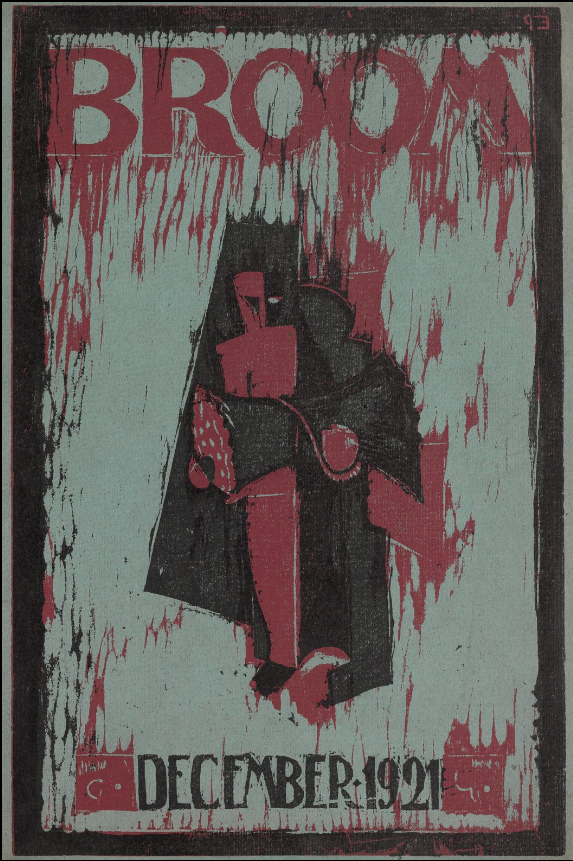
Sometimes avant-garde journals reflected political conflicts between warring factions of artists, as in the example of Le coeur à barbe: journal transparent, “produced by Tristan Tzara as a response to the attacks on him by Francis Picabia and André Breton about the future of the Dada movement.” Other publications aimed to expand the boundaries of national culture, as with Broom, above, a “self-proclaimed international magazine of arts and literature… a sumptuous journal that introduced American audiences to the European avant-garde.” Whatever their stated mission and implicit or explicit slant, it’s fair to say that the radical art published in avant-garde journals between the turn of the century and the end of the 1920s did everything but stand on the sidelines.
Earlier this year, Leigh Haber, book editor ofO, The Oprah Magazine, reached out to Murray to see if he’d share some of his favorite poems in celebration of National Poetry Month. In true Murray-esque fashion, he waited until deadline to return her call, suggesting that they meet in his room at the Carlyle, where he would recite his choices in person.
At the top of the page, Murray reads the poem at a benefit for New York’s Poets House, adopting a light accent suggested by the dialect of the narrator, a mirror full of appreciation for the poet’s womanly body. Clifton said that the “germ” of the poem was visiting her husband at Harvard, and feeling out of place among all the slim young coeds. Thusly does Murray position himself as a hero to every female above the age of … you decide.
Kinnell, who sought to enliven a dreary bowl of oatmeal with such dining companions as Keats, Spenser and Milton, shared Murray’s playful sensibility. In an interview conducted as part of Michele Root-Bernstein’s Worldplay Project he remarked:
… it doesn’t seem like play at the time of doing it, but part of the whole construct of the work, and even though the work might be extremely serious and even morose, still there’s that element of play that is just an inseparable part of it.
Murray told O, which incorrectly reported the poem’s title as “I Love You Sweetheart” that he experienced this one as a vibration on the inside of his ribs “where the meat is most tender.” It would make a terrific scene in a movie, and who better to play the lover risking his life to misspell a term of endearment on a bridge than Bill Murray?
Alas, we could find no footage of Nye reading her lovely poem aloud, but you can read it in full over at The Poetry Foundation. It’s easy to see why it speaks to Murray.
Ayun Halliday is an author, illustrator, theater maker and Chief Primatologist of the East Village Inky zine. Her play Zamboni Godot is opening in New York City in March 2017. Follow her @AyunHalliday.
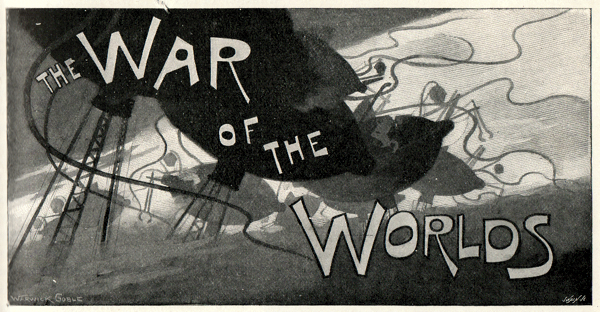
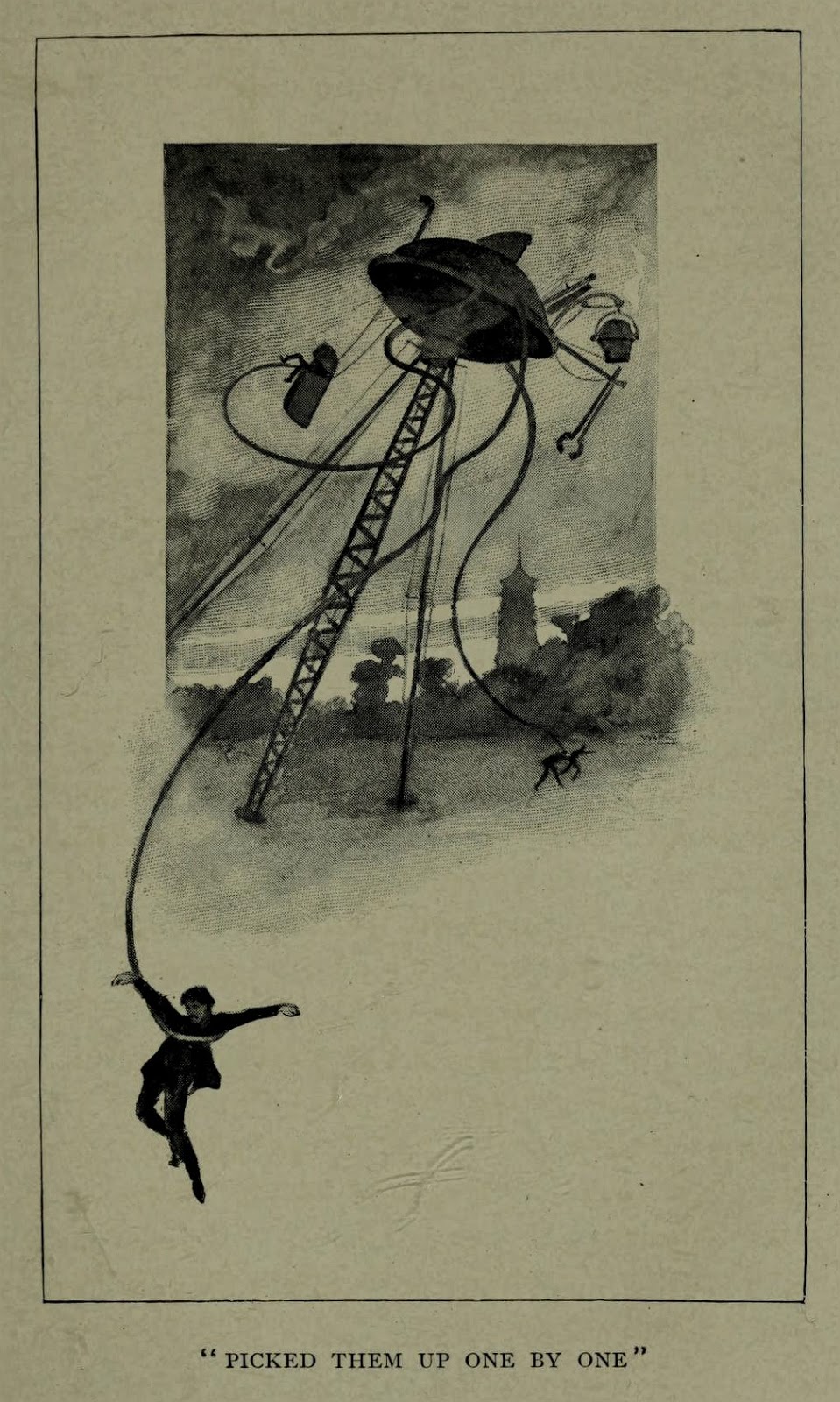
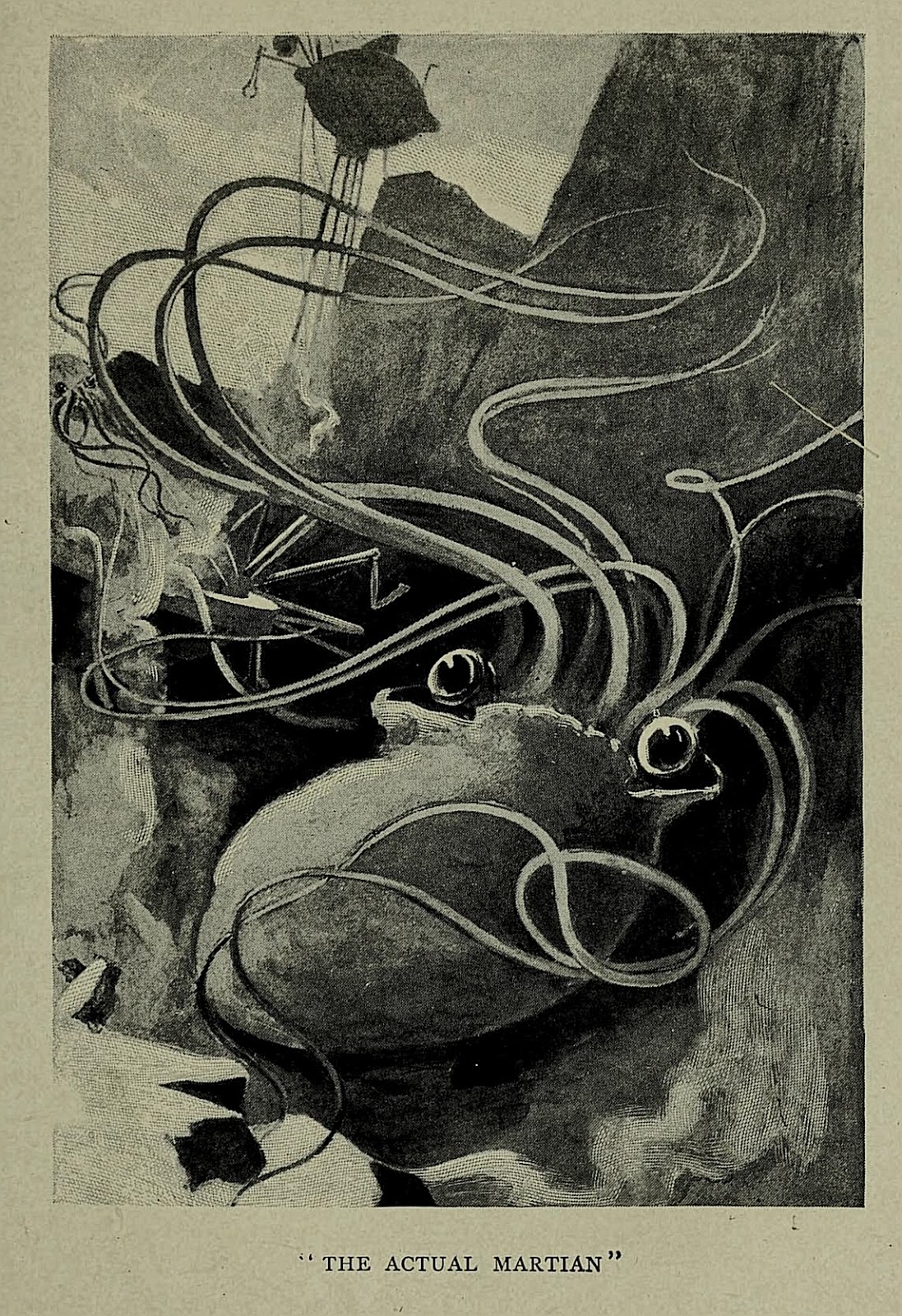
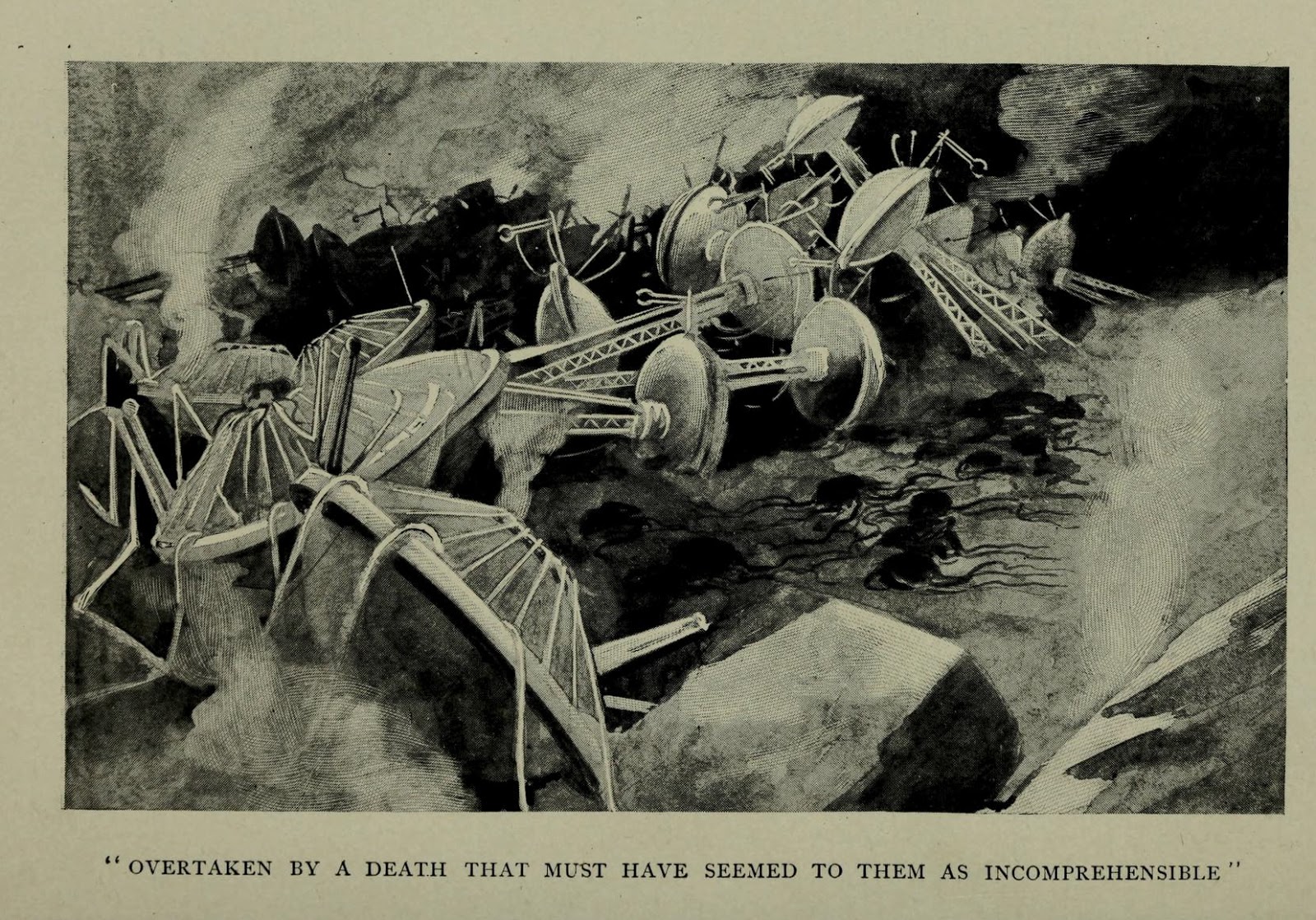
H.G. Wells’ tales of fantastical inventions, never-before-seen beings, time travel, and alien invasion practically cry out for visual and sonic accompaniment. Of all the other artists’ interpretations of his 1898 novel The War of the Worlds, Orson Welles’ infamous Halloween 1938 radio broadcast remains best known, but various illustrators have also brought the story of mercilessly destructive Martians’ arrival on Earth to equally vivid life. Last year, we featured Brazilian illustrator Henrique Alvim Corrêa’s horrifying work for the 1906 edition; today, we go back before TheWar of the Worlds’ first edition to behold the aliens as rendered by Warwick Goble.
“I’m doing the dearest little serial for Pearson’s new magazine,” Wells wrote to a friend, “in which I completely wreck and sack Woking — killing my neighbours in painful and eccentric ways — then proceed via Kingston and Richmond to London, which I sack, selecting South Kensington for feats of peculiar atrocity.” That dearest little serial, after its 1897 run in Pearson’s Magazine in the U.K. and Cosmopolitan in the U.S., appeared the next year in book form as The War of the Worlds, a common publication procedure for popular English-language novels in the 19th and early 20th century.
“The story is still a bit rough round the edges,” writes sci-fi author John Guy Collick, but “what makes the magazine special are the fantastic illustrations by Warwick Goble. These are the first pictures of the Martians and their tripods and, I think, the best.” He praises their low-tech style and their faithfulness to the text: “in the novel Wells is at pains to point out that the Martian legs are rigid,” not articulated as the films and other illustrations have tended to portray them.” The Martians themselves he considers a “bit too cute, though they are the first attempt to visualise beings from another world,” and these depictions of terror from another planet (more of which you can see here) certainly marked a departure in Goble’s children’s book-oriented career. Even an artist of whimsy has to cause a few nightmares once in a while.
Seen from the taxi, on the long ride in from the airport, the place looked slower, shabbier, and, in defiance of all chronology, older than New York… the low buildings, the industrial plants, and the railroad crossings at grade produced less the feeling of being in a great city than of riding through an endless succession of factory-town main streets.
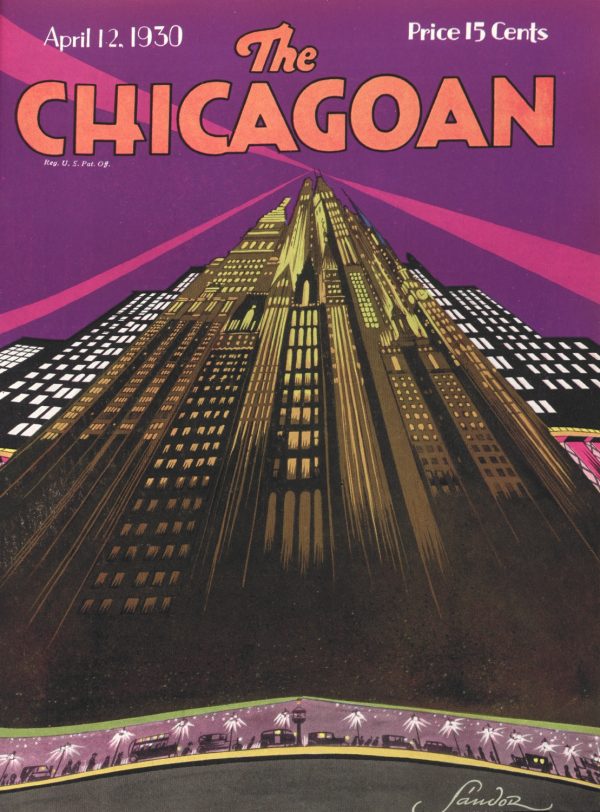
The Chicagoan, a homegrown publication that intentionally mimicked The New Yorker in both design and content, offers a different take. From 1926 to 1935, it strove to counteract the city’s thuggish reputation (Al Capone, anyone?) by drawing attention to its cultural offerings and high society doings.
Outside of Chicago, no one cared much. Having failed to replicate TheNew Yorker’s national success, it folded, leaving behind very few surviving copies.
Neil Harris, a University of Chicago Professor Emeritus of History, has righted that wrong by arranging for the university library’s near complete collection of Chicagoans to be uploaded to a searchable online database.
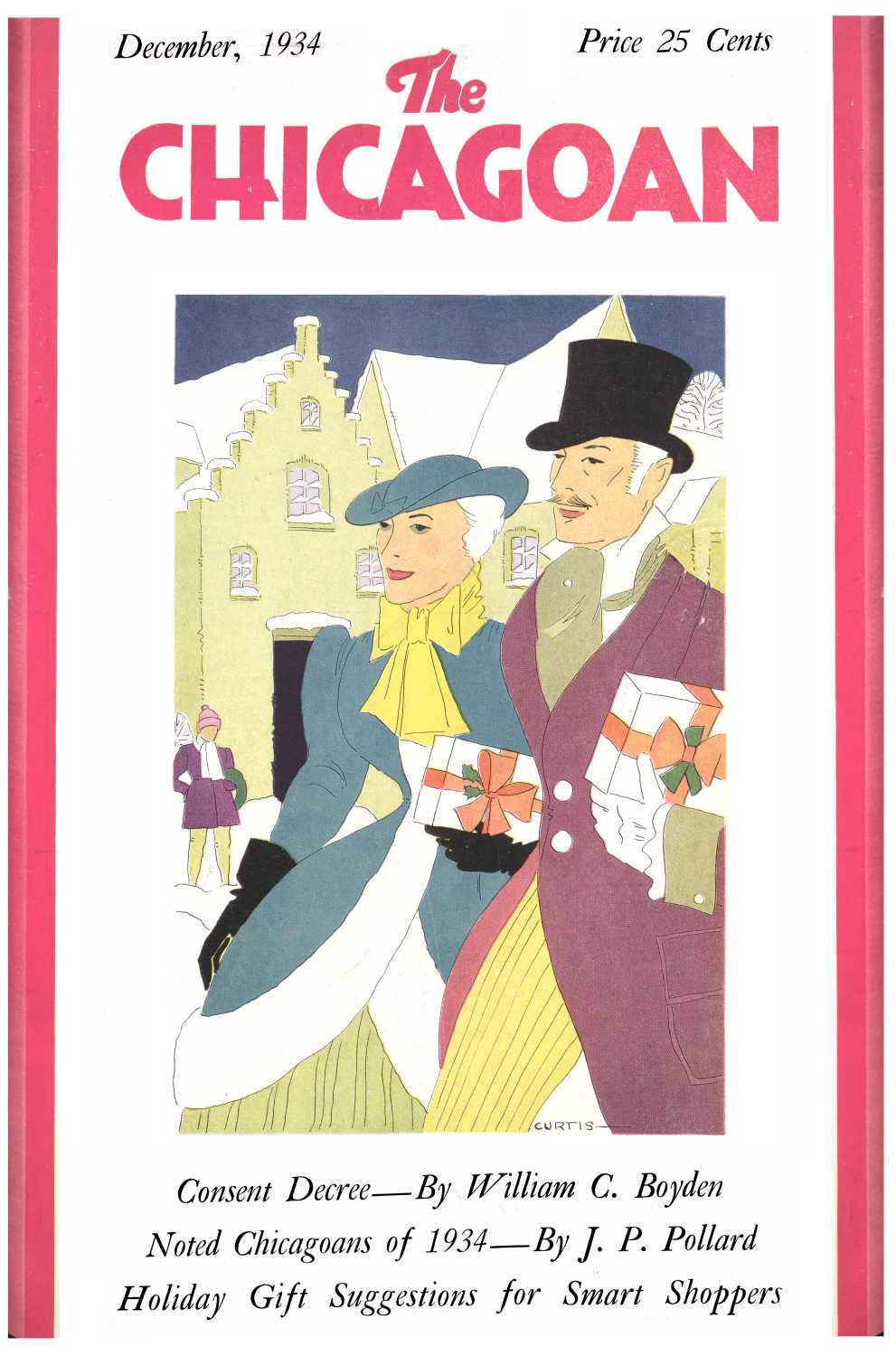
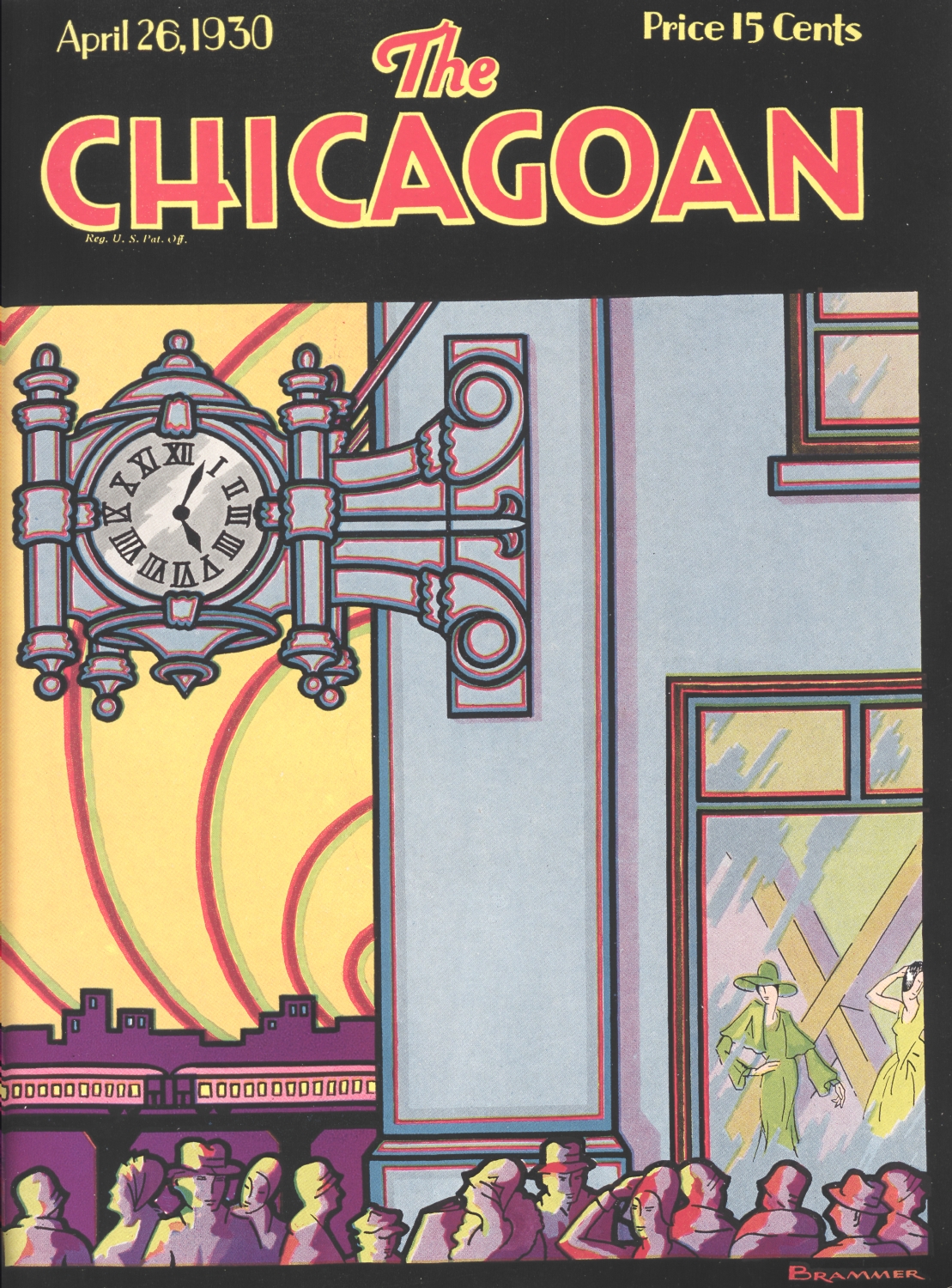
The covers have a Jazz Age vibrancy, as do articles, advertisements, and cartoons aimed at Chicago’s smart set. There’s even a Helen Hokinson cartoon, in the form of a Borden cheese ad.
A search for Lieblings yielded but two:
Copyright The Quigley Publishing Company, a Division of QP Media, Inc.
One from December 1, 1934, above, name checks pianist Emil Liebling in an article revisiting the 1897 Christmas issue of another bygone Chicago paper, the Saturday Evening Herald.
Copyright The Quigley Publishing Company, a Division of QP Media, Inc.
Four years earlier, in Vol. 9, No. 3, Robert Pollack’s Musical Notes column made mention of Leonard Liebling, a critic for the New York American… (I can hear A.J. beyond-the-grave snickering even now).
Ayun Halliday is an author, illustrator, theater maker and Chief Primatologist of the East Village Inky zine. Her latest script, Fawnbook, is available in a digital edition from Indie Theater Now. Follow her @AyunHalliday.
You’ve likely heard a good deal recently—especially if you hang around these parts—about the 100th anniversary of Dada, supposedly begun when poet and Cabaret Voltaire owner Hugo Ball penned his manifesto in 1916 and began disseminating the ideas of the nascent anti-art movement. This makes a convenient origin story, as they say in the comics, and helps us contextualize the avant-garde explosion that followed. But, historically speaking, there is no such thing as creation ex nihilo, and the beginnings of Dada—before Ball coined the name—lie further back in time. (We might refer to the distinction Edward Said makes between a divine “origin” and a secular “beginning.”)
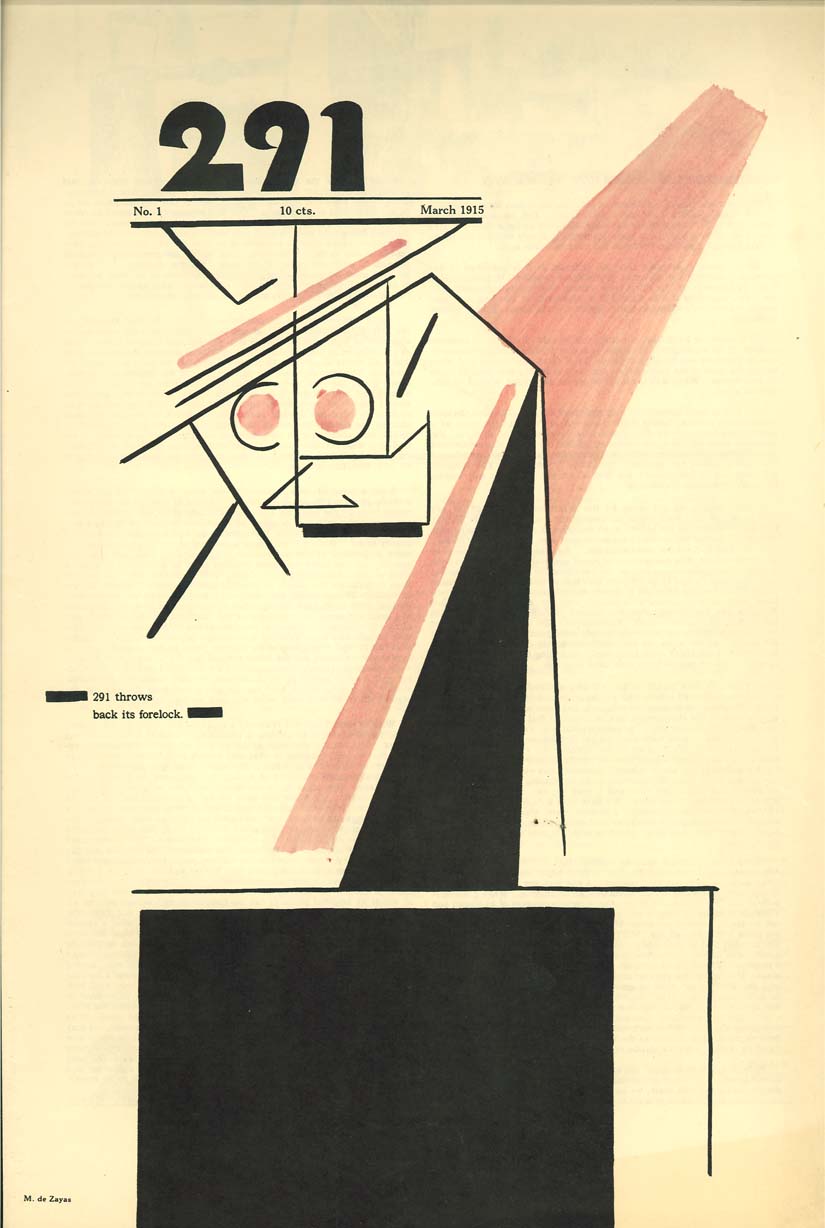
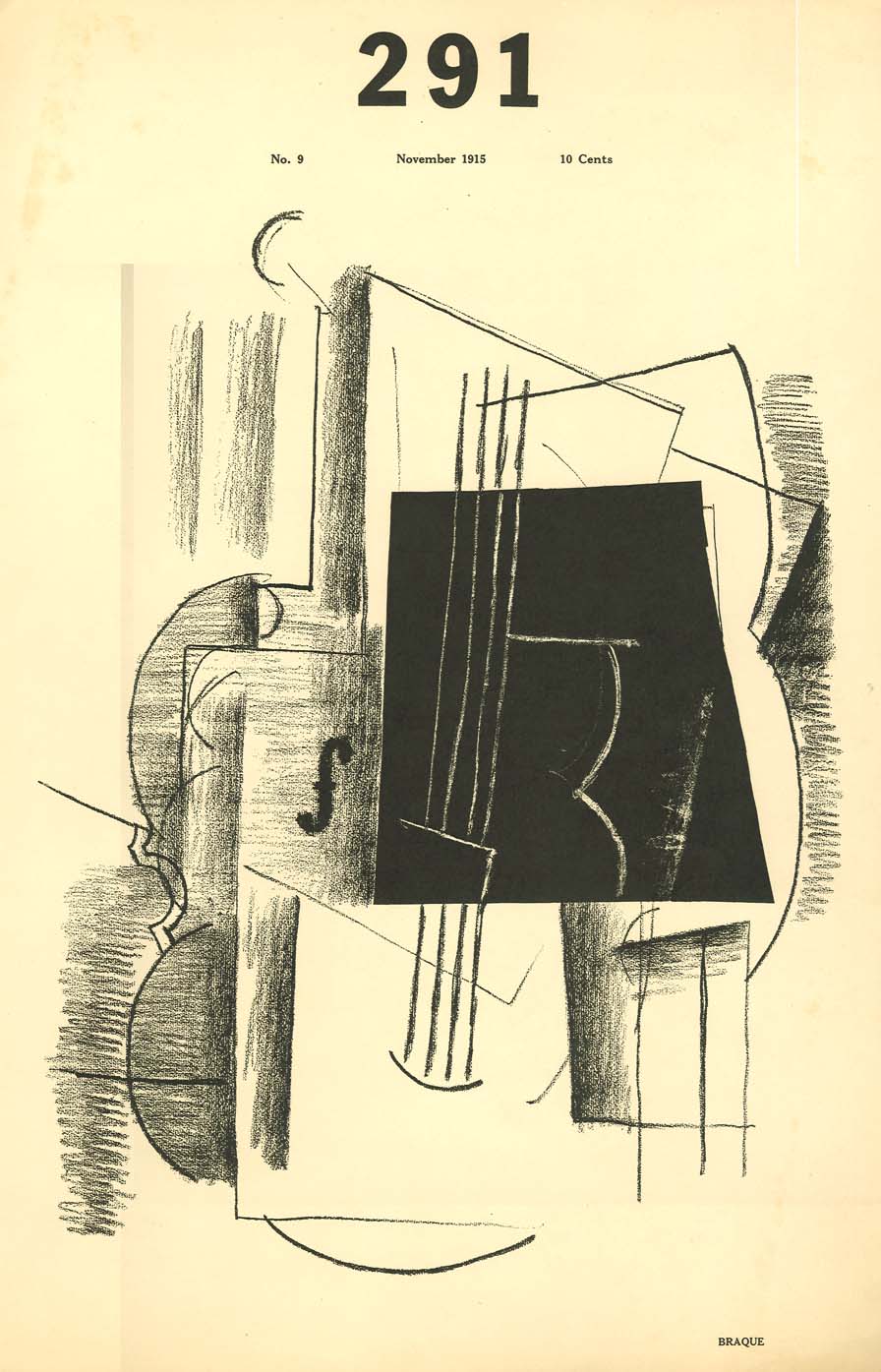
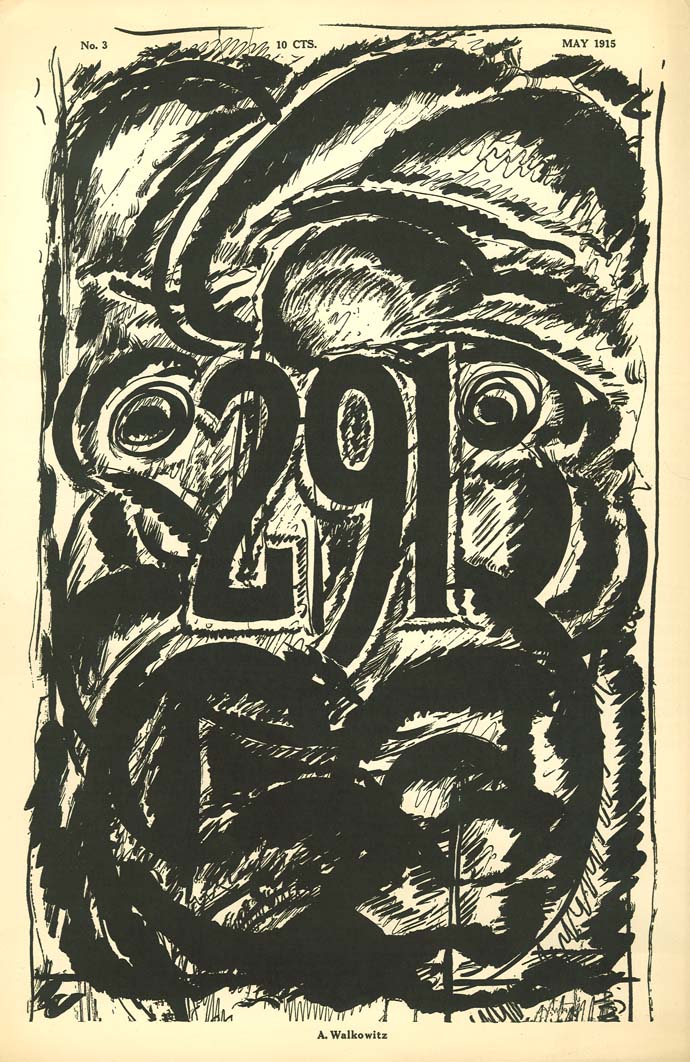
We could, as many do, situate the beginnings of Dada in the previous century, in Alfred Jarry’s bizarre 1896 play Ubu Roi or Erik Satie’s minimalist late 19th century Gymnopedies. We might also refer to an arts magazine in New York that preceded Tristan Tzara’s Dada and Ball’s single issue Cabaret Voltaire. Edited by famed photographer and art promoter Alfred Stieglitz, the journal 291 ran for 12 issues between 1915 and 1916 and is known, writes Dada-Companion.com, as “the first expression of the dada esthetic in the United States; proto-dada, actually, dada avant la lettre, before dada had started in Zürich in 1916.” Along with the University of Iowa, Ubuweb hosts the entire 12-issue print run, “a financial fiasco” in its day, “failing to sell more than eight subscriptions on vellum and a hundred on ordinary paper…. In the end Stieglitz sold the entire backstock to a ragpicker for $5.80.”
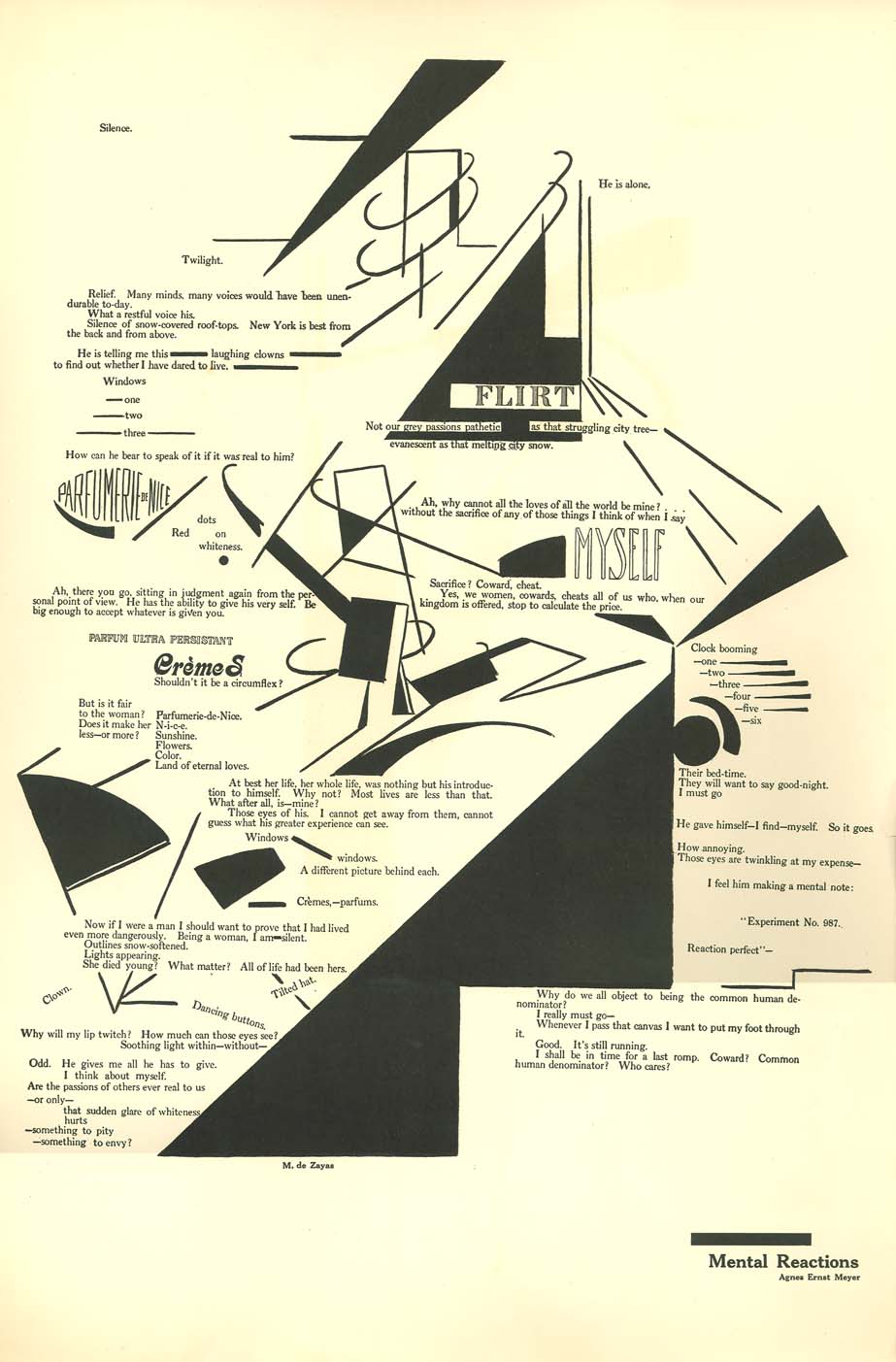
Despite this inglorious end, 291 is notable not only for its proto-dada status—and for featuring the work of modernists like Georges Braque, Guillaume Apollinaire, and later Dada and Surrealist artist Francis Picabia; the magazine also “occupies an interesting position among the journals of modernist art” as “the first magazine to style itself as a work of art in its own right.” You can get a sense of its artistry in the covers you see here, and download every issue of the magazine at Ubuweb or at the University of Iowa’s International Dada Archive. You’ll also see the magazine’s unusual format—from odd little topical items of the sort you’d find in a local newspaper to fascinating visual poetry like “Mental Reactions,” below, by Agnes Ernst Meyer. What we can’t get from the digital copies, unfortunately, is the full sense of 291’s “dramatic form” in its “gigantic folio format.”
The modernist journal “took its original inspiration from Apollinaire’s Soirées de Paris,” a journal founded in 1912 by the French poet and critic and his friends, “emphasizing caligrammatic texts and an abstracted kind of satirical drawing.” And though 291 may have had a very limited reach during its material existence, its influence continued into the era of Dada when Francis Picabia styled his own journal, 391, after Steiglitz’s publication. “Published 1917–1924 in Barcelona, New York, Zürich, and Paris in nineteen issues,” writes Booktryst, 391 helped Picabia distribute his own take on Dada, until he denounced the movement in 1921 and “issued a personal attack against [Surrealist Andre Breton] in the final issue.” The University of Iowa also hosts digital versions of all 19 issues of Picabia’s 391, which you can view and download here.
We're hoping to rely on loyal readers, rather than erratic ads. Please click the Donate button and support Open Culture. You can use Paypal, Venmo, Patreon, even Crypto! We thank you!
Open Culture scours the web for the best educational media. We find the free courses and audio books you need, the language lessons & educational videos you want, and plenty of enlightenment in between.