Free: Download 10,000+ Master Drawings from The Morgan Library & Museum’s Online Collection

It’s hard for the casu­al brows­er to know where to begin with a col­lec­tion as vast as the mas­ter draw­ings belong­ing to the Mor­gan Library & Muse­um.

The Library’s Draw­ings Online pro­gram gives the pub­lic free access to over 10,000 down­load­able images, drawn pri­mar­i­ly from—and in—the fif­teenth through nine­teenth cen­turies. Many images are fleshed out with inscrip­tions, infor­ma­tion on prove­nance, bio­graph­i­cal sketch­es of the artist, and, in over 2000 instances, images of the ver­so, or flip side of the paper.

Researchers and sim­i­lar­ly informed seek­ers can browse by artist or school, but what if you don’t quite know what you want?

You could tour the high­lights, or bet­ter yet, bush­whack your way into the unknown by enter­ing a ran­dom word or phrase into the “search draw­ings” func­tion.

Know­ing that the inter­net is crazy for cats, I made that my first search term, but the results were skewed by an 18th-cen­tu­ry Dutch artist named Jacob Cats, whose work abounds with cows and sheep.

Car­i­ca­tur­ist Al Hirschfeld’s por­trait of Kath­leen Turn­er in the 1990 Broad­way revival of Ten­nessee Williams’ Cat on a Hot Tin Roof  is unavail­able for view­ing due to copy­right restric­tions. (It’s eas­i­ly view­able else­where…)

And the Where’s Wal­do-esque excite­ment I felt upon an anony­mous artist’s Moun­tain Land­scape with Ital­ian-Style Clois­ter faux-Bruegel dis­si­pat­ed when I real­ized this return owed more to the abbre­vi­a­tion of “cat­a­logue” than any feline lurk­ing in the pen-and-ink trees.

Next I entered the word “babies.” I’m not sure why. There cer­tain­ly were a lot of them, almost as many as I encounter on Face­book.

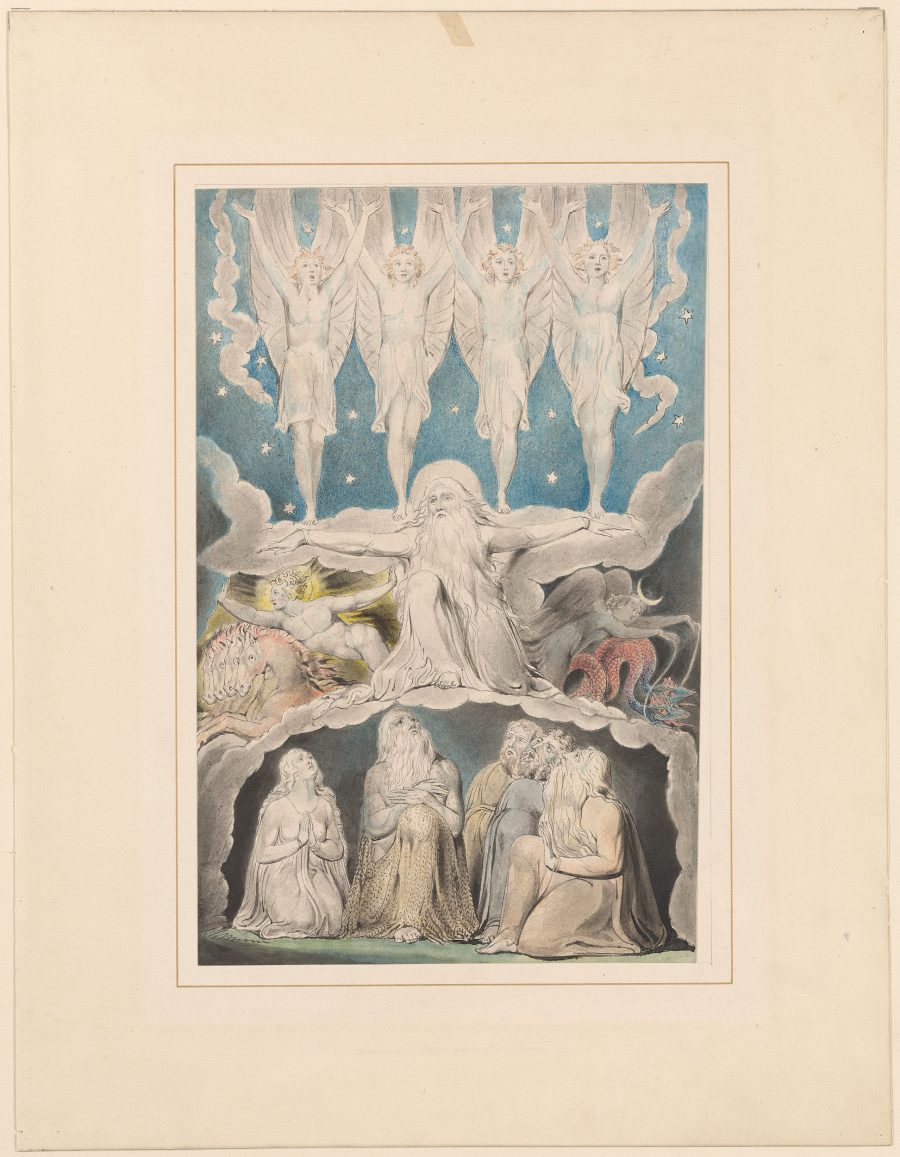
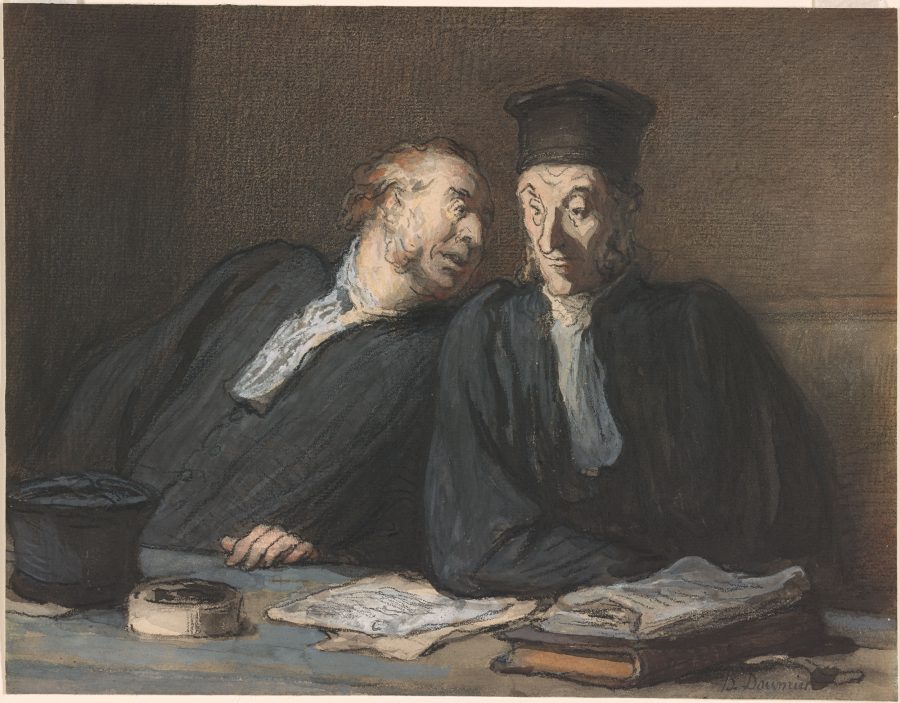
Return­ing to the pre-select­ed high­lights page, I resolved to let the experts pick for me. I saw a charm­ing rab­bit fam­i­ly by John James Audubon and the old favorite by William Blake, top, but what real­ly grabbed me was the first page’s final selec­tion: Hon­orĂ© Daumier’s Two Lawyers Con­vers­ing, cir­ca 1862.

Part of the Mor­gan’s recent­ly closed Drawn to Great­ness: Mas­ter Draw­ings from the Thaw Col­lec­tion exhib­it, the sub­jects’ dress may be archa­ic, but their expres­sions are both humor­ous and ever­green. Lawyer. I had my search term.

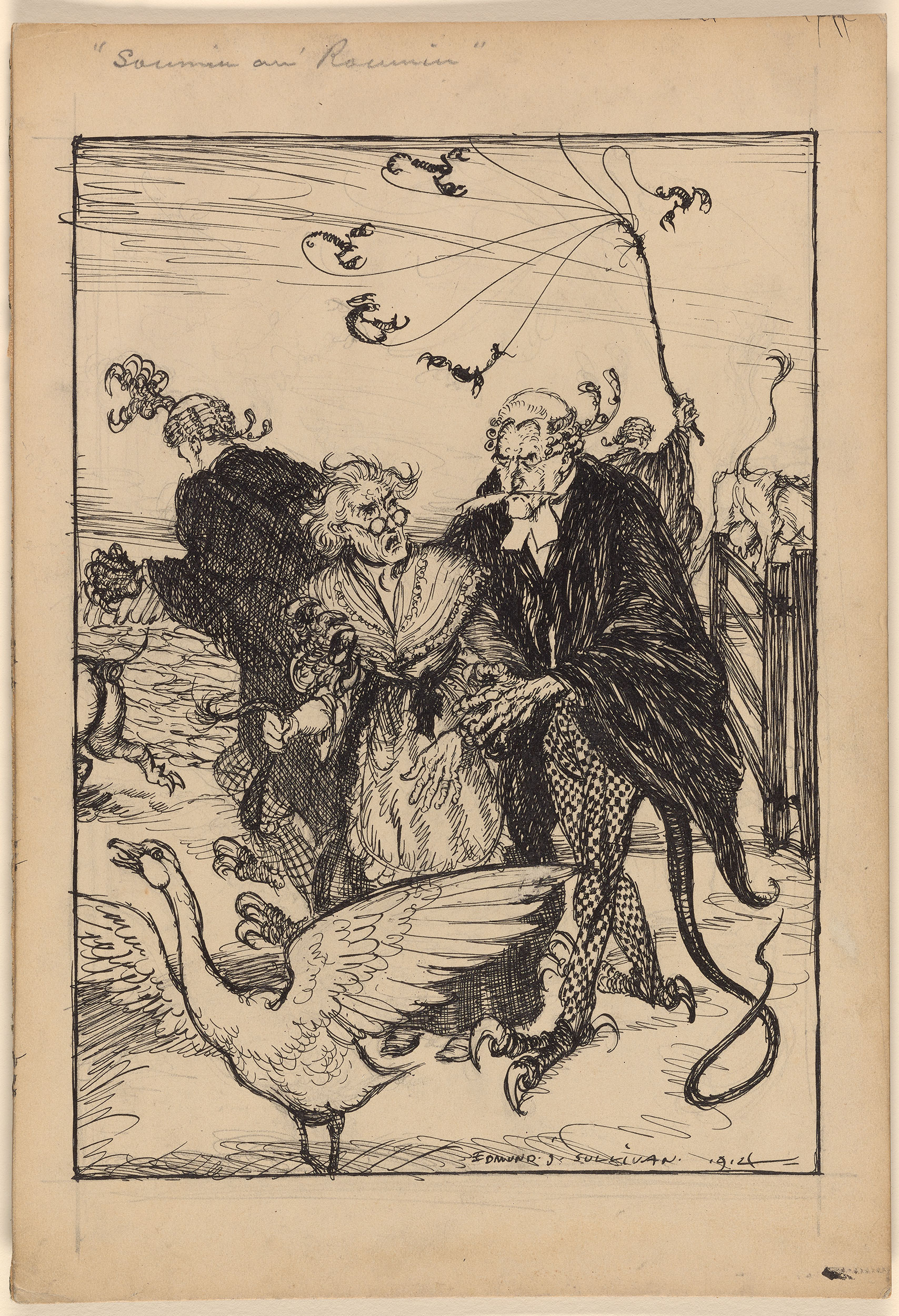
My favorite of the sev­en search results is illus­tra­tor Edmund J. Sul­li­van’s Soumin an’ Roumin from 1914. One of a dozen or so draw­ings Sul­li­van made for an updat­ed edi­tion of George Out­ram’s Legal and Oth­er Lyrics, it shows “an old woman in a farm­yard sur­round­ed by live­stock flee­ing three mon­strous lawyers wear­ing wigs and robes and armed with hideous talons instead of hands and feet. One … chas­es a cow with a scourge, the thongs of which end in scor­pi­ons.”

Down­load that one for all your lawyer friends or your lawyer spouse… upload it to a t‑shirt if you’re crafty.

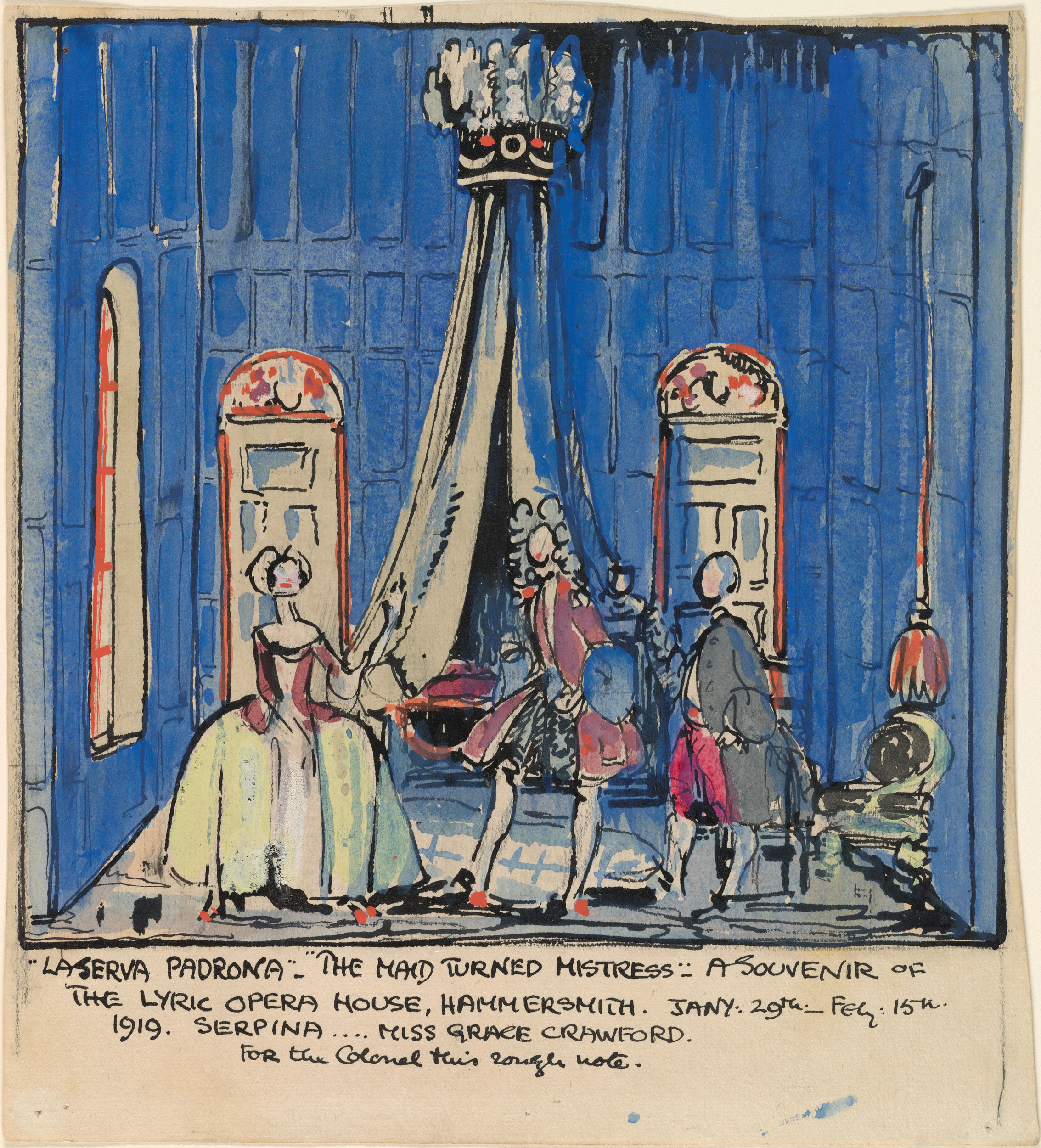
Claud Lovat Fras­er’s set design for Per­gole­si’s short com­ic opera La Ser­va Padrona (or The Maid Turned Mis­tress) at the Lyric Ham­mer­smith doesn’t depict any lawyers, to the best of my knowl­edge, but he him­self was one—also a car­i­ca­tur­ist, lam­poon­ing the lit­er­ary and the­atri­cal lumi­nar­ies of his day, and a sol­dier whose life was cut short due to expo­sure to gas in World War I.

In addi­tion to the Morgan’s par­tic­u­lar­ly well-fleshed-out artist bio for this work, the ver­so is a treat in the form of a print­ed announce­ment for the Chelsea Arts Club Cos­tume Ball.

Browse the Mor­gan Library & Museum’s Draw­ings Online in its entire­ty here, or nar­row it down by artist, School of Art, or per­son­al whim.

Relat­ed Con­tent:

300+ Etch­ings by Rem­brandt Now Free Online, Thanks to the Mor­gan Library & Muse­um

The British Library Puts 1,000,000 Images into the Pub­lic Domain, Mak­ing Them Free to Reuse & Remix

Down­load 2,500 Beau­ti­ful Wood­block Prints and Draw­ings by Japan­ese Mas­ters (1600–1915)

1.8 Mil­lion Free Works of Art from World-Class Muse­ums: A Meta List of Great Art Avail­able Online

Ayun Hal­l­i­day is an author, illus­tra­tor, the­ater mak­er and Chief Pri­ma­tol­o­gist of the East Vil­lage Inky zine.  Join her New York City  on Feb­ru­ary 8, when she hosts Necro­mancers of the Pub­lic Domain, a vari­ety show born of a sin­gle musty vol­ume — this month: Mas­ter­pieces in Colour, Bas­ten-Lep­age. Fol­low her @AyunHalliday.

Take 7 Free Courses From the Museum of Modern Art (aka MoMA)

If you would like to know more about mod­ern art, but have dif­fi­cul­ty wrap­ping your head around the Futur­ists, Neo-Impres­sion­ists, Abstract Expres­sion­ists, and the myr­i­ad oth­er ‑ists and ‑isms  of this vast sub­ject, per­haps you should unteth­er your­self from time­lines.

Mod­ern Art & Ideas, a free online course from the Muse­um of Mod­ern Art (aka MoMA), shifts the focus away from peri­od and move­ment, instead group­ing works accord­ing to four themes: Places & Spaces, Art & Iden­ti­ty, Trans­form­ing Every­day Objects, and Art & Soci­ety.

It’s an approach that’s worked well for MoMA’s Edu­ca­tion Depart­ment. (Anoth­er upcom­ing online class, Art & Ideas: Teach­ing with Themes, is rec­om­mend­ed for pro­fes­sion­al edu­ca­tors look­ing to devel­op the ped­a­gog­i­cal skills the depart­ment employs to get vis­i­tors to engage with the art.)

The course, which begins today, is taught by Lisa Maz­zo­la, Assis­tant Direc­tor of the museum’s School and Teacher Pro­grams and a vet­er­an of their pre­vi­ous for­ays into Mas­sive Open Online Cours­es.

An ear­ly les­son on how artists cap­ture envi­ron­ments con­sid­ers three works: Vin­cent van Gogh’s The Star­ry Night (1889), Piet Mondrian’s Broad­way Boo­gie Woo­gie (1942–43), and Gor­don Matta-Clark’s Bin­go. Vin­tage pho­tos and footage con­spire with peri­od music to whisk stu­dents to the set­tings that inspired these works—a bucol­ic French men­tal hos­pi­tal, New York City’s bustling, WWII-era Times Square, and a derelict house in down on its luck Nia­gara Falls.

Reg­u­lar read­ers of Open Cul­ture are like­ly to have a han­dle on some of the ways art stars Fri­da Kahlo and Andy Warhol explored iden­ti­ty, the course’s third week theme, but what about Glenn Ligon, a liv­ing African Amer­i­can con­cep­tu­al artist?

Ligon may not have the renown or tote bag appeal of his lesson­mates, but his 1993 series, Run­aways, is pow­er­ful enough to hold its own against Kahlo’s Self-Por­trait with Cropped Hair and Warhol’s Gold Mar­i­lyn Mon­roe.

In fact, teach­ers look­ing to expand their Black His­to­ry Month cur­ricu­lum could spark some live­ly dis­cus­sions by show­ing stu­dents the extreme­ly accu­rate fac­sim­i­les of 19th-cen­tu­ry run­away slave ads fea­tur­ing phys­i­cal descrip­tions of Ligon, solicit­ed from friends who’d been told they were sup­ply­ing details for a hypo­thet­i­cal Miss­ing Per­son poster.

Ligon’s series is also a good start­ing place for dis­cussing con­cep­tu­al art with a friend who thinks  con­cep­tu­al art is best defined as White Cow in a Snow­storm.

Offered on Cours­era, the 5‑week course requires approx­i­mate­ly 2 hours of study and one quiz per week. Enroll here, or browse MoMAs oth­er cur­rent offer­ings also on Cours­era.

Note: To take the cours­es for free, selec­tion the Audit (as opposed to paid) option dur­ing the enroll­ment process.

Note: Open Cul­ture has a part­ner­ship with Cours­era. If read­ers enroll in cer­tain Cours­era cours­es, it helps sup­port Open Cul­ture.

Relat­ed Con­tent:

The Tree of Mod­ern Art: Ele­gant Draw­ing Visu­al­izes the Devel­op­ment of Mod­ern Art from Delacroix to Dalí (1940)

The Muse­um of Mod­ern Art (MoMA) Puts Online 75,000 Works of Mod­ern Art

What to Say When You Don’t Under­stand Con­tem­po­rary Art? A New Short Film, “Mas­ter­piece,” Has Help­ful Sug­ges­tions

Ayun Hal­l­i­day is an author, illus­tra­tor, the­ater mak­er and Chief Pri­ma­tol­o­gist of the East Vil­lage Inky zine.  Fol­low her @AyunHalliday.

Smartify, a Shazam for Art, Lets You Use Your Phone to Scan, Identify & Learn About Major Works of Art

Not so long ago, art muse­ums were known as tem­ples of qui­et con­tem­pla­tion, despite dai­ly inva­sions by rau­cous school groups.

Now, the onus is on the muse­ums to bring the moun­tain to Mohammed. Those kids have smart­phones. How long can a muse­um hope to stay relevant—nay, survive—without an app?

Many of the muse­ums who’ve already part­nered up with Smar­ti­fy—an app (Mac-Android) that lets you take a pic­ture of art­work with your phone and instant­ly access infor­ma­tion about them—have exist­ing apps of their own in place: the Met­ro­pol­i­tan Muse­um of Art in New York, the Her­mitage in St. Peters­burg, Amsterdam’s Rijksmu­se­um, to name a few.

These insti­tu­tion­al apps pro­vide vis­i­tors with an expand­ed view of the sort of infor­ma­tion one com­mon­ly finds on a muse­um card, in addi­tion to such prac­ti­cal­i­ties as gallery lay­outs and cal­en­dars of events. More often than not, there’s an option to “save” an art­work the vis­i­tor finds captivating—no word on what this fea­ture is doing to post­card sales in muse­um shops, so per­haps print isn’t dead yet.

Giv­en all the muse­um apps free for the down­load­ing, for whom is Smar­ti­fy, a “Shaz­am for art,” intend­ed?

Per­haps the glo­be­trot­ting muse­um hop­per eager to con­sol­i­date? Its devel­op­ers are adamant that it’s intend­ed to com­ple­ment, not replace, in-per­son vis­its to the insti­tu­tions where the works are housed, so arm­chair muse­um goers are advised to look else­where, like Google Arts & Cul­ture.

Per­haps the biggest ben­e­fi­cia­ries will be the small­er gal­leries and muse­ums ill equipped to launch free­stand­ing apps of their own. Smartify’s web­site states that it relies on “annu­al mem­ber­ship from muse­um part­ners, in-app trans­ac­tions, adver­tis­ing and data sales to rel­e­vant arts organ­i­sa­tions.”

Ear­ly adopters com­plained that while the app (Mac-Android) had no trou­ble iden­ti­fy­ing famous works of art, it came up emp­ty on the less­er-known pieces. That’s a pity as these are the works vis­i­tors are most like­ly to seek fur­ther infor­ma­tion on.

One of the devel­op­ers com­pared the Smar­ti­fy expe­ri­ence to vis­it­ing a muse­um in the com­pa­ny of “an enthu­si­as­tic and knowl­edge­able friend telling you more about a work of art.”

Maybe bet­ter to do just that, if the option exists? Such a friend would not be ham­pered by the copy­right laws that ham­per Smar­ti­fy with regard to cer­tain works. A friend might even stand you a hot choco­late or some pricey scone in the muse­um cafe.

At any rate, the app (Mac-Android) is now avail­able for vis­i­tors to take for a spin in 22 dif­fer­ent muse­ums and gal­leries in the UK, US, and Europe, with the promise of more to come.

Those whose knowl­edge of art his­to­ry is vast are like­ly to be under­whelmed, but it could be a way for those vis­it­ing with kids and teens to keep every­one engaged for the dura­tion. As one enthu­si­as­tic user wrote:

As a child­hood Poke­mon fan and avid art fan, this is a dream come true. This is like a Pokedex for art lol. If you ever watched the ani­me, Ash Ketchum would scan a Poke­mon with his Pokedex and get the details of its name, type, habits, etc. This app does that but instead of scan­ning mon­sters, it scans and ana­lyzes art work then gives you the load (sic) down about it.

Those with Inter­net pri­va­cy con­cerns may choose to heed, instead, the user who wrote:

Be aware, they want to gath­er as a “side effect” your pri­vate art col­lec­tion. I just want­ed to try it out with some of my art pieces (Gün­ther Förg, Richter, etc) but it does­n’t work if you don’t give them your loca­tion data. Be care­ful!


Muse­ums and Gal­leries Whose Images/Art Appear in Smar­ti­fy as of Jan­u­ary 2018

USA:

J. Paul Get­ty Muse­um

Los Ange­les Coun­ty Muse­um of Art (LACMA)

Lagu­na Art Muse­um

Muse­um of Con­tem­po­rary Pho­tog­ra­phy

Freer | Sack­ler Gal­leri­es­The Met­ro­pol­i­tan Muse­um of Art

The Met Clois­ters


UK:

The Bowes Muse­um

Mid­dles­brough Insti­tute of Mod­ern Art

Ben Uri Gallery

The Wal­lace Col­lec­tion

Roy­al Acad­e­my of Arts

Nation­al Gallery

Sculp­ture in the City


Europe:

Rijksmu­se­um

Rijksmu­se­um Twen­the

Lit­tle Beaux-Arts

Museo Cor­rer

Museo San Dona­to (MPSArt)

The State Her­mitage Muse­um

The Pushkin Muse­um of Fine Arts


Down­load Smar­ti­fy for Mac or Android.

via Dezeen

Relat­ed Con­tent:

Google’s Free App Ana­lyzes Your Self­ie and Then Finds Your Dop­pel­ganger in Muse­um Por­traits

1.8 Mil­lion Free Works of Art from World-Class Muse­ums: A Meta List of Great Art Avail­able Online

Where to Find Free Art Images & Books from Great Muse­ums, and Free Books from Uni­ver­si­ty Press­es

Ayun Hal­l­i­day is an author, illus­tra­tor, the­ater mak­er and Chief Pri­ma­tol­o­gist of the East Vil­lage Inky zine.  Fol­low her @AyunHalliday.

Google’s Free App Analyzes Your Selfie and Then Finds Your Doppelganger in Museum Portraits

Hav­ing the abil­i­ty to vir­tu­al­ly explore the his­to­ry, back sto­ries, and cul­tur­al sig­nif­i­cance of art­works from over a thou­sand muse­ums gen­er­ates nowhere near the excite­ment as a fea­ture allow­ing users to upload self­ies in hopes of locat­ing an Insta­gram-wor­thy dop­pel­gänger some­where in this vast dig­i­tal col­lec­tion.

On the oth­er hand, if this low-brow inno­va­tion leads great hordes of mil­len­ni­als and iGen-ers to cross the thresh­olds of muse­ums in over 70 coun­tries, who are we to crit­i­cize?

So what if their pri­ma­ry moti­va­tion is snap­ping anoth­er self­ie with their Flem­ish Renais­sance twin? As long as one or two devel­op a pas­sion for art, or a par­tic­u­lar muse­um, artist, or peri­od, we’re good.

Alas, some dis­grun­tled users (prob­a­bly Gen X‑ers and Baby Boomers) are giv­ing the Google Arts & Cul­ture app (iPhone-Android) one-star reviews, based on their inabil­i­ty to find the only fea­ture for which they down­loaded it.

Allow us to walk you through.

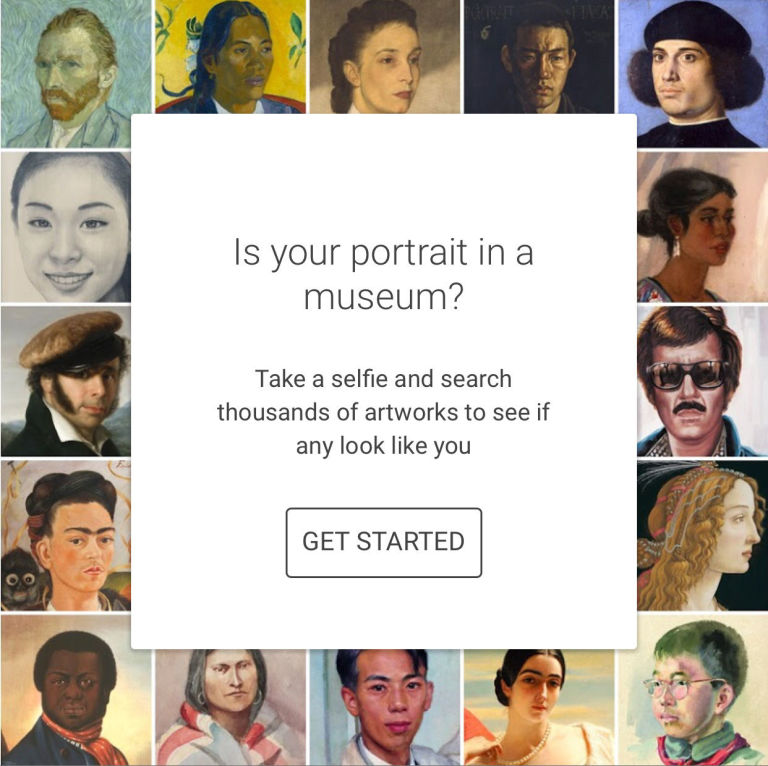
After installing the app (iPhone-Android) on your phone or tablet, scroll down the home­page to the ques­tion “Is your por­trait in a muse­um?”

The sam­pling of art­works fram­ing this ques­tion sug­gest that the answer may be yes, regard­less of your race, though one need not be a Gueril­la Girl to won­der if Cau­casian users are draw­ing their match­es from a far larg­er pool than users of col­or…

Click “get start­ed.” (You’ll have to allow the app to access your device’s cam­era.)

Take a self­ie. (I sup­pose you could hedge your bets by switch­ing the cam­era to front-fac­ing ori­en­ta­tion and aim­ing it at a pleas­ing pre-exist­ing head­shot.)

The app will imme­di­ate­ly ana­lyze the self­ie, and with­in sec­onds, boom! Say hel­lo to your five clos­est match­es.

In the name of sci­ence, I sub­ject­ed myself to this process, grin­ning as if I was sit­ting for my fourth grade school pic­ture. I and received the fol­low­ing results, none of them high­er than 47%:

Vic­to­rio C. Edades’ Moth­er and Daugh­ter (flat­ter­ing­ly, I was pegged as the daugh­ter, though at 52, the resem­blance to the moth­er is a far truer match.)

Gus­tave Courbet’s Jo, la Belle Irlandaise (Say what? She’s got long red hair and skin like Snow White!)

Hen­ry Inman’s por­trait of Pres­i­dent Mar­tin Van Buren’s daugh­ter-in-law and defac­to White House host­ess, Angel­i­ca Sin­gle­ton Van Buren (Well, she looks ….con­ge­nial. I do enjoy par­ties…)

 and Sir Antho­ny van Dyck’s post-mortem paint­ing of Vene­tia, Lady Dig­by, on her Deathbed (Um…)

Hop­ing that a dif­fer­ent pose might yield a high­er match I chan­neled artist Nina Katchadouri­an, and adopt­ed a more painter­ly pose, unsmil­ing, head cocked, one hand lyri­cal­ly rest­ing on my breast­bone… for good mea­sure, I moved away from the win­dow. This time I got:

Joseph Stella’s Boy with a Bag­pipe (Maybe this wasn’t such a hot idea with regard to my self-image?)

Cipri­ano Efsio Oppo Por­trait of Isabel­la (See above.)

Adolph Tidemand’s Por­trait of Guro Sil­vers­dat­ter Tra­ven­dal (Is this uni­verse telling me it’s Babush­ka Time?)

Johannes Chris­tiann Janson’s A Woman Cut­ting Bread (aka Renounce All Van­i­ty Time?)

and Anders Zorn’s Madon­na (This is where the mean cheer­leader leaps out of the bath­room stall and calls me the horse from Guer­ni­ca, right?)

Mer­ci­ful­ly, none of these results topped the 50% mark, nor did any of the exper­i­ments I con­duct­ed using self­ies of my teenage son (whose 4th clos­est match had a long white beard).

Per­haps there are still a few bugs to work out?

If you’re tempt­ed to give Google Arts and Culture’s exper­i­men­tal por­trait fea­ture a go, please let us know how it worked out by post­ing a com­ment below. Maybe we’re twins, I mean, triplets!

If such folderol is beneath you, please avail your­self of the app’s orig­i­nal fea­tures:

  • Zoom Views — Expe­ri­ence every detail of the world’s great­est trea­sures
  • Vir­tu­al Real­i­ty — Grab your Google Card­board view­er and immerse your­self in arts and cul­ture
  • Browse by time and col­or — Explore art­works by fil­ter­ing them by col­or or time peri­od
  • Vir­tu­al tours — Step inside the most famous muse­ums in the world and vis­it icon­ic land­marks
  • Per­son­al col­lec­tion — Save your favorite art­works and share your col­lec­tions with friends
  • Near­by — Find muse­ums and cul­tur­al events around you
  • Exhibits — Take guid­ed tours curat­ed by experts
  • Dai­ly digest — Learn some­thing new every time you open the app
  • Art Rec­og­niz­er — Learn more about art­works at select muse­ums by point­ing your device cam­era at them, even when offline
  • Noti­fi­ca­tions — sub­scribe to receive updates on the top arts & cul­ture sto­ries

Down­load Google Arts and Cul­ture or update to Ver­sion 6.0.17 here (for Mac) or here (for Android).

Note: We’re get­ting reports that the app does­n’t seem to be avail­able in every geo­graph­i­cal loca­tion. If it’s not avail­able where you live, we apol­o­gize in advance.

via Good House­keep­ing

Relat­ed Con­tent:

Google Gives You a 360° View of the Per­form­ing Arts, From the Roy­al Shake­speare Com­pa­ny to the Paris Opera Bal­let

Google Art Project Expands, Bring­ing 30,000 Works of Art from 151 Muse­ums to the Web

Google Cre­ates a Dig­i­tal Archive of World Fash­ion: Fea­tures 30,000 Images, Cov­er­ing 3,000 Years of Fash­ion His­to­ry

Ayun Hal­l­i­day is an author, illus­tra­tor, the­ater mak­er and Chief Pri­ma­tol­o­gist of the East Vil­lage Inky zine.  Fol­low her @AyunHalliday.

The Museum of Modern Art (MoMA) Presents a Free Online Class on Fashion: Enroll in Fashion as Design Today

Fash­ion as Design, a free online course by the Muse­um of Mod­ern Art (MoMA), begin­ning this com­ing week , may not equip you with the skills to bring a fab­u­lous gar­ment to fruition, but it will help you under­stand the con­text behind clothes both worka­day and wild.

Led by Depart­ment of Archi­tec­ture and Design Senior Cura­tor Pao­la Antonel­li, Cura­to­r­i­al Assis­tant Michelle Mil­lar Fish­er, and Research Assis­tant Stephanie Kramer—whose respec­tive fash­ion heroes are actor Cate Blanchett, design­er Claire McAr­dle, and activist Glo­ria Steinem—the course will con­sid­er the his­to­ry and impact of 70+ indi­vid­ual gar­ments.

The pieces can be exam­ined in per­son through the end of Jan­u­ary as part of MoMA’s Items: Is Fash­ion Mod­ern? exhi­bi­tion.

Some of the duds on the syl­labus ben­e­fit­ed from a celebri­ty boost, such as Bruce Lee’s icon­ic red track suit, recre­at­ed with its prop­er ear­ly 70’s cut, below.

Oth­ers, just as icon­ic, can be bought with­out fan­fare in a drug­store or supermarket—witness the plain white t‑shirt, intro­duced to MoMA’s col­lec­tion when Antonel­li was curat­ing 2004’s Hum­ble Mas­ter­pieces: Every­day Mar­vels of Design.

Stu­dents with no par­tic­u­lar inter­est in fash­ion may be intrigued to con­sid­er the threads on their backs through such lens­es as mar­ket­ing, dis­tri­b­u­tion, pol­i­tics, iden­ti­ty, and eco­nom­ics.

Stu­dents will also delve into the life­cy­cle of cloth­ing, fash­ion-relat­ed labor prac­tices, and sus­tain­abil­i­ty. The more con­sumers under­stand this side of the biz, the like­li­er it is that the fash­ion indus­try will be pushed toward adopt­ing more eth­i­cal prac­tices.

Enroll in the Muse­um of Mod­ern Art’s free Fash­ion as Design course here or stick a toe in with the com­pan­ion exhi­bi­tion’s Youtube playlist or the teach­ers’ delight­ful­ly can­did first-per­son com­men­tary in Sur­face Magazine’s behind-the-scenes cov­er­age:

The Hood­ie

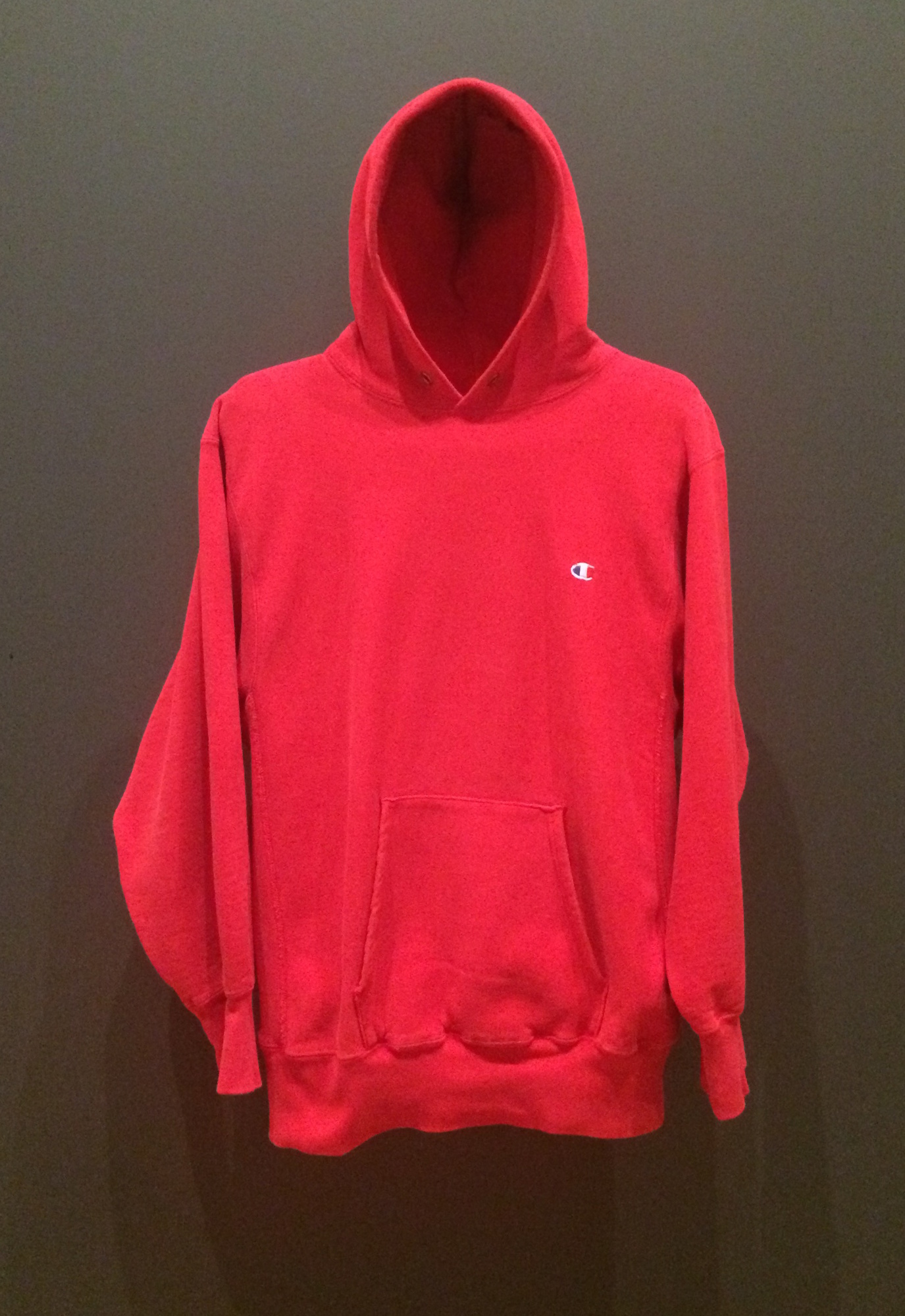
The hood­ie is one of those items that has had a long and mul­ti­fac­eted life, and one that’s become so polit­i­cal­ly charged. But this sweater, with the hood and the string, with or with­out the zip­per, is from the 1930s, from a com­pa­ny that was called Knicker­bock­er Knit­ting Com­pa­ny, before it became Cham­pi­on. Ini­tial­ly the hood­ie was made for ath­letes, to keep them warm before or after train­ing. It was imme­di­ate­ly co-opt­ed by con­struc­tion and cold-stor­age work­ers. Then in the 1970s and ’80s it became city-dwelling kids’ gar­ment of choice when skate­board­ing ille­gal­ly or writ­ing graf­fi­ti or break­danc­ing. There’s an aspect of the hood­ie that’s become a kind of qui­et defi­ance of the system—of want­i­ng to be in the mid­dle of it but some­how away from it. The hood­ie gives you a false impres­sion of being invis­i­ble. All these dif­fer­ent his­to­ries bring us to today. The Trayvon Mar­tin and George Zim­mer­man inci­dent a few years ago trans­formed the hood­ie into this sym­bol of injus­tice. We’re going to have this red Cham­pi­on hood­ie from the 1980s—when it’s at the moment of tran­si­tion. But it’s going to be there by itself and we’re hop­ing it’s going to be real­ly res­o­nant. It shows the pow­er that cer­tain gar­ments have to become sym­bols for polit­i­cal strug­gle. —Pao­la Antonel­li

Relat­ed Con­tent:

Google Cre­ates a Dig­i­tal Archive of World Fash­ion: Fea­tures 30,000 Images, Cov­er­ing 3,000 Years of Fash­ion His­to­ry

1930s Fash­ion Design­ers Pre­dict How Peo­ple Would Dress in the Year 2000

Every Exhi­bi­tion Held at the Muse­um of Mod­ern Art (MoMA) Pre­sent­ed in a New Web Site: 1929 to Present

Ayun Hal­l­i­day is an author, illus­tra­tor, the­ater mak­er and Chief Pri­ma­tol­o­gist of the East Vil­lage Inky zine.  Fol­low her @AyunHalliday

Interactive Map Lets You Take a Literary Journey Through the Historic Monuments of Rome

Arch­es on arch­es! as it were that Rome,

Col­lect­ing the chief tro­phies of her line,

Would build up all her tri­umphs in one dome,

Her Col­i­se­um stands; the moon­beams shine

As ’twere its nat­ur­al torch­es, for divine

Should be the light which streams here, to illume

This long-explored but still exhaust­less mine

Of con­tem­pla­tion; and the azure gloom

Of an Ital­ian night, where the deep skies assume

Hues which have words, and speak to ye of heav­en,

Floats o’er this vast and won­drous mon­u­ment,

And shad­ows forth its glo­ry.

—Lord Byron, Childe Harold’s Pil­grim­age (1818)

A mod­ern vis­i­tor to Rome, drawn to the Col­i­se­um on a moon­lit night, is unlike­ly to be so bewitched, sand­wiched between his or her fel­low tourists and an army of ven­dors aggres­sive­ly ped­dling light-up whirligigs, knock off design­er scarves, and acrylic columns etched with the Eter­nal City’s must-see attrac­tions.

These days, your best bet for tour­ing Rome’s best known land­marks in peace may be an inter­ac­tive map, com­pli­ments of the Mor­gan Library and Muse­um. Based on Paul-Marie Letarouil­ly’s pic­turesque 1841 city plan, each dig­i­tal pin can be expand­ed to reveal descrip­tions by nine­teenth-cen­tu­ry authors and side-by-side, then-and-now com­par­isons of the fea­tured mon­u­ments.

The endur­ing pop­u­lar­i­ty of the film Three Coins in the Foun­tain, cou­pled with the inven­tion of the self­ie stick has turned the area around the Tre­vi Foun­tain into a pickpocket’s dream and a claustrophobe’s worst night­mare.

Not so in Nathaniel Hawthorne’s day, though unlike Lord Byron, he cul­ti­vat­ed a cool remove, at least at first:

They and the rest of the par­ty descend­ed some steps to the water’s brim, and, after a sip or two, stood gaz­ing at the absurd design of the foun­tain, where some sculp­tor of Bernini’s school had gone absolute­ly mad in mar­ble. It was a great palace-front, with nich­es and many bas-reliefs, out of which looked Agrippa’s leg­endary vir­gin, and sev­er­al of the alle­goric sis­ter­hood; while, at the base, appeared Nep­tune, with his floun­der­ing steeds and Tri­tons blow­ing their horns about him, and twen­ty oth­er arti­fi­cial fan­tasies, which the calm moon­light soothed into bet­ter taste than was native to them. And, after all, it was as mag­nif­i­cent a piece of work as ever human skill con­trived. At the foot of the pala­tial façade was strown, with care­ful art and ordered irreg­u­lar­i­ty, a broad and bro­ken heap of mas­sive rock, look­ing as if it might have lain there since the del­uge. Over a cen­tral precipice fell the water, in a semi­cir­cu­lar cas­cade; and from a hun­dred crevices, on all sides, snowy jets gushed up, and streams spout­ed out of the mouths and nos­trils of stone mon­sters, and fell in glis­ten­ing drops; while oth­er rivulets, that had run wild, came leap­ing from one rude step to anoth­er, over stones that were mossy, slimy, and green with sedge, because in a cen­tu­ry of their wild play, Nature had adopt­ed the Foun­tain of Tre­vi, with all its elab­o­rate devices, for her own.

The human stat­ues garbed as glad­i­a­tors and char­i­o­teers spend hours in the blaz­ing sun at the foot of the Span­ish Steps—the heirs to the artists and mod­els who pop­u­lat­ed William Wet­more Sto­ry’s Roba di Roma:

All day long, these steps are flood­ed with sun­shine in which, stretched at length, or gath­ered in pic­turesque groups, mod­els of every age and both sex­es bask away the hours when they are free from employ­ment in the stu­dios. … Some­times a group of artists, pass­ing by, will pause and steadi­ly exam­ine one of these mod­els, turn him about, pose him, point out his defects and excel­lences, give him a baioc­co, and pass on. It is, in fact, a mod­els’ exchange.

The Medici Vil­la hous­es the AcadĂ©mie de France, and its gar­dens remain a pleas­ant respite, even in 2017. Vis­i­tors who aren’t whol­ly con­sumed with find­ing a wifi sig­nal may find them­selves fan­ta­siz­ing about a dif­fer­ent life, much as Hen­ry James did in his Ital­ian Hours:

Such a dim light as of a fabled, haunt­ed place, such a soft suf­fu­sion of ten­der grey-green tones, such a com­pa­ny of gnarled and twist­ed lit­tle minia­ture trunks—dwarfs play­ing with each oth­er at being giants—and such a show­er of gold­en sparkles drift­ing in from the vivid West! … I should name for my own first wish that one didn’t have to be a French­man to come and live and dream and work at the Académie de France. Can there be for a while a hap­pi­er des­tiny than that of a young artist con­scious of tal­ent and of no errand but to edu­cate, pol­ish and per­fect it, trans­plant­ed to these sacred shades?…What morn­ings and after­noons one might spend there, brush in hand, unpre­oc­cu­pied, untor­ment­ed, pen­sioned, satisfied—either per­suad­ing one’s self that one would be “doing some­thing” in con­se­quence or not car­ing if one shouldn’t be.

The inter­ac­tive map was cre­at­ed to accom­pa­ny the Morgan’s 2016 exhi­bi­tion City of the Soul: Rome and the Roman­tics. Oth­er pit­stops include St. Peter’s, the Roman Forum, and The Eques­tri­an Mon­u­ment of Mar­cus Aure­lius on the Capi­tol. Begin your explo­rations here.

Relat­ed Con­tent:

New Dig­i­tal Archive Puts Online 4,000 His­toric Images of Rome: The Eter­nal City from the 16th to 20th Cen­turies

Ancient Rome’s Sys­tem of Roads Visu­al­ized in the Style of Mod­ern Sub­way Maps

Rome Reborn: Take a Vir­tu­al Tour of Ancient Rome, Cir­ca 320 C.E.

Ayun Hal­l­i­day is an author, illus­tra­tor, the­ater mak­er and Chief Pri­ma­tol­o­gist of the East Vil­lage Inky zine.  Fol­low her @AyunHalliday.

An Online Trove of Historic Sewing Patterns & Costumes

As Hal­loween draws nigh, our thoughts turn to cos­tumes.

Not those rub­bery, poor­ly con­struct­ed, sexy and/or gory off-the-rack ready­mades, but the sort of lav­ish, his­tor­i­cal­ly accu­rate, home-sewn affairs that would have earned praise and extra can­dy, if only our moth­er had been inclined to spend the bulk of Octo­ber chained to a sewing machine.

Not that one needs the excuse of a hol­i­day to suit up in a fluffy 50’s crino­line, a Tudor-style kir­tle gown, or a 16th-cen­tu­ry Flem­ish out­fit with all the trim­mings.…

Accoun­tant Artemisia Moltaboc­ca, cre­ator of the his­tor­i­cal and cos­play cos­tum­ing blog Cos­tum­ing Diary, has primed our pump with a list of free his­tor­i­cal medieval, Eliz­a­bethan and Vic­to­ri­an pat­terns, includ­ing ones for the gar­ments men­tioned above.

Click through the many links on her site and you may find your­self tum­bling down a rab­bit hole of some oth­er cos-play­er’s gen­eros­i­ty.

That link to the cus­tom corset pat­tern gen­er­a­tor may set you on the road to cre­at­ing a per­fect­ly fit­ted Viking apron or a good-for-begin­ners tunic. (“Bring out yer dead!”)

Fan­cy even more choic­es? Moltabocca’s Free His­tor­i­cal Cos­tume Pat­terns Pin­ter­est board is a ver­i­ta­ble trove of dress-up fun.

The Los Ange­les Coun­ty Muse­um of Art’s Cos­tume and Tex­tiles Project has detailed down­load­able PDFs to walk you through con­struc­tion of such anachro­nis­tic fin­ery as a 1940’s Zoot Suit, a 19th-cen­tu­ry boy’s frock (above), and a man’s vest with remov­able chest pads (hub­ba hub­ba).

An 1812 Ohio Mili­tia Officer’s Coat from the Ohio His­tor­i­cal Soci­ety.

A pair of Nan­keen Trousers cour­tesy of the Roy­al Ontario Muse­um.

A bul­let bra (hub­ba bub­ba redux!)—pair it with a 1940s Vogue hat and hand­bag and you’re ready to go!

A Regency Drawn Bon­net and an Improved Seam­less Whale­bone Under­skirt from E. & J. Holmes & Co, Boston, 1857.

If you’re feel­ing less than con­fi­dent about your sewing abil­i­ties, you might make like an upper-class Roman in an Ion­ian chi­ton.

Or just curl a syn­thet­ic wig!

Press some­one else’s seams with a straight­en­ing iron, then kick back and enjoy the vin­tage ads, pho­tos of antique gar­ments, and the peri­od infor­ma­tion that often accom­pa­nies these how-tos. And check out the 1913 patent appli­ca­tion for Marie Perillat’s Bust Reduc­er, a mir­a­cle inven­tion designed to “pre­vent flesh bulging while pro­vid­ing self adjustable, com­fort­able, hygien­ic sup­port.”

Begin with some of Cos­tum­ing Diary’s his­tor­i­cal sewing pat­terns before delv­ing into its mas­sive pat­tern col­lec­tion board on Pin­ter­est.

Relat­ed Con­tent:

Browse a Col­lec­tion of Over 83,500 Vin­tage Sewing Pat­terns

Kandin­sky, Klee & Oth­er Bauhaus Artists Designed Inge­nious Cos­tumes Like You’ve Nev­er Seen Before

1930s Fash­ion Design­ers Pre­dict How Peo­ple Would Dress in the Year 2000

Ayun Hal­l­i­day is an author, illus­tra­tor, the­ater mak­er and Chief Pri­ma­tol­o­gist of the East Vil­lage Inky zine. Her cur­rent sewing project is 19 head­pieces for Theater of the Apes Sub-Adult Division’s upcom­ing pro­duc­tion of Ani­mal Farm at the Tank in New York City. Fol­low her @AyunHalliday.

An Intimate Look at Alberto Giacometti in His Studio, Making His Iconic Sculptures (1965)

A vis­it to an artist’s stu­dio can shed light on his or her work.

The British Arts Coun­cil’s short film above affords an inti­mate glimpse into Alber­to Gia­comet­ti’s stu­dio in Mont­par­nasse cir­ca 1965, the year when he was the sub­ject of major ret­ro­spec­tives at both the Tate Gallery and the Muse­um of Mod­ern Art in New York.

The artist passed most of his work­ing life in cramped space at 46 rue Hip­poly­te. Ear­ly on, he enter­tained plans to relo­cate “because it was too small – just a hole.”

Oth­ers vis­i­tors to the stu­dio described the artist’s envi­rons in more lit­er­ary terms:

In a charm­ing lit­tle for­got­ten gar­den he has a stu­dio, sub­merged in plas­ter, and he lives next to this in a kind of hangar, vast and cold, with nei­ther fur­ni­ture nor food. He works very hard for fif­teen hours at a stretch, above all at night: the cold, his frozen hands – he takes no notice, he works. Simone de Beau­voir

And:

This ground floor stu­dio… is going to cave in at any moment now. It is made of worm-eat­en wood and grey pow­der.… Every­thing is stained and ready for the bin, every­thing is pre­car­i­ous and about to col­lapse, every­thing is about to dis­solve, every­thing is float­ing.… And yet it all appears to be cap­tured in an absolute real­i­ty. When I leave the stu­dio, when I am out­side on the street, then noth­ing that sur­rounds me is true. — Play­wright Jean Genet

And:

The whole place look­ing as if it had been thrown togeth­er with a few old sticks and a lot of chew­ing gum.… In short, a dump. Any­way he said come in when I knocked.… He turned and glanced at me, hold­ing out his hand which was cov­ered in clay, so I shook his wrist.… He imme­di­ate­ly resumed work, run­ning his fin­gers up and down the clay so fierce­ly that lumps fell onto the floor - Essay­ist James Lord

These impres­sions paint a por­trait of a dri­ven, and dis­ci­plined artist, who logged untold hours mod­el­ing his formes elongee in clay, uncer­e­mo­ni­ous­ly crum­pling and rebuild­ing in the pur­suit of excel­lence.

The cam­era doc­u­ments this inten­si­ty, though his untrans­lat­ed remarks sug­gest a man capa­ble of tak­ing him­self light­ly, cer­tain­ly more so than the accom­pa­ny­ing nar­ra­tion does.

Like the nar­ra­tion, Roger Smal­l­ey’s dis­so­nant score lays it on thick, the son­ic equiv­a­lent of heads like blades and “limbs bound as though ban­daged for the grave.” Per­haps we should con­ceive of the stu­dio as a scary place?

In actu­al­i­ty, it proved a hos­pitable work envi­ron­ment and the impulse to relo­cate even­tu­al­ly waned, with the artist observ­ing that “the longer I stayed, the big­ger it became. I could fit any­thing I want­ed into it.”

Explore the recent Tate Mod­ern Gia­comet­ti ret­ro­spec­tive here and take a clos­er look at the stu­dio via Ernst Scheidegger’s pho­tos.

“Gia­comet­ti” will be added to our list of Free Doc­u­men­taries, a sub­set of our col­lec­tion, 4,000+ Free Movies Online: Great Clas­sics, Indies, Noir, West­erns, Doc­u­men­taries & More.

Relat­ed Con­tent:

Watch Icon­ic Artists at Work: Rare Videos of Picas­so, Matisse, Kandin­sky, Renoir, Mon­et, Pol­lock & More

Watch 1915 Video of Mon­et, Renoir, Rodin & Degas: The New Motion Pic­ture Cam­era Cap­tures the Inno­v­a­tive Artists

1.8 Mil­lion Free Works of Art from World-Class Muse­ums: A Meta List of Great Art Avail­able Online

Ayun Hal­l­i­day is an author, illus­tra­tor, the­ater mak­er and Chief Pri­ma­tol­o­gist of the East Vil­lage Inky zine.  Fol­low her @AyunHalliday.

« Go BackMore in this category... »
Quantcast