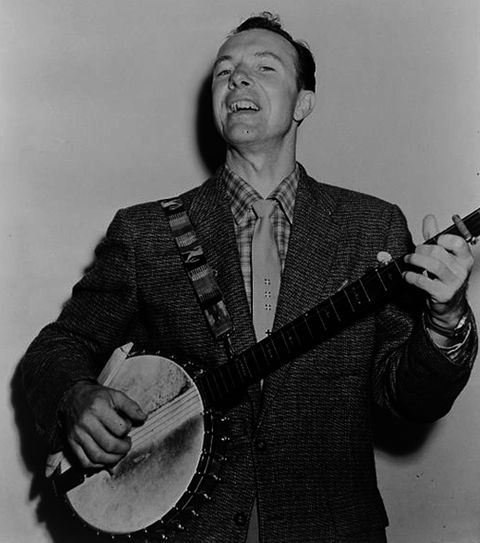
Woody Guthrie’s Doodle-Filled List of 33 New Year’s Resolutions From 1943

On Jan­u­ary 1, 1943, the Amer­i­can folk music leg­end Woody Guthrie jot­ted in his jour­nal a list of 33 “New Years Rulin’s.” Nowa­days, we’d call them New Year’s Res­o­lu­tions. Adorned by doo­dles, the list is down to earth by any mea­sure. Fam­i­ly, song, tak­ing a polit­i­cal stand, per­son­al hygiene — they’re the val­ues or aspi­ra­tions that top his list. You can click here to view the list in a larg­er for­mat. Below, we have pro­vid­ed a tran­script of Guthrie’s Rulin’s.

1. Work more and bet­ter
2. Work by a sched­ule
3. Wash teeth if any
4. Shave
5. Take bath
6. Eat good — fruit — veg­eta­bles — milk
7. Drink very scant if any
8. Write a song a day
9. Wear clean clothes — look good
10. Shine shoes
11. Change socks
12. Change bed cloths often
13. Read lots good books
14. Lis­ten to radio a lot
15. Learn peo­ple bet­ter
16. Keep ran­cho clean
17. Dont get lone­some
18. Stay glad
19. Keep hop­ing machine run­ning
20. Dream good
21. Bank all extra mon­ey
22. Save dough
23. Have com­pa­ny but dont waste time
24. Send Mary and kids mon­ey
25. Play and sing good
26. Dance bet­ter
27. Help win war — beat fas­cism
28. Love mama
29. Love papa
30. Love Pete
31. Love every­body
32. Make up your mind
33. Wake up and fight

If you would like to sign up for Open Culture’s free email newslet­ter, please find it here. It’s a great way to see our new posts, all bun­dled in one email, each day.

If you would like to sup­port the mis­sion of Open Cul­ture, con­sid­er mak­ing a dona­tion to our site. It’s hard to rely 100% on ads, and your con­tri­bu­tions will help us con­tin­ue pro­vid­ing the best free cul­tur­al and edu­ca­tion­al mate­ri­als to learn­ers every­where. You can con­tribute through Pay­Pal, Patre­on, and Ven­mo (@openculture). Thanks!

Relat­ed Con­tent:

Woody Guthrie’s Fan Let­ter To John Cage and Alan Hov­haness (1947)

Woody Guthrie at 100: Cel­e­brate His Amaz­ing Life with a BBC Film

Seeger: To Hear Your Ban­jo Play

The Alan Lomax Sound Archive Now Online: Fea­tures 17,000 Record­ings

by | Permalink | Make a Comment ( 3 ) |

Read an 18th-Century Eyewitness Account of 8‑Year-Old Mozart’s Extraordinary Musical Skills

‘Tis the very nature of par­ent­hood to view one’s chil­dren as excep­tion­al.

Anoth­er aspect of the con­di­tion is spend­ing time in the com­pa­ny of oth­er par­ents, some of whom have yet to mas­ter the art of self-restraint. Their babies are the most phys­i­cal­ly adroit, their tod­dlers the most gen­er­ous, their ele­men­tary school­ers the most culi­nar­i­ly dar­ing.

Pride in one’s chil­dren’s gifts is under­stand­able. A straight­for­ward brag or two is per­mis­si­ble. But after that, I’d real­ly like some cor­rob­o­rat­ing evi­dence, such as the Hon­ourable Daines Bar­ring­ton’s account of meet­ing a “very remark­able young musi­cian” whose father had been drag­ging him around the con­ti­nent on a 3‑and-a-half year con­cert tour.

Clear­ly, Johannes Chrysos­to­mus Wolf­gan­gus Theophilus Mozart (1756–1791) was a very accom­plished kid, but the term “prodi­gy” must have stuck in Friend of the Roy­al Soci­ety Bar­ring­ton’s craw, even after he’d attend­ed some of the boy’s pub­lic per­for­mances. Deter­mined to let sci­ence be the judge, he devised a series of on-the-spot chal­lenges designed to eval­u­ate the boy’s musi­cian­ship beyond the rig­or­ous prac­tice sched­ule imposed by his dis­ci­pli­nar­i­an father. (We all saw Amadeus, right?)

Bar­ring­ton’s detailed descrip­tion of these exper­i­ments would make a gim­crack Sci­ence Fair project for any lit­tle Ein­stein smart enough to get through 18th-cen­tu­ry typog­ra­phy with­out throw­ing a tantrum because the s’s all look like f’s (see the 18th cen­tu­ry text below). It might take a recre­ation­al math­e­mu­si­cian on the order of Vi Hart to tru­ly appre­ci­ate the com­plex­i­ty of the tasks that Bar­ring­ton assigned his young sub­ject (some­thing to do with hav­ing him play five con­tra­dic­to­ry lines simul­ta­ne­ous­ly…).

I can inter­pret the data with regard to some of Bar­ring­ton’s oth­er find­ings. Mozart, he wrote, not only looked like a young child, he ditched his harp­si­chord to chase around a cat and ran about the room “with a stick between his legs by way of a horse.” So it’s not the clas­si­cal peri­od equiv­a­lent of a stage mom lying about her kid’s age to bet­ter his chances at an audi­tion. Actu­al­ly, it’s always a relief to hear about these super-kids act­ing like… well, my kids.

Read Bar­ring­ton’s let­ter to the Roy­al Soci­ety — Account of a Very Remark­able Young Musi­cian — in its entire­ty here or below. And by all means share it with the worst offend­ers on your PTA.

via Rebec­ca Onion and her Slate blog, The Vault

Relat­ed Con­tent:

New­ly Dis­cov­ered Piece by Mozart Per­formed on His Own Fortepi­ano

Great Vio­lin­ists Play­ing as Kids: Itzhak Perl­man, Anne-Sophie Mut­ter, & More

The Musi­cal Mind of Albert Ein­stein: Great Physi­cist, Ama­teur Vio­lin­ist and Devo­tee of Mozart

Ayun Hal­l­i­day pro­vid­ed an hon­est account of home­school­ing her 12-year-old son in The East Vil­lage Inky #51 Fol­low her @AyunHalliday

Every Appearance James Brown Ever Made On Soul Train. So Nice, So Nice!

Are you ready for some Super Broth­er Music for the Soul?

Yes? How for­tu­itous! We just hap­pen to have 45 min­utes worth of James Brown Soul Train appear­ances from the early-to-mid-’70s to share. Get down!

It’s worth not­ing that Brown’s band, the JBs, were the only ones in the his­to­ry of the show who host Don Cor­nelius trust­ed to play live. The God­fa­ther of Soul ran a tight ship, fin­ing band mem­bers for sour notes and untidy cos­tumes, and it shows. The dance show’s stage was tight, but the per­for­mances here are even tighter, as lean and mean as those funkadel­ic Cur­tis Gib­son ensem­bles!

If your New Year’s Eve plans pale in com­par­i­son with the playlist below, can­cel them and stay in. Feel good. So good. We got you.

Hot Pants

Get Up (I Feel Like A) Sex Machine 2:36

Get On The Good Foot 4:06

Soul Pow­er 6:51

Make It Funky 9:53

Cold Sweat 11:07

Try Me 14:22

Please Please, Please 17:21

Say It Loud I’m Black and I’m Proud 17:57

Super Bad 23:53  (fea­tur­ing Soul Train Gang dancer Dami­ta Jo Free­man’s insane Robot)

Papa Don’t Take No Mess 26:18

My Thang 29:57

Hell 33:33 (the lit­tle girl shar­ing the stage is Brown’s daugh­ter, Dean­na)

The Pay­back 35:57

Damn Right, I Am Some­body 40:25 (with Fred Wes­ley & the JB’s)

via That Eric Alper

Relat­ed Con­tent: 

James Brown Gives You Danc­ing Lessons: From The Funky Chick­en to The Booga­loo

James Brown Saves Boston After MLK’s Assas­si­na­tion, Calls for Peace Across Amer­i­ca (1968)

James Brown Brings Down the House at the Paris Olympia, 1971

Ayun Hal­l­i­day is the author of sev­en books, includ­ing No Touch Mon­key! And Oth­er Trav­el Lessons Learned Too Late  and the Zinester’s Guide to NYC. Fol­low her @AyunHalliday

Horror Legend Christopher Lee Presents a Heavy Metal Version of The Little Drummer Boy

Every year, around this time, I give thanks that I no longer work retail. Sore feet and rude cus­tomers go with the ter­ri­to­ry, but Decem­ber (nay, Novem­ber) brings with it a ter­ri­fy­ing onslaught of Lit­tle Drum­mer Boys. I know folks who can’t abide Grand­ma Got Run Over By a Rein­deer, or the Singing Dogs’ Jin­gle Bells, but as far as I’m con­cerned, noth­ing has­tens a psy­chot­ic break faster than a few dozen pa rum pa pum pum pum rum pa pum pum pum rum pa pum pum pums.

It seems hor­ror leg­end Christo­pher Lee, famil­iar to younger fans as Star Wars’ Count Dooku, feels my pain..and rel­ish­es it. It’s a cliche for an aging actor to release an album of sea­son­al chest­nuts, but the 91-year-old Lee’s A Heavy Met­al Christ­mas is a thing apart. His take on The Lit­tle Drum­mer Boy is the son­ic equiv­a­lent of Rose­mary’s Baby.

I can’t say that I pre­fer Lee’s to any oth­er ver­sion — they’re all tor­tu­ous in my book- but I’m at peace with admir­ing it in the abstract. A stunt? Maybe, but he seems whol­ly sin­cere in his video greet­ing below, wish­ing us all a very hap­py Christ­mas and “for the sake of the world and those peo­ple in it” a safe New Year.

Ayun Hal­l­i­day reveals the true mean­ing of of Xmas here. Fol­low her @AyunHalliday

Relat­ed Con­tent:

Christo­pher Lee Nar­rates a Beau­ti­ful Ani­ma­tion of Tim Burton’s Poem, Night­mare Before Christ­mas

Edgar Allan Poe’s “The Raven,” Read by Christo­pher Walken, Vin­cent Price, and Christo­pher Lee

Orson Welles Records Two Songs with the 1980s Heavy-Met­al Band Manowar

Listen to the Beatles’ Christmas Records: Seven Vintage Recordings for Their Fans (1963 — 1969)

1963:

Every year from 1963 to 1969, the Bea­t­les record­ed a spe­cial Christ­mas greet­ing to their fans. It start­ed when “Beat­le­ma­nia” took off and the band found itself unable to answer all the fan mail.  “I’d love to reply per­son­al­ly to every­one,” says Lennon in the 1963 mes­sage, “but I just haven’t enough pens.” The first mes­sage was intend­ed to make their most loy­al fans feel appre­ci­at­ed. Like those that fol­lowed, the 1963 mes­sage was mailed as a paper-thin vinyl “flexi disc” to mem­bers of the Bea­t­les fan club. The record­ing fea­tures the Bea­t­les’ trade­mark wit and whim­sy, with a cho­rus of “Rudolph the Red-Nosed Ringo” and a ver­sion of “Good King Wences­las” that refers to Bet­ty Grable. It was made on Octo­ber 17, 1963 at Abbey Road Stu­dios, just after the band record­ed “I Want to Hold Your Hand.”

1964:

The band record­ed their next hol­i­day greet­ing, Anoth­er Bea­t­les Christ­mas Record, on Octo­ber 26, 1964, the same day they record­ed the song “Hon­ey Don’t.” Lennon’s rebel­lious nature begins to show, as he pokes fun at the pre­pared script: “It’s some­body’s bad hand wrot­er.”

1965:

Record­ed on Novem­ber 8, 1965 dur­ing the Rub­ber Soul ses­sions at Abbey Road, the 1965 mes­sage fea­tures a re-work­ing of “Yes­ter­day,” with the refrain “Oh I believe on Christ­mas Day.” The band’s gift for free-asso­ci­a­tion­al role play­ing is becom­ing more appar­ent. One piece of dia­logue near the end was even­tu­al­ly re-used by pro­duc­er George Mar­tin and his son Giles at the end of the re-mixed ver­sion of “All You Need is Love” on the 2006 album Love: “All right put the lights off. This is John­ny Rhythm say­ing good night to you all and God Bless­es.”

1966:

You can sense the band’s cre­ative pow­ers grow­ing in the 1966 mes­sage, Pan­tomime: Every­where It’s Christ­mas. The record­ing was made at Abbey Road on Novem­ber 25, 1966, dur­ing a break from work­ing on “Straw­ber­ry Fields For­ev­er.” The Bea­t­les were just begin­ning work on Sgt. Pep­per’s Lone­ly Heart’s Club Band. Instead of sim­ply thank­ing their fans and recount­ing the events of the year, the Bea­t­les use sound effects and dia­logue to cre­ate a vaude­ville play based around a song that goes, “Every­where it’s Christ­mas, at the end of every year.” Paul McCart­ney designed the cov­er.

1967:


This was the last Christ­mas mes­sage record­ed by the Bea­t­les all togeth­er in one place. Titled Christ­mas Time (Is Here Again), it reveals the group’s con­tin­u­ing exper­i­men­ta­tion with sound effects and sto­ry­telling. The sce­nario, writ­ten by the band ear­li­er on the day it was record­ed (Novem­ber 28, 1967), is about a group of peo­ple audi­tion­ing for a BBC radio play. Lennon and Ringo Starr designed the cov­er.

1968:

By the Christ­mas sea­son of 1968, rela­tions with­in the Bea­t­les were becom­ing strained. The hol­i­day mes­sage was pro­duced around the time the “White Album” was released, in Novem­ber of 1968. The four mem­bers’ voic­es were record­ed sep­a­rate­ly, in var­i­ous loca­tions. There’s plen­ty of self-mock­ery. Per­haps the most strik­ing moment comes when the Amer­i­can singer Tiny Tim (invit­ed by George Har­ri­son) strums a ukulele and sings “Nowhere Man” in a high falset­to.

1969:

The Bea­t­les were in the process of break­ing up when they record­ed (sep­a­rate­ly) their final Christ­mas mes­sage in Novem­ber and Decem­ber of 1969. A cou­ple of months ear­li­er, just before the release of Abbey Road, Lennon had announced to the oth­ers that he was leav­ing the group. Yoko Ono appears promi­nent­ly on the record­ing, singing and talk­ing with Lennon about peace. Fit­ting­ly, the 1969 mes­sage incor­po­rates a snip­pet from the Abbey Road record­ing of “The End.”

Relat­ed Con­tent:

The Bea­t­les: Unplugged Col­lects Acoustic Demos of White Album Songs (1968)

Peter Sell­ers Reads The Bea­t­les’ “She Loves You” in Four Dif­fer­ent Accents

The 10-Minute, Nev­er-Released, Exper­i­men­tal Demo of The Bea­t­les’ “Rev­o­lu­tion” (1968)

by | Permalink | Make a Comment ( 5 ) |

The Rolling Stones “Shattered” Covered by Eddie Vedder & Julie Andrews (Ok, It’s Really Jeanne Tripplehorn)

Pearl Jam front­man Eddie Ved­der and actress Jeanne Trip­ple­horn (Basic Instinct, The Firm, Big Love) per­formed this delight­ful cov­er of The Rolling Stones’ 1978 hit “Shat­tered” at a recent fundrais­er for a non-prof­it called Heal EB. EB stands for Epi­der­mol­y­sis Bul­losa, a dis­ease that caus­es blis­ters (some­times poten­tial­ly fatal ones) to erupt on the skin after the mildest trau­ma. You can lis­ten to The Rolling Stones’ orig­i­nal record­ing here, and fol­low along with the lyrics here. Or, bet­ter yet, you can close your eyes and sim­ply imag­ine Julie Andrews singing these risqué‎ lines. Yeah, on sec­ond thought, do that. H/T Marc

Don’t miss any­thing from Open Cul­ture. Sign up for our Dai­ly Email or RSS Feed. And we’ll send cul­tur­al curiosi­ties your way, every day.

Relat­ed Con­tent:

Watch the Rolling Stones Write “Sym­pa­thy for the Dev­il”: A High­light in Godard’s ’68 Film One Plus One

The Rolling Stones Jam With Their Idol, Mud­dy Waters

The Rolling Stones Sing Jin­gle for Rice Krispies Com­mer­cial (1964)

by | Permalink | Make a Comment ( 1 ) |

Teacher Helps His Student Overcome Stuttering and Read Poetry, Using the Sound of Music

Musharaf Asghar, a stu­dent at Thorn­hill Acad­e­my in north­east Eng­land, over­came an acute stam­mer when his teacher, Matthew Bur­ton, bor­rowed an idea from The King’s Speech. The teacher asked his stu­dent to put on some head­phones play­ing the music of Ben Howard, and to start recit­ing a poem called ‘The Moment.’ Sud­den­ly, for the first time, the words began to flow. All of this was cap­tured in a doc­u­men­tary series, Edu­cat­ing York­shire, that aired on the BBC. The seg­ment above con­cludes with Mushy, as he’s known, giv­ing a short talk in front of his class, at what looks like a grad­u­a­tion cer­e­mo­ny. It did­n’t take long for his fel­low stu­dents to break down in tears.

Writ­ing recent­ly in The Guardian, the stu­dent recalls. “My nerves over speak­ing in assem­bly were TERRIBLE though. I did­n’t realise how big 200 peo­ple looks like. I was sweat­ing and I had a lit­tle wob­ble but even­tu­al­ly, I man­aged to get through it. I was excit­ed, if ner­vous, about the whole thing going out. But I’m real­ly hap­py and proud to be on tel­ly as I hope it gives oth­er peo­ple with a stam­mer the con­fi­dence to have a go at pub­lic speak­ing. My speech is get­ting bet­ter every week. Every­one at col­lege gives me time, but I’m get­ting quick­er any­way so they don’t miss their bus while they are lis­ten­ing to me. I still won’t be apply­ing for any call-cen­tre jobs yet though.” Find more infor­ma­tion on how music ther­a­py can help peo­ple over­come stut­ter­ing here.

Don’t miss any­thing from Open Cul­ture. Sign up for our Dai­ly Email or RSS Feed. And we’ll send qual­i­ty cul­ture your way, every day.

via @courosa

by | Permalink | Make a Comment ( 3 ) |

Listen to the 1963 Song the Beatles Gave to the Stones; Then Hear Them Sing Backup on a 1967 Stones Tune, “We Love You”

After read­ing some of the ency­clo­pe­dic com­ments on this NPR site fea­tur­ing author and pro­fes­sor John McMil­lian—who has writ­ten a new book on The Bea­t­les vs. The Stones—and after hear­ing McMil­lan him­self tell his “reveal­ing, behind the scenes sto­ries” in the inter­view below, I’m fair­ly cer­tain we’re in good his­tor­i­cal hands for a reap­praisal of the two bands’ friend­ly rival­ry. McMil­lan dis­cuss­es their first meet­ing and ear­li­est col­lab­o­ra­tion, the track above, 1963’s “I Wan­na Be Your Man,” writ­ten by, and cred­it­ed to, John Lennon and Paul McCart­ney.

The song was the result of a chance encounter, we learn from Stones his­to­ri­an Bill Janowitz: “[Stones man­ag­er Andrew Loog] Old­ham had almost lit­er­al­ly bumped into Lennon and McCart­ney as they stepped out of a cab.” Old­ham brought The Bea­t­les into the stu­dio and the song was born from a McCart­ney frag­ment. The Stones had to this point only released Amer­i­can R&B or blues cov­ers, though they also turned this track into a bluesy stom­per. Hear The Bea­t­les decid­ed­ly less grit­ty ver­sion of the song below, over a mon­tage of their ear­ly six­ties British com­e­dy act that the Mon­kees stole so well. They released this three weeks lat­er, giv­ing the lead vocal to Ringo.

Despite Tom Wolfe’s quip that “The Bea­t­les want to hold your hand but the Stones want to burn down your town,” the ear­ly six­ties ver­sions of both bands looked very much alike. Until the late six­ties, the Stones were often a step behind The Bea­t­les’ image. They appear on the cov­er of 1965’s Out of My Head in mod­ish dress with mod­ish hair­cuts look­ing almost exact­ly like their coun­ter­parts. 1967’s Their Satan­ic Majesties Request, for its occa­sion­al beau­ty, was an obvi­ous and slight­ly ridicu­lous attempt to cap­i­tal­ize on Sgt. Pepper’s psy­che­del­ic suc­cess.

But even dur­ing those times, the bands diverged sharply in musi­cal terms, and the Stones’ path led in a dark­er direc­tion. The bud­ding image of the band as arson­ists may have con­tributed to their tar­get­ing by the author­i­ties. After a 1967 drug bust, Lennon and McCart­ney came to their aid, then sang (uncred­it­ed) back­ing vocals for the Stones track “We Love You,” a song writ­ten to the band’s ded­i­cat­ed fans and to The Bea­t­les. Pur­port­ed­ly, Allen Gins­berg sat in on the ses­sions. “They looked like lit­tle angels,“ he lat­er wrote, “like Bot­ti­cel­li Graces singing togeth­er for the first time.”

Relat­ed Con­tent:

Watch the Rolling Stones Write “Sym­pa­thy for the Dev­il”: A High­light in Godard’s ’68 Film One Plus One

Mick Jag­ger Tells the Sto­ry Behind ‘Gimme Shel­ter’ and Mer­ry Clayton’s Haunt­ing Back­ground Vocals

Mick Jag­ger Defends the Rights of the Indi­vid­ual After His Leg­endary 1967 Drug Bust

Josh Jones is a writer and musi­cian based in Durham, NC. Fol­low him at @jdmagness

« Go BackMore in this category... »
Quantcast