Thelonious Monk, Live in Oslo and Copenhagen (1966)

A lit­tle present for what would be Thelo­nius Monk’s 95th birth­day today — 100 grand min­utes of Monk per­form­ing live in Oslo and Copen­hagen in 1966. In the spring of that year, Monk brought his leg­endary quar­tet (tenor sax­o­phon­ist Char­lie Rouse, bassist Lar­ry Gales, and drum­mer Ben Riley) to Scan­di­navia to per­form two tele­vised shows. The record­ing, saved for pos­ter­i­ty thanks to YouTube, fea­tures some Monk clas­sics: Blue Monk, Epistro­phy, Round Mid­night and oth­ers. Sit back and enjoy.

Relat­ed Con­tent: 

Advice From the Mas­ter: Thelo­nious Monk Scrib­bles a List of Tips for Play­ing a Gig

A Child’s Intro­duc­tion to Jazz by Can­non­ball Adder­ley (with Louis Arm­strong & Thelo­nious Monk)

The Uni­ver­sal Mind of Bill Evans: Advice on Learn­ing to Play Jazz & The Cre­ative Process

by | Permalink | Make a Comment ( 2 ) |

Leonard Cohen Plays a Spellbinding Set at the 1970 Isle of Wight Festival

Jimi Hen­drix was a tough act to fol­low under the best of cir­cum­stances. But to fol­low him onstage after mid­night in front of a crowd of more than half a mil­lion peo­ple that had been set­ting fires and throw­ing bot­tles at the stage seemed like an impos­si­ble task for a poet with an acoustic gui­tar and a gen­tle band of back­ing musi­cians. Yet Leonard Cohen turned the volatile sit­u­a­tion at the 1970 Isle of Wight Fes­ti­val into one of the most mag­i­cal per­for­mances of his career.

A lit­tle piece of land four miles off the south­ern coast of Eng­land, the Isle of Wight was host to three great music fes­ti­vals from 1968 to 1970. The last of these was some­thing of a cross between Wood­stock and Alta­mont: flower pow­er with an under­cur­rent of men­ace. Like the Wood­stock fes­ti­val the year before, the 1970 Isle of Wight fes­ti­val was crashed by thou­sands of unpay­ing fans.

Head­lin­ers for the five-day fes­ti­val includ­ed Hen­drix, Miles Davis, the Who and the Doors. By the time Cohen appeared–near the very end of the rainy final night–the atmos­phere had become dan­ger­ous. Dur­ing the Hen­dix per­for­mance, some­one threw a flare onto the top of the stage and set it on fire. Jour­nal­ist Sylvie Sim­mons describes the scene in her new book, I’m Your Man: The Life of Leonard Cohen:

Ten­sion had been ris­ing at the fes­ti­val for days. The pro­mot­ers had expect­ed a hun­dred and fifty thou­sand peo­ple but half a mil­lion more turned up, many with no inten­tion of pay­ing. Even after the pro­mot­ers were forced to declare it a free fes­ti­val, ill will remained. Dur­ing a set by Kris Kristof­fer­son, bot­tles were thrown and he was booed off­stage. “They were boo­ing every­body,” says Kristof­fer­son. “Except Leonard Cohen.”

As Cohen and his pro­duc­er and key­board play­er Bob John­ston stood watch­ing the may­hem dur­ing Hen­drix’s per­for­mance, Cohen stayed calm. “Leonard was­n’t wor­ried,” John­ston told Sim­mons. “Hen­drix did­n’t care and nei­ther did we. Leonard was always com­plete­ly obliv­i­ous to any­thing like that. The only thing that upset him was when they told him that they did­n’t have a piano or an organ–I don’t know, some­one had set them on fire and pushed them off the stage–so I could­n’t play with him. Leonard said, ‘I’ll be in the trail­er tak­ing a nap; come and get me when you’ve found a piano and an organ.’ ”

Accord­ing to most accounts it was a lit­tle after two o’clock in the morn­ing when Cohen took the stage. His back­up band, or “Army,” includ­ed John­ston on key­boards, Char­lie Daniels on fid­dle and bass, Ron Cor­nelius on lead gui­tar and Elkin “Bub­ba” Fowler on ban­jo and bass, along with back­up singers Cor­lynn Han­ney, Susan Mus­man­no and Don­na Wash­burn. Cohen had a glazed-over look in his eyes through­out the per­for­mance, the result of his tak­ing the seda­tive Man­drax. “He was calm because of the Man­drax,” John­ston told Sim­mons. “That’s what saved the show and saved the fes­ti­val. It was the mid­dle of the night, all those peo­ple had been sit­ting out there in the rain, after they’d set fire to Hen­drix’s stage, and nobody had slept for days.”

The his­toric per­for­mance was cap­tured on film by Mur­ray Lern­er, who released it in 2009 as Leonard Cohen: Live at the Isle of Wight 1970. The film (above) includes the fol­low­ing songs from the show:

  1. Dia­monds in the Mine
  2. Famous Blue Rain­coat
  3. Bird on the Wire
  4. One of us Can­not be Wrong
  5. The Stranger Song
  6. Tonight Will be Fine
  7. Hey, That’s No Way to Say Good­bye
  8. Sing Anoth­er Song Boys
  9. Suzanne
  10. The Par­ti­san
  11. Seems So Long Ago, Nan­cy
  12. So Long, Mar­i­anne (dur­ing clos­ing cred­its)

Per­haps the most mov­ing moment in the film comes at the begin­ning, when Cohen brings the mas­sive crowd togeth­er by ask­ing a favor: “Can I ask each of you to light a match,” Cohen says, “so I can see where you all are?” As Sim­mons puts it, “Leonard talked to the hun­dreds of thou­sands of peo­ple he could not see as if they were sit­ting togeth­er in a small dark room.” Or as film­mak­er Lern­er lat­er said, “He mes­mer­ized them. And I got mes­mer­ized also.” Sum­ming up the con­cert and the film, Sim­mons writes: “It was a bril­liant per­for­mance. Lern­er’s cam­eras cap­tured Cohen’s com­mand­ing pres­ence, hyp­no­tist’s charm, and an inti­ma­cy that would seem unfea­si­ble in such a vast, inhos­pitable space.”

John Lennon’s Victorian Circus Poster Lovingly Remade by Artists and Engravers

This won­drous lit­tle video is, as they say, guar­an­teed to raise a smile. Accord­ing to Bea­t­les leg­end, John Lennon was shoot­ing a pro­mo­tion­al film for “Straw­ber­ry Fields For­ev­er” in ear­ly 1967 when he passed by an antique shop and dis­cov­ered a poster from 1843 trum­pet­ing the arrival of Pablo Fan­que’s Cir­cus. The cir­cus, the poster pro­claimed, was to be “for the ben­e­fit of Mr. Kite.” Intrigued, Lennon bought the quirky Vic­to­ri­an poster, hung it on his wall at home, and then pro­ceed­ed to write “Being for the Ben­e­fit of Mr. Kite!,” the sev­enth track on Sgt. Pep­per’s Lone­ly Hearts Club Band.

Almost 45 years lat­er, Bea­t­les fans still can’t shake the poster from their minds. And, just recent­ly, Peter Dean and a team of artists decid­ed to recre­ate the poster using tra­di­tion­al meth­ods of wood engrav­ing and let­ter­press print­ing. They share their expe­ri­ence in the ele­gant video above. Your can buy your own copy of the lim­it­ed edi­tion print here.

via Kot­tke

If you would like to sign up for Open Culture’s free email newslet­ter, please find it here. It’s a great way to see our new posts, all bun­dled in one email, each day.

If you would like to sup­port the mis­sion of Open Cul­ture, con­sid­er mak­ing a dona­tion to our site. It’s hard to rely 100% on ads, and your con­tri­bu­tions will help us con­tin­ue pro­vid­ing the best free cul­tur­al and edu­ca­tion­al mate­ri­als to learn­ers every­where. You can con­tribute through Pay­Pal, Patre­on, and Ven­mo (@openculture). Thanks!

 Relat­ed Con­tent:

The Straw­ber­ry Fields For­ev­er Demos: The Mak­ing of a Bea­t­les Clas­sic (1966)

Here Comes The Sun: The Lost Gui­tar Solo by George Har­ri­son

Gui­tarist Randy Bach­man Demys­ti­fies the Open­ing Chord of ‘A Hard Day’s Night’

by | Permalink | Make a Comment ( 1 ) |

Bach’s The Well-Tempered Clavier, Tweeted Daily By 92nd Street Y

You’ve no doubt heard of Johann Sebas­t­ian Bach’s The Well-Tem­pered Clavier. What’s more, you’ve no doubt heard it, even if you could swear you haven’t. (Need a refresh­er? Lis­ten to Glenn Gould’s per­for­mance of it here.) If you’d like to gain much more famil­iar­i­ty with this deeply respect­ed piece of music, but in small pieces of it at a time, keep an ear on The Well-Tweet­ed Clavier, going on now from the 92nd Street Y in NYC. Known to pull a cul­tur­al stunt every now and again, 92Y has a plan to tweet about a pre­lude and fugue of The Well-Tem­pered Clavier each and every day. They launched this project on Sep­tem­ber 14, and it should run for a total of 48 days. You can see these tweets by fol­low­ing 92Y on Twit­ter, or sim­ply by check­ing the hash­tag #WTClavier. “The Well-Tem­pered Clavier can be played on any key­board,” 92Y Tweet­ed on Octo­ber 3. “Truth in adver­tis­ing?’ That day, they post­ed three videos asso­ci­at­ed with Pre­lude and Fugue No. 20 in A minor, BWV 865: a two-part per­for­mance and a short talk from pianist and con­duc­tor András Schiff.

At the end of this month, Schiff, famous­ly a boost­er of Bach’s work, opens the New York com­po­nent of his pro­gram The Bach Project, an effort that will, all told, include the San Fran­cis­co Sym­pho­ny, Los Ange­les Phil­har­mon­ic, New York Phil­har­mon­ic, 92nd Street Y, Carnegie Hall and Great Per­form­ers at Lin­coln Cen­ter. “To me, Bach’s music is not black and white; it’s full of colours,” Schiff writes in his essay “With­out the Ped­al But With Plen­ty of Col­ors.” “In my imag­i­na­tion, each tonal­i­ty cor­re­sponds to a colour. The Well-Tem­pered Clavier, with its 24 pre­ludes and fugues in all the major and minor keys, pro­vides an ide­al oppor­tu­ni­ty for this fan­ci­ful fan­ta­sy.” You can explore these col­ors on 92Y’s main Well-Tweet­ed Clavier page, which actu­al­ly col­or-codes all the pre­ludes and fugues thus far tweet­ed so you can expe­ri­ence them as chro­mat­i­cal­ly as Schiff does. “Of course, this is a very per­son­al inter­pre­ta­tion, and each of you may have a dif­fer­ent opin­ion,” he adds. “Nev­er­the­less, if some of us hap­pen to believe that music is more than just a series of notes and sounds, then a lit­tle bit of fan­ta­sy is wel­come.”

Relat­ed con­tent:

The Open Gold­berg Vari­a­tions: J.S. Bach’s Mas­ter­piece Free to Down­load

A Big Bach Down­load: The Com­plete Organ Works for Free

How a Bach Canon Works. Bril­liant.

A Young Glenn Gould Plays Bach

Col­in Mar­shall hosts and pro­duces Note­book on Cities and Cul­ture. Fol­low him on Twit­ter at @colinmarshall.

Higgs Boson, the Musical: CERN Data Turned into Melody

When researchers at CERN announced the dis­cov­ery of the Hig­gs Boson this sum­mer, Domeni­co Vic­i­nan­za, a pro­fes­sion­al com­pos­er and par­ti­cle physi­cist at DANTE (Deliv­ery of Advanced Net­work Tech­nol­o­gy to Europe) took the Hig­gs research data and turned it into a melody. He explained how he did it to PRI’s The World:

In order to take a sub­atom­ic par­ti­cle like the Hig­gs Boson and con­vert it into a melody, to notes, what we do is basi­cal­ly take the data and asso­ciate with each one of the numer­ic val­ues a sin­gle note on a score. Melody is fol­low­ing basi­cal­ly exact­ly the same behav­ior the sci­en­tif­ic data is show­ing. So when the piano starts play­ing, you can hear some real­ly real­ly high pitched notes.… They are the sig­na­ture of the Hig­gs Boson melody and they are cor­re­spond­ing to a peak in the sci­en­tif­ic draft research has shown at CERN. The actu­al data points are only the one played by the piano at the begin­ning and then played by piano and marim­ba in the sec­ond rep­e­ti­tion. So the marim­ba was play­ing the low­er notes and the piano was play­ing the high­er notes. So it sounds like a Cuban Habanera but this is clas­si­cal insi­d­ence.… I thor­ough­ly believe that sci­ence can offer musi­cians a won­der­ful way to look for inter­est­ing melodies, inter­est­ing har­monies, inter­est­ing son­ic phe­nom­e­na. They can be tak­en and be used by com­posers to cre­ate some real enter­tain­ment.

Back in 2009, Vic­i­nan­za orig­i­nal­ly caught our atten­tion when he and the ‘Lost Sounds Orches­tra’ gave a unique per­for­mance, play­ing ancient instru­ments live in Stock­holm while the audi­ence watched dancers per­form some 7,000 miles away in Kuala Lumpur on an ultra-fast dis­play screen. You can catch scenes from that per­for­mance right here.

Relat­ed Con­tent:

The Hig­gs Boson and Its Dis­cov­ery Explained with Ani­ma­tion

Demys­ti­fy­ing the Hig­gs Boson with Leonard Susskind, the Father of String The­o­ry

Listen: Beck Reworks 20 Philip Glass Compositions Into a 20 Minute Song, ‘NYC: 73–78’

Lat­er this month — Octo­ber 23rd to be pre­cise — the singer-song­writer Beck and fel­low musi­cians will cel­e­brate Philip Glass’ 75th birth­day with the release of Rework: Philip Glass Remixed. The album will be streamed online in its entire­ty on NPR’s First Lis­tens site start­ing next Mon­day.

But you can already catch Beck­’s con­tri­bu­tion to the release. It’s noth­ing oth­er than 20 Philip Glass com­po­si­tions remixed into a 20 minute track, and it’s called ‘NYC: 73–78’. Catch it on NPR’s site or lis­ten below.

If the whole idea of Glass turn­ing 75 makes you feel nos­tal­gic, and if you want to revis­it some vin­tage mate­r­i­al, don’t miss two old chest­nuts: Philip Glass Com­pos­es for Sesame Street (1979) and Philip Glass, Seen and Heard Through the Cin­e­mat­ic Mind of Peter Green­away (1983).


Bob Dylan’s Historic Newport Folk Festival Performances, 1963–1965

“You know him, he’s yours: Bob Dylan.” It’s hard to imag­ine a more iron­ic intro­duc­tion, but those were the words used by Ron­nie Gilbert of The Weavers to intro­duce Dylan at the 1964 New­port Folk Fes­ti­val. “What a crazy thing to say!” Dylan wrote in his mem­oir, Chron­i­cles. “Screw that. As far as I knew, I did­n’t belong to any­body then or now.” A year lat­er at New­port he made his point loud and clear. They did­n’t know him, and he was­n’t theirs.

On July 25, 1965 Dylan shocked the folk purists at New­port by plug­ging his Fend­er Stra­to­cast­er into an ampli­fi­er and join­ing gui­tarist Mike Bloom­field and oth­ers from the But­ter­field Blues Band in a blis­ter­ing ren­di­tion of “Mag­gie’s Farm,” a song often inter­pret­ed as Dylan’s protest song against the expec­ta­tion of singing protest songs. (The farm in the title is viewed as a pun on Silas McGee’s farm in Mis­sis­sip­pi, where Dylan made his famous appear­ance dur­ing a civ­il rights ral­ly.) Many in the audi­ence took it as a slap in the face. Boos rose up amid the cheer­ing, and the boo­ing con­tin­ued into Dylan’s next song, the now-clas­sic “Like a Rolling Stone.” Music writer Greil Mar­cus described the scene:

There was anger, there was fury, there was applause, there was stunned silence, but there was a great sense of betray­al. As if some­thing pre­cious and del­i­cate was being dashed to the ground and stomped. As if the del­i­cate flower of folk music, the price­less her­itage of impov­er­ished black farm­ers and des­ti­tute white min­ers, was being mocked by a dandy, with a gar­ish noisy elec­tric gui­tar, who was going to make huge amounts of mon­ey as a pop star by exploit­ing what he found from these poor peo­ple.

The con­tro­ver­sial “elec­tric” per­for­mance was the last of three Dylan appear­ances at the New­port fes­ti­val. His first time there was in 1963, when he was an obscure young singer, lit­tle known out­side of Green­wich Vil­lage. He appeared at the fes­ti­val as a guest of Joan Baez, who was far bet­ter known and had recent­ly appeared on the cov­er of Time mag­a­zine. Baez intro­duced Dylan to audi­ences around the coun­try and encour­aged him to write polit­i­cal­ly com­mit­ted folk songs. But by the 1964 fes­ti­val Dylan had already caught up to Baez, in terms of fame, and by 1965 he was break­ing free of Baez and her expec­ta­tions, and of folk music in gen­er­al.

Mur­ray Lern­er’s The Oth­er Side of the Mir­ror: Bob Dylan Live at the New­port Folk Fes­ti­val 1963–1965 (above) cap­tures Dylan’s evo­lu­tion over those three years. The footage was orig­i­nal­ly shot for Lern­er’s clas­sic 1967 doc­u­men­tary, Fes­ti­val!, and was even­tu­al­ly acquired by Dylan, whose man­ag­er agreed to let Lern­er assem­ble it into a film–but only after the release of Mar­tin Scors­ese’s No Direc­tion Home, which uses some of the mate­r­i­al. The Oth­er Side of the Mir­ror was released in 2007. The doc­u­men­tary was shot on Kodak Plus‑X and Tri‑X film with a three-per­son crew. As Lern­er lat­er explained in an inter­view, his inten­tion was to let Dylan’s evolv­ing music speak for itself:

We decid­ed on no nar­ra­tion, no pun­dit inter­views, no inter­views with Dylan. noth­ing except the expe­ri­ence of see­ing him. That to me is excit­ing. Just the clear expe­ri­ence gives you every­thing you need. I felt that when screened the music of The Oth­er Side of the Mir­ror, because he’s tout­ed metaphor­i­cal­ly as the mir­ror of his gen­er­a­tion, and I thought no, he’s beyond that. He always takes the gen­er­a­tion beyond that, and he’s like on the oth­er side of the mir­ror. But I also felt the won­drous qual­i­ty of his imag­i­na­tion took us like Alice to a new world on the oth­er side of the mir­ror.

Relat­ed con­tent:

Bob Dylan’s (In)Famous Elec­tric Gui­tar From the New­port Folk Fes­ti­val Dis­cov­ered?

The Times They Are a‑Changin’: 1964 Broad­cast Gives a Rare Glimpse of the Ear­ly Bob Dylan


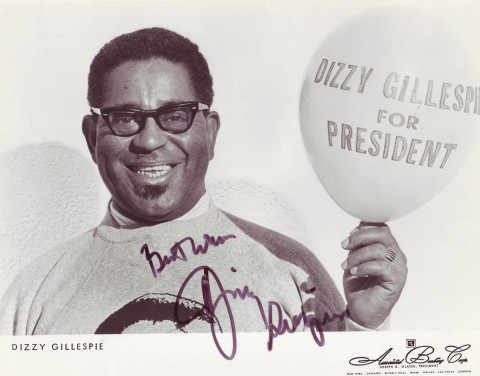
Dizzy Gillespie Runs for US President, 1964. Promises to Make Miles Davis Head of the CIA

There comes a point in every nation­al elec­tion year when I reach total sat­u­ra­tion and have to tune it all out to stay sane—the non­stop streams of vit­ri­ol, the spec­ta­cles of elec­toral dys­func­tion, the ads, the ads, the ads. I’m sure I’m not alone in this. But imag­ine how dif­fer­ent­ly we could feel about pres­i­den­tial elec­tions if peo­ple like, I don’t know, Dizzy Gille­spie could get on a major tick­et? That’s what might have hap­pened in 1964 if “a lit­tle-known pres­i­den­tial cam­paign… had been able to vault the mil­lion­aires-only hur­dle.” What began as one of Dizzy’s famous prac­ti­cal jokes, and a way to raise mon­ey for CORE (Con­gress for Racial Equal­i­ty) and oth­er civ­il rights orga­ni­za­tions became some­thing more, a way for Dizzy’s fans to imag­ine an alter­na­tive to the “millionaire’s‑only” club rep­re­sent­ed by Lyn­don John­son and Bar­ry Gold­wa­ter.

dizzy for president

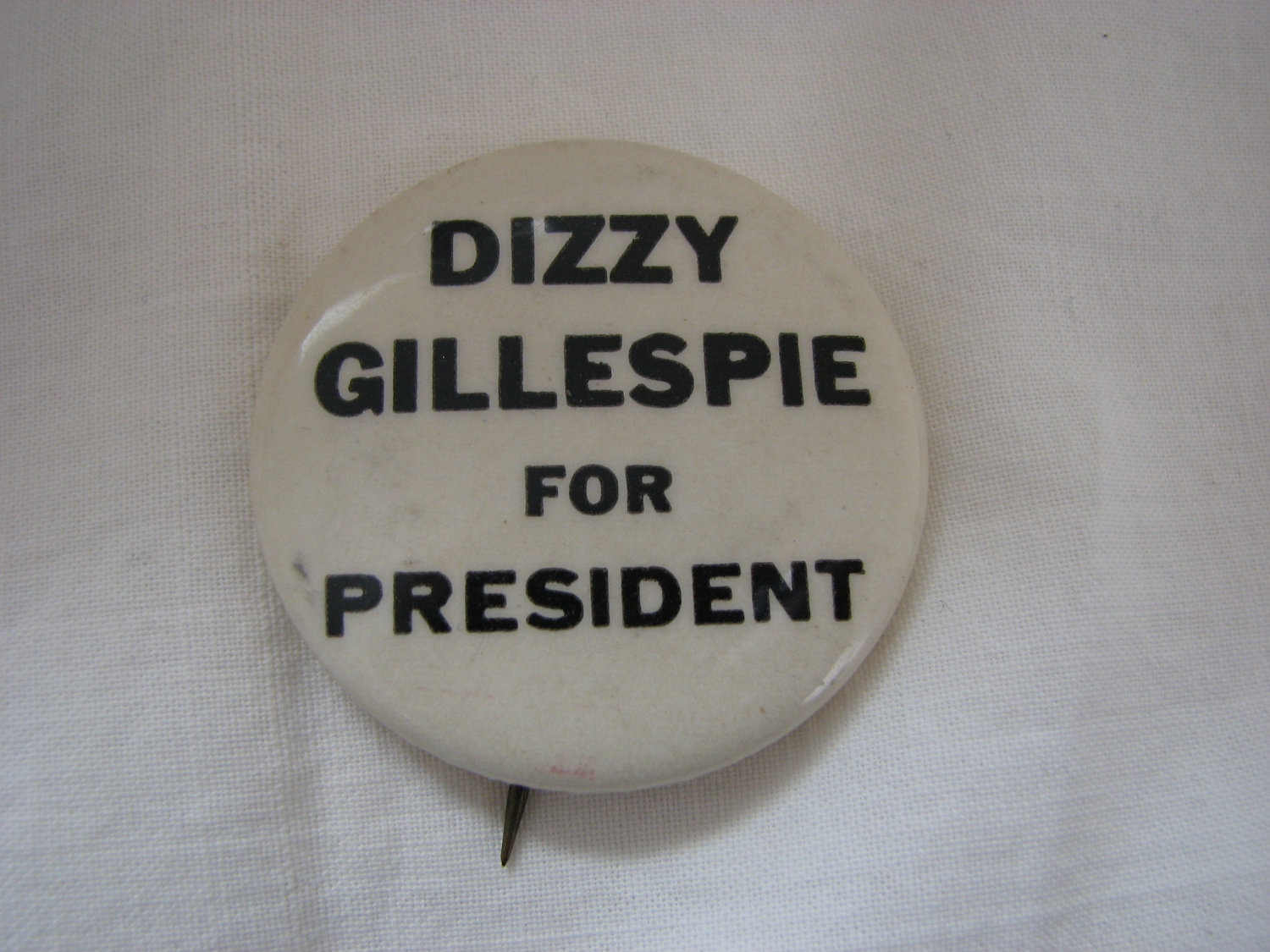
Gillespie’s cam­paign had “Dizzy Gille­spie for Pres­i­dent” but­tons, now collector’s items, and “Dizzy for Pres­i­dent” became the title of an album record­ed live at the Mon­terey Jazz Fes­ti­val in 1963.

A take on his trade­mark tune “Salt Peanuts,” “Vote Dizzy” was Gillespie’s offi­cial cam­paign song and includes lyrics like:

Your pol­i­tics ought to be a groovi­er thing
Vote Dizzy! Vote Dizzy!
So get a good pres­i­dent who’s will­ing to swing
Vote Dizzy! Vote Dizzy!

It’s def­i­nite­ly groovi­er than either one of our cur­rent cam­paigns. Dizzy “believed in civ­il rights, with­draw­ing from Viet­nam and rec­og­niz­ing com­mu­nist Chi­na,” and he want­ed to make Miles Davis head of the CIA, a role I think would have suit­ed Miles per­fect­ly. Although Dizzy’s cam­paign was some­thing of a pub­lic­i­ty stunt for his pol­i­tics and his per­sona, it’s not unheard of for pop­u­lar musi­cians to run for pres­i­dent in earnest. In 1979, rev­o­lu­tion­ary Niger­ian Afrobeat star Fela Kuti put him­self for­ward as a can­di­date in his coun­try, but was reject­ed. More recent­ly, Hait­ian musi­cian and for­mer Fugee Wyclef Jean attempt­ed a sin­cere run at the Hait­ian pres­i­den­cy, but was dis­qual­i­fied for rea­sons of res­i­den­cy. It’s a lit­tle hard to imag­ine a pop­u­lar musi­cian mount­ing a seri­ous pres­i­den­tial cam­paign in the U.S., but then again, the 80s were dom­i­nat­ed by the strange real­i­ty of a for­mer actor in the White House, so why not? In any case, revis­it­ing Dizzy Gille­spie’s mid-cen­tu­ry polit­i­cal the­ater may pro­vide a need­ed respite from the onslaught of the cur­rent U.S. cam­paign sea­son.

Josh Jones is a doc­tor­al can­di­date in Eng­lish at Ford­ham Uni­ver­si­ty and a co-founder and for­mer man­ag­ing edi­tor of Guer­ni­ca / A Mag­a­zine of Arts and Pol­i­tics.

« Go BackMore in this category... »
Quantcast