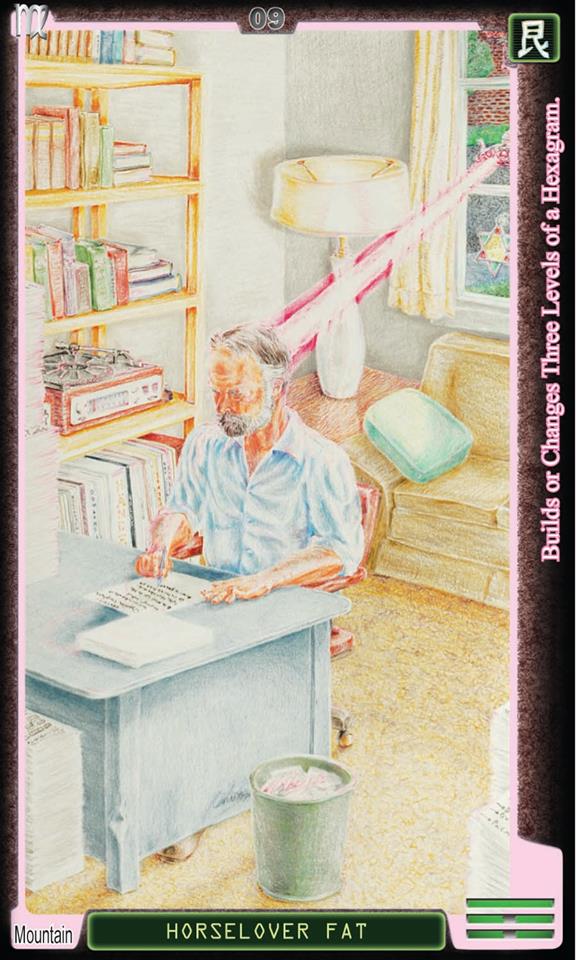
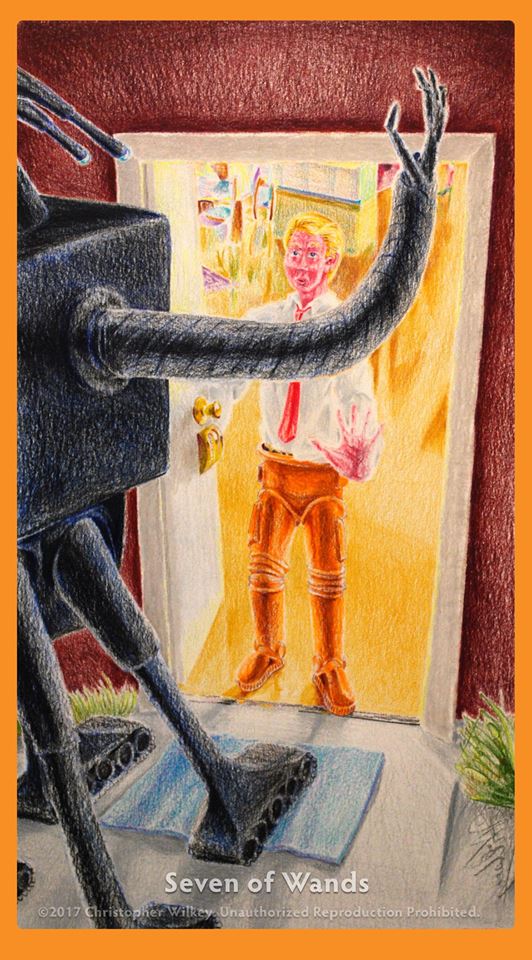
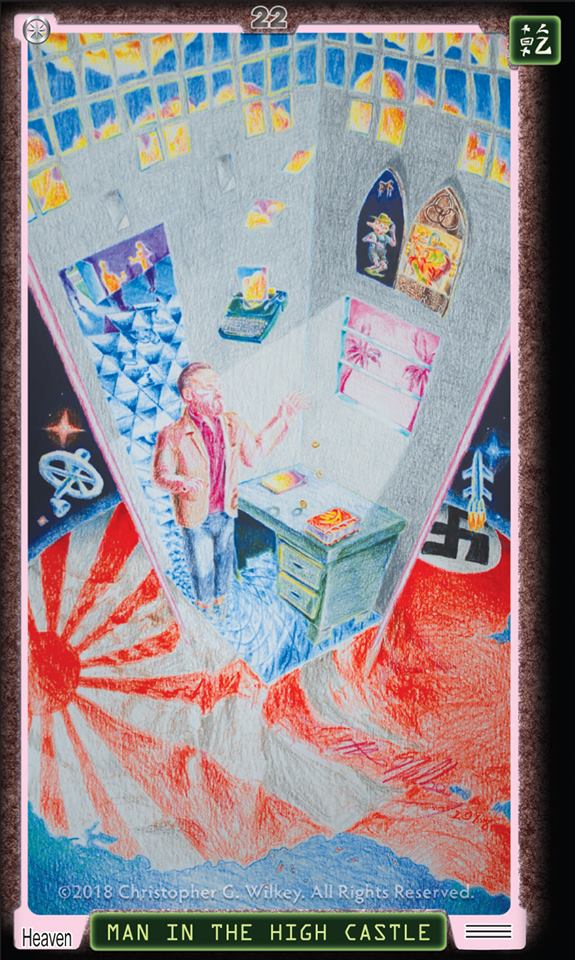
Philip K. Dick Tarot Cards: A Tarot Deck Modeled After the Visionary Sci-Fi Writer’s Inner World

What does Philip K. Dick have in com­mon with Jorge Luis Borges, Her­mann Hesse, and John Cage? Fans of all three twen­ti­eth-cen­tu­ry vision­ar­ies will have much to say on the mat­ter of what deep res­o­nances exist between their bod­ies of work and the world­views that pro­duced them. But they can’t over­look the fact that Dick, Borges, Hesse, and Cage all, at one time or anoth­er, enthu­si­as­ti­cal­ly con­sult­ed the ancient Chi­nese div­ina­tion text known as the I Ching. Also known as The Book of Changes, it became a must-have coun­ter­cul­tur­al vol­ume in the 1960s, and the words of guid­ance it pro­vid­ed, in all their open­ness to inter­pre­ta­tion, sure­ly influ­enced no small num­ber of deci­sions made in that era.

What the I Ching had to say cer­tain­ly influ­enced the deci­sions of Philip K. Dick, in life as well as in writ­ing. Not only did he use the book to write The Man in the High Cas­tle, his 1962 nov­el por­tray­ing a world in which the Axis pow­ers won World War II, he also includ­ed it as a plot ele­ment in the sto­ry itself.

And speak­ing of alter­nate his­to­ries, we might ask: could Dick have writ­ten The Man in the High Cas­tle with­out the I Ching? Or could he have writ­ten it using anoth­er div­ina­tion tool, per­haps one from the West rather than the East? What would the nov­el have looked like if writ­ten while har­ness­ing the per­cep­tive pow­er of tarot, the 15th-cen­tu­ry Euro­pean card game whose decks also have a long his­to­ry as win­dows onto human des­tiny?

Recent­ly the world of tarot, the world of the I Ching, and the world of Philip K. Dick col­lid­ed, result­ing in The Fool’s Jour­ney of Philip K. Dick, a tarot deck pub­lished by Wide Books. “PKD schol­ar Ted Hand and tarot artist Christo­pher Wilkey have brought togeth­er a new vision of tarot and the great works of Philip K. Dick,” says Wide Books’ site. “Ide­al for advanced stu­dents of tarot as well as novices to the I Ching,” the deck “takes the seek­er through an ini­ti­a­tion into the life and writ­ings of one of the great­est writ­ers of recent times.” In addi­tion to its 80 cards, each draw­ing from some ele­ment of Dick­’s body of work, the deck includes “four rule cards for two I Ching inspired card games and an eight-sided fold­ing book­let about tarot as Gnos­tic Alle­go­ry, with begin­ning exer­cis­es con­trast­ing tarot to the I Ching.”

Two of the games pay trib­ute to par­tic­u­lar Dick nov­els: A Maze of Death and its “domi­no-type game” that “famil­iar­izes play­ers with the tri­grams of which I Ching hexa­grams are com­posed,” and Ubik, which has “play­ers either hop­ing to avoid accu­mu­lat­ing entropy or try­ing to cap­ture all the ener­gy you can from the deck and oth­er play­ers to be the last stand­ing at the end of the game.” If that sounds like a good time to you, you’ll have to reg­is­ter your inter­est in order­ing a copy of The Fool’s Jour­ney of Philip K. Dick on Wide Books’ con­tact form, since the ini­tial run has sold out. That won’t come as a sur­prise to Dick­’s fans, who know the addic­tive pow­er of one glimpse into his inner world, with its rich mix­ture of the super­nat­ur­al, the sci­en­tif­ic, the para­nor­mal, and the para­noid. But what kind of books will they use his tarot deck to write?

Relat­ed Con­tent:

Behold the Sola-Bus­ca Tarot Deck, the Ear­li­est Com­plete Set of Tarot Cards (1490)

H.R. Giger’s Tarot Cards: The Swiss Artist, Famous for His Design Work on Alien, Takes a Jour­ney into the Occult

The Tarot Card Deck Designed by Sal­vador Dalí

The Thoth Tarot Deck Designed by Famed Occultist Aleis­ter Crow­ley

Twin Peaks Tarot Cards Now Avail­able as 78-Card Deck

Robert Crumb Illus­trates Philip K. Dick’s Infa­mous, Hal­lu­ci­na­to­ry Meet­ing with God (1974)

Based in Seoul, Col­in Mar­shall writes and broad­casts on cities, lan­guage, and cul­ture. His projects include the book The State­less City: a Walk through 21st-Cen­tu­ry Los Ange­les and the video series The City in Cin­e­ma. Fol­low him on Twit­ter at @colinmarshall or on Face­book.

Why Should We Read Pioneering Sci-Fi Writer Octavia Butler? An Animated Video Makes the Case

Two of the most star­tling­ly orig­i­nal sci­ence fic­tion writ­ers of the past cen­tu­ry, Samuel R. Delany and Octavia E. But­ler, emerged in the 60s and 70s and cre­at­ed dystopi­an visions that res­onate with us today with more depth and imme­di­a­cy than the major­i­ty of their con­tem­po­raries. Both writ­ers also hap­pened to be African Amer­i­can. But why should this detail mat­ter? Why indeed, asked But­ler, in an equal­ly rel­e­vant ques­tion, “is sci­ence fic­tion so white?” She went on to explore the ques­tion in a 1980 essay pub­lished in Trans­mis­sion, not with a his­to­ry of the genre, but with rebut­tals to the rea­sons for exclud­ing peo­ple like her.

“A more insid­i­ous prob­lem than out­right racism is sim­ply habit, cus­tom,” But­ler writes. Peo­ple get com­fort­able with things as they are—an atti­tude anti­thet­i­cal to the spir­it of sci-fi. “Sci­ence fic­tion, more than any oth­er genre deals with change—change in sci­ence and tech­nol­o­gy, and social change. But sci­ence fic­tion itself changes slow­ly, often under protest.”

But­ler died too young, in 2006 at age 58; but she lived to see resis­tance to change in sci­ence fic­tion per­sist into the 21st cen­tu­ry. Yet in her most com­pelling, and slight­ly ter­ri­fy­ing, pro­jec­tion into the future—her mid-90s Para­ble series of nov­els—change is the only thing that any­one can rely on.

All that you touch, you Change. All that you Change Changes you.

N.K. Jemi­son quotes these lines from Para­ble of the Sow­er in her intro­duc­tion to the book’s reis­sue this year. Pub­lished in 1993, Para­ble’s futur­ism didn’t have the same fris­son as that of, say, William Gib­son at the time. “Rov­ing, uncon­test­ed gangs of pedophiles and drug-addict­ed pyro­ma­ni­acs? Slav­ery 2.0? A pow­er­ful coali­tion of white-suprema­cist, homo­pho­bic, Chris­t­ian zealots tak­ing over the coun­try?” writes Jemi­son. “Nah, I thought, and hoped But­ler would get back to aliens soon.” Set in the con­text of a U.S. post-mas­sive cli­mate col­lapse (pos­si­bly), hyper-finan­cial­iza­tion, and cor­po­rate rule.… the nov­el now seems all too pre­scient to its cur­rent-day read­ers.

But even Butler’s alien sto­ries are sto­ries about humans in rad­i­cal tran­si­tion, and col­lec­tive social actions with both dev­as­tat­ing and trans­for­ma­tive out­comes. In Dawn, the first nov­el in her Xeno­gen­e­sis tril­o­gy (now called “Lilith’s Brood”), human woman Lilith Iyapo “awak­ens after 250 years of sta­sis,” fol­low­ing an apoc­a­lyp­tic nuclear war on Earth, “to find her­self sur­round­ed by aliens called the Oankali,” as the ani­mat­ed TED-Ed les­son above by Ayana Jamieson and Moya Bai­ley tells it. These beings want to trade DNA with the remain­ing humans, there­by cre­at­ing a hybrid species. The alter­na­tive is ster­il­iza­tion.

The chill­ing sce­nario in Dawn and its suc­ces­sors has its moments of Love­craft­ian dread, but it goes in an even stranger direc­tion, bring­ing an added dimen­sion to the mean­ing of the word “dehu­man­iza­tion.” What would it mean to slow­ly trans­form into anoth­er species? Such pro­found­ly uni­ver­sal ques­tions about the mean­ing of human iden­ti­ty reached “read­ers who had been exclud­ed from the genre,” notes Emanuel­la Grin­berg at CNN. But­ler peo­ples her books with humans of every col­or and eth­nic­i­ty, and aliens only she might have imag­ined. But most of her pro­tag­o­nists are black and brown women. Many of the read­ers But­ler influ­enced, like Jemi­son, are women of col­or who became genre-chang­ing sci-fi writ­ers them­selves.

Butler’s work “helped define the lit­er­ary cor­ner­stone of Afro­fu­tur­ism,” notes Grin­berg. Her writ­ing was strate­gic, a way to con­front dehu­man­iz­ing polit­i­cal and social polit­i­cal real­i­ties. Para­ble of the Sow­er, the TED les­son explains, was part­ly a response to Butler’s home state of California’s Propo­si­tion 187, which denied undoc­u­ment­ed immi­grants basic health­care, edu­ca­tion, and basic ser­vices. In the fol­low-up, Para­ble of the Tal­ents (1998), an author­i­tar­i­an pres­i­den­tial can­di­date cam­paigns on the slo­gan “Make Amer­i­can Great Again.” Her best-sell­ing nov­el, Kin­dred, pub­lished in 1979, tells the sto­ry of a con­tem­po­rary woman repeat­ed­ly pulled back in time to the Mary­land plan­ta­tion of her enslaved ances­tor.

Why should we read Octavia But­ler? You’ll have to read her to answer that ques­tion your­self. But I’d ven­ture to say—along with the intro to her life and work above—because she had a bet­ter read on how the time she lived in would turn into the time we live in now than near­ly any­one writ­ing at the time; because she told strange, won­der­ful, out­landish, com­pelling sto­ries that stretched the imag­i­na­tion with­out los­ing sight of the human core; because, like Ursu­la K. Le Guin, she chal­lenged the world as it is with pro­found visions of what it might be; and because she not only excelled as a sto­ry­teller but specif­i­cal­ly as a com­mit­ted sci­ence fic­tion sto­ry­teller, one who deeply touched, and thus deeply changed, the form.

Relat­ed Con­tent:

Octavia Butler’s 1998 Dystopi­an Nov­el Fea­tures a Fascis­tic Pres­i­den­tial Can­di­date Who Promis­es to “Make Amer­i­ca Great Again”

The Dai­ly Rit­u­als of 143 Famous Female Cre­ators: Octavia But­ler, Edith Whar­ton, Coco Chanel & More

Cel­e­brate the Life & Writ­ing of Ursu­la K. Le Guin (R.I.P.) with Clas­sic Radio Drama­ti­za­tions of Her Sto­ries

Josh Jones is a writer and musi­cian based in Durham, NC. Fol­low him at @jdmagness

Would You Go Back to 1889 and Take Out Baby Hitler?: Time-Travel Expert James Gleick Answers the Philosophical Question

The vast major­i­ty of us have no incli­na­tion to kill any­one, much less a small child. But what if we had the chance to kill baby Adolf Hitler, pre­vent­ing the Holo­caust and indeed the Sec­ond World War? That hypo­thet­i­cal ques­tion has endured for a vari­ety of rea­sons, touch­ing as it does on the con­cepts of geno­cide and infant mur­der in forms even more high­ly charged than usu­al. It also presents, in the words of Time Trav­el: A His­to­ry author James Gle­ick, “two prob­lems at once. There’s a sci­en­tif­ic prob­lem — you can set your mind to work imag­in­ing, ‘Could such a thing be pos­si­ble and how would that work?’ And then there’s an eth­i­cal prob­lem. ‘If I could, would I, should I?’ ”

By the sim­plest analy­sis, writes Vox’s Dylan Matthews, the ques­tion comes down to, “Is it eth­i­cal to kill one per­son to save 40-plus mil­lion peo­ple?” But time-trav­el fic­tion has been around long enough that we’ve all inter­nal­ized the mes­sage that it’s not quite so sim­ple. We can even ques­tion the assump­tion that killing baby Hitler would pre­vent the Holo­caust and World War II in the first place.

Maybe those ter­ri­ble events hap­pen on any time­line, regard­less of whether Hitler lives or dies: that would align with the Novikov self-con­sis­ten­cy prin­ci­ple, which holds that “time trav­el could be pos­si­ble, but must be con­sis­tent with the past as it has already tak­en place,” and which has been dra­ma­tized in time-trav­el sto­ries from La Jetée to The Ter­mi­na­tor.

Gle­ick does­n’t have a straight answer in the Vox video on the killing-baby-hitler ques­tion above as to whether he him­self would go back to 1889 and put baby Hitler out of action. “When you change his­to­ry,” he says of the moral of the count­less many time trav­el sto­ries he’s read, “you don’t get the result you’re look­ing for. Every day, every­thing we do is a turn­ing point in his­to­ry, whether it’s obvi­ous to us or not.” This in con­trast to for­mer Flori­da gov­er­nor and Unit­ed States pres­i­den­tial can­di­date Jeb Bush, who, when he had the big baby-Hitler ques­tion put to him by the Huff­in­g­ton Post, returned a hearty “Hell yea I would.” But giv­en time to reflect, even he con­clud­ed that such an act “could have a dan­ger­ous effect on every­thing else.” It appears that some of the lessons of time-trav­el sto­ries have been learned, but as for what human­i­ty will do if it actu­al­ly devel­ops time-trav­el tech­nol­o­gy — maybe we’d rather not peer into the future to find out.

Relat­ed Con­tent:

What’s the Ori­gin of Time Trav­el Fic­tion?: New Video Essay Explains How Time Trav­el Writ­ing Got Its Start with Charles Dar­win & His Lit­er­ary Peers

What Hap­pened When Stephen Hawk­ing Threw a Cock­tail Par­ty for Time Trav­el­ers (2009)

Pro­fes­sor Ronald Mal­lett Wants to Build a Time Machine in this Cen­tu­ry … and He’s Not Kid­ding

Carl Jung Psy­cho­an­a­lyzes Hitler: “He’s the Uncon­scious of 78 Mil­lion Ger­mans.” “With­out the Ger­man Peo­ple He’d Be Noth­ing” (1938)

How Did Hitler Rise to Pow­er? : New TED-ED Ani­ma­tion Pro­vides a Case Study in How Fas­cists Get Demo­c­ra­t­i­cal­ly Elect­ed

The New York Times’ First Pro­file of Hitler: His Anti-Semi­tism Is Not as “Gen­uine or Vio­lent” as It Sounds (1922)

Based in Seoul, Col­in Mar­shall writes and broad­casts on cities, lan­guage, and cul­ture. His projects include the book The State­less City: a Walk through 21st-Cen­tu­ry Los Ange­les and the video series The City in Cin­e­ma. Fol­low him on Twit­ter at @colinmarshall, on Face­book, or on Insta­gram.

Watch Six New Short Alien Films: Created to Celebrate the 40th Anniversary of Ridley Scott’s Film

Alien came out 40 years ago this month, not that its age shows in the least. The ter­ror of the ever-dimin­ish­ing crew of the Nos­tro­mo trapped on their ship with the mer­ci­less extrater­res­tri­al mon­ster of the title remains as vis­cer­al as it was in 1979, and the dank, pre-dig­i­tal con­fines of its set­ting have tak­en on a retro pati­na that suc­ces­sive gen­er­a­tions of film­mak­ers strug­gle to recre­ate for them­selves.

Now, in a series of brand new short films set in the Alien uni­verse, you can see how six young film­mak­ers pay trib­ute to Rid­ley Scot­t’s orig­i­nal film and its cin­e­mat­ic lega­cy, each in their own way. These shorts come as the fruits of an ini­tia­tive launched by 20th Cen­tu­ry Fox to mark 40 years of Alien.

“Devel­oped by emerg­ing film­mak­ers select­ed from 550 sub­mis­sions on the Ton­gal plat­form,” writes Col­lid­er’s Dave Trum­bore, “the anniver­sary ini­tia­tive focused on find­ing the biggest fans of the Alien fran­chise to cre­ate new, thrilling sto­ries for the Alien fan­dom.”

These sto­ries include many of the ele­ments that fan­dom has come to expect — iso­lat­ed and endan­gered space­far­ers, bleak colonies on dis­tant plan­ets, tough women, fear­some crea­tures lurk­ing in the dark­ness, escape pods, chest-burst­ing — as well a few it has­n’t. Indiewire’s Michael Nor­dine high­lights Noah Miller’s Alone, “which fol­lows a woman named Hope who’s hurtling through space on her lone­some. She even­tu­al­ly gains access to a restrict­ed part of her ship after a sys­tem mal­func­tion, and you can prob­a­bly guess what’s on the oth­er side of that sealed-off door.” But you cer­tain­ly won’t be able to guess what hap­pens next.

Nor­dine also has praise for the pro­tag­o­nist of the Spears Sis­ters’ Ore: “A min­er about to wel­come her lat­est grand­child, she puts her­self in harm’s way rather than risk let­ting the lat­est alien spec­i­men make it out of the mine and threat­en the colony (and, more to the point, her fam­i­ly) above. That’s a sim­ple, famil­iar tack, but it’s well told — some­thing true of most Alien sto­ries.”  Col­lec­tive­ly, he writes, these shorts “empha­size what makes Alien such an endur­ing fran­chise: its indus­tri­al, work­ing-class envi­rons full of clunky green-screen com­put­ers and dis­grun­tled labor­ers; its bleak view of the cor­po­rate bureau­crats who enable the xenomorphs’ car­nage by try­ing to con­trol them and writ­ing off their under­lings as col­lat­er­al dam­age; and, of course, its hero­ines.”

Tak­ing pitch­es from fans through a crowd­sourc­ing plat­form and dis­trib­ut­ing the result­ing films on Youtube may seem like an almost par­o­d­i­cal­ly 21st-cen­tu­ry way of extend­ing a fran­chise that began in the 1970s, but test­ing out dif­fer­ent film­mak­ers’ visions has long been a part of the greater Alien project: the sequels direct­ed in the 1980s and 90s by James Cameron, David Finch­er, and Jean-Pierre Jeunet hint­ed at the great vari­ety of pos­si­bil­i­ties laid down by Scot­t’s orig­i­nal, the cin­e­mat­ic stan­dard-bear­er for the con­test of wills between man and alien — or rather, woman and alien.

Relat­ed Con­tent:

High School Kids Stage Alien: The Play and You Can Now Watch It Online

Sigour­ney Weaver Stars in a New Exper­i­men­tal Sci-Fi Film: Watch “Rak­ka” Free Online

42 Hours of Ambi­ent Sounds from Blade Run­ner, Alien, Star Trek and Doc­tor Who Will Help You Relax & Sleep

Three Blade Run­ner Pre­quels: Watch Them Online

Based in Seoul, Col­in Mar­shall writes and broad­casts on cities, lan­guage, and cul­ture. His projects include the book The State­less City: a Walk through 21st-Cen­tu­ry Los Ange­les and the video series The City in Cin­e­ma. Fol­low him on Twit­ter at @colinmarshall or on Face­book.

9 Science-Fiction Authors Predict the Future: How Jules Verne, Isaac Asimov, William Gibson, Philip K. Dick & More Imagined the World Ahead

Pressed to give a four-word def­i­n­i­tion of sci­ence fic­tion, one could do worse than “sto­ries about the future.” That stark sim­pli­fi­ca­tion does the com­plex and var­ied genre a dis­ser­vice, as the defend­ers of sci­ence fic­tion against its crit­ics won’t hes­i­tate to claim. And those crit­ics are many, includ­ing most recent­ly the writer Ian McE­wan, despite the fact that his new nov­el Machines Like Me is about the intro­duc­tion of intel­li­gent androids into human soci­ety. Sci-fi fans have tak­en him to task for dis­tanc­ing his lat­est book from a genre he sees as insuf­fi­cient­ly con­cerned with the “human dilem­mas” imag­ined tech­nolo­gies might cause, but he has a point: set in an alter­nate 1982, Machines Like Me isn’t about the future but the past.

Then again, per­haps McE­wan’s nov­el is about the future, and the androids sim­ply haven’t yet arrived on our own time­line — or per­haps, like most endur­ing works of sci­ence fic­tion, it’s ulti­mate­ly about the present moment. The writ­ers in the sci-fi pan­theon all com­bine a height­ened aware­ness of the con­cerns of their own eras with a cer­tain gen­uine pre­science about things to come.

Writ­ing in the ear­ly 1860s, Jules Verne imag­ined a sub­ur­ban­ized 20th cen­tu­ry with gas-pow­ered cars, elec­tron­ic sur­veil­lance, fax machines and a pop­u­la­tion at once both high­ly edu­cat­ed and crude­ly enter­tained. Verne also includ­ed a sim­ple com­mu­ni­ca­tion sys­tem that can’t help but remind us of the inter­net we use today — a sys­tem whose promise and per­il Neu­ro­mancer author William Gib­son described on tele­vi­sion more than 130 years lat­er.

In the list below we’ve round­ed up Verne and Gib­son’s pre­dic­tions about the future of tech­nol­o­gy and human­i­ty along with those of sev­en oth­er sci­ence-fic­tion lumi­nar­ies. Despite com­ing from dif­fer­ent gen­er­a­tions and pos­sess­ing dif­fer­ent sen­si­bil­i­ties, these writ­ers share not just a con­cern with the future but the abil­i­ty to express that con­cern in a way that still inter­ests us, the denizens of that future. Or rather, some­thing like that future: when we hear Aldous Hux­ley pre­dict in 1950 that “dur­ing the next fifty years mankind will face three great prob­lems: the prob­lem of avoid­ing war; the prob­lem of feed­ing and cloth­ing a pop­u­la­tion of two and a quar­ter bil­lions which, by 2000 A.D., will have grown to upward of three bil­lions, and the prob­lem of sup­ply­ing these bil­lions with­out ruin­ing the planet’s irre­place­able resources,” we can agree with the gen­er­al pic­ture even if he low­balled glob­al pop­u­la­tion growth by half.

In 1964, Arthur C. Clarke pre­dict­ed not just the inter­net but 3D print­ers and trained mon­key ser­vants. In 1977, the more dystopi­an-mind­ed J.G. Bal­lard came up with some­thing that sounds an awful lot like mod­ern social media. Philip K. Dick­’s time­line of the years 1983 through 2012 includes Sovi­et satel­lite weapons, the dis­place­ment of oil as an ener­gy source by hydro­gen, and colonies both lunar and Mar­t­ian. Envi­sion­ing the world of 2063, Robert Hein­lein includ­ed inter­plan­e­tary trav­el, the com­plete cur­ing of can­cer, tooth decay, and the com­mon cold, and a per­ma­nent end to hous­ing short­ages. Even Mark Twain, despite not nor­mal­ly being regard­ed as a sci-fi writer, imag­ined a “ ‘lim­it­less-dis­tance’ tele­phone” sys­tem intro­duced and “the dai­ly doings of the globe made vis­i­ble to every­body, and audi­bly dis­cuss­able too, by wit­ness­es sep­a­rat­ed by any num­ber of leagues.”

As much as the hits impress, they tend to be out­num­bered in even sci­ence fic­tion’s great­est minds by the miss­es. But as you’ll find while read­ing through the pre­dic­tions of these nine writ­ers, what sep­a­rates sci­ence fic­tion’s great­est minds from the rest is the abil­i­ty to come up with not just inter­est­ing hits but inter­est­ing miss­es as well. Con­sid­er­ing why they got right what they got right and why they got wrong what they got wrong tells us some­thing about the work­ings of their imag­i­na­tions, but also about the eras they did their imag­in­ing in — and how their times led to our own, the future to which so many of them ded­i­cat­ed so much thought.

If you would like to sup­port the mis­sion of Open Cul­ture, con­sid­er mak­ing a dona­tion to our site. It’s hard to rely 100% on ads, and your con­tri­bu­tions will help us con­tin­ue pro­vid­ing the best free cul­tur­al and edu­ca­tion­al mate­ri­als to learn­ers every­where. You can con­tribute through Pay­Pal, Patre­on, and Ven­mo (@openculture). Thanks!

Relat­ed Con­tent:

Read Hun­dreds of Free Sci-Fi Sto­ries from Asi­mov, Love­craft, Brad­bury, Dick, Clarke & More

Free Sci­ence Fic­tion Clas­sics on the Web: Hux­ley, Orwell, Asi­mov, Gaiman & Beyond

The Ency­clo­pe­dia of Sci­ence Fic­tion: 17,500 Entries on All Things Sci-Fi Are Now Free Online

Isaac Asi­mov Recalls the Gold­en Age of Sci­ence Fic­tion (1937–1950)

The Art of Sci-Fi Book Cov­ers: From the Fan­tas­ti­cal 1920s to the Psy­che­del­ic 1960s & Beyond

Based in Seoul, Col­in Mar­shall writes and broad­casts on cities, lan­guage, and cul­ture. His projects include the book The State­less City: a Walk through 21st-Cen­tu­ry Los Ange­les and the video series The City in Cin­e­ma. Fol­low him on Twit­ter at @colinmarshall or on Face­book.

Isaac Asimov Predicts the Future of Civilization–and Recommends Ways to Ensure That It Survives (1978)

When we talk about what could put an end to civ­i­liza­tion today, we usu­al­ly talk about cli­mate change. The fright­en­ing sci­en­tif­ic research behind that phe­nom­e­non has, apart from pro­vid­ing a seem­ing­ly infi­nite source of fuel for the blaze of count­less polit­i­cal debates, also inspired a vari­ety of dystopi­an visions, cred­i­ble and oth­er­wise, of no small num­ber of sci­ence-fic­tion writ­ers. One won­ders what a sci­ence-fic­tion­al mind of, say, Isaac Asi­mov’s cal­iber would make of it. Asi­mov died in 1992, a few years before cli­mate change attained the pres­ence in the zeit­geist it has today, but we can still get a sense of his approach to think­ing about these kinds of lit­er­al­ly exis­ten­tial ques­tions from his 1978 talk above.

When peo­ple talked about what could put an end to civ­i­liza­tion in 1978, they talked about over­pop­u­la­tion. A decade ear­li­er, Stan­ford biol­o­gist Paul Ehrlich pub­lished The Pop­u­la­tion Bomb, whose ear­ly edi­tions opened with these words: “The bat­tle to feed all of human­i­ty is over. In the 1970s hun­dreds of mil­lions of peo­ple will starve to death in spite of any crash pro­grams embarked upon now. At this late date noth­ing can pre­vent a sub­stan­tial increase in the world death rate.” With these and oth­er grim pro­nounce­ments lodged in their minds, the best­selling book’s many read­ers saw human­i­ty faced with a stark choice: let that death rate increase, or proac­tive­ly low­er the birth rate.

A decade lat­er, Asi­mov frames the sit­u­a­tion in the same basic terms, though he shows more opti­mism — or at least inven­tive­ness — in address­ing it, sup­port­ed by the work­ings of his pow­er­ful imag­i­na­tion. This isn’t to say that the images he throws out are exact­ly utopi­an: he sees human­i­ty, grow­ing at then-cur­rent rates, ulti­mate­ly housed in “one world-girdling sky­scraper, par­tial­ly apart­ment hous­es, par­tial­ly fac­to­ries, par­tial­ly all kinds of things — schools, col­leges — and the entire ocean tak­en out of its bed and placed on the roof, and grow­ing algae or some­thing like that. Because all those peo­ple will have to be fed, and the only way they can be fed is to allow no waste what­ev­er.”

This neces­si­ty will be the moth­er of such inven­tions as “thick con­duits lead­ing down into the ocean water from which you take out the algae and all the oth­er plank­ton, or what­ev­er the heck it is, and you pound it and you sep­a­rate it and you fla­vor it and you cook it, and final­ly you have your pseu­do-steak and your mock veal and your health­ful sub-veg­eta­bles and so on.” Where to get the nutri­ents to fer­til­ize the growth of more algae? “Only from chopped-up corpses and human wastes.” It would prob­a­bly inter­est Asi­mov, and cer­tain­ly amuse him, to see how much research into algae-based food goes on here in the 21st cen­tu­ry (let alone the pop­u­lar­i­ty of an algae-uti­liz­ing meal replace­ment bev­er­age called Soy­lent). But how­ev­er deli­cious all those become, human­i­ty will need more to live: ener­gy, space, and yes, a com­fort­able ambi­ent tem­per­a­ture.

Asi­mov’s suite of pro­posed solu­tions, the expla­na­tion of which he spins into high and often pre­scient enter­tain­ment, includes birth con­trol, solar pow­er, lunar min­ing, and the repur­pos­ing of some of the immense bud­get spent on “war machines.” The vol­ume of applause in the room shows how hearti­ly some agreed with him then, and per­spec­tives like Asi­mov’s have drawn more adher­ents in the more than 40 years since, about a decade after Asi­mov con­fi­dent­ly pre­dict­ed that the world would run out of oil,  a time when an increas­ing num­ber of devel­oped coun­tries have begun to wor­ry about their falling birthrates. But then, Asi­mov also imag­ined that Mount Ever­est was uncon­quer­able because Mar­tians lived on top of it in a sto­ry pub­lished a sev­en months after Edmund Hillary and Ten­z­ing Nor­gay made it up there — a fact he made a rule of cheer­ful­ly admit­ting when­ev­er he start­ed with the pre­dic­tions.

Relat­ed Con­tent:

In 1964, Isaac Asi­mov Pre­dicts What the World Will Look Like Today: Self-Dri­ving Cars, Video Calls, Fake Meats & More

Isaac Asi­mov Laments the “Cult of Igno­rance” in the Unit­ed States: A Short, Scathing Essay from 1980

Isaac Asi­mov Pre­dicts in 1983 What the World Will Look Like in 2019: Com­put­er­i­za­tion, Glob­al Co-oper­a­tion, Leisure Time & Moon Min­ing

Isaac Asimov’s Favorite Sto­ry “The Last Ques­tion” Read by Isaac Asi­mov— and by Leonard Nimoy

Isaac Asi­mov Explains His Three Laws of Robots

Free: Isaac Asimov’s Epic Foun­da­tion Tril­o­gy Dra­ma­tized in Clas­sic Audio

Based in Seoul, Col­in Mar­shall writes and broad­casts on cities, lan­guage, and cul­ture. His projects include the book The State­less City: a Walk through 21st-Cen­tu­ry Los Ange­les and the video series The City in Cin­e­ma. Fol­low him on Twit­ter at @colinmarshall or on Face­book.

Pioneering Sci-Fi Author William Gibson Predicts in 1997 How the Internet Will Change Our World

“What’s the one thing that all great works of sci­ence fic­tion have in com­mon?” asks a 1997 episode of The Net, the BBC’s tele­vi­sion series about the pos­si­bil­i­ties of this much-talked-about new thing called the inter­net. “They all tried to see into the future, and they all got it wrong. Orwell’s 1984, Hux­ley’s Brave New World, Arthur C. Clarke’s 2001: all, to some extent or oth­er, wrong. And there’s anoth­er name to add to this list: William Gib­son.” But then on strolls Gib­son him­self, fresh off the writ­ing of Idoru, a nov­el involv­ing a human who wants to mar­ry a dig­i­tal­ly gen­er­at­ed Japan­ese pop star, to grant the inter­view above.

In it Gib­son admits that com­put­ers had­n’t gone quite the way he’d imag­ined thir­teen years ear­li­er in his debut nov­el Neu­ro­mancer — but in which he also offers pre­scient advice about how we should regard new tech­nol­o­gy even today. “The thing that Neu­ro­mancer pre­dicts as being actu­al­ly like the inter­net isn’t actu­al­ly like the inter­net at all!” Gib­son says in a more recent inter­view with Wired. “I did­n’t get it right but I said there was going to be some­thing.” Back in the mid-1980s, as he tells the BBC, “there was effec­tive­ly no inter­net to extrap­o­late from. The cyber­space I made up isn’t being used in Neu­ro­mancer the way we’re using the inter­net today.”

Gib­son had envi­sioned a cor­po­rate-dom­i­nat­ed net­work infest­ed with “cyber­net­ic car thieves skulk­ing through it attempt­ing to steal tid­bits of infor­ma­tion.” By the mid-1990s, though, the inter­net had become a place where “a real­ly tal­ent­ed and deter­mined fif­teen-year-old” could cre­ate some­thing more com­pelling than “a multi­na­tion­al enter­tain­ment con­glom­er­ate might come up with.” He tells the BBC that “what the inter­net has become is as much a sur­prise to me as the col­lapse of the Sovi­et Union was,” but at that point he had begun to per­ceive the shape of things to come. “I can’t see why it won’t become com­plete­ly ubiq­ui­tous,” he says, envi­sion­ing its evo­lu­tion “into some­thing like tele­vi­sion to the extent that it pen­e­trates every lev­el of soci­ety.”

At the same time, “it does­n’t mat­ter how fast your modem is if you’re being shelled by eth­nic sep­a­ratists” — still very much a con­cern in cer­tain parts of the world — and even the most promis­ing tech­nolo­gies don’t mer­it our uncrit­i­cal embrace. “I think we should respect the pow­er of tech­nol­o­gy and try to fear it in a ratio­nal way,” he says. “The only appro­pri­ate response” is to give in to nei­ther techno­pho­bia nor technophil­ia, but “to teach our­selves to be absolute­ly ambiva­lent about them and imag­ine their most inad­ver­tent side effects,” the side effects “that tend to get us” — not to men­tion the ones that make the best plot ele­ments. See­ing as how we now live in a world where mar­riage to syn­thet­ic Japan­ese idols has become a pos­si­bil­i­ty, among oth­er devel­op­ments seem­ing­ly pulled from the pages of Gib­son’s nov­els, we would do well to heed even these decades-old words of advice about his main sub­ject.

via Big Think

Relat­ed Con­tent:

Take a Road Trip with Cyber­space Vision­ary William Gib­son, Watch No Maps for These Ter­ri­to­ries (2000)

How Chris Marker’s Rad­i­cal Sci­Fi Film La Jetée Changed the Life of Cyber­punk Prophet William Gib­son

Cyber­punk: 1990 Doc­u­men­tary Fea­tur­ing William Gib­son & Tim­o­thy Leary Intro­duces the Cyber­punk Cul­ture

Sci-Fi Author J.G. Bal­lard Pre­dicts the Rise of Social Media (1977)

Mark Twain Pre­dicts the Inter­net in 1898: Read His Sci-Fi Crime Sto­ry, “From The ‘Lon­don Times’ in 1904”

Based in Seoul, Col­in Mar­shall writes and broad­casts on cities, lan­guage, and cul­ture. His projects include the book The State­less City: a Walk through 21st-Cen­tu­ry Los Ange­les and the video series The City in Cin­e­ma. Fol­low him on Twit­ter at @colinmarshall or on Face­book.

Ursula K. Le Guin’s Daily Routine: The Discipline That Fueled Her Imagination

ursula k le guin writing advice

Image by Gor­thi­an, via Wiki­me­dia Com­mons

“Some of us are Nor­man Mail­er,” said Ursu­la K. LeGuin in a 1976 inter­view with sci­ence-fic­tion fanzine Luna Month­ly, “but oth­ers of us are mid­dle-aged Port­land house­wives.” And though Le Guin may have thought of her­self as one of the lat­ter, “mid­dle-aged Port­land house­wife” is hard­ly the way the rest of us would describe her. Over a near­ly 60-year-long career, Le Guin pro­duced an enor­mous body of lit­er­ary work, includ­ing but not lim­it­ed to the six books in which she cre­at­ed the world of Earth­sea and oth­er acclaimed sci-fi nov­els like The Left Hand of Dark­nessThe Dis­pos­sessed, and The Lathe of Heav­en. And some­how she man­aged to write all of it between 7:15 a.m. and 1:00 p.m. each day.

Or that’s what her ide­al writ­ing sched­ule dic­tates, any­way. Recent­ly tweet­ed out by writer Michael J. Sei­dlinger as “the ide­al writ­ing rou­tine,” it first appeared in an inter­view she gave in 1988 (and more recent­ly reap­peared in Ursu­la Le Guin: The Last Inter­view and Oth­er Con­ver­sa­tions).

Begin­ning at the ear­ly hour of 5:30 in the morn­ing, the time to “wake up and lie there and think,” it con­tin­ues on to break­fast — and “lots” of it — at 6:15, and the com­mence­ment of the day’s “writ­ing, writ­ing, writ­ing” an hour lat­er, which lasts until lunch at noon. After that, Le Guin con­sid­ered what we con­sid­er her main work to be done, mov­ing on to such pur­suits as read­ing, music, cor­re­spon­dence, “maybe house clean­ing,” and din­ner. Past 8:15, she said, “I tend to be very stu­pid,” a state in which nobody could write the sort of books we remem­ber her for.

But how­ev­er orig­i­nal­ly she wrote, Le Guin was hard­ly excep­tion­al in liv­ing this way while doing it. “Be reg­u­lar and order­ly in your life, so that you may be vio­lent and orig­i­nal in your work,” said Gus­tave Flaubert, a max­im true for enough writ­ers that we also worked it in when we fea­tured an info­graph­ic on the dai­ly rou­tines of famous cre­ative peo­ple. In both Flaubert and Le Guin’s case (or in the case of a writer like Haru­ki Muraka­mi, who ris­es famous­ly ear­ly and runs famous­ly hard when work­ing on a book), their domes­tic lives, well-ordered to the point that an out­side observ­er would find them bor­ing, facil­i­tat­ed the cre­ation of lit­er­a­ture like none that had ever come before. This despite the fact that, on the sur­face, few nov­els could seem more dis­sim­i­lar than Flaubert and Le Guin’s, but each writer would have seen what the oth­er had in com­mon: specif­i­cal­ly, that they knew what it took to get the imag­i­na­tion well and tru­ly fired up.

via Michael J. Sei­dlinger

Relat­ed con­tent:

The Dai­ly Habits of Famous Writ­ers: Franz Kaf­ka, Haru­ki Muraka­mi, Stephen King & More

The Dai­ly Rou­tines of Famous Cre­ative Peo­ple, Pre­sent­ed in an Inter­ac­tive Info­graph­ic

Ursu­la Le Guin Gives Insight­ful Writ­ing Advice in Her Free Online Work­shop

Cel­e­brate the Life & Writ­ing of Ursu­la K. Le Guin (R.I.P.) with Clas­sic Radio Drama­ti­za­tions of Her Sto­ries

Ursu­la K. Le Guin Names the Books She Likes and Wants You to Read

Watch the New Trail­er for Worlds of Ursu­la K Le Guin, the First Fea­ture Film on the Pio­neer­ing Sci-Fi Author

Based in Seoul, Col­in Mar­shall writes and broad­casts on cities, lan­guage, and cul­ture. His projects include the book The State­less City: a Walk through 21st-Cen­tu­ry Los Ange­les and the video series The City in Cin­e­ma. Fol­low him on Twit­ter at @colinmarshall or on Face­book.

« Go BackMore in this category... »
Quantcast