As all schoolchildren know, we hear with our ears. And as all schoolchildren also probably know, we hear with our brains — or if they don’t know it, at least they must suspect it, given the way sounds around us seem to turn without effort into thoughts in our heads. But how? It’s the interface between ear and brain where things get more complicated, but “Odyssey of the Ear,” the six-minute video above, makes it much clearer just how sound gets through our ears and into our brains. Suitable for viewers of nearly any age, it combines silhouette animation (of the kind pioneered by Lotte Reiniger) with live action, projection, and even dance.
According to the video, which was originally produced as part of HarvardX’s Fundamentals of Neuroscience course, the process works something like this. Our outer ear collects sounds from our environment when things vibrate in the physical world, producing variations in air pressure, or “sound waves” that pass through the air.
The sound waves enter the ear and pass down through the auditory canal, at the end of which they hit the ear drum. The ear drum transfers the vibrations of the sound waves to a “series of little bones,” three of them, called the ossicles, or “hammer, anvil, and stirrup.” These transmit the sounds to the fluid-filled inner ear through a membrane called the “oval window.”
Inside the inner ear is the snail-shaped organ known as the cochlea, and inside the cochlea is the organ of corti, and inside the organ of corti are “thousands of auditory hair cells,” actually receptor neurons called stereocilia, that “convert the motion energy of sound waves into electrical signals that are communicated to the auditory nerve.” From there, “the signal goes into structures deeper in the brain, until at last it reaches the auditory cortex, where we consciously experience sound.” That conscious experience of sound may make it feel as if we immediately recognize and consider all the noises, voices, or music we hear, but as “Odyssey of the Ear” reveals, sound waves have to make quite an epic journey before they reach our brains at all. At that point the waves themselves may have dissipated, but they live on in our consciousness. In other words, “the brain has taken what was outside and made it inside.”
Based in Seoul, Colin Marshall writes and broadcasts on cities, language, and culture. His projects include the book The Stateless City: a Walk through 21st-Century Los Angeles and the video series The City in Cinema. Follow him on Twitter at @colinmarshall or on Facebook.
There are numerous ancient stories illustrating the gargantuan ego of the Emperor Nero. Some of these may rise to the level of historical character assassination. Nero did not, for example, fiddle while Rome burned. For one thing, the fiddle did not exist. For another, as the historian Tacitus records, although the emperor was miles away at his villa in Antium when the fires began, it’s said he returned to Rome and led relief efforts, paying for many of them out of his own pocket and housing the newly homeless in his garden.
But the story may have been rewritten to burnish Nero’s reputation. After the masses blamed him for starting the fire, he turned around and blamed the city’s Christians, Tacitus reports, staging elaborate spectacles of torture, burning, and dismemberment. Suetonius does record him as giving some sort of musical performance during the fires of 64 A.D., a rumor that had apparently taken hold among the people. Whatever part he played, and whatever truth there is to charges that he murdered the son of Claudius, one of his wives, and even his own mother, Nero clearly felt a pressing need to leave a different impression of himself—as a towering, bronze god-like figure nearly 100 feet high.
For the next few hundred years, until at least the sack of Rome by Alaric in 410 and a subsequent series of earthquakes, residents and visitors to the city walked beneath the looming Nero/Helios/Apollo statue, just fifty feet shy of the Statue of Liberty. It was depicted on medallions and gems. Now the statue is completely vanished, with nothing but a remnant of its pedestal remaining. But you can see it reconstructed, along with 27 other ancient Roman monuments, temples, baths, mausoleums, amphitheaters, arenas, etc.—many of them as grandiose and storied as the Colossus—in the thirty-minute video above.
No, it’s not like strolling the streets of ancient Rome. The blockily-rendered CGI recreations appear over contemporary video of the city, full of contemporary traffic and contemporary fashions. As in every historical recreation of antiquity, for which the sources are few and contradictory, we have to use our imaginations. The exercise is infinitely richer the more you learn about the vanished or ruined structures that once dominated the city. See the full list of ancient buildings and sculptures below.
Few albums of the late 1970s and early 1980s have held up as well as those by Talking Heads, but what to call the music recorded on them? Rock? Pop? New Wave? In the difficulty to pin it down lies its enduring appeal, and that difficulty didn’t come about by accident: impatient with musical categorizations and expectations, frontman David Byrne and the rest of the band kept pushing themselves into new territories even after they’d begun to find success. When they set out to create their fourth album, 1980’s Remain in Light, “they were looking to change the way they made songs.” Instead of leaving the writing to Byrne, “the band wanted a more democratic process. And so they tried something they never had before.”
When bassist Tina Weymouth came up with a striking bass line, the band “took that lick and extrapolated it, slowly building a piece around it. After weeks of jamming, David Byrne and producer Brian Eno came in to the studio to start adding arrangements and lyrics to the music pieces.”
Eno counted the rhythm of the song differently than everyone else did, resulting in a distinctive layering of different grooves all at once. On top of this came the lyrics, which Byrne developed as he “sat down and listened to televangelist sermons, pulling phrases from them and crafting them into lyrics.” Put together, “the song creates a trancelike state, capturing the manic monotony of middle-class existence” with both its captivatingly repetitive music (played by the band members acting as “human samplers”) and its words, as Byrne himself interprets them, “about the unconscious, about how we operate half-awake on autopilot.”
Like so many hits of the 1980s, “Once in a Lifetime” launched into the zeitgeist from the platform of MTV — a network that didn’t even exist when the song came out. “Made on a shoestring budget, the video for ‘Once in a Lifetime’ is one of the most memorable of its time.” Co-directed by Toni Basil (of “Mickey” fame), it “played with bluescreen technology, composing multiple David Byrnes on top of a white background or images of religious ceremony.” Byrne and Basil “pored over film of preachers, people in trances, religious sects, and much, much more. Some of these were put in the background, but more importantly, they were used as the basis for Byrne’s dancing.” When the content-hungry MTV launched six months after “Once in a Lifetime” came out, the video went right into heavy rotation. 37 years later, we can look back at both it and the song as “the walking embodiment of all that the Talking Heads were: it’s cutting-edge, it’s strange, and it’s utterly brilliant.”
Based in Seoul, Colin Marshall writes and broadcasts on cities, language, and culture. His projects include the book The Stateless City: a Walk through 21st-Century Los Angeles and the video series The City in Cinema. Follow him on Twitter at @colinmarshall or on Facebook.
Theorist Michel Foucault first “rose to prominence,” notes Aeon, “as existentialism fell out of favor among French intellectuals.” His first major work, The Order of Things: An Archaeology of the Human Sciences, proposed a new methodology based on the “disappearance of Man” as a metaphysical category. The ahistorical assumptions that had plagued philosophy made us too comfortable, he thought, with historical systems that imprisoned us. “I would like to consider our own culture,” he says in the 1966 interview with Pierre Dumayet above, “to be something as foreign to us.”
The kind of estrangement Foucault induced in his ethnologies, genealogies, and histories of Western modernity opened a space for critiques of knowledge itself as a “foreign phenomenon,” he says. Madness and Civilization, The Birth of the Clinic, The Order of Things, and Discipline and Punishexamine systems—the asylum, the medical profession, the sciences, and prisons—and allow us to see how ideologies are produced by instrumental uses of language and technology.
Foucault shifted his focus in the last period of his career, after a 1975 LSD trip and subsequent experiences in Berkeley changed his outlook. Yet he continued, in his monumental, unfinished, multi-volume History of Sexuality to demonstrate how modes of philosophical and scientific discourse gave rise to cultural phenomena we take for granted as natural states. Foucault was a critic of the way the psychiatry and medicine pathologized human behavior and created systems of exclusion and correction. In his final work, he examined the classical history of ethical discipline and self-improvement.
We might recognize the remnants of this history in our contemporary culture when he writes, in The History of Sexuality, Volume 3, that “improvement, the perfection of the soul that one seeks in philosophy…. Increasingly assumes a medical coloration.” Foucault described the ways in which pleasure and desire were highly circumscribed by utilitarian systems of control and self-control. It’s hard to say how much of this early interview the later Foucault would have endorsed, but it’s yet another example of how lucid and perceptive he was as a thinker, despite an undeserved reputation for difficulty and obscurity.
He admits, however, the inherent difficulty of his project: the self-reflective critique of a modern European intellectual, through the very categories of thought that make up the European intellectual tradition. But “after all,” he says, “how can we know ourselves if not with our own knowledge?” The endeavor requires a “complete twisting of our reason on itself.” Few thinkers have been able to make such moves with as much clarity and scholarly rigor as Foucault.
Every time a story of mine appears in a Freshman anthology, I have a vision of it, with its little organs laid open, like a frog in a bottle. –Flannery O’Connor, “A Reasonable Use of the Unreasonable”
Why did Flannery O’Connor write? To convert us? The devout Catholic was not immune to a certain apologetic impulse, or a sense of her own purpose as a vessel for divine truth. Or did she, like Greek tragedians, write to inspire pity and terror? “I don’t have any pretensions,” she once demurred, “to being an Aeschylus or Sophocles and providing you in this story with a cathartic experience.” In any case, what drove her may be a less interesting question than what should drive us to read her.
O’Connor wrote, as most great writers do, because she was compelled to write. What we gain as readers is the deeply unsettling, but also deeply pleasurable experience of recognizing our own flawed humanity in her violent, manipulative characters, none of whom, somehow, are ever beyond redemption. O’Connor’s authorial voice does not judge or condemn but exposes to light the flaws that even, or especially, her most respectable characters would rather hide from themselves and others.
By use of what she called “a reasonable use of the unreasonable” she shows murder, contempt, and deception as shockingly ordinary states of affairs, belying the polite fictions of civility and social niceness. Perhaps no setting could better illuminate the contrasts than the piously violent segregated mid-century American South. O’Connor’s “mastery of the grotesque,” notes the TED-Ed video above by Iseult Gillespie, “and her explorations of the insularity and superstitions of the South led her to be classified as a ‘Southern Gothic’ writer.”
The label may fit superficially, but “her work pushed beyond the purely ridiculous and frightening characteristics associated with the genre to reveal the variety and nuance of human character.” O’Connor herself suggested that what set her apart were “the assumptions… of the central Christian mysteries.” Though we need not read her work this way, she grants, there is “none other by which it could have been written.” We might say that her committed belief in the idea of universal human depravity gave her unique insight into the meaninglessness of class and race distinctions. Few writers have taken the idea as seriously, or approached it with more wicked playfulness.
Why did she write? One reason is she “took pleasure in challenging her readers,” as the video explains. But it was pleasure that she chiefly desired to share. We can vivisect her stories, carve them up and seal them in jars labeled with politics and theologies. Yet “properly, you analyze to enjoy,” she wrote. “It’s equally true that to analyze with any discrimination, you have to have enjoyed already, and I think that the best reason to hear a story read is that it should stimulate that primary enjoyment.” Lovers of O’Connor know the answer to the question of why we should read her. Because they take as much pleasure in reading her stories as she did in writing them.
From Jan van IJken comes “Becoming,” a short timelapse film that documents “the miraculous genesis of animal life.” He writes:
In great microscopic detail, we see the ‘making of’ an Alpine Newt in its transparant egg from the first cell division to hatching. A single cell is transformed into a complete, complex living organism with a beating heart and running bloodstream.
The first stages of embryonic development are roughly the same for all animals, including humans. In the film, we can observe a universal process which normally is invisible: the very beginning of an animal’s life.
“Becoming” has been “selected at more than 20 international film festivals and won the award for Best short documentary at Innsbruck Nature Film Festival 2018, Austria.” Enjoy.
If you would like to support the mission of Open Culture, consider making a donation to our site. It’s hard to rely 100% on ads, and your contributions will help us continue providing the best free cultural and educational materials to learners everywhere. You can contribute through PayPal, Patreon, and Venmo (@openculture). Thanks!
Nearly all of us have heard the dictum “Less, but better,” and nearly all of us have used Braun products. But how many of us know that both of those owe their considerable popularity to the same man? After studying architecture, interior decoration, and carpentry, the German industrial designer Dieter Rams spent 40 years at Braun, most of them as the company’s chief design officer. There he created such hits as the 606 universal shelving system, the SK61 record player, and the ET66 calculator. That last provided the model for the calculator application interface in Apple’s iOS 3, among other homages Apple has paid to Rams.
Rams, in turn, has been complimentary to Apple, calling it one of the few companies in existence that designs products according to his principles. Anyone can sense the affinity between the most enduring Apple products and Rams-designed Braun products, but what are those principles?
You can hear them laid out by the man himself himself in the trailer above for Rams, last year’s documentary by Gary Hustwit, he of Helvetica (the documentary about the font) and Objectified (the documentary about industrial design that featured Rams as an interviewee). The list is as follows:
Good design is innovative. “Design always comes about in connection with innovative technology. How can design be good if the technology is not on the same level?”
Good designmakes a product useful. “Good design optimizes usefulness and ignores anything that doesn’t serve the purpose or works against it.”
Good design is aesthetic. “Objects you use daily significantly shape your surroundings and your sense of well-being. Only something that is well-made can be beautiful.”
Good designmakes a product understandable. “It makes it easy to understand the structure of the product. Even more, it can make the product ‘talk.’ Ideally, it explains itself best.”
Good design is unobtrusive. “Products that serve a purpose have the characteristics of a tool. Their design should be neutral and leave room for the user’s self-expression.”
Good design is honest. “Honest means not trying to make a product look more innovative, powerful, or valuable than it really is.”
Good design is long-lasting. “In contrast to fashionable design, it lasts many years even in our current throwaway society.”
Good design is thorough down to the last detail. “Nothing should be arbitrary or left to chance. Thoroughness and precision are expressions of respect for the user.”
Good design is environmentally friendly. “Design makes an important contribution to preserving the environment. It conserves resources and minimizes physical and visual pollution.”
Good design is as little design as possible. “Back to simplicity. Back to purity. Less, but better.”
The trailer illustrates each of these principles with one of Rams’ designs, developed at Braun or elsewhere: the T 1000 CD radio, the MPZ 21 citrus juicer, the 740 stool, the 620 chair. Though designed forty, fifty, even sixty years ago, these gadgets and pieces of furniture have stood the test of time. Some have even made a return to the market in recent years of our both aesthetically and environmentally conscious age. You can watch Rams on Vimeo on Demand, and if you do, you’ll not only get to enjoy its Brian Eno-composed score, you’ll learn much more about how Rams designed his most beloved products — and about where he still sees ways to improve them. That holds true even for his design principles themselves: “I always emphasized that they weren’t meant to last forever,” he says. “They should be updated.”
Based in Seoul, Colin Marshall writes and broadcasts on cities, language, and culture. His projects include the book The Stateless City: a Walk through 21st-Century Los Angeles and the video series The City in Cinema. Follow him on Twitter at @colinmarshall or on Facebook.
I think you’re absolutely allowed several minutes, possibly even half a day to feel very, very sorry for yourself indeed. And then just start making art. — Neil Gaiman
It’s a bit early in the year for commencement speeches, but fortunately for lifelong learners who rely on a steady drip of inspiration and encouragement, author Neil Gaiman excels at putting old wine in new bottles.
The above video captures the frequent collaborators appearing together last fall at the East London cultural center Evolutionary Arts Hackney in a fundraiser for English PEN, the founding branch of the worldwide literary defense association. While Gaiman reads aloud in his affable, ever-engaging style, Riddell uses a brush pen to bang out 4 3/4 line drawings, riffing on Gaiman’s metaphors.
While the art-making “rules” Gaiman enumerates herein have been extrapolated and widely disseminated (including, never fear, below), it’s worth having a look at why this event called for a live illustrator.
Leaving aside the fact that each ticket purchaser got a copy of Art Matters, autographed by both men, and a large signed print was auctioned off on behalf of English PEN, Gaiman holds illustrations in high regard.
…a good illustrator, for me, is like going to see a play. You are going to get something brought to life for you by a specific cast in a specific place. That way of illustrating will never happen again. You know, somebody else could illustrate it—there are hundreds of different Alice in Wonderlands.
Which we could certainly take to mean that if Riddell’s style doesn’t grab you the way it grabs Gaiman (and the juries for several prestigious awards) perhaps you should tear your eyes away from the screen and illustrate what you hear in the speech.
Do you need to know how to draw as well as he does? The rules, below, suggest not. We’d love to take a peek inside your sketchbook after.
Embrace the fact that you’re young. Accept that you don’t know what you’re doing. And don’t listen to anyone who says there are rules and limits.
If you know your calling, go there. Stay on track. Keep moving towards it, even if the process takes time and requires sacrifice.
Learn to accept failure. Know that things will go wrong. Then, when things go right, you’ll probably feel like a fraud. It’s normal.
Make mistakes, glorious and fantastic ones. It means that you’re out there doing and trying things.
When life gets hard, as it inevitably will, make good art. Just make good art.
Make your own art, meaning the art that reflects your individuality and personal vision.
You get freelance work if your work is good, if you’re easy to get along with, and if you’re on deadline. Actually you don’t need all three. Just two.
Enjoy the ride. Don’t fret it all away. (That one comes compliments of Stephen King.)
Be wise and accomplish things in your career. If you have problems getting started, pretend you’re someone who is wise, who can get things done. It will help you along.
Leave the world more interesting than it was before.
The internet has become an essential back up system for thousands of pieces of historical art, science, and literature, and also for a specialized kind of text incorporating them all in degrees: the illustrated natural science book, from the golden ages of book illustration and philosophical naturalism in Europe and the Americas. We’ve seen some fine digital reproductions of the illustrated Nomenclature of Colors by Abraham Gottlob Werner, for example—a book that accompanied Darwin on his Beagle voyage.
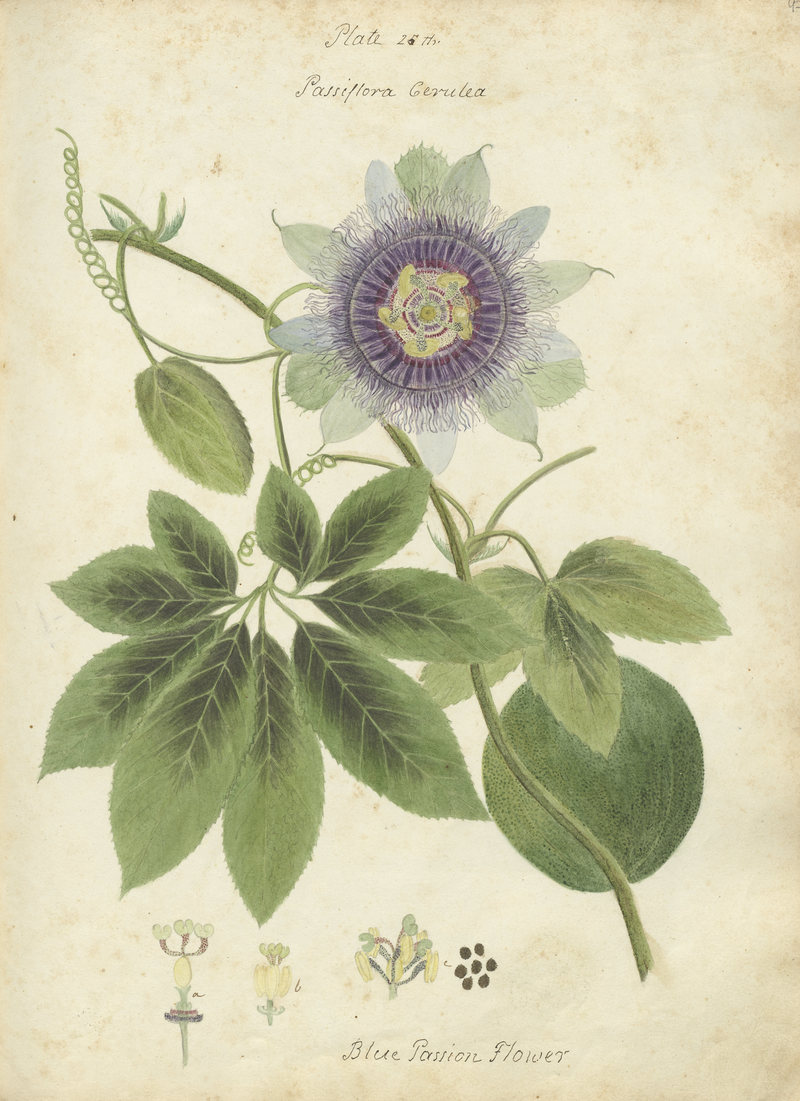
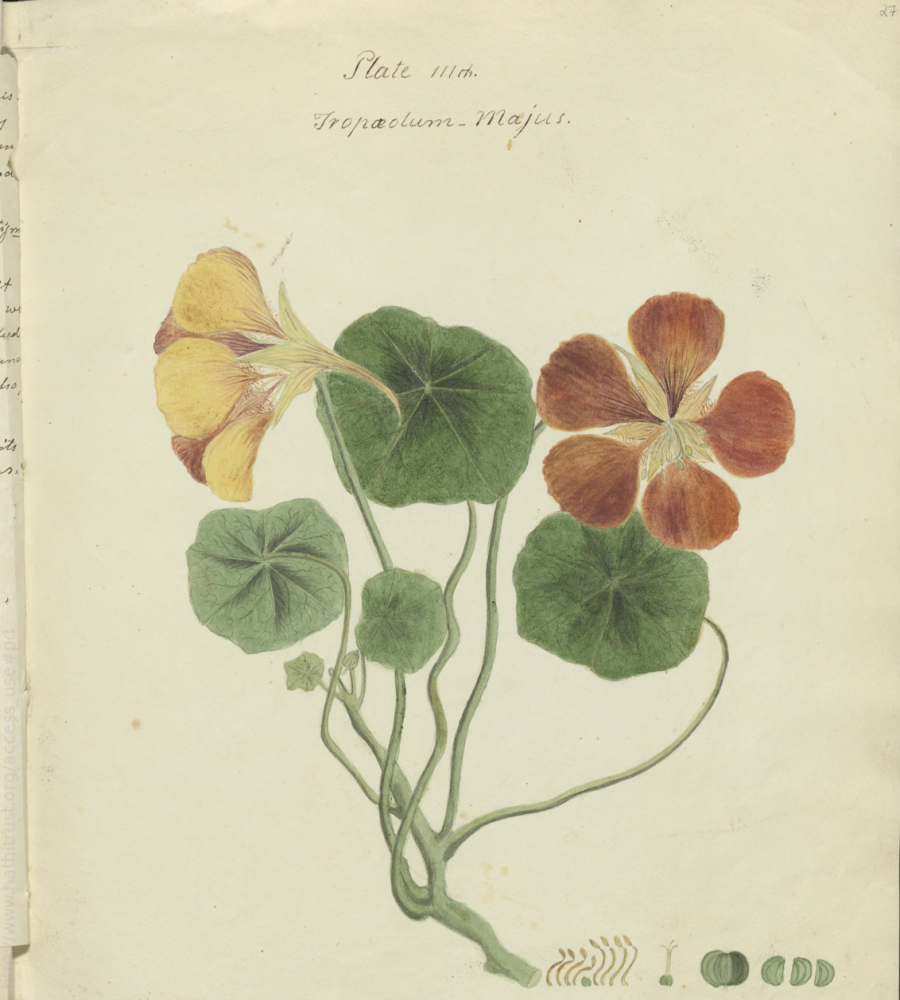
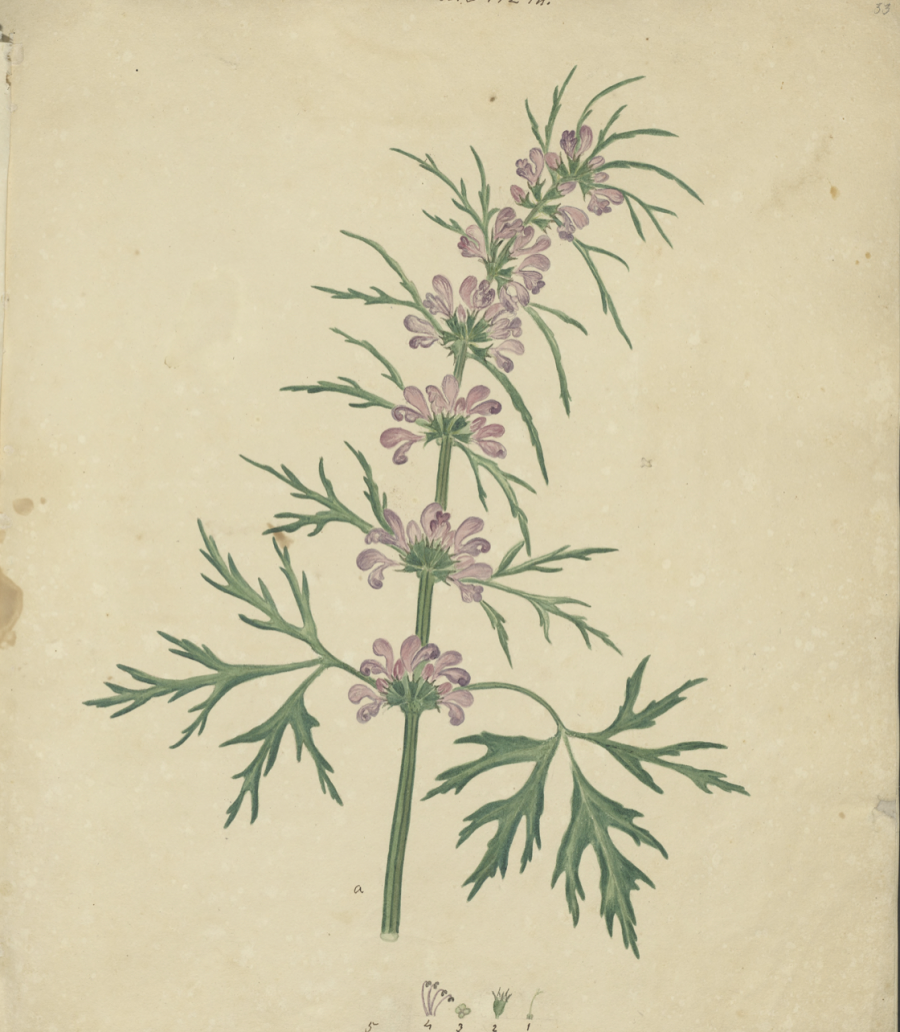
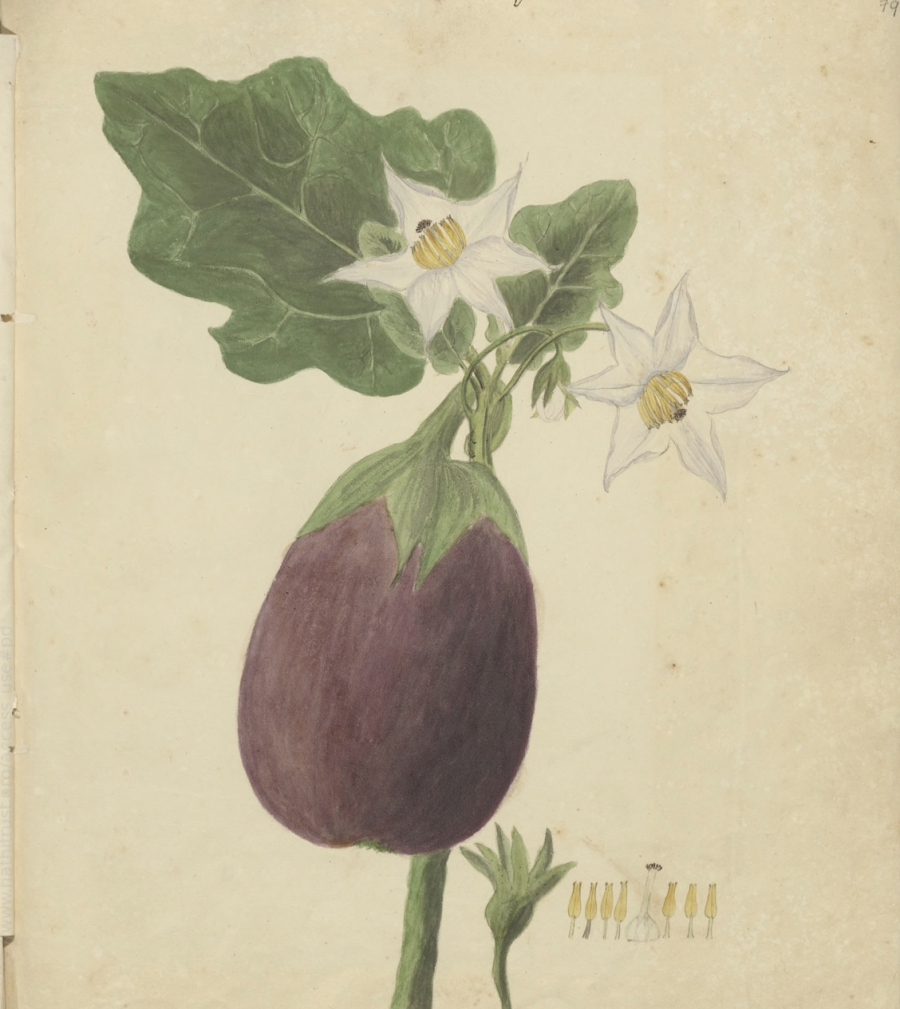
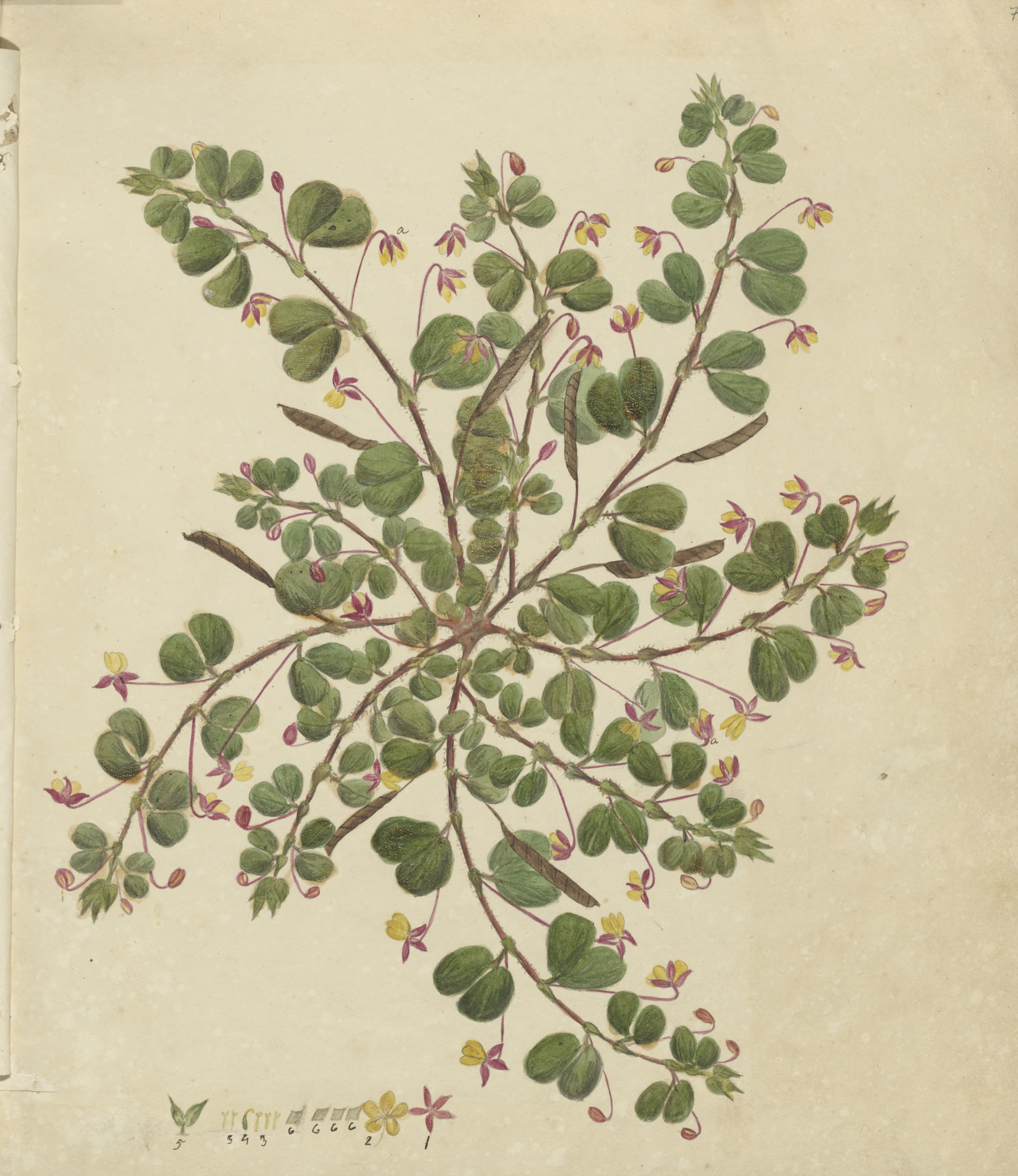
Above and below, you can see just a fraction of the illustrations from another example of a remarkable illustrated scientific book, also by a woman on the edge of being forgotten: Nancy Anne Kingsbury Wollstonecraft’s 1826 Specimens of the Plants and Fruits of the Island of Cuba.
This study of Cuban plant life might never have seen the light of day were it not for the new online edition from the HathiTrust digital library, “by way of Cornell University’s Library Division of Rare and Manuscript Collections,” notes Atlas Obscura. The book is notable for more than its obscurity, however. It is, says scholar of Cuban history and culture Emilio Cueto, “the most important corpus of plant illustrations in Cuba’s colonial history.” Its author first began work when she moved to the island after her husband, Charles Wollstonecraft (brother of Mary and uncle of Mary Shelley) died in 1817.
She began documenting the plant life in the region of Matanzas through the 1820s. That research became Specimens of the Plants and Fruits of the Island of Cuba, a meticulous study, full of Wollstonecraft’s vibrant, striking watercolors. After making several attempts at publication, she died in 1828, and the manuscript never appeared in public. Now, almost two centuries later, all three volumes are available to read online and download in PDF. They had been dormant at the Cornell University Library, and few people knew very much about them. Cueto, the scholar most familiar with the manuscript’s place in history, had himself searched for it for 20 years before finding it hidden away at Cornell in 2018.
Now it is freely available to anyone and everyone online, part of an expanding, shared online archive of fascinating works by non-professional scientists and mathematicians whose work was painstakingly interpreted by artists for the benefit of a lay readership. In the case of Wollstonecraft, as with Goethe and many other contemporary scholar-artists, we have the two in one. View and download her 220-page work, with its 121 illustrated plates at the HathiTrust Digital Library.
Voltaire once joked that Britain had “a hundred religions and only one sauce.” In my experience, that sauce is a curry, which was already a British staple in Voltaire’s time. No doubt he had something much blander in mind. Of course, it’s all hyperbolic fun until someone takes offense, as did George Orwell in 1946, when he wrote, against Voltairean stereotypes, about the misunderstood pleasures of British food. His essay, “British Cookery,” was commissioned by the British Council, but they subsequently deemed that it would be “’unwise to publish,’” reports the Daily Mail, “so soon after the hungry winter of 1946 and wartime rationing.”
Not that it matters much now, but the Council has formally apologized to the deceased Orwell, over 70 years later. Senior policy analyst Alasdair Donaldson explains they are “delighted to make amends” by publishing the essay in full, alongside “the unfortunate rejection letter.” You can read it here at the British Council site. Orwell grants that the British diet is “simple, rather heavy, perhaps slightly barbarous… with its main emphasis on sugar and animal fats…. Cheap restaurants in Britain are almost invariably bad, while in expensive restaurants the cookery is almost always French, or imitation French.”
Elsewhere, he concedes, “the British are not great eaters of salads.” Indeed, he says, “the two great shortcomings of British cookery are a failure to treat vegetables with due seriousness, and an excessive use of sugar.” He does go on at length, in fact, about what sounds like a national epidemic of sugar addiction. Such lapses of taste are also what we would now label a nutritional emergency. He may seem to grant too much to critics of British cooking. But this is mainly by contrast with spicier, more vegetable-friendly cuisines of the continent and colonies. The kind of cooking he describes makes creatively varied uses of sturdy but limited local resources (except for the sugar).
Orwell’s brutal honesty about British food’s deficiencies makes him sound like a trustworthy guide to its true delights. One of the truths he tells is that “British cookery displays more variety and more originality than foreign visitors are usually ready to allow.” The average visitor encounters British food principally in restaurants, pubs, and hotels, which, “whether cheap or expensive” are not representative of “the diet of the great mass of the people.” This may be said of many regional cuisines. But Orwell is devoted to a native British cooking which had, at the time, almost disappeared after six years of war rationing.
This cooking is rich in roast and cold meats, cheeses, breads, Yorkshire and suet puddings, potatoes and turnips. The British diet is, or was, Orwell writes, eaten by the lower and upper classes alike, under different names and prices. Seasonings are few. “Garlic, for instance, is unknown in British cookery proper.” What stands out is mint, vinegar, butter, dried fruits, jam, and marmalade.
Orwell himself included a marmalade recipe. (A handwritten note reads “Bad recipe! Too much sugar and water.”), which you can see below. Decide for yourself how much sugar to add.
ORANGE MARMALADE
Ingredients:
2 seville oranges
2 sweet oranges (no)
2 lemons (no)
8lbs of preserving sugar
8 pints of water
Method. Wash and dry the fruit. Halve them and squeeze out the juice. Remove some of the pith, then shred the fruit finely. Tie the pips in a muslin bag. Put the strained juice, rind and pips into the water and soak for 48 hours. Place in a large pan and simmer for 1/2 hours until the rind is tender. Leave to stand overnight, then add the sugar and let it dissolve before bringing to the boil. Boil rapidly until a little of the mixture will set into a jelly when placed on a cold plate. Pour into jars which have been heated beforehand, and cover with paper covers.
An increasing number of people are cutting back or quitting nearly every main ingredient in what Orwell describes as authentic British cooking: from meat to dairy to gluten to sugar to suet…. But if we are going to give it a fair shake, he argues, we must try the real thing. Or his version of it anyway. He includes several more recipes: Welsh rarebit, Yorkshire pudding, treacle tart, plum cake, and Christmas pudding.
Orwell’s “British Cookery” wars with itself and comes to terms. He fills each paragraph with frank acknowledgements of British cuisine’s shortcomings, yet he relishes its simple, solid virtues. He writes that “British cookery” is “best studied in private houses, and more particularly in the homes of the middle-class and working-class masses who have not become Europeanized in their tastes.” It’s a kind of cultural nationalism, but perhaps one suggesting those who want others to understand and appreciate a specific kind British culture should invite outsiders in to share a meal.
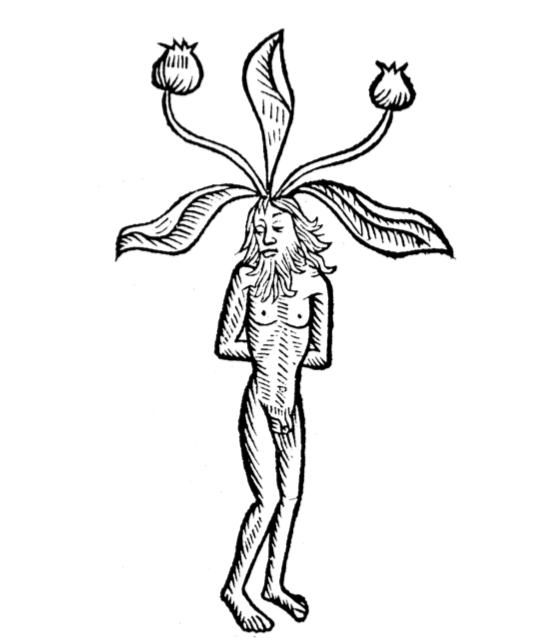
One can only color so many floral-trimmed affirmations before one begins to crave something slightly more perverse. An emaciated, naked, anthropomorphized mandrake root, say or…
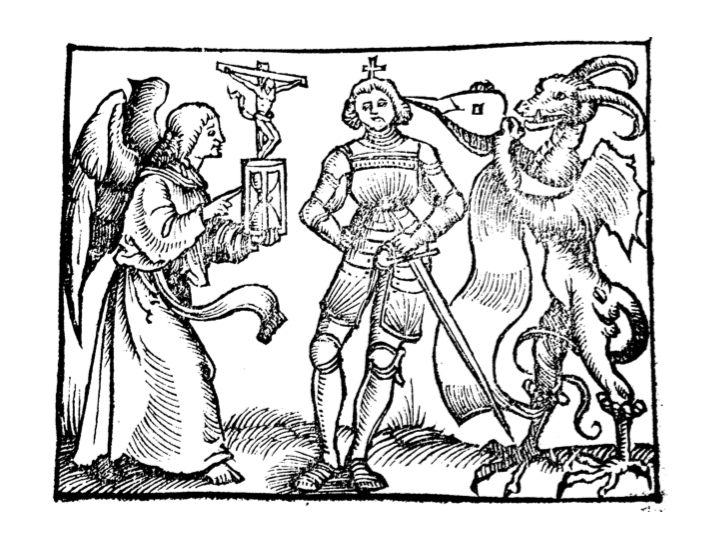
Since 2016, the Academy has made an annual practice of inviting other libraries, archives, and cultural institutions around the world to upload PDF coloring pages based on their collections for the public’s free download.
Those who need something more complex will appreciate the intricate maps of the Lithuanian Art Museum’s coloring book. Coloring Franz Hogenberg’s 1581 map of Vilnius is the emotional equivalent of walking the labyrinth for god knows how many hours.
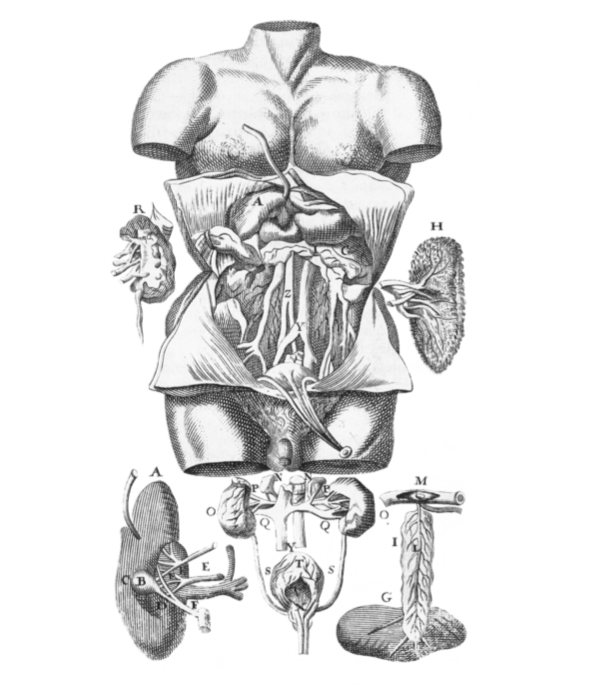
As befits a content website-cum-digital-National-Library, the Memoria Chilena Coloring Book 2019 has something for every taste: flayed anatomical studies, 1940’s fashions, curious kitty cats, and a heaping helping of jesters.
We're hoping to rely on loyal readers, rather than erratic ads. Please click the Donate button and support Open Culture. You can use Paypal, Venmo, Patreon, even Crypto! We thank you!
Open Culture scours the web for the best educational media. We find the free courses and audio books you need, the language lessons & educational videos you want, and plenty of enlightenment in between.