H.P. Lovecraft Gives Five Tips for Writing a Horror Story, or Any Piece of “Weird Fiction”
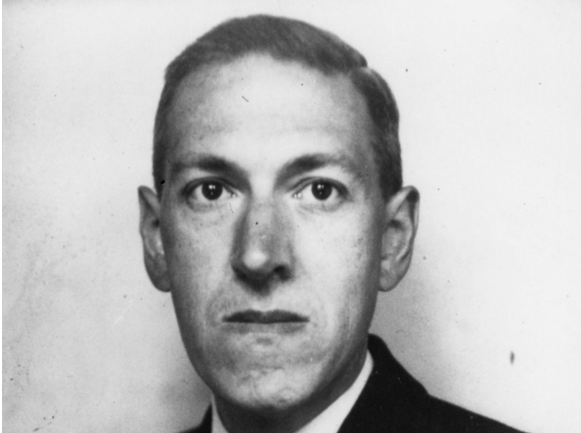
Image by Lucius B. Truesdell, via Wikimedia Commons
Though the term “weird fiction” came into being in the 19th century—originally used by Irish gothic writer Sheridan Le Fanu—it was picked up by H.P. Lovecraft in the 20th century as a way, primarily, of describing his own work. Lovecraft produced copious amounts of the stuff, as you can see from our post highlighting online collections of nearly his entire corpus. He also wrote in depth about writing itself. He did so in generally prescriptive ways, as in his 1920 essay “Literary Composition,” and in ways specific to his chosen mode—as in the 1927 “Supernatural Horror in Literature,” in which he defined weird fiction very differently than Le Fanu or modern authors like China Miéville. For Lovecraft,
The true weird tale has something more than secret murder, bloody bones, or a sheeted form clanking chains according to rule. A certain atmosphere of breathless and unexplainable dread of outer, unknown forces must be present; and there must be a hint, expressed with a seriousness and portentousness becoming its subject, of that most terrible conception of the human brain–a malign and particular suspension or defeat of those fixed laws of Nature which are our only safeguard against the assaults of chaos and the daemons of unplumbed space.
Here we have, broadly, the template for a very Lovecraftian tale indeed. Ten years later, in a 1937 essay titled “Notes on Writing Weird Fiction,” Lovecraft would return to the theme and elaborate more fully on how to produce such an artifact.
Weird Fiction, wrote Lovecraft in that later essay, is “obviously a special and perhaps a narrow” kind of “story-writing,” a form in which “horror and the unknown or the strange are always closely connected,” and one that “frequently emphasize[s] the element of horror because fear is our deepest and strongest emotion.” Although Lovecraft self-deprecatingly calls himself an “insignificant amateur,” he nonetheless situates himself in the company of “great authors” who mastered horror writing of one kind or another: “[Lord] Dunsany, Poe, Arthur Machen, M.R. James, Algernon Blackwood, and Walter de la Mare.” Even if you only know the name of Poe, it’s weighty company indeed.
But be not intimidated—Lovecraft wasn’t. As our traditional holiday celebration of fear approaches, perhaps you’d be so inclined to try your hand at a little weird fiction of your own. You should certainly, Lovecraft would stress, spend some time reading these writers’ works. But he goes further, and offers us a very concise, five point “set of rules” for writing a weird fiction story that he says might be “deduced… if the history of all my tales were analyzed.” See an abridged version below:
- Prepare a synopsis or scenario of events in the order of their absolute occurrence—not the order of their narrations.
This is a practice adhered to by writers from J.K. Rowling and William Faulkner to Norman Mailer. It seems an excellent general piece of advice for any kind of fiction.
- Prepare a second synopsis or scenario of events—this one in order of narration (not actual occurrence), with ample fullness and detail, and with notes as to changing perspective, stresses, and climax.
- Write out the story—rapidly, fluently, and not too critically—following the second or narrative-order synopsis. Change incidents and plot whenever the developing process seems to suggest such change, never being bound by any previous design.
It may be that the second rule is made just to be broken, but it provides the weird fiction practitioner with a beginning. The third stage here brings us back to a process every writer on writing, such as Stephen King, will highlight as key—free, unfettered drafting, followed by…
- Revise the entire text, paying attention to vocabulary, syntax, rhythm of prose, proportioning of parts, niceties of tone, grace and convincingness of transitions…
And finally….
- Prepare a neatly typed copy—not hesitating to add final revisory touches where they seem in order.
You will notice right away that these five “rules” tell us nothing about what to put in our weird fiction, and could apply to any sort of fiction at all, really. This is part of the admirably comprehensive quality of the otherwise succinct essay. Lovecraft tells us why he writes, why he writes what he writes, and how he goes about it. The content of his fictional universe is entirely his own, a method of visualizing “vague, elusive, fragmentary impressions.” Your mileage, and your method, will indeed vary.
Lovecraft goes on to describe “four distinct types of weird story” that fit “into two rough categories—those in which the marvel or horror concerns some condition or phenomenon, and those in which it concerns some action of persons in connection with a bizarre condition or phenonmenon.” If this doesn’t clear things up for you, then perhaps a careful reading of Lovecraft’s complete “Notes on Writing Weird Fiction” will. Ultimately, however, “there is no one way” to write a story. But with some practice—and no small amount of imagination—you may find yourself joining the company of Poe, Lovecraft, and a host of contemporary writers who continue to push the boundaries of weird fiction past the sometimes parochial, often profoundly bigoted, limits that Lovecraft set out.
Related Content:
H.P. Lovecraft’s Classic Horror Stories Free Online: Download Audio Books, eBooks & More
Lovecraft: Fear of the Unknown (Free Documentary)
Stephen King’s Top 20 Rules for Writers
Writing Tips by Henry Miller, Elmore Leonard, Margaret Atwood, Neil Gaiman & George Orwell
Josh Jones is a writer and musician based in Durham, NC. Follow him at @jdmagness
Read More...H.G. Wells, Arthur Conan Doyle & Other British Authors Sign Manifesto Backing England’s Role in WWI
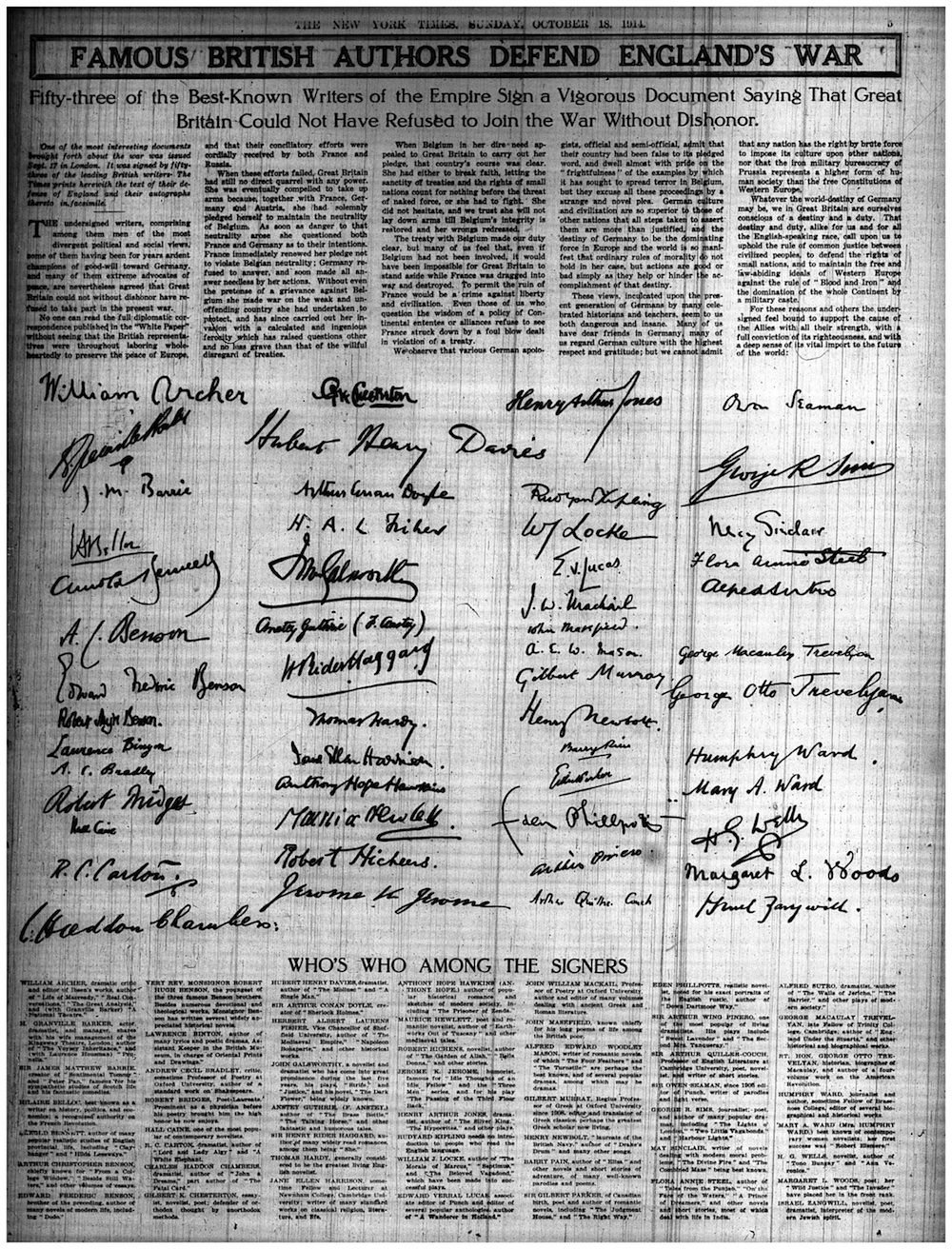
Thinkers have said a great deal about the relative might of the pen and the sword—often one well-known phrase in particular—but still, the subject of intellect versus might remains a matter of active inquiry. But what if might harnesses intellect? What if those who live by the pen pick up their writing tool of choice to endorse the national use of weaponry infinitely more powerful than all the swords ever forged? This very thing happened in the Britain of 1914: “FAMOUS AUTHORS DEFEND ENGLAND’S WAR,” read the headlines, and University of Ottawa English professor Nick Milne has more historical analysis of the event in the first post of “Pen and Sword,” a series focusing on British Propaganda at the open educational resource World War I Centenary: Continuations and Beginnings.
“In September of 1914,” writes Milne in a version of the post up at Slate, “as the armies of Europe were engaged in the Race to the Sea and the stalemate of the trenches loomed, Rudyard Kipling, Sir Arthur Conan Doyle, and other British authors collaborated on a remarkable piece of war propaganda. Fifty-three of the leading authors in Britain — a number that included Thomas Hardy and H.G. Wells — appended their names to the ‘Authors’ Declaration.’ This manifesto declared that the German invasion of Belgium had been a brutal crime, and that Britain ‘could not without dishonour have refused to take part in the present war.’ ” Other men of letters the War Propaganda Bureau could convince to sign on, in addition to Kipling, a fellow rarely called insufficiently patriotic, included “defender of unorthodox thought by unorthodox methods” G.K. Chesterton.
You can take a close-up look at the complete list of signatories with their brief bios, as well as the signatures themselves, by clicking at the image of the New York Times page up above. (Then click again to zoom in.) England may not, in the event, have lost the First World War, but the buoyancy its writers provided its fighting spirit had little to do with it. Germany “responded to the declaration by bringing together an even larger assortment of artists, authors, and scientists to sign the Manifesto of the Ninety-Three, an astounding document which denied any German wrongdoing in Belgium and bewilderingly accused the Allies of ‘inciting Mongolians and negroes against the white race.’ ”
Several of the British writers involved, most notably H.G. Wells, eventually developed a public cynicism toward the war. “The unity of vision and purpose the declaration so strongly implied,” as Milne mildly puts it, “did not endure.”
Related Content:
The First Color Photos From World War I, on the German Front
Watch World War I Unfold in a 6 Minute Time-Lapse Film: Every Day From 1914 to 1918
British Actors Read Poignant Poetry from World War I
Frank W. Buckles, The Last U.S. Veteran of World War I
Colin Marshall hosts and produces Notebook on Cities and Culture and writes essays on cities, language, Asia, and men’s style. He’s at work on a book about Los Angeles, A Los Angeles Primer. Follow him on Twitter at @colinmarshall or on Facebook.
Read More...The C.I.A.‘s “Bestiary of Intelligence Writing” Satirizes Spook Jargon with Maurice Sendak-Style Drawings

Ten years in academia gave me a healthy dislike of clichéd jargon, as well as an appreciation for jokes about it. There are a few, like the academic sentence generator and Ph.D. Comics, that capture a bit of what it’s like to go to school and work in higher ed. Corporate drones, of course, have Office Space and Dilbert. But what about the spooks, those nameless, faceless agents who work tirelessly away in the basement of Langley, doing who knows what to whom? Where does the C.I.A. go to laugh at its peculiar brand of hackneyed doublespeak? Not that we were supposed to know this, but perhaps many of them turn to an article called “the Bestiary of Intelligence Writing” in a 1982 copy of internal agency newsletter Studies in Intelligence.

Medium describes this odd piece as a “zoo of fictional fauna,” and like that strange literary form, the medieval European bestiary (often a source of satire and critique), this 17-page article, with footnotes, singles out the most offensive spook buzzwords as though they were cardinal sins—naming 15 members of “the Collection” in all, each one represented by its own Maurice Sendak-like pencil-drawn beast and a description of its habits. The two-headed beast at the top, Multidisciplinary Analysis, is a “hybrid—the fruit of the casual mating of standard forms of Analysis.” Just above, we have Heightened Tensions, “the adult form of Conventional Tensions—Tensions that have acquired stilts by thriving on a rich diet of poverty, malnutrition and especially alienation.” Sounds like rough work, this spy game….
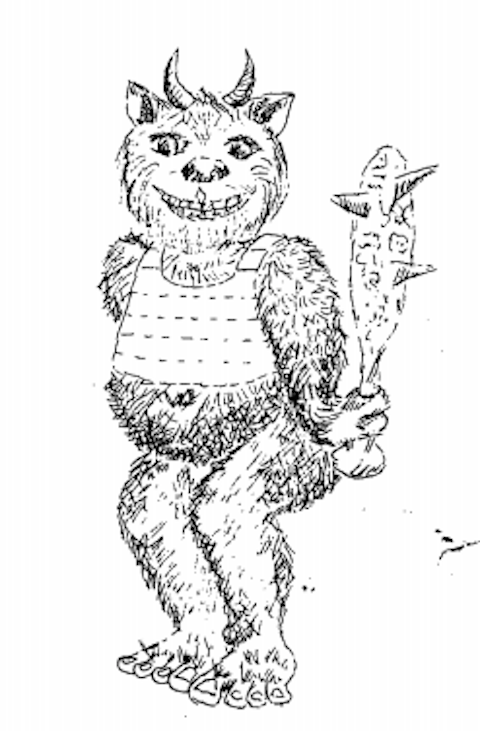
Most of the beasts are cuddly enough, some mischievous, some perhaps deadly. Above, we have Dire Straits and below, Parameters. “The Agency author and artist detailed 15 monsters in all—complete with illustrations,” writes Medium, “Both of their names are redacted in the document. We’ll never know just which CIA agents turned their hand towards snarky political satire.” The document comes to us via a cache of records declassified in a lawsuit filed by former agency employee Jeffry Scudder. We do know that the two anonymous lampoonists were inspired by A Political Bestiary, book by James Kilpatrick, cartoonist Jeff MacNelly, and former senator and presidential candidate Eugene McCarthy. See the full, bone dry article here, and think about the work talk that might drive you to such creative extremes.

Related Content:
The CIA’s Style Manual & Writer’s Guide: 185 Pages of Tips for Writing Like a Spy
How the CIA Secretly Funded Abstract Expressionism During the Cold War
How the CIA Turned Doctor Zhivago into a Propaganda Weapon Against the Soviet Union
Josh Jones is a writer and musician based in Durham, NC. Follow him at @jdmagness.
Read More...Typed Portraits of Literary Legends: Kerouac, Saramago, Bukowski & More
Artists have used all sorts of odd media to create portraits, everything from guitar picks to dice to wooden eggs. Add to this list Brazilian type artist Álvaro Franca, who uses the typewriter. Instead of composing literary portraits of his heroes, Franca types out literal portraits. The principle of the pictures are the same grey-scale printing used in newspapers or, if you spent time in the computer lab in the 1990s, those dot matrix images that were such the rage among computer nerds. Using a computer, Franca breaks the image down into discrete pixels and adds one or more keystrokes to that pixel. ‘I’ and ‘O’ seem to work for lighter greys while visually dense letters like ‘x’and “m” are used for the darker end of the spectrum.
As he writes in on his website:
Typewritten Portraits is an experimental art project. During my exchange in the Cambridge School of Art, I developed a technique for imaging gray scale with the typewriter and, from there, I made portraits of five of my favorite authors in literature who worked on typewriters. The series is still ongoing and there are plans for five more pictures.
You can see a time-lapse video of Franca creating a portrait of beat icon Jack Kerouac above. And below you can see a few more pictures including Charles Bukowski and Jose Saramago here.

Jonathan Crow is a Los Angeles-based writer and filmmaker whose work has appeared in Yahoo!, The Hollywood Reporter, and other publications. You can follow him at @jonccrow. And check out his blog Veeptopus, featuring lots of pictures of vice presidents with octopuses on their heads. The Veeptopus store is here.
Related Content:
The Drawings of Jean-Paul Sartre
James Joyce, With His Eyesight Failing, Draws a Sketch of Leopold Bloom (1926)
Jorge Luis Borges, After Going Blind, Draws a Self-Portrait
Read More...The Distortion of Sound: A Short Film on How We’ve Created “a McDonald’s Generation of Music Consumers”
It’s an old joke at this point—the hipster’s retro-obsession with vinyl is an affectation as bogus as louvered sunglasses and high-waisted acid washed jeans, right? Well, there are plenty of people who buy records and listen to them, too. There are even people who buy and listen to cassette tapes, imagine that! You can count me in both camps, and it isn’t because—or only because—I love the look and feel of these analog cultural artifacts or that I’m nostalgic for simpler times. It’s because I love the sound. Even cheapo cassette tapes can often sound better to me than the medium of music we’ve all grown so accustomed to over the last decade or so—the MP3.
Beginning in the CD era, the so-called “Loudness Wars” more or less killed the dynamics of recorded music, pushing every sound to the absolute limit—from the most delicately plucked acoustic guitar string to a black metal singer’s most demonic roar. Without the pleasing push-pull of musical dynamics, songs lose their depth and power. Once the music is released as product, it suffers another indignity in the data compression of MP3s and streaming services, formats that—according to high-end audio company Harmon—“have diminished the quality and flattened the emotion” of music. In the short film above, The Distortion of Sound, Harmon brings together a number of engineers, producers, and musicians, including big names like Quincy Jones, Slash, Hans Zimmer, and Snoop Dogg to discuss what Harmon acoustic engineer Dr. Sean Olive, calls “the valley of sound quality” we’ve supposedly reached in the last five years.
Harmon’s Chief Engineer Chris Ludwig claims that data compression (not audio compression—a different technology), “removes up to 90% of the original song.” With our low-quality MP3s and cheap, tinny earbuds and laptop speakers, says Zimmer, we’ve become “a McDonald’s generation of music consumers.” It’s a depressing reality for audiophiles and musicians, but Harmon has the solution and Distortion of Sound is essentially an advertisement for it. Whether or not you buy in is your call, but along the way, you’ll get an interesting introduction to the recording process and the history of recorded music. Scroll down to the bottom of the “Distortion of Sound” page to see how Harmon is “bringing sound quality back.” They aren’t doing it with tape decks and turntables.
Related Content:
Neil Young Reveals the New Killer Gadget That Will Save Music
Josh Jones is a writer and musician based in Durham, NC. Follow him at @jdmagness.
Read More...Declassified CIA Document Reveals That Ben Franklin (and His Big Ego) Put U.S. National Security at Risk
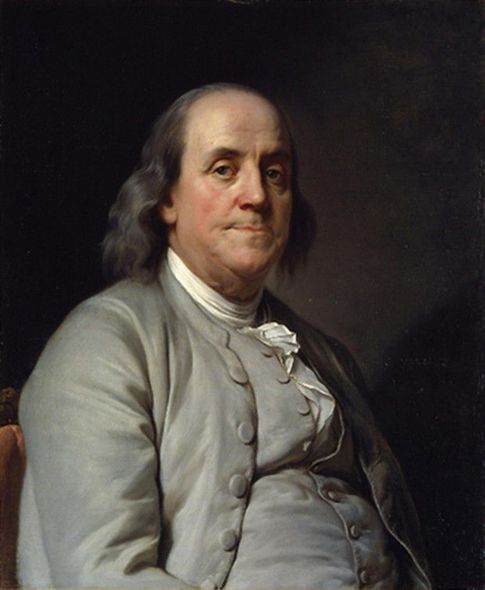
Benjamin Franklin might have been a brilliant author, publisher, scientist, inventor and statesman, but he was pretty lousy at keeping state secrets. That’s the finding from a recently declassified CIA analysis of Franklin’s critically important diplomatic mission to France during the Revolutionary War.
In September 1776, Franklin was dispatched to Paris to enlist France’s support for the American Revolution. At the time, France was still smarting from losing the Seven Years’ War to Britain and was eager to do anything that could reduce its rival’s power and prestige. Franklin’s Commission ran all kinds of clandestine operations with tacit French aid, including procuring weapons, supplies and money for the American Army; sabotaging the Portsmouth Royal Navy Dockyard; and negotiating a secret treaty between America and France.
And according the CIA’s in-house publication, Studies in Intelligence, the British knew just about everything that was going on. “The British had a complete picture of American-French activities supporting the war in America and of American intentions regarding an alliance with France. The British used this intelligence effectively against the American cause.”
Some of the problems with the Commission seem head-slappingly obvious. “There was no real physical security at the Commission itself. The public had access to the mansion, documents and papers were spread out all over the office, and private discussions were held in public areas.”
One of Franklin’s fellow commissioners, Arthur Lee, was outraged over this lack of security.
[Lee] wrote that a French official “had complained that everything we did was known to the English ambassador, who was always plaguing him with the details. No one will be surprised at this who knows that we have no time or place appropriate to our consultation, but that servants, strangers, and everyone else was at liberty to enter and did constantly enter the room while we were talking about public business and that the papers relating to it lay open in rooms of common and continual resort.
Not surprisingly, the American mission was riddled with British spies; chief among them was Franklin’s long-time friend Edward Bancroft, who, as the Commission’s secretary, had complete access to all of its papers. He was reportedly paid a princely sum of 1000 pounds a year by the British Empire to play the part of an Enlightenment-era James Bond.
Lee suspected Bancroft of being a spy, but Franklin dismissed his concerns largely because he greatly disliked Lee. “[Franklin’s] attitude … is all too familiar among policymakers and statesmen,” writes the CIA. “His ego may have overwhelmed his common sense.”
In the end, the analyst lays the blame on these catastrophic lapses in intelligence on that inflated ego.
“By the time [Franklin] arrived in Paris in late 1776, he was elderly and had little interest in the administrative aspects of the Commission. Franklin was widely recognized as a statesman, scientist, and intellectual. While highly respected, he was also vain, obstinate, and jealous of his prerogatives and reputation. … The Commission was “under protection” of the French Government, and Franklin may have underestimated British capabilities to operate in a third country. In any event, he did nothing to create a security consciousness at the Commission.”
The portrait that the CIA paints is indeed a grim one that in different circumstances could have lost the war. Thankfully, Britain proved wholly unable to use this wealth of information to turn the tide of the war. As the CIA wryly notes: “Perhaps the greatest irony in the whole story of the penetration of the American Commission is that, while British intelligence activities were highly successful, British policy was a total failure.”
Related Content:
How the CIA Secretly Funded Abstract Expressionism During the Cold War
Jonathan Crow is a Los Angeles-based writer and filmmaker whose work has appeared in Yahoo!, The Hollywood Reporter, and other publications. You can follow him at @jonccrow. And check out his blog Veeptopus, featuring vice presidents with octopuses on their heads. The Veeptopus store is here.
Read More...Glenn Gould Gives Us a Tour of Toronto, His Beloved Hometown (1979)
I write this from Toronto, having come to explore, record interviews in, write about, and generally try to understand this big, busy, famously diverse, and sometimes formless-seeming metropolis Canadians appreciate and resent in equal measure. Despite the difficulty of defining or even describing it, the city has nurtured impressive minds. If not Canadian yourself, you might struggle to come up with a list of notable Torontonians, but surely names like Margaret Atwood, David Cronenberg, Frank Gehry, Joni Mitchell, and Marshall McLuhan ring bells. Despite having passed in 1982, pianist-composer Glenn Gould may still rank as the city’s best-known cultural ambassador. “I’m not really cut out for city living, and given my druthers I’d probably avoid all cities and live in the country,” he said in 1979. “Toronto, however, belongs on a very short list of cities which I’ve visited and which seem to offer to me, at any rate, peace of mind — cities which, for want of a better definition, do not oppose their cityness upon you.”
He says it at the very beginning of Glenn Gould’s Toronto, which spends the rest of its 50 minutes exploring not just the city itself but Gould’s ideas of its nature. The documentary, which originally aired as an episode of the CBC series Cities, follows him from the CN Tower which looms over Toronto to the waterfront (on what he calls “the least great of the Great Lakes”) to the grounds of the Canadian National Exhibition (a sizable event with a “spirit out of a small-town fall fair”) to the then-new city hall. Along the way, his monologue touches on the peace and quiet Toronto offers him, the reflexive distaste it can inspire in others, the “cultural mosaic” to which it plays host (sometimes insistently), the way it survived the 1960s without enduring the disastrous hollowing-out American cities did, and the friendly rivalry it enjoys with Montreal. Gould’s clear, analytical manner of speech delivers a stream of pointed observations, dry jokes, and childhood memories, revealing his nuanced lifelong relationship with the city: not the simple one of a booster, nor the even simpler one of a detractor. But then, Gould never had anything simple about him — nor, as I’ve come to find out this past week, does Toronto.
You can find Glenn Gould’s Toronto in our collection of Free Documentaries.
Related Content:
Watch Glenn Gould Perform His Last Great Studio Recording of Bach’s Goldberg Variations (1981)
Glenn Gould Explains the Genius of Johann Sebastian Bach (1962)
The Art of Fugue: Gould Plays Bach
Colin Marshall hosts and produces Notebook on Cities and Culture and writes essays on cities, language, Asia, and men’s style. He’s at work on a book about Los Angeles, A Los Angeles Primer. Follow him on Twitter at @colinmarshall or on Facebook.
Read More...Rare Footage of the “Human Be-In,” the Landmark Counter-Culture Event Held in Golden Gate Park, 1967
Investigative reporter Steve Silberman awesomely flagged this video for us today. He writes:
This seems to have just surfaced: the most complete recording of the Human Be-In in Golden Gate Park in 1967 that I have ever seen, by far. It opens with Allen Ginsberg and Gary Snyder chanting, Michael McClure follows, and the Grateful Dead (with adorable footage of Allen dancing) pop up at about 14:00. At 18:00, Dizzy Gillespie is smiling in the audience. So much mythical noumenon has piled up around these events over the decades it’s almost inevitable that the real thing seems a little banal compared to one’s imagination, but it’s still cool.
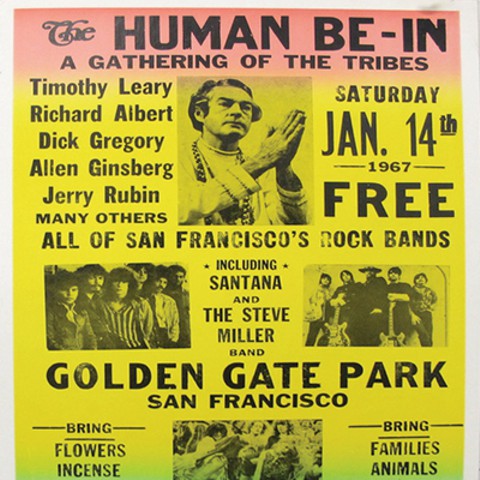
If you’re not quite familiar with what the Human Be-In, held on January 14, 1967, was all about, let me refer you to this succinct description by a web site called Magic Bus San Francisco: “Announced on the cover of the first edition of the counter-culture zine San Francisco Oracle, the ‘Gathering of the Tribes’ or ‘Human Be-In’ as it came to be known, was the prototype of all 1960s counter culture celebrations. The Human Be-In precipitated the legendary Summer of Love, and made San Francisco’s Haight-Ashbury the epicenter of the burgeoning hippie movement.
The Be-In featured all the luminaries of psychedelic counter-culture, including Timothy Leary, Allen Ginsberg, Gary Snyder, Richard Alpert (Ram Dass), Dick Gregory, Lenore Kandel, and Jerry Ruben. Many of the Haight’s best musical acts also performed, including the Grateful Dead and Quicksilver Messenger Service.” As a curious side note, the Dead didn’t get a mention in the poster promoting the event. Is that because they were a late addition? I’m not sure.
Related Content:
The Historic LSD Debate at MIT: Timothy Leary v. Professor Jerome Lettvin (1967)
The Night When Miles Davis Opened for the Grateful Dead in 1970: Hear the Complete Recordings
8,976 Free Grateful Dead Concert Recordings in the Internet Archive
The Acid Test Reels: Ken Kesey & The Grateful Dead’s Soundtrack for the 1960s Famous LSD Parties
Read More...Philosopher Jacques Derrida Interviews Jazz Legend Ornette Coleman: Talk Improvisation, Language & Racism (1997)

Images of Derrida and Coleman, via Wikimedia Commons
This most certainly ranks as one of my favorite things on the internet, and I dearly wish we had audio to share with you, though I doubt any exists. What we do have is an English translation from the French of an interview that originally took place in English between philosopher Jacques Derrida and jazz great Ornette Coleman.
Now there are those who dismiss Derrida—who consider his methods fraudulent. If you’re one of them, this is obviously not for you. For those who appreciate the turns of his thought, and the fascinating possibilities inherent in a Derridian approach to jazz improvisation, not to mention the convergences and points of conflict between these two disparate cultural figures, read on.
The interview took place in 1997, “before and during Coleman’s three concerts at La Villette, a museum and performing arts complex north of Paris that houses, among other things, the world-renowned Paris Conservatory.” As I mentioned, the two spoke in English but, as translator Timothy S. Murphy—who worked with a version published in the French magazine Les Inrockuptibles—notes, “original transcripts could not be located.” Curiously, at the heart of the conversation is a discussion about language, particularly “languages of origin.” In answer to Derrida’s first question about a program Coleman would present later that year in New York called Civilization, the saxophonist replies, “I’m trying to express a concept according to which you can translate one thing into another. I think that sound has a much more democratic relationship to information, because you don’t need the alphabet to understand music.”
As one example of this “democratic relationship,” Coleman cites the relationship between the jazz musician and the composer—or his text: “the jazz musician is probably the only person for whom the composer is not a very interesting individual, in the sense that he prefers to destroy what the composer writes or says.” Coleman goes on later in the interview to clarify his ideas about improvisation as democratic communication:
[T]he idea is that two or three people can have a conversation with sounds, without trying to dominate or lead it. What I mean is that you have to be… intelligent, I suppose that’s the word. In improvised music I think the musicians are trying to reassemble an emotional or intellectual puzzle in which the instruments give the tone. It’s primarily the piano that has served at all times as the framework in music, but it’s no longer indispensable and, in fact, the commercial aspect of music is very uncertain. Commercial music is not necessarily more accessible, but it is limited.
Translating Coleman’s technique into “a domain that I know better, that of written language,” Derrida ventures to compare improvisation to reading, since it “doesn’t exclude the pre-written framework that makes it possible.” For him, the existence of a framework—a written composition—even if only loosely referenced in a jazz performance, “compromises or complicates the concept of improvisation.” As Derrida and Coleman try to work through the possibility of true improvisation, the exchange becomes a fascinating deconstructive take on the relationships between jazz and writing. (For more on this aspect of their discussion, see “Deconstructin(g) Jazz Improvisation,” an article in the open access journal Critical Studies in Improvisation.)
The interview isn’t all philosophy. It ranges all over the place, from Coleman’s early days in Texas, then New York, to the impact of technology on music, to Coleman’s completely original theory of music, which he calls “harmolodics.” They also discuss globalization and the experience of growing up as a racial minority—an experience Derrida relates to very much. At one point, Coleman observes, “being black and a descendent of slaves, I have no idea what my language of origin was.” Derrida responds in kind, referencing one of his seminal texts, Monolingualism of the Other:
JD: If we were here to talk about me, which is not the case, I would tell you that, in a different but analogous manner, it’s the same thing for me. I was born into a family of Algerian Jews who spoke French, but that was not really their language of origin [… ] I have no contact of any sort with my language of origin, or rather that of my supposed ancestors.
OC: Do you ever ask yourself if the language that you speak now interferes with your actual thoughts? Can a language of origin influence your thoughts?
JD: It is an enigma for me.
Indeed. Derrida then recalls his first visit to the United States, in 1956, where there were “ ‘Reserved for Whites’ signs everywhere.” “You experienced all that?” he asks Coleman, who replies:
Yes. In any case, what I like about Paris is the fact that you can’t be a snob and a racist at the same time here, because that won’t do. Paris is the only city I know where racism never exists in your presence, it’s something you hear spoken of.
“That doesn’t mean there is no racism,” says Derrida, “but one is obliged to conceal it to the extent possible.”
You really should read the whole interview. The English translation was published in the journal Genre and comes to us via Ubuweb, who host a pdf. For more excerpts, see posts at The New Yorker and The Liberator Magazine. As interesting a read as this doubly-translated interview is, the live experience itself was a painful one for Derrida. Though he had been invited by the saxophonist, Coleman’s impatient Parisian fans booed him, eventually forcing him off the stage. In a Time magazine interview, the self-conscious philosopher recalled it as “a very unhappy event.” But, he says, “it was in the paper the next day, so it was a happy ending.”
Hear more of Coleman’s thoughts on language, sound, and technology in the 2008 interview above (see here for Part 2). The year previous, in another conjunction of the worlds of language and music, Coleman was awarded the Pulitzer Prize in music for his live album Sound Grammar, a title that succinctly expresses Coleman’s belief in music as a universal language.
Image of Ornette Coleman by Geert Vandepoele
Related Content:
Charles Mingus Explains in His Grammy-Winning Essay “What is a Jazz Composer?”
Derrida: A 2002 Documentary on the Abstract Philosopher and the Everyday Man
1959: The Year that Changed Jazz
How to Potty Train Your Cat: A Handy Manual by Charles Mingus
Josh Jones is a writer and musician based in Durham, NC. Follow him at @jdmagness.
Read More...Sigmund Freud Writes to Concerned Mother: “Homosexuality is Nothing to Be Ashamed Of” (1935)
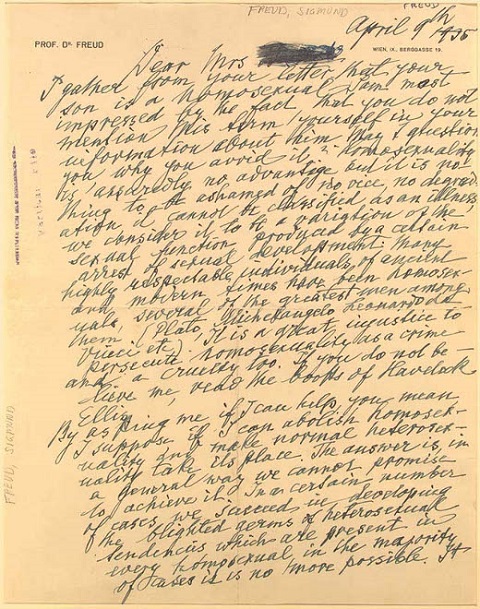
Hank Green, hosting his Crash Course on Psychology, put it best: when we think of the study of the mind, we think of an old, bespectacled bearded man puffing on a pipe. We think, in other words, of Sigmund Freud, whether we know anything about him or not. Despite publishing such very real and still reasonably well-known works as The Interpretation of Dreams, Beyond the Pleasure Principle, and Civilization and its Discontents, the man has somehow passed partially into the realm of popular myth: we think of him at once as an influential pioneer in a little-explored intellectual field, and as something of an idée fixe-hobbled charlatan as well. Perhaps, like many universally recognized 20th-century figures, he combined rightness and wrongness in some kind of irresistible proportion. But the letter above, featured at Letters of Note, demonstrates that, at least on the issue of homosexuality, he had indeed drawn a correct conclusion well before most anyone else.
In 1935, says that post, Freud “was contacted by a worried mother who was seeking treatment for her son’s apparent homosexuality. Freud, who believed that all humans are attracted to both sexes in some capacity, responded with the following letter of advice.”
Dear Mrs [Erased],
I gather from your letter that your son is a homosexual. I am most impressed by the fact that you do not mention this term yourself in your information about him. May I question you why you avoid it? Homosexuality is assuredly no advantage, but it is nothing to be ashamed of, no vice, no degradation; it cannot be classified as an illness; we consider it to be a variation of the sexual function, produced by a certain arrest of sexual development. Many highly respectable individuals of ancient and modern times have been homosexuals, several of the greatest men among them. (Plato, Michelangelo, Leonardo da Vinci, etc). It is a great injustice to persecute homosexuality as a crime – and a cruelty, too. If you do not believe me, read the books of Havelock Ellis.
By asking me if I can help, you mean, I suppose, if I can abolish homosexuality and make normal heterosexuality take its place. The answer is, in a general way we cannot promise to achieve it. In a certain number of cases we succeed in developing the blighted germs of heterosexual tendencies, which are present in every homosexual in the majority of cases it is no more possible. It is a question of the quality and the age of the individual. The result of treatment cannot be predicted.
What analysis can do for your son runs on a different line. If he is unhappy, neurotic, torn by conflicts, inhibited in his social life, analysis may bring him harmony, peace of mind, full efficiency, whether he remains a homosexual or gets changed. If you make up your mind he should have analysis with me — I don’t expect you will — he has to come over to Vienna. I have no intention of leaving here. However, don’t neglect to give me your answer.
Sincerely yours with best wishes,
Freud
While mainstream western thought no longer expects that homosexuals might, under any circumstances, “get changed,” it has aligned to Freud’s view in the sense of regarding their orientation as “nothing to be ashamed of, no vice, no degradation.” And from what I can see, humanity now enjoys the presence of more such “highly respectable individuals” who publicly acknowledge their own non-heterosexuality than ever before. Freud’s letter to this concerned American mother of the 1930s, in any case, brings nuance to the cartoon image we all have of him — the obsession with dreams, the insistence on diagnosing repression, the whole deal with cigar symbolism — just as his view of homosexuals would have brought nuance to the cartoon image this and other concerned American mothers of the 1930s might have had of them.
Related Content:
The Famous Letter Where Freud Breaks His Relationship with Jung (1913)
How a Young Sigmund Freud Researched & Got Addicted to Cocaine, the New “Miracle Drug,” in 1894
Jean-Paul Sartre Writes a Script for John Huston’s Film on Freud (1958)
Sigmund Freud Speaks: The Only Known Recording of His Voice, 1938
Free Online Psychology Courses
Colin Marshall hosts and produces Notebook on Cities and Culture and writes essays on cities, language, Asia, and men’s style. He’s at work on a book about Los Angeles, A Los Angeles Primer. Follow him on Twitter at @colinmarshall or on Facebook.
Read More...Support Us
We're hoping to rely on loyal readers, rather than erratic ads. Please click the Donate button and support Open Culture. You can use Paypal, Venmo, Patreon, even Crypto! We thank you!

About Us

Open Culture scours the web for the best educational media. We find the free courses and audio books you need, the language lessons & educational videos you want, and plenty of enlightenment in between.
Advertise With Us
FREE UPDATES!
GET OUR DAILY EMAIL
Get the best cultural and educational resources on the web curated for you in a daily email. We never spam. Unsubscribe at any time.
FOLLOW ON SOCIAL MEDIA
Open Culture editor Dan Colman scours the web for the best educational media. He finds the free courses and audio books you need, the language lessons & movies you want, and plenty of enlightenment in between.
Advertise With Us



