The Emperor of Japan, Akihito, Is Still Publishing Scientific Papers in His 80s

State Department photo by William Ng, via Wikimedia Commons
On April 30, 2019, Emperor Akihito of Japan will abdicate, and pass the throne to his son, Crown Prince Naruhito. What will he do in his retirement? Probably the same thing he has done most of his life: make “taxonomic studies of gobies,” as the Ministry of Foreign Affairs of Japan reports, “small fish found in fresh, brackish and marine waters.” Akihito has been a member of Japan’s Ichthyological Society of Japan for decades and “published 30 papers in the society’s journal between 1963 and 1989.”
Akihito ascended the throne in 1989, at age 56, and yes, Japan still has an emperor, though—since the post-war Constitution of 1947—the constitutional monarch has no political power and serves only a ceremonial role. This has left Akihito with a lot of time to fill with scientific pursuits: to become an honorary member of the Linnean Society of London, Zoological Society of London, and Research Institute for Natural Science of Argentina, and a research associate at the Australian Museum.
Emperor Akihito remained an active scientist in his emperorship, publishing a history of science article in Nature titled “Linnaeus and taxonomy in Japan” in 2007. In 2016, Akihito appeared as first author in a study published in Gene. The second author is his younger son, Crown Prince Fumihito Akishino, who studied fish taxonomy at St. John’s College, Oxford, then completed a doctoral degree in ornithology. The prince now serves as the president of the Yamashina Institute for Ornithology and the Japanese Association of Zoological Gardens and Aquariums.
The family’s interest in science goes beyond the dabbling of bored aristocrats or a sense of noblesse oblige. Fumihito introduced tilapia to Thailand as an important food source and has helped Thai scientists expand their aquacultural research. The Emperor’s brother, Prince Masahito, is a cancer researcher who has been recognized for making significant contributions to the field, publishing in journals like Cancer Research and the Journal of the International Union Against Cancer.
The Imperial family may represent an outmoded and archaic institution, one humankind can do just as well without. But it’s refreshing to see people with such vast resources and privilege use them for the pursuit of intellectual inquiry and the betterment of human and animal life. You can read the first page of one of Emperor Akihito’s papers, “Early Cultivators of Science in Japan” at Science in which he makes a case for the global sharing of knowledge.
“Through my own study of ichthyology,” Akihito writes, “I have come to feel strongly the importance of international cooperation in conducting scientific studies. I recall with a sense of gratitude that behind each one of the papers I have published there has been the unsparing cooperation of people abroad.”
via Shahaf Peleg
Related Content:
The Entire History of Japan in 9 Quirky Minutes
Aftermath of the Tsunami in Japan
Josh Jones is a writer and musician based in Durham, NC. Follow him at @jdmagness
Read More...The Outsiders: Lou Reed, Hunter S. Thompson, and Frank Zappa Reveal Themselves in Captivatingly Animated Interviews
Lou Reed thought the Beatles were garbage. Or at least he did when he started out in music, as he reveals in a 1987 interview. “We had an ambition and a goal: to elevate the rock song and take it where it hadn’t been before,” he says of his first band — perhaps you’ve heard of them — the Velvet Underground. “I just thought the other stuff couldn’t even come up to our ankles,” he adds. “They were just painfully stupid and pretentious. When they did try to get ‘arty,’ it was worse than stupid rock-and-roll.” Having graduated from college wanting to write “the great American novel,” Reed eventually decided to incorporate literature, and all the culture he knew, into music, to “write rock-and-roll that you could listen to as you got older and it wouldn’t lose anything. it would be timeless in the subject matter and the literacy of our lyrics.” The conversation appears first in “The Outsiders,” a compilation of three recordings made with three pillars of alternative American culture and imaginatively animated by Blank on Blank.
The second, which we’ve previously featured here on Open Culture, finds Studs Terkel sitting down with Hunter S. Thompson in 1967, talking about his first book Hell’s Angels: The Strange and Terrible Saga of the Outlaw Motorcycle Gangs. “The Angels came out of World War Two,” Thompson explains, “this whole kind of alienated, violent, subculture of people wandering around looking for either an opportunity, or if not an opportunity, then vengeance for not getting an opportunity.”
But if people insist on thinking of the Angels and their kind as the only violent troublemakers in existence, “then it’s just putting off the recognition that the same venom that the Angels are spewing around in public, a lot of people are just keeping bottled up in private.” In exploring the culture of the Angels, Thompson found that the venom filled him no less than it does everyone else: “I was seeing a very ugly side of myself a lot of times. I’m much more conscious of the kind of anger that lurks everywhere.”
The third, a 1971 interview with Frank Zappa, takes on the subject of fads. Zappa considered everything a fad, including the supposed political awakening of youth in the 60s: “It’s as superficial as their musical consciousness. It’s just another aspect of being involved in the actions of their peer group. One guy in the group says, ‘Hey, politics,’ and they go, ‘Yeah, politics.’ Or they go, ‘Grand Funk Railroad,’ and they go, ‘Yeah, Grand Funk Railroad. It’s the same thing.’ ” In America Zappa saw “a lot of changes, but I think that they’re all temporary things, and any change for the good is always subject to cancellation upon the arrival of the next fad.” That’s what happens, he explains, in a country that “doesn’t have any real culture. It doesn’t have any real art. It doesn’t have any real anything. It’s just got fads and a gross national product and a lot of inflation.” Does that, asks interviewer Howard Smith, make Zappa himself a fad as well? “I’m an American, I was born here,” Zappa replies. “I automatically got entered in a membership in the club.”
Related Content:
Animations Revive Lost Interviews with David Foster Wallace, Jim Morrison & Dave Brubeck
Watch Janis Joplin’s Final Interview Reborn as an Animated Cartoon
An Animated Bill Murray on the Advantages & Disadvantages of Fame
Based in Seoul, Colin Marshall writes and broadcasts on cities, language, and culture. His projects include the book The Stateless City: a Walk through 21st-Century Los Angeles and the video series The City in Cinema. Follow him on Twitter at @colinmarshall or on Facebook.
Read More...Europe’s Oldest Intact Book Was Preserved and Found in the Coffin of a Saint
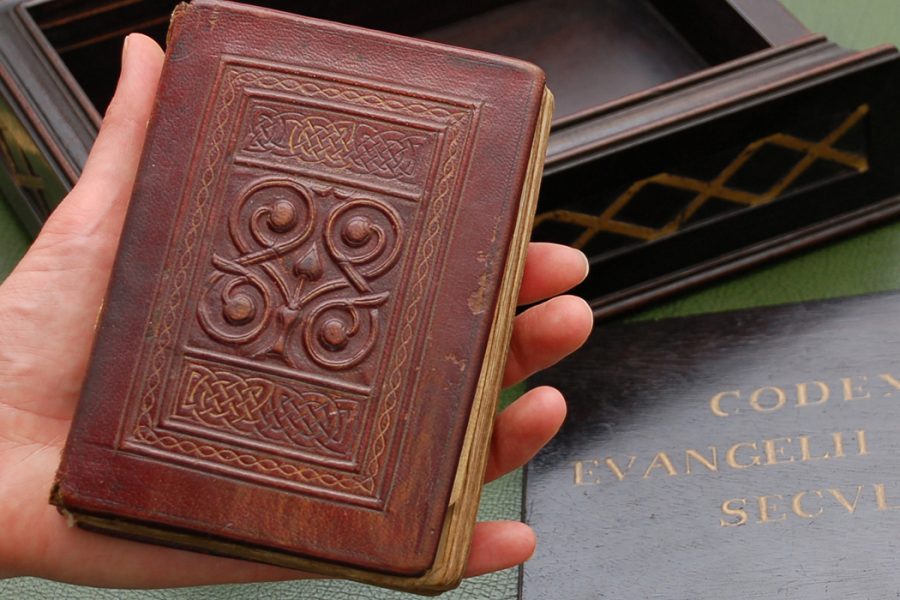
Photo via the British Library
If you’re a British history buff, next month is an ideal time to be in London for the British Library’s “once-in-a-generation exhibition” Anglo-Saxon Kingdoms: Art, Word, War, opening October 19th and featuring the illuminated Lindisfarne Gospels, Beowulf, Bede’s Ecclesiastical History, the “world-famous” Domesday Book, and Codex Amiatinus, a “giant Northumbrian Bible taken to Italy in 716” and returning to England for the first time in 1300 years. But with all of these manuscript stars stealing the show, one special exhibit might go overlooked, the St. Cuthbert Gospel, the oldest surviving intact European book.
A Latin copy of the Gospel of John, the book was originally called the Stonyhurst Gospel, after its first owner, Stonyhurst College. It acquired its current name because it was found inside the coffin of St. Cuthbert, a hermit monk who died in 687 and whose remains, legend has it, were incorruptible. This supposed miracle inspired a cult that placed offerings around Cuthbert’s tomb. Just when and how the small book made its way into his coffin remains a mystery. It was likely sometime between the 700s and 800s CE, when his body was moved to Durham due to Viking raids.
When Cuthbert’s casket was opened in 1104, the book was found “in miraculously perfect condition,” writes the British Library, inside “a satchel-like container of red leather with a badly-frayed sling made of silken threads.” Scholars have dated the book’s creation to between 700 and 730, and its interest for academics and lay people alike lies not only in the legend of St. Cuthbert but in the book’s physical qualities and its own uncorrupted nature. As Allison Meier writes at JSTOR Daily, “the 1,300-year-old manuscript retains its original pages and binding,” a remarkable fact for a book of its age.
Its condition makes it an “important example of Insular art, which was created on the British Isles and Ireland between 600 and 900 CE.” The general features of this style involve “the layering of pattern, line, and color on seemingly flat surfaces,” notes Oxford Bibliographies, in order to create “complex spatial patterns.” Scholar Robert D. Stevick describes these properties on the ornate dyed leather covers of the St. Cuthbert Gospel:
There is interlace pattern in two panels on the front cover, step-pattern implying two crosses on the lower cover, a prominent double vine scroll at the center of the front cover—elements of this early art that have been well catalogued for their individual features as well as for their affinities to similar decorative elements in other artifacts.
Bound with a sewing technique that originated in North Africa (and therefore often called “Coptic sewing”), the “simple but elegant” book, Meier explains, “reflects the transmission of publishing knowledge across Europe” from the Mediterranean. Its small size and placement in a leather pouch is also significant. St. John’s Gospel “was sometimes employed as a protective talisman,” worn in a pouch on the body to ward off evil. Why one of Cuthbert’s admirers would have given such a talisman to his corpse remains unclear.
If you can’t make it to the British Library to see this fascinating artifact in person, you can see its miraculously well-preserved binding and pages in scans at the British Library site here.
via JSTOR Daily
Related Content:
1,000-Year-Old Manuscript of Beowulf Digitized and Now Online
Wearable Books: In Medieval Times, They Took Old Manuscripts & Turned Them into Clothes
Josh Jones is a writer and musician based in Durham, NC. Follow him at @jdmagness
Read More...Flannery O’Connor Renders Her Verdict on Ayn Rand’s Fiction: It’s As “Low As You Can Get”
For all the grotesque humor of her stories and novels, Flannery O’Connor took the writing of fiction as seriously as it is possible to do. Even at the age of 18, she saw the task as a divine calling, writing in her journal, “I feel that God has made my life empty in this respect so that I may fill it some wonderful way.” Intense self-doubt also made her fear that she would fail in her mission, a too-familiar feeling for every creative writer: “I may grovel the rest of my life in a stew of effort, of misguided hope.”
In acquiring the needed confidence to push through fear, O’Connor also acquired a theory of fiction—a serious and demanding one that left no room for frivolous entertainments or propaganda. “I know well enough that very few people who are interested in writing are interested in writing well,” she told a student audience in her lecture “The Nature and Aim of Fiction” (collected in Mystery and Manners).
Writing well, for O’Connor, meant pursuing “the habit of art,” a phrase she took from French Catholic philosopher Jacques Maritain. While she admits that Art is “a word that immediately scares people off, as being a little too grand,” her definition is simple enough, if vague: “something that is valuable in itself and that works in itself.” When she gets into the meat of these ideas, we see why she could be so harsh a critic of fellow writers in her many letters to friends and acquaintances.
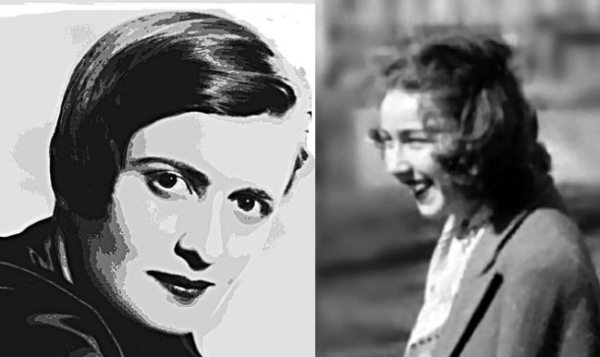
In one particularly harsh assessment in a May, 1960 letter to playwright Maryat Lee, O’Connor wrote, “I hope you don’t have friends who recommend Ayn Rand to you. The fiction of Ayn Rand is as low as you can get re fiction. I hope you picked it up off the floor of the subway and threw it in the nearest garbage pail. She makes Mickey Spillane look like Dostoevsky.”
The reference to Spillane is interesting. Rand corresponded with the crime novelist and admired his work, seeming “greatly pleased,” William Thomas writes at the Randian Atlas Society, by his “sense of life,” if not “enamored of his skill in conveying it.” Surely Rand’s hyper-individualistic, purely materialist “sense of life” repelled O’Connor, but her objections to Rand’s fiction would have certainly—if not primarily—extended to the writing itself.
In her lecture, O’Connor elaborates on her definition of the art of fiction by telling her audience what it is not:
I find that most people know what a story is until they sit down to write one. Then they find themselves writing a sketch with an essay woven through it, or an essay with a sketch woven through it, or an editorial with a character in it, or a case history with a moral, or some other mongrel thing.
Rand’s fiction presents readers with speechifying heroes who serve as one-dimensional exponents of Objectivism, and cardboard villains acting as straw caricatures of the democratic or socialist philosophies she loathed. Books like Atlas Shrugged embody all the marks of amateurism, according to O’Connor, of writers who “are conscious of problems, not of people, of questions and issues, not of the texture of existence, of case histories and everything that has a sociological smack, instead of with all those concrete details of life that make actual the mystery of our position on earth.”
For O’Connor, the habit of art requires keen observation of complex human behavior, compassion for human failings, a genuine openness to paradox and the unknown, and a preference for idiosyncratic specificity over grand abstractions and stereotypes—qualities Rand simply did not possess. Perhaps most importantly, however, as O’Connor told her student audience in “The Nature and Aim of Fiction,” the writer’s “moral sense must coincide with his dramatic sense.” One imagines O’Connor felt that Rand’s moral sense could only produce profoundly impoverished drama.
Read more of O’Connor’s letters, full of her informal literary criticism, in the collection The Habit of Being: The Letters of Flannery O’Connor.
Related Content:
Josh Jones is a writer and musician based in Durham, NC. Follow him at @jdmagness
Read More...Why Should You Read Edgar Allan Poe? An Animated Video Explains
His gloomy, haunted visage adorns the covers of collected works, publications of whose like he would never see in his lifetime. Edgar Allan Poe died in penury and near-obscurity, and might have been forgotten had his work not been turned into sensationalized, abridged, adaptations posthumously, a fate he might not have wished on his most hated literary rival.
But Poe survived caricature to become known as one of the greatest of American writers in any genre. A pioneer of psychological horror and science fiction, founder of the detective story, poet of loss and mourning, and incisive literary critic whose principles informed his own work so closely that we can use essays like his 1846 “The Philosophy of Composition” as keys to unlock the formal properties of his stories and narrative poems.
In the short TED-Ed video above, scripted by Poe scholar Scott Peeples of the College of Charleston, we are introduced to many of the qualities of form and style that make Poe distinctive, and that made him stand out among a crowd of popular horror writers of the time. There are his principles, elaborated in his essay, which state that one should be able to read a story in one sitting, and that every word in the story must count.
These rules produced what Poe called the “Unity of Effect,” which “goes far beyond fear. Poe’s stories use violence and horror to explore the paradoxes and mysteries of love, grief, and guilt, while resisting simple interpretations or clear moral messages. And while they often hint at supernatural elements, the true darkness they explore is the human mind.”
This observation leads to an analysis of Poe’s unreliable narrators, particularly in stories like The Tell-Tale Heart. But there is another aspect to Poe—one which makes his unreliable voices so compelling. Even when the stories seem incredible, the events bizarre, the narrators maniacal, we believe them wholeheartedly. And this has much to do with the framing conventions Poe uses to draw readers in and implicate them, forcing them to identify with the stories’ tellers.
For example, “Ms. Found in a Bottle,” the very first story in Poe’s posthumous collection, Tales of Mystery and Imagination, opens with an epigraph from French librettist Quinault’s opera Atys, an adaption of one of Ovid’s stories. The lines translate to “He who has but a moment to live has no longer anything to dissemble.”
We are invited into a confidence through the doorway of this device—a classical, and neoclassical, reference to truth-telling, a sober, learned literary stamp of authority. As the nameless narrator introduces himself, he makes sure to place himself in another ancient tradition, Pyrrhonism, a skeptical philosophy concerned with epistemology, or how it is we can know what we know.
The narrator assures us that “no person could be less liable than myself to be led away from the severe precincts of truth by the ignes fatui of superstition.” Though we may doubt this bold assertion, and the person making it, we might also be convinced of our own unshakeable rationality and skepticism. These are the moves, to put it plainly, of stage magicians, mountebanks, and confidence men, and Poe was one of the greatest of them all.
He flatters his readers’ intelligence, draws them close enough to see his hands moving, then picks their comfortable assumptions from their pockets. Poe understood what many of his peers did not: readers love to be conned by a juicy yarn, but it must be really good—it must show us something we did not see before, and that we could, perhaps, only look at it indirectly, through a pleasing act of aesthetic (self) deception.
Related Content:
Download The Complete Works of Edgar Allan Poe on His Birthday
7 Tips from Edgar Allan Poe on How to Write Vivid Stories and Poems
Josh Jones is a writer and musician based in Durham, NC. Follow him at @jdmagness
Read More...Queen’s “Bohemian Rhapsody” Played by 28 Trombone Players
28 trombone players got together and played Queen’s beloved 1975 hit, “Bohemian Rhapsody.” They call it, “Bonehemian Rhapsody.” Enjoy.
Contributors in the video above include:
Jiggs Whigham — Glenn Miller, Stan Kenton
Denson Paul Pollard — Met Opera / Jacobs School of Music
Jennifer Wharton — Leader Bonegasm — https://jenniferwharton.com/
Thomas Hultén — Houston Grand Opera/Houston Ballet
Josiah Williams — Blast: The Music of Disney
Joseph L. Jefferson — Southeast Missouri State University — http://www.josephljefferson.com/
Gerry Pagano — Symphony — http://gerrypagano.org/
Javier Stuppard — Fresh2Def Horns/ Rath Artist
Peter Moore — London Symphony Orchestra
Marshall Gilkes — New Album! https://www.marshallgilkes.com/
Martin McCain — Texas State University — https://www.martinmccain.com/
Zsolt Szabo — Western Carolina University
Jeremy Wilson — Vanderbilt University — https://jeremywilsonmusic.com/
Isabelle Lavoie — Thunder Bay Symphony
Amanda Stewart — St. Louis Symphony — http://amandatrombone.com/
Dr. Natalie Mannix — UNT — http://www.nataliemannix.com/
Zoltan Kiss — Mnzoil Brass — http://www.zoltankiss.com/
Matyas Veer — Essener Philharmoniker Saatsoper Stuttgart — http://www.matyasveer.com/
Paul The Trombonist — The Internet — https://www.youtube.com/channel/UCJ6e…
Karen Marston — Mt San Antonio College/Omni Brass
Javier Nero — Jazz Soloist / Composer — https://www.javiernero.com/
Dr. Deb Scott — Stephen F. Austin State University — https://sfatrombones.wordpress.com/
Tolga Akman — Lätzsch Performing Artist
Domenico Catalano — SlideSticks Trio/Basel Symphony/Haag Artist
José Milton Vieira — Orchestra Brazil
György Gyivicsan — Szeged Trombone Ensemble — http://szegedtrombones.com/en
Brian Hecht — Atlanta Symphony — http://www.brianhecht.com/
Read More...John Turturro Introduces America to the World Wide Web in 1999: Watch A Beginner’s Guide To The Internet
There are only two kinds of story, holds a quote often attributed to Leo Tolstoy: a man goes on a journey, or a stranger comes to town. When it set about producing A Beginner’s Guide to the Internet, a “community service video” geared to viewers unfamiliar with the World Wide Web, internet portal company Lycos went with the latter. That stranger, a history teacher and aspiring comedian named Sam Levin, comes to a town named Tick Neck, Pennsylvania, his car having broken down early in a cross-country drive to a gig in Las Vegas. In order to update his manager/sister on the situation, he stops into the rural hamlet’s only diner and orders “coffee, half regular and half decaf — and the telephone book.”
Sam doesn’t make a call; instead he unplugs the diner’s phone, connects the line to his computer, looks up his internet service provider’s local number, and (after the requisite modem sounds) gets on the information superhighway. Today we know few activities as mundane as going online at a coffee shop, but the townspeople, innocent even of e‑mail, are transfixed. Sam shows a couple of kids how to search for information on haunted houses and college scholarships, and soon the students become the teachers, demonstrating online games to friends, chat rooms to a cranky old-timer (“I don’t like this word network at all. Network of what? Spies, probably”) and even state government feedback forms to the mayor of Tick Neck (who describes herself as “not much with a keyboard”).
Though at times it feels like the 1950s, the year was 1999, perhaps the last moment before America’s complete internet saturation — before social media, before streaming video, before blogs, before almost everything popular online today. “The video for Internet ‘newbies’ starring John Turturro was made available for free rental on the community service shelf of over 4,000 Blockbuster Video stores, West Coast Video stores, public school libraries and classrooms across the United States,” says a contemporary article at Newenglandfilm.com. “The production was funded by Lycos who has instituted a campaign to better educate the public about the World Wide Web.”
Those of us on the Web in the 1990s will remember Lycos, which ran one of the popular search engines before the age of Google. Launched in 1994 as a research project at Carnegie Mellon University in Pittsburgh (which might explain A Beginner’s Guide to the Internet’s setting), Lycos was in 1999 the most visited online destination in the world, and the next year Spanish telecommunications company Telefónica acquired it for a cool $12.5 billion. Turturro, not to be outdone, had in 1998 ascended to a high level of the countercultural zeitgeist with his role in the Coen brothers’ The Big Lebowski, the purple-clad bowler Jesus Quintana — very much not a stranger anyone would want going online with their kids, but Turturro has always had a formidable range.
History hasn’t recorded how many newbies A Beginner’s Guide to the Internet helped to start surfing the Web, but the video remains a fascinating artifact of attitudes to the internet during its first period of enormous growth. “My family doesn’t own a computer,” the young boy tells Sam, “and my dad doesn’t like ’em. He says facts are facts.” (That last sentence, innocuous at the time, does take on a new resonance today.) The boy’s teenage sister excitedly describes the internet as “like going to the library, department store, and post office, all at the same time.” Entering his credit card number to buy an auto-repair manual for the skeptical mechanic, Sam says (with a strange defensiveness) that “it’s completely private. I’ve done it before and it’s not a problem.” As with any stranger of legend who comes to town, Sam leaves Tick Neck a changed place — though not nearly as much as the Tick Necks of the world have since been changed by the internet itself.
Related Content:
How to Send an E‑mail: A 1984 British Television Broadcast Explains This “Simple” Process
From the Annals of Optimism: The Newspaper Industry in 1981 Imagines its Digital Future
In 1999, David Bowie Predicts the Good and Bad of the Internet
What’s the Internet? That’s So 1994…
Based in Seoul, Colin Marshall writes and broadcasts on cities and culture. His projects include the book The Stateless City: a Walk through 21st-Century Los Angeles and the video series The City in Cinema. Follow him on Twitter at @colinmarshall or on Facebook.
Read More...This Is Your Kids’ Brains on Internet Algorithms: A Chilling Case Study Shows What’s Wrong with the Internet Today
Multimedia artist and writer James Bridle has a new book out, and it’s terrifying—appropriately so, I would say—in its analysis of “the dangers of trusting computers to explain (and, increasingly, run) the world,” as Adi Robertson writes at The Verge. Summing up one of his arguments in his New Dark Age: Technology and the End of the Future, Bridle writes, “We know more and more about the world, while being less and less able to do anything about it.” As Bridle tells Robertson in a short interview, he doesn’t see the problems as irremediable, provided we gain “some kind of agency within these systems.” But he insists that we must face head-on certain facts about our dystopian, sci-fi-like reality.
In the brief TED talk above, you can see Bridle do just that, beginning with an analysis of the millions of proliferating videos for children, with billions of views, on YouTube, a case study that quickly goes to some disturbing places. Videos showing a pair of hands unwrapping chocolate eggs to reveal a toy within “are like crack for little kids,” says Bridle, who watch them over and over. Autoplay ferries them on to weirder and weirder iterations, which eventually end up with dancing Hitlers and their favorite cartoon characters performing lewd and violent acts. Some of the videos seem to be made by professional animators and “wholesome kid’s entertainers,” some seem assembled by software, some by “people who clearly shouldn’t be around children at all.”
The algorithms that drive the bizarre universe of these videos are used to “hack the brains of very small children in return for advertising revenue,” says Bridle. “At least that what I hope they’re doing it for.” Bridle soon bridges the machinery of kids’ YouTube with the adult version. “It’s impossible to know,” he says, who’s posting these millions of videos, “or what their motives might be…. Really it’s exactly the same mechanism that’s happening across most of our digital services, where it’s impossible to know where this information is coming from.” The children’s videos are “basically fake news for kids. We’re training them from birth to click on the very first link that comes along, regardless of what the source is.”
High school and college teachers already deal with the problem of students who cannot judge good information from bad—and who cannot really be blamed for it, since millions of adults seem unable to do so as well. In surveying YouTube children’s videos, Bridle finds himself asking the same questions that arise in response to so much online content: “Is this a bot? Is this a person? Is this a troll? What does it mean that we can’t tell the difference between these things anymore?” The language of online content is a hash of popular tags meant to be read by machine algorithms, not humans. But real people performing in an “algorithmically optimized system” seem forced to “act out these increasingly bizarre combinations of words.”
Within this culture, he says, “even if you’re human, you have to end up behaving like a machine just to survive.” What makes the scenario even darker is that machines replicate the worst aspects of human behavior, not because they’re evil but because that’s what they’re taught to do. To think that technology is neutral is a dangerously naïve view, Bridle argues. Humans encode their historical biases into the data, then entrust to A.I. such critical functions as not only children’s entertainment, but also predictive policing and recommending criminal sentences. As Bridle notes in the short video above, A.I. inherits the racism of its creators, rather than acting as a “leveling force.”
As we’ve seen the CEOs of tech companies taken to task for the use of their platforms for propaganda, disinformation, hate speech, and wild conspiracy theories, we’ve also seen them respond to the problem by promising to solve it with more automated machine learning algorithms. In other words, to address the issues with the same technology that created them—technology that no one really seems to understand. Letting “unaccountable systems” driven almost solely by ads control global networks with ever-increasing influence over world affairs seems wildly irresponsible, and has already created a situation, Bridle argues in his book, in which imperialism has “moved up to infrastructure level” and conspiracy theories are the most “powerful narratives of our time,” as he says below.
Bridle’s claims might themselves sound like alarmist conspiracies if they weren’t so alarmingly obvious to most anyone paying attention. In an essay on Medium he writes a much more in-depth analysis of YouTube kids’ content, developing one of the arguments in his book. Bridle is one of many writers and researchers covering this terrain. Some other good popular books on the subject come from scholars and technologists like Tim Wu and Jaron Lanier. They are well worth reading and paying attention to, even if we might disagree with some of their arguments and prescriptions.
As Bridle himself argues in his interview at The Verge, the best approach to dealing with what seems like a nightmarish situation is to develop a “systemic literacy,” learning “to think clearly about subjects that seem difficult and complex,” but which nonetheless, as we can clearly see, have tremendous impact on our everyday lives and the society our kids will inherit.
Related Content:
How Information Overload Robs Us of Our Creativity: What the Scientific Research Shows
Josh Jones is a writer and musician based in Durham, NC. Follow him at @jdmagness
Read More...Meet Grace Hopper, the Pioneering Computer Scientist Who Helped Invent COBOL and Build the Historic Mark I Computer (1906–1992)
On a page for its School of Technology, Rasmussen College lists six “Assumptions to Avoid” for women who want to enter the field of computer science. I couldn’t comment on whether these “assumptions” (alleged misconceptions like “the work environment is hostile to women”) are actually disproved by the commentary. But I might suggest a seventh “assumption to avoid”—that women haven’t always been computer scientists, integral to the development of the computer, programming languages, and every other aspect of computing, even 100 years before computers existed.
In fact, one of the most notable women in computer science, Grace Hopper, served as a member of the Harvard team that built the first computer, the room-sized Mark I designed in 1944 by physics professor Howard Aiken. Hopper also helped develop COBOL, the first universal programming language for business, still widely in use today, a system based on written English rather than on symbols or numbers. And she is credited with coining the term “computer bug” (and by extension “debug”), when she and her associates found a moth stuck inside the Mark II in 1947. (“From then on,” she told Time magazine in 1984, “when anything went wrong with a computer, we said it had bugs in it.”)
These are but a few of her achievements in a computer science career that spanned more than 42 years, during which time she rose through the ranks of the Naval Reserves, then later active naval duty, retiring as the oldest commissioned officer, a rear admiral, at age 79.
In addition to winning distinguished awards and commendations over the course of her career—including the first-ever computer science “Man of the Year” award—Hopper also acquired a few distinguished nicknames, including “Amazing Grace” and “Grandma COBOL.” She may become known to a new generation by the nickname, “Queen of Code,” the title of a recent documentary from FiveThirtyEight’s “Signals” series. Directed by Community star Gillian Jacobs, the short film, which you can watch in full here, tells the story of her “inimitable legacy as a brilliant programmer and pioneering woman in a male-dominated field,” writes Allison McCann at FiveThirtyEight.
Hopper’s name may be “mysteriously absent from many history books,” as Amy Poehler’s Smart Girls notes, but before her death in 1992, she was introduced to millions through TV appearances on shows like Late Night with David Letterman (top) and 60 Minutes, just above. As you’ll see in these clips, Hopper wasn’t just a crack mathematician and programmer but also an ace public speaker whose deadpan humor cracked up Letterman and the groups of students and fellow scientists she frequently addressed.
The 60 Minutes segment notes that Hopper became “one of that small band of brothers and sisters who ushered in the computer revolution” when she left her professor’s job at Vassar at the start of WWII to serve in the Naval Reserve, where she was assigned to the Bureau of Ships Computation Project at Harvard. But she never stopped being an educator and considered “training young people” her second-most important accomplishment. In this, her legacy lives on as well.
The world’s largest gathering of women technologists is called “The Grace Hopper Celebration.” And a documentary in production called Born with Curiosity (see a teaser above) hopes that “shining a light on and humanizing role models like Grace makes them relatable in a way that inspires others to greatness.” At a time when women make up the lowest enrollment in computer science out of all of the STEM fields, Hopper’s example and encouragement may be much needed.
Related Content:
Introduction to Computer Science and Programming: A Free Course from MIT
Josh Jones is a writer and musician based in Durham, NC. Follow him at @jdmagness
Read More...The Discipline of D.E.: Gus Van Sant Adapts a Story by William S. Burroughs (1978)
Everyone who’s read Jack Kerouac knows what it means to go visit the sage Old Bill Lee. And even many who haven’t read Kerouac know who Old Bill Lee really was: innovative writer, Beat Generation elder statesman, and substance enthusiast William S. Burroughs. Gus Van Sant, who had imbibed from the counterculture early on, paid his own visit to Old Bill Lee a few years after graduating from the Rhode Island School of Design. On a recent episode of WTF, Van Sant tells Marc Maron how, having read a Burroughs essay called “The Discipline of DE” back in Providence, he looked Burroughs up in the New York City phone book, called him, and paid him a visit — not just because Kerouac’s characters did it, but because he wanted the rights to turn the story into a film.
The resulting nine-minute short puts images to Burroughs’ words. “DE is a way of doing,” says its narrator Ken Shapiro, who had directed the television-satrizing cult film The Groove Tube a few years earlier. “DE simply means doing whatever you do in the easiest most relaxed way you can manage, which is also the quickest and most efficient way, as you will find as you advance in DE.”
We then see various cinematically illustrated examples of DE in action, including “the art of ‘casting’ sheets and blankets so they fall just so,” picking up an object by dropping “cool possessive fingers onto it like a gentle old cop making a soft arrest,” and even gun fighting in the old west as practiced by Wyatt Earp, the only gun fighter who “ever really grasped the concept of DE.”
Van Sant completed The Discipline of DE, his sixth short film, in 1978. Just over a decade later he would cast Burroughs in a highly Old Bill Lee-like role in his second feature Drugstore Cowboy, bringing him back a few years later for Even Cowgirls Get the Blues. Van Sant adapted both of those films from novels, as he’s done in much of his filmography. Traveling Europe with a film club after college, he told Maron, he got the chance to visit famed auteurs like Federico Fellini, Lina Wertmüller, and Pier Paolo Pasolini. It was Pasolini to whom he explained his own ambition in filmmaking: “to translate literature into film.” Paolini’s less-than-encouraging response: “Why would you do that? Why would you bother?” Yet Van Sant’s drive to make cinema “more malleable, like the novel,” has served him well ever since, as — if he adheres to it — has the discipline of DE.
Related Content:
The Making of Drugstore Cowboy, Gus Van Sant’s First Major Film (1989)
William S. Burroughs’ “The Thanksgiving Prayer,” Shot by Gus Van Sant
William S. Burrough’s Avant-Garde Movie ‘The Cut Ups’ (1966)
William S. Burroughs’ Home Movies, Featuring Patti Smith, Allen Ginsberg, Steve Buscemi & Cats
Based in Seoul, Colin Marshall writes and broadcasts on cities and culture. His projects include the book The Stateless City: a Walk through 21st-Century Los Angeles and the video series The City in Cinema. Follow him on Twitter at @colinmarshall or on Facebook.
Read More...Support Us
We're hoping to rely on loyal readers, rather than erratic ads. Please click the Donate button and support Open Culture. You can use Paypal, Venmo, Patreon, even Crypto! We thank you!

About Us

Open Culture scours the web for the best educational media. We find the free courses and audio books you need, the language lessons & educational videos you want, and plenty of enlightenment in between.
Advertise With Us
FREE UPDATES!
GET OUR DAILY EMAIL
Get the best cultural and educational resources on the web curated for you in a daily email. We never spam. Unsubscribe at any time.
FOLLOW ON SOCIAL MEDIA
Open Culture editor Dan Colman scours the web for the best educational media. He finds the free courses and audio books you need, the language lessons & movies you want, and plenty of enlightenment in between.
Advertise With Us


