The Thoughtful Note That George H.W. Bush Left on Bill Clinton’s Desk Before Leaving the White House (1993)
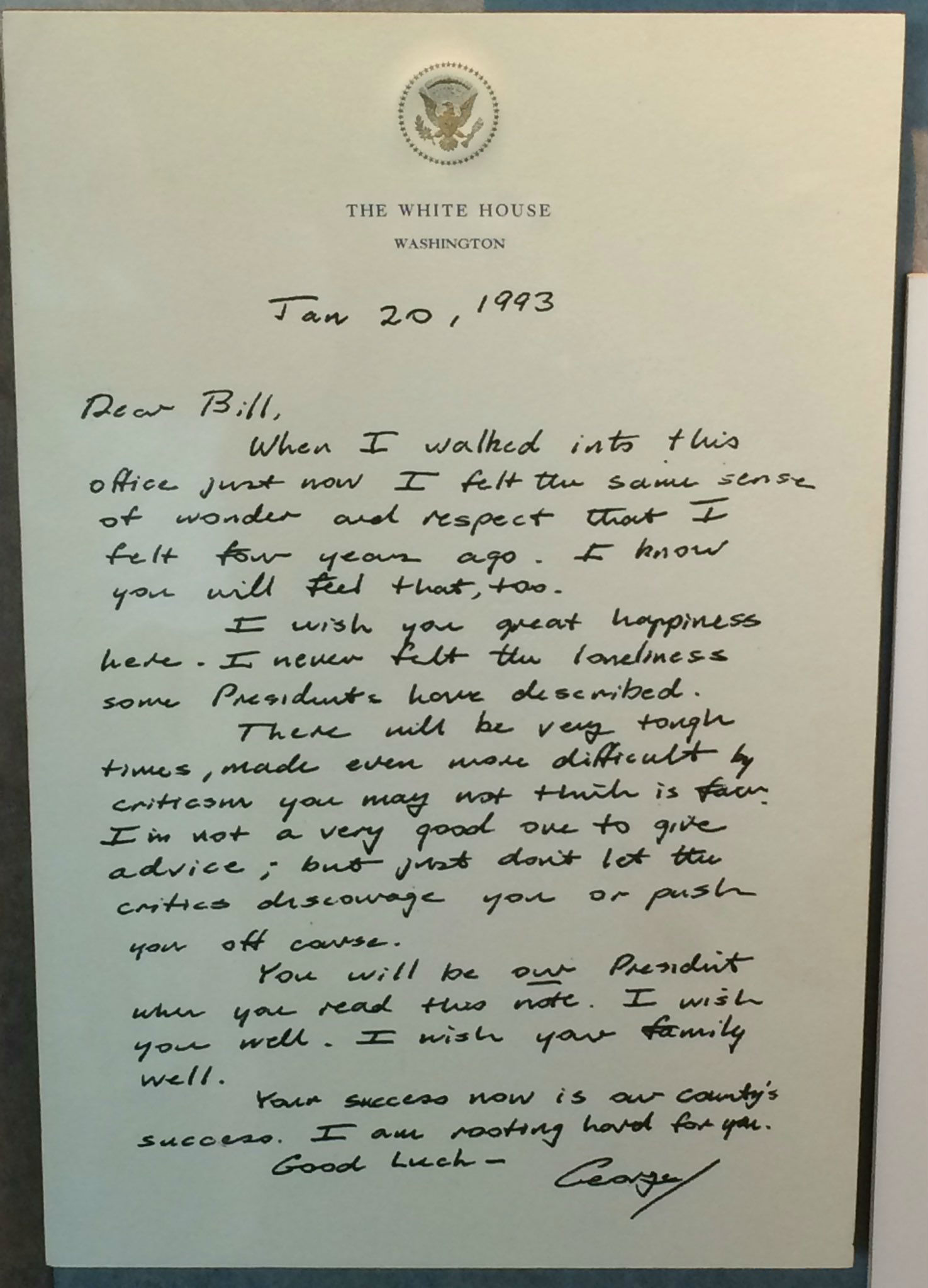
With the passing of George H.W. Bush, Bill Clinton reflected on the life and legacy of his political predecessor, and particularly the thoughtful note that Bush 41 left on his desk, right before leaving the White House. Dated January 20, 1993, it read:
Dear Bill,
When I walked into this office just now I felt the same sense of wonder and respect that I felt four years ago. I know you will feel that, too.
I wish you great happiness here. I never felt the loneliness some Presidents have described.
There will be very tough times, made even more difficult by criticism you may not think is fair. I’m not a very good one to give advice; but just don’t let the critics discourage you or push you off course.
You will be our President when you read this note. I wish you well. I wish your family well.
Your success now is our country’s success. I am rooting hard for you.
Good luck—
George
It’s hard not to see this letter as a relic of an irretrievable age in American politics. But Clinton won’t quite buy that. He writes today in the Washington Post: “Given what politics looks like in America and around the world today, it’s easy to sigh and say George H.W. Bush belonged to an era that is gone and never coming back — where our opponents are not our enemies, where we are open to different ideas and changing our minds, where facts matter and where our devotion to our children’s future leads to honest compromise and shared progress. I know what he would say: ‘Nonsense. It’s your duty to get that America back.’ ” Soon enough, after enough sturm and drang, the majority of Americans (Electoral College included) may be ready to sign up for that.
If you would like to support the mission of Open Culture, consider making a donation to our site. It’s hard to rely 100% on ads, and your contributions will help us continue providing the best free cultural and educational materials to learners everywhere. You can contribute through PayPal, Patreon, and Venmo (@openculture). Thanks!
Related Content:
The 2,000+ Films Watched by Presidents Nixon, Carter & Reagan in the White House
Gonzo Illustrator Ralph Steadman Draws the American Presidents, from Nixon to Trump
Barack Obama Shares a List of Enlightening Books Worth Reading
Read More...NASA Digitizes 20,000 Hours of Audio from the Historic Apollo 11 Mission: Stream Them Free Online
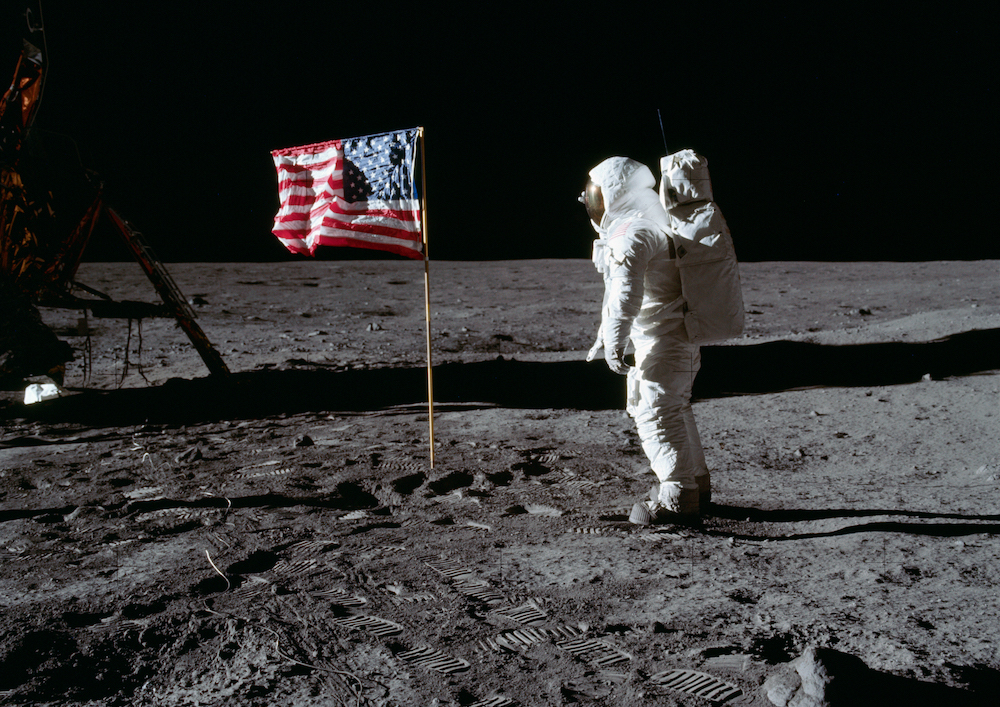
When we think of the Apollo missions, we tend to think of images, especially those broadcast on television during the Apollo 11 moon landing in 1969. And if we think of the sounds of Apollo, what comes more quickly to mind — indeed, what sound in human history could come more quickly to mind — than Neil Armstrong’s “one small step for a man, one giant leap for mankind” line spoken on that same mission? But that’s just one small piece of the total amount of audio recordings made during the Apollo program, which ran from the mid-1960s to the early 1970s. Now, with nearly 20,000 hours of them digitized, they’ve begun to be made available for listening and downloading at the Internet Archive.
“After the Apollo missions ended, most of the audio tapes eventually made their way to the National Archives and Records Administration building in College Park, Maryland,” writes Astronomy’s Catherine Meyers. But even after getting all the recordings in one place (easier said than done given the vast size of the archives in which they resided), a much larger challenge loomed.
“The existing tapes could be played only on a machine called a SoundScriber, a big beige and green contraption complete with vacuum tubes. NASA had two machines, but the first was cannibalized for parts to make the second one run.”
Refurbishing the very last SoundScriber to play these 30-track tapes required the help of a retired technician, and then the research team needed to “play all 30 tracks at once to minimize the time required to digitize them, as well as to avoid damaging the almost 50-year-old tapes by playing them over and over.” What with the 50th anniversary of the Apollo 11 moon landing approaching next summer — and with First Man, Damien Chazelle’s biopic of Neil Armstrong currently in theaters — NASA has cleared that mission’s audio recordings for public release.
You can listen to the Apollo 11 tapes directly at the Internet Archive, or you can make your way through them at Explore Apollo, a site designed by students at the University of Texas at Dallas that highlights the most historically significant of the thousands of hours of audio recorded during Apollo 11: not just Armstrong’s first step, but the launch from Kennedy Space Center, the lunar landing itself, and the astronauts’ walk on the moon’s surface. But space exploration is about much more than astronauts, as you’ll soon find out if you spend much time at the Internet Archive’s collection of Apollo 11 recordings, on which appear not just Neil Armstrong, Buzz Aldrin, and Michael Collins, but the hundreds and hundreds of other NASA personnel who made the moon landing possible. We may never have heard their names before, but now we can finally hear their voices.
Related Content:
Hear the Declassified, Eerie “Space Music” Heard During the Apollo 10 Mission (1969)
8,400 Stunning High-Res Photos From the Apollo Moon Missions Are Now Online
NASA Puts 400+ Historic Experimental Flight Videos on YouTube
The Best of NASA Space Shuttle Videos (1981–2010)
NASA Puts Online a Big Collection of Space Sounds, and They’re Free to Download and Use
Based in Seoul, Colin Marshall writes and broadcasts on cities, language, and culture. His projects include the book The Stateless City: a Walk through 21st-Century Los Angeles and the video series The City in Cinema. Follow him on Twitter at @colinmarshall or on Facebook.
Read More...The Journal of Controversial Ideas, Co-Founded by Philosopher Peter Singer, Will Publish & Defend Pseudonymous Articles, Regardless of the Backlash
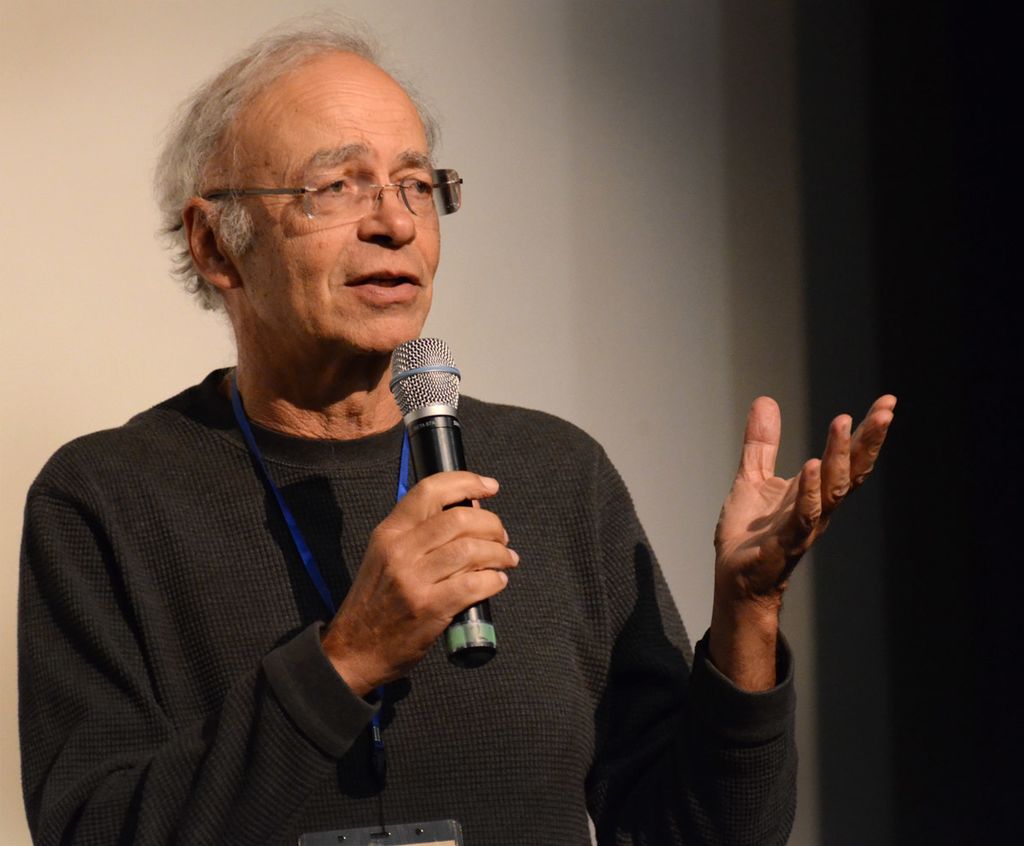
Photo of Peter Singer by Mat Vickers, via Wikimedia Commons
Australian bioethicist Peter Singer has made headlines as few philosophers do with claims about the moral status of animals and the “Singer solution to world poverty,” and with far more controversial positions on abortion and disability. Many of his claims have placed him outside the pale for students at Princeton, his current employer, where he has faced protests and calls for his termination. “I favor the ability to put new ideas out there for discussion,” he has said in response to what he views as a hostile academic climate, “and I see an atmosphere in which some people may be intimated from doing that.”
For those who, like him, make controversial arguments such as those for euthanizing “defective infants,” for example, as he wrote about in his 1979 Practical Ethics, Singer has decided to launch a new venue, The Journal of Controversial Ideas. As The Chronicle of Higher Education reports, the journal aims to be “an annual, peer-reviewed, open-access publication that will print worthy papers, and stand behind them, regardless of the backlash.” The idea, says Singer, “is to establish a journal where it’s clear from the name and object that controversial ideas are welcome.”
Is it true that “controversial ideas” have been denied a hearing elsewhere in academia? The widely-covered tactics of “no-platforming” practiced by some campus activists have created the impression that censorship or illiberalism in colleges and universities has become an epidemic problem. No so, argues Princeton’s Eddie Glaude, Jr., who points out that figures who have been disinvited to speak at certain institutions have been welcomed on dozens of other campuses “without it becoming a national spectacle.” Sensationalized campus protests are “not the norm,” as many would have us believe, he writes.
But the question Singer and his co-founders pose isn’t whether controversial ideas get aired in debates or lecture forums, but whether scholars have been censored, or have censored themselves, in the specialized forums of their fields, the academic journals. Singer’s co-founder/editor Jeff McMahan, professor of moral philosophy at Oxford, believes so, as he told the BBC in a Radio 4 documentary called “University Unchallenged.” The new journal, said McMahan, “would enable people whose ideas might get them in trouble either with the left or with the right or with their own university administration, to publish under a pseudonym.”
Those who feel certain positions might put their career in jeopardy will have cover, but McMahan declares that “the screening procedure” for publication “will be as rigorous as those for other academic journals. The level of quality will be maintained.” Some skepticism may be warranted given the journal’s intent to publish work from every discipline. The editors of specialist journals bring networks of reviewers and specialized knowledge themselves to the usual vetting process. In this case, the core founding team are all philosophers: Singer, McMahan, and Francesca Minerva, postdoctoral fellow at the University of Ghent.
One might reasonably ask how that process can be “as rigorous” on this wholesale scale. Though the BBC reports that there will be an “intellectually diverse international editorial board,” board members are rarely very involved in the editorial operations of an academic journal. Justin Weinberg at Daily Nous has some other questions, including whether the degree, or existence, of academic censorship even warrants the journal’s creation. “No evidence was cited,” he writes “to support the claim that ‘a culture of fear and self-censorship’ is preventing articles that would pass a review process” from seeing publication.
Furthermore, Weinberg says, the journal’s putative founders have given no argument “to allay what seems to be a reasonable concern that the creation of such a journal will foster more of a ‘culture of fear and self-censorship’ compared to other options, or that it plays into and reinforces expertise-undermining misconceptions about academia bandied about in popular media that may have negative effects…. Given that the founding team is comprised of people noted for views that emphasize empirical facts and consequences, one might reasonably hope for a public discussion of such evidence and arguments.”
Should scholars publish pseudonymously in peer-reviewed journals? Shouldn’t they be willing to defend their ideas on the merits without hiding their identity? Is such subterfuge really necessary? “Right now,” McMahan asserts, “in current conditions something like this is needed…. I think all of us will be very happy if, and when, the need for such a journal disappears, and the sooner the better.” Given that the journal’s co-founders paint such a broadly dire picture of the state of academia, it’s reasonable to ask for more than anecdotal evidence of their claims. A few high-profile incidents do not prove a widespread culture of repression.
It is also “fair to wonder,” writes Annabelle Timsit at Quartz, “whether the board of a journal dedicated to free speech might have a bias toward publishing particularly controversial ideas in the interest of freedom of thought” over the interests of good scholarship and sound ethical practice.
Related Content:
The 20 Most Influential Academic Books of All Time: No Spoilers
Josh Jones is a writer and musician based in Durham, NC. Follow him at @jdmagness
Read More...British Doctors To Prescribe Arts & Culture to Patients: “The Arts Are Essential to our Health and Wellbeing”
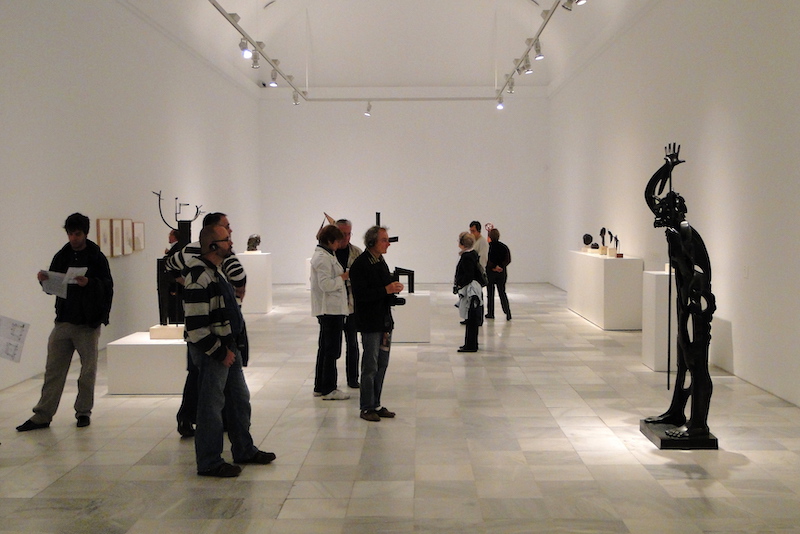
Photo by Adam Jones, via Wikimedia Commons
The arts and humanities are afterthoughts in many American schools, rarely given priority as part of a comprehensive education, though they formed the basis of one for thousands of years elsewhere. One might say something similar of preventative medicine in the U.S. healthcare system. It’s tempting to idealize the priorities of other wealthy countries. The Japanese investment in “forest bathing,” for example, comes to mind, or Finnish public schools and France’s funding of an Alzheimer’s village.
But everyplace has its problems, and no country is an island, exempt from the global pressures of capital or hostile interference.
But if we consider such things as art, music, and dance as essential—not only to an education, but to our general well-being—we must commend the UK’s Health Secretary, Matt Hancock, for his “social prescribing” initiative.
Hancock wants “the country’s doctors to prescribe therapeutic art- or hobby-based treatments for ailments ranging from dementia to psychosis, lung conditions and mental health issues,” reports Meilan Solly at Smithsonian. The plan “could find patients enrolled in dance classes and singing lessons, or perhaps enjoying a personalized music playlist.”
In a speech Hancock delivered on what happened to be election day in the U.S., he referred to a quote from Confucius that represents one particularly ancient educational tradition: “Music produces a kind of pleasure, which human nature cannot do without.” (He also quotes the Rolling Stones’ “Satisfaction.”) Hancock’s idea goes beyond aristocratic traditions of old, proclaiming a diet of the arts for everyone.
They’re not just a right in their own terms as the search for truth and expression of the human condition. We shouldn’t only value them for the role they play in bringing meaning and dignity to our lives. We should value the arts and social activities because they’re essential to our health and wellbeing. And that’s not me as a former Culture Secretary saying it. It’s scientifically proven. Access to the arts and social activities improves people’s mental and physical health.
We’ve likely all come across research on the tremendous health benefits of what Warnock calls “social activities,” maintaining friendships and getting out and about. But what does the research into art and health say? “The medical benefits of engaging with the arts are well-recorded,” Solly writes, citing studies of stroke survivors making great strides after performing with the Royal Philharmonic; dance lessons improving clarity and concentration among those with early psychosis; and those with lung conditions improving with singing lessons. Additionally, many studies have shown the emotional lift museum visits and other cultural activities of a social nature can give.
Similar trials have taken place in Canada, but the UK project is “simultaneously more comprehensive and less fleshed-out,” aiming to encourage everything from cooking classes, playing bingo, and gardening to “more culturally focused ventures.” The proposal does not, however, fully address funding or accessibility issues for the most at-risk patients. Hancock’s rhetoric also perhaps heedlessly pits “more prevention and perspiration” against “popping pills and Prozac,” a characterization that seems to trivialize drug therapies and create a false binary where the two approaches can work well hand-in-hand.
Nonetheless, a shift away from “over-medicalising” and toward preventative and holistic approaches has the potential to address not only chronic symptoms of disease, but the non-medical causes—including stress, isolation, and sadness—that contribute to and worsen illness. The plan may require a rigorously individualized implementation by physicians and it will “start at a disadvantage,” with 4% cuts per year to the NHS budget until 2021, as Royal College of Nursing public health expert Helen Donovan points out.
Those challenges aside, given all we know about the importance of emotional well-being to physical health, it’s hard to argue with Hancock’s premise. “Access to the arts improves people’s mental and physical health,” he tweeted during his November 6th roll-out of the initiative. “It makes us happier and healthier.” Art is not a luxury, but a necessary ingredient in human flourishing, and yet “the arts do not tend to be thought of in medical terms,” writes professor of health humanities Paul Crawford, though they constitute a “shadow health service,” bringing us a kind of happiness, I’d argue with Confucius, that we simply cannot find anywhere else.
Related Content:
On the Power of Teaching Philosophy in Prisons
Josh Jones is a writer and musician based in Durham, NC. Follow him at @jdmagness
Read More...A Database of Paper Airplane Designs: Hours of Fun for Kids & Adults Alike
Though we can trace the history of paper aircraft back 2000 years to the Chinese and their kites, and into the 19th century with the French and their imaginary airships, the origin of the modern paper airplane is shrouded in mystery. A San Diego Reader article placed the birth somewhere in 1910. By 1915, most American kids were already tormenting teachers. And Jack Northrup used paper models to work on aerodynamics at Lockheed in the 1930s, but even that doesn’t do much to explain how such a ubiquitous object has continued to be so humble and ordinary while inspiring a recent upsurge of interest.
The database at Fold’n’Fly shows how much variety there is beyond the basic “dart” style, and each airplane comes with step-by-step folding instructions, a printable pattern page, and a helpful video.
You can choose by difficulty level, whether or not you will need scissors, or sort by distance, acrobatics, time aloft, or purely decorative.
One of the reasons for the renewed interest in paper airplanes is the use of CAD (computer aided design) in constructing prototypes, and that in itself is a response to the challenge set by various Guinness world records.
The current distance record is 226 feet, 10 inches, set in March 2012 by a former college quarterback Joe Ayoob. The plane was designed by television producer John Collins, who used Ayoob’s throwing arm strength to break the previous record holder by nearly 20 feet.
The longest time a paper airplane has been in the air is currently 27.6 seconds, set in 1998 by Ken Blackburn at the Georgia Dome. He was breaking his own record for the third time.
Lastly, the record for largest paper airplane is 40 ft 10 inches, designed by students from the Technology University of Delft in 1995.
So, now you know what you’re up against. If you think you can do better, dive into this website and get folding.
via Metafilter
Related Content:
NASA Puts 400+ Historic Experimental Flight Videos on YouTube
Ted Mills is a freelance writer on the arts who currently hosts the artist interview-based FunkZone Podcast and is the producer of KCRW’s Curious Coast. You can also follow him on Twitter at @tedmills, read his other arts writing at tedmills.com and/or watch his films here.
Read More...What Are the Most Influential Books Written by Scholars in the Last 20 Years?: Leading Academics Pick “The New Canon”
It’s a fraught time to be an academic. Budgets have been slashed, departments decimated, political battles sensationalized by partisan opportunists, social media posts intensified into test cases for speech. Yet as corporatism and culture wars have pushed their way into academia in the past twenty plus years, more scholarship has seemed to make its way out into the mainstream, with books by academic historians like Eric Foner and Ibram X. Kendi, literary scholars like Stephen Greenblatt and bell hooks, sociologists like Robert Putnam, scientists like Richard Dawkins, economists like Thomas Piketty, legal scholars like Michelle Alexander, and so on, topping bestseller lists and winning National Book Awards.
Such books distill difficult ideas without dumbing them down, in accessible and often urgent prose. Their popularity speaks to how they address the pressing issues of their times, and undercuts the stereotype of academics as jargon-spewing, out-of-touch inhabitants of ivory towers. And they often have the power to not only radically alter public discourse, but to inspire mass movements and shift public policy.
Most of the more than 15,000 academic books published each year—by university presses or tiny independents—reach only “their core audience of disciplinary specialists.” A few resonate outside their fields yet still fail to find an audience outside higher education circles (nor are they really meant to).
But some books by scholars, like those by the authors named above, “enter the public consciousness,” writes The Chronicle of Higher Education, and thus deserve to be described as “influential” in a broad sense, “like On the Origin of Species or Das Kapital or The Interpretation of Dreams,” as Yale professor of psychology Paul Bloom writes (while also pointing out that none of these books’ authors were professional academics). Under the banner of forming a “New Canon,” the Chronicle asked Bloom and a number of other scholars—including Deborah Tannen, professor of linguistics and author of several best-selling popular books—to name what they believed were the most influential scholarly books of the past 20 years.
Each respondent was asked “to select books—academic or not, but written by scholars—from within or outside their own fields.” Each wrote a brief defense of their choice and, in some cases, of their criteria for “influence.” You can read these blurbs at the Chronicle’s site, and just below, see a full list of the picks. Some of the books, the Chronicle concedes, fall “slightly outside our time frame, but we included them anyway.”
Some of them are typically academic works, like Mark Greif’s choice of Eve Kosofsky Sedgwick’s Touching Feeling, a book unlikely to inspire a Netflix documentary. Others, like Michelle Alexander’s The New Jim Crow, an impetus for Ava DuVernay’s 13th, were written for the widest of readerships. Do these distinctions make books like Alexander more “influential” than those like Sedgewick’s? It all depends, I suppose, on what we mean by the word—and by what, or whom, or how, or why, or how many we think need to be influenced.
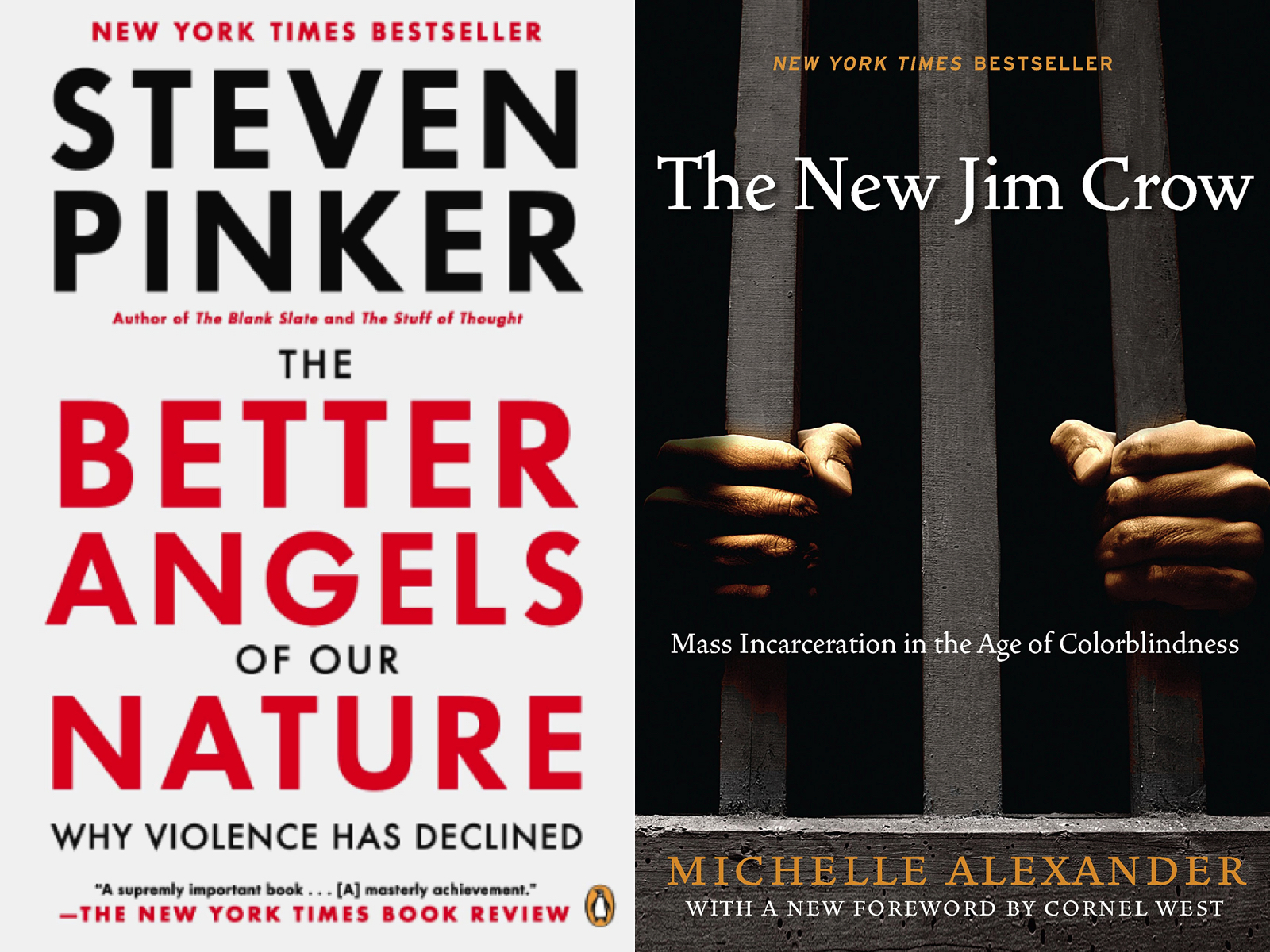
The Better Angels of our Nature, by Steven Pinker
Bowling Alone: The Collapse and Revival of American Community, by Robert Putnam
The New Jim Crow: Mass Incarceration in the Age of Colorblindness, by Michelle Alexander
The History Manifesto, by Jo Guldi and David Armitage
Freaks of Fortune: The Emerging World of Capitalism and Risk in America, Jonathan Levy
What Art Is, by Arthur Danto
Homo Deus: A Brief History of Tomorrow, by Yuval Noah Harari
Killing the Black Body: Race, Reproduction, and the Meaning of Liberty, by Dorothy Roberts
The Feeling of What Happens: Body and Emotion in the Making of Consciousness, by Antonio R. Damasio
Paying for the Party: How College Maintains Inequality, by Elizabeth A. Armstrong and Laura T. Hamilton
A Brief History of NeoLiberalism, by David Harvey
Critical Race Theory: The Key Writings That Formed The Movement, by Kimberle Crenshaw and Neil Gotanda
The Restless Clock: A History of the Centuries-Long Argument over What Makes Living Things Tick, by Jessica Riskin
Touching Feeling: Affect, Pedagogy, Performativity, by Eve Kosofsky Sedgwick
Ella Baker and the Black Freedom Movement: A Radical Democratic Vision, by Barbara Ransby
Truth and Truthfulness: An Essay in Genealogy, by Bernard Williams
War Powers: How the Imperial Presidency Hijacked the Constitution, by Peter Irons
Age of Fracture, by Daniel T. Rodgers
Shapeshifters: Black Girls and the Choreography of Citizenship, by Daniel T. Rodgers
The Argonauts, by Maggie Nelson
Read about all of the books at the Chronicle of Higher Education.
Related Content:
The 20 Most Influential Academic Books of All Time: No Spoilers
74 Essential Books for Your Personal Library: A List Curated by Female Creatives
Umberto Eco Explains Why We Make Lists
Read More...
The Big Lebowski at 20: Jeff Bridges, John Goodman & Steve Buscemi Reunite to Discuss the Coen Brothers’ Beloved Film
The Big Lebowski came out 20 years ago. Statements of that kind are often preceded by the question of whether you want to feel old, but this one wouldn’t have quite the same effect: on some level, The Big Lebowski feels as old as, or maybe even older than, cinema itself. In their half-hour conversation looking back at the film and its legacy, NBC’s Harry Smith asks actors John Goodman, Steve Buscemi, and Jeff Bridges, better known to the movie’s legions of fans as Walter Sobchak, Donny Kerabatsos, and of course Jeff Lebowski — also known as His Dudeness, Duder, El Duderino if you’re not into the whole brevity thing, but above all as the Dude — whether it felt like 20 years have passed. More than one of them come right back with just the right response: “It does and doesn’t.”
The conversation touches on such subjects as what they first thought of the script (“Right on the page, it felt like it was improvisation,” says Bridges), the spiritual implications of the story and characters (Bridges tells of the encounter with a Buddhist teacher that led to the book The Dude and the Zen Master in 2013), how many “F‑bombs” the final product ended up containing (275), and what usually happens in the still extremely common event of an encounter with a Lebowski fan on the street.
All three actors evince great pleasure at the opportunity to remember working with Joel and Ethan Coen on what would become the directing brothers’ most beloved film, one that has inspired its own festival, its own religion, and much more besides. But as many of the movie’s current enthusiasts (perhaps due to their youth, perhaps due to their indulgence in memory-clouding substances) won’t remember, The Big Lebowski didn’t become a phenomenon right away.
“So you make a movie like this, you love the script, you love working together,” as Smith puts it, “and then nobody goes to see it.” Indeed, the moviegoing public of 1998 didn’t quite know what to make of the fact that, as a follow-up to the Academy Award-winning Fargo, the Coen brothers served up what Goodman describes as “Philip Marlowe meets The Trip.” As Buscemi remembers, “it took like five or six years before people started coming up to me and saying that they loved it.” Then came the college kids, who would tell him not just that they loved it, but that they’d seen it eight, nine, ten times. The first time people saw The Big Lebowski they came out in bewilderment asking what it means, but “what the movie does so brilliantly is, once you know what it is, then you really enjoy, like, every moment of it.”
Among the few viewers attuned enough to its frequency to enjoy it right away was Roger Ebert: “Some may complain The Big Lebowski rushes in all directions and never ends up anywhere,” he wrote in his initial review. “That isn’t the film’s flaw, but its style.” But even his appreciation grew over time, and in 2010 he anointed it one of his official Great Movies, describing it as involving “kidnapping, ransom money, a porno king, a reclusive millionaire, a runaway girl, the Malibu police, a woman who paints while nude and strapped to an overhead harness, and the last act of the disagreement between Vietnam veterans and Flower Power,” all held together by “a plot and dialogue that perhaps only the Coen brothers could have devised.” Hence Bridges’ worries about getting the music of the script down cold before shooting: “Did I get the ‘man’ in the right place? Did I add another F‑bomb?”
Related Content:
Is The Big Lebowski a Great Noir Film? A New Way to Look at the Coen Brothers’ Iconic Movie
The Big Lebowski Reimagined as a Classic 8‑Bit Video Game
Tuileries: The Coen Brothers’ Short Film About Steve Buscemi’s Very Bad Day in the Paris Metro
Based in Seoul, Colin Marshall writes and broadcasts on cities, language, and culture. His projects include the book The Stateless City: a Walk through 21st-Century Los Angeles and the video series The City in Cinema. Follow him on Twitter at @colinmarshall or on Facebook.
Read More...Twerking, Moonwalking AI Robots–They’re Now Here
In a study released last year, Katja Grace at Oxford’s Future of Humanity Institute “surveyed the world’s leading researchers in artificial intelligence by asking them when they think intelligent machines will better humans in a wide range of tasks.” After interviewing 1,634 experts, they found that they “believe there is a 50% chance of AI outperforming humans in all tasks in 45 years and of automating all human jobs in 120 years.” That includes everything from driving trucks, running cash registers, to performing surgery, and writing New York Times bestsellers. These sobering predictions have prompted academics, like Northeastern University president Joseph Aoun, to write books along the lines of Robot-Proof: Higher Education in the Age of Artificial Intelligence which asks the question, How can universities “educate the next generation of college students to invent, to create, and to discover—filling needs that even the most sophisticated robot cannot”? It’s a good question. But a challenging one too. Because it assumes we understand what robots can, and cannot, do. Case in point, Boston Dynamics released a video this week of its SpotMini robot dancing to Bruno Mars’s “Uptown Funk.” It can moonwalk. It can twerk. Did the dance departments see that coming? Doubt it.
If you would like to support the mission of Open Culture, consider making a donation to our site. It’s hard to rely 100% on ads, and your contributions will help us continue providing the best free cultural and educational materials to learners everywhere. You can contribute through PayPal, Patreon, and Venmo (@openculture). Thanks!
Related Content:
The Robots of Your Dystopian Future Are Already Here: Two Chilling Videos Drive It All Home
Artificial Intelligence: A Free Online Course from MIT
Read More...Philosophers Name the Best Philosophy Books: From Stoicism and Existentialism, to Metaphysics & Ethics for Artificial Intelligence
As an English major undergrad in the 90s, I had a keen side interest in reading philosophy of all kinds. But I had little sense of what I should be reading. I browsed the library shelves, picking out what caught my attention. Not a bad way to make unusual discoveries, but if you want to get a focused, not to mention current, view of a particular field, you need to have a knowledgeable guide.
Back in those days, the internet was, as they say, in its infancy. How much better I would have fared if something like Five Books had existed! The site’s general idea, as it trumpets on its homepage, is to recommend “the best books on everything.” Argue amongst yourselves about whether any one resource can deliver on that promise, but let’s keep our focus on the excellent space of their Philosophy section, curated by freelance philosopher-at-large Nigel Warburton.
You may know Dr. Warburton from his many forays in public philosophy. Whether it’s the Philosophy Bites podcast, or its spin-offs Free Speech Bites and Ethics Bites, or his work on the BBC’s animated history of ideas series, or any one of his books, he has a rare knack for bringing the obscure and often difficult concepts of academic philosophy to light with both conversational good humor and intellectual rigor. Most of that work takes place in dialogue, the original form of classical philosophy.
The Five Books forum is no exception. In the latest post, Warburton interviews University of Sheffield’s Keith Frankish on the five best books on Philosophy of Mind. What is “Philosophy of Mind”? Read Frankish’s answer to that question here. What are his five picks? See below:
- A Materialist Theory of the Mind, by D.M. Armstrong
- Consciousness Explained, by Daniel C. Dennett
- Varieties of Meaning: The 2002 Jean Nicod Lectures, by Ruth Garrett Milikan
- The Architecture of the Mind, by Peter Carruthers
- Supersizing the Mind: Embodiment, Action, and Cognitive Extension, by Andy Clark
What about the best books on Ethics for Artificial Intelligence? It’s a far more pressing question than it was when Arthur C. Clarke published 2001: A Space Odyssey, which happens to be one of the books on Oxford academic Paula Boddington’s list. In his interview with Boddington, Warburton asks for, and receives, a clarification of the phrase “ethics for artificial intelligence.” In her choice of books, Boddington recommends those below. You may not find some of them shelved in philosophy sections, but when it comes to our sci-fi present, it seems, we may need to expand our categories of thought.
- Heartificial Intelligence: Embracing Our Humanity to Maximize Machines, by John Havens
- The Technological Singularity, by Murray Shanahan
- Weapons of Math Destruction: How Big Data Increases Inequality and Threatens Democracy, by Cathy O’Neil
- Moral Machines: Teaching Robots Right from Wrong, by Wendell Wallach and Colin Allen
- 2001: A Space Odyssey, by Arthur C. Clarke
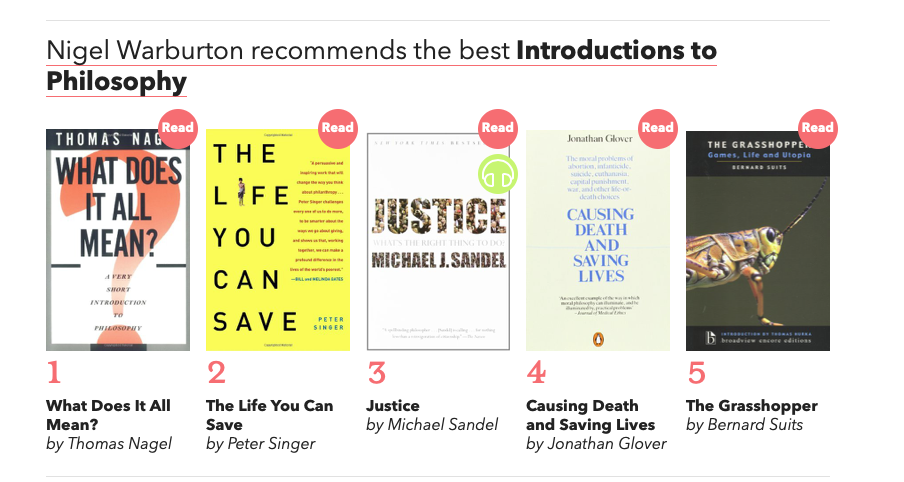
There are dozens more enlightening interviews and lists of five best books—on Nietzsche, Marx, and Hegel, on Existentialism, Stoicism, Consciousness, Chinese Philosophy…. Too many to directly quote here. There are lists from Warburton himself, on the best philosophy books from 2017, and best introductions to philosophy. The whole experience is a little like visiting, virtually, a couple dozen or so highly-regarded philosophers in every field, listening in on an informative chat, and getting a booklist from every one. You’ve still got to find and buy the books yourself (and read and talk about them), but this kind of guidance from living philosophers currently working in the field has never before been so widely and freely available outside of academia.
Related Content:
170+ Free Online Philosophy Courses
28 Important Philosophers List the Books That Influenced Them Most During Their College Days
48 Animated Videos Explain the History of Ideas: From Aristotle to Sartre
Josh Jones is a writer and musician based in Durham, NC. Follow him at @jdmagness
Read More...The Cornell Note-Taking System: Learn the Method Students Have Used to Enhance Their Learning Since the 1940s
How should you take notes in class? Like so many students who came before me and would come after, I had little idea in college and even less in high school. The inherently ambiguous nature of the note-taking task has inspired a variety of methods and systems, few of them as respected as Cornell Notes. Invented in the 1940s by Cornell University education professor Walter Pauk, author of How to Study in College, Cornell Notes involves dividing each page up into three sections: one to paraphrase the lecture’s main ideas, one to summarize those ideas, and one to write questions. After writing down those main ideas during class, immediately summarize and add questions about the content. Then, while studying later, try to answer those questions without looking at the main body of notes.
You’ll find a complete and concise explanation of how to take Cornell Notes at Cornell’s web site, which includes information on the “Reflect” stage (in which you ask yourself broader questions like “What’s the significance of these facts?” and “What principle are they based on?”) and the “Review” stage (in which you “spend at least ten minutes every week reviewing all your previous notes” to aid retention).
For a more detailed visual explanation, have a look at teacher Jennifer DesRochers’ instructions for how to take Cornell Notes in the video above, which now approaches one million views on Youtube. Her own version encourages taking down main-idea summaries in drawings as well as text, and including things like “key points” and “important people or ideas” in the question column.
That DesRochers’ video now approaches one million views suggests students still find the Cornell Notes system effective, as much as or even more so than they did when Pauk first published it. Over time, of course, its users have also augmented it: take Doug Neill’s video “Improving Cornell Notes With Sketchnoting Techniques” above, which combines standard Cornell Notes with his system of “sketchnoting,” also known as “visual note-taking and graphic recording.”
He provides examples of what such Cornell-formatted sketchnoting might look like, explaining that “having the option of doing something more visual in your mind triggers a different type of processing power, so that you’re more active in the way that you’re responding to the ideas. You’re not just passively taking in information.” The nature of school, as students in every era have known, can often induce a state of passivity; systems like Cornell Notes and its many variations remind us of how much more we can learn if we have a way to break out of it.
If you would like to support the mission of Open Culture, consider making a donation to our site. It’s hard to rely 100% on ads, and your contributions will help us continue providing the best free cultural and educational materials to learners everywhere. You can contribute through PayPal, Patreon, and Venmo (@openculture). Thanks!
Related Content:
1,300 Free Online Courses from Top Universities
Carl Sagan’s Syllabus & Final Exam for His Course on Critical Thinking (Cornell, 1986)
What’s a Scientifically-Proven Way to Improve Your Ability to Learn? Get Out and Exercise
Based in Seoul, Colin Marshall writes and broadcasts on cities, language, and culture. His projects include the book The Stateless City: a Walk through 21st-Century Los Angeles and the video series The City in Cinema. Follow him on Twitter at @colinmarshall or on Facebook.
Read More...Support Us
We're hoping to rely on loyal readers, rather than erratic ads. Please click the Donate button and support Open Culture. You can use Paypal, Venmo, Patreon, even Crypto! We thank you!

About Us

Open Culture scours the web for the best educational media. We find the free courses and audio books you need, the language lessons & educational videos you want, and plenty of enlightenment in between.
Advertise With Us
FREE UPDATES!
GET OUR DAILY EMAIL
Get the best cultural and educational resources on the web curated for you in a daily email. We never spam. Unsubscribe at any time.
FOLLOW ON SOCIAL MEDIA
Open Culture editor Dan Colman scours the web for the best educational media. He finds the free courses and audio books you need, the language lessons & movies you want, and plenty of enlightenment in between.
Advertise With Us



