Zora Neal Hurston Wrote a Book About Cudjo Lewis, the Last Survivor of the Atlantic Slave Trade, and It’s Finally Getting Published 87 Years Later
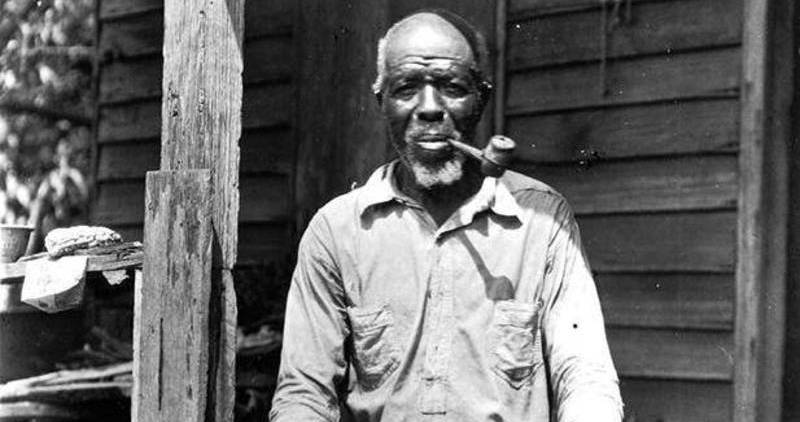
There are too many things people don’t know about Zora Neale Hurston, renowned primarily for her novel Their Eyes Were Watching God. That’s not to slight the novel or its significant influence on later writers like Toni Morrison and Maya Angelou, but to say that Hurston’s scholarly work deserves equal attention. A student of famed anthropologist Franz Boas while at Barnard College, Hurston became “the first African American to chronicle folklore and voodoo,” notes the Association for Feminist Anthropology. Before turning to fiction, she traveled the Caribbean and the American South, collecting stories, histories, and songs and publishing them in the collections Mules and Men and Tell My Horse.
Hurston’s work in ethnography informed her fiction and opened up the field to other African American scholars. It also produced one of the most important works of American nonfiction in the 20th century, a book that, until now, sat in manuscript form at Howard University’s library, where only academics could access it. Barracoon: The Story of the Last “Black Cargo” tells the story of Cudjo Lewis (1840–1935), the last known survivor of the Atlantic slave trade, in his own words. Hurston met Lewis—born Oluale Kossola in what is today the country of Benin—in 1927. She conducted three months of interviews and published a study, “Cudjo’s Own Story of the Last African Slaver,” that same year.
But when she tried to publish the interviews as a book in 1931, she was told she had to change Lewis’ language. “For at least two publishing houses,” writes Meagan Flynn, “Lewis’s heavily accented dialect was seen as too difficult to read.” Hurston refused. Now, the book has finally been published by HarperCollins, with Lewis’s speech intact as Hurston recorded it. HarperCollins editor Deborah Plant tells NPR, “We’re talking about a language that he had to fashion for himself in order to negotiate this new terrain he found himself in.”
As published excerpts of the book show, his speech is not hard to understand. He describes the kind of bewilderment all enslaved Africans must have felt after arriving on alien shores and forced to toil day in and day out under threat of whipping or worse: “We doan know why we be bring ’way from our country to work lak dis,” he says, “Everybody lookee at us strange. We want to talk wid de udder colored folkses but dey doan know whut we say.”
Lewis tells the story of his capture by the King of Dahomey, whose warriors raided his village of Takkoi and sold the captives to American Captain William Foster, operating an illegal operation (the slave trade had been outlawed for almost 60 years). Forced aboard the ship Clotilda with over 100 other African men and women, Lewis was transported to Mobile, Alabama and sold to a businessman named Timothy Meaher. “Cudjo and his fellow captives were forced to work on Meaher’s mill and shipyard,” Gabe Paoletti writes at All That’s Interesting. “As a slave, he started to go by the name ‘Cudjo,’ a day-named given to boys born on a Monday, as Meaher could not pronounce the name ‘Kossola.’”
Deborah Plant sees the rejection of Hurston’s book in the 30s as akin to Lewis’s loss of his name, country, and culture. “Embedded in his language is everything of his history,” she says. “To deny him his language is to deny his history, to deny his experience, which is ultimately to deny him period, to deny what happened to him.”
87 years after the book’s writing, Lewis’s story offers a timely reminder of the history of slavery. The book arrives just after the discovery of what historians and archaeologists believe to be the wreck of the Clotilda, a vessel owned and operated, says AL.com reporter Ben Raines in the video above, by two already wealthy men who smuggled slaves to prove that they could get away with it, then burned the evidence, the ship, to escape detection.
When police arrived at Meaher’s property to charge him with illegally smuggling enslaved people, he “had hidden away the captives,” writes Paoletti, “and had erased all trace of them having been there.” Thanks to Hurston, we have an invaluable firsthand account of what it was like for one West African man who not only endured war and capture at the hands of a rival tribe, but also sale at a slave market, the middle passage across the Atlantic, and forced labor in the deep South—and who lived through the Civil War, Emancipation, Reconstruction and well into the early 20th Century.
Related Content:
Hear Zora Neale Hurston Sing Traditional American Folk Song “Mule on the Mount” (1939)
Josh Jones is a writer and musician based in Durham, NC. Follow him at @jdmagness
Read More...The Concept of Musical Harmony Explained in Five Levels of Difficulty, Starting with a Child & Ending with Herbie Hancock
Wired magazine has entered the video explainer game with a novel series that takes concepts from kindergarten to graduate school and beyond in under twenty minutes. Their “5 Levels of Difficulty” videos have it all: hip 21st century ideas like blockchain, cute kids saying smart things, a celebration of expertise and the communication skills today’s experts need to present their work to a diverse, international public of all ages and education levels. This is no gimmick—it’s entertaining and accessible, while still informative for even the best informed.
Take the video above, in which 23-year-old composer and musician Jacob Collier explains the concept of musical harmony. His students include a child, a teen, a college student, a professional, and… Herbie Hancock. “I’m positive,” he says, “that everyone can leave this video with some understanding, at some level.” At level 1, we understand harmony as an expression of mood or feeling, produced by adding “more notes” to a melody. A simple but effective definition.
Level 2 introduces basic theory—using chords, or triads, to explain how harmony can produce different emotions, modulating from major to minor, and creating “narratives” within a song. In Level 3, harmony becomes a language, and the vocabulary of the circle of fifths comes in. Collier’s college student companion also plays guitar, and the two jam through a few chord voicings to give his example song, “Amazing Grace,” a smooth and jazzy feel. At Level 4, a professional pianist learns a few things about overtones and undertones, compositional arranging, and “negative harmony.”
Then, at 8:30, we get to the main attraction, and, as tends to happen in these videos at the final stage, student and teacher roles reverse. Collier essentially interviews Hancock on harmony, both perched behind keyboards and speaking the language of music fluently. Non-professionals won’t have had nearly enough preparation in 8 minutes to grasp what’s going on. It’s high level stuff, but even if you’re mystified by the theory, stick around for the stories—and learn what Miles Davis meant when he told Hancock, “don’t play the butter notes,” advice on playing harmony that changed everything for him.
Related Content:
John Coltrane Draws a Picture Illustrating the Mathematics of Music
Josh Jones is a writer and musician based in Durham, NC. Follow him at @jdmagness
Read More...Ernest Hemingway Creates a Reading List for a Young Writer (1934)
In the spring of 1934, a young man who wanted to be a writer hitchhiked to Florida to meet his idol, Ernest Hemingway.
Arnold Samuelson was an adventurous 22-year-old. He had been born in a sod house in North Dakota to Norwegian immigrant parents. He completed his coursework in journalism at the University of Minnesota, but refused to pay the $5 fee for a diploma. After college he wanted to see the country, so he packed his violin in a knapsack and thumbed rides out to California. He sold a few stories about his travels to the Sunday Minneapolis Tribune.
In April of ’34 Samuelson was back in Minnesota when he read a story by Hemingway in Cosmopolitan, called “One Trip Across.” The short story would later become part of Hemingway’s fourth novel, To Have and Have Not. Samuelson was so impressed with the story that he decided to travel 2,000 miles to meet Hemingway and ask him for advice. “It seemed a damn fool thing to do,” Samuelson would later write, “but a twenty-two-year-old tramp during the Great Depression didn’t have to have much reason for what he did.”
And so, at the time of year when most hobos were traveling north, Samuelson headed south. He hitched his way to Florida and then hopped a freight train from the mainland to Key West. Riding on top of a boxcar, Samuelson could not see the railroad tracks underneath him–only miles and miles of water as the train left the mainland. “It was headed south over the long bridges between the keys and finally right out over the ocean,” writes Samuelson. “It couldn’t happen now–the tracks have been torn out–but it happened then, almost as in a dream.”
When Samuelson arrived in Key West he discovered that times were especially hard there. Most of the cigar factories had shut down and the fishing was poor. That night he went to sleep on the turtling dock, using his knapsack as a pillow. The ocean breeze kept the mosquitos away. A few hours later a cop woke him up and invited him to sleep in the bull pen of the city jail. “I was under arrest every night and released every morning to see if I could find my way out of town,” writes Samuelson. After his first night in the mosquito-infested jail, he went looking for the town’s most famous resident.
When I knocked on the front door of Ernest Hemingway’s house in Key West, he came out and stood squarely in front of me, squinty with annoyance, waiting for me to speak. I had nothing to say. I couldn’t recall a word of my prepared speech. He was a big man, tall, narrow-hipped, wide-shouldered, and he stood with his feet spread apart, his arms hanging at his sides. He was crouched forward slightly with his weight on his toes, in the instinctive poise of a fighter ready to hit.
“What do you want?” said Hemingway. After an awkward moment, Samuelson explained that he had bummed his way from Minneapolis just to see him. “I read your story ‘One Trip Across’ in Cosmopolitan. I liked it so much I came down to have a talk with you.” Hemingway seemed to relax. “Why the hell didn’t you say you just wanted to chew the fat? I thought you wanted to visit.” Hemingway told Samuelson he was busy, but invited him to come back at one-thirty the next afternoon.
After another night in jail, Samuelson returned to the house and found Hemingway sitting in the shade on the north porch, wearing khaki pants and bedroom slippers. He had a glass of whiskey and a copy of the New York Times. The two men began talking. Sitting there on the porch, Samuelson could sense that Hemingway was keeping him at a safe distance: “You were at his home but not in it. Almost like talking to a man out on a street.” They began by talking about the Cosmopolitan story, and Samuelson mentioned his failed attempts at writing fiction. Hemingway offered some advice.
“The most important thing I’ve learned about writing is never write too much at a time,” Hemingway said, tapping my arm with his finger. “Never pump yourself dry. Leave a little for the next day. The main thing is to know when to stop. Don’t wait till you’ve written yourself out. When you’re still going good and you come to an interesting place and you know what’s going to happen next, that’s the time to stop. Then leave it alone and don’t think about it; let your subconscious mind do the work. The next morning, when you’ve had a good sleep and you’re feeling fresh, rewrite what you wrote the day before. When you come to the interesting place and you know what is going to happen next, go on from there and stop at another high point of interest. That way, when you get through, your stuff is full of interesting places and when you write a novel you never get stuck and you make it interesting as you go along.”
Hemingway advised Samuelson to avoid contemporary writers and compete only with the dead ones whose works have stood the test of time. “When you pass them up you know you’re going good.” He asked Samuelson what writers he liked. Samuelson said he enjoyed Robert Louis Stevenson’s Kidnapped and Henry David Thoreau’s Walden. “Ever read War and Peace?” Hemingway asked. Samuelson said he had not. “That’s a damned good book. You ought to read it. We’ll go up to my workshop and I’ll make out a list you ought to read.”
His workshop was over the garage in back of the house. I followed him up an outside stairway into his workshop, a square room with a tile floor and shuttered windows on three sides and long shelves of books below the windows to the floor. In one corner was a big antique flat-topped desk and an antique chair with a high back. E.H. took the chair in the corner and we sat facing each other across the desk. He found a pen and began writing on a piece of paper and during the silence I was very ill at ease. I realized I was taking up his time, and I wished I could entertain him with my hobo experiences but thought they would be too dull and kept my mouth shut. I was there to take everything he would give and had nothing to return.
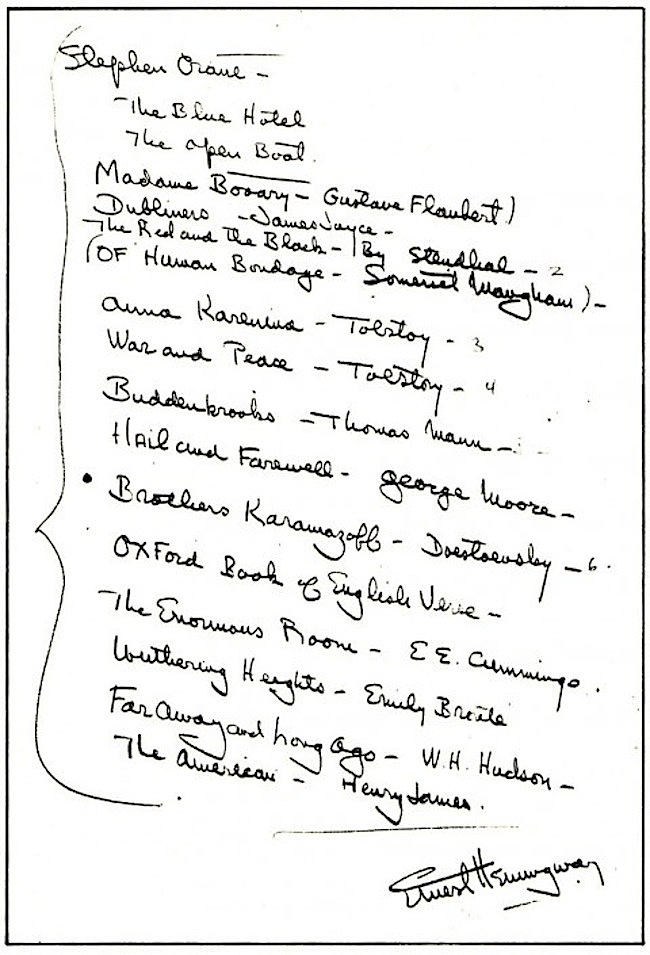
Hemingway wrote down a list of two short stories and 14 books and handed it to Samuelson. Most of the texts you can find in our collection, 800 Free eBooks for iPad, Kindle & Other Devices. If the texts don’t appear in our eBook collection itself, you’ll find a link to the text directly below.
- “The Blue Hotel” by Stephen Crane
- “The Open Boat” by Stephen Crane
- Madame Bovary by Gustave Flaubert
- Dubliners by James Joyce
- The Red and the Black by Stendhal
- Of Human Bondage by Somerset Maugham
- Anna Karenina by Leo Tolstoy
- War and Peace by Leo Tolstoy
- Buddenbrooks by Thomas Mann
- Hail and Farewell by George Moore
- The Brothers Karamazov by Fyodor Dostoyevsky
- The Oxford Book of English Verse
- The Enormous Room by E.E. Cummings
- Wuthering Heights by Emily Bronte
- Far Away and Long Ago by W.H. Hudson
- The American by Henry James
Hemingway reached over to his shelf and picked up a collection of stories by Stephen Crane and gave it to Samuelson. He also handed him a copy of his own novel, A Farewell to Arms. “I wish you’d send it back when you get through with it,” Hemingway said of his own book. “It’s the only one I have of that edition.” Samuelson gratefully accepted the books and took them back to the jail that evening to read. “I did not feel like staying there another night,” he writes, “and the next afternoon I finished reading A Farewell to Arms, intending to catch the first freight out to Miami. At one o’clock, I brought the books back to Hemingway’s house.” When he got there he was astonished by what Hemingway said.
“There is something I want to talk to you about. Let’s sit down,” he said thoughtfully. “After you left yesterday, I was thinking I’ll need somebody to sleep on board my boat. What are you planning on now?”
“I haven’t any plans.”
“I’ve got a boat being shipped from New York. I’ll have to go up to Miami Tuesday and run her down and then I’ll have to have someone on board. There wouldn’t be much work. If you want the job, you could keep her cleaned up in the mornings and still have time for your writing.”
“That would be swell,” replied Samuelson. And so began a year-long adventure as Hemingway’s assistant. For a dollar a day, Samuelson slept aboard the 38-foot cabin cruiser Pilar and kept it in good condition. Whenever Hemingway went fishing or took the boat to Cuba, Samuelson went along. He wrote about his experiences–including those quoted and paraphrased here–in a remarkable memoir, With Hemingway: A Year in Key West and Cuba. During the course of that year, Samuelson and Hemingway talked at length about writing. Hemingway published an account of their discussions in a 1934 Esquire article called “Monologue to the Maestro: A High Seas Letter.” (Click here to open it as a PDF.) Hemingway’s article with his advice to Samuelson was one source for our February 19 post, “Seven Tips From Ernest Hemingway on How to Write Fiction.”
When the work arrangement had been settled, Hemingway drove the young man back to the jail to pick up his knapsack and violin. Samuelson remembered his feeling of triumph at returning with the famous author to get his things. “The cops at the jail seemed to think nothing of it that I should move from their mosquito chamber to the home of Ernest Hemingway. They saw his Model A roadster outside waiting for me. They saw me come out of it. They saw Ernest at the wheel waiting and they never said a word.”
Note: An earlier version of this post originally appeared on our site in May, 2013.
Related Content
18 (Free) Books Ernest Hemingway Wished He Could Read Again for the First Time
Seven Tips From Ernest Hemingway on How to Write Fiction
Christopher Hitchens Creates a Reading List for Eight-Year-Old Girl
Neil deGrasse Tyson Lists 8 (Free) Books Every Intelligent Person Should Read
Ernest Hemingway’s Favorite Hamburger Recipe
Read More...Enter an Online Interactive Documentary on M.C. Escher’s Art & Life, Narrated By Peter Greenaway
Despite their enormous popularity, the enigmatic works of Dutch artist M.C. Escher have not, perhaps, received their due in the high art world. But he is beloved by college-dorm-room-decorators, Haight-Ashbury hippies, mathematicians, doctors, and dentists, who put his art on their walls, says Micky Pillar, former curator of the Escher Museum in The Hague, because “they think it’s a great way of getting people engaged and forgetting about reality.” Mathematical giants Roger Penrose and HSM Coxeter “were dazzled by Escher’s work as students in 1954,” notes The Guardian’s Maev Kennedy. Mick Jagger was a huge fan, though Escher turned him down when asked to draw an album cover, annoyed at being addressed by his first name (Maurits).
Escher, says Ian Dejardin—director of the Dulwich Picture Gallery in London—“may have been the only person in the world who had never heard of the Rolling Stones.” It wasn’t that he ignored the world around him, but that he focused his career on inventing another one, taking inspiration first from the Italian countryside and cityscapes, after settling in Rome, and later turning to what he called “mental imagery”: the paradoxical portraits, fantastical shifting shapes, and mind-bending patterns, so absorbing that people in waiting rooms forget their discomfort and anxiety when looking at them.
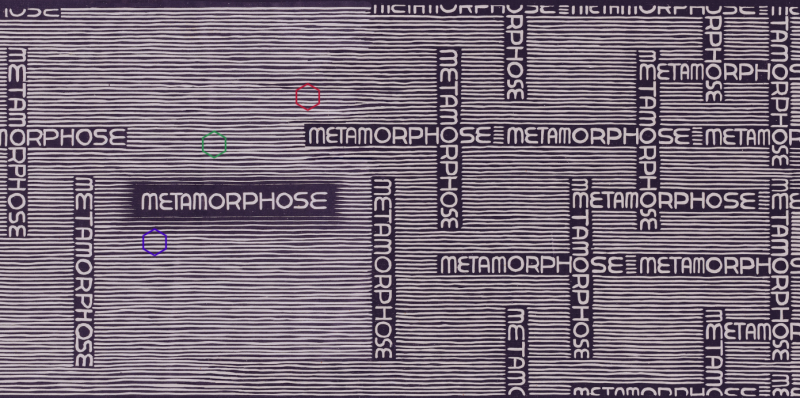
One of the most famous of such works, 1939’s Metamorphosis II, owes its creation to the historical pressures of Italian fascism and the geometric fascinations of Islamic art. After leaving Rome in 1935 as political tensions rose, Escher found himself inspired by his second visit to The Alhambra in Spain. Its “lavish tile work,” as the National Gallery of Art writes, “suggested new directions in the use of color and the flattened patterning of interlocking forms.” So intricate and technically dazzling is the four-meter-long print that it merits an in-depth look at its context and composition.

That’s exactly what you’ll find at a new “interactive documentary” on Metamorphosis II, by the makers of a similar feature on Hieronymus Bosch’s Garden of Earthly Delights. The online resource lets users scroll across the print, zooming in to an extraordinary level of detail, or zooming out to see how it transitions section by section, from the word “metamorphose,” to a checkerboard pattern, to lizards, honeycombs, bees, hummingbirds, fish, etc.. Along the way, you can click on little colored hexagons (that transform into cubes) and bring up short articles on Escher’s life and aspects of the work at hand. Each of these featurettes is narrated (in the English version) by British filmmaker and artist Peter Greenaway. Once you open one of these explanatory windows, a navigation tool (above) appears at the bottom of the screen.

We see how the various animals in Escher’s “systematic tessellations,” as he called them, were chosen by virtue of their shape as well as Escher’s interest in their life cycles and methods of organization. “Nature was a source of wondrous beauty for Escher,” the documentary explains. “In his journals and letters, he often wrote about what surprised, amazed or moved him” in the natural world. Some of the Metamorphosis II sections appeared in later works like 1943’s Reptiles. Escher drew attention both to the natural world’s variety and its genius for repeated patterns. But the movement from one animal to the next has nothing to do with zoology.

Escher delighted in playing “mind association games.” We learn that as a child, “he would lie in bed and think of two subjects for which he had to create a logical connection.” In one example he gave, he would attempt to find his way from “a tram conductor to a kitchen chair.” Metamorphosis II gives us a visual representation of such games, mental leaps that challenge our sense of the order of things. The documentary situates this fascinating work in a historical and aesthetic context that allows us to make sense of it while adding to our appreciation for its strangeness, offering several different ways of approaching the work, as well as an invitation to make your own.
One feature, the “Metamorphosis Machine,” lets you choose from a selection of starting and ending patterns. Then it fills in the transformation in the middle. The results are hardly Escher-quality, but they are a fun and accessible way of understanding the work of an artist whose vision can seem forbidding, with its impossible spaces and disorienting transformations. Enter the Metamorphosis II interactive documentary here.
Related Content:
M.C. Escher Cover Art for Great Books by Italo Calvino, George Orwell & Jorge Luis Borges
Josh Jones is a writer and musician based in Durham, NC. Follow him at @jdmagness
Read More...Watch Choirs Around the World Simulate the Rainstorm in Toto’s “Africa” Using Only Their Hands
The Los Angeles-based choir, Angel City Chorale, above, captured the Internet’s imagination in a big way with their 2013 cover of Toto’s 1982 hit, “Africa,” in which the group’s 160 performers created a realistic-sounding thunderstorm using only their hands.
Delightful! And more common than you may at first think.
The Chorale acknowledges that they owe a great debt to Slovenian vocal group Perpetuum Jazzile’s thunderous 2008 rendition. Stagehands accustomed to creating credible thunderclaps by waving wiggly sheets of aluminum backstage may want to switch to hundreds of feet hopping up and down in unison, as heard at the 1‑minute mark, below.
Go a bit further back to find an actual African choir’s finger-snapping, thigh-smacking “Africa.”
The Kearsney College Choir is based near Durban, South Africa, and they appear to have been the first to open this number with the now-famous rainstorm effect. Its members are school boys ranging in age from 13 to 18. The video below shows them performing the tune in the 2008 World Choir Games, an annual competition that will be taking place on their home turf this year.
Interestingly, there’s not that much rain in the original. Over the years Toto’s songwriters, David Paich and Jeff Porcaro have made various statements about its origins—a guy transfixed by images of suffering Africans on TV, a lonely missionary, a visit to the 1964 World’s Fair’s Africa pavilion …
There’s a bit of rain to be seen in the very 80’s official music video, but nothing that rivals the choirs’ spectacular downpours.
If you’re moved to whip up a tempest of your own, Jbrary’s children’s librarians, Dana Horrocks and Lindsey Krabbenhoft, have created an instructional video that shows just how simple the effect is to master. The real trick is enlisting 100s of friends to do it at the same time.
Buy Perpetuum Jazzile’s “Africa” CD and vocal arrangements here.
Download Angel City Chorale’s “Africa” single on iTunes or CDBaby.
Related Content:
Pakistani Musicians Play a Delightful Version of Dave Brubeck’s Jazz Classic, “Take Five”
Ayun Halliday is an author, illustrator, theater maker and Chief Primatologist of the East Village Inky zine. Join her in NYC on Monday, April 23 for the third installment of her literary-themed variety show, Necromancers of the Public Domain. Follow her @AyunHalliday.
Read More...Malcolm Gladwell Explains Where His Ideas Come From
For many readers out there, the publication of a new Malcolm Gladwell article ranks as an event demanding immediate attention. They’ll read whatever he writes, not just because they enjoy his style but because they trust his instinct for finding fascinating subjects, from coffee to health care, college rankings to dog training, shopping malls to school shootings. How did he develop that instinct? He reveals aspects of his idea-generating process in the seventeen-minute interview with New Yorker editor David Remnick just above. It turns out that, just as with most of us — or as it would ideally go with most of us — Gladwell’s ideas sprout organically from his strengths.
But those strengths, in turn, sprout organically from his weaknesses. An early New Yorker assignment, handed down by then-editor Tina Brown, had Gladwell covering the 1989 attack on the woman referred to, at the time, as the Central Park Jogger. Instead of doing the kind of prolonged, emotional interviews many reporters would have done with the victim’s friends and family, he instead contacted the surgeon who operated on her, ending up with a piece on “practice variation in medicine,” the phenomenon whereby different medical practitioners in different regions of the country end up going about their job in persistently different ways. “They can’t seem to get everyone on the same page,” as Gladwell frames the problem.
The intersection of the New Yorker’s tradition of and expectation for long-form pieces with his own inability to perform traditional reportage gave Gladwell a sense of where he should look for promising leads. Rejecting character as a hook, he instead goes looking for intriguing theories, operating on the conception of most writers as “experience-rich and theory-poor.” Instead of simply reporting on the latest school shooting, for instance, he wrote about a Stanford sociologist’s theory of riots that he could apply to the phenomenon of school shootings themselves. His next book, about which he reveals a thing or two in this interview, deals in part with a different kind of shooting: that committed by police.
“I have the advantage of coming to it late,” Gladwell says to Remnick, explaining how his perspective and thus his writing on the subject might differ from those of others. That simple statement may hold the key to Gladwell’s vault of ideas: with no obligation to give a rundown of the facts as they emerge, he can step back for a moment (be it a few months or a few decades) and get a sense of which stories will ultimately take the right shape to connect to the many broad, intriguing ideas, in the form of academic theory or otherwise, with which he’s already familiarized himself. As much as Gladwell seems like a writer of the moment (and here he describes his “ur-reader” as a fortysomething Trader Joe’s executive who only has time for three books a year, plus podcasts), he gets a fair bit of mileage out of one of the most old-fashioned assets of them all: a well-stocked mind.
Related Content:
The Case for Writing in Coffee Shops: Why Malcolm Gladwell Does It, and You Should Too
John Cleese on the Origin of Creativity
Kurt Vonnegut: Where Do I Get My Ideas From? My Disgust with Civilization
Based in Seoul, Colin Marshall writes and broadcasts on cities and culture. His projects include the book The Stateless City: a Walk through 21st-Century Los Angeles and the video series The City in Cinema. Follow him on Twitter at @colinmarshall or on Facebook.
Read More...Meet Nadia Boulanger, “The Most Influential Teacher Since Socrates,” Who Mentored Philip Glass, Leonard Bernstein, Aaron Copland, Quincy Jones & Other Legends
We recently featured a video of Brian Eno giving controversial advice to artists: “don’t get a job.” Easier said than done, of course, but he makes a compelling case. Along the way, he says something interesting about the fetish we make of genius—an obsessive focus on lone, and almost always male, artists as self-made, heroic embodiments of greatness. “Although great new ideas are usually articulated by individuals,” he says, “they’re nearly always generated by communities.” (He proposes the neologism “scenius” in place of “genius” to describe “cooperative intelligence.”) Eno would probably agree that great art not only comes out of creative communities of peers, but also from the influence of great teachers.
One such figure, Nadia Boulanger (1887 –1979), has been described as “the most influential teacher since Socrates.” This is hardly hyperbole. As Clemency Burton-Hill notes at the BBC, “her roster of music students reads like the ultimate 20th Century Hall of Fame. Leonard Bernstein. Aaron Copland. Quincy Jones. Astor Piazzolla. Philip Glass,” and so on.
“It is no exaggeration, then, to consider Boulanger the most important musical pedagogue of the modern—or indeed any—era.” She was also a talented composer, a mentor and fierce champion of Igor Stravinsky, and the first woman to conduct major symphonies in Europe and the U.S., such as the New York Philharmonic and the Boston Symphony Orchestra.
Boulanger had her own take on genius: “We are as fools to say, ‘he’s a genius,’” she opines in the interview at the top. She also describes her method of weeding out unserious students by asking them, “Can you live without music?” If the answer is yes, she tells them “thank the Lord and goodbye!” Even at an advanced age, her fiercely uncompromising approach is palpable, a quality Philip Glass remembers from his first meeting with her in 1964, when “she was already a relic,” writes Matthew Guerrieri at Red Bull Academy. She identified a bar from one of Glass’s compositions as “written by a real composer,” says Glass. “It was “the first and last time she said anything nice to me for the next two years.”
American composers subjected themselves to Boulanger’s harsh discipline as a “rite of passage,” visiting her in her Paris apartment where she did most of her teaching. She also made her way through “leading conservatoires,” Burton-Hill notes, “including the Juilliard School, the Yehudi Menuhin School, the Royal College of Music and the Royal Academy of Music.” Boulanger’s early life is as fascinating as her teaching career; she was the definition of “a tough, aristocratic Frenchwoman,” as Glass describes her, and grew up surrounded by music. Her father, Ernest, was a composer, conductor, and singing professor. Her younger sister Lili, who died in 1918 at the age of 24, was the more talented composer. (Nadia, writes Burton-Hill, was “riven with envy.”)
A few years after Lili’s tragic death, Nadia abandoned composition to focus primarily on her teaching, mentoring students with tremendous promise and those with less evident gifts alike. “Anyone could be a Boulanger student,” Guerrieri writes (provided they couldn’t live without music): “Those with lesser skills were taken in alongside prodigies and professionals.” She did not discriminate on any basis, though her political attitudes make her a difficult figure for many people to fully embrace. “She espoused nationalism, monarchism and, although her good manners kept it from her often-Jewish students, anti-Semitism.” She held democracy in contempt and did not believe women should vote. And she was especially hard on her female students. (When one woman finally met her approval, Boulanger addressed her as “Monsieur.”)
Boulanger was as traditional in her musical attitudes—spurning Arnold Schoenberg’s innovations, for example—as in her politics. Yet she worked with jazz musicians like Jones and Donald Byrd, and with composers like Joe Raposo, “the musical chameleon behind the songs of Sesame Street and The Electric Company.” She was an encouraging presence in the lives of her students long after they had gone on to success and fame. When Leonard Bernstein sent her the score to West Side Story, she pronounced, “I am enchanted by its dazzling nature” (though she added a critique about its “facility”). Perhaps her most radical student, Philip Glass, has never been accused of musical conservatism. But through his difficult course of study with Boulanger, he says, “I learned to hear.”
“To undergo Boulanger’s rigorous training,” writes Guerrieri, “was to absorb her sense of music history: evolution, not revolution.” Then again, many of history’s revolutionaries have also been some of the keenest students of tradition, usually assisted, guided, and trained by history’s great teachers.
via @dark_shark/Red Bull Academy
Related Content:
A Minimal Glimpse of Philip Glass
Josh Jones is a writer and musician based in Durham, NC. Follow him at @jdmagness.
Read More...Bertrand Russell’s Advice to People Living 1,000 Years in the Future: “Love is Wise, Hatred is Foolish”
In these times of high anxiety, battles over “free speech”—on college campuses, in corporate offices, on airwaves and the internet—can seem extremely myopic from a certain perspective. The perspective I mean is one in which a disturbing number of messages broadcast perpetually to millions of people bear little relationship to scientific, historical, or social facts, so that it becomes increasingly difficult for many people to tell fact from fiction. Debating whether or not such speech is “free” outside of any consideration for what purpose it serves, who it harms, and why it should drown out other speech because it appeals to widespread prejudices or powerful, monied interests seems grossly irresponsible at best.
Most philosophers who have considered these matters have stressed the important relationship between reason and ethics. In the classical formula, persuasive speech was considered to have three dimensions: logos—the use of facts and logical arguments; ethos—the appeal to common standards of value; and pathos—a consideration for the emotional resonance of language. While the forceful dialectical reasoning of Plato and his contemporaries valued parrhesia—which Michel Foucault translates as “free speech,” but which can also means “bold” or “candid” speech—classical thinkers also valued social harmony and did not intend that philosophical debate be a scorched-earth war with the intention to win at all costs.
Bertrand Russell, the brilliant mathematician, philosopher, and anti-war activist, invoked this tradition often (as in his letter declining a debate with British fascist Oswald Mosley). In the video above he answers the question, “what would you think it’s worth telling future generations about the life you’ve lived and the lessons you’ve learned from it.” His answer may not validate the prejudices of certain partisans, but neither does it evince any kind of special partisanship itself. Russell breaks his advice into two, interdependent categories, “intellectual and moral.”
When you are studying any matter or considering any philosophy, ask yourself only what are the facts and what is the truth that the facts bear out. Never let yourself be diverted either by what you wish to believe, or by what you think would have beneficent social effects if it were believed. But look only, and solely, at what are the facts.
The moral thing I should wish to say to them is very simple. I should say love is wise, hatred is foolish. In this world, which is getting more and more interconnected, we have to learn to tolerate each other, we have to learn to put up with the fact that some people say things that we don’t like. We can only live together in that way. And if we are to live together and not die together, we should learn the kind of tolerance which is absolutely vital to the continuation of human life on this planet.
The gist: our speech should conform to the facts of the matter; rather than wishful thinking, we should accept that people will say things we don’t like, but if we cannot love but only hate each other, we’ll probably end up destroying ourselves.
The video above, from the BBC program Face-to-Face, was recorded in 1959.
Related Content:
Bertrand Russell & Buckminster Fuller on Why We Should Work Less, and Live & Learn More
Josh Jones is a writer and musician based in Durham, NC. Follow him at @jdmagness
Read More...Coursera Now Offering Complete Bachelor’s and Master’s Programs–With Tuition Reduced by 70%
As we observed last October, Coursera has been undergoing an evolution of sorts. When the ed tech company started out, it offered an array of individual courses to students worldwide. A little of this. And a little of that. Now, they’re increasingly moving towards courses that work together in sequences. First came “course specializations”–collections of courses that allow students to gain a mastery of specialized topics like Deep Learning, Data Science (Johns Hopkins), Business Fundamentals (Wharton), Digital Marketing (University of Illinois), and Big Data (UC San Diego). Next it was just a logical jump to offering full-blown Bachelor’s and Master’s programs at a discounted price (roughly 1/3 the usual cost.) As of this month, Coursera offers one Bachelor’s program (Computer Science from the University of London), one MBA, and eight Master’s programs. The full list of degree programs appears below:
- Bachelor of Science in Computer Science from the University of London (New)
- Master of Computer Science from Arizona State University (New)
- Global Master of Public Health from Imperial College London (New)
- Master of Computer Science from the University of Illinois (New)
- Master of Applied Data Science from the University of Michigan (New)
- Master of Public Health from the University of Michigan (New)
- Master of Computer Science in Data Science from University of Illinois
- Online Master’s in Innovation and Entrepreneurship from HEC Paris
- Master of Business Administration from the University of Illinois
- Master of Science in Accountancy from the University of Illinois
If you would like to support the mission of Open Culture, consider making a donation to our site. It’s hard to rely 100% on ads, and your contributions will help us continue providing the best free cultural and educational materials to learners everywhere. You can contribute through PayPal, Patreon, and Venmo (@openculture). Thanks!
Note: Open Culture has a partnership with Coursera. If readers enroll in certain Coursera courses, it helps support Open Culture.
Related Content:
MOOCs from Great Universities (Many With Certificates)
Read More...Watch Ta-Nehisi Coates Speak French Before & After Attending Middlebury’s Immersion Program
The many fans of Ta-Nehisi Coates, longtime Atlantic correspondent and author of books like The Beautiful Struggle and Between the World and Me (not to mention his more recent role as a writer of Black Panther comics), know a thing or two about the trials and tribulations he went through to become one of America’s best-known public intellectuals, but fewer of them know how intense a battle he’s waged, over the past few years, on the side: that of mastering the French language in his 30s and 40s.
“I’m taking an hour a week to try to teach myself French,” Coates wrote on his blog at The Atlantic in the summer of 2011, explaining that his wife “went to Paris five years ago and loved it. She wants me to go back with her, and I want to go. But I refuse to do so until I have a rudimentary understanding of the language. This isn’t about impressing the French — I expect my accent to mocked — it’s about how I interpret the world. Language is a big part of it.” After starting to dig into the Foreign Service Institute’s French materials (available free in our language-learning collection), he crossed out the word week in “an hour a week” to replace it with day, already sensing, no doubt, the unexpected demands this particular language would make on him.
“ ‘Et alors’ is similar to our ‘So what?’ But ‘Et Alors’ doesn’t simply sound different, it feels different, it carries another connotation, another music,” he wrote in an early 2012 follow-up. “I don’t know if that means anything to people who don’t write professionally, but for me it means a ton.” It seems only right, he concluded, “that a writer should explore languages and try to spend time with as many as he or she can. That I should arrive at such an obvious conclusion at this late date is humbling.” And so he pressed steadfastly on, memorizing French vocabulary words and grammatical structures, taking classes, meeting with a tutor, and after receiving his first passport at the age of 37, studying and practicing in real Francophone places like Paris and Switzerland.
Coates stepped up to a higher level of French skill — and a much higher level of French challenge — when he signed up for Middlebury College’s seven-week French immersion program, throwing himself into an environment of much younger and “fiercer” classmates without the possibility of leaning on his native language. When he sat down for the four-minute video interview at the top of the post before shipping out to Middlebury, he later revealed, “there were several moments when I didn’t even understand the question.” No such problems when he sat for another short conversation after the seven weeks, captured in the video just above: “What changed most at Middlebury, for me, was not in how I talked, but how I heard.”
Though Middlebury clearly helped push him forward, Coates doesn’t seem to consider participation in such a program a requirement for even the ambitious French learner. Maintaining the right attitude, however, is non-negotiable: “I expect to suck for awhile. Then I expect to slowly get better. The point is neither mastery, nor fluency. The point is hard study — the repeated application of a principle until the eyes and ears bleed a little.” Grappling with French has taught him, among other life lessons he’s written about, “that it is much better to focus on process, than outcomes. The question isn’t ‘When will I master the subjunctive?’ It’s ‘Did I put in my hour of study today?’ ”
How you feel about your process of study, Coates emphasizes, “it is as important as any objective reality. Hopelessness feeds the fatigue that leads the student to quit. It is not the study of language that is hard, so much as the ‘feeling’ that your present level is who you are and who you will always be. I remember returning from France at the end of the summer of 2013, and being convinced that I had some kind of brain injury which prevented me from hearing French vowel sounds. But the real enemy was not any injury so much as the ‘feeling’ of despair. That is why I ignore all the research about children and their language advantage. I don’t want to hear it. I just don’t care.”
After less than a year of studying French, Coates found, his brain had begun to “hunger for that feeling of stupidity” that comes from less-than-satisfactory comprehension. “There is absolutely nothing in this world like the feeling of sucking at something and then improving at it,” he wrote in a more recent reflection on his ongoing (and now surely lifelong) engagement with French. “Everyone should do it every ten years or so.”
Related Content:
French in Action: Cult Classic French Lessons from Yale (52 Episodes) Available Online
A Map Showing How Much Time It Takes to Learn Foreign Languages: From Easiest to Hardest
Learn 48 Languages Online for Free: Spanish, Chinese, English & More
Based in Seoul, Colin Marshall writes and broadcasts on cities and culture. His projects include the book The Stateless City: a Walk through 21st-Century Los Angeles and the video series The City in Cinema. Follow him on Twitter at @colinmarshall or on Facebook.
Read More...Support Us
We're hoping to rely on loyal readers, rather than erratic ads. Please click the Donate button and support Open Culture. You can use Paypal, Venmo, Patreon, even Crypto! We thank you!

About Us

Open Culture scours the web for the best educational media. We find the free courses and audio books you need, the language lessons & educational videos you want, and plenty of enlightenment in between.
Advertise With Us
FREE UPDATES!
GET OUR DAILY EMAIL
Get the best cultural and educational resources on the web curated for you in a daily email. We never spam. Unsubscribe at any time.
FOLLOW ON SOCIAL MEDIA
Open Culture editor Dan Colman scours the web for the best educational media. He finds the free courses and audio books you need, the language lessons & movies you want, and plenty of enlightenment in between.
Advertise With Us

