Hear Patti Smith Read 12 Poems From Seventh Heaven, Her First Collection (1972)
So it’s National Poetry Month, and the Academy of American Poets recommends 30 Ways to Celebrate, including some old standbys like memorizing a poem, reading a poem a day, and attending a reading. All sensible, if somewhat staid, suggestions (I myself have been re-reading all of Wallace Stevens’ work—make of that what you will). Here’s a suggestion that didn’t make the list: spend some time digging the poetry of Patti Smith.
A living breathing legend, Smith doesn’t appear in many academic anthologies, and that’s just fine. What she offers are bridges from the Beats to the sixties New York art scene to seventies punk poetry and beyond, with spandrels made from French surrealist leanings and rock and roll obsessions. A 1977 Oxford Literary Review article aptly describes Smith in her heyday:
In the late sixties and early seventies Patti Smith was a member of Warhol’s androgynous beauties living under the fluorescent lights of New York City’s Chelsea Hotel…Her performances were sexual bruisings with the spasms of Jagger and the off-key of Dylan. Her musical poems often came from her poetical fantasies of Rimbaud.
Smith’s work is sensual and wildly kinetic, as is her process, which she once described as “a real physical act.”
When I’m home writing on the typewriter, I go crazy
I move like a monkey
I’ve wet myself, I’ve come in my pants writing
Emily Dickenson she ain’t, but Smith also has an abiding love and respect for her literary forebears, whether now-almost-establishment figures like Virginia Woolf or still-somewhat-outré characters like Antonin Artaud and Jean Genet.
Smith’s first published collection of poetry, Seventh Heaven, appeared in 1972 and included tributes to Edie Sedgwick and Marianne Faithfull. She dedicated the book to gangster writer Mickey Spillane and Rolling Stones’ muse, and partner of both Brian Jones and Keith Richards, Anita Pallenberg.
The book has not been reissued, and print copies are rare. Yet, as the afore-quoted article notes, Patti Smith’s is an “oral poetics” that “uses much of her voice rhythms.” The line between her work as a punk singer and performance poet is ephemeral, perhaps nonexistent—Patti Smith on the page is great, but Patti Smith on stage is greater. Hear for yourself, above, in a 1972 recording of Smith reading twelve poems from her first collection at St. Mark’s Church in New York City. She sounds almost exactly like Linda Manz from Terrence Malick’s Days of Heaven, a streetwise kid with a romantic streak a mile wide.
Over three decades and many more publications later, Smith is now a National Book Award winner and a considerably mellower presence, but she has never strayed far from her roots. Above, see her at back at St. Marks in 2011, reading her poem “Oath,” first written in 1966, whose famous first line “Jesus died for somebody’s sins, but not mine” became the unforgettable opening to her equally unforgettable “Gloria.” For contrast, hear her read the same poem below, in 1973, over squalling guitar feedback (and with the famous line beginning “Christ died…”). Classic, classic stuff.
See and hear many more of her readings on Youtube, and see this site for a partial Patti Smith bibliography, publication history, and selected archive of poems, essays, and reviews.
Smith’s readings of Seventh Heaven will be added to our collection of Free Audio Books.
via Flavorwire
Related Content:
See Patti Smith Give Two Dramatic Readings of Allen Ginsberg’s “Footnote to Howl”
Josh Jones is a writer and musician based in Durham, NC. Follow him at @jdmagness
Read More...Before The Simpsons, Matt Groening Illustrated a “Student’s Guide” for Apple Computers (1989)
A friend once told me of his older cousin who, for the freakish act of installing a computer in his college dorm room, found himself immediately and irrevocably dubbed “computer Jon.” This happened in the early 1980s, and boy, have times changed. They’d even changed by the late 1980s, by which time Apple’s college marketing efforts had become sufficiently advanced to require the talents of Matt Groening, best known as the man who created The Simpsons. But that prime-time animated sitcom wouldn’t begin its record-breaking run (still without an end in sight) until Christmas 1989, while the Groening-illustrated Who Needs a Computer Anyway? (which you can flip through above) appeared earlier that year. Back then, readers might well have known him first and foremost as the creator of the satirical alternative-weekly comic strip Life in Hell, which had debuted in 1977. One of its stars, the hapless but good-hearted young one-eared rabbit Bongo, even made his way to Apple brochure’s cover. Though computers themselves had long since come to dominate America’s campuses by the time I entered college, he and Groening’s other now-lesser-known characters did do their part to prepare me for academia.
I refer, of course, to School is Hell, his 1987 Life in Hell book offering sardonic primers on each and every phase of modern education from kindergarten to grad school (“when you haven’t had enough punishment”). Groening’s pages in Who Needs a Computer Anyway? read like a less sharp-edged version of those cartoons, following Life in Hell’s signature “The 9 Types of…” format to present the reader with their nine types of future college classmates, from “the stressed” to “the technoid” to “the unemployed.” Between these, you can read Apple’s pitch for why you’ll find a piece of equipment still somewhat outlandish and expensive so essential to every aspect of your college career. Though dated technically — the text mentions nothing of the internet, for instance, which this generation of college students would sooner drop out than do without — it nevertheless underscores the design virtues of Apple computers — an intuitive interface, application interoperability, “everything you need in one small, transportable case” — that remain design virtues today. It also displays an impressive prescience of the personal computer’s coming indispensability, a confident prediction that, if not for the slacker’s levity lent by Groening’s hand, might, at the time, actually have sounded implausible.
via Retronaut/Dangerous Minds
Related Content:
Hunter S. Thompson’s Edgy 1990s Commercial for Apple’s Macintosh Computer
Every Apple Ad Ever Aired on TV
Colin Marshall hosts and produces Notebook on Cities and Culture and writes essays on cities, language, Asia, and men’s style. He’s at work on a book about Los Angeles, A Los Angeles Primer. Follow him on Twitter at @colinmarshall or on Facebook.
Read More...The Books You Think Every Intelligent Person Should Read: Crime and Punishment, Moby-Dick & Beyond (Many Free Online)
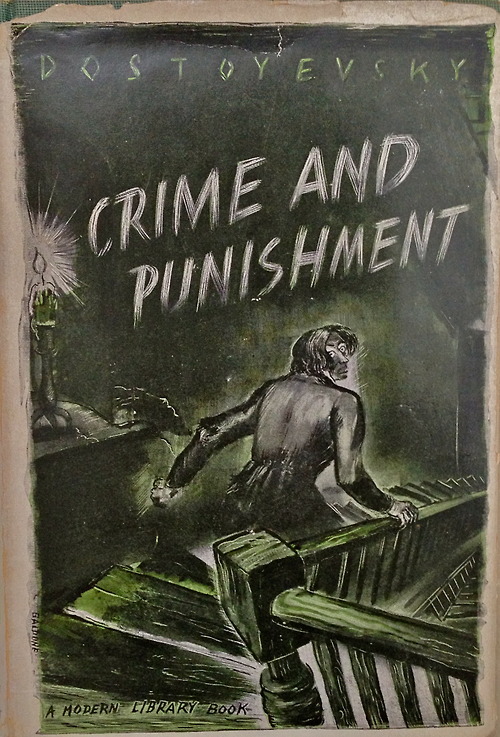
While I normally try not to get involved with comments on web sites (you know what I mean), I’d rather get involved with the comments of some web sites than others. I doubt that underneath any Youtube video, for example, you’d find dozens and dozens of well-considered suggestions for the canon of books every intelligent person should read, as we did here at Open Culture when we put the question to you on Wednesday. In the comments to that post as well as on our Facebook Page, we received a host of responses scattered satisfyingly across the textual map: everything from Michel Foucault to Foucault’s Pendulum, Gibbon’s History of the Decline and Fall of the Roman Empire to Bryson’s Short History of Nearly Everything, 18th-century German philosopher Immanuel Kant to reptilian conspiracy-envisioning ex-footballer David Icke. The top-ranking volume? Fyodor Dostoyevsky’s Crime and Punishment (available, incidentally, in our free eBook collection: Kindle from Amazon – Read Online), followed by Herman Melville’s Moby-Dick (available there too: iPad/iPhone — Kindle + Other Formats). Let none say that Open Culture readers shy away from weighty literature.
Other, shorter novels popularly suggested include Voltaire’s Candide (iPad/iPhone — Kindle + Other Formats), Joseph Conrad’s Heart of Darkness (iPad/iPhone – Kindle + Other Formats), and George Orwell’s 1984 (Read Online). We also received a number of votes for books famously pored over for thousands upon thousands of hours by their enthusiasts, such as the Bible, Dante’s Divine Comedy (iPad/iPhone – Kindle + Other Formats), and Ayn Rand’s Atlas Shrugged. (Given the formidable internet presence of Rand’s readers, I expected more of an inundation of her titles, but they must not have turned out in force this time.) Such classic and deceptively universal guides to strategy as Sun Tzu’s The Art of War (iPad/iPhone — Kindle + Other Formats – Read Online) and Niccolò Machiavelli’s The Prince (iPad/iPhone — Kindle + Other Formats) also placed well, as did books like Plato’s Republic (iPad/iPhone – Kindle + Other Formats — Read Online), Henry David Thoreau’s Walden (iPad/iPhone – Kindle + Other Formats), and Hermann Hesse’s Siddartha (Kindle + Other Formats) — the ones you probably got assigned once, but that you may not then have understood why you should actually read.
The recommendations fascinate, but so do their justifications. (My personal favorite: “It’s a book about shamanism, although it’s not what you would expect from a socially accepted description of shamanism.”) Jo Stafford calls Crime and Punishment and Moby-Dick, the two big winners, “perfect examples of how great fiction can pose the ‘big questions’, particularly around what it means to act morally.” Moira pitches Robert M. Pirsig’s Zen and the Art of Motorcycle Maintenance as a “modern study of the schism between classicist and romanticist thinking.” Nick Williams says Candide “still feeds the inner cynic,” and Jason considers Walden “a better lesson on capitalism than The Wealth of Nations.” Arthur McMillan recommends Julian Barnes’ A History of the World in 10½ Chapters by holding out the promise that it “encapsulates the sheer futility of everything[ness].” Another reader suggests William Godwin’s Political Enquiry “to be reminded what books inspired us to be: free.” Wise words indeed, Mr. Beer N. Hockey.
Related Content:
575 Free eBooks: Download Great Books for Free
What Books Should Every Intelligent Person Read?: Tell Us Your Picks; We’ll Tell You Ours
See Nobel Laureate Joseph Brodsky’s Reading List For Having an Intelligent Conversation
Colin Marshall hosts and produces Notebook on Cities and Culture and writes essays on cities, language, Asia, and men’s style. He’s at work on a book about Los Angeles, A Los Angeles Primer. Follow him on Twitter at @colinmarshall or on Facebook.
Read More...80 Massive Open Online Courses Getting Started in April: Enroll in a MOOC Today
We’re seeing about 80 MOOCs getting started in April. It’s a far cry from the 180 that got underway in January. But still not bad. You can visit our comprehensive list of MOOCs here and find a course that speaks to you. Some of the ones that caught our eye include:
- Street Fighting Math – MIT on edx – April 8 (7 weeks)
- Design Thinking – Macromedia University on iversity – April 14 (4 weeks)
- Warhol – University of Edinburgh on Coursera – April 21 (5 weeks)
- Start Writing Fiction – The Open University on Futurelearn – April 28 (8 weeks)
Don’t miss anything from Open Culture in 2014. Sign up for our Daily Email or RSS Feed. And we’ll send cultural curiosities your way, every day.
Read More...Julia Child Shows How to Edit Videotape with a Meat Cleaver, and Cook Meat with a Blow Torch
Julia Child changed the way Americans eat. Before Julia, French cooking was seen as something reserved solely for fine restaurants. Recipes for home-cooked meals stressed hygiene and convenience over freshness and taste. Thus, as was the case at my grandmother’s house, dinner would often involve a pork chop cooked within an inch of its life and a horrific jello salad concoction.
But with the launch of her hugely influential PBS TV show, The French Chef (1963–1973), Julia Child started to change America’s mind about what good food is and how it should be prepared. It’s hard to imagine the recent foodie revolution with its emphasis on seasonal, fresh ingredients without Child.
While the series was a showcase for her cooking prowess — honed by years of training at the prestigious Le Cordon Bleu and with some of France’s most famous master chefs – Child’s playful, eccentric personality is what turned the show into a hit. The French Chef was videotaped live from start to finish, so every screw up was recorded for posterity. And yet those mistakes — along with her particular way of speaking and her enduring love of wine — endeared her to the audience. She was always poised, resourceful and surprisingly funny.
You can see that sense of humor on display in the video above, which was made for the staff’s holiday party just after the show premiered. With tongue squarely in cheek, Child demonstrates how to edit video with masking tape and a meat clever. (Note: do not edit videotape with masking tape and a meat cleaver.) When asked by her interviewer (in this slightly longer version here) whether the tape she was using was special, Child retorts, “Well, it’s just a nice sticky tape.”
Another example of Child’s keen sense of humor, along with her skills with a blow torch, is this late 1980s appearance on Late Night with David Letterman. Child originally intended on showing Letterman how to make a hamburger, but when the hot plate failed to work, she quickly improvised a brand new dish – beef tartare gratiné.
via @WFMU & The Atlantic
Related Content:
MIT Teaches You How to Speak Italian & Cook Italian Cuisine All at Once (Free Online Course)
Science & Cooking: Harvard Profs Meet World-Class Chefs in a Unique Free Online Course
Jonathan Crow is a Los Angeles-based writer and filmmaker whose work has appeared in Yahoo!, The Hollywood Reporter, and other publications. You can follow him at @jonccrow.
Read More...Stanley Kubrick’s Daughter Shares Photos of Herself Growing Up on Her Father’s Film Sets
Since Vivian Kubrick was in grade school, she worked as a collaborator with her famous filmmaker father. She had cameos in a number of his movies including 2001: A Space Odyssey and Barry Lyndon. She shot the behind-the-scenes documentary about the making of The Shining at the age of 24. And she composed the score for Full Metal Jacket under the pseudonym of Abigail Mead. Kubrick seemed to groom his daughter to be his cinematic heir. And then in the late 90s, that all stopped. She cut off all contact with her family.

Kubrick’s family was initially cagey about what happened to her, saying simply that she was living in LA. But then in 2010, Kubrick’s stepdaughter Katharina opened up. “We weren’t lying, we were just being economical with the truth,” she told The Daily Beast. “Because if you say, ‘My sister has become a Scientologist,’ where do you go from that?”

The Church of Scientology’s policy of disconnection is one of its most controversial practices. It’s not clear if Vivian formerly disconnected with her family but she did reportedly attend her father’s funeral in 1999 with a Scientologist minder. When her sister Anya died of cancer in 2009, she did not attend that funeral even though they were, by all accounts, inseparable growing up.

The rift between Kubrick and his daughter became final when he asked her to score Eyes Wide Shut and she refused, as “They had a huge fight. He was very unhappy,” recalled Kubrick’s wife and Vivian’s mother. “He wrote her a 40-page letter trying to win her back. He begged her endlessly to come home from California. I’m glad he didn’t live to see what happened.”
Critic Laurent Vachaud argues that Eyes Wide Shut – a movie that seems about as open to interpretation as The Shining – is really a requiem to his lost daughter.

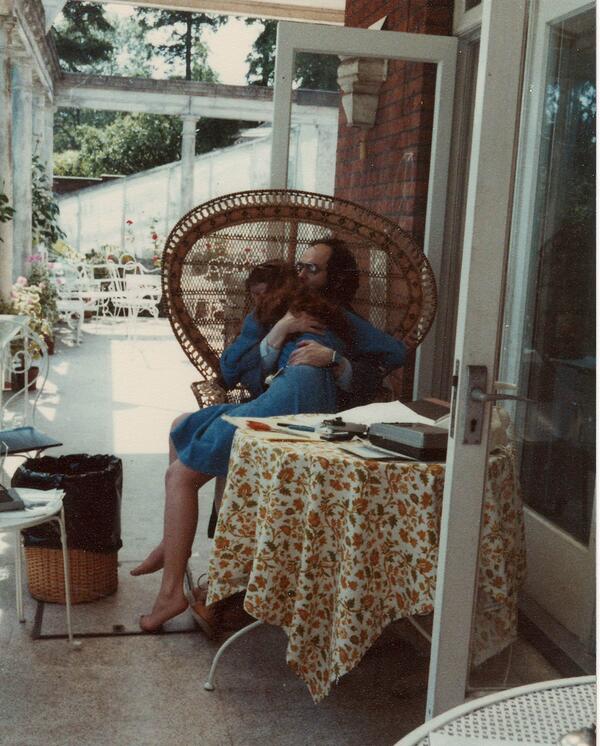
Recently on her Twitter feed, Vivian posted a series of photos of herself on the set of her father’s movies. One picture shows an eight-year old Vivian clutching a baby chimp used on 2001. Another shows her hanging out on the milk bar set of A Clockwork Orange. “I helped cut out those Styrofoam letters on the wall,” she writes. Another picture shows Vivian sitting before a 16mm Steenbeck, editing her documentary on The Shining. And, most poignantly, one of her picture’s shows Vivian and Kubrick embracing on a deck chair.
“In Memory of my Dad,” she writes. “Who I loved with all my heart and soul… Dad and Me on the back veranda of Abbots Mead.”
More photos can be found on her Twitter stream.
Related Content:
Stanley Kubrick’s Annotated Copy of Stephen King’s The Shining
Rare 1960s Audio: Stanley Kubrick’s Big Interview with The New Yorker
Stanley Kubrick’s List of Top 10 Films (The First and Only List He Ever Created)
Jonathan Crow is a Los Angeles-based writer and filmmaker whose work has appeared in Yahoo!, The Hollywood Reporter, and other publications. You can follow him at @jonccrow.
Read More...World Science U Starts to Offer Innovative, Free Courses in the Sciences
In high school, my physics teacher taught the class by having us listen to his long, monotonous lectures. After I realized that I couldn’t digest his verbal lessons, I stopped listening. Instead, I picked up a textbook and never looked back. I can only imagine how much better off I would have been had I taken a physics class like Brian Greene’s special relativity course on World Science U.
We featured Greene’s work two years ago, when the Columbia University physicist and mathematician launched his impressive PBS series, The Fabric of The Cosmos. Now, Greene and other scientists have created a new education platform called World Science U, and it promises to offer rich, rigorous and engaging courses in the sciences — for free. As Greene explains above, the free courses offered by World Science U take abstract concepts and represent them graphically, using a slew of interactive activities and real-world scenarios. Students receive immediate performance feedback on the problem sets they complete, and have access to a large number of video lectures. Theory is illustrated by way of intuitive animations, and exercises are paired with video solutions that take students through the ideal way to derive the answer.
Although later classes will tackle general relativity, quantum mechanics, and other subjects, World Science U has only two full courses available at present. The first is Greene’s brief conceptual class on special relativity that lasts 2–3 weeks, called Space, Time, and Einstein. There’s also a more advanced, university level course on the same topic called Special Relativity, which lasts about 10 weeks. Interested? We’ll let Greene himself tell you a little more about them in the video below.
World Science U also has a nifty section called Science Unplugged, where readers can find dozens of short video answers to a multitude of questions they may have about scientific concepts, like dark matter and quantum mechanics. Below, for example, Greene explains the anthropic principle:
To learn more, visit World Science U. We’ve added its early courses to our large list of free physics courses, part of our compendium of over 825 free online courses.
Ilia Blinderman is a Montreal-based culture and science writer. Follow him at @iliablinderman, or read more of his writing at the Huffington Post.
Related Content:
The Fabric of the Cosmos with Brian Greene: Watch the Complete NOVA Series Online
Read More...Martin Scorsese, Sonic Youth, Guillermo del Toro, Wes Anderson & Other Icons List Their Top 10 Art Films
If you are a movie maven, you know about the Criterion Collection. Since the days of Laserdiscs, Criterion has made a name for itself by amassing a vast and thorough catalog of indie films, art house flicks and the occasional blockbuster. They distribute DVDs of directors as diverse as Akira Kurosawa, Jane Campion, and Stan Brakhage.
For their website, Criterion has asked a number of filmmakers, writers and other cultural figures to come up with their Top 10 Criterion movies ever. They are fascinating, illuminating and often surprising.
The late, great band Sonic Youth – which made a name for itself for its loud, growling guitars and endless layers of noisy feedback — picked some remarkably quiet, meditative movies: Yasujiro Ozu’s contemplative late masterpiece Floating Weeds tops the list and Chantal Akerman’s three-hour long minimalist masterpiece Jeanne Dielman, 23, quai du Commerce, 1080 Bruxelles comes in at number two.
Likewise, low-budget horror legend Roger Corman picked Michelangelo Antonioni’s high art masterpiece L’avventura as his top pick. “Never has ‘waiting around’ been so glorious,” he writes.
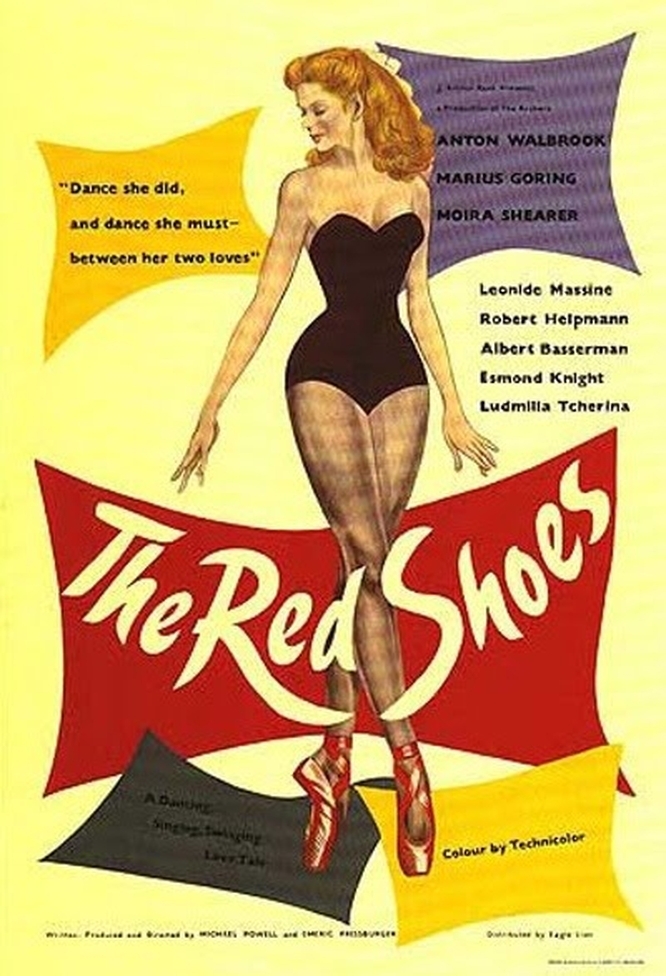
Less surprising are Martin Scorsese’s picks. He puts Roberto Rossellini’s Paisan at number one and Michael Powell and Emeric Pressburger’s Technicolor marvel The Red Shoes at number two. Scorsese has on multiple occasions declared his love of the former and was central to getting the latter restored.
Edgar Wright – director of Scott Pilgrim vs. the World and last summer’s apocalyptic comedy The World’s End – proudly picked Brian DePalma’s Blow Out as his top movie. “I have heard people call themselves Brian De Palma apologists,” he writes. “I am proud to say that I am a huge fan without any caveats.”
And The Exorcist director William Friedkin reveals himself to be a fan of Alain Resnais, placing both Night and Fog and The Last Year at Marienbad high on his list. His praise of the recently departed French New Wave icon’s most famous movie is also an eloquent defense of any challenging movie.
I’ve seen Marienbad at least twenty times over the past fifty years, and I don’t understand one scene of it, but what a fantastic experience. I don’t understand the Grand Canyon or Schoenberg’s Transfigured Night, either, but they continue to move me.
You can see all of the Criterion top ten lists here. Other figures on the list include Jonathan Lethem, the Beastie Boys’ Adam Yauch, James Franco, Lena Dunham, Guillermo del Toro, Wes Anderson, John Lurie, Brie Larson, Donald Fagen & More.
Related Content:
The 10 Greatest Films of All Time According to 846 Film Critics
Martin Scorsese Reveals His 12 Favorite Movies (and Writes a New Essay on Film Preservation)
Stanley Kubrick’s List of Top 10 Films (The First and Only List He Ever Created)
Jonathan Crow is a Los Angeles-based writer and filmmaker whose work has appeared in Yahoo!, The Hollywood Reporter, and other publications. You can follow him at @jonccrow.
Read More...George Washington’s 110 Rules for Civility and Decent Behavior

In “George Washington’s Extreme Makeover,” novelist Douglas Coupland imagines the first President of the United States of America science-fictionally transported “from atop his horse somewhere in the Virginia countryside into a Level 3 clean room 500ft beneath that exact same spot some 230-odd years later, circa 2014” where “a crew of doctors, dentists and exodontists wearing hazmat suits” would heal his every 18th-century ailment and replace his every failing 18th-century body part. All of Washington’s military and political accomplishments sound even more impressive in light of his lifetime of severe bodily (and especially dental, though not involving wood) discomfort, but even if his admirers can’t yet pull him ahead in time for such thorough physical adjustments, they can, right here and now, pay the best-known founding father tribute by following his recommended behavioral adjustments, codified in his rules of civility.
“As a young schoolboy in Virginia,” says an NPR feature on the subject, “George Washington took his first steps toward greatness by copying out by hand a list of 110 ‘Rules of Civility & Decent Behavior in Company and Conversation.’ Based on a 16th-century set of precepts compiled for young gentlemen by Jesuit instructors, the Rules of Civility were one of the earliest and most powerful forces to shape America’s first president, says historian Richard Brookhiser.” Brookhiser’s book Rules of Civility: The 110 Precepts That Guided Our First President in War and Peace appeared a decade ago, but you can still read the rules themselves (“for ease of reading, punctuation and spelling have been modernized”) below:
1. Every action done in company ought to be with some sign of respect to those that are present.
2. When in company, put not your hands to any part of the body not usually discovered.
3. Show nothing to your friend that may affright him.
4. In the presence of others, sing not to yourself with a humming voice, or drum with your fingers or feet.
5. If you cough, sneeze, sigh or yawn, do it not loud but privately, and speak not in your yawning, but put your handkerchief or hand before your face and turn aside.
6. Sleep not when others speak, sit not when others stand, speak not when you should hold your peace, walk not on when others stop.
7. Put not off your clothes in the presence of others, nor go out of your chamber half dressed.
8. At play and attire, it’s good manners to give place to the last comer, and affect not to speak louder than ordinary.
9. Spit not into the fire, nor stoop low before it; neither put your hands into the flames to warm them, nor set your feet upon the fire, especially if there be meat before it.
10. When you sit down, keep your feet firm and even, without putting one on the other or crossing them.
11. Shift not yourself in the sight of others, nor gnaw your nails.
12. Shake not the head, feet, or legs; roll not the eyes; lift not one eyebrow higher than the other, wry not the mouth, and bedew no man’s face with your spittle by approaching too near him when you speak.
13. Kill no vermin, or fleas, lice, ticks, etc. in the sight of others; if you see any filth or thick spittle put your foot dexterously upon it; if it be upon the clothes of your companions, put it off privately, and if it be upon your own clothes, return thanks to him who puts it off.
14. Turn not your back to others, especially in speaking; jog not the table or desk on which another reads or writes; lean not upon anyone.
15. Keep your nails clean and short, also your hands and teeth clean, yet without showing any great concern for them.
16. Do not puff up the cheeks, loll not out the tongue with the hands or beard, thrust out the lips or bite them, or keep the lips too open or too close.
17. Be no flatterer, neither play with any that delight not to be played withal.
18. Read no letter, books, or papers in company, but when there is a necessity for the doing of it, you must ask leave; come not near the books or writtings of another so as to read them unless desired, or give your opinion of them unasked. Also look not nigh when another is writing a letter.
19. Let your countenance be pleasant but in serious matters somewhat grave.
20. The gestures of the body must be suited to the discourse you are upon.
21. Reproach none for the infirmities of nature, nor delight to put them that have in mind of thereof.
22. Show not yourself glad at the misfortune of another though he were your enemy.
23. When you see a crime punished, you may be inwardly pleased; but always show pity to the suffering offender.
24. Do not laugh too loud or too much at any public spectacle.
25. Superfluous compliments and all affectation of ceremonies are to be avoided, yet where due they are not to be neglected.
26. In putting off your hat to persons of distinction, as noblemen, justices, churchmen, etc., make a reverence, bowing more or less according to the custom of the better bred, and quality of the persons. Among your equals expect not always that they should begin with you first, but to pull off the hat when there is no need is affectation. In the manner of saluting and resaluting in words, keep to the most usual custom.
27. ‘Tis ill manners to bid one more eminent than yourself be covered, as well as not to do it to whom it is due. Likewise he that makes too much haste to put on his hat does not well, yet he ought to put it on at the first, or at most the second time of being asked. Now what is herein spoken, of qualification in behavior in saluting, ought also to be observed in taking of place and sitting down, for ceremonies without bounds are troublesome.
28. If any one come to speak to you while you are are sitting stand up, though he be your inferior, and when you present seats, let it be to everyone according to his degree.
29. When you meet with one of greater quality than yourself, stop and retire, especially if it be at a door or any straight place, to give way for him to pass.
30. In walking, the highest place in most countries seems to be on the right hand; therefore, place yourself on the left of him whom you desire to honor. But if three walk together the middest place is the most honorable; the wall is usally given to the most worthy if two walk together.
31. If anyone far surpasses others, either in age, estate, or merit, yet would give place to a meaner than himself in his own lodging or elsewhere, the one ought not to except it. So he on the other part should not use much earnestness nor offer it above once or twice.
32. To one that is your equal, or not much inferior, you are to give the chief place in your lodging, and he to whom it is offered ought at the first to refuse it, but at the second to accept though not without acknowledging his own unworthiness.
33. They that are in dignity or in office have in all places precedency, but whilst they are young, they ought to respect those that are their equals in birth or other qualities, though they have no public charge.
34. It is good manners to prefer them to whom we speak before ourselves, especially if they be above us, with whom in no sort we ought to begin.
35. Let your discourse with men of business be short and comprehensive.
36. Artificers and persons of low degree ought not to use many ceremonies to lords or others of high degree, but respect and highly honor then, and those of high degree ought to treat them with affability and courtesy, without arrogance.
37. In speaking to men of quality do not lean nor look them full in the face, nor approach too near them at left. Keep a full pace from them.
38. In visiting the sick, do not presently play the physician if you be not knowing therein.
39. In writing or speaking, give to every person his due title according to his degree and the custom of the place.
40. Strive not with your superior in argument, but always submit your judgment to others with modesty.
41. Undertake not to teach your equal in the art himself professes; it savors of arrogancy.
42. Let your ceremonies in courtesy be proper to the dignity of his place with whom you converse, for it is absurd to act the same with a clown and a prince.
43. Do not express joy before one sick in pain, for that contrary passion will aggravate his misery.
44. When a man does all he can, though it succeed not well, blame not him that did it.
45. Being to advise or reprehend any one, consider whether it ought to be in public or in private, and presently or at some other time; in what terms to do it; and in reproving show no signs of cholor but do it with all sweetness and mildness.
46. Take all admonitions thankfully in what time or place soever given, but afterwards not being culpable take a time and place convenient to let him know it that gave them.
47. Mock not nor jest at any thing of importance. Break no jests that are sharp, biting, and if you deliver any thing witty and pleasant, abstain from laughing thereat yourself.
48. Wherein you reprove another be unblameable yourself, for example is more prevalent than precepts.
49. Use no reproachful language against any one; neither curse nor revile.
50. Be not hasty to believe flying reports to the disparagement of any.
51. Wear not your clothes foul, or ripped, or dusty, but see they be brushed once every day at least and take heed that you approach not to any uncleaness.
52. In your apparel be modest and endeavor to accommodate nature, rather than to procure admiration; keep to the fashion of your equals, such as are civil and orderly with respect to time and places.
53. Run not in the streets, neither go too slowly, nor with mouth open; go not shaking of arms, nor upon the toes, kick not the earth with your feet, go not upon the toes, nor in a dancing fashion.
54. Play not the peacock, looking every where about you, to see if you be well decked, if your shoes fit well, if your stockings sit neatly and clothes handsomely.
55. Eat not in the streets, nor in the house, out of season.
56. Associate yourself with men of good quality if you esteem your own reputation; for ’tis better to be alone than in bad company.
57. In walking up and down in a house, only with one in company if he be greater than yourself, at the first give him the right hand and stop not till he does and be not the first that turns, and when you do turn let it be with your face towards him; if he be a man of great quality walk not with him cheek by jowl but somewhat behind him, but yet in such a manner that he may easily speak to you.
58. Let your conversation be without malice or envy, for ’tis a sign of a tractable and commendable nature, and in all causes of passion permit reason to govern.
59. Never express anything unbecoming, nor act against the rules moral before your inferiors.
60. Be not immodest in urging your friends to discover a secret.
61. Utter not base and frivolous things among grave and learned men, nor very difficult questions or subjects among the ignorant, or things hard to be believed; stuff not your discourse with sentences among your betters nor equals.
62. Speak not of doleful things in a time of mirth or at the table; speak not of melancholy things as death and wounds, and if others mention them, change if you can the discourse. Tell not your dreams, but to your intimate friend.
63. A man ought not to value himself of his achievements or rare qualities of wit; much less of his riches, virtue or kindred.
64. Break not a jest where none take pleasure in mirth; laugh not aloud, nor at all without occasion; deride no man’s misfortune though there seem to be some cause.
65. Speak not injurious words neither in jest nor earnest; scoff at none although they give occasion.
66. Be not froward but friendly and courteous, the first to salute, hear and answer; and be not pensive when it’s a time to converse.
67. Detract not from others, neither be excessive in commanding.
68. Go not thither, where you know not whether you shall be welcome or not; give not advice without being asked, and when desired do it briefly.
69. If two contend together take not the part of either unconstrained, and be not obstinate in your own opinion. In things indifferent be of the major side.
70. Reprehend not the imperfections of others, for that belongs to parents, masters and superiors.
71. Gaze not on the marks or blemishes of others and ask not how they came. What you may speak in secret to your friend, deliver not before others.
72. Speak not in an unknown tongue in company but in your own language and that as those of quality do and not as the vulgar. Sublime matters treat seriously.
73. Think before you speak, pronounce not imperfectly, nor bring out your words too hastily, but orderly and distinctly.
74. When another speaks, be attentive yourself and disturb not the audience. If any hesitate in his words, help him not nor prompt him without desired. Interrupt him not, nor answer him till his speech be ended.
75. In the midst of discourse ask not of what one treats, but if you perceive any stop because of your coming, you may well entreat him gently to proceed. If a person of quality comes in while you’re conversing, it’s handsome to repeat what was said before.
76. While you are talking, point not with your finger at him of whom you discourse, nor approach too near him to whom you talk, especially to his face.
77. Treat with men at fit times about business and whisper not in the company of others.
78. Make no comparisons and if any of the company be commended for any brave act of virtue, commend not another for the same.
79. Be not apt to relate news if you know not the truth thereof. In discoursing of things you have heard, name not your author. Always a secret discover not.
80. Be not tedious in discourse or in reading unless you find the company pleased therewith.
81. Be not curious to know the affairs of others, neither approach those that speak in private.
82. Undertake not what you cannot perform but be careful to keep your promise.
83. When you deliver a matter do it without passion and with discretion, however mean the person be you do it to.
84. When your superiors talk to anybody hearken not, neither speak nor laugh.
85. In company of those of higher quality than yourself, speak not ’til you are asked a question, then stand upright, put off your hat and answer in few words.
86. In disputes, be not so desirous to overcome as not to give liberty to each one to deliver his opinion and submit to the judgment of the major part, especially if they are judges of the dispute.
87. Let your carriage be such as becomes a man grave, settled and attentive to that which is spoken. Contradict not at every turn what others say.
88. Be not tedious in discourse, make not many digressions, nor repeat often the same manner of discourse.
89. Speak not evil of the absent, for it is unjust.
90. Being set at meat scratch not, neither spit, cough or blow your nose except there’s a necessity for it.
91. Make no show of taking great delight in your victuals. Feed not with greediness. Eat your bread with a knife. Lean not on the table, neither find fault with what you eat.
92. Take no salt or cut bread with your knife greasy.
93. Entertaining anyone at table it is decent to present him with meat. Undertake not to help others undesired by the master.
94. If you soak bread in the sauce, let it be no more than what you put in your mouth at a time, and blow not your broth at table but stay ’til it cools of itself.
95. Put not your meat to your mouth with your knife in your hand; neither spit forth the stones of any fruit pie upon a dish nor cast anything under the table.
96. It’s unbecoming to heap much to one’s mea. Keep your fingers clean and when foul wipe them on a corner of your table napkin.
97. Put not another bite into your mouth ’til the former be swallowed. Let not your morsels be too big for the jowls.
98. Drink not nor talk with your mouth full; neither gaze about you while you are drinking.
99. Drink not too leisurely nor yet too hastily. Before and after drinking wipe your lips. Breathe not then or ever with too great a noise, for it is uncivil.
100. Cleanse not your teeth with the tablecloth, napkin, fork or knife, but if others do it, let it be done with a pick tooth.
101. Rinse not your mouth in the presence of others.
102. It is out of use to call upon the company often to eat. Nor need you drink to others every time you drink.
103. In company of your betters be not longer in eating than they are. Lay not your arm but only your hand upon the table.
104. It belongs to the chiefest in company to unfold his napkin and fall to meat first. But he ought then to begin in time and to dispatch with dexterity that the slowest may have time allowed him.
105. Be not angry at table whatever happens and if you have reason to be so, show it not but on a cheerful countenance especially if there be strangers, for good humor makes one dish of meat a feast.
106. Set not yourself at the upper of the table but if it be your due, or that the master of the house will have it so. Contend not, lest you should trouble the company.
107. If others talk at table be attentive, but talk not with meat in your mouth.
108. When you speak of God or His attributes, let it be seriously and with reverence. Honor and obey your natural parents although they be poor.
109. Let your recreations be manful not sinful.
110. Labor to keep alive in your breast that little spark of celestial fire called conscience.
Related Content:
The Smithsonian Picks “101 Objects That Made America”
A Short History of America, According to the Irreverent Comic Satirist Robert Crumb
Colin Marshall hosts and produces Notebook on Cities and Culture and writes essays on cities, aesthetics, Asia, and men’s style. He’s at work on a book about Los Angeles, A Los Angeles Primer. Follow him on Twitter at @colinmarshall or on Facebook.
Read More...Comedian Reggie Watts Teaches Students Bad Science in 70s Sitcom-Style Show, Teach
Not since Gabe Kaplan’s Mr. Kotter has there been such a hip, big-haired, TV teacher to “help make you smart and listen to your feelings, too.”
Does it really matter if comedian, musician, and now web series star Reggie Watts’ Teach is deeply unclear on the science he’s imparting, if the kids in his classroom are learning important life lessons? Why it’s uncool to bully single-celled organisms, for instance. (“You might be multicellular but there’s no need to be cellulist.”)
As we all know, the best teachers awaken their students’ curiosity, send them bounding off in pursuit of knowledge, rather than spoon-feeding them correct answers.
That’s exactly what Mr. Watts did for—or possibly to—me when he talked about ‘tons: protons, contons, decepticons, and tauntauns. Had he said, “That last one refers to a species of imaginary omnivorous reptomammals from the 3rd highest grossing franchise in film history,” I would’ve spelled it “tontons” without a second thought. But because he deliberately left things a little vague, asking, “How many of you have seen The Empire Strikes Back?” I was motivated to do a little research. Star Wars was never my bag…
It boggles the mind how much more I would’ve learned had the Internet existed back when I was in high school. (Teach’s classroom is most definitely a blast from the past—not an iPad in sight and the overhead projector restored to its place of honor. The quickly uptilted flask is, of course, timeless.)
The opening credits suggest that we should look forward to an education in Literature, Music, and History in upcoming episodes.
via BoingBoing
Related Content:
Musical Comedian Reggie Watts Reinvents Van Halen’s Classic, “Panama”
Free Comic Books Turns Kids Onto Physics: Start With the Adventures of Nikola Tesla
Ayun Halliday’s graphic novel, Peanut, is a Young Adult Library Services Association 2014 Quick for Reluctant Young Readers. Follow her @AyunHalliday
Read More...Support Us
We're hoping to rely on loyal readers, rather than erratic ads. Please click the Donate button and support Open Culture. You can use Paypal, Venmo, Patreon, even Crypto! We thank you!

About Us

Open Culture scours the web for the best educational media. We find the free courses and audio books you need, the language lessons & educational videos you want, and plenty of enlightenment in between.
Advertise With Us
FREE UPDATES!
GET OUR DAILY EMAIL
Get the best cultural and educational resources on the web curated for you in a daily email. We never spam. Unsubscribe at any time.
FOLLOW ON SOCIAL MEDIA
Open Culture editor Dan Colman scours the web for the best educational media. He finds the free courses and audio books you need, the language lessons & movies you want, and plenty of enlightenment in between.
Advertise With Us

