George Orwell Got a B- at Harvard, When Michael Crichton Submitted an Orwell Essay as His Own
Images via Wikimedia Commons
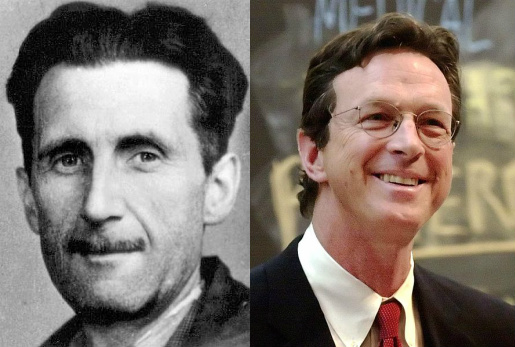
In his 2002 memoir, Travels, Michael Crichton took his readers back several decades, to the early 1960s when, as a Harvard student, he tried an interesting little experiment in his English class. He recalled:
I had gone to college planning to become a writer, but early on a scientific tendency appeared. In the English department at Harvard, my writing style was severely criticized and I was receiving grades of C or C+ on my papers. At eighteen, I was vain about my writing and felt it was Harvard, and not I, that was in error, so I decided to make an experiment. The next assignment was a paper on Gulliver’s Travels, and I remembered an essay by George Orwell that might fit. With some hesitation, I retyped Orwell’s essay and submitted it as my own. I hesitated because if I were caught for plagiarism I would be expelled; but I was pretty sure that my instructor was not only wrong about writing styles, but poorly read as well. In any case, George Orwell got a B- at Harvard, which convinced me that the English department was too difficult for me.
I decided to study anthropology instead. But I doubted my desire to continue as a graduate student in anthropology, so I began taking premed courses, just in case.
Most likely Crichton submitted Orwell’s essay 1946 essay, “Politics vs. Literature: An Examination of Gulliver’s Travels.” He eventually went to Harvard Medical School but kept writing on the side. Perhaps getting a grade just a shade below Orwell’s B- gave Crichton some bizarre confirmation that he could one day make it as a writer.
Follow Open Culture on Facebook and Twitter and share intelligent media with your friends. Or better yet, sign up for our daily email and get a daily dose of Open Culture in your inbox. And if you want to make sure that our posts definitely appear in your Facebook newsfeed, just follow these simple steps.
Looking for free, professionally-read audio books from Audible.com, including works by Crichton and Orwell? Here’s a great, no-strings-attached deal. If you start a 30 day free trial with Audible.com, you can download two free audio books of your choice. Get more details on the offer here.
via Reddit
Related Content:
George Orwell Explains in a Revealing 1944 Letter Why He’d Write 1984
George Orwell’s Harrowing Race to Finish 1984 Before His Death
Read More...The Problem with Facebook: “It’s Keeping Things From You”
You liked our Facebook page. Now you’re expecting to see our material in your Facebook news feed. It’s not an unreasonable expectation. But it’s also very unlikely to happen. As Derek Muller, the curator of science video blog Veritasium, explains very articulately in the video above, “The problem with Facebook is that it’s keeping things from you. You don’t see most of what’s posted by your friends or the pages you follow.” And that’s partly because, Muller goes on to explain, Facebook is overwhelmed by content, and busy trying to find ways to monetize its newsfeed. Following a change to an algorithm in December, the problem has only gotten worse. (We have 245,000 followers, and maybe 7,000 — or 2% — see a post on average in January, as compared to 30,000 in November.) If you care about how you use Facebook — either to connect with friends, or gather information — the video is well worth watching. It clearly lets you know that Facebook is controlling your social media experience, when it should be you.
Note: If you want to make sure you receive all of our posts, get our daily email or sign up for our RSS feed. Facebook doesn’t control those … yet.
You can read more about this issue at Slate.
Read More...Paintings by Caravaggio, Vermeer, & Other Great Masters Come to Life in a New Animated Video
With his short video “Beauty,” the Italian director Rino Stefano Tagliafierro takes “a series of well selected images from the tradition of pictorial beauty” and uses the “fire of digital invention” to animate sentiments lost on immobile canvasses. In the video above, you will see works by Caravaggio, Vermeer, Rubens and others put into digital motion. A complete list of the paintings included in the video can be found here. Plus there’s a tumblr with animated GIFs of the paintings. Find more information, including a manifesto for the video (in Italian), on Tagliafierro’s web site. An English translation of the manifesto appears below the jump.
Don’t miss anything from Open Culture. Sign up for our Daily Email or RSS Feed. And we’ll send cultural curiosities your way, every day.
Related Content:
Watch an Animated Version of Ridley Scott’s Blade Runner Made of 12,597 Watercolor Paintings
Michelangelo’s Handwritten 16th-Century Grocery List
Free: The Metropolitan Museum of Art and the Guggenheim Offer 474 Free Art Books Online
Read More...View the Passport Photos of F. Scott Fitzgerald, James Joyce, Virginia Woolf & Other Cultural Icons
Click images to enlarge.
If you’ve had the fortune of travelling for leisure, you know that there are three types of mementoes that unfailingly elicit pangs of nostalgia. The first are photographs. The second are the running commentaries we write down in journals and blogs, documenting the various impressions, thoughts, and minutiae we experience. The third are passports. When brimming with exit stamps and tattered visas, passports are the mark of a worldly traveller: a grimy, well-worn sign to fellow hostel guests that you’re wanted company when the time comes to compare stories.
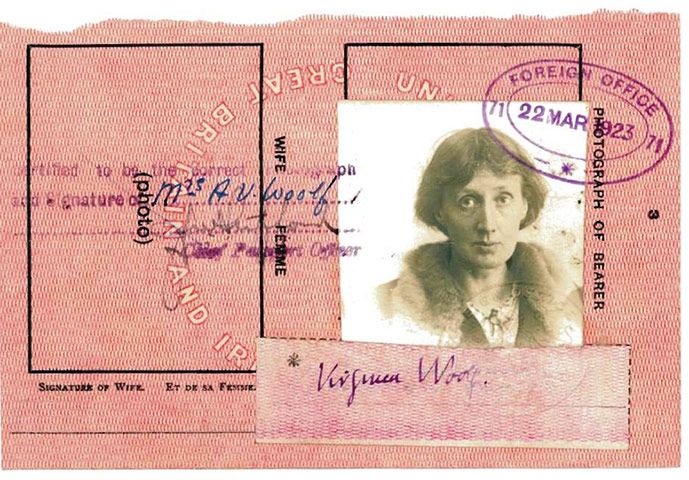
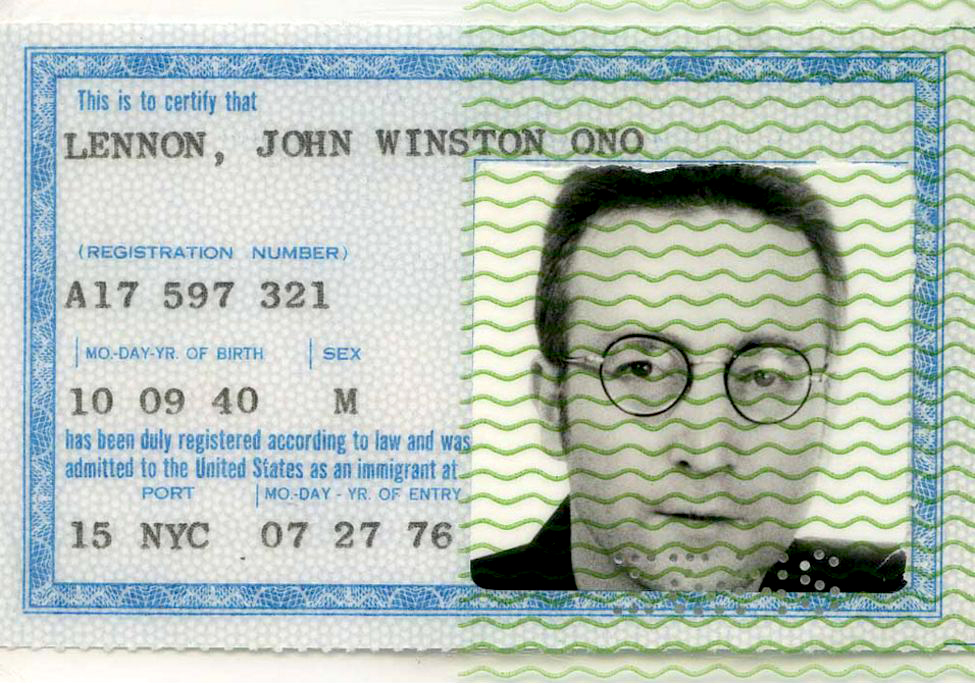
Today, we bring you several passport scans from a number of the 20th century’s best-known cultural figures. Above, you can see a travel document belonging to Virginia Woolf, who received a 1923 stamp from the Foreign Office. Below we have John Lennon’s entry card into the U.S., which the Beatle received after a battle for permanent residency that lasted for several years.
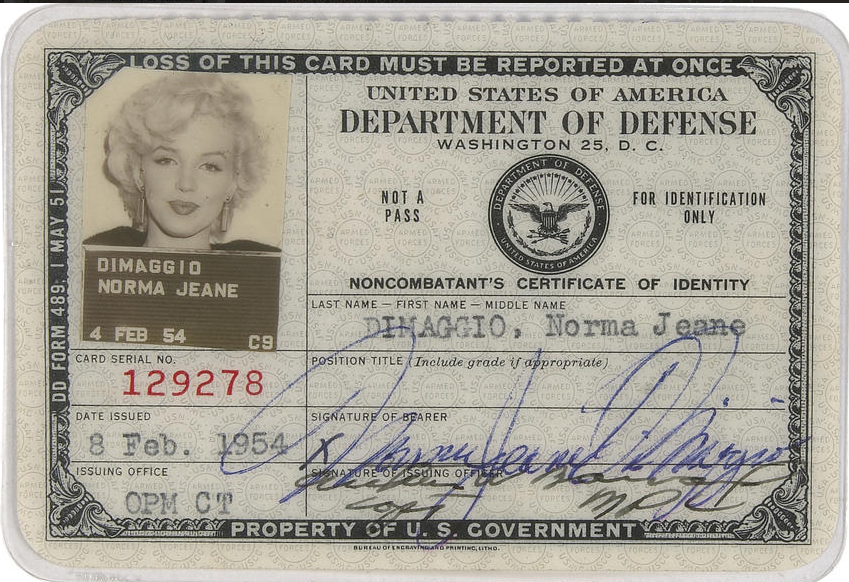
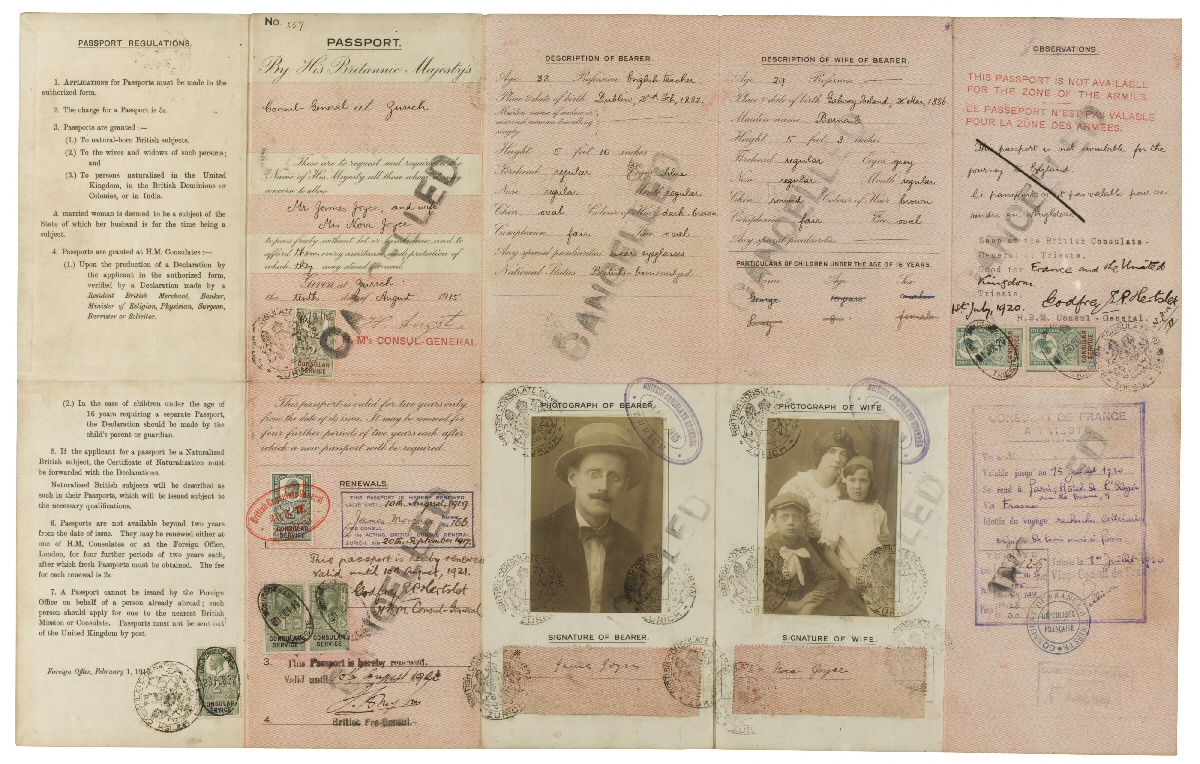
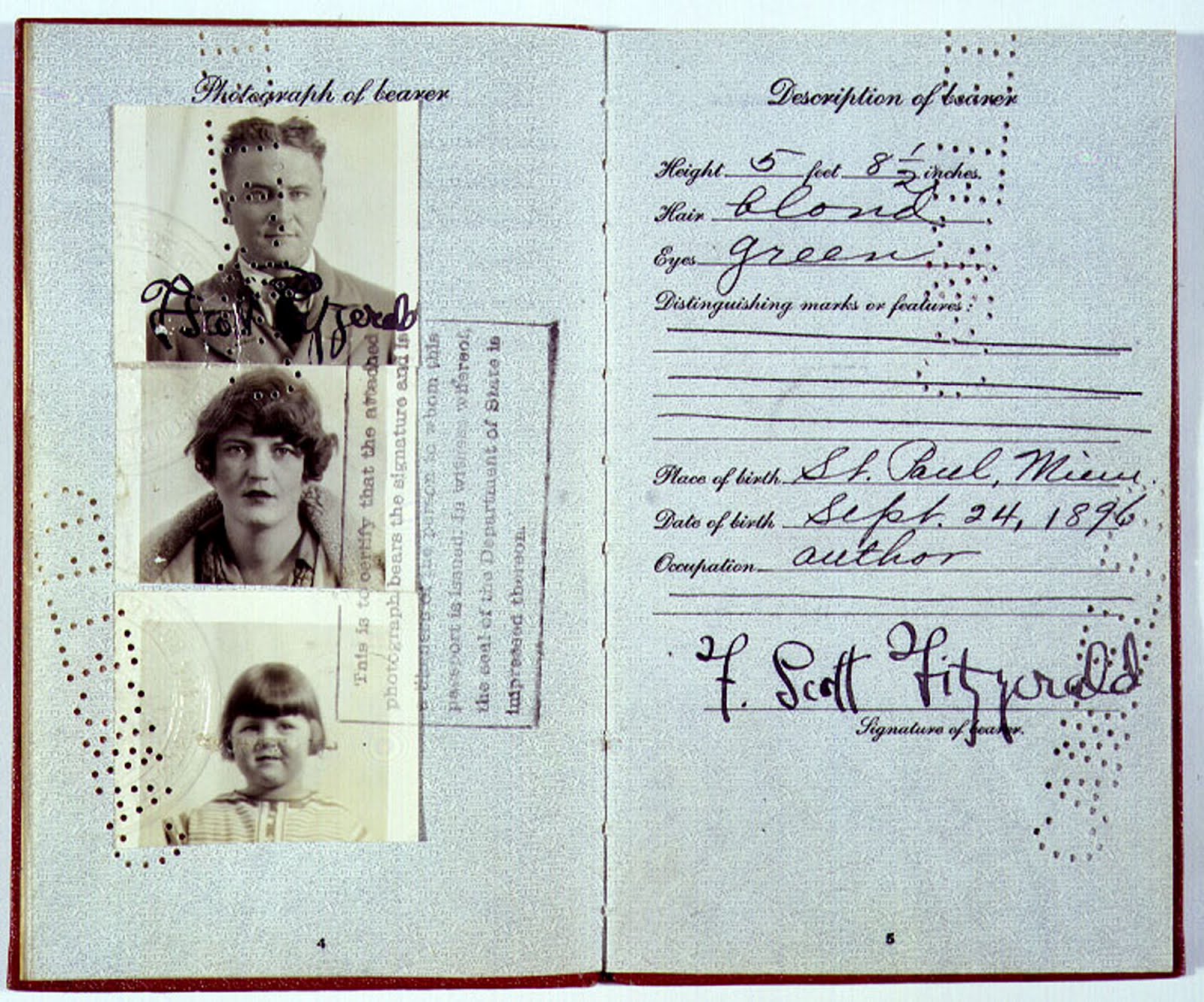
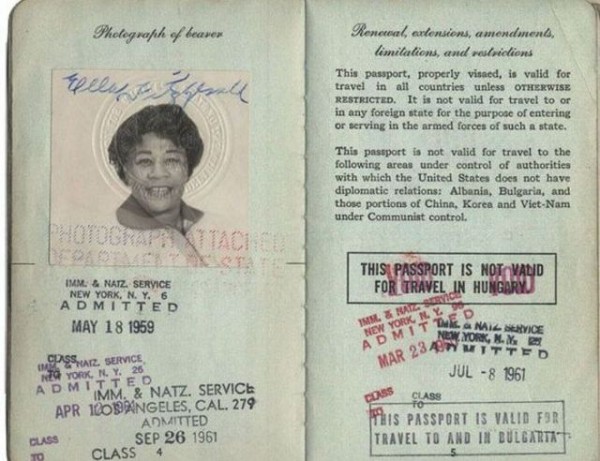
Then Marilyn Monroe’s Department of Defense-issued ID card, under the name of Norma Jean DiMaggio. Further down are the passport photos of writers James Joyce and F. Scott Fitzgerald, accompanied by their respective families, who were travelling under the same documents. Lastly, we present to you the most impressively decorated passport pages of all, belonging to Ella Fitzgerald:
John Lennon
Marilyn
James Joyce and Family
The Fitzgeralds
Ella Fitzgerald
For more iconic passport photos, head to Vintage.es or The Untravelled Paths blog.
Ilia Blinderman is a Montreal-based culture and science writer. Follow him at @iliablinderman.
Related Content:
Rare Footage of Scott and Zelda Fitzgerald From the 1920s
Ella Fitzgerald Sings ‘Summertime’ by George Gershwin, Berlin 1968
James Joyce Plays the Guitar, 1915
Six Postcards From Famous Writers: Hemingway, Kafka, Kerouac & More
Read More...In 1968, Artist Imagines What John, Paul, George & Ringo Will Look Like When They’re 64
When I get older losing my hair,
Many years from now,
Will you still be sending me a valentine
Birthday greetings bottle of wine?
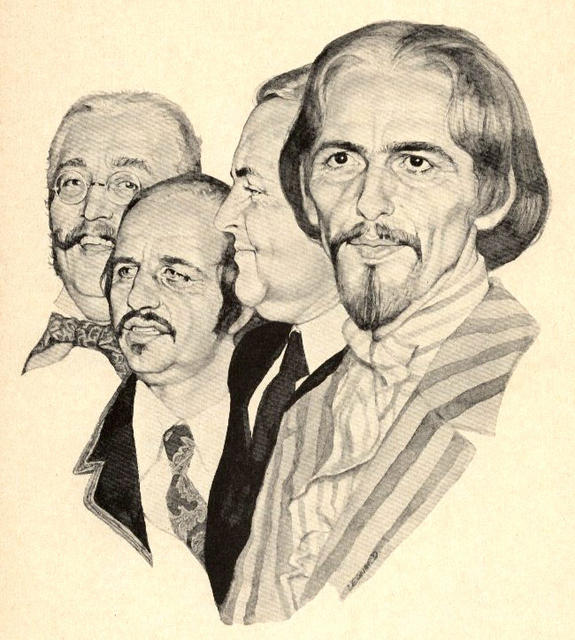
Paul McCartney’s wistful song “When I’m Sixty-Four” was released on the Beatles’ 1967 album Sgt. Pepper’s Lonely Hearts Club Band. The next year, an artist named Michael Leonard tried to imagine what the young musicians might look like four decades later — on their 64th birthdays. We never got a chance to figure out whether he sized up Lennon and Harrison correctly. But we know that Paul, even at 71 today, never got jowly. And Ringo never went the suit route. You can see for yourself when the two perform at the Grammys on January 26.
Don’t miss anything from Open Culture. Sign up for our Daily Email or RSS Feed. And we’ll send cultural curiosities your way, every day.
Related content
Flashmob Performs The Beatles’ ‘Here Comes the Sun’ in Madrid Unemployment Office
The Beatles: Unplugged Collects Acoustic Demos of White Album Songs (1968)
Read More...Jerry Seinfeld and Louis CK in Small Cars and Big Yachts, Getting Coffee
Season 3 of Comedians in Cars Getting Coffee kicks off with Jerry Seinfeld and his pal Louis CK piling into a very small 1959 Fiat Jolly and taking a leisurely (death) ride through New York City. Eventually, they escape the city and wind up at an unexpected place — aboard CK’s yacht. There, they share a cappuccino, navigate various nautical dangers, crack their signature jokes, and kibitz the day away. Not a bad way to pass some time. If you’d like to see Jerry and Louis together in another context, see our previous post: Seinfeld, Louis C.K., Chris Rock, and Ricky Gervais Dissect the Craft of Comedy (NSFW).
Don’t miss anything from Open Culture. Sign up for our Daily Email or RSS Feed. And we’ll send cultural curiosities your way, every day. And if you like what we’re doing, please share our site with family and friends.
Related Content:
The Surreal Short Films of Louis C.K., 1993–1999
How the Great George Carlin Showed Louis CK the Way to Success (NSFW)
David Lynch Teaches Louis C.K. How to Host The David Letterman Show
Read More...Watch a Super Cut of Wes Anderson’s Signature Slo-Mo Shots
When you watch a director’s work for a while, you get to know his/her signature tricks — the themes and camera work that appear again and again. A couple years ago, we featured a video called Wes Anderson // FROM ABOVE, a montage capturing Anderson’s penchant for the aerial shot, a move that contributes to the lightness, playfulness and quirkiness of his films. Now comes a super cut of Anderson’s slo-mo shots, compiled by Alejandro Prullansky, set to The Shins’ song, “New Slang.” If you’re looking for a good overview of Wes Anderson’s filmography, we’d encourage you to watch this series: 7 Video Essays on Wes Anderson’s Films: Rushmore, The Royal Tenenbaums & More.
Don’t miss anything from Open Culture. Sign up for our Daily Email or RSS Feed. And we’ll send cultural curiosities your way, every day.
Related Content:
Wes Anderson’s First Short Film: The Black-and-White, Jazz-Scored Bottle Rocket (1992)
Watch Wes Anderson’s Charming New Short Film, Castello Cavalcanti, Starring Jason Schwartzman
Has Wes Anderson Sold Out? Can He Sell Out? Critics Take Up the Debate
Read More...100 Years of Rock in Less Than a Minute: From Gospel to Grunge
Click the image above and you’ll enter an interactive/moving graphic that gives you a fairly nice genealogy of rock n roll and the many forms of music it later spawned. The graphic starts you with the blues, appalachian folk, and bluegrass. Eventually you hit the 1950s and the advent of rock. Then you keep traveling through time, reaching the hard rock, glam rock and punk of the 70s; the power metal and emerging grunge of the 80s; the post metal and neo folk of the 90s; and beyond. At any point, you can click the pause button, click on the name of a particular musical genre (eg Gothabilly), and hear a sample of the music. When you’re done, you might want to check out some of the related items below:
A History of Rock ‘n’ Roll in 100 Riffs
The Evolution of the Rock Guitar Solo: 28 Solos, Spanning 50 Years, Played in 6 Fun Minutes
The History of Music Told in Seven Rapidly Illustrated Minutes
The Story of the Guitar: The Complete Three-Part Documentary
via Digg
Don’t miss anything from Open Culture. Sign up for our Daily Email or RSS Feed. And we’ll send cultural curiosities your way, every day.
Read More...Barry White’s Philosophy of Music and Making Love, Animated
Blank on Blank returns with an animated interview with Barry White, the singer-songwriter who rose to prominence during the 1970s, recording songs that put us all in a loving mood. With hits like “Can’t Get Enough Of Your Love Baby,” “You’re the First, the Last, My Everything,” and “Love Theme” (recorded by his 40-piece orchestral group The Love Unlimited Orchestra), White reached right into our bedroom and tried to nurture the best parts of humanity and subdue the worst. As he says in the animated interview above, “When a man is making love, the last thing he thinks about is war!” (Yes, it’s a gendered comment, but, let’s face it, it’s almost always men that screw up the world.) Other artists and authors featured in the Blank on Blank animated series include Kurt Cobain, Grace Kelley, Janis Joplin, Ray Charles, The Beastie Boys, David Foster Wallace, Jim Morrison & Dave Brubeck.
Don’t miss anything from Open Culture. Sign up for our Daily Email or RSS Feed. And we’ll send cultural curiosities your way, every day.
Read More...Benjamin Bratton Explains “What’s Wrong with TED Talks?” and Why They’re a “Recipe for Civilizational Disaster”
TED Talks — they give your “discovery-seeking brain a little hit of dopamine;” make you “feel part of a curious, engaged, enlightened, and tech-savvy tribe;” almost giving you the sensation that you’re attending a “new Harvard.” That was the hype around TED Talks a few years ago. Since then, the buzz around TED has mercifully died down, and the organization has gone on, staging its conferences around the globe. It’s been a while since we’ve featured a TED Talk whose ideas seem worth spreading. But today we have one for you. Intriguingly, it’s called “What’s Wrong with TED Talks?” It was presented by Benjamin Bratton, Associate Professor of Visual Arts at UCSD, at none other than TEDxSanDiego 2013. Bratton makes his case (above) in 11 minutes — well within the 18 allotted minutes — by arguing that TED doesn’t just help popularize ideas. Instead, it changes and cheapens the agenda for science, philosophy and technology in America. He begins to frame the problem by telling a story:
I was at a presentation that a friend, an astrophysicist, gave to a potential donor. I thought the presentation was lucid and compelling.… After the talk the sponsor said to him, “you know what, I’m gonna pass because I just don’t feel inspired …you should be more like Malcolm Gladwell.”
Think about it: an actual scientist who produces actual knowledge should be more like a journalist who recycles fake insights! This is beyond popularization. This is taking something with value and substance and coring it out so that it can be swallowed without chewing. This is not the solution to our most frightening problems – rather this is one of our most frightening problems.
Bratton then concludes, “astrophysics run on the model of American Idol is a recipe for civilizational disaster.” If “our best and brightest waste their time – and the audience’s time – dancing like infomercial hosts,” the cost will be too high, and our most difficult problems won’t get solved.
In watching Bratton’s talk, I found myself agreeing with many things. Sure, TED Talks are often “a combination of epiphany and personal testimony … through which the speaker shares a personal journey of insight and realization, its triumphs and tribulations.” Yes, the talks offer viewers a predictably “vicarious insight, a fleeting moment of wonder, an inkling that maybe it’s all going to work out after all.” Maybe TED Talks sometimes provide nothing more than “middlebrow megachurch infotainment.” But is TED really changing the agenda for scientists, technologists and philosophers? Are scholars actually choosing their intellectual projects based on anything having to do with TED (or TED-inspired ways of thinking)? Is someone at the NIH doling out money based on whether a project will eventually yield 15 good minutes of diversion and entertainment? Short of empirical evidence that actually applies to TED (the anecdote above doesn’t), it feels like Bratton is giving TED way too much credit. Maybe TED matters on YouTube. But let’s get real, its pull largely starts and ends there. You can read a complete transcript of Bratton’s talk here.
via The Guardian
Don’t miss anything from Open Culture in 2014. Sign up for our Daily Email or RSS Feed. And we’ll send cultural curiosities your way, every day.
Read More...Support Us
We're hoping to rely on loyal readers, rather than erratic ads. Please click the Donate button and support Open Culture. You can use Paypal, Venmo, Patreon, even Crypto! We thank you!

About Us

Open Culture scours the web for the best educational media. We find the free courses and audio books you need, the language lessons & educational videos you want, and plenty of enlightenment in between.
Advertise With Us
FREE UPDATES!
GET OUR DAILY EMAIL
Get the best cultural and educational resources on the web curated for you in a daily email. We never spam. Unsubscribe at any time.
FOLLOW ON SOCIAL MEDIA
Open Culture editor Dan Colman scours the web for the best educational media. He finds the free courses and audio books you need, the language lessons & movies you want, and plenty of enlightenment in between.
Advertise With Us



