NASA Visualizes the Ocean Currents in Motion: A Mesmerizing View of Earth’s Underwater Highways
The mesmerizing video above lets you visualize the ocean currents around the world. Using data from spacecraft, buoys, and other measurements, the visualization shows the ocean in motion, with the currents creating Van Gogh-like swirls around the globe.
According to NASA, “the ocean has been [historically] difficult to model. Scientists struggled in years past to simulate ocean currents or accurately predict fluctuations in temperature, salinity, and other properties. As a result, models of ocean dynamics rapidly diverged from reality, which meant they could only provide useful information for brief periods.” This all changed, however, when NASA and other partners developed ECCO, short for “Estimating the Circulation and Climate of the Ocean.” “By applying the laws of physics to data from multiple satellites and thousands of floating sensors, NASA scientists and their collaborators built ECCO to be a realistic, detailed, and continuous ocean model that spans decades.” “The project provides models that are the best possible reconstruction of the past 30 years of the global ocean. It allows us to understand the ocean’s physical processes at scales that are not normally observable.” Watch above as years of ocean data come to life in a crisp, compelling visualization.
via Laughing Squid
Related Content
132 Years of Global Warming Visualized in 26 Dramatically Animated Seconds
What the Earth Would Look Like If We Drained the Water from the Oceans
A Fascinating 3D Animation Shows the Depths of the Ocean
Read More...How Dave Brubeck’s Time Out Changed Jazz
Music video essay maestro Polyphonic is back. What I dig about his videos is that he takes on some of the true warhorses of modern popular music and manages to find something new to say. Or at least he presents familiar stories in a new and modern way to an audience who may be hearing ELO, Queen, or Neil Young for the first time.
His upload explores Dave Brubeck’s groundbreaking jazz album Time Out. This is an album that regularly tops best-of lists, gets reissued constantly, and is so ubiquitous in some circles that it’s hard, like Led Zeppelin’s fourth album, to hear the album with fresh ears.
Polyphonic touches on something right at the beginning of the video that deserves a full video essay of its own–the State Department’s mission to send American jazz musicians around the world as cultural ambassadors. This is a part of history that has receded from memory, but had a major influence not just on Brubeck, but so many records at that time. Brubeck joined Benny Goodman, Louis Armstrong, and Dizzy Gillespie on a musical tour that reached many countries behind the Iron Curtain, and were able to critique America’s racist history while also promoting its musical culture. (PBS made a fine documentary on the mission in 2018.) But for the purposes of this video essay, and regarding Brubeck’s career, it was the polyrhythms and folk music that he heard while traveling through countries like Turkey (from which he developed “Blue Rondo a la Turk”) that remained with him on his return.
Time Out was Brubeck’s fourteenth album for Columbia Records, but his breakthrough. Up to that point he and his quartet had released a number of live albums recorded at colleges (which promoted a safe but hip studious kind of jazz) and several albums of jazz covers, such as Dave Digs Disney. But Time Out was a fully formed concept album of sorts: an exploration into time signatures that jazz hadn’t really touched yet.
As Polyphonic points out, Joe Morello, Brubeck’s drummer, was indeed well versed in complicated time signatures from his classical background as a violinist. It was Morello who experimented with a groove in 5/4 time that became the backbone of “Take Five.” Brubeck knew a good thing when he heard it and gives Morello one of the best solos of the entire LP.
Best of all, Time Out is one those classic albums because of how it mixes the experimental with the commercial, a hard feat in any era, but even more impressive in that best of all jazz years, 1959. Brubeck continued to explore time signatures on this album’s sequel Time Further Out, which is also recommended.
Note: An earlier version of this post appeared on our site in 2019.
Related Content:
Pakistani Musicians Play an Enchanting Version of Dave Brubeck’s Jazz Classic, “Take Five”
Louis Armstrong Plays Historic Cold War Concerts in East Berlin & Budapest (1965)
Dave Brubeck’s Surprise Duet: A Magical Moment at the Moscow Conservatory (1997)
Watch an Incredible Performance of “Take Five” by the Dave Brubeck Quartet (1964)
Ted Mills is a freelance writer on the arts.
Read More...Watch Alfred Hitchcock’s Groundbreaking, Six-Minute Trailer for Psycho (1960)
The early trailer for Alfred Hitchcock’s Psycho above describes the film as “the picture you MUST see from the beginning… or not at all!” That’s good advice, given how early in the film its first big twist arrives. But it was also a policy: “Every theatre manager, everywhere, has been instructed to admit no one after the start of each performance of Psycho,” declares Hitchcock himself in its print advertisements. “We said no one — not even the manager’s brother, the President of the United States or the Queen of England (God bless her).” Even in 1960, ordinary moviegoers still had the habit of entering and leaving the theater whenever they pleased. With Psycho’s marketing campaign, Hitchcock meant to alter their relationship to cinema itself.
As for the trailer’s form and content, audiences would never have seen anything like it before. Containing no actual footage from the film — and indeed, constituting something of a short film itself — it instead offers a tour of its main locations personally guided by Hitchcock. Those are, of course, the Bates Motel and its proprietor’s house, “which is, if I may say so, a little more sinister looking, less innocent-looking than the motel itself. And in this house, the most dire, horrible events took place.”
In his telling, these buildings are not film sets, but the genuine sites of heinous crimes, about which he proves only too happy to provide suggestive details. We complain that today’s trailers “give the movie away,” and that seems to be Hitchcock’s enterprise here.
But after these six minutes, what, in a world that had yet to see Psycho, would you really know about the movie? It would seem to involve some sort of grisly murders, and you’d surely be dying, as it were, to know of what sort and how grisly. Who, moreover, could fail to be startled and intrigued by Hitchcock’s sudden reveal of a screaming blonde woman behind the motel-room shower curtain? Hitch fans might have recognized her as Vera Miles, who’d been in The Wrong Man in 1956 and the first episode of Alfred Hitchcock Presents the next year. They might also have noticed the name of no less a movie star than Janet Leigh, and wondered what she was doing in such a sensationalistic-looking genre picture. One thing is certain: when they finally did take their seat for Psycho — before showtime, of course — they had no idea what they were in for.
Related content:
16 Free Hitchcock Movies Online
Watch 25 Alfred Hitchcock Trailers, Exciting Films in Their Own Right
Alfred Hitchcock’s Strict Rules for Watching Psycho in Theaters (1960)
Alfred Hitchcock’s 7‑Minute Master Class on Film Editing
Based in Seoul, Colin Marshall writes and broadcasts on cities, language, and culture. His projects include the Substack newsletter Books on Cities and the book The Stateless City: a Walk through 21st-Century Los Angeles. Follow him on the social network formerly known as Twitter at @colinmarshall.
Read More...How the Moving Image Has Become the Medium of Record: Part 2
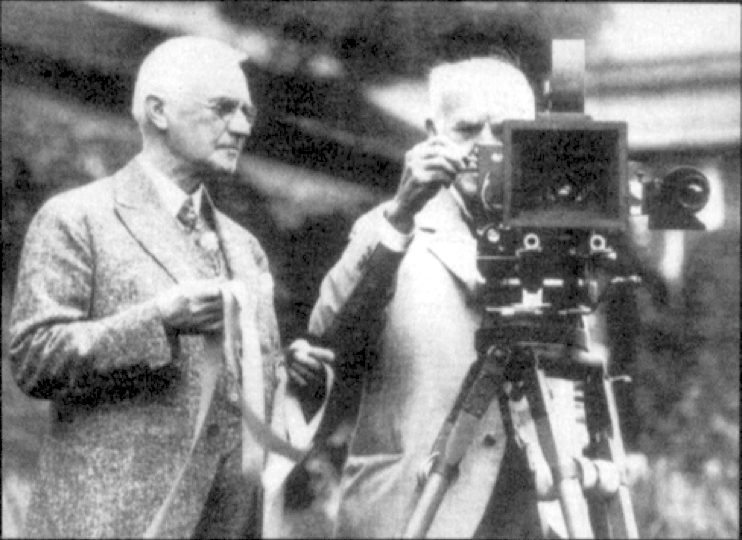
Eastman giving Edison the first roll of movie film, via Wikimedia Commons
This piece picks up where Part 1 of Peter Kaufman’s article left off yesterday…
The epistemological nightmare we seem to be in, bombarded over our screens and speakers with so many moving-image messages per day, false and true, is at least in part due to the paralysis that we – scholars, journalists, and regulators, but also producers and consumers – are still exhibiting over how to anchor facts and truths and commonly accepted narratives in this seemingly most ephemeral of media. When you write a scientific paper, you cite the evidence to support your claims using notes and bibliographies visible to your readers. When you publish an article in a magazine or a journal or a book, you present your sources – and now when these are online often enough live links will take you there. But there is, as yet, no fully formed apparatus for how to cite sources within the online videos and television programs that have taken over our lives – no Chicago Manual of Style, no Associated Press Stylebook, no video Elements of Style. There is also no agreement on how to cite the moving image itself as a source in these other, older types of media.
The Moving Image: A User’s Manual, published by the MIT Press on February 25, 2025, looks to make some better sense of this new medium as it starts to inherit the mantle that print has been wearing for almost six hundred years. The book presents 34 QR codes that resolve to examples of iconic moving-image media, among them Abraham Zapruder’s film of the Kennedy assassination (1963); America’s poet laureate Ada Límon reading her work on Zoom; the first-ever YouTube video shot by some of the company founders at the San Francisco Zoo in 2005; Darnella Frazier’s video of George Floyd’s murder; Richard Feynman’s physics lectures at Cornell; courseware videos from MIT, Columbia, and Yale; PBS documentaries on race and music; Wikileaks footage of America at war; January 6 footage of the 2021 insurrection; interviews with Holocaust survivors; films and clips from films by and interviews with Sergei Eisenstein, John Ford, Alfred Hitchcock, Stanley Kubrick, Martin Scorsese, François Truffaut and others; footage of deep fake videos; and the video billboards on the screens now all over New York’s Times Square. The electronic edition takes you to their source platforms — YouTube, Vimeo, Wikipedia, the Internet Archive, others — at the click of a link. The videos that you can play facilitate deep-dive discussions about how to interrogate and authenticate the facts (and untruths!) in and around them.
At a time when Trump dismisses the director of our National Archives and the Orwellian putsch against memory by the most powerful men in the world begins in full force, is it not essential to equip ourselves with proper methods for being able to cite truths and prove lies more easily in what is now the medium of record? How essential will it become, in the face of systematic efforts of erasure, to protect the evidence of criminal human depravity – the record of Nazi concentration camps shot by U.S. and U.K. and Russian filmmakers; footage of war crimes, including our own from Wikileaks; video of the January 6th insurrection and attacks at the American Capitol – even as political leaders try to scrub it all and pretend it never happened? We have to learn not only how to watch and process these audiovisual materials, and how to keep this canon of media available to generations, but how to footnote dialogue recorded, say, in a combat gunship over Baghdad in our histories of American foreign policy, police bodycam footage from Minneapolis in our journalism about civil rights, and security camera footage of insurrectionists planning an attack on our Capitol in our books about the United States. And how should we cite within a documentary a music source or a local news clip in ways that the viewer can click on or visit?
Just like footnotes and embedded sources and bibliographies do for readable print, we have to develop an entire systematic apparatus for citation and verification for the moving image, to future-proof these truths.
* * *
At the very start of the 20th century, the early filmmaker D. W. Griffith had not yet prophesied his own vision of the film library:
Imagine a public library of the near future, for instance, there will be long rows of boxes or pillars, properly classified and indexed, of course. At each box a push button and before each box a seat. Suppose you wish to “read up” on a certain episode in Napoleon’s life. Instead of consulting all the authorities, wading laboriously through a host of books, and ending bewildered, without a clear idea of exactly what did happen and confused at every point by conflicting opinions about what did happen, you will merely seat yourself at a properly adjusted window, in a scientifically prepared room, press the button, and actually see what happened.
No one yet had said, as people would a century later, that video will become the new vernacular. But as radio and film quickly began to show their influence, some of our smartest critics began to sense their influence. In 1934, the art historian Erwin Panofsky, yet to write his major works on Leonardo da Vinci and Albrecht Dürer, could deliver a talk at Princeton and say:
Whether we like it or not, it is the movies that mold, more than any other single force, the opinions, the taste, the language, the dress, the behavior, and even the physical appearance of a public comprising more than 60 per cent of the population of the earth. If all the serious lyrical poets, composers, painters and sculptors were forced by law to stop their activities, a rather small fraction of the general public would become aware of the fact and a still smaller fraction would seriously regret it. If the same thing were to happen with the movies, the social consequences would be catastrophic.
And in 1935, media scholars like Rudolf Arnheim and Walter Benjamin, alert to the darkening forces of politics in Europe, would begin to notice the strange and sometimes nefarious power of the moving image to shape political power itself. Benjamin would write in exile from Hitler’s Germany:
The crisis of democracies can be understood as a crisis in the conditions governing the public presentation of politicians. Democracies [used to] exhibit the politician directly, in person, before elected representatives. The parliament is his public. But innovations in recording equipment now enable the speaker to be heard by an unlimited number of people while he is speaking, and to be seen by an unlimited number shortly afterward. This means that priority is given to presenting the politician before the recording equipment. […] This results in a new form of selection—selection before an apparatus—from which the champion, the star, and the dictator emerge as victors.
At this current moment of champions and stars – and dictators again – it’s time for us to understand the power of video better and more deeply. Indeed, part of the reason that we sense such epistemic chaos, mayhem, disorder in our world today may be that we haven’t come to terms with the fact of video’s primacy. We are still relying on print as if it were, in a word, the last word, and suffering through life in the absence of citation and bibliographic mechanisms and sorting indices for the one medium that is governing more and more of our information ecosystem every day. Look at the home page of any news source and of our leading publishers. Not just MIT from its pole position producing video knowledge through MIT OpenCourseWare, but all knowledge institutions, and many if not most journals and radio stations feature video front and center now. We are living at a moment when authors, publishers, journalists, scholars, students, corporations, knowledge institutions, and the public are involving more video in their self-expression. Yet like 1906, before the Chicago Manual, or 1919 before Strunk’s little guidebook, we have had no published guidelines for conversing about the bigger picture, no statement about the importance of the moving-image world we are building, and no collective approach to understanding the medium more systematically and from all sides. We are transforming at the modern pace that print exploded in the sixteenth century, but still without the apparatus to grapple with it that we developed, again for print, in the early twentieth.
* * *
Public access to knowledge always faces barriers that are easy for us to see, but also many that are invisible. Video is maturing now as a field. Could we say that it’s still young? That it still needs to be saved – constantly saved – from commercial forces encroaching upon it that, if left unregulated, could soon strip it of any remaining mandate to serve society? Could we say that we need to save ourselves, in fact, from “surrendering,” as Marshall McLuhan wrote some 60 years ago now, “our senses and nervous systems to the private manipulation of those who would try to benefit from taking a lease on our eyes and ears and nerves, [such that] we don’t really have any rights left”? Before we have irrevocably and permanently “leased our central nervous systems to various corporations”?
You bet we can say it, and we should. For most of the 130 years of the moving image, its producers and controllers have been elites—and way too often they’ve attempted with their control of the medium to make us think what they want us to think. We’ve been scared over most of these years into believing that the moving image rightfully belongs under the purview of large private or state interests, that the screen is something that others should control. That’s just nonsense. Unlike the early pioneers of print, their successors who formulated copyright law, and their successors who’ve gotten us into a world where so much print knowledge is under the control of so few, we – in the age of video – can study centuries of squandered opportunities for freeing knowledge, centuries of mistakes, scores of hotfooted missteps and wrong turns, and learn from them. Once we understand that there are other options, other roads not taken, we can begin to imagine that a very different media system is – was and is – eminently possible. As one of our great media historians has written, “[T]he American media system’s development was the direct result of political struggle that involved suppressing those who agitated for creating less market-dominated media institutions. . . . [That this] current commercial media system is contingent on past repression calls into question its very legitimacy.”
The moving image is likely to facilitate the most extraordinary advances ever in education, scholarly communication, and knowledge dissemination. Imagine what will happen once we realize the promise of artificial intelligence to generate mass quantities of scholarly video about knowledge – video summaries by experts and machines of every book and article ever written and of every movie and TV program ever produced.
We just have to make sure we get there. We had better think as a collective how to climb out of what journalist Hanna Rosin calls this “epistemic chasm of cuckoo.” And it doesn’t help – although it might help our sense of urgency – that the American president has turned the White House Oval Office into a television studio. Recall that Trump ended his February meeting with Volodymyr Zelenskyy by saying to all the cameras there, “This’ll make great television.”
The Moving Image: A User’s Manual exists for all these reasons, and it addresses these challenges. And these challenges have everything to do with the general epistemic chaos we find ourselves in, with so many people believing anything and so much out there that is untrue. We have to solve for it.
As the poets like to say, the only way out is through.
–Peter B. Kaufman works at MIT Open Learning. He is the author of The New Enlightenment and the Fight to Free Knowledge and founder of Intelligent Television, a video production company that works with cultural and educational institutions around the world. His new book, The Moving Image: A User’s Manual, is just out from the MIT Press.
Read More...How the Moving Image Has Become the Medium of Record: Part 1
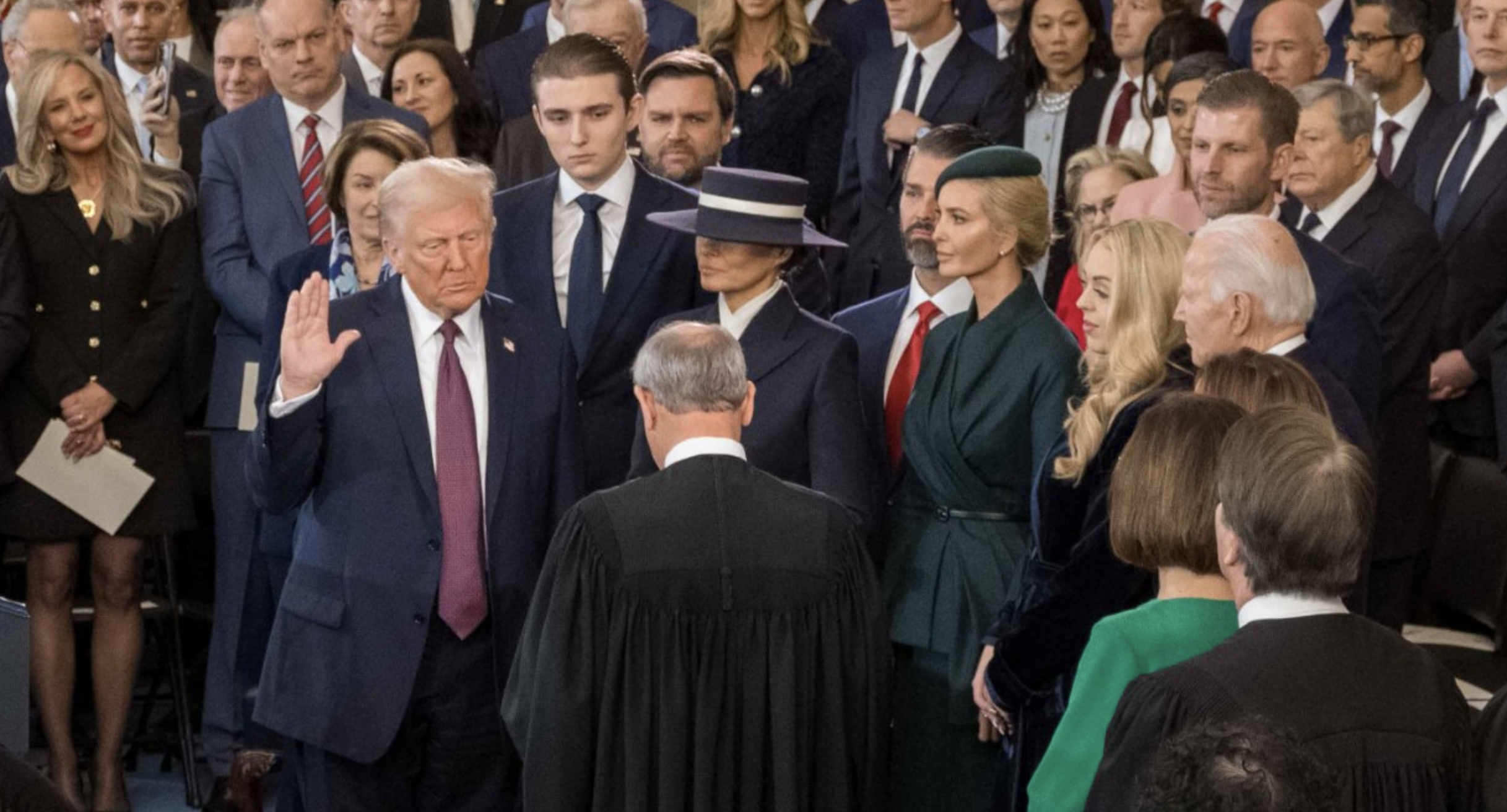
Image via Wikimedia Commons
How did we get to the point where we’ve come to believe so many lies that 77 million Americans voted into the White House a criminal reality TV star from NBC, one groomed by a reality TV producer from CBS, who then appointed his Cabinet from Fox and X and World Wrestling Entertainment?
It’s a long story, but the moving image had something to do with it – which is to say, the way we have let television, video, and screen culture run almost entirely unregulated, purely for profit, and without regard to its impact on the minds of our citizens. And it’s no accident that the media and technology tycoons surrounding the President at his White House inauguration – from Alphabet, Amazon, Apple, Facebook, TikTok, X, you name it – control the screens, networks, and technologies that propagate the lies we’re forced to inhale every day. He invited them.
What’s worse is that they accepted.
* * *
It’s a long story indeed – one that stretches back to the dawn of man, back tens of thousands of years to the time when our predecessors existed on Earth without a single written word between them. “Literacy,” the philosopher, Jesuit priest, and professor of literature Walter Ong has written, “is imperious.” It “tends to arrogate to itself supreme power by taking itself as normative for human expression and thought.” This arrogance, for Ong, is so overreaching because the written word – writing, text, and print generally – is actually such a brand-new phenomenon in the long history of man. Our species of Homo sapiens, Ong reminds us, has been around only for some 30,000 years; the oldest script, not even 6,000; the alphabet, less than four. Mesopotamian cuneiform dates from 3,500 BC; the original Semitic alphabet from only around 1,500 BC; Latin script, or the Roman alphabet that you’re reading now, from the seventh century BC. “Only after being on earth some 500,000 years (to take a fairly good working figure) did man move from his original oral culture, in which written records were unknown and unthought of to literacy.”
For most of human existence, we’ve communicated without print— and even without text. We’ve been speaking to one another. Not writing anything, not drawing a whole lot, but speaking, one to one, one to several, several to one, one to many, many to one. Those who consider writing, text, and print as “the paradigm of all discourse” thus need to “face the fact,” Ong says, that only the tiniest fraction of human languages has ever been written down – or ever will be. We communicate in other ways besides writing. Always have. Always will. Ong presses us to develop a deeper understanding and appreciation of the “normal oral or oral- aural consciousness” and the original “noetic economy” of humankind, which conditioned our brains for our first 500,000 years – and which is at it once again. Sound and human movement around sound and pictures sustained us “long before writing came along.” “To say that language is writing is, at best, uninformed,” Ong says (a bit imperiously himself). “It provides egregious evidence of the unreflective chirographic and/or typographic squint that haunts us all.”
The unreflective chirographic squint. We squint, and we see only writing. Up to now, we’ve found truth and authority only in text versions of the word. But writing, when it, too, first appeared, was a brand-new technology, much as we regard cameras and microphones as brand- new technologies today. It was a new technology because it called for the use of new “tools and other equipment,” “styli or brushes or pens,” “carefully prepared surfaces such as paper, animal skins, strips of wood,” “as well as inks or paints, and much more.” It seemed so complicated and time- consuming, we even used to outsource it. “In the West through the Middle Ages and earlier” almost all those devoted to writing regularly used the services of a scribe because the physical labor writing involved – scraping and polishing the animal skin or parchment, whitening it with chalk, resharpening goose-quill pens with what we still call a pen-knife, mixing ink, and all the rest – interfered with thought and composition.
The 1400s changed all that. Gutenberg started printing on his press in Germany, in 1455. The great historians of print – Robert Darnton, Elizabeth Eisenstein, Lucien Febvre, Anthony Grafton – tell us about how printing passed through patches of explosive growth, and how that growth was unnoticed at the time. Thirty years after Gutenberg cranked up his shop in Mainz, Germany had printers in only forty towns. By 1500, a thousand printing presses were in operation in Western Europe, and they had produced roughly 8 million books. But by the end of the 1500s, between 150 and 200 million books were circulating there.
Like ours, those early years, now 500 years ago, were full of chaos – the new technology seemed overwhelming. Harvard University Librarian Emeritus Robert Darnton has written, “When the printed word first appeared in France in 1470, it was so brand new, the state did not know what to make of it.” The monarchy (keep this in mind) “reacted at first by attempting to extinguish it. On January 13, 1535, Francis I decreed that anyone who printed anything would be hanged.” For the moving image today, with all of us on our iPhones, the modern cognate of hanging everyone recording or sharing video might seem extreme. But in the long view, we too, comparatively speaking, don’t yet know what to “make” of this new medium of ours.
That’s partly because it, too, is so young. The Lumiere brothers showed the first movie to public customers in France in 1895 – only 130 years ago. But today video is becoming the dominant medium in human communication. It accounts for most of our consumer internet traffic worldwide. The gigabyte equivalent of all the movies ever made now crosses the global internet every two minutes. Nearly a million minutes of video content cross global IP networks every sixty seconds. It would take someone – anyone – 5 million years to watch the amount of video that scoots across the internet each month. YouTube – YouTube alone – sees more than 1 billion viewers watching more than 5 billion videos on its platform every day. Video is here, and everywhere. It’s part of every sporting event, it’s at every traffic stop, it’s at every concert and in every courtroom. Twenty network cameras actively film the Super Bowl. The same number work Centre Court at Wimbledon. It’s in every bank, in every car, plane, and train. It’s in every pocket. It’s everywhere. For whatever you need. Dog training. Changing a tire. Solving a differential equation. Changing your mood.
It’s taken control. It’s just us who’ve been slow to realize it. Some 130 years into the life of the moving image, we are in what Elizabeth Eisenstein, writing about print, called the elusive transformation: it’s hard to see, but it’s there. If you picture an airplane flight across an ocean at night, you can sense it. As the sky darkens and dinner is served, the most noticeable thing about the plane is that almost everyone is sitting illuminated by the video screens in front of them. The screen and the speaker are now at the heart of how world citizens communicate. In many ways we are the passengers on this plane, relying no longer on the printed page, but on the screen and its moving images for much of the information we are receiving (and, increasingly, transmitting) about our world. The corruption and malfeasance and occasional achievements of our modern politicians; scientific experiments; technological developments; newscasts; athletic feats – the whole public record of the twenty-first century, in short – is all being recorded and then distributed through the lens, the screen, the microphone, and the speaker. Now text may be losing its hold (short as that hold has been) on our noetic imagination – especially its hold as the most authoritative medium, the most trustworthy medium, the medium of the contract, the last word, as it were.
Donald Trump and the greedy, cowardly technologists that surround him know it. They have the data; but they also intuit it. And they are clamping down on our access to knowledge even as the opposite seems true – which is that Apple, Netflix, Tiktok, and YouTube are making video ever freer, and more ubiquitous.
This marks the end of Part 1 of Peter Kaufman’s essay. You can now find Part 2 here.
–Peter B. Kaufman works at MIT Open Learning. He is the author of The New Enlightenment and the Fight to Free Knowledge and founder of Intelligent Television, a video production company that works with cultural and educational institutions around the world. His new book, The Moving Image: A User’s Manual, is just out from the MIT Press.
Read More...Why “The Girl from Ipanema” Is a Richer & Weirder Song Than You Realized
Say what you want about YouTube’s negative effects (endless soy faces, influencers, its devious and fascist-leaning algorithms) but it has offered to creators a space in which to indulge. And that’s one of the reasons I’ve been a fan of Adam Neely’s work. A jazz musician and a former student at both the Berklee College of Music and the Manhattan School of Music, his YouTube channel is a must for those with an interest in the how and why of music theory. If not for Neely’s talent and YouTube’s platform we wouldn’t have the above: a 30 minute (!) exploration of the bossa nova standard, “The Girl from Ipanema.” And it is worth every single minute. (Even the composer Antonio Carlos Jobim himself could not have convinced traditional television execs to give him that long an indulgence.)
Seeing we haven’t featured Neely on Open Culture before, let this be a great introduction, because this is one of his better videos. It also helps that the subject matter just happens to be one of the most covered standards in pop history.
Its legacy is one of lounge lizards and kitsch. Neely shows it being used as a punchline in The Blues Brothers and as mood music in V for Vendetta. I remember it being hummed by two pepperpots (Graham Chapman and John Cleese) in a Monty Python skit. And Neely gives us the “tl;dw” (“too long, didn’t watch”) summary up front: the song’s history concerns blues music, American cultural hegemony, and the influence of the Berklee College’s “The Real Book.” There’s also loads of music theory thrown in too, so it helps to know just a little going in.
Neely first peels back decades of elevator music covers to get to the birth of the song, and its multiple parents: the Afro-Brazilian music called Samba, the hip nightclubs of Rio de Janeiro during the 1950s, the hit film Black Orpheus which brought both samba and bossa nova (the “new wave”) to an international audience, Jobim and other musicians’ interest in American blues and jazz chords, and American interest from musicians like Stan Getz. All this is a back and forth circuit of influences that results in this song, which borrows its structure from Tin Pan Alley composers like Cole Porter and Irving Berlin, and inserts a sad, self-pitying B‑section after two A‑section lyrics about a young woman passing by on a beach (lyrics by Vinicius de Moraes, who also wrote the screenplay to Black Orpheus).
The key in which you play the song also reveals the cultural divide. Play it in F and you are taking sides with the Americans; play it in Db and you are keeping it real, Brazilian style. Neely breaks apart the melody and the chord sequences, pointing out its repetition (which makes it so catchy) but also its ambiguity, which explains endless YouTube videos of musicians getting the chord sequence wrong. And, what exactly *is* the true chord sequence? And how is it a riff on, of all things, Duke Ellington’s “Take the A Train”? Neely also shows the progression of various covers of the song, and what’s been added and what’s been deleted. Leaving things out, as he illustrates with a clip from Leonard Bernstein’s 1973 Harvard lectures, is what gives art its magic.
There’s so much more to this 30 minute clip, but you really should watch the whole thing (and then hit subscribe to his channel). This essay is exactly what YouTube does best, and Neely is the best of teachers, a smart, self-deprecating guy who mixes intellect with humor. Plus, you’ll be humming the song for the rest of the day, just a bit more aware of the reason behind the ear worm.
Note: An earlier version of this post appeared on our site in 2020.
Related Content:
Getz and Gilberto Perform ‘The Girl from Ipanema’ (and the Woman Who Inspired the Song)
Ted Mills is a freelance writer on the arts who currently hosts the Notes from the Shed podcast and is the producer of KCRW’s Curious Coast. You can also follow him on Twitter at @tedmills, and/or watch his films here.
Read More...How the Nazis Waged War on Modern Art: Inside the “Degenerate Art” Exhibition of 1937
Before his fateful entry into politics, Adolf Hitler wanted to be an artist. Even to the most neutral imaginable observer, the known examples of the estimated 2,000 to 3,000 paintings and other works of art he produced in his early adulthood would hardly evidence astonishing genius. They do show a certain technical competence, especially where buildings are concerned. (Twice rejected from the Academy of Fine Arts Vienna, the young Hitler was advised to apply instead to the School of Architecture, a subject for which he also professed a passion.) But their lack of imagination and interest in humanity were too plain to ignore.
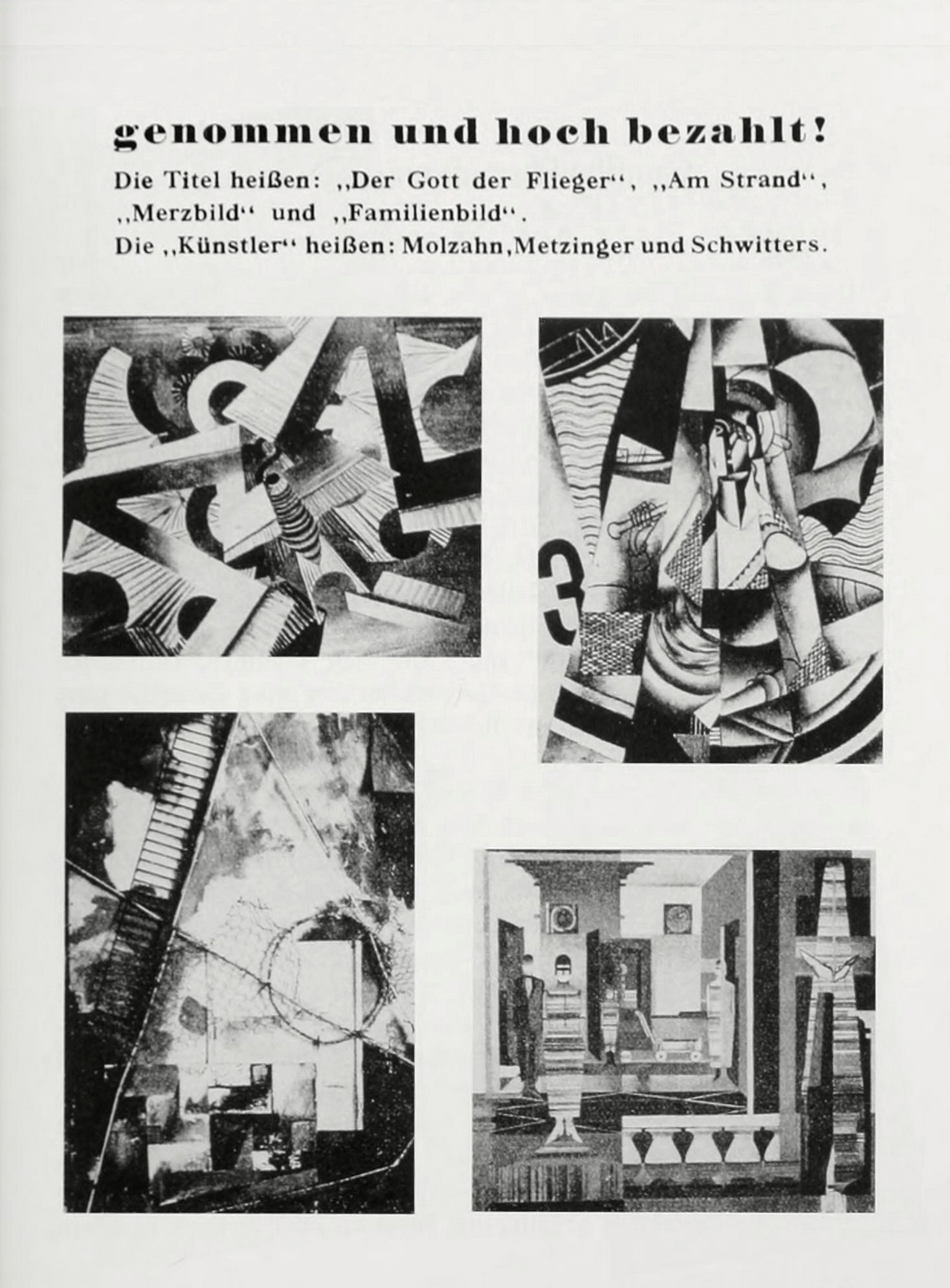
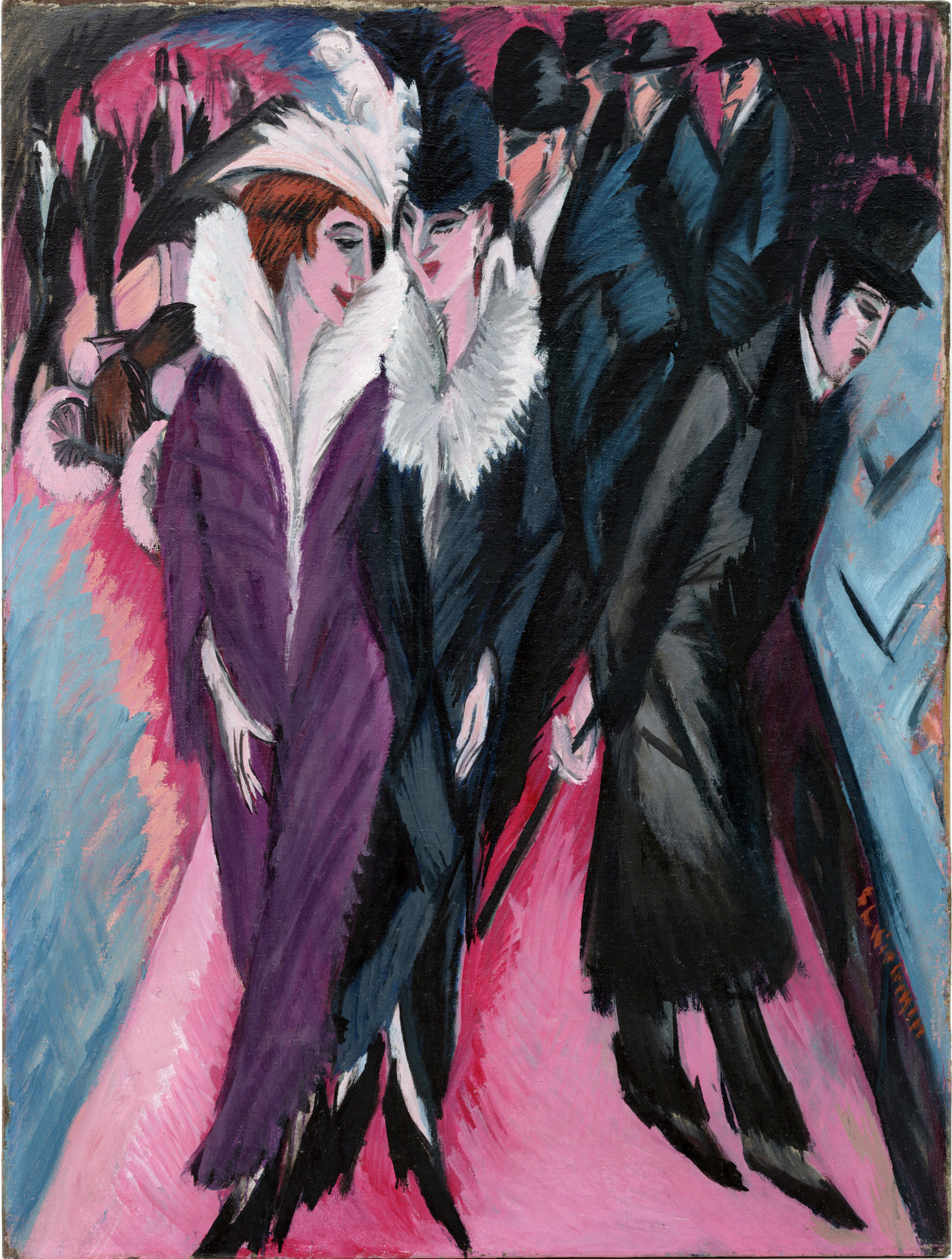
Could Hitler’s failure to gain entry to the art world explain anything about the cultural policy of the Nazi Party he went on to lead? Here on Open Culture, we’ve previously featured that policy’s single defining event: Die Ausstellung “Entartete Kunst,” or the Degenerate Art exhibition, staged in 1937 at the Institute of Archaeology in Munich’s Hofgarten.
Presenting 650 confiscated works of art purported to “insult German feeling, or destroy or confuse natural form or simply reveal an absence of adequate manual and artistic skill,” it soon became a great hit, attracting one million attendees in its first six weeks.
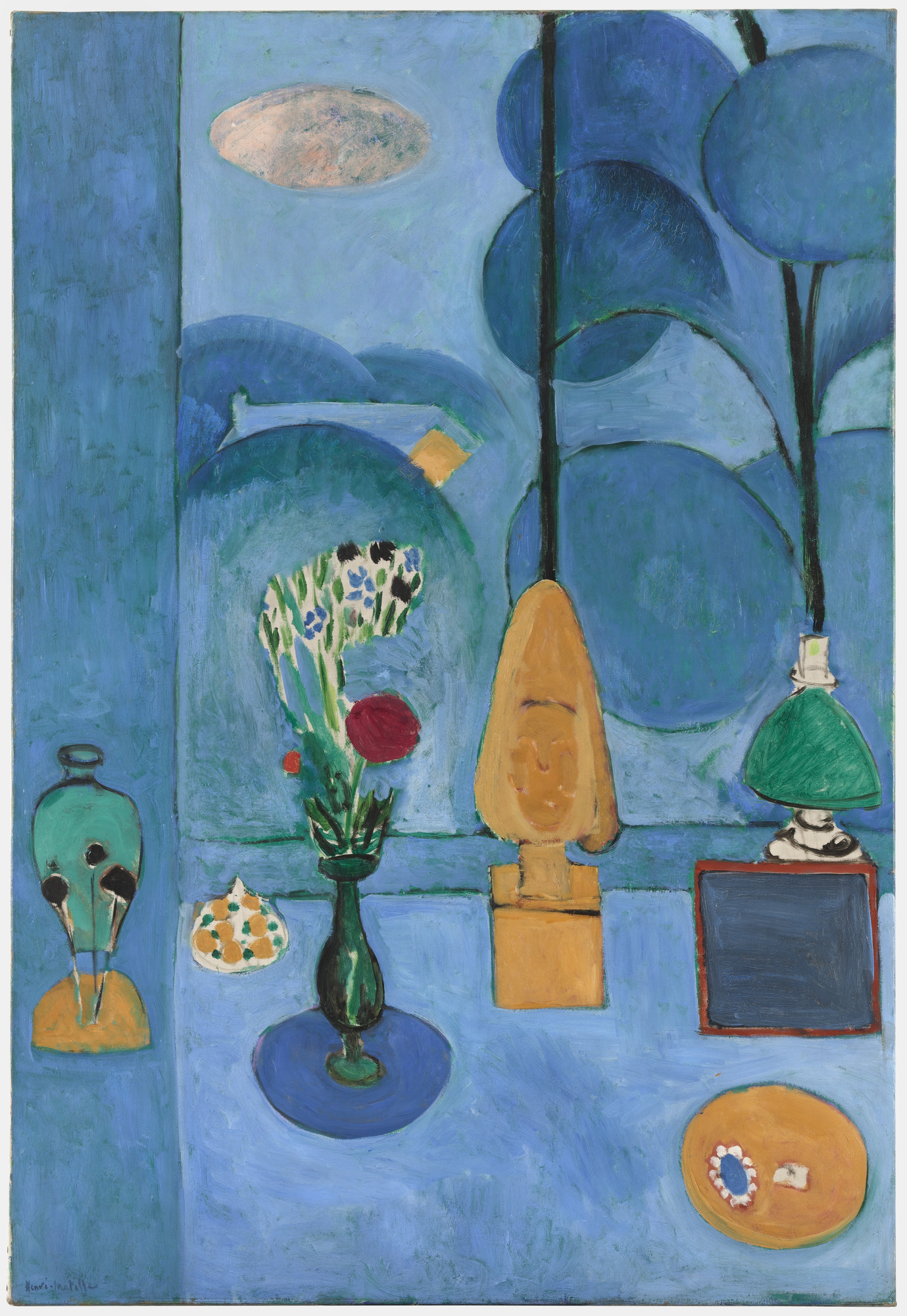
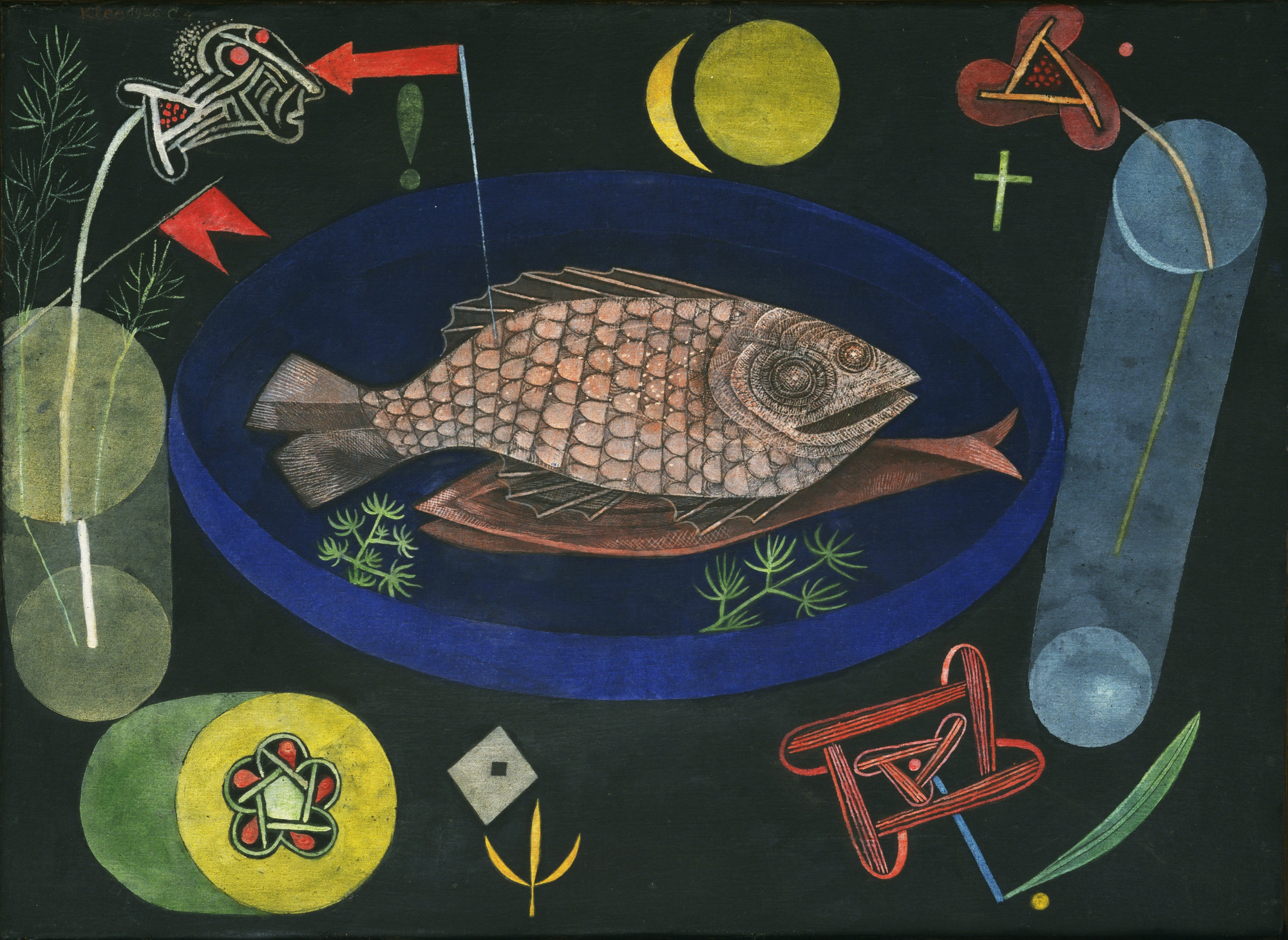
That may not come as much of a surprise when you consider the artists whose work was on display: Paul Klee, Georg Grosz, Otto Dix, Henri Matisse, Pablo Picasso, Wassily Kandinsky, Piet Mondrian, Marc Chagall, and even Grant Wood, to name just a few. It seems that the Nazis could come up with nothing quite so fascinating for the planned first Große Deutsche Kunstausstellung, or “Great German Art Exhibition,” whose collapse inspired Hitler’s chief propagandist Joseph Goebbels to suggest putting on a show not of the work that the Nazis approved, but of the work they didn’t.
An admirer of certain Expressionists, Goebbels displayed more cultural open-mindedness than the Führer, who practically declared a war on modern art itself. You can learn more about it from David Grubin’s documentary Degenerate Art, which is available to watch online. The Nazis confiscated more than 5,000 works of art, and even maintained files on no fewer than 16,000 that they’d labeled “degenerate,” a historic inventory that has been made available to the public. Surprisingly, their blacklist did not include the oeuvre of Gustav Klimt, which they attempted to use for their own ends. It could be that, deep down, Hitler, the failed artist, knew good art when he saw it — and that it just made him all the more resentful.
Related content:
When the Nazis Declared War on Expressionist Art (1937)
How the Avant-Garde Art of Gustav Klimt Got Perversely Appropriated by the Nazis
The Nazis’ 10 Control-Freak Rules for Jazz Performers: A Strange List from World War II
How France Hid the Mona Lisa & Other Louvre Masterpieces During World War II
Based in Seoul, Colin Marshall writes and broadcasts on cities, language, and culture. His projects include the Substack newsletter Books on Cities and the book The Stateless City: a Walk through 21st-Century Los Angeles. Follow him on the social network formerly known as Twitter at @colinmarshall.
Read More...Andrei Tarkovsky’s Message to Young People: “Learn to Be Alone,” Enjoy Solitude
I remember the first time I sat down and watched Andrei Tarkovsky’s lyrical, meandering sci-fi epic Stalker. It was a long time ago, before the advent of smartphones and tablets. I watched a beat-up VHS copy on a non-“smart” TV, and had no ability to pause every few minutes and swing by Facebook, Twitter, or Instagram for some instant distraction and digital small talk. The almost three-hour film—with its long, languid takes and endless stretches of silence—is a meditative exercise, a test in patience that at times seems like its own reward.
I recall at the time thinking about how didactic Tarkovsky’s work is, in the best possible sense of the word. It teaches its viewers to watch, listen, and wait. It’s a course best taken alone, like the journey into the film’s mysterious “Zone,” since the presence of another, likely perplexed, viewer might break the quiet spell the movie casts. But while watching a Tarkovsky film—whether Stalker, Andrei Rublev, Solaris, or any of his other pensive creations (watch them online here)—may be a solitary activity, it need not at all be a lonely one.
The distinction between healthy solitude and loneliness is one Tarkovsky is particularly interested in. It’s a cinematic theme he pursues, and a pedagogical one as well. In the video above from The Criterion Collection, Tarkovsky offers some thoughtful insights that can only seem all the more relevant to today’s always-on, multi-screen culture. Unfortunately, the subtitles translate his words selectively, but Maria Popova at The Marginalian has a full translation of the filmmaker’s answer to the question “What would you like to tell young people?” Like some ancient Pan dispensing timeless wisdom, Tarkovsky reclines in an old, gnarled tree—on what may very well be one of his wild, wooded film sets—and says,
I don’t know… I think I’d like to say only that they should learn to be alone and try to spend as much time as possible by themselves. I think one of the faults of young people today is that they try to come together around events that are noisy, almost aggressive at times. This desire to be together in order to not feel alone is an unfortunate symptom, in my opinion. Every person needs to learn from childhood how to spend time with oneself. That doesn’t mean he should be lonely, but that he shouldn’t grow bored with himself because people who grow bored in their own company seem to me in danger, from a self-esteem point of view.
Though I speak as one who grew up in an analogue world free from social media—the only world Tarkovsky ever knew—I don’t think it’s just the cranky old man in me who finds this advice compellingly sound. As a Tom Tomorrow cartoon satirically illustrated, our rapid-fire, pressure-cooker public discourse may grant us instant access to information—or misinformation—but it also encourages, nay urges, us to form hasty opinions, ignore nuance and subtleties, and participate in groupthink rather than digesting things slowly and coming to our own conclusions. It’s an environment particularly hostile to mediums like poetry, or the kinds of poetic films Tarkovsky made, which teach us the value of judgment withheld, and immerse us in the kinds of aesthetic experiences the internet and television, with their nonstop chatter, push to the margins.
Tarkovsky’s general advice to young people can be paired with his challenging advice to young filmmakers, and all artists, in particular—advice that demands focused attention, patience, and commitment to individual passion and vision.
Props to The Marginalian for the translation.
Note: An earlier version of this post appeared on our site in 2015.
Related Content
Watch Andrei Tarkovsky’s Films Free Online: Stalker, The Mirror & Andrei Rublev
Andrei Tarkovsky’s Advice to Young Filmmakers: Sacrifice Yourself for Cinema
Andrei Tarkovsky Creates a List of His 10 Favorite Films (1972)
The Masterful Polaroid Pictures Taken by Filmmaker Andrei Tarkovsky
Read More...When William Faulkner Set the World Record for Writing the Longest Sentence in Literature: Read the 1,288-Word Sentence from Absalom, Absalom!
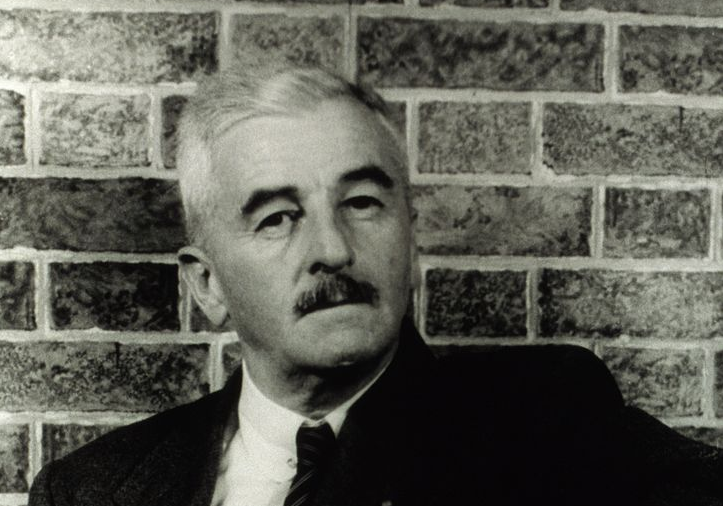
Image by Carl Van Vechten, via Wikimedia Commons
“How did Faulkner pull it off?” is a question many a fledgling writer has asked themselves while struggling through a period of apprenticeship like that novelist John Barth describes in his 1999 talk “My Faulkner.” Barth “reorchestrated” his literary heroes, he says, “in search of my writerly self… downloading my innumerable predecessors as only an insatiable green apprentice can.” Surely a great many writers can relate when Barth says, “it was Faulkner at his most involuted and incantatory who most enchanted me.” For many a writer, the Faulknerian sentence is an irresistible labyrinth. His syntax has a way of weaving itself into the unconscious, emerging as fair to middling imitation.
While studying at Johns Hopkins University, Barth found himself writing about his native Eastern Shore of Maryland in a pastiche style of “middle Faulkner and late Joyce.” He may have won some praise from a visiting young William Styron, “but the finished opus didn’t fly—for one thing, because Faulkner intimately knew his Snopses and Compsons and Sartorises, as I did not know my made-up denizens of the Maryland marsh.” The advice to write only what you know may not be worth much as a universal commandment. But studying the way that Faulkner wrote when he turned to the subjects he knew best provides an object lesson on how powerful a literary resource intimacy can be.
Not only does Faulkner’s deep affiliation with his characters’ inner lives elevate his portraits far above the level of local color or regionalist curiosity, but it animates his sentences, makes them constantly move and breathe. No matter how long and twisted they get, they do not wilt, wither, or drag; they run river-like, turning around in asides, outraging themselves and doubling and tripling back. Faulkner’s intimacy is not earnestness, it is the uncanny feeling of a raw encounter with a nerve center lighting up with information, all of it seemingly critically important.
It is the extraordinary sensory quality of his prose that enabled Faulkner to get away with writing the longest sentence in literature, at least according to the 1983 Guinness Book of World Records, a passage from Absalom, Absalom! consisting of 1,288 words and who knows how many different kinds of clauses. There are now longer sentences in English writing. Jonathan Coe’s The Rotter’s Club ends with a 33-page long whopper with 13,955 words in it. Entire novels hundreds of pages long have been written in one sentence in other languages. All of Faulkner’s modernist contemporaries, including of course Joyce, Woolf, and Beckett, mastered the use of run-ons, to different effect.
But, for a time, Faulkner took the run-on as far as it could go. He may have had no intention of inspiring postmodern fiction, but one of its best-known novelists, Barth, only found his voice by first writing a “heavily Faulknerian marsh-opera.” Many hundreds of experimental writers have had almost identical experiences trying to exorcise the Oxford, Mississippi modernist’s voice from their prose. Read that onetime longest sentence in literature, all 1,288 words of it, below.
Just exactly like Father if Father had known as much about it the night before I went out there as he did the day after I came back thinking Mad impotent old man who realized at last that there must be some limit even to the capabilities of a demon for doing harm, who must have seen his situation as that of the show girl, the pony, who realizes that the principal tune she prances to comes not from horn and fiddle and drum but from a clock and calendar, must have seen himself as the old wornout cannon which realizes that it can deliver just one more fierce shot and crumble to dust in its own furious blast and recoil, who looked about upon the scene which was still within his scope and compass and saw son gone, vanished, more insuperable to him now than if the son were dead since now (if the son still lived) his name would be different and those to call him by it strangers and whatever dragon’s outcropping of Sutpen blood the son might sow on the body of whatever strange woman would therefore carry on the tradition, accomplish the hereditary evil and harm under another name and upon and among people who will never have heard the right one; daughter doomed to spinsterhood who had chosen spinsterhood already before there was anyone named Charles Bon since the aunt who came to succor her in bereavement and sorrow found neither but instead that calm absolutely impenetrable face between a homespun dress and sunbonnet seen before a closed door and again in a cloudy swirl of chickens while Jones was building the coffin and which she wore during the next year while the aunt lived there and the three women wove their own garments and raised their own food and cut the wood they cooked it with (excusing what help they had from Jones who lived with his granddaughter in the abandoned fishing camp with its collapsing roof and rotting porch against which the rusty scythe which Sutpen was to lend him, make him borrow to cut away the weeds from the door-and at last forced him to use though not to cut weeds, at least not vegetable weeds ‑would lean for two years) and wore still after the aunt’s indignation had swept her back to town to live on stolen garden truck and out o f anonymous baskets left on her front steps at night, the three of them, the two daughters negro and white and the aunt twelve miles away watching from her distance as the two daughters watched from theirs the old demon, the ancient varicose and despairing Faustus fling his final main now with the Creditor’s hand already on his shoulder, running his little country store now for his bread and meat, haggling tediously over nickels and dimes with rapacious and poverty-stricken whites and negroes, who at one time could have galloped for ten miles in any direction without crossing his own boundary, using out of his meagre stock the cheap ribbons and beads and the stale violently-colored candy with which even an old man can seduce a fifteen-year-old country girl, to ruin the granddaughter o f his partner, this Jones-this gangling malaria-ridden white man whom he had given permission fourteen years ago to squat in the abandoned fishing camp with the year-old grandchild-Jones, partner porter and clerk who at the demon’s command removed with his own hand (and maybe delivered too) from the showcase the candy beads and ribbons, measured the very cloth from which Judith (who had not been bereaved and did not mourn) helped the granddaughter to fashion a dress to walk past the lounging men in, the side-looking and the tongues, until her increasing belly taught her embarrassment-or perhaps fear;-Jones who before ’61 had not even been allowed to approach the front of the house and who during the next four years got no nearer than the kitchen door and that only when he brought the game and fish and vegetables on which the seducer-to-be’s wife and daughter (and Clytie too, the one remaining servant, negro, the one who would forbid him to pass the kitchen door with what he brought) depended on to keep life in them, but who now entered the house itself on the (quite frequent now) afternoons when the demon would suddenly curse the store empty of customers and lock the door and repair to the rear and in the same tone in which he used to address his orderly or even his house servants when he had them (and in which he doubtless ordered Jones to fetch from the showcase the ribbons and beads and candy) direct Jones to fetch the jug, the two of them (and Jones even sitting now who in the old days, the old dead Sunday afternoons of monotonous peace which they spent beneath the scuppernong arbor in the back yard, the demon lying in the hammock while Jones squatted against a post, rising from time to time to pour for the demon from the demijohn and the bucket of spring water which he had fetched from the spring more than a mile away then squatting again, chortling and chuckling and saying ‘Sho, Mister Tawm’ each time the demon paused)-the two of them drinking turn and turn about from the jug and the demon not lying down now nor even sitting but reaching after the third or second drink that old man’s state of impotent and furious undefeat in which he would rise, swaying and plunging and shouting for his horse and pistols to ride single-handed into Washington and shoot Lincoln (a year or so too late here) and Sherman both, shouting, ‘Kill them! Shoot them down like the dogs they are!’ and Jones: ‘Sho, Kernel; sho now’ and catching him as he fell and commandeering the first passing wagon to take him to the house and carry him up the front steps and through the paintless formal door beneath its fanlight imported pane by pane from Europe which Judith held open for him to enter with no change, no alteration in that calm frozen face which she had worn for four years now, and on up the stairs and into the bedroom and put him to bed like a baby and then lie down himself on the floor beside the bed though not to sleep since before dawn the man on the bed would stir and groan and Jones would say, ‘flyer I am, Kernel. Hit’s all right. They aint whupped us yit, air they?’ this Jones who after the demon rode away with the regiment when the granddaughter was only eight years old would tell people that he ‘was lookin after Major’s place and niggers’ even before they had time to ask him why he was not with the troops and perhaps in time came to believe the lie himself, who was among the first to greet the demon when he returned, to meet him at the gate and say, ‘Well, Kernel, they kilt us but they aint whupped us yit, air they?’ who even worked, labored, sweat at the demon’s behest during that first furious period while the demon believed he could restore by sheer indomitable willing the Sutpen’s Hundred which he remembered and had lost, labored with no hope of pay or reward who must have seen long before the demon did (or would admit it) that the task was hopeless-blind Jones who apparently saw still in that furious lecherous wreck the old fine figure of the man who once galloped on the black thoroughbred about that domain two boundaries of which the eye could not see from any point.
Note: An earlier version of this post appeared on our site in 2019.
Related Content:
‘Never Be Afraid’: William Faulkner’s Speech to His Daughter’s Graduating Class in 1951
Seven Tips From William Faulkner on How to Write Fiction
Rare 1952 Film: William Faulkner on His Native Soil in Oxford, Mississippi
Josh Jones is a writer and musician based in Durham, NC. Follow him at @jdmagness
Read More...Watch David Byrne Lead a Massive Choir in Singing David Bowie’s “Heroes”
Throughout the years, we’ve featured performances of Choir!Choir!Choir!–a large amateur choir from Toronto that meets weekly and sings their hearts out. You’ve seen them sing Prince’s “When Doves Cry,” Soundgarden’s “Black Hole Sun” (to honor Chris Cornell) and Leonard Cohen’s “Hallelujah.”
If you dig through their Youtube archive, you can also revisit performances of two Talking Heads classics–“Psycho Killer” and “Burning Down the House.” (Both below.) Which brings us to the video above. According to Consequence of Sound, Talking Heads frontman David Byrne has long been a big fan of Choir!Choir!Choir!. He writes on his web site:
I’ve sat mesmerized watching online videos of the Canadian group Choir! Choir! Choir! They somehow manage to get hundreds of strangers to sing beautifully together—in tune and full-voiced—with rich harmonies and detailed arrangements. With almost no rehearsal—how do they do it??
They manage to achieve lift off—that feeling of surrender when groups sing together—when we all become part of something larger than ourselves.
And back in 2018, Byrne got to experience some of that lift off firsthand. Hear him sing a moving version of David Bowie’s “Heroes” with Choir!Choir!Choir! Enjoy.
Psycho Killer
Burning Down the House
Related Content:
David Bowie’s “Heroes” Delightfully Performed by the Ukulele Orchestra of Great Britain
Depeche Mode Releases a Goosebump-Inducing Cover of David Bowie’s “Heroes”
Read More...Support Us
We're hoping to rely on loyal readers, rather than erratic ads. Please click the Donate button and support Open Culture. You can use Paypal, Venmo, Patreon, even Crypto! We thank you!

About Us

Open Culture scours the web for the best educational media. We find the free courses and audio books you need, the language lessons & educational videos you want, and plenty of enlightenment in between.
Advertise With Us
FREE UPDATES!
GET OUR DAILY EMAIL
Get the best cultural and educational resources on the web curated for you in a daily email. We never spam. Unsubscribe at any time.
FOLLOW ON SOCIAL MEDIA
Open Culture editor Dan Colman scours the web for the best educational media. He finds the free courses and audio books you need, the language lessons & movies you want, and plenty of enlightenment in between.
Advertise With Us



.jpg#/media/File:Donald_Trump_takes_the_oath_of_office_(2025)_(cropped).jpg)
_(photo_by_Carl_van_Vechten).jpg)