William Faulkner’s Review of Hemingway’s The Old Man and the Sea (1952)
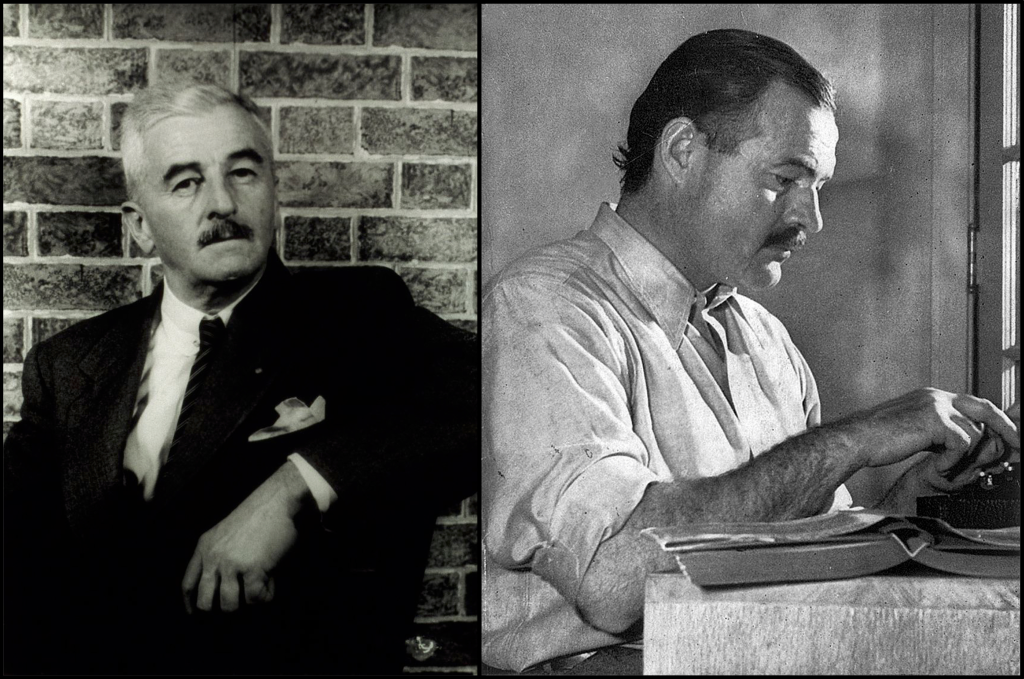
Images via Wikimedia Commons
In the mid-20th century, the two big dogs in the American literary scene were William Faulkner and Ernest Hemingway. Both were internationally revered, both were masters of the novel and the short story, and both won Nobel Prizes.
Born in Mississippi, Faulkner wrote allegorical histories of the South in a style that is both elliptical and challenging. His works were marked by uses of stream-of-consciousness and shifting points of view. He also favored titanically long sentences, holding the record for having, according to the Guinness Book of Records, the longest sentence in literature. Open your copy of Absalom! Absalom! to chapter 6 and you’ll find it. Hemingway, on the other hand, famously sandblasted the florid prose of Victorian-era books into short, terse, deceptively simple sentences. His stories were about rootless, damaged, cosmopolitan people in exotic locations like Paris or the Serengeti.
If you type in “Faulkner and Hemingway” in your favorite search engine, you’ll likely stumble upon this famous exchange — Faulkner on Hemingway: “He has never been known to use a word that might send a reader to the dictionary.” Hemingway: “Poor Faulkner. Does he really think big emotions come from big words?” Zing! Faulkner reportedly didn’t mean for the line to come off as an insult but Hemingway took it as one. The incident ended up being the most acrimonious in the two authors’ complicated relationship.
While Faulkner and Hemingway never formally met, they were regular correspondents, and each was keenly aware of the other’s talents. And they were competitive with each other, especially Hemingway who was much more insecure than you might surmise from his macho persona. While Hemingway regularly called Faulkner “the best of us all,” marveling at his natural abilities, he also hammered Faulkner for resorting to tricks. As he wrote to Harvey Breit, the famed critic for The New York Times, “If you have to write the longest sentence in the world to give a book distinction, the next thing you should hire Bill Veek [sic] and use midgets.”
Faulkner, on his end, was no less competitive. He once told the New York Herald Tribune, “I think he’s the best we’ve got.” On the other hand, he bristled when an editor mentioned getting Hemingway to write the preface for The Portable Faulkner in 1946. “It seems to me in bad taste to ask him to write a preface to my stuff. It’s like asking one race horse in the middle of a race to broadcast a blurb on another horse in the same running field.”
When Breit asked Faulkner to write a review of Hemingway’s 1952 novella The Old Man and the Sea, he refused. Yet when a couple months later he got the same request from Washington and Lee University’s literary journal, Shenandoah, Faulkner relented, giving guarded praise to the novel in a one-paragraph-long review. You can read it below.
His best. Time may show it to be the best single piece of any of us, I mean his and my contemporaries. This time, he discovered God, a Creator. Until now, his men and women had made themselves, shaped themselves out of their own clay; their victories and defeats were at the hands of each other, just to prove to themselves or one another how tough they could be. But this time, he wrote about pity: about something somewhere that made them all: the old man who had to catch the fish and then lose it, the fish that had to be caught and then lost, the sharks which had to rob the old man of his fish; made them all and loved them all and pitied them all. It’s all right. Praise God that whatever made and loves and pities Hemingway and me kept him from touching it any further.
And you can also watch below a fascinating talk by scholar Joseph Fruscione about how Faulkner and Hemingway competed and influenced each other. He wrote the book, Faulkner and Hemingway: Biography of a Literary Rivalry.
Note: An earlier version of this post appeared on our site in 2014.
Related Content:
The Art of William Faulkner: Drawings from 1916–1925
Ernest Hemingway Creates a Reading List for a Young Writer, 1934
‘Never Be Afraid’: William Faulkner’s Speech to His Daughter’s Graduating Class in 1951
Seven Tips From William Faulkner on How to Write Fiction
Rare 1952 Film: William Faulkner on His Native Soil in Oxford, Mississippi
Jonathan Crow is a writer and filmmaker whose work has appeared in Yahoo!, The Hollywood Reporter, and other publications.
Read More...What the World Will Look Like in 250 Million Years: Mapping the Distant Future
Most of us now accept the idea that all of Earth’s continents were once part of a single, enormous land mass. That wasn’t the case in the early nineteen-tens, when the geologist Alfred Wegener (1880–1930) first publicized his theory of not just the supercontinent Pangea, but also of the phenomenon of continental drift that caused it to break apart into the series of shapes we all know from classroom world maps. But as humorously explained in the Map Men video above, Wegener didn’t live to see these ideas convince the world. Only after his death did other scientists figure out just how the geological churning under the planet’s surface caused the continents to drift apart in the first place.

With that information in place, Pangea no longer seemed like the crackpot notion it had when Wegener initially proposed it. Less widely appreciated, even today, is the determination that, as the Map Men put it, “Pangea, far from being the original supercontinent, was actually the eleventh to have formed in Earth’s history.”
It seems that the continents have been cyclically breaking apart and coming together again, with no sign of the process stopping. When, then, will we next find ourselves back on a supercontinent? Perhaps in 250 million years or so, according to the “Novopangea” model explained in the video, which has the Pacific ocean closing up as Australia slots into East Asia and North America while Antarctica drifts north.

Other models also exist, including Aurica, “where Eurasia splits in half, and both the Pacific and Atlantic oceans close up”; Pangea Ultima, “where Britain gets closer to America”; and Amasia, “where all the continents congregate around the North Pole, except Antarctica” (whose drift patterns make it seem like “the laziest continent”). At this kind of time scale, small changes in the basic assumptions can result in very different-looking supercontinents indeed, not that any of us will be around to see how the next Pangea really takes shape. Nevertheless, in this age when we can hardly go a week without encountering predictions of humanity’s imminent extinction, it’s refreshing to find a subject that lets us even consider looking a quarter-billion years down the road.
Related Content:
Map Showing Where Today’s Countries Would Be Located on Pangea
A Web Site That Lets You Find Your Home Address on Pangea
Based in Seoul, Colin Marshall writes and broadcasts on cities, language, and culture. His projects include the Substack newsletter Books on Cities and the book The Stateless City: a Walk through 21st-Century Los Angeles. Follow him on the social network formerly known as Twitter at @colinmarshall.
Read More...How Chinese Characters Work: The Evolution of a Three-Millennia-Old Writing System
Contrary to somewhat popular belief, Chinese characters aren’t just little pictures. In fact, most of them aren’t pictures at all. The very oldest, whose evolution can be traced back to the “oracle bone” script of thirteenth century BC etched directly onto the remains of turtles and oxen, do bear traces of their pictograph ancestors. But most Chinese characters, or hanzi, are logographic, which means that each one represents a different morpheme, or distinct unit of language: a word, or a single part of a word that has no independent meaning. Nobody knows for sure how many hanzi exist, but nearly 100,000 have been documented so far.
Not that you need to learn all of them to attain literacy: for that, a mere 3,000 to 5,000 will do. While it’s technically possible to memorize that many characters by rote, you’d do better to begin by familiarizing yourself with their basic nature and structure — and in so doing, you’ll naturally learn more than a little about their long history.
The TED-Ed lesson at the top of the post provides a brief but illuminating overview of “how Chinese characters work,” using animation to show how ancient symbols for concrete things like a person, a tree, the sun, and water became versatile enough to be combined into representations of everything else — including abstract concepts.
In the Mandarin Blueprint video just above, host Luke Neale goes deeper into the structure of the hanzi in use today. Whether they be simplified versions of mainland China or the traditional ones of Taiwan, Hong Kong, and elsewhere, they’re for the most part constructed not out of whole cloth, he stresses, but from a set of existing components. That may make a prospective learner feel slightly less daunted, as may the fact that roughly 80 percent of Chinese characters are “semantic-phonetic compounds”: one component of the character provides a clue to its meaning, and another a clue to its pronunciation. (Not that it necessarily makes deciphering them an effortless task.)
In the distant past, hanzi were also the only means of recording other Asian languages, like Vietnamese and Korean. Still today, they remain central to the Japanese writing system, but like any other cultural form transplanted to Japan, they’ve hardly gone unaltered there: the NativLang video just above explains the transformation they’ve undergone over millennia of interaction with the Japanese language. It wasn’t so very long ago that, even in their homeland, hanzi were threatened with the prospect of being scrapped in the dubious name of modern efficiency. Now, with those aforementioned almost-100,000 characters incorporated into Unicode, making them usable throughout our 21st-century digital universe, it seems they’ll stick around — even longer, perhaps, than the Latin alphabet you’re reading right now.
Related content:
What Ancient Chinese Sounded Like — and How We Know It: An Animated Introduction
Discover Nüshu, a 19th-Century Chinese Writing System That Only Women Knew How to Write
The Writing Systems of the World Explained, from the Latin Alphabet to the Abugidas of India
Based in Seoul, Colin Marshall writes and broadcasts on cities, language, and culture. His projects include the Substack newsletter Books on Cities and the book The Stateless City: a Walk through 21st-Century Los Angeles. Follow him on the social network formerly known as Twitter at @colinmarshall.
Read More...The Steps a President Would Take to Destroy His Nation, According to Elon Musk’s AI Chatbot, Grok
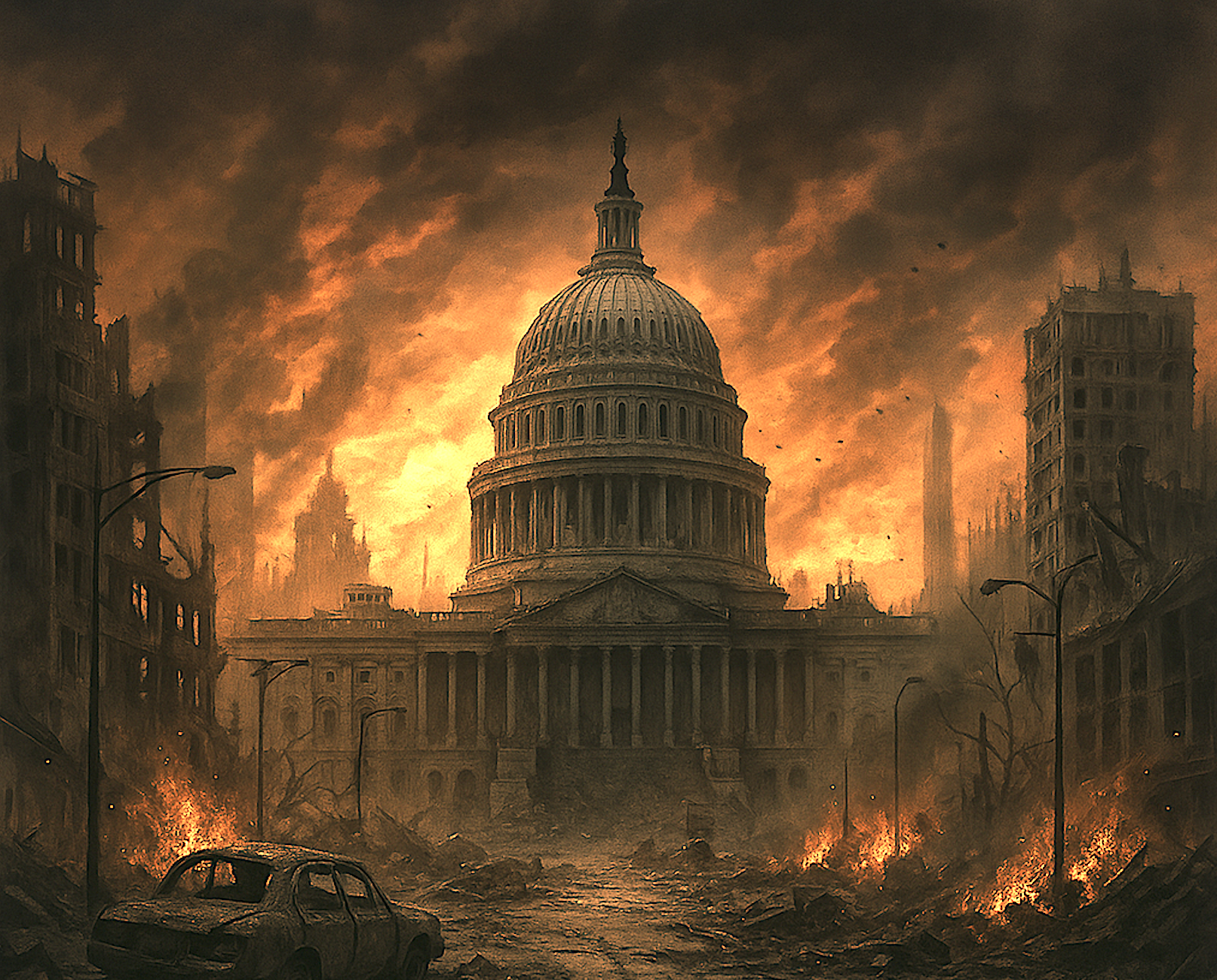
Just out of curiosity, and apropos of nothing, we asked Grok (the AI chatbot created by Elon Musk) the following question: If a president of a superpower wanted to destroy his own country, what steps would he take? Here’s what Grok had to say:
If a president of a superpower aimed to deliberately undermine their own nation, they could theoretically take steps to weaken its economic, social, military, and political foundations. Here’s a hypothetical breakdown of such actions, assuming they have enough influence and control to push them through:
- Economic Sabotage: They could tank the economy by imposing reckless fiscal policies—massive, unsustainable debt through unchecked spending or tax cuts without funding, devaluing the currency by pressuring the central bank to print money excessively, or dismantling key industries through deregulation or punitive tariffs that disrupt trade. Encouraging corruption and cronyism could further drain resources.
- Undermining National Security: Militarily, they might weaken defenses by slashing budgets, pulling out of strategic alliances, or leaking sensitive intelligence to adversaries. Ordering troops into unwinnable, morale-crushing conflicts—or abandoning critical outposts—could erode military strength and global standing.
- Social Division: They could stoke internal conflict by amplifying divisive rhetoric, targeting specific groups with policies that breed resentment, or letting infrastructure and public services crumble to fuel discontent. Misinformation campaigns, either directly or through proxies, could deepen mistrust in institutions.
- Political Erosion: To cripple governance, they might attack the rule of law—pardoning loyalists who break it, stacking courts with unqualified ideologues, or pushing legislation that centralizes power in their hands. Undermining elections through voter suppression or outright fraud could destabilize democracy further.
- International Isolation: They could alienate allies by breaking treaties, insulting partners, or cozying up to hostile regimes, leaving the country diplomatically vulnerable. Withdrawing from global organizations or climate agreements might also diminish soft power and economic leverage.
- Neglecting Crises: In the face of natural disasters, pandemics, or cyberattacks, they could deliberately botch responses—ignoring experts, withholding aid, or spreading confusion—letting chaos compound.
Grok continues: “In practice, any president trying this would face massive resistance: checks and balances, public backlash, legal barriers, and pushback from their own administration or military. It’d take more than intent—sophisticated manipulation and loyal enablers would be key. Historically, no leader has pulled this off fully, but you can see echoes in cases like Venezuela under Maduro, where mismanagement and authoritarianism led to collapse—though even there, self-destruction wasn’t the explicit goal. Intentional ruin would be a slow burn, not a switch flipped overnight.”
As you read this, you might hear a lot of boxes being checked in your mind, and you might wonder if Grok is calling the shots. But, dear reader, this is all purely theoretical. As they say in the movies, any resemblance to actual persons, living or dead, or actual events is purely coincidental.
Related Content
Toni Morrison Lists the 10 Steps That Lead Countries to Fascism (1995)
Umberto Eco Makes a List of the 14 Common Features of Fascism
Read More...Why the Romans Stopped Reading Books
Nobody reads books anymore. Whether or not that notion strikes you as true, you’ve probably heard it expressed fairly often in recent decades — just as you might have had you lived in the Roman Empire of late antiquity. During that time, as ancient-history YouTuber Garrett Ryan explains in the new Told in Stone video above, the “book trade declined with the educated elite that had supported it. The copying of secular texts slowed, and finally ceased. The books in Roman libraries, public and private, crumbled on their shelves. Only a small contingent of survivors found their way into monasteries.” As went the reading culture of the empire, so went the empire itself.
Some may be tempted to draw parallels with certain countries in existence today. But what may be more surprising is the extent of Roman reading at its height. Though only about one in ten Romans could read, Ryan explains, “the Roman elite defined themselves by a sophisticated literary education, and filled their cities with texts.”
Those included the Acta Diurna, a kind of proto-newspaper carved into stone or metal and displayed in public places. But from the reign of Augustus onward, “the city of Rome boasted an impressive array of public libraries,” filled with texts written on papyrus scrolls, and later — especially in the third and fourth centuries — on codices, whose format closely resembles books as we know them today.
Rome even had tabernae librariae, which we’d recognize as bookstores, whose techniques included painting the titles of bestsellers on their exterior columns. Some of them also published the books they sold, setting an early example of what we’d call “vertical integration.” Roman readers of the first century would all have had at least some familiarity with Martial’s Epigrams, but even such a big contemporary hit would have been outsold by a classic like the Aeneid, “the one book that any family with a library owned.” With 99 percent of its literature lost to us, we’re unlikely ever to determine if, like modern-day America, ancient Rome was really saturated with less-respectable works, its own equivalents of self help, business memoir, and genre fiction. Who knows? Perhaps Rome, too, had romantasy.
Related content:
What Was Actually Lost When the Library of Alexandria Burned?
Explore the Roman Cookbook, De Re Coquinaria, the Oldest Known Cookbook in Existence
Is America Declining Like Ancient Rome?
The First Work of Science Fiction: Read Lucian’s 2nd-Century Space Travelogue A True Story
How 99% of Ancient Literature Was Lost
Based in Seoul, Colin Marshall writes and broadcasts on cities, language, and culture. His projects include the Substack newsletter Books on Cities and the book The Stateless City: a Walk through 21st-Century Los Angeles. Follow him on the social network formerly known as Twitter at @colinmarshall.
Read More...Watch Jazz ‘Hot’, the Rare 1938 Short Film With Jazz Legend Django Reinhardt
Here’s a remarkable short film of the great jazz guitarist Django Reinhardt, violinist Stéphane Grappelli and their band the Quintette du Hot Club de France performing on a movie set in 1938. The film was hastily organized by the band’s British agent Lew Grade as a way to introduce the band’s unique style of guitar- and violin-based jazz to the British public before their first UK tour. As Michael Dregni writes in Gypsy Jazz: In Search of Django Reinhardt and the Soul of Gypsy Swing:
The Quintette was unknown to the British public, and there was no telling how their new music would resonate. So, Grade sought to educate his audience. He hired a movie crew to film a six-minute-plus promotional short entitled Jazz “Hot” to be shown in British theaters providing a lesson in jazz appreciation to warm up the crowds.
That would explain the didactic tone of the first two and a half minutes of the film, which plods along as a remedial lesson on the nature of jazz. It opens with an orchestra giving a note-for-note performance of Handel’s “Largo,” from the opera Xerxes, which the narrator then contrasts to the freedom of jazz improvisation.
But the film really comes alive when Django arrives on the screen and launches into a jazz arrangement of the popular French song “J’attendrai.” (The name means “I will wait,” and it’s a reworking of a 1933 Italian song, “Tornerai” or “You Will Return,” by Dino Olivieri and Nino Rastelli.) Although the sequences of Reinhardt and the band performing were obviously synchronized to a previously recorded track, Jazz “Hot” is the best surviving visual document of the legendary guitarist’s two-fingered fretting technique, which he developed after losing the use of most of his left hand in a fire. To learn more about Reinhardt, visit the links in the Relateds below.
Note: An earlier version of this post appeared on our site in 2013.
Related Content:
Watch Django Reinhardt & Stéphane Grappelli Play Masterfully Together in Vivid Color (1938)
Django Reinhardt Demonstrates His Guitar Genius in Rare Footage From the 1930s, 40s & 50s
Read More...Watch Bob Dylan Make His Debut at the Newport Folk Festival in Colorized 1963 Footage
In July 1963, Bob Dylan made his first appearance at the Newport Folk Festival. On opening night, he captivated a crowd of 13,000 with a performance of “Blowin’ in the Wind,” accompanied by Joan Baez, Pete Seeger, and Peter, Paul, and Mary. Then, the following day, Dylan delivered a rendition of “With God On Our Side” (a duet with Joan Baez) and performed “North Country Blues” solo, a song that would later appear on The Times They Are a‑Changin’ in 1964. You can watch these historic performances in original black-and-white footage. (Simply click the links in the text.) Or, thanks to the YouTube channel Toca o Disco, you can experience the moment in color. As a 22-year-old Bob Dylan sings, the audience listens in rapt attention, taking in his powerful folk song about the harsh realities of mining and industrialization. Take note above.
Related Content
Bob Dylan Explains Why Music Has Been Getting Worse
How Bob Dylan Created a Musical & Literary World All His Own: Four Video Essays
Read More...The Only Illustrated Manuscript of Homer’s Iliad from Antiquity
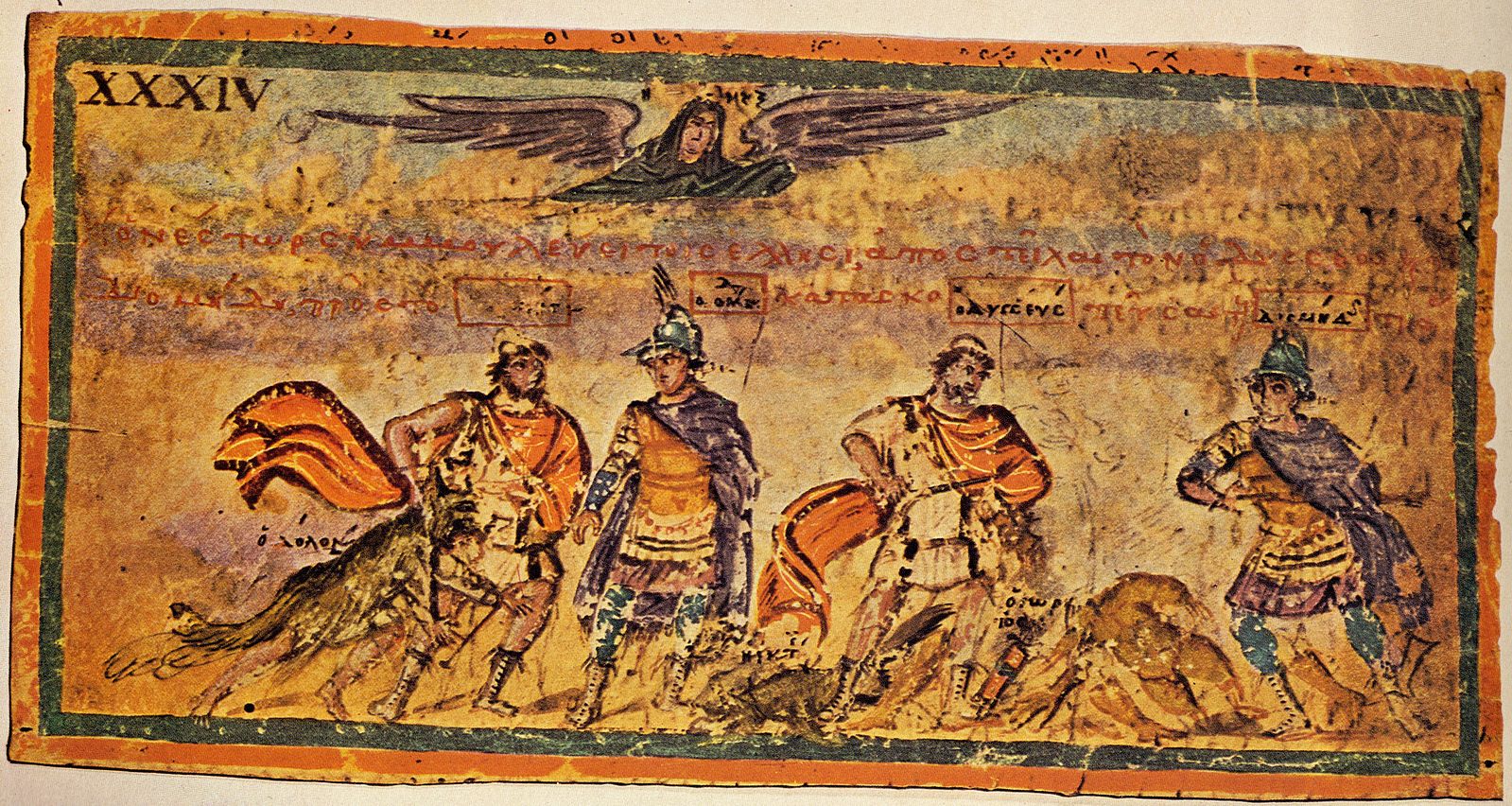
Despite its status as one of the most widely known and studied epic poems of all time, Homer’s Iliad has proven surprisingly resistant to adaptation. However much inspiration it has provided to modern-day novelists working in a variety of different traditions, it’s translated somewhat less powerfully to visual media. Perhaps people still watch Wolfgang Petersen’s Troy, the very loose, Brad Pitt-starring cinematic Iliad adaptation from 2004. But chances are, a century or two from now, humanity on the whole will still be more impressed by the 52 illustrations of the Ambrosian Iliad, which was made in Constantinople or Alexandria around the turn of the sixth century.
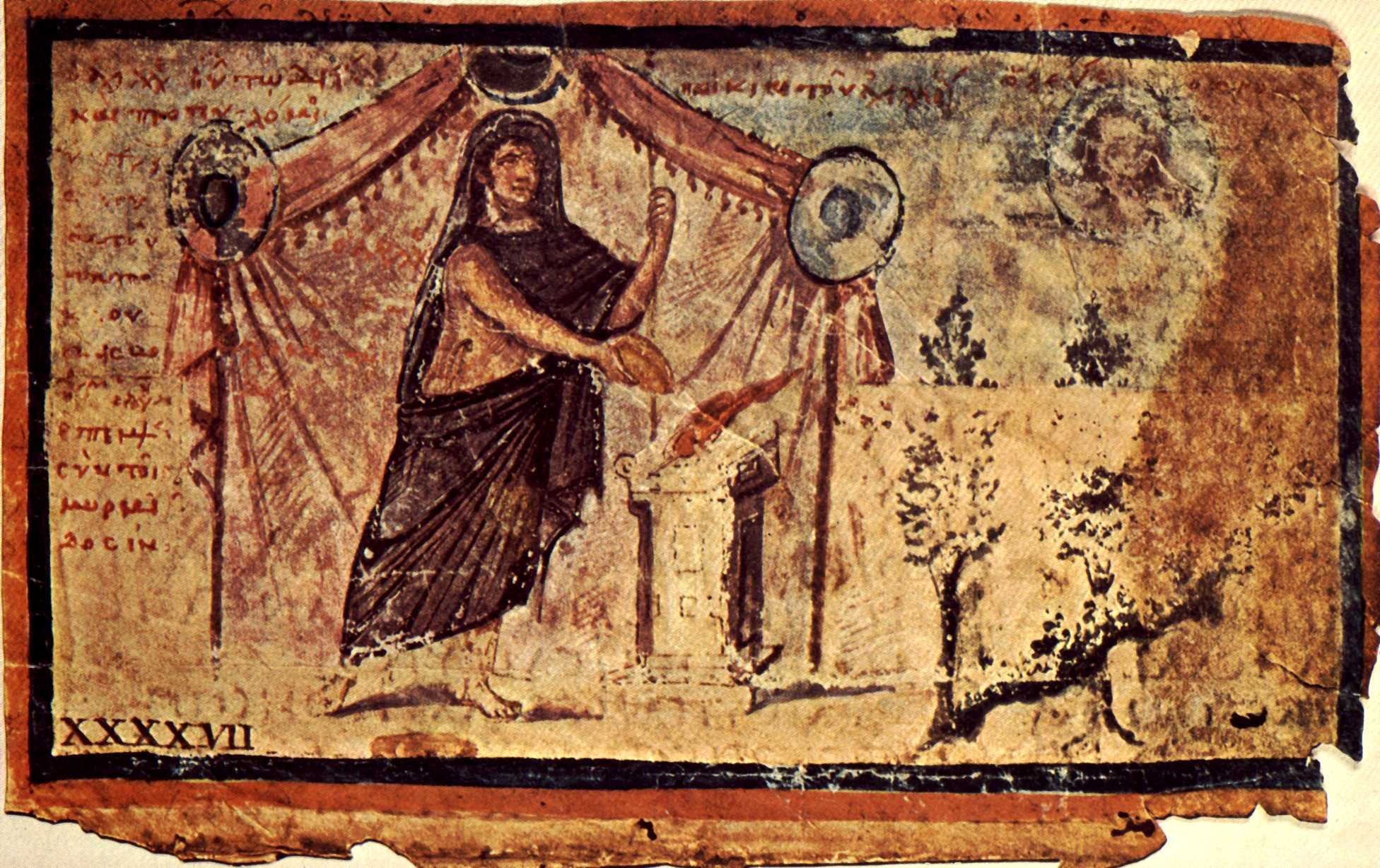
As noted at HistoryofInformation.com, “along with the Vergilius Vaticanus [previously featured on Open Culture] and the Vergilius Romanus, [the Ambrosian Iliad] is one of only three illustrated manuscripts of classical literature that survived from antiquity.” It’s also the only ancient manuscript that depicts scenes from the Iliad. Its illustrations, which “show the names of places and characters,” offer “an insight into early manuscript illumination.” They “show a considerable diversity of compositional schemes, from single combat to complex battle scenes,” as Kurt Weitzmann writes in Late Antique and Early Christian Book Illumination. “This indicates that, by that time, Iliad illustration had passed through various stages of development and thus had a long history behind it.”
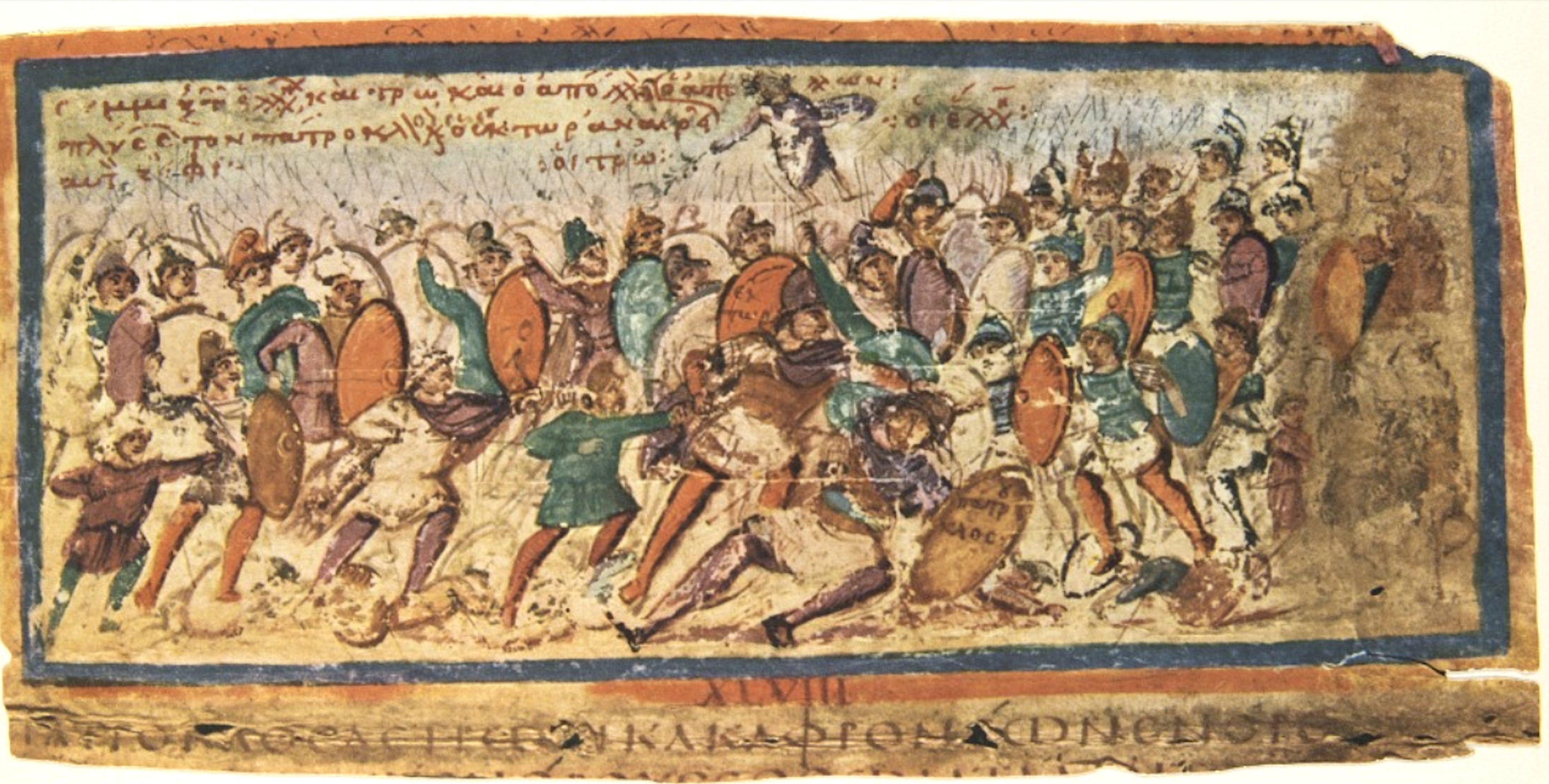
Above, you can see the Ambrosian Iliad’s illustrations of the capture of Dolon (top), Achilles sacrificing to Zeus for Patroclus’ safe return (middle), and Hector killing Patroclus as Automedon escapes (bottom). You can find more scans at the Warburg Institute Iconographic Database, along with other Iliad-related artifacts. Some of the later artistic renditions of Homer in that collection date from the fifteenth, seventeenth, eighteenth, and even the nineteenth centuries, each interpreting these age-old poems for their own time. Indeed, the Iliad and Odyssey have proven enduringly resonant for the better part of three millennia, and there’s no reason to believe that they won’t continue to find new artistic forms for just as long to come. But there’s something especially powerful about seeing Homer rendered by artists who, though they may have come centuries and centuries after the blind poet himself, knew full well what it was to live in antiquity.
Related Content:
The Vatican Digitizes a 1,600-Year-Old Illuminated Manuscript of the Aeneid
A Handy, Detailed Map Shows the Hometowns of Characters in the Iliad
Hear Homer’s Iliad Read in the Original Ancient Greek
Hear Homer’s Iliad Read in the Original Ancient Greek
Greek Myth Comix Presents Homer’s Iliad & Odyssey Using Stick-Man Drawings
Based in Seoul, Colin Marshall writes and broadcasts on cities, language, and culture. His projects include the Substack newsletter Books on Cities and the book The Stateless City: a Walk through 21st-Century Los Angeles. Follow him on the social network formerly known as Twitter at @colinmarshall.
Read More...Superman vs. the KKK: Hear the 1946 Superman Radio Show That Weakened the Klan
Years ago, back in 2016, we featured a 1950 Superman poster that urged students to defend the American way and fight discrimination everywhere. Today, we present another chapter from Superman’s little-known history as a Civil Rights defender.
The year is 1946. World War II has come to an end. And now membership in the Ku Klux Klan starts to rise again. Enter Stetson Kennedy, a human rights activist, who manages to infiltrate the KKK and then figures out an ingenious way to take them down. He contacts the producers of the popular Adventures of Superman radio show, and pitches them on a new storyline: Superman meets and defeats the KKK. Needing a new enemy to vanquish, the producers greenlight the idea.
The 16-episode series, “The Clan of the Fiery Cross,” aired in June 1946 and effectively chipped away at the Klan’s mystique, gradually revealing their secret codewords and rituals. Listen to the episodes above. And take heart in knowing this: According to Stephen J. Dubner and Steven Levitt, the authors of Freakonomics, The Clan of the Fiery Cross was “the greatest single contributor to the weakening of the Ku Klux Klan.” Mocked and trivialized, the Klan’s numbers went back into decline.
For more information on this chapter in superhero history, read the well-reviewed YA book, Superman Versus the Ku Klux Klan: The True Story of How the Iconic Superhero Battled the Men of Hate. Also find more information on these episodes at the Superman Homepage.
To hear more original Superman radio shows, head over to Archive.org.
Note: There is a little bit of a controversy about the exact role Stetson Kennedy played in infiltrating the Klan. You can read up on that here.
If you would like to support the mission of Open Culture, consider making a donation to our site. It’s hard to rely 100% on ads, and your contributions will help us continue providing the best free cultural and educational materials to learners everywhere. You can contribute through PayPal, Patreon, and Venmo (@openculture). Thanks!
Related Content:
The Original 1940s Superman Cartoon: Watch 17 Classic Episodes Free Online
75 Years of Superman in 2 Minutes
Nine Classic Superman Cartoons Restored and Now on YouTube
Read More...This Is What a Nuclear Strike Would Feel Like: A Precise Simulation
Though certain generations may have grown up trained to take cover under their classroom desks in the case of a nuclear showdown between the United States and the Soviet Union, few of us today can believe that we’d stand much chance if we found ourselves anywhere near a detonated missile. Still, the probable effects of a nuclear blast do bear repeating, which the New York Times video above does not just convey verbally but also visually, deriving its information “from interviews of military officials and computer scientists who say we’re speeding toward the next nuclear arms race.”
The last nuclear arms race may have been bad enough, but the relevant technologies have greatly advanced since the Cold War — which, with the last major arms treaty between the U.S. and Russia set to expire within a year, looks set to re-open. Don’t bother worrying about a whole arsenal: just one missile is enough to do much more damage than you’re probably imagining. That’s the scenario envisioned in the video: “traveling at blistering speeds,” the nuke detonates over its target city, and “everyone in range is briefly blinded. Then comes the roar of 9,000 tons of TNT,” producing a fireball “hotter than the surface of the sun.” And that’s just the beginning of the trouble.
A destructive “blast wave” emanates from the site of the explosion, “and then… darkness.” The air is full of “dust and glass fragments,” making it difficult, even deadly, to breathe. What’s worse, “no help is on the way: medical workers in the immediate area are dead or injured.” For survivors, there begins the “radiation sickness, nausea, vomiting, and diarrhea”; some of the deadliest effects don’t even manifest for weeks. “The immediate toll of this one warhead: thousands dead, exponentially more wounded. Damage to the ecosystem will linger for years.” Indeed, the extent of the damage is too great to ponder without resort to gallows humor, as evidenced by the video’s current top comment: “My boss would still force me to come into the office the next day.”
Related content:
What Would Happen If a Nuclear Bomb Hit a Major City Today: A Visualization of the Destruction
See Every Nuclear Explosion in History: 2153 Blasts from 1945–2015
Protect and Survive: 1970s British Instructional Films on How to Live Through a Nuclear Attack
53 Years of Nuclear Testing in 14 Minutes: A Time Lapse Film by Japanese Artist Isao Hashimoto
Every Nuclear Bomb Explosion in History, Animated
Based in Seoul, Colin Marshall writes and broadcasts on cities, language, and culture. His projects include the Substack newsletter Books on Cities and the book The Stateless City: a Walk through 21st-Century Los Angeles. Follow him on the social network formerly known as Twitter at @colinmarshall.
Read More...Support Us
We're hoping to rely on loyal readers, rather than erratic ads. Please click the Donate button and support Open Culture. You can use Paypal, Venmo, Patreon, even Crypto! We thank you!

About Us

Open Culture scours the web for the best educational media. We find the free courses and audio books you need, the language lessons & educational videos you want, and plenty of enlightenment in between.
Advertise With Us
FREE UPDATES!
GET OUR DAILY EMAIL
Get the best cultural and educational resources on the web curated for you in a daily email. We never spam. Unsubscribe at any time.
FOLLOW ON SOCIAL MEDIA
Open Culture editor Dan Colman scours the web for the best educational media. He finds the free courses and audio books you need, the language lessons & movies you want, and plenty of enlightenment in between.
Advertise With Us



