Nietzsche’s 10 Rules for Writing with Style
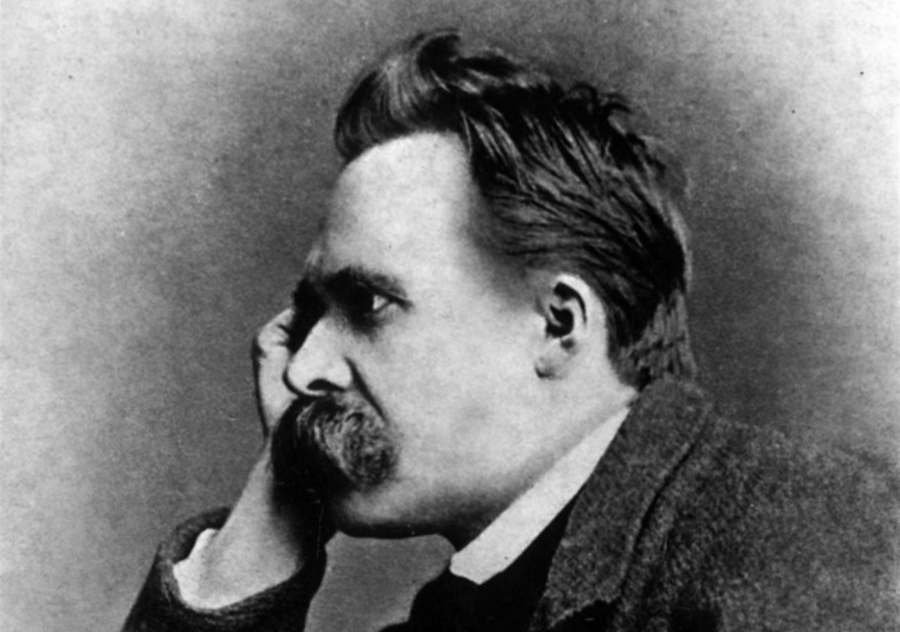
The life of Russian-born poet, novelist, critic, and first female psychologist Lou Andreas-Salomé has provided fodder for both salacious speculation and intellectual drama in film and on the page for the amount of romantic attention she attracted from European intellectuals like philosopher Paul Rée, poet Ranier Maria Rilke, and Friedrich Nietzsche. Emotionally intense Nietzsche became infatuated with Salomé, proposed marriage, and, when she declined, broke off their relationship in abrupt Nietzschean fashion.
For her part, Salomé so valued these friendships she made a proposal of her own: that she, Nietzsche and Rée, writes D.A. Barry at 3:AM Magazine, “live together in a celibate household where they might discuss philosophy, literature and art.” The idea scandalized Nietzsche’s sister and his social circle and may have contributed to the “passionate criticism” Salomé’s 1894 biographical study, Friedrich Nietzsche: The Man and His Works, received. The “much maligned” work deserves a reappraisal, Barry argues, as “a psychological portrait.”
In Nietzsche, Salomé wrote, we see “sorrowful ailing and triumphal recovery, incandescent intoxication and cool consciousness. One senses here the close entwining of mutual contradictions; one senses the overflowing and voluntary plunge of over-stimulated and tensed energies into chaos, darkness and terror, and then an ascending urge toward the light and most tender moments.” We might see this passage as charged by the remembrance of a friend, with whom she once “climbed Monte Sacro,” she claimed, in 1882, “where he told her of the concept of the Eternal Recurrence ‘in a quiet voice with all the signs of deepest horror.’”
We should also, perhaps primarily, see Salomé’s impressions as an effect of Nietzsche’s turbulent prose, reaching its apotheosis in his experimentally philosophical novel, Thus Spake Zarathustra. As a theorist of the embodiment of ideas, of their inextricable relation to the physical and the social, Nietzsche had some very specific ideas about literary style, which he communicated to Salomé in an 1882 note titled “Toward the Teaching of Style.” Well before writers began issuing “similar sets of commandments,” writes Maria Popova at Brain Pickings, Nietzsche “set down ten stylistic rules of writing,” which you can find, in their original list form, below.
1. Of prime necessity is life: a style should live.
2. Style should be suited to the specific person with whom you wish to communicate. (The law of mutual relation.)
3. First, one must determine precisely “what-and-what do I wish to say and present,” before you may write. Writing must be mimicry.
4. Since the writer lacks many of the speaker’s means, he must in general have for his model a very expressive kind of presentation of necessity, the written copy will appear much paler.
5. The richness of life reveals itself through a richness of gestures. One must learn to feel everything — the length and retarding of sentences, interpunctuations, the choice of words, the pausing, the sequence of arguments — like gestures.
6. Be careful with periods! Only those people who also have long duration of breath while speaking are entitled to periods. With most people, the period is a matter of affectation.
7. Style ought to prove that one believes in an idea; not only that one thinks it but also feels it.
8. The more abstract a truth which one wishes to teach, the more one must first entice the senses.
9. Strategy on the part of the good writer of prose consists of choosing his means for stepping close to poetry but never stepping into it.
10. It is not good manners or clever to deprive one’s reader of the most obvious objections. It is very good manners and very clever to leave it to one’s reader alone to pronounce the ultimate quintessence of our wisdom.
As with all such prescriptions, we are free to take or leave these rules as we see fit. But we should not ignore them. While Nietzsche’s perspectivism has been (mis)interpreted as wanton subjectivity, his veneration for antiquity places a high value on formal constraints. His prose, we might say, resides in that tension between Dionysian abandon and Apollonian cool, and his rules address what liberal arts professors once called the Trivium: grammar, rhetoric, and logic: the three supports of moving, expressive, persuasive writing.
Salomé was so impressed with these aphoristic rules that she included them in her biography, remarking, “to examine Nietzsche’s style for causes and conditions means far more than examining the mere form in which his ideas are expressed; rather, it means that we can listen to his inner soundings.” Isn’t this what great writing should feel like?
Salomé wrote in her study that “Nietzsche not only mastered language but also transcended its inadequacies.” (As Nietzsche himself commented in 1886, notes Hugo Drochon, he needed to invent “a language of my very own.”) Nietzsche’s bold-yet-disciplined writing found a complement in Salomé’s boldly keen analysis. From her we can also perhaps glean another principle: “No matter how calumnious the public attacks on her,” writes Barry, “particularly from [his sister] Elisabeth Förster-Nietzsche during the Nazi period in Germany, Salomé did not respond to them.”
Note: An earlier version of this post appeared on our site in December 2016.
If you would like to support the mission of Open Culture, consider making a donation to our site. It’s hard to rely 100% on ads, and your contributions will help us continue providing the best free cultural and educational materials to learners everywhere. You can contribute through PayPal, Patreon, and Venmo (@openculture). Thanks!
Related Content:
The Daily Habits of Highly Productive Philosophers: Nietzsche, Marx & Immanuel Kant
Walter Kaufmann’s Classic Lectures on Nietzsche, Kierkegaard and Sartre (1960)
Writing Tips by Henry Miller, Elmore Leonard, Margaret Atwood, Neil Gaiman & George Orwell
Josh Jones is a writer and musician based in Durham, NC. Follow him at @jdmagness
Read More...Zoo Hires Marvin Gaye Impersonator to Help Endangered Monkeys “Get It On”
This past weekend, monkeys residing at a British zoo got a special treat. A Marvin Gaye impersonator performed “Let’s Get It On” and “Sexual Healing,” all in an effort to help the monkeys, well, “get it on.”
Located in Stafford, England, the Trentham Monkey Forest saw the performance as a novel way to get their endangered Barbary macaques to produce offspring: Park Director Matt Lovatt said on the zoo’s website: “We thought it could be a creative way to encourage our females to show a little affection to males that might not have been so lucky in love.” “Females in season mate with several males so paternity among our furry residents is never known. Each birth is vital to the species with Barbary macaques being classed as endangered. Birthing season occurs in late spring/early summer each year, so hopefully Marvin’s done his magic and we can welcome some new babies!”
For anyone keeping score, Dave Largie is the singer channeling Marvin.
If you would like to support the mission of Open Culture, consider making a donation to our site. It’s hard to rely 100% on ads, and your contributions will help us continue providing the best free cultural and educational materials to learners everywhere. You can contribute through PayPal, Patreon, and Venmo (@openculture). Thanks!
Related Content
Pianist Plays Beethoven, Bach, Chopin, Ravel & Debussy for Blind Elephants in Thailand
Footage of the Last Known Tasmanian Tiger Restored in Color (1933)
Two Million Wondrous Nature Illustrations Put Online by The Biodiversity Heritage Library
Read More...Space Sex is Serious Business: A Hilarious Short Animation Addresses Serious Questions About Human Reproduction in Space
Back in the late 80s, there was a rumor floating around that Earth Girls Are Easy.
40 some years of scientific and social advancement have shifted the conversational focus.
We’re just now beginning to understand that Space Sex is Serious Business.
Particularly if SpaceX CEO Elon Musk achieves his goal of establishing a permanent human presence on Mars.
Surely at some point in their long travels to and residence on Mars, those pioneers would get down to business in much the same way that rats, fruit flies, parasitic wasps, and Japanese rice fish have while under observation on prior space expeditions.
Meanwhile, we’re seriously lacking in human data.
A pair of human astronauts, Jan Davis and Mark Lee, made history in 1992 as the first married couple to enter space together, but NASA insisted their relations remained strictly professional for the duration, and that a shuttle’s crew compartment is too small for the sort of antics a nasty-minded public kept asking about.
In an interview with Mens Health, Colonel Mike Mullane, a veteran of three space missions, confirmed that a spacecraft’s layout doesn’t favor romance:
The only privacy would have been in the air lock, but everybody would know what you were doing. You’re not out there doing a spacewalk. There’s no reason to be in there.
Shortly after Davis and Lee returned to earth, NASA formalized an unspoken rule prohibiting husbands and wives from venturing into space together. It did little to squelch public interest in space sex.
One wonders if NASA’s rule has been rewritten in accordance with the times. Air lock aside, might same sex couples remain free to swing what hetero-normative marrieds (arguably) cannot?
This is but one of hundreds of space sex questions begging further consideration.
Some of the most serious are raised in Tom McCarten’s witty collage animation for FiveThirtyEight, above.
Namely how damaging will cosmic radiation and microgravity prove to human reproduction? As more humans toy with the possibility of leaving Earth, this question feels less and less hypothetical.
Maggie Koerth-Baker, who researched and narrates the animated short, notes that Musk portrayed the risks of radiation as minor during a presentation at the 67th International Astronautical Congress in Guadalajara, Mexico, and breathed not a peep as to the effects of microgravity.
Yet scientific studies of non-human space travelers document a host of reproductive issues including lowered libido, atypical hormone levels, ovulatory dysfunction, miscarriages, and fetal mutations.
On its webpage, NASA provides some information about the Reproduction, Development, and Sex Differences Laboratory of its Space Biosciences Research Branch, but remains mum on topics of pressing concern to, say, students in a typical middle school sex ed class.
Like achieving and maintaining erections in microgravity.
In Physiology News Magazine, Dr. Adam Watkins, associate professor of Reproductive and Developmental Physiology at the University of Nottingham, suggests that internal and external atmospheric changes would make such things, pardon the pun, hard:
Firstly, just staying in close contact with each other under zero gravity is hard. Secondly, as astronauts experience lower blood pressure while in space, maintaining erections and arousal are more problematic than here on Earth.
The exceptionally forthright Col Mullane has some contradictory first hand experience that should come as a relief to all humankind:
A couple of times, I would wake up from sleep periods and I had a boner that I could have drilled through kryptonite.
Related Content
Free Online Astronomy Courses
Watch Family Planning, Walt Disney’s 1967 Sex Ed Production, Starring Donald Duck
The Story Of Menstruation: Watch Walt Disney’s Sex Ed Film from 1946
- Ayun Halliday is the Chief Primatologist of the East Village Inky zine and author, most recently, of Creative, Not Famous: The Small Potato Manifesto. Follow her @AyunHalliday.
Read More...Bob Dylan Goes Punk on Late Night with David Letterman, Playing “Jokerman” with the Latino Punk Band, the Plugz (1984)
Listen to Bob Dylan’s studio albums all you like; you don’t know his music until you hear the live versions. That, at least, is the conclusion at which I’ve arrived after spending the better part of the past year listening through Dylan’s studio discography. This is not to put him into the mold of the Grateful Dead, whose studio albums come a distant second in importance to their vast body of live recordings. It was surely the songs preserved on the likes of Highway 61 Revisited, Blood on the Tracks, and Love and Theft, after all, that won Dylan the Nobel Prize. But in a sense he’s never stopped writing these same songs, often subjecting them to brazen stylistic and lyrical changes when he launches into them onstage.
This self-reinterpretation occasionally produces what Dylan’s fans consider a new definitive version. Perhaps the most agreed-upon example is “Jokerman,” the opener to his 1983 album Infidels (and the basis for one of his earliest MTV music videos), which he performed the following year on the still-new Late Night with David Letterman.
As Vulture’s Matthew Giles puts it, Letterman was fast becoming “a comedy sensation, bringing a new level of sarcasm, irony, and Bud Melman-centric humor to a late-night format still reliant on the smooth unflappability of Johnny Carson.” Dylan had been going in the other direction, “having frustrated his audience with the musically slick, lyrically hectoring series of evangelical Christian albums that he’d released in the late 70s and early 80s.”
By 1984, “Dave was far more of a counterculture hero than Bob.” But Dylan had been surreptitiously preparing for his next musical transformation: many were the nights he would “leave his Malibu home and slip into shows by the likes of L.A. punk stalwarts X, or check out the Santa Monica Civic Center when the Clash came to town.” For accompaniment on the Letterman gig he brought drummer J.J. Holiday, as well as Charlie Quintana and bassist Tony Marsico of the LA punk band the Plugz, with whom he’d been spent the previous few months jamming. It isn’t until they take Letterman’s stage that Dylan tells the band what to open with: bluesman Sonny Boy Williamson’s “Don’t Start Me Talking.”
Just above, you can see Dylan’s rehearsal for the Letterman show. It features five tracks–“I Once Knew a Man,” “License to Kill,” “Treat Her Right,” “My Guy,” and a rendition of “Jokerman” that turns the original’s reggae into stripped-down, hard-driving rock. The stylistic change seems to infuse the 42-year-old Dylan with a new sense of musical vitality. As for the song itself, its lyrics — cryptic even by Dylan’s standards — take on new meanings when charged by the young band’s energy. But even in this highly contemporary musical context, Dylan keeps it “classic” by bringing out the harmonica for a final solo, though not without some confusion as to which key he needed. If anything, that mix-up makes the song even more punk — or maybe post-punk, possibly new wave, but in any case thoroughly Dylan.
Related content:
Bob Dylan & The Grateful Dead Rehearse Together in Summer 1987: Hear 74 Tracks
How Bob Dylan Created a Musical & Literary World All His Own: Four Video Essays
Based in Seoul, Colin Marshall writes and broadcasts on cities, language, and culture. His projects include the Substack newsletter Books on Cities, the book The Stateless City: a Walk through 21st-Century Los Angeles and the video series The City in Cinema. Follow him on Twitter at @colinmarshall or on Facebook.
Read More...The Anti-Vaxxer Who Waged War Against Jonas Salk & His Polio Vaccine: When History Keeps Repeating
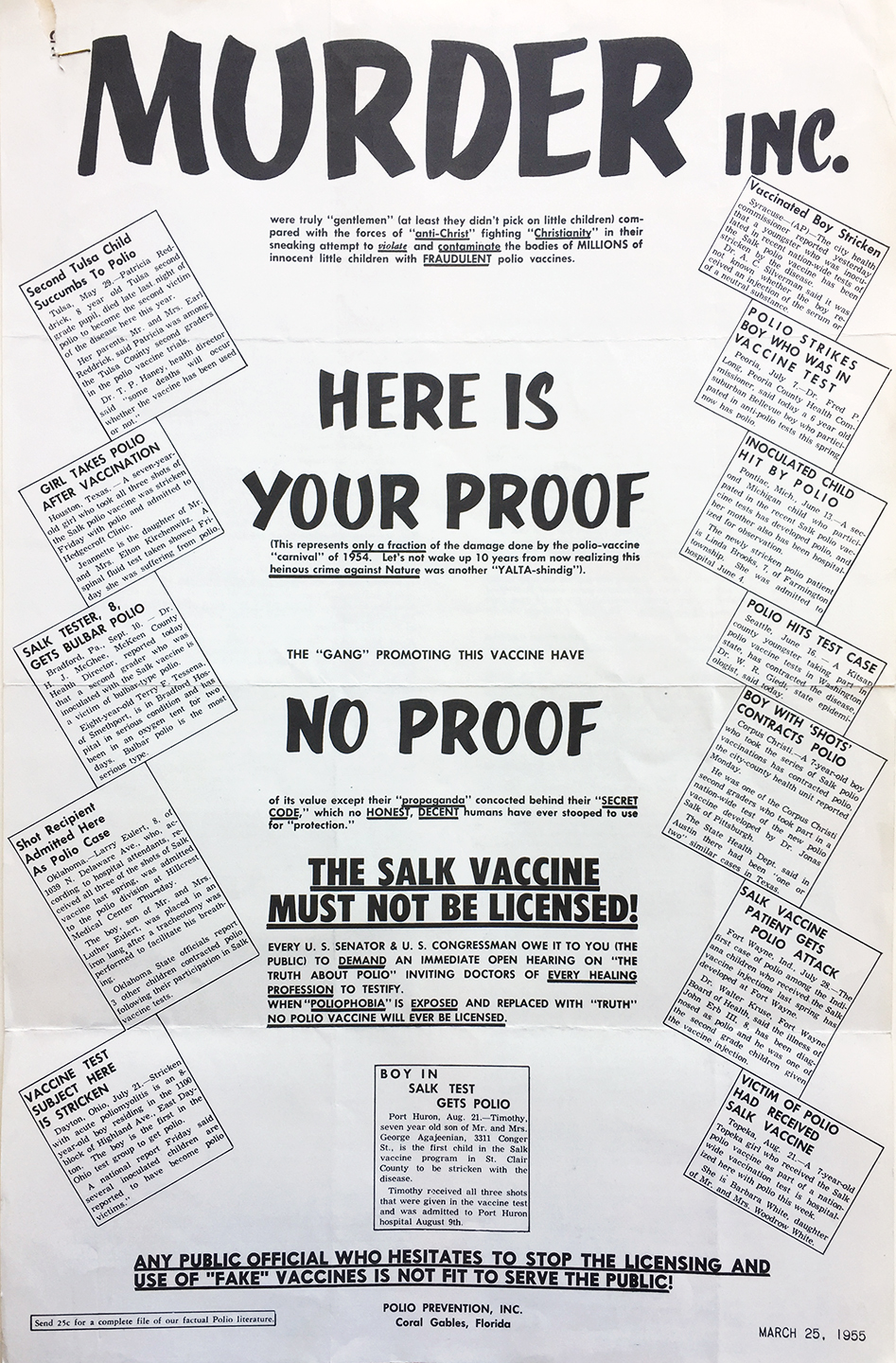
Almost immediately after Scottish doctor Edward Jenner learned how to inoculate humans against smallpox in 1796, mass movements sprang up in England and the U.S. to oppose the measure. The rejection of inoculation and vaccination generally made its stand on “political grounds,” says Yale historian Frank Snowden. For over two hundred years, people have “widely considered [vaccines to be] another form of tyranny.” In the 19th century, fears of government control mutated into pseudoscientific conspiracy theories claiming the smallpox vaccine might cause, for example, the growth of hooves and horns or the birth of human/cow hybrid babies.
The pushback against the smallpox vaccine, writes Slate’s Nick Keppler, occurred during a time “when arguments about bodily integrity and religious objection carried as much weight as scientific evidence.” But vaccine science progressed nonetheless, and scientific institutions – very much in league with government by the mid-20th century – shared their largesse in the form of medical breakthroughs and consumer conveniences. “The postwar era was a very trust-in-science-era,” says researcher scientist Jonathan M. Berman, author of Anti-Vaxxers: How to Challenge a Misinformed Movement. “The public not just accepted, but cheered, the headline-making work of guys in white lab coats,” Keppler remarks.
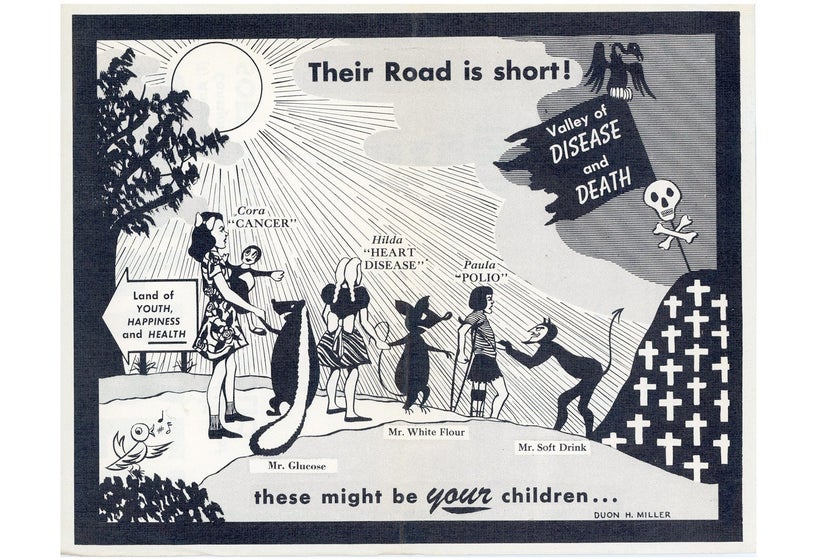
Not everyone was cheering for Jonas Salk, the March of Dimes, and the polio vaccine, however. While celebrities like Elvis Presley legitimized the vaccine in the eyes of a previously skeptical public, a few fervent anti-vaxxers rose to prominence, some using the same combination of fear mongering, pseudoscientific speculation, and conspiratorial thinking common to the smallpox era – and common, once again, in the time of COVID-19.
One of these figures, Florida businessman Duon Miller, founded a cosmetics company, then invested his own money and that of others into an organization called Polio Prevention Inc., a one-man operation that purported to fight polio with information about nutrition. Miller’s organization actually served to undermine the vaccine with a host of outrageous, logically fallacious claims about the causes of polio and the dangers of vaccination. As Keppler notes:
Like today’s COVID skeptics, Miller cherry-picked physicians who were skeptical of polio as a virus and misrepresented facts. One mailer was a rapid fire of out-of-context information: Salk “isn’t entirely satisfied with the vaccine.” Some children still got polio after being vaccinated. And just as the “real” number of COVID-19 deaths pales in comparison to vaccine deaths in some dark corners of the internet, so it was with polio in Miller’s world: “Polio ‘CRIPPLES’ and Polio ‘DEATHS’ are merely ‘Statistics’ to the ‘Charity-Brokers,’ whose record to date of ‘Cripples’ and ‘Deaths’ is TRULY DISGRACEFUL.”
Like many conspiracy theorists today, Miller’s claims contained several kernels of truth, misplaced in the service of a bizarre crusade. Research now ties excess consumption of soft drinks, white flour, and refined sugar to an increase in cancers and heart disease. In this, Miller was prescient, given that these are the some of the biggest killers in the country. But this had nothing to do with the polio virus. Miller’s uncritical thinking, mistaking large-scale correlations for causation, typifies conspiracy theories. His appeal to the welfare of children also strikes a familiar chord, but it’s unsurprising in this case, given that “polio was a disease of children,” says René F. Najera, editor of the College of Physicians of Philadelphia’s History of Vaccines project, “so people were already afraid for their children.” Comparatively, COVID-19 “has largely left children alone … so we don’t mobilize as much.”

Keppler draws many other parallels between Miller’s personal anti-polio vaccine project and the efforts today to resist the COVID-19 vaccine, all representative of American anti-intellectualism and the well-funded will to disbelieve what the science clearly demonstrates. Miller distributed mailers in schools around Florida, accepted hundreds in donations, and printed thousands of pamphlets for distribution. He even offered to get injected with the polio virus to show that it was harmless. However, “federal charges ended Miller’s crusade,” when he was charged with “sending ‘libellous, scurrilous and defamatory’ statements through the mail” in 1954, the year Salk readied nationwide trials of the vaccine. Five years later, “U.S. polio cases were about 14 percent of what they were in 1952, thanks to vaccination,” not, as Miller would have the public believe, a change in diet. “Give us proper diets,” he continued to write to newspapers, “and we’ll solve the physical imperfections of Americans young and old.” He might have been on to a good argument about nutrition just by chance, but the public had no reason to listen to his opinions about polio simply because he could afford to circulate them.
Related Content:
How Do Vaccines (Including the COVID-19 Vaccines) Work?: Watch Animated Introductions
Dying in the Name of Vaccine Freedom
Josh Jones is a writer and musician based in Durham, NC. Follow him at @jdmagness
Read More...An Opera Singer & Cabaret Artist Record an Astonishing Version of David Bowie & Queen’s “Under Pressure”
On the surface of things, Anthony Roth Costanzo, the internationally-recognized countertenor and Justin Vivian Bond, the subversive performance artist best known for their creation Kiki DuRane, “an alcoholic battle-axe with a throat full of razor-blades,” would have little reason to share a mic, let alone inhabit the same stage.
Leave surfaces behind!
Their genre-defying, just released album, Only An Octave Apart, explores the depths that lurk beneath them, finding common cause between their chosen art forms and then some. The album’s title, a nod to the opening number of a Metropolitan Opera television special starring comedian Carol Burnett and operatic soprano Beverly Sills, is just the tip of the iceberg.
As they state in the program notes for a recent appearance with the New York Philharmonic at Jazz at Lincoln Center:
We each sound different from what you would expect when you look at us. The juxtaposition of our voices, personalities, and repertoire subverts notions of high and low, be it in terms of pitch, cultural echelon, or degrees of camp — not to mention the difference in height.
If you thought David Bowie and Freddie Mercury sent things into the stratosphere when they joined forces on “Under Pressure,” listen to Costanzo and Bond’s take, above.
Their Dido’s Lament / White Flag Medley smashes the musical binary with a delicacy that is given room to grow.
Costanzo begins with two and a half soaring minutes from Henry Purcell’s Dido & Aeneas.
Introducing the number at Jazz at Lincoln Center, he recalled how Dido & Aeneas was one of his first professional opera gigs at 19. No, he wasn’t cast as the fatally distraught Queen of Carthage, a diva role he’s eyed for years, but rather the Second Woman and First Witch.
(“Second Woman / First Witch…sounds like the story of my life,” Bond marveled. “I own it! Can you imagine if you were First Woman and Second Witch?”)
Costanzo got his chance at Dido in the summer of 2020 when, with performance venues still closed due to the pandemic, he hatched an idea to cart Philharmonic musicians and guest singers around the city’s five Boroughs in a rented pickup dubbed the NY Phil Bandwagon. 80-some free performances later, he felt ready to record.
When Bond joins in, it’s with English singer-songwriter Dido’s 2003 chart topper, White Flag, which also speaks to the pains of love. The sincerity of the performers causes a gorgeous alchemical reaction to soften the positions of more than a few staunch opera-phobes and pop-deniers.
(“The wonderful thing about the opera,” Bond cracks, “is when you wake up, you’re at the opera!”)
Their Egyptian Sun mash up is born of an even cannier pairing — The Bangles’ mid-80s hit, Walk Like An Egyptian and Philip Glass’ ancient Egypt-themed minimalist modern opera, Akhnaten, in which Costanza recently starred, making his first entrance nude and flecked with gold.
Other treasures from this fruitful collaboration include skillful intertwinings of Tom Jobim’s Bossa nova favorite Águas de Março (Waters of March) with Gioachino Rossini’s Cinderella-themed confection La Cenerentola, and Gluck’s 18th-century masterpiece, Orfeo ed Euridice with Don’t Give Up, a “message of hope in the bleakest of moments” and a hit for Peter Gabriel and Kate Bush when Bond was a year out of college…and Costanzo was four.
Listen to Only an Octave Apart in its entirety on YouTube or Spotify.
Anthony Ross Costanzo will reprise his role as the revolutionary pharaoh, Akhnaten, at the Metropolitan Opera later this spring.
- Ayun Halliday is the Chief Primatologist of the East Village Inky zine and author, most recently, of Creative, Not Famous: The Small Potato Manifesto. Follow her @AyunHalliday.
Read More...The Marcel Duchamp Research Portal Opens, Making Available 18,000 Documents and 50,000 Images Related to the Revolutionary Artist
Marcel Duchamp made films, composed music, painted Nude Descending a Staircase, No. 2, designed an art deco chess set, and of course — the first thing most of us learn about him, as well as the last thing many of us learn about him — he put a urinal in an art galley. But as you might expect of an artist who spent the early 20th century at the heart of the avant-garde, there’s more to him than that. This notion is backed up by the more than 18,000 documents and 50,000 images made available at the Duchamp Research Portal, a newly opened archive dedicated to the life and work of the revolutionary conceptual artist.
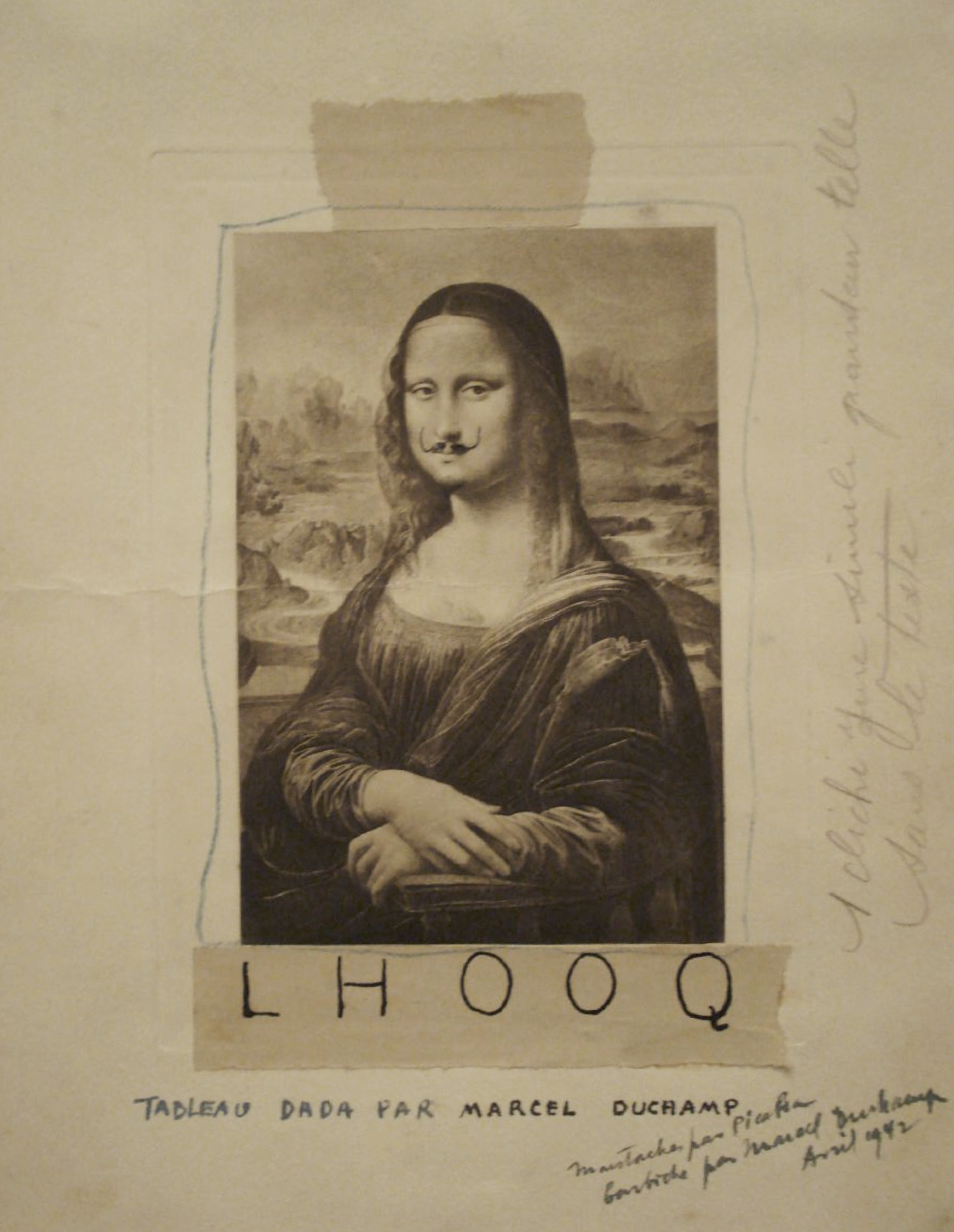
The fruit of a seven-year collaboration between the Philadelphia Museum of Art, the Association Marcel Duchamp, and the Centre Pompidou, this formidable digital collection includes many artifacts related to the artist’s best-known work: the “large glass” of The Bride Stripped Bare by Her Bachelors, Even; the mustachioed Mona Lisa; the shocking attempts to commit physical motion to canvas; and that urinal, Fountain.
But its “most interesting items,” writes The Art Newspaper’s Daniel Cassady, “are often the most intimate and involve other major players in the evolution of 20th-century art. A 1950 letter — with enigmatic marginalia — from Breton. A 1933 postcard to Constantin Brâncuși. Many candid photographs by Duchamp’s friend and fellow giant of the era, Man Ray.”
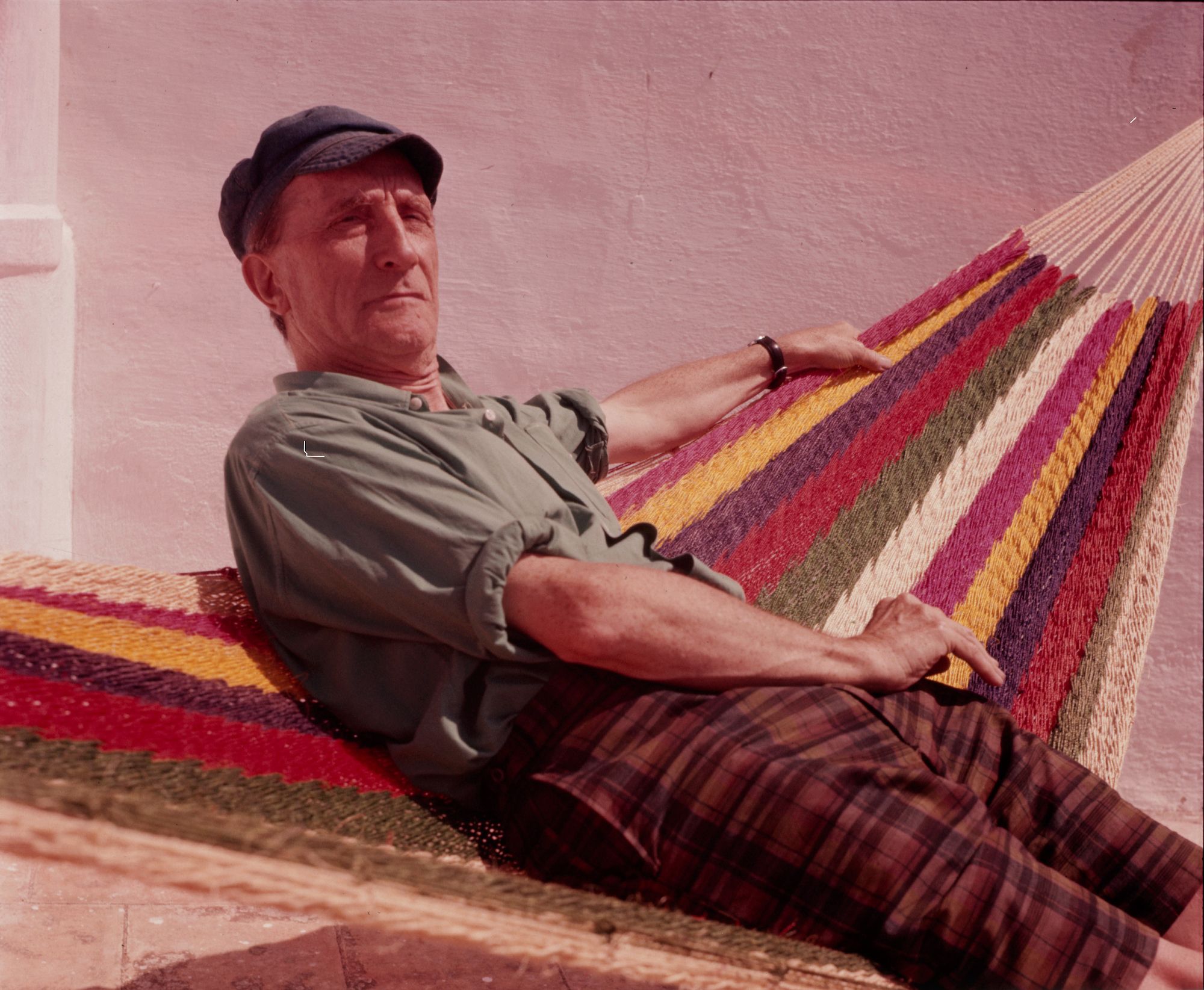
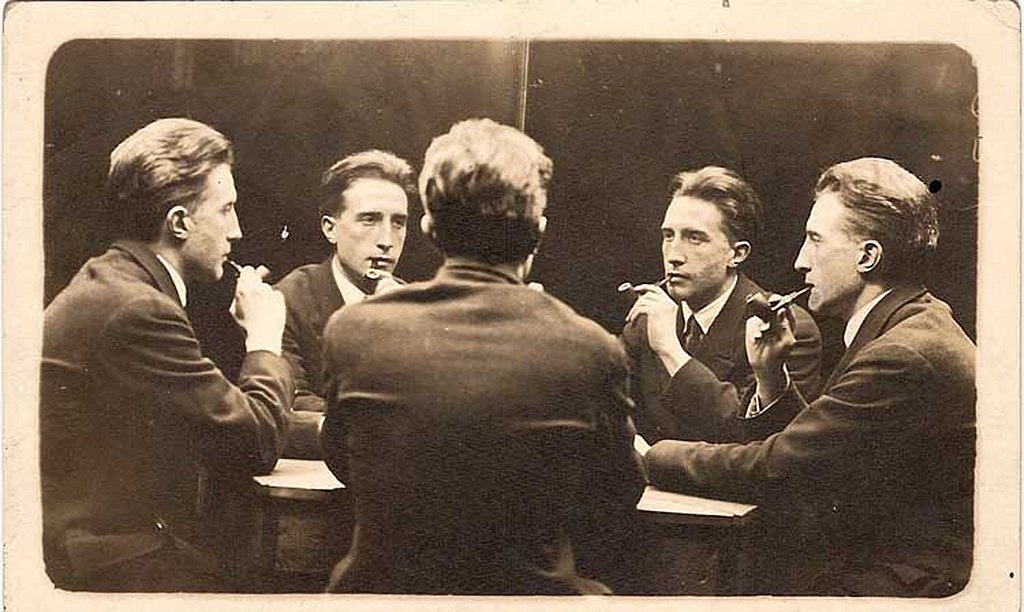
These names will be familiar to readers of Open Culture, where we’ve previously featured Brâncuși on film and portraits of 1920s cultural icons by Man Ray — who, as we can see from the above snapshot of Duchamp at his Spanish home, didn’t always work so formally. But then, no artist can fully be understood through what makes it into the art-history textbooks alone. Browse the Duchamp Research Portal (or click “show me more” to change up the images on its front page) and you’ll see pieces of an artistic life fully lived: the floor plan of his West 67th Street studio; a 1940 telegram to American patron Walter Conrad Arensberg (“HOLDING SHIPMENT OF MASK AWAITING CONFIRMATION OF INSURANCE AND ADDRESS”); a 1954 French newspaper profile; and a series of images juxtaposing Duchamp with an unclothed Eve Babitz, the late Los Angeles “it-girl” — not just the famous one of them playing chess.
Related Content:
Hear Marcel Duchamp Read “The Creative Act,” A Short Lecture on What Makes Great Art, Great
Anémic Cinéma: Marcel Duchamp’s Whirling Avant-Garde Film (1926)
Hear the Radical Musical Compositions of Marcel Duchamp (1912–1915)
What Made Marcel Duchamp’s Famous Urinal Art — and an Inventive Prank
Based in Seoul, Colin Marshall writes and broadcasts on cities and culture. His projects include the book The Stateless City: a Walk through 21st-Century Los Angeles and the video series The City in Cinema. Follow him on Twitter at @colinmarshall or on Facebook.
Read More...Hear Benedict Cumberbatch Reading Letters by Kurt Vonnegut, Alan Turing, Sol LeWitt, and Others
Many know Benedict Cumberbatch as neurosurgeon-turned-Master of the Mystic Arts Doctor Strange. Originally created in the 1960s by Marvel Comics artist and writer Steve Ditko, the character has gained a new fan following through the films of the Marvel Cinematic Universe. In 2016’s Doctor Strange, the upcoming Doctor Strange in the Multiverse of Madness, and several other MCU pictures besides, he’s been played by Benedict Cumberbatch. Open Culture readers may know Cumberbatch better as the 21st-century detective protagonist of the BBC series Sherlock — or, even more likely, as a reader-out-loud of historical and literary letters.
We’ve previously featured Cumberbatch’s onstage renditions of everything from Albert Camus’ thank-you note to his elementary school teacher to Kurt Vonnegut’s advice to the people of the year 2088 to Franz Kafka’s The Metamorphosis. Now we’ve rounded up more letter-readings in the ten-video playlist above.
Beginning with Sol LeWitt’s letter of advice to Eva Hesse, it continues on to Cumberbatch’s readings of other such works as “the best cover letter ever written,” more than one missive by the pioneering and persecuted computer scientist Alan Turing, a “letter about crabs (not the kind you eat)” by Patrick Leigh Fermor, and a Richard Nixon’s William Safire-composed speech to be read in the event that Apollo 11 didn’t return to Earth.
The material in this correspondence, all of which Cumberbatch reads aloud for Letters of Note’s Letters Live project, varies considerable in both tone and content. Little of it resembles the comic-book or detective-novel material with which he has won mainstream fame. But like any good actor, Cumberbatch knows how to tailor his performative persona to each new context without losing the innate sensibility that sets him apart. At the same time, he clearly understands how to interpret not just different characters, realistic as well as fantastical, but also the personalities of real human beings who actually lived. Whatever other pleasures it offers, hearing Cumberbatch read letters underscores the fact that we could all do much worse than to be played by him in the movie of our life.
Related Content:
Benedict Cumberbatch Reads “the Best Cover Letter Ever Written”
Benedict Cumberbatch Reads Kurt Vonnegut’s Letter of Advice to People Living in the Year 2088
Based in Seoul, Colin Marshall writes and broadcasts on cities and culture. His projects include the book The Stateless City: a Walk through 21st-Century Los Angeles and the video series The City in Cinema. Follow him on Twitter at @colinmarshall or on Facebook.
Read More...The Philosophy of Games: C. Thi Nguyen on the Philosophy vs. Improv Podcast
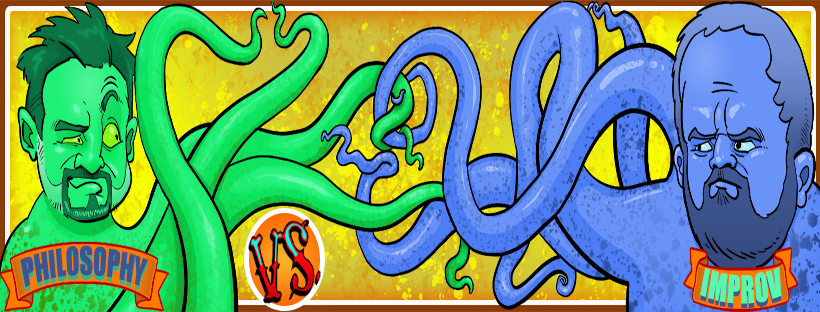
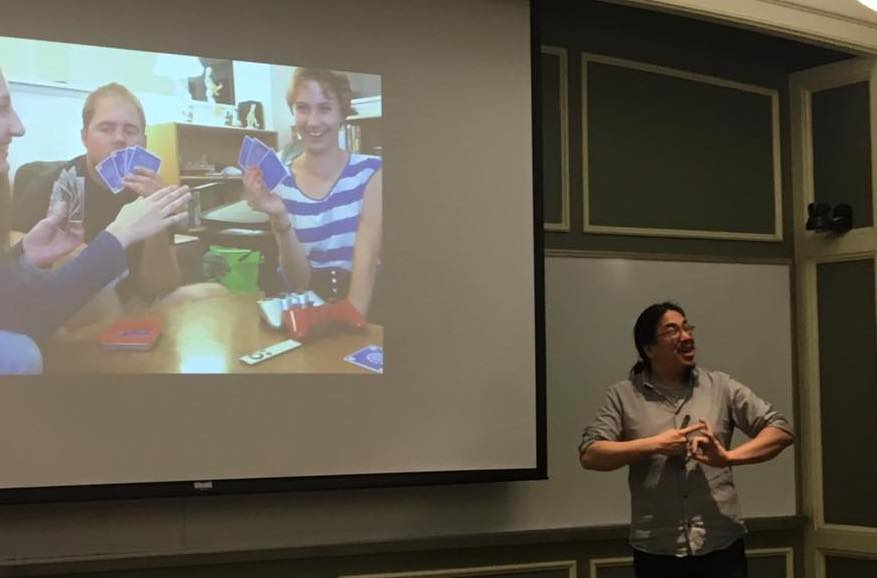
Thi Nguyen (pronounced “TEE NWEEN”) teaches at the University of Utah, and his first book, 2020’s Games: Agency as Art, makes a case for games being treated as a serious object of study for philosophy. Thi sees game analysis as not just a sub-division in the philosophy of art (aesthetics), but in the philosophy of action. How do games relate to other human activities with constraints, like customs, language, and more specifically performative acts within language (like saying “I do” during a marriage ceremony, where you’re not just describing that you do something, but actually taking action)?
On this recording (episode 24 of the podcast), Thi joins philosophy podcaster Mark Linsenmayer of The Partially Examined Life and improvisational comedy coach Bill Arnett of the Chicago Improv Studio to talk about games and improv, and to engage in a couple of improv scenes that explore the connection between the two.
This is the third philosophy guest for the Philosophy vs. Improv podcast, which alternates between guests from the improv world, guests from the philosophy world, and no guest at all. The overall format involves a lesson from each host, which they teach to each other (and the guest) simultaneously. This often results in unexpected synchronicity given the connections between two disciplines that stress the analysis of language, living deliberately, and quick thinking.
For another philosophically rich episode, see episode #20 in which St. Lawrence University’s Jennifer L. Hansen appeared to discuss the many aspects of the concept of “The Other” in philosophy.
Philosophy vs. Improv is a podcast hosted by Mark Linsenmayer, who also hosts The Partially Examined Life Philosophy Podcast, Pretty Much Pop: A Culture Podcast, and Nakedly Examined Music.
Read More...Discover Khipu, the Ancient Incan Record & Writing System Made Entirely of Knots
Khipus, the portable information archives created by the Inca, may stir up memories of 1970s macrame with their long strands of intricately knotted, earth-toned fibers, but their function more closely resembled that of a densely plotted computerized spreadsheet.
As Cecilia Pardo-Grau, lead curator of the British Museum’s current exhibition Peru: a journey in time explains in the above Curators Corner episode, khipus were used to keep track of everything from inventories and census to historical narratives, using a system that assigned meaning to the type and position of knot, spaces between knots, cord length, fiber color, etc.
Much of the information preserved within khipus has yet to be deciphered by modern scholars, though the Open Khipu Repository — computational anthropologist Jon Clindaniel’s open-source database — makes it possible to compare the patterns of hundreds of khipus residing in museum and university collections.
Even in the Incan Empire, few were equipped to make sense of a khipu. This task fell to quipucamayocs, high born administrative officials trained since childhood in the creation and interpretation of these organic spreadsheets.
Fleet messengers known as chaskis transported khipus on foot between administrative centers, creating an information superhighway that predates the Internet by some five centuries. Khipus’ sturdy organic cotton or native camelid fibers were well suited to withstanding both the rigors of time and the road.
A 500-year-old composite khipu that found its way to British Museum organics conservator Nicole Rode prior to the exhibition was intact, but severely tangled, with a brittleness that betrayed its age. Below, she describes falling under the khipu’s spell, during the painstaking process of restoring it to a condition whereby researchers could attempt to glean some of its secrets.
Visit Museo Chileno de Arte Precolombino’s website to learn more about khipu in a series of fascinating short articles that accompanied their groundbreaking 2003 exhibit QUIPU: counting with knots in the Inka Empire.
via Aeon.
Related Content:
Take a Virtual Tour of Machu Picchu, One of the New 7 Wonders of the World
Ayun Halliday is the Chief Primatologist of the East Village Inky zine and author, most recently, of Creative, Not Famous: The Small Potato Manifesto. Follow her @AyunHalliday.
Read More...Support Us
We're hoping to rely on loyal readers, rather than erratic ads. Please click the Donate button and support Open Culture. You can use Paypal, Venmo, Patreon, even Crypto! We thank you!

About Us

Open Culture scours the web for the best educational media. We find the free courses and audio books you need, the language lessons & educational videos you want, and plenty of enlightenment in between.
Advertise With Us
FREE UPDATES!
GET OUR DAILY EMAIL
Get the best cultural and educational resources on the web curated for you in a daily email. We never spam. Unsubscribe at any time.
FOLLOW ON SOCIAL MEDIA
Open Culture editor Dan Colman scours the web for the best educational media. He finds the free courses and audio books you need, the language lessons & movies you want, and plenty of enlightenment in between.
Advertise With Us

