How Volodymyr Zelenskyy Went from Playing a President on a Comedy TV Show to Very Real Life
To the great dismay of West Wing fans, Josiah Bartlet never actually became President of the United States of America. At some point, one suspects they’d even have settled for Martin Sheen. Alas, playing the role of the president on television hasn’t yet become a qualifying experience for playing it in real life — or at least not in the U.S. But things work differently in Ukraine, which in 2019 elected to its presidency the star of Servant of the People (Слуга народу), a comedy series about a high-school teacher who becomes president on the back of an anti-establishment rant gone viral. His name, Volodymyr Zelenskyy, is one we’ve all become familiar with indeed since last week, when Russian president Vladimir Putin ordered an invasion of his country.
For as unlikely a head of state as Zelenskyy, a more formidable test could hardly be imagined. The seriousness of the conflict contrasts starkly with the tone of Servant of the People, in light of which Zelenskyy’s ascendance looks less like Martin Sheen becoming President than Veep’s Julia Louis-Dreyfus becoming Vice President, or Yes Minister’s Paul Eddington becoming Prime Minister.
Still, the past decade’s further blurring of the lines between televisual fiction and political fact made the Zelenskyy candidacy look less like a stunt than a genuinely viable campaign. During that campaign the BBC produced the segment at the top of the post, which calls him “the comedian who could be President”; Vice published the more detailed view above as election day approached.
Most officials of Zelenskyy’s rank are famous by definition. He had the advantage of already being well-known and well-liked in his homeland, but his performance so far under the harrowing conditions of Putin’s invasion has won him respect across the world. There is now, in addition to the fascination about his rise to power, an equally great fascination about that of Vasyl Holoborodko, the thirty-something history teacher he plays on Servant of the People. This Youtube playlist offers 23 episodes of the show, complete with English subtitles. Give it a watch, and you’ll better understand not just Zelenskyy’s appeal to the Ukrainian people, but that people’s distinctive sense of humor — a vital strategic asset indeed in such trying times.
Related content:
Why Russia Invaded Ukraine: A Useful Primer
Why is Ukraine in Crisis?: A Quick Primer For Those Too Embarrassed to Ask (2014)
“Borat” on Politics and Embarrassment — Pretty Much Pop: A Culture Podcast Discussion #67
Comedians Speaking Truth to Power: Lenny Bruce, George Carlin & Richard Pryor (NSFW)
Based in Seoul, Colin Marshall writes and broadcasts on cities, language, and culture. His projects include the Substack newsletter Books on Cities, the book The Stateless City: a Walk through 21st-Century Los Angeles and the video series The City in Cinema. Follow him on Twitter at @colinmarshall or on Facebook.
Read More...How Aladdin Sane Became the Most Expensive Album Cover Ever — and David Bowie’s Defining Image
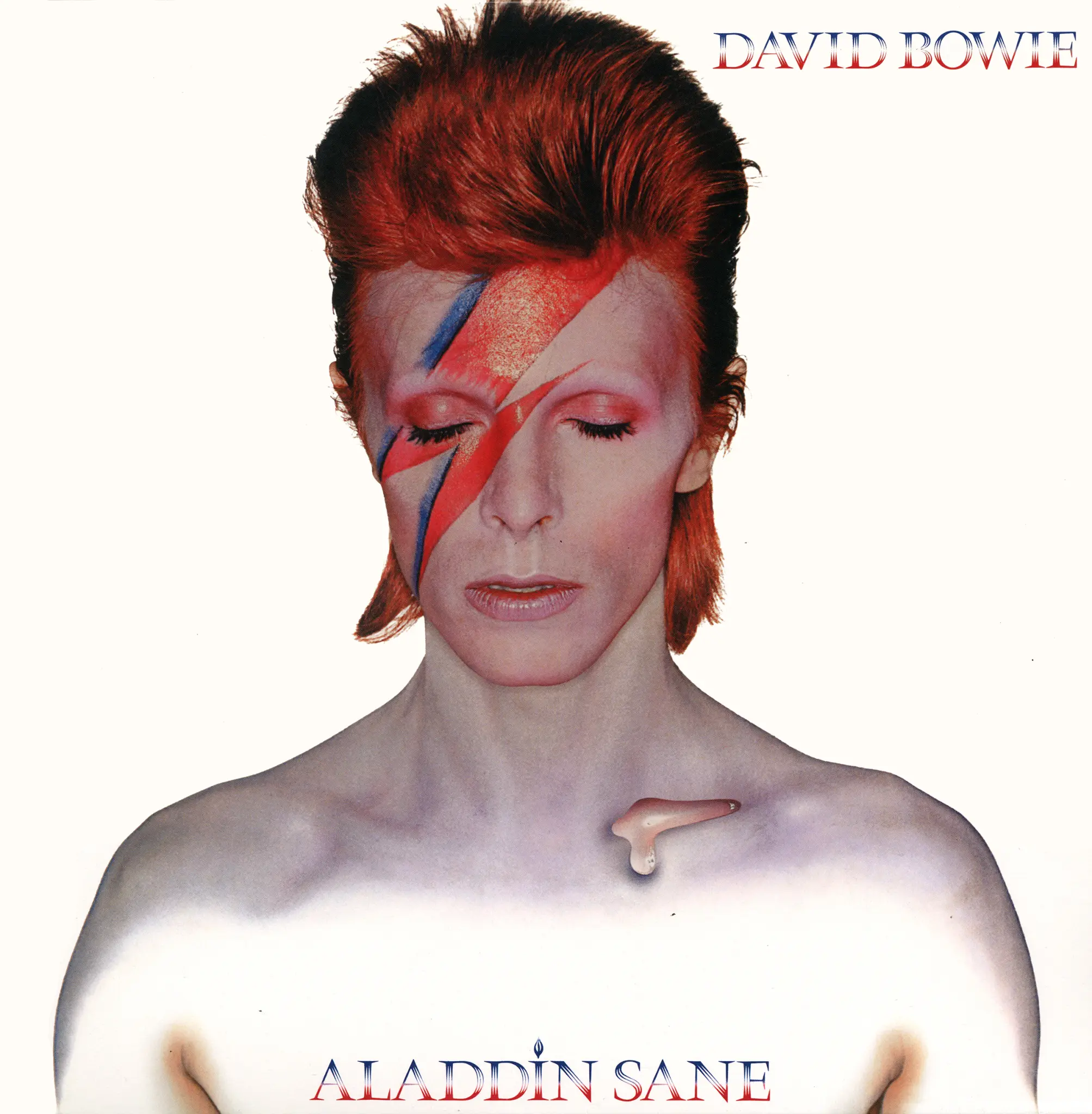
If you search for David Bowie on Spotify, a familiar icon pops up: the man himself, eyes closed, made up with a deathly-looking pallor and a red-and-blue lighting bolt across his face. This is the photo on the front of Bowie’s sixth album, 1973’s Aladdin Sane. “Perhaps more iconic than the music inside,” says the narrator of the Trash Theory video essay above, “it stands as the Mona Lisa of album covers.” It was also, at the time of production, the most costly album cover of all time: this was at the behest of Bowie’s manager Tony Defries, who suspected that sparing no expense on the image would motivate RCA, his label, to spare no expense promoting the album itself.
One might call this a bold move for an artist like Bowie, who had only just made it big. In the early years of his career he’d racked up failure after failure: with 1971’s Hunky Dory, a kind of declaration of commitment to musical and artistic “changes,” he had a succès d’estime, but not until the following year did he become a bona fide star.
The vehicle for that transformation was the album The Rise and Fall of Ziggy Stardust and the Spiders from Mars, which introduced the listening public to its title character, an androgynous rocker from outer space. Throughout his subsequent year and a half of touring Bowie took the stage in full Ziggy glam regalia, inhabiting the character so fully that he eventually began to question his own sanity.
Though young British audiences couldn’t get enough of Ziggy and the Spiders, reactions across the United States were rather less enthusiastic. There, says the Trash Theory narrator, “they were not the type of British rock that rock radio played: hard-hitting, riff-heavy behemoths like Led Zeppelin or the Rolling Stones. But this indifference was shaping what Bowie wanted to do next.” His experience of America inspired a new, harder-edged persona, Aladdin Sane. Ziggy Stardust “was a vision of the best a rock star could be, an inspirational figure, while Aladdin was more about fame’s darker underbelly, filtered through imagined Americana and futuristic nostalgia” — and the character needed a look to match.
Shot by Brian Duffy, described in the San Francisco Art Exchange vide0 above as “a very eccentric and incredible photographer,” the Aladdin Sane cover was printed with a seven-color system unprecedented in the medium. (Up to that point, four-color had been the standard.) According to Trash Theory, Bowie described makeup artist Pierre Laroche’s lightning bolt “as representative of schizophrenia, and more specifically, his split feelings about his 1972 American tour.” (The shape came from the logo on a National Panasonic rice cooker in Duffy’s studio.) Though the result has become, in the words of curator Victoria Broackes, “probably the most recognizable symbol in rock and roll,” Bowie never actually assumed this look onstage; ahead of him, there still lay four more decades of changes to go through.
Related content:
The Story of Ziggy Stardust: How David Bowie Created the Character that Made Him Famous
David Bowie Paper Dolls Recreate Some of the Style Icon’s Most Famous Looks
50 Years of Changing David Bowie Hair Styles in One Animated GIF
Lego Video Shows How David Bowie Almost Became “Cobbler Bob,” Not “Aladdin Sane”
Based in Seoul, Colin Marshall writes and broadcasts on cities, language, and culture. His projects include the Substack newsletter Books on Cities, the book The Stateless City: a Walk through 21st-Century Los Angeles and the video series The City in Cinema. Follow him on Twitter at @colinmarshall or on Facebook.
Read More...Free Coloring Books from 101 World-Class Libraries & Museums: Download and Color Hundreds of Free Images
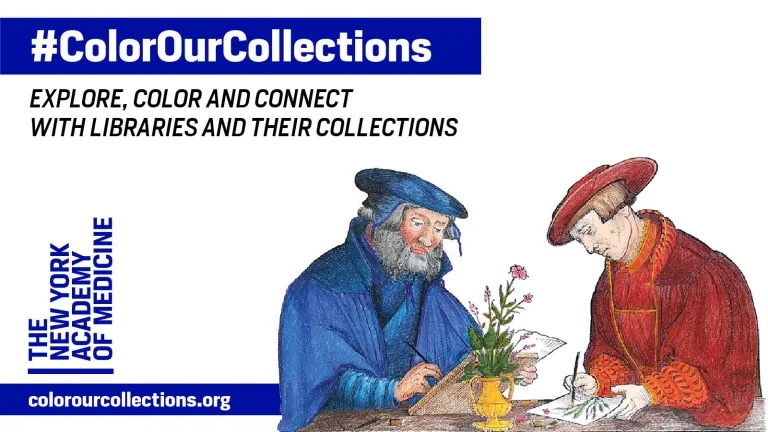
The free, downloadable adult coloring books that the New York Academy of Medicine solicits from museums and university and state libraries for its #ColorOurCollections celebration each February enliven our month far more than any Valentine or Presidents Day sale.
They’re not just a great way to while away winter’s last gasp. They’re also a wonderful portal for discovering cultural institutions that have thusfar flown beneath our radar, owing to size, geography, and/or field of study.
It’s up to each institution to determine what — and how much — to include.
Some color inside the lines by sticking to the subject for which they’re best known. Most take more of a mixed bag approach, flinging a variety of fascinating, unrelated images at the wall and seeing what sticks.
Some offerings are but a single page. Others will have you wearing your crayons to nubs.
With 101 participating organizations, it can be difficult to know where to start.
Maybe we can help…
Is medicine your thing?
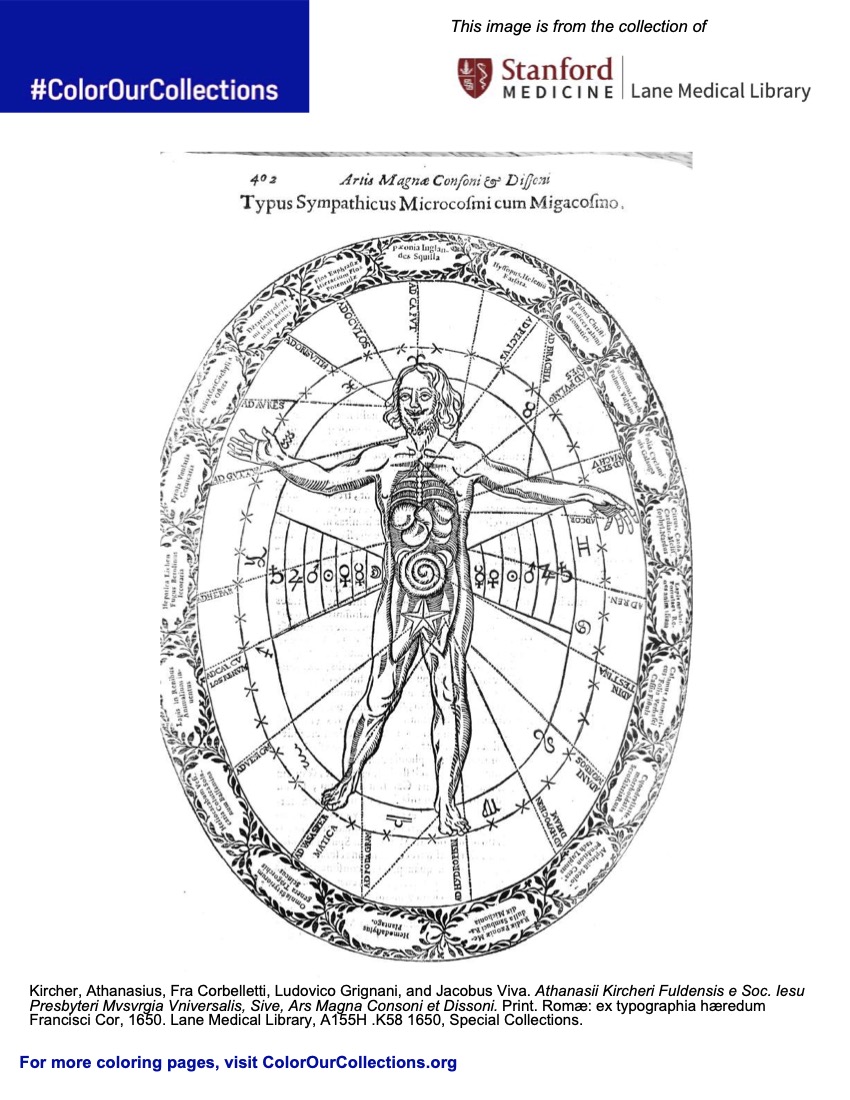
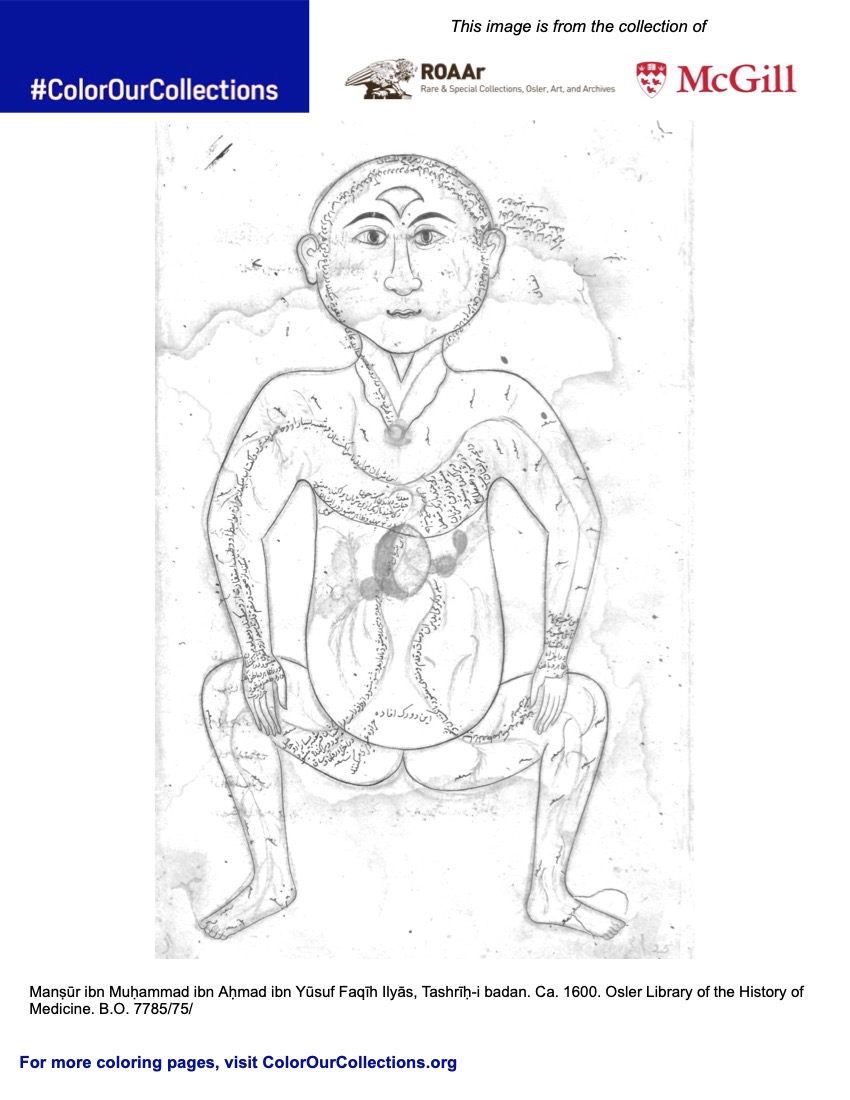
If so, you’re in luck. By our reckoning, that’s the most popular subject, though it spans a broad range, from line drawings of flowering medicinal plants and a reproduction of a 1998 American Society of Anesthesiologists coloring book for pediatric patients, to flayed cadavers and harrowing surgical vignettes from centuries gone by.
The pages below come compliments of Stanford Medical History Center’s Lane Library, McGill University’s Osler Library of the History of Medicine, and Truhlsen-Marmor Museum of the Eye, the only free, public museum dedicated to the fascinating science of sight.
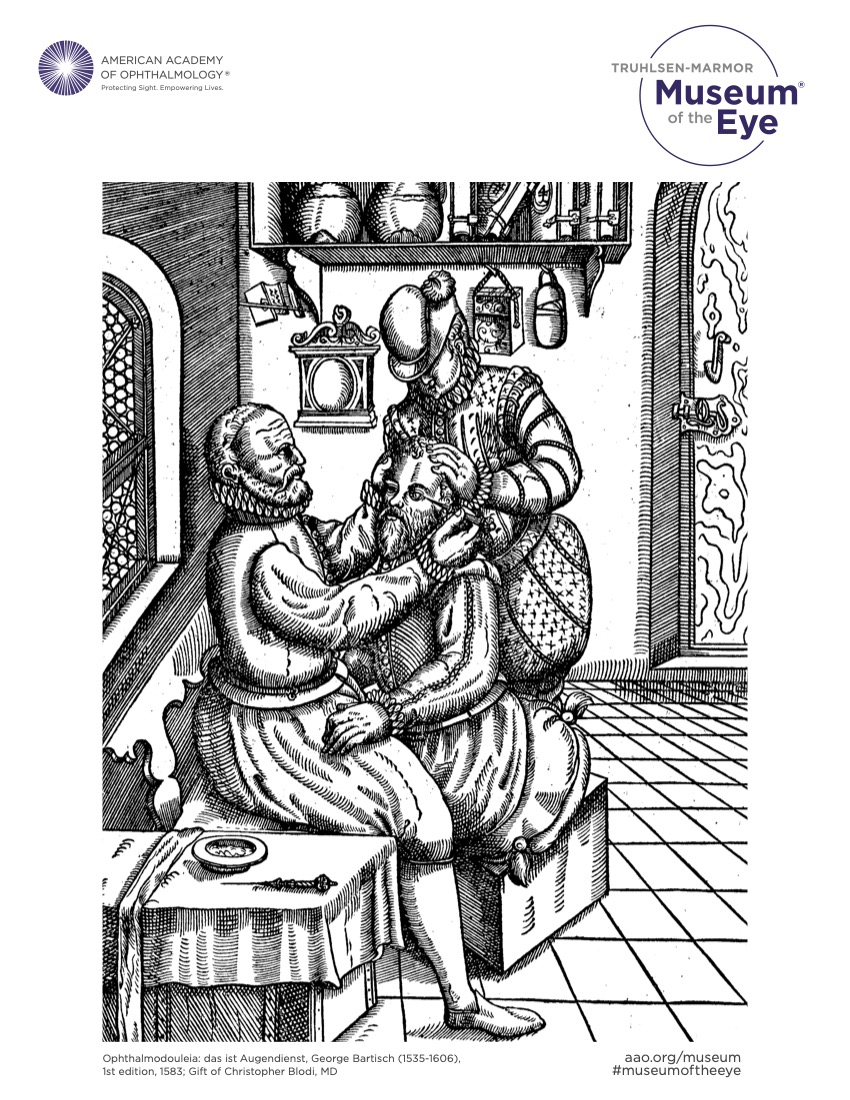
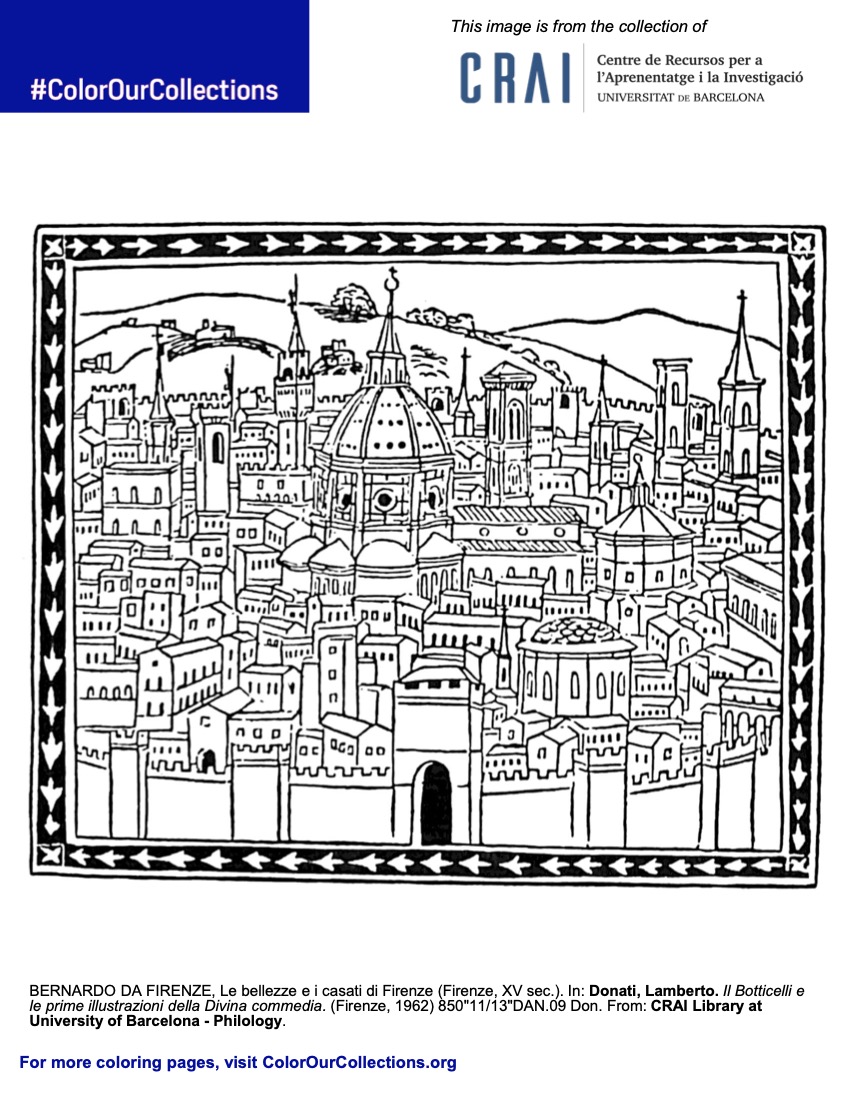
Is architecture more your area of interest?
Glessner House, Western University, and the University of Barcelona have plans for you!


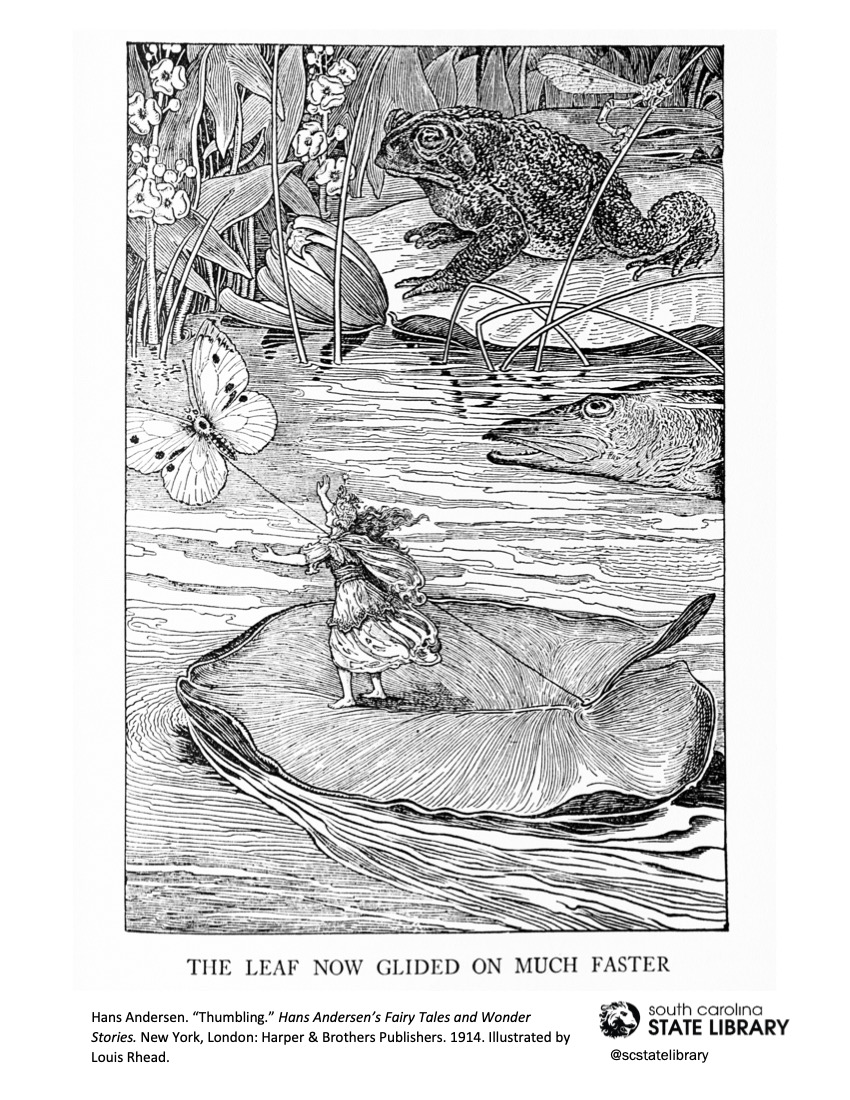
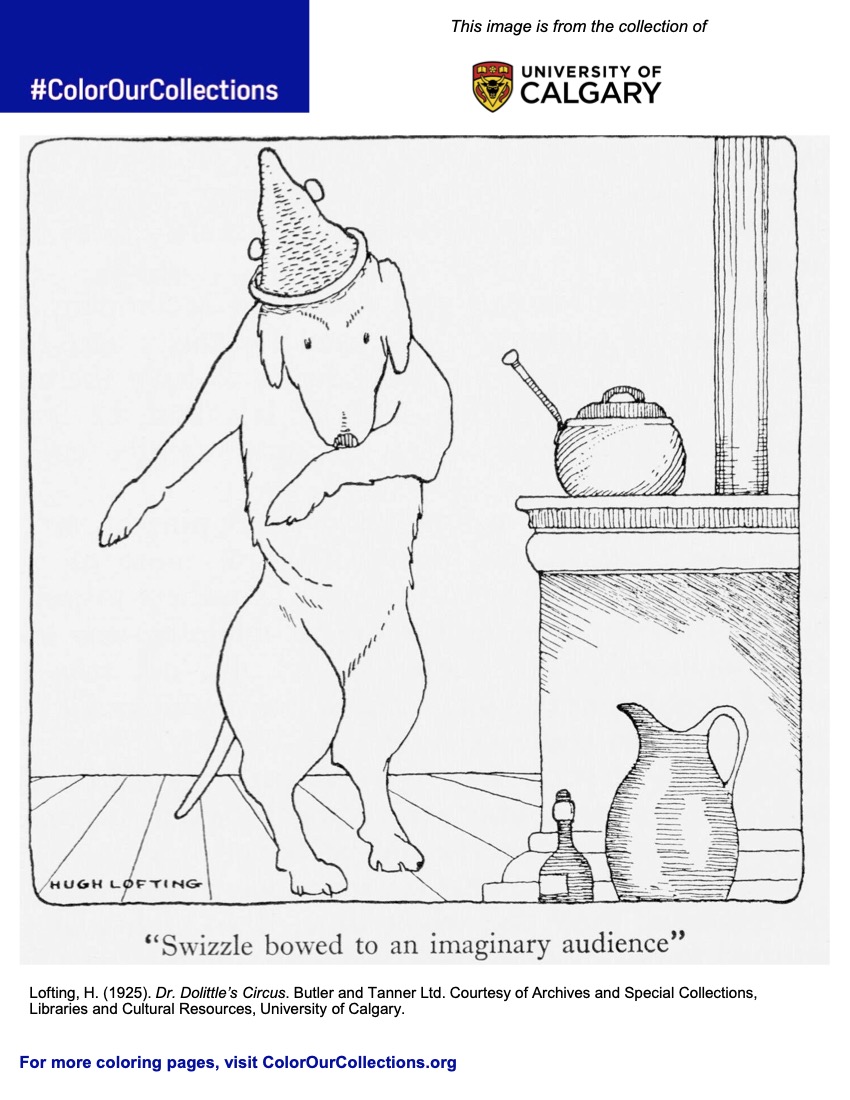
Does coloring make your nostalgic for childhood?
The South Carolina State Library, the University of Calgary, and the University of Wisconsin-Milwaukee have you covered with charming illustrations from Hans Andersen’s Fairy Tales and Wonder Stories, Dr. Dolittle’s Circus, and Heroes of the Kalevala
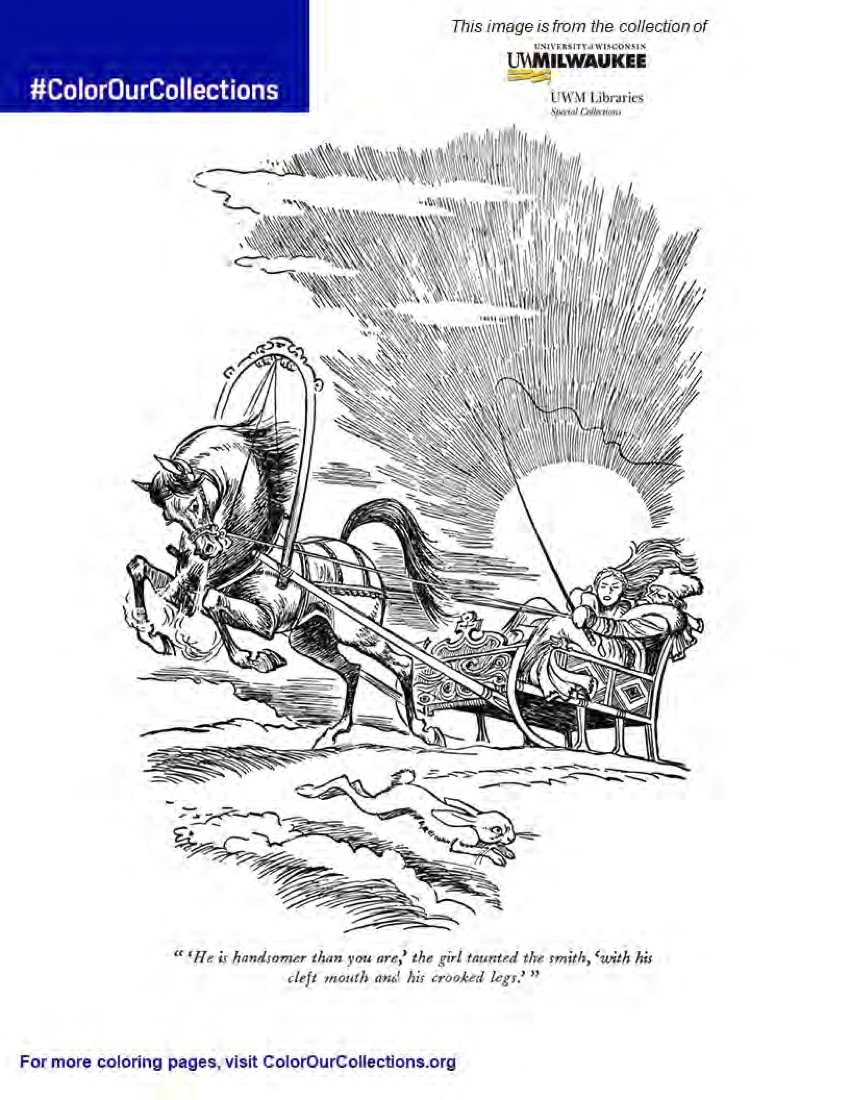
Do you have only a few minutes to spare…or a preschooler in need of simpler graphics?
We get it, and so do the Université Toulouse Jean Jaurès, the Bibliothèque municipale de Soissons, and the Harvard Art Museums.
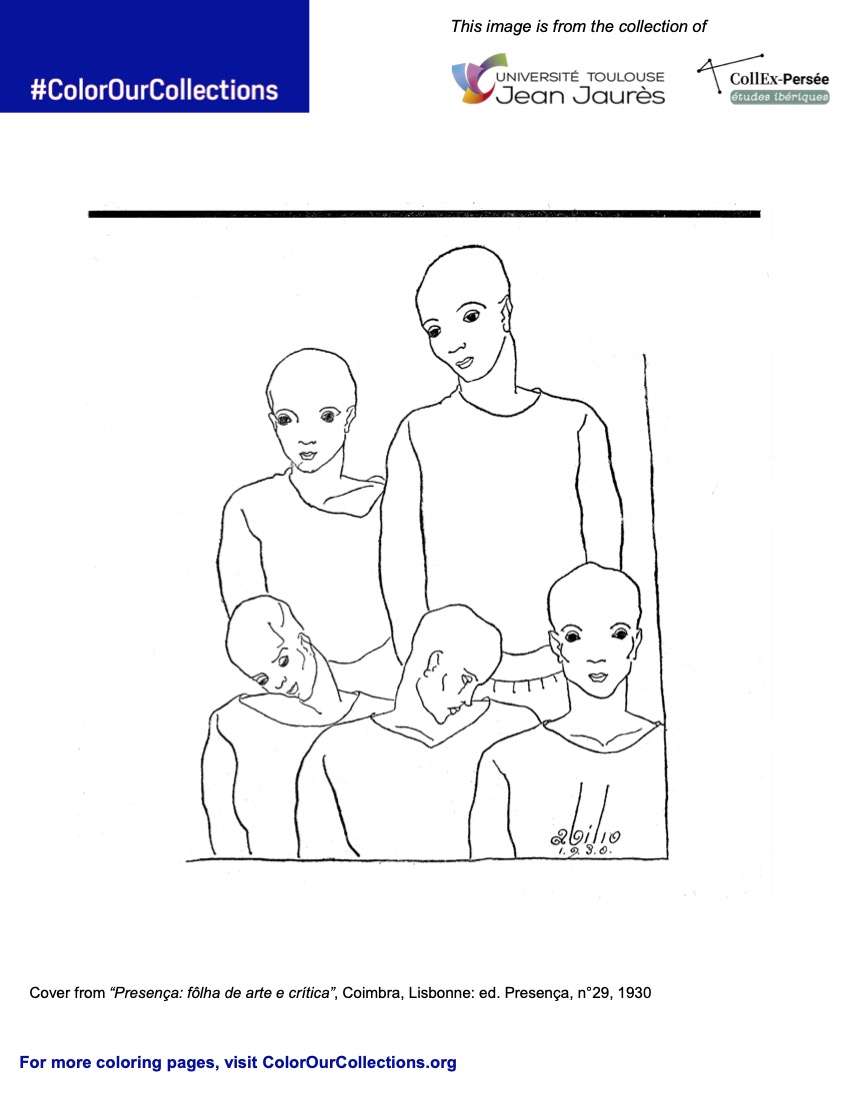
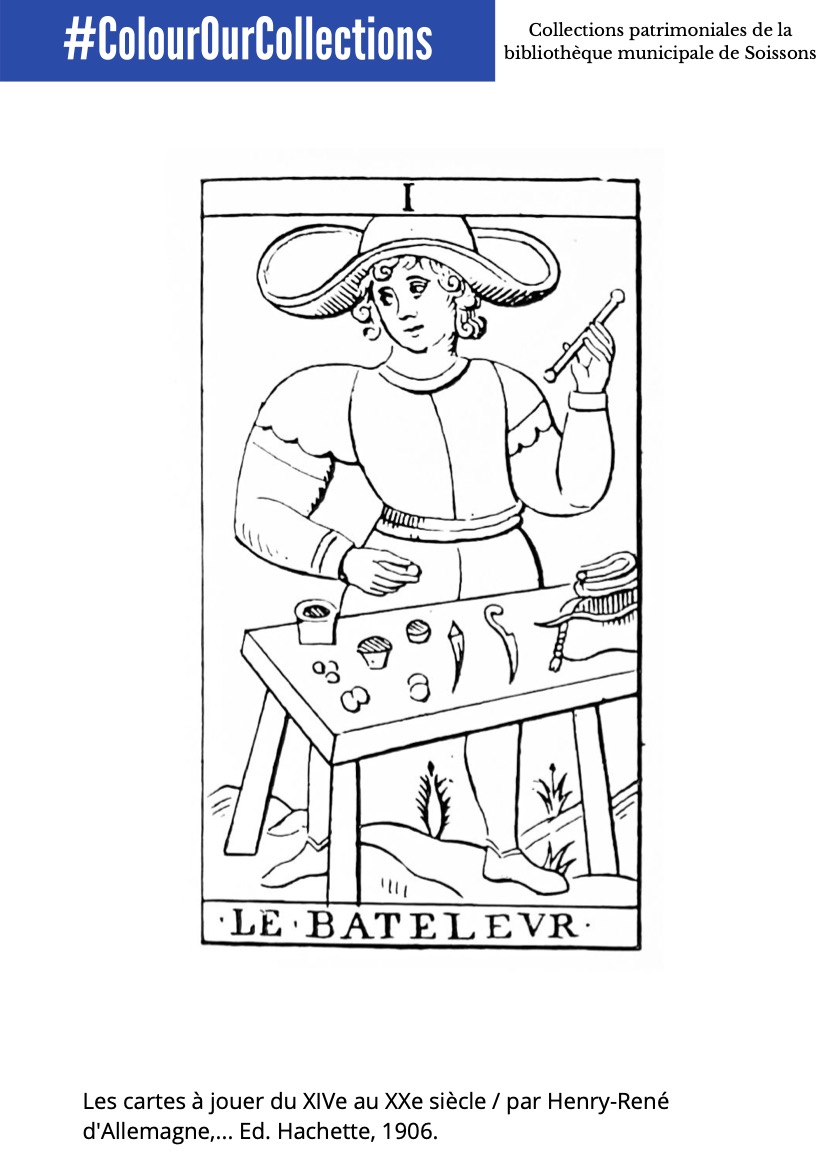
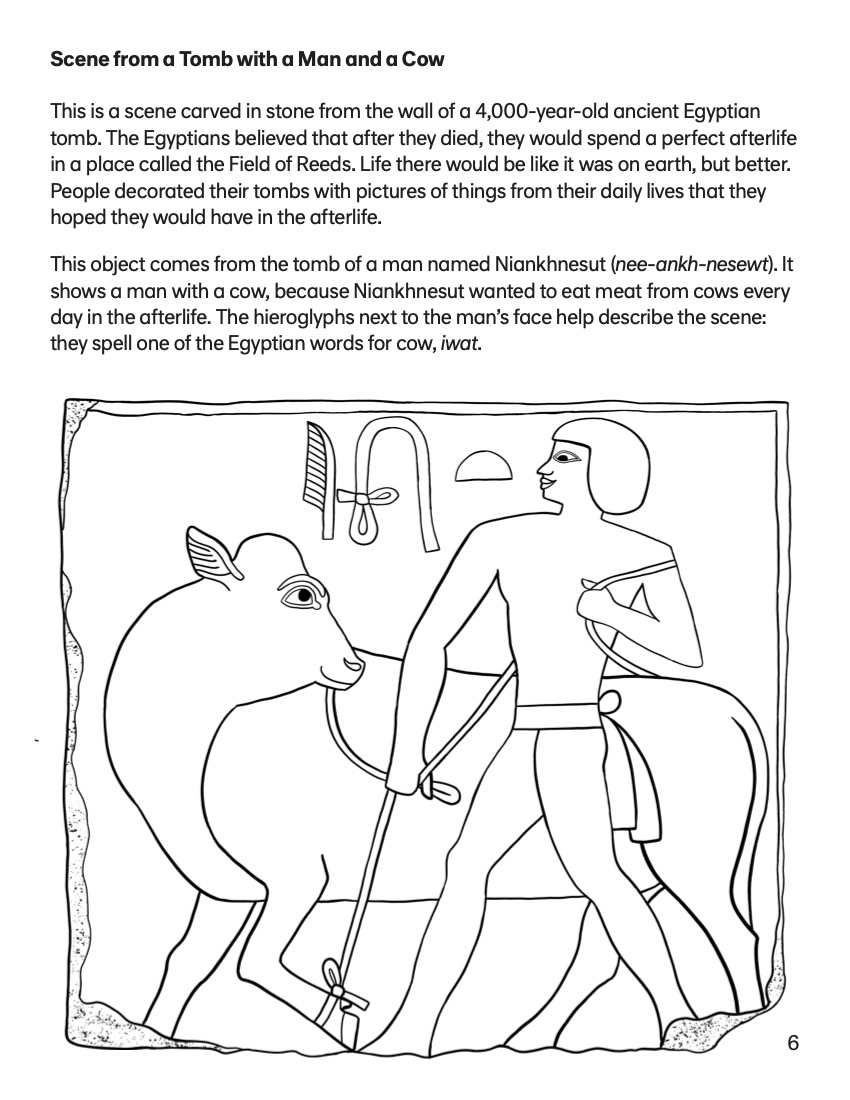
It’s always a joy to see who’s behind the year’s freakiest image.
This year, our vote goes to the Bibliothèque Mazarine, France’s oldest public library, but feel free to put forth other candidates in the comments section
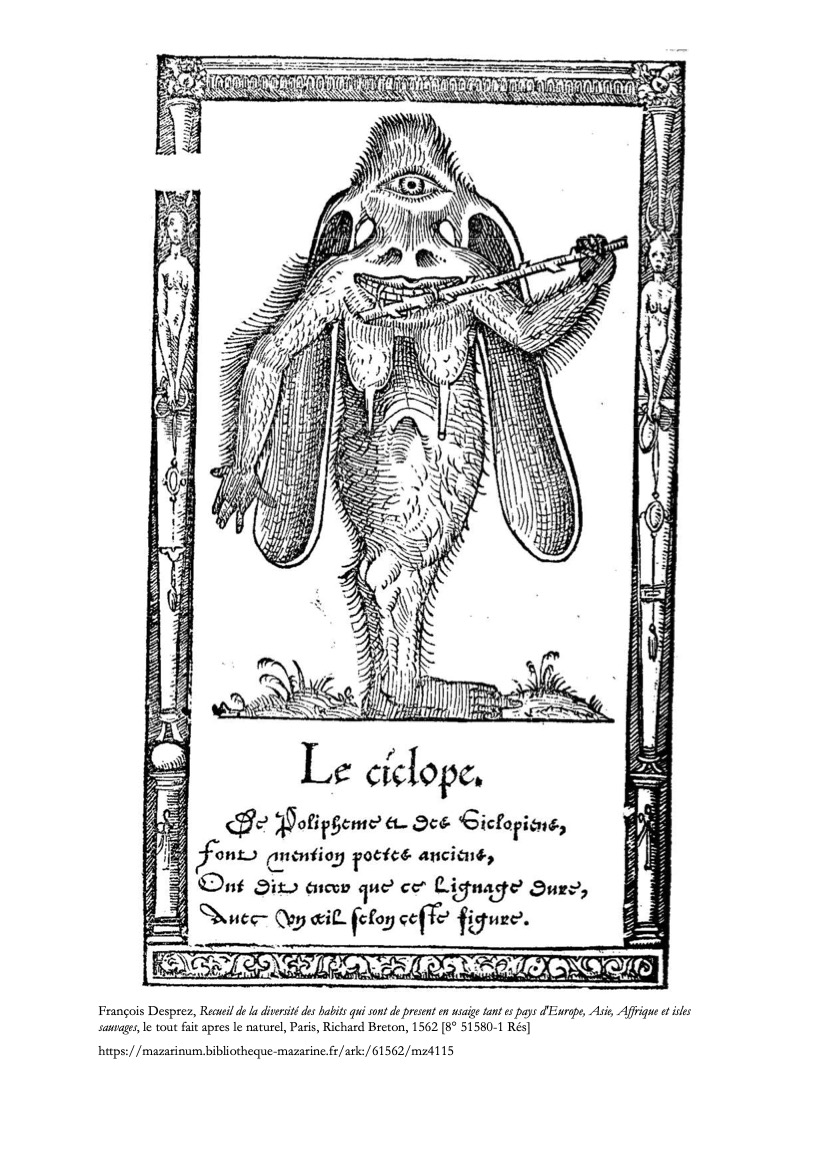
Begin your explorations of 2022’s coloring books here. See how others have colored these pages by exploring the hashtag #ColorOurCollections on social media.
- Ayun Halliday is the Chief Primatologist of the East Village Inky zine and author, most recently, of Creative, Not Famous: The Small Potato Manifesto. Follow her @AyunHalliday.
Read More...The New Herbal: A Masterpiece of Renaissance Botanical Illustrations Gets Republished in a Beautiful 900-Page Book
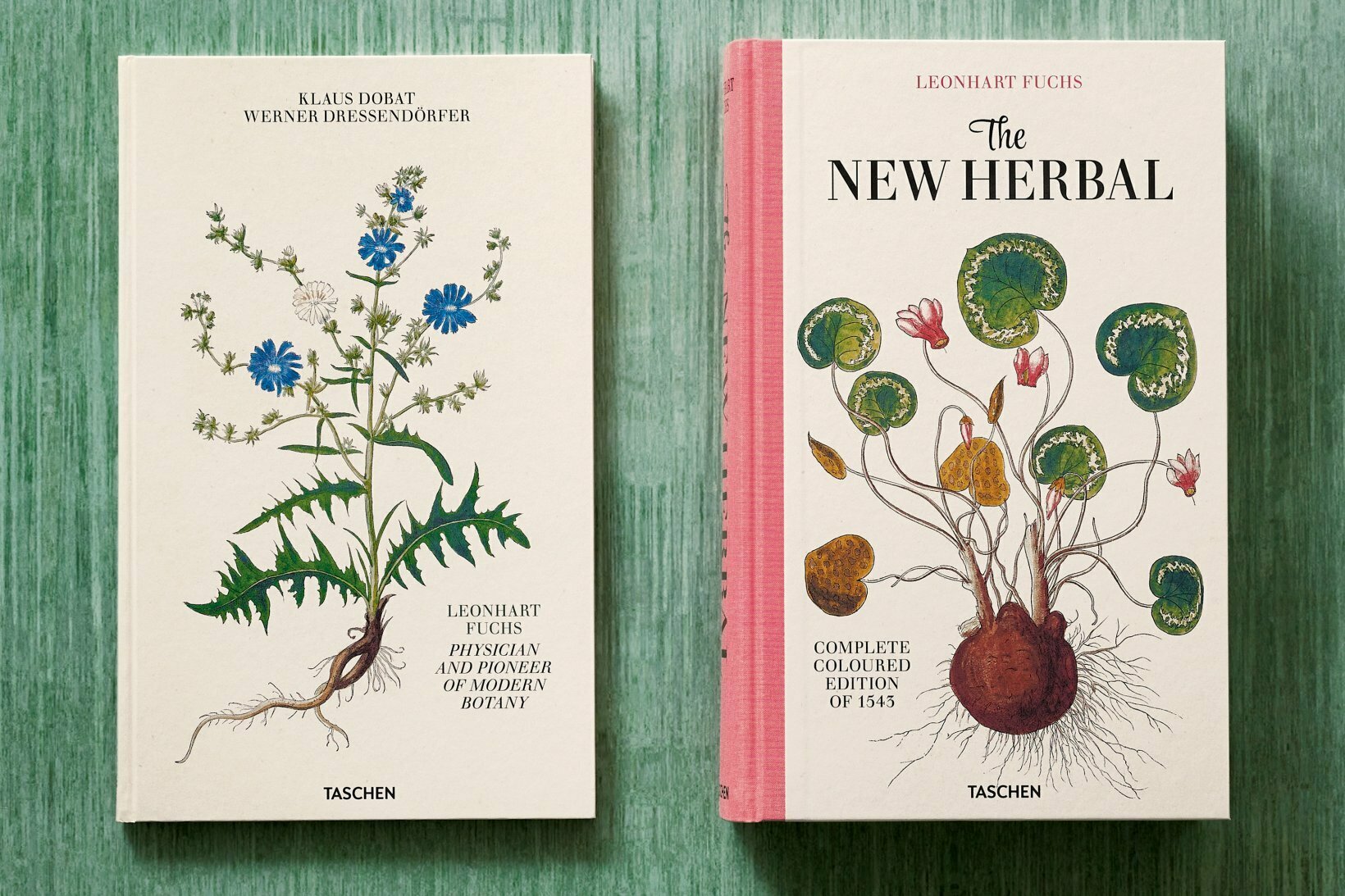
We’ve all have heard of the fuchsia, a flower (or genus of flowering plant) native to Central and South America but now grown far and wide. Though even the least botanically literate among us know it, we may have occasional trouble spelling its name. The key is to remember who the fuchsia was named for: Leonhart Fuchs, a German physician and botanist of the sixteenth century. More than 450 years after his death, Fuchs is remembered as not just the namesake of a flower, but as the author of an enormous book detailing the varieties of plants and their medicinal uses. His was a landmark achievement in the form known as the herbal, examples of which we’ve featured here on Open Culture from ninth- and eighteenth-century England.
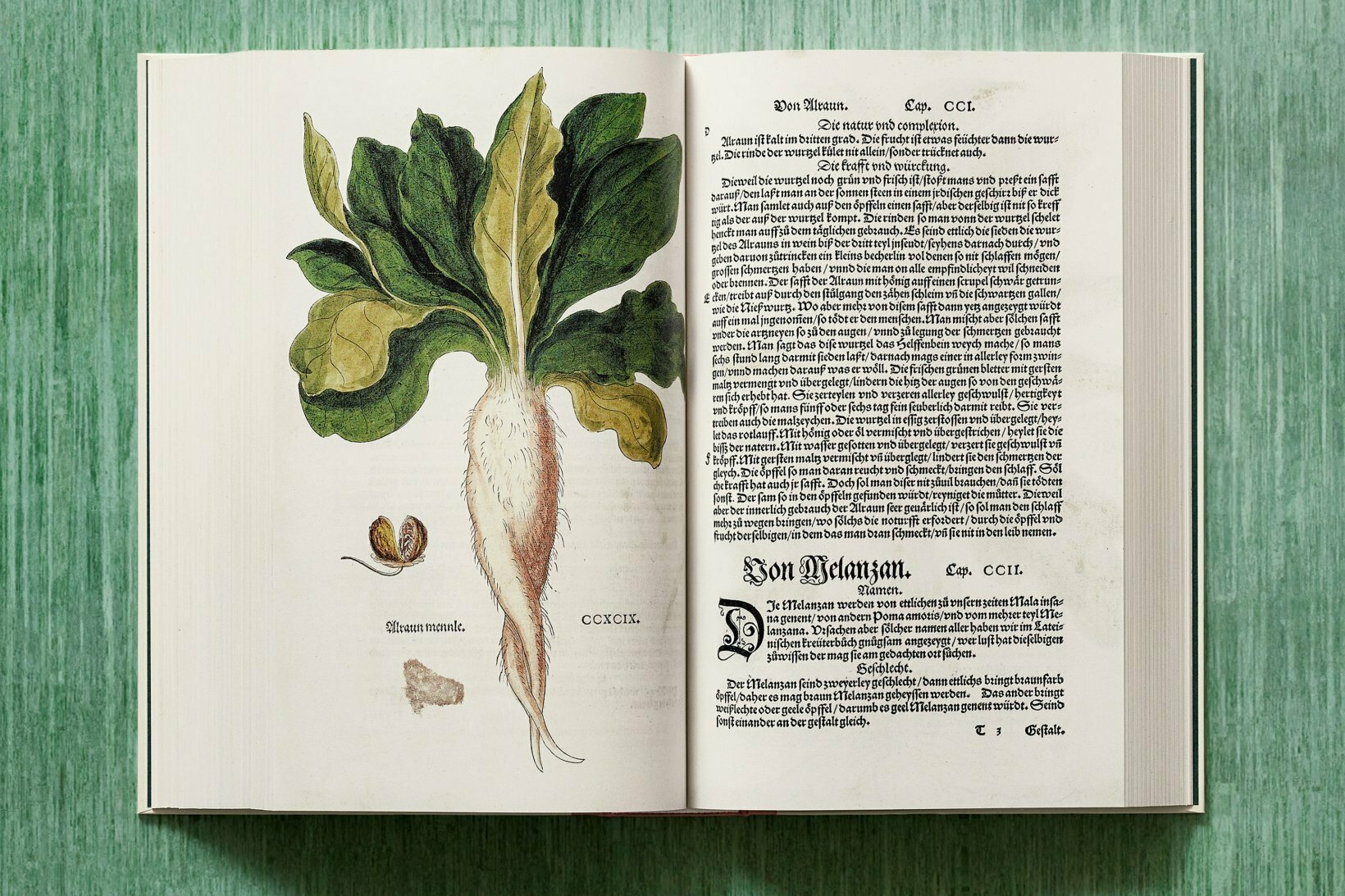
But De Historia Stirpium Commentarii Insignes, as this work was known upon its initial 1542 publication in Latin, has worn uncommonly well through the ages. Or rather, Fuchs’ personal, hand-colored original has, coming down to us in 2022 as the source for Taschen’s The New Herbal. “A masterpiece of Renaissance botany and publishing,” according to the publisher, the book includes “over 500 illustrations, including the first visual record of New World plant types such as maize, cactus, and tobacco.”
Buyers also have their choice of English, German, and French editions, each with its own translations of Fuchs’ “essays describing the plants’ features, origins, and medicinal powers.” (You can also read a Dutch version of the original online at Utrecht University Library Special Collections.)
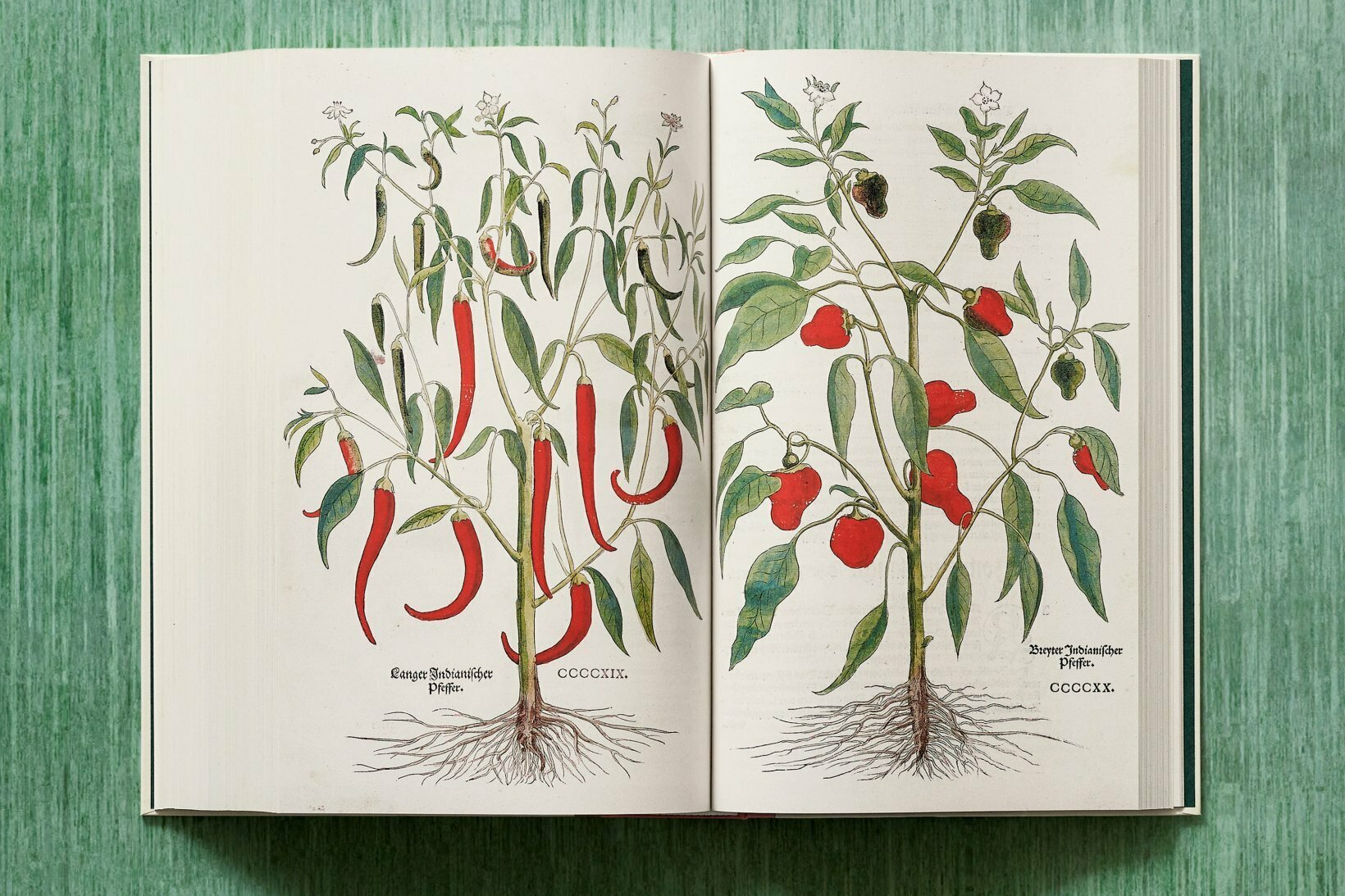
Naturally, some of the information contained in these nearly five-century-old scientific writings will be a bit dated at this point, but the appeal of the illustrations has never dimmed. “Fuchs presented each plant with meticulous woodcut illustrations, refining the ability for swift species identification and setting new standards for accuracy and quality in botanical publications.” Over 500 of them go into the book: “Weighing more than 10 pounds,” writes Colossal’s Grace Ebert, “the nearly 900-page volume is an ode to Fuchs’ research and the field of Renaissance botany, detailing plants like the leafy garden balsam and root-covered mandrake.”
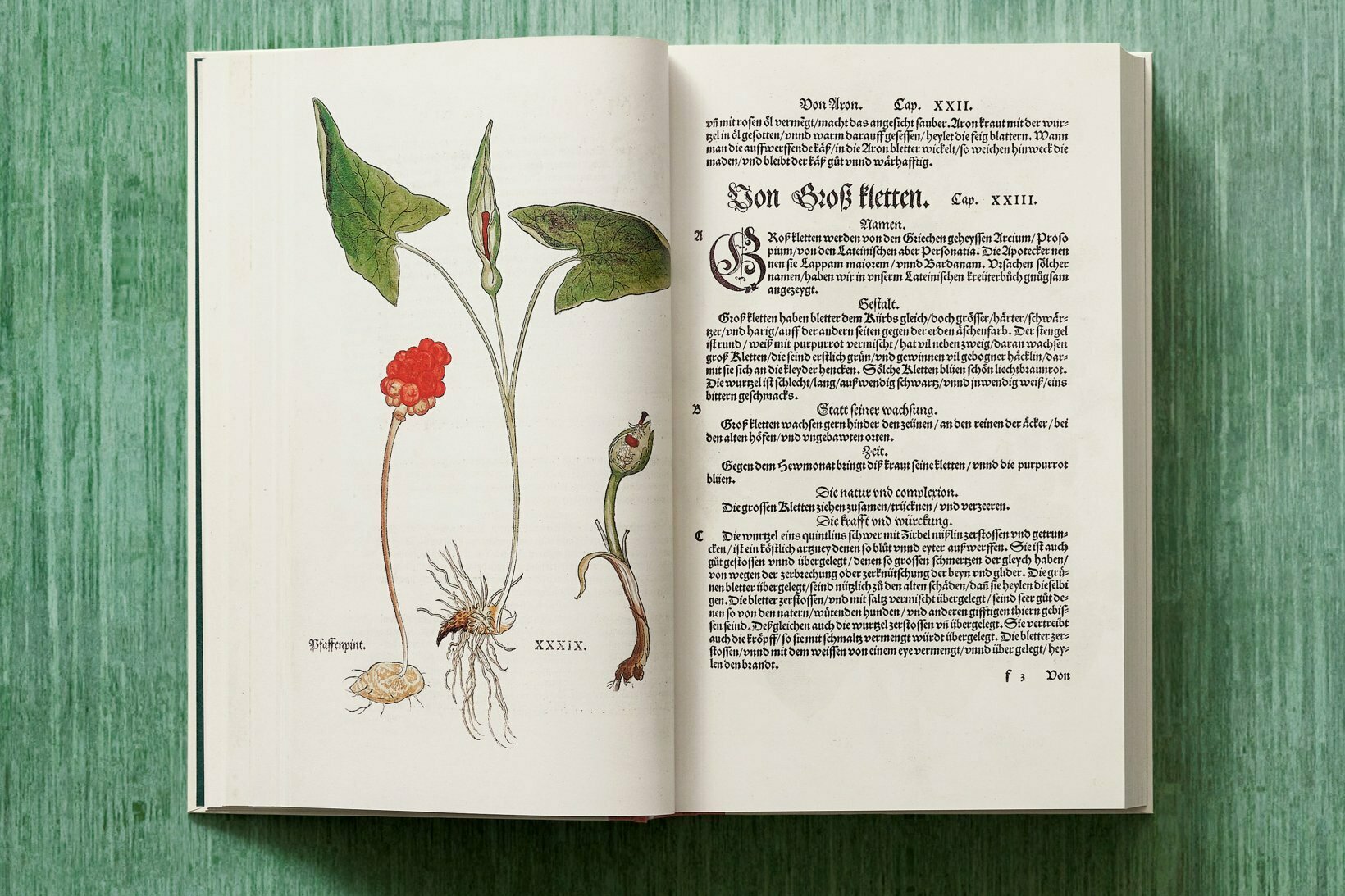
Taschen’s reproductions of these works of botanical art look to do justice to Leonhart Fuchs’ legacy, especially in the brilliance of their colors. It’s enough to reinforce the assumption that the man has received tribute not just through fuchsia the flower but fuchsia the color as well. But such a dual connection turns out to be in doubt: the color’s name derives from rosaniline hydrochloride, also known as fuchsine, originally a trade name applied by its manufacturer Renard frères et Franc. The name fuschine, in turn, derives from fuchs, the German translation of renard. The New Herbal is, of course, a work of botany rather than linguistics, but it should nevertheless stimulate in its beholders an awareness of the interconnection of knowledge that fired up the Renaissance mind.
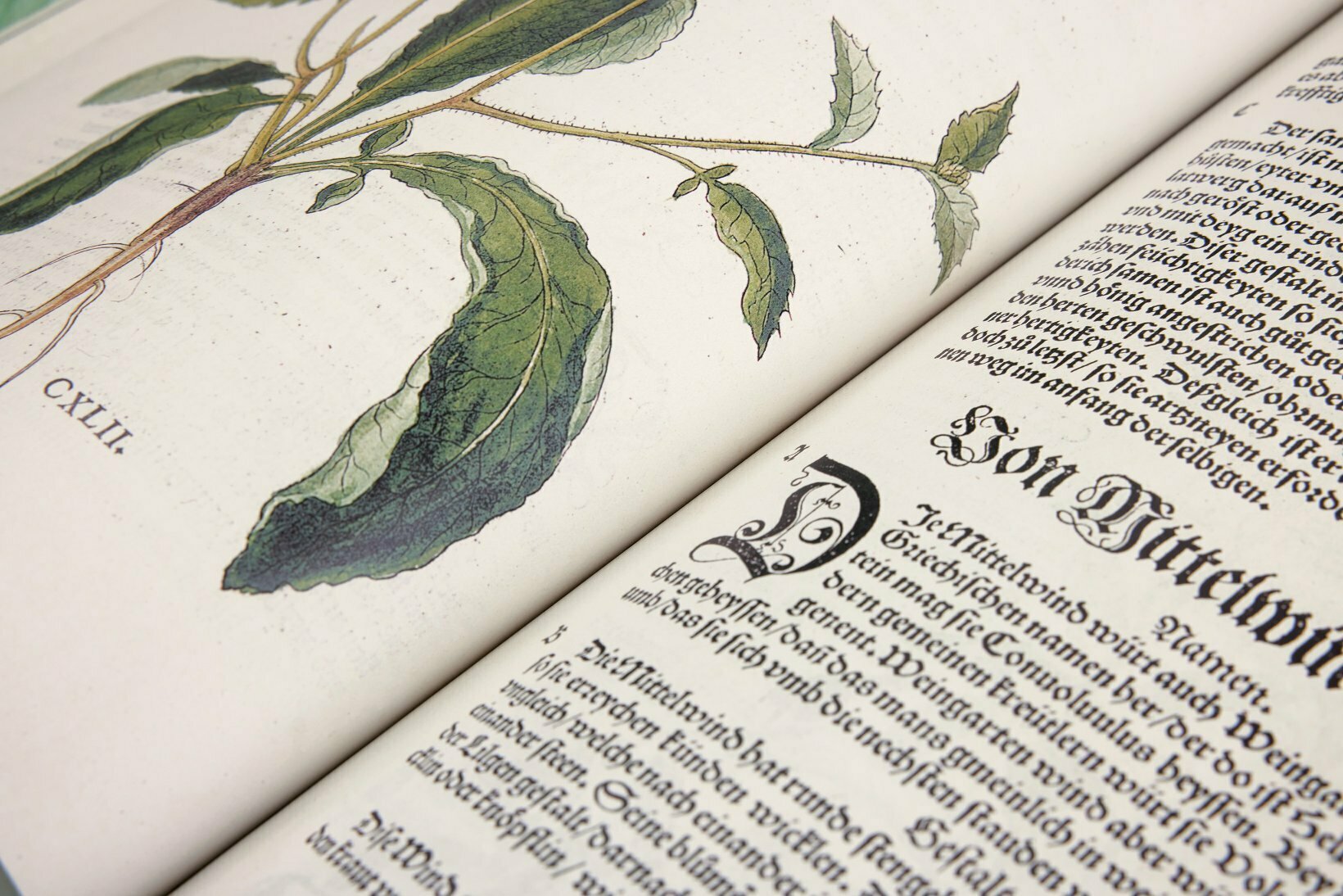
via Colossal
Related content:
Two Million Wondrous Nature Illustrations Put Online by The Biodiversity Heritage Library
A Beautiful 1897 Illustrated Book Shows How Flowers Become Art Nouveau Designs
1,000-Year-Old Illustrated Guide to the Medicinal Use of Plants Now Digitized & Put Online
Based in Seoul, Colin Marshall writes and broadcasts on cities, language, and culture. His projects include the Substack newsletter Books on Cities, the book The Stateless City: a Walk through 21st-Century Los Angeles and the video series The City in Cinema. Follow him on Twitter at @colinmarshall or on Facebook.
Read More...When Eartha Kitt Spoke Truth to Power at a 1968 White House Luncheon
Actress Eartha Kitt amassed dozens of stage and screen credits, but is perhaps most fondly remembered for her iconic turn as Catwoman in the Batman TV series, a role she took over from white actress Julie Newmar.
The producers congratulated themselves on this “provocative, off-beat” casting, executives at network affiliates in Southern states expressed outrage, and Kitt’s 9‑year-old daughter, Kitt Shapiro, understood that her mother’s new gig was a “really big deal.”
As Shapiro recalled to Closer Weekly:
This was 1967, and there were no women of color at that time wearing skintight bodysuits, playing opposite a white male with sexual tension between them! She knew the importance of the role and she was proud of it. She really is a part of history. She was one of the first really beautiful black women — her, Lena Horne, Dorothy Dandridge — who were allowed to be sexy without being stereotyped. It does take a village, but I do think she helped blaze a trail.
Eartha Kitt was a trailblazer in other ways too.
Catwoman vs. the White House, director Scott Calonico’s short documentary for the New Yorker (above), uses vintage photos, clippings and footage to relate how Kitt disrupted a White House luncheon the month after her Batman debut, taking President Lyndon B. Johnson to task over the hardships faced by working parents.
Johnson was clearly under the impression that he was swinging by the White House Family Dining Room as a favor to his wife, Lady Bird, who was hosting 50 guests for the Women Doers’ Luncheon. The theme of the luncheon was “What Citizens Can Do to Help Insure Safe Streets.”
Chairman of the National Council on the Arts Roger Stevens had suggested that Kitt or actress Ruby Dee would be fine additions to the guest list in recognition for their activism with urban youth.
As Janet Mezzack details in her Presidential Studies Quarterly article, “Without Manners You Are Nothing”: Lady Bird Johnson, Eartha Kitt, and The Women Doers’ Luncheon of January 18, 1968, Kitt had an impressive track record of volunteerism.
She taught dance to Black children who could not afford lessons, testified before the House General Subcommittee on Education on behalf of the DC youth-led Rebels with a Cause, and established a non-profit organization in Watts where underprivileged youth studied traditional African and modern dance and “learned about personality development, poise, grooming, diction, and physical fitness.”
She was being vetted for a seat on President Johnson’s Citizens Advisory Board on Youth Opportunity, chaired by Vice President Hubert Humphrey.
Surely, a dream guest!
Mezzack writes:
Having selected Kitt as a guest for the upcoming luncheon, FBI clearance checks were conducted on her and other prospective guests at the White House. The FBI cleared her through normal channels. Because of previous embarrassing situations involving entertainers invited to White House functions, inquiries also were made of Roger Stevens office to determine if Kitt would “do anything to embarrass” the White House, “and the answer was no.”
Call it embarrassment for a good cause.
Johnson was unprepared for spontaneous interaction as hard hitting as Kitt’s, when she stood up to say:
Mr. President, you asked about delinquency across the United States, which we are all interested in and that’s why we’re here today. But what do we do about delinquent parents? The parents who have to go to work, for instance, who can’t spend the time with their children that they should. This is, I think, our main problem. What do we do with the children then, when the parents are off working?
Fumbling for an answer, Johnson intimated that the male policymakers behind recent Social Security Amendments that could offset costs of daycare were “really not the best judges of how to handle children.”
Perhaps Miss Kitt would like to take her concerns with the other women in attendance?
Understandably, Kitt seethed, and continued the conversation by confronting the First Lady over the war in Vietnam.
Director Calonico toggles between Kitt’s recollections of the exchange and excerpts from Mrs. Johnson’s White House audio diary, cobbling together a reconstruction that is surely faithful to the spirit of the thing, if not exactly word for word:
Kitt’s words as recalled by Mrs. Johnson:
You send the best in this country off to be shot and maimed. They rebel in the street. They will take pot and get high. They don’t want to go to school because they’re going to be snatched off from their mothers to be shot in Vietnam.
Kitt’s words as recalled by the speaker herself:
Mrs. Johnson, you are a mother too, although you have had daughters and not sons. I am a mother and I know the feeling of having a baby come out of my gut. I have a baby and then you send him off to war. No wonder the kids rebel and take pot, and Mrs. Johnson, in case you don’t understand the lingo, that’s marijuana.
That last comment seems funny now, and Calanico can’t resist infusing further dark humor with a shot of a masked Kitt tooling around in Catwoman’s campy Kittycar as the actress describes how the White House cancelled her ride home from the luncheon.
The next day’s newspapers were full of emotionally charged reports as to how Kitt’s remarks had left the hostess “stunned to tears” — a description both participants resisted.
Within weeks, North Vietnam launched the Tet Offensive, and Johnson announced he would not seek reelection.
Meanwhile Kitt’s outspokenness at the luncheon cast an instantaneous chill on her career, stateside.
She spent the next decade performing in Europe, unaware that the CIA had opened a file on her, compiling information from confidential sources in Paris and New York City as to her “loose morals.”
Her response to the most outrageous allegations in that file should make lifelong fans of feminists who were barely out of diapers when Halle Berry slipped into Catwoman’s skintight pajamas.
Calonico is right to punctuate this with Kitt’s triumphant growl.
- Ayun Halliday is the Chief Primatologist of the East Village Inky zine and author, most recently, of Creative, Not Famous: The Small Potato Manifesto. Follow her @AyunHalliday.
Read More...“When The Levee Breaks” Performed by John Paul Jones & Musicians Around the World
From Playing for Change comes this: “When The Levee Breaks is a powerful, thought-provoking and emotionally-charged classic by Led Zeppelin, from their Led Zeppelin IV album. The song is a rework of the 1929 release by Kansas Joe McCoy and Memphis Minnie about the Great Mississippi Flood of 1927; the most destructive river flooding in U.S. history.” In the accompanying video above, we can see powerful scenes from the Katrina Flood of 2005–and Jones getting accompanied by “Stephen Perkins of Jane’s Addiction, Susan Tedeschi, Derek Trucks and over 20 musicians and dancers from seven different countries.”
Find more Playing for Change performances in the Relateds below.
If you would like to support the mission of Open Culture, consider making a donation to our site. It’s hard to rely 100% on ads, and your contributions will help us continue providing the best free cultural and educational materials to learners everywhere. You can contribute through PayPal, Patreon, and Venmo (@openculture). Thanks!
Related Content
“Stand By Me” Sung By Musicians Around the World
Read More...The Enduring Appeal of Schulz’s Peanuts — Pretty Much Pop: A Culture Podcast #116
Animator/musician David Heatley, comedian Daniel Lobell, and academic/3anuts author Daniel Leonard join your Pretty Much Pop host Mark Linsenmayer to discuss Charlie Brown and his author Charles Schulz from Peanuts’ 1950 inception through the classic TV specials through to the various post-mortem products still emerging.
What’s the enduring appeal, and is it strictly for kids? We talk about the challenges of the strip format, the characters as archetypes, Schulz as depressed existentialist, religion in Peanuts, and whether the strip is actually supposed to be funny.
Some articles we used for the discussion include:
- “The Paradox of Peanuts” by Bruce Handy
- “All Your Life, Charlie Brown. All Your Life.” by Eric Schulmiller
- “A Charlie Brown Christmas may work even better now than it did 50 years ago” by David Grossman
- “10 Weirdest Charlie Brown Parodies Of All Time” by Phil Hall
- “Why Are Newspaper Comics So Terrible?” by Scott Meslow
Also, RIP Peter Robbins (the day before we recorded this). Here’s the 1982 Rerun comic Daniel Leonard reads us near the beginning. The biography that we keep referring to is David Michaelis’ Schulz and Peanuts: A Biography. Yes, Dondi was a real (bad) comic strip.
Check out David’s new album and other projects at davidheatley.com. Follow him @heatleycomics on Twitter and @davidheatley on Instgram.
Get Daniel Lobell’s Fair Enough comic at fairenoughcomic.com and read about the rest of his activities at dannylobell.com. Follow him @DanielLobell on Twitter and @daniellobell on Instagram.
Read Daniel Leonard’s 3anuts, and buy Peanuts and Philosophy, which contains one of his essays. Follow on Twitter @3anuts.
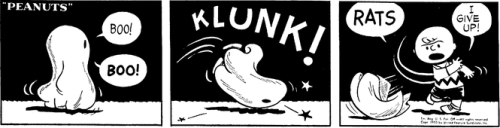
Here’s a 3eanuts example. Leaving off the last panel leaves us in despair!
This episode includes bonus discussion you can access by supporting the podcast at patreon.com/prettymuchpop or by choosing a paid subscription through Apple Podcasts. This podcast is part of the Partially Examined Life podcast network.
Pretty Much Pop: A Culture Podcast is the first podcast curated by Open Culture. Browse all Pretty Much Pop posts.
Read More...Organized Chaos!: Watch 33 Videos Showing How Saturday Night Live Gets Made Each Week
Who do you think of when you think of Saturday Night Live?
Creator Lorne Michaels?
Whoever hosted last week’s episode?
What about the guy who makes and holds the cue cards?
Wally Feresten is just one of the backstage heroes to be celebrated in Creating Saturday Night Live, a fascinating look at how the long-running television sketch show comes together every week.
Like many of those interviewed Feresten is more or less of a lifer, having come aboard in 1990 at the age of 25.
He estimates that he and his team of 8 run through some 1000 14” x 22” cards cards per show. Teleprompters would save trees, but the possibility of technical issues during the live broadcast presents too big of a risk.
This means that any last minute changes, including those made mid-broadcast, must be handled in a very hands on way, with corrections written in all caps over carefully applied white painter’s tape or, worst case scenario, on brand new cards.
(After a show wraps, its cards enjoy a second act as dropcloths for the next week’s painted sets.)
Nearly every sketch requires three sets of cue cards, so that the cast, who are rarely off book due to the frequent changes, can steal glances to the left, right and center.
As the department head, Feresten is partnered with each week’s guest host, whose lines are the only ones to be written in black. Betty White, who hosted in 2010 at the age of 88, thanked him in her 2011 autobiography.
Surely that’s worth his work-related arthritic shoulder, and the recurrent nightmares in which he arrives at Studio 8H just five minutes before showtime to find that all 1000 cue cards are blank.
Costumes have always been one of Saturday Night Live’s flashiest pleasures, running the gamut from Coneheads and a rapping Cup o’Soup to an immaculate recreation of the white pantsuit in which Vice President Kamala Harris delivered her victory speech a scant 3 hours before the show aired.
“A costume has a job,” wardrobe supervisor Dale Richards explains:
It has to tell a story before (the actors) open their mouth…as soon as it comes on camera, it should give you so much backstory.
And it has to cleave to some sort of reality and truthfulness, even in a sketch as outlandish as 2017’s Henrietta & the Fugitive, starring host Ryan Gosling as a detective in a film noir style romance. The gag is that the dame is a chicken (cast member Aidy Bryant.)
Richards cites actress Bette Davis as the inspiration for the chicken’s look:
Because you’re not going to believe it if the detective couldn’t actually fall in love with her. She has to be very feminine, so we gave her Bette Davis bangs and long eyelashes and a beautiful bonnet, so the underpinnings were very much like an actress in a movie, although she did have a chicken costume on.
The number of quick costume changes each performer must make during the live broadcast helps determine the sketches’ running order.
Some of the breakneck transformations are handled by Richards’ sister, Donna, who once beat the clock by piggybacking host Jennifer Lopez across the studio floor to the changing area where a well-coordinated crew swished her out of her opening monologue’s skintight dress and skyscraper heels and into her first costume.
That’s one example of the sort of traffic the 4‑person crane camera crew must battle as they hurtle across the studio to each new set. Camera operator John Pinto commands from atop the crane’s counterbalanced arm.
Those swooping crane shots of the musical guests, opening monologue and goodnights (see below) are a Saturday Night Live tradition, a part of its iconic look since the beginning.
Get to know other backstage workers and how they contribute to this weekly high wire act in a 33 episode Creating Saturday Night playlist, all on display below:
- Ayun Halliday is the Chief Primatologist of the East Village Inky zine and author, most recently, of Creative, Not Famous: The Small Potato Manifesto. Follow her @AyunHalliday.
Related Content
The Stunt That Got Elvis Costello Banned From Saturday Night Live
Saturday Night Live’s Very First Sketch: Watch John Belushi Launch SNL in October, 1975
Read More...Howard Zinn’s Recommended Reading List for Activists Who Want to Change the World

Image by via Wikimedia Commons
Back in college, I spotted A People’s History of the United States in the bags and on the bookshelves of many a fellow undergraduate. By that time, Howard Zinn’s alternative telling of the American story had been popular reading material for a couple of decades, just as it presumably remains a couple more decades on. Even now, a dozen years after Zinn’s death, his ideas about how to approach U.S. history through non-standard points of view remain widely influential. Just last month, Radical Reads featured the reading list he originally drew up for the Socialist Worker, pitched at “activists interested in making their own history.”
Zinn’s recommendations naturally include the work of other historians, from Gary Nash’s Red, White and Black: The Peoples of Early America (“a pioneering work of ‘multiculturalism’ dealing with racial interactions in the colonial period”) to Vincent Harding’s There Is a River: The Black Struggle for Freedom in America (an “excellent start on Black history”) to Samuel Yellen’s American Labor Struggles (which “brings to life the great labor conflicts of American history”).
His suggested books cover not just the 20th century but eras like the Civil War, and even, extensively, the time of Christopher Columbus. For those who take their analyses of the past in comically illustrated form, Zinn also highlights Larry Gonick’s The Cartoon History of the United States as “funny and remarkably rich in its content.”
Certain Zinn picks stand out as being of special interest to Open Culture readers. These include Noam Chomsky’s Year 501, in which “the nation’s most distinguished intellectual rebel gives us huge amounts of information about recent American foreign policy”; Richard Hofstadter’s The American Political Tradition, with its “iconoclastic view of American political leaders, including Jefferson, Jackson, Lincoln, Wilson and the two Roosevelts, suggesting more consensus than difference at the top of the political hierarchy”; and W.E.B. DuBois’ Black Reconstruction, “a direct counter to the traditional racist accounts of Reconstruction, presenting the narrative from the Black point of view.” Zinn also praises The Sixties, “a vivid history, well-written, thoughtful, by one of the activists of that era”: Todd Gitlin, who died earlier this month.
Despite its understandable inclination toward nonfiction, Zinn’s list also has room for several classic American novels like John Steinbeck’s The Grapes of Wrath, Richard Wright’s Black Boy, and Zora Neale Hurston’s Their Eyes Were Watching God. You may remember some of these books from your own high-school and university days, but whatever you got out of them back then, you’ll experience them more richly by revisiting them now, deeper into your own intellectual journey. As Zinn’s own life and work demonstrated, you can always find more angles from which to view the political, social, and cultural history of your county — the farther removed from those you were shown in school, the better.
via Radical Reads
Related content:
African-American History: Modern Freedom Struggle (A Free Course from Stanford)
American Literature, From the Beginnings to the Civil War: A Free Online Course from NYU
Noam Chomsky Defines What It Means to Be a Truly Educated Person
Adorn Your Garden with Howard the Zinn Monk
Based in Seoul, Colin Marshall writes and broadcasts on cities, language, and culture. His projects include the Substack newsletter Books on Cities, the book The Stateless City: a Walk through 21st-Century Los Angeles and the video series The City in Cinema. Follow him on Twitter at @colinmarshall or on Facebook.
Read More...The Great Courses Is Now Running a Big Spring Warehouse Clearance Sale

FYI: The Great Courses (formerly The Teaching Company) is running its Spring Warehouse Clearance Sale, offering a steep discount on a good number of its courses. If you’re not familiar with it, the Great Courses provides a very nice service. They travel across the U.S., recording great professors lecturing on great topics that will appeal to any lifelong learner. They then make the courses available to customers in different formats (DVD, Video & Audio Downloads, etc.). The courses are very polished and complete, and they can be quite reasonably priced, especially when they’re on sale, as they are today. Click here to explore the offer. The Spring Warehouse Clearance Sale ends on March 10.
Note: The Great Courses is a partner with Open Culture. So if you purchase a course, it benefits not just you and Great Courses. It benefits Open Culture too. So consider it win-win-win.
Read More...Support Us
We're hoping to rely on loyal readers, rather than erratic ads. Please click the Donate button and support Open Culture. You can use Paypal, Venmo, Patreon, even Crypto! We thank you!

About Us

Open Culture scours the web for the best educational media. We find the free courses and audio books you need, the language lessons & educational videos you want, and plenty of enlightenment in between.
Advertise With Us
FREE UPDATES!
GET OUR DAILY EMAIL
Get the best cultural and educational resources on the web curated for you in a daily email. We never spam. Unsubscribe at any time.
FOLLOW ON SOCIAL MEDIA
Open Culture editor Dan Colman scours the web for the best educational media. He finds the free courses and audio books you need, the language lessons & movies you want, and plenty of enlightenment in between.
Advertise With Us


