10,000 Solutions

Arizona State University has launched a new contest called 10,000 Solutions open to anyone over 18, anywhere in the world, and it offers a $10,000 prize. Entries can take on one of the eight greatest challenges facing the world, like sustainability and the future of education. What makes the contest unusual is that participants are encouraged to collaborate and build on one another’s solutions. ASU wants to create an open solutions bank that others can use to generate new ideas, and some students at ASU have already met up in person to talk over things they shared on the site. The school is promoting 10,000 Solutions as an experiment in collaborative invention and the National Science Foundation is funding a team of ASU researchers to study the contest and see how ideas are shared and developed.
The contest is off to a strong start, getting some high-profile entries like this one from Dan Ariely.
While many of the solutions share questions or ideas at the brainstorming stage, some groups are using the platform to promote working prototypes. This group of ASU student engineers is working on a low-cost smartboard technology based on the Wii that could be set up anywhere you can run a projector.
ASU hopes 10,000 Solutions will bring some fresh energy to problems that often seem overwhelming. If you have a minute to spare and a bright idea for making the world a better place, why not share it?
Ed Finn is an occasional contributor to Open Culture. He recently started working at Arizona State University in University Initiatives, an office focused on developing new projects and thinking big about the future of public university education. 10,000 Solutions is a project his team is helping to launch this year.
Read More...‘Catch-22,’ Joseph Heller’s Darkly Hilarious Indictment of War, is 50
This month marks the 50th anniversary of Catch-22, Joseph Heller’s exuberantly surreal comedy about the insanity of war. The novel grew out of Heller’s experiences as an Air Force bombardier in Europe during World War II. Surprisingly, the author’s own attitude toward the war bore little resemblance to the views of his immortal protagonist, John Yossarian.
“I have no complaints about my service at all,” Heller told Allan Gregg of Canadian public broadcasting in an interview (see above) recorded not long before the author’s death in 1999. “If anything, it was beneficial to me in a number of ways.” Catch-22, he says, was a response to what transpired during the novel’s 15-year gestation: the cold war, the McCarthy hearings–“the hypocrisy, the bullying that was going on in America.”
As E.L. Doctorow told a reporter the day after Heller’s death, “When ‘Catch-22’ came out, people were saying, ‘Well, World War II wasn’t like this.’ But when we got tangled up in Vietnam, it became a sort of text for the consciousness of that time.” The novel went on to sell more than 10 million copies, and its title, as The New York Times wrote in Heller’s obituary, “became a universal metaphor not only for the insanity of war but also for the madness of life itself.”
In the story, Yossarian strives to get himself grounded from future missions, only to come up against the genius of bureaucratic logic:
There was only one catch and that was Catch-22, which specified that a concern for one’s safety in the face of dangers that were real and immediate was the process of a rational mind. Orr was crazy and could be grounded. All he had to do was ask; and as soon as he did, he would no longer be crazy and would have to fly more missions. Orr would be crazy to fly more missions and sane if he didn’t, but if he were sane he had to fly them. If he flew them he was crazy and didn’t have to; but if he didn’t want to he was sane and had to. Yossarian was moved very deeply by the absolute simplicity of this clause of Catch-22 and let out a respectful whistle.
Heller went on to write six more novels, three plays, two memoirs and a collection of short stories, but none were as successful as his debut novel. In later years when Heller was asked why he hadn’t written another book like Catch-22, his stock response was: “Who has?”
For more on Heller and his achievement, you can listen to an interesting NPR interview with Christopher Buckley, a friend of Heller who wrote the introduction to the 50th Anniversary Edition of Catch-22. And for a quick reminder of the novel’s sensibility, watch this excerpt from Mike Nichols’ 1970 film adaptation starring Alan Arkin as Yossarian:
Related Content:
20 Popular High School Books Available as Free eBooks & Audio Books
Read More...Royal Society Opens Online Archive; Puts 60,000 Papers Online
Maggie Koerth-Baker of BoingBoing writes:
60,000 peer-reviewed papers, including the first peer-reviewed scientific research journal in the world, are now available free online. The Royal Society has opened its historical archives to the public. Among the cool stuff you’ll find here: Issac Newton’s first published research paper and Ben Franklin’s write-up about that famous kite experiment. Good luck getting anything accomplished today. Or ever again. —
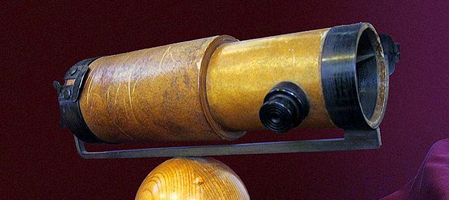
Newton’s telescope appears in the image above…
Related Content:
William Faulkner Audio Archive Goes Online
Penn Sound: Fantastic Audio Archive of Modern & Contemporary Poets
Discover The Math Guy Radio Archive
Read More...Leonard Cohen Gives a Great Speech on How His Love Affair with Music First Began (2011)
Several weeks back, we featured Ladies and Gentlemen… Mr. Leonard Cohen, the 1965 film that documented the life and times of the young poet who hadn’t yet started his legendary songwriting career. Now comes a little postscript. Speaking last Friday at the Prince of Asturias Awards, Mr. Cohen recalls the defining little moment when he shifted towards music and songwriting. He calls it the moment that explains “How I Got My Song,” and it’s all bound up with Spain and tragedy. The 11-minute talk is filled with humility and gratitude in equal parts. You can find a transcript here. H/T Metafilter
Related Content:
Leonard Cohen Reads “The Future” (Not Safe for Work)
Leonard Cohen: I’m Your Man. Watch the Film
Learn Spanish with our Collection of Free Language Lessons
Read More...Norah Jones Sings Bob Dylan’s “Forever Young” in Honor of Steve Jobs (Plus Coldplay’s Performance)
Apple has posted on its web site the celebration of Steve Jobs’ life that it held last Wednesday. And, at least for me, one of the more poignant moments comes when Norah Jones takes the stage (around the 23 minute mark) and sings a moving version of Bob Dylan’s Forever Young (29 minute mark).
Jobs always had a special affection for Dylan’s songwriting. According to Walter Isaacson’s new biography, Jobs and Steve Wozniak bonded over Dylan’s music as young men. “The two of us would go tramping through San Jose and Berkeley and ask about Dylan bootlegs and collect them,” Wozniak recalled. “We’d buy brochures of Dylan lyrics and stay up late interpreting them. Dylan’s words struck chords of creative thinking.”
Later, when Jobs created the famous “Think Different” ad, he made sure that Dylan was among the 17 rebels featured in it. (Watch the never-aired commercial narrated by Jobs himself here.) Apple also helped underwrite the production of Martin Scorsese’s Bob Dylan documentary, No Direction Home. And, even down to his last days, Jobs’ personal iPod was packed with iconic music from the 60s — the Beatles, the Stones and, of course, Bob Dylan too. Enjoy, and for good measure, we’re adding a song from Coldplay’s performance, which comes later in the celebration.
Other songs played include Vida la Vida, Fix You and Every Teardrop Is A Waterfall.
Read More...Listen to the New Tom Waits Album, ‘Bad As Me,’ Free for a Limited Time
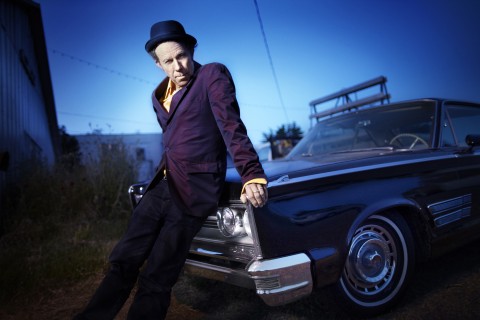
This week Tom Waits released his first studio album in seven years, and it doesn’t disappoint. Bad As Me, writes Will Hermes in a four-star Rolling Stone review, may be Waits’ most broadly emotional album to date: “Certainly it’s his most sharply focused record since the game-changing tag team Swordfishtrombones and Rain Dogs decades ago.” You can judge for yourself: For a limited time, National Public Radio is offering a sneak preview of the complete album.
Bad As Me is more accessible than many of Waits’ albums. As his long-time session guitarist Marc Ribot told The New York Times, “On this record it was less, ‘O.K. let’s be super rigorous and create music completely without precedent,’ and more just ‘Let’s rock the house.’ ” The title track is a good example. It’s a rollicking blues stomp, with Waits channeling the ghost of Screamin’ Jay Hawkins as he shouts:
You’re the head on the spear
You’re the nail on the cross
You’re the fly in my beer
You’re the key that got lost
You’re the letter from Jesus on the bathroom wall
You’re mother superior in only a bra
You’re the same kind of bad as me
On a more serious note, Waits sings of America’s infantile politics, its military and economic quagmires, and the general breakdown of discourse in the melancholy “Talking At The Same Time”:
A tiny boy sat and he played in the sand
He made a sword from a stick
And a gun from his hand
Well we bailed out the millionaires
They’ve got the fruit
We’ve got the rind
And everybody’s talking at the same time
Waits is joined by a stellar group of backing musicians, including Keith Richards on guitar and vocals, David Hidalgo on guitar, and Flea on bass. Bad As Me comes in two versions: the standard edition, with 13 songs, and the deluxe edition, with 16. You can hear all 13 tracks from the standard edition on the NPR website, and follow along with the lyrics on TomWaits.com.
Read More...Alfred Hitchcock Presents Ghost Stories for Young People (1962)
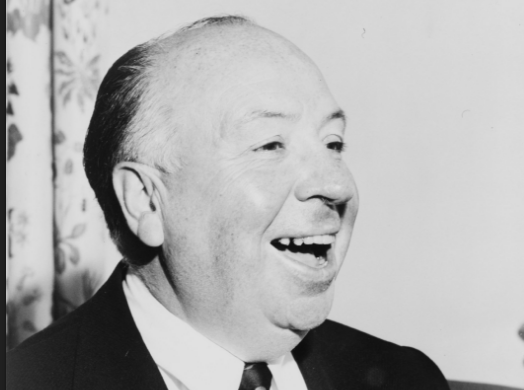
Image by Fred Palumbo, via Wikimedia Commons
Close the doors. Shut the blinds. Turn out the lights. Make that room dark. Get ready for Alfred Hitchcock Presents Ghost Stories for Young People. Originally recorded in 1962, the album features 11 ghost stories introduced by Hitchcock himself and then read by actor John Allen. If you were a kid during the early 60s, this may bring back some very good memories. The recording is available on YouTube and Spotify, embedded below. (Download Spotify’s software for free here.)
Here’s a playlist of the tracks:
- The Haunted And The Haunters (The Pirate’s Curse)
- The Magician (’til Death Do Us Part)
- Johnny Takes A Dare (The More The Merrier)
- The Open Window (Special Adaptation)
- The Helpful Hitchhiker
- Jimmy Takes Vanishing Lessons
h/t @BrainPicker
Related Content:
21 Free Hitchcock Movies Online
Alfred Hitchcock’s Seven-Minute Editing Master Class
François Truffaut’s Big Interview with Alfred Hitchcock (Free Audio)
Alfred Hitchcock’s Rules for Watching Psycho (1960)
1,000 Free Audio Books: Download Great Books for Free Read More...Pete Seeger: To Hear Your Banjo Play (1946)
This past weekend, Pete Seeger marched through the streets of Manhattan with the Occupy Wall Street movement. He was a spritely 92. It was the latest in a lifetime of political engagement by Seeger, dating all the way back to his youthful support of the Spanish Civil War. Today we bring you a film of Seeger when he was only 27 years old: To Hear Your Banjo Play. Released in 1946, To Hear Your Banjo Play is an engaging 16-minute introduction to American folk music, written and narrated by Alan Lomax and featuring rare performances by Woody Guthrie, Baldwin Hawes, Sonny Terry, Brownee McGhee, Texas Gladden and Margot Mayo’s American Square Dance Group. To Hear Your Banjo Play is included in our collection, 4,000+ Free Movies Online: Great Classics, Indies, Noir, Westerns, Documentaries & More.
If you would like to support the mission of Open Culture, consider making a donation to our site. It’s hard to rely 100% on ads, and your contributions will help us continue providing the best free cultural and educational materials to learners everywhere. You can contribute through PayPal, Patreon, and Venmo (@openculture). Thanks!
Related Content:
Legendary Folklorist Alan Lomax’s ‘The Land Where the Blues Began’
Pete Seeger Teaches You How to Play Guitar for Free in The Folksinger’s Guitar Guide (1955
Read More...Tim Burton: A Look Inside His Visual Imagination
Tim Burton is a household name with his creepy creations and vivid symbolic imagery in film and art. Born in Burbank, California in 1958, Burton studied at the California Institute of the Arts and worked as an animator for Disney. After a time, he left to pursue an independent career, becoming famous for a wide variety of films such as The Nightmare Before Christmas, Batman, Big Fish, and most recently, Alice in Wonderland.
The video above features Burton discussing the cultivation of his signature style and the source of his unique images. The clip was shot in connection with an exhibit of Burton’s work at the Museum of Modern Art, held in New York City in 2009–2010. The exhibit has since moved to LACMA in Los Angeles, and it traces the development of Burton’s work from childhood sketches to his mature work as a filmmaker, bringing together hundreds of drawings, paintings, photographs, moving image works, concept art, storyboards, puppets, maquettes, costumes, and cinematic ephemera from his films. The show continues outside the museum with a topiary inspired by Edward Scissorhands and a rendition of Balloon Boy, a figure combining characters from Burton’s 1997 book The Melancholy Death of Oyster Boy and Other Stories. You can catch the exhibit at LACMA until October 31st — a fitting end date, to be sure.
Harking back to an earlier post, here is a sample of Burton’s early filmmaking, created not long before he set out on his own. Narrated by Vincent Price, the short film, Vincent, effectively brings together two great talents of the horror genre … and will put anyone in the spirit of Halloween if you’re not already there.
Read More...Willie Nelson, Pete Seeger, and Arlo Guthrie at Occupy Wall Street
What it is ain’t exactly clear…
The intellectuals have paid a visit to Occupy Wall Street (Joseph Stiglitz, Lawrence Lessig, Slavoj Zizek, etc.). And so have some iconic cultural figures. This week, Willie Nelson and his wife wrote and read a poem supporting the surging movement.
Then last night, Pete Seeger marched some 30 blocks through the streets of midtown, NYC. At 92, the legendary voice of protest can still raise some hell. If you have any doubts, just watch his musical protest against British Petroleum performed last year.
Near 1:00 a.m., the festivities were capped off at Columbus Circle with Arlo Guthrie and friends leading a singalong to the folk classic, “This Little Light of Mine.” As more cultural figures pay a visit, we’ll post them…
H/T to @webacion
Read More...Support Us
We're hoping to rely on loyal readers, rather than erratic ads. Please click the Donate button and support Open Culture. You can use Paypal, Venmo, Patreon, even Crypto! We thank you!

About Us

Open Culture scours the web for the best educational media. We find the free courses and audio books you need, the language lessons & educational videos you want, and plenty of enlightenment in between.
Advertise With Us

FREE UPDATES!
GET OUR DAILY EMAIL
Get the best cultural and educational resources on the web curated for you in a daily email. We never spam. Unsubscribe at any time.
FOLLOW ON SOCIAL MEDIA

Open Culture editor Dan Colman scours the web for the best educational media. He finds the free courses and audio books you need, the language lessons & movies you want, and plenty of enlightenment in between.
Advertise With Us


