Free: Download the The Anarchist’s Tool Chest, The Anarchist’s Design Book, The Anarchist’s Workbench & Other Woodworking Texts
For Christopher Schwarz, American anarchism isn’t “about bombs and leather jackets; it’s about being an independent designer.” It’s about working outside “massive and dehumanizing institutions” (like corporations) and designing beautiful objects that last. He writes: “As a designer of books, tools and furniture, I have zero desire to make things that are intended from the get-go to fall apart.” Based in Covington, Kentucky, Schwarz runs a small woodworking business where he handcrafts beautiful tables, chairs and other pieces of furniture. He also runs Lost Art Press, which publishes books like The Anarchist’s Tool Chest, The Anarchist’s Design Book, The Anarchist’s Workbench, and other titles.
His “Anarchist” series of books “represent a 10-year effort to make woodworking more accessible, affordable and ethical – and less commercial.” Typically the print editions run $30-$54. But, to the delight of many fellow woodworkers, Schwarz has made several editions available as free digital downloads. This includes (as of this week) The Anarchist’s Tool Chest, which “shows you how you can build furniture with only a small kit of high-quality tools. The first half of the book explains in detail how to choose the right tools… The second half of the book shows you how to build a traditional tool chest to hold these tools.” To find a complete list of books available as free downloads, see the list below.
- The Anarchist’s Tool Chest
- The Anarchist’s Design Book
- The Anarchist’s Workbench
- The Art of Joinery
- Roman Workbenches
- The Stick Chair Book
Read More...
How the Year 2440 Was Imagined in a 1771 French Sci-Fi Novel
Many Americans might think of Rip Van Winkle as the first man to nod off and wake up in the distant future. But as often seems to have been the case in the seventeenth and eighteenth centuries, the French got there first. Almost 50 years before Washington Irving’s short story, Louis-Sébastien Mercier’s utopian novel L’An 2440, rêve s’il en fut jamais (1771) sent its sleeping protagonist six and a half centuries forward in time. Read today, as it is in the new Kings and Things video above, the book appears in roughly equal parts uncannily prophetic and hopelessly rooted in its time — setting the precedent, you could say, for much of the yet-to-be-invented genre of science fiction.
Published in English as Memoirs of the Year Two Thousand Five Hundred (of which both Thomas Jefferson and George Washington owned copies), Mercier’s novel envisions “a world where some technological progress has been made, but the industrial revolution never happened. It’s a world where an agrarian society has invented something resembling hologram technology, where Pennsylvania is ruled by an Aztec emperor, and drinking coffee is a criminal offense.” Its setting, Paris, “has been completely reorganized. The chaotic medieval fabric has made way for grand and beautiful streets built in straight lines, similar to what actually happened in Haussmann’s renovation a bit under a century after the book was published.”
Mercier couldn’t have known about that ambitious work of urban renewal avant la lettre any more than he could have known about the revolution that was to come in just eighteen years. Yet he wrote with certainty that “the Bastille has been torn down, although not by a revolution, but by a king.” Mercier’s twenty-fifth-century France remains a monarchy, but it has become a benevolent, enlightened one whose citizens rejoice at the chance to pay tax beyond the amount they owe. More realistically, if less ambitiously, the book’s unstuck-in-time hero also marvels at the fact that traffic traveling in one direction uses one side of the street, and traffic traveling in the other direction uses the other, having come from a time when roads were more of a free-for-all.
L’An 2440, rêve s’il en fut jamais offers the rare example of a far-future utopia without high technology. “If anything, France is more agrarian than in the past,” with no interest even in developing the ability to grow cherries in the wintertime. Many of the inventions that would have struck Mercier’s contemporary readers as fantastical, such as an elaborate device for replicating the human voice, seem mundane today. Nevertheless, it all reflects the spirit of progress that was sweeping Europe in the late eighteenth century. Mercier was reformer enough to have his country abandon slavery and colonialism, but French enough to feel certain that la mission civilisatrice would continue apace, to the point of imagining that the French language would be widely spoken in China. These days, a sci-fi novelist would surely put it the other way around.
Related content:
In 1896, a French Cartoonist Predicted Our Socially-Distanced Zoom Holiday Gatherings
How French Artists in 1899 Envisioned What Life Would Look Like in the Year 2000
1902 French Trading Cards Imagine “Women of the Future”
A 1947 French Film Accurately Predicted Our 21st-Century Addiction to Smartphones
Based in Seoul, Colin Marshall writes and broadcasts on cities, language, and culture. His projects include the Substack newsletter Books on Cities, the book The Stateless City: a Walk through 21st-Century Los Angeles and the video series The City in Cinema. Follow him on Twitter at @colinmarshall or on Facebook.
Read More...Who’s Behind These Scammy Text Messages We’ve All Been Getting?: The Search Engine Podcast Demystifies the Global Scam
You have received those odd text messages from a stranger. (“Hi, This is Anita. Have you received the Panamera parts yet?”) You know the messages are spam, but you don’t quite understand the angle of the scam. Above, the Search Engine podcast works with Bloomberg reporter Zeke Faux to break down the con operation. The story turns out to be more complicated than it first appears. It involves crypto, but also human trafficking and forced labor compounds in Cambodia and Myanmar. We’ll just leave it at that and suggest you listen to this unnerving podcast episode. You can hopefully stream it above or find it on your favorite podcast platform—e.g., Apple and Spotify.
Read More...Is America Declining Like Ancient Rome?
Pursued to any depth, the question of whether the United States of America counts as an empire becomes difficult to address with clarity. On one hand, the country has exerted a strong cultural influence on most of the world for the better part of a century, a phenomenon not unrelated to the military presence that extends far beyond its borders. (In Korea, where I live, I once met a former KATUSA, the branch of the Korean Army seconded to the US Army, who told me he’d joined because he “wanted to see what it was like to be a modern Roman soldier.”) On the other hand, we can’t quite say that it rules the known world — at least, not in the way that the Roman Empire did twenty centuries ago.
Yet the temptation to draw parallels between America and Rome remains irresistible, not least when it comes to the subject of imperial decline. In this video from Told in Stone, historian Garrett Ryan evaluates “the idea that modern America is destined to decline and fall like ancient Rome.” The arguments for this motion tend to involve “an increasingly unsettled international landscape” and “domestic division,” leading to the dissolution of Pax Americana — the successor of Pax Britannica, which itself succeeded Pax Romana. Americans, Ryan explains, “have a sense that Rome is in their political DNA. The constitution, after all, represents an attempt to create a new and perfected Roman Republic. Anxieties about Roman-style decline have been present since the beginning.”
Rome and America: each “was the greatest power of its time,” each “had a strong legal system and a society that left room for social advancement,” and each “professed to be guided by Christian principles.” Their political, economic, technological conditions could hardly be more different, of course, but when observers “say that America is falling like Rome, the underlying assumption is not that America is specifically like Rome; it’s that all empires, ancient and modern, follow a similar course from greatness to grave.” The Roman Empire fell because “Germanic tribes overcame its frontier defenses,” because “a series of ruinous civil wars sapped its strength,” because “it had lost the loyalty of provincial elites,” and for many other reasons besides — few of which are likely to play major parts in a notional American collapse.
But the fact that “the decline of Rome has no precise parallels in the twenty-first century does not mean that it has no lessons to offer modern America.” To learn those lessons, we could do worse than to turn to eighteenth-century historian Edward Gibbon, whose The Decline and Fall of the Roman Empire is the subject of the School of Life video above. “The immense story that Gibbon tells us moves from one disaster to another, century after century,” says narrator Alain de Botton: failed reforms, institutional corruption, breakdowns in civil-military relations, plagues, poor harvests, economic collapse. And yet the Renaissance, the Enlightenment, and the arrival of modernity, as we know it, all lay ahead. “You aren’t going to like what comes after America,” Leonard Cohen once wrote, but maybe our descendants will like what comes a millennium or so after America.
Related content:
The Splendid Book Design of the 1946 Edition of Gibbon’s Decline and Fall of the Roman Empire
Based in Seoul, Colin Marshall writes and broadcasts on cities, language, and culture. His projects include the Substack newsletter Books on Cities, the book The Stateless City: a Walk through 21st-Century Los Angeles and the video series The City in Cinema. Follow him on Twitter at @colinmarshall or on Facebook.
Read More...Goethe’s Theory of Colors: The 1810 Treatise That Inspired Kandinsky & Early Abstract Painting
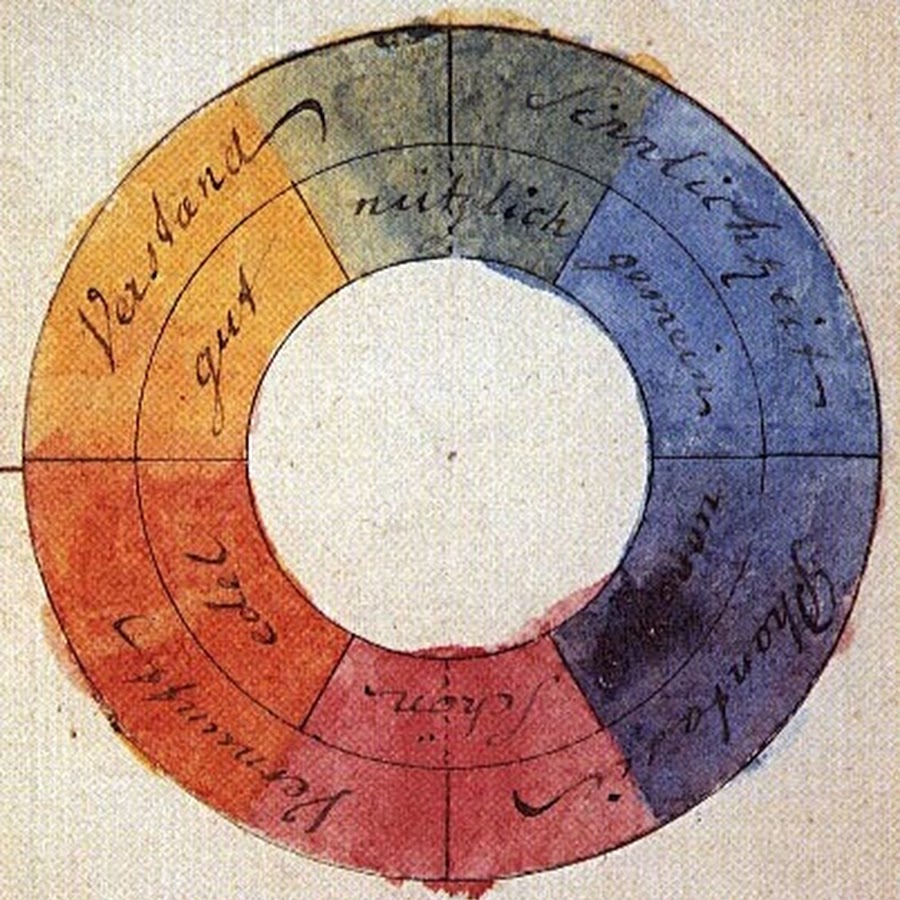
I doubt I need to list for you the many titles of the 18th century German savant and polymath Johann Wolfgang von Goethe, but allow me to add one or two that were new to me, at least: color theorist (or phenomenologist of color) and progenitor of abstract expressionism. As a fascinating Booktryst post informs us, Goethe’s book on color, Zur Farbenlehre (Theory of Colors), written in 1810, disputed the Newtonian view of the subject and formulated a psychological and philosophical account of the way we actually experience color as a phenomenon. In his account, Goethe describes how he came by his views:
Along with the rest of the world, I was convinced that all the colors are contained in the light; no one had ever told me anything different, and I had never found the least cause to doubt it, because I had no further interest in the subject.
But how I was astonished, as I looked at a white wall through the prism, that it stayed white! That only where it came upon some darkened area, it showed some color, then at last, around the window sill all the colors shone… It didn’t take long before I knew here was something significant about color to be brought forth, and I spoke as through an instinct out loud, that the Newtonian teachings were false.
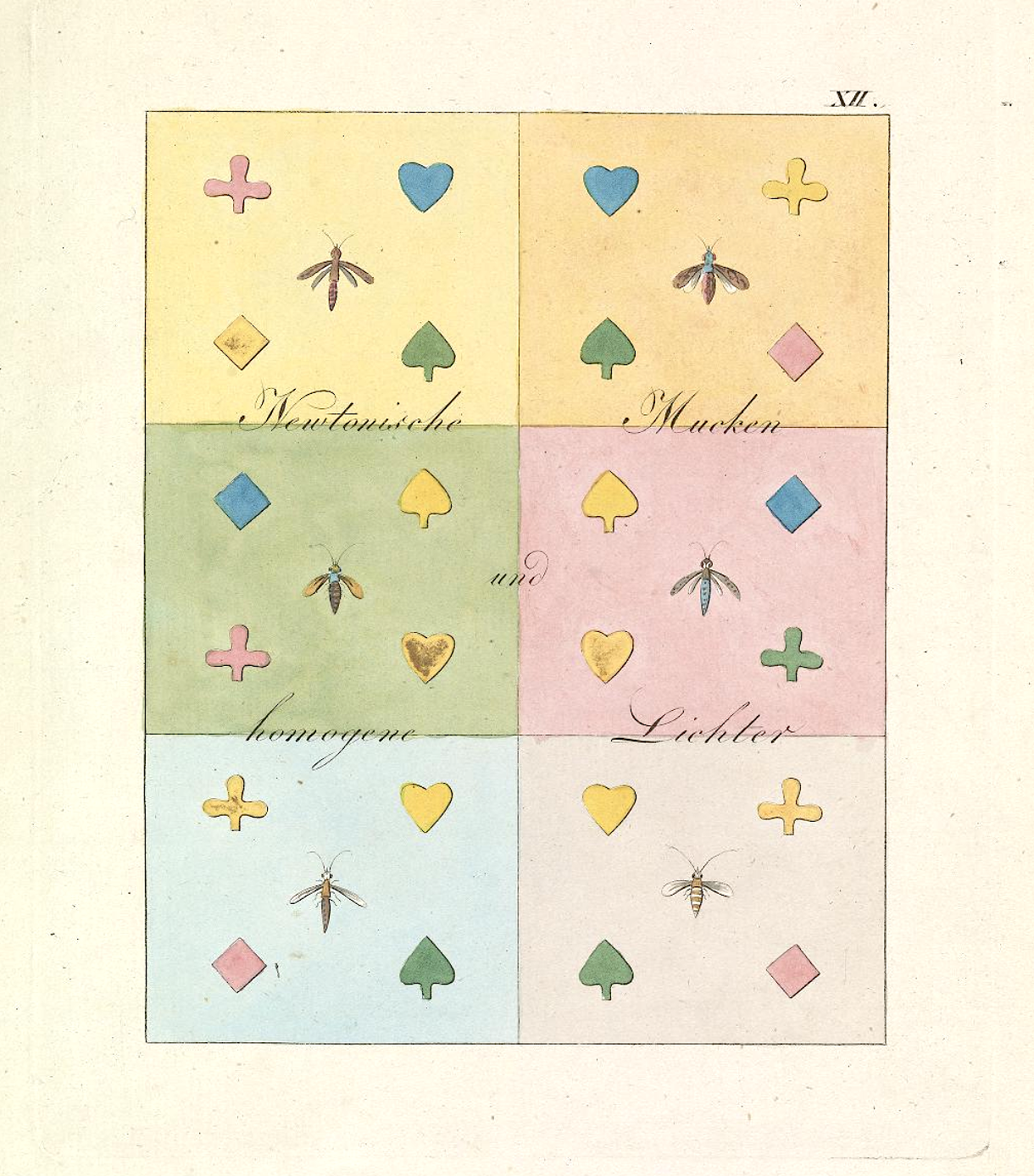
Schopenhauer would later write that “[Goethe] delivered in full measure what was promised by the title of his excellent work: data toward a theory of colour. They are important, complete, and significant data, rich material for a future theory of colour.” It was a theory, Schopenhauer admits, that does not “[furnish] us with a real explanation of the essential nature of colour, but really postulates it as a phenomenon, and merely tells us how it originates, not what it is.”
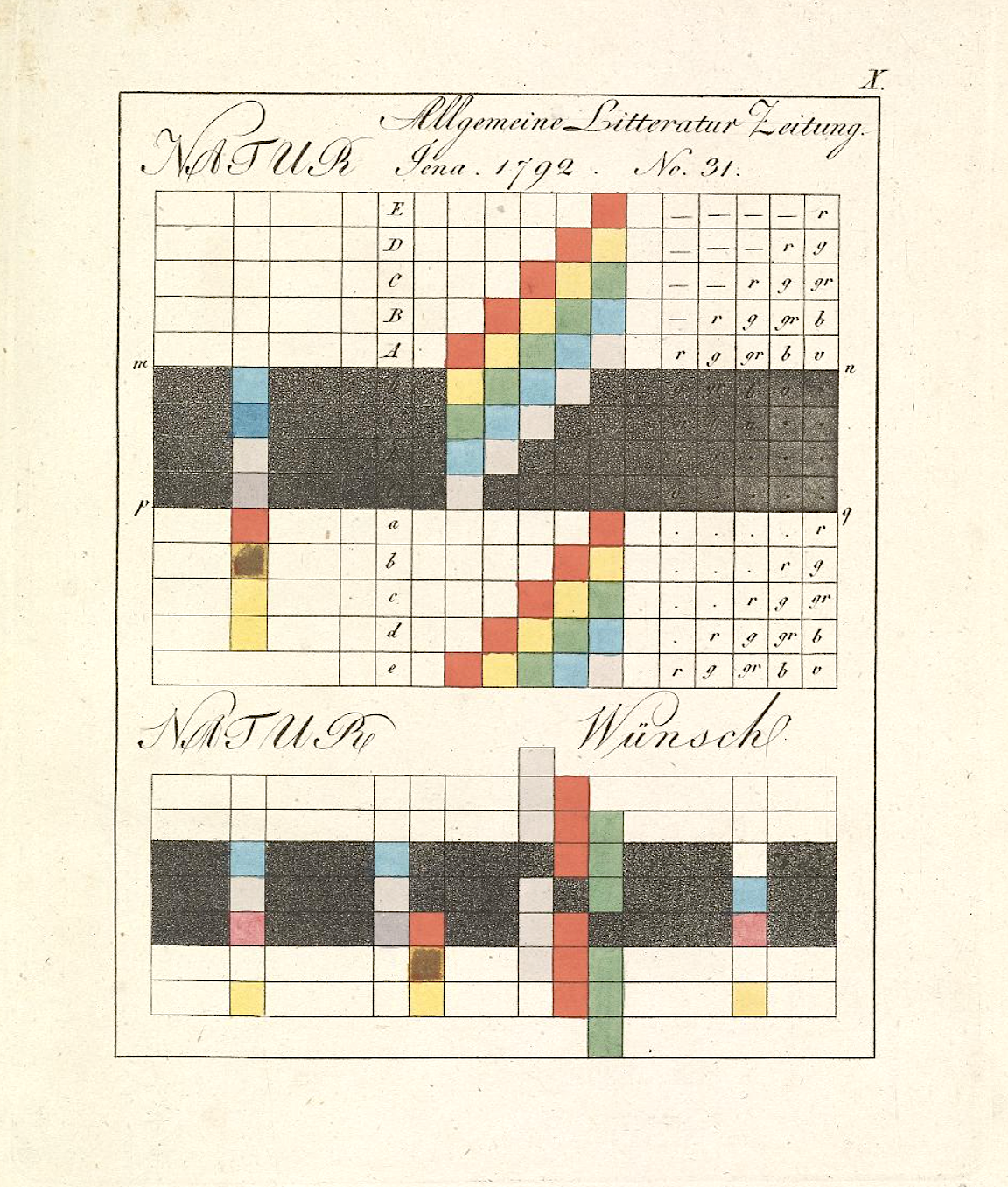
Another later philosophical interpreter of Goethe, Ludwig Wittgenstein—a thinker greatly interested in visual perception—also saw Goethe’s work as operating very differently than Newton’s optics—not as a scientific theory but rather as an intuitive schema. Wittgenstein remarked that Goethe’s work “is really not a theory at all. Nothing can be predicted by means of it. It is, rather, a vague schematic outline, of the sort we find in [William] James’s psychology. There is no experimentum crucis for Goethe’s theory of colour.”
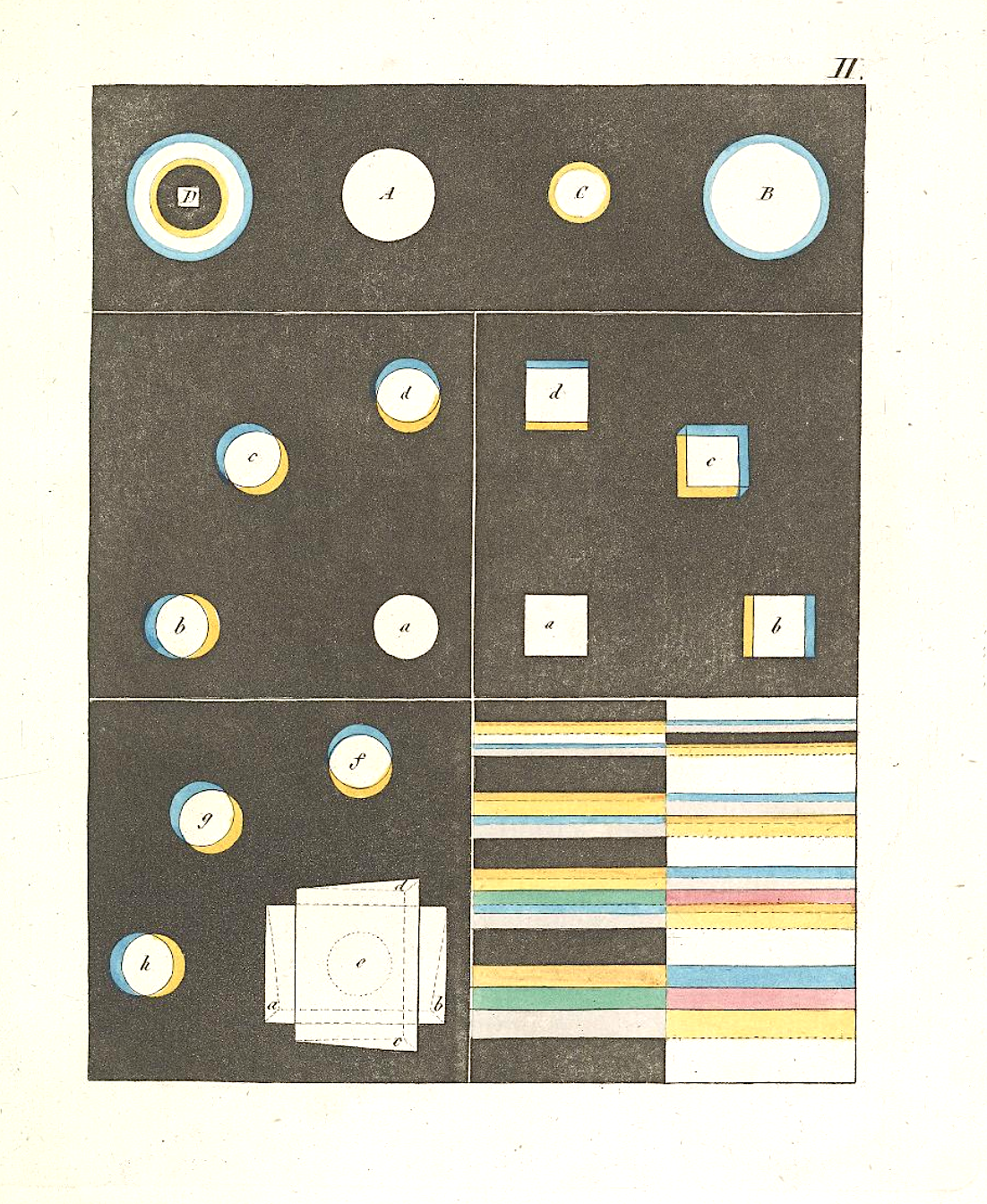
Yet a third later German genius, Werner Heisenberg, commented on the influence of Zur Farbenlehre, writing that “Goethe’s colour theory has in many ways borne fruit in art, physiology and aesthetics. But victory, and hence influence on the research of the following century, has been Newton’s.”
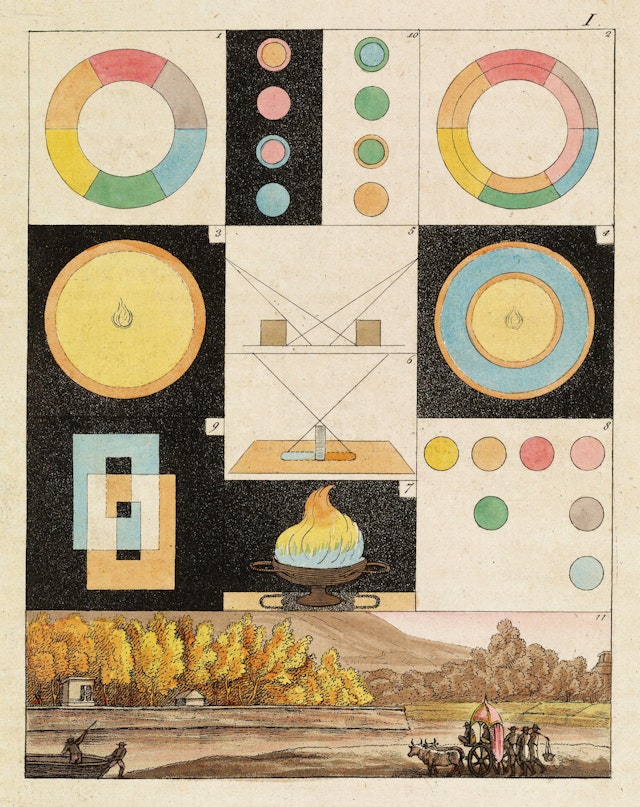
I’m not fit to evaluate the relative merits of Goethe’s theory, or lack thereof, versus Newton’s rigorous work on optics. Whole books have been written on the subject. But whatever his intentions, Goethe’s work has been well-received as a psychologically accurate account that has also, through his text and many illustrations you see here, had significant influence on twentieth century painters also greatly concerned with the psychology of color, most notably Wassily Kandinsky, who produced his own “schematic outline” of the psychological effects of color titled Concerning the Spiritual in Art, a classic of modernist aesthetic theory. As is usually the case with Goethe, the influence of this single work is wider and deeper than he probably ever foresaw.
You can find an affordable version of Goethe’s Theory of Colors on Amazon. Or find scans of the book at Archive.org.
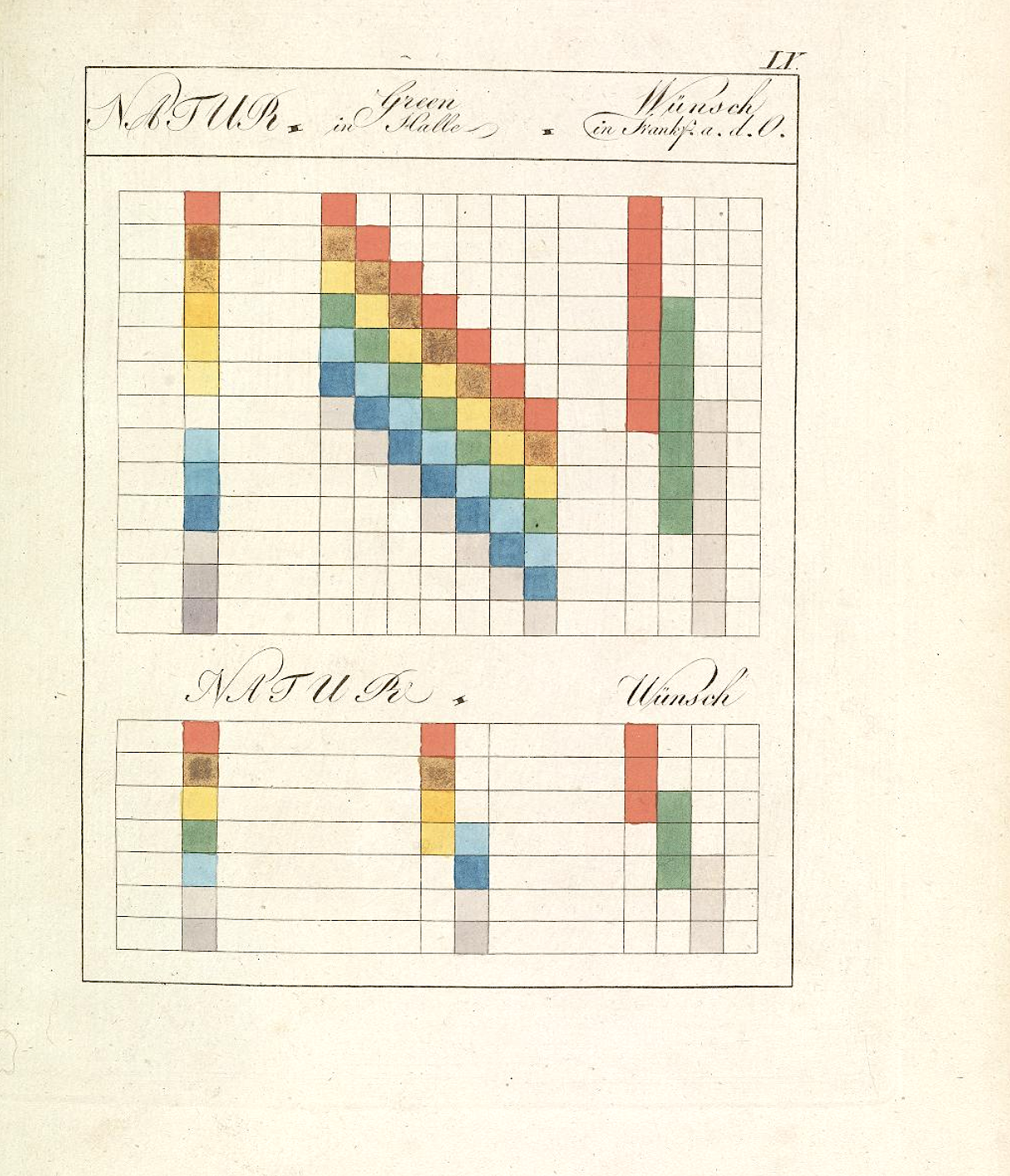
Note: This post originally appeared on our site in 2013. We have updated the post with new images and links.
Related Content:
A 900-Page Pre-Pantone Guide to Color from 1692: A Complete Digital Scan
An Animated Introduction to Goethe, Germany’s “Renaissance Man”
Harry Clarke’s 1926 Illustrations of Goethe’s Faust: Art That Inspired the Psychedelic 60s
Watch Goethe’s Haunting Poem, “Der Erlkönig,” Presented in an Artful Sand Animation
Josh Jones is a writer and musician based in Durham, NC. Follow him at @jdmagness
Read More...The Oldest Known Photographs of India (1863–1870)
After about a century of indirect company rule, India became a full-fledged British colony in 1858. The consequences of this political development remain a matter of heated debate today, but one thing is certain: it made India into a natural destination for enterprising Britons. Take the aspiring clergyman turned Nottingham bank employee Samuel Bourne, who made his name as an amateur photographer with his pictures of the Lake District in the late eighteen-fifties. When those works met with a good reception at the London International Exhibition of 1862, Bourne realized that he’d found his true métier; soon thereafter, he quit the bank and set sail for Calcutta to practice it.
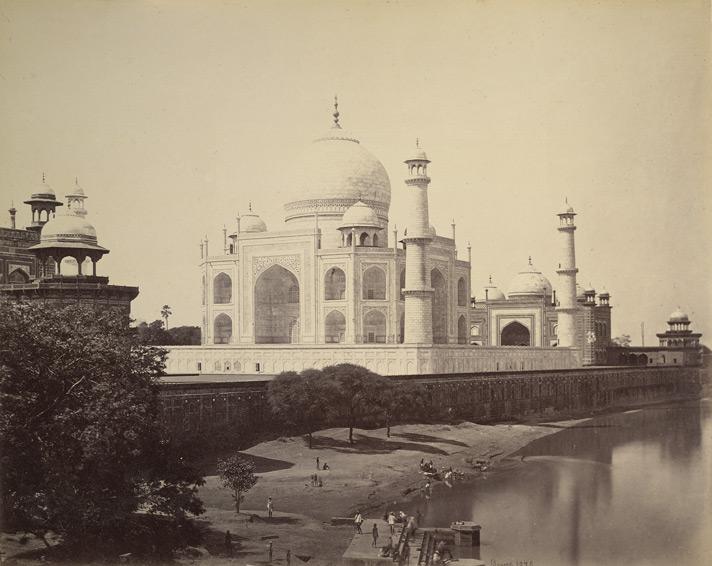
It was in the city of Shimla that Bourne established a proper photo studio, first with his fellow photographer William Howard, then with another named Charles Shepherd. (Bourne & Shepherd, as it was eventually named, remained in business until 2016.) Bourne traveled extensively in India, taking the pictures you can see collected in the video above, but it was his “three successive photographic expeditions to the Himalayas” that secured his place in the history of photography.
In the last of these, “Bourne enlisted a team of eighty porters who drove a live food supply of sheep and goats and carried boxes of chemicals, glass plates, and a portable darkroom tent,” says the Metropolitan Museum of Art. When he crossed the Manirung Pass “at an elevation of 18,600 feet, Bourne succeeded in taking three views before the sky clouded over, setting a record for photography at high altitudes.”
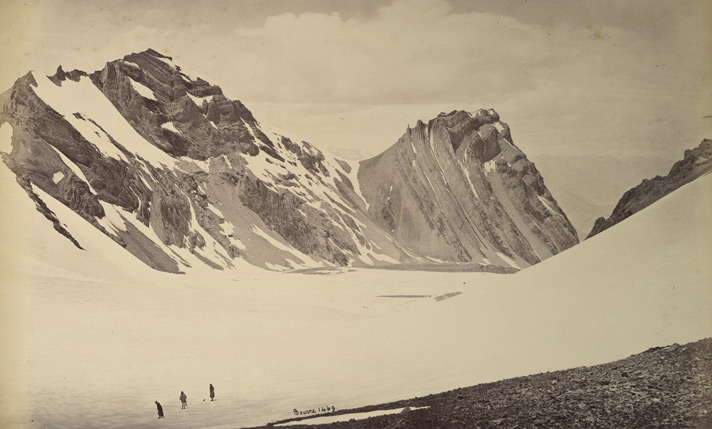
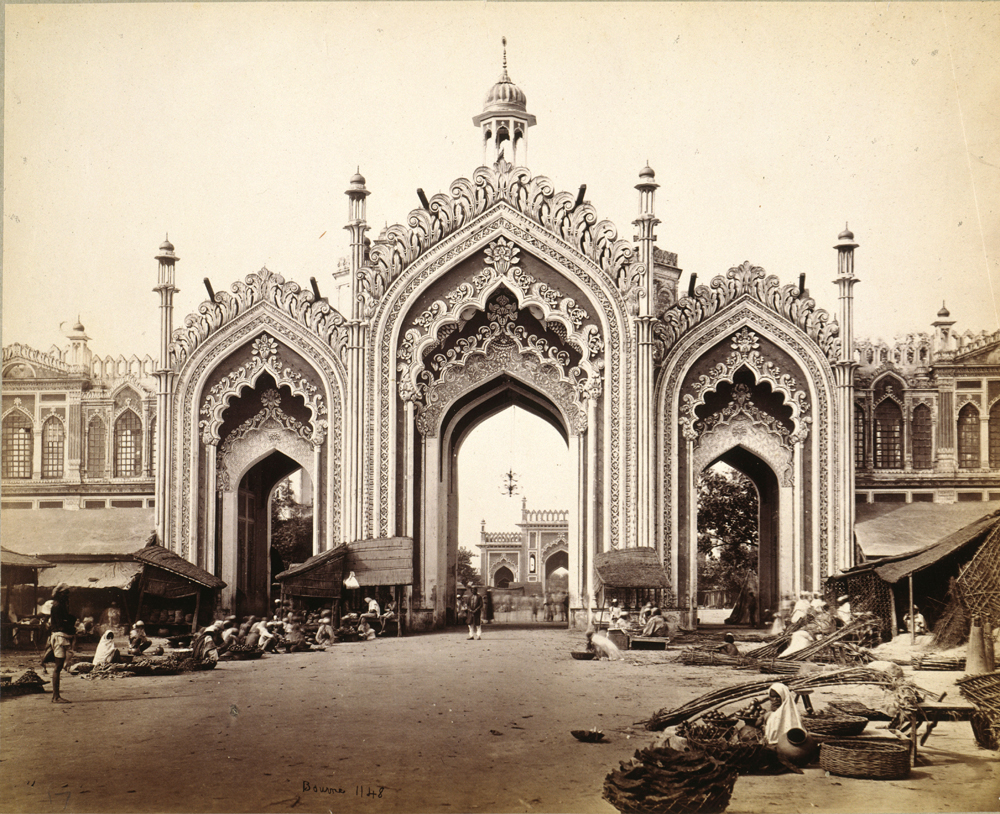
Though he spent only six years in India, Bourne managed to take 2,200 high-quality pictures in that time, some of the oldest — and indeed, some of the finest — photographs of India and its nearby region known today.

In addition to views of the Himalayas, he captured no few architectural wonders: the Taj Mahal and the Ramnathi temple, of course, but also Raj-era creations like what was then known as the Government House in Calcutta (see below).
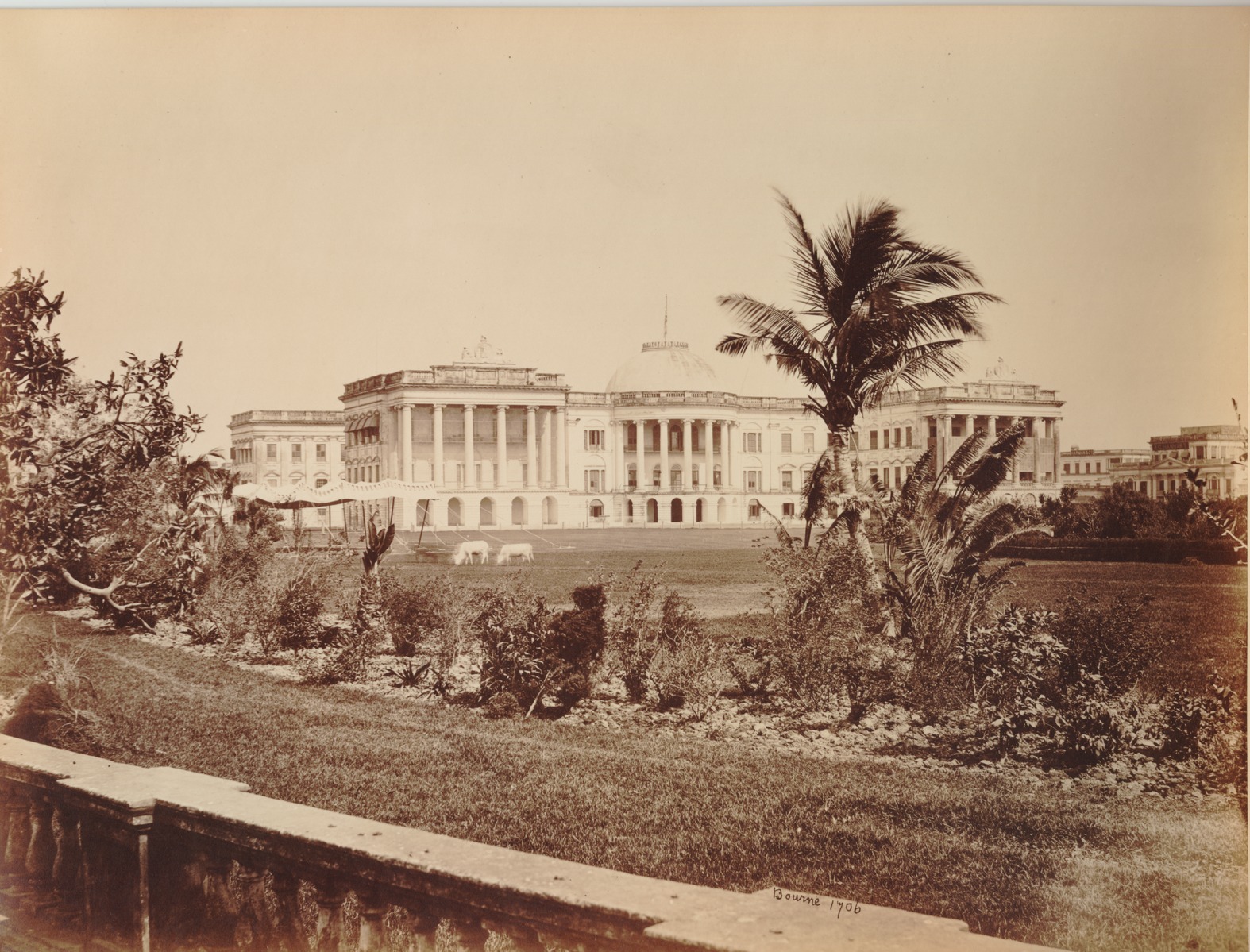
Colonial rule has been over for nearly eighty years now, and in that time India has grown richer in every sense, not least visually. It hardly takes an eye as keen as Bourne’s to recognize in it one of the world’s great civilizations, but a Bourne of the twenty-first century probably needs something more than a camera phone to do it justice.
Related content:
The First Photograph Ever Taken (1826)
The Oldest Known Photographs of Rome (1841–1871)
Based in Seoul, Colin Marshall writes and broadcasts on cities, language, and culture. His projects include the Substack newsletter Books on Cities, the book The Stateless City: a Walk through 21st-Century Los Angeles and the video series The City in Cinema. Follow him on Twitter at @colinmarshall or on Facebook.
Read More...180,000 Years of Religion Charted on a “Histomap” in 1943
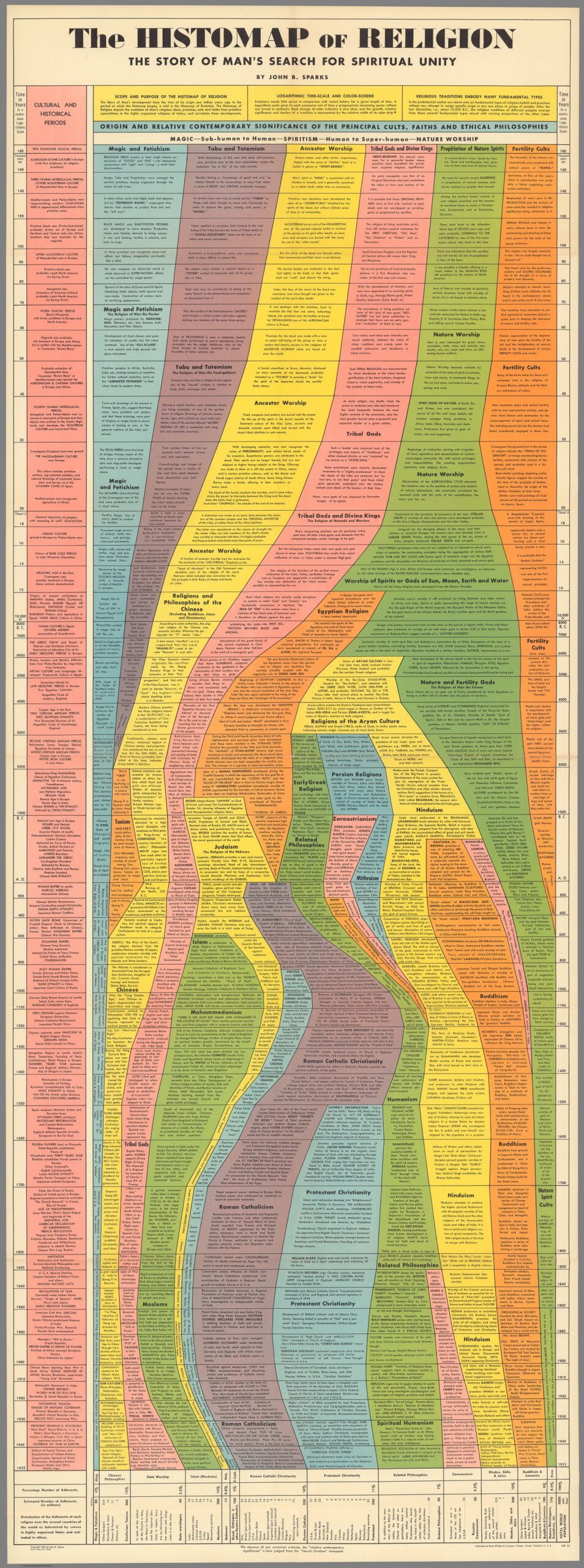
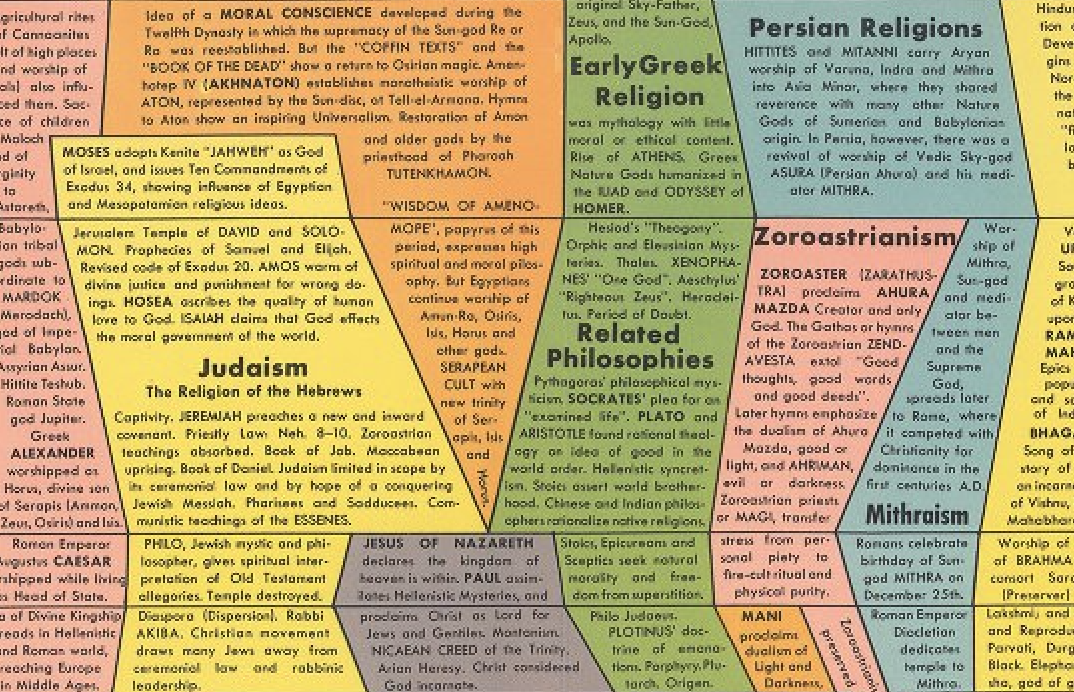
For many, even most of us moderns, the central religious choice is a simple one: adhere to the belief system in which you grew up, or stop adhering to it. But if you survey the variety of religions in the world, the situation no longer seems quite so binary; if you then add the variety of religions that have existed throughout human history, it starts looking downright kaleidoscopic. Or rather, it looks something like the faintly psychedelic but also information-rich Histomap of Religion above, created in 1943 by chemist John B. Sparks, whom we’ve previously featured here on Open Culture for his original Histomap depicting 4,000 Years of World History and his subsequent Histomap of Evolution.
The UsefulCharts video below explains Sparks’ Histomap of Religion in detail, but it also cites his Histomap of Evolution, an example of how his worldview fails to align with current perceptions of these subjects. Even the newer Histomap of Religion is by now more than 80 years old, during which time scholarship in religion and related fields has made certain discoveries and clarifications that necessarily go unreflected in Sparks’ work. But if you bear this in mind while looking at the Histomap of Religion, you can still gain a new and useful perspective on how the beliefs that mankind has held highest have changed and intermingled over the millennia.
The chart begins in prehistory, dividing the then-extant faiths into the categories “magic and fetishism,” “tabu and totemism,” “ancestor worship,” “tribal gods and divine kings,” “propitiation of nature spirits,” and “fertility cults.” Though Sparks’ information may on the whole be “based on theories about the origins of religion which have now been either rejected or at least seriously revised,” explains UsefulCharts creator Matt Baker, “the general ideas expressed by these six types are still somewhat valid.” The expansion and contraction of adherence to these types of early religion through time are reflected by changes in the width of the colored columns that represent them. Follow these columns downward through history, and new, more familiar religions emerge: Taoism, Judaism, Hinduism, Buddhism, Christianity both Catholic and Protestant.
Thereafter come other movements and figures perhaps not immediately recognizable as religious in nature: “humanism,” for example, whose representatives include Shakespeare and Rousseau. Later, the ideas of Russian intellectuals Vissarion Belinsky and Alexander Herzen branch off to become, after about a century, the “corrupt philosophy” of communism, with its “God-less propaganda” supporting a “police state aimed at world domination.” Baker objects that, if Sparks counts communism as a religion, then surely he should count capitalism as a religion as well. This is a fair-enough point, though behold this dense chart of “cults, faiths, and ethical philosophies” long enough, and you’ll start to wonder if everything humanity has ever done isn’t, in some sense, ultimately religious in nature.
Related content:
Animated Map Shows How the Five Major Religions Spread Across the World (3000 BC — 2000 AD)
The Tree of Languages Illustrated in a Big, Beautiful Infographic
4000 Years of History Displayed in a 5‑Foot-Long “Histomap” (Early Infographic) From 1931
10 Million Years of Evolution Visualized in an Elegant, 5‑Foot Long Infographic from 1931
Based in Seoul, Colin Marshall writes and broadcasts on cities, language, and culture. His projects include the Substack newsletter Books on Cities, the book The Stateless City: a Walk through 21st-Century Los Angeles and the video series The City in Cinema. Follow him on Twitter at @colinmarshall or on Facebook.
Read More...OpenVertebrate Presents a Massive Database of 13,000 3D Scans of Vertebrate Specimens

From The Florida Museum of Natural History comes the openVertebrate project, a new initiative to “provide free, digital 3D vertebrate anatomy models and data to researchers, educators, students and the public.” Introducing the new project (otherwise known as oVert), the museum writes:
Between 2017 and 2023, oVert project members took CT scans of more than 13,000 specimens, with representative species across the vertebrate tree of life. This includes more than half the genera of all amphibians, reptiles, fishes and mammals. CT scanners use high-energy X‑rays to peer past an organism’s exterior and view the dense bone structure beneath. Thus, skeletons make up the majority of oVert reconstructions. A small number of specimens were also stained with a temporary contrast-enhancing solution that allowed researchers to visualize soft tissues, such as skin, muscle and other organs.
The models give an intimate look at internal portions of a specimen that could previously only be observed through destructive dissection and tissue sampling.
In the coming years, the openVertebrate team will “CT scan 20,000 fluid-preserved specimens from U.S. museum collections, producing high-resolution anatomical data for more than 80 percent of vertebrate genera.” The project will also make digital images and 3D mesh files available to download and 3D print.
The video below provides a short, visual introduction to the digital collection. You can learn more about the project here.
Related Content
Watch The Insects’ Christmas from 1913: A Stop Motion Film Starring a Cast of Dead Bugs
Captivating Collaboration: Artist Hubert Duprat Uses Insects to Create Golden Sculptures
Read More...
How Engineers Straightened the Leaning Tower of Pisa
?si=WxyK2XAukThVTpa7
Construction on the Tower of Pisa first began in the year 1173. By 1178, the architects knew they had a problem on their hands. Built on an unsteady foundation, the tower began to sink under its own weight and soon started to lean. Medieval architects tried to address the tilt. However, it persisted and incrementally worsened over the next eight centuries. Then, in 1990, Italian authorities closed the tower to the public, fearing it might collapse. For the next 11 years, engineers worked to stabilize the structure. How did they put the tower on a better footing, as it were, while still preserving some of its iconic lean? That’s the subject of this intriguing video by the YouTube channel Practical Engineering. Watch it above.
Related Content
The Age of Cathedrals: A Free Online Course from Yale University
Venice Explained: Its Architecture, Its Streets, Its Canals, and How Best to Experience Them All
Read More...Hear Nirvana’s “Smells Like Teen Spirit” Performed in Classical Latin
By the early nineteen-nineties, at least in the United States, Latin instruction in schools wasn’t what it had once been. Students everywhere had long been showing impatience and irreverence about their having to study that “dead language,” of course. But surely it had never felt quite so irrelevant as it did in a world of shopping malls, cable television, and the emerging internet. Thirty years ago, few students would have freely chosen to do their Latin homework when they could have been, say, listening to Nirvana. But now, in the age of Youtube, they can have both at once.
In the video above, the_miracle_aligner covers “Smells Like Teen Spirit” in a medieval (or “bardcore”) style, using not just period instrumentation but also a translation of its lyrics into Latin. Since its release a few years ago, this Colosseum-worthy version of the song that defined grunge has drawn thousands upon thousands of appreciative comments from enthusiasts of Nirvana and Latin alike.
As one of the latter points out, “most Latin words rhyme because of conjugation,” and when they don’t, the language’s unusual freedom of word order provides plenty of opportunity to make it work. Still, the song contains more than its share of truly inspired choices: another commenter calls it “just immaculate” how “the ‘hello, how low’ rhymes as ‘salvé, parve.’ ”
As tends to be the way with those of us here in the twenty-first century inclined to dig deep into a language like Latin, some take the opportunity to get into character: “I vividly remember the night Gaius Kurtus Cobainius the Elder premiered this song at the Amphitheater of Pompey in the Summer of 91AD. The plebs went nuts and were throwing Sesterti and Denari on the stage. I even saw a patrician woman lift her tunic! Oh how I miss those days.” In whatever language it’s sung, the instantly recognizable “Smells Like Teen Spirit” will send any Generation-Xers in earshot right back to the strenuous slacking of their own youth. And the cry “Oblectáte, nunc híc sumus” would have cut as sharply in the age of bread and circuses as it did in the MTV era — or, for that matter, as it does now.
Related content:
Learn Latin, Old English, Sanskrit, Classical Greek & Other Ancient Languages in 10 Lessons
Nirvana’s “Come As You Are” Played By Musicians Around the World
The First Live Performance of Nirvana’s “Smells Like Teen Spirit” (1991)
What Ancient Latin Sounded Like, And How We Know It
Based in Seoul, Colin Marshall writes and broadcasts on cities, language, and culture. His projects include the Substack newsletter Books on Cities, the book The Stateless City: a Walk through 21st-Century Los Angeles and the video series The City in Cinema. Follow him on Twitter at @colinmarshall or on Facebook.
Support Us
We're hoping to rely on loyal readers, rather than erratic ads. Please click the Donate button and support Open Culture. You can use Paypal, Venmo, Patreon, even Crypto! We thank you!

About Us

Open Culture scours the web for the best educational media. We find the free courses and audio books you need, the language lessons & educational videos you want, and plenty of enlightenment in between.
Advertise With Us

FREE UPDATES!
GET OUR DAILY EMAIL
Get the best cultural and educational resources on the web curated for you in a daily email. We never spam. Unsubscribe at any time.
FOLLOW ON SOCIAL MEDIA

Open Culture editor Dan Colman scours the web for the best educational media. He finds the free courses and audio books you need, the language lessons & movies you want, and plenty of enlightenment in between.
Advertise With Us

