Scenes from HBO’s Chernobyl v. Real Footage Shot in 1986: A Side-By-Side Comparison
Audiences today can’t get enough of history, especially history presented as a podcast or a prestige television series. Best of all is the historical prestige television series accompanied by its own podcast, currently exemplified by Chernobyl, HBO’s five-episode dramatization of the events leading up to and the aftermath of the titular Soviet nuclear disaster. “The material culture of the Soviet Union is reproduced with an accuracy that has never before been seen in Western television or film — or, for that matter, in Russian television or film,” The New Yorker’s Masha Gessen writes of the show. “Soviet-born Americans — and, indeed, Soviet-born Russians — have been tweeting and blogging in awe at the uncanny precision with which the physical surroundings of Soviet people have been reproduced.”
But along with all the praise for the accuracy on Chernobyl’s surface has come criticism of its deeper conception of the time and place it takes as its setting: “its failure to accurately portray Soviet relationships of power,” as Gessen puts it, or to acknowledge that “resignation was the defining condition of Soviet life. But resignation is a depressing and untelegenic spectacle. So the creators of Chernobyl imagine confrontation where confrontation was unthinkable.”
Among the chilling truths of the real story of the Chernobyl disaster is how many people involved knew beforehand what could, and probably would, go wrong with the reactor that exploded on April 26, 1986. But Chernobyl, adhering to “the outlines of a disaster movie,” instead pits a lone truth-teller against a set of self-serving, malevolent higher-ups.
Chernobyl creator and writer Craig Mazin is not unaware of this, as anyone who has listened to the miniseries’ companion podcast knows. On each episode, Mazin discusses (with Peter Sagal from Wait Wait…Don’t Tell Me!, incidentally) the complications of bringing such a complex event, and one that involved so many people, to the screen three decades later, and the inherent tradeoffs involved between historical faithfulness and artistic license. The video essay from Thomas Flight above combines clips from the Chernobyl podcast with not just clips from Chernobyl itself but the real-life source footage that inspired the show. The six-minute viewing experience showcases the often-astonishing recreations Chernobyl accomplishes even as it casts doubt on the possibility of ever truly recreating history on the screen. But watching creators take on that increasingly daunting challenge is precisely what today’s audiences can’t get enough of.
Related Content:
A Haunting Drone’s‑Eye View of Chernobyl
200 Haunting Videos of U.S. Nuclear Tests Now Declassified and Put Online
A is for Atom: Vintage PR Film for Nuclear Energy
Based in Seoul, Colin Marshall writes and broadcasts on cities, language, and culture. His projects include the book The Stateless City: a Walk through 21st-Century Los Angeles and the video series The City in Cinema. Follow him on Twitter at @colinmarshall, on Facebook, or on Instagram.
Read More...Hear What’s Likely the Only Known Recording of Frida Kahlo’s Voice (1954)
Perhaps no artist in modern history, save Andy Warhol, has been so well documented, and self-documented, as Frida Kahlo, or has used documentary methods, surrealist and otherwise, to so unflinchingly confront ideas about disability, gender, sexuality, national identity, and relationships. These qualities make her the perfect celebrity artist for our times, but unlike the average 21st century star making art out of self-presentation, Kahlo’s voice has never been heard, though she lived in a time almost as saturated with mass media—of the radio, TV, and film variety—as our own.
That is, perhaps, until now, with the unearthing of what the National Sound Library of Mexico believes to be a recording of her voice, “taken from a pilot episode of 1955 radio show El Bachiller [“The Bachelor”],” writes Steph Harmon at The Guardian. The show “aired after her death in 1954,” likely the following year. Though the program does not introduce her by name, the presenter does refer to her as recently deceased, and she does read an essay about her husband Diego Rivera, which happens to be written by Frida Kahlo. The case seems fairly conclusive.
Previously the little evidence of what she sounded like came from written descriptions, such as French photographer Gisèle Freund’s characterization of her voice as “melodious and warm.” Hear for yourself what is very likely the recorded voice of Frida Kahlo in the audio above. In her typically florid yet unsparing style she paints a verbal portrait of Rivera full of unflattering physical detail and layers of emotion and admiration. In one English translation, she calls him “a huge, immense child, with a friendly face and a sad gaze.
Rivera’s “high, dark, extremely intelligent and big eyes rarely hold still. They almost pop out of their sockets because of their swollen and protuberant eyelids—like a toad’s.” His huge eyes seem “built especially for a painter of spaces and crowds.” The Mexican muralist, she says is like “an inscrutable monster.” These are the words of a writer, we must remember, who was passionately in love with her subject, but who did not pretend to ignore his physical oddities. As she had practiced loving herself, she loved and admired Rivera because of his unique appearance, not in spite of it.
Researchers are making continuing efforts to verify that the voice on the recoding is Kahlo and searching through about 1,300 other episodes of the show, recorded for Televisa Radio, to find out if there are any more recordings of her. Given Frida’s flamboyant persona and minor art stardom in her lifetime, it’s hard to imagine we won’t hear more of her, if this is in fact her, as other archives reveal their secrets.
Related Content:
Frida Kahlo’s Passionate Love Letters to Diego Rivera
A Brief Animated Introduction to the Life and Work of Frida Kahlo
Josh Jones is a writer and musician based in Durham, NC. Follow him at @jdmagness
Read More...Bryan Cranston Narrates the Landing on Omaha Beach on the 75th Anniversary of the D‑Day Invasion
75 years ago today, the Allies launched the D‑Day invasion in Normandy, which marked a critical turning point in World War II–the beginning of the freeing of Europe from Nazi control. Above, actor Bryan Cranston commemorates the anniversary by reading a letter that Pfc. Dominick “Dom” Bart sent to his wife. A 32-year-old infantryman, Bart took part in the harrowing first wave of the massive amphibious assault. Below, we also hear Cranston reading the words of Pfc. Jim “Pee Wee” Martin, describing “his first taste of battle as a paratrooper in the D‑Day invasion.” As Cranston reads, you can watch “never-before-seen restored high-resolution 4K footage from Omaha Beach.”
If you would like to support the mission of Open Culture, consider making a donation to our site. It’s hard to rely 100% on ads, and your contributions will help us continue providing the best free cultural and educational materials to learners everywhere. You can contribute through PayPal, Patreon, and Venmo (@openculture). Thanks!
Related Content:
Free Audio: Bryan Cranston, Breaking Bad Star, Reads First Chapter of The Things They Carried
Bryan Cranston Gives Advice to the Young: Find Yourself by Traveling and Getting Lost
Read More...The Giger Bar: Discover the 1980s Tokyo Bar Designed by H. R. Giger, the Same Artist Who Created the Nightmarish Monster in Ridley Scott’s Alien
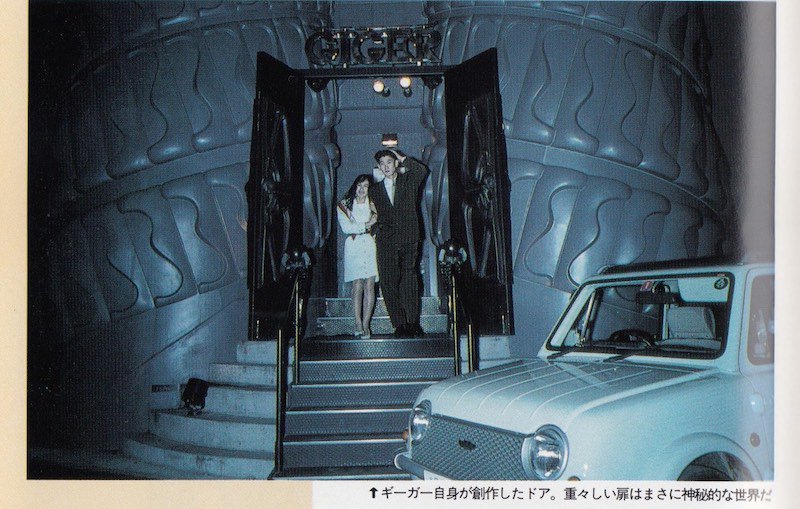
In 1980s Tokyo, everything was possible — or at least everything was tried out. Having developed feverishly since the end of the Second World War, Japan had by that point inflated an asset bubble so enormous that, so the story goes, the land on which the Imperial Palace stands was worth more than all of California. Many Japanese felt rich, and upwardly mobile young Tokyoites felt much more so; in the capital sprung up countless establishments aiming to cash in on their willingness and ability to spend their new money on experiences, especially experiences slick, expensive, and exotic.

And for the highest-rolling young Tokyoites of the 1980s, consumers for whom pieces of America and Europe wouldn’t be exotic enough, there was the Giger Bar. Writer on Japanese culture W. David Marx recently tweeted out a few magazine clippings to do with one of what he calls the “hot yuppie date spots in Tokyo, 1989: GIGER BAR Bring your date to the Tokyo bar designed by Swiss artist H. R. Giger of Alien fame, where ‘the atmosphere differs from the usual.’ ‘alien eggs’ on the menu at ¥1200, and something called ‘sexual communion’ for ¥1500.”
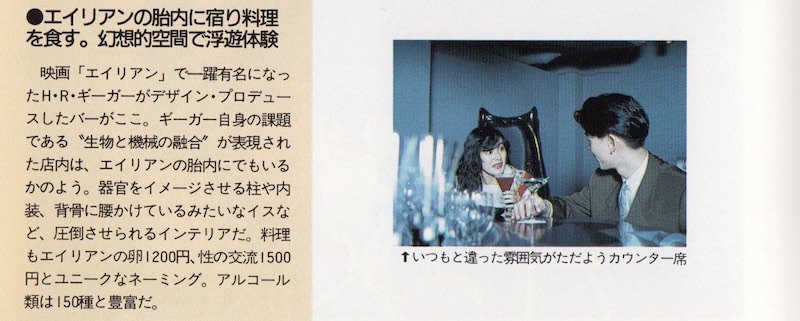
“The Giger Bar in Tokyo was actually created against my will,” Giger himself wrote in 1997. “While I was in Tokyo, I was asked to make a wish, on stage, during a press conference. Spontaneously, I wished for a bar, which was then brought into being even more spontaneously!”
For that bar, Giger designed “tables-for-two in open elevator cars in the manner of gliding elevators that would travel up and down the four-story establishment, perpetually in motion.” But he hadn’t taken into consideration the rigidity of Japanese fire marshals, and already “driven to the brink of madness” by the country’s complex earthquake-related building codes, Giger ultimately stepped back from his design role.

Giger also hadn’t foreseen the fact that his namesake Japanese bar “was tailor-made for the underworld.” Five years after the bar opened, a friend visited and told Giger that “it had fallen into the hands of the Yakuza. He went on to report that he was alone in the bar until 11 o’clock, when it began to fill with the type of unsavory characters who might have installed a roulette table in the atrium.” By the time Giger wrote this reflection, the Tokyo Giger Bar had closed its doors entirely: “Insiders know that a bar in Tokyo rarely survives more than five years!”

But two other Giger Bars live on, not in Japan but in Giger’s native Switzerland, one in his hometown of Chur (originally planned for New York City, a location that proved too expensive for the elaborate design) and the other in Gruyères (adjacent to the H.R. Giger Museum). Those Swiss branches, a couple pictures of which appear above, carry on the Giger Bar’s aesthetic in a manner seemingly more faithful to the artist’s grotesque biomechanical visions than did the Tokyo branch. Whether this could ever prove a sustainable nightlife concept elsewhere in the world remains to be seen, but as Giger’s hardcore fans — the kind who wouldn’t hesitate to make the Giger Bar pilgrimage to Switzerland — might well ask, who wouldn’t want to have a drink in the womb of the alien queen?
Related Content:
A Photographic Tour of Haruki Murakami’s Tokyo, Where Dream, Memory, and Reality Meet
High School Kids Stage Alien: The Play and You Can Now Watch It Online
Based in Seoul, Colin Marshall writes and broadcasts on cities, language, and culture. His projects include the book The Stateless City: a Walk through 21st-Century Los Angeles and the video series The City in Cinema. Follow him on Twitter at @colinmarshall, on Facebook, or on Instagram.
Read More...The Art & Cooking of Frida Kahlo, Salvador Dali, Georgia O’Keeffe, Vincent Van Gogh & More
Mexican cuisine is as time-consuming as it is delicious.
Frida Kahlo fans attracted to the idea of duplicating some dishes from the banquet served at her wedding to fellow artist Diego Rivera should set aside ample time, so as to truly enjoy the experience of making chiles rellenos and nopales salad from scratch.
Sarah Urist Green’s Kahlo-themed cooking lesson, above, adapted from Marie-Pierre Colle and Frida’s stepdaughter Guadalupe Rivera’s 1994 cookbook Frida’s Fiestas: Recipes and Reminiscences of Life with Frida Kahlo, is refreshingly frank about the challenges of tackling these types of dishes, especially for those of us whose grandmas ran more toward Jell‑O salad.
Her self-deprecation should go a long way toward reassuring less-skilled cooks that perfection is not the goal.
As she told Nuvo’s Dan Grossman:
The art cooking videos are immensely fun to make… And what I’m trying to do is reach people who aren’t necessarily outwardly into art or don’t know whether they’re into art so they’re not going to click on a video that’s strictly about art. But if you can present art ideas through a cooking tutorial perhaps they’ll be more open to it. I love to cook. And I love to think about that side of art history.
To that end, she takes a couple of bite-sized art breaks, to introduce viewers to Frida’s life and work, while the tomatoes are roasting.
As tempting as it is for old Frida hands to skip this well-charted terrain, doing so will not make dinner ready any faster. Why not enjoy the non-cooking related sections with the easiest item on the menu—a tequila shot?
Don’t trick yourself into thinking there’s nothing more to learn.
For instance, I did not know the Spanish for “I can’t get over this hangover,” but Frida’s pet parrot did. (Didn’t know that either.)
Green also offers some quick how-tos that could come in handy for other, less time-consuming dishes, like a sandwich or a plate of homemade pasta—everything from how to make homemade tomato sauce to denuding prickly pear cactus pads of their non-edible spines.
If you’re undaunted by the Frida recipes, perhaps you should proceed to Salvador Dali’s towering Bush of Crayfish in Viking herbs, or the Futurists’ highly suggestive Meat Sculpture. Other recipes come from Vincent Van Gogh and Georgia O’Keeffe. See above.
Books referenced in the videos include: Dinner with Georgia O’Keeffe; A Painter’s Kitchen: Recipes from the Kitchen of Georgia O’Keeffe; Dali’s Les Diners de Gala; Van Gogh’s Table at the Auberge Ravoux: Recipes From the Artist’s Last Home and Paintings of Cafe Life; and again Frida’s Fiestas: Recipes and Reminiscences of Life with Frida Kahlo.
View the full playlist of The Art Assignment’s Art Cooking episodes here.
Related Content:
The Futurist Cookbook (1930) Tried to Turn Italian Cuisine into Modern Art
Salvador Dalí’s 1973 Cookbook Gets Reissued: Surrealist Art Meets Haute Cuisine
Ayun Halliday is an author, illustrator, theater maker and Chief Primatologist of the East Village Inky zine. Join her in New York City this June for the next installment of her book-based variety show, Necromancers of the Public Domain. Follow her @AyunHalliday.
Read More...When Boris Pasternak Won–and Then the Soviets Forced Him to Decline–the Nobel Prize (1958)
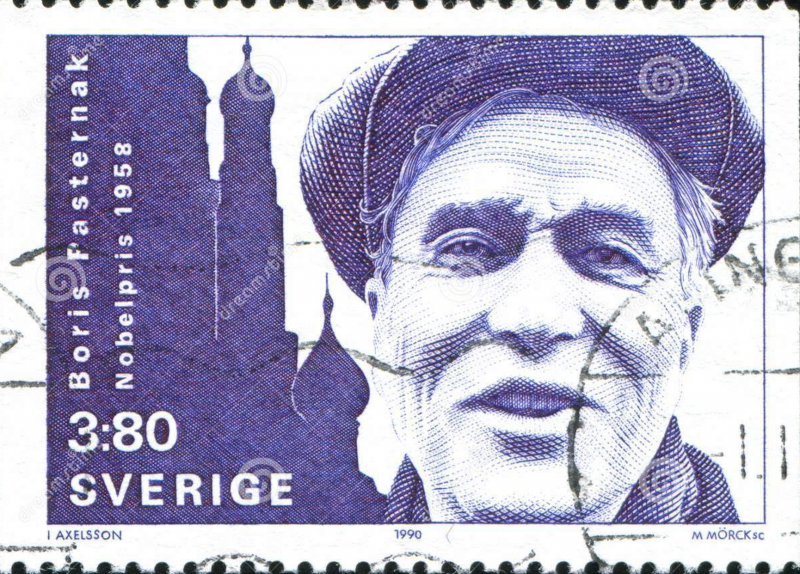
Behind the awarding of the Nobel Prize in Literature, there are stories upon stories, some as juicy as those in the work of winners like William Faulkner or Gabriel García Márquez—and some just as devastating to the parties involved. Last year’s award was postponed after sexual assault allegations lead to several members to resigning. (There will be two prizes awarded for 2019.) The charges needed to be aired, but if you’re looking for details about how the secretive committee selects the nominees and winners, you’ll have to wait a while.
“The Swedish Academy keeps all information about nominations and selections for the prestigious award secret for 50 years,” writes Allison Flood at The Guardian. Newly unsealed documents from the Academy have shone light on Jean-Paul Sartre’s rejection of the prize in 1964, and the shunning of Samuel Beckett in 1968 by committee chairman Anders Österling, who found his work too nihilistic (Beckett won the following year), and of Vladimir Nabokov, whose Lolita Österling declared “immoral.”
Perhaps the saddest of Nobel stories has taken on even more vivid detail, not only through newly opened files of the Nobel Prize committee, but also recently declassified CIA documents that show how the agency used Boris Pasternak’s Doctor Zhivago as a propaganda tool (handing out hasty re-translations into Russian to Soviet visitors at the World’s Fair). In October 1958, the author was awarded the Nobel Prize in Literature. He had, as The Guardian reported in October of that year, intended to “accept it in person in Stockholm next month.” He may have had little reason to think he could not do so.
Despite his role as a perpetual thorn in the side of the Soviet government, and their attempts to suppress his work and refusal to allow Doctor Zhivago to be published, the repressive regime mostly gave Pasternak his relative freedom, even after the novel was smuggled abroad, translated, and released to an international readership. Whether or not the Nobel committee chose him as an anti-Communist statement, as some have alleged, made no difference to his reputation around the world as a penetrating realist in the great Russian novelistic tradition.
The award might have been perceived as a validation of Russian letters, but the Soviets saw it as a threat. They had “raged” against Doctor Zhivago and its “anti-Marxist” passages, “but that only increased its popularity,” writes Ben Panko at Smithsonian. Pasternak had already been “repeatedly nominated for the Nobel Prize” and the “worldwide buzz around his new book pushed him to the top of the list in 1958.” Upon learning of the win, he sent a telegram to the committee that read, in part, “Thankful, glad, proud, confused.”
Days later, as The Guardian wrote, Pasternak decided to decline the award “without having consulted even his friends.” He sent a short telegram to the Swedish Academy reading:
Considering the meaning this award has been given in the society to which I belong, I must reject this undeserved prize which has been presented to me. Please do not receive my voluntary rejection with displeasure. — Pasternak.
The author’s “decision” was not as abrupt as it might have seemed. In the days after his win, a storm raged, as he put it. Even before the declassified trove of information, readers around the world could follow the story, “which had more twists and turns than a Cold War-era spy novel,” Tina Jordan writes at The New York Times. It played out in the papers “with one front-page story after another.” Pasternak angered the Soviets by expressing his “delight” at winning the prize in an interview. He was denounced in Soviet newspapers, called by a Pravda editor a “malevolent Philistine” and “libeler,” and his book described as “low-grade reactionary hackwork.”
Pasternak faced exile in the days after he gave up the prize and issued a forced public apology in Pravda on November 6. The Academy held the ceremony in his absence and placed his award in trust “in case he may some day have a chance to accept them,” the Times reported. Pasternak had hoped to be reinstated to the Soviet Writer’s Union, which had expelled him, and had hoped that his novel would be published in his own country and language in his lifetime.
Neither of these things occurred. The events surrounding the Nobel broke him. His health began to fail and he died two years later in 1960. Pasternak’s son Yevgeny describes in moving detail seeing his father the night after he turned down the Nobel. “I couldn’t recognize my father when I saw him that evening. Pale, lifeless face, tired painful eyes, and only speaking about the same thing: ‘Now it all doesn’t matter, I declined the Prize.’” Doctor Zhivago was published in the Soviet Union in 1988. “The following year,” notes Panko, “Yevgeny was allowed to go to Oslo and retrieve his father’s denied prize.”
Looking for free, professionally-read audio books from Audible.com? That could include Doctor Zhivago. Here’s a great, no-strings-attached deal. If you start a 30 day free trial with Audible.com, you can download two free audio books of your choice. Get more details on the offer here.
Related Content:
Jean-Paul Sartre Rejects the Nobel Prize in Literature in 1964: “It Was Monstrous!”
Hear Albert Camus Deliver His Nobel Prize Acceptance Speech (1957)
Josh Jones is a writer and musician based in Durham, NC. Follow him at @jdmagness.
Read More...The Psychological Dimensions of Game of Thrones: The Partially Examined Life Philosophy Podcast Explores the Fantasy Spectacle
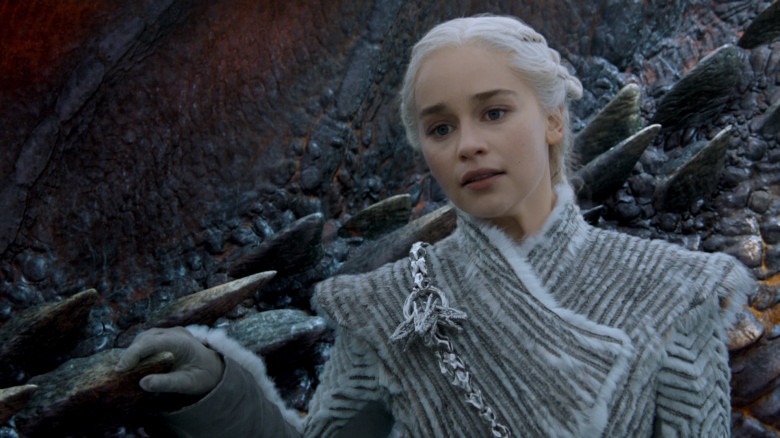
The HBO TV show Game of Thrones, like its source books, George R.R. Martin’s A Song of Ice and Fire, is classified as “fantasy,” but that term as literary classification has become unmoored from its literal meaning. A person’s fantasy is most typically a matter of wish fulfillment, which should put super-hero media at the center of the genre: We regular mortals wish to be powerful and strong, to save the day and be recognized as a hero. Certain elements of classical fantasy fall under this description: Frodo in Lord of the Rings gets to save the world while remaining more or less ordinary (well, yes, he can turn invisible with the ring, but that becomes problematic), and Harry Potter qualifies as a kid super-hero.
Another key element of fantasy is obviously the imagination, which can be deployed as in dreams and the psychedelic art that draws on dream experience to come up with ever-more-fantastical imagery, ever more amazing situations and powers one could fantasize about possessing. However, the imagination also seeks to expand the fantasized creation, to make its world wider and richer, to fill in the details, and almost inevitably to try to make the fantasy more “realistic.” What would it actually be like to have super powers? Would you suffer emotional trauma from damaging all those villains? What about collateral damage? If you get to ride on a dragon, how do you take care of it? What (who) does it eat?
George R.R. Martin writes in the tradition popularized by J.R.R. Tolkien of “high fantasy,” which involves not only characters of high stature engaged in epic struggles, but typically involves a very fleshed out alternative world with its own slightly different laws. The more spelled out these laws are, the more nuts and bolts of the workings of the world are specified, the more realism and hence suffering can be depicted. A Song of Ice and Fire describes its rotating cast of protagonists with such a degree of detail that readers are (as in much literature) able to identify with them, to see the world through their eyes, but they suffer so much that such alternate lives as these books offer readers would hardly be anyone’s fantasy in the sense of wish fulfillment. A visual presentation like a TV show by necessity can’t be as clear about whose eyes the viewer is supposed to see events through (we see through the camera instead), but nonetheless Game of Thrones invites us to live through (some of) its characters, to identify with them, through their exertions of power, through their reactions to loss and triumph. But such identifications will always be imperfect, given that these characters have been drawn as living in a world that is fundamentally foreign to us, not because there are zombies and dragons, but because HBO viewers are for the most part living comfortably in a peaceful country, not having been systematically and often personally exposed to horrible sufferings.
Hear Mark Linsenmayer and Wes Alwan, regular hosts of The Partially Examined Life Philosophy Podcast, along with guest Sabrina Weiss, discuss the psychological and social aspects of the show, but in what is depicted on screen and how these play out in our society’s relationship to this grand spectacle.
Read more about it on The Partially Examined Life website.
Mark Linsenmayer is the host of The Partially Examined Life and Nakedly Examined Music podcasts.
Related Content:
Game of Thrones: A Great Behind-the-Scenes Look at The Show’s Visual Effects
Animated Video Explores the Invented Languages of Lord of the Rings, Game of Thrones & Star Trek
15-Year-Old George R.R. Martin Writes a Fan Letter to Stan Lee & Jack Kirby (1963)
Read More...New Web Project Immortalizes the Overlooked Women Who Helped Create Rock and Roll in the 1950s
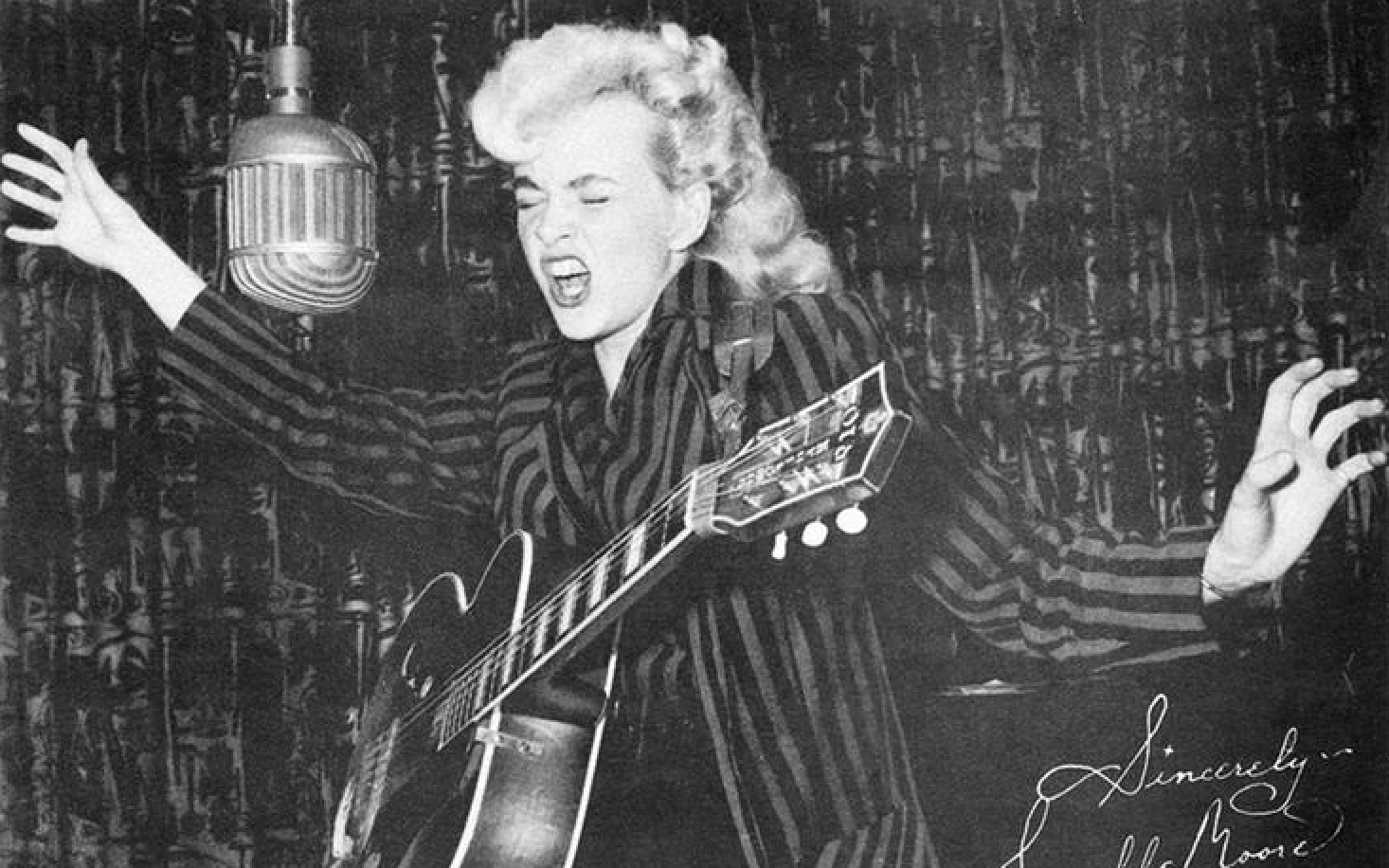
“For sixty years, conventional wisdom has told us that women generally did not perform rock and roll during the 1950s,” writes Leah Branstetter, Ph.D. candidate in musicology at Case Western Reserve University. Like so many cultural forms into which we are initiated, through education, personal interest, and general osmosis, this popular form of Western music—now a genre with seventy years under its belt—has functioned as an almost ideal example of the great man theory of history.
It can seem like settled fact that Chuck Berry, Elvis Presley, Jerry Lee Lewis, Little Richard, Buddy Holly, and their celebrated male contemporaries invented the music; and that women played passive roles as fans, studio audience members, groupies, personifications of cars and guitars.…
The recognition of rare exceptions, like Sister Rosetta Tharpe, does not challenge the rule. But Branstetter’s Women in Rock and Roll’s First Wave project almost single-handedly does.
The reality is, however, that hundreds—or maybe thousands—of women and girls performed and recorded rock and roll in its early years. And many more participated in other ways: writing songs, owning or working for record labels, working as session or touring musicians,designing stage wear, dancing, or managing talent…. [W]omen’s careers didn’t always resemble those of their more famous male counterparts. Some female performers were well known and performed nationally as stars, while others had more influence regionally or only in one tiny club. Some made the pop charts, but even more had impact through live performance. Some women exhibited the kind of wild onstage behavior that had come to be expected from figures Jerry Lee Lewis or Little Richard—but that wasn’t the only way to be rebellious, and others found their own methods of being revolutionary.
Branstetter’s project, a digital dissertation, covers dozens of musicians from the period, just a fraction of the names she has uncovered in her research. Some of the women profiled were never particularly well-known. Many more were accomplished stars before the 60’s girl group phenomenon, and continued performing into the 21st century.
Meet rockers like Sparkle Moore (see up top), born in Omaha, Nebraska and inspired by Bill Haley in the mid-fifties to play rockabilly in her hometown. She went on to tour the country, putting out record after record. “By 1957,” writes Branstetter, “she had about forty songwriting credits to her name.” Teen magazine Dig wrote that Moore had “an amazing resemblance to the late James Dean… Presley’s style and Dean’s looks.” She is still a “favorite with rockabilly fans,” notes her biography. Moore “has been inducted into the Iowa Rock and Roll Hall of Fame and also made a new album in 2010 entitled Spark-a-Billy.”
Meet Lillie Bryant, one half of duo Billie & Lillie, whose breezier R&B sounds and more wholesome image resonated with early rock and roll fans, promoters, and stars. Bryant began performing in New York City clubs as a teenager. Then producers Bob Crewe and Frank Slay turned her and singer Billie Ford into a duo who went on to star in legendary DJ Alan Freed’s stage shows, “including a six-week tour with Chuck Berry and Frankie Lymon” and an appearance on American Bandstand. Bryant still performs in her hometown of Newburgh, New York.
Meet The Chantels. “Formed in the Bronx, New York in the early 1950s,” they were “among the first African-American female vocal groups to gain national attention.” They also toured with Alan Freed and appeared on American Bandstand and The Dick Clark Show. In 1961, their hit “Look in My Eyes” went to number 14 on the pop charts and 6 on the R&B charts. (Thirty years later, it appeared on the Goodfellas soundtrack.)
Most people who grew up on the music of the 50s and 60s have likely heard of many of these women rockers, or have at least heard their music if they didn’t know the names and faces. But Branstetter’s project does more than tell the stories of individuals—in biographies, interviews (with, for one, Jerry Lee Lewis’s sister, singer and piano player Linda Gail Lewis), blog posts, playlists (hear one below), song analyses, and essays.
She also substantiates her larger claim that women’s “contributions shaped the culture and sound of rock and roll,” in numerous well-documented ways. This despite the fact that women in early rock were told versions of the same thing Joan Jett heard 20 years later—“girls don’t play rock and roll.” They sometimes heard it from other women in the music business. Pop singer Connie Frances, for example, offered her opinion in a 1958 issue of Billboard: “A girl can’t sing rock and roll. It’s basically too savage for a girl singer to handle.”
Attitudes like these persisted so long, and became so unconscious, that one of the largest guitar makers in the world, Fender, and several other musical instrument makers, may have lost millions in sales before they finally realized that women make up half of new guitar players. Women in Rock and Roll’s First Wave will inspire and enlighten many of those young musicians who didn’t grow up knowing anything about Sparkle Moore or The Chantels, but should have. Unless rock historians willingly ignore the work of scholars like Branstetter, subsequent accounts should reflect a more expansive, inclusive, view of the territory. Start here.
Related Content:
Watch the Hot Guitar Solos of Sister Rosetta Tharpe, “America’s First Gospel Rock Star”
How Joan Jett Started the Runaways at 15 and Faced Down Every Barrier for Women in Rock and Roll
Chrissie Hynde’s 10 Pieces of Advice for “Chick Rockers” (1994)
Four Female Punk Bands That Changed Women’s Role in Rock
Josh Jones is a writer and musician based in Durham, NC. Follow him at @jdmagness
Read More...When John Waters Appeared on The Simpsons and Changed America’s LGBTQ Views (1997)
On the week where Alabama Public Television banned an episode of the kids’ cartoon Arthur for showing a gay wedding (just after banning abortion the week before), let’s go back to a time when the entire country needed a little bit of an education on homosexuality and used The Simpsons and a guest appearance by director John Waters to make the point.
“Homer’s Phobia” premiered on February 16, 1997 in the show’s eighth season. Written by Ron Hauge, the episode casts Waters as John, the owner of Springfield’s antique and memorabilia store “Cockamamie’s”, who befriends the family. Bart and Lisa love the retro and campy objects on sale, Marge loves John’s compliments, but Homer freaks out when he realizes (and it takes some time) that John is gay. Panicking that Bart might become gay from John’s influence, he forces Bart to take a tour of the manliest thing he can think of, a steel mill, only to find that it doubles as a gay disco after work (“We work hard and we play hard,” says the foreman).
Homer doubles down, believing that hunting and killing a deer will make Bart a man. John saves the day of course, Homer learns a little lesson on acceptance, and only at the end does Bart understand what the whole panic has been about.
As comedy with a message, the episode still holds up. Homer’s cluelessness (when Marge says “He prefers the company of men,” Homer responds, “Who doesn’t?”) and his homophobia (referring to the word “queer” he says “I resent you people using that word. That’s our word for making fun of you! We need it!”) is both dopey and pointed, but never vicious. Also delightful is John’s visit to the Simpsons’ home, where he has a vintage collector’s swoon over the kitsch of the entire interior decoration, which as viewers we’ve never really considered. There’s plenty of visual gags, like a pink flamingo in John’s shop and the amazing Sha-Boom-Ka-Boom googie-architecture cafe.
According to Matt Baume’s recent video essay, this episode did more for awareness and exposing intolerance than any live action show at the time. John Waters, despite his filthy filmography, is fun, collected, and cool. He is neither a punchline nor a tragic figure. At this time in America, homosexuality was still a crime in many states. A head censor at Fox objected to nearly every line in the show (although not always from the right–there was also concern that gay people might be offended). Time solved the problem, however. By the time it came back from the animators that one censor had lost his job.
A few months later Ellen Degeneres came out on Oprah and the culture started to shift even a little more. But as this week proved, this episode’s insights still ring true today.
For Waters, it’s been a weird legacy, with kids and families recognizing him from the episode and not from his more infamous work. He now has out a new book, Mr. Know-It-All: The Tarnished Wisdom of a Filth Elder.
Related Content:
John Waters Talks About His Books and Role Models in a Whimsical Animated Video
John Waters’ RISD Graduation Speech: Real Wealth is Never Having to Spend Time with A‑Holes
Ted Mills is a freelance writer on the arts who currently hosts the artist interview-based FunkZone Podcast and is the producer of KCRW’s Curious Coast. You can also follow him on Twitter at @tedmills, read his other arts writing at tedmills.com and/or watch his films here.
Read More...Banksy Strikes Again in Venice
Juxtapoz writes: “Never invited to be the part of Venice Biennale, Banksy once again invited himself to showcase his work. Using a typical pop-up stand that usually sells tacky paintings and souvenirs, he assembled a selection of 9 works that collectively built an image of a massive cruise ship blocking the city.”
In recent years, the flood of massive cruise ships into Venice has created tensions between Venetians and tourism companies. It’s pretty clear on what side the street artist comes down.
Get more at Juxtapoz.
If you would like to support the mission of Open Culture, consider making a donation to our site. It’s hard to rely 100% on ads, and your contributions will help us continue providing the best free cultural and educational materials to learners everywhere. You can contribute through PayPal, Patreon, and Venmo (@openculture). Thanks!
Related Content:
How Venice Works: 124 Islands, 183 Canals & 438 Bridges
Watch City Out of Time, A Short Tribute to Venice, Narrated by William Shatner in 1959
Read More...Support Us
We're hoping to rely on loyal readers, rather than erratic ads. Please click the Donate button and support Open Culture. You can use Paypal, Venmo, Patreon, even Crypto! We thank you!

About Us

Open Culture scours the web for the best educational media. We find the free courses and audio books you need, the language lessons & educational videos you want, and plenty of enlightenment in between.
Advertise With Us

FREE UPDATES!
GET OUR DAILY EMAIL
Get the best cultural and educational resources on the web curated for you in a daily email. We never spam. Unsubscribe at any time.
FOLLOW ON SOCIAL MEDIA

Open Culture editor Dan Colman scours the web for the best educational media. He finds the free courses and audio books you need, the language lessons & movies you want, and plenty of enlightenment in between.
Advertise With Us

