What Happened When Stephen Hawking Threw a Cocktail Party for Time Travelers (2009)
Who among us has never fantasized about traveling through time? But then, who among us hasn’t traveled through time? Every single one of us is a time traveler, technically speaking, moving as we do through one second per second, one hour per hour, one day per day. Though I never personally heard the late Stephen Hawking point out that fact, I feel almost certain that he did, especially in light of one particular piece of scientific performance art he pulled off in 2009: throwing a cocktail party for time travelers — the proper kind, who come from the future.
“Hawking’s party was actually an experiment on the possibility of time travel,” writes Atlas Obscura’s Anne Ewbank. “Along with many physicists, Hawking had mused about whether going forward and back in time was possible. And what time traveler could resist sipping champagne with Stephen Hawking himself?” ”
By publishing the party invitation in his mini-series Into the Universe With Stephen Hawking, Hawking hoped to lure futuristic time travelers. You are cordially invited to a reception for Time Travellers, the invitation read, along with the the date, time, and coordinates for the event. The theory, Hawking explained, was that only someone from the future would be able to attend.”
Alas, no time travelers turned up. Since someone possessed of that technology at any point in the future would theoretically be able to attend, does Hawking’s lonely party, which you can see in the clip above, prove that time travel will never become possible? Maybe — or maybe the potential time-travelers of the future know something about the space-time-continuum-threatening risks of the practice that we don’t. As for Dr. Hawking, I have to imagine that he came away satisfied from the shindig, even though his hoped-for Ms. Universe from the future never walked through the door. “I like simple experiments… and champagne,” he said, and this champagne-laden simple experiment will continue to remind the rest of us to enjoy our time on Earth, wherever in that time we may find ourselves.
Related Content:
The Lighter Side of Stephen Hawking: The Physicist Cracks Jokes and a Smile with John Oliver
Professor Ronald Mallett Wants to Build a Time Machine in this Century … and He’s Not Kidding
Based in Seoul, Colin Marshall writes and broadcasts on cities and culture. His projects include the book The Stateless City: a Walk through 21st-Century Los Angeles and the video series The City in Cinema. Follow him on Twitter at @colinmarshall or on Facebook.
Read More...Pre-Flight Safety Demonstration Gets Performed as a Modern Dance: A Creative Video from a Taiwanese Airline
Taiwanese airline EVA Air’s pre-flight safety video is a genuine oddity in a field littered with creative interpretations.
Ten years ago, airlines were straightforward about complying with the International Civil Aviation Organization, the Federal Aviation Administration, and other governing bodies’ requirements. These instructions were serious business. Children and other first time travelers paid strict attention to information about tray tables, exits, and inflatable life vests that jaded frequent flyers ignored, confident that most take offs and landings tend to go according to plan, and the overwhelming number of planes tend stay in the air for the duration of one’s flight.
What about the ones that don’t though? There are times when a too-cool-for-school business traveler seated next to an emergency exit could spell disaster for everyone onboard.
Virgin America’s 2007 animated safety video, below, was the first to recapture passengers’ attention, with a blasé narrative style that poked fun at the standard tropes:
For the .0001% of you who have never operated a seatbelt before, it works like this…
The cocky tone was dialed down for more critical information, like how to assist the child in the seat next to you when the yellow oxygen masks drop from the overhead compartment. (Imagine the mayhem if indie animator Bill Plympton had been in the pilot’s seat for this one…)
The irreverent approach was a hit. The FAA took note, encouraging creativity in a 2010 Advisory Circular:
Every airline passenger should be motivated to focus on the safety information in the passenger briefing; however, motivating people, even when their own personal safety is involved, is not easy. One way to increase passenger motivation is to make the safety information briefings and cards as interesting and attractive as possible.
For a while EVA Air, an innovator whose fleet includes several Hello Kitty Jets, played it safe by sticking to crowd pleasing schtick. Its 2012 CGI safety demo video, below, must’ve played particularly well with the Hello Kitty demographic.
…looks a bit 2012, no?
A few months ago, EVA took things in a direction few industry professionals could’ve predicted: modern dance, performed with utmost sincerity.
Choreographer Bulareyaung Pagarlava, a member of Taiwan’s indigenous Paiwan community, and a small crew of dancers spent three months translating the familiar directives into a vocabulary of symbolic gestures. See the results at the top of the post.
You’ll find none of the stock characters who populate other airlines’ videos here—no sneaky smokers, no concerned moms, no sleepy businesspeople. There’s barely a suggestion of a cabin.
Unfettered by seats or overhead bins, the brightly clad, barefoot dancers leap and roll as they interact with 3D projections, behavior that would certainly summon a flight attendant if performed on an actual plane.
Does it work?
The answer may depend on whether or not the plane on which you’re traveling takes a sudden nose dive.
In “No Joking,” an essay about airport security, University of Ottawa professor Mark B. Salter writes that it is “difficult to motivate passengers to contemplate their own mortality.” The fashion for jokiness in safety videos “naturalizes areas of anxiety,” a mental trick of which Freud was well aware.
What then are we to make of the EVA Air dancer at the 4:35 minute mark, who appears to be falling backward through the night sky?
Would you show a jet’s worth of travelers the modern dance equivalent of Airplane 1975, Fearless, or Snakes on a Plane before they taxi down the runway?
Mercifully, the narrator steps in to remind passengers that smoking is prohibited, before the digitally projected dark waters can swallow the writhing soloist up.
There’s also some question as to whether the video adequately addresses the question of tray table operation.
Readers, what do you think? Does this new video make you feel secure about taking flight?
Related Content:
Statistics Explained Through Modern Dance: A New Way of Teaching a Tough Subject
Artist Nina Katchadourian Creates Flemish Style Self-Portraits in Airplane Lavatory
NASA Puts 400+ Historic Experimental Flight Videos on YouTube
Ayun Halliday is an author, illustrator, theater maker and Chief Primatologist of the East Village Inky zine. Follow her @AyunHalliday.
Read More...When Ira Aldridge Became the First Black Actor to Perform Shakespeare in England (1824)
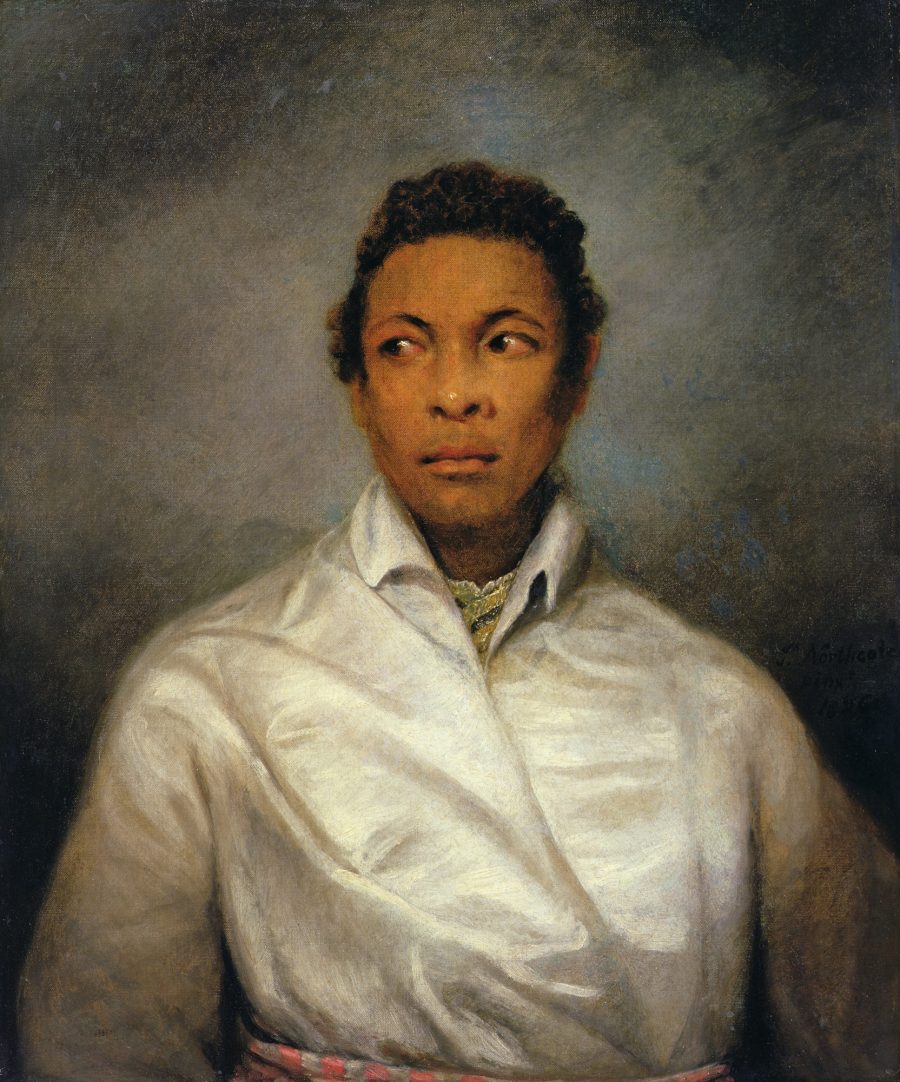
The ways that Othello, Aaron the Moor from Titus Andronicus, and Shylock from The Merchant of Venice—Shakespeare’s “explicitly racialized characters,” as George Washington University’s Ayanna Thompson puts it—have been interpreted over the centuries may have less to do with the author’s intentions and more with contemporary ideas about race, the actors cast in the roles, and the directorial choices made in a production. To a great degree, these characters have been played as though their identities were like the costumes put on by actors who darkened their faces or wore stereotypical markers of ethnic or religious Judaism (including “an obnoxiously large nose”).
Such portrayals risk turning complex characters into caricatures, validating much of what we might see as overt and implicit racism in the text. But there are those, Thompson says, who think such roles are actually “about racial impersonation.” Othello, for example, is “a role written by a white man, intended for a white actor in black makeup.”
For centuries, that is what most audiences fully expected to see. The tradition continued in Britain until the 19th century, when the Shakespearean color line, so to speak, was first crossed by Ira Aldridge, an American actor born in New York City in 1807.
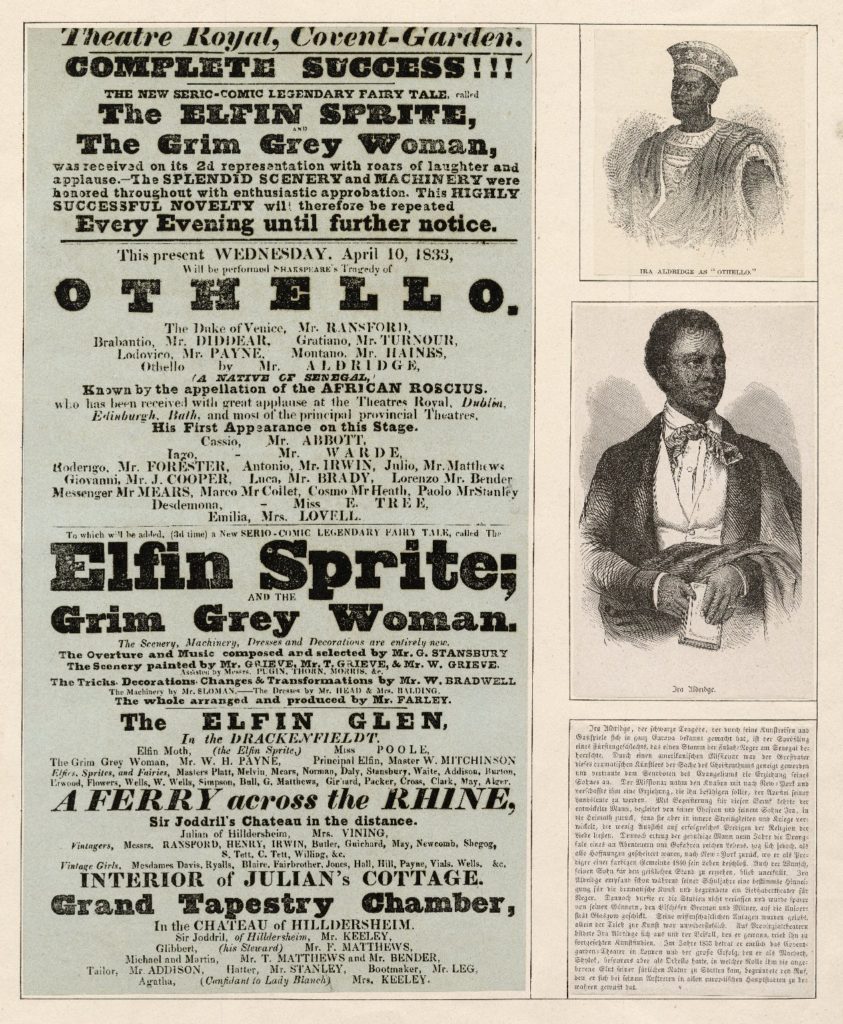
“Educated at the African Free School,” notes the Folger Shakespeare Library, Aldridge “was able to see Shakespeare plays at the Park Theatre and the African Grove Theatre.” He took on roles like Romeo with the African Company, but “New York was generally not a welcoming place for black actors… some white theatergoers even attempted to prevent black companies from performing Shakespeare at all.” As Tony Howard, an English professor at the University of Warwick, tells PRI, “he was beaten up in the streets.” And so Aldridge left for England in 1824, where he played Othello at the Theatre Royal, Covent-Garden, at only 17 years old, the first black actor to play a Shakespearean role in Britain.
He later began performing under the name Keene, “a homonym,” notes the site Black History 365, “for the then popular British actor, Edmund Kean.” Aldridge’s big break came after he met Kean and his son Charles, also an actor, in 1831, and both became supporters of his career. When the elder Kean collapsed onstage in 1833, then died, Aldridge took over his role as Othello at London’s Royalty Theatre in two performances. “Critics objected,” the Folger writes, “to his race, his youth, and his inexperience.” As Howard tells it, this characterization is a gross understatement:
There were those who said this is a very interesting and extraordinary young actor. And the fact that he’s a black actor makes it more interesting and fascinating. But for many people, it was an insult because this is still a society where there is a great deal of slavery in the British Empire. And in order to combat the idea of increasing abolition, performers like Ira had to be stopped. And so there was a great deal of violent aggression. Not physical violence this time, but violence in the press.
Some of that verbal violence included comparing Aldridge to “performing horses” and “performing dogs.” Many London critics saw his entry on the Shakespearean stage as an affront to English literary tradition. Performing the bard’s works was “a kind of violation,” Howard summarizes, “he has no right to do that, not even to play Othello.”
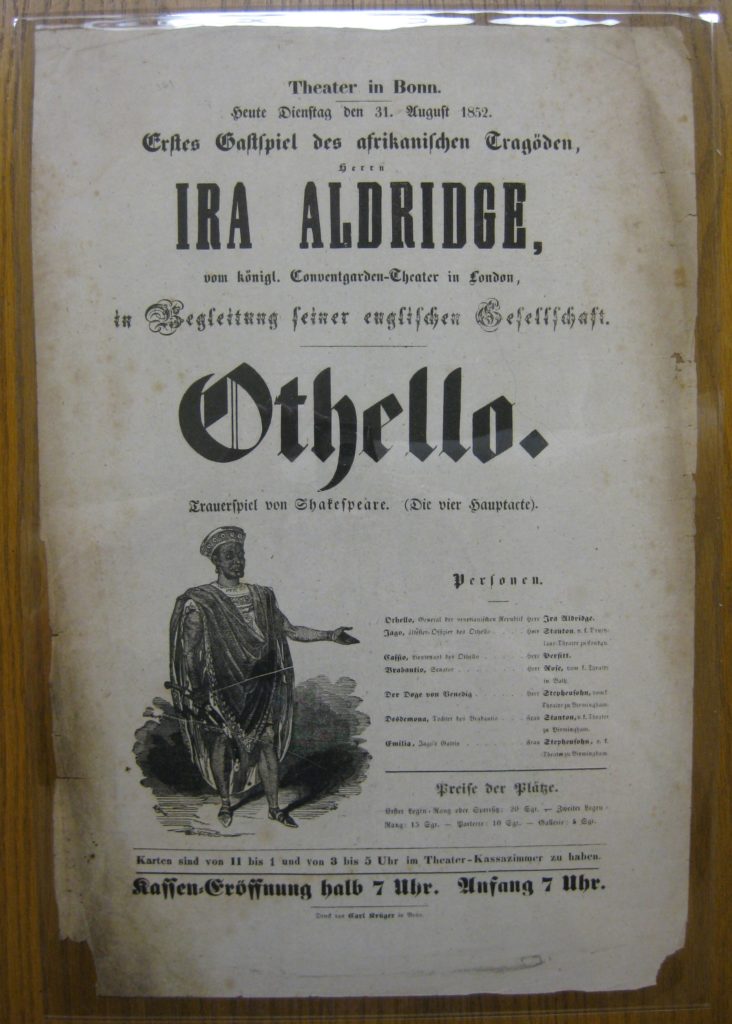
Photo via the Folger Library
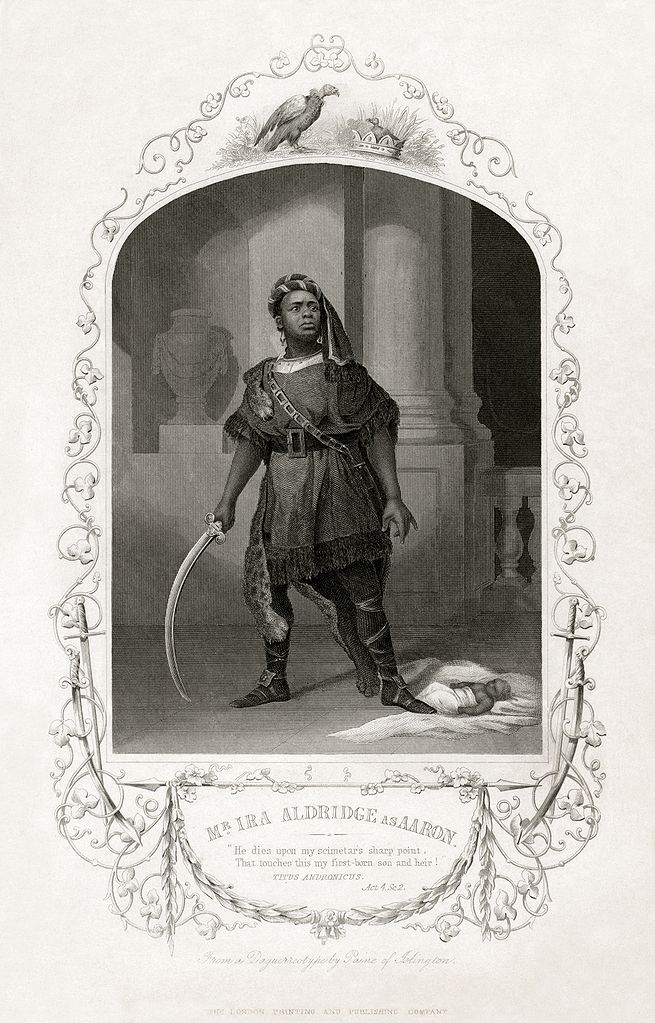
From his beginnings in Coventry to his experience in London, Aldridge made the once-blackface role his own, perhaps increasingly drawing “on his own experience and his own feeling.” He also portrayed Aaron in Titus, and as he persevered through negative press and prejudice, he took on other starring roles, including Richard III, Shylock, Iago, King Lear, and Macbeth. He “toured the English provinces extensively,” the BBC writes, “and stayed in Coventry for a few months, during which time he gave a number of speeches on the evils of slavery. When he left, people inspired by his speeches went to the county hall and petitioned for its abolition.”
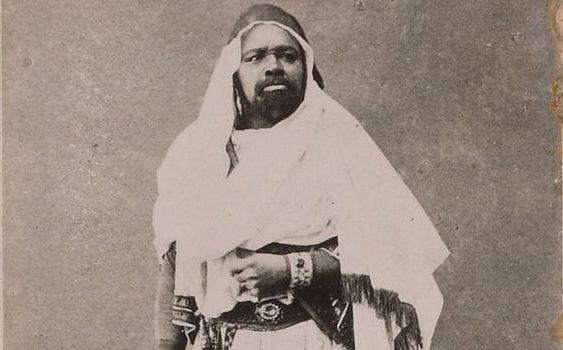
By the end of the 1840s, however, Aldridge felt he had gone as far as he could go in England and left to tour the Continent in what had become his signature role, Othello. While first touring with an English company, he “later began to work with local theater troupes,” the Folger writes, “performing in English while the rest of the cast would perform in German, Swedish, etc. Despite the language barrier, Aldridge’s performances in Europe were highly acclaimed, a testament to his acting skills.” (See a playbill further up from a Bonn performance.) After winning great fame in Europe and Russia, the actor returned in triumph to London in 1855, and this time was very well-received.
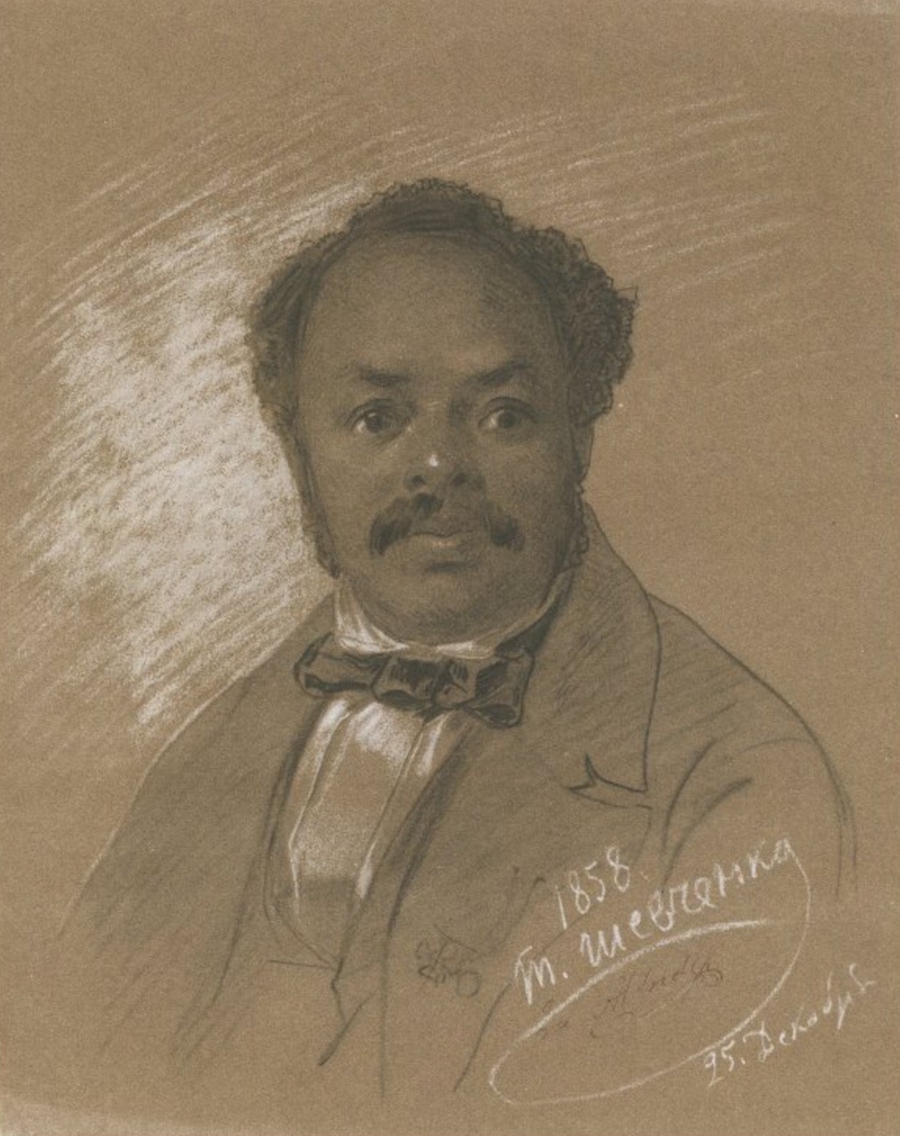
Aldridge died in 1867. And though he was the subject of many portraits of the period—like that by James Northcote at the top of the post, portraying the 19-year-old Aldridge as Othello, and this 1830 painting by Henry Perronet Briggs—he was “largely forgotten by theater historians.” (See him above in an 1858 drawing by Ukranian artist Taras Shevchenko.) But his legacy has been revived in recent years. Aldridge was the subject of two recent plays, Black Othello, by Cecilia Sidenbladh, and Red Velvet by Lolita Chakrabarti. And last year, he was honored in Coventry by a plaque on the site of the theater where he first achieved fame.
While he succeeded in becoming an all-around great Shakespearean actor, Aldridge’s legacy rests especially in the way he helped transform roles performed as “racial impersonation” for a few hundred years into the provenance of talented black actors who bring new depth, complexity, and authenticity to characters often played as stock ethnic villains. While white actors like Orson Welles and Lawrence Olivier continued to play Othello well into the 20th century, these days such casting can be seen as “ridiculous,” as Hugh Muir writes at The Guardian, especially if that actor “blacks up” for the role.
via the British Library
Related Content:
What Shakespeare’s English Sounded Like, and How We Know It
Josh Jones is a writer and musician based in Durham, NC. Follow him at @jdmagness
Read More...All of the Songs Played on “WKRP in Cincinnati” in One Playlist: Stream 202 Classic Tracks
I don’t know how many people still watch WKRP in Cincinnati , or how well the jokes have aged, but there is a small but dedicated fan base out there. Part of it might be nostalgia not just for the sitcom itself, but for a time when radio stations were idiosyncratic things, not just part of vast media conglomerates that have a song playlist you could fit onto a thumb drive. Ask any boomer and they’ll recall their own favorite real-life versions of rock DJ Johnny Fever (Howard Hesseman) and funk/soul DJ Venus Flytrap (Tim Reid).
Recently, one dedicated fan went through the first season and identified every song played on the shows, and produced this spreadsheet first mentioned on BoingBoing. That then led to somebody wishing for a Spotify playlist and of course the Internet has provided. Find the playlist and stream all 202 tracks below. Someone also assembled a YouTube version that you can find at the bottom of the post.
What to make of the choices? DJ Johnny Fever starts off with Ted Nugent’s “Queen of the Forest” to announce the station’s switch from muzak to a rock/Top 40 format in the first episode. A majority of the songs are major label selections, with the Rolling Stones the favorite choice through the season with five songs total. Other bands are still staples of classic rock format stations to this day: Bob Seger, Boston, Styx, Van Morrison, Foreigner, The Grateful Dead, Blondie, The Doors. Venus Flytrap’s selections aren’t as common, but they are also a familiar cross-section of the disco era: Chic, A Taste of Honey, Evelyn Champagne King, and Marvin Gaye.
One interesting appearance was Michael Des Barres, former frontman of the rock band Detective (who were signed to Led Zeppelin’s Swan Song label), and post-Robert Palmer frontman of Power Station. He was cast as the lead singer of the punk band “Scum of the Earth” in one WKRP episode, where he sang three Detective tunes. (The band actually came dressed in business suits, so I’m not sure how “punk” they were). Now, the producers must have liked Michael Des Barres, because when the ill-fated sequel The New WKRP in Cincinnati premiered in 1991, he played one half of a morning show team.
Creator Hugh Wilson explains in this video how costly some of the original rights usages could be, where maybe “I could get 17 seconds of Pink Floyd for $3,000.” But as the show grew in popularity, record companies started to treat the show “like a real station” and providing music and merchandise to dress the sets.
The use of actual radio hits (and not “soundalikes”) became a problem for the show in syndication. When it was time to renew the rights, the various media companies wanted 10 times as much. As Wilson says, that was the end of WKRP in syndication.
The Shout Factory DVD box set was able to reproduce most of Season one with 80 percent of the original music intact, and it’s possibly why only one season is out there.
That also may be why that $3,000 worth of Pink Floyd only exists as a very blurry YouTube video up at the top of the post.
Related Content:
A History of Rock ‘n’ Roll in 100 Riffs
Ted Mills is a freelance writer on the arts who currently hosts the artist interview-based FunkZone Podcast and is the producer of KCRW’s Curious Coast. You can also follow him on Twitter at @tedmills, read his other arts writing at tedmills.com and/or watch his films here.
Read More...The Story of How David Jones Became David Bowie Gets Told in a New Graphic Novel
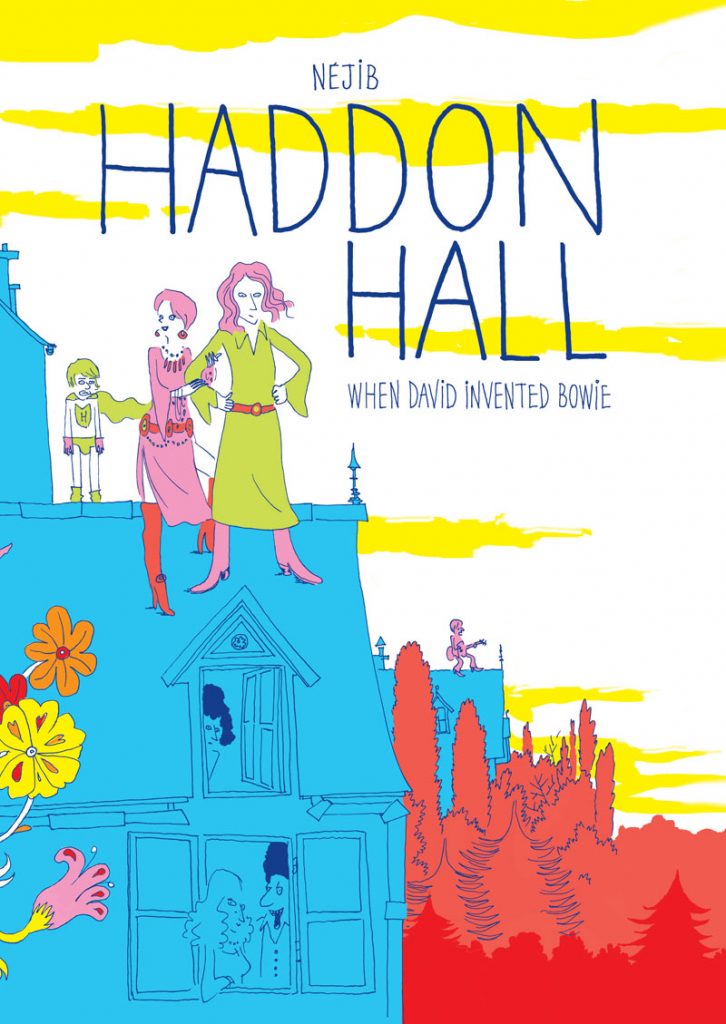
What, exactly, turned David Jones into David Bowie? Observers have been asking that question ever since the artistically inclined rock star — who, we might say, made rock stardom into a viable art form in the first place — began his high-profile experimentation with his own image in the early 1970s. Having put out his first big hit “Space Oddity” a few years before that, in 1969, he spent the period in between living, with his then-wife Angie, at a Victorian villa in South London called Haddon Hall. “The couple rented a ground-floor flat for £7 a week – the Spiders from Mars were, I think, sequestered around an upstairs landing – and in one of its cavernous rooms, their ceilings painted silver, Angie cut David’s hair and stitched the first Ziggy outfit.”
Those words come from the Guardian’s Rachel Cooke, reviewing the biographical graphic novel Haddon Hall: When David Invented Bowie. “Its author, the Tunisian-born French cartoonist Nejib, puts Bowie’s lost house centre stage, David and Angie having fallen instantly in love with its discreet decrepitude, its towers and mouldings and preposterously long corridors,” she writes. “Nejib is wonderfully alive to the influences on Bowie in this crucial period, from the final illness of his father, John, to Stanley Kubrick’s 1971 film adaptation of A Clockwork Orange (leaving the cinema after seeing it, the still struggling Bowie suddenly sees what he should be: a rock star ‘who’s all destruction and the future’).”
A Bowie scholar could argue that his and Angie’s Haddon Hall years provided the space for the most crucial gestation period and space in his career. In an interview with the Herald, Nejib relates his dissatisfaction with extant Bowie biographies, and how one biographer even admits that writing a satisfying one may be “rather impossible because Bowie is a fiction created by David Jones, a very secret man. I loved that idea and I consider Bowie as one of the most powerful fictional creations of this period. That was very liberating for me to make this ‘portrait’ of Bowie in a graphic novel,” which he describes as “not a documentary, but a fiction,” based on more than just facts and as a result “a mix of many things.”
More fascinated by “fragility and doubt than success and stardom,” Nejib — whose art style brings to mind cartoons seen in magazines of the late 1960s and early 1970s — focuses on a “gap” in Bowie’s life as its story has previously been told: “The man is close to becoming the genius we know, but he is full of doubt. I was inspired by an interview in which he said that he felt that all his influences were merging and he felt that it was the moment for him to make the big jump!” And make the big jump he did, not just once but over and over again throughout the course of his life, reinventing himself both musically and as a persona whenever necessary. Whatever importance any given Bowie fan grants his time in Haddon Hall, they’ve got to admit that those years make for a tale best told visually.
You can pick up your own copy of Nejib’s graphic novel, Haddon Hall: When David Invented Bowie.
Related Content:
The Story of Ziggy Stardust: How David Bowie Created the Character that Made Him Famous
David Bowie & Brian Eno’s Collaboration on “Warszawa” Reimagined in a Comic Animation
96 Drawings of David Bowie by the “World’s Best Comic Artists”: Michel Gondry, Kate Beaton & More
50 Years of Changing David Bowie Hair Styles in One Animated GIF
How Leonard Cohen & David Bowie Faced Death Through Their Art: A Look at Their Final Albums
Based in Seoul, Colin Marshall writes and broadcasts on cities and culture. His projects include the book The Stateless City: a Walk through 21st-Century Los Angeles and the video series The City in Cinema. Follow him on Twitter at @colinmarshall or on Facebook.
Read More...Watch the Original Black Panther Animated Series Online: All Six Episodes Now Available Thanks to Marvel
Last month, I was thrilled to learn of a talk coming to my town called “The Writers of Wakanda.” I scored a (free) ticket, thinking that maybe the massive blockbuster movie’s director/writer Ryan Coogler might make an appearance (or his co-writer Joe Robert Cole), or maybe one or more of the high-profile writers who have expanded the comic’s world recently, like Ta-Nehisi Coates, Roxanne Gay, or Nnedi Okorafor. Well, either there was some kind of bait-and-switch at work or I naively failed to read the fine print. The event was a panel of devoted fans of the comic having a discussion about their lifelong fandom, the many iterations of the character through various Marvel writer’s hands, and the film’s huge cultural impact at home and abroad. It was slightly disappointing but also quite enjoyable and informative.
I learned, for example, that some of the most well-loved and highly-praised characters in the film appeared very late in the series’ run (which began with the character’s creation by Stan Lee and Jack Kirby in 1966) and were introduced by its first black writers, the “chronically underappreciated” Christopher Priest and the filmmaker Reginald Hudlin.
In the late 90s, Priest invented the Dora Milaje, the elite all-female fighting force who protect Wakanda’s kings (who each take on the mantle of superhero Black Panther once they ascend the throne). Hudlin created the character of Shuri, King T’Challa’s younger sister and the scientific mastermind behind his high-tech empire of vibranium-powered gear and gadgetry. Which brings us, at last, to the subject of this post, the Black Panther animated series, co-produced by BET and Marvel, who have released all six episodes on Marvel’s YouTube channel. Stream them all above.
Taking its story from Hudlin’s 2005 comics run, the series is less animation and more “a stop motion comic,” as Nerdist writes, “added to the artwork of John Romita, Jr.” This is all to its credit, as is its star-studded voice casting, with Kerry Washington as Shuri, Alfre Woodard as the Queen Mother, Jill Scott as Storm, and Djimon Hounsou as T’Challa/Black Panther. How does it compare to the blockbuster film? From its first salvo of Wakandan warrior prowess in a cold open set in the 5th century A.D., to its seventies-African-funk-inspired theme song, to a present-day scene in the White House, with a blustery racist army general (played by Stan Lee) who sounds like a member of the current administration, the first episode, above, suggests it will live up to Hudlin’s casting of the character as “an unapologetic African man,” as Todd Steven Burroughs writes at The Root, “openly opposed to white, Western supremacy.”
Hudlin wrote some of the comic’s most politically challenging stories, delving into “serious European colonization themes.” These themes are woven throughout the animated series, which features such characters now familiar to filmgoers as Everett Ross and the villain Klaw. Captain America parachutes in—in a flashback—meets an earlier Black Panther during World War II, and takes a beating. (“These are dangerous times,” says Cap, “you need to choose a side.” The reply: “We have, our own.”) The X‑Men’s Storm, formerly the first most-famous African superhero, plays a significant role. Not in the series, likely to many people’s disappointment, are the Dora Milaje, at least in starring roles, and the film’s primary antagonist Erik Killmonger.
But not to worry. The ass-kicking general Okoye and her cadre of warriors will soon get a spin-off comic written by Okorafor, and there’s been some speculation, at least, about whether Killmonger will return (resurrected, perhaps, as he was in the comics) in the inevitable Black Panther 2. In the meantime, both longtime and new fans of the character can get their fix in this six-episode series, which offers a thrilling, bloody, and historically fascinating take not only on the Black Panther himself, but on the complicated relationship of Wakanda to the machinations of the Western world throughout colonial history and into the present.
Related Content:
Download Over 22,000 Golden & Silver Age Comic Books from the Comic Book Plus Archive
Josh Jones is a writer and musician based in Durham, NC. Follow him at @jdmagness
Read More...Play a Collection of Classic Handheld Video Games at the Internet Archive: Pac-Man, Donkey Kong, Tron and MC Hammer

Equipped with smartphones that grow more powerful by the year, gamers on the go now have a seemingly unlimited variety of playing options. A decade ago they relied on handheld game consoles with their thousands of available game cartridges and later discs, whose reign began with Nintendo’s introduction of the original Game Boy (a device whose unwrapping on Christmas 1990 remains one of my most vivid childhood memories). But even before the Game Boy and its successors, there were standalone handheld proto-video-games, “LCD, VFD and LED-based machines that sold, often cheaply, at toy stores and booths over the decades.”
Those words come from Jason Scott at the Internet Archive, where you can now play a range of those handheld games again, emulated right here in your browser. “They range from notably simplistic efforts to truly complicated, many-buttoned affairs that are truly difficult to learn, much less master,” Scott writes.
“They are, of course, entertaining in themselves – these are attempts to put together inexpensive versions of video games of the time, or bringing new properties wholecloth into existence.” They also “represent the difficulty ahead for many aspects of digital entertainment, and as such are worth experiencing and understanding for that reason alone.”

What kind of games came in this form? The Internet Archive’s current offerings include vague approximations of 70s and 80s arcade hits like Pac-Man, Donkey Kong, and Q*Bert; even vaguer approximations of such major motion pictures of the day as Tron, Robocop 2 (as well as Robocop 3), and Apollo 13; and sports titles like World Championship Baseball, NFL Football, and Blades of Steel. You’ll even find popular oddities like Bandai’s Tamagotchi, the original virtual pet, along with less popular oddities like MC Hammer, a dual-directional-padded simulation of a dance battle with the auteur of “U Can’t Touch This.”
So as you play, spare a thought for the developers of these handheld games, not just because of the dire intellectual property they often had to work with, but the severe technological restrictions they invariably had to work under. “This sort of Herculean effort to squeeze a major arcade machine into a handful of circuits and a beeping, booping shell of what it once was is an ongoing situation,” writes Scott. “Where once it was trying to make arcade machines work both on home consoles like the 2600 and Colecovision, so it was also the case of these plastic toy games. Work of this sort continues, as mobile games take charge and developers often work to bring huge immersive experiences to where a phone hits all the same notes.” And the day will certainly come when even the most impressive games we play now, handheld or otherwise, will seem just as hilariously simplistic.
Enter the handheld video collection here. And find more classic video games in the Relateds below.
Related Content:
Play “Space War!,” One of the Earliest Video Games, on Your Computer (1962)
Pong, 1969: A Milestone in Video Game History
The Internet Arcade Lets You Play 900 Vintage Video Games in Your Web Browser (Free)
Free: Play 2,400 Vintage Computer Games in Your Web Browser
Based in Seoul, Colin Marshall writes and broadcasts on cities and culture. His projects include the book The Stateless City: a Walk through 21st-Century Los Angeles and the video series The City in Cinema. Follow him on Twitter at @colinmarshall or on Facebook.
Read More...Watch “Heaven Is a Traffic Jam on The 405,” the New Oscar-Winning Portrait of an Artist
A quick fyi: IndieWire has made available on its YouTube channel “Heaven Is a Traffic Jam on The 405,” a 40-minute documentary directed by Frank Stiefel. A portrait of a brilliant 56 year old artist, the film won the Oscar for Best Documentary (Short Subject) at the recent Academy Awards. Here’s the gist of what it’s about:
Mindy Alper is a tortured and brilliant 56 year old artist who is represented by one of Los Angeles’ top galleries. Acute anxiety, mental disorder and devastating depression have caused her to be committed to mental institutions undergo electro shock therapy and survive a 10 year period without the ability to speak. Her hyper self awareness has allowed her to produce a lifelong body of work that expresses her emotional state with powerful psychological precision. Through interviews, reenactments, the building of an eight and a half foot papier-mache’ bust of her beloved psychiatrist, and examining drawings made from the time she was a child, we learn how she has emerged from darkness and isolation to a life that includes love, trust and support.
You can watch the complete film online. It will be added to our collection, 4,000+ Free Movies Online: Great Classics, Indies, Noir, Westerns, Documentaries & More.
If you would like to support the mission of Open Culture, consider making a donation to our site. It’s hard to rely 100% on ads, and your contributions will help us continue providing the best free cultural and educational materials to learners everywhere. You can contribute through PayPal, Patreon, and Venmo (@openculture). Thanks!
Related Content:
Read More...The Lighter Side of Stephen Hawking: The Physicist Cracks Jokes and a Smile with John Oliver
In our tribute to Stephen Hawking earlier today, we discussed the intellectual legacy of the departed physicist, paying particular attention to his groundbreaking work on black holes. The video above is a bit lighter. It just lets you watch Hawking in a comedic exchange with his compatriot John Oliver. If I’m not mistaken, around the 3:46 mark, you can even see him crack a smile. Enjoy.
Related Content:
Watch A Brief History of Time, Errol Morris’ Film About the Life & Work of Stephen Hawking
The Big Ideas of Stephen Hawking Explained with Simple Animation
Read More...
An Archive of 20,000 Movie Posters from Czechoslovakia (1930–1989)
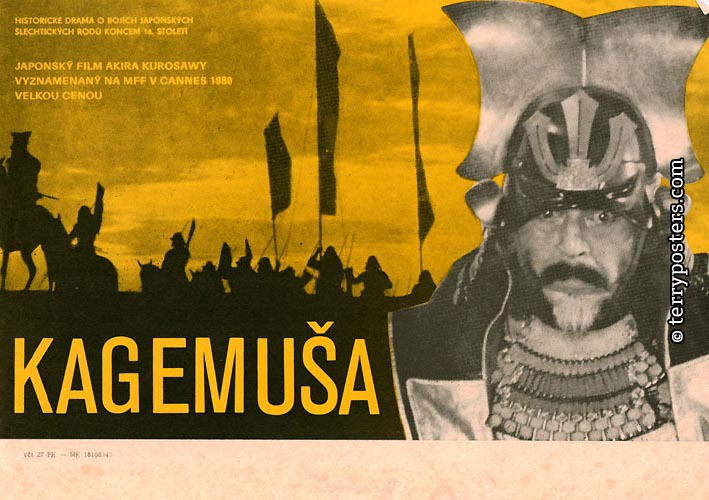
We couldn’t possibly ignore, here at Open Culture, the glory of movie posters: from the film noir era, from Martin Scorsese’s predictably sizable collection, and even the deeply askew interpretations seen outside the theaters of Ghana. But somehow, the visual art-inclined cinephile’s attention returns again and again to one region of the world: Eastern Europe, especially in the Cold War era. Poland’s movie posters have long since accrued a fandom around the world, but we shouldn’t neglect the equal promotional wonders of its neighboring Czechoslovakia.
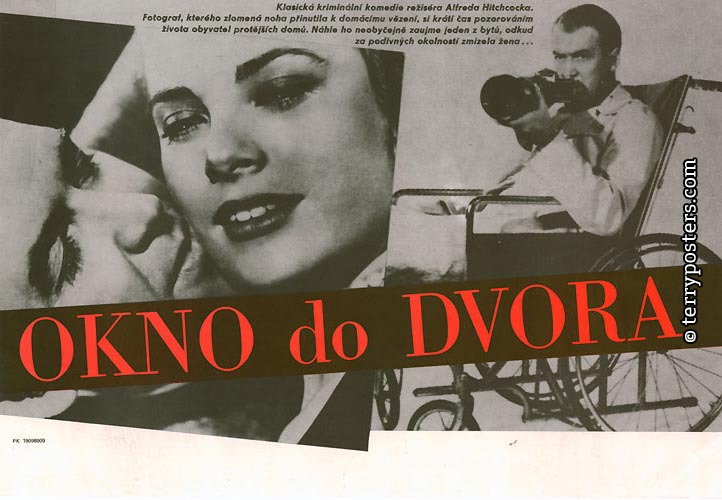
Or rather, as the even mildly geographically astute will note, the neighboring Czech Republic and Slovakia. But in this case, we really do mean Czechoslovakia, the movie posters featured here having hung in its movie houses between 1930 and 1989.
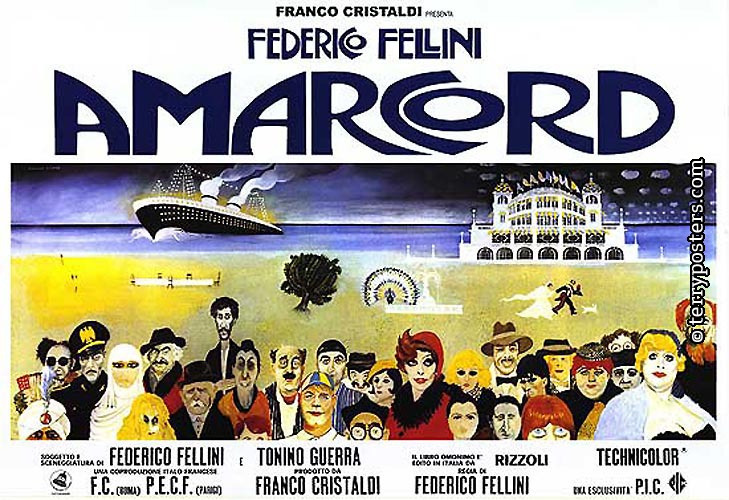
Terry Posters offers a collection of more than 20,000 such works of captivating commercial art to browse (with some available to buy), most of them interpreting foreign motion pictures for the presumed sensibilities of the local audience: the films of auteurs like Alfred Hitchcock, Akira Kurosawa, Andrei Tarkovsky (then, of course, a fellow Soviet), Federico Fellini, and many more besides.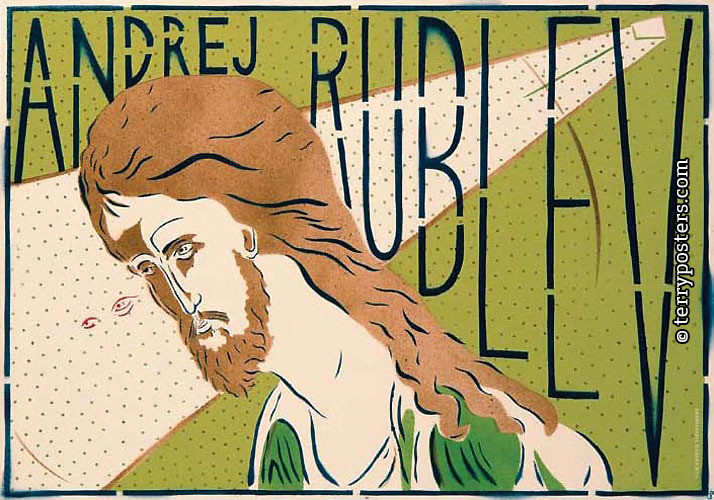
You can also browse Terry’s Czechoslovakian collection by year, by artist, by genre, by actor, and by the film’s country of origin. However you explore them, these posters offer a reminder of the way that cinema culture used to vary most starkly from region to region, even when dealing with the exact same movies. The “globalization” process in effect over the past thirty years has done much to make serious cinephilia possible everywhere (not least by defeating various once-formidable forms of censorship and suppression) but it may have brought an end to the multiplicity and variety of images on display here, all especially vivid pieces of a faded culture — and of a dismantled country. Enter the digital archive here.
Related Content:
50 Film Posters From Poland: From The Empire Strikes Back to Raiders of the Lost Ark
The Strange and Wonderful Movie Posters from Ghana: The Matrix, Alien & More
Based in Seoul, Colin Marshall writes and broadcasts on cities and culture. His projects include the book The Stateless City: a Walk through 21st-Century Los Angeles and the video series The City in Cinema. Follow him on Twitter at @colinmarshall or on Facebook.
Read More...Support Us
We're hoping to rely on loyal readers, rather than erratic ads. Please click the Donate button and support Open Culture. You can use Paypal, Venmo, Patreon, even Crypto! We thank you!

About Us

Open Culture scours the web for the best educational media. We find the free courses and audio books you need, the language lessons & educational videos you want, and plenty of enlightenment in between.
Advertise With Us

FREE UPDATES!
GET OUR DAILY EMAIL
Get the best cultural and educational resources on the web curated for you in a daily email. We never spam. Unsubscribe at any time.
FOLLOW ON SOCIAL MEDIA

Open Culture editor Dan Colman scours the web for the best educational media. He finds the free courses and audio books you need, the language lessons & movies you want, and plenty of enlightenment in between.
Advertise With Us

