Hear Thomas Edison’s Creepy Talking Dolls: An Invention That Scared Kids & Flopped on the Market
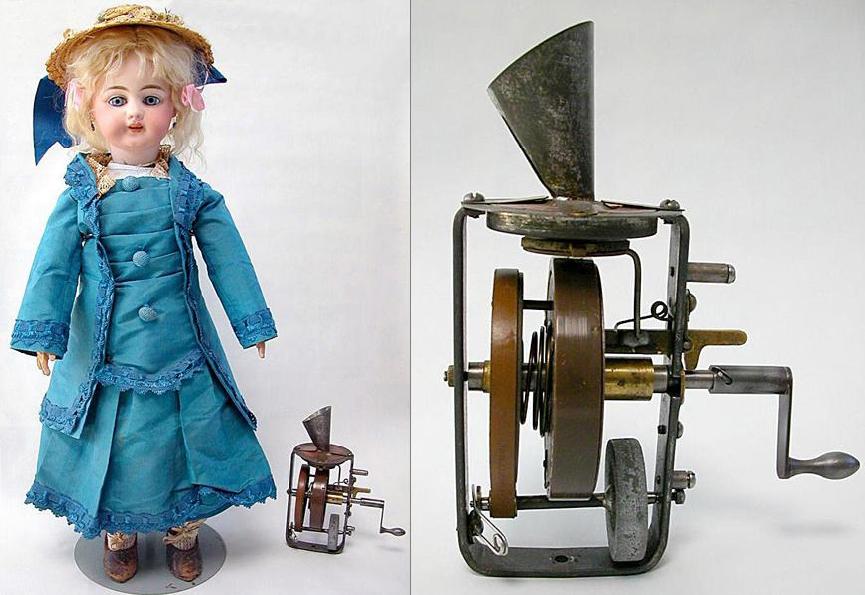
When studying history’s most famous creators, we must never forget that they always produced failures as well as successes, and often failures as impressive as their successes. Take Thomas Edison, widely regarded as the great American inventor for his work on the light bulb, the movie camera, and the phonograph. We all know about those achievements, all of which shaped technologies which went on to near-universal use, but have you heard of Edison’s still-pioneering but rather less well-known work in the field of talking dolls?
Many of us in the past few generations grew up with talking dolls of one kind or another. But had we been children in 1890, we might have grown up with the very first talking dolls, for which Edison designed an internal mechanism that played one of several wax cylinders pre-recorded with various child-oriented songs, prayers, and nursery rhymes. Or rather, we might have grown up with them if we came from wealthy families: they cost between $10 and $20 in 1890 dollars, or up to $526 in today’s dollars.
And even at that price, Edison’s talking dolls provided not just the lowest of lo-fi listening experiences, but resoundingly creepy ones at that. “The public reacted as one does when confronted with a grandmother’s massive doll collection: You averted your eyes in fear,” writes PBS’ Joshua Barajas. “After six weeks into production, the dolls were deemed too scary and pulled from the market, the New York Times reported.”

But now, thanks to optical audio-scanning technology unimaginable in Edison’s day, we can hear the dolls’ renditions of “Twinkle, Twinkle, Little Star,” “Hickory, Dickory, Dock,” and — most eerily of all — “Now I Lay Me Down to Sleep” just as the children of 1890 would have heard them. But even this seriously wrongheaded-seeming product paved the way for not just the less disturbing Furbys and Teddy Ruxpins of more recent childhoods, but, given its unprecedented use of auto recordings made for entertainment purposes, the entire record industry — and, of course, the minor but robust subgenre of talking-doll horror movies.
Related Content:
Thomas Edison and Nikola Tesla Face Off in “Epic Rap Battles of History”
A Brief, Animated Introduction to Thomas Edison (and Nikola Tesla)
Thomas Edison & His Trusty Kinetoscope Create the First Movie Filmed In The US (c. 1889)
Colin Marshall writes on cities, language, Asia, and men’s style. He’s at work on a book about Los Angeles, A Los Angeles Primer, and the video series The City in Cinema. Follow him on Twitter at @colinmarshall or on Facebook.
Read More...The 10 Greatest Films of All Time According to 358 Filmmakers
Every ten years, film journal Sight and Sound conducts a worldwide survey of film critics to decide which films are considered the best ever made. Started in 1952, the poll is now widely regarded as the most important and respected out there.
And the critical consensus for a long time was that the masterpiece Citizen Kane by Orson Welles (born 100 years ago today, by the way) is the best of the best. The film topped the list for five decades from 1962 until 2002. Then in 2012, perhaps out of Kane fatigue, Alfred Hitchcock’s Vertigo muscled its way to the top.
That’s what the critics think. But what about the filmmakers?
Beginning in 1992, Sight and Sound started to poll famed directors about their opinions. People like Martin Scorsese, Francis Ford Coppola, Mike Leigh and Michael Mann. So what is the best movie ever made according to 358 directors polled in 2012? Kane? Vertigo? Perhaps Jean Renoir’s brilliant Rules of the Game, the only movie to appear in the top ten for all seven critics polls? No.
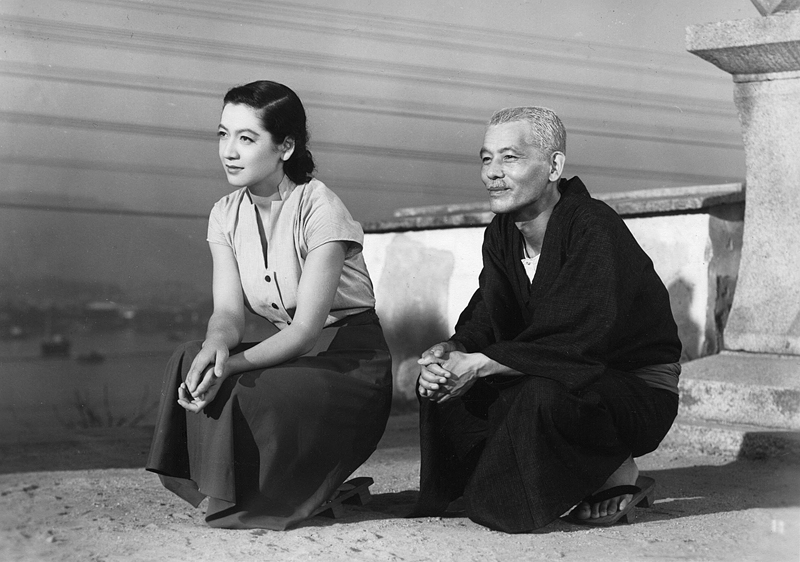
Instead, the top prize goes to Yasujiro Ozu’s Tokyo Story.
It’s a surprising, an enlightened, choice. Ozu’s work is miles away from the flash of Kane and the psychosexual weirdness of Vertigo. Tokyo Story is a gentle, nuanced portrait of a family whose bonds are slowly, inexorably being frayed by the demands of modernization. The movie’s emotional power is restrained and cumulative; by the final credits you’ll be overwhelmed both with a Buddhist sense of the impermanence of all things and a strong urge to call your mother.
But perhaps the reason filmmakers picked Tokyo Story of all the other cinematic masterpieces out there is because of Ozu’s unique approach to film. Since the days of D. W. Griffith, almost every filmmaker under the sun, even cinematic rebels like Jean-Luc Godard, followed some basic conventions of the form like continuity editing, the 180-degree rule and matching eyelines. Ozu discarded all of that. Instead, he constructed a highly idiosyncratic cinematic language revolving around match cuts and rigorously composed shots. His film form was radical but his stories were universal. That is the paradox of Ozu. You can see the trailer of the movie above.
Citizen Kane does make number two on the list but the film is tied with another formally rigorous masterpiece – Stanley Kubrick’s 2001: A Space Odyssey. Next on the list is perhaps the best movie ever about making a movie – Federico Fellini’s 8 ½. And Ozu’s film might be number one, but Francis Ford Coppola is the only filmmaker to have two movies on the list – The Godfather and Apocalypse Now. And that’s no mean feat.
You can see the full list below:
1. Tokyo Story — Yasujiro Ozu (1953)
= 2. 2001: A Space Odyssey – Stanley Kubrick (1968)
= 2. Citizen Kane – Orson Welles (1941)
4. 8 ½ — Federico Fellini (1963)
5. Taxi Driver – Martin Scorsese (1976)
6. Apocalypse Now – Francis Ford Coppola (1979)
= 7. The Godfather – Francis Ford Coppola (1972)
= 7. Vertigo – Alfred Hitchcock (1958)
9. Mirror – Andrei Tarkovsky (1974)
10. Bicycle Thieves – Vittorio De Sica (1949)
Related Content:
4,000+ Free Movies Online: Great Classics, Indies, Noir, Westerns, Documentaries & MoreThe 10 Greatest Films of All Time According to 846 Film Critics
Martin Scorsese Reveals His 12 Favorite Movies (and Writes a New Essay on Film Preservation)
Orson Welles Explains Why Ignorance Was the Genius Behind Citizen Kane
Jonathan Crow is a Los Angeles-based writer and filmmaker whose work has appeared in Yahoo!, The Hollywood Reporter, and other publications. You can follow him at @jonccrow. And check out his blog Veeptopus, featuring lots of pictures of badgers and even more pictures of vice presidents with octopuses on their heads. The Veeptopus store is here.
Read More...A Short History of the Venice Biennale, the World’s Most Important Art Exhibition
From Oscar Boyson comes “A Short History of the World’s Most Important Art Exhibition,” the first of a series of films that will take us inside the Venice Biennale, the prestigious art exhibition that dates back to 1895.
Produced by Artsy and UBS, the short film “pulls back the curtain on the event’s reach, extending beyond art and into politics and history at large,” and helps “us navigate the cultural influence of this somewhat enigmatic, 120-year-old tradition. For a longer look at Italy’s most important art fair, you can watch The Vice Guide to the Venice Biennale.
Follow us on Facebook, Twitter, Google Plus and LinkedIn and share intelligent media with your friends. Or better yet, sign up for our daily email and get a daily dose of Open Culture in your inbox.
Related Content:
The Nazi’s Philistine Grudge Against Abstract Art and The “Degenerate Art Exhibition” of 1937
Download 422 Free Art Books from The Metropolitan Museum of Art
Download 100,000 Free Art Images in High-Resolution from The Getty
Read More...How to Live a Good Life? Watch Philosophy Animations Narrated by Stephen Fry on Aristotle, Ayn Rand, Max Weber & More
We recently featured a series of animations from BBC Radio 4 scripted by philosopher Nigel Warburton, narrated by writer, performer, and all-around wit Stephen Fry, and dealing with a big question: what is the self? Those four short videos called upon the ideas of thinkers as various as Sartre, Descartes, and Shakespeare. This new follow-up draws from the intellectual wells dug by the likes of Aristotle, Max Weber, Ayn Rand, and the Buddha to address a still big, somewhat less abstract, but a perhaps even more important problem: how do I live a good life?
Rand, as her many detractors never hesitate to put it, thought the answer lay in following the highest mandate, our own selfishness. Buddhism, for its part, puts its stock into four noble truths: the inescapability of suffering, the origin of that suffering in our own minds, the possibility of changing our lives if we stop craving so many things, and the usefulness of the Buddhist “eightfold path” in doing so. Max Weber argued that the “Protestant ethic,” as defined by Calvinism, made capitalism itself into the big deal it has become today. And Aristotle recommended living virtuously as a means of attaining eudaimonia, or flourishing.
Alas, for all the important work done by these and other thinkers, the attainment of a good life can remain pretty elusive for us modern folk. Maybe we can do no better than learning what our predecessors have thought and said on the subject as best we can, and deciding for ourselves from there. But fortunately for us modern folk, we have videos like these at our fingertips which make it not just quick and easy to take a first step toward that state, but which get us laughing along the way. As with the rest of these series of animations on life’s big questions, the best jokes appear subtly, so you’ve got to stay attentive — surely one of the more important virtues anyone, ancient or modern, can cultivate.
Related Content:
140 Free Online Philosophy Courses
Learn Right From Wrong with Oxford’s Free Course A Romp Through Ethics for Complete Beginners
What Makes Us Human?: Chomsky, Locke & Marx Introduced by New Animated Videos from the BBC
Colin Marshall writes on cities, language, Asia, and men’s style. He’s at work on a book about Los Angeles, A Los Angeles Primer, and the video series The City in Cinema. Follow him on Twitter at @colinmarshall or on Facebook.
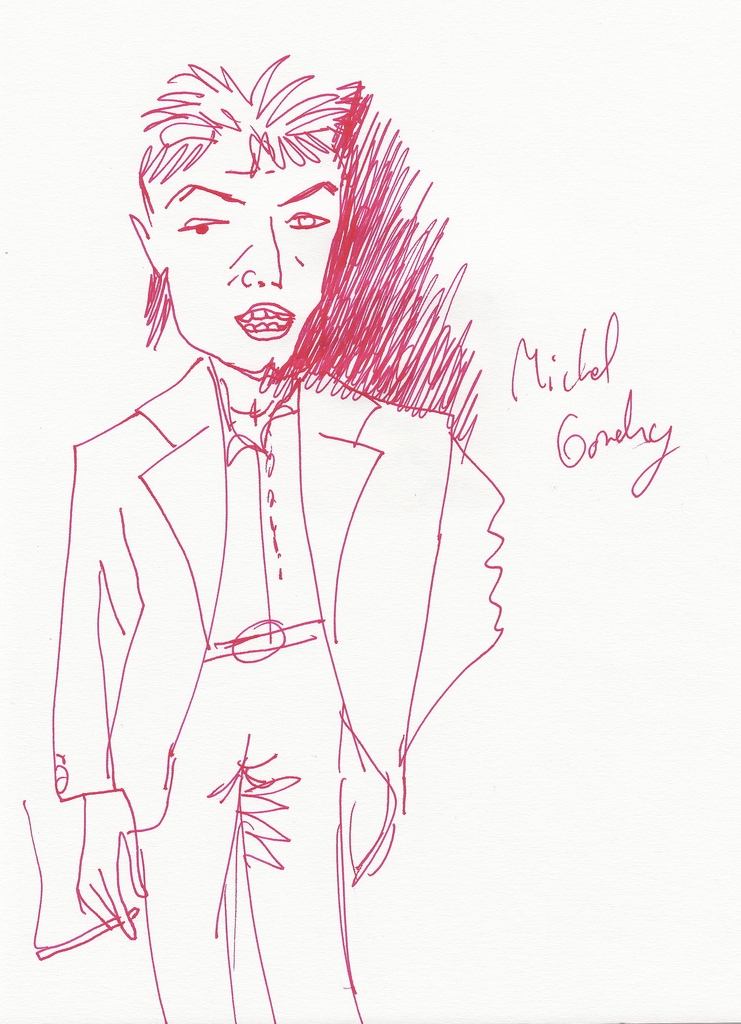
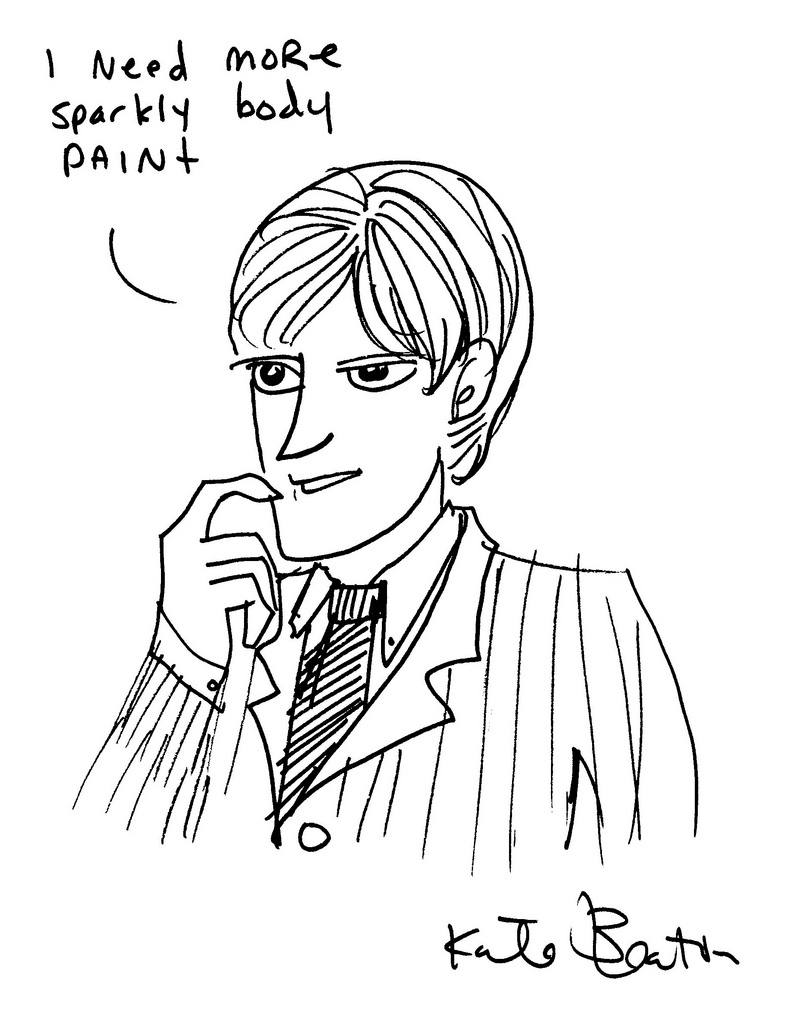
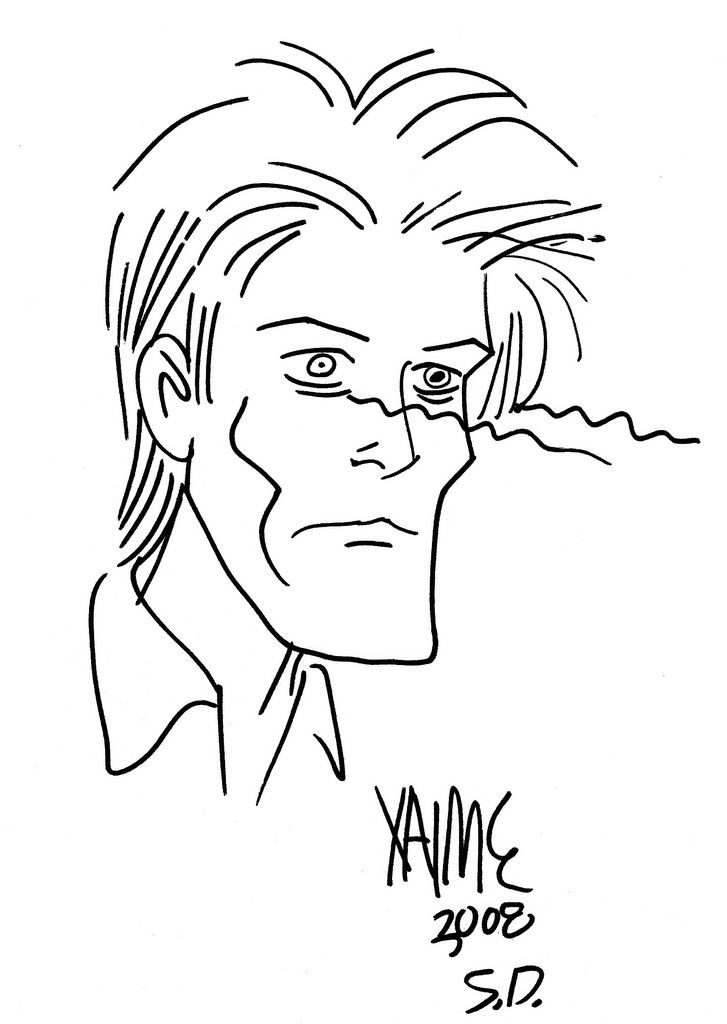
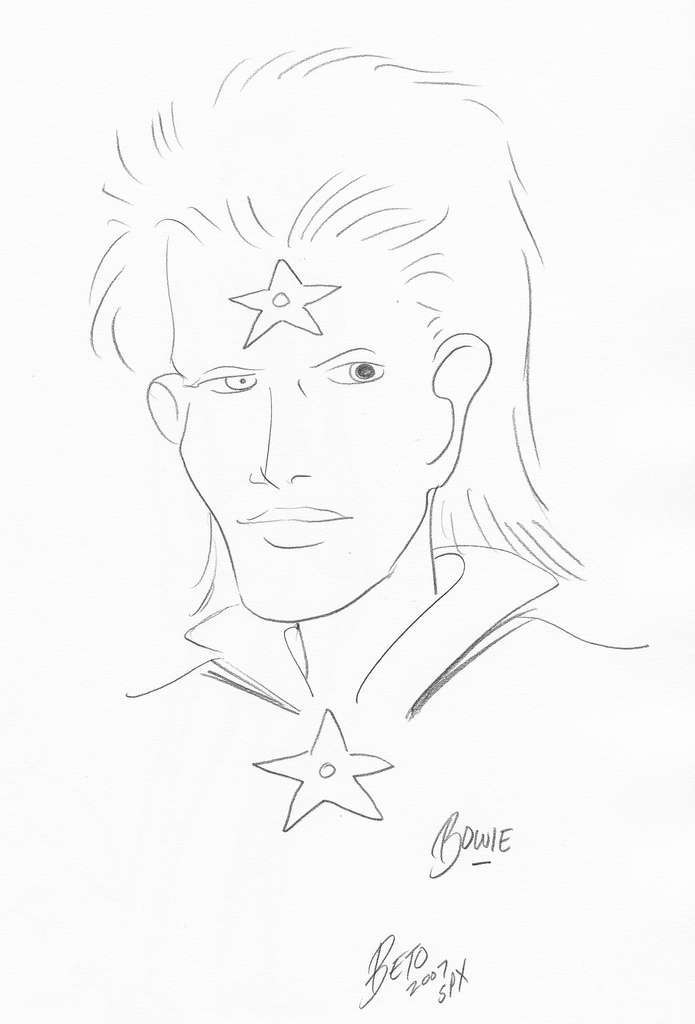
Read More...96 Drawings of David Bowie by the “World’s Best Comic Artists”: Michel Gondry, Kate Beaton & More
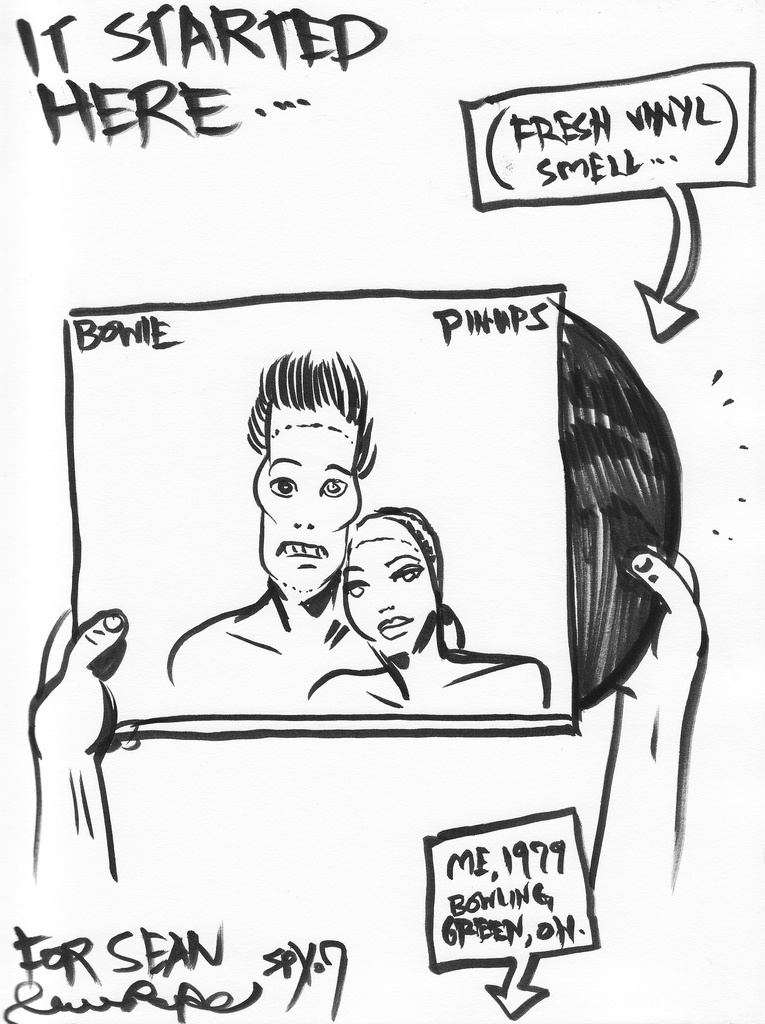
There is a David Bowie for every season. A Christmas David Bowie, a Halloween David Bowie, even a David Bowie Easter celebration. But much more than that, there may be a David Bowie for every Bowie fan, especially for artists influenced by his chameleonic career. See for yourself how a whopping 96 Bowie-loving artists—in this case mainly what Bowie himself calls the “World’s Best Comic Artists”—see the changling rock star/actor/space alien.
“See my life in a comic… The little details in colour,” writes Bowie on his site of a web gallery of portraits compiled by “comic artist, writer and critic, not to mention huge Bowie fan, Sean T. Collins.” It’s called The Thin White Sketchbook—a clever title that alludes to just one of the myriad Bowie personae represented in the sizeable collection of 96 drawings (see a nostalgic one by prolific illustrator Paul Pope at the top—the book’s first sketch).
Collins’ impressive collection includes work from Michel Gondry (Eternal Sunshine of the Spotless Mind), whose contribution the editor calls “pretty goddamn wonderful if you ask me.” See it above. And below, Kate Beaton, creator of web comic Hark, A Vagrant, gives us Bowie as a dandy, a character with whom, writes Collins, she has a “rich history.”
Collins offers brief commentary beneath each image in the collection, which also gives us the strange interpretation below by Bowie-inspired underground comics legend Charles Burns; the intense and Archie-esque contributions further down by Brothers Jaime and Gilbert Hernandez, creators of the 80s New Wave classic comic Love and Rockets; and the outer space-proportioned Bowie at the bottom of the post, from vocalist Tunde Adebimpe of TV on the Radio, a band that has both covered and recorded with Bowie.


View the full set of Bowie drawings, no two remotely the same, at The Thin White Sketchbook’s Flickr page.
via Buzzfeed.
Related Content:
50 Years of Changing David Bowie Hair Styles in One Animated GIF
David Bowie Releases Vintage Videos of His Greatest Hits from the 1970s and 1980s
David Gilmour & David Bowie Sing “Comfortably Numb” Live (2006)
Josh Jones is a writer and musician based in Durham, NC. Follow him at @jdmagness
Read More...Coffee is for People, Not Robots: The New Ad for David Lynch’s Line of Organic Coffee
Pay a visit to Whole Foods, and you’ll find The David Lynch Signature Cup Coffee line, which includes three premier coffee blends, each taste-tested and selected by David Lynch himself. Last year, Lynch talked with Vice.com about the genesis of his coffee line and explained:
One day, a friend came over to me and said, “David, you drink so much coffee, you should have your own line,” and one thing led to another, and I blind tested many, many different coffees. Another friend of mine said, “I know these guys down in Long Beach who have the greatest coffee” but I tasted it, and it was terrible, so I kept tasting different coffees and different mixtures and kept coming back to this [blend] in blind tests over and over again.
Over the years, Lynch has released some unconventional ads (of course!) for his coffee products. Perhaps you recall this one from 2011, featuring a seemingly severed Barbie head. Or this almost epilepsy-inducing one fom 2012. Now comes the latest ad, created by director Andrew Parkhurst, reminding us that coffee is for people, not robots. Kind of like Trix are for kids.
If you would like to support the mission of Open Culture, consider making a donation to our site. It’s hard to rely 100% on ads, and your contributions will help us continue providing the best free cultural and educational materials to learners everywhere. You can contribute through PayPal, Patreon, and Venmo (@openculture). Thanks!
Related Content:
David Lynch’s Unlikely Commercial for a Home Pregnancy Test (1997)
David Lynch’s Perfume Ads Based on the Works of Hemingway, F. Scott Fitzgerald & D.H. Lawrence
David Lynch’s Music Videos: Nine Inch Nails, Moby, Chris Isaak & More
Read More...110 Drawings and Paintings by J.R.R. Tolkien: Of Middle-Earth and Beyond
A few years ago, we featured J.R.R. Tolkien’s personal cover designs for the Lord of the Rings trilogy, a series of novels that justifiably made his name as a world-builder in prose (and occasional verse), but rather overshadowed his output as an illustrator. He didn’t just do covers for his own books, either. You can get a sense of the breadth of Tolkien’s visual art at the Tolkien Gateway’s gallery of over 100 images by Tolkien, which reveal the landscapes, letters, interiors, and animals within the creator of Middle-Earth’s mind.
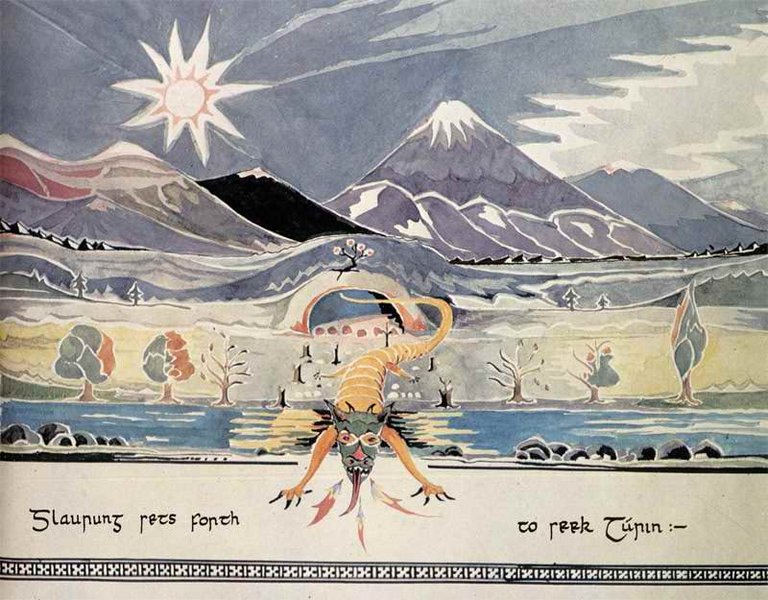
Many of these images come with descriptions of their provenance, which you can read if you click on their thumbnails in the gallery. At the top of the post, you’ll find Tolkien’s 1927 painting Glaurung Sets Forth to Seek Turin, first published in The Silmarillion Calendar 1978.
“The title is in Old English letters, which J. R. R. Tolkien frequently used when writing in a formal style,” says the Tolkien Gateway, noting that, “at the time of the painting the name of the Father of Dragons was Glórund, not Glaurung,” and that “the entrance to Nargothrond is here seen as a single arch, unlike the triple doors seen in other drawings.” (Leave it to a Tolkien fan site to have just this sort of information at the ready.)
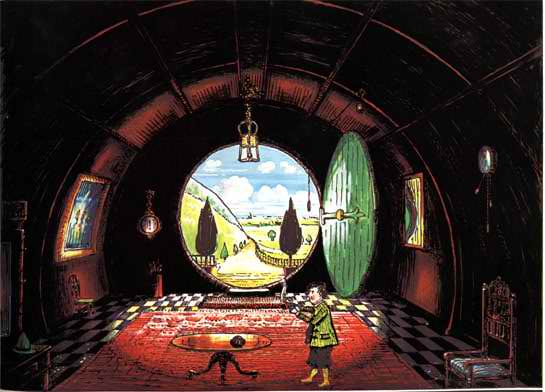
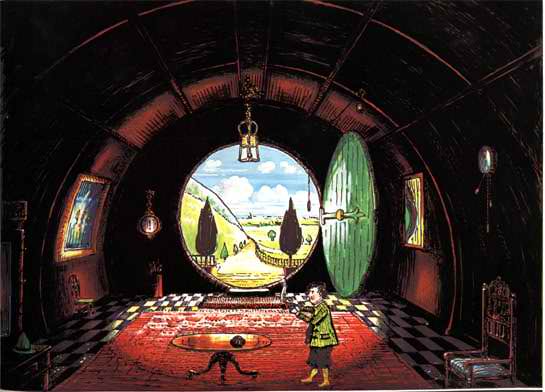
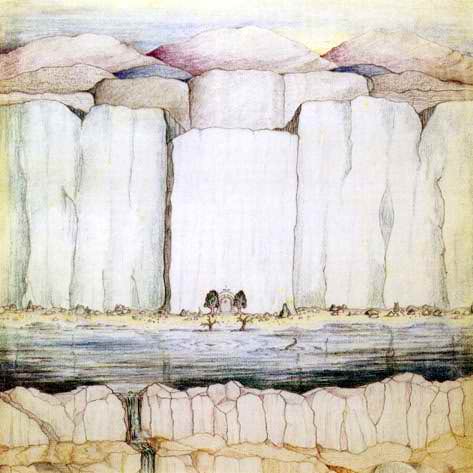
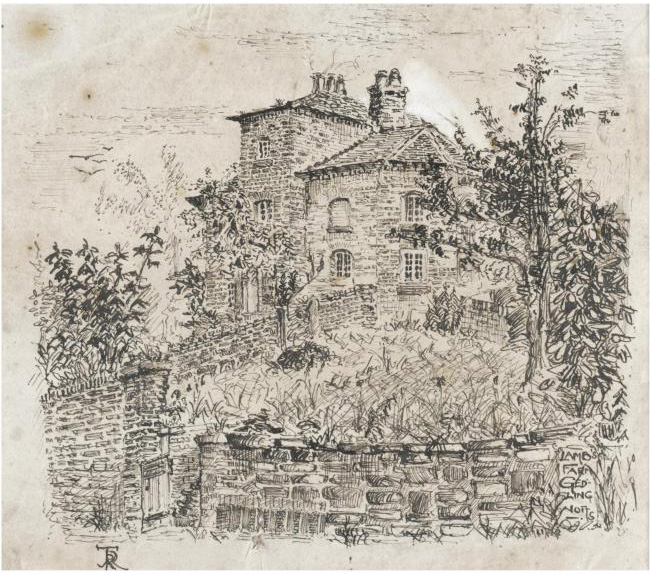
We also have here Tolkien’s crayon drawing of the West Gate of the Moria, a scene described in The Fellowship of the Ring as follows: “Beyond the ominous water were reared vast cliffs, their stern faces pallid in the fading light: final and impassable.” Just above is Tolkien’s rendering of Bag-End, residence of a certain B. Baggins, Esquire, “coloured by H.E. Riddett and first published in the English De Luxe edition and in a new edition of the Dutch translation (both 1976) of The Hobbit.” Just below, you can see his 1911 sketch of the much less fantastical Lamb’s Farm, Gedling.
Beyond perusing the images in the Tolkien Gateway, you’ll also want to have a look at Wayne G. Hammond and Christina Scull’s book, J.R.R. Tolkien: Artist and Illustrator. Some Tolkien enthusiasts will, understandably, prefer to keep their personal visualizations of the Lord of the Rings universe unsullied by non-textual imagery such as this, but if all of Peter Jackson’s megabudget film adaptations didn’t sully you, then Tolkien’s mild, almost rustic but still solemnly evocative drawings and paintings can only enrich the Middle-Earth in your own mind.
Related Content:
Discover J.R.R. Tolkien’s Personal Book Cover Designs for The Lord of the Rings Trilogy
The Only Drawing from Maurice Sendak’s Short-Lived Attempt to Illustrate The Hobbit
Hear J.R.R. Tolkien Read From The Lord of the Rings and The Hobbit
Soviet-Era Illustrations Of J. R. R. Tolkien’s The Hobbit (1976)
Colin Marshall writes on cities, language, Asia, and men’s style. He’s at work on a book about Los Angeles, A Los Angeles Primer, and the video series The City in Cinema. Follow him on Twitter at @colinmarshall or on Facebook.
Read More...Watch a Japanese Craftsman Lovingly Bring a Tattered Old Book Back to Near Mint Condition
Remember disfiguring binders with band logos and lyrics, doodling in the margins of textbooks, idly marking the fore edges with ball point designs?
At most, such pursuits helped pass a few minutes in study hall.
How long would it take to undo all this handiwork?
Clearly much, much longer than it took to create. In the above episode of the Japanese documentary series, The Fascinating Repairmen, Tokyo-based book conservator Nobuo Okano brings over 30 years of experience to bear on a tattered, middle school English-to-Japanese dictionary. This is not the sort of job that can be rushed.
Its original owner must be driven by sentiment in hiring a master craftsman to restore the book as a present for his college-bound daughter. Surely it would be just as easy, possibly even more convenient, for the young woman in question to look up vocabulary online. If keeping things old school is the goal, I guarantee a recently published paperback would prove far cheaper than conservator Okano’s laborious fix.
He spends four hours just turning and pressing its battered pages—all 1000 of them—with tweezers and a tiny pink iron.
He also scrapes the spine free of crumbling glue, resets tattered maps, preserves the old cover’s title as a decorative element for the new one, and dispatches the initials of a teenage crush with one chop of his blade. (So much for sentiment…)
One need not speak Japanese to admire the painstaking craftsmanship that will keep this beat-up old book out of the landfill.
Other episodes follow other craftspeople as they lavish attention on a suitcase, grater, and a stuffed toy penguin. Watch a complete playlist here.
via Colossal
Related Content:
Artist Takes Old Books and Gives Them New Life as Intricate Sculptures
The Chemistry Behind the Smell of Old Books: Explained with a Free Infographic
The Craft and Philosophy of Building Wooden Boats by Hand
Ayun Halliday is an author, illustrator, and Chief Primatologist of the East Village Inky zine. Follow her @AyunHalliday
Read More...The Science of Singing: New, High-Speed MRI Machine Images Man Singing ‘If I Only Had a Brain’
Back in December, Ayun Halliday took you inside an MRI machine to explore the neuroscience of jazz improvisation and musical creativity. Along the way, you got to see Johns Hopkins surgeon Charles Limb jam on a keyboard inside one of those crowded, claustrophobia-inducing tubes. How could you beat that for entertainment?
Today, we return with a new video showing another way the MRI machine is giving scientists new insights into the making of music. This time the focus is on how we produce sounds when we sing. When “we sing or speak, the vocal folds—the two small pieces of tissue [in our neck]—come together and, as air passes over them, they vibrate,” and produce sound. That’s basically what happens. We know that. But the typical MRI machine, capturing about 10 frames per second, is too slow to really let scientists break down the action of the larynx. Enter the new, high speed MRI machine at the Beckman Institute at the University of Illinois, working at 100 frames per second. It does the trick.
Above, you can see the new machine in action, as a volunteer sings ‘If I Only Had a Brain.’ Get more of the backstory over at the Beckman Institute.
Follow us on Facebook, Twitter, Google Plus and LinkedIn and share intelligent media with your friends. Or better yet, sign up for our daily email and get a daily dose of Open Culture in your inbox.
Related Content:
This is Your Brain on Jazz Improvisation: The Neuroscience of Creativity
Why We Love Repetition in Music: Explained in a New TED-Ed Animation
Read More...David Ogilvy’s 1982 Memo “How to Write” Offers 10 Pieces of Timeless Advice
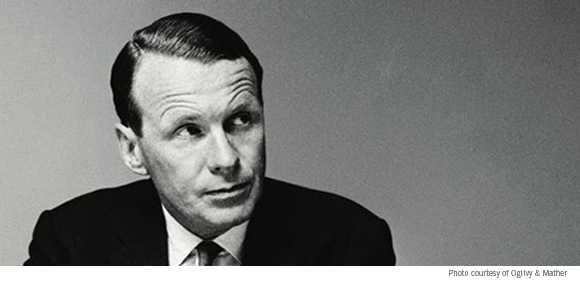
Nobody ever went broke writing a readable guide to writing in English, especially those that rise to the ranks of standard recommendations alongside Strunk and White’s The Elements of Style and William Zinsser’s On Writing Well. Both of those books endorse and exemplify the virtue of brevity, but even such short volumes take a great deal longer to read and internalize than this eminently to-the-point English style guide by the “Pope of Modern Advertising,” (and, for his part, a fan of Roman and Raphaelson’s Writing That Works) David Ogilvy, originally composed in the form of an internal memo.
Ogilvy sent it out on September 7th, 1982, directing it to everyone employed at Ogilvy & Mather, the respected ad agency he’d founded more than thirty years before. “The memo was entitled ‘How to Write,’ ” says Lists of Note, “and consisted of the following list of advice:”
1. Read the Roman-Raphaelson book on writing. Read it three times.
2. Write the way you talk. Naturally.
3. Use short words, short sentences and short paragraphs.
4. Never use jargon words like reconceptualize, demassification, attitudinally, judgmentally. They are hallmarks of a pretentious ass.
5. Never write more than two pages on any subject.
6. Check your quotations.
7. Never send a letter or a memo on the day you write it. Read it aloud the next morning—and then edit it.
8. If it is something important, get a colleague to improve it.
9. Before you send your letter or your memo, make sure it is crystal clear what you want the recipient to do.
10. If you want ACTION, don’t write. Go and tell the guy what you want.
And since we all send out more written communication today than we would have in 1982, the points on this list have only grown more advisable with time. “The better you write, the higher you go in Ogilvy & Mather,” Ogilvy adds. “People who think well, write well.” Amid all this practical advice, we’d do well not to forget that essential connection between word and thought. I like to quote a favorite Twitter aphorist of mine — and, per Ogilvy’s warning, I’ve checked my quotation first — on the subject: “People say they can’t draw when they mean they can’t see, and that they can’t write when they mean they can’t think.”
For more on the methods of Ogilvy the self-described “lousy copywriter” (but “good editor”), see also Lists of Note’s sister site Letters of Note, which has a 1955 letter wherein he lays out his work habits. A seemingly effective one involves “half a bottle of rum and a Handel oratorio on the gramophone.” Your mileage may vary.
via Lists of Note
Related Content:
Stephen King’s Top 20 Rules for Writers
Kurt Vonnegut’s 8 Tips on How to Write a Good Short Story
Writing Tips by Henry Miller, Elmore Leonard, Margaret Atwood, Neil Gaiman & George Orwell
Colin Marshall writes on cities, language, Asia, and men’s style. He’s at work on a book about Los Angeles, A Los Angeles Primer, and the video series The City in Cinema. Follow him on Twitter at @colinmarshall or on Facebook.
Read More...Support Us
We're hoping to rely on loyal readers, rather than erratic ads. Please click the Donate button and support Open Culture. You can use Paypal, Venmo, Patreon, even Crypto! We thank you!

About Us

Open Culture scours the web for the best educational media. We find the free courses and audio books you need, the language lessons & educational videos you want, and plenty of enlightenment in between.
Advertise With Us

FREE UPDATES!
GET OUR DAILY EMAIL
Get the best cultural and educational resources on the web curated for you in a daily email. We never spam. Unsubscribe at any time.
FOLLOW ON SOCIAL MEDIA

Open Culture editor Dan Colman scours the web for the best educational media. He finds the free courses and audio books you need, the language lessons & movies you want, and plenty of enlightenment in between.
Advertise With Us