Bill Hicks’ 12 Principles of Comedy
When we think of trash-talking, transgressive comedians, a few big names spring immediately to mind: George Carlin and Richard Pryor; Joan Rivers and Lenny Bruce. Currently, we have Amy Schumer, and Louis CK and Chris Rock, who—though both prominent family men now—still piss people off from time to time. We’ve just scratched the surface, of course, but we might even think of Denis Leary, who dominated the 90s with his rapid-fire delivery and unrepentant chain smoking. And if you know Leary, you may know the man whose act he’s been accused of stealing—chain-smoking firebrand comic Bill Hicks.
I won’t get into the merits of those charges (comedy plagiarism is a long and storied subject). What I find interesting is that in one of the key similarities between Leary and Hicks lies one of their greatest differences: a distinctive regionalism—Leary the wiseass New Englander; Hicks the rebellious Southerner. Hicks grew up in Texas, and was very much a Texan, though not your red state, Bush-voter but the kind of Texan who once upon a time elected Democratic governor Ann Richards. (He described his family as “Yuppie Baptists,” who “worried about things like, ‘If you scratch your neighbor’s Subaru, should you leave a note?’”)
In rebelling against both an uptight urban liberalism and the angry rural chauvinism of his conservative Southern milieu, Hicks, who died of cancer in 1993, became something of a folk hero as well as a comedy legend. For a taste of his comic invective, see him rip into American anti-intellectualism in the clip above. And for a taste of his methodology, see the list below, once posted on the wall of Atlanta’s Laughing Skull comedy club. This comes to us via comedian Chris Hardwick at Nerdist, who, after offering his own advice, turns to Hicks to answer to the question, “How does one go about being a comic.”
BILL HICKS’ PRINCIPLES OF COMEDY
1. If you can be yourself on stage nobody else can be you and you have the law of supply and demand covered.
2. The act is something you fall back on if you can’t think of anything else to say.
3. Only do what you think is funny, never just what you think they will like, even though it’s not that funny to you.
4. Never ask them is this funny – you tell them this is funny.
5. You are not married to any of this shit – if something happens, taking you off on a tangent, NEVER go back and finish a bit, just move on.
6. NEVER ask the audience “How You Doing?” People who do that can’t think of an opening line. They came to see you to tell them how they’re doing, asking that stupid question up front just digs a hole. This is The Most Common Mistake made by performers. I want to leave as soon as they say that.
7. Write what entertains you. If you can’t be funny be interesting. You haven’t lost the crowd. Have something to say and then do it in a funny way.
8. I close my eyes and walk out there and that’s where I start, Honest.
9. Listen to what you are saying, ask yourself, “Why am I saying it and is it Necessary?” (This will filter all your material and cut the unnecessary words, economy of words)
10. Play to the top of the intelligence of the room. There aren’t any bad crowds, just wrong choices.
11. Remember this is the hardest thing there is to do. If you can do this you can do anything.
12. I love my cracker roots. Get to know your family, be friends with them.
I’ve never for a second considered doing stand-up, but I’ve stood in front of many a crowded music venue and classroom and have had to conquer stage fright and self-doubt. Seems to me much of Hicks’ advice is plenty applicable to any kind of performance situation, whether its teaching, playing music, giving a job or conference talk, a magic act, or doing stand-up, which I don’t doubt is “the hardest thing there is to do.” I especially like number 12. Hicks’ misanthropic salvos against American ignorance hit the target so often because he genuinely seemed to care about the culture he took aim at.
Related Content:
How the Great George Carlin Showed Louis CK the Way to Success (NSFW)
Joan Rivers (1933–2014) Describes on Louie Her Undying Commitment to Comedy
Lenny Bruce Riffs and Rants on Injustice and Hypocrisy in One of His Final Performances (NSFW)
Josh Jones is a writer and musician based in Durham, NC. Follow him at @jdmagness
Read More...A Dazzling Gallery of Clockwork Orange Tattoos
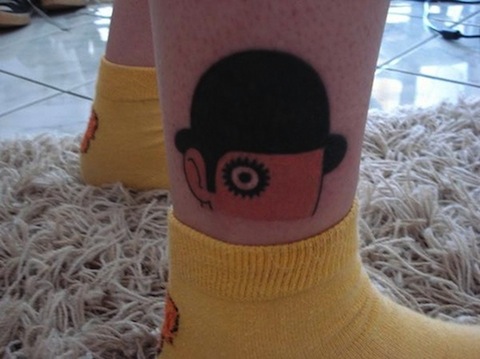
Alex, the protagonist of Anthony Burgess’ A Clockwork Orange takes teenage rebellion to psychotic extremes, but one act he and his droogs never indulge in is getting tattooed. It doesn’t even seem to be on their radar. How different things were in 1962, when the book was published!
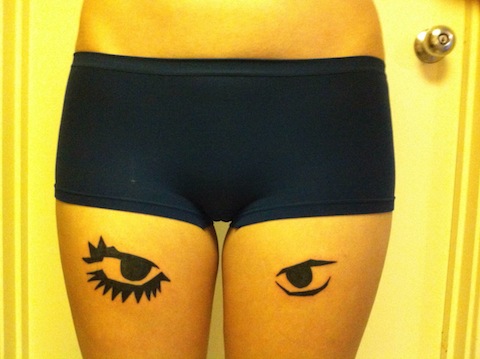
I have no doubt that director Stanley Kubrick (or designer Milena Canonero) could have devised some iconic ink for the 1971 film adaptation, but it would’ve been gilding the lily. Movie Alex Malcolm McDowell’s single false eyelash is so arresting as to be instantly recognizable. It deserved its star billing on the updated book cover that coincided with the film’s release.
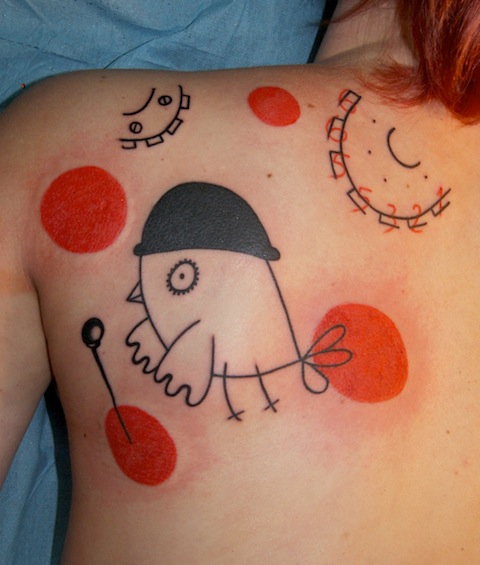
It’s also just one of many Clockwork Orange-inspired images that decorates fans’ hides now that tattooing has hit the mainstream. What would Alex think?
The little monster’s ego would’ve have relished the notoriety, but I bet he’d have had a snicker, too, at the lengths to which eager chellovecks and devotchkas will go. It’s the kind of thing his dim droogie Dim would do—mark himself up permanent when he could’ve just as well have bought a totebag.
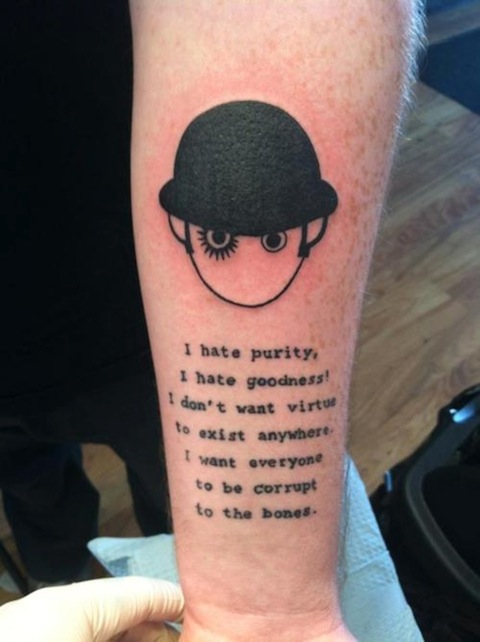
Whether or not you personally would consider making a salute to A Clockwork Orange a lifelong feature of your birthday suit, it’s hard not to admire the commitment of the passionate literature and film lovers who do.
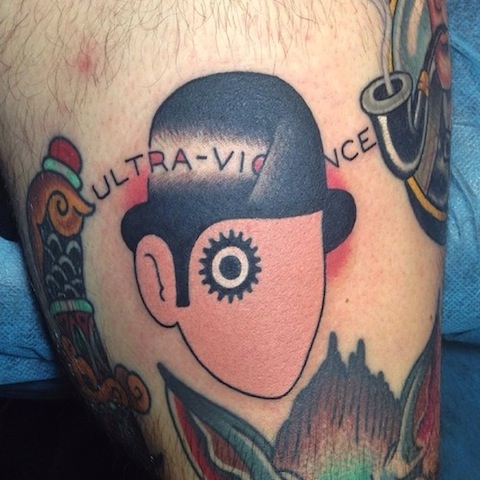
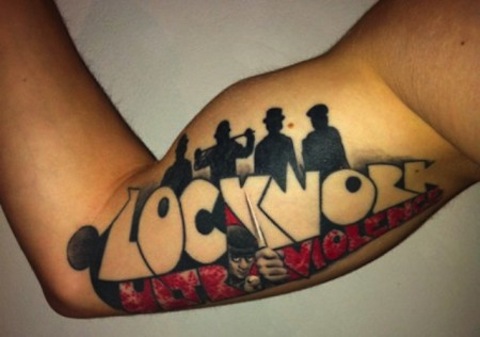
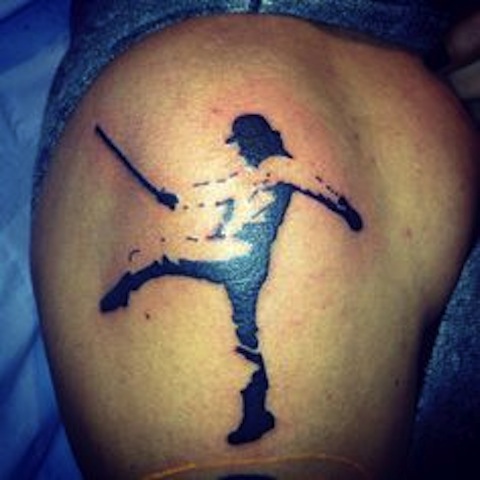
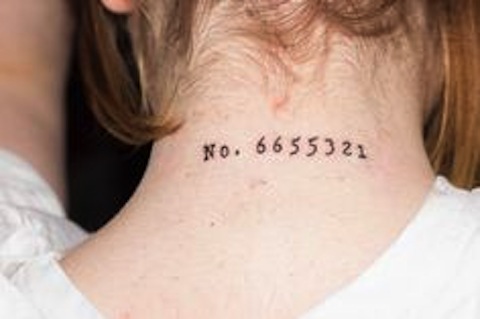
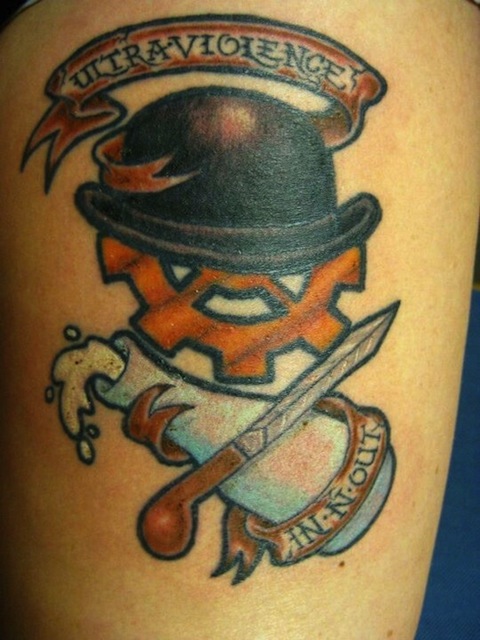
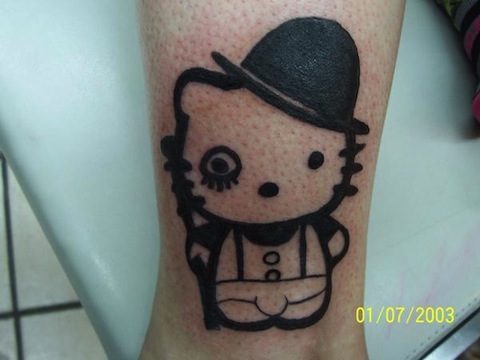
In assembling the gallery below, we’ve opted to forgo the photorealistic portraits of McDowell—particularly the ones that recreate the aversion therapy scene—in favor of the graphic, the creative, the jaw dropping, the sly… and the unavoidable Hello Kitty mash up, which we’re kind of hoping washes off.


Related Content:
The Making of Stanley Kubrick’s A Clockwork Orange
Watch The Simpsons’ Halloween Parody of Kubrick’s A Clockwork Orange and The Shining
15 Great Films Adapted From Equally Great Novels
Ayun Halliday is an author, homeschooler, and cartoonist, whose latest comic celebrates Civil War firebrand, “Crazy Bet” Van Lew. Follow her @AyunHalliday
Read More...Slavoj Žižek Names His Favorite Films from The Criterion Collection
Slavoj Žižek – the world’s most famous Slovenian, the “Elvis of cultural theory” – readily admits that he’s a big fan of movies. After all, there are few better ideological delivery systems out there than cinema and Žižek is fascinated with ideology. In his documentary The Pervert’s Guide to Ideology, he parses some beloved favorites in unexpected ways. So Taxi Driver is not only an unofficial remake of The Searchers but also echoes America’s recent foreign policy blunders in the Middle East? Okay. So Titanic has parallels with the Soviet propaganda movie The Fall of Berlin? Sure. Christopher Nolan’s The Dark Knight, at its heart, articulates some very cynical notions of government? Actually, I sort of suspected that one. Žižek’s tendency to make wild, surprising rhetorical leaps and his penchant for dropping nods to pop culture alongside references to Karl Marx and Jacques Lacan have turned him into that rarest of people – a celebrity philosopher.
Last fall, Žižek stopped by the office of The Criterion Collection where he rattled off some of his favorite movies from its library. His commentary is incisive, fascinating, occasionally flip and often funny. As it turns out, Žižek is not a fan of Milan Kundera; he is one of the very few people out there who prefers Roberto Rossellini’s late films over his early Italian Neo-Realist masterpieces like Rome, Open City; and he ended up being a personal inspiration for Ang Lee’s film, The Ice Storm. You can watch him talk in the video above. Below is the film list, along with some choice quotes.
- Trouble in Paradise (1932) – dir. Ernst Lubitsch
“It’s the best critique of Capitalism.”- Sweet Smell of Success (1957) – dir. Alexander Mackendrick
“It’s a nice depiction of the corruption of the American press.”- Picnic at Hanging Rock (1975) – dir. Peter Weir
“I simply like early Peter Weir movies. … It’s like his version of Stalker.”- Murmur of the Heart (1971)- dir. Louis Malle
“It’s one of those nice gentle French movies where you have incest. Portrayed as a nice secret between mother and son. I like this.”
- The Joke (1969) – dir. Jaromil Jireš
“The Joke is the first novel by Milan Kundera and I think it’s his only good novel. After that it all goes down.”- The Ice Storm (1997) – dir. Ang Lee
“I have a personal attachment to this film. When James Schamus was writing the scenario, he told me he was reading a book of mine and that my theoretical book was inspiration [sic]. So it’s personal reason but I also loved the movie.”- Great Expectations (1946) dir. David Lean
“I am simply a great fan of Dickens.”- Rossellini’s History Films (Box Set) — The Age of the Medici (1973), Cartesius (1974), Blaise Pascal (1972)
“Rossellini’s history films, I prefer them. These late, long boring TV movies. I think that the so-called great Rossellinis, for example German Year Zero and so on, they no longer really work. I think this is the Rossellini to be rehabilitated.”- City Lights (1931) – dir. Charlie Chaplin
“What is there to say? This is one of the greatest movies of all times.”- Carl Theodor Dreyer Box Set — Day of Wrath (1943), Ordet (1955), Gertrud (1964)
“It’s more out of my love for Denmark. It’s nice to know already in the ‘20s and ‘30s, Denmark was already a cinematic superpower.- Y Tu Mamá También (2002) – dir. Alfonso Cuáron
“This is for obvious personal reason. I do the comment. [He did the DVD Commentary for the movie] Although, I must say that my favorite Cuáron is Children of Men.”- Antichrist (2009) – dir. Lars Von Trier
“I will probably not like it, but I like Von Trier. It is simply a part of a duty.”
Žižek goes on to say that he oftentimes enjoys the DVD commentary of a movie more than the actual film. “I am a corrupted theorist. Screw the movie. I like to learn all around the movie.”
And below you can watch Žižek’s take on John Carpenter’s overlooked gem, and leftist parable, They Live!
Related Content:
Good Capitalist Karma: Zizek Animated
A Shirtless Slavoj Žižek Explains the Purpose of Philosophy from the Comfort of His Bed
After a Tour of Slavoj Žižek’s Pad, You’ll Never See Interior Design in the Same Way
Jonathan Crow is a Los Angeles-based writer and filmmaker whose work has appeared in Yahoo!, The Hollywood Reporter, and other publications. You can follow him at @jonccrow. And check out his blog Veeptopus, featuring lots of pictures of badgers and even more pictures of vice presidents with octopuses on their heads. The Veeptopus store is here.
Read More...Download The Complete Works of Edgar Allan Poe on His Birthday
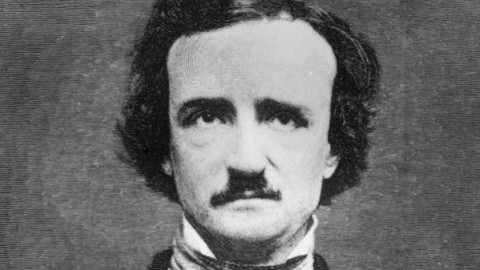
Edgar Allan Poe was born on this day 206 years ago. BoingBoing suggests celebrating Poe’s birthday with these Vincent Price wines. But seeing that the 2012 Raven Cabernet Sauvignon runs $75.00, we’re going to steer you toward something free. If you revisit our post from October, you can download Poe’s complete works as ebooks and free audio books. Lots of great stories in one bundle. And it won’t cost you a dime. You’d have to think that Poe, who died penniless, would approve.
Find lots more literary freebies in our twin collections:
1,000 Free Audio Books: Download Great Books for Freeand
800 Free eBooks for iPad, Kindle & Other Devices.
Related Content:
Watch the 1953 Animation of Edgar Allan Poe’s “The Tell-Tale Heart,” Narrated by James Mason
Seven Tips from Edgar Allan Poe on How to Write Vivid Stories and Poems
Gustave Doré’s Splendid Illustrations of Edgar Allan Poe’s “The Raven” (1884)
Edgar Allan Poe’s “The Raven,” Read by Christopher Walken, Vincent Price, and Christopher Lee
Read More...Cab Calloway’s “Hepster Dictionary,” a 1939 Glossary of the Lingo (the “Jive”) of the Harlem Renaissance
The lists are in. By overwhelming consensus, the buzzword of 2014 was “vape.” Apparently, that’s the verb that enables you to smoke an e‑cig. Left to its own devices, my computer will still autocorrect 2014’s biggest word to “cape,” but that could change.
Hopefully not.
Hopefully, 2015 will yield a buzzword more piquant than “vape.”
With luck, a razor-witted teen is already on the case, but just in case, let’s hedge our bets. Let’s go spelunking in an era when buzzwords were cool, but adult…insouciant, yet substantive.
Lead us, Cab Calloway!
The charismatic bandleader not only had a way with words, his love of them led him to compile a “Hepster’s Dictionary” of Harlem musician slang circa 1938. It featured 200 expressions used by the “hep cats” when they talk their “jive” in the clubs on Lenox Avenue. It was also apparently the first dictionary authored by an African-American.
If only every amateur lexicographer were foxy enough to set his or her definitions to music, and creep them out like the shadow, as Calloway does above. The complete list is below.
What a blip!
By my calculation, we’ve got eleven months to identify a choice candidate, resurrect it, and integrate it into everyday speech. With luck some fine dinner whose star is on the rise will beef our word in public, preferably during a scandalous, much analyzed performance.
It’s immaterial which one we pick. Gammin’? Jeff? Hincty? Fruiting? Whatever you choose, I’m in. Let’s blow their wigs.
Bust your conks in the comments section. I’m ready.
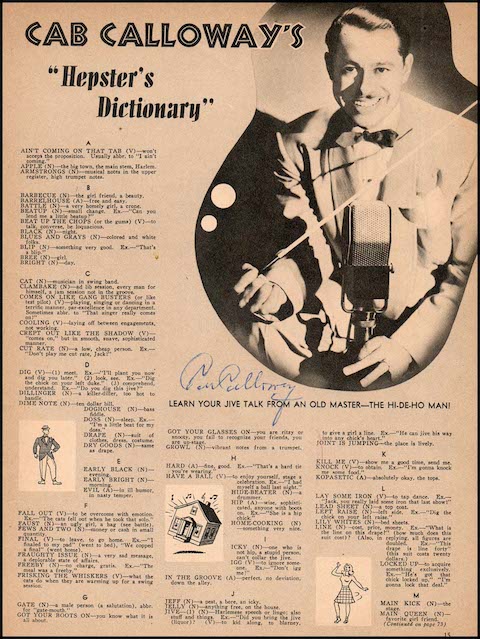
HEPSTER’S DICTIONARY
A hummer (n.) — exceptionally good. Ex., “Man, that boy is a hummer.”
Ain’t coming on that tab (v.) — won’t accept the proposition. Usually abbr. to “I ain’t coming.”
Alligator (n.) — jitterbug.
Apple (n.) — the big town, the main stem, Harlem.
Armstrongs (n.) — musical notes in the upper register, high trumpet notes.
Barbecue (n.) — the girl friend, a beauty
Barrelhouse (adj.) — free and easy.
Battle (n.) — a very homely girl, a crone.
Beat (adj.) — (1) tired, exhausted. Ex., “You look beat” or “I feel beat.” (2) lacking anything. Ex, “I am beat for my cash”, “I am beat to my socks” (lacking everything).
Beat it out (v.) — play it hot, emphasize the rhythym.
Beat up (adj.) — sad, uncomplimentary, tired.
Beat up the chops (or the gums) (v.) — to talk, converse, be loquacious.
Beef (v.) — to say, to state. Ex., “He beefed to me that, etc.”
Bible (n.) — the gospel truth. Ex., “It’s the bible!”
Black (n.) — night.
Black and tan (n.) — dark and light colored folks. Not colored and white folks as erroneously assumed.
Blew their wigs (adj.) — excited with enthusiasm, gone crazy.
Blip (n.) — something very good. Ex., “That’s a blip”; “She’s a blip.”
Blow the top (v.) — to be overcome with emotion (delight). Ex., “You’ll blow your top when you hear this one.”
Boogie-woogie (n.) — harmony with accented bass.
Boot (v.) — to give. Ex., “Boot me that glove.”
Break it up (v.) — to win applause, to stop the show.
Bree (n.) — girl.
Bright (n.) — day.
Brightnin’ (n.) — daybreak.
Bring down ((1) n. (2) v.) — (1) something depressing. Ex., “That’s a bring down.” (2) Ex., “That brings me down.”
Buddy ghee (n.) — fellow.
Bust your conk (v.) — apply yourself diligently, break your neck.
Canary (n.) — girl vocalist.
Capped (v.) — outdone, surpassed.
Cat (n.) — musician in swing band.
Chick (n.) — girl.
Chime (n.) — hour. Ex., “I got in at six chimes.”
Clambake (n.) — ad lib session, every man for himself, a jam session not in the groove.
Chirp (n.) — female singer.
Cogs (n.) — sun glasses.
Collar (v.) — to get, to obtain, to comprehend. Ex., “I gotta collar me some food”; “Do you collar this jive?”
Come again (v.) — try it over, do better than you are doing, I don’t understand you.
Comes on like gangbusters (or like test pilot) (v.) — plays, sings, or dances in a terrific manner, par excellence in any department. Sometimes abbr. to “That singer really comes on!”
Cop (v.) — to get, to obtain (see collar; knock).
Corny (adj.) — old-fashioned, stale.
Creeps out like the shadow (v.) — “comes on,” but in smooth, suave, sophisticated manner.
Crumb crushers (n.) — teeth.
Cubby (n.) — room, flat, home.
Cups (n.) — sleep. Ex., “I gotta catch some cups.”
Cut out (v.) — to leave, to depart. Ex., “It’s time to cut out”; “I cut out from the joint in early bright.”
Cut rate (n.) — a low, cheap person. Ex., “Don’t play me cut rate, Jack!”
Dicty (adj.) — high-class, nifty, smart.
Dig (v.) — (1) meet. Ex., “I’ll plant you now and dig you later.” (2) look, see. Ex., “Dig the chick on your left duke.” (3) comprehend, understand. Ex., “Do you dig this jive?”
Dim (n.) — evening.
Dime note (n.) — ten-dollar bill.
Doghouse (n.) — bass fiddle.
Domi (n.) — ordinary place to live in. Ex., “I live in a righteous dome.”
Doss (n.) — sleep. Ex., “I’m a little beat for my doss.”
Down with it (adj.) — through with it.
Drape (n.) — suit of clothes, dress, costume.
Dreamers (n.) — bed covers, blankets.
Dry-goods (n.) — same as drape.
Duke (n.) — hand, mitt.
Dutchess (n.) — girl.
Early black (n.) — evening
Early bright (n.) — morning.
Evil (adj.) — in ill humor, in a nasty temper.
Fall out (v.) — to be overcome with emotion. Ex., “The cats fell out when he took that solo.”
Fews and two (n.) — money or cash in small quatity.
Final (v.) — to leave, to go home. Ex., “I finaled to my pad” (went to bed); “We copped a final” (went home).
Fine dinner (n.) — a good-looking girl.
Focus (v.) — to look, to see.
Foxy (v.) — shrewd.
Frame (n.) — the body.
Fraughty issue (n.) — a very sad message, a deplorable state of affairs.
Freeby (n.) — no charge, gratis. Ex., “The meal was a freeby.”
Frisking the whiskers (v.) — what the cats do when they are warming up for a swing session.
Frolic pad (n.) — place of entertainment, theater, nightclub.
Fromby (adj.) — a frompy queen is a battle or faust.
Front (n.) — a suit of clothes.
Fruiting (v.) — fickle, fooling around with no particular object.
Fry (v.) — to go to get hair straightened.
Gabriels (n.) — trumpet players.
Gammin’ (adj.) — showing off, flirtatious.
Gasser (n, adj.) — sensational. Ex., “When it comes to dancing, she’s a gasser.”
Gate (n.) — a male person (a salutation), abbr. for “gate-mouth.”
Get in there (exclamation.) — go to work, get busy, make it hot, give all you’ve got.
Gimme some skin (v.) — shake hands.
Glims (n.) — the eyes.
Got your boots on — you know what it is all about, you are a hep cat, you are wise.
Got your glasses on — you are ritzy or snooty, you fail to recognize your friends, you are up-stage.
Gravy (n.) — profits.
Grease (v.) — to eat.
Groovy (adj.) — fine. Ex., “I feel groovy.”
Ground grippers (n.) — new shoes.
Growl (n.) — vibrant notes from a trumpet.
Gut-bucket (adj.) — low-down music.
Guzzlin’ foam (v.) — drinking beer.
Hard (adj.) — fine, good. Ex., “That’s a hard tie you’re wearing.”
Hard spiel (n.) — interesting line of talk.
Have a ball (v.) — to enjoy yourself, stage a celebration. Ex., “I had myself a ball last night.”
Hep cat (n.) — a guy who knows all the answers, understands jive.
Hide-beater (n.) — a drummer (see skin-beater).
Hincty (adj.) — conceited, snooty.
Hip (adj.) — wise, sophisticated, anyone with boots on. Ex., “She’s a hip chick.”
Home-cooking (n.) — something very dinner (see fine dinner).
Hot (adj.) — musically torrid; before swing, tunes were hot or bands were hot.
Hype (n, v.) — build up for a loan, wooing a girl, persuasive talk.
Icky (n.) — one who is not hip, a stupid person, can’t collar the jive.
Igg (v.) — to ignore someone. Ex., “Don’t igg me!)
In the groove (adj.) — perfect, no deviation, down the alley.
Jack (n.) — name for all male friends (see gate; pops).
Jam ((1)n, (2)v.) — (1) improvised swing music. Ex., “That’s swell jam.” (2) to play such music. Ex., “That cat surely can jam.”
Jeff (n.) — a pest, a bore, an icky.
Jelly (n.) — anything free, on the house.
Jitterbug (n.) — a swing fan.
Jive (n.) — Harlemese speech.
Joint is jumping — the place is lively, the club is leaping with fun.
Jumped in port (v.) — arrived in town.
Kick (n.) — a pocket. Ex., “I’ve got five bucks in my kick.”
Kill me (v.) — show me a good time, send me.
Killer-diller (n.) — a great thrill.
Knock (v.) — give. Ex., “Knock me a kiss.”
Kopasetic (adj.) — absolutely okay, the tops.
Lamp (v.) — to see, to look at.
Land o’darkness (n.) — Harlem.
Lane (n.) — a male, usually a nonprofessional.
Latch on (v.) — grab, take hold, get wise to.
Lay some iron (v.) — to tap dance. Ex., “Jack, you really laid some iron that last show!”
Lay your racket (v.) — to jive, to sell an idea, to promote a proposition.
Lead sheet (n.) — a topcoat.
Left raise (n.) — left side. Ex., “Dig the chick on your left raise.”
Licking the chops (v.) — see frisking the whiskers.
Licks (n.) — hot musical phrases.
Lily whites (n.) — bed sheets.
Line (n.) — cost, price, money. Ex., “What is the line on this drape” (how much does this suit cost)? “Have you got the line in the mouse” (do you have the cash in your pocket)? Also, in replying, all figures are doubled. Ex., “This drape is line forty” (this suit costs twenty dollars).
Lock up — to acquire something exclusively. Ex., “He’s got that chick locked up”; “I’m gonna lock up that deal.”
Main kick (n.) — the stage.
Main on the hitch (n.) — husband.
Main queen (n.) — favorite girl friend, sweetheart.
Man in gray (n.) — the postman.
Mash me a fin (command.) — Give me $5.
Mellow (adj.) — all right, fine. Ex., “That’s mellow, Jack.”
Melted out (adj.) — broke.
Mess (n.) — something good. Ex., “That last drink was a mess.”
Meter (n.) — quarter, twenty-five cents.
Mezz (n.) — anything supreme, genuine. Ex., “this is really the mezz.”
Mitt pounding (n.) — applause.
Moo juice (n.) — milk.
Mouse (n.) — pocket. Ex., “I’ve got a meter in the mouse.”
Muggin’ (v.) — making ‘em laugh, putting on the jive. “Muggin’ lightly,” light staccato swing; “muggin’ heavy,” heavy staccato swing.
Murder (n.) — something excellent or terrific. Ex., “That’s solid murder, gate!”
Neigho, pops — Nothing doing, pal.
Nicklette (n.) — automatic phonograph, music box.
Nickel note (n.) — five-dollar bill.
Nix out (v.) — to eliminate, get rid of. Ex., “I nixed that chick out last week”; “I nixed my garments” (undressed).
Nod (n.) — sleep. Ex., “I think I’l cop a nod.”
Ofay (n.) — white person.
Off the cob (adj.) — corny, out of date.
Off-time jive (n.) — a sorry excuse, saying the wrong thing.
Orchestration (n.) — an overcoat.
Out of the world (adj.) — perfect rendition. Ex., “That sax chorus was out of the world.”
Ow! — an exclamation with varied meaning. When a beautiful chick passes by, it’s “Ow!”; and when someone pulls an awful pun, it’s also “Ow!”
Pad (n.) — bed.
Pecking (n.) — a dance introduced at the Cotton Club in 1937.
Peola (n.) — a light person, almost white.
Pigeon (n.) — a young girl.
Pops (n.) — salutation for all males (see gate; Jack).
Pounders (n.) — policemen.
Queen (n.) — a beautiful girl.
Rank (v.) — to lower.
Ready (adj.) — 100 per cent in every way. Ex., “That fried chicken was ready.”
Ride (v.) — to swing, to keep perfect tempo in playing or singing.
Riff (n.) — hot lick, musical phrase.
Righteous (adj.) — splendid, okay. Ex., “That was a righteous queen I dug you with last black.”
Rock me (v.) — send me, kill me, move me with rhythym.
Ruff (n.) — quarter, twenty-five cents.
Rug cutter (n.) — a very good dancer, an active jitterbug.
Sad (adj.) — very bad. Ex., “That was the saddest meal I ever collared.”
Sadder than a map (adj.) — terrible. Ex., “That man is sadder than a map.”
Salty (adj.) — angry, ill-tempered.
Sam got you — you’ve been drafted into the army.
Send (v.) — to arouse the emotions. (joyful). Ex., “That sends me!”
Set of seven brights (n.) — one week.
Sharp (adj.) — neat, smart, tricky. Ex., “That hat is sharp as a tack.”
Signify (v.) — to declare yourself, to brag, to boast.
Skins (n.) — drums.
Skin-beater (n.) — drummer (see hide-beater).
Sky piece (n.) — hat.
Slave (v.) — to work, whether arduous labor or not.
Slide your jib (v.) — to talk freely.
Snatcher (n.) — detective.
So help me — it’s the truth, that’s a fact.
Solid (adj.) — great, swell, okay.
Sounded off (v.) — began a program or conversation.
Spoutin’ (v.) — talking too much.
Square (n.) — an unhep person (see icky; Jeff).
Stache (v.) — to file, to hide away, to secrete.
Stand one up (v.) — to play one cheap, to assume one is a cut-rate.
To be stashed (v.) — to stand or remain.
Susie‑Q (n.) — a dance introduced at the Cotton Club in 1936.
Take it slow (v.) — be careful.
Take off (v.) — play a solo.
The man (n.) — the law.
Threads (n.) — suit, dress or costuem (see drape; dry-goods).
Tick (n.) — minute, moment. Ex., “I’ll dig you in a few ticks.” Also, ticks are doubled in accounting time, just as money isdoubled in giving “line.” Ex., “I finaled to the pad this early bright at tick twenty” (I got to bed this morning at ten o’clock).
Timber (n.) — toothipick.
To dribble (v.) — to stutter. Ex., “He talked in dribbles.”
Togged to the bricks — dressed to kill, from head to toe.
Too much (adj.) — term of highest praise. Ex., “You are too much!”
Trickeration (n.) — struttin’ your stuff, muggin’ lightly and politely.
Trilly (v.) — to leave, to depart. Ex., “Well, I guess I’ll trilly.”
Truck (v.) — to go somewhere. Ex., “I think I’ll truck on down to the ginmill (bar).”
Trucking (n.) — a dance introduced at the Cotton Club in 1933.
Twister to the slammer (n.) — the key to the door.
Two cents (n.) — two dollars.
Unhep (adj.) — not wise to the jive, said of an icky, a Jeff, a square.
Vine (n.) — a suit of clothes.
V‑8 (n.) — a chick who spurns company, is independent, is not amenable.
What’s your story? — What do you want? What have you got to say for yourself? How are tricks? What excuse can you offer? Ex., “I don’t know what his story is.”
Whipped up (adj.) — worn out, exhausted, beat for your everything.
Wren (n.) — a chick, a queen.
Wrong riff — the wrong thing said or done. Ex., “You’re coming up on the wrong riff.”
Yarddog (n.) — uncouth, badly attired, unattractive male or female.
Yeah, man — an exclamation of assent.
Zoot (adj.) — exaggerated
Zoot suit (n.) — the ultimate in clothes. The only totally and truly American civilian suit.
BONUS MUSICAL INSTRUMENT SUPPLEMENT
Guitar: Git Box or Belly-Fiddle
Bass: Doghouse
Drums: Suitcase, Hides, or Skins
Piano: Storehouse or Ivories
Saxophone: Plumbing or Reeds
Trombone: Tram or Slush-Pump
Clarinet: Licorice Stick or Gob Stick
Xylophone: Woodpile
Vibraphone: Ironworks
Violin: Squeak-Box
Accordion: Squeeze-Box or Groan-Box
Tuba: Foghorn
Electric Organ: Spark Jiver
Related Content:
A 1932 Illustrated Map of Harlem’s Night Clubs: From the Cotton Club to the Savoy Ballroom
Duke Ellington’s Symphony in Black, Starring a 19-Year-old Billie Holiday
Ayun Halliday is an author, homeschooler, and Chief Primatologist of the East Village Inky zine. Follow her @AyunHalliday
Read More...Gnome Chomsky: The Essential Ornament for the Thinking Person’s Garden
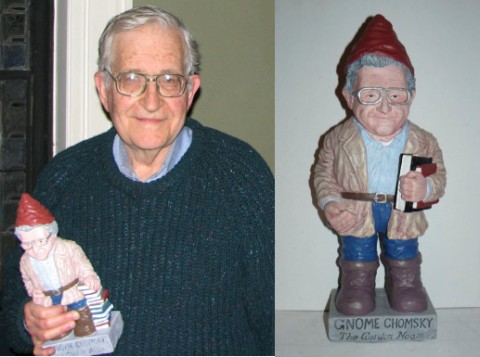
Images via JustSayGnome
The Noam Chomsky Garden Gnome. That’s right, I said it, the Noam Chomsky Garden Gnome.
Over at justsaygnome.net, you can buy, when they’re available, two versions of “Gnome Chomsky the Garden Noam.” Here’s is how it’s generally described:
Standing at just under 17 inches, Gnome Chomsky the Garden Noam clutches his classic books, ‘The Manufacture of Compost’ and ‘Hedgerows not Hegemony’ – with his open right hand ready to hold the political slogan of your choosing. His clothes represent a relaxed but classy version of regular gnome attire, including: a nice suit jacket-tunic, jeans, boots, traditional gnome cap, and glasses. Additionally, Noam Gnome stands on a base complete with a carved title – for anyone who may not immediately realize the identity of this handsome and scholarly gnome.
The gnome costs $195 painted and $95 unpainted (plus shipping). The bummer is that the gnomes are currently out of stock, and when they’ll come back is anyone’s guess. That said, if you really want one, the site’s (presumed) owner Steve encourages you to drop him an email. I might have to send one myself.
Above you can see a photo of Chomsky with a Noam Gnome. Find additional views of the Noam Gnome here. And, guess what, they’ve got a Howard Zinn gnome too.
In putting this post together, I spotted an old comic bit that took the idea of a Noam Garden Gnome as its premise. You can watch it below.
Follow us on Facebook, Twitter and Google Plus and share intelligent media with your friends. Or better yet, sign up for our daily email and get a daily dose of Open Culture in your inbox.
Related Content:
Read 9 Books By Noam Chomsky Free Online
Filmmaker Michel Gondry Presents an Animated Conversation with Noam Chomsky
Clash of the Titans: Noam Chomsky & Michel Foucault Debate Human Nature & Power on Dutch TV, 1971
Read More...Vintage Video of Joni Mitchell Performing in 1965 — Before She Was Even Named Joni Mitchell
From 1963 to 1967, folk singer Oscar Brand hosted “Let’s Sing Out” on Canadian television. Filmed on university campuses across Canada, the show launched the careers of important folk singers — singers like Gordon Lightfoot and Joni Mitchell, to name just two. In the compilation above, all shot in black and white, you can watch Joni Mitchell’s career come into bloom. In the first clip, recorded at The University of Manitoba in 1965, Joni Anderson — as she was named before her marriage to Chuck Mitchell in ’66 — sings “Born To Take The Highway.” On the same episode, Dave Van Ronk appeared along with The Chapins (Harry included).
We also find Joni in 1966, taking on a different look and a different last name and performing for students at Laurentian University. The next year, the Canadian singer-songwriter moved to New York, then onto LA where, with the help of David Crosby, her career got off the ground. Find more early Joni Mitchell performances in the section right down below.
If you would like to support the mission of Open Culture, consider making a donation to our site. It’s hard to rely 100% on ads, and your contributions will help us continue providing the best free cultural and educational materials to learners everywhere. You can contribute through PayPal, Patreon, and Venmo (@openculture). Thanks!
Related Content:
Young Joni Mitchell Performs a Hit-Filled Concert in London (1970)
James Taylor and Joni Mitchell, Live and Together (1970)
Watch Classic Performances of “Both Sides Now” & “The Circle Game” (1968)
Read More...Werner Herzog Offers 24 Pieces of Filmmaking & Life Advice

Image by Erinc Salor via Wikimedia Commons
There are few filmmakers alive today who have the mystique of Werner Herzog. His feature films and his documentaries are brilliant and messy, depicting both the ecstasies and the agonies of life in a chaotic and fundamentally hostile universe. And his movies seem very much to reflect his personality – uncompromising, enigmatic and quite possibly crazy. How else can you explain his willingness to risk life and limb to shoot in such forbidding places as the Amazonian rain forest or Antarctica?
In perhaps his greatest film, Fitzcarraldo — which is about a dreamer who hatches a scheme to drag a riverboat over a mountain — Herzog decides, for the purposes of realism, to actually drag a boat over a mountain. No special effects. No studios. In the middle of the Peruvian jungle.

The production, perhaps the most miserable in the history of film, is the subject of the documentary The Burden of Dreams. After six punishing months, a weary-looking Herzog described his surroundings:
I see it more full of obscenity. It’s just — Nature here is vile and base. I wouldn’t see anything erotical here. I would see fornication and asphyxiation and choking and fighting for survival and… growing and… just rotting away. Of course, there’s a lot of misery. But it is the same misery that is all around us. The trees here are in misery, and the birds are in misery. I don’t think they — they sing. They just screech in pain. […] But when I say this, I say this all full of admiration for the jungle. It is not that I hate it, I love it. I love it very much. But I love it against my better judgment.
His worldview brims with a heroic pessimism that is pulled straight out of the German Romantic poets. Nature is not some harmonious anthropomorphized playground. It is instead nothing but “chaos, hostility and murder.” For those sick of the cynical dishonesty of Hollywood’s current crop of Award-ready fare (hello, The Imitation Game), Herzog comes as a bracing tonic. An icon of what independent cinema should be rather than what it has largely become.
Below is Herzog’s list of advice for filmmakers, found on the back of his latest book Werner Herzog – A Guide for the Perplexed. (Hat tip goes to Jason Kottke for bringing it to our attention.) Some maxims are pretty specific to the world of moviemaking – “That roll of unexposed celluloid you have in your hand might be the last in existence, so do something impressive with it.” Other points are just plain good lessons for life — “Always take the initiative,” “Learn to live with your mistakes.” Read along and you can almost hear Herzog’s malevolent Teutonic lilt.
1. Always take the initiative.
2. There is nothing wrong with spending a night in jail if it means getting the shot you need.
3. Send out all your dogs and one might return with prey.
4. Never wallow in your troubles; despair must be kept private and brief.
5. Learn to live with your mistakes.
6. Expand your knowledge and understanding of music and literature, old and modern.
7. That roll of unexposed celluloid you have in your hand might be the last in existence, so do something impressive with it.
8. There is never an excuse not to finish a film.
9. Carry bolt cutters everywhere.
10. Thwart institutional cowardice.
11. Ask for forgiveness, not permission.
12. Take your fate into your own hands.
13. Learn to read the inner essence of a landscape.
14. Ignite the fire within and explore unknown territory.
15. Walk straight ahead, never detour.
16. Manoeuvre and mislead, but always deliver.
17. Don’t be fearful of rejection.
18. Develop your own voice.
19. Day one is the point of no return.
20. A badge of honor is to fail a film theory class.
21. Chance is the lifeblood of cinema.
22. Guerrilla tactics are best.
23. Take revenge if need be.
24. Get used to the bear behind you.
via Kottke
Related Content:
Portrait Werner Herzog: The Director’s Autobiographical Short Film from 1986
Errol Morris and Werner Herzog in Conversation
Werner Herzog Picks His 5 Top Films
Werner Herzog and Cormac McCarthy Talk Science and Culture
Werner Herzog’s Eye-Opening New Film Reveals the Dangers of Texting While Driving
Jonathan Crow is a Los Angeles-based writer and filmmaker whose work has appeared in Yahoo!, The Hollywood Reporter, and other publications. You can follow him at @jonccrow. And check out his blog Veeptopus, featuring lots of pictures of badgers and even more pictures of vice presidents with octopuses on their heads. The Veeptopus store is here.
Read More...365: One Animated Film, Shot One Second a Day, Over One Year
Back in September, we highlighted an animation that humorously imagined David Bowie and Brian Eno’s collaboration on the song, “Warszawa,” which eventually appeared on the album, Low. The cartoon was created by The Brothers McLeod, and they’re now back with an animation called “365 — One Year, One Film, One Second a Day.” The title pretty much says it all. But if you want more background information, here’s how Vimeo frames the clip: “Greg [McLeod] animated one second of animation every day for the 365 days of the year 2013. There was no storyline, script or storyboard. The ideas come from things read, seen or experienced on the day, with a little artistic license for good measure.” The result you can watch above. Also find daily stills from the project on Facebook.
Follow us on Facebook, Twitter and Google Plus and share intelligent media with your friends. Or better yet, sign up for our daily email and get a daily dose of Open Culture in your inbox.
Read More...Allen Ginsberg Sings the Poetry of William Blake (1970)
There was once a time, if you can believe it, when Allen Ginsberg could take the poetry of William Blake, sing it in a recording studio, and then MGM Records would release it as a long-playing album. I refer to the time, of course, of “the sixties,” that half-mythical era that seems to have run from around 1966 to 1972. Smack in the middle of the sixties, thus defined, came this distinctive release, Songs of Innocence and Experience by William Blake, tuned by Allen Ginsberg, recorded in December 1969 and released in 1970.
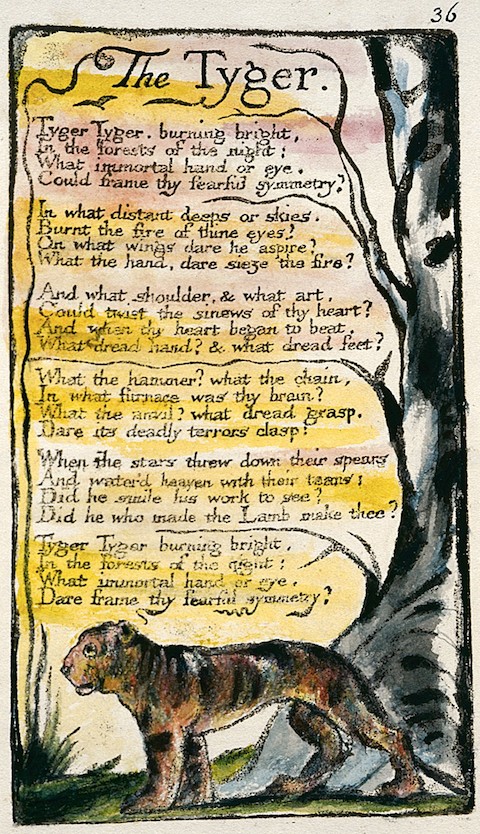
Every reader familiar with Blake, of course, knows Songs of Innocence and of Experience as a book, an illustrated collection of poems first self-published in 1789 and in 1794 re-issued and expanded as Songs of Innocence and of Experience Showing the Two Contrary States of the Human Soul. This work of an 18th-century poet captured the imagination of the 20th-century poet Ginsberg, and not just as reading material; he came to believe that not only did Blake intend his words to be sung, but that he himself could render them faithfully in song — as well as play the piano and harmonium in accompaniment.
You can hear hear the fruit of Ginsberg’s musical-poetic reconstructive labors at the top of the post, at the Internet Archive, or at PennSound, which not only offers each track individually but also its lyrics and sometimes even links to the corresponding page from the original book at the William Blake Archive. When we think of sixties-defining albums, we think of Blonde on Blonde, Are You Experienced?, Sgt, Pepper’s Lonely Hearts Club Band, that sort of thing, and rightly so, but a project like Songs of Innocence and Experience by William Blake, tuned by Allen Ginsberg speaks just as much to what became possible in that artistic Cambrian explosion of an era.
Related Content:
William Blake’s Hallucinatory Illustrations of John Milton’s Paradise Lost
Hear Allen Ginsberg’s Short Free Course on Shakespeare’s Play, The Tempest (1980)
Allen Ginsberg Recordings Brought to the Digital Age. Listen to Eight Full Tracks for Free
Colin Marshall hosts and produces Notebook on Cities and Culture as well as the video series The City in Cinema and writes essays on cities, language, Asia, and men’s style. He’s at work on a book about Los Angeles, A Los Angeles Primer. Follow him on Twitter at @colinmarshall or on Facebook.
Read More...Support Us
We're hoping to rely on loyal readers, rather than erratic ads. Please click the Donate button and support Open Culture. You can use Paypal, Venmo, Patreon, even Crypto! We thank you!

About Us

Open Culture scours the web for the best educational media. We find the free courses and audio books you need, the language lessons & educational videos you want, and plenty of enlightenment in between.
Advertise With Us

FREE UPDATES!
GET OUR DAILY EMAIL
Get the best cultural and educational resources on the web curated for you in a daily email. We never spam. Unsubscribe at any time.
FOLLOW ON SOCIAL MEDIA

Open Culture editor Dan Colman scours the web for the best educational media. He finds the free courses and audio books you need, the language lessons & movies you want, and plenty of enlightenment in between.
Advertise With Us


