How Vi Hart Makes Her Viral Videos: A Look Inside Her Creative Process
Spend some time poking around on the Khan Academy, or this site for that matter, and your chances of running into mathemusician Vi Hart are extremely favorable.
I’ve tried—and failed—to keep up with her highly digressive, rapid fire, doodle-based explanations on such topics as net neutrality and the space-time continuum. I had better luck following her directions for turning squiggles into snakes, a math-based parlor trick that seems more like magic to me.
What I really wanted to know is how does she make those funny little videos of hers? Doubtless, any seven-year-old who’s logged two or three hours in an after-school program devoted to stop motion animation would have the chops to explain how to make simple drawings rendered in Sharpie on a spiral bound notebook come to life, but what if I still didn’t get it? I wouldn’t want to give the shorties the impression that the laymen and women of my generation are too dim to keep up with modern technology.
Then on a whim, I typed “how does Vi Hart make her videos” into a search engine and voila! The video above, in which the doyenne herself reveals exactly how she does just that.
Actually “exactly” might be overstating things a bit, given that she does so in her immediately recognizable style. If I understand correctly, she starts with a script, which she pares to the essentials, before shooting the segment with a team of interns, some of whom serve as body doubles for her hands, their arms encased in funky, detachable sleeves. Then she speeds things up by deleting the frames in which the moving hand obscures the page. I’m pretty sure she wings it when recording her voiceover narration, but I could be wrong.
She also seems to have a thing for pinning her long brown hair up with a turkey feather. Even so, I’ll bet the decision to give her adoring public a glimpse of something beyond mere hands cemented many a celebrity crush. She’s a Tina Fey for the geek set. (Not that Tina Fey isn’t already serving that function for the same demographic.)
As winsome as she is, I have to say, I preferred her 14-year-old intern Ethan Bresnick’s conscientious behind-the-scenes look at how these things come together. Have a look above if you’d like some straight dope on software, camera positions, and the like.
(Depending on how much work you’ve got to get done today, you may also enjoy the extremely informal, hour-plus interview Ethan conducted via Skype, during which Hart eats her dinner and invites fans to join them via Twitter.)
The only thing lacking is the nitty gritty on how and where Hart stores her enormous video files. Without a benevolent Khan Academy to oversee my work, such technical specs would definitely come in handy for a beginner such as myself. The Sharpies on spiral bound I can figure out on my own.
Related Content:
Vi Hart Uses Her Video Magic to Demystify Stravinsky and Schoenberg’s 12-Tone Compositions
Vi Hart Explains & Defends Net Neutrality in a New Doodle-Filled Video
Ayun Halliday is the author of seven books, a couple of which have morphed into ebooks. Follow her @AyunHalliday
Read More...Johnny Cash Impersonates Elvis Presley: A Slapstick Version of “Heartbreak Hotel” (1959)
In his autobiography, Johnny Cash recalled meeting Elvis Presley in Memphis, circa 1954:
The first time I saw Elvis, singing from a flatbed truck at a Katz drugstore opening on Lamar Avenue, two or three hundred people, mostly teenage girls, had come out to see him. With just one single to his credit, he sang those two songs over and over. That’s the first time I met him.
Although the two musicians were “never tight,” they liked one another. Cash admired Presley’s rhythm guitar playing and his showmanship. He writes: “Elvis was so good. Every show I did with him, I never missed the chance to stand in the wings and watch. We all did. He was that charismatic.” Which brings us to the short, completely amusing clip found above.
According to the Pig River Records web site (a “comprehensive guide to music as it was 50 years ago”), this footage dates back to a 1959 tour. Cash was the opening act; Presley, the headliner. And each night, “Cash would impersonate his friend and touring partner, and then Elvis would come out and do the same. Two characters just having a good ol’ time whilst simultaneously creating the genre of rock and roll.”
If you want to spend a little more time at the Cash-Presley nexus, I’d encourage you to listen to Million Dollar Quartet, a recording that captures Cash and Presley’s impromptu jam session with Carl Perkins and Jerry Lee Lewis. It was recorded in 1956, at the Sun Record Studios in Memphis.
Finally, if you care to see more Elvis impersonations, you can see how Cash stacks up against Quentin Tarantino and the great Andy Kaufman.
Related Content:
The Earliest Footage of Elvis Presley, Buddy Holly and Johnny Cash (1955)
The First Episode of The Johnny Cash Show, Featuring Bob Dylan & Joni Mitchell (1969)
Library Card Signed by 13-Year-Old Elvis Presley, the Earliest Known Signature of the King
Read More...
Catch Stevie Wonder, Ages 12–16, in His Earliest TV Performances
The amazing Stevie Wonder turns 64 today, and in honor of the singer’s long illustrious career, we present some of his earliest moments in the spotlight. In 1963, Little Stevie Wonder—as he was then known—had his first number one hit with a song called “Fingertips.” He was 12 years old. Not only did he top the charts, but he did so with the first ever live recording to hit number one, and the first ever single to simultaneously top the Billboard Hot 100 and the R&B charts at once. See the young star perform “Fingertips” above, following Marvin Gaye at the Motown Revue Live, and below one year later on The Ed Sullivan Show.
“Fingertips” came from the album Recorded Live: The 12 Year Old Genius, which was, you guessed it, recorded live, at the Regal Theater in Chicago. Despite his tender years, this was hardly Little Stevie’s first rodeo. At this point, he was virtually a veteran of the business, having signed to Motown at age 11, toured the so-called “chitlin’ circuit” and released two previous albums—The Jazz Soul of Little Stevie and Tribute to Uncle Ray—both of which failed to chart.
Already a multi-instrumentalist, Wonder’s first big single was not a stirring piano ballad or rousing funk soul anthem; it was more or less an extended harmonica solo, punctuated by exuberant call-and-response shouts to the crowd. But people loved it, and the musical prodigy seemed well on his way to super-stardom. Just above, see him play another harmonica single, “Kiss Me Baby,” in 1965 on the British music show Ready Steady Go!
Though his star seemed to be on the rise after “Fingertips,” Little Stevie’s career hit a few snags after his big break, and Berry Gordy almost dropped him from the Motown roster when his voice changed. But he was not, as we know, destined to be a one-hit-wonder (pardon the pun). Though puberty cut short the child prodigy act, Wonder soldiered on, dropping the “Little” and becoming a serious vocalist. He scored hits in the mid-sixties with the super-catchy “Uptight (Everything’s Alright)” and the beautiful “A Place in the Sun.” See him do both songs above on the Mike Douglass show in 1966. In-between songs, Douglass asks the sixteen year-old some pretty dopey questions about his blindness, the result of a birth defect. Wonder responds with the same good-natured humor and grace we’ve come to expect from him. In these early appearances, you can plainly see all the qualities that have made Stevie Wonder so universally beloved. The man’s still got it, as he proved in his Grammy performance of “Get Lucky” this year with Daft Punk and Pharrell. We wish Stevie the happiest of birthdays. If you’re lucky enough to be in Europe this summer, do yourself a favor and catch him on one of his seven tour dates. He might even break out the harmonica.
Related Content:
See Stevie Wonder Play “Superstition” and Banter with Grover on Sesame Street in 1973
Marvin Gaye’s Classic Vocals on ‘I Heard it Through the Grapevine’: The A Cappella Version
Josh Jones is a writer and musician based in Durham, NC. Follow him at @jdmagness.
Read More...David Lynch Explains Where His Ideas Come From
Where do great ideas come from? If you ask Neil Gaiman, he’ll tell you that they come from conscious daydreaming and asking the right questions: What if you woke up with wings? What if your sister turned into a mouse?
Pose that question to Rod Serling, creator of The Twilight Zone, and he’ll tell you, very emphatically, that “They come from the Earth… They’re in the air. And, to put them on paper, you bleed!”
Now run the same question by David Lynch, and you’ll get a different answer: “An idea comes, and you see it, and you hear it, and you know it.” “It comes, like, on a TV in your mind.” That’s how Lynch summed things up in late April, while speaking at the Brooklyn Academy of Music (BAM) with master interviewer Paul Holdengräber. Closing his eyes, concentrating, Lynch elaborated, explaining that the big ideas start small. You start with just a fragment of an idea, and that fragment becomes “bait” that attracts other fragments, and then more more fragments. And, before too long, you have an entire script. Or a painting. If you want to delve further into Lynch’s creative process, see our related post: David Lynch Explains How Meditation Enhances Our Creativity.
Related Content:
David Lynch Presents the History of Surrealist Film (1987)
David Lynch Teaches You to Cook His Quinoa Recipe in a Weird, Surrealist Video
David Lynch Lists His Favorite Films & Directors, Including Fellini, Wilder, Tati & Hitchcock
Read More...700 Free eBooks: Fiction, Poetry & Non-Fiction for Kindle, iPad & Other Devices

If you’re looking for a free read today, let us turn your attention to our collection, 800 Free eBooks for iPad, Kindle & Other Devices. Arendt, Asimov, Austen, Balzac, Baudelaire, Bradbury, Bukowski, Calvino, Chekhov, Clarke (as in Arthur C.), Dante, Dick (as in Philip K.), Dickens, Dickinson, Dostoevsky, Faulkner, Fitzgerald, Flaubert, Freud, Gaiman, Ginsberg, Gogol, Hemingway, Huxley, Joyce, Kafka, Kierkegaard, Lovecraft, Melville, Nabokov, Nietzsche, Oates (as in Joyce Carol), Orwell, Plath, Poe, Pound, Proust, Russell (as in Bertrand), Sartre, Shakespeare, Stein, Tolstoy, Twain, DFW, Wells (as in H.G.), Whitman, Zola — they’re all on the list.
If you’re an iPad/iPhone user, the download process is super easy. Just click the “iPad/iPhone” links and you’re good to go. Kindle users will generally want to click the “Kindle + Other Formats links” to download ebook files, but we’d suggest watching this instructional video (not made by us) beforehand to take full advantage of the collection. And, if downloading files seems like a burden, fear not. We often give you the ability to simply read texts online.
Find our full collection here: 700 Free eBooks for iPad, Kindle & Other Devices. You might equally enjoy our related collection, 1,000 Free Audio Books: Download Great Books for Free. Enjoy.
Read More...The Animals of Chernobyl: An Inside Look at the Toll That Radiation Took on Animals & Wildlife
On April 26, 1986, the number 4 reactor at the Chernobyl nuclear power plant blew up in what is now Ukraine. The site spewed a cloud of radioactive material that spread over much of Europe. The area immediately around Chernobyl received more than 400 times the radiation as Hiroshima and won’t be safely inhabitable for about 20,000 years. The government set up a 1,000 square mile exclusion zone around the site. While short visits to the zone are possible without too much danger, living there is not advisable. Cancer is a real problem for the couple hundred elderly stalwarts who still make the zone their home.
Within the zone, nature has taken its own course, dismantling the Soviet-era brutalist tenements of the surrounding abandoned cities and turning it into what at first blush looks more and more like a prelapsarian Eden. The truth proves to be more complicated.
Dr. Timothy Mousseau, a biologist from the University of South Carolina, has been examining the wildlife around Chernobyl for fifteen years. He’s discovered that the radiation that has been bathing the area for almost 30 years is changing nature. As you can see in the New York Times Op-Doc video above, birds are developing tumors, bugs have abnormal spots and spider webs seem much more freeform than usual. Get more on the story over at the Times.
If you would like to support the mission of Open Culture, consider making a donation to our site. It’s hard to rely 100% on ads, and your contributions will help us continue providing the best free cultural and educational materials to learners everywhere. You can contribute through PayPal, Patreon, and Venmo (@openculture). Thanks!
Related Content:
Scenes from HBO’s Chernobyl v. Real Footage Shot in 1986: A Side-By-Side Comparison
Joseph Stalin, a Lifelong Editor, Wielded a Big, Blue, Dangerous Pencil
How to Spot a Communist Using Literary Criticism: A 1955 Manual from the U.S. Military
Tarkovsky Films Now Free Online
Jonathan Crow is a Los Angeles-based writer and filmmaker whose work has appeared in Yahoo!, The Hollywood Reporter, and other publications. You can follow him at @jonccrow.
Read More...Disney’s 12 Timeless Principles of Animation
Animation is essentially an optical illusion- a series of still photographs that create the impression of movement. Though Winsor McCay pioneered ways of making drawings move, Walt Disney’s Nine Old Men were the ones who perfected it. While making Snow White and the Seven Dwarfs, not to mention countless shorts in the 1930s, this team of animators developed 12 basic principles that exaggerated the laws of physics to best bring these images to life.
The principles came to define Disney’s look and became part of the language of animators everywhere. Every time you see Wiley E. Coyote’s eyes bulge to the size of watermelons at the sight of a falling boulder, Olaf the Snowman from Frozen stretch during a sudden stop, or Tigger crouching down before a pounce, you can thank these principles.
Frank Thomas and Ollie Johnson, two of the nine old men, published the principles in their book Disney Animation: Illusion of Life. Jason Kottke has posted a really groovy (animated, of course) video illustrating the 12 Principles. Check it out above. And if you need further review watch this other animated video. The principles, themselves, appear below.
1. SQUASH AND STRETCH
This action gives the illusion of weight and volume to a character as it moves. Also squash and stretch is useful in animating dialogue and doing facial expressions. How extreme the use of squash and stretch is, depends on what is required in animating the scene. Usually it’s broader in a short style of picture and subtler in a feature. It is used in all forms of character animation from a bouncing ball to the body weight of a person walking. This is the most important element you will be required to master and will be used often.
2. ANTICIPATION
This movement prepares the audience for a major action the character is about to perform, such as, starting to run, jump or change expression. A dancer does not just leap off the floor. A backwards motion occurs before the forward action is executed. The backward motion is the anticipation. A comic effect can be done by not using anticipation after a series of gags that used anticipation. Almost all real action has major or minor anticipation such as a pitcher’s wind-up or a golfers’ back swing. Feature animation is often less broad than short animation unless a scene requires it to develop a characters personality.
3. STAGING
A pose or action should clearly communicate to the audience the attitude, mood, reaction or idea of the character as it relates to the story and continuity of the story line. The effective use of long, medium, or close up shots, as well as camera angles also helps in telling the story. There is a limited amount of time in a film, so each sequence, scene and frame of film must relate to the overall story. Do not confuse the audience with too many actions at once. Use one action clearly stated to get the idea across, unless you are animating a scene that is to depict clutter and confusion. Staging directs the audience’s attention to the story or idea being told. Care must be taken in background design so it isn’t obscuring the animation or competing with it due to excess detail behind the animation. Background and animation should work together as a pictorial unit in a scene.
4. STRAIGHT AHEAD AND POSE TO POSE ANIMATION
Straight ahead animation starts at the first drawing and works drawing to drawing to the end of a scene. You can lose size, volume, and proportions with this method, but it does have spontaneity and freshness. Fast, wild action scenes are done this way. Pose to Pose is more planned out and charted with key drawings done at intervals throughout the scene. Size, volumes, and proportions are controlled better this way, as is the action. The lead animator will turn charting and keys over to his assistant. An assistant can be better used with this method so that the animator doesn’t have to draw every drawing in a scene. An animator can do more scenes this way and concentrate on the planning of the animation. Many scenes use a bit of both methods of animation.
5. FOLLOW THROUGH AND OVERLAPPING ACTION
When the main body of the character stops all other parts continue to catch up to the main mass of the character, such as arms, long hair, clothing, coat tails or a dress, floppy ears or a long tail (these follow the path of action). Nothing stops all at once. This is follow through. Overlapping action is when the character changes direction while his clothes or hair continues forward. The character is going in a new direction, to be followed, a number of frames later, by his clothes in the new direction. “DRAG,” in animation, for example, would be when Goofy starts to run, but his head, ears, upper body, and clothes do not keep up with his legs. In features, this type of action is done more subtly. Example: When Snow White starts to dance, her dress does not begin to move with her immediately but catches up a few frames later. Long hair and animal tail will also be handled in the same manner. Timing becomes critical to the effectiveness of drag and the overlapping action.
6. SLOW-OUT AND SLOW-IN
As action starts, we have more drawings near the starting pose, one or two in the middle, and more drawings near the next pose. Fewer drawings make the action faster and more drawings make the action slower. Slow-ins and slow-outs soften the action, making it more life-like. For a gag action, we may omit some slow-out or slow-ins for shock appeal or the surprise element. This will give more snap to the scene.
7. ARCS
All actions, with few exceptions (such as the animation of a mechanical device), follow an arc or slightly circular path. This is especially true of the human figure and the action of animals. Arcs give animation a more natural action and better flow. Think of natural movements in the terms of a pendulum swinging. All arm movement, head turns and even eye movements are executed on an arcs.
8. SECONDARY ACTION
This action adds to and enriches the main action and adds more dimension to the character animation, supplementing and/or re-enforcing the main action. Example: A character is angrily walking toward another character. The walk is forceful, aggressive, and forward leaning. The leg action is just short of a stomping walk. The secondary action is a few strong gestures of the arms working with the walk. Also, the possibility of dialogue being delivered at the same time with tilts and turns of the head to accentuate the walk and dialogue, but not so much as to distract from the walk action. All of these actions should work together in support of one another. Think of the walk as the primary action and arm swings, head bounce and all other actions of the body as secondary or supporting action.
9. TIMING
Expertise in timing comes best with experience and personal experimentation, using the trial and error method in refining technique. The basics are: more drawings between poses slow and smooth the action. Fewer drawings make the action faster and crisper. A variety of slow and fast timing within a scene adds texture and interest to the movement. Most animation is done on twos (one drawing photographed on two frames of film) or on ones (one drawing photographed on each frame of film). Twos are used most of the time, and ones are used during camera moves such as trucks, pans and occasionally for subtle and quick dialogue animation. Also, there is timing in the acting of a character to establish mood, emotion, and reaction to another character or to a situation. Studying movement of actors and performers on stage and in films is useful when animating human or animal characters. This frame by frame examination of film footage will aid you in understanding timing for animation. This is a great way to learn from the others.
10. EXAGGERATION
Exaggeration is not extreme distortion of a drawing or extremely broad, violent action all the time. Its like a caricature of facial features, expressions, poses, attitudes and actions. Action traced from live action film can be accurate, but stiff and mechanical. In feature animation, a character must move more broadly to look natural. The same is true of facial expressions, but the action should not be as broad as in a short cartoon style. Exaggeration in a walk or an eye movement or even a head turn will give your film more appeal. Use good taste and common sense to keep from becoming too theatrical and excessively animated.
11. SOLID DRAWING
The basic principles of drawing form, weight, volume solidity and the illusion of three dimension apply to animation as it does to academic drawing. The way you draw cartoons, you draw in the classical sense, using pencil sketches and drawings for reproduction of life. You transform these into color and movement giving the characters the illusion of three-and four-dimensional life. Three dimensional is movement in space. The fourth dimension is movement in time.
12. APPEAL
A live performer has charisma. An animated character has appeal. Appealing animation does not mean just being cute and cuddly. All characters have to have appeal whether they are heroic, villainous, comic or cute. Appeal, as you will use it, includes an easy to read design, clear drawing, and personality development that will capture and involve the audience’s interest. Early cartoons were basically a series of gags strung together on a main theme. Over the years, the artists have learned that to produce a feature there was a need for story continuity, character development and a higher quality of artwork throughout the entire production. Like all forms of story telling, the feature has to appeal to the mind as well as to the eye.
via Kottke
Related Content:
How Walt Disney Cartoons Are Made
Donald Duck Wants You to Pay Your Taxes (1943)
Walt Disney Presents the Super Cartoon Camera (1957)
Jonathan Crow is a Los Angeles-based writer and filmmaker whose work has appeared in Yahoo!, The Hollywood Reporter, and other publications. You can follow him at @jonccrow.
Read More...Metafilter Highlights a Trove of Werner Herzog Films Online
“To steal a character or a story isn’t real theft. But to steal a landscape, that is a very, very serious crime.” There we have one of the propositions agreed upon by filmmakers Werner Herzog and Errol Morris in a conversation they had for the Believer. Though their filmographies may not look terribly similar — Morris with his interview-based documentaries on pet cemeteries, emergent systems, and old Secretaries of Defense, Herzog with his barely definable, distinction-between-fact-and-fiction-repudiating studies of aggressive dwarfs, doomed naturalists, death row inmates, and conquistadors and rubber barons aggrandizing themselves in the jungle — their work has much in common under the surface. Don’t believe me? First watch through the list we previously featured of 30 Errol Morris movies streamable online, assembled on Metafilter by a member known as “Going to Maine.” Then watch Going to Maine’s new list of 43 Werner Herzog movies streamable online, compare, and contrast.
At the top of the post, you can spend nine minutes watching Herakles, Herzog’s very first cinematic effort, a mash-up (if it doesn’t stretch the definition too far to apply the word to something made in 1962) of muscle men and racing-car wrecks. Just above, we have 1969’s Precautions Against Fanatics, another early exercise in Herzogian form-bending which repurposes footage of real people, real places, and real animals to absurd ends — in this case, to envision a reality in which hired men work tirelessly to protect horses from “horse fanatics.” The list also rounds up a few shorts that even true Herzog fanatics may never have had the chance to see, including 1976’s No One Will Play With Me (part one, part two) below, the story of a preschool social outcast based upon experiences related by the real children themselves — the sort of thing we’d all have grown up watching on television, in other words, if Werner Herzog had made after-school specials. If works like these don’t give you quite enough insight into the mind of this inimitable, uncompromising, and seemingly tireless, Bavarian filmmaker, don’t forget to check out his own favorite films as well.
Related Content:
Portrait Werner Herzog: The Director’s Autobiographical Short Film from 1986
Errol Morris and Werner Herzog in Conversation
Werner Herzog Picks His 5 Favorite Films
30 Errol Morris Movies That Can Be Streamed Online
Colin Marshall hosts and produces Notebook on Cities and Culture and writes essays on cities, language, Asia, and men’s style. He’s at work on a book about Los Angeles, A Los Angeles Primer. Follow him on Twitter at @colinmarshall or on Facebook.
Read More...Free Animated Films: From Classic to Modern
Watch over 70 free animations online. The collection features some classics, plus some modern gems. You’ll find a number of animations of literary classics in the mix too. For more great films, please visit our complete collection, 4,000+ Free Movies Online: Great Classics, Indies, Noir, Westerns, Documentaries & More.
- 66 Oscar-Nominated-and-Award-Winning Animated Shorts Online, Courtesy of the National Film Board of Canada — Free — A big collection of prize-winning animated short films.
- 6 Animations of Stories & Poems by Shel Silverstein — Free — Includes “Ickle Me, Pickle Me, Tickle Me Too” from Where the Sidewalk Ends.
- 13 Experimental Short Films by Tezuka Osamu - Free — Early animations by Tezuka Osamau, often called the Walt Disney of Japan.
- 30 Films from the 1970s by Computer Animation Pioneer Lillian F. Schwartz — Free — Watch films by one of the first women artists notable for basing almost her entire body of work on computational media.
- A Country Doctor - Free — A Franz Kaka story retold in an award-winning animation by Japanese animator Koji Yamamura. (2007)
- A Herb Alpert & the Tijuana Brass Double Feature — Free — A precursor to modern music videos, this Oscar-winning animated film by John & Faith Hubley is set to the music of two popular songs recorded by Herb Alpert. (1966)
- A Short Vision — Free — Animated film directed by Peter and Joan Foldes depicts the complete annihilation of the Earth and all life on it, presumably after an atomic blast. The film became a sensation after it was aired on The Ed Sullivan Show. (1956)
- Ah Pook is Here - Free — A stop motion animation based on audio recordings by William S. Burroughs, with music by John Cale. (1994)
- Allergy to Originality — Free — In the short, animated New York Times Op-Doc by Drew Christie, an official Sundance selection in 2014, “two men discuss whether anything is truly original — especially in movies and books.”
- American History — Free — An off-kilter student film from South Park creator Trey Parker. (1992)
- Anémic Cinéma — Free — Marcel Duchamp’s avant-garde film combines whirling optical illusions, known as Rotoreliefs, with spiraling puns and complex word play. (1926)
- Astro Boy: Birth of Astro Boy — Free — The first episode of the animated series, Astro Boy, created by famed Japanese animator Osamu Tezuka. (1963)
- Battle — Free — Soviet animated adaptation of Stephen King’s short story, “Battleground.” (1986)
- Breathdeath - Free — Cutout animation film that inspired Terry Gilliam and ended up on his list of The 10 Best Animated Films of All Time. (1963)
- Cinderella — Free — One of the first films by the silhouette animator Lotte Reiniger (1922).
- Cold War Pro-Capitalism Animations — Free — A series of Cold War animations that explain why American capitalism is the best way to go. Films were funded by the CEO of General Motors.
- Confidence — Free — Classic animation from the Great Depression shows how animators tried to get America through a dark time. (1933)
- Crime and Punishment - Free — Dostoevsky’s classic work wonderfully animated by Piotr Dumala (2000)
- Curious Alice — Free — In this film intended for young kids, Alice falls asleep while reading a book. She encounters cigarettes, liquor, and medicines, and realizes that they are all types of drugs. (1971)
- De Artificiali Perspectiva, or Anamorphosis — Free — In this dazzling short animation by the Brothers Quay, learn about the Renaissance illusionistic technique known as anamorphosis, in which a hidden image only becomes visible when viewed from a different angle or in a curved mirror. (1991)
- Der Erlking — Free — A visual representation of Goethe’s poem, The ErlKing, that uses sand-on-glass animation set to the music of Franz Schubert. (2002)
- Der Fuehrer’s Face — Free — Disney’s anti-Nazi propaganda movie featuring Donald Duck. Won the Academy Award for Best Animated Short Film. (1942)
- Destino - Free — Walt Disney and Salvador Dalí began working together in 1946 on a project that was tabled, then finally revived and finished in 2003.
- Dimensions of Dialogue - Free — Jan Svankmajer, a surrealist Czech animator, influenced Tim Burton, The Brothers Quay, and Terry Gilliam himself. Gilliam puts this claymation short on his list of The Ten Best Animated Films. (1982)
- Drums West — Free — Cut-paper animation by Jim Henson. It is one of several experimental shorts inspired by the music of jazz great Chico Hamilton. (1961)
- Dumbland — Free — A series of crude, Beavis and Butthead-style animations by David Lynch (2002)
- Early Japanese Animations — Free — A collection of early Japanese animations that show where the Japanese anime tradition began. (1917 to 1931)
- Education for Death: The Making of the Nazi - Free — Disney’s WW II propaganda film looks at how the Nazi machine corrupts youth. (1943)
- Every Child — Free — Eugene Fedorenko’s animated short about an unwanted baby cared for by homeless men. 1979 Oscar-winner for Best Animated Short Film.
- Fantasmagorie — Free — The first fully animated film ever made. 700 drawings in 2 minutes by Emile Cohl. (1908)
- Father and Daughter — Free — Michaël Dudok De Wit’s heartbreaking short won the 2000 Academy Award for Animated Short Film.
- Franz Kafka — Free — Piotr Dumala’s wonderful 16 minute animated film based on Kafka’s diaries. (1992)
- Freedom River — Free — A short animated film narrated by Orson Welles. A parable about mankind getting along. (1971)
- Glass Harmonica — Free — The only animated film ever banned by Soviet censors. (1968)
- Granny O’Grimm’s Sleeping Beauty- Free — 6 minute animated black comedy. Shortlisted for the 2010 Oscar for Best Animated Short Film.
- Gulliver’s Travels — Free — American cel-animated Technicolor feature film, directed by Dave Fleischer. (1939)
- Gumbasia — Free — First clay animation produced by Art Clokey, who went on to create the classic series, Gumby. (1955)
- Here There be Tygers — Free — A Soviet animation of a short story by Ray Bradbury. Directed by Vladimir Samsonov (1989).
- How a Mosquito Operates — Free — One of the surviving works by famed animator Winsor McCay. (1912)
- How Animated Cartoons Are Made — Free — One of the earliest, truest looks at how cartoons were made in the earliest 20th century. Features animation pioneer Wallace Carlson. (1919)
- Humorous Phases of Funny Faces - Free — Made by James Stuart Blackton, this short film is considered the first animation ever made. (1906)
- Hunger — Free — Directed by Peter Foldes, Hunger is one of the first computer animation films. It won a Special Jury Prize at the 1974 Cannes Film Festival and was nominated for an Academy Award for Best Animated Short Film. (1974)
- I Touch a Red Button Man — Free — A short film by David Lynch and Interpol. Originally shown at the Coachella 2011 Festival.
- Is It Right to Be Always Right? — Free — Narrated by Orson Welles, this Oscar-winning film directed by Lee Mishkin is a parable that comments on divisions in the United States. (1970)
- Jazzmosphere — Free — An animated film on the relationship between images and sound, created by Michel Gondry and Jean-Louis Bompoint. (1988)
- King and Octopus — Free — Tim Burton’s short animation made during film school at CalArts. (1978)
- Lichtspiel Opus 1 — Free — The first avant garde animation shown in public, by German artist Walter Ruttmann. (1921)
- Logorama — Free — François Alaux and Herve de Crecy’s 17 minute film, Logorama, won the Oscar for Short Film (Animated) in 2009.
- Madame Tutli-Putli — Free — Oscar-nominated animated short film by Montreal filmmakers Chris Lavis and Maciek Szczerbowski. (2010)
- Malice in Wonderland — Free — An acid trip adaptation of Lewis Carroll’s Alice in Wonderland. Vince Collins did the animation with graphic design by Miwako. (1982)
- Mathmagic Land — Free — A 27-minute educational featurette by Disney was nominated for an Oscar and widely shown in American schools. “We have recently explained mathematics in a film,” said Walt Disney “and in that way excited public interest in this very important subject. (1959)
- Mickey Mouse in Vietnam — Free — An underground, anti-war animation co-created by Milton Glaser. (1968)
- Mona Lisa Descending a Staircase — Free — Joan Gratz’ 1992 Oscar-winning animation provides a chronological trip through the history of modern art, beginning with Impressionism and passing through Cubism and Surrealism en route to Pop art and hyper-realism. (1992)
- Mourir Auprès de Toi (To Die By Your Side) — Free — Spike Jonze collaborates with Olivia Le-Tan and Simon Cahn to produce stop motion film set in Shakespeare and Company in Paris (2011)
- Neighbors — Free — Norman McLaren animates live actors with techniques normally used to put drawings/puppets into motion. Oscar winner. (1952)
- Night on Bald Mountain — Free — An eery, avant-garde pinscreen animation by Alexander Alexeieff and Claire Parker, based on Mussorgsky’s masterpiece. (1933)
- Optical Poems — Free — Avant-garde short animation by Oskar Fischinger. Features handmade shapes, suspended by fishing line, moving in sync with Franz Liszt’s “2nd Hungarian Rhapsody.”
- Princess Iron Fan — Free — The first animated Chinese feature film. Made during WW II, when China was under Japanese occupation. (1941)
- Private Snafu — Free — World War II propaganda cartoons created by Dr. Seuss, Frank Capra & Mel Blanc. (1943)
- Purl — Free — Directed by Kristen Lester, this Pixar short features an earnest ball of yarn named Purl who gets a job in a fast-paced, high energy, bro-tastic start-up. (2019)
- Quasi at the Quackadero — Free — A trippy animated film by Sally Cruikshank. Voted one of the 50 Greatest Cartoons of All Time. (1975)
- Reason and Emotion - Free — Walt Disney uses some neuroscience to explain the forces behind World War II. (1943)
- Red Hot Riding Hood - Free — A rebellious version of Little Red Riding Hood created by Tex Avery. Ranked 7th on list of The 50 Greatest Cartoons. (1943)
- Ryan — Free — Oscar-winning animated short from Chris Landreth based on the life of Ryan Larkin, the influential Canadian animator. (2004)
- Seder Masochism — Free — Directed by Nina Paley, and loosely following a traditional Passover Seder, the events of Exodus are retold by Moses, Aharon, the Angel of Death, Jesus, and the director’s own father. But there’s another side to this story: that of the Goddess, humankind’s original deity. (2018)
- Sherlock Hound — Free — Hayao Miyazaki directed six episodes of the animated series that featured a corgi Sherlock Hound and terrier Doctor Watson going on adventures across a steampunk London. (1984)
- Sisyphus — Free — An Oscar-nominated Hungarian short film directed by Marcell Jankovics, based on the myth of Sisyphus. (1974)
- Sita Sings the Blues — Free — New prize-winning animated film by Nina Paley. (2008)
- Snow White — Free — Snow-White, also known as Betty Boop in Snow-White, comes from Max Fleischer’s Fleischer Studios. An innovative film that features scenes rotoscoped over footage by Cab Calloway, it was voted #19 of the 50 Greatest Cartoons of all time by members of the animation field. (1933)
- So Much for So Little — Free — Legendary animator Chuck Jones creates a cartoon touting the virtues of universal healthcare. (1949)
- Soviet Toys — Free — Dziga Vertov, best known for his landmark film A Man with a Movie Camera, also made the Soviet Union’s first ever animated movie. (1924)
- Special Delivery — Free — Hilarious story won 1978 Oscar for Best Animated Short Film.
- Stalk of the Celery Monster — Free — A short animation Tim Burton made while in film school at CalArts. (1979)
- Steamboat Willie — Free — The first Disney cartoon that introduced sound animation and Mickey Mouse to the larger world. (1928)
- Story of One Crime — Free — The directorial debut of Fyodor Khitruk, the animator of some of the greatest animation ever produced in Russia. (1962)
- Storytime — Free — The debut animation film by Monty Python legend Terry Gilliam. (1968)
- Street Musique — Free — Influential animated film by Ryan Larkin. (1972)
- Superman — Free — Max Fleischer’s short animated movie. Nominated for the 1942 Academy Award for Best Short Subject: Cartoons. Other shorts that followed can be viewed here. (1941)
- Superman: The Mechanical Monsters — Free — Film captures the era’s characteristic ambivalence in reconciling the need for progress with the fear of technology. Find more episodes in this series here. (1941)
- Thank You, Mask Man — Free — Lenny Bruce comedy routine about the Lone Ranger gets turned into an outlandish animated film. (1968)
- The Ant and the Grasshopper — Free — Early stop animation film by the great Russian animator Ladislas Starevich. (1911)
- The Cameraman’s Revenge - Free — This very early silent era stop-motion film was made by Ladislas Starevich in imperial Russia in 1912. He used real insects to create the story. (1912)
- The Cathedral — Free — “The Cathedral” is the title of a sci fi short story by Jacek Dukaj. It was turned into a short animated movie by Tomasz Bagiński and nominated in 2002 for the Academy Award for Animated Short Film. (2002)
- The Cave — Free — A short claymation film animating the famous cave allegory in Plato’s Republic. (2008)
- The Centaurs — Free — An incomplete work by Winsor McCay. (1921)
- The Critic - Free – Mel Brooks 1963 animation features an old Yiddish watching abstract animations. Hilarious film won Oscar. (1963)
- The Curious Adventures of Mr. Wonderbird — Free — A low budget release of the influential animated film The King and the Mockingbird, created by Paul Grimault and Jaques Prévert. This version was narrated by Peter Ustinov. (1952)
- The Danish Poet — Free — Animated short film written, directed, and animated by Torill Kove and narrated by Liv Ullmann, won the Academy Award in 2006.
- The Dot and the Line — Free — Chuck Jones’ animated film celebrates geometry and hard work. (1965)
- The Dream of a Ridiculous — Free — Wonderful animation of Dostoevsky’s story by Oscar-winning Russian animator Alexander Petrov. (1992)
- The Employment — Free — A prize winning commentary on why we’re disenchanted by work today. (2011)
- The Fantastic Flying Books of Mr. Morris Lessmore — Free — Oscar-winning film by Moonbot Studios pays homage to a bygone era when elegantly printed books inhabited our world. (2011)
- The Happy Prince — Free — A faithful rendering of an Oscar Wilde children’s story. Features the voices of Christopher Plummer and Glynis Johns. (1974)
- The Hobbit — Free — This short animation by Prague-based animator Gene Deitch was the first film adaptation of Tolkien’s classic. (1966)
- The Hole — Free — A 15-minute animated film by John Hubley and Faith Hubley that won an Academy Award for Best Animated Short Film in 1962. Features the voice of Dizzy Gillespie. (1962)
- The Idea — Free — Created by Czech filmmaker Berthold Bartosch, The Idea has been called “the first animated film created as an artwork with serious, even tragic, social and philosophical themes.” (1932)
- The Giving Tree — Free — An animated adaptation of Shel Silverstein’s wonderful children’s book. (1973)
- The John Lennon Sketchbook — Free — Oscar-winning animator John Canemaker brings to life the drawings and doodles of John Lennon. (1986)
- The Junky’s Christmas — Free — Short claymation film starring (and written by) William S. Burroughs. Danny the Carwiper spends Christmas Day trying to score a fix, but finds the Christmas spirit instead. Produced by Coppola. (1993)
- The Legend of Robert Johnson — Free — Animation of the famous bluesman’s fabled deal with the devil. (2011)
- The Mascot - Free — This 1934 film by the Russian animator Wladyslaw Starewicz pioneered a number of stop animation techniques, making it a seminal film in the history of animation. (1934)
- The Metamorphosis of Mr. Samsa — Free — A wonderful sand animation of the classic Kafka story, The Metamorphosis. Made by Caroline Leaf. (1977)
- The Miracle of Flight - Free — A cutout animation by Terry Gilliam. Made in the style of (but separately from) Monty Python. (1974)
- The Nightmare Before Christmas — Free — Christopher Lee narrates a beautiful animation of Tim Burton’s poem, Nightmare Before Christmas.
- The Nose — Free — Created by Alexander Alexeieff and Claire Parker, this animation uses an amazing pinscreen technique to adapt Nikolai Gogol’s classic story. (1963)
- The Old Man and the Sea — Free — Aleksandr Petrov won the Academy Award for Short Film for this film that follows the plot of Ernest Hemingway’s classic 1952 novella. Made of 29,000 images painted on glass. (1999)
- The Rime of the Ancient Mariner - Free — Experimental film created by Larry Jordan, an independent filmmaker who tried to marry “the classic engravings of Gustave Doré to the classic poem by Samuel Taylor Coleridge through a classic narrator: Orson Welles. (1977)
- The Romance of Transportation in Canada — Free — Created by influential Canadian filmmaker Colin Low, this animation won a Short Film Palme d’Or at the Cannes Film Festival. (1952)
- The Sand Castle — Free — Short animated film about the sandman and the creatures he sculpts out of sand. 1977 Oscar-winner for Best Animated Short Film.
- The Selfish Giant — Free — An Oscar-nominated animated version of Oscar Wilde’s children’s story by the same title. (1971)
- The Single Life — Free — A short Oscar nominated animation about how music–particularly vinyl records–can transport us to magical places. (2015)
- The Sinking of the Lusitania — Free — Early animator Winsor McCay documents in 12 minutes the sinking of the RMS Lusitania. (1918)
- The Skeleton Dance — Free — A Silly Symphony animated short subject produced and directed by Walt Disney and animated by Ub Iwerks. It was voted #18 of the 50 Greatest Cartoons of all time by members of the animation field. (1929)
- The Spirit of ’43 — Free — Disney propaganda film made for the American government. Features Donald Duck. (1943)
- The Star of Bethlehem — Free — Made by legendary German animator Lotte Reiniger, this short uses silhouette animation to tell the Christmas story. (1956)
- The Story Of Menstruation - Free — Walt Disney’s sex ed film was shown to millions of American students from the 1940s to the 1960s. (1946)
- The Story of Stuff — Free — Animated fact-filled look at the underside of our production and consumption patterns. (2007)
- The Tale and the Fox — Free — Ladislas Starevich’s classic animation of a German folktale adapted by Goethe. (1937)
- The Tell-Tale Heart — Free — Animated version of Edgar Allan Poe’s classic from 1953. Narrated by James Mason.
- There Will Come Soft Rain — Free — A Ray Bradbury story adapted by Uzbek director Nazim Tyuhladziev. Second video down. (1984)
- The World of Stainboy — Free — A series of flash animation shorts created by Tim Burton and animated by Flinch Studio. (2000)
- Tin Toy — Free — John Lasseter created this Oscar-winning short film in 1988 at Pixar. It was the beginning of the company’s transition into being a premier animation studio.
- Tom Waits for No One — Free — A Tom Waits music video made with pioneering animation. Made with 5,500 rotoscoped frames, the film help John Lamb win an Oscar for Scientific & Technical Achievement. (1979)
- Toot, Whistle, Plunk and Boom — Free — Disney’s music education film. First cartoon released in widescreen CinemaScope. Wins 1954 Academy Award for Best Short Subject (Cartoons). (1953)
- UCLA Silent Animation Archive - Free — Collection of the earliest animations from the silent era.
- Vincent — Free — Tim Burton’s early animated film honoring Vincent Price, actor in American horror films. (1982)
- Voyage to Next — Free — Directed by John Hubley and Faith Hubley, this short animated film features the voices of Dizzy Gillespie and Maureen Stapleton, and the characters wonder whether the world can avoid annihilation.(1974)
- Vinni-Pukh — Free — Soviet animations of Winnie the Pooh, created by the innovative animator Fyodor Khitruk. (1969–1972)
- Walking — Free — Oscar-nominated animated short film by Ryan Larkin. (1969)
- Why Man Creates - Free — Saul Bass’ Oscar-winning animation on the nature of creativity. (1963)
For a full lineup of great movies, please visit our complete collection of Free Movies Online.

What Was It Like to Have Philip Roth as an English Prof?
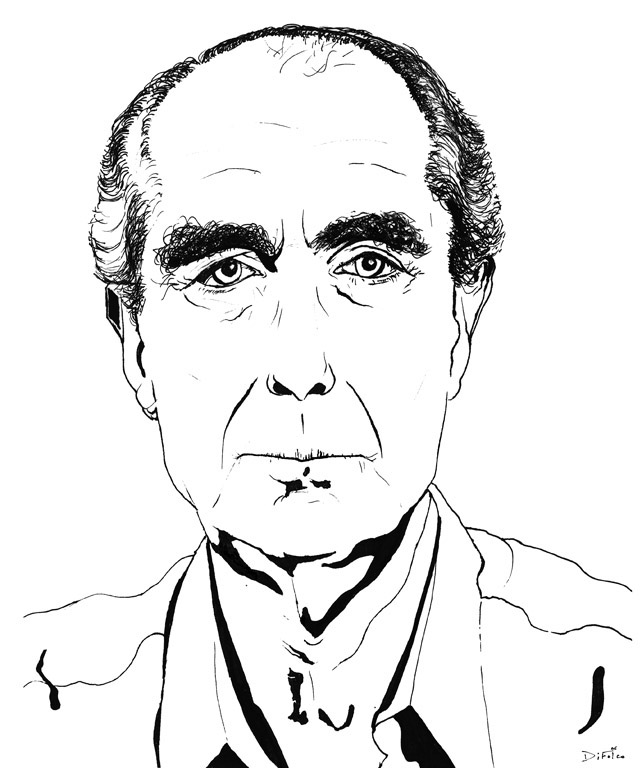
Image by Thierry Ehrmann, via Flickr Commons
Writing in The New York Times this weekend, author Lisa Scottoline remembers her days at the University of Pennsylvania, back during the 1970s, when she took seminars with then-visiting professor, Philip Roth. One course the famous novelist taught was called ““The Literature of Desire,” which prompted students to think, “Who wouldn’t want to read dirty books with Philip Roth?” It turns out the class didn’t get very sexy. But students did learn quite a bit. Scottoline writes:
Looking back, I’ve come to understand that he was the best professor I ever had, not only because of his genius, but also because of his distance. We were a group of girls eager to please, to guess at what he wanted us to say, and to say that for him. We all wanted to hear about him, or have him tell us how to write, but that was something he steadfastly denied us. By withholding his own personality, thoughts and opinions, he forced us back on our own personalities, thoughts and opinions. He made us discover what we wanted to write about, and to write about it the way we wanted to.
You can read the rest of her account here.
Related Content:
Free Online Literature Courses from Great Universities
Watch Philip Roth, Now 80, Read from His Irreverent Classic, Portnoy’s Complaint
Philip Roth Predicts the Death of the Novel; Paul Auster Counters
Read More...Support Us
We're hoping to rely on loyal readers, rather than erratic ads. Please click the Donate button and support Open Culture. You can use Paypal, Venmo, Patreon, even Crypto! We thank you!

About Us

Open Culture scours the web for the best educational media. We find the free courses and audio books you need, the language lessons & educational videos you want, and plenty of enlightenment in between.
Advertise With Us

FREE UPDATES!
GET OUR DAILY EMAIL
Get the best cultural and educational resources on the web curated for you in a daily email. We never spam. Unsubscribe at any time.
FOLLOW ON SOCIAL MEDIA

Open Culture editor Dan Colman scours the web for the best educational media. He finds the free courses and audio books you need, the language lessons & movies you want, and plenty of enlightenment in between.
Advertise With Us

