The Drawings of Franz Kafka (1907–1917)
Runner 1907–1908
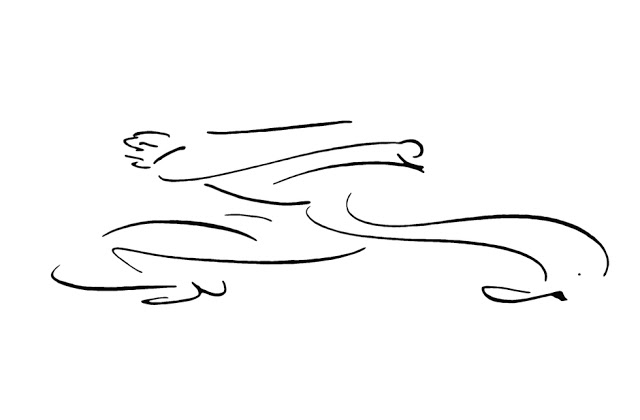
UK-born, Chicago-based artist Philip Hartigan has posted a brief video piece about Franz Kafka’s drawings. Kafka, of course, wrote a body of work, mostly never published during his lifetime, that captured the absurdity and the loneliness of the newly emerging modern world: In The Metamorphosis, Gregor transforms overnight into a giant cockroach; in The Trial, Josef K. is charged with an undefined crime by a maddeningly inaccessible court. In story after story, Kafka showed his protagonists getting crushed between the pincers of a faceless bureaucratic authority on the one hand and a deep sense of shame and guilt on the other.
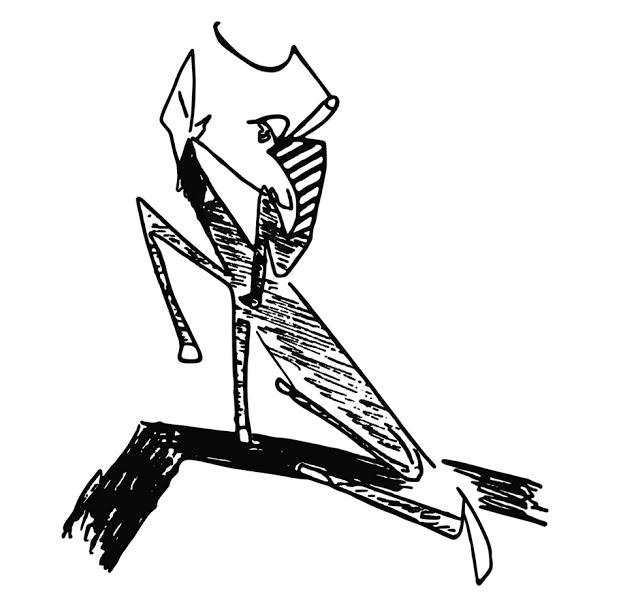
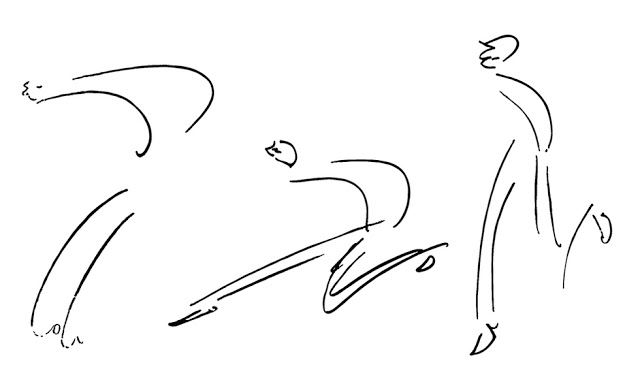
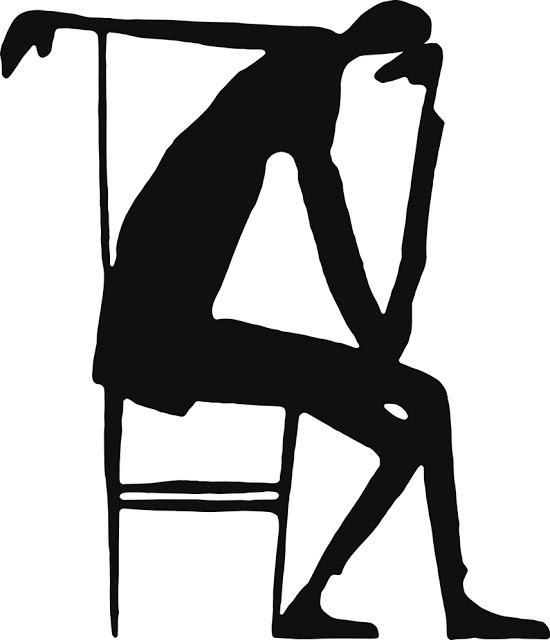
On his deathbed, the famously tortured writer implored his friend Max Brod to burn his unpublished work. Brod ignored his friend’s plea and instead published them – novels, short stories and even his diaries. In those diaries, Kafka doodled incessantly – stark, graphic drawings infused with the same angst as his writing. In fact, many of these drawings have ended up gracing the covers of Kafka’s books.
“Quick, minimal movements that convey the typical despairing mood of his fiction” says Hartigan of Kafka’s art. “I am struck by how these simple gestures, these zigzags of the wrist, contain an economy of mark making that even the most experienced artist can learn something from.”
In his book Conversations with Kafka, Gustav Janouch describes what happened when he came upon Kafka in mid-doodle: the writer immediately ripped the drawing into little pieces rather than have it be seen by anyone. After this happened a couple times, Kafka relented and let him see his work. Janouch was astonished. “You really didn’t need to hide them from me,” he complained. “They’re perfectly harmless sketches.”
“Kafka slowly wagged his head to and fro – ‘Oh no! They are not as harmless as they look. These drawing are the remains of an old, deep-rooted passion. That’s why I tried to hide them from you…. It’s not on the paper. The passion is in me. I always wanted to be able to draw. I wanted to see, and to hold fast to what was seen. That was my passion.”
Check out some of Kafka’s drawings below:
Horse and Rider 1909–1910
Three Runners 1912–1913
The Thinker 1913
Fencing 1917
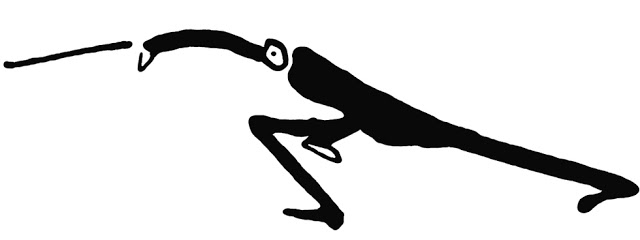
via ArtsCentre
Related Content:
Find Works by Kafka in our Free eBooks collection
Watch Franz Kafka, the Wonderful Animated Film by Piotr Dumala
The Art of William Faulkner: Drawings from 1916–1925
Vladimir Nabokov Makes Editorial Tweaks to Franz Kafka’s Novella
Vladimir Nabokov’s Delightful Butterfly Drawings
Jonathan Crow is a Los Angeles-based writer and filmmaker whose work has appeared in Yahoo!, The Hollywood Reporter, and other publications. You can follow him at @jonccrow.
Read More...How Vinyl Records Are Made: A Primer from 1956
The arrival of the compact disc was thought to be the death sentence for LPs. Vinyl was big, imprecise, and stuck in the past: CDs were the wave of the future. Recent years, however, have seen a surprising trend. Vinyl collectors have managed to weather the digital music storm of the ‘80s and ‘90s, while compact discs, having seen better days, have dropped in popularity. In fact, according to The Telegraph, LP sales are better than they’ve been at any point over the past 12 years. Although it is the hobbyist collector and the DJ who have buoyed vinyl sales for many years, the recent surge in LP popularity is, in part, due to younger fans who prefer the experience of listening to vinyl records over digital downloads. Daft Punk, Arctic Monkeys, The National, and Vampire Weekend are just some of the A‑list bands taking advantage of the trend.
But how are LPs manufactured today? Pretty much the exact way they’ve been produced throughout the past 50 years, actually. Many of the LP pressing plants use restored presses, bought second-hand for about $25,000. The video above, made in 1956 by RCA Victor, gives a detailed description of the process. After the sound recording, the audio is transferred to a lacquer master disc.
The playing time of the music dictates the number of grooves on the disc, and the sound dynamics determine the distance between them. As the video explains, the loud passages need more room, while quiet ones need less. A finely ground and electrically heated piece of sapphire cuts the vinyl with precision. Once it is complete, the master disc is coated in various metals, which, when separated, create a new, silver-faced master copy. This metallic master can’t be played, and is used to create a mold, which must be checked for sound quality. Finally, the mold is used to make a stamper, which stamps the appropriate grooves on the records. The record press heats the plastic, turning it into a warm, moldable goo, presses it, and cools its once the grooves have been stamped. If you got lost somewhere along the way, don’t worry. Visuals help, and the video above should give you an idea of how things happen.
If you would like to support the mission of Open Culture, consider making a donation to our site. It’s hard to rely 100% on ads, and your contributions will help us continue providing the best free cultural and educational materials to learners everywhere. You can contribute through PayPal, Patreon, and Venmo (@openculture). Thanks!
via Boing Boing
Ilia Blinderman is a Montreal-based culture and science writer. Follow him at @iliablinderman.
Related Content:
A Celebration of Retro Media: Vinyl, Cassettes, VHS, and Polaroid Too
Neil Young on the Travesty of MP3s
World Records: New Photo Exhibit Pays Tribute to the Era of Vinyl Records & Turntables
Read More...Marilyn Monroe Reads Walt Whitman’s Leaves of Grass (1952)
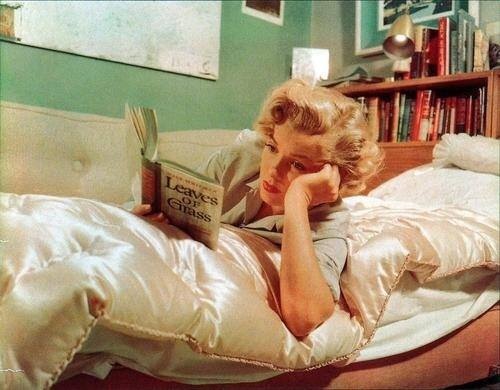
We’ve taken you inside Marilyn Monroe’s personal library, which included “no shortage of great literary works – everything from Invisible Man by Ralph Ellison, to Ulysses by James Joyce, to Crime And Punishment by Fyodor Dostoevsky and The Plays Of Anton Chekhov.” And speaking of Ulysses, we’ve also revisited a 1955 photoshoot where the pioneering photojournalist Eve Arnold captured Monroe reading a worn copy of James Joyce’s modernist classic in a playground. By the looks of things, Monroe was making her way through the final chapter, sometimes known as “Molly Bloom’s Soliloquy.”
Today, we have Monroe reading Leaves of Grass by Walt Whitman. In his biography The Return of Marilyn Monroe, Sam Staggs notes that “Walt Whitman was [Monroe’s] favorite poet, even more than Carl Sandburg. She loved him from the moment a New York friend gave her [Leaves of Grass] years earlier.” Staggs continues, “She often read Whitman for relaxation. The rhythm of his long free lines of verse lulled and stimulated her at the same time.” The photo above was seemingly taken by John Florea at the Beverly Carlton Hotel circa 1952. You can find a whole Pinterest board dedicated to Marilyn Monroe reading here.
Feel free to download free copies of Leaves of Grass and Ulysses from our Free eBooks and Free Audio Books collections.
If you would like to support the mission of Open Culture, consider making a donation to our site. It’s hard to rely 100% on ads, and your contributions will help us continue providing the best free cultural and educational materials to learners everywhere. You can contribute through PayPal, Patreon, and Venmo (@openculture). Thanks!
Related Content:
Marilyn Monroe Reads Joyce’s Ulysses at the Playground (1955)
A Look Inside Marilyn Monroe’s Personal Library
Read More...Watch and Search Newly Digitized Conversations with 148 People Who Witnessed the Great Depression
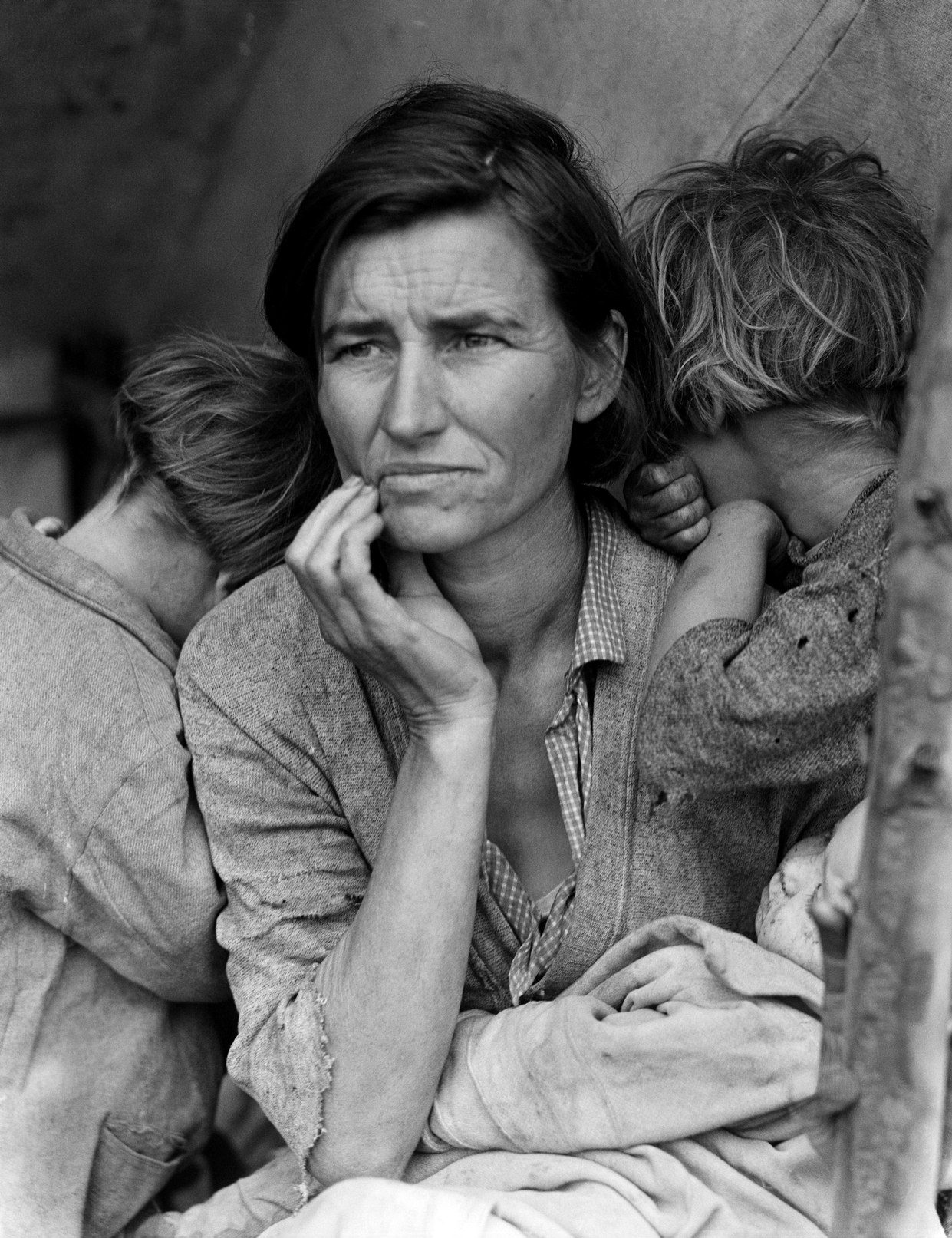
In March of 1992, many years after photographer Dorothea Lange’s 1936 image of a migrant mother in California (above) became one of the most iconic images from the Great Depression, a camera crew sat down with two daughters of the subject of Lange’s photo. For about 40 minutes, Norma Rydlewski and Katherine McIntosh shared their stories with Blackside, Inc., a company founded by award-winning filmmaker Henry Hampton. In the footage and transcript of that conversation, accessible for the first time along with many more such interviews through Washington University Libraries, the family’s daily challenges come to life. The sisters describe not only their strong, beautiful mother but everything from field work and playing with dirt clods as children to early union meetings and the economical “saving grace” that was World War II.
When The Great Depression, Blackside’s seven-part documentary series, debuted on PBS in October of 1993, the program wove together short segments from extensive interviews with 148 people who experienced the Great Depression, including Rydlewski and McIntosh. As illuminating as the documentary is in its own right, the many additional hours of oral history that Blackside recorded in the process of creating it are a treasure trove of primary source material—all of it now viewable, browsable, and searchable online through the efforts of WU Libraries’ Visual Media Research Lab and Digital Library Services (DLS).
The diverse range of individuals whose reflections on the 1930s are now easily accessible include a grandson of Franklin D. and Eleanor Roosevelt, celebrated authors Maya Angelou and Gore Vidal, longtime New York Times political reporter Warren Moscow, actors Karen Morley and Ossie Davis, Morton Newman, who worked on the Upton Sinclair campaign for governor in California, and many more from all walks of life. The multicultural, multiregional approach brings needed depth and color to an era that is often remembered and depicted as a monolithic event dragging the nation down for a decade, says Special Collections assistant Alison Carrick, who managed the workflow of the digitization project.
“When we think about the Great Depression, images of the dust bowl and breadlines immediately come to mind,” Carrick says. “And that is part of the history Blackside covered with this series, but they also revealed complex and lively stories that are often overlooked—from union struggles, to heated political campaigns, Works Progress Administration projects, the New Deal, and more. What Blackside managed to do with this series and these interviews was to bring that period of history back to life in a vivid, engaging way.”
The intent behind The Great Depression Interviews project is to provide a seamless, powerful tool with much potential for interdisciplinary research.
“One of the best features of the site, thanks to DLS, is that it is text/keyword searchable,” Carrick says. “This creates a way for users to pinpoint a subject, name, or event and quickly look to see where it occurs in each transcript. Our hope is that this feature will lead users to other transcripts they might not have thought contained similar subject matter.”
This post was written by Evie Hemphill (@evhemphill), a writer and photographer for Washington University Libraries in St. Louis.
Read More...A Brief History of Sampling: From the Beatles to the Beastie Boys
Jonny Wilson, otherwise known as Eclectic Method, has made an art of “splicing together music, TV and film and setting it to high-energy dance beats.” He has also become something of a digital curator of pop culture. In the video above, Wilson presents:
A video remix journey through the history of sampling taking in some of the most noted breaks and riffs of the decades. A chronological journey from the Beatles’ use of the Mellotron in the 60s to the sample dense hiphop and dance music of the 80s and 90s. Each break is represented by a vibrating vinyl soundwave exploding into various tracks that sampled it, each re-use another chapter in the modern narrative.
The audio track can be downloaded over at SoundCloud. If you dig this brief bit of musical history, you won’t want to miss some of the related items below.
Related Content:
All Hail the Beat: How the 1980 Roland TR-808 Drum Machine Changed Pop Music
The “Amen Break”: The Most Famous 6‑Second Drum Loop & How It Spawned a Sampling Revolution
Read More...Pete Seeger Tells the Story Behind “We Shall Overcome”
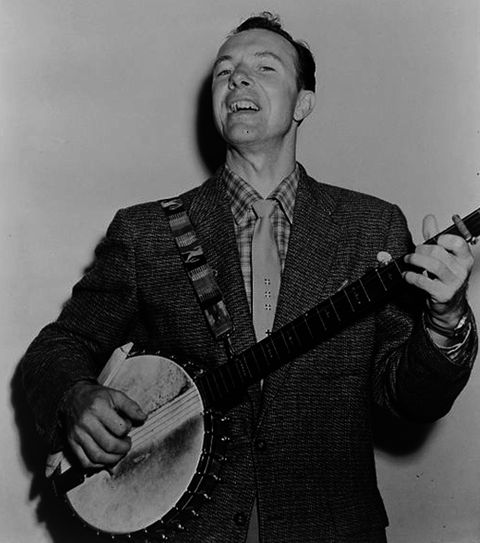
Like nearly all folk songs, “We Shall Overcome” has a convoluted, obscure history that traces back to no single source. The Library of Congress locates the song’s origins in “African American hymns from the early 20th century” and an article on About.com dates the melody to an antebellum song called “No More Auction Block for Me” and the lyrics to a turn-of-the-century hymn written by the Reverend Charles Tindley of Philadelphia. The original lyric was one of personal salvation—“I’ll Overcome Someday”—but at least by 1945, when the song was taken up by striking tobacco workers in Charleston, S.C., it was transmuted into a statement of solidarity as “We Will Overcome.” Needless to say, in its final form, “We Shall Overcome” became the unofficial anthem of the labor and Civil Rights movements and eventually came to be sung “in North Korea, in Beirut, Tiananmen Square and in South Africa’s Soweto Township.”
Pete Seeger—who passed away yesterday at the age of 94—has long been credited with the dissemination of “We Shall Overcome,” but he was always quick to cite his sources. Seeger heard the song in 1947 from folklorist Zilphia Horton, music director at Tennessee’s Highlander Folk Center who, Seeger said, “had a beautiful alto voice and sang it with no rhythm.” As he told NPR recently, his touches were also those of other singers:
I gave it kind of ump-chinka, ump-chinka, ump-chinka, ump-chinka, ump-chinka, ump. It was medium slow as I sang it, but the banjo kept a steady rhythm going. I remember teaching it to a gang in Carnegie Hall that year, and the following year I put it in a little music magazine called People’s Songs. Over the years, I remember singing it two different ways. I’m usually credited with changing [‘Will’] to ‘Shall,’ but there was a black woman who taught at Highlander Center, a wonderful person named Septima Clark. And she always liked shall, too, I’m told.
According to Seeger in the interview above—conducted by Josh Baron before a 2010 performance—the person most responsible for “making it the number one song back in those days” was the Music Director of the Highlander Folk Center, Guy Carawan, who “sent messages to the civil rights movement all through the South from Texas to Florida to Maryland.” Carawan “introduced this song with a new rhythm that I had never heard before.” Seeger goes on to describe the rhythm in detail, then says “it was the hit song of the weekend in February 1960…. It was not a song, it was the song all across the South. I’ve found out since then that the song started off as a union song in the 19th century.”
In this particular interview, Seeger takes full credit for changing the “will” to “shall.” Although it was “the only record [he] made which sold,” he didn’t seek to cash in on his changes (Seeger shared the copyright with Zilphia Horton, Carawan, and Frank Hamilton). As you can easily see from the numerous eulogies and tributes popping up all over (or a quick scan of the “Pete Seeger Appreciation Page”), Seeger deserves to be remembered for much more than his sixties folk singing, but he perhaps did more than anyone to make “We Shall Overcome” a song sung by a nation. And as he tells it, it was song he hoped would resonate worldwide:
I was singing for some young Lutheran church people in Sundance, Idaho, and there were some older people who were mistrustful of my lefty politics. They said: ‘Who are you intending to overcome?’ I said: ‘Well, in Selma, Alabama they’re probably thinking of Chief Pritchett.; they will overcome. And I am sure Dr. King is thinking of the system of segregation across the whole country, not just the South. For me, it means the entire world. We’ll overcome our tendencies to solve our problems with killing and learn to work together to bring this world together.
Via Blank on Blank
Related Content:
Pete Seeger Dies at 94: Remember the American Folk Legend with a Priceless Film from 1947
94-Year-Old Pete Seeger Sings “This Land is Your Land” at Farm Aid
Willie Nelson, Pete Seeger, and Arlo Guthrie at Occupy Wall Street
Josh Jones is a writer and musician based in Durham, NC. Follow him at @jdmagness
Read More...Harold Bloom Creates a Massive List of Works in The “Western Canon”: Read Many of the Books Free Online
I have little desire to rehash the politics, but the facts are plain: by the time I arrived in college as an undergraduate English major in the mid-90s, the idea of the “Western Canon” as a container of—in the words of a famous hymn—“all that’s good, and great, and true” was seriously on the wane, to put it mildly. And in many quarters of academia, mention of the name of Yale literary critic Harold Bloom provoked, at the very least, a raised eyebrow and pointed silence. Bloom’s reputation perhaps unfairly fell victim to the so-called “Canon Wars,” likely at times because of a misidentification with political philosopher Allan Bloom. That Bloom was himself no ideologue, writes Jim Sleeper; he was a close friend of Saul Bellow and “an eccentric interpreter of Enlightenment thought who led an Epicurean, quietly gay life.” Nonetheless, his fiery attack on changing academic values, The Closing of the American Mind, became a textbook of the neoconservative right.
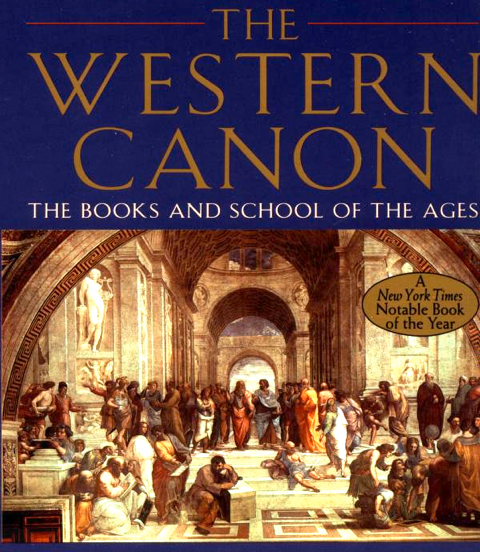
Though Harold Bloom wished to distance himself from culture war polemics, he has unapologetically practiced what Allan Bloom preached, teaching the Canonical “great books” of literature and religion and opposing all manner of critics on the left, whom he lumps together in the phrase “the School of Resentment.” Bloom’s 1973 The Anxiety of Influence has itself exerted a major influence on literary studies, and best-selling popular works, like 1998’s Shakespeare: The Invention of the Human, have kept Harold Bloom’s name in circulation even when scholarly citations of his work declined. In 1994, Bloom re-affirmed his commitment to the Canon with The Western Canon: The Books and School of the Ages, a fierce sortie against his so-called “School of Resentment” adversaries and a work University of Minnesota professor Norman Fruman called a “heroically brave, formidably learned and often unbearably sad response to the present state of the humanities.” (Hear Bloom discuss the book with Eleanor Wachtel in a 1995 CBC interview.)
The Western Canon is tightly focused on only 26 authors, but in a series of four appendices, Bloom lists the hundreds of other names he considers canonical. For all of Bloom’s ornery defensiveness, his list is surprisingly inclusive, as well as—for Fruman—surprisingly idiosyncratic. (Bloom later disavowed the list, claiming that his editor insisted on it.) Like a classical philologist, Bloom divides his Canon into four “ages” or periods: The Theocratic Age (2000 BCE-1321 CE); The Aristocratic Age (1321–1832); The Democratic Age: 1832–1900); and The Chaotic Age (20th Century). You can view the complete list here. Below, we’ve compiled a very partial, but still sizable, excerpt of texts from Bloom’s list that are available online through the University of Adelaide’s ebook library. For all of the unpopular positions he has taken over the past few decades, Bloom’s immense erudition, expansive intellect, and sincere commitment to the humanities have never been in question. As a distinguished exemplar of a fading tradition, he is an invaluable resource for students and lovers of literature.
A: “The Theocratic Age”
The Ancient Greeks
- Homer (ca.800BC)
- Iliad; Odyssey.
- Hesiod (ca.700BC)
- Works and Days; Theogony.
- Sappho (ca.600BC)
- Aeschylus (525 BC — 456 BC)
- Oresteia; Seven Against Thebes; Prometheus Bound; Persians; Suppliant Women.
- Sophocles (c. 496‑c. 405 BC)
- Oedipus the King; Oedipus at Colonus; Antigone; Electra; Ajax; Women of Trachis; Philoctetes.
- Euripides (480 or 484–406 BC)
- Cyclops; Heracles; Alcestis; Hecuba; Bacchae; Orestes; Andromache; Medea; Ion; Hippolytus; Helen; Iphigenia at Aulis.
- Aristophanes (ca. 446 BC — 385 BC)
- The Birds; The Clouds; The Frogs; Lysistrata; The Knights; The Wasps; The Assemblywomen.
- Herodotus, 485–420BCE
- The Histories.
- Thucydides, ca.460 BCE
- The Peloponnesian Wars.
- Plato, c.427‑c.347 BCE
- Dialogues.
- Aristotle, 384–322 BCE
- Poetics; Ethics.
Hellenistic Greeks
- Menander, ca. 342–291 BC
- The Girl from Samos.
- Plutarch, 46–120
- Lives; Moralia.
- Aesop (620 — 560 BC)
- Fables.
- Petronius, c.27–66
-
The Romans
- Terence, 195/185–159 BC
- The Girl from Andros; The Eunuch; The Mother-in-Law.
- Lucretius, 98?–55 BCE
- The Way Things Are.
- Marcus Tullius Cicero, 106–43 BCE
- On the Gods.
- Horace, 65–8 BCE
- Odes; Epistles; Satires.
- Catullus (c.84 B.C. — c.54 B.C.)
- Attis and Other Poems.
- Virgil (70–19 BC)
- Aeneid; Eclogues; Georgics.
- Ovid (43 BC — 17 AD)
- Metamorphoses; The Art of Love; Heroides.
- Seneca, Lucius Annaeus, ca.4 BCE–65 CE
- Tragedies, particularly Medea and Hercules Furens.
- Petronius, c.27–66
- Satyricon.
- Apuleius, c. 123/125‑c. 180
- The Golden Ass.
The Middle Ages: Latin, Arabic, and the Vernacular Before Dante
- Augustine of Hippo, 354–430
- City of God; Confessions.
- Wolfram von Eschenbach, 1170–1220
- Parzival.
- Chrétien de Troyes, 12th cent
- Yvain: The Knight of the Lion.
- Beowulf (ca.800)
B: “The Aristocratic Age”
Italy
- Dante (1265 — 1321)
- The Divine Comedy; The New Life.
- Petrarch, 1304–1374
- Lyric Poems; Selections.
- Giovanni Boccaccio, 1313–1375
- The Decameron.
- Matteo Maria Boiardo, 1440 or 41–1494.
- Orlando Innamorato.
- Lodovico Ariosto, 1474–1533
- Orlando Furioso.
- Machiavelli, Niccolò, 1469–1527
- The Prince; The Mandrake, a Comedy.
- Benvenuto Cellini, 1500–1571
- Autobiography.
- Tommaso Campanella, 1568–1639
- Poems; The City of the Sun.
-
Spain
- Miguel de Cervantes, 1547–1616
- Don Quixote; Exemplary Stories.
- Pedro Calderon de la Barca, 1600–1681
- Life is a Dream; The Mayor of Zalamea; The Mighty Magician; The Doctor of His Own Honor.
England and Scotland
- Chaucer, Geoffrey (ca.1343–1400)
- The Canterbury Tales; Troilus and Criseyde.
- Thomas Malory, 1430–1471
- Le Morte D’Arthur.
- Thomas More, 1478–1535
- Utopia.
- Philip Sidney, 1554–1586.
- The Countess of Pembroke’s Arcadia; Astrophel and Stella; An Apology for Poetry.
- Edmund Spenser, 1552–1599
- The Faerie Queene; The Minor Poems.
- Christopher Marlowe, 1564–1593
- Poems and Plays.
- Thomas Nashe, 1567–1601
- The Unfortunate Traveller.
- William Shakespeare, 1564–1616
- Plays and Poems.
- John Donne, 1572–1631
- Poems; Sermons.
- Ben Jonson, 1573–1637
- Poems, Plays, and Masques.
- Francis Bacon, 1561–1626
- Essays.
- Robert Burton, 1577–1640
- The Anatomy of Melancholy.
- Thomas Browne, 1605–1682
- Religio Medici; Hydriotaphia, or Urne-Buriall; The Garden of Cyrus.
- Thomas Hobbes, 1588–1679
- Leviathan.
- Herrick, Robert, 1591–1674
- Poems.
- Andrew Marvell, 1621–1678
- Poems.
- John Ford, 1586-ca.1640
- ‘Tis Pity She’s a Whore.
- John Webster, c.1580‑c.1634
- The White Devil; The Duchess of Malfi.
- Izaak Walton, 1593–1683
- The Compleat Angler.
- John Milton, 1608–1674
- Paradise Lost; Paradise Regained; Lycidas, Comus, and the Minor Poems; Samson Agonistes; Areopagitica.
- John Aubrey, 1626–1697
- Brief Lives.
- Samuel Butler, 1612–1680
- Hudibras.
- John Dryden, 1631–1700
- Poetry and Plays; Critical Essays.
- Jonathan Swift, 1667–1745
- A Tale of a Tub; Gulliver’s Travels; Shorter Prose Works; Poems.
- Alexander Pope, 1688–1744
- Poems.
- John Gay, 1685–1732
- The Beggar’s Opera.
- James Boswell, 1740–1795
- Life of Johnson; Journals.
- Samuel Johnson, 1709–1784
- Works.
- Edward Gibbon, 1737–1794
- The History of the Decline and Fall of the Roman Empire.
- Edmund Burke, 1729–1797
- A Philosophical Enquiry into the Sublime and Beautiful; Reflections on the Revolution in France
- Oliver Goldsmith, 1728–1774
- The Vicar of Wakefield; She Stoops to Conquer; The Traveller; The Deserted Village.
- Richard Brinsley Sheridan, 1751–1816
- The School of Scandal; The Rivals.
- William Cowper, 1731–1800
- Poetical Works.
- Defoe, Daniel (1661?-1731)
- Moll Flanders; Robinson Crusoe; A Journal of the Plague Year.
- Samuel Richardson, 1689–1761.
- Clarissa; Pamela; Sir Charles Grandison.
- Henry Fielding, 1707–1754
- Joseph Andrews; The History of Tom Jones, a Foundling.
- Tobias Smollett, 1721–1771
- The Expedition of Humphry Clinker; The Adventures of Roderick Random.
- Laurence Sterne, 1713–1768
- The Life and Opinions of Tristram Shandy, Gentleman; A Sentimental Journey Through France and Italy.
- Fanny Burney, 1752–1840
- Evelina.
-
France
- Michel de Montaigne, 1533–1592
- Essays.
- Francois Rabelais, 1494?-1553?
- Gargantua and Pantagruel.
- Marguerite de Navarre, 1492–1549
- The Heptameron.
- Jean de La Fontaine, 1621–1695
- Fables.
- Molière, 1622–1673
- The Misanthrope; Tartuffe; The School for Wives; The Learned Ladies; Don Juan; School for Husbands; Ridiculous Precieuses; The Would-Be Gentleman; The Miser; The Imaginary Invalid.
- Blaise Pascal, 1623–1662
- Pensées.
- Rousseau, Jean–Jacques, 1712–1778
- The Confessions; Émile; La Nouvelle Héloïse.
- Voltaire, 1694–1778
- Zadig; Candide; Letters on England; The Lisbon Earthquake.
Germany
- Erasmus of Rotterdam, 1466–1536
- In Praise of Folly.
- Johann Wolfgang von Goethe, 1749–1832
- Faust, Parts One and Two; Dichtung und Wahrheit; Egmont; Elective Affinities; The Sorrows of Young Werther; Poems; Wilhelm Meister’s Apprenticeship; Wilhelm Meister’s Years of Wandering; Italian Journey; Verse Plays; Hermann and Dorothea; Roman Elegies; Venetian Epigrams; West-Eastern Divan.
- Friedrich Schiller, 1759–1805
- The Robbers; Mary Stuart; Wallenstein; Don Carlos; On the Naïve and Sentimental in Literature.
C: “The Democratic Age”
Italy
- Giovanni Verga, 1840–1922
- Little Novels of Sicily; Mastro-Don Gesualdo; The House by the Medlar Tree; The She-Wolf and Other Stories.
France
- Victor Hugo, 1802–1885
- The Distance, the Shadows: Selected Poems; Les Misérables; Notre-Dame of Paris; William Shakespeare; The Toilers of the Sea; The End of Satan; God.
- Gautier, Théophile, 1811–1872
- Mademoiselle de Maupin; Enamels and Cameos.
- Balzac, Honoré de, 1799–1850
- The Girl with the Golden Eyes; Louis Lambert; The Wild Ass’s Skin; Old Goriot; Cousin Bette; A Harlot High and Low; Eugénie Grandet; Ursule Mirouet.
- Stendhal, 1783–1842
- On Love; The Red and the Black; The Charterhouse of Parma.
- Gustave Flaubert, 1821–1880
- Madame Bovary; Sentimental Education; Salammbô; A Simple Soul.
- George Sand, 1804–1876
- The Haunted Pool.
- Charles Baudelaire, 1821–1867
- Flowers of Evil; Paris Spleen.
- Guy de Maupassant, 1850–1893
- Selected Short Stories.
- Emile Zola, 1840–1902
- Germinal; L’Assommoir; Nana.
Scandinavia
- Henrik Ibsen, 1828–1906
- Brand; Peer Gynt; Emperor and Galilean; Hedda Gabler; The Master Builder; The Lady from the Sea; When We Dead Awaken.
Great Britain
- William Blake, 1757–1827
- Complete Poetry and Prose.
- William Wordsworth, 1770–1850
- Poems; The Prelude.
- Walter Scott, 1771–1832
- Waverley; The Heart of Midlothian; Redgauntlet; Old Mortality.
- Jane Austen, 1775–1817
- Pride and Prejudice; Emma; Mansfield Park; Persuasion.
- Samuel Taylor Coleridge, 1772–1834
- Poems and Prose.
- Hazlitt, William, 1778–1830
- Essays and Criticism.
- George Byron, 1788–1824
- Don Juan; P oems.
- Thomas de Quincey, 1785–1859
- Confessions of an English Opium Eater; Selected Prose.
- Maria Edgeworth, 1767–1849
- Castle Rackrent.
- Elizabeth Gaskell, 1810–1865
- Cranford; Mary Barton; North and South.
- Charles Robert Maturin, 1782–1824
- Melmoth the Wanderer.
- Percy Bysshe Shelley, 1792–1822
- Poems; A Defence of Poetry.
- Mary Shelley, 1797–1851
- Frankenstein.
- John Keats, 1795–1821
- Poems and Letters.
- Robert Browning, 1812–1889
- Poems; The Ring and the Book.
- Charles Dickens, 1812–1870
- The Posthumous Papers of the Pickwick Club; David Copperfield; The Adventures of Oliver Twist; A Tale of Two Cities; Bleak House; Hard Times; Nicholas Nickleby; Dombey and Son; Great Expectations; Martin Chuzzlewit; Christmas Stories; Little Dorrit; Our Mutual Friend; The Mystery of Edwin Drood.
- Alfred Tennyson, 1809–1892
- Poems.
- Dante Gabriel Rossetti, 1828–1882
- Poems and Translations.
- Matthew Arnold, 1822–1888
- Poems; Essays.
- Christina Georgina Rossetti, 1830–1894.
- Poems.
- Thomas Love Peacock, 1785–1866
- Nightmare Abbey; Gryll Grange.
- Thomas Carlyle, 1795–1881
- Selected Prose; Sartor Resartus.
- John Ruskin, 1819–1900
- Modern Painters; The Stones of Venice; Unto This Last; The Queen of the Air.
- John Stuart Mill, 1806–1873
- On Liberty; Autobiography.
- Anthony Trollope, 1815–1882
- The Barsetshire Novels; The Palliser Novels; Orley Farm; The Way We Live Now.
- Lewis Carroll, 1832–1898
- Complete Works.
- George Gissing, 1857–1903
- New Grub Street.
- Charlotte Bronte, 1816–1855
- Jane Eyre; Villette.
- Emily Bronte, 1818–1848
- Poems; Wuthering Heights.
- Anne Bronte, 1820–1849
- William Makepeace Thackeray, 1811–1863
- Vanity Fair; The History of Henry Esmond.
- George Meredith, 1828–1909
- Poems; The Egoist.
- Chesterton, G. K. (Gilbert Keith), 1874–1936
- Collected Poems; The Man Who Was Thursday.
- Samuel Butler, 1835–1902
- Erewhon; The Way of All Flesh.
- Wilkie Collins, 1824–1889
- The Moonstone; The Woman in White; No Name.
- Thomson, James, 1834–1882
- The City of the Dreadful Night.
- Oscar Wilde, 1854–1900
- Plays; The Picture of Dorian Gray; The Artist as Critic; Letters.
- George Eliot, 1819–1880
- Adam Bede; Silas Marner; The Mill on the Floss; Middlemarch; Daniel Deronda.
- Robert Louis Stevenson, 1850–1894
- Essays; Kidnapped; Dr. Jekyll and Mr. Hyde; Treasure Island; The New Arabian Nights; The Master of Ballantrae; Weir of Hermiston.
- William Morris, 1834–1896
- Early Romances; Poems; The Earthly Paradise; The Well at the World’s End; News from Nowhere.
- Bram Stoker, 1847–1912
- Dracula.
- George MacDonald, 1824–1905
- Lilith; At the Back of the North Wind.
Germany
- Jakob Grimm, 1785–1863 and Grimm, Wilhelm, 1786–1859
- Fairy Tales.
- Hoffmann, E. T. A. (Ernst Theodor Amadeus), 1776–1822
- The Devil’s Elixir; Tales.
- Friedrich Nietzsche, 1844–1900
- The Birth of Tragedy; Beyond Good and Evil; On the Genealogy of Morals; The Will to Power.
Russia
- Aleksandr Pushkin, 1799–1837
- Complete Prose Tales; Complete Poetry; Eugene Onegin; Narrative Poems; Boris Godunov.
- Nikolai Gogol, 1809–1852
- The Complete Tales; Dead Souls; The Government Inspector.
- Mikhail Lermontov, 1814–1841
- Narrative Poems; A Hero of Our Time.
- Ivan Turgenev, 1818–1883
- A Sportsman’s Notebook; A Month in the Country; Fathers and Sons; On the Eve; First Love.
- Fyodor Dostoyevsky, 1821–1881
- Notes from the Underground; Crime and Punishment; The Idiot; The Possessed (The Devils); The Brothers Karamazov; Short Novels.
- Leo Tolstoy, 1828–1910
- The Cossacks; War and Peace; Anna Karenina; A Confession; The Power of Darkness; Short Novels.
- Anton Chekhov, 1860–1904
- The Tales; The Major Plays.
The United States
- Washington Irving, 1783–1859
- The Sketch Book.
- James Fenimore Cooper, 1789–1851.
- The Deerslayers.
- Ralph Waldo Emerson, 1803–1882
- Nature; Essays; Representative Men; The Conduct of Life; Journals; Poems.
- Emily Dickinson, 1830–1886
- Complete Poems.
- Nathaniel Hawthorne, 1804–1864
- The Scarlet Letter; Tales and Sketches; The Marble Faun; Notebooks.
- Herman Melville, 1819–1891
- Moby-Dick; The Piazza Tales; Billy Budd; Collected Poems; Clarel.
- Edgar Allan Poe, 1809–1849
- Poetry and Tales; Essays and Reviews; The Narrative of Arthur Gordon Pym; Eureka.
- Henry David Thoreau, 1817–1862
- Walden; Poems; Essays.
- Henry Wadsworth Longfellow, 1807–1882
- Selected Poems.
- Ambrose Bierce, 1842–1913
- Collected Writings.
- Louisa May Alcott, 1832–1888
- Little Women.
- Kate Chopin, 1850–1904
- The Awakening.
- William Dean Howells, 1837–1920
- The Rise of Silas Lapham; A Modern Instance.
- Henry James, 1843–1916
- The Portrait of a Lady; The Bostonians; The Princess Casamassima; The Awkward Age; Short Novels and Tales; The Ambassadors; The Wings of the Dove; The Golden Bowl
- Mark Twain, 1835–1910
- Complete Short Stories; The Adventures of Huckleberry Finn; The Devil’s Racetrack; Number Forty-Four: The Mysterious Stranger; Pudd’nhead Wilson; A Connecticut Yankee in King Arthur’s Court.
- William James, 1842–1910
- The Varieties of Religious Experience; Pragmatism.
-
D: “The Chaotic Age”
France
- Anatole France, 1844–1924
- Penguin Island; Thaïs.
- Marcel Proust, 1871–1922
- Remembrance of Things Past (In Search of Lost Time).
- Albert Camus, 1913–1960
- The Stranger; The Plague; The Fall; The Rebel.
Great Britain and Ireland.
- Yeats, W. B. (William Butler), 1865–1939
- The Collected Poems; Collected Plays; A Vision; Mythologies.
- George Bernard Shaw, 1856–1950
- Major Critical Essays; Heartbreak House; Pygmalion; Saint Joan; Major Barbara; Back to Methuselah.
- John Millington Synge, 1871–1909
- Collected Plays.
- George Douglas Brown, 1869–1902
- The House with the Green Shutters.
- Thomas Hardy, 1840–1928
- The Well-Beloved; The Woodlanders; The Return of the Native; The Mayor of Casterbridge; Far From the Madding Crowd; Tess of the D’Urbervilles; Jude the Obscure; Collected Poems.
- Rudyard Kipling, 1865–1936
- Kim; Collected Stories; Puck of Pook’s Hill; Complete Verse.
- Housman, A. E., 1859–1936
- Collected Poems.
- Joseph Conrad, 1857–1924
- Lord Jim; The Secret Agent; Nostromo; Under Western Eyes; Victory.
- Ronald Firbank, 1886–1926
- Five Novels.
- Ford Madox Ford, 1873–1939
- Parade’s End; The Good Soldier.
- Saki, 1870–1916
- The Short Stories.
- Wells, H. G., 1866–1946
- The Science Fiction Novels.
- David Lindsay, 1876–1945
- A Voyage to Arcturus.
- Arnold Bennett, 1867–1931.
- The Old Wives’ Tale.
- John Galsworthy, 1867–1933
- The Forsyth Saga.
- Lawrence, D. H., 1885–1930
- Complete Poems; Studies in Classic American Literature; Complete Short Stories; Sons and Lovers; The Rainbow; Women in Love.
- Virginia Woolf, 1882–1941
- Mrs. Dalloway; To the Lighthouse; Orlando: A Biography; The Waves; Between the Acts.
- James Joyce, 1882–1941
- Dubliners; Portrait of the Artist as a Young Man; Ulysses; Finnegans Wake.
- George Orwell, 1903–1950
- Collected Essays; 1984.
Germany.
- Franz Kafka, 1883–1924
- Amerika; The Complete Stories; The Blue Octavo Notebook; The Trial; Diaries; The Castle; Parables, Fragments, Aphorisms.
Russia.
- Maksim Gorky, 1868–1936
- Reminiscences of Tolstoy, Chekhov, and Andreev; Autobiography.
Scandinavia.
- Knut Hamsun, 1859–1952
- Hunger; Pan.
Czech.
- Karel Čapek, 1890–1938
- War with the Newts; R.U.R.
Australia and New Zealand.
- Miles Franklin, 1879–1954
- My Brilliant Career.
- Katherine Mansfield, 1888–1923
- The Short Stories.
The United States.
- Edith Wharton, 1862–1937
- Collected Short Stories; The Age of Innocence; Ethan Frome; The House of Mirth; The Custom of the Country.
- Willa Cather, 1873–1947
- My Antonia; The Professor’s House; A Lost Lady.
- Gertrude Stein, 1874–1946
- Three Lives; The Geographical History of America; The Making of Americans; Tender Buttons.
- Theodore Dreiser, 1871–1945
- Sister Carrie; An American Tragedy.
- Sinclair Lewis, 1885–1951
- Babbitt; It Can’t Happen Here.
- Eugene O’Neill, 1888–1953
- Lazarus Laughed; The Iceman Cometh; Long Day’s Journey into Night.
- Fitzgerald, F. Scott, 1896–1940
- Babylon Revisited and Other Stories; The Great Gatsby; Tender is the Night.
- Nathanael West, 1903–1940
- Miss Lonelyhearts; A Cool Million; The Day of the Locust.
Of this last Appendix–which ends with Tony Kushner’s Angels in America and includes a great degree of diversity–Bloom writes: “I am not as confident about this list as the first three. Cultural prophecy is always a mug’s game. Not all of the works here can prove to be canonical . . . literary overpopulation is a hazard to many among them. But I have neither excluded nor included on the basis of cultural politics of any kind.” Again, the selections above are very limited. Before you ask, “what about x, y, or z!” see Bloom’s full list here. And if you still do not find authors you believe deserve inclusion in any version of the Western Canon, pick up a copy of Bloom’s book to learn more about his critical criteria.
Related Content:
Harold Bloom Recites ‘Tea at the Palaz of Hoon’ by Wallace Stevens
Harold Bloom on the Ghastly Decline of the Humanities (and on Obama’s Poetry)
Josh Jones is a writer and musician based in Durham, NC. Follow him at @jdmagness
Pete Seeger Dies at 94: Remember the American Folk Legend with a Priceless Film from 1947
We’ve got some sad news to report. Last night Pete Seeger, one of America’s national treasures, died at the age of 94. For nearly 70 years, Seeger embodied folk music and its ideals (“communication, entertainment, social comment, historical continuity, inclusiveness”) and became a tireless advocate for social justice and protecting the environment. In recent years, Seeger made his voice heard at Occupy Wall Street and even paid a visit to the 2013 edition of Farm Aid, where he sang “This Land is Your Land”. Above you can watch a film that brings you back to Seeger’s early days. Released in 1946, To Hear Your Banjo Play is an engaging 16-minute introduction to American folk music, written and narrated by Alan Lomax and featuring rare performances by Woody Guthrie, Baldwin Hawes, Sonny Terry, Brownee McGhee, Texas Gladden and Margot Mayo’s American Square Dance Group. In the film, Seeger is only 27 years old. We’ll miss you dearly Pete.
To Hear Your Banjo Play resides in our collection of 625 Free Online Movies.
Related Content:
Legendary Folklorist Alan Lomax’s ‘The Land Where the Blues Began’
94-Year-Old Pete Seeger Sings “This Land is Your Land” at Farm Aid
Willie Nelson, Pete Seeger, and Arlo Guthrie at Occupy Wall Street
Pete Seeger on “Turn! Turn! Turn!”
Pete Seeger, 91, Performs BP Protest Song
Read More...Alfred Hitchcock and Vladimir Nabokov Trade Letters and Ideas for a Film Collaboration (1964)
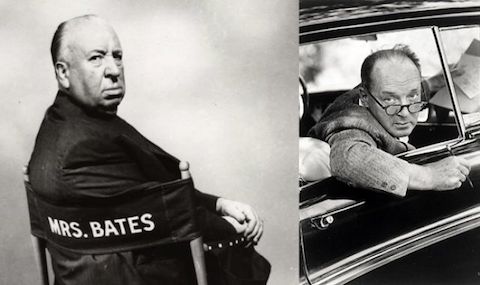
Alfred Hitchcock, writes James A. Davidson in Images, “is usually mentioned in the same breath with Cornell Woolrich, the literary ‘master of suspense,’ ” not least because he adapted a novella of Woolrich’s into Rear Window (1954).” Yet Davidson himself finds in Hitchcock “a much greater affinity with that of the Russian émigré writer Vladimir Nabokov, with whom he is not typically associated since there is no apparent connection” like the one between Nabokov and Stanley Kubrick, who brought Nabokov’s novel Lolita to the screen. Hitchcock and Nabokov never similarly collaborated, but not out of a lack of desire. Close historical contemporaries and mutual admirers, the writer and the director did once exchange letters discussing film ideas they might develop together. You’ll find the full text of both Hitchcock’s query and Nabokov’s interested response at the American Reader.
“The first idea I have been thinking about for some time is based upon a question that I do not think I have seen dealt with in motion pictures or, as far as I know, in literature,” wrote Hitchcock to Nabokov on November 19, 1964. “It is the problem of the woman who is associated, either by marriage or engagement, to a defector.” After filling out a few details, suiting the concept perfectly to what he calls “the customary Hitchcock suspense,” he lays out a second, about a young girl who, “having spent her life in a convent in Switzerland due to the fact that she had no home to go to and only had a widowed father,” suddenly finds herself released back to the hotel run by her father and his entire family. But ah, “the whole of this family are a gang of crooks, using the hotel as a base of operations,” which would lead into the telling of an “extremely colorful story.” Replying nine days later, Nabokov admits that Hitchcock’s first idea, about the defector’s wife, “would present many difficulties for me” due to his unfamiliarity with “American security matters and methods.” The one about the criminal hotel, however, strikes him as “quite acceptable,” and he goes on to make two pitches of his own.
Nabokov’s first idea, something of a reversal of Hitchcock’s first one, involves a defector from the Soviet Union in the United States. His second focuses on a starlet “courted by a budding astronaut.” When this astronaut returns home famous from a major mission, the actress, whose “starrise has come to a stop at a moderate level,” realizes “that he is not the same as he was before his flight.” Unable to put her finger on it, she “becomes concerned, then frightened, then panicky.” Nabokov tantalizingly mentions having “more than one interesting denouement for this plot,” but alas, we’ll never see them cinematized, and certainly not by the likes of Hitchcock. “One can only imagine the kind of involuted, complex, and playful work these two men would have produced,” writes Davidson. “What is left, in the end, is the work they produced, which can be well summarized by a line the fictional John Shade wrote in Pale Fire: ‘Life is a message scribbled in the dark.’ ”
Related Content:
21 Free Hitchcock Movies Online
François Truffaut’s Big Interview with Alfred Hitchcock (Free Audio)
Vladimir Nabokov Marvels Over Different Lolita Book Covers
Vladimir Nabokov (Channelled by Christopher Plummer) Teaches Kafka at Cornell
Colin Marshall hosts and produces Notebook on Cities and Culture and writes essays on cities, Asia, film, literature, and aesthetics. He’s at work on a book about Los Angeles, A Los Angeles Primer. Follow him on Twitter at @colinmarshall or on his brand new Facebook page.
Read More...Nietzsche Dispenses Dating Advice in a Short Screwball Film, My Friend Friedrich
My Friend Friedrich opens on awkward, bespectacled Columbia student Nate having a heart to heart on the phone with his mother. Then, in a philosophy class, he almost succeeds in landing a date by lobbing an illustrated invitation at his love interest, Emma. All goes awry when a taller, more confident, bespectacled Columbia student cuts him off at the knees. So far, so very New York student film, but a conceit arrives to distinguish this story of Ivy League dating woes: the ghost of Friedrich Nietzsche appears before Nate to guide him towards self-actualization.
In what “seems to have been a senior project at NYU’s Tisch School of the Arts,” according to Critical Theory (a Vimeo upload dates the film as “circa 2003), My Friend Friedrich gives us the typical undergraduate experience of the philosopher’s voice. Nietzsche instructs our young friend to regard the flashing lights, tall buildings, and “horseless carriages” of Times Square as meaningless. “Nihilism cares about nothing” he says and urges his pupil to will himself to power. It’s not too profound a portrayal of Nietzsche—though of course it’s only played for laughs—and seems to come mainly from a surface reading of his Will to Power, an unfinished manuscript published after the philosopher’s death. (His sister fraudulently pitched a mangled edition to the Nazis as Nietzsche’s underwriting of their ideology, cutting out all of her brother’s strong remarks against anti-Semitism.)
One could argue, if it’s worth explaining the humor, that this superficial take on Nietzsche is precisely the point, since it’s the diffident Nate’s slight reading of Will to Power at the outset that produces his hallucination-slash-visitation. Nietzsche helps Nate win an intellectual pissing contest by quoting Beyond Good and Evil chapter and verse, then goads him into some awkward outbursts and eventually overstays his welcome. The screwball conclusion is ripped right out of Wes Anderson.
It’s all in good fun, but if you find yourself eager for some more substantial Nietzsche resources, we’ve got them aplenty. You might begin with eminent Nietzsche scholar and Will to Power translator Walter Kaufmann’s lectures on Nietzsche, Kierkegaard and Sartre. In our list of free philosophy courses you’ll find Nietzsche courses by Leo Strauss, Rick Roderick, and others. Alain de Botton offers an introduction on Nietzsche as part of his Guide to Happiness, and BBC program Human, All Too Human presents Nietzsche’s life in a documentary series that also includes Sartre and Heidegger. Many works by Nietzsche can also be found in our Free eBooks and Free Audio Books collection.
And if it’s more Nietzsche humor you’re after, see this failed attempt to explain the philosopher to a group of 5‑year-olds.
via Critical Theory
Related Content:
The Daily Habits of Highly Productive Philosophers: Nietzsche, Marx & Immanuel Kant
Sartre, Heidegger, Nietzsche: Three Philosophers in Three Hours
Discover Friedrich Nietzsche’s Curious Typewriter, the “Malling-Hansen Writing Ball”
Walter Kaufmann’s Classic Lectures on Nietzsche, Kierkegaard and Sartre (1960)
Josh Jones is a writer and musician based in Durham, NC. Follow him at @jdmagness
Read More...Support Us
We're hoping to rely on loyal readers, rather than erratic ads. Please click the Donate button and support Open Culture. You can use Paypal, Venmo, Patreon, even Crypto! We thank you!

About Us

Open Culture scours the web for the best educational media. We find the free courses and audio books you need, the language lessons & educational videos you want, and plenty of enlightenment in between.
Advertise With Us

FREE UPDATES!
GET OUR DAILY EMAIL
Get the best cultural and educational resources on the web curated for you in a daily email. We never spam. Unsubscribe at any time.
FOLLOW ON SOCIAL MEDIA

Open Culture editor Dan Colman scours the web for the best educational media. He finds the free courses and audio books you need, the language lessons & movies you want, and plenty of enlightenment in between.
Advertise With Us

