Listen to Eight Interviews of Orson Welles by Filmmaker Peter Bogdanovich (RIP)
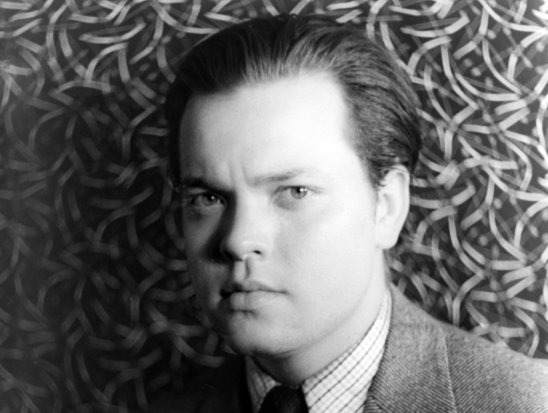
Image by Carl Van Vechten, via Wikimedia Commons
Orson Welles never wrote a proper autobiography, but we have a book that comes close: This is Orson Welles, assembled by critic Jonathan Rosenbaum and filmmaker Peter Bogdanovich (Targets, The Last Picture Show, Paper Moon) out of a series of in-depth recorded conversations between Bogdanovich and Welles. That volume has given the younger filmmaker something of a sub-career as the older one’s Boswell, which has led to a certain degree of ribbing about his willingness to trot out an Orson Welles anecdote for every context. Though I’ve always enjoyed hearing Bogdanovich’s interpretations of Welles, they always get me curious to hear the stories of the life and career of the man who made The War of the Worlds, Citizen Kane, and (my personal favorite) F for Fake straight from, well, the man who made The War of the Worlds, Citizen Kane, and F for Fake. You can do just that at the Internet Archive, which offers nearly four hours of audio of the very interviews that gave This is Orson Welles its source material. (Audio starts at the 12 second mark.)
“I first met Orson Welles toward the end of 1968,” says Bogdanovich in his introduction, “and not long after we began taping our conversations for a book about his career that he hoped would ‘set the record straight.’ We started in his bungalow at the Beverly Hills Hotel, and then resumed a couple of weeks later in Guaymas, Mexico, where Orson was acting in the movie of Catch-22.” Their talks continued in places from New York’s Plaza Hotel and Rome’s Hotel Eden to, for whatever reason, Carefree, Arizona, exploring not just the well-known chapters of Welles’ career, but his experiences with now-overlooked or never-completed projects like most of his countless radio dramas, his early adaptation of Cecil Day-Lewis’ Smiler with a Knife, and his later adaptation of Kafka’s The Trial. Some may accuse Bogdanovich of over-milking his association with Welles, but if I had conversations this fascinating with perhaps the most respected auteur in American film history, I’d probably talk about them all the time too.
Related Content:
Orson Welles Remembers his Stormy Friendship with Ernest Hemingway
Orson Welles’ Last Interview and Final Moments Captured on Film
Orson Welles Explains Why Ignorance Was His Major “Gift” to Citizen Kane
Revisit Orson Welles’ Iconic ‘War of the Worlds’ Broadcast That Aired 75 Years Ago Today
Colin Marshall hosts and produces Notebook on Cities and Culture and writes essays on cities, Asia, film, literature, and aesthetics. He’s at work on a book about Los Angeles, A Los Angeles Primer. Follow him on Twitter at @colinmarshall or on his brand new Facebook page.
Read More...Sir Patrick Stewart Demonstrates How Cows Moo in Different English Accents
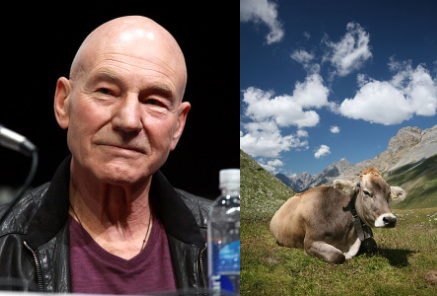
Having spent the fall lounging in the bath dressed as a lobster, and gamboling around New York City with Waiting for Godot cast mate Ian McKellen, the irrepressible Patrick Stewart brought 2013 to a close by indulging a curious fan of NPR’s How To Do Everything podcast.
Her question? What do English cows sound like when they moo.
The knighted star does not skimp on his answer, even if, as he repeatedly suggests, one cannot do the subject justice in less than an entire afternoon. The dialects of British cows, like those of their human counterparts, underscore that theirs is a society “dominated by class, social status and location.”
The moo of a cow from West Oxfordshire, home to Prime Minister David Cameron, is quite conservative compared to the lusty bellow of a specimen from West Yorkshire, where Stewart grew up. (The latter is so astonishing, he immediately offers to produce it twice.)
Cockney cows, a breed whose ranks have thinned considerably since Shakespeare’s day, sound like sheep.
Mayfair cows sound like former Prime Minister Sir Alec Douglas-Home.
As an extra treat, Stewart generously agrees to the host’s request for an American cow, impersonating a Nevada-dweller, a geographic homage to the original questioner as well as his bride, jazz singer Sunny Ozell.
Is there anything this man can’t — or won’t — do?
via Laughing Squid
Ayun Halliday wishes her favorite playwright a very happy birthday. Follow her @AyunHalliday
Related Content:
Peter Sellers Gives a Quick Demonstration of British Accents
Peter Sellers Reads The Beatles’ “She Loves You” in Four Different Accents
Read More...Lego Video Shows How David Bowie Almost Became “Cobbler Bob,” Not “Aladdin Sane”
In October, 1973, David Bowie made his last live appearance as Ziggy Stardust. (Watch it here.) Pretty soon, Bowie would morph into a new persona Aladdin Sane and later The Thin White Duke. But, for a moment there, he almost went with another unlikely character, “Cobbler Bob.” Or so that’s the playful scenario that English comedian and actor Adam Buxton imagines in this short lego video. Enjoy.
When you’re done having a laugh and ready for something more serious, we’d encourage you to see these related posts:
The Story of Ziggy Stardust: How David Bowie Created the Character that Made Him Famous
David Bowie Recalls the Strange Experience of Inventing the Character Ziggy Stardust (1977)
David Bowie Releases Vintage Videos of His Greatest Hits from the 1970s and 1980s
via Metafilter
Read More...Vintage Films Revisits Literary Scene of 1920s New York, with Clips of Sinclair Lewis, Willa Cather, H.L. Mencken & Other Icons
When young artists, be they writers, painters, or musicians, aim to strike it big, they invariably choose to move to New York. Brooklyn lofts, hopes of finding a likeminded smart set, and the promise of good times beckon countless young men and women to develop their creative careers in a city whose history teems with outsized aspirations and even larger personalities. New York has, after all, been a hub for artistic luminaries since the early 20th century.
In the 1961 documentary entitled New York In The Twenties, above, Walter Cronkite gives a snapshot of the talented crowd that was once drawn in by the city’s cultural riptide during the 1920s. The short video consists of interviews with the publisher Alfred Knopf; New York Herald Tribune editor Stanley Walker; and Pulitzer prize-winning author of The Green Pastures, Marc Connelly. Walker plays the part of the consummate New York newspaperman, pining for the days when decent citizens weren’t forced to rub shoulders with the boors now infesting the Westchester and Connecticut trains. Connelly, in more affable fashion, describes the fabled 1920s group of creative minds known as the Algonquin Round Table:
Alexander Woollcott was searing, acid, rude; I used to feel sometimes his only exercise was rancour. But, he was engaging, was compelling, and amusing… Edna Ferber, young, industrious, she used to scare us all to death by her habit of industry. George Kaufman was certainly one of the wittiest of that group. George’s wit… had the sharpness of a silver point etching… There was… Harold Ross, founder of the New Yorker. There was speculation about Ross, his curious head of hair; it was very high, very thick. Somebody once said that that jungle picture Chang had been filmed in it. I think it was George Kaufmann that once said he looked like a dishonest Lincoln.
A lot of people who knew nothing about the personal lives or the attitudes … of the people at the round table… thought that it was a mutual admiration society and a logrolling organization. It was anything but that because I promise you, the worst pannings ever received for our books or our plays came from the critical friends who were members of that group.
Alfred Knopf, in turn, discusses the glory days of publishers and writers, as well as the genius of H. L. Mencken, whom he describes as “the greatest editor… that I’ve ever known.”
Viewing the halcyon days of New York’s creative scene, with its jazz clubs and speakeasies, it’s no wonder that Knopf, Walker, and Connelly’s accounts leave one with an ineluctable sense of nostalgia. Of course, with its unceasing influx of artists, the city’s substance remains the same today. It’s just that its Bloomberg-era sterility has led to a change in style.
Ilia Blinderman is a Montreal-based culture and science writer. Follow him at @iliablinderman.
Read More...Milton Friedman & John Kenneth Galbraith’s Present Their Opposing Economic Philosophies on Two TV Series (1977–1980)
Do Milton Friedman and John Kenneth Galbraith debate in that great economics department in the sky? Both men died in 2006, after remarkably long and distinguished careers as two of the most widely read economists of the 20th century, yet I can only with great difficulty imagine them ever agreeing. Friedman, founder of the free market-oriented University of Chicago “school” of economics, scrutinized the world’s economies and found that a only minimum of government intervention makes for a maximum of freedom. The Canadian-born Galbraith, who served on Harvard’s faculty as well as under four U.S. Presidents, saw things differently, believing in the necessity of a strong state to ensure stability, efficiency, and equality. Both spent a great deal of time and energy communicating directly with the public, not just with popular books and commentaries on economic issues of the day, but with television programs too. You can watch Galbraith’s The Age of Uncertainty, which first aired on the BBC in 1977, above. Friedman’s “response” Free to Choose, broadcast on PBS in 1980, appears below.
The fifteen-episode Age of Uncertainty and the ten-episode Free to Choose both come down to the teachings of their star economists; you might think of them as extended lectures, with quite different conclusions, on the causes and effects of capitalism. But both expand upon this base of content with rich imagery, from a variety of creative visualizations (up to and including historical dramatization) of Galbraith’s words to Friedman’s travels far and wide, from his money-driven birthplace of New York City to the “haven for people who sought to make the most of their own abilities” of Hong Kong in search of real examples of the free market in action. The styles of dress may look dated, but the production value holds up, and the economic issues discussed have only grown more relevant with time. Whether you believe the government should keep a helping hand on the economy or keep its grubby mitts off it, both series have a wealth, as it were, of entertainment and education in store for you. As bitterly as Galbraithian statists and Friedmanite libertarians may argue, surely they can agree on the enjoyability of quality television.
The Age of Uncertainty
- The Prophets and Promise of Classical Capitalism
- The Manners and Morals of High Capitalism
- The Dissent of Karl Marx
- The Colonial Idea
- Lenin and the Great Ungluing
- The Rise and Fall of Money
- The Mandarin Revolution
- The Fatal Competition
- The Big Corporation
- Land and People
- The Metropolis
- Democracy, Leadership, Commitment
- Weekend in Vermont (part one, part two, part three)
Free to Choose
- The Power of the Market
- The Tyranny of Control
- Anatomy of a Crisis
- From Cradle to Grave
- Created Equal
- What’s Wrong with Our Schools?
- Who Protects the Consumer?
- Who Protects the Worker?
- How to Cure Inflation
- How to Stay Free
Related Content:
The History of Economics & Economic Theory Explained with Comics, Starting with Adam Smith
Economics: Free Online Courses
Colin Marshall hosts and produces Notebook on Cities and Culture and writes essays on cities, Asia, film, literature, and aesthetics. He’s at work on a book about Los Angeles, A Los Angeles Primer. Follow him on Twitter at @colinmarshall or on his brand new Facebook page.
Read More...A Brief History of Hollywood Censorship and the Ratings System
Censorship, as most serious filmgoers know, shaped the sensibility of all the pictures we know from the “Golden Age” of Hollywood. It did so in the form of 1930’s “Motion Picture Production Code (also known as the Hays Code),” which “set up a small jury to review films for content,” at first “still without teeth and largely mocked by industry insiders.” But that changed in a big way when “the American Bishops of the Roman Catholic Church organized The Legion of Decency and, in 1934, with the support of Protestant and Jewish Organizations, began calling for boycotts of films deemed unacceptable. [ … ] The Hollywood studios, still reeling from the losses of 1933 due in large part to the delayed effects of the Great Depression, were forced to act.” That summary comes from “The History of Hollywood Censorship and the Ratings System,” a brief but in-depth lesson produced by Filmmaker IQ. Its video version appears at the top. Below, you can watch 1941’s The Outlaw, the bust size of whose star Jane Russell had the censors demanding “37 specific reshoots.”
The complete story of censorship and ratings in Hollywood involves such elements of American history and culture as not just the Great Depression and the Roman Catholic Church, but the 1919 World Series Gambling scandal, the Chicago’s Women’s Municipal League, mighty systems of production, the sport of boxing, Howard Hughes, and of course, the almighty dollar. Eventually, filmmakers began to simply defy the Hays Code; you can watch Otto Preminger’s famous example of just that, the 1953 comedy The Moon is Blue (possessed, censors said, of “an unacceptably light attitude towards seduction, illicit sex, chastity, and virginity”). In 1968, the weakened Code’s replacement arrived: the Motion Picture Association of America’s Ratings system and its still-familiar G, PG, R, and X (PG-13 was introduced in 1984; NC-17 replaced X in 1990). Quaint as these measures may now seem, the lesson tells us that controversy has remained. “Some may say that films were sexier and scarier under the censorship of the production code – for nothing that can be seen is as tantalizing and horrifying as what the imagination and anticipation can conjure. But given the choice between freedom and censorship, freedom is the only sustainable option.”
Related Content:
Frank Zappa Debates Censorship on CNN’s Crossfire (1986)
Colin Marshall hosts and produces Notebook on Cities and Culture and writes essays on cities, Asia, film, literature, and aesthetics. He’s at work on a book about Los Angeles, A Los Angeles Primer. Follow him on Twitter at @colinmarshall or on his brand new Facebook page.
Read More...Norman Rockwell’s Typewritten Recipe for His Favorite Oatmeal Cookies
Norman Rockwell, prolific painter and illustrator of 20th century Americana, often worked so single-mindedly that he missed his meals. In 1943, Rockwell exhausted himself to such a degree that, while completing the Franklin Delano Roosevelt-inspired series of paintings entitled Four Freedoms, he lost 15 pounds over the course of seven months. This drop in weight is, perhaps, all the more shocking when given some context: Rockwell was far from being a corpulent man. In fact, when the then 23-year-old artist attempted to enlist as a serviceman in the U. S. Navy during World War I, he was judged to be eight pounds underweight, standing at six feet and tipping the scales at 140 pounds. Rockwell, however, was not to be deterred by something so trivial as his bodily composition. He gorged himself on bananas and doughnuts when he came home that evening. The next day, Navy recruiters dully welcomed the sufficiently bloated Rockwell to the fold.
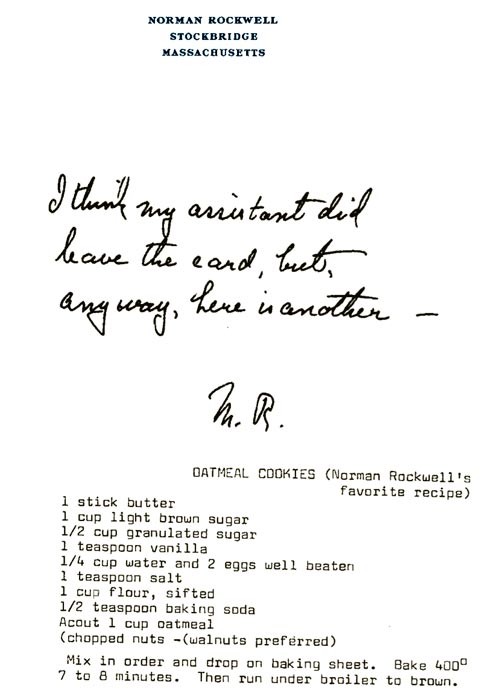
When Rockwell did eat, we know that he had a penchant for oatmeal cookies. At least two of the artist’s letters detailing instructions for making this choice snack are posted online. Although there is a 1966 iteration of the oatmeal cookie recipe available on Biblioklept.org, we’ve provided a later version, from the 1970s, found on The Saturday Evening Post website:
Ingredients
- 1 stick butter
- 1 cup light brown sugar
- 1/2 cup granulated sugar
- 1 teaspoon vanilla
- 1/4 cup water and 2 eggs well beaten
- 1 teaspoon salt
- 1 cup flour, sifted
- 1/2 teaspoon baking soda
- About 1 cup oatmeal
- Chopped nuts (walnuts preferred)
Directions
Mix in order and drop on baking sheet. Bake 400° 7 to 8 minutes. Then run under broiler to brown.
Related Content:
Ernest Hemingway’s Favorite Hamburger Recipe
David Lynch Teaches You to Cook His Quinoa Recipe in a Weird, Surrealist Video
Prepare Marilyn Monroe’s Personal, Handwritten Turkey-and-Stuffing Recipe on Thanksgiving
Read More...On Christmas, Browse A Historical Archive of More Than 50,000 Toys
The Strong National Museum of Play, located in Rochester, NY, is a fun children’s museum. But the institution also has serious research archives, stuffed with toys, games, and records of the toy industry. Its online collections, which currently boast 55,068 objects, take a holiday browser on a trip into a figurative grandma’s attic, chock-full of the playthings people loved in the nineteenth and twentieth centuries.
The online archives are divided into four categories: “Toys”, “Dolls”, “Games”, and “More.” Each of these four sections is further subdivided into topically-specific groups, chosen by the archivists.
The collection’s strength is also its weakness: there are so many toys that it can be easy to get overwhelmed. The subject divisions are helpful here. As somebody with an interest in gender and childhood, I found myself fascinated by the housekeeping toys—kids used to use ovens that were heated with real coals!—and that was an easy way to narrow down my browse. Subject groupings for toy soldiers, celebrity dolls, and board games also piqued my interest.
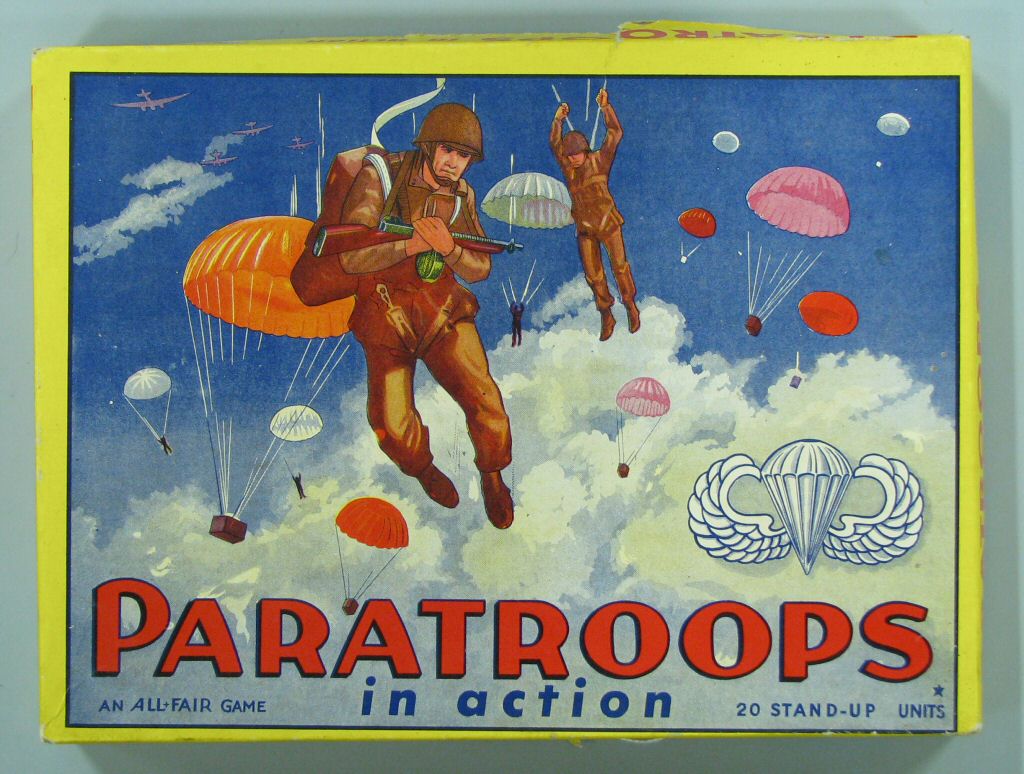
It’s fun to look around for toys from your own childhood (I found a few), but if you’re interested in history, you might find the echoes of historical events to be even more intriguing. Late-nineteenth-century kids played with a paper doll inspired by the circus celebrity Tom Thumb; children of the 1930s had licensed dolls of the media-sensation Dionne Quintuplets; a playset from 1940 featured grim, suited-up “Paratroops in Action.”
Mousing over the thumbnails will allow you to see the item’s name. If you see a blue “Learn More” tag, be sure to click through; that means that the item’s image will be accompanied by an interpretive historical note written by the Strong’s archivists. These vary in length, and contain intriguing tidbits. Did you know, for example, that Holly Hobbie was a real person: the artist Holly Ulinkas Hobbie? Or that the famous artist Charles Dana Gibson had a now-forgotten follower, Nell Brinkley, who illustrated the flapper era?
Rebecca Onion is a writer and academic living in Philadelphia. She runs Slate.com’s history blog, The Vault. Follow her on Twitter: @rebeccaonion.
Read More...On the Air: Watch the 1950s Sitcom by David Lynch and His Twin Peaks Co-Creator Mark Frost
In “David Lynch Keeps His Head” (uncut version here), David Foster Wallace’s Premiere magazine report from the set of Lost Highway, Wallace rattles off the “entertainments David Lynch has created and/or directed” including “Eraserhead (1978), The Elephant Man (1980), Dune (1984), Blue Velvet (1986), Wild at Heart (1990), two televised seasons of Twin Peaks (1990–92), Twin Peaks: Fire Walk With Me (1992), and the mercifully ablated TV show On the Air (1992).” (To ablate, a verb Wallace uses again in the article in reference to a severed head, means “to remove or dissipate by melting, vaporization, erosion, etc.”) Even Lynch die-hards may never have caught a glimpse of On the Air, which Wallace later describes as “bottomlessly horrid” and “euthanatized by ABC after six very long-seeming weeks.” Clearly the author of Infinite Jest, despite greatly respecting Lynch’s unprecedentedly surreal primetime drama Twin Peaks (its first season, at least) and crediting Blue Velvet with revealing to him the very possibilities of art, couldn’t stomach this show. Now you can watch all seven episodes of On the Air on Youtube, three of which aired in the United States, and judge for yourself.
The series, which debuted and ended in the summer of 1992, takes place in 1957, peering behind the scenes at the fictional Zoblotnick Broadcasting Company, producers of the hapless variety program The Lester Guy Show. Lester Guy himself, an alcoholic silver-screen leading man who rose to fame by staying out of the Second World War, spends most episodes vying for popular supremacy against his cast’s blonde ingenue Betty Hudson, who may remind you of an even simpler version of Sandy Williams, the Laura Dern character in Blue Velvet. The series appeared as the second collaboration between Lynch and Mark Frost, co-creator of Twin Peaks, which brought their signature sensibility of intense vividness and vaguely haunting unreality to the detective genre. On the Air brings it to the classic goofball sitcom. Watch the first episode (ranked as #57 on TV Guide’s “100 Greatest TV Episodes of All Time” list) and, to experience either the utter genius or the utter trainwreck, you’ll want to watch the following six. “There was a lot of laughter on the set,” remembers Ian Buchanan, who played Lester Guy. “Maybe we were too happy. Everybody I knew on successful shows was miserable.”
(日本人 Lynch-heads, take note: each episode includes Japanese subtitles.)
Related Content:
David Lynch’s Surreal Commercials
David Lynch Presents the History of Surrealist Film (1987)
David Lynch Presents the History of Surrealist Film (1987)
4,000+ Free Movies Online: Great Classics, Indies, Noir, Westerns, Documentaries & MoreColin Marshall hosts and produces Notebook on Cities and Culture and writes essays on cities, Asia, film, literature, and aesthetics. He’s at work on a book about Los Angeles, A Los Angeles Primer. Follow him on Twitter at @colinmarshall or on his brand new Facebook page.
Read More...Hear Kevin Smith’s Three Tips For Aspiring Filmmakers (NSFW)
If you’re seeking advice about making your first film, Kevin Smith is a good place to start. The comedic director of Jay and Silent Bob Strike Back and Chasing Amy fame was a Hollywood outsider when he made his debut with the critically acclaimed Clerks in 1994. The black and white feature went on to gross $3.1 million — not bad for a Vancouver Film School dropout who shot the movie in the convenience store where he once worked, on a total budget of $27,575.
In the clip above, Smith dispenses a dose of rambling advice to Canadian filmmaker and video producer Gavin Michael Booth. We’ve summed it up in three main points. Our summary lacks the expletives that makes Smith’s talk rather colorful.
1 – “You have to have a reasonable amount of unreasonability” – Smith suggests that filmmakers must possess an appropriate degree of self-belief and drive, regardless of the obstacles before them. If young filmmakers were reasonable about their chances of success, the only people making movies would be Los Angeles natives already entrenched in the film industry.
2 – “You have to know… what hills you’re willing to die on.” The reasonable amount of unreasonability also refers to knowing which battles are worth fighting for. A directorial vision is important, but at the end of the day it is subordinate to budget constraints.
3 – “You have to learn how to kill your babies.” Smith is an ardent believer in movies needing to be only as long as they must, and no longer. Including scenes because you like them unless they’re unequivocally essential is self-indulgent and does a disservice to the audience.
If you’re after further tips, we’ve also written about Quentin Tarantino jointly giving filmmaking advice with Sam Raimi, and legendary Soviet director Andrei Tarkovsky’s counsel to beginner filmmakers. Plus we have 10 Tips From the Great Billy Wilder on How to Write a Good Screenplay.
Ilia Blinderman is a Montreal-based culture and science writer. Follow him at @iliablinderman
.
Read More...Support Us
We're hoping to rely on loyal readers, rather than erratic ads. Please click the Donate button and support Open Culture. You can use Paypal, Venmo, Patreon, even Crypto! We thank you!

About Us

Open Culture scours the web for the best educational media. We find the free courses and audio books you need, the language lessons & educational videos you want, and plenty of enlightenment in between.
Advertise With Us

FREE UPDATES!
GET OUR DAILY EMAIL
Get the best cultural and educational resources on the web curated for you in a daily email. We never spam. Unsubscribe at any time.
FOLLOW ON SOCIAL MEDIA

Open Culture editor Dan Colman scours the web for the best educational media. He finds the free courses and audio books you need, the language lessons & movies you want, and plenty of enlightenment in between.
Advertise With Us