Milky Way Panorama (with a Backstory)

Nick Risinger, an amateur astronomer from Seattle, quit his day job last year, packed his bags and cameras, and began a 60,000 mile journey, moving across the American West and down to the western Cape of South Africa (twice). His voyage would end with a 5000-megapixel photograph of the entire night sky, produced from 37,440 separate exposures, and it yields a staggering 360-degree view of the Milky Way. Even better, the image now lives online in an interactive format, giving you the ability to wander through the cosmos.
For more on this, be sure to visit Photopic Sky Survey. Here Risinger gives you the personal and technical backstory on his project, and also gives you the chance to purchase photos, or even lend financial support to the sky survey.
via The Mail Online
Read More...The Book Trailer as Self-Parody: Stars Gary Shteyngart with James Franco Cameo
What can we say about Gary Shteyngart? The novelist appeared last year in The New Yorker’s 20 Under 40 Fiction Issue (which listed authors “who capture the inventiveness and the vitality of contemporary American fiction.”) He teaches writing at Columbia University and counts James Franco as one of his students. And he’s willing to hustle a little to sell a book. When his novel Super Sad True Love Story came out last summer (find NYTimes review here), the quirky Leningrad-born author (key to understanding what comes next) released a satirical, self-deprecating trailer to promote his book. Jeffrey Eugenides, Jay McInerney, Edmund White, Mary Gaitskill and Franco himself all get in on the joke … which gets better as it goes along.
Shteyngart’s book just came out in paperback last week. To mark the occasion, Fresh Air re-aired an interview with him (sans accent) last week. His book is also available as an audio download via Audible.com, and here’s how you can snag a free copy…
Related:
Reviewing Jonathan Franzen’s “Freedom” with Wit
Read More...Bob Dylan Answers China Charges
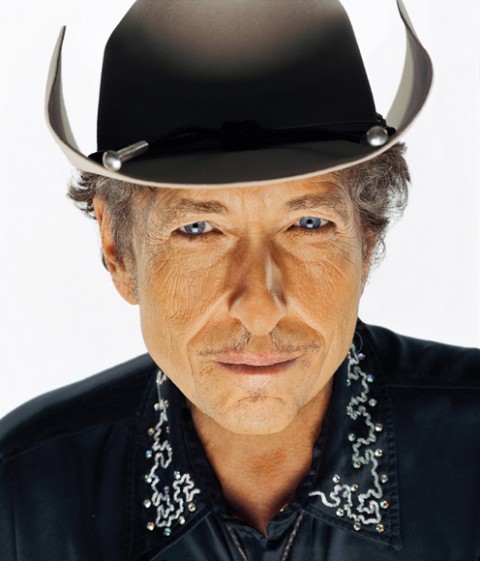 Just last month, Bob Dylan played his first concert in China at the Worker’s Gymnasium in Beijing. It wasn’t exactly a big show. Roughly 2,000 people attended, but it became a big affair at home when NYTimes columnist Maureen Dowd wrote a caustic op-ed, accusing Dylan of playing a censored set stripped of his revolutionary anthems. In short, she declared, Dylan went to China and sold out his 60s soul:
Iconic songs of revolution like “The Times They Are a‑Changin,’ ” and “Blowin’ in the Wind” wouldn’t have been an appropriate soundtrack for the 2,000 Chinese apparatchiks in the audience taking a relaxing break from repression.
Spooked by the surge of democracy sweeping the Middle East, China is conducting the harshest crackdown on artists, lawyers, writers and dissidents in a decade. It is censoring (or “harmonizing,” as it euphemizes) the Internet and dispatching the secret police to arrest willy-nilly, including Ai Weiwei, the famous artist and architect of the Bird’s Nest, Beijing’s Olympic stadium.
Dylan said nothing about Weiwei’s detention, didn’t offer a reprise of “Hurricane,” his song about “the man the authorities came to blame for something that he never done.” He sang his censored set, took his pile of Communist cash and left.
Now, in a note to fans, Dylan took the rare step of responding to these (and other) accusations in a short letter published yesterday. He writes:
As far as censorship goes, the Chinese government had asked for the names of the songs that I would be playing. There’s no logical answer to that, so we sent them the set lists from the previous 3 months. If there were any songs, verses or lines censored, nobody ever told me about it and we played all the songs that we intended to play.
I’m guessing this response will only partly satisfy Dowd. Perhaps Dylan didn’t change his set to please the apparatchiks. But did he miss an opportunity to make the right statement? Just maybe. But no matter, we’re putting this behind us and getting ready for Dylan’s 70th birthday on May 24. We still love him, warts and all…
Read More...The Next-Generation Digital Book
There will be a day — maybe it’s already here; maybe it was always here — when the Kindle will look incredibly retro. Mike Matas, once a designer of user interfaces at Apple and now co-founder of Push Pop Press, may make that day of visual reckoning come sooner rather than later. The demo above (which is easily worth a thousand words) lets you peer into the near future.. Text, images, audio, video and interactive graphics — they’ll come together in a seamless reading experience, making the traditional ebook look entirely one dimensional. You can download the book on display, Al Gore’s “Our Choice,” on iTunes here.
Read More...64 Years of Posters for the Cannes Film Festival
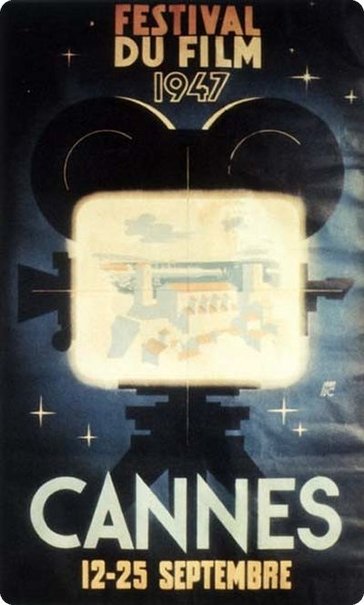
The 64th Annual Cannes Film Festival opens tonight, and the cineastes among you have probably already bookmarked the film site MUBI, where you can find all things Cannes (and all things international cinema, for that matter) at the site’s blog: the MUBI Daily.
Edited by Daniel Kasman, the MUBI Daily features stellar writers, including Glenn Kenny, Ignatiy Vishnevetsky, and the wonderful David Hudson, whom you may recognize from his days at Greencine and IFC. You’ll find review round-ups, commentary, interviews, updates, trailers for many films at Cannes, and finally, quirky entries like this one: Contributor Adrian Curry’s commentary on a L’Express collection of 64 year’s worth of official Cannes Festival posters. Curry highlights the best and worst of the lot (along with a special wince d’or for 1995’s pastel nightmare of a seascape, to which designer Ryszard Horowitz may as well have added rainbows and unicorns).
The site is definitely worth keeping tabs on, especially this week, when they’ll be offering a virtual ticket to the south of France, minus the lines, mobs, and high likelihood of laptop theft.
A last note: you can find several prize-winning films from the Cannes Film Festival (including two by Andrei Tarkovksy) in our collection of Free Movies Online.
via MUBI and A Life in Film
Sheerly Avni is a San Francisco-based arts and culture writer. Her work has appeared in Salon, LA Weekly, Mother Jones, and many other publications. You can follow her on twitter at @sheerly
via
Read More...The Existential Star Wars: Sartre Meets Darth Vader
A few weeks ago we directed you to a wonderful three-part BBC documentary about modern philosophy called Human, All Too Human, adding that we considered the chapter on Jean-Paul Sartre the most satisfying of the three.
Now we give you a light-hearted chaser for that documentary’s strong spirits: The French philosopher’s teachings as interpreted by the science fiction overlord Darth Vader. Perhaps more than any other 20th century supervillain, the disgraced Jedi knight tragically and perfectly embodies the Sartrian notion that “Freedom is what you do with what has been done to you.”
For those who might consider the Joker a better candidate, we humbly submit that with the Joker, it’s more of a Nietzschean thing.
Related Content:
Download 90 Free Philosophy Courses and Start Living the Examined Life
Walter Kaufmann’s Lectures on Nietzsche, Kierkegaard and Sartre (1960)
Sheerly Avni is a San Francisco-based arts and culture writer. Her work has appeared in Salon, LA Weekly, Mother Jones, and many other publications. You can follow her on twitter at @sheerly
Read More...A Daily Dose of Jerry Seinfeld
Jerry Seinfeld has decided to go on tour, and as if to remind us that his stand-up life preceded his decade-plus dominance of network TV, he’s also archived the best bits from a comedy career that now spans over 25 years. (He first appeared on national television in 1977.) The new site/archive will feature just a few clips, making new ones available each day. It’s a smart move; the steady trickle of new jokes will no doubt keep fans hungry.
For a reminder of the days when it was Seinfeld himself who was hungry, here’s a set from 1981, his first appearance on HBO. He’s being presented by the pitch-perfect Smothers Brothers, who introduce the barely known comedian as “Jerry Steinfeld.”
via NYT
Sheerly Avni is a San Francisco-based arts and culture writer. Her work has appeared in Salon, LA Weekly, Mother Jones, and many other publications. You can follow her on twitter at @sheerly
Read More...Orson Welles’ Birthday Bash: Three Movies, One Radio Classic, and Two Great Narrations
96 years ago today, Orson Welles, the “ultimate auteur,” was born in Kenosha, Wisconsin. Hence his early nickname, The Kenosha Kid. Nowadays, we remember Welles as arguably the greatest director of the 20th century, a superb actor on stage and screen, and a pioneering radio dramatist. To celebrate his 96th birthday, we have dipped into our archives and pulled together some of Welles’ finest artistic works, all now freely available online:
The Stranger
Welles’ third film, The Stranger, a 1946 film noir thriller, was a commercial success upon release. The same couldn’t be said for Citizen Kane. The Stranger features Edward G. Robinson hunting a Nazi fugitive (Welles himself) who marries the daughter (Loretta Young) of a Supreme Court justice. The film, now available online in its entirety, is one of the first post WWII films to show footage of concentration camps. You can find this film, and others mentioned below, in our collection of Free Movies Online.
The Third Man
The Third Man by crazedigitalmovies
Welles famously starred in The Third Man, a must-see noir film, which won the Grand Prix at the 1949 Cannes Film Festival and an Academy Award for Best Black and White Cinematography in 1950. A half century later, the British Film Institute named The Third Man the best British film of the 20th century. Quite a statement. You can watch it here.
Freedom River
Almost 40 years (and seven presidential administrations) have passed since Orson Welles narrated Freedom River. And although the animation shows some age, the parable, a commentary on America, still resonates today. Or, at least I suspect many viewers will think so. You can get the backstory on this intriguing little project here.
The War of the Worlds
 Back in the late 1930s, Orson Welles launched The Mercury Theatre on the Air, a radio program dedicated to bringing dramatic productions to the American airwaves. The show had a fairly short run. It lasted from 1938 to 1941. But it made its mark. During these few years, The Mercury Theatre aired The War of the Worlds, an episode narrated by Welles that led many Americans to believe their country was under Martian attack. The legendary production was based on H.G. Wells’ early sci-fi novel, and you can listen to it here. We have more links to Mercury Theatre productions here.
Welles Reads Moby Dick
He only gives you two tantalizing minutes. And he’s paraphrasing more than reading the text itself. But it’s vintage Welles. You can find him reading another passage from Melville’s classic here…
Read More...Celebrate Carnegie Hall Anniversary with Jascha Heifetz Playing Tchaikovsky
Today Carnegie Hall celebrates its 120th anniversary. Designed by architect William Burnet Tuthill and financed by philanthropist Andrew Carnegie, the famed concert venue opened its doors in 1891, right between West 56th and 57th Streets in New York City. Since then, Carnegie Hall has gained a reputation for its unrivaled acoustics (some have called it the “Stradivarius of the Concert World”) and pretty much every important musical figure of the 20th century played there.
The hall will celebrate its anniversary with a gala featuring Yo-Yo Ma. But we’re taking another tack and highlighting a vintage clip from the 1947 film Carnegie Hall. Directed by Edgar Ulmer, this sequence gives you Jascha Heifetz, the famed violinist, playing the first movement of Tchaikovsky’s violin concerto. Heifetz played Carnegie Hall for the first time in 1917, when he was only 16 years old. This clip, filmed 30 years later at the same great concert hall, has been viewed 1.5 million times…
Read More...Seth Godin: The Wealth of Free (Semi-Animated)
Every idea has to begin somewhere. And, back in 2000, Seth Godin started experimenting with a fairly radical publishing model. Inspired by Malcolm Gladwell, Godin wrote Unleashing the Ideavirus, which essentially argued that free ideas spread quicker than ideas that cost money. And it’s the ideas that spread the quickest that win. So what was the logical next step? Making the book available for free (get the ebook here) and seeing what happened.
The video above tells you the rest of the story. What it doesn’t tell you is that Godin has since written a steady stream of bestsellers (find free ecopies here), while authoring the most widely-read marketing blog and founding Squidoo. The artwork accompanying Godin’s talk was created by Stuart Langfield.
If you would like to support the mission of Open Culture, consider making a donation to our site. It’s hard to rely 100% on ads, and your contributions will help us continue providing the best free cultural and educational materials to learners everywhere. You can contribute through PayPal, Patreon, and Venmo (@openculture). Thanks!
Related Content:
Free Online Business Courses
Start Your Startup with Free Stanford Courses and Lectures
Read More...Support Us
We're hoping to rely on loyal readers, rather than erratic ads. Please click the Donate button and support Open Culture. You can use Paypal, Venmo, Patreon, even Crypto! We thank you!

About Us

Open Culture scours the web for the best educational media. We find the free courses and audio books you need, the language lessons & educational videos you want, and plenty of enlightenment in between.
Advertise With Us

FREE UPDATES!
GET OUR DAILY EMAIL
Get the best cultural and educational resources on the web curated for you in a daily email. We never spam. Unsubscribe at any time.
FOLLOW ON SOCIAL MEDIA

Open Culture editor Dan Colman scours the web for the best educational media. He finds the free courses and audio books you need, the language lessons & movies you want, and plenty of enlightenment in between.
Advertise With Us

