Street Artist Creates an Optical Illusion That Lets People See the Art Inside a Shuttered Museum in Florence
The pandemic will end, but the coronavirus could become endemic, most virologists believe, “meaning that it will continue to circulate in pockets of the global population for years to come,” as Nicky Phillips writes at Nature. The disease will pose much less of a danger to us over time, yet the problem of its persistence raises a question many of us are asking ourselves as precautions drag into another year: what kind of world will we step into when this is (mostly) finally over?
Many restaurants, theaters, and music venues are shuttered for good, while the impact on the art world has been devastating. According to an Art Basel report, sales contracted 36% in galleries worldwide in 2020.
Daniel Langer predicts that up to 40 percent of galleries will close after the pandemic, even as the high-end “‘luxury’ art market is growing during the pandemic” as wealthy investors “look to art as a long-term value play.” The coronavirus has only exaggerated conditions in which “99 per cent of all artists are paid miserably, while the top 1 per cent enjoys a celebrity status and can sell their art with enormous premiums.”
French artist JR is one of the few who has done well over the past year, exhibiting his large-scale trompe l’oeil photographic installations in Paris and São Paulo. In his most recent installation in Florence, JR makes a striking visual commentary on “the adversities that cultural institutions — including museums, libraries, and cinemas — have faced over the past year,” writes My Modern Met. Called La Ferita (“The Wound” in Italian) and “measuring 28 meters high and 33 meters wide, this optical illusion creates a ‘crack’ in the exterior” of the Palazzo Strozzi, “so that viewers can see masterpieces like Botticelli’s Birth of Venus and Primavera.”
In JR’s Instagram posts, you can see the piece being installed “as Italy entered another lockdown that will last until April 6, closing the doors of all cultural institutions once again.” Though it functions more as a memorial to what feels like a lost world than a political statement, JR has accompanied his Instagram posts with public commentary: “They say the museums are closed,” he writes, “but it’s up to us to open them. Here is Florence, the city of Botticelli, Donatello, Machiavel, and Dante, we opened the Palazzo Strozzi.”
JR concludes on a wan note of hopefulness: “we still have the freedom to dream, to create, to envision the future,” he writes. “Maybe it’s not much, but we have that!” Maybe we’ll also have more public art installations in place of indoor galleries and museums, and more artists bringing their work to the streets, “the largest art gallery in the world,” JR has said, and one that can’t be locked down or put out of business by a virus or the ravages of the market.
via My Modern Met
Related Content:
A New Digital Archive Preserves Black Lives Matter & COVID-19 Street Art
Banksy Debuts His COVID-19 Art Project: Good to See That He Has TP at Home
Josh Jones is a writer and musician based in Durham, NC. Follow him at @jdmagness
Read More...How Sounds Are Faked For Nature Documentaries: Meet the Artists Who Create the Sounds of Fish, Spiders, Orangutans, Mushrooms & More
We think of nature documentaries as primarily visual works. As well we probably should, given the countless, mostly dull and uncomfortable hours spent in the field they demand of their photography crews. But what comes to mind when we imagine the sound of nature documentaries — apart, of course, from the voice of David Attenborough? Listen closely during the breaks in his narration of such hit nature series as Planet Earth or Our Planet, and you’ll hear all manner of sounds: the sound of sharks swimming, of orangutans chewing, of spiders shooting their webs, of mushrooms sprouting. Hang on — mushrooms sprouting?
Nature documentaries, as narrator Abby Tang says in the Insider video above, are full of “sounds that would either be impossible to capture, or ones that are straight-up made up.” In this they differ little from scripted films, whose actual shoots usually manage to record only the actors’ dialogue, if that.
Working in the wild, far indeed from any studio, nature documentarians “might actually be shooting a subject matter that’s across a valley, or they’ll capture objects normally too small to have a registered noise to it.” Hence the need for a category of professionals previously featured here on Open Culture: foley artists, those inventive creators of footsteps, door-knocks, punches, sword-unsheathings, and all the other sounds viewers expect to hear.
Here foley artist Richard Hinton demonstrates his methods for breathing sonic life into a range of nature scenes. A shoal of mackerel? Old magnetic audio tape sloshed around in a tub of water. The vibrations of a spiderweb? A slinky, held perilously close to the microphone. The northern lights? A pair of cymbals and a set of wind chimes. Often, just the right sound emerges from those of two distinct objects layered together, a principle known to foley artists since the early days of radio drama. In fact, though foley sounds today go through a fair bit of digital editing and processing to make them more convincing, the tools and techniques used to produce them have changed little since those days. The next time you watch a bear onscreen open its eyes after months-long hibernation, consider the possibility that you’re hearing an Englishman making noises with scraps of fur and his mouth.
Related Content:
Chill Out to 70 Hours of Oceanscape Nature Videos Filmed by BBC Earth
How the Sounds You Hear in Movies Are Really Made: Discover the Magic of “Foley Artists”
How the Sound Effects on 1930s Radio Shows Were Made: An Inside Look
Based in Seoul, Colin Marshall writes and broadcasts on cities, language, and culture. His projects include the Substack newsletter Books on Cities, the book The Stateless City: a Walk through 21st-Century Los Angeles and the video series The City in Cinema. Follow him on Twitter at @colinmarshall or on Facebook.
Read More...Four Cellists Play Ravel’s “Bolero” on One Cello
And now for something completely different…
Above, the Wiener Celloensemble 5 + 1–“an untraditional cello ensemble” founded by the Vienna Philharmonic’s Gerhard Kaufmann–presents an unconventional performance of Ravel’s “Bolero.” It’s minimalist, in a certain way. Four musicians. One instrument. And nothing more…
If you would like to support the mission of Open Culture, consider making a donation to our site. It’s hard to rely 100% on ads, and your contributions will help us continue providing the best free cultural and educational materials to learners everywhere. You can contribute through PayPal, Patreon, and Venmo (@openculture). Thanks!
via ClassicFM/MyModernMet
Related Content:
Hear a 1930 Recording of Boléro, Conducted by Ravel Himself
Copenhagen Philharmonic Plays Ravel’s Bolero at Train Station
Read More...Women Street Photographers: The Web Site, Instragram Account & Book That Amplify the Work of Women Artists Worldwide
It’s almost impossible not to wonder how reclusive artists of the past — like anonymous street photographer and Chicago nanny Vivian Maier — would fare in the age of Tumblr and Instagram. Would Maier have become internet famous? Would she have posted any of her photographs? The little we know about her makes it hard to answer the question. Maier lived a life of abstemious self-negation. “She never exhibited her work,” Alex Kotlowitz writes at Mother Jones, “she didn’t share her photos with anyone, except some of the children in her care.”
And yet, Maier was known to enjoy conversations about film and theater with knowledgeable people. One suspects that if she had been able to stay in touch with like minds, she might have been encouraged by a supportive community she couldn’t find anywhere else. We might imagine her, for example, submitting a select few photographs to Women Street Photographers, a project that began in 2017 as an Instagram account and has since “burgeoned into a website, artist residency, series of exhibitions, film series, and now a book published this month by Prestel,” Grace Ebert writes at Colossal.
For women street photographers living and working today, the project offers what founder Gulnara Samoilova says she needed and couldn’t find: “I soon began to realize that with this platform, I could create everything I had always wanted to receive as a photographer: the kinds of support and opportunities that would have helped me grow during those formative and pivotal points on my journey.” The project is international in scope, bringing together the work of 100 women from 31 countries, “a tiny sampling of what’s out there.”
In her introduction to the 224-page book, Samoilova describes the importance of such a collection:
Street photography is both a record of the world and a statement of the artist themselves: it is how they see the world, who they are, what captures their attention, and fascinates them. There’s a wonderful mixture of art and artifact, poetry and testimony that makes street photography so appealing. It’s both documentary and fine art at the same time, yet highly accessible to people outside the photography world.
There are Vivian Maiers around the world driven to document their surroundings, whether anyone ever sees their work or not. Maier made her photographs “for all the right reasons,” says Chicago artist Tony Fitzpatrick. “She made them because to not make them was impossible. She had no choice.” But perhaps she might have chosen to show her work if she had access to platforms like Women Street Photographers. We can be grateful for such outlets now: they offer perspectives that we can find nowhere else. Women Street Photographers will announce the winners of its inaugural virtual exhibition “on or around April 1.”
via Colossal
Related Content:
Meet Gerda Taro, the First Female Photojournalist to Die on the Front Lines
Take a Visual Journey Through 181 Years of Street Photography (1838–2019)
Vivian Maier, Street Photographer, Discovered
Josh Jones is a writer and musician based in Durham, NC. Follow him at @jdmagness
Read More...Explore a New Archive of 2,200 Historical Wildlife Illustrations (1916–1965): Courtesy of The Wildlife Conservation Society
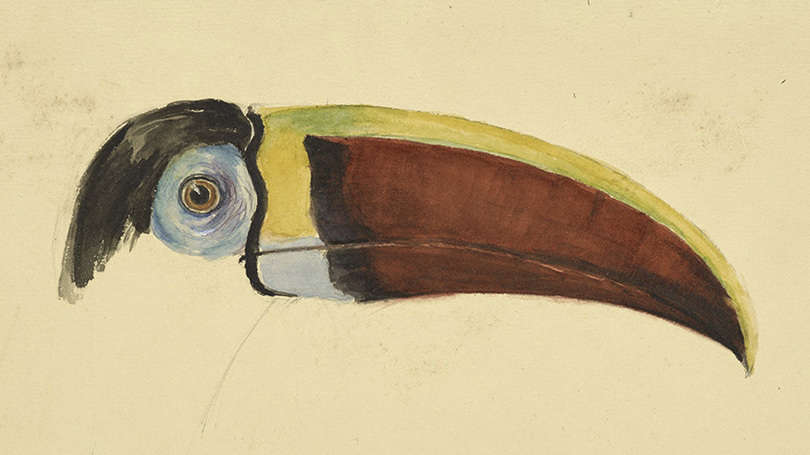
Between the 1910s and the 1960s, a nature-lover with a sure artistic hand and a yen to see the world could have done much worse than signing on with the Wildlife Conservation Society. During those decades, when the WCS was known as the New York Zoological Society, its “Department of Tropical Research (DTR), led by William Beebe, conducted dozens of ecological expeditions across tropical terrestrial and marine locales,” says the organization’s web site. This long-term project brought together both scientists and artists, who “participated in field work and collaborated closely with DTR scientists to create their illustrations.”
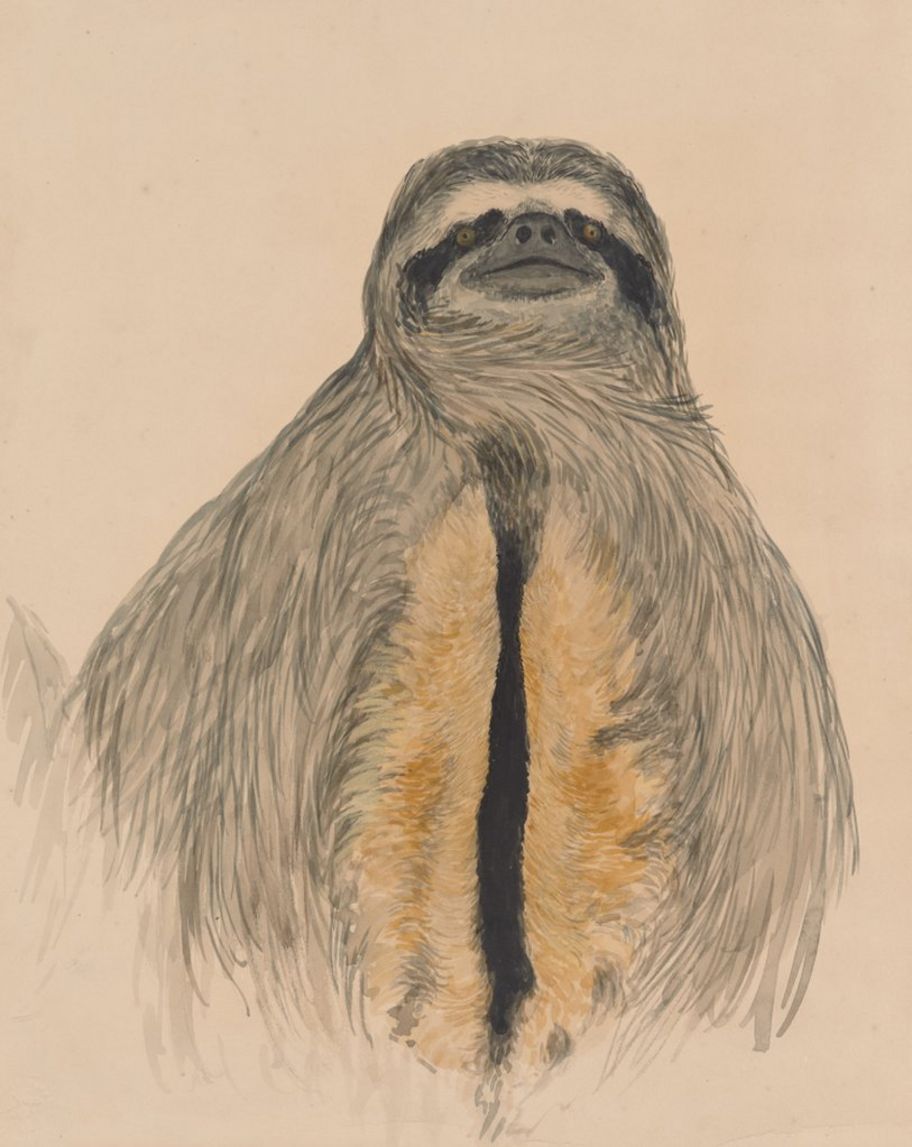
Now the fruits of those artistic-scientific labors have come available in a free online archive containing “just over 2,200 digitized color and black-and-white illustrations of living and non-living specimens created by DTR field artists between 1916 and 1953.”
Their subjects include “mammals, birds, reptiles, amphibians, fish, insects, marine invertebrates, plants, and fungi,” all originally found in places like “British Guiana (now Guyana), the Galápagos Islands, the Hudson Canyon, Bermuda, the Gulf of Mexico and the Eastern Pacific Ocean, Venezuela, and Trinidad.”
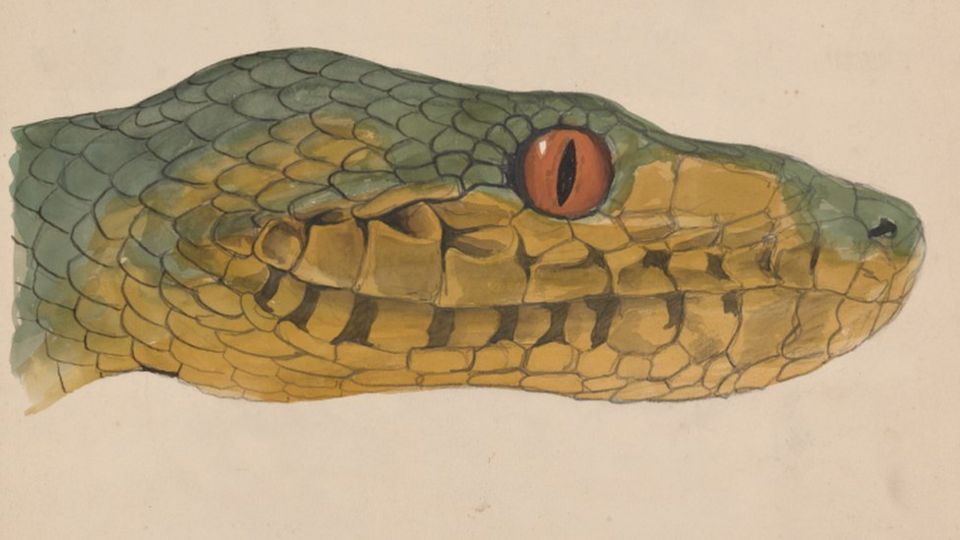
It was in Trinidad and Tobago that Beebe established his first ecological research station in 1916 — and where his long life and career came to an end more than 45 years later. “Although Beebe’s name is unfamiliar to most today, he was a celebrity scientist in his time,” says the WCS’ about page. “The DTR’s expeditions were covered by the popular press, Beebe’s accounts were bestsellers, and he and the DTR staff published hundreds of articles for both scientists and the general public.” Published in not just specialist media but National Geographic and The New York Times, their illustrations captured the color and movement of the natural realm with a detail and vividness that photography couldn’t.
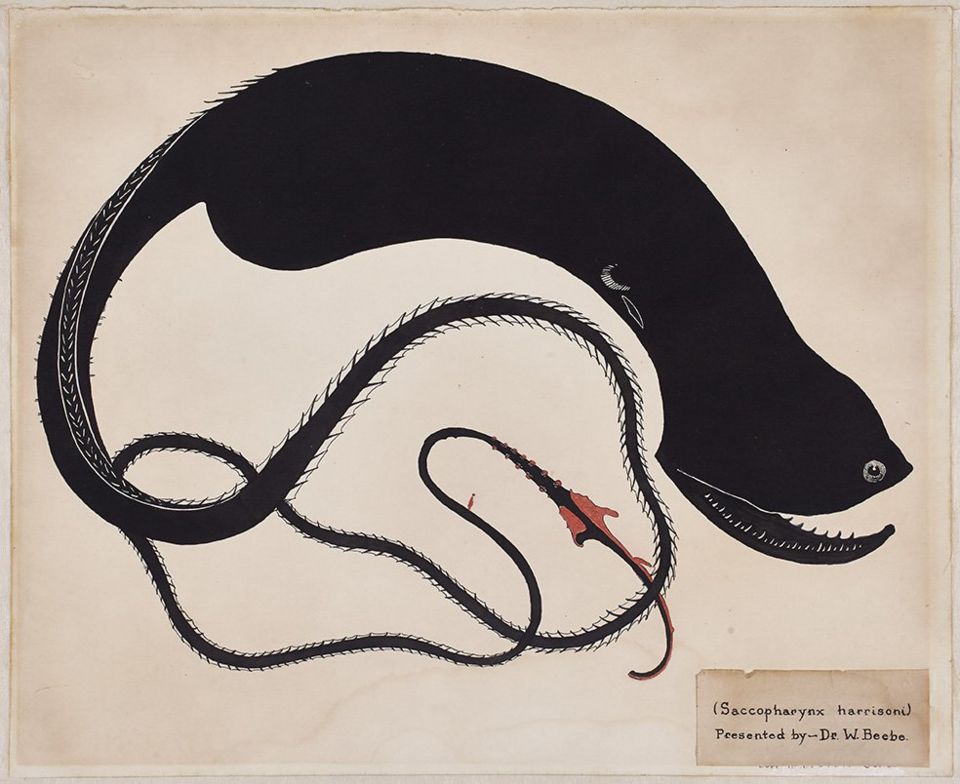
“Ranging from depictions of single specimens to complex narrative images that show where and how animals lived,” these images are available in geographically and chronologically organized collections at the WCS’ online archive. As many as possible are credited to their artists — Isabel Cooper, Toshio Asaeda, George Alan Swanson, Frances Waite Gibson, and others — which ensures that this wealth of nature illustrations will do its part to not just renew interest in Beebe’s life and work but generate interest in those who entered into this adventurous collaboration with him. But then, Beebe himself articulated best what we can learn from appreciating these works of scientific art: “All about us, nature puts on the most thrilling adventure stories ever created, but we have to use our eyes.”
Enter the WCS archive here.
Related Content:
Two Million Wondrous Nature Illustrations Put Online by The Biodiversity Heritage Library
The Meticulous, Elegant Illustrations of the Nature Observed in England’s Countryside
A Beautiful 1897 Illustrated Book Shows How Flowers Become Art Nouveau Designs
Based in Seoul, Colin Marshall writes and broadcasts on cities, language, and culture. His projects include the Substack newsletter Books on Cities, the book The Stateless City: a Walk through 21st-Century Los Angeles and the video series The City in Cinema. Follow him on Twitter at @colinmarshall or on Facebook.
Read More...The Irish Aristocratic Woman Who Almost Assassinated Mussolini in 1926: An Introduction to Violet Gibson
By 1926, Benito Mussolini had become one of Europe’s most popular leaders after consolidating power through violence, turning Italy into a police state, and providing a model for budding dictator Adolf Hitler. Mussolini’s received positive recognition from the press, celebrities, and governments around the world, as well as the imprimatur of the Roman Catholic church. None of this mattered to onetime Irish socialite and fervent Catholic convert Violet Gibson. She knew he must be stopped, and she almost did it, getting close enough to graze his nose with a bullet in 1926 before she was taken into custody, handed over to British authorities, and “consigned to an asylum” for the next 29 years, “her story… all but forgotten,” Nora McGreevy writes at Smithsonian.
Gibson grew up between Dublin and London, hailing “from a wealthy family headed by her father, Lord Ashbourne, a senior judicial figure in Ireland.” She “served as a debutante in the court of Queen Victoria” and was raised among European aristocracy. A sickly child, she also suffered from mental health issues and was diagnosed with “hysteria.” Perhaps the most defining moment in Gibson’s life — before her assassination attempt on the Italian fascist dictator — came when she converted to Catholicism in 1902. It was an event, argues Siobhan Lynam in the 2014 RTÉ radio documentary below, that would lead to “a sort mutilation” in her relationship with her family. “There’s a sort of severing that happens,” says Frances Stonor Saunders, author of The Woman Who Shot Mussolini.
Throughout the 1920s, Gibson suffered attacks of mental illness and was hospitalized after her brother’s death, “overwhelmed by grief and loss and the sheer exhaustion of physical illness.” She also followed current events closely, and she was appalled by Mussolini’s rise to power. “Italy for her,” Stonor Saunders says, “is a place of… idealized values.” Gibson traveled to Italy in 1925 with a revolver, which she first used to shoot herself in the chest. She survived, then formed a plan to kill Mussolini instead, despairing of the world he was bringing about. She was able to get close to him, perhaps, because she fit the caricature to which she has been reduced as a historical footnote.
“This is a woman whom history has stripped of all her dignity,” says Stonor Saunders. “She exists as a series of really dreadful cliches in a number of texts, books that refuse her any kind of humanity. She’s just a stereotype of crazy Irish spinster.” As Lynam’s documentary, Stonor Saunders’ book, and a new documentary film currently screening at film festivals (see trailer at then top) show, there was much more to Violet Gibson; she was a committed Catholic and anti-fascist and she nearly changed history in the most successful of the four attempts on Mussolini’s life. She was fifty years old at the time and she lived another 30 years in an institution, dying in 1956. She became known among the staff as the delusional old woman who believed she’d tried to kill Il Duce. No one remembered the event, her own recollections had been silenced, and she had virtually faded from the historical record.
Now, in addition to the media attention, attempts to erect a plaque in Dublin in Gibson’s honor are continuing apace. But why was she ignored for so long? Dublin city councillor Mannix Flynn tells the BBC that while women are rarely given their due for their role in historical events, “for some strange reasons, Violet Gibson became some sort of an embarrassment, she got shunned, they tried to say she was insane to hide the shame.” Gibson’s family had a hand in this, immediately using their power to bargain for her release from Italy and her commitment in Britain. But she also became an embarrassment to the powers in Britain and the world at large who had happily embraced a fascist dictator.
Related Content:
Mussolini Sends to America a Happy Message, Full of Friendly Feelings, in English (1927)
Umberto Eco Makes a List of the 14 Common Features of Fascism
Josh Jones is a writer and musician based in Durham, NC. Follow him at @jdmagness
Read More...What “Irish” Means: A Discussion with Author and Black 47 Front Man Larry Kirwan (Pretty Much Pop: A Culture Podcast #86)
Another St. Patrick’s Day has passed, and this one probably without a lot of green-beer-at-the-pub-action. Let’s talk about what sort of representation of Ireland we were supposed to get out of all that merriment, as it’s certainly not akin to the stern, very religious ceremonies that we the growing-up experience of our guest Larry, who’s written books, plays and many songs emanating from and often about his Irish heritage.
He joins Mark, Erica, and Brian to discuss the appeal in the U.S. of Irish culture and how it relates to history, who gets to define what’s authentically Irish, slurs and stereotypes, the range of Irish music, the character of Irish humor, Larry’s journey as front man for Black 47, and his new novel about Irish cops on 9/11: Rockaway Blue (enter 09FLYER at checkout on the Cornell Press site for a discount).
Watch one of Black 47’s old videos. Wikipedia lies about Tim. What is Ireland’s REAL national color?
The Growth of London, from the Romans to the 21st Century, Visualized in a Time-Lapse Animated Map
From a port settlement on the banks of the Thames that the Romans called Londinium came a thriving city of “roughly 100,000 people” in Shakespeare’s time, “a cross-section of early modern English culture,” the British Library notes, including “royalty, nobility, merchants, artisans, laborers, actors, beggars, thieves, and spies, as well as refugees from political and religious persecution on the continent.” The city thrived economically and merchants from the known world passed through its ports. “As a result, Londoners would hear a variety of accents and languages as they strolled about the city — a chorus of voices from across Europe and from all walks of life.”
The chorus of voices became a cacophony for many Londoners in the following century who resurrected a pastoral ideal and/or retired to the countryside in the 1600s. The city swelled to a population of around half a million. “It is also a period during which a high proportion of London’s inhabitants were migrants,” writes the Proceedings of the Old Bailey. “It was only by maintaining this constant influx that the capital could possibly maintain its population growth,” slow as it was. “London’s population in this period was also characterized by its diversity,” and by stagnation as plague and fire devastated the city throughout the century.
The city’s cosmopolitan communities grew as England became a colonial world power. Neoclassical art and architecture beautified the city’s new wealth, and along with wealth came poverty, overcrowding, immiseration, and crime. “Here malice, rapine, accident, conspire; and now a rabble, now a fire,” wrote Samuel Johnson in “London,” (1738), a poem written in imitation of Juvenal’s satire on Imperial Rome. In his “London” over half a century later, William Blake saw “marks of weakness, marks of woe” on every face he met in the city — beginning a protest tradition that reached its zenith during the massive population growth in Dickens’ time, and found new voice in glam, punk, grime, etc.
People have come from all over the world to make their home in London for centuries. Each wave of migrants has had to navigate the city’s class hierarchies — through plagues, fires, the Blitz, strikes, riots, protests, more fires, Brexit.… London has burned, “London is drowning,” sang Joe Strummer. But London remains, a megacity of nearly 9 million. In the video above, you can see the city’s growth mapped over a period of 2,000 years, from the Romans to the Saxons; from Tudor to Stuart, early and late Georgian, early and late Victorian, and into the wartorn 20th century.
Related Content:
Fly Through 17th-Century London’s Gritty Streets with Prize-Winning Animations
The Oldest Known Footage of London (1890–1920) Features the City’s Great Landmarks
Josh Jones is a writer and musician based in Durham, NC. Follow him at @jdmagness
Read More...How Edward Munch Signaled His Bohemian Rebellion with Cigarettes (1895): A Video Essay
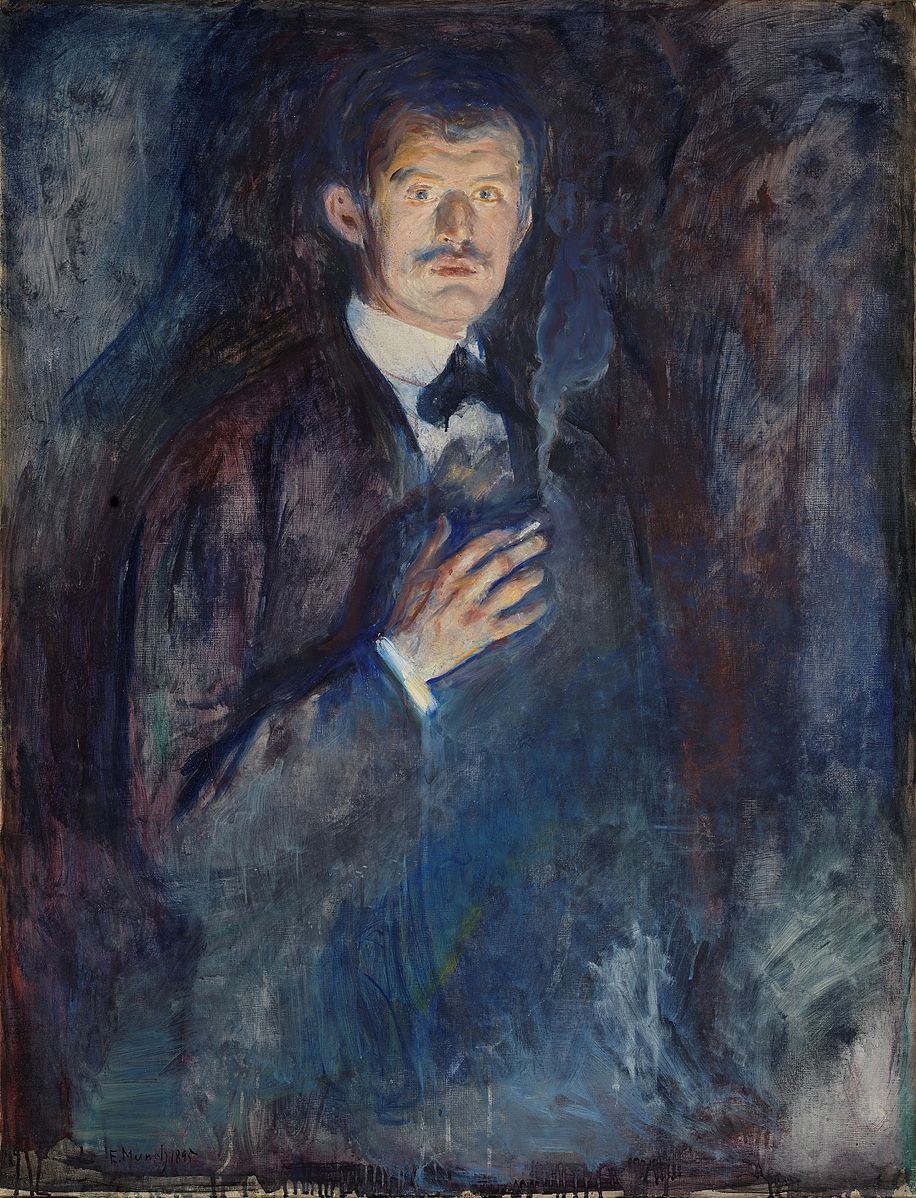
When we think of Edvard Munch, we think of The Scream. Though not explicitly a self-portrait, that iconic 1893 canvas does, to anyone who’s read up on the painter’s life, look like a plausible expression of his troubled internal state. But “Self-Portrait with Cigarette made two years later, though less jarring, is just as concerned with Munch’s personal psychology and the dark underside of his identity as The Scream is.” So argues Evan Puschak, better known as the Nerdwriter, in his video essay “Edvard Munch: What A Cigarette Means.” Through the artist’s smoke of choice, it seems, we can approach and understand the different time in which he lived.
“At the end of the 19th century,” Puschak explains, “the cigarette existed at the center of a lot of different cultural forces.” In fact it hadn’t quite caught on, having yet to overcome its lower-class image compared to cigars and pipes. But as with so much that eventually goes mainstream, the cigarette was first widely adopted by bohemians.
Among them Munch and his contemporaries “found their alternative to the suffocating middle-class value system. They traded in drawing rooms for late-night cafés, dinner parties for nightclubs, and cigars for cigarettes.” Puschak pulls up a painting by Munch’s mentor Christian Krohg showing a 21-year-old Munch “lighting up with his friends and fellow painters in his studio.”
Even as he inhabited it, Munch himself also captured this floating world in his art. In one of his etchings, “smoke snakes and fills up the atmosphere of a café, where bohemian intellectuals of both genders drink and debate art and ideas.” To the social reformers of late 19th-century Norway such scenes were anathema, and “the cigarette was symptomatic of society’s degeneration.” These figures thought little more of Munch’s art, whether the work in question was a relatively naturalistic image like Self-Portrait with Cigarette or a violently expressionist one like The Scream. Regarded today as examples of high, refined culture, his paintings have in some sense lost their edge; but then so has the cigarette, a onetime liberating symbol of social and artistic revolution now reduced to a squalid public-health hazard.
Related Content:
Explore 7,600 Works of Art by Edvard Munch: They’re Now Digitized and Free Online
The Life & Work of Edvard Munch, Explored by Patti Smith and Charlotte Gainsbourg
Edvard Munch’s Famous Painting The Scream Animated to the Sound of Pink Floyd’s Primal Music
30,000 Works of Art by Edvard Munch & Other Artists Put Online by Norway’s National Museum of Art
Based in Seoul, Colin Marshall writes and broadcasts on cities, language, and culture. His projects include the Substack newsletter Books on Cities, the book The Stateless City: a Walk through 21st-Century Los Angeles and the video series The City in Cinema. Follow him on Twitter at @colinmarshall or on Facebook.
Read More...Online Degrees & Mini Degrees: Explore Masters, Mini Masters, Bachelors & Mini Bachelors from Top Universities
Explore a collection of online Degree and Mini Degree Programs from major universities, including MIT, Harvard, UC Berkeley & more.
The lists below include Online Mini Master’s Degrees, Online Master’s Degrees, Online Mini Bachelor’s Degrees, and finally Online Bachelor’s Degrees.
Many of these programs are offered at a significantly lower price than traditional degree programs.
Mini Master’s Programs
To learn more about the value of MicroMasters programs from edX, and MasterTrack Certificate programs from Coursera, read this article from Business Insider.
Business
- Accounting — Indiana University via edX
- Business Leadership — The University of Queensland via edX
- Business Management — Indian Institute of Management Bangalore via edX
- Business and Operations for a Circular Bio-Economy — Wageningen University & Research via edX
- Certified Lifestyle Medicine Executive — Doane University via edX
- Corporate Innovation — The University of Queensland via edX
- Design Thinking - Rochester Institute of Technology via edX
- Digital Leadership — Boston University via edX
- Digital Product Management — Boston University via edX
- Entrepreneurship — Indian Institute of Management Bangalore via edX
- Finance — MIT via edX
- Finance, Analysis and Modeling — Macquarie via Coursera
- Global Business Leadership and Management — Arizona State via edX
- Global Leadership and Human Resource Management - Macquarie Business School via Coursera
- Healthcare Administration — Doane University via edX
- Innovation & Entrepreneurship — Tecnológico de Monterrey via edX
- Innovation Management & Entrepreneurship — HEC via Coursera
- International Hospitality Management — The Hong Kong Polytechnic University via edX
- Leadership in Global Development — The University of Queensland via edX
- MBA Core Curriculum — University of Maryland via edX
- Managing Technology & Innovation: How to deal with disruptive change — RWTH Aachen University via edX
- Marketing Analytics — UC Berkeley via edX
- Marketing in a Digital World — Curtin University via edX
- Principles of Manufacturing — MIT via edX
- Project Management — Rochester Institute of Technology via edX
Computer Science
- AI and Machine Learning — Arizona State University via Coursera
- Blockchain Applications — Duke University via Coursera
- Cloud Computing — University of Maryland via edX
- Cybersecurity — Rochester Institute of Technology via edX
- Cybersecurity- Arizona State University via Coursera
- Industrial Internet of Things — UC Boulder via Coursera
- Information Systems — Indiana University via edX
- Internet of Things (IoT) — Curtin University via edX
- Machine Learning for Analytics- U Chicago via edX
- Nanoscience and Technology — Purdue University via edX
- Predictive Analytics using Python — The University of Edinburgh via edX
- Quantum Technology: Computing — Purdue University via edX
- Quantum Technology: Detectors and Networking — Purdue University via edX
- Software Development — The University of British Columbia via edX
- Software Engineering - Arizona State University via Coursera
- Supply Chain Management — MIT via edX
- Supply Chain Excellence — Rutgers University via Coursera
Data Science
- Algorithms and Data Structures — UC San Diego via edX
- Analytics: Essential Tools and Methods — Georgia Tech via edX
- Big Data — University of Adelaide via edX
- Big Data — Arizona State University via Coursera
- Data Analytics for Managers — Tufts University via Coursera
- Data Science — UC San Diego via edX
- Statistics and Data Science — MIT via edX
Education
- Instructional Design- University of Illinois via Coursera
- Instructional Design and Technology — University of Maryland via edX
- Leading Educational Innovation and Improvement — University of Michigan via edX
Engineering
- Construction Engineering and Management — University of Michigan via Coursera
- Reliability and Decision Making in Engineering Design — Purdue University via edX
- Solar Energy Engineering - Delft University of Technology via edX
- Structural Design — Purdue University via edX
Health
- Health Informatics - Yale University via Coursera
- Water and Global Human Health — Queen’s University via edX
Humanities/Arts & Culture
- Humanities & Soft Skills — Tecnológico de Monterrey via edX
- Integrated Digital Media — NYU via edX
- English Proficiency for Graduate Studies Certificate — Arizona State University via Coursera
- Writing for Performance and the Entertainment Industries - Cambridge University via edX
Sustainability
- Economics and Policies for a Circular Bio-Economy — Wageningen University & Research via edX
- Emerging Automotive Technologies — Chalmers University via edX
- Sustainable Agribusiness — Doane University via edX
- Sustainable Energy — The University of Queensland via edX
- Sustainability and Development — University of Michigan via Coursera
UX Design
- UX Design — University of Minnesota via Coursera
- UX Design and Evaluation — HEC Montréal via edX
Sundry
- Chemistry and Technology for Sustainability — Wageningen University & Research via edX
- International Law - Université catholique de Louvain via edX
- Social Work: Practice, Policy and Research — University of Michigan via Coursera
Online Master’s Degrees
Business
- Online Master’s of Accounting (iMSA) — University of Illinois via Coursera
- Master’s Degree in Accounting — Indiana University via edX
- Master of Business Administration (iMBA) — University of Illinois via Coursera
- Online MBA Degree: Master of Business Administration — Boston University via edX
- Global Master of Business Administration (GMBA) — Macquarie University via Coursera
- MSc in Innovation and Entrepreneurship — HEC via Coursera
- Master’s Degree in Leadership: Service Innovation — The University of Queensland via edX
- Master of Science in Management — University of Illinois via Coursera
- Master’s Degree in Supply Chain Management — Arizona State via edX
Computer Science & Electrical Engineering
- Master’s Degree in Analytics — Georgia Tech via edX
- Master’s Degree in Computer Science - UT Austin via edX
- Master of Computer and Information Technology — University of Pennsylvania
- Master of Computer Science — Arizona State via Coursera
- Master of Computer Science (Featuring Data Science Track) — University of Illinois via Coursera
- Master’s Degree in Cybersecurity — Georgia Tech via edX
- Master’s Degree in IT Management — Indiana University via edX
- Master of Science in Electrical Engineering — UC Boulder via Coursera
- Master’s Degree in Electrical and Computer Engineering — Purdue University via edX
- Master of Machine Learning and Data Science - Imperial College London via Coursera
Data Science
- Master of Applied Data Science — University of Michigan via Coursera
- Master’s Degree in Data Science — UT-Austin via edX
- Master of Science in Data Science — UC Boulder via Coursera
Public Health
- Master of Public Health — University of Michigan via Coursera
- Global Master of Public Health (GMPH) — Imperial College London via Coursera
- Master of Science in Population and Health Sciences — University of Michigan via Coursera
Sundry
- Master’s Degree in Civil Engineering — Purdue University via edX
- Master’s Degree in Nutritional Sciences — UT-Austin via edX
- Master’s Degree in Mechanical Engineering — Purdue University via edX
Micro Bachelor’s Degrees
- Business Analytics Foundations - Southern New Hampshire University via edX
- Business and Professional Communication for Success — Doane University via edX
- Computer Science Fundamentals — NYU via edX
- Cybersecurity Fundamentals — NYU via edX
- Data Management with Python and SQL - Southern New Hampshire University via edX
- Elements of Data Science — Rice University via edX
- Introduction to Databases — NYU via edX
- Introduction to Information Technology — Western Governors University via edX
- Marketing Essentials — Doane University via edX
- Professional Writing — Arizona State via edX
- Programming & Data Structures — NYU via edX
Bachelor’s Degrees
- Bachelor of Applied Arts and Sciences — University of North Texas via Coursera
To explore a list of free courses, see our collection, 1,700 Free Online Courses from Top Universities.
Read More...Support Us
We're hoping to rely on loyal readers, rather than erratic ads. Please click the Donate button and support Open Culture. You can use Paypal, Venmo, Patreon, even Crypto! We thank you!

About Us

Open Culture scours the web for the best educational media. We find the free courses and audio books you need, the language lessons & educational videos you want, and plenty of enlightenment in between.
Advertise With Us
FREE UPDATES!
GET OUR DAILY EMAIL
Get the best cultural and educational resources on the web curated for you in a daily email. We never spam. Unsubscribe at any time.
FOLLOW ON SOCIAL MEDIA
Open Culture editor Dan Colman scours the web for the best educational media. He finds the free courses and audio books you need, the language lessons & movies you want, and plenty of enlightenment in between.
Advertise With Us

