How Edward Hopper’s Paintings Inspired the Creepy Suspense of Alfred Hitchcock’s Rear Window
Certain directors like to implicate their audience in their onscreen crimes, drawing on decades of expectations created by popular cinematic tropes and playing with the viewer’s innate desires. Filmmaker Michael Haneke takes a Hitchcockian approach in this regard, in nightmarish visions like Benny’s Video, The Piano Player, and Caché. “Haneke uses voyeurism to dismantle the space between the film and audience,” writes Popmatters,” and in doing so, he takes advantage of what might be thought of as Hitchcock’s voyeur apparatus and forces the audience to question its place within the narrative.”
Hitchcock’s “voyeur apparatus” has inspired many another idiosyncratic filmmaker — most notably, perhaps, David Lynch. Like Jimmy Stewart’s Jeff Jeffries in Hitchcock’s Rear Window, Kyle MacLachlan’s Jeffrey in Lynch’s Blue Velvet becomes corrupted by illicit vision.
These are classic iterations of the Peeping Tom, the casual voyeur sexually awakened by covert observations of others. The road from Hitchcock to the psychosexual alienation of later arthouse cinema may be a short one, but where did Hitchcock’s framing of the voyeuristic gaze come from?
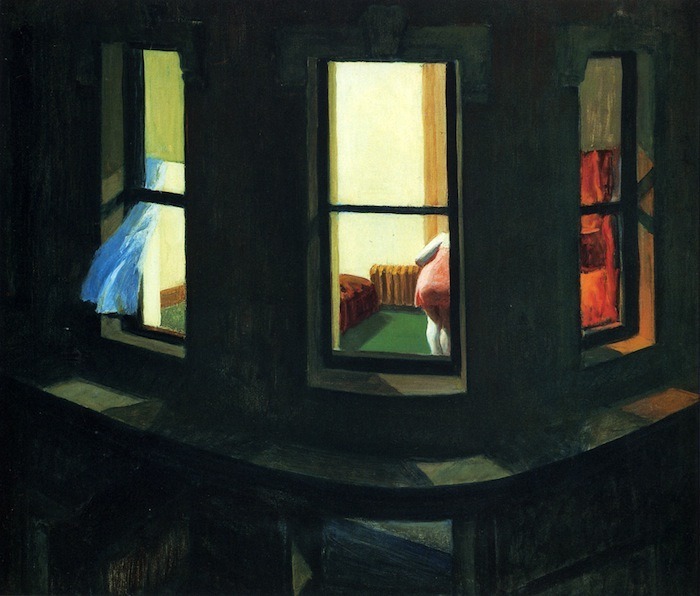
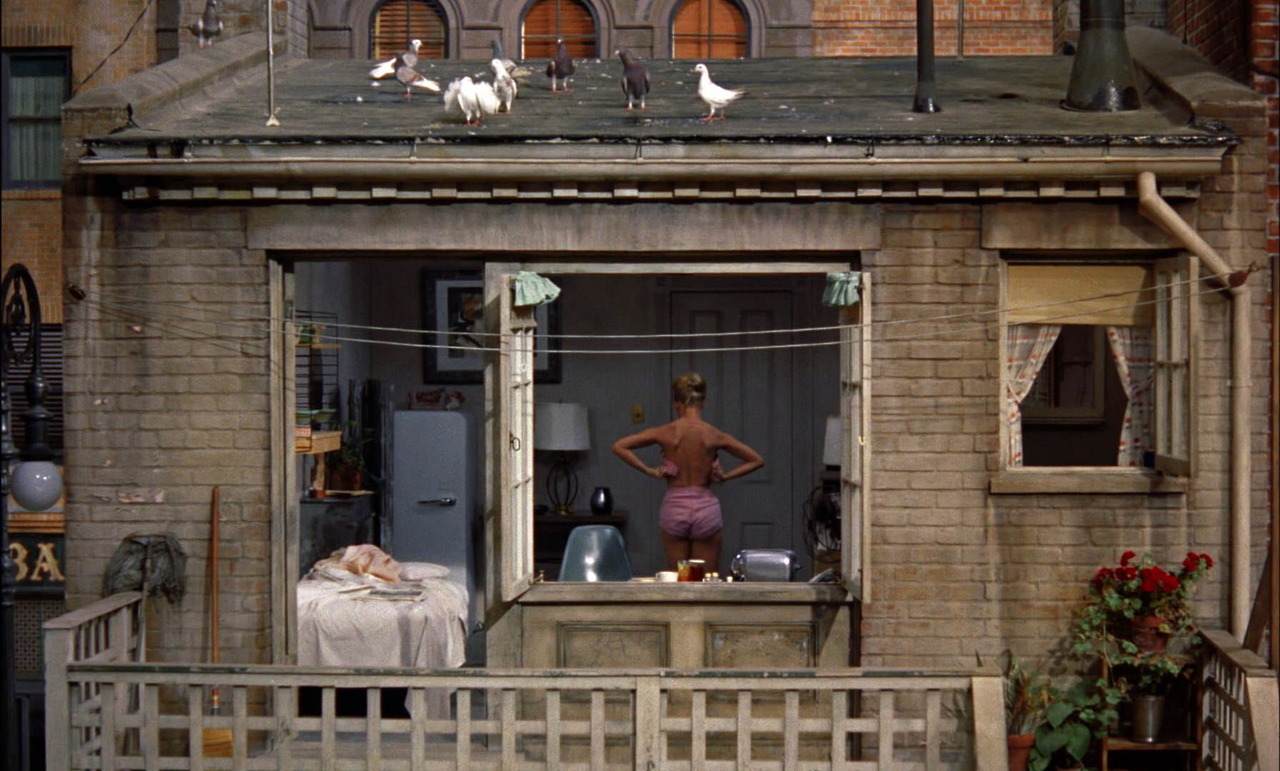
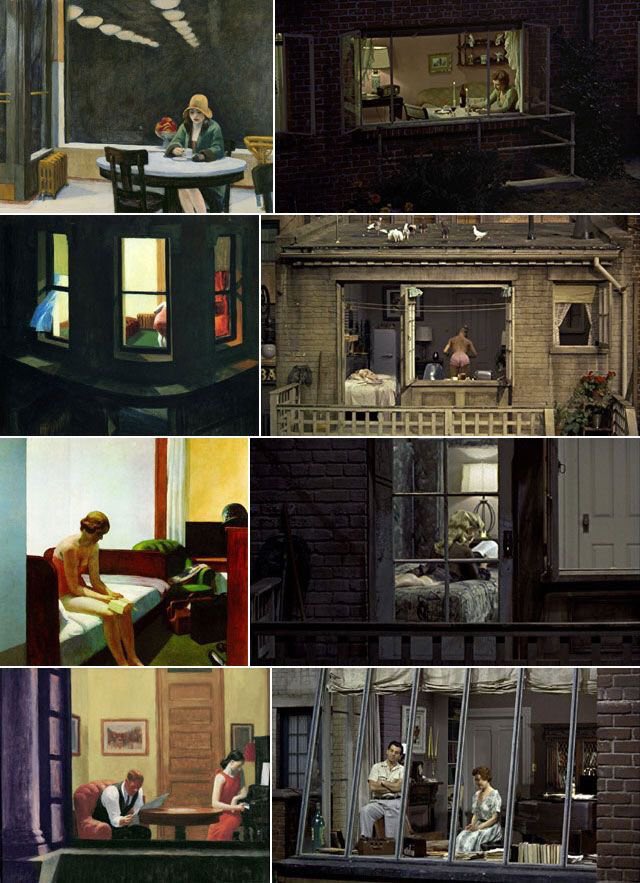
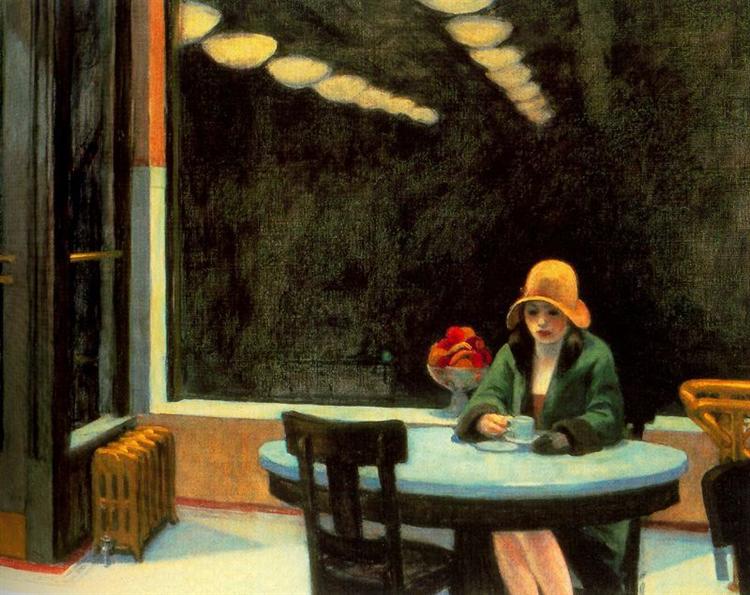
One answer, says writer Diane Doniol-Valcroze — daughter of Cahiers Du Cinéma co-founder Jacques Doniol-Valcroze — is found in a comparison of Hitchcock’s visual sense with that of Edward Hopper, the inventer of midcentury modern loneliness and also himself kind of a classic Peeping Tom. In a series of juxtapositions on Twitter, Doniol-Valcroze shows how Hitchcock adopted the framing of paintings like Hopper’s Automat (1927), Night Windows (1928), Hotel Room (1931), Room in New York (1932) for shots of Rear Window’s “Miss Torso” and “Miss Lonelyhearts.” She is not the only critic to make the comparison.
“For Hitchcock in particular,” writes Finn Blythe at Hero, “Hopper’s gaze was like a petri dish from which an infinite number of possible narratives could grow. Evidence of Hopper’s influence can be found throughout Hitchcock’s oeuvre, but especially his 1954 classic Rear Window. Just as the power of Hopper’s paintings lies in what he chooses to exclude, so the tension and spectacle in Hitchcock’s Rear Window relies on what is obscured or unseen.” Hopper’s figures are not only lonely and alienated, they are vulnerable, and especially so in private, unguarded moments in their own homes.
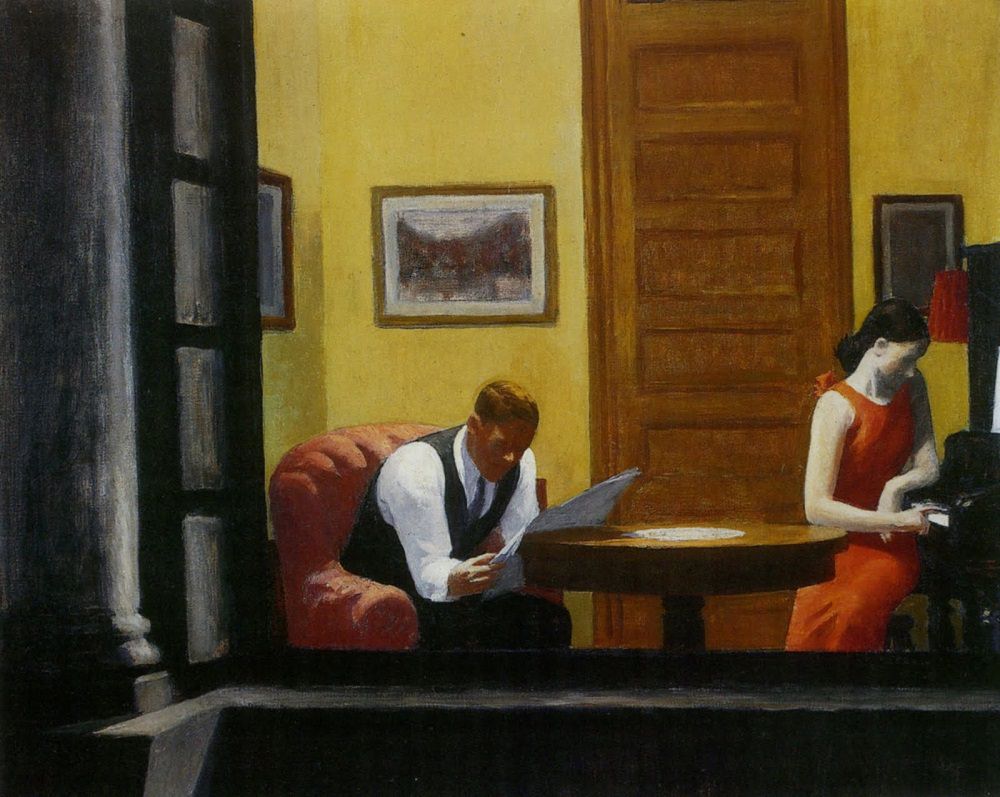
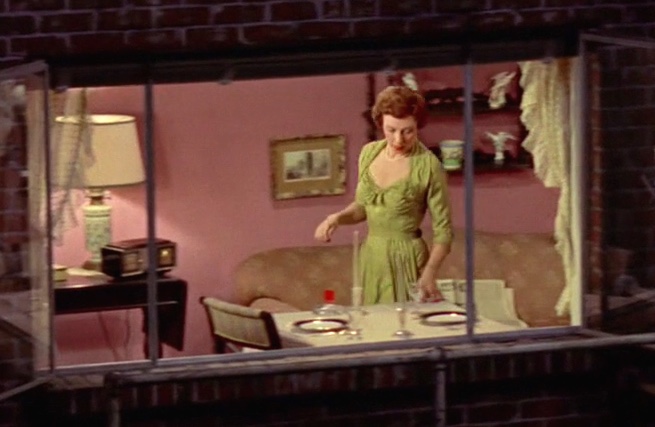
Hitchcock takes Hopper’s gaze, so often framed by windows, and makes it about cinema itself. “As viewers,” writes Blythe, “we become complicit in the same morbid human fantasies,” as Stewart’s creepy Jeff, “rubber-necking the same lurid acts from the safe vantage point of our chairs.” As the cinematic image of the voyeur has shown us, however — in Hitchcock, Haneke, Lynch, and its many iterations of what Laura Mulvey called the “male gaze” — the act of watching from a distance can become a kind of violence all its own; in Hitchcockian cinema, the menace that often seems to lurk just out of frame in Hopper’s paintings can burst into the picture at any moment.
Related Content:
Alfred Hitchcock Reveals The Secret Sauce for Creating Suspense
Edward Hopper’s Iconic Painting Nighthawks Explained in a 7‑Minute Video Introduction
How Edward Hopper “Storyboarded” His Iconic Painting Nighthawks
Josh Jones is a writer and musician based in Durham, NC. Follow him at @jdmagness
Read More...A Celebration of Typewriters in Film & Television: A Supercut
There are a number of ways to come at video essayist Ariel Avissar’s two-minute supercut of typewriters in action on film and television.
Cinema buffs will itch to connect The Typewriter’s clips to titles. Here are some of the ones we were able to identify:
Mad Men
And then there are the typewriter enthusiasts, more concerned with make and model than anything relating to cinema:
Royal
Underwood
Olympia
Clark Nova
Smith Corona
IBM Selectric
Given the obsessive nature of both camps, it’s not surprising that there would be some crossover.
Here’s a delightfully nerdy investigation of the onscreen typewriters in Naked Lunch, David Cronenberg’s adaptation of William S. Burrough’s novel.
This collector’s top 10 list gives extra consideration to scripts that “place typewriters at the heart of the story.” First and second place feature typewriters on their posters.
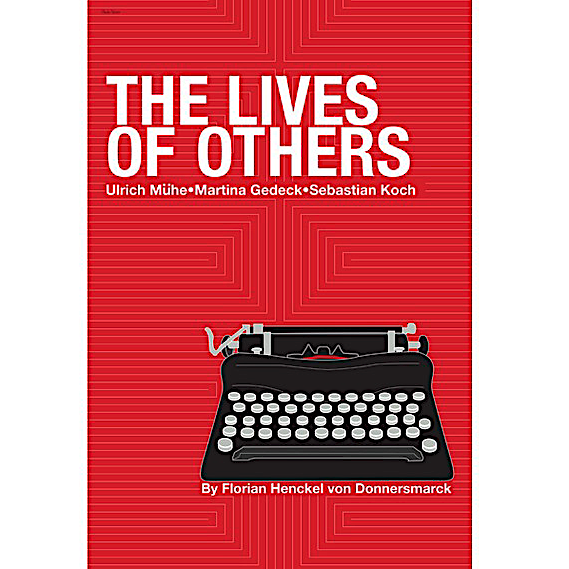
An IBM Selectric III in Avissar’s supercut caused one viewer to reminisce about the anachronistic use of Selectric IIs in Mad Men’s first season secretarial pool. Creator Matthew Weiner admits the choice was deliberate. The first Selectric model is period appropriate, but much more difficult to find and challenging to maintain, plus their manual carriage returns would have created a headache for sound editors.
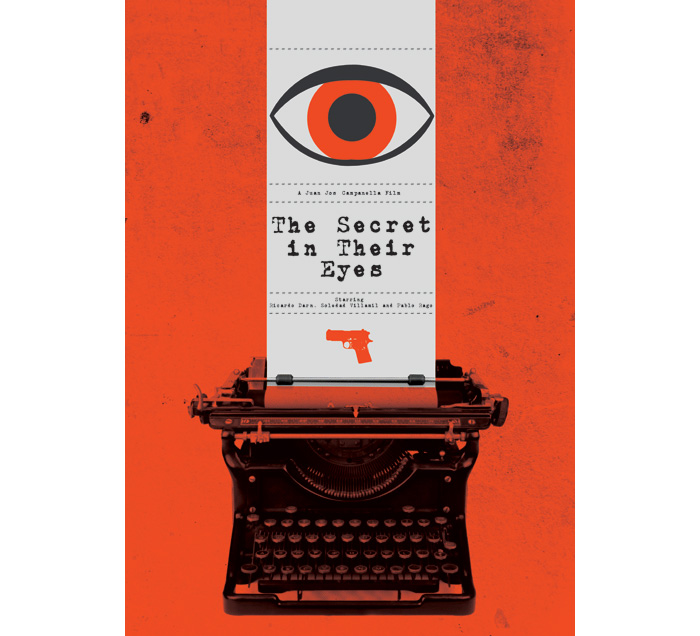
Avissar’s round up also serves to remind us of a particularly modern problem—the ongoing quest to portray texts and social media messages effectively on big and small screens. This dilemma didn’t exist back when typewriters were the primary text-based devices. A close up of whatever page was rolled onto the platen got the job done with a minimum of fuss.
Two of the most celebrated typewriter sequences in film history did not make the cut, possibly because neither features actual working typewriters: the NSFW anthropomorphic typewriter-bug in David Cronenberg’s adaptation of William S. Burrough’s Naked Lunch and Jerry Lewis’ inspired pantomime in Who’s Minding the Store, performed, like Avissar’s supercut, to the tune of composer Leroy Anderson’s The Typewriter.
Up for another challenge? Which top Hollywood star is “obsessed with typewriters”?
Watch more of Ariel Avissar’s supercuts, including a supermoon tribute and The Silence of the Lambs’ “clever, careful fingers” on his Vimeo channel.
Related Content:
Ayun Halliday is an author, illustrator, theater maker and Chief Primatologist of the East Village Inky zine. Follow her @AyunHalliday.
Read More...Michael Winslow, the “Man of 10,000 Sound Effects”, Impersonates the Sounds of Jimi Hendrix’s and Led Zeppelin’s Electric Guitars with His Voice
Even if you weren’t a huge fan of the Police Academy movies, there was one character that made them watchable: Larvell Jones, played by Michael Winslow, “The Man of a 10,000 Sound Effects.” His character is a sort of oddball presence throughout the series, whose ability to sound like a siren, a machine gun, a guard dog, or any number of things, invariably helps his team save the day. He’s been the only consistent character through all eight entries of the movie series, a brief television spin-off, and an animated cartoon series. And I dare say he’s the franchise’s reason to exist, as a Police Academy without Larvell Jones would be…what? A bunch of crappy cops?
And while you might think of him as a master of machine noises, Winslow is actually a very musical performer, as his above impression of Jimi Hendrix, both vocals and guitar, proves. Winslow was an army brat, moved all over the place, and his imitation skills developed at an early age, a coping mechanism for a lonely childhood. He kept at it, and made it onto The Gong Show in 1978. The prize money allowed him to stay in Los Angeles and start making the club rounds. He got scouted for Police Academy while opening for the Count Basie Orchestra, performing “some fusion jazz sounds,” as he described it in an interview. Fortunately, the filmmakers let him improvise through his scenes and his career took off from there.
As the clips here show, Winslow can jam hard. His Hendrix impression is a little bit stoned, and he gets the voice right. With a backing band on tape, he goes on to provide the vocals and the distorted, flanged guitar. You can see that little has changed from the version from the ‘80s at the Just for Laughs Comedy Festival in Montreal, Canada, and a 2011 performance from the Dubomedy International Performing Arts Festival in Dubai. The latter has better sound quality and separation so you can hear Winslow’s work.
His Led Zeppelin impression combines both Robert Plant and Jimmy Page, and I won’t spoil the joke, but Winslow explains how Plant came up with “Immigrant Song.”
And there’s no sound effects involved in his Tina Turner impression, but a good wig, and an impressive set of pipes that only get wobbly a few times. But then again, so do his legs.
Side note: Before Winslow there was a comedian called Wes Harrison, who had a similar talent and a similar rise to stardom: from talent show winner to a regular guest on late night shows in the 1960s to a steady stream of nightclub appearances.
In 1988, the two men, separated by 35 years, performed together on a Dick Clark variety show. It is perhaps the only time the two shared a stage.
Related Content:
How the Sound Effects on 1930s Radio Shows Were Made: An Inside Look
Ted Mills is a freelance writer on the arts who currently hosts the Notes from the Shed podcast and is the producer of KCRW’s Curious Coast. You can also follow him on Twitter at @tedmills, and/or watch his films here.
Read More...A Search Engine for Finding Free, Public Domain Images from World-Class Museums
Even before the pandemic, museums were putting their art online. Here on Open Culture, we’ve covered such ambitious efforts of digitization and making-available on the part of the Rijksmuseum, the Art Institute of Chicago, and other major institutions, some of whom have gone so far as to upload their holdings under Creative Commons licenses or in other free-to-use forms. And now you can call forth artworks from the open online collections and others all at once with the search engine Museo.
“Museo is a visual search engine that connects you with the Art Institute of Chicago, the Rijksmuseum, the Minneapolis Institute of Art and the New York Public Library Digital Collection,” writes creator Chase McCoy, who also emphasizes that connections with more such collections are to come.
“Every image you find here is in the public domain and completely free to use, although crediting the source institution is recommended!”
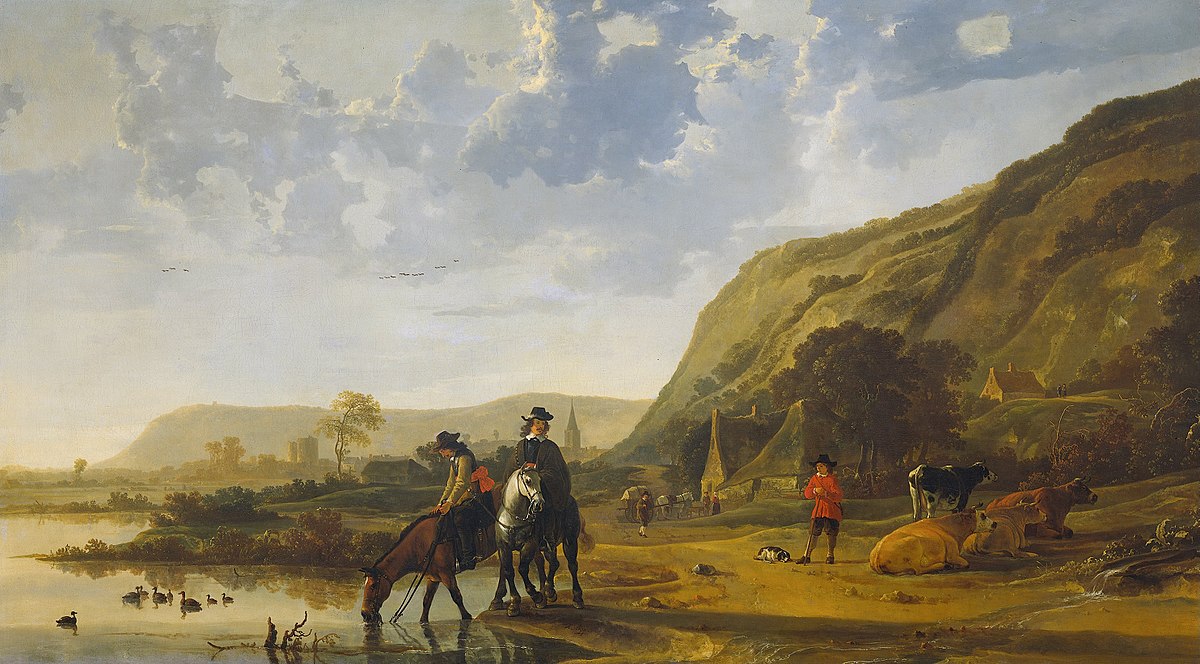
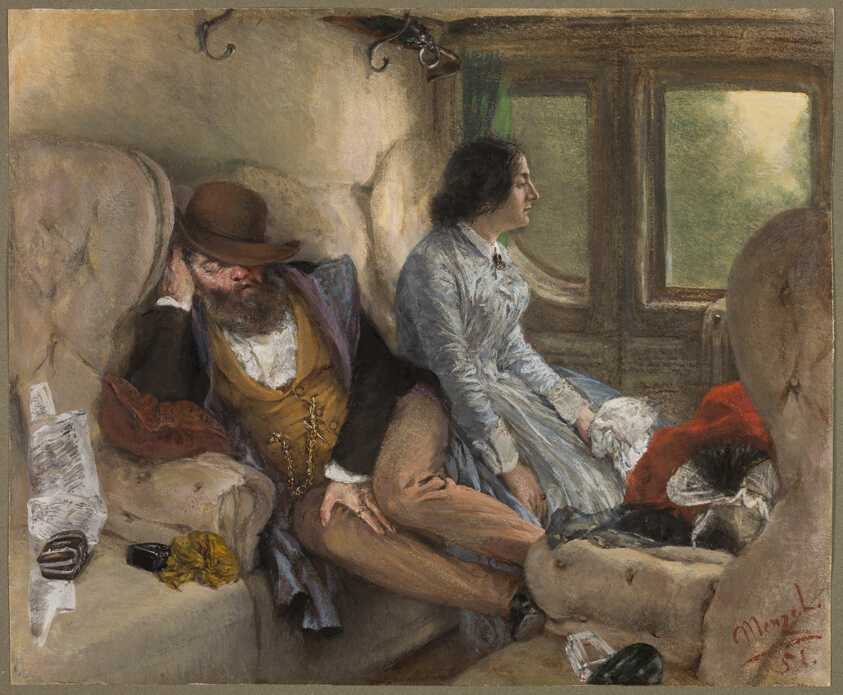
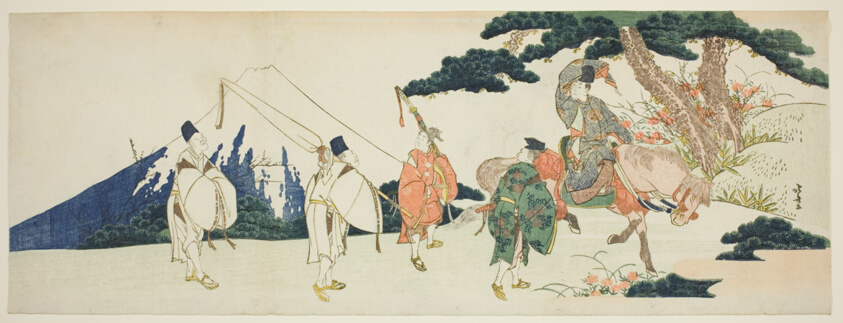
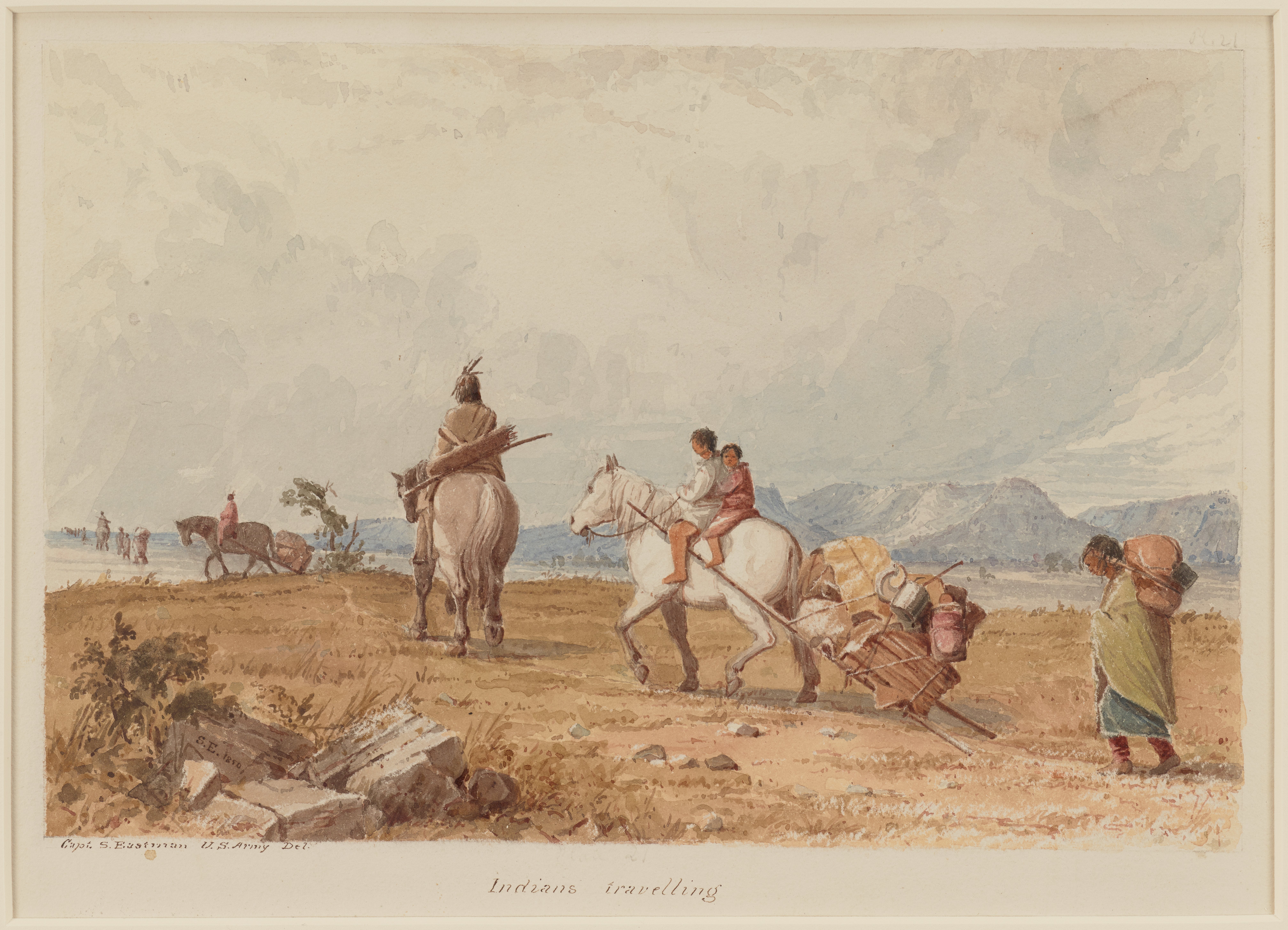
Imagine you need images to illustrate an essay about, say, travel. Punch that word into Museo (or a related one like “journey”) and out come a variety of paintings, prints, drawings, sculptures, books, maps, housewares, and other items found in museums. Here we have Adolph Menzel’s In a Railway Carriage (After a Night’s Journey) from 1851, Katsushika Hokusai’s The Eastern Journey of the Celebrated Poet Ariwara no Narihira from 1806, Aelbert Cuyp’s River Landscape with Riders from the mid-1650s, Seth Eastman’s Indians Travelling from 1850, and Richard Newton’s On a Journey to a Courtship in Wales from 1795.
The results are hardly limited to conventional works like these: you’ll also find such curiosities as an early 19th-century traveling desk; a portable bank from 1904 called the “traveling teller”; a 1920 image “showing the earth bisected centrally through the polar openings and at right angles to the equator, giving a clear view of the central sun and the interior continents and oceans”; Henry Corry Rowley Becher’s 1880 travelogue A Trip to Mexico; and the Automobile Club of Hartford’s 1922 Motor Trips guide to New England and eastern New York.
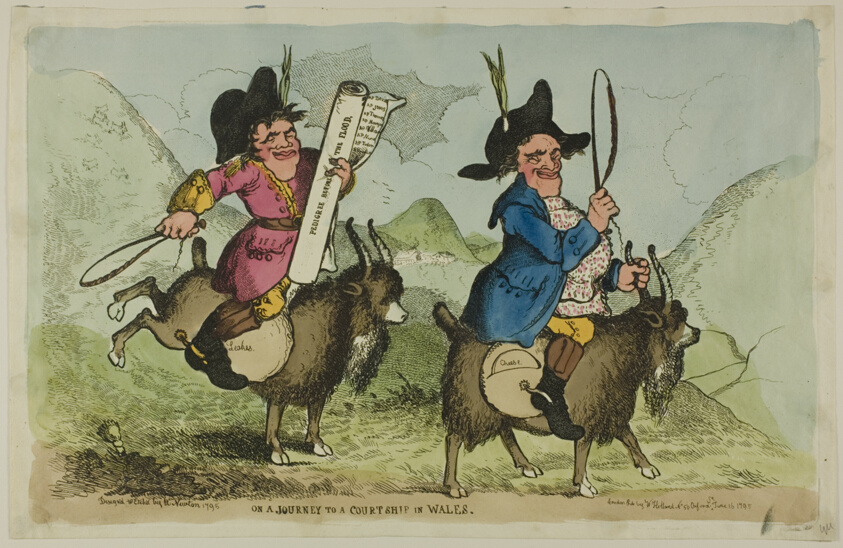
Most of the art available through Museo comes, as public-domain material tends to, from times long past. But that, in its own way, encourages their creative use: many of the images returned for “entertainment,” “food,” “sports,” and even “technology” fairly demand surprising 21st-century recontextualization. As its network of collections expands, do make a point of visiting Museo every so often to search for your own subjects of interest; your next big idea may well be inspired by art from a century or two (or three, or four) ago.
via Austin Kleon
Related Content:
Visit 2+ Million Free Works of Art from 20 World-Class Museums Free Online
The Art Institute of Chicago Puts 44,000+ Works of Art Online: View Them in High Resolution
Based in Seoul, Colin Marshall writes and broadcasts on cities, language, and culture. His projects include the Substack newsletter Books on Cities, the book The Stateless City: a Walk through 21st-Century Los Angeles and the video series The City in Cinema. Follow him on Twitter at @colinmarshall or on Facebook.
Read More...Researchers Develop a Digital Model of the 2,200-Year-Old Antikythera Mechanism, “the World’s First Computer”
What’s the world’s oldest computer? If you answered the 5‑ton, room-sized IBM Mark I, it’s a good guess, but you’d be off by a couple thousand years or so. The first known computer may have been a handheld device, a little larger than the average tablet. It was also hand-powered and had a limited, but nonetheless remarkable, function: it followed the Metonic cycle, “the 235-month pattern that ancient astronomers used to predict eclipses,” writes Robby Berman at Big Think.
The ancient artifact known as the Antikythera mechanism — named for the Greek Island under which it was discovered — turned up in 1900. It took another three-quarters of a century before the secrets of what first appeared as a “corroded lump” revealed a device of some kind dating from 150 to 100 BC. “By 2009, modern imaging technology had identified all 30 of the Antikythera mechanism’s gears, and a virtual model of it was released,” as we noted in an earlier post.
The device could predict the positions of the planets (or at least those the Greeks knew of: Mercury, Venus, Mars, Jupiter, and Saturn), as well as the sun, moon, and eclipses. It placed Earth at the center of the universe. Researchers studying the Antikythera mechanism understood that much. But they couldn’t quite understand exactly how it worked, since only about a third of the complex mechanism has survived.
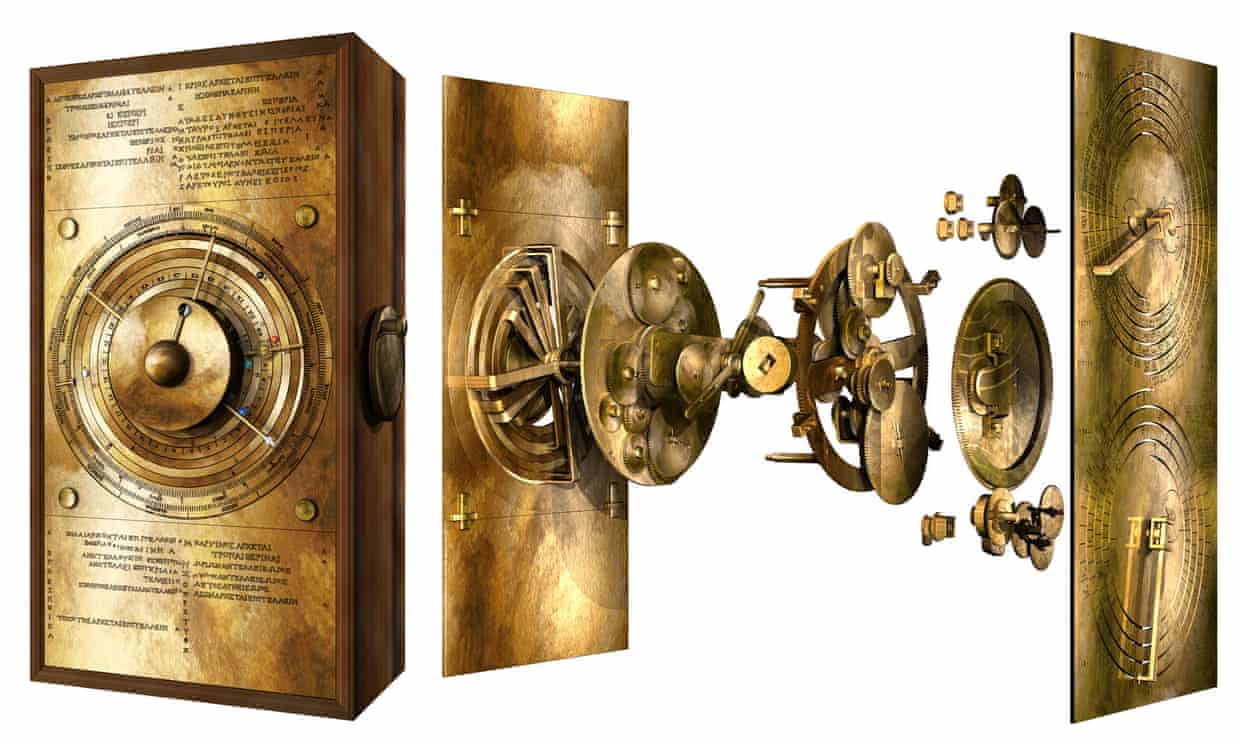
Image by University College London
Now, it appears that researchers from the University College of London have figured it out, debuting a new computational model in Scientific Reports. “Ours is the first model that conforms to all the physical evidence and matches the scientific inscriptions engraved on the mechanism itself,” lead author Tony Freeth tells The Engineer. In the video above, you can learn about the history of the mechanism and its rediscovery in the 20th century, and see a detailed explanation of Freeth and his team’s discoveries.
“About the size of a large dictionary,” the artifact has proven to be the “most complex piece of engineering from the ancient world” the video informs us. Having built a 3D model, the researchers next intend to build a replica of the device. If they can do so with “modern machinery,” writes Guardian science editor Ian Sample, “they aim to do the same with techniques from antiquity” — no small task considering that it’s “unclear how the ancient Greeks would have manufactured such components” without the use of a lathe, a tool they probably did not possess.
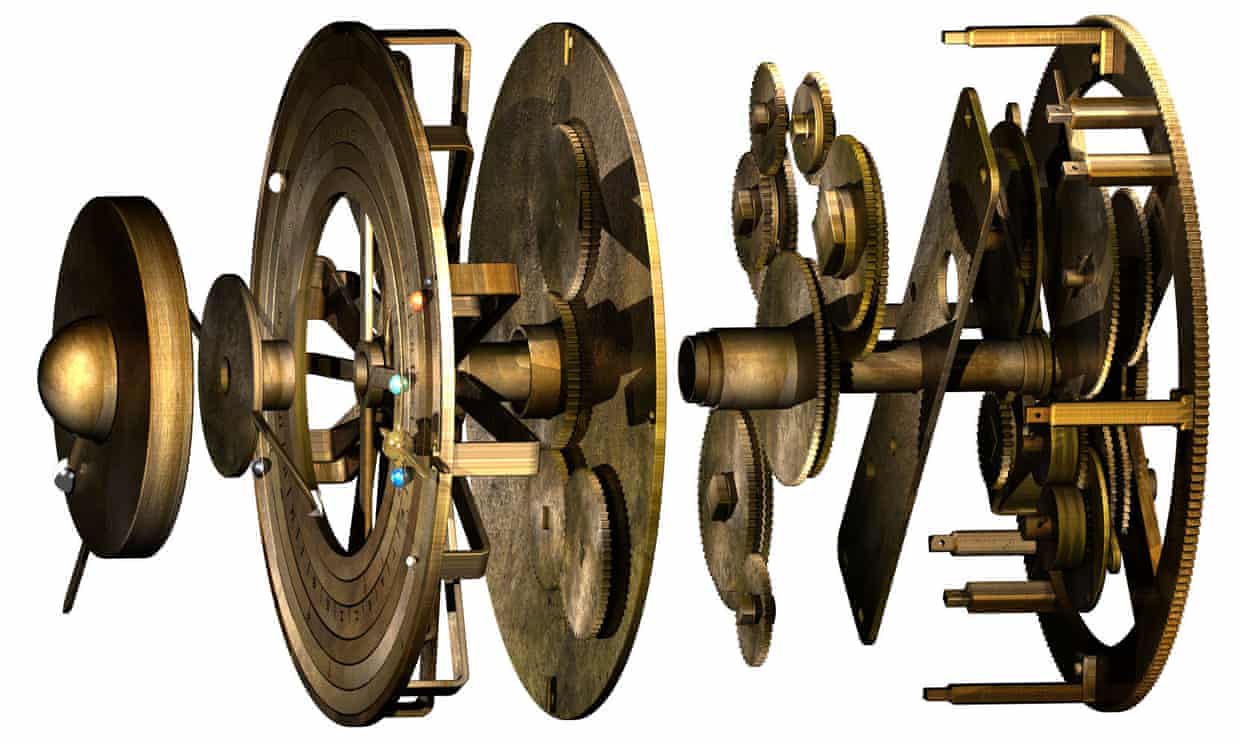
Image by University College London
The mechanism will still hold its secrets even if the UCL team’s model works. Why was it made, what was it used for? Were there other such devices? Hopefully, we won’t have to wait another several decades to learn the answers. Read the team’s Scientific Reports article here.
Related Content:
Modern Artists Show How the Ancient Greeks & Romans Made Coins, Vases & Artisanal Glass
How the Ancient Greeks Shaped Modern Mathematics: A Short, Animated Introduction
Josh Jones is a writer and musician based in Durham, NC. Follow him at @jdmagness
Read More...The Bayeux Tapestry Gets Digitized: View the Medieval Tapestry in High Resolution, Down to the Individual Thread
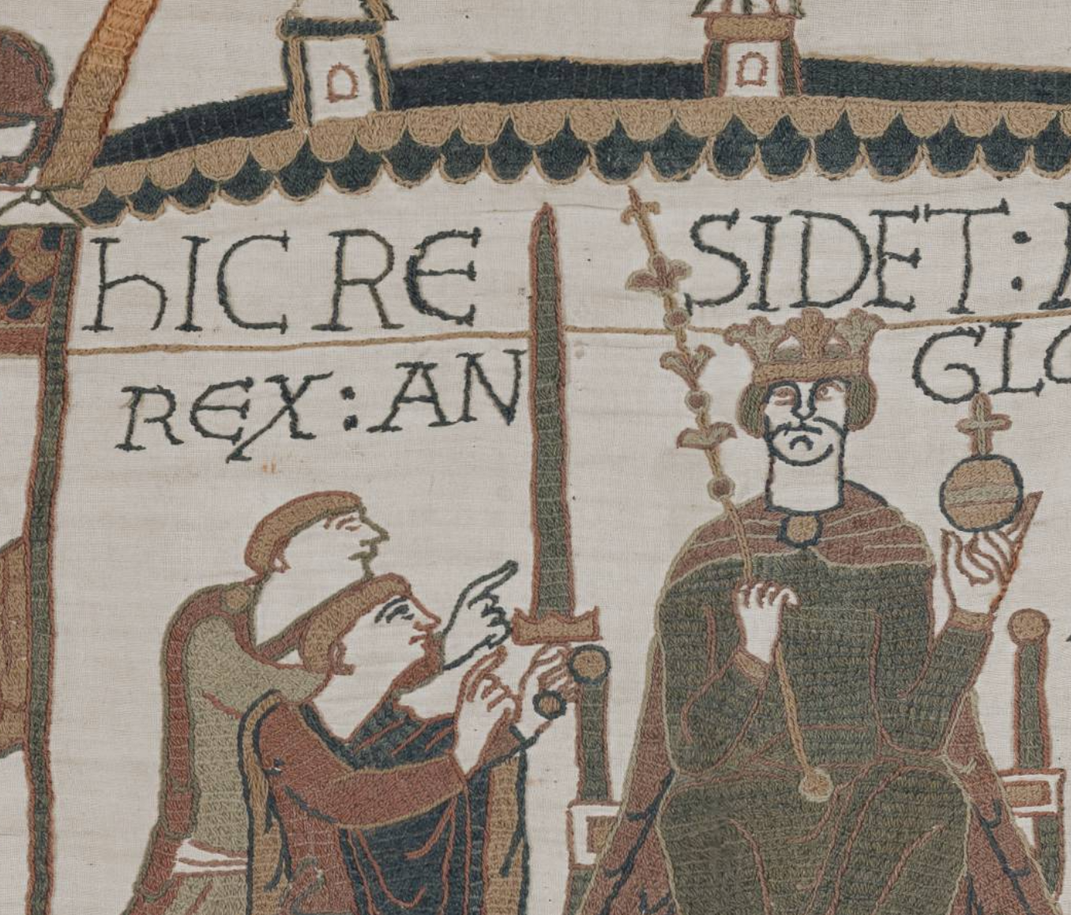
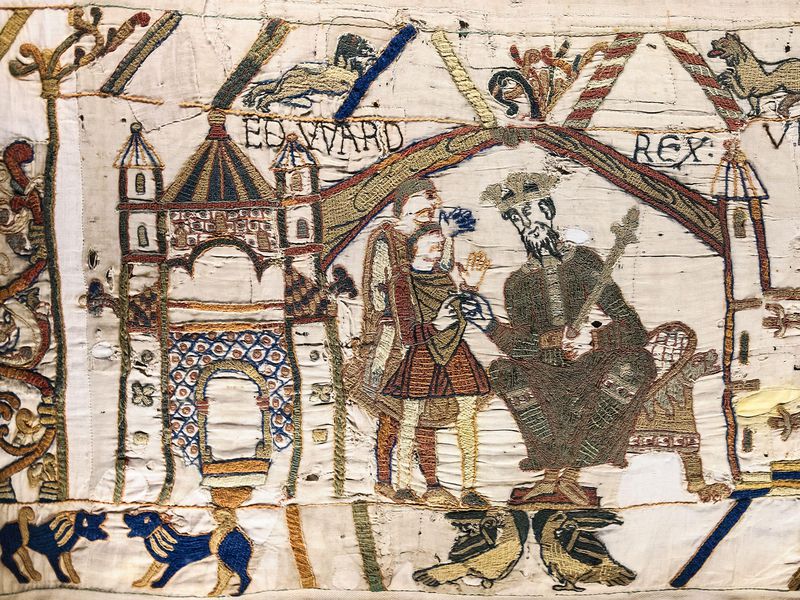
The Bayeux Tapestry, one of the most famous artifacts of its kind, isn’t actually a tapestry. Technically, because the images it bears are embroidered onto the cloth rather than woven into it, we should call it the Bayeux Embroidery. To quibble over a matter like this rather misses the point — but then, so does taking too literally the story it tells in colored yarn over its 224-foot length. Commissioned, historians believe, as an apologia for the Norman conquest of England in 1066, this elaborate work of narrative visual art conveys events with a certain slant. But in so doing, the Bayeux’s 75 dramatic, bloody, ribald, and sometimes mysterious episodes also capture how people and things (and even Halley’s Comet) looked in medieval Europe.
It does this in great, if stylized detail, at which you can get a closer look than has ever before been available to the public at the Bayeux Museum’s web site. The museum “worked with teams from the University of Caen Normandie to digitize high-resolution images of the tapestry, which were taken in 2017,” says Medievalists.net.
“A simple interface was created to access the digital version, which allows users to zoom in and explore it in great detail with access to Latin translations in French and English.” Made of 2.6 billion pixels (which brings it to eight gigabytes in size), the online Bayeux Tapestry lets us zoom in so far as to examine its individual threads — the same level at which it was inspected in real life earlier last year in anticipation of its next restoration.
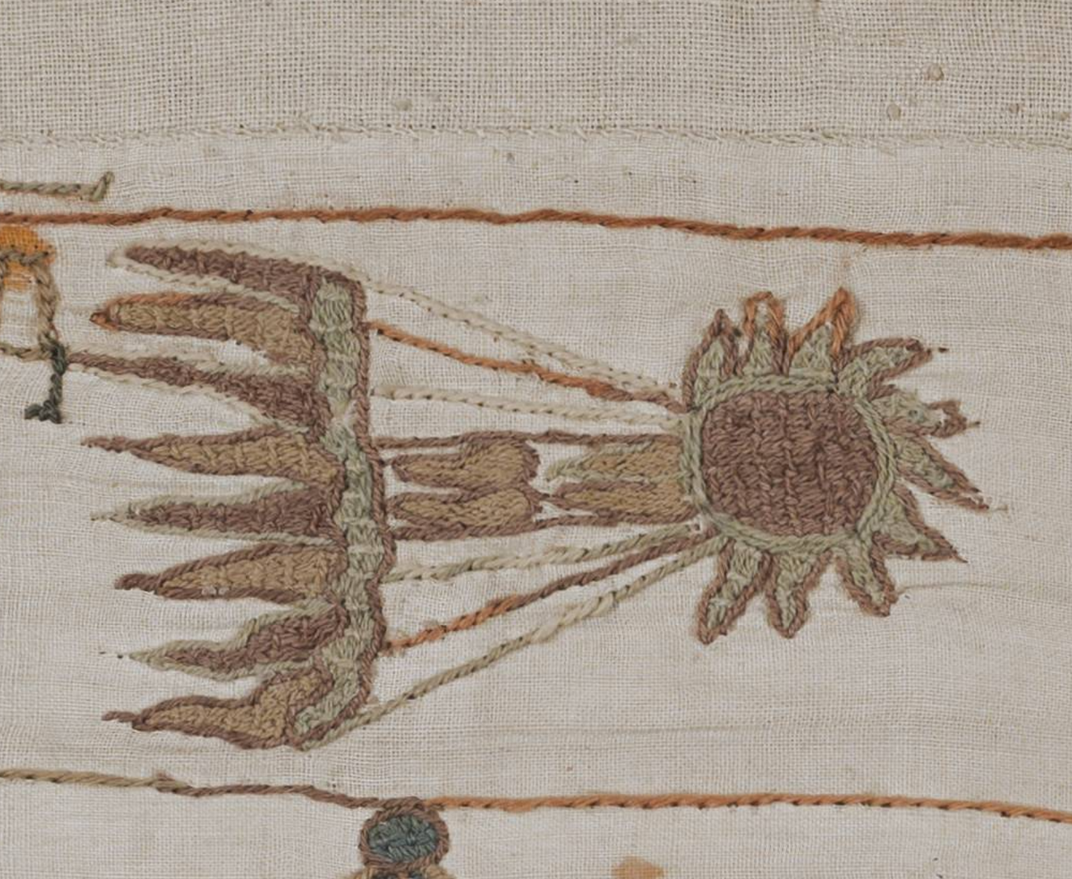
“A team of eight restorers, all specialists in antique textiles, carried out the detailed inspection in January 2020, a period when the museum was closed to visitors,” says Medievalists.net. “Among their findings were that the tapestry has 24,204 stains, 16,445 wrinkles, 9,646 gaps in the cloth or the embroidery, 30 non-stabilized tears, and significant weakening in the first few metres of the work.” (Notably, the colors applied in a 19th-century restoration have faded much more than the vegetable dyes used in the original.) Though currently a bit rough around the edges, the Bayeux Tapestry looks pretty good for its 950 or so years, as any of us can now look more than closely enough to see for ourselves. This is a credit to its makers — whose identities, for all the scrutiny performed on the work itself, may remain forever unknown. Explore the high-resolution scan of the Tapestry here.
via Smithsonian Magazine and Medievalists.net
Related Content:
The Animated Bayeux Tapestry: A Novel Way of Recounting The Battle of Hastings (1066)
Construct Your Own Bayeux Tapestry with This Free Online App
How the Ornate Tapestries from the Age of Louis XIV Were Made (and Are Still Made Today)
Why Knights Fought Snails in Illuminated Medieval Manuscripts
Based in Seoul, Colin Marshall writes and broadcasts on cities, language, and culture. His projects include the Substack newsletter Books on Cities, the book The Stateless City: a Walk through 21st-Century Los Angeles and the video series The City in Cinema. Follow him on Twitter at @colinmarshall or on Facebook.
Read More...17-Year-Old Adeline Harris Created a Quilt Collecting 360 Signatures of the Most Famous People of the 19th Century: Lincoln, Dickens, Emerson & More (1863)
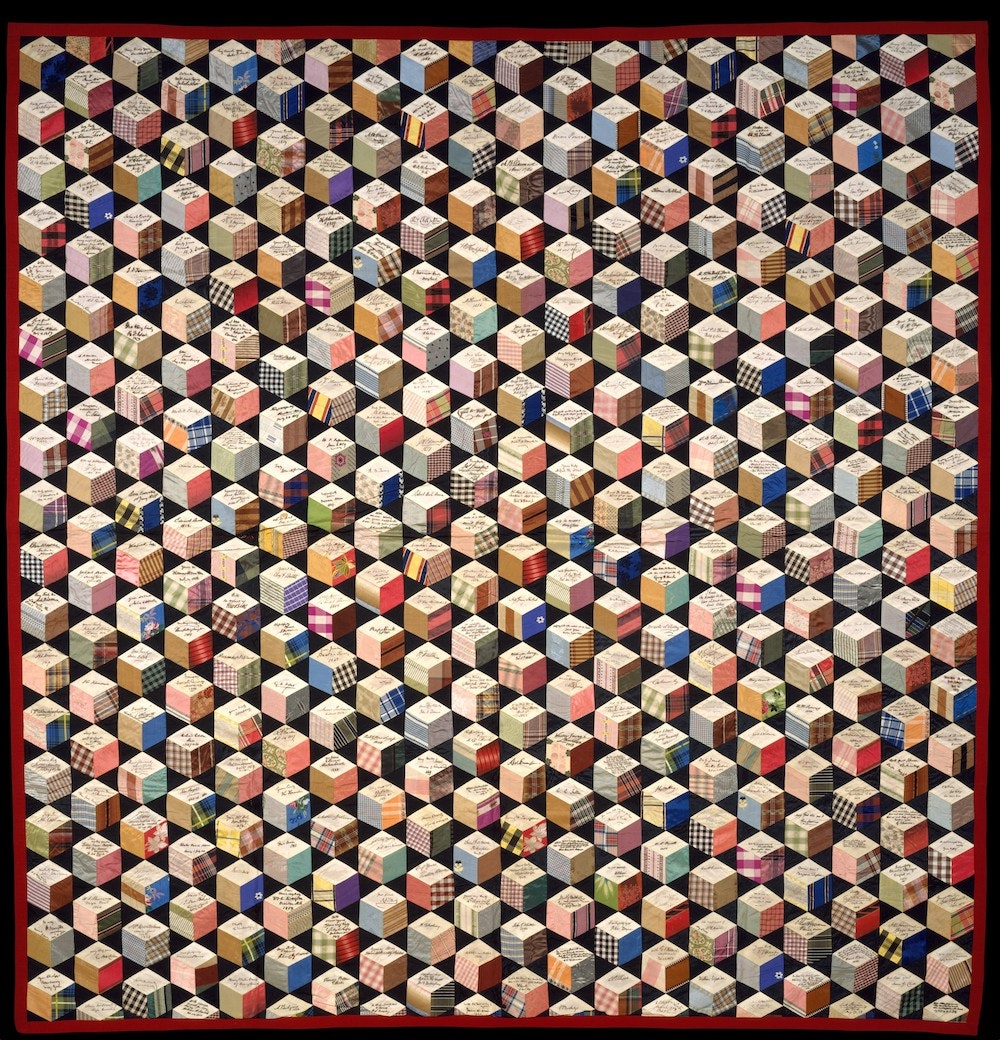
These days, anyone can reach out to hundreds of celebrities, artists, writers, major heads of state, etc., on social media (or to the interns and assistants who run their accounts). Instantaneous connection also means hundreds of near-instantaneous comments in near-real time. It can occasionally mean near-instantaneous influencer fame. For 17-year-old Adeline Harris, it would take seven years or so to get in touch with 360 of the biggest names in literature, politics, philosophy, science, and other fields of her time. Given that she started in 1856, that’s a somewhat extraordinary feat. It’s only one impressive feature of her Tumbling Block with Signatures Quilt, mostly completed sometime in 1863.
Harris’ quiltmaking project uses a “tumbling blocks pattern,” notes The History Blog, “characterized by a trompe l’oeil that gives it 3D cube effect. [She] showcased exceptional skill and mastery in her needlework and fabric choice, emphasizing the 3D effect with her arrangement of the varied patterns of silk pieces.”
The signatures on the white diamonds atop each “tumbling block” were mailed to Harris by request from a “who’s who” of mid-19th century luminaries, including “an astonishing eight presidents of the United States (Martin Van Buren, John Tyler, Millard Fillmore, Franklin Pierce, James Buchanan, Abraham Lincoln, Andrew Johnson, Ulysses S. Grant).”
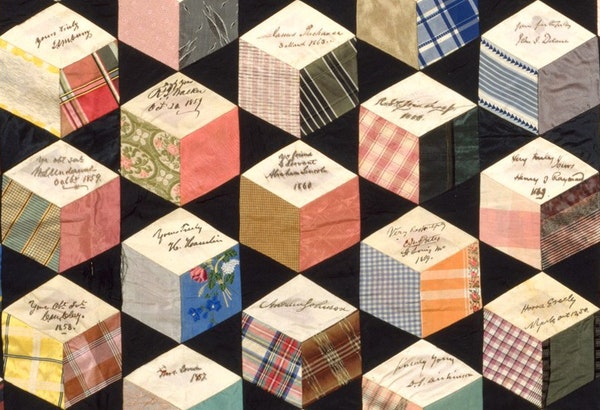
The quilt also contains the signatures of Union generals, congressmen, journalists, academics, clergymen. Famous names include Samuel Morse, Horace Greeley, Washington Irving, Nathaniel Hawthorne, Ralph Waldo Emerson, Jacob Grimm, Alexander von Humboldt, Henry Wadsworth Longfellow, Julia Ward Howe, Harriet Beecher Stowe, William Cullen Bryant, Alexandre Dumas, Oliver Wendell Holmes, William Makepeace Thackeray, and Charles Dickens. She placed the names in categories dividing the signatories by profession.
The full list “is nothing short of phenomenal,” the Public Domain Review writes, adding that “according to her grand-daughter the Lincoln signature was, due to a family connection, actually acquired in person, and Adeline was meant to have even danced with Lincoln at his inauguration ball.” Harris — later Adeline Harris Sears — came from a wealthy Rhode Island textile mill family and married a prominent clergyman. She spent most of her life in the state, and mailed most of her signature requests rather than delivering them firsthand.
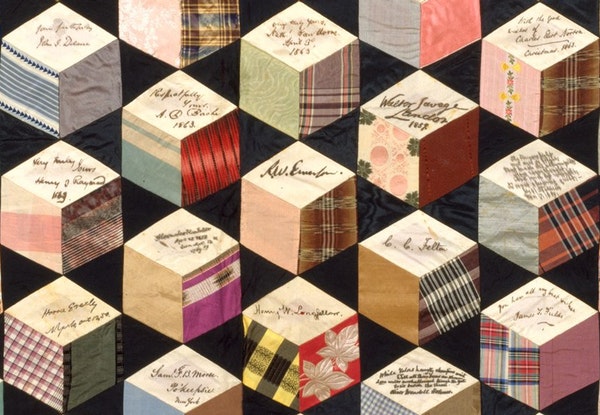
Signature quilts were not new; they had been sewn for years to mark family occasions and other events. But never had they been a means of celebrity autograph-hunting, nor been created by a single individual. Collecting autographs, however, was quite popular. “Adeline’s taste for autographs… betrays her romantic nature,” writes Metropolitan Museum of Art curator Amelia Peck. “Among a certain segment of the population, it was believed that a person’s signature revealed significant aspects of his or her personality.”
It’s hard not to see the seeds of our contemporary culture in the consumption of celebrity autographs Peck describes: “By owning a signature of an illustrious person, one could learn about the characteristics that made him or her great and emulate those traits.” This mania for autographs “paralleled the nineteenth-century fascination with other types of pseudoscientific personality discovery, such as phrenology.” There were deep, mystical meanings in Adeline’s quilt, wrote editor Sarah Hale, who also donated a signature. In her 1868 book Manners, Happy Homes and Good Society All the Year Round, Hale explained what made the quilt a masterpiece:
In short, we think this autograph bedquilt may be called a very wonderful invention in the way of needlework. The mere mechanical part, the number of small pieces, stitches neatly taken and accurately ordered; the arranging properly and joining nicely 2780 delicate bits of various beautiful and costly fabrics, is a task that would require no small share of resolution, patience, firmness, and perseverance. Then comes the intellectual part, the taste to assort colors and to make the appearance what it ought to be, where so many hundreds of shades are to be matched and suited to each other. After that we rise to the moral, when human deeds are to live in names, the consideration of the celebrities, who are to be placed each, the centre of his or her own circle! To do this well requires a knowledge of books and life, and an instinctive sense of the fitness of things, so as to assign each name its suitable place in this galaxy of stars or diamonds.
See more close-ups of the quilt at the Metropolitan Museum of Art, who hold this one-of-a-kind work of signatory fabric art in their collections.
Related Content:
Too Big for Any Museum, AIDS Quilt Goes Digital Thanks to Microsoft
Josh Jones is a writer and musician based in Durham, NC. Follow him at @jdmagness.
Read More...Archeologists Reconstruct the Faces of 10-Century Medieval Dukes, Using DNA Analysis & 3‑D Models of Skulls
Maybe you’ve sung the Christmas carol “Good King Wenceslas” and wondered who this good king was. The carol wasn’t written until the 19th century, but “Wenceslas was a real person,” writes NPR’s Tom Manoff, the patron saint of the Czechs and “the Duke of Bohemia, a 10th-century Christian prince in a land where many practiced a more ancient religion. In one version of his legend, Wenceslas was murdered in a plot by his brother,” Boleslav, “under the sway of their so-called pagan mother,” Drahomíra.
Wenceslas’ grandmother Ludmilla died a Christian martyr in 921 A.D. Her husband, Bořivoj, ruled as the first documented member of the Přemyslid Dynasty (late 800s-1306), and her two sons Spytihnĕv I (circa 875–915) and Vratislav I (circa 888–921), Wenceslas’ father, ruled after their father’s death. The skeletal remains of these royal Bohemian brothers were identified at Prague Castle in the 1980s by anthropologist Emanuel Vlček. Due to advances in DNA analysis and imaging, we can now see an approximation of what they looked like. (See Spytihnĕv at the top and Vratislav at the bottom in the image below.)
A Czech-Brazillian research team created the reconstructions, making “educated guesses” about the brothers’ hairstyles, beards, and clothing. “The team, which included archaeologists Jiří Šindelář and Jan Frolík, photographer Martin Frouz, and 3‑D technician Cicero André da Costa Moraes,” Isis Davis-Marks writes at Smithsonian, “has previously reconstructed the faces of Zdislava of Lemberk (circa 1220–1252), patron saint of families, and Czech monarch Judita of Thuringia (circa 1135–1174), among others.”
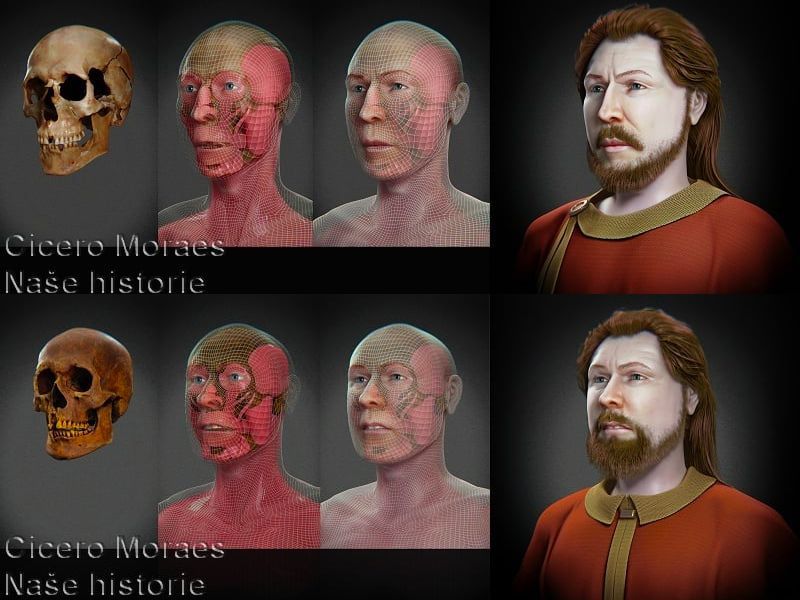
The project proceeded in several stages, with different experts involved along the way. “First,” notes Archaeology, “detailed images of the bones were assembled using photogrammetry to form virtual 3‑D models” of the skulls. Then, facial reconstruction expert Moraes added muscle, tissue, skin, etc., relying on “multiple three-dimensional reconstruction techniques,” Davis-Marks writes, “including anatomical and soft tissue depth methods, to ensure the highest possible level of accuracy.” DNA analysis showed that the brothers likely had blue eyes and reddish-brown hair.
Spytihnĕv and Vratislav’s other features come from the best guess of the researchers based on “miniatures or manuscripts,” says Frolík, “but we don’t really know.” Do they look a bit like video game characters? They look very much, in their digital sheen, like characters in a medieval video game. But perhaps we can anticipate a day when real people from the distant past return as fully animated 3D reconstructions to replay, for our education and amusement, the battles, court intrigues, and fratricides of history as we know it.
Related Content:
20,000 Endangered Archaeological Sites Now Catalogued in a New Online Database
Beer Archaeology: Yes, It’s a Thing
The History of Europe from 400 BC to the Present, Animated in 12 Minutes
Josh Jones is a writer and musician based in Durham, NC. Follow him at @jdmagness.
Read More...Listen to Wikipedia: A Web Site That Turns Every Wikipedia Edit Into Ambient Music in Real Time
Wikipedia turned 20 years old this past January. Do you remember how you first heard of it? Or more to the point, do you remember when you actually started clicking on it when it came up in your search results? For me, Wikipedia first proved an essential resource for learning about music: on it I looked up my favorite bands, then found my way to entries about all the people, events, places, and things associated with them. (I then truly felt what it meant to go down an internet “rabbit hole.”) Having been intrigued by, for instance, the music of Brian Eno, I discovered through Wikipedia the world of ambient music, of which Eno’s work constitutes only one part.
Two decades on, Wikipedia itself has become ambient music. Listen to Wikipedia, writes co-creator Mahmoud Hashemi, “is a real-time auralization of Wikipedia growing, one edit at a time. The site is literally self-explanatory.” Even so, at that linked blog post Hashemi and his fellow developer Stephen LaPorte explain that “Bells are additions, strings are subtractions.”
Smaller edits sound higher ones, and larger edits lower ones. “There’s something reassuring about knowing that every user makes a noise, every edit has a voice in the roar. (Green circles are anonymous edits and purple circles are bots. White circles are brought to you by Registered Users Like You.)”
It all sounds a bit like — and looks even more like — Eno’s “generative music” apps. But Listen to Wikipedia adds a considerable verbal and intellectual dimension, labeling each edit that bubbles up with the name of the relevant page. Kawaii metal. Year of the Fifth Coalition. Tom Brady. Lee County, Texas. Do You Like Hitchcock? Justin Bieber discography. Geography of Gaelic games. California Democratic Party. Basketball at the 1988 Summer Olympics – Men’s tournament. All these names arose and vanished within about a minute’s viewing, as did many others of more deeply tantalizing obscurity. If you feel tempted to look them all up on Wikipedia itself, count yourself among those of us who’ve known, for twenty years now, where the internet’s real potential for addition lies. Explore Listen to Wikipedia here.
Related Content:
Brian Eno Explains the Origins of Ambient Music
Based in Seoul, Colin Marshall writes and broadcasts on cities, language, and culture. His projects include the Substack newsletter Books on Cities, the book The Stateless City: a Walk through 21st-Century Los Angeles and the video series The City in Cinema. Follow him on Twitter at @colinmarshall or on Facebook.
Read More...Udacity Running a Flash Sale (75% Off) Through the End of March 16

A quick heads up: Udacity is running a flash sale (75% off) that ends later today. Founded by computer scientist and entrepreneur Sebastian Thrun, Udacity partners with leading tech companies and offers an array of courses (and certificates) in data science, machine learning, artificial intelligence, cloud computing, and autonomous systems. To get the 75% off discount, click here, select a course, and then use the code SPRING75 during the checkout process.
Note: Open Culture has a partnership with Udacity. If readers enroll in certain Udacity courses and programs, it helps support Open Culture.
Read More...Support Us
We're hoping to rely on loyal readers, rather than erratic ads. Please click the Donate button and support Open Culture. You can use Paypal, Venmo, Patreon, even Crypto! We thank you!

About Us

Open Culture scours the web for the best educational media. We find the free courses and audio books you need, the language lessons & educational videos you want, and plenty of enlightenment in between.
Advertise With Us
FREE UPDATES!
GET OUR DAILY EMAIL
Get the best cultural and educational resources on the web curated for you in a daily email. We never spam. Unsubscribe at any time.
FOLLOW ON SOCIAL MEDIA
Open Culture editor Dan Colman scours the web for the best educational media. He finds the free courses and audio books you need, the language lessons & movies you want, and plenty of enlightenment in between.
Advertise With Us

