Watch the Trippy 1970s Animated Film Quasi at the Quackadero: Voted One of the 50 Greatest Cartoons of All Time
There certainly are a lot of weirdos out today. —Quasi at the Quackadero
Animation is a profession wherein childhood influences hold visible sway.
Today’s young animators are likely to cite the formative powers of Spongebob Squarepants, Avatar: The Last Airbender, The Ren & Stimpy Show, and the films of Japanese master, Hayao Miyazaki.
As a child of the 50s, Sally Cruikshank, creator of cult favorite Quasi at the Quackadero, above, marinated in Carl Barks’ Donald Duck comics. In The Animators, an early-80’s PBS documentary centered on the San Francisco Bay Area scene, she mused that “the images of the money bin and Donald Duck and the nephews and Uncle Scrooge all sunk into my subconscious and came out later, not really looking like ducks to anyone but me, but in my mind they are ducks—Quasi, Snozzy, and Anita.”
Quasi at the Quackadero places two of those odd ducks, contented loafer Quasi and his controlling, lisping ladyfriend, Anita, in a bizarre amusement park where the attractions include opportunities to “Relive One of the Shining Moments of Your Life” and “See Last Night’s Dreams Today.”
The fun house mirrors in the 3:10 mark’s Hall of Time are a particular treat, contributing to a carnival of sensory overload that’s as old timey as it is trippy.
“You don’t need to take acid to have weird thoughts and imagine weird things,” Cruikshank, whose other favorites, tellingly, include Winsor McCay, Max Fleischer, and Yellow Submarine, replied to an admirer on YouTube.
In 2009, Cruikshank’s demented vision found its way into the Library of Congress’ National Film Registry, an honor she celebrated with a blog post toasting her late boss, E.E. Gregg Snazelle of Snazelle Films:
The job was to experiment with animation, and do commercials for him when the jobs came in. He also hoped I’d figure out how to solve 3‑d without glasses.
Needless to say I didn’t solve 3‑d. I didn’t even do very many commercials over ten years, but I showed up at 8:30, took an hour off for lunch and worked till 5:30. I was paid $350 a month, and I could live on that then.
He encouraged me generously without ever paying much attention to me. These days if an opportunity like that even existed, you’d be forced to sign all kinds of rights statements for characters and content created, but this was before “Star Wars” and he just seemed to be happy to have me around. We were never particularly close. It spoiled me for any job after that.
I made all my “Quasi” films while I was working at Snazelle. Unfortunately he’s no longer alive, but here’s to you, Gregg, with a big heart and much thanks.
Cruikshank was indeed lucky to have secured a day job in her chosen field, providing her with access to prohibitively expensive equipment.
Remember that her 1975 short predates personal computers, affordable animation software, and a plethora of free sharing platforms. Cruikshank says that Quasi at the Quackadero required two years of near daily work, likening its animation process to “something from the Middle Ages.”
Of course, 1975 was also a peak year for underground comix, another tradition from which Quasi sprung, right into the arms of a receptive audience. Anita and Quasi also appear in Cruikshank’s one and only comic, Magic Clams. In addition to her work at Snazelle Studios, Cruikshank cocktail waitressed in a hangout for San Francisco’s underground cartoonists, including then-boyfriend Kim Deitch, Quasi’s “Special Art Assistant.” Bob Armstrong and Al Dodge of R. Crumb and his Cheap Suit Serenaders contributed the short’s score. Other friends from the indie comix scene were enlisted to paint cells at 50 cents per.
Quasi’s inclusion in the National Film Registry not only carries the imprimatur of cultural, historic, and aesthetic significance, it suggests the psychedelic short is a seminal influence in its own right.
We agree with KQED’s Sarah Hotchkiss that “the saturated colors, hard edges, and constant movement of Cruikshank’s animation could be source material for the future realization of Pee-wee’s Playhouse.”
Both deliver us from reality into the limitless possibilities of an anthropomorphic universe.
Explore more of Sally Cruickshank’s animations on her You Tube channel, including her cartoons for Sesame Street. Some of her animation cels, including ones from Quasi at the Quackadero are for sale in her Etsy shop.
Quasi at the Quackadero–voted one of the 50 Greatest Cartoons, in a poll of 1,000 Animation Professionals–will be added to our list of animations, a subset of our collection, 4,000+ Free Movies Online: Great Classics, Indies, Noir, Westerns, Documentaries & More
Related Content:
Bambi Meets Godzilla: #38 on the List of The 50 Greatest Cartoons of All Time
Free Animated Films: From Classic to Modern
Ayun Halliday is an author, illustrator, theater maker and Chief Primatologist of the East Village Inky zine. She most recently appeared as a French Canadian bear who travels to New York City in search of food and meaning in Greg Kotis’ short film, L’Ourse. Follow her @AyunHalliday.
Read More...What are Non-Fungible Tokens (NFTs)? And How Can a Work of Digital Art Sell for $69 Million
Value in the art world depends on manufactured desire for objects that serve no purpose and have no intrinsic meaning outside of the stories that surround them, which is why it can be easy to fool others with fraudulent copies. Collectors and experts are often eager to believe a well-told tale of special provenance. As Orson Welles says in F is for Fake, “Lots of oysters, only a few pearls. Rarity. The chief cause and encouragement of fakery and phoniness.”
“Concepts of fakery and originality bounce off one another as reflections,” Lidija Grozdanic writes of Welles’ documentary on “our innate infatuation with exclusivity,” a film made when the internet consisted of 36 routers and 42 host computers — in total (including a link in Hawaii!). Now we are immersed in hyperreality. Copies of digital artworks are indistinguishable from each other, since they cannot be said to exist in any material sense. How can they be authenticated? How can they become exclusive placeholders for wealth?
The questions have been taken up, and answered rather abruptly, it seems, by the architects of blockchain technology, who bring us NFTs, or “Non-Fungible Tokens,” an acronym and phraseology you’ve surely heard, whether you’ve felt inclined to learn what they mean. The videos featured today offer brief explanations, by reference especially to the case of South Carolina-based digital artist named Mike Winklemann, who goes by Beeple, and who first harnessed the power of NFTs to make millions.
Most recently, in a first-of-its-kind online auction at Christies, Beeple’s montage “‘Everydays — The First 5000 Days’… became the ‘What Does the Fox Say?’ of art sales,” writes Erin Griffiths at The New York Times.
A crypto whale known only by the pseudonym Metakovan paid $69 million (with fees) for some indiscriminately collated pictures of cartoon monsters, gross-out gags and a breastfeeding Donald Trump — which suddenly makes this computer illustrator the third-highest-selling artist alive.
The criticism is perhaps unfair. As Christies argues in its defense, the piece reveals “Beeple’s enormous evolution as an artist” over five years. Specialist Noah Davis calls the collage, stitched together from Beeple’s body of work on Instagram, “a kind of Duchampian readymade.” But it doesn’t really matter if Beeple’s work is avant-garde high art.
The libertarian econo-speak “nonfungible token” reveals itself as part of a world divorced from the usual criteria art historians, curators, auction houses, and others apply in their judgments of authenticity and worth. Instead, the value of NFTs rests mainly on the fact that they are exclusive, without particularly high regard for what they include. One may love the work of Beeple, but we should be clear, “what Christie’s sold was not an object” — there is no object — “but a ‘nonfungible token,’” which is “bitcoinese for unique string of characters, logged on a blockchain,” that cannot be exchanged or replaced… like owning a Monet without owning a Monet.
Unlike the Wu Tang album Once Upon a Time in Shaolin, bought for $2 million in 2015 by Martin Shkreli, content attached to NFTs can be shared, viewed, copied, etc. over and over. “Millions of people have seen Beeple’s art,” the BBC explains, “and the image has been copied and shared countless times. In many cases, the artist even retains the copyright ownership of their work, so they can continue to produce and sell copies.”
Other sales of NFTs include a version of the 10-year-old internet meme Nyan Cat that sold for $600,000, a clip of LeBon James blocking a shot for $100,000, and a picture of Lindsay Lohan for $17,000, which then resold for $57,000. Lohan articulated the NFT ethos in a statement, saying, “I believe in a world which is financially decentralized.” This is not a world where judgments about the value of art and culture can be centralized either. But power can be, presumably, in the form of currency, crypto-and otherwise, traded in speculative bubbles.
“Some people compare it to buying an autographed print,” the BBC writes. Some compare it to the age-old scams warned of in folk tales. David Gerard, author of Attack of the 50 Foot Blockchain, calls NFT sellers “crypto-grifters… the same guys who’ve always been at it, trying to come up with a new form of worthless bean that they can sell for money.” This eternal scam exists beyond the binaries posed by F is for Fake. Originality, authenticity, or otherwise are mostly beside the point.
Related Content:
The Art Market Demystified in Four Short Documentaries
Warhol: The Bellwether of the Art Market
Josh Jones is a writer and musician based in Durham, NC. Follow him at @jdmagness.
Read More...Brian Eno Explains the Origins of Ambient Music
When William Basinski released The Disintegration Loops in the years after the September 11, 2001 attacks, it was the sound of decay preserved for posterity — recordings of decades-old tape loops literally falling apart on their reels, as the World Trade Center ruins smoldered across the river from the composer’s Brooklyn studio. The piece was performed ten years later by an orchestra at the Temple of Dendur, at the Metropolitan Museum of Art, for the tenth anniversary of the attacks. Anohni (then known as Antony of Antony and the Johnsons) called it “the most helpful and useful music I have ever known.”
This might mark the first time a piece of ambient music has been awarded such gravitas and made the centerpiece of a significant memorial. It seems a long way from the origins of the form in Brian Eno’s Discreet Music (1975) and Music for Airports (1978), in which Eno pushed music to the periphery of experience, turning it into unobtrusive background stimulus that “created a sort of landscape you could belong to,” he says above, like the endlessly repeating worlds of a video game. In music, however, “repetition is a form of change,” Eno reminded us, or as Basinski’s loops suggested, writes Sasha Frere-Jones at The New Yorker, “repetition is change.”
Another curious trait links Basinski’s 21st century lamentations and Eno’s 70s airport lounge music, one that seems to change the terms of the contract that ambient music, as we usually understand it, makes with the listener. We might think of it as music that makes no particular demands on us and take Eno’s statements about it as encouraging a kind of passive consumption: ambient music as no more than pleasant accompaniment for better queuing-up and calmer shopping. (Not that there’s anything wrong with stress relief….)
But what Basinski and Eno both describe in intense acts of ambient creation is more extreme. It begins with a kind of helplessness in the face of distress — in the first case an of helplessly watching lower Manhattan burn from the roof of a Williamsburg loft. Eno’s predicament was more personal and intimate, he tells Riz Khan above, but no less helpless. Convalescing in his bed after a car accident, he found himself unable to move when a friend put on a record and left him alone. The experience of immobility became a catalyst.
The album of “18th century harp music” was too quiet. He couldn’t turn it up over the sound of rain outside his window. At first, Eno says, he was frustrated by his lack of control over the environment. But as he “started listening to the rain and listening to these odd notes of the harp that were just loud enough to be heard above the rain,” it became for him “a great musical experience…. I suddenly thought of this idea of making music that didn’t impose itself on your space in the same way.”
In paying attention to a loss of control, Eno discovered music that relinquishes control over the listener. In listening to his own shock and grief, Basinski discovered music that lets itself fall apart, slowly and beautifully over time. What he “pompously called” ambient music, Eno jokes above, “became something I no longer recognize.” And, yes, it may have come to take up more space than he intended. But it still functions as a creative response to circumstances in which, it seems, there may be little else to do but listen carefully and wait.
Related Content:
Hear Brian Eno Reinvent Pachelbel’s Canon (1975)
Discover the Ambient Music of Hiroshi Yoshimura, the Pioneering Japanese Composer
Josh Jones is a writer and musician based in Durham, NC. Follow him at @jdmagness.
Read More...The Letters of Mozart’s Sister Maria Anna Get Transformed into Music
The talent of an individual may not always run in the family, but we can never discount the possibility of its doing so. This is true even in the case of Wolfgang Amadeus Mozart, not just one of the best-known composers ever to live, but a byword for deep, innate, and unrepeatable genius. Mozart was composing original music at the age of of four or five, an astonishing fact we know today in part because his older sister witnessed and later attested to it. Known as Nannerl, Maria Anna Mozart preceded her bother into keyboard lessons from their father Leopold, a composer and teacher. Together Wolfgang and Maria Anna toured Europe as a performing duo of child prodigies, until Maria Anna’s attainment of marriageable age took her off the circuit.
If Maria Anna ever composed music of her own, none of it has survived. But she did leave behind a fair few diaries and letters, many of the latter exchanged with her brother. These writings provided the material for pianist Heloísa Fernandes to create a piece in tribute to the lesser-known Mozart sibling.
“The writing, all in German, underwent painstaking analysis so that its tone and pronunciation could be translated into musical notes,” says Little Black Book. “A German interpreter was invited to read the letters and diary of Maria Anna Mozart out loud,” and a piece of software “translated the recording into musical notes by tuning the syllables. If a spoken syllable hit 387 Hz, for example, the program interpreted it as G.” Thus were Nannerl’s words transformed into music.
The resulting piece, “Das Königreich Rücken,” is named after “an imaginary kingdom that Maria and Wolfgang made reference to in their letters to each other,” as Sara Spary notes in Adweek — a publication that would naturally cover it, commissioned as it was by an ad campaign for LG Electronics. Developed by Brazilian firm AlmapBBDO in cooperation with the production company Supersônica, “Projecto Ms. Mozart” is meant to promote LG’s XBOOM Go Bluetooth speaker. But whichever device you use to hear “Das Königreich Rücken,” you’ll surely find that it sounds quite unlike any piece you’ve heard before. Fans of Maria Anna Mozart as a historical figure will listen and wonder what could have been, and even those ignorant of her can’t but welcome these three additional minutes of Mozart into the world.
Related Content:
Mozart’s Diary Where He Composed His Final Masterpieces Is Now Digitized and Available Online
Hear the Pieces Mozart Composed When He Was Only Five Years Old
Based in Seoul, Colin Marshall writes and broadcasts on cities, language, and culture. His projects include the Substack newsletter Books on Cities, the book The Stateless City: a Walk through 21st-Century Los Angeles and the video series The City in Cinema. Follow him on Twitter at @colinmarshall or on Facebook.
Read More...Yo-Yo Ma Plays an Impromptu Performance in Vaccine Clinic After Receiving 2nd Dose
After getting his second dose of the COVID-19 vaccine, Yo-Yo Ma “took a seat along the wall of the observation area, masked and socially distanced away from the others. He went on to pass 15 minutes in observation playing cello for an applauding audience,” writes the Berkshire Eagle. You can watch the scene above, which played out at Berkshire Community College this weekend. And read more about it here.
If you would like to support the mission of Open Culture, consider making a donation to our site. It’s hard to rely 100% on ads, and your contributions will help us continue providing the best free cultural and educational materials to learners everywhere. You can contribute through PayPal, Patreon, and Venmo (@openculture). Thanks!
Related Content:
How Do Vaccines (Including the COVID-19 Vaccines) Work?: Watch Animated Introductions
MIT Presents a Free Course on the COVID-19 Pandemic, Featuring Anthony Fauci & Other Experts
Read More...
All Praise Lou Ottens: The Inventor of the Cassette Tape Dies at Age 94
The cassette tape is so ubiquitous, so much a part of my life since I can even remember music as a thing, that it was a shock to find out that the man who invented it, Lou Ottens, passed away at the age of 94. Of course, somebody did have to invent the cassette tape, but in all these years I never thought to look the person up. Such an invention first makes you think of the world before it: records (dearly beloved, still around), and reel-to-reel tape (not so dearly beloved). The former was a fixed object, an art object, immutable (until turntablists came along). The latter was a way to record ourselves, but so much more was involved in the act. People had to wind the spindle, to thread the tape through the capstan and heads, and record usually in mono. You can see an overview of a model from the 1950s here.
Ottens was a Dutch engineer working at Philips who became head of new product development in Hasselt, Belgium. His assignment was to shrink the reel-to-reel and, like the radio, make it more portable. And here is the most important decision: Ottens wanted the format to be licensed to other manufacturers for free, so everybody could partake. Considering the endless format battles that we fight every day, this decision was as monumental as it was humanist.
He designed his prototype out of wood and sized it to fit into a pocket for true portability. (This prototype, by the way, disappeared from history after he used it to prop up a jack when fixing a flat tire.) The actual compact cassette, promoted as a cheaper and smaller format for major label releases, immediately gained a second life as an artistic tool: a way for regular folk to record whatever they wanted. Keith Richards reportedly recorded the riff for “Satisfaction” on the portable cassette player near his bed. People recorded lectures, the television, the radio, their relatives, their friends, the random sound of life. People started to curate: their favorite music, their favorite people, their favorite sounds. People pretended to be DJs, pretended to be artists, pretended to be television hosts, pretended to be authors, pretended to be critics. And some through pretending became the things they wanted to be.
People made mixtapes for friends and for lovers. They looked at the remaining tape on the spindle and wondered if the song they had to end side two would fit. People realized that cassette tape could be a collage of sounds, cut up by the pause button.
Ottens may not have realized it, but he had created a completely democratic format. In the 1980s, the back pages of music magazines flourished with the catalogs of cassette-only album releases. If you had a Walkman and a friend with a halfway decent tape recorder, you could carry around your favorite music and listen to it whenever you wanted.
The record industry rebelled (for a while). They wanted you to know that “home taping is killing music” but did so with a skull and bones graphic that made it that much cooler. In the end it didn’t really matter. The music fans repurchased everything on CD anyway. (Apart from the people who taped CDs and even then after that *those* people downloaded the mp3s.)
And here’s the thing. Ottens wasn’t precious about any of it. He was part of the development of the Compact Disc. The cassette was just another stepping stone.
But despite the numerous articles that cassettes were a dead medium, they kept coming back. Mixtapes, the lifeblood of hip hop culture continued to thrive, even if by the end of the century the idea was more of a concept. And then in the middle of the 2010s cassettes came roaring back after the vinyl resurgence. For bands it was a cheap way to provide a physical product, what with vinyl still being very expensive to produce. Bandcamp, the place to go for cassette-only releases, offers artistic tapes for the same price as a digital download. So why not get both and start your library again?
Ottens never foresaw any of this happening, but it speaks to something very human: we want control of our music, and digital music, especially in the cloud, ain’t cutting it. We want to hold something in our hands and claim it as our own.
So pour one out for Lou Ottens, who started a revolution that hasn’t finished. Do *not* press pause.
Related Content:
2,000+ Cassettes from the Allen Ginsberg Audio Collection Now Streaming Online
Stream a Massive Collection of Indie, Noise Industrial Mixtapes from the 80s and 90s
Ted Mills is a freelance writer on the arts who currently hosts the Notes from the Shed podcast and is the producer of KCRW’s Curious Coast. You can also follow him on Twitter at @tedmills, and/or watch his films here.
Read More...Google & Coursera Launch Career Certificates That Prepare Students for Jobs in 6 Months: Data Analytics, Project Management and UX Design

We live in an age of less-than-total agreement as to the purpose of higher education. Should it immerse students in the best that has been thought and said? Provide an environment in which to come of age? Produce “leaders”? Or should it, as increasingly many argue, first and foremost secure professional futures? In the practice of recent decades, higher education has done a bit of each, to the satisfaction of some and the dissatisfaction of others. It has, in other words, become an industry subject to “disruption” by other players offering specialized solutions of their own. Take for example the new Career Certificates offered by Google and the online education platform Coursera.
“Designed to prepare learners for an entry-level role in under six months,” as Coursera CEO Jeff Maggioncalda explains it, these newly-unveiled Career Certificates “don’t have any prerequisites,” which means that most anyone interested in earning them can do so right now. This goes for “new grads landing their first job, front-line workers seeking stable employment, mid-career professionals making a pivot, or parents planning their return to the workforce,” and presumably myriad other walks of life besides.
Available in Data Analytics, Project Management, and User Experience (UX) Design, “each certificate is completely online, self-paced, and costs $39 per month” — significantly less than most existing forms of higher education, even of the most professionally or technologically oriented varieties.
If you’ve dipped into our list of online courses, you’ve probably encountered Coursera, a leading platform for massive online open courses (or MOOCs) used by some of the world’s best-known traditional universities. Its new provision of Google’s Career Certificates should go some way to making more familiar — at least to those us who’ve already learned online — a reimagining of professional education. This program’s “disruptive” potential, due not least to Google’s own consideration of these certificates as equivalent to a four-year degree, has already been well noted. “But while the new programs offer a fast track to new skills and possibly even a new job in a fraction of the time of a degree program,” writes Inc.‘s Justin Bariso, “students shouldn’t expect the courses to be a walk in the park.” And given that they’re unlikely to get easier, anyone interested in earning a Career Certificate would do well to look into it today.
Below, you can find a list of the new Career Certificates.
- User Experience (UX) Design Professional Certificate – UX design jobs are projected to steadily grow over the coming years, with median salaries for an entry-level role around $82,000. This seven-course certificate explores UX principles, UX terms, and industry-standard tools, including Figma and Adobe XD. By the time they complete the program, learners will have three portfolio projects to use in their job applications.
- Data Analytics Professional Certificate – In the U.S., there are nearly 15,000 open entry-level data analytics roles, with an annual median entry-level salary of more than $63,000. This seven-course certificate explores analytical skills, concepts, and tools used in many introductory data analytics roles – including SQL, Tableau, RStudio, and Kaggle.
- Project Management Professional Certificate – Employers will need to fill nearly 2.2 million new project-oriented roles each year through 2027, according to the Project Management Institute. This six-course certificate prepares learners to launch a project management career. It covers industry-standard tools and methods, including the agile project management system, and key soft skills, such as stakeholder management, problem-solving, and influencing.
- IT Support Professional Certificate — Prepare for an entry-level job as an IT support specialist. In this program, you’ll learn the fundamentals of operating systems and networking, and how to troubleshoot problems using code to ensure computers run correctly. This is for you if you enjoy solving problems, learning new tools, and helping others.
- IT Automation Professional Certificate — This is an advanced program for learners who have completed the Google IT Support Professional Certificate. This is for you if you want to build on your IT skills with Python and automation.
The new certificates have been added to our collection, 200 Online Certificate & Microcredential Programs from Leading Universities & Companies.
Note: Open Culture has a partnership with Coursera. If readers enroll in certain Coursera courses and programs, it helps support Open Culture.
Related Content:
Free Online Computer Science Courses
1,500 Free Online Courses from Top Universities
Based in Seoul, Colin Marshall writes and broadcasts on cities, language, and culture. His projects include the Substack newsletter Books on Cities, the book The Stateless City: a Walk through 21st-Century Los Angeles and the video series The City in Cinema. Follow him on Twitter at @colinmarshall or on Facebook.
Read More...Watch Cartoonist Lynda Barry’s Two-Hour Drawing Workshop
We know you’re Zoomed out, but might you make an exception for the pre-recorded drawing and writing session above with legendary cartoonist and illustrator Lynda Barry?
Under the auspices of Graphic Medicine’s participatory online series, Drawing Together, the notoriously playful Barry led participants through a series of exercises from her book, Making Comics, and seemed genuinely pleased to be back in teaching mode. (All of her in-person classes at the University of Wisconsin have been cancelled until further notice due to the Covid-19 pandemic, as has her usual summer stint at the Omega Institute.)
Barry endeavored to loosen her students up right away, brandishing toys and dancing to an amazing playlist in a friend’s borrowed attic, confiding that the wifi situation here was far superior to that in her old farmhouse.
Teacher divided the large group in half by birthdays, as a way to organize viewing each other’s work after each timed exercise.
This couldn’t quite replicate the experience of the live classroom, where students have the opportunity to handle each other’s work, and more time to take it in, but still fun to see the incredible diversity—and in the case of closed-eye exercises—thrilling similarities on display.
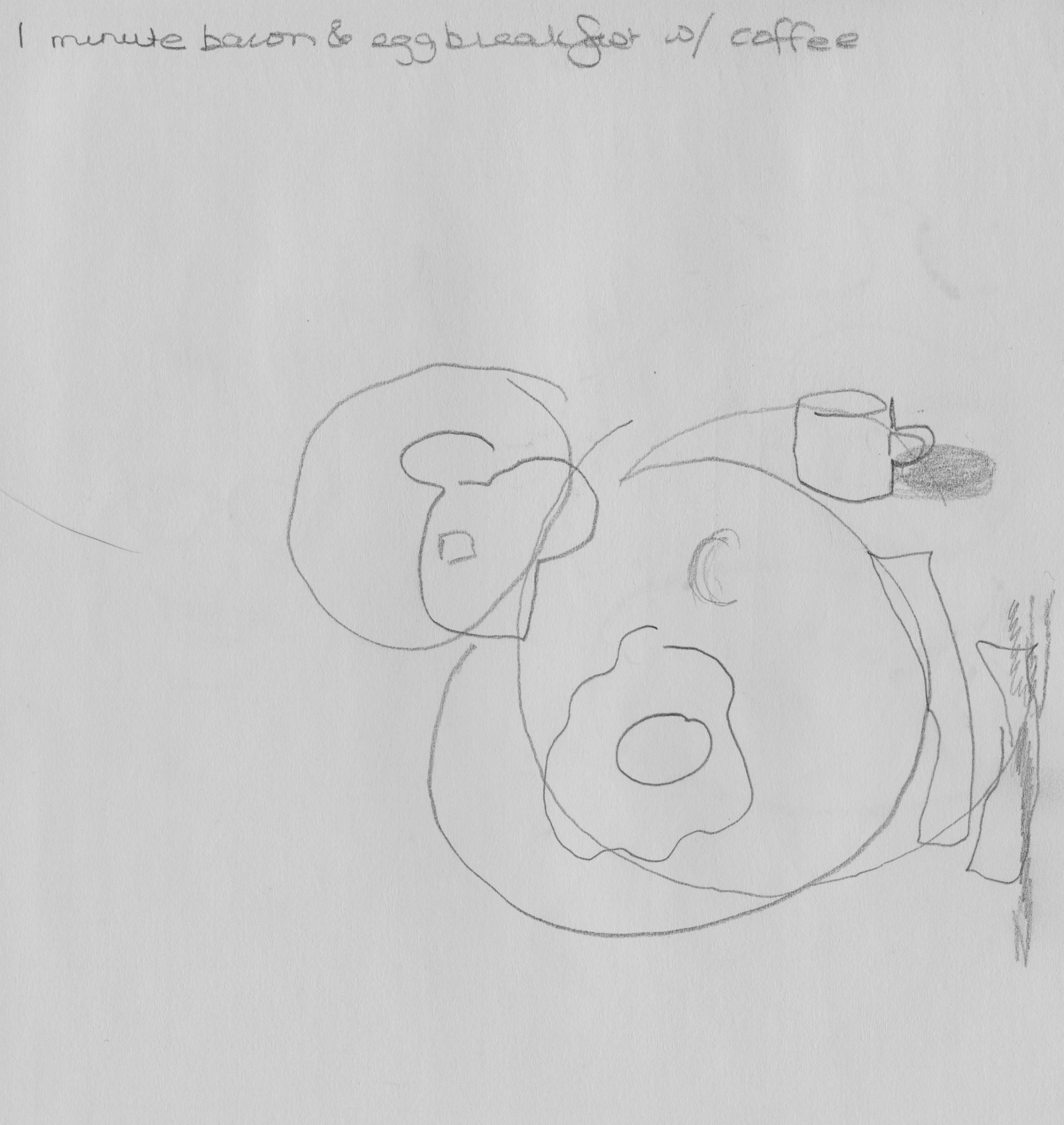
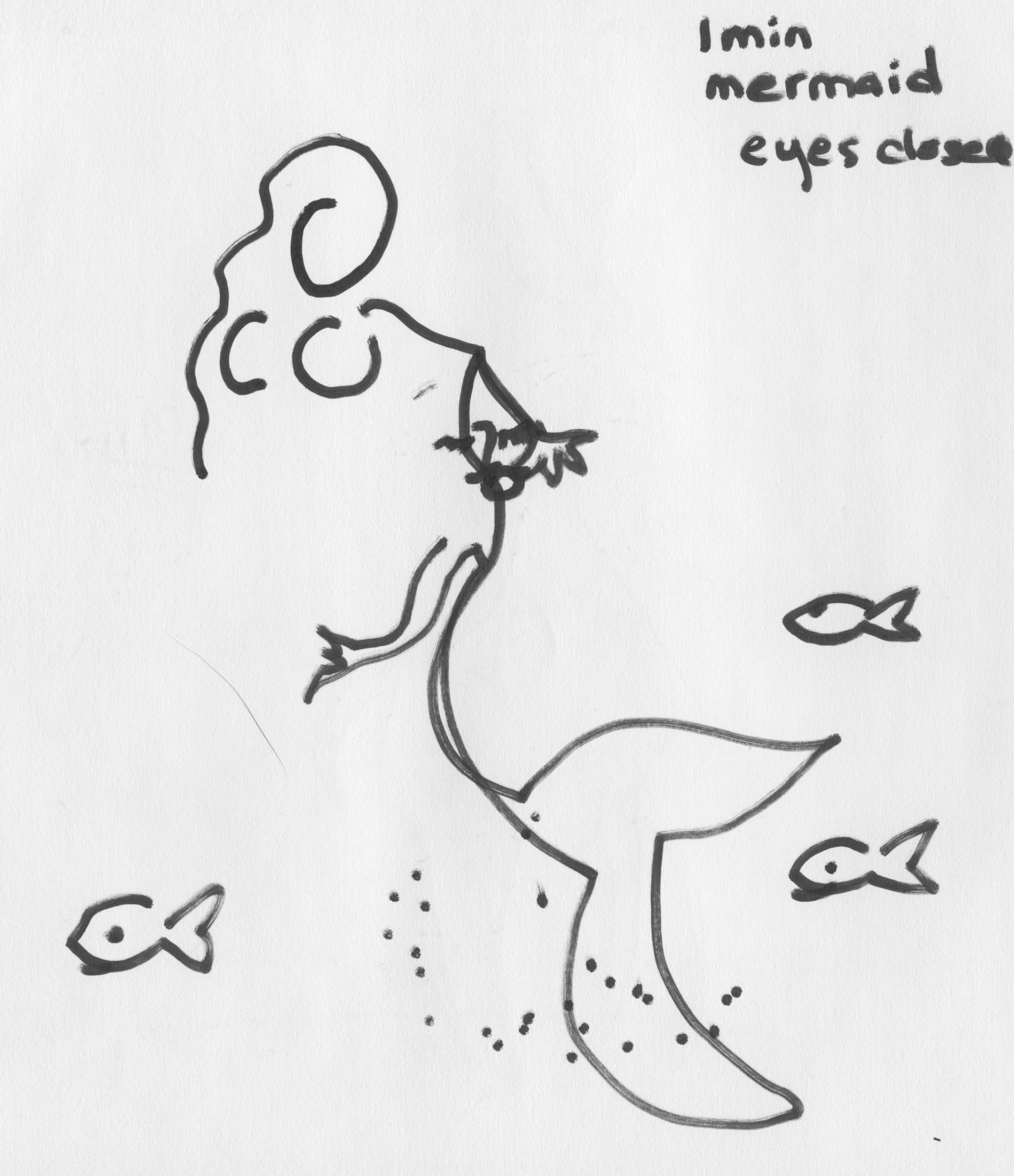
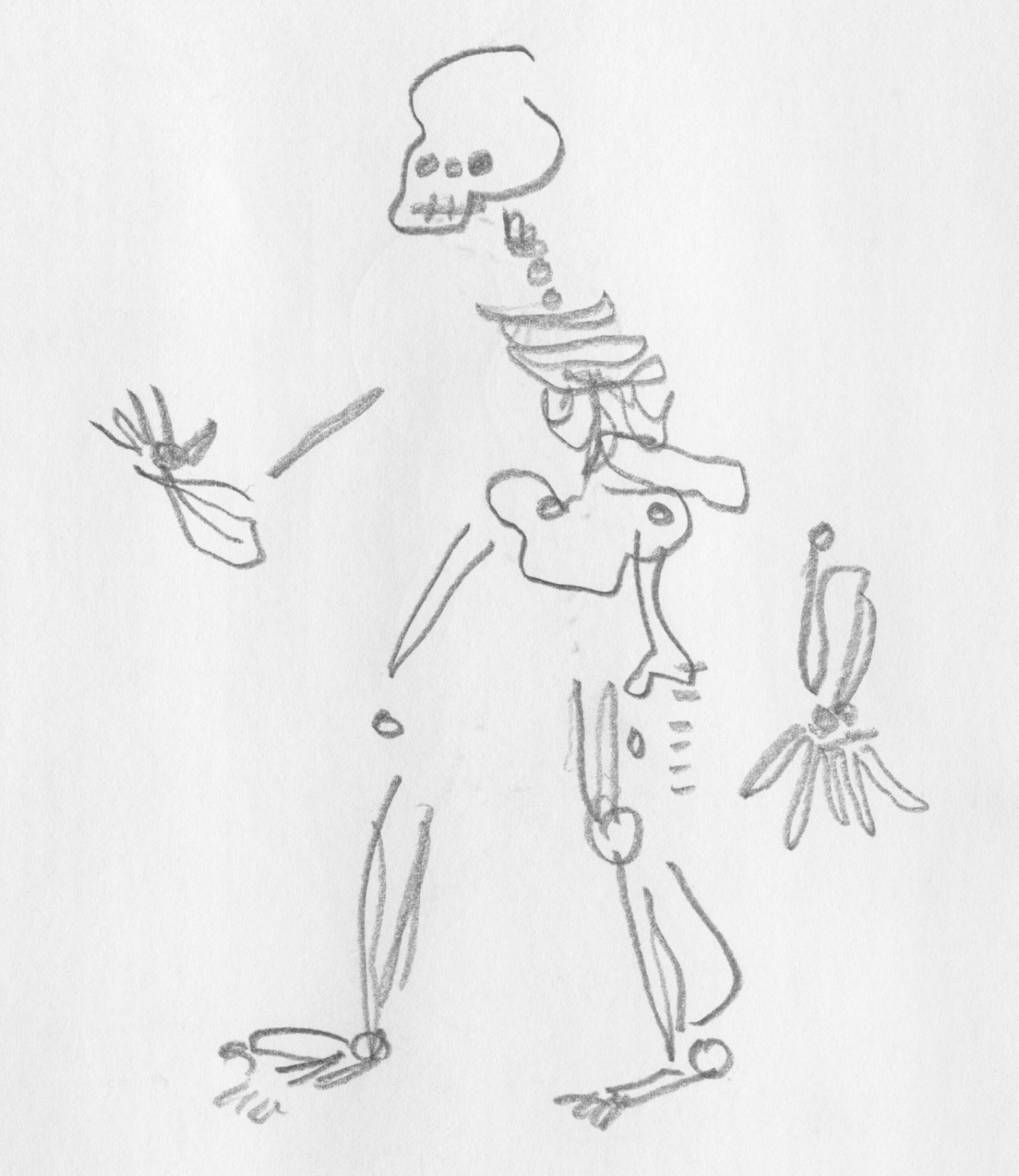
Barry’s delight extended beyond the confines of the page, imitating the way some students beam like swaying sunflowers throughout the 60-second closed eye sessions, while others knit their brows, lower their chins and power through.
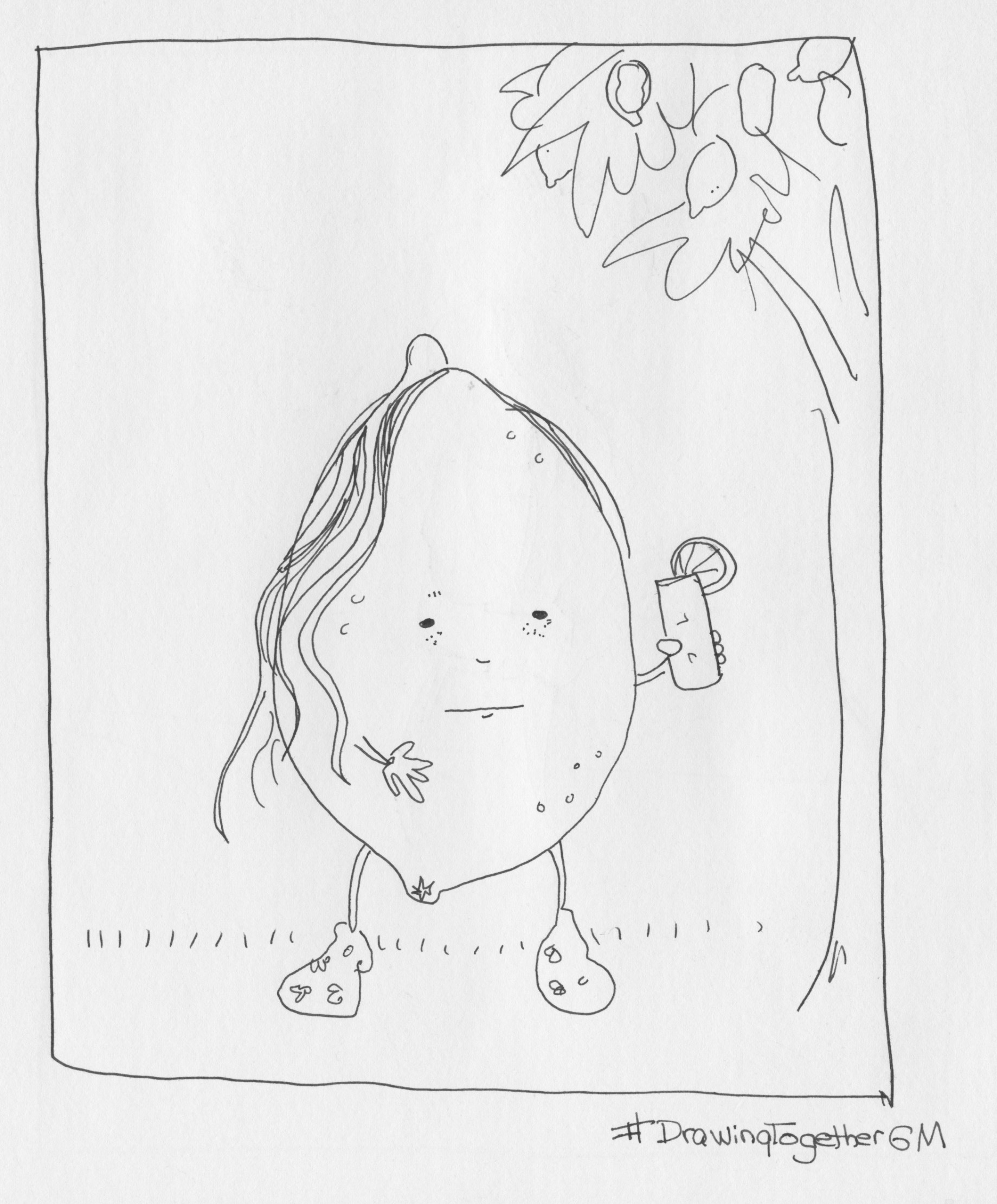
A series of self-portraits followed, with prompts designed to tap into the sort of imaginative powers that frequently seep away in adolescence—draw yourself as an animal, an astronaut, a member of a marching band, any fruit that’s not a banana…
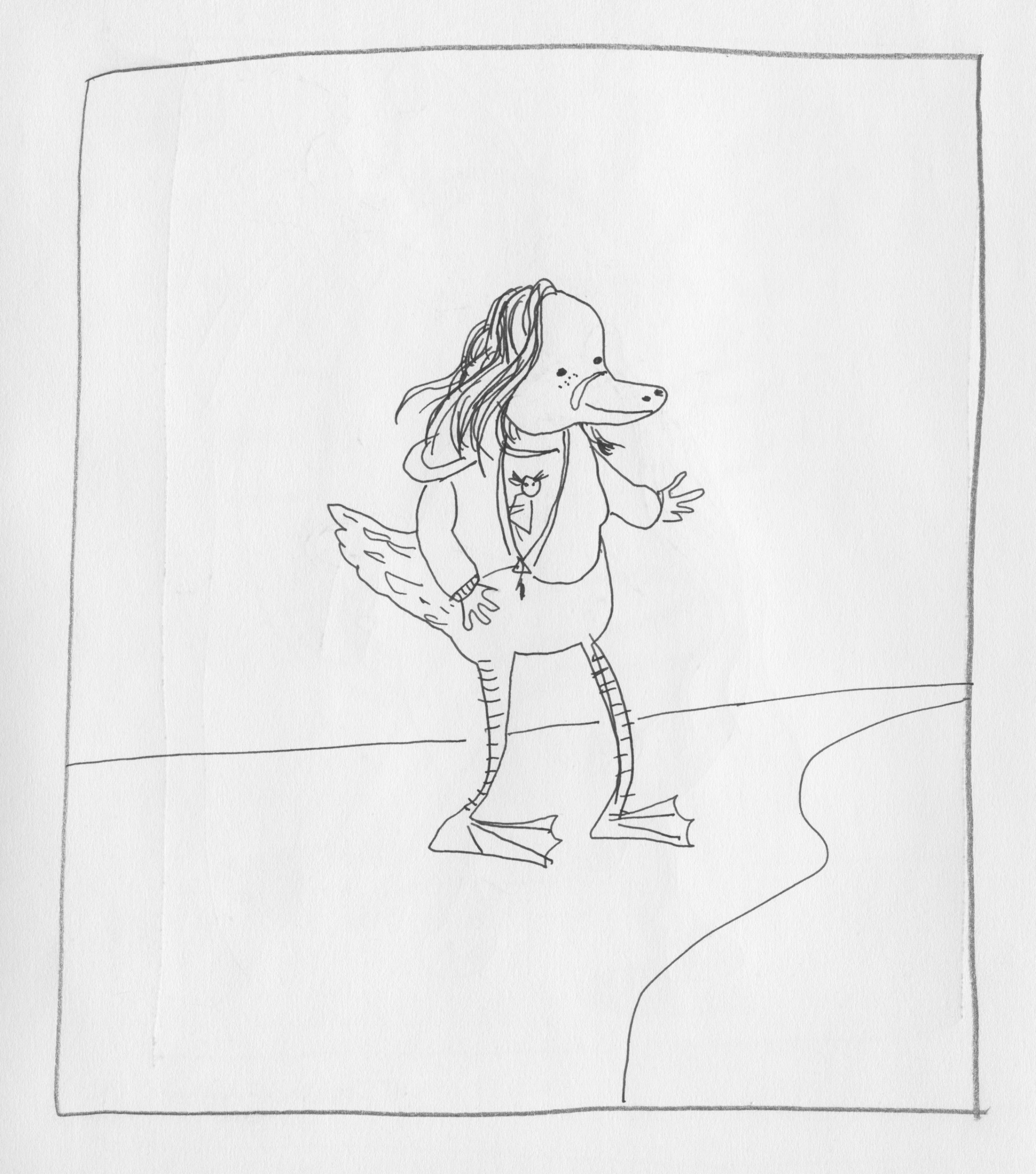
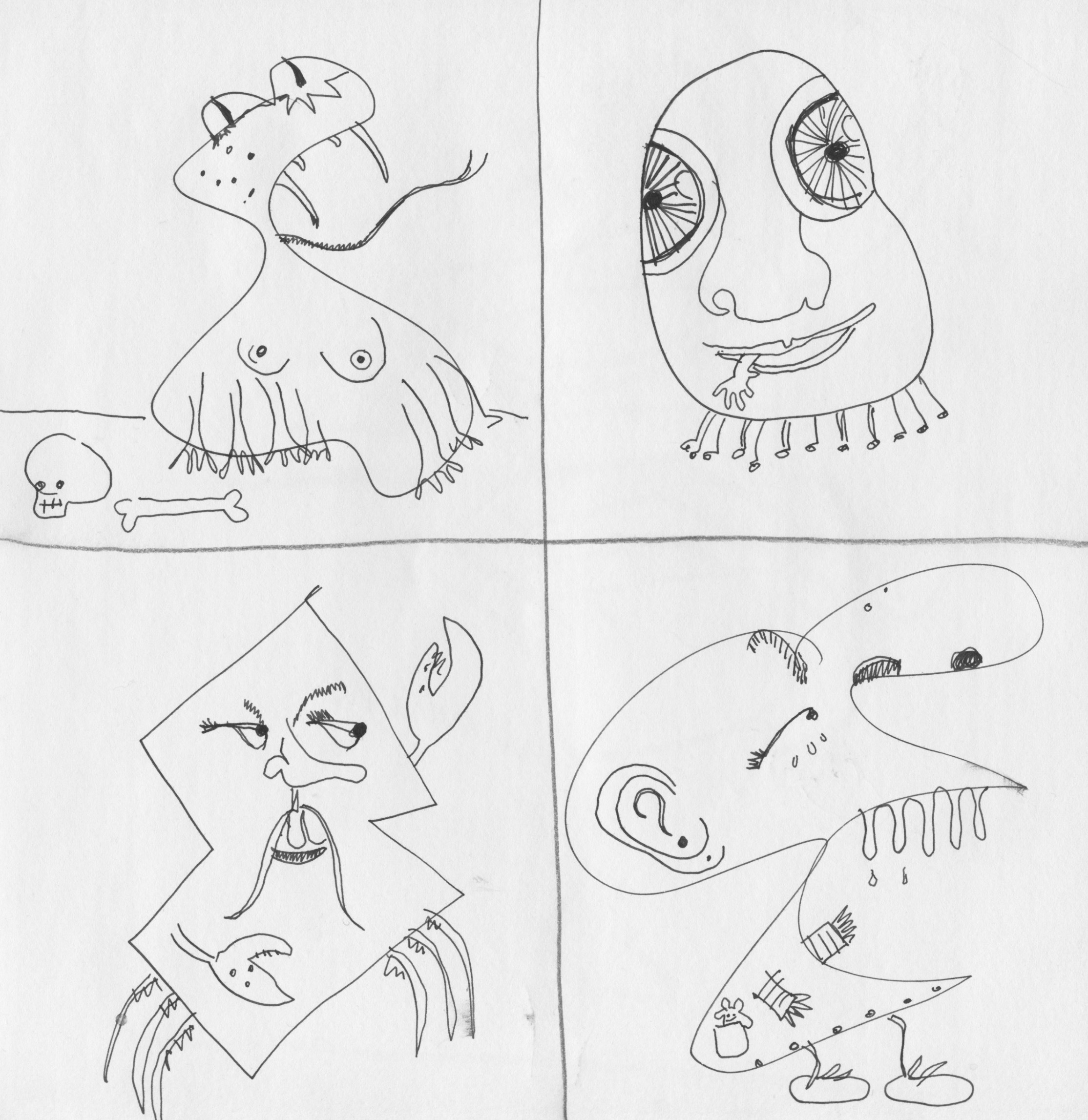
Longer exercises involved turning random squiggles into monsters, with an extra minute granted after the timer went off to add whatever missing things the artist felt each drawing needed, then choosing one of those monsters to star in a family album of sorts.
Barry, who has, over the course of her career, filled a number of panels with hilariously out-of-touch teachers making life a hell for child characters, is audibly appreciative of her students’ efforts, frequently congratulating them for bringing something into the world that didn’t exist a few minutes prior:
This is the thing about comics! They come intact, they come all together and the most important thing you need to do is just make time to draw them, the uninterrupted time, even if it’s just 2 minutes.
Truth!
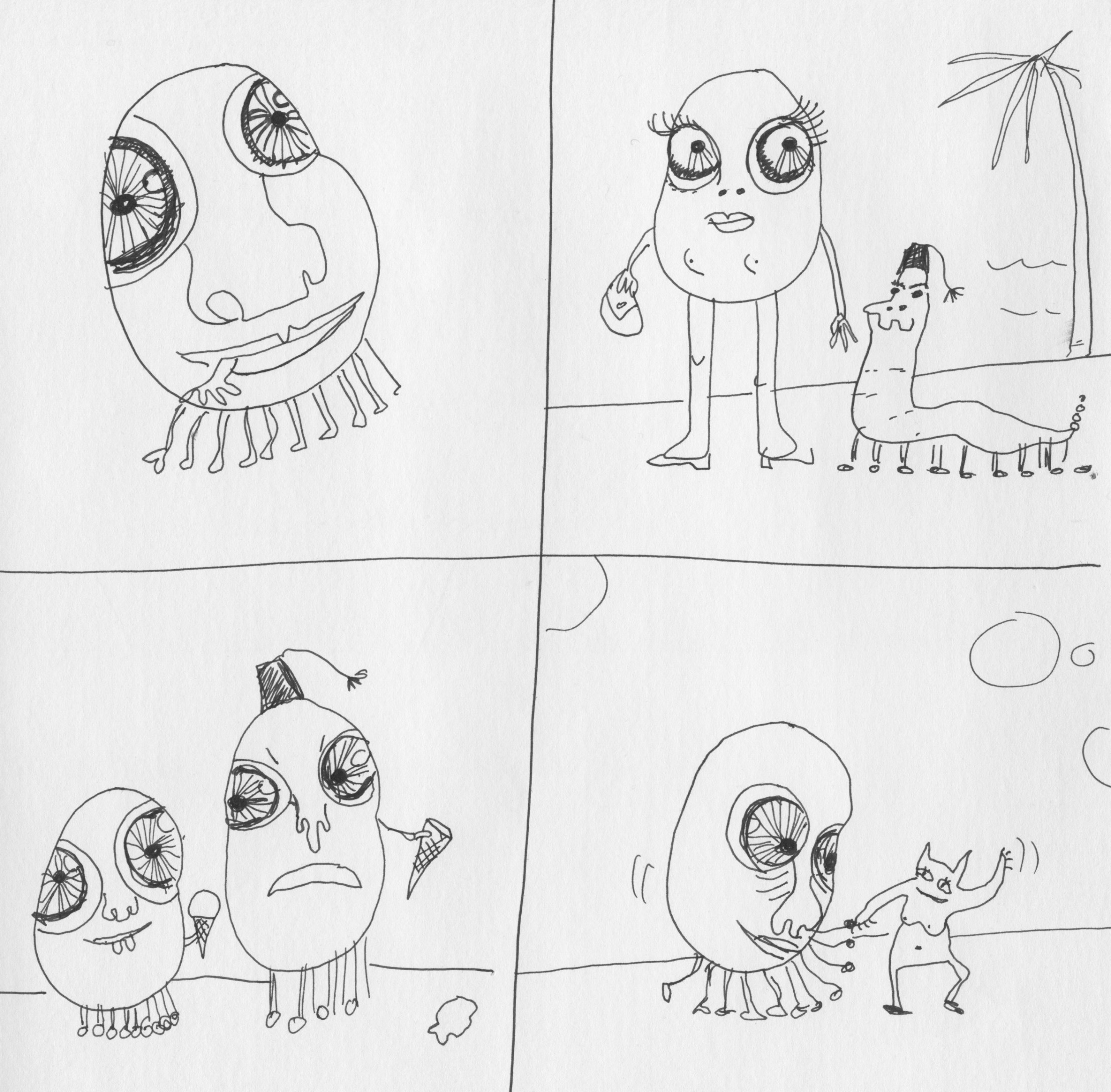
The final exercise of the day drew on some of the writing techniques Barry featured in Syllabus, with participants, quickly jotting down memories after a prompt, then choosing one to explore more deeply, with special attention devoted to sensory recall.
To play along from home after the fact, you’ll need a couple of hours, ten or so sheets of paper, a pencil or pen (Barry favors black felt tips), and your “original digital devices” (hint: they’re attached to the ends of your arms).
Find information on how to participate in upcoming free Drawing Together sessions here.
All drawings used with the permission of participant Ayun Halliday.
Related Content:
Lynda Barry’s New Book Offers a Master Class in Making Comics
Ayun Halliday is an author, illustrator, theater maker and Chief Primatologist of the East Village Inky zine. She most recently appeared as a French Canadian bear who travels to New York City in search of food and meaning in Greg Kotis’ short film, L’Ourse. Follow her @AyunHalliday.
Read More...How Museum Gift Shops Shape the Way We Look at Art
The 2010 documentary Exit Through the Gift Shop seemed to critics both too contrived to be reality and too bizarre to be a hoax: Frenchman-in‑L.A. Thierry Guetta obsessively films graffiti artists and begins pursuing Banksy, who takes over the project and makes a film about Guetta, who, at Banksy’s suggestion, takes up street art, becomes an overnight sensation and — to the somewhat horrified astonishment of Banksy — sells a million dollars worth of his work at his first show as “Mr. Brainwash.”
Worth, in the art world, is a relative term, as Roger Ebert pointed out. So what if Guetta was doing mediocre riffs on Warhol, among others? “Surely Warhol’s message was that Theirry Guetta has an absolute right to call his work art, and sell it for as much as he can.” If he can get away with it, more power to him, but surely there’s a higher authority that really determines what we think of as art? Some honest body of scholars with rigorous standards and generous tastes? Surely there’s something more than sales to determine the value of art?
Or maybe, the Vox video above suggests, it really is the eponymous gift shop, whose carefully curated tchotchkes and souvenirs include such collections as “an ear-shaped eraser,” writes Micaela Marini Higgs, “a $495 Versace t‑shirt… and of course, the classics: postcards, mugs, and magnets.” And that’s not to mention all those wonderful books…. Museum gift shops have convinced us that if it sells, it’s art. “Basically, stores are like the ultimate cheat sheet — the more you see a piece of art referenced, the more important it probably is.”
Some visitors even choose to enter through the gift shop, which may, after all, be no stranger than walking through an exhibition the wrong way. Professor of Anthropology Sharon Macdonald describes the retail area of a museum as a show’s final exhibit. Visitors may feel a lack if they can’t conspicuously consume what they have seen. The more they do so, the more they act as advertisements for the art on their tote bags. This is by design, of course.
Museum gift shops not only see themselves as revenue sources — some providing up to a quarter of an institution’s funds — but also as art educators. Store buyers collaborate with curators, who want to give potential visitors a sense of their exhibitions’ main ideas. There is no sinister plot at work, only the reinforcing, through commerce, of the museum’s pre-existing criteria for what qualifies as important art. But you might see a problem — it’s all a bit circular, isn’t it? — and thanks to the “mere-exposure effect,” the circle ripples outward through repeated viewings.
It’s a phenomenon not unlike hearing the same song over and over on the radio and growing to like it through sheer familiarity. Do we “appreciate” art by consuming its likenesses on keychains and mousepads? Maybe we’re also participating in a ritual of commercial consent to the value of certain works over others, mostly unaware of how overpriced gift shop swag meme-ifies art and amplifies cultural values we could think about more critically.
Related Content:
Salvador Dalí’s Tarot Cards, Cookbook & Wine Guide Re-Issued as Beautiful Art Books
Behind the Banksy Stunt: An In-Depth Breakdown of the Artist’s Self-Shredding Painting
Download 584 Free Art Books from The Metropolitan Museum of Art
Josh Jones is a writer and musician based in Durham, NC. Follow him at @jdmagness
Read More...Rare Vincent van Gogh Painting Goes on Public Display for the First Time: Explore the 1887 Painting Online
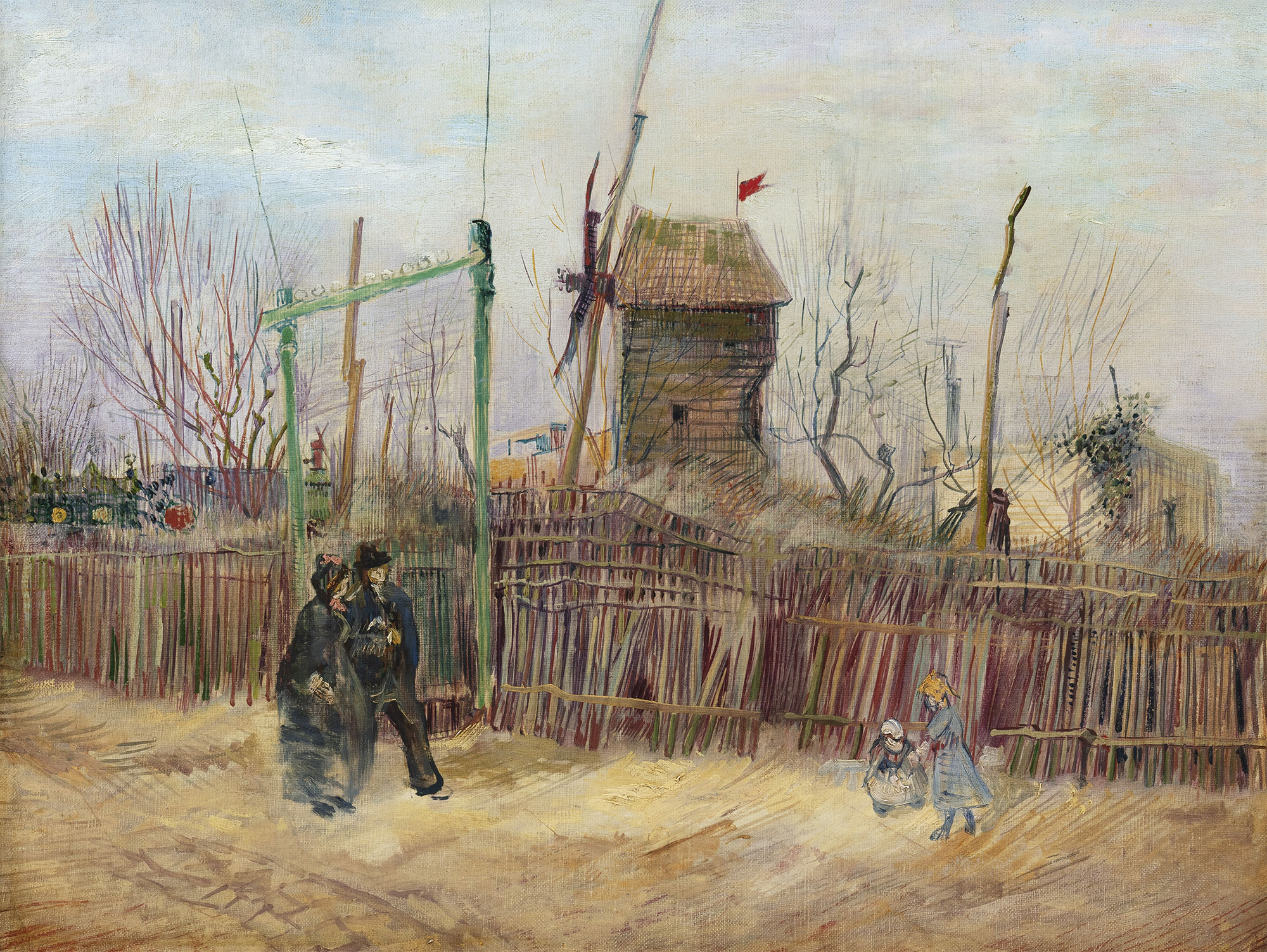
Images courtesy of Sothebys
Not every Vincent van Gogh painting hangs at the Van Gogh Museum, or indeed in a museum at all. Though many private collectors loan their Van Goghs to art institutions that make them available for public viewing, some have never let such prized possessions out of their sight. Such, until recently, was the case with Scène de rue à Montmartre (Impasse des Deux Frères et le Moulin à Poivre), painted in 1887 but not shown to the world until this year — in preparation for its auction on March 25. During its century of possession by a single French family, the painting counted as one of the few privately-held entries in Van Gogh’s Montmartre series, which he painted in the eponymous neighborhood during the two years spent in Paris with his brother Theo.
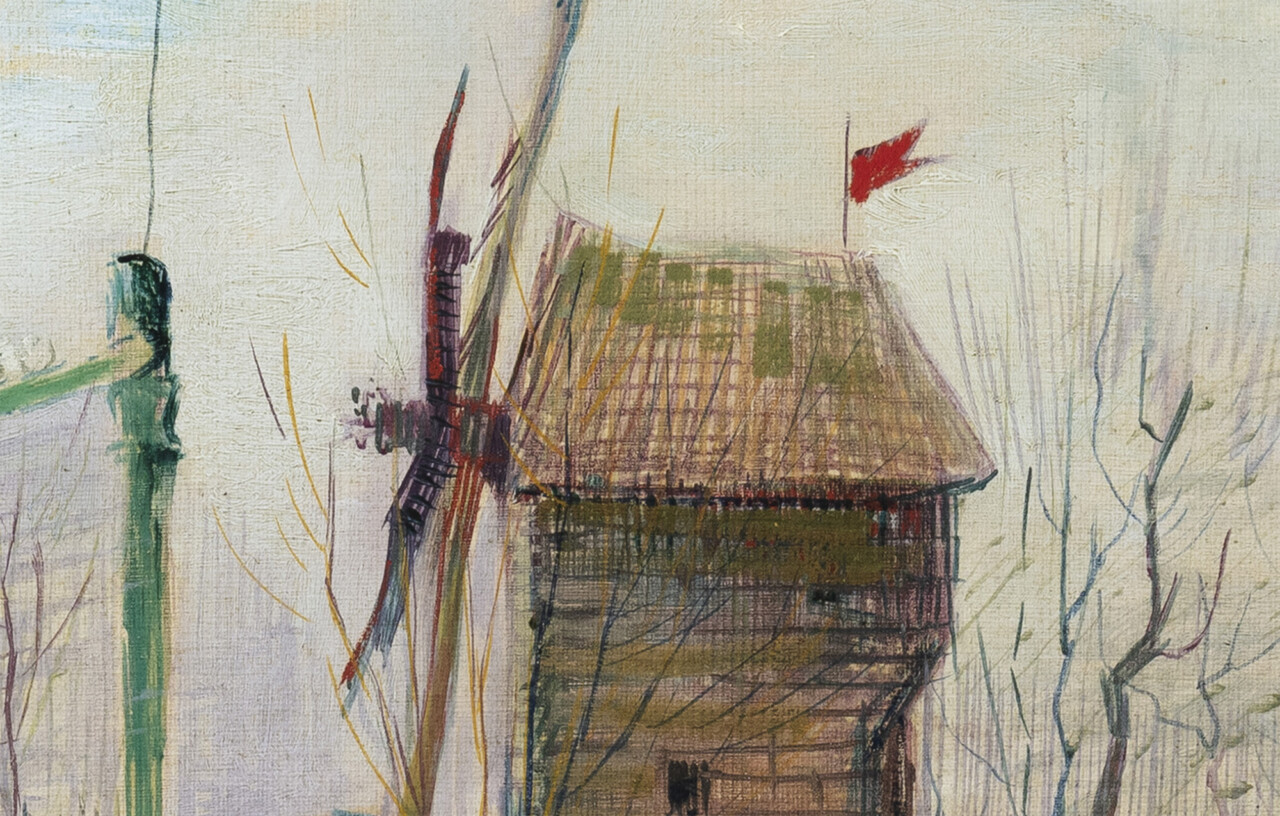
“Unlike other artists of his era, like Toulouse-Lautrec, Van Gogh was attracted to the pastoral side of Montmartre and would transcribe this ambience rather than its balls and cabarets.” So says Aurélie Vandevoorde, head of the Impressionist and Modern Art department at Sotheby’s Paris to The Art Newspaper’s Anna Sanson.
The landscape “marks van Gogh’s turn to his distinctive Impressionist style,” writes Colossal’s Grace Ebert, and its “lively street is thought to be the same as that in Impasse des Deux Frères, which currently hangs at the Van Gogh Museum in Amsterdam, and similarly depicts a mill and flags promoting the cabaret and bar through the gates.”
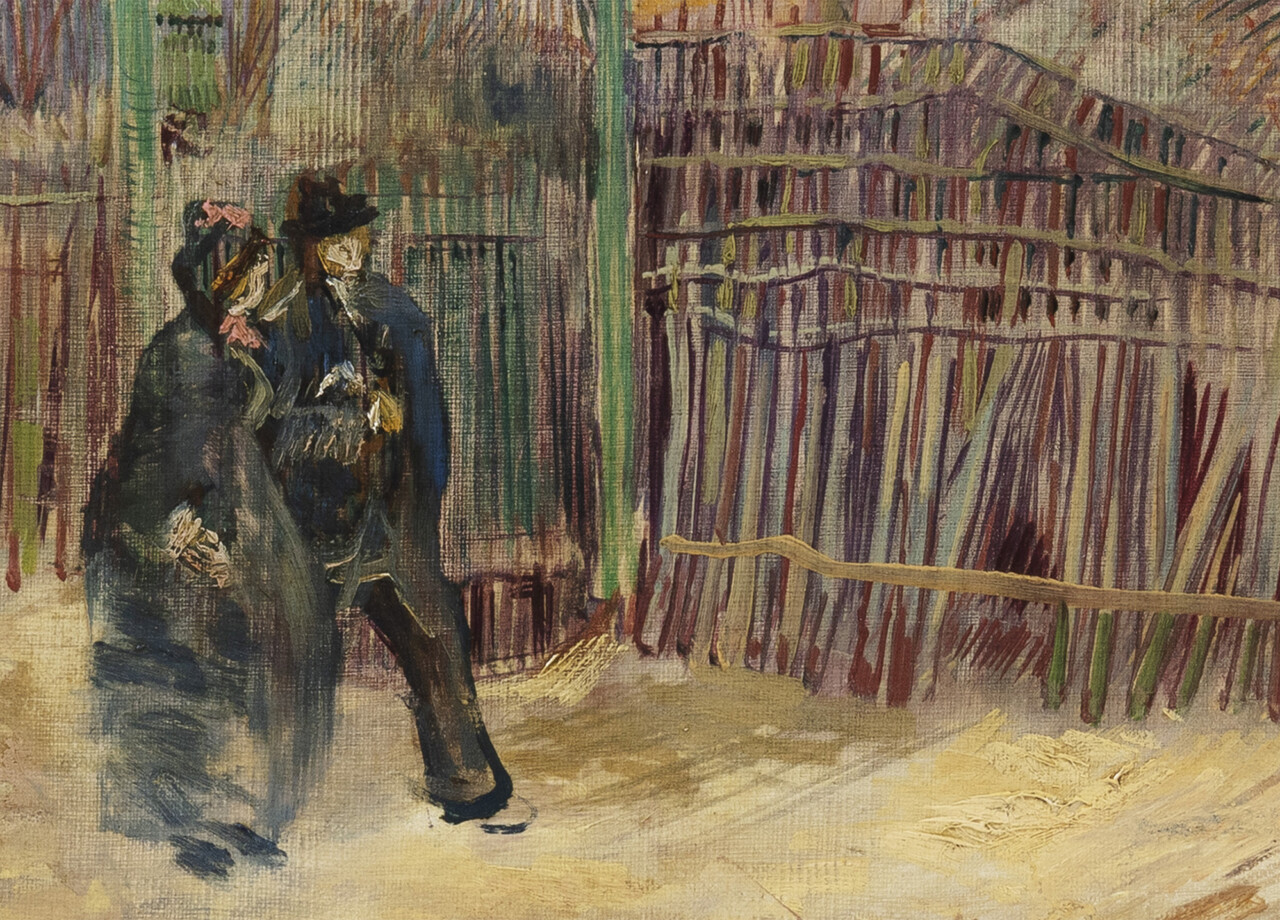
As depicted by Van Gogh more than 130 years ago, Montmartre looks nearly rural — quite unlike it does now, as anyone who’s frequented the neighborhood in living memory can attest. But the status of the painting has changed even more than the status of the place: Scène de rue à Montmartre “is expected to sell for between $6 million and $9.7 million (€5 million to €8 million),” writes Smithsonian.com’s Isis Davis-Marks. Still, like most of Van Gogh’s Paris paintings, its value doesn’t touch that of the work he did in his subsequent Provençal sojourn (under the influence of Japanese ukiyo‑e). “One such painting, Laboureur dans un champ (1889),” adds Davis-Marks, “sold at Christie’s in 2017 for $81.3 million.” Well-heeled readers should thus keep an eye on Sotheby’s site: this could be your chance to keep a (relatively) affordable Van Gogh in your own family for the next century.
via Colossal
Related Content:
Van Gogh’s Ugliest Masterpiece: A Break Down of His Late, Great Painting, The Night Café (1888)
13 Van Gogh’s Paintings Painstakingly Brought to Life with 3D Animation & Visual Mapping
Experience the Van Gogh Museum in 4K Resolution: A Video Tour in Seven Parts
In a Brilliant Light: Van Gogh in Arles – A Free Documentary
Based in Seoul, Colin Marshall writes and broadcasts on cities, language, and culture. His projects include the Substack newsletter Books on Cities, the book The Stateless City: a Walk through 21st-Century Los Angeles and the video series The City in Cinema. Follow him on Twitter at @colinmarshall or on Facebook.
Read More...Support Us
We're hoping to rely on loyal readers, rather than erratic ads. Please click the Donate button and support Open Culture. You can use Paypal, Venmo, Patreon, even Crypto! We thank you!

About Us

Open Culture scours the web for the best educational media. We find the free courses and audio books you need, the language lessons & educational videos you want, and plenty of enlightenment in between.
Advertise With Us
FREE UPDATES!
GET OUR DAILY EMAIL
Get the best cultural and educational resources on the web curated for you in a daily email. We never spam. Unsubscribe at any time.
FOLLOW ON SOCIAL MEDIA
Open Culture editor Dan Colman scours the web for the best educational media. He finds the free courses and audio books you need, the language lessons & movies you want, and plenty of enlightenment in between.
Advertise With Us


