The History of Tattoos Gets Beautifully Documented in a New Book by Legendary Tattoo Artist Henk Schiffmacher (1730–1970)
I always think tattoos should communicate. If you see tattoos that don’t communicate, they’re worthless. —Henk Schiffmacher, tattoo artist
Tattooing is an ancient art whose grip on the American mainstream, and that of other Western cultures, is a comparatively recent development.
Long before he took up—or went under—a tattoo needle, legendary tattoo artist and self-described “very odd duck type of guy,” Henk Schiffmacher was a fledgling photographer and accidental collector of tattoo lore.
Inspired by the immersive approaches of Diane Arbus and journalist Hunter S. Thompson, Schiffmacher, aka Hanky Panky, attended tattoo conventions, seeking out any subculture where inked skin might reveal itself in the early 70s.
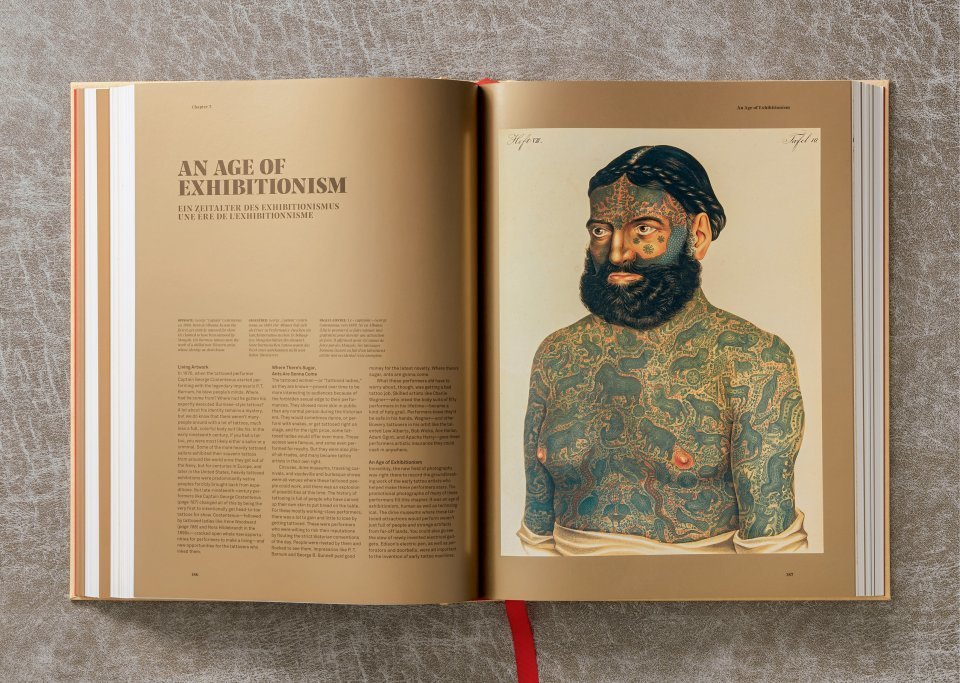
As he shared with fellow tattooer Eric Perfect in a characteristically rollicking, profane interview, his instincts became honed to the point where he “could smell” a tattoo concealed beneath clothing:
The kind of tattoos you used to see in those days, you do not see anymore, that stuff made in jail, in the German jails, like, you’d like see a guy who’d tattooed himself as far as his right hand could reach and the whole right (side) would be empty…I always loved that stuff which was never meant to be art which is straight from the heart.
When tattoo artists would write to him, requesting prints of his photos, he would save the letters, telling Hero’s Eric Goodfellow:
I would get stuff from all over the world. The whole envelope would be decorated, and the letter as well. I have letters from the Leu Family and they’re complete pieces of art, they’re hand painted with all kinds of illustrations. Also people from jail would write letters, and they would take time to write in between the lines in a different colour. So very, very unique letters.
Such correspondence formed the earliest holdings in what is now one of the world’s biggest collections of contemporary and historical tattoo ephemera.
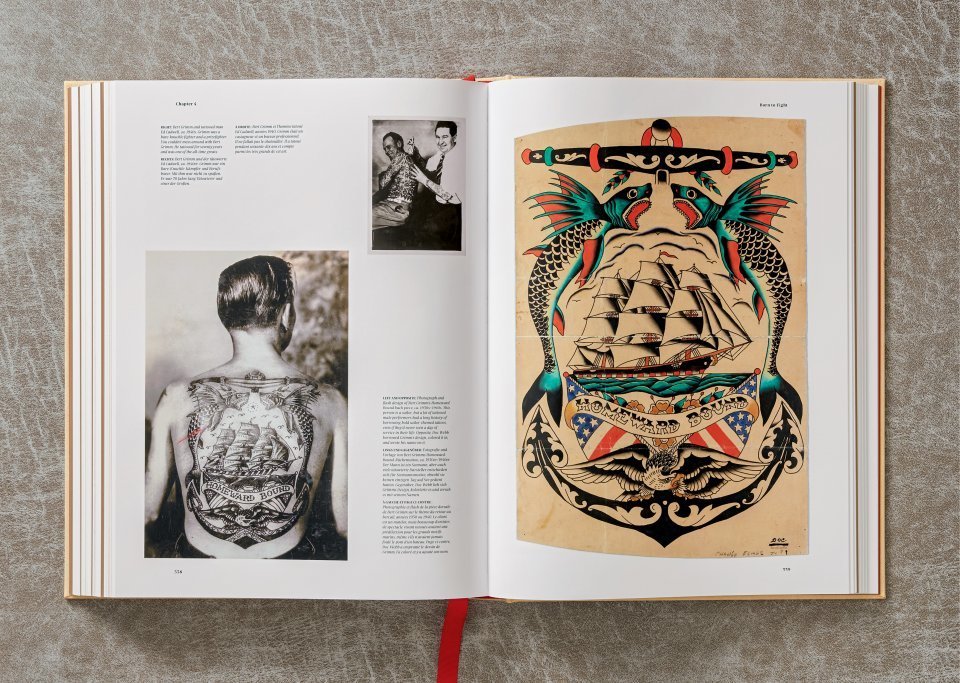
Schiffmacher (now the author of the new Taschen book, TATTOO. 1730s-1970s) realized that tattoos must be documented and preserved by someone with an open mind and vested interest, before they accompanied their recipients to the grave. Many families were ashamed of their loved ones’ interest in skin art, and apt to destroy any evidence of it.
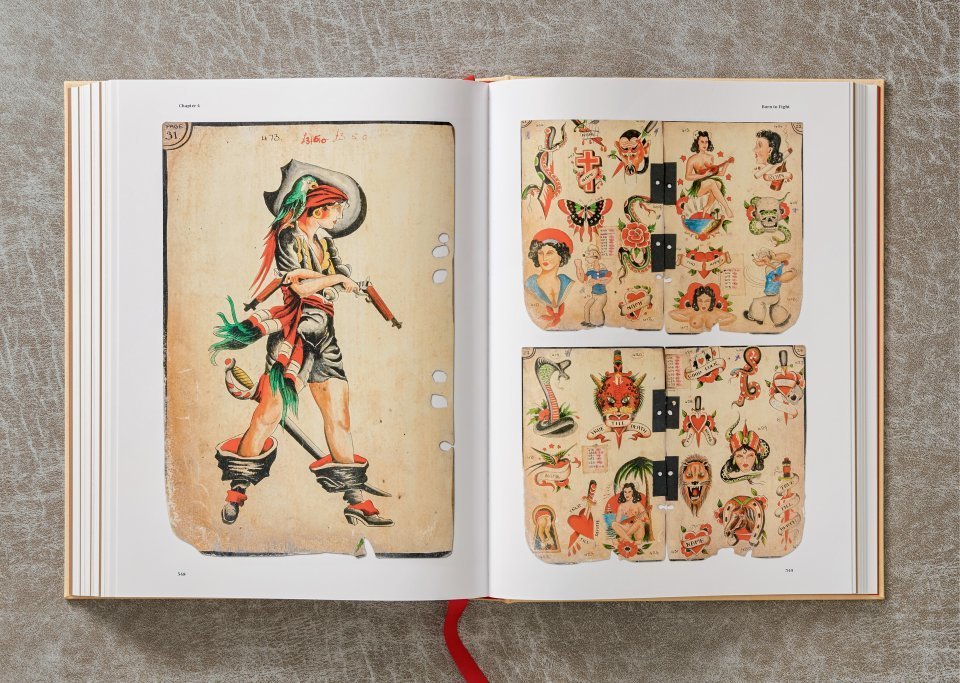
On the other end of the spectrum is a portion of a 19th-century whaler’s arm, permanently emblazoned with Jesus and sweetheart, preserved in formaldehyde-filled jar. Schiffmacher acquired that, too, along with vintage tools, business cards, pages and pages of flash art, and some truly hair raising DIY ink recipes for those jailhouse stick and pokes. (He discusses the whaler’s tattoos in a 2014 TED Talk, below).
His collection also expanded to his own skin, his first canvas as a tattoo artist and proof of his dedication to a community that sees its share of tourists.
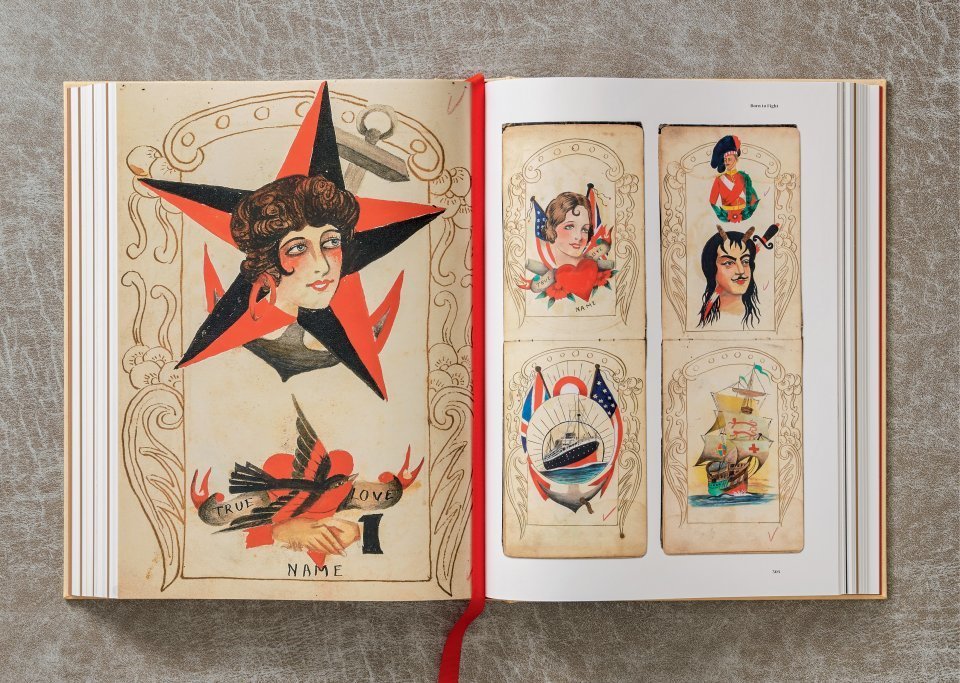
Schiffmacher’s command of global tattoo significance and history informs his preference for communicative tattoos, as opposed to obscure ice breakers requiring explanation.
When he first started conceiving of himself as an illustrated man, he imagined the delight any potential grandchildren would take in this graphic representation of his life’s adventures—“like Pippi Longstocking’s father.”
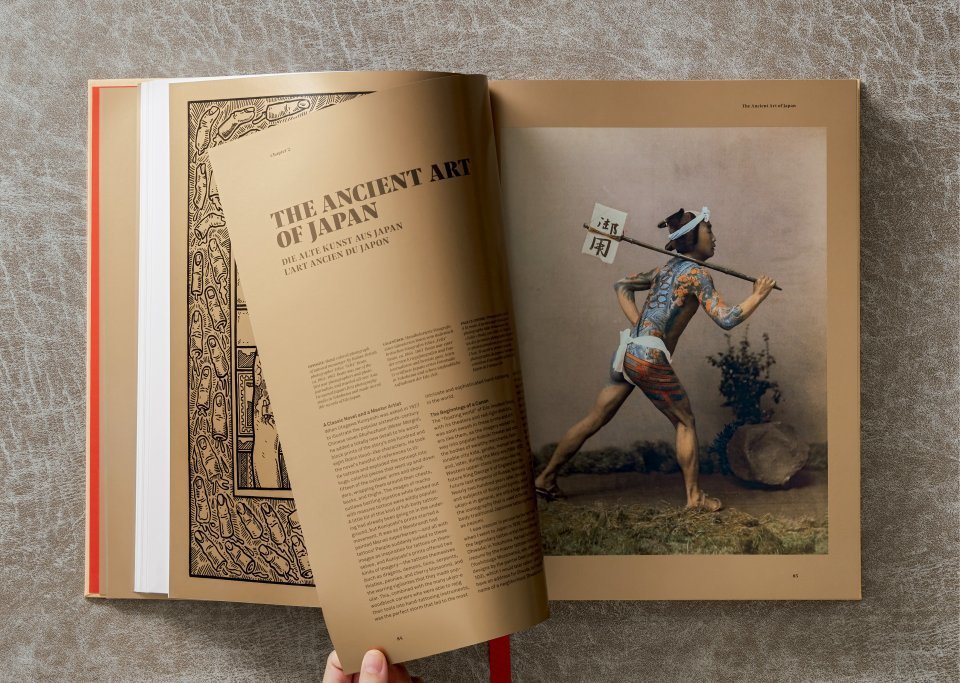
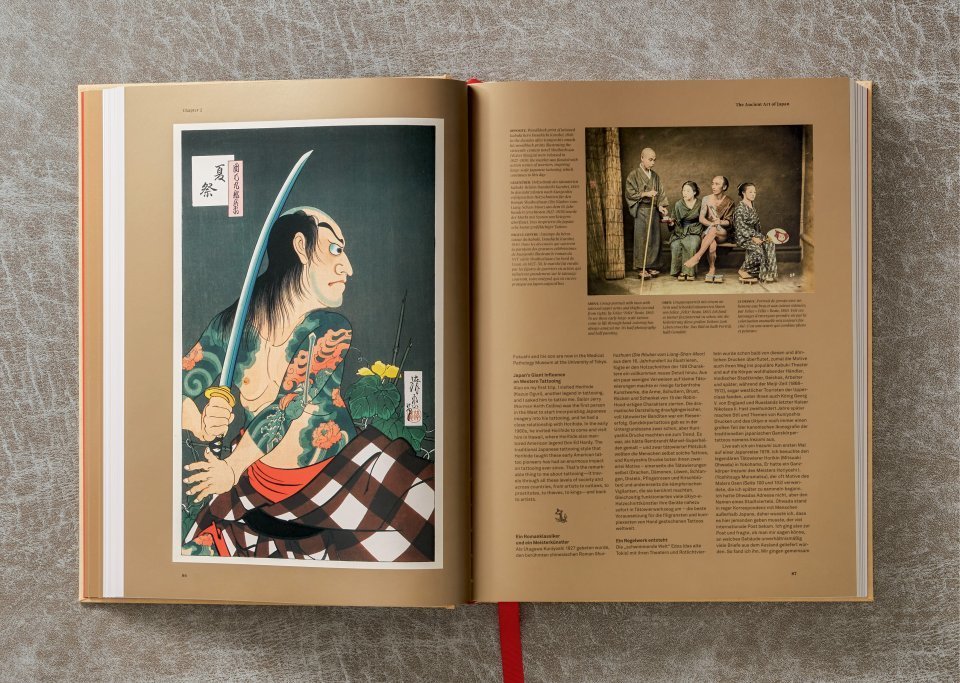
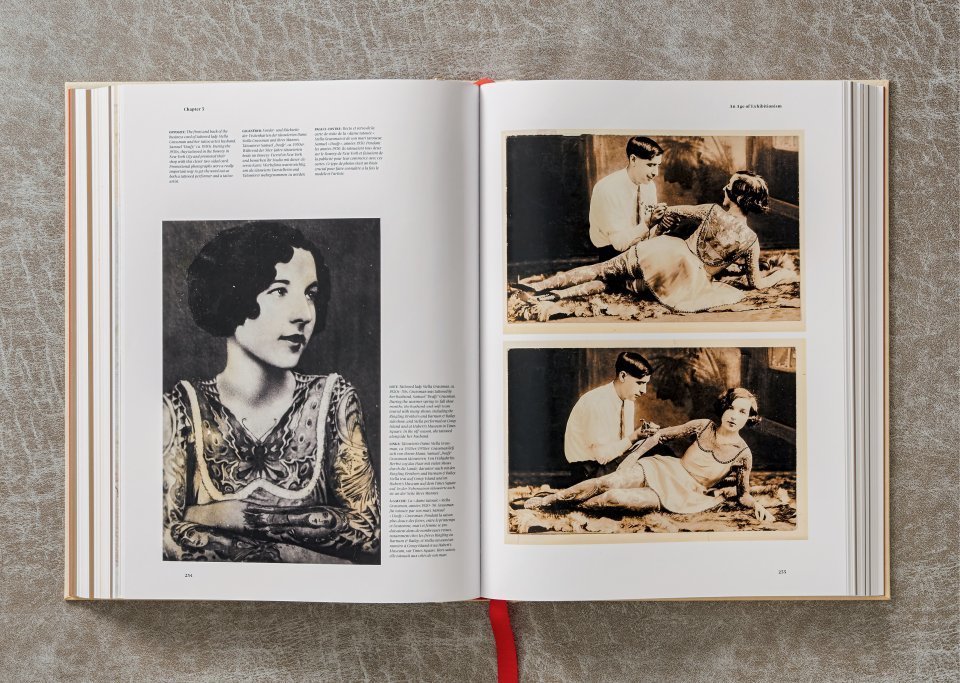
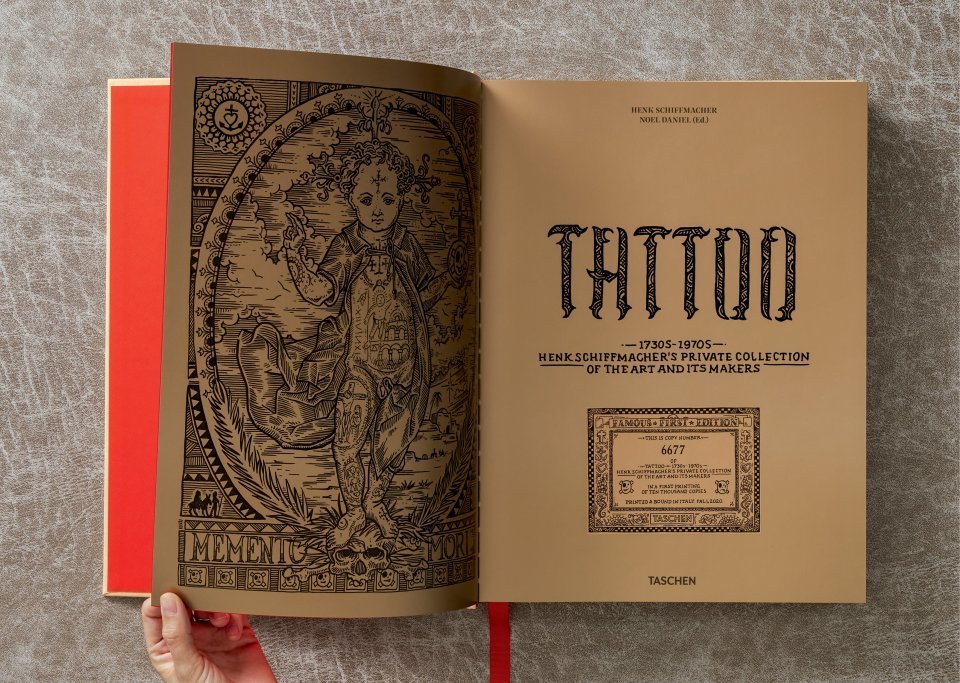
While his Tattoo Museum in Amsterdam is no more, his collection is far from mothballed. Earlier this year, Taschen published TATTOO. 1730s-1970s. Henk Schiffmacher’s Private Collection, a whopping 440-pager the irrepressible 69-year-old artist hefts with pride. You can purchase the book directly via Amazon.
Related Content:
Why Tattoos Are Permanent? New TED Ed Video Explains with Animation
Ayun Halliday is an author, illustrator, theater maker, the Chief Primatologist of the East Village Inky zine and the human alter ego of L’Ourse. Follow her @AyunHalliday.
Read More...Hear J.S. Bach’s Music Performed on the Lautenwerck, Bach’s Favorite Lost Baroque Instrument
If you want to hear the music of Johann Sebastian Bach played on the instruments that actually existed during the stretch of the 17th and 18th centuries in which he lived, there are ensembles specializing in just that. But a full musical revival isn’t quite as simple as that: while there are baroque cellos, oboes, and violas around, not every instrument that Bach knew, played, and composed for has survived. Take the lautenwerck, a category of “gut-stringed instruments that resemble the harpsichord and imitate the delicate soft timbre of the lute,” according to Baroquemusic.org. Of the “lute-harpsichord” craftsmen in 18th-century Germany remembered by history, one name stands out: Johann Nicolaus Bach.
A second cousin of Johann Sebastian, he “built several types of lute-harpsichord. The basic type closely resembled a small wing-shaped, one-manual harpsichord of the usual kind. It only had a single (gut-stringed) stop, but this sounded a pair of strings tuned an octave apart in the lower third of the compass and in unison in the middle third, to approximate as far as possible the impression given by a lute. The instrument had no metal strings at all.”
This gave the lautenwerck a distinctive sound, quite unlike the harpsichord as we know it today. You can hear it — or rather, a reconstructed example — played in the video above, a short performance of Bach’s Prelude, Fugue, and Allegro in E‑flat, BWV 998 by early-music specialist Dongsok Shin.
“If he owned two of them, they couldn’t have been that off the wall,” Shin says of the composer and his relationship to this now little-known instrument in a recent NPR segment. “The gut has a different kind of ring. It’s not as bright. The lautenwerck can pull certain heartstrings.” Just as the sound of each lautenwerck must have had its own distinctive characteristics in Bach’s day, so does each attempt to recreate it today. “The small handful of artisans currently making lautenwerks are basically forensic musicologists,” notes NPR correspondent Neda Ulaby, “reconstructing instruments based on research and what they think lautenwercks probably sounded like.” As for the one man we can be sure knew them intimately enough to tell the difference, he’d be turning 336 years old right about now.
via NPR
Related Content:
Hear 10 of Bach’s Pieces Played on Original Baroque Instruments
Watch J.S. Bach’s “Air on the G String” Played on the Actual Instruments from His Time
Musicians Play Bach on the Octobass, the Gargantuan String Instrument Invented in 1850
What Guitars Were Like 400 Years Ago: An Introduction to the 9 String Baroque Guitar
Based in Seoul, Colin Marshall writes and broadcasts on cities, language, and culture. His projects include the Substack newsletter Books on Cities, the book The Stateless City: a Walk through 21st-Century Los Angeles and the video series The City in Cinema. Follow him on Twitter at @colinmarshall or on Facebook.
Read More...How Bob Marley Came to Make Exodus, His Transcendent Album, After Surviving an Assassination Attempt in 1976
“The people who are trying to make this world worse aren’t taking a day off. How can I?,” said Bob Marley after a 1976 assassination attempt at his home in Jamaica in which Marley, his wife Rita, manager Don Taylor, and employee Louis Griffiths were all shot and, incredibly, all survived. Which people, exactly, did he mean? Was it Edward Seaga’s Jamaican Labour Party, whose hired gunmen supposedly carried out the attack? Was it, as some even conspiratorially alleged, Michael Manley’s People’s National Party, attempting to turn Marley into a martyr?
Marley had, despite his efforts to the contrary, been closely identified with the PNP, and his performance at the Smile Jamaica Concert, scheduled for two days later, was widely seen as an endorsement of Manley’s politics. When he made his now-famously defiant statement from Island Records’ chief Chris Blackwell’s heavily guarded home, he had just decided to play the concert–this despite the continued risk of being gunned down in front of 80,000 people by the still-at-large killers, or someone else paid by the CIA, whom Taylor and Marley biographer Timothy White claim were ultimately behind the attack.
Marley doesn’t just show up at the concert, he “gives the performance of his lifetime,” notes a brief history of the event, and “closes the show by lifting his shirt, exposing his bandaged bullet wounds to the crowd.” Erroneously reported dead in the press after the shooting, Marley emerged Lazarus-like, a Rastafarian folk-hero. Then he left Jamaica to make his career statement, Exodus, in London — as much a fusion of his righteous political fury, religious devotion, erotic celebration, and peace, love & unity vibes as it is a fusion of blues, rock, soul, funk, and even punk.
It’s a very different album than what had come before in 1976’s Rastaman Vibrations, which was an album of “hard, direct politics” and righteous, “macho” anger, wrote Vivien Goldman, “with surprising specifics like ‘Rasta don’t work for no C.I.A.’” The apotheosis that was 1977’s Exodus begins, however, not with Marley’s previous album but with the Smile Jamaica concert. What was meant to be a brief, one-song, non-aligned appearance became after the shooting “a transcendental 90-minute set for a country being torn apart by internal strife and external meddling,” says Noah Lefevre in the Polyphonic video history at the top. “It was the last show Bob Marley would play in Jamaica for more than a year.”
See the full Smile Jamaica concert above and learn in the Polyphonic video how “six months to the day” later, on June 3, 1977, Marley left on his own exodus and came to record and release what Time magazine named the “album of the century” — the record that would “transform him from a national icon to a global prophet.” On Exodus, he achieves a synthesis of global sounds in a defining creative statement of his major themes. Marley was “really trying to give the African Diaspora a sense of its strength and… unity,” Goldman told NPR on the album’s 30th anniversary, while at the same time, “really embracing, you know, white people, to an extent; doing his best to make a multicultural world work.”
Related Content:
30 Fans Joyously Sing the Entirety of Bob Marley’s Legend Album in Unison
Josh Jones is a writer and musician based in Durham, NC. Follow him at @jdmagness
Read More...The Louvre’s Entire Collection Goes Online: View and Download 480,00 Works of Art
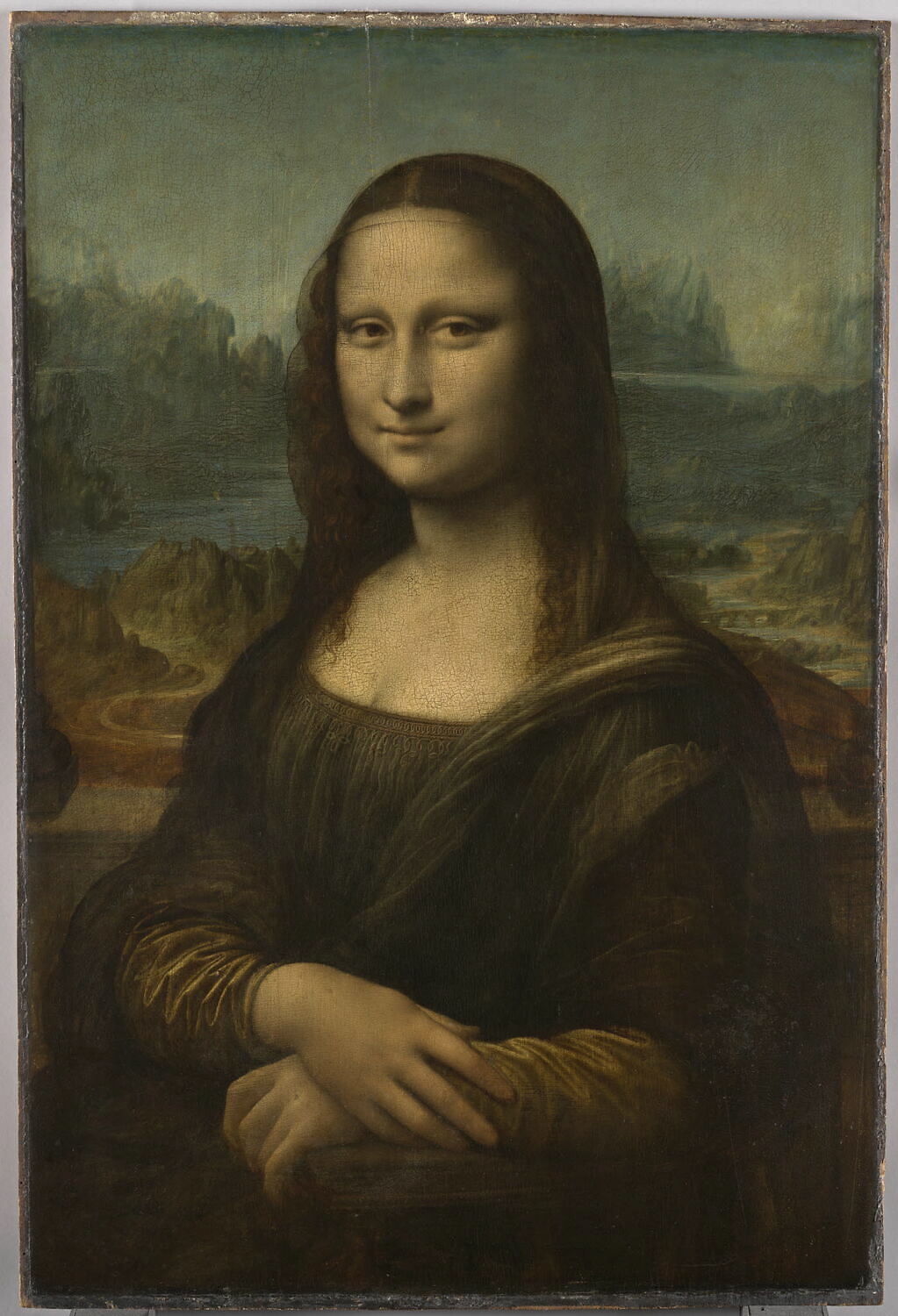
If you go to Paris, many will advise you, you must go to the Louvre; but then, if you go to Paris, as nearly as many will advise you, you must not go to the Louvre. Both recommendations, of course, had a great deal more relevance before the global coronavirus pandemic — at this point in which art- and travel-lovers would gladly endure the infamously tiring crowdedness and size of France’s most famous museum. But now they, and everyone else around the world, can view the Louve’s artworks online, and not just the ones currently on display: through the new portal collections.louvre.fr, they can now view access every single one of the museum’s artworks online.
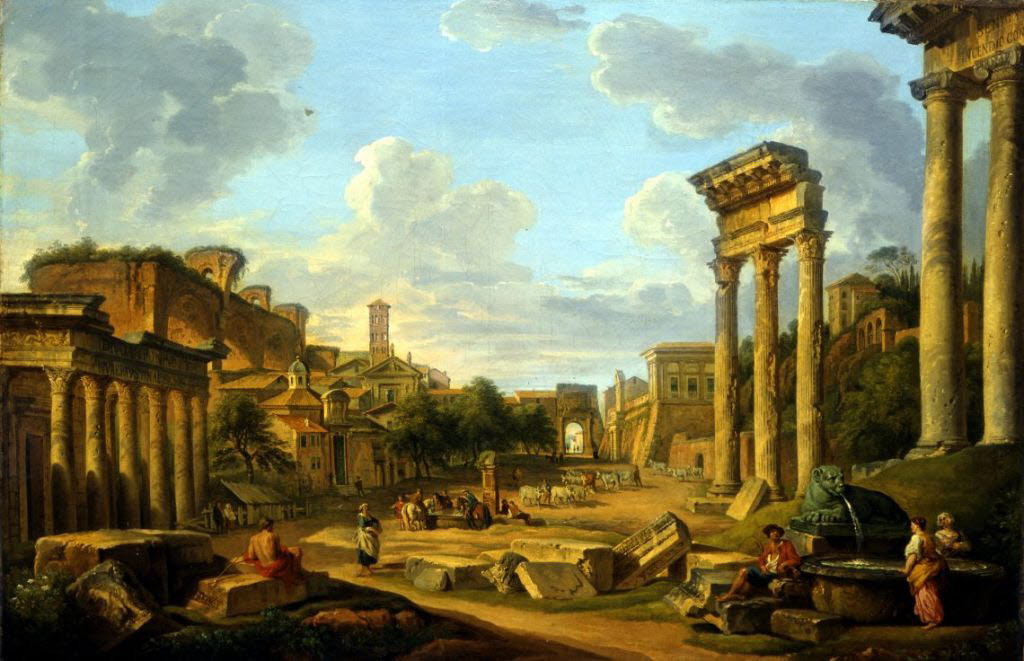
“For the first time ever,” says last week’s press release, “the entire Louvre collection is available online, whether works are on display in the museum, on long-term loan in other French institutions, or in storage.”
This includes, according to the about page of the collections’ site, not just the “more than 480,000 works of art that are part of the national collections,” but the “so-called ‘MNR’ works (Musées Nationaux Récupération, or National Museums Recovery), recovered after WWII,” and “works on long-term loan from other French or foreign institutions such as the Bibliothèque Nationale de France, the Musée des Arts Décoratifs, the Petit Palais, the Fonds National d’Art Contemporain, the British Museum and the archaeological museum of Heraklion.”
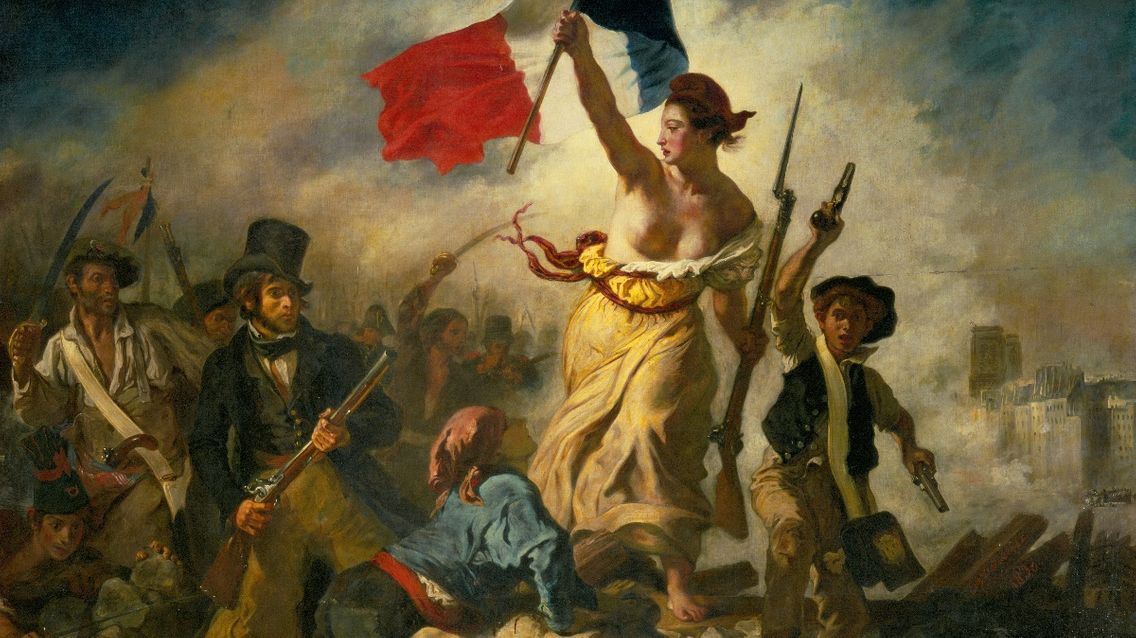
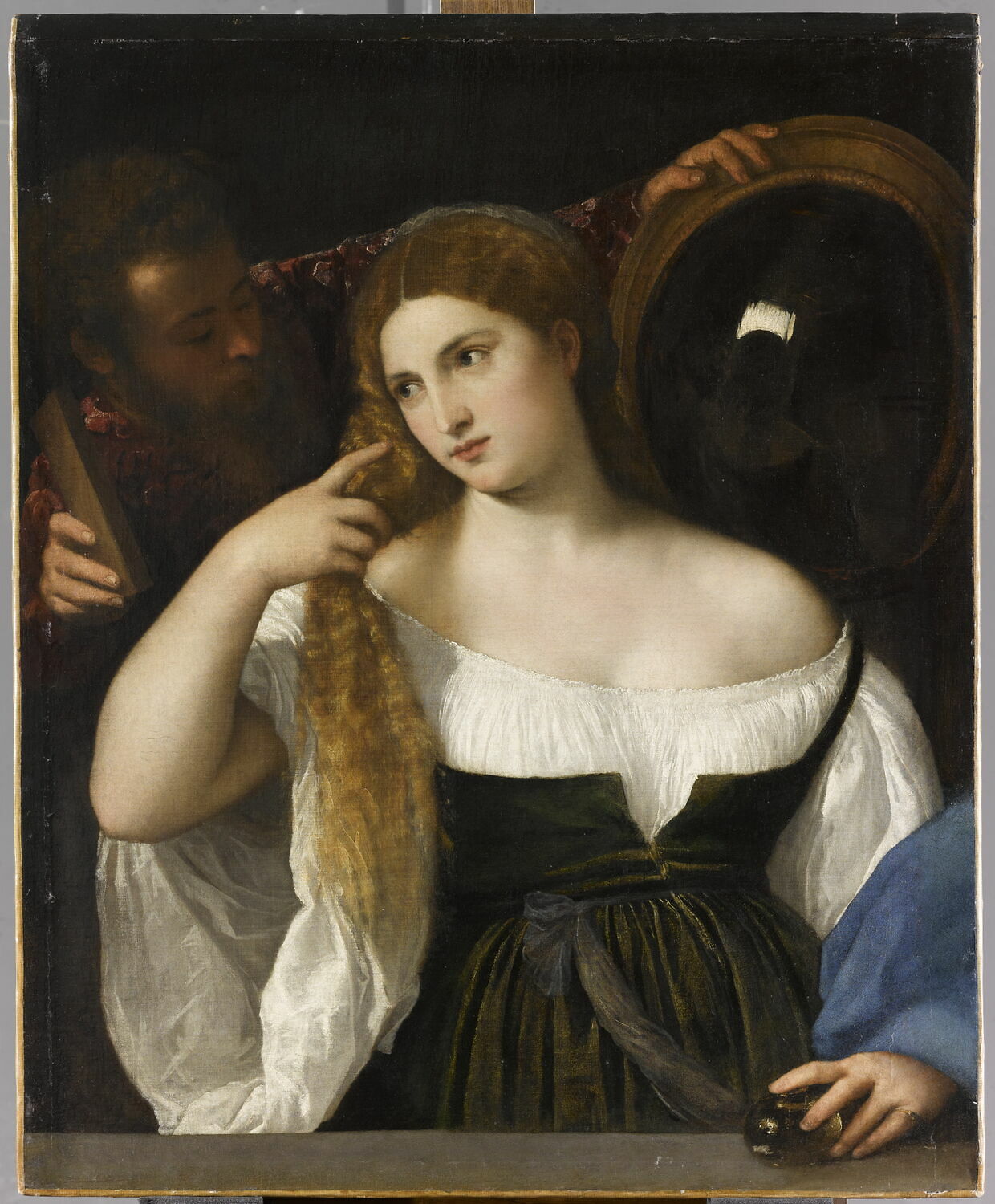
The masterpieces of the Louvre are all there, from Eugène Delacroix’s La Liberté guidant le peuple and Titian’s La Femme au miroir to the Vénus de Milo and the Great Sphinx of Tanis. But so are an enormous number of lesser-known works like a Giovanni Paolo Panini view of the Roman forum, an anonymous 19th-century Algerian landscape, Hendrick de Clerck’s Scène de l’histoire de Psyché (among many other Dutch paintings), and a powder flask amusingly engraved with human and animal figures, all of them in search of their rightful owners since their retrieval from a defeated Germany. You can also explore the Louvre’s online collections by type of work: drawings and engravings, sculptures, furniture, textiles, jewelry and finery, writing and inscriptions, objects, and of course paintings. In that last category you’ll find the Mona Lisa, viewable more clearly than most of us ever have at the physical Louvre — and downloadable at that. Enter the collection here.
If you would like to support the mission of Open Culture, consider making a donation to our site. It’s hard to rely 100% on ads, and your contributions will help us continue providing the best free cultural and educational materials to learners everywhere. You can contribute through PayPal, Patreon, and Venmo (@openculture). Thanks!
Related Content:
Free Art & Art History Courses
Take a Long Virtual Tour of the Louvre in Three High-Definition Videos
14 Paris Museums Put 300,000 Works of Art Online: Download Classics by Monet, Cézanne & More
When Pablo Picasso and Guillaume Apollinaire Were Accused of Stealing the Mona Lisa (1911)
Based in Seoul, Colin Marshall writes and broadcasts on cities, language, and culture. His projects include the Substack newsletter Books on Cities, the book The Stateless City: a Walk through 21st-Century Los Angeles and the video series The City in Cinema. Follow him on Twitter at @colinmarshall or on Facebook.
Read More...Jean-Luc Godard’s Breathless: How World War II Changed Cinema & Helped Create the French New Wave
Did World War II help create the French New Wave? In a roundabout way, yes, according to this video essay by Nerdwriter. Although Jean-Luc Godard’s A Bout de Souffle (aka Breathless) was not technically the first Nouvelle Vague film, it was the film’s revolutionary look and feel, and Godard’s exquisite sense of how to work the promotional machine, that caused it to reverberate around the world. A few years later, many other countries would be launching their own New Waves: Britain, Germany, Eastern Europe, Australia, Japan, Brazil, Iran, and America. Each were particular to their own countries, but all sought to create an alternative to the dominant film culture, either Hollywood or their own country’s Hollywood-influenced film industries.
That decision did not come about in a vacuum, as the video points out. After the war, France was left with $2 billion in debt. Former Interim Prime Minister and then Ambassador Leon Blum signed an agreement with America’s Secretary of State James F. Byrnes to cancel debt and to start a new line of credit. One of the provisions of the 1946 Blum-Byrnes agreement was opening France up to American cultural product, in particular Hollywood films.
In French cinemas, four weeks out of every thirteen weeks would be devoted to French films. The other nine were reserved for foreign (i.e. mostly American) films. But the trade off included a tax on movie tickets, so the increased audience helped fund the French film industry.
Certain results came about that were not planned. A young cinephile generation was born, and its main journal was Cahiers du Cinema, edited by writer and theorist André Bazin. The French could not lay claim to an industry like Hollywood’s, but they could point to inventing movies as we now know them (Georges Méliès and the Lumière Brothers were French), and for treating film as an art form (by the Surrealists, by the Dadaists) before anybody else, and not just as entertainment.
The young critics who wrote for Cahiers du Cinema certainly loved the influx of American films, which they devoured daily in a city like Paris, especially at the Cinémathèque Française. Curated by Henri Langlois, this cinema/museum screened both new and old films, so much so that those critics began to see the artist behind the entertainment. The rise of the auteur theory, coined by Bazin among others, placed the director at the center of not just their one film, but demonstrated certain techniques and interests threading through all films that they directed.
Although there wasn’t a lot of money floating around, there was still enough to make short films and those critics—Jean-Luc Godard, Francois Truffaut, Claude Chabrol, Jacques Rivette, Eric Rohmer, and others—would start to put into practice the theory that they had been writing.
After a few shorts, Godard directed A Bout de Souffle, and the world wasn’t really the same after it.
The film was shot on a handheld camera, by Raoul Cotard, who had used such a camera in the war for newsreels. They used available light. And the two actors, Jean-Paul Belmondo and Jean Seberg, improvised around a script that Godard would write the night before. Godard turned his brain inside-out, like emptying a bag across a table: all his cultural obsessions, not just in cinema, but in writers, philosophers, music, and more, all came out. If Godard was going to be an auteur, then this was how to do it. And yes, the jump-cut editing, as Nerdwriter points out, was shocking for the time. But so was seeing the actors walking around the actual streets of Paris. And so was hearing two people talk (and talk and talk) just like they do in real life. Even if a lot of those things have become common place these days, when everybody carries a movie camera in their pocket, Breathless still brims with life.
Over the course of the ‘60s Godard and his contemporaries would both honor, indulge, and then break away from Hollywood influences. The dominance of Hollywood product began to feel like imperialism, and America’s involvement in Vietnam and its overwhelming influence on consumer culture would lead to the events of 1968, and Godard’s outright rejection of Hollywood. He would end up killing his masters, so to speak. But that was still to come. There’s still Breathless, and there’s still 1960 in Paris.
Related Content:
Watch Jean-Luc Godard’s Filmmaking Masterclass on Instagram
An Introduction to Jean-Luc Godard’s Innovative Filmmaking Through Five Video Essays
Ted Mills is a freelance writer on the arts who currently hosts the Notes from the Shed podcast and is the producer of KCRW’s Curious Coast. You can also follow him on Twitter at @tedmills, and/or watch his films here.
Read More...Hear the Beautiful Isolated Vocal Harmonies from the Beatles’ “Something”
How many songs did Pattie Boyd — fashion model, photographer, muse, and wife of George Harrison and Eric Clapton — inspire? It’s hard to say, since some of the lyrics purportedly written for her, like those in Harrison’s breakout “Something,” may have been for someone else, then diplomatically attributed to Boyd. Or, in the case of “Something” — the first Harrison song to come out as a Beatles A‑side single and the song that convinced the world of his formidable songwriting talents — they might have been about a big, blue supernatural something.
According to Joe Taysom at Far Out magazine, Harrison “became obsessive in his studies of Krishna Consciousness when he wrote the song, and more specifically, its original intent was as a devotion to Lord Krishna.” Harrison “insisted that the original lyric was ‘something in the way HE moves,’ but he changed it.”
The masculine pronoun would have removed all speculation about Boyd but also would have confused listeners in other ways. In any case, Something’s ambiguity, inherent in the title, made it a classic. Frank Sinatra once called it “the greatest love song ever written.”
Harrison, as usual, demurred: “The words are nothing really,” he said in 1969. “There are lots of songs like that in my head. I must get them down.” The song first came together during the 1968 White Album sessions. “There was a period during that album,” he remembered, “when we were all in different studios doing different things trying to get it finished, and I used to take some time out. So I went into an empty studio and wrote ‘Something.’” Lacking confidence in his ability to persuade the band to record it, he first tried to give the song to Apple Records artist and old Liverpool friend Jackie Lomax. The song, he felt, came too easily and might not be good enough, and he had lifted the opening line directly from James Taylor.
Lomax went with another Harrison tune for his first single, and the Beatle continued to work on “Something,” recording a demo of the finished song in February of 1969. But he still didn’t think of it as Beatles-worthy and gave it to Joe Cocker instead, who released his version that year, with Harrison on guitar. (Harrison later claimed to have written the song with Ray Charles in mind.) Whatever his reservations, he did, of course, finally record “Something” with his bandmates, with results familiar to all and everyone. But you’ve probably never heard the song as you can hear it here, with isolated vocal harmonies “you can’t put a cigarette-paper between,” writes Julian Dutton on Twitter. “Totally in simpatico; a synergy that began I suppose all those years ago on the school bus.”
At the top, hear the multitrack vocals that made the Beatles’ “Something” such an incredible recording (including a fun, yelping sing-along to the guitar solo at around 1:50). Further up, hear the whole song deconstructed into its parts (with timestamps for each one at the video’s YouTube page.) And just above, hear the band figure out the harmonies in a studio demo of the song. It was, John Lennon conceded after Abbey Road came out, “about the best track on the album, actually.” Paul McCartney said of the Harrison classic that “it’s the best he’s written.” And Bob Dylan later remarked that “if George had had his own group and was writing his own songs back then, he’d have been probably just as big as anybody,” a thesis Harrison got to prove the following year with his surprisingly amazing All Things Must Pass.
via Julian Dutton
Related Content:
How “Strawberry Fields Forever” Contains “the Craziest Edit” in Beatles History
When the Beatles Refused to Play Before Segregated Audiences on Their First U.S. Tour (1964)
Josh Jones is a writer and musician based in Durham, NC. Follow him at @jdmagness
Read More...Michael Moore’s Bowling for Columbine Is Streaming Free on YouTube
Earlier this year, Michael Moore released the 2002 documentary Bowling for Columbine on his official YouTube channel. The winner of the Academy Award for Best Documentary Feature, the film “set out to investigate the long, often volatile love affair between Americans and their firearms, uncovering the pervasive culture of fear that keeps the nation locked and loaded.” Criterion goes on to write:
Equipped with a camera and a microphone, Moore follows the trail of bullets from Littleton, Colorado, and Flint, Michigan, all the way to Kmart’s midwestern headquarters and NRA president Charlton Heston’s Beverly Hills mansion, meeting shooting survivors, militia members, mild-mannered Canadians, and rock provocateur Marilyn Manson along the way. An unprecedented popular success that helped usher in a new era in documentary filmmaking, the Oscar-winning Bowling for Columbine is a raucous, impassioned, and still tragically relevant journey through the American psyche.”
Nearly two decades later–and right on the heels of two massacres in Atlanta and Boulder–Moore’s film has unfortunately not lost its relevance. You can watch it online, right above.
Related Content
4,000+ Free Movies Online: Great Classics, Indies, Noir, Westerns, Documentaries & More23 Cartoonists Unite to Demand Action to Reduce Gun Violence: Watch the Result
When Archie Bunker’s Advice on Gun Control Becomes Mainstream GOP Policy (1972)
Read More...BirdCast: You Can Now Forecast the Migration of Birds Across the U.S. Just Like the Weather

We talk about the weather more often than we talk about most things, other natural phenomena included. We certainly talk about the weather more often than we talk about birds, much to the disappointment of ornithological enthusiasts. This could be down to the comparative robustness of weather prediction, both as a tradition and as a daily technological presence in our lives. We can hardly avoid seeing the weather forecast, but when was the last time you checked the bird forecast? Such a thing does, in fact, exist, though it’s only come into existence recently, in the form of Birdcast, which provides “real-time predictions of bird migrations: when they migrate, where they migrate, and how far they will be flying.”
Developed by Colorado State University and the Cornell Lab of Ornithology, BirdCast offers both live bird migration maps and bird forecast migration maps for the United States. “These forecasts come from models trained on the last 23 years of bird movements in the atmosphere as detected by the US NEXRAD weather surveillance radar network,” says BirdCast’s web site.
Unprecedented in both the kind of information they provide and the detail in which they provide it, “these bird migration maps represented the culmination of a 20-year long vision, so too the beginnings of new inspiration for the next generation of bird migration research, outreach and education, and application.”
You can learn more about the development and workings of BirdCast in the recorded webinar below, featuring research associate Adriaan Dokter and Julia Wang, leader of the Lights Out project, which aims to get Americans spending more time in just such a state. “Every spring and fall, billions of birds migrate through the US, mostly under the cover of darkness,” says its section of BirdCast’s site. “This mass movement of birds must contend with a dramatically increasing but still largely unrecognized threat: light pollution.” The goal is “turning off unnecessary lighting during critical migration periods,” and with spring having begun last weekend, we now find ourselves in just such a period. Luckily, our fine feathered friends shouldn’t be disturbed by the glow of the BirdCast map on your screen. View live BirdCast maps here.
via Kottke
Related Content:
What Kind of Bird Is That?: A Free App From Cornell Will Give You the Answer
Based in Seoul, Colin Marshall writes and broadcasts on cities, language, and culture. His projects include the Substack newsletter Books on Cities, the book The Stateless City: a Walk through 21st-Century Los Angeles and the video series The City in Cinema. Follow him on Twitter at @colinmarshall or on Facebook.
Read More...Hear Marianne Faithfull’s Three Versions of “As Tears Go By,” Each Recorded at a Different Stage of Life (1965, 1987 & 2018)
When a 17-year-old Marianne Faithfull finished the final take of her 1965 hit “As Tears Go By” — penned by a young duo of Mick Jagger and Keith Richards as one of their first original songs — Rolling Stones manager Andrew Loog Oldham “came and gave me a big hug,” she recalled “‘Congratulations darling. You’ve got yourself a number six,’ he said.”
Richards remembered the song in his autobiography as “a terrible piece of tripe” and “money for old rope,” but it actually peaked at number 22 on the Billboard Hot 100, where it stayed for nine weeks, no small thing. So popular was “As Tears Go By” that the Stones themselves recorded a version the following year. Their take also entered the Hot 100, where it peaked at number six.
The story of the song represents in brief the evolution of its original singer. Fated in her early years to be known as little more than Jagger’s muse, an image she grew to hate, Faithfull went from hanger-on in the sixties, “an essential component of the Swinging London scene,” writes reviewer alrockchick; to a homeless heroin addict; to a legend revived, her “whiskey-soaked” croak of a voice the perfect vehicle for delivering smoke-filled tales of weariness and betrayal.
Along the way, there was “As Tears Go By,” a song Faithfull came to embody, though she didn’t think much of it as a teenager. (See Brian Epstein introduce her on Hulabaloo, above, in 1965.)
She was “never that crazy” about it, she said. “God knows how Mick and Keith wrote it or where it came from…. In any case, it’s an absolutely astonishing thing for a boy of 20 to have written a song about a woman looking back nostalgically on her life.”
The “boys” had help — at first they cribbed the title “As Time Goes By” from the famous tearjerker in Casablanca. According to Loog Oldham, he locked the two Stones in a room together and said, “I want a song with brick walls all around it, high windows and no sex.” How that became a Marianne Faithfull signature is something of a mystery. At times she claimed Jagger wrote the song for her; at others, she emphatically denied it. But as the contrast between her voice and the song’s saccharine, maudlin nature changed, so too did the power of her delivery, which is not to say her first recording didn’t warrant the attention.
“The voice on ‘As Tears Go By’ and ‘Summer Nights,’” altrockchick writes, “has an airy, surreal quality; the voice on Broken English,” her 1979 comeback (which does not include “As Tears Go By”), “is as real as it gets” and only got more real with time. In a Nico-esque monotone drone, she revisited the song she made famous in the mid-sixties in the 1987 take above for the album Strange Weather. She had just recently gotten clean and lost a lover to suicide.
The weathered vulnerability she projects is worlds away from the dreamy melancholy of the past, her voice “a far cry from the 60s sweetness,” The Music Aficionado blog notes. “Years of substance abuse and constant smoking dropped her pitch and made it raspy.” These qualities are even more pronounced in a 2018 version of the song from the album Negative Capability. It functions almost as a coda for a career as an interpreter of the songs of others, though she’s written no few of her own (and may yet release another version of “As Time Goes By.”)
She is remembered for much more than her first hit, but Faithfull’s revisitation of “As Tears Go By” over the years seems to speak to an ambivalent acceptance of Mick Jagger’s constant presence in her story — and a graceful, if not exactly uplifting, acceptance of the inevitable ravages of age and fame.
You can hear her very recent interview on the Broken Record podcast below:
Related Content:
Jean-Luc Godard Shoots Marianne Faithfull Singing “As Tears Go By” (1966)
Josh Jones is a writer and musician based in Durham, NC. Follow him at @jdmagness
Read More...How Leonardo da Vinci Made His Magnificent Drawings Using Only a Metal Stylus, Pen & Ink, and Chalk
The modern artist has what can seem like an unlimited range of materials from which to choose, a variety completely unknown to great Renaissance masters like Leonardo da Vinci. Few, if any, can say, however, that they have anything like the raw talent, ingenuity, and discipline that drove Leonardo to draw incessantly, constantly honing his techniques and exploiting every use of the tools and techniques available to him.
What were those tools and techniques? Conservator Alan Donnithorne demonstrates Leonardo’s materials in the video above, with examples from the holdings of the Royal Collection at Windsor Castle. Leonardo “drew incessantly,” the Royal Collection Trust writes, “to devise his artistic projects, to explore the natural world, and to record the workings of his imagination.” He used metalpoint, a method of drawing on coated paper with a metal stylus; pen and ink, with pens made from a goose wing feather; and, after the 1490s, red and black chalks.
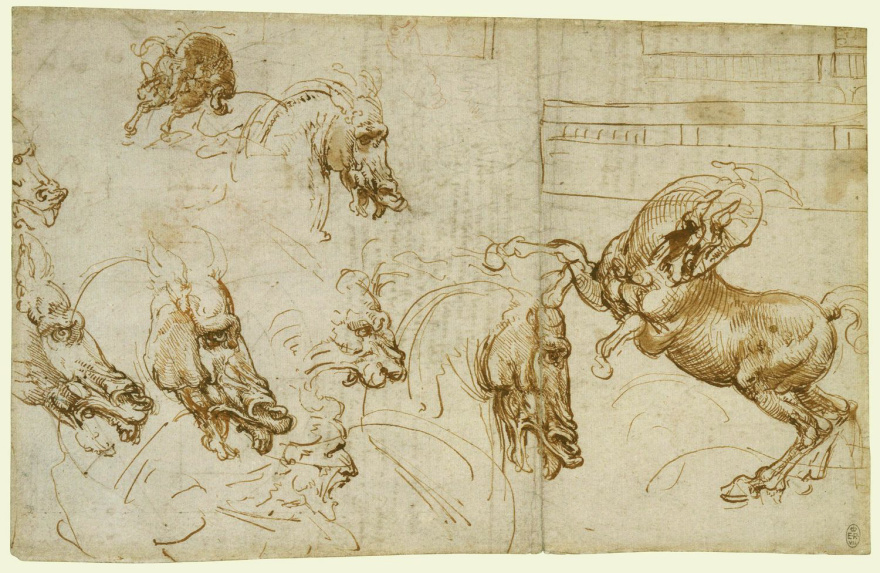
Leonardo produced thousands of drawings during his lifetime“many of them of extreme beauty and complexity,” says Donnithorne, “and it’s incredible to think that he produced them using these very simple ingredients.”
The Royal Collection owns around 550 of these drawings, “together as a group since the artist’s death in 1519,” when he bequeathed them to his student, Francesco Melzi. These works “provide unparalleled insight,” the Collection writes, “into the workings of Leonardo’s mind and reflect the full range of his interests, including painting, sculpture, architecture, anatomy, engineering, cartography, geology, and botany.”
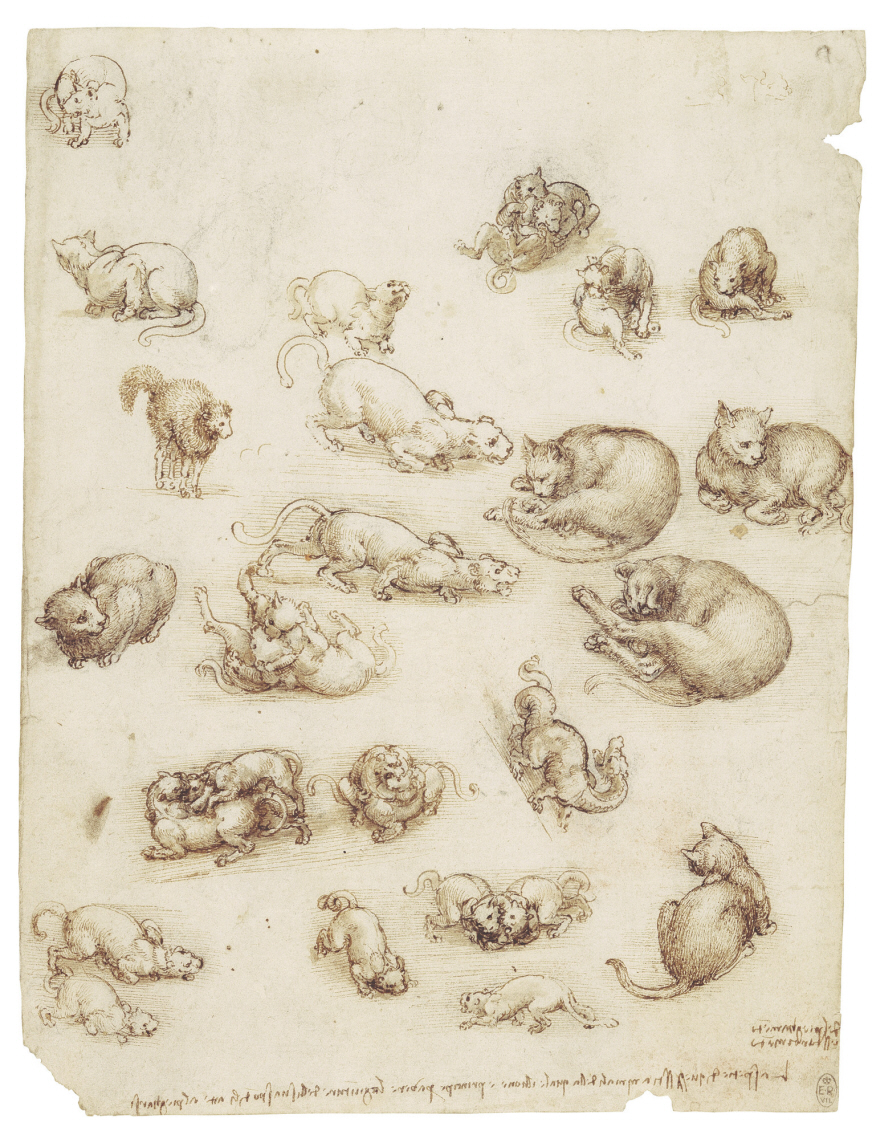
The restlessness of Leonardo’s mind and hand also reflect the need to move quickly from project to project as he pursued some commissions and abandoned others. “Across all these themes,” however, Christopher Baker, director of European and Scottish Art and Portraiture at the National Galleries of Scotland, sees “a ravishing range of techniques and materials…. The precision required by metalpoint proved especially appropriate for some of his most incisive human or animal observations, while iron gall ink and red and black chalks allowed an exploratory freedom fitting for compositional trials, fictive works or capturing movement.”
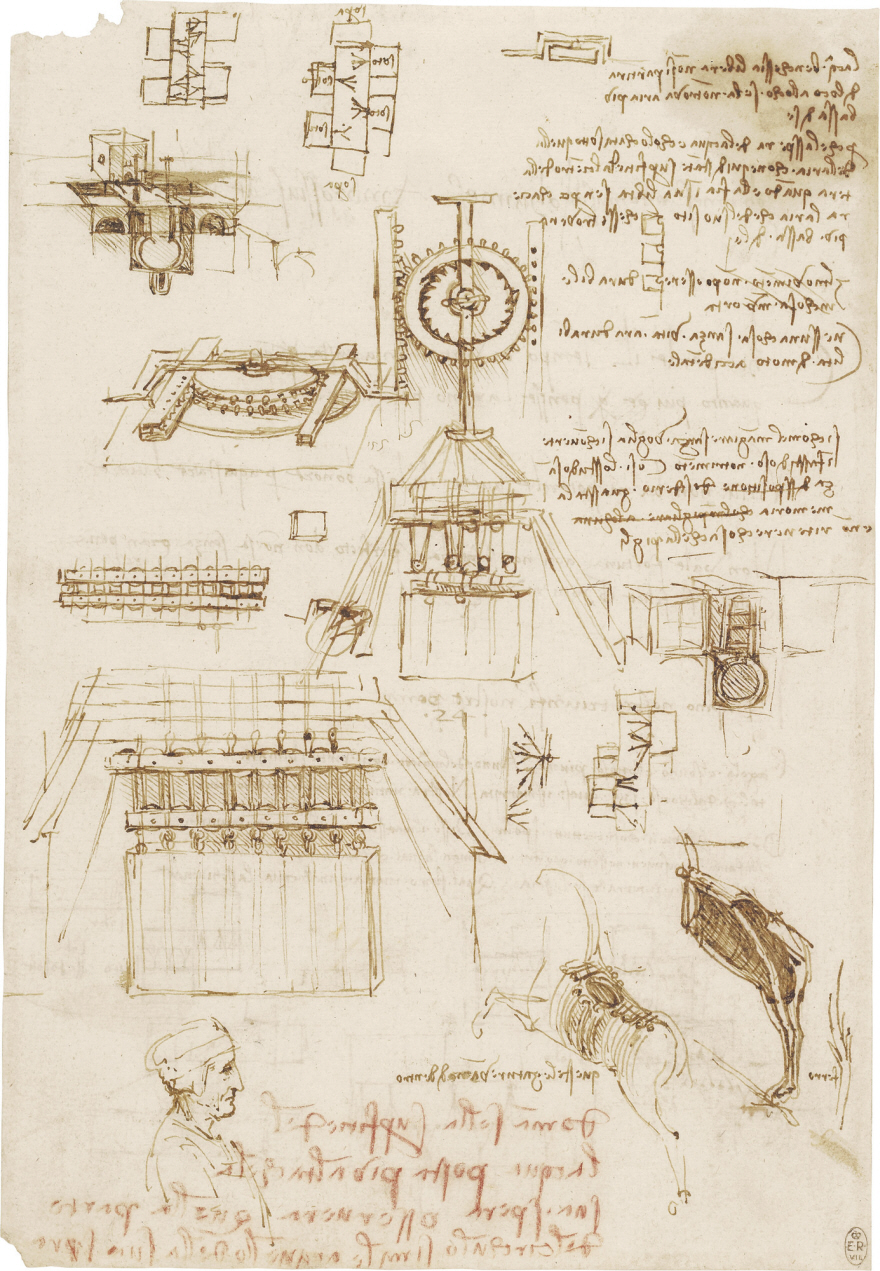
The artist’s “prodigious skills” are evident among his many shifts in style and subject and we see even in utilitarian illustrations how “he overturned so many conventions and sometimes mixed his media to wonderful effect.” Leonardo’s choice of media was hardly expansive compared to the dizzyingly colorful aisles that greet the budding artist at art supply stores today. But what he could do with a stylus, goose-quill pen, and chalk has never been equalled. Learn more about how he used his materials in Donnithorne’s book, Leonardo da Vinci: A Closer Look, published on the 500th anniversary celebrations of Leonardo’s death.
via Core77
Related Content:
Leonardo da Vinci’s Elegant Studies of the Human Heart Were 500 Years Ahead of Their Time
Josh Jones is a writer and musician based in Durham, NC. Follow him at @jdmagness
Read More...Support Us
We're hoping to rely on loyal readers, rather than erratic ads. Please click the Donate button and support Open Culture. You can use Paypal, Venmo, Patreon, even Crypto! We thank you!

About Us

Open Culture scours the web for the best educational media. We find the free courses and audio books you need, the language lessons & educational videos you want, and plenty of enlightenment in between.
Advertise With Us
FREE UPDATES!
GET OUR DAILY EMAIL
Get the best cultural and educational resources on the web curated for you in a daily email. We never spam. Unsubscribe at any time.
FOLLOW ON SOCIAL MEDIA
Open Culture editor Dan Colman scours the web for the best educational media. He finds the free courses and audio books you need, the language lessons & movies you want, and plenty of enlightenment in between.
Advertise With Us

