The “Academic Tarot”: 22 Major Arcana Cards Representing Life in the Academic Humanities Under COVID-19
“Speculations about the creators of Tarot cards include the Sufis, the Cathars, the Egyptians, Kabbalists, and more,” writes “expert cartomancer” Joshua Hehe. All of these suppositions are wrong, it seems. “The actual historical evidence points to northern Italy sometime in the early part of the 1400s,” when the so-called “major arcana” came into being. “Contrary to what many have claimed, there is absolutely no proof of the Tarot having originated in any other time or place.”
A bold claim, yet there are precedents much older than tarot: “A few decades before the Tarot was born, ordinary playing cards came to Europe by way of Arabs, arriving in many different cities between 1375 and 1378. These cards were an adaptation of the Islamic Mamluk cards,” with suits of cups, swords, coins, and polo sticks, “the latter of which were seen by Europeans as staves.”
Whether the playing cards invented by the Mamluks were used for divination may be a matter of controversy. The history and art of the Mamluk sultanate itself is a subject worthy of study for the tarot historian. Originally a slave army (“mamluk” means “slave” in Arabic) under the Ayyubid sultans in Egypt and Syria, the Mamluks overthrew their rulers and created “the greatest Islamic empire of the later Middle Ages.”
What does this have to do with tarot reading? These are academic concerns, perhaps, of little interest to the average tarot enthusiast. But then, the average tarot enthusiast is not the audience for the “Academic Tarot,” a project of the Visionary Futures Collective, or VFC, a group of 22 scholars “fighting for what higher education needs most,” Stephanie Malak writes at Hyperallergic, “a bringing together of thinkers who ‘believe in the transformational power and vital importance of the humanities.’”
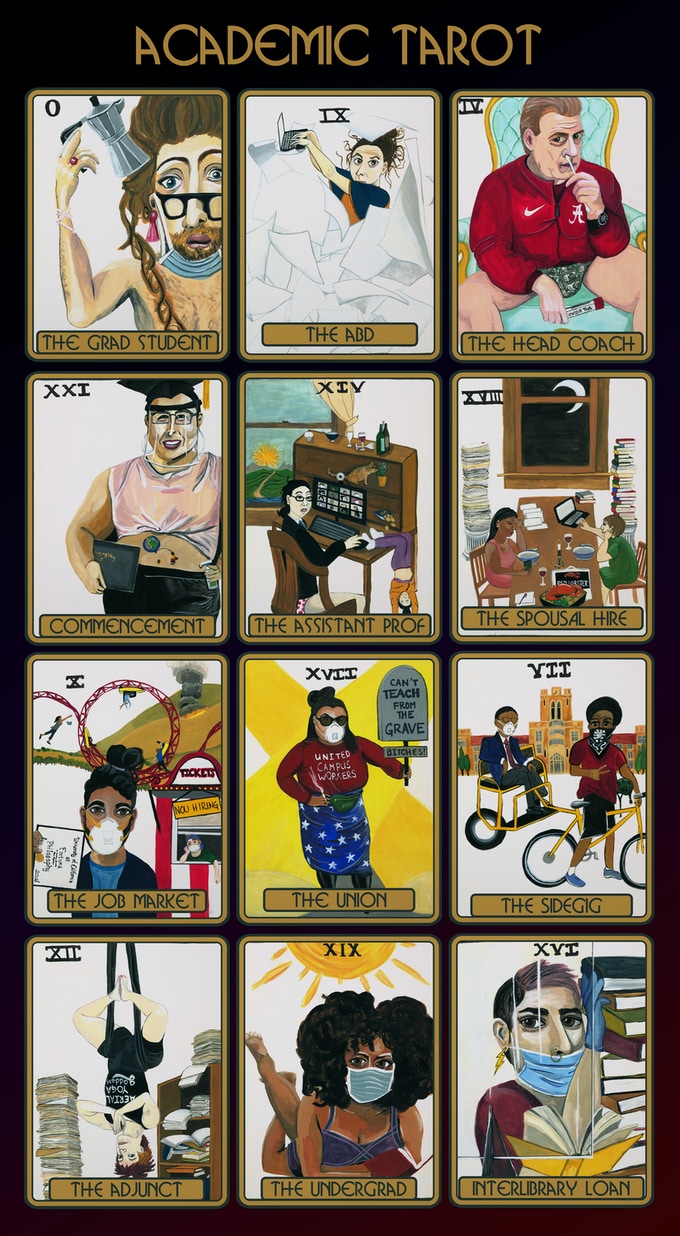
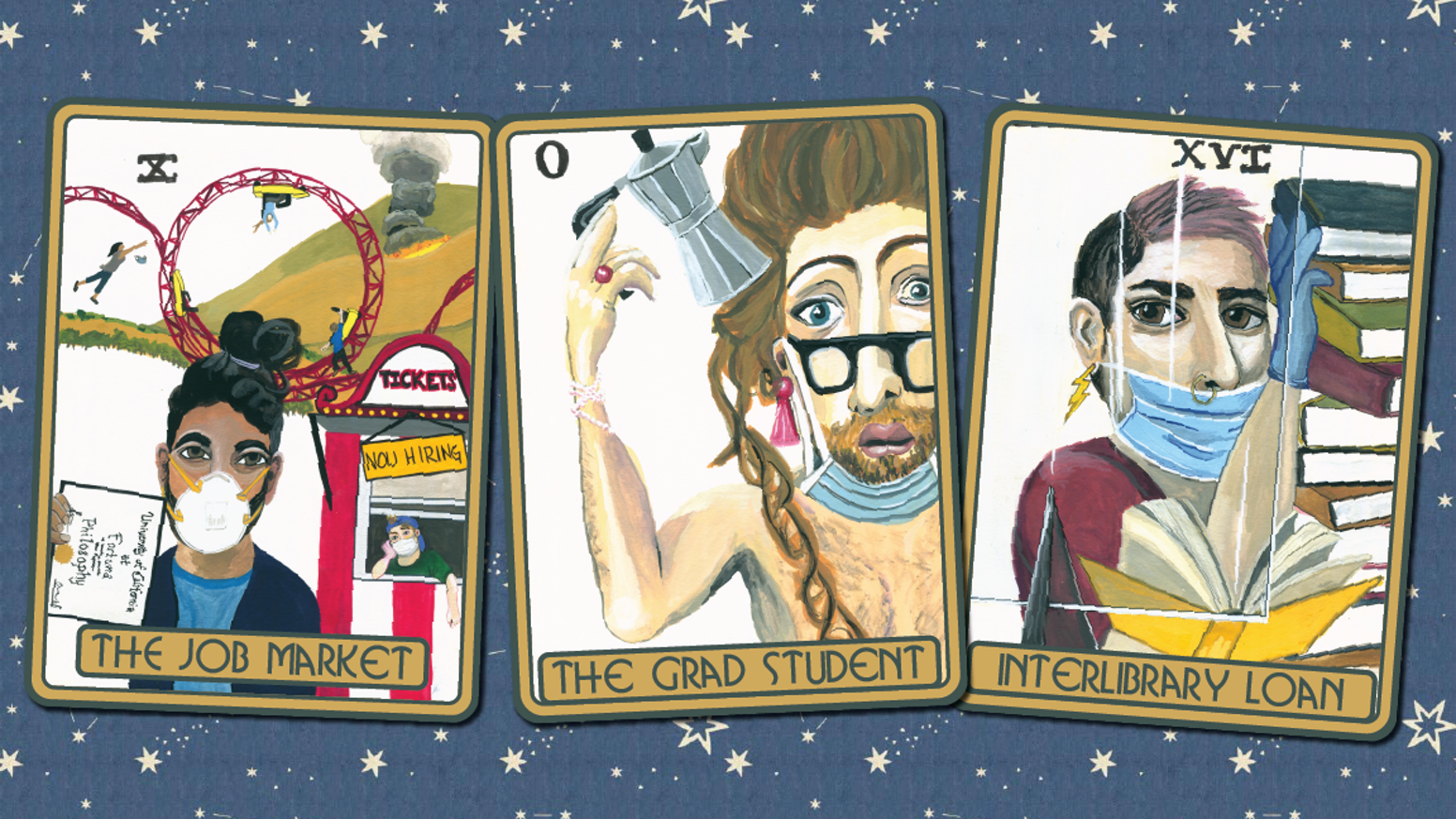
To that end, the Academic Tarot features exactly the kinds of characters who love to chase down abstruse historical questions—characters like the lowly, confused Grad Student, standing in here for The Fool. It also features those who can make academic life, with its endless rounds of meetings and committees, so difficult: figures like The President (see here), doing duty here as the Magician, and pictured shredding “campus-wide COVID results.”
The VFC, founded in the time of COVID-19 pandemic and “in the midst of the long-overdue national reckoning led by the Black Lives Matter movement,” aims to “trace the contours of things that define our shared human condition,” says Collective member Dr. Brian DeGrazia. In the case of the Academic Tarot, the conditions represented are shared by a specific subset of humans, many of whom responded to “feelings surveys” put out by the VFC in a biweekly newsletter.
The surveys have been used to make art that reflects the experiences of the grad students, professors, and professional staff working the academic humanities at this time:
VFC artist-in-residence Claire Chenette, a Grammy-nominated Knoxville Symphony Orchestra musician furloughed due to COVID-19, brought the tarot cards to life. What began as a three-card project to complement the VFC newsletter grew in spirit and in number.
“In tarot, the cards read us,” the VFC writes, “telling a story about ourselves that can provide clarity, guidance and hope.” What story do the 22 Major Arcana cards in the Academic Tarot tell? That depends on who’s asking, as always, but one gets the sense that unless the querent is familiar with life in a higher-ed humanities department, these cards may not reveal much. For those who have seen themselves in the cards, however, “the images made them laugh out loud,” says Chenette, or “they hit hard. Or… they even made them cry, but… it needed to happen.”
Struggling through yet another pandemic semester of attempting to teach, research, write, and generally stay afloat? The Academic Tarot cards are currently sold out, but you can pre-order now for the second run.
via Hyperallergic
Related Content:
Behold the Sola-Busca Tarot Deck, the Earliest Complete Set of Tarot Cards (1490)
Josh Jones is a writer and musician based in Durham, NC. Follow him at @jdmagness
Read More...The Animations That Changed Cinema: The Groundbreaking Legacies of Prince Achmed, Akira, The Iron Giant & More
Animation is childish. So believe those who never watch animated films — but also, on another, deeper level, those who hold up animated films as the most complete form of cinema. Whatever our generation, most of us alive today grew up watching cartoons meant in every sense for children, and often artistically flimsy ones at that. But even on such a low-nutrition viewing regimen, we could now and again glimpse the vast possibilities of the form. Or perhaps it was just our imagination — but then, as Stephen King once pointed out, nothing is “just” our imagination in childhood, a time when we occupy “a secret world that exists by its own rules and lives in its own culture.”
In order to navigate this reality apart, where nothing is entirely for real and nothing entirely pretend, children “think around corners instead of in straight lines.” The best animators retain this ability into adulthood, harnessing it to create a purer kind of cinema that reflects and engages the imagination in a way even the freest live-action films never can. The work of such animators constitutes the subject matter of “The Animation that Changed Cinema,” a new essay from The Cinema Cartography. In just over half an hour, the series’ creators Lewis Bond and Luiza Liz Bond explore animation produced all over the world over nearly the past century in search of the films that have widened the boundaries of the medium.
Though most video essays from The Cinema Cartography and its predecessor Channel Criswell have focused on conventional film, Bond has already demonstrated his profound understanding of animation in video essays on Studio Ghibli co-founder Hayao Miyazaki and the acclaimed cult anime series Cowboy Bebop. “The Animation that Changed Cinema” spends a great deal of time on other works from Japan, the one country that has done more than any other to elevate the animated film, including that of Miyazaki’s Ghibli partner Isao Takahata, Perfect Blue auteur Satoshi Kon, and Katsuhiro Otomo, whose Akira permanently changed much of the world’s understanding of “cartoons” as cinematic art. But as with The Cinema Cartography’s previous “The Cinematography that Changed Cinema,” the cultural-geographical mandate ranges widely.
Among these visionary animators are several previously featured here on Open Culture: the German Lotte Reiniger, creator of the all-silhouette The Adventures of Prince Achmed; Europeans from farther east (and possessed of wilder sensibilities) like Jan Švankmajer; Americans like Don Hertzfeldt, the Brothers Quay, and Wes Anderson (whose filmography includes the stop-motion The Fantastic Mr. Fox and Isle of Dogs). That last group includes even Hollywood director Brad Bird, now best known for Pixar movies like The Incredibles and Ratatouille, but here celebrated for The Iron Giant, a picture that sank upon its release, but in the two decades since has come to be appreciated as just the kind of work of art that, as Bond puts it, “makes us forget that we’re watching moving drawings” — whatever age we happen to be.
Related Content:
Free Animated Films: From Classic to Modern
How the Films of Hayao Miyazaki Work Their Animated Magic, Explained in 4 Video Essays
What Made Studio Ghibli Animator Isao Takahata (RIP) a Master: Two Video Essays
How Master Japanese Animator Satoshi Kon Pushed the Boundaries of Making Anime: A Video Essay
Based in Seoul, Colin Marshall writes and broadcasts on cities, language, and culture. His projects include the Substack newsletter Books on Cities, the book The Stateless City: a Walk through 21st-Century Los Angeles and the video series The City in Cinema. Follow him on Twitter at @colinmarshall or on Facebook.
Read More...Alan Watts Reads “One of the Greatest Things Carl Jung Ever Wrote”
Carl Jung founded the field of analytical psychology more than a century ago, and many reference his insights into the human mind and condition still today. Alan Watts certainly did his bit to keep the Jungian flame alive, whatever the outward differences between a Swiss psychiatrist and an English interpreter of Taoism, Hinduism, and Buddhism, especially of the Zen variety. Both men believed in casting a wide spiritual net, all the better to expose the common core elements of seemingly disparate ancient traditions. And in so doing they could hardly afford to ignore the religious underpinnings of the European civilization, broadly speaking, from which they emerged. In fact, Watts became an ordained Episcopal priest at the age of 30 — though, owing to the complexities of his beliefs as well as his personal life, he resigned the ministry by age 35.
But Watts’ investment in certain tenets of Christianity endured, and he named as one of Jung’s greatest writings a lecture delivered to a Swiss clergy group. “People forget that even doctors have moral scruples and that certain patient’s confessions are hard even for a doctor to swallow,” begins the speech as Watts reads it aloud in the video above. “Yet the patient does not feel himself accepted unless the very worst in him is accepted too. No one can bring this about by mere words. It comes only through reflection and through the doctor’s attitude towards himself and his own dark side.” To help another person, in other words, one must first accept that person as he is; but to accept another person as he is first requires taking oneself straight, less-than-admirable qualities and all.
According to Watts, Jung himself demonstrated this rare self-awareness. “He knew and recognized what I sometimes call the element of irreducible rascality in himself,” says Watts in a talk of his own previously featured here on Open Culture. “He knew it so strongly and so clearly, and in a way so lovingly, that he would not condemn the same thing in others, and would therefore not be led into those thoughts, feelings, and acts of violence towards others which are always characteristic of the people who project the devil in themselves upon the outside, upon somebody else, upon the scapegoat.” As Jung puts it to his clerical audience, “In the sphere of social or national relations, the state of suffering may be civil war, and this state is to be cured by the Christian virtue of forgiveness and love of one’s enemies.”
What Christianity holds as true of the outer world goes just as well, Jung argues, for the inner one. “This is why modern man has heard enough about guilt and sin. He is sorely beset by his own bad conscience and wants, rather, to know how he is to reconcile himself with his own nature, how he is to love the enemy in his own heart and call the wolf his brother.” He “does not want to know in what way he can imitate Christ, but in what way he can live his own individual life, however meagre and uninteresting it may be.” Only by being allowed to follow this “egoism” to its conclusion of “complete isolation” can he “get to know himself and learn what an invaluable treasure is the love of his fellow beings”; it is only “in the state of complete abandonment and loneliness that we experience the helpful powers of our own natures.” Without knowing our own natures, we can hardly expect even the most time-tested belief systems to put an end to the civil wars inside us.
Related Content:
Zen Master Alan Watts Explains What Made Carl Jung Such an Influential Thinker
Carl Jung Explains His Groundbreaking Theories About Psychology in a Rare Interview (1957)
Alan Watts On Why Our Minds And Technology Can’t Grasp Reality
Face to Face with Carl Jung: ‘Man Cannot Stand a Meaningless Life’ (1959)
The Wisdom of Alan Watts in Four Thought-Provoking Animations
Based in Seoul, Colin Marshall writes and broadcasts on cities, language, and culture. His projects include the Substack newsletter Books on Cities, the book The Stateless City: a Walk through 21st-Century Los Angeles and the video series The City in Cinema. Follow him on Twitter at @colinmarshall or on Facebook.
Read More...A New Database Will Document Every Slave House in the U.S.: Discover the “Saving Slave Houses Project”
In central North Carolina, not far from where I live, sits the Franklinton Center at Bricks, a 224-acre educational campus and conference center built on the remains of a historic “Agricultural, Industrial, and Normal School,” then junior college, for the descendants of enslaved people. These schools were themselves built on the land of a former cotton plantation, on former territory of the Tuscarora Nation. The campus acts as a palimpsest of Southern U.S. history. Each successive generation on the site after the Civil War has built memorials alongside modern institutions of learning and activism. The model is rare. As historian Damian Pargas of Leiden University tells Atlas Obscura’s Sabrina Imbler, “slavery is largely invisible in the [current] Southern landscape, and therefore easy to ignore or forget.”
Even at the Franklinton Center, the remnants of the slave past consist only of a whipping post, the focus of a remembrance area on the campus, and an antebellum slave cemetery a short distance away. All traces of slave quarters and houses have been wiped away. Where they remain in the U.S., writes Imbler, such buildings often “bear no visible trace of their past; many have been converted into garages, offices, or sometimes—unnervingly—bed-and-breakfasts. In some cases the structures have fallen into ruin or vanished entirely, leaving behind a depression in the ground.” Since 2012, Jobie Hill, a preservation architect, has tried to change that with her project Saving Slave Houses.
Hill is determined to build a first-of-its-kind database that honors and preserves these spaces in more than memory, and to unite the houses with the stories of people who once inhabited them. As she sees it, such a repository is long overdue. “There has never been a national survey of slave houses, except for the one I’m trying to do,” Hill says.
Houses, says Hill, in her TEDx talk above, “can tell us a lot about the people that lived there…. Each slave house has a valuable story to tell.” A slave house, Hill writes, on the project’s site, “was a place where enslaved people found strength and comfort from one another; but at the same time, it was a place that imposed physical limitations and psychological trauma.”
The project grew out of Hill’s master’s theses in preservation architecture and through an internship for the Historic American Buildings Survey (HABS), “a federal program established in 1933 to employ architects and draftsmen” during the Great Depression, Imbler notes. She has been able to identify slave houses by their small size, location on a property, “and if the building has a fireplace or chimney,” she says, noting that such buildings were rarely included in surveys. She has also cross-referenced surveys with the “largest, best-known collection of interviews from formerly enslaved people: the 1936–1938 WPA Slave Narrative Collection.”
These interviews “paint a grim picture of the cruel and cramped quarters enslaved people were forced to live in.” But slave houses are not only markers of a painful past. “A slave house simultaneously embodies suffering, yet perseverance and strong family bonds,” writes Hill. They are symbols of survival against daunting odds, and like the magnolia tree that marks the remembrance site at the Franklinton Center, they can “serve as a reminder that we too must do more than survive. We must find a way to thrive.” Learn more about Hill’s Saving Slave Houses project here.
via Atlas Obscura
Related Content:
Josh Jones is a writer and musician based in Durham, NC. Follow him at @jdmagness
Read More...How Norman Rockwell Used Photographs to Create His Famous Paintings: See Side-by-Side Comparisons
More than 40 years after Norman Rockwell’s death, the question of whether his paintings are realistic or unrealistic remains open for debate. On one hand, critical opinion has long dismissed his Saturday Evening Post-adorning visions of American life as sheerest fantasy. “A little girl with a black eye, an elderly woman saying grace with her grandson, a boy going to war: Rockwellian scenes represent a certain sentimental America — an ideal America, or at least Rockwell’s ideal,” says a 2009 NPR story on his work.
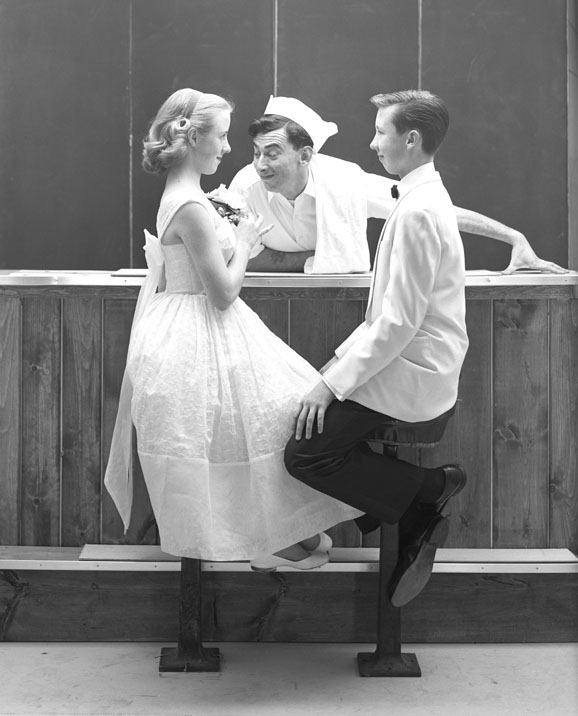
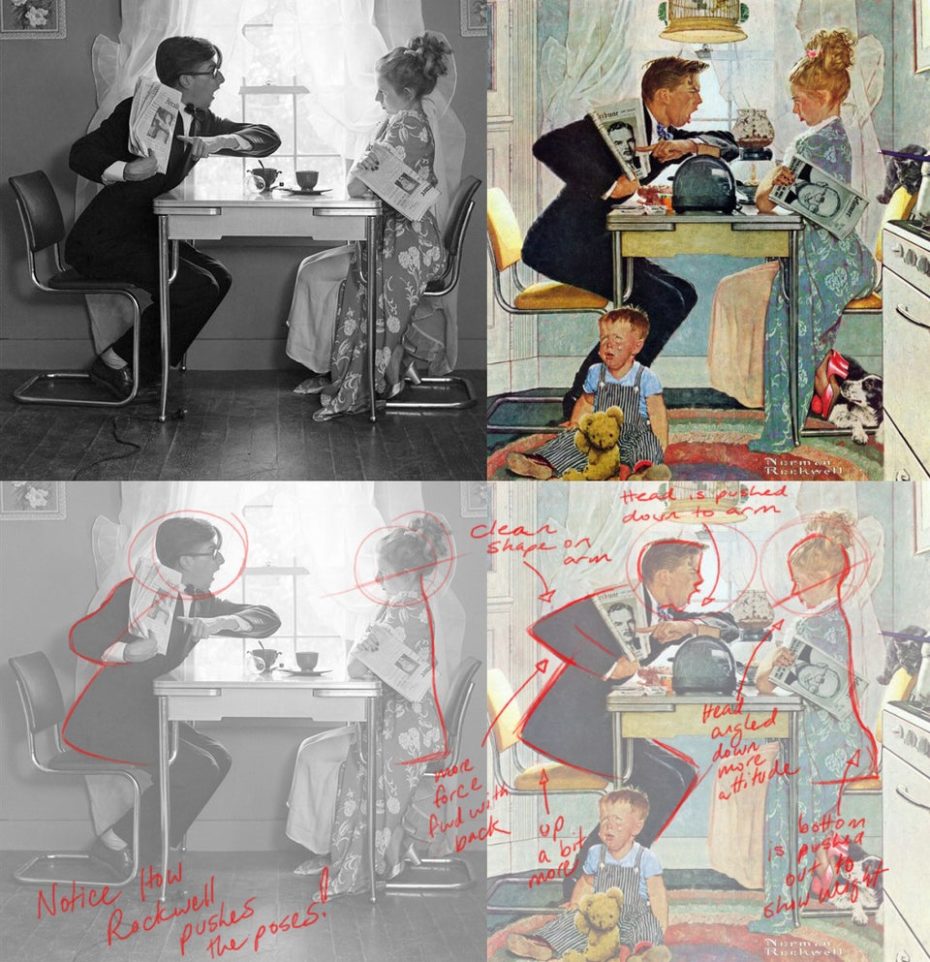
On the other hand, if Rockwell’s admirers give him a pass on this sentimentality, his detractors often turn a blind eye to his obvious technical mastery. Say what you will about his themes, the man might as well have been a camera. Indeed, his process began with an actual camera. According to that NPR piece, he “used photos, taken by a rotating cast of photographers, to make his illustrations — and all of his models were neighbors and friends,” residents of his small town of Stockbridge, Massachusetts.
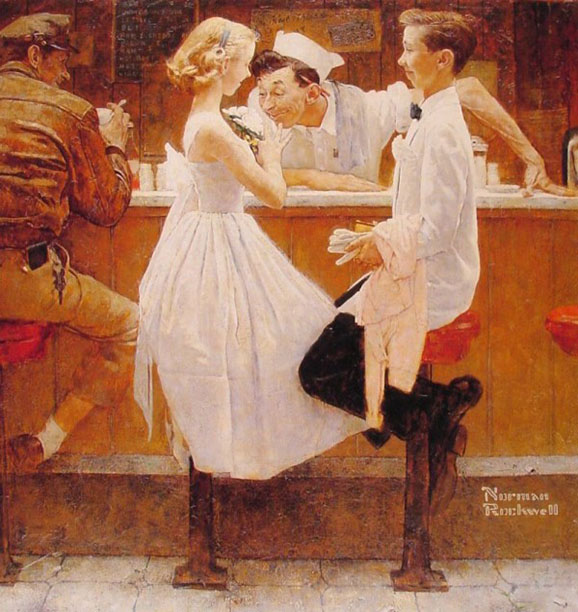
The cameramen included a German immigrant named Clemens Kalischer: “An artist-photographer himself, Kalischer was at odds with the tracing techniques and saccharine subject matter in Rockwell’s work. After all, Rockwell never painted freehand, and almost all of his paintings were commissioned by magazines and advertising companies.”
But “although he may not have clicked the shutter, Rockwell directed every facet of every composition,” as you can see by examining his paintings and reference photos together, featured as they’ve been on sites like Petapixel.
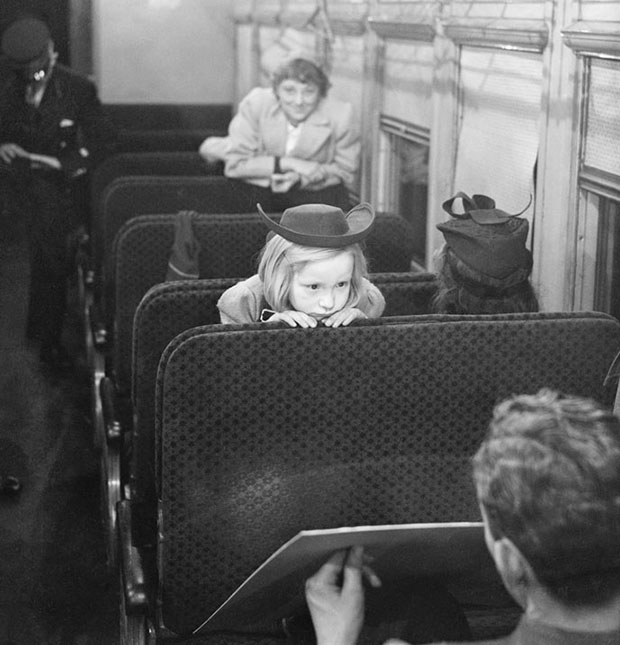
At Google Arts & Culture, you can scroll through a short exhibition of Rockwell’s late work on race relations in America that reveals how he had not just one but many photographs taken as source material for each painting, which he would then combine into a single image. This quasi-cinematic “editing” process brings to mind the “storyboarding” of Edward Hopper, who stands alongside Rockwell as one of the most American painters of the 20th century.
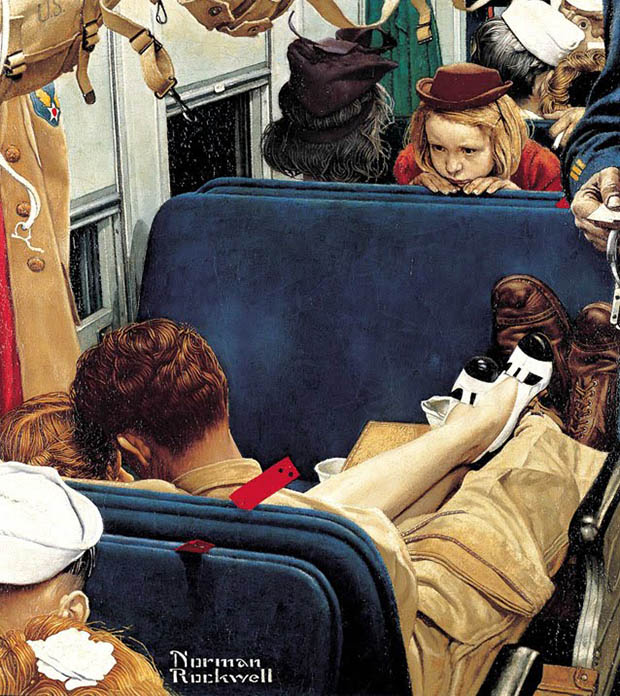
But while Hopper gave artistic form to the country’s alienation, Rockwell — whom history hasn’t remembered as a particularly happy man — created an “American sanctuary others wished to share.” And though neither Hopper nor Rockwell’s America may ever have existed, they were crafted from the pieces of American life the artists found everywhere around them.
Related Content:
Norman Rockwell Illustrates Mark Twain’s Tom Sawyer & Huckleberry Finn (1936–1940)
Norman Rockwell’s Typewritten Recipe for His Favorite Oatmeal Cookies
Yale Launches an Archive of 170,000 Photographs Documenting the Great Depression
Based in Seoul, Colin Marshall writes and broadcasts on cities, language, and culture. His projects include the Substack newsletter Books on Cities, the book The Stateless City: a Walk through 21st-Century Los Angeles and the video series The City in Cinema. Follow him on Twitter at @colinmarshall or on Facebook.
Read More...The Magic of the Beach Boys’ Harmonies: Hear Isolated Vocals from “Sloop John B.,” “God Only Knows,” “Wouldn’t It Be Nice” & Other Pet Sounds Classics
Jesus, that ear. He should donate it to the Smithsonian.
—Bob Dylan on Brian Wilson
The Beach Boys tarnished their reputation when they reformed in later years and tried to “reclaim their wholesomeness,” Dan Caffrey writes at Consequence of Sound, “only to find that it had all but disappeared.” But in the days when they sounded like the most wholesome thing on earth, they also had the distinct advantage of sounding seriously weird: “Weirder than Waits, weirder than Zappa, and definitely weirder than the Beatles. The immaculate vocal harmony that made them famous was their weirdest weapon of all; a sunny fortress of euphony that shone through the darkest of times and strangest of lyrics in their latter days.”
The phenomenon could emerge “only out of the ferment that characterizes today’s pop music scene,” said Leonard Bernstein when he heard “Surf’s Up.” Despite the surface-level corniness, there were “really deep, profound emotions” in the band’s music, emotions “that came out of a lot of pain,” Linda Ronstadt remarked.
The full depths of Pet Sounds may never be plumbed, yet one can also put it on and immediately feel the SoCal sunshine hit them squarely in the face. Only a genius like Brian Wilson could turn surf pop into classical composition, without compromising the simple emotions of pop or the profundity of a classical arrangement. (“I figure no one is educated musically ’til they’ve heard ‘Pet Sounds,’ ” says Paul McCartney.)
And only the Beach Boys as a group could pull off those harmonies. The rest of the band may not have quite grasped what their quixotic leader was up to. (Mike Love once famously complained, “Who’s gonna hear this shit? The ears of a dog?”) But they knew how to sing together like no one else before or since. (When David Crosby heard “In My Room,” he says, “I thought, ‘I give up–I can’t do that–I’ll never be able to do that.’”) They were so good, they could pull off gorgeous a‑capella passages like those in “Sloop John B,” Pet Sounds’ lead single. Hear it at the top in a full isolated vocal version.
A traditional folk song that originated in the Bahamas and was recorded in the sixties by everyone from Johnny Cash to Lonnie Donegan to the Kingston Trio, the arranging of the song took only 24 hours, Al Jardine remembers, from the time he brought it to Wilson as a possible cover to the time Wilson completed his version of the track. The vocals were another matter. Jardine assumed he would sing lead, but Wilson had a process:
It was like interviewing for a job. Pretty funny. He didn’t like any of us. My vocal had a much more mellow approach because I was bringing it from the folk idiom. For the radio, we needed a more rock approach. Brian and Mike ended up singing it.
Those demanding vocal recording sessions, Jardine wrote in the Pet Sounds liner notes, could last 12–15 hours a day. The end results are an especially impressive feat considering that the backing vocals were all recorded at once, with no overdubbing or any of the digital studio wizardry used today to nudge stray voices into the right pitch and rhythm:
At the vocal sessions, there was so much good tension. At any one time, you would have four out of five of us get our parts just fine, and there would be one who would screw up. But it wouldn’t be the same person each time. Then the next take, he would get it right, but somebody else would get it wrong. Kind of like the chaos theory at work. The more people you have in a given situation, the more chance there is for error. Then, there would be the magic moment when it all came together, and then you had your take.
Just below, hear Pet Sounds’ saddest song, “Caroline, No,” in a vocal take featuring only Wilson. He thought of it as “probably the best [song] I’ve ever written… a pretty love song about how this guy and this girl lost it and there’s no way to get it back. I just felt sad, so I wrote a sad song.” It’s also a song, for all its melancholy, born from the sense of innocent longing the band brought to all their music in their prime, conveyed in harmonies that would never shine as brightly for any other band at any other time. Hear more of the Beach Boys, a‑cappella, in the YouTube playlist here.
Related Content:
How the Beach Boys Created Their Pop Masterpieces: “Good Vibrations,” Pet Sounds, and More
Josh Jones is a writer and musician based in Durham, NC. Follow him at @jdmagness
Read More...The Breathtaking Courage of Harriet Tubman: An Animated History Lesson Speaks to Her Place on the $20 Bill
I was a conductor on the Underground Railroad, and I can say what many others cannot. I never ran my train off the track, and I never lost a passenger. —Harriet Tubman
Remember how one of the Obama administration’s final initiatives was to redesign the $20 bill, banishing Andrew Jackson, a slaveholder, to a minor role on the back of the bill, in favor of abolitionist Harriet Tubman, who was born into slavery?
The announcement arrived on the heels of a controversy, after then-Treasury Secretary Jacob J. Lew enraged American women by going back on a promise to install a woman on the face of a newly designed $10 bill.
The decision to keep Alexander Hamilton, architect of our financial system and the country’s first Treasury Secretary, in place is rumored to owe rather a lot to his status as the subject of a certain hit musical that had opened earlier in the year.
The official design of the Tubman bill was to have been unveiled in 2020, to coincide with the hundredth anniversary of the 19th Amendment, which guaranteed a woman’s right to vote. Had all gone according to plan, it would have been in wide circulation later this decade.
At the time Lew was untroubled by the possibility that the incoming administration might kill off the proposed makeover:
I don’t think somebody’s going to probably want to do that — to take the image of Harriet Tubman off of our money? To take the image of the suffragists off?
It seems, however, that someone did want to do that.
In 2016, presidential candidate Donald Trump told NBC that replacing Jackson with Tubman was “pure political correctness,” suggesting instead that a place might be found for Tubman on the $2 bill… which is no longer printed.
He also reportedly remarked to former White House adviser Omarosa Manigault Newman, “You want me to put that face on the twenty-dollar bill?”
The Treasury Department website’s revision in the wake of the 2016 election scrubbed all references to planned changes to the currency.
Lew’s replacement, Treasury Secretary Steven Mnuchin, finally announced that the new $20 bill wouldn’t be ready until 2028, and that the finished design might not include Tubman at all. He attributed this to technical reasons relating to security features, though a Treasury Department employee told The New York Times that the engraving plate for it was completed “as recently as May 2018” and that the design “appeared to be far along in the process.”
Certainly, there were bigger stories in 2020 than the absence of the promised Harriet Tubman $20 bill, but the obfuscation and delay were maddening given everything Tubman, a woman of action, was able to accomplish well over a hundred years ago.
Most of us are familiar with her prominence on the Underground Railroad, which led to the sobriquet “Moses of her people,” but there are several things in the above animated TED-Ed lesson by Janell Hobson, Department Chair of Women’s, Gender and Sexuality Studies at SUNY Albany, that may come as news to you.
Of particular note, Tubman was the first woman in US history to plan and lead a military raid, resulting in the liberation of nearly 700 enslaved persons in South Carolina.
Her second husband, Nelson Davis, also born into slavery, had been a Union soldier, which entitled her to a pension of $8 as a military widow.
She fought hard for an increase on the basis of her own service to the Union Army, enlisting various friends and supporters to lobby on her behalf, including Lincoln’s Secretary of State, William Seward, who said, “I have known her long as a noble high spirit, as true as seldom dwells in the human form.”
Finally, in 1899, her pension was increased to $20 a month.
Professor Hobson, whose lesson predates Mnuchin’s announcement of the stall, called the denomination “a fitting twist of fate.”
As is the rubber stamp that artist Dano Wal created to help disgusted Americans convert Jacksons into Tubmans without the help of the Treasury Department:
Who we choose to honor as a society affects the moral attitudes that are baked into us as we grow up. The impact that seeing the face of Harriet Tubman staring back at you from a $20 bill should not be underestimated. This sort of representation can subtly but deeply affect someone’s conception of themselves and their place in society. The slightly subversive nature of it being currency that’s been hand-stamped by another human makes a discovery of one of these bills all the more joyous.
Good news looms on the horizon. Less than a week into the Biden administration, the Treasury Department confirmed that the agency is “exploring ways to resume” putting Harriet Tubman on the bill, as well as ways to hasten their release. She will be the first female and first Black American to be featured on our folding money.
TED-Ed has a list of additional resources for those who’d like to delve deeper into Tubman’s life and legacy, as well as a discussion as to whether putting Tubman’s face on the $20 bill is a fitting honor.
Related Content:
Ayun Halliday is an author, illustrator, theater maker and Chief Primatologist of the East Village Inky zine. Follow her @AyunHalliday.
Read More...Little Kid Merrily Grooves to ZZ Top While Waiting for the Bus
A musician in Vancouver, British Columbia took to the streets and busked some ZZ Top, much to the delight of a young child waiting for the bus. From the moment he starts playing “La Grange,” the child bops up and down, then twirls in a circle, losing herself in the song. On YouTube he writes, “I don’t often see this, but when it happens it’s always 99% kids that are doing it. Before they become jaded (age 8), they still have that spontaneous spark, that reaction to music that we all used to have. Emotion is no.1 priority and they express it without shame.”
If this brightens your day, even a little, consider giving the busker a tip on Paypal or Patreon. As he explains on YouTube, he’s had–like many of us–a rough year. He writes:
1) I’m glad everyone is enjoying this video but I want to mention a few things.
Street playing is not all fun and games and dancing kids. Doing this for 7 years. I regularly face not only verbal abuse, but physical assault as I work a few blocks from downtown eastside Vancouver. I’m surrounded by addicts, drunks, and people who should be in mental homes.
2) I’m unemployed. All live music including busking, is banned. I lost all work last year and received ZERO compensation. I had a very bad year in 2020 and only recently came out of a depression.
3) I make ZERO from youtube no matter how many views I get. I don’t run ads. And more importantly, even if I did, most of my videos are instantly copyrighted and auto monetized by record labels because they are COVERS. If you see an ad, it’s the record label collecting. If you liked the performance, please think about supporting me on patreon/paypal tip/bandcamp.
4) I’m a musician that writes his own music and has been doing it for 20 years. Check out my bandcamp page to see what I can really do with a guitar.
5) It’s a lot of unpaid work to post these videos all the time so please try to help me keep the channel going. Many thanks to those that have supported me! It means a lot!
6) I get asked this 100 times a day so here’s the answer: I play on the street and not in a band because all the clubs closed years ago. I used to lead many bands from 2006 to 2018. That’s all gone. Live music is dead, as well as banned. It’s also a lot more hassle, and less money, to run a band than play by myself.
Anyone who has music work to offer can contact me at sh***************@***oo.com
Related Content:
Crowd Breaks into Singing Bon Jovi in the Park: The Power of Music in 46 Seconds
Lenny Kravitz Overhears High School Kids Playing His Music and Surprises Them by Joining In
Street Artist Plays Leonard Cohen’s “Hallelujah” With Crystal Glasses
Neil Young Busking in Glasgow, 1976: The Story Behind the Footage
Read More...David Gilmour, David Crosby & Graham Nash Perform the Pink Floyd Classic, “Shine on You Crazy Diamond” (2006)
Come on you raver, you seer of visions
Come on you painter, you piper, you prisoner, and shine
“It’s a gift I suppose,” David Gilmour responded humbly when a 2015 interviewer asked the question he’s always asked about his legendary guitar tone. “It’s something that just arrives naturally at this point.” Gilmour seemed genuinely mystified. “I think there’s some kind of strange peculiarity or my lack of coordination between hands that gives it something rather off and thus distinct.” Maybe there’s more than he realizes to his answer: the qualities that make an artist unique can be those that seem like deficits or defects in other lights.
There are hints of this wisdom in “Shine on You Crazy Diamond,” Gilmour and Roger Waters’ tribute to Syd Barrett, the childhood friend whom Gilmour replaced as the band’s guitarist. Whatever it was that drove Barrett’s brilliant mind also seems to have driven him to excess and madness under the spotlights—”You were caught on the crossfire of childhood and stardom… Threatened by shadows at night, and exposed in the light.” Yet without Barrett’s “craziness,” or Gilmour’s lack of coordination, there would be no Pink Floyd.
“Shine on You Crazy Diamond” is a tragic song—made more so when we learn that an unrecognizable Barrett arrived at the studio the moment they began recording it, seven years after he left the band with mental health struggles. With typical bitterness, Waters described him in an interview that year as “a symbol for all the extremes of absence some people have to indulge in because it’s the only way they can cope with how f—ing sad it is—modern life.”
The band lost not only a founding member but also a friend when they lost Barrett. These sad personal associations notwithstanding, the song can also be an unironic call to those who may be holding back or hiding because they think there’s something wrong with them. And it’s a song featuring some of the most impressive guitar work of Gilmour’s recording career. On “the epic 13-minute opening track to Wish You Were Here, he lays down more awesome tones than most guitarists achieve in a lifetime,” writes Chris Gill at Guitar World.
Playing onstage above with Richard Wright at Royal Albert Hall in 2006, just months before Barrett’s death, Gilmour casually blows the audience away with awesome tones. Then he is joined by David Crosby and Graham Nash in a live rendition that sounds like both an elegy and an anthem, a fitting tribute to an artist who “reached for the secret too soon”—or whatever combination of drugs and mental health crises caused Barrett to retreat into himself in the last decades of his life—but who also, by shining for a brief moment, left a creative legacy in Pink Floyd that few artists can hope to equal.
via Laughing Squid
Related Content:
Watch David Gilmour Play the Songs of Syd Barrett, with the Help of David Bowie & Richard Wright
Understanding Pink Floyd’s Wish You Were Here, Their Tribute to Departed Bandmate Syd Barrett
Josh Jones is a writer and musician based in Durham, NC. Follow him at @jdmagness
Read More...The History of American Newspapers Has Been Digitized: Explore 114 Years of Editor & Publisher, “the Bible of the Newspaper Industry”
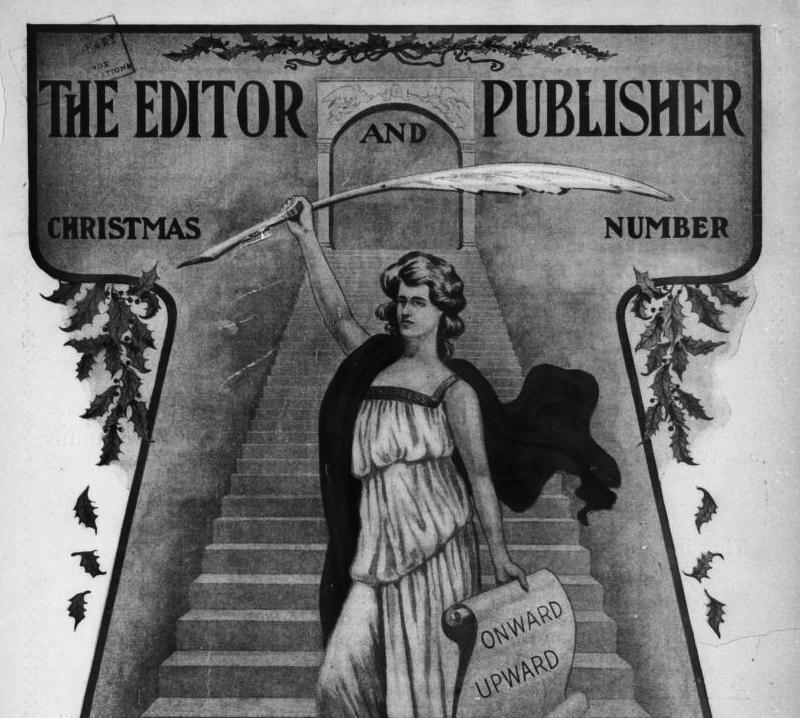
If you look into the history of the American newspaper, you can’t get too deep before your inevitable encounter with Editor & Publisher. Branded as “the bible of the newspaper industry,” the trade magazine has for 120 years covered its subject from every possible angle. Though newspapers had already been published in the United States for nearly 200 years before the magazine’s founding, its run has been coeval with an especially fascinating, even dramatic period in their history. It was in the 20th century that American newspapers consolidated into the pillars of what looked, for a time, like a mighty “fourth estate”; in this century, they’ve plunged into what Editor & Publisher’s owner Mike Blinder terms “such a crisis.”
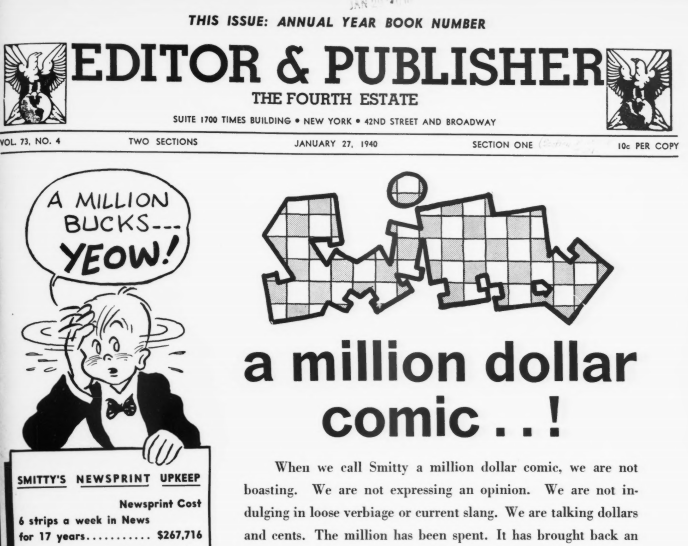
Still, since purchasing the magazine last year, writes Internet Archive Collections Manager Marina Lewis, “Blinder and his wife, Robin, have been able to turn the operation around, doubling its revenues and tripling its audience.” He also gave the Internet Archive permission to upload and make available 114 years of Editor & Publisher issues online for free.
“Going beyond the Internet Archive’s traditional lending system ensures it can be indexed by search engines and made maximally useful to readers and researchers,” writes Lewis. “The ability to research these archived issues has been truly exciting, especially for those looking up historical documents, many with a personal or family connection.”
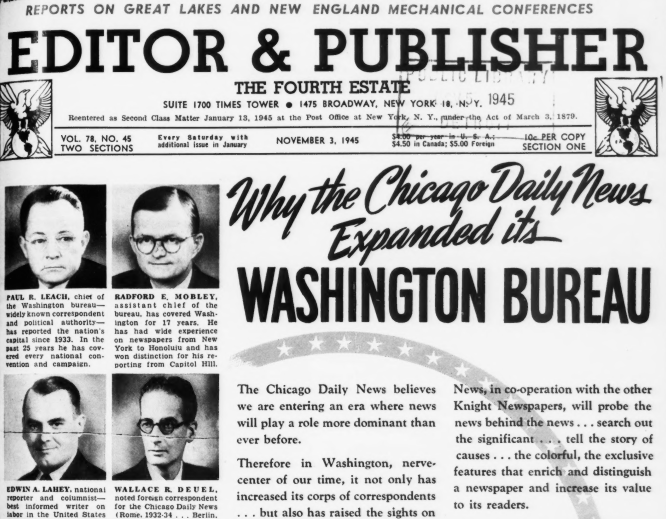
As the Nieman Journalism Lab’s Joshua Bendon remembers it, Editor & Publisher was once “the best (and often only) place to find out about job openings at newspapers.” With more than a century of its back issues freely available at the Internet Archive, “if you’re at all interested in the 20th-century history of the American newspaper business, you now have access to a robust new resource.” In the archive he finds documentation of “some of the century’s most interesting moments,” at least as far as that business is concerned: The New Yorker’s 1946 publication of John Hersey’s “Hiroshima,” which it subsequently offered to conventional newspapers (“The piece runs about 30,000 words and no cutting or condensing is to be permitted”); the 1965 hiring of Ben Bradlee by The Washington Post; the 1971 debut of Doonesbury in national newspapers.
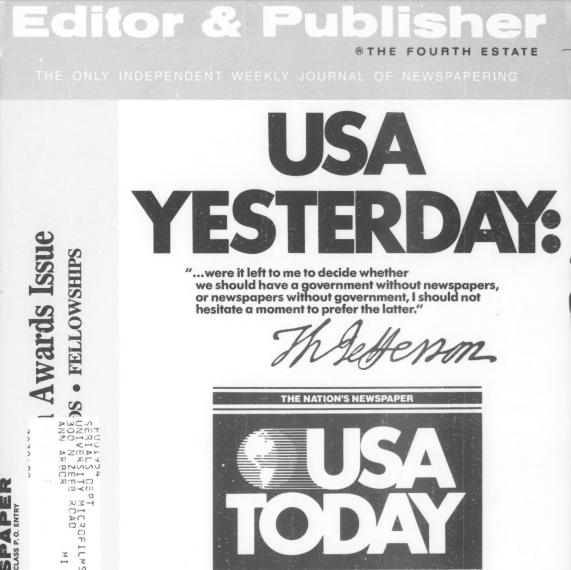
Not all of these reflect well on the U.S. newspaper industry. Benton highlights the 1981 exposure of “Jimmy’s World,” a Pulitzer-winning Post story about an eight-year-old heroin addict, as a fabrication — or a piece of “fake news,” as we might say today. That article also quotes a Boston Globe editor as saying “the public faith in the press is minimal at the moment,” a sentiment not unheard these 40 years later. The magazine was also quick to observe the emergence of other forms of media (such as a 1925 test of French inventor Édouard Belin’s experimental “television”) that would later force change upon the newspaper industry’s very nature. And if the current crisis is, as some argue, not destroying the fourth estate but returning it to its roots, there could be few better paths back to an understanding of those roots than through the Editor & Publisher archive.
Related Content:
Enter “The Magazine Rack,” the Internet Archive’s Collection of 34,000 Digitized Magazines
From the Annals of Optimism: The Newspaper Industry in 1981 Imagines its Digital Future
Based in Seoul, Colin Marshall writes and broadcasts on cities, language, and culture. His projects include the Substack newsletter Books on Cities, the book The Stateless City: a Walk through 21st-Century Los Angeles and the video series The City in Cinema. Follow him on Twitter at @colinmarshall or on Facebook.
Read More...Support Us
We're hoping to rely on loyal readers, rather than erratic ads. Please click the Donate button and support Open Culture. You can use Paypal, Venmo, Patreon, even Crypto! We thank you!

About Us

Open Culture scours the web for the best educational media. We find the free courses and audio books you need, the language lessons & educational videos you want, and plenty of enlightenment in between.
Advertise With Us
FREE UPDATES!
GET OUR DAILY EMAIL
Get the best cultural and educational resources on the web curated for you in a daily email. We never spam. Unsubscribe at any time.
FOLLOW ON SOCIAL MEDIA
Open Culture editor Dan Colman scours the web for the best educational media. He finds the free courses and audio books you need, the language lessons & movies you want, and plenty of enlightenment in between.
Advertise With Us


