The Amazing Artistry & Ingenuity of the Furniture Enjoyed by 18th Century Aristocrats
Whatever did people do with themselves all day before social media and streaming video? Before TV, film, and radio? If you were most people in Europe, before various revolutions, you worked from dawn to dusk and collapsed in bed, with rare holidays to break up the monotony.
But if you were an aristocrat, you not only had the pleasures of juicy gossip, lively correspondence, and bawdy novels to look forward to, but you might also—just as millions do now—encounter such pleasures while gaming.
The gaming technology of the time was all handcrafted, and said aristocrats might find themselves trading wicked barbs while seated around the height of tech above, a table that unfolds a series of leaves to reveal a felt surface for card games, a board for chess or checkers, and a leather writing surface that offers the option of a bookrest, for propping up a scandalous book of verse.
If you think that’s impressive, the table hasn’t finished yet. It further opens into a backgammon board, with sliding lids revealing compartments for game pieces. Then, the whole thing folds back to its size as a small side table, with detachable legs that can be stored inside it for easy portage.
The animated video of the ultimate 18th century gaming system at the top comes to us from the Metropolitan Museum of Art, demonstrating a piece in their collection designed by German cabinetmaker David Roentgen that “once graced the intimate interior of an aristocratic European home.” Not to be outdone, the Getty Museum brings us the 3D animation above of an 18th-century French mechanical table, with intricate workings designed by Jean-François Oeben.
“An affluent lady might spend hours at a fashionable table, engaged in leisure or work,” notes a companion video above. It illustrates the point with a pair of ghostly animated hands composing a letter on the table’s silk writing surface.
One can imagine these hands spilling the ink while opening juniper-scented drawers, and propping up the book stand; losing their place in a book while searching through compartments, early forms of scrolling or opening multiple tabs.
We may now carry mechanical tables in our pockets and rightly think of gaming systems as portals to other worlds, but there’s no denying that these bespoke ancestors of our devices offered plenty of opportunity for pleasant distraction.
Related Content:
How Ladies & Gentlemen Got Dressed in the 18th Century: It Was a Pretty Involved Process
The Sights & Sounds of 18th Century Paris Get Recreated with 3D Audio and Animation
Restoration and 18th Century Poetry: From Dryden to Wordsworth (Free Course)
Josh Jones is a writer and musician based in Durham, NC. Follow him at @jdmagness.
Read More...Celebrating Women Composers: A New BBC Digital Archive Takes You from Hildegard of Bingen (1098) to Nadia Boulanger (1979)
Recently, we published a post about Nadia Boulanger, the 20th century’s most influential music teacher. While a composer and conductor in her own right—indeed, she was the first woman to conduct major symphonies in Europe and the U.S.—Boulanger is best known for her list of illustrious students, including Aaron Copland, Leonard Bernstein, Philip Glass, and Quincy Jones.
One reader of the post rightly pointed out a not-so-glaring irony in the way Boulanger has been remembered. While celebrated as a powerful woman in music, in a sea of more famous men, her many distinguished female students go unmentioned, perhaps more due to ignorance than prejudice (though this may be no great excuse). Most people have never heard of former Boulanger students like Grażyna Bacewicz, Marion Bauer, Louise Talma, Peggy Glanville-Hicks and Priaulx Rainier.
Not many have heard of Lili Boulanger, Nadia’s sister, a child prodigy who died at 24, after composing two dozen innovative choral and instrumental works and becoming the first woman to win the Prix de Rome in 1913, at the age of 19, for her cantata Faust and Hélène, with lyrics, by Eugene Adenis, based on Goethe’s Faust (top).
Polish composer Bacewicz, who began studying with Nadia Boulanger’s former student Kazimierz Sikorski at 13, traveled to Paris to “learn from the great pedagogue herself,” notes the BBC Music Magazine.
Bacewicz was an incredibly talented violinist (see her further up in 1952) and a widely admired composer, just one of many noteworthy female composers, of the past and present, who don’t often turn up in conversation about classical and avant-garde music. The BBC aims to correct these major slights with their “Celebrating Women Composers” series, which features archival interview clips from legends like Nadia Boulanger, Dame Ethel Smyth (profiled above), and Elisabeth Lutyens.
You’ll also find interviews with dozens of contemporary female composers, a series on composers’ rooms, profiles of historical greats, links to performance recordings, and several informative articles on women composers past and present. Most of the composers profiled have found some measure of fame in their lifetime, and renown among those in the know, but are unknown to the general public.
Some of the composers you’ll learn about, like the five in a feature titled “The Women Erased from Musical History,” might have disappeared entirely were it not for the work of archivists. Learn about these rediscovered figures and much, much more at the BBC’s Celebrating Women Composers, one of many such projects making it harder to plead ignorance of women’s presence in classical music.
Related Content:
Hear Seven Hours of Women Making Electronic Music (1938–2014)
Josh Jones is a writer and musician based in Durham, NC. Follow him at @jdmagness.
Read More...The New York Public Library Announces the Top 10 Checked-Out Books of All Time

Public libraries are unsung heroes of their communities. Many a busy working adult can take their importance for granted. But parents of young children know—the library is a quiet haven, place of wonder and discovery, and free resource for all sorts of educational experiences. Given the importance of libraries in kids’ lives, it’s no wonder that six of the top ten most-checked-out books—according to the New York Public Library—are children’s books.
The NYPL calculated the most checked out books in its history in honor of its 125th anniversary. Given that it houses the second largest collection in the U.S., after the Library of Congress, and serves millions in the most linguistically diverse city in the country, its circulation numbers give us a reasonable sampling of near-universal tastes.
These include timeless classics of children’s literature: Ezra Jack Keats’ Caldecott-winning The Snowy Day tops the list, “in print and in the Library’s catalog continuously since 1962”; The Cat in the Hat comes in at a close second. Where the Wild Things Are and The Very Hungry Caterpillar round out the list of books for the very young.
Where is the stalwart Goodnight Moon, you may ask? Here we have a juicy bit of lore:
By all measures, this book should be a top checkout (in fact, it might be the top checkout) if not for an odd piece of history: extremely influential New York Public Library children’s librarian Anne Carroll Moore hated Goodnight Moon when it first came out. As a result, the Library didn’t carry it until 1972. That lost time bumped the book off the top 10 list for now. But give it time.
For now, Margaret Wise Brown’s 1947 classic receives honorable mention. Classic kids’ books circulate a lot because they’re widely read, but also because they’re short, which leads to more turnover, the Library points out. Length of time in print is also a factor, which makes the presence of Harry Potter and the Sorcerer’s Stone, published in 1998, particularly impressive.
- The Snowy Day by Ezra Jack Keats: 485,583 checkouts
- The Cat in the Hat by Dr. Seuss: 469,650 checkouts
- 1984 by George Orwell: 441,770 checkouts
- Where the Wild Things Are by Maurice Sendak: 436,016 checkouts
- To Kill a Mockingbird by Harper Lee: 422,912 checkouts
- Charlotte’s Web by E.B. White: 337,948 checkouts
- Fahrenheit 451 by Ray Bradbury: 316,404 checkouts
- How to Win Friends and Influence People by Dale Carnegie: 284,524 checkouts
- Harry Potter and the Sorcerer’s Stone by J.K. Rowling: 231,022 checkouts
- The Very Hungry Caterpillar by Eric Carle: 189,550 checkouts
Like J.K. Rowling’s modern classic, all of the remaining books on the list are novels—save outlier How to Win Friends and Influence People by Dale Carnegie—and all are novels read extensively by middle and high school students, a further sign of the significance of public libraries.
Some students may only be required to read a small handful of novels in their school career, and whether they follow through, and maybe go on to read more and more books, and maybe write a few books of their own, may depend upon those novels constantly circulating for everyone through institutions like the New York Public Library.
See the full list above and learn more about the project at NPR and the NYPL.
via Metafilter
Related Content:
Josh Jones is a writer and musician based in Durham, NC. Follow him at @jdmagness.
Read More...Art Record Covers: A Book of Over 500 Album Covers Created by Famous Visual Artists
The list of musicians who are also visual artists goes on and on. We’re all familiar with the biggest names: David Bowie, Patti Smith, Miles Davis, Joni Mitchell, Captain Beefheart, etc, etc, etc. Lesser-known alternative and indie artists like Stone Roses guitarist John Squire and Austin singer/songwriter Daniel Johnston created iconic imagery that adorned their album covers and merchandise.
Such multitalented individuals embody the kinship of sound and vision. But so too do the many collaborations between musicians and fine artists—hundreds of whom have gifted their talents to album covers of every conceivable kind.
Aside from obvious, historic examples (Andy Warhol’s Velvet Underground covers come immediately to mind) such collaborations are often hiding in plain sight. Perhaps you did not know, for example, that the alluring yet mysterious deep blue photograph of Björk on the cover of her remix album Telegram is by Nobuyoshi Araki, one of Japan’s most admired and prolific fine art photographers.
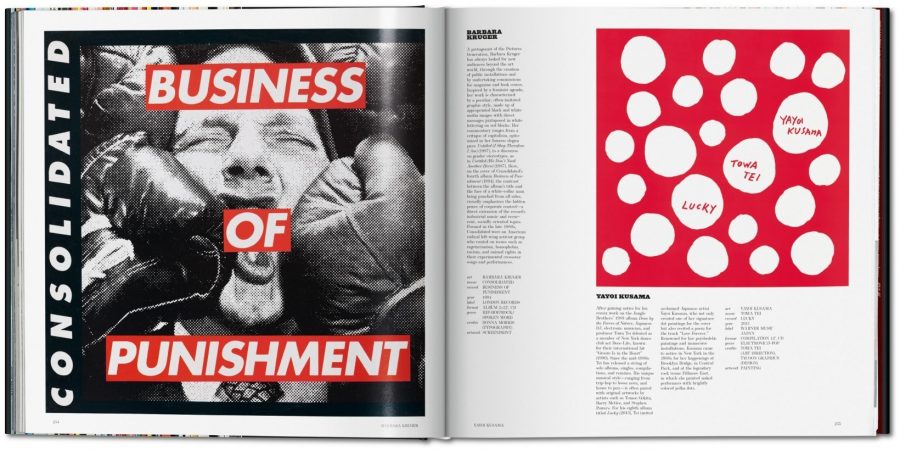
Maybe you were unaware of how Conceptual artist Barbara Kruger, whose work “speaks truth to power,” contributed to the look of the 90s activist industrial hip-hop group Consolidated. Or how Yayoi Kusama leant her eye-popping dots to Towa Tei’s bouncy, electronic pop for the former Deee-Lite DJ’s 2013 album Lucky.
We all know that Patti Smith’s debut album, Horses, features an iconic cover photo by her friend Robert Mapplethorpe. But did you know that the cover of Metallica’s 1996 album Load is a photographic study by artist Andreas Serrano—of Piss Christ fame—that mingles cow blood and his own semen between sheets of plexiglass?
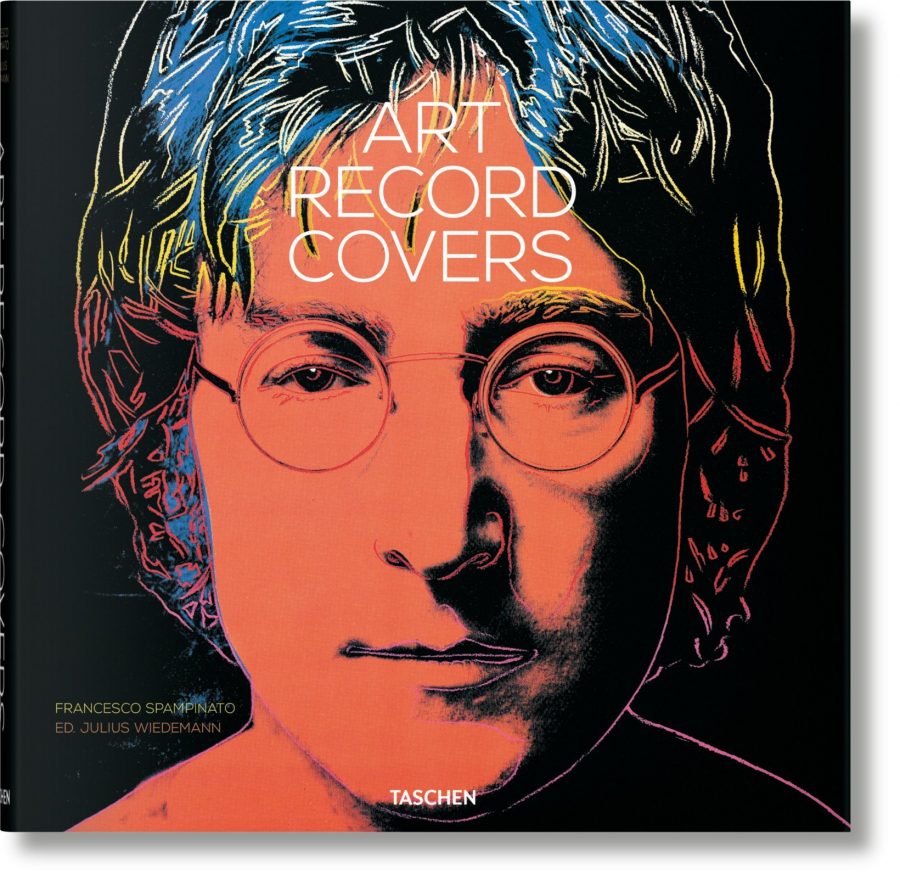
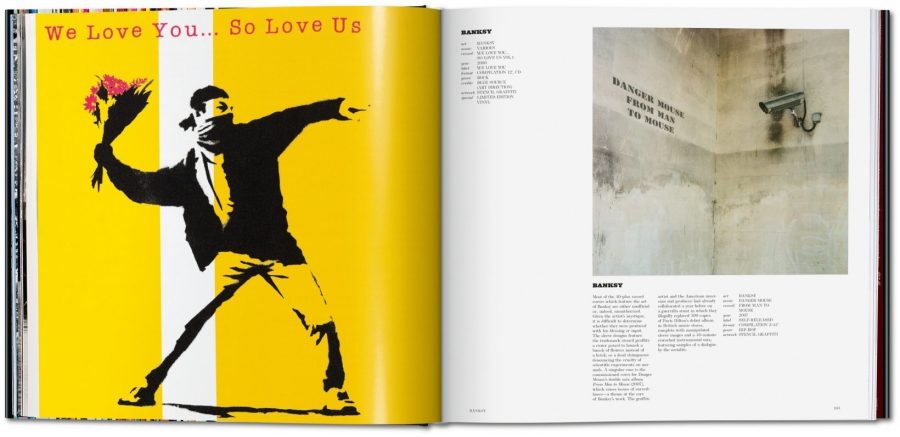
You’ll find hundreds more such collaborations, though few as visceral, in Taschen’s new book Art Record Covers, a celebration of sound and vision in popular music. True to the arts publisher’s reputation for coffee table books the size of coffee tables, this survey is a comprehensive as they come.
The book presents 500 covers and records by visual artists from the 1950s through to today, exploring how modernism, Pop Art, Conceptual Art, postmodernism, and various forms of contemporary art practice have all informed this collateral field of visual production and supported the mass distribution of music with defining imagery that swiftly and suggestively evokes an aural encounter.
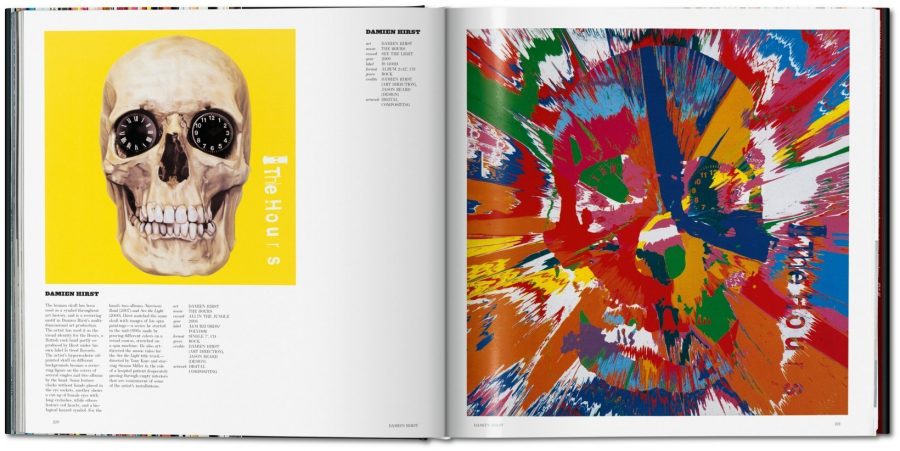
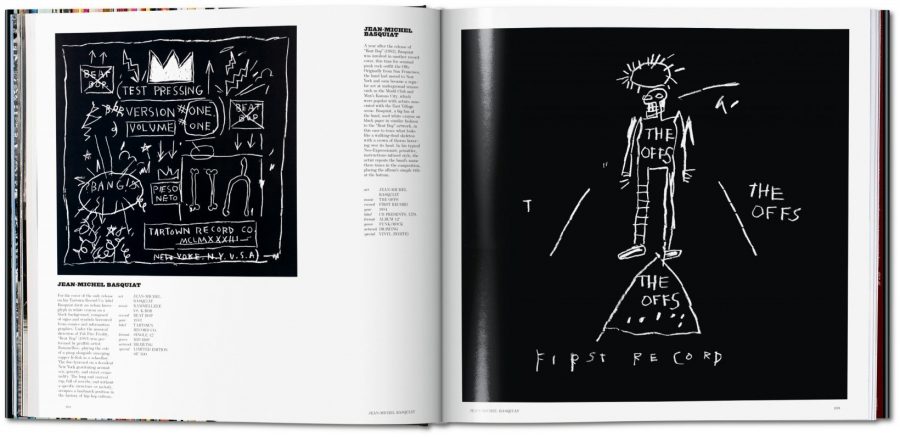
Along the way, we find Jean-Michel Basquiat’s urban hieroglyphs for his own Tartown record label, Banksy’s stenciled graffiti for Blur, Damien Hirst’s symbolic skull for the Hours, and a skewered Salvador Dalí butterfly on Jackie Gleason’s Lonesome Echo.
Editor Francesco Spampinato, an art historian studying at the Sorbonne Nouvelle in Paris, has mostly kept the focus on pop, rock, punk, metal, alternative, and indie. Including the full breadth of jazz, avant-garde, and other world musics would offer examples enough to justify another volume or two of Art Record Covers.
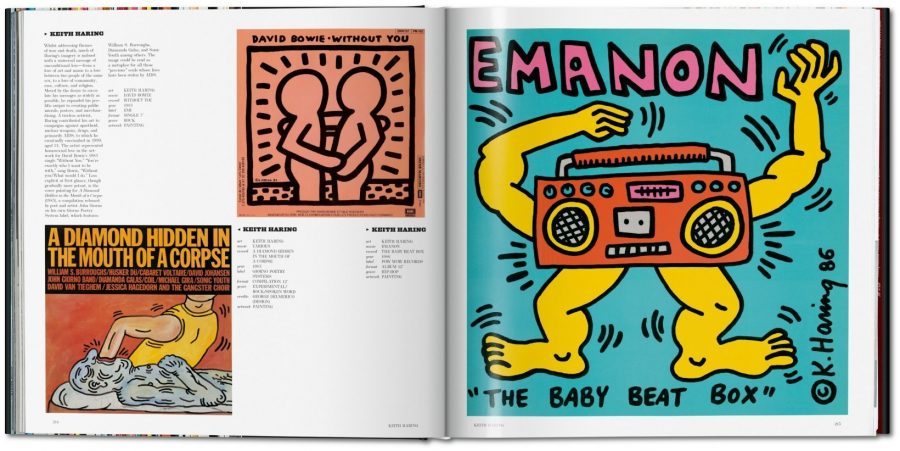
The focus is suitably broad, nonetheless, to show how “visual and music production have had a particularly intimate relationship… since the dawn of modernism…. From Luigi Russolo’s 1913 Futurist manifesto L’Arte dei Rumori (The Art of Noise) to Marcel Duchamp’s 1925 double-sided discs Rotoreliefs.” It’s also a great way to discover new art and new music, and to see the interrelationships between them in entirely new ways. Order a copy of Art Record Covers here.
Related Content:
Josh Jones is a writer and musician based in Durham, NC. Follow him at @jdmagness
Read More...What the Earth Would Look Like If We Drained the Water from the Oceans
Formerly a NASA Fellow at the Goddard Space Flight Center, Dr James O’Donoghue now works as a planetary scientist at the Japanese space agency JAXA. He also hosts a video channel on YouTube. Above, you can watch his high-res remake of a NASA animation produced back in 2008. Here’s how NASA framed the original clip:
Three fifths of the Earth’s surface is under the ocean, and the ocean floor is as rich in detail as the land surface with which we are familiar. This animation simulates a drop in sea level that gradually reveals this detail. As the sea level drops, the continental shelves appear immediately. They are mostly visible by a depth of 140 meters, except for the Arctic and Antarctic regions, where the shelves are deeper. The mid-ocean ridges start to appear at a depth of 2000 to 3000 meters. By 6000 meters, most of the ocean is drained except for the deep ocean trenches, the deepest of which is the Marianas Trench at a depth of 10,911 meters.
In 51 seconds, watch and see where the great draining ends…
If you would like to support the mission of Open Culture, consider making a donation to our site. It’s hard to rely 100% on ads, and your contributions will help us continue providing the best free cultural and educational materials to learners everywhere. You can contribute through PayPal, Patreon, and Venmo (@openculture). Thanks!
Related Content:
A Radical Map Puts the Oceans–Not Land–at the Center of Planet Earth (1942)
Perpetual Ocean: A Van Gogh-Like Visualization of our Ocean Currents
Read More...Leonardo da Vinci’s Inventions Come to Life as Museum-Quality, Workable Models: A Swing Bridge, Scythed Chariot, Perpetual Motion Machine & More
Perpetual motion is impossible. Even if we don’t know much about physics, we all know that to be true — or at least we’ve heard it from credible enough sources that we might as well believe it. More accurately, we might say that nobody has yet figured out how to make a machine that keeps on going and going and going by itself, without any external energy source. But it hasn’t been for lack of trying, and the effort has been on the part of not just crackpots but some of the most impressive minds in human history. Take charter member of that group Leonardo da Vinci, the Renaissance designer of bridges, musical instruments, war machines, and much else beside, whose fascination with the subject also had him imagining the occasional perpetual motion machine.
Our unflagging fascination with Leonardo has fueled the efforts of 21st-century enthusiasts to build his inventions for themselves, even those inventions that previously existed only in his notebooks. In the video above you can see a series of such Leonardo-imagined devices made real in functional model form.
Some of them, like the flywheel, odometer, vertical ball-bearing, and double-decker bridge, have become so common in other forms that we no longer even stop to consider their ingeniousness. Others, like the invader-repelling castle wall defense mechanism and something called a “scythed chariot” — a nasty-looking yet characteristically graceful piece of work — remind of us that, at least in most of the world, we live in less warlike times than Leonardo did.
The video comes from Valeriy Ivanov, who on Youtube specializes in building and demonstrating “working models of perpetual motion machines” as well as “Da Vinci inventions” and “marble machines.” (Leonardo’s odometer, featured in the video, makes a particularly impressive use of marbles.) “My models of perpetual motion machines are of motorized versions that were built to illustrate how they were supposed to work in the minds of inventors,” writes Ivanov. We see not only the mechanics Leonardo and other hopeful inventors must have imagined, but the mesmerizing elegance of Leonardo’s designs in particular, such as the video’s overbalanced wheel. On a notebook page from 1494, Leonardo told the seekers of perpetual motion to “go and take your place with the alchemists.” But now, with the aid of technology unimagined in Leonardo’s time — even by Leonardo himself — we can see just how compelling that vision must have been.
Related Content:
Leonardo da Vinci Draws Designs of Future War Machines: Tanks, Machine Guns & More
Leonardo da Vinci’s Elegant Design for a Perpetual Motion Machine
Based in Seoul, Colin Marshall writes and broadcasts on cities, language, and culture. His projects include the book The Stateless City: a Walk through 21st-Century Los Angeles and the video series The City in Cinema. Follow him on Twitter at @colinmarshall or on Facebook.
Read More...Witness Rush Drummer Neil Peart’s (RIP) Finest Moments On Stage and Screen
Rush drummer and lyricist Neil Peart died this past Tuesday at age 67. Tributes have poured in from bands like Tool, Foo Fighters, and Superchunk and appeared in the pages of The New Yorker, a testament to Peart’s status as both a musician and writer. Drummers of all genres revere him, even if they don’t quite get the breadth of literary, mythological, and philosophical references in the band’s dense, epic song cycles.
Nor have Peart’s literary admirers always understood his technical virtuosity behind the kit. But it was never necessary to fully grok his brilliant contributions to Rush’s output to appreciate them—from his first album with the band, 1975’s Fly by Night, to his last, 2012’s Clockwork Angels. Certainly not all Rush fans shared Peart’s onetime fondness for the work of Ayn Rand, which influenced the band’s 1976 breakout album, 2112. Peart later claimed her work “no longer resonated with him,” as Annie Zaleski writes at NPR, and called himself a “bleeding heart libertarian.”
Yet even fans who loathe Atlas Shrugged don’t seem to feel the influence unduly compromised Peart’s creativity. His influences were vast and his “love of literature and reverence for history deeply informed his songwriting… he became known for his philosophical musings on road life and restless souls; critiques of power and greed; fantasy-tinged vignettes; and incisive political and social commentary, cloaked in metaphor.” For all their self-seriousness, Rush wasn’t immune to humor either.
2012 was all of these things, with a sprawling, epic fantasy/sci-fi, 20-minute opening title track, followed by an ode to pot called “A Passage to Bangkok,” in which Peart names “various cities and countries around the world where it is cultivated,” The New Yorker’s Amanda Petrusich writes, and proclaims “We only stop for the best!” Rush could wink at their goofiness while also fully embracing it without reservation, in “a kind of fuck-it abandon.”
Rush assembled an audience not by “extensive radio play or critical adulation or corporate positioning” but good old word of mouth from dumbstruck fans. They did secure their first U.S. record deal through radio play, however, right after Peart joined the band in 1974. Donna Halper—then a DJ at Cleveland radio station WMMS, now an associate professor of media studies at Lesley University—played their single “Working Man,” which “promptly took off,” notes Zaleski.
Halper explains why Peart earned the nickname “The Professor,” saying that “above all, his lyrics made people think—Rush fans were liberal, conservative, religious, non-religious—but they all united around their respect for the band and their admiration for how Neil could articulate their experiences, or give them a new way to look at an issue.”
As a musician, Peart made thousands of drummers feel the same way. “I still vividly remember my first listen of 2112, when I was young,” Dave Grohl wrote on the Foo Fighters Instagram page. “It was the first time I really listened to a drummer. And since that day, music has never been the same.” Foo Fighters’ drummer Taylor Hawkins had a more succinct statement: “Neil Peart had the hands of God. End of story.”
Peart’s own story may have ended but his musical and lyrical legacy will outlive us all. See clips of his incredible performances over the years above—on stages around the world and the set of David Letterman, in tours de force that show off not only his technical mastery, but also show how his drumming drew on as broad a range of influences as his songwriting.
Related Content:
Isolated Drum Tracks From Six of Rock’s Greatest: Bonham, Moon, Peart, Copeland, Grohl & Starr
Josh Jones is a writer and musician based in Durham, NC. Follow him at @jdmagness.
Read More...Discover the Apprehension Engine: Brian Eno Called It “the Most Terrifying Musical Instrument of All Time”
Apart from the occasional Blair Witch Project, scary movies need scary scores. But much like making a genuinely scary movie, composing genuinely scary music becomes more of a challenge all the time. By now, even the most timid moviegoers among us have surely grown inured to the throbbing bass, the tense strings, and all the other standard, increasingly clichéd instrumental techniques used to generate a sense of ominousness. Given the ever-growing pressure to come up with more effectively dread-inducing music, the invention of the Apprehension Engine was surely inevitable. A part of the studio of film composer Mark Korven, it looks unlike any other musical instrument in existence, and sounds even more so.
With a normal instrument, says Korven in the Great Big Story Video above, “you’re expecting it to have a sound that is pleasing.” But with the Apprehension Engine, “the goal is to just produce sounds that, in this case, are disturbing.” What we hear is less music than a sonic approximation of the abyss itself, which somehow emerges from his manipulation of a variety of strings, bars, wheels, and bows attached to a wooden box — as analog a device as one would ever encounter in the 21st century. “I originally commissioned the Apprehension Engine because I was tired of the same digital samples, which resulted in a lot of sameness,” says Korven. “I was looking for something more experimental, more acoustic, that would give me a little more of an original sound.”
Luthier Tony Duggan-Smith rose to the challenge of crafting the Apprehension Engine. “You’re dealing with things that stir primal emotions and feelings,” says Duggan-Smith of the sound of the instrument. Korven thinks of it as “not music in the traditional sense at all,” but “it definitely evokes emotion, so I would call it music.” In a composition career more than three decades long, Korven has learned a thing or two about how to evoke emotion with sound. His best-known work so far is the score of Robert Eggers’ The Witch, which no less a horror and suspense connoisseur than Stephen King has named as one of his favorite movies of all time. “The Witch scared the hell out of me,” King tweeted. “And it’s a real movie, tense and thought-provoking as well as visceral.” And as the guitar-playing, music-loving King understands, we react to nothing more viscerally than that which we hear.
Though the first Apprehension Engine was built by its very nature as a unique instrument, it hasn’t remained a one-off. The first Apprehension Engine begat an improved second version, or “V2,” and now, according to the instrument’s official site, “there is an official V2+ model which we are ready to produce in small numbers.” Upgrades include custom magnetic pickups, a “Hurdy Gurdy mechanism,” and your choice of two different mounting locations for the reverb tank. A handmade Apprehension Engine of your own won’t come cheap, and all production runs will no doubt sell out as quickly as the first one did, but if you need to strike true horror into the hearts of your listeners, can you afford not to consider what Brian Eno, no stranger to the outer limits of sonic possibility, has called “the most terrifying musical instrument of all time”?
Related Content:
The Strange, Sci-Fi Sounds of Skating on Thin Black Ice
Meet the World’s Worst Orchestra, the Portsmouth Sinfonia, Featuring Brian Eno
Based in Seoul, Colin Marshall writes and broadcasts on cities, language, and culture. His projects include the book The Stateless City: a Walk through 21st-Century Los Angeles and the video series The City in Cinema. Follow him on Twitter at @colinmarshall or on Facebook.
Read More...Artist Ed Ruscha Reads From Jack Kerouac’s On the Road in a Short Film Celebrating His 1966 Photos of the Sunset Strip
In 1956, the Pop artist Ed Ruscha left Oklahoma City for Los Angeles. “I could see I was just born for the job” of an artist, he would later say, “born to watch paint dry.” The comment encapsulates Ruscha’s ironic use of cliché as a centerpiece of his work. He called himself an “abstract artist… who deals with subject matter.” Much of his subject matter has been commonplace words and phrases—decontextualized and foregrounded in paintings and prints made with careful deliberation, against the trend toward Abstract Expressionism and its gestural freedom.
Another of Ruscha’s subjects comes with somewhat less conceptual baggage. His photographic books capture mid-century America gas stations and the city he has called home for over 50 years. In his 1966 book, Every Building on the Sunset Strip, Ruscha “photographed both sides of Sunset Boulevard from the back of a pickup truck,” writes filmmaker Matthew Miller. “He stitched the photos together to make one long book that folded out to 27 feet. That project turned into his larger Streets of Los Angeles series, which spanned decades.”
Miller, inspired by work he did on a 2017 short film called Ed Ruscha: Buildings and Words, decided to bring together two of Ruscha’s longstanding inspirations: the city of L.A. and Jack Kerouac’s On the Road, which Kerouac supposedly wrote as a continuous 120-foot long scroll—a format, Miller noticed, much like Every Building on the Sunset Strip. (Ruscha made his own artist’s book version of On the Road in 2009). Miller and editor Sean Leonard cut Ruscha’s photographs together in the montage you see above, commissioned by the Getty Museum, while Ruscha himself read selections from the Kerouac classic.
The connection between their style and their use of language feels really strong, but at the end of the day, I simply thought it’d be great to hear Ed Ruscha read On the Road. Something about Ed’s voice just feels right. Something about his work just feels right. It’s like the images, the words, and the forms he makes were always meant to be together.”
Miller describes the painstaking process of selecting the photos and “constructing a mini narrative that evoked Ed’s sensibilities” at Vimeo. The artist’s “perspective seemed to speak to the signage and architecture of the city, while Kerouac’s voice felt like it was pulling in all the lively characters of the street.” It’s easy to see why Ruscha would be so drawn to Kerouac. Both share a fascination with vernacular American speech and iconic American subjects of advertising, the automobile, and the freedoms of the road.
But where Ruscha turns to words for their visual impact, Kerouac relished them for their music. “For a while,” Miller writes of his project, “it felt like the footage wanted one thing and the voiceover wanted another.” But he and Leonard, who also did the sound design, were able to bring image and voice together in a short film that frames both artists as mid-century visionaries who turned the ordinary and seemingly unremarkable into an experience of the ecstatic.
173 works by Ruscha can be viewed on MoMA’s website.
Related Content:
Roy Lichtenstein and Andy Warhol Demystify Their Pop Art in Vintage 1966 Film
A Brief History of John Baldessari, Narrated by Tom Waits
Josh Jones is a writer and musician based in Durham, NC. Follow him at @jdmagness
Read More...The First & Last Time Mister Rogers Sang “Won’t You Be My Neighbor” (1968–2001)
Mr. Rogers’ Neighborhood, the iconic television series that ran from 1968 to 2001, is a major childhood touchstone for so many.
Raise your hand if you have a Pavlovian response to the familiar opening segment, in which Fred Rogers opens the front door to his humble living room set, heads to the closet, singing, to exchange his jacket for a comfy cardigan sweater, and then sits on a wooden deacon’s bench to swap out his street shoes for a pair of canvas sneakers.
As per the show’s website, this routine was a promise of sorts to viewers:
I care about you, no matter who you are and no matter what you can or cannot do… Let’s spend this time together. We’ll build a relationship and talk and imagine and sing about things that matter to you.
Fans of all ages—some too young to have caught the show in its original run—have posted over 28,000 grateful, emotional comments on the video, above, which teams the opening segment of the first episode, February 19, 1968, with that of the last episode, August 31, 2001.
The biggest change seems to be the move from black-and-white to color.
Otherwise, the tweaks are decidedly minor.
The wooden doors are replaced with similar models sporting cast iron hinges.
The window seat gets some pillows.
The shutters give way to cafe curtains, open to reveal a bit of studio foliage.
A fish tank is installed near the traffic light that signaled the start of every episode.
The closet fills with bright sweaters, many hand knit by Mr. Rogers’ mom—at some point, these transitioned from buttons to zippers, which were easier to manipulate and were quieter near his body mic.
(Once, Mr. Rogers buttoned his sweater wrong, but opted not to reshoot. Cast member David “Mr. McFeely” Newell recalled that his friend saw the on-camera boo boo as an opportunity “to show children that people make mistakes.”)
There are the framed trolley prints and Picture Picture, as constant and unfashionable as the braided rug and Bicentennial rocking chairs that were a feature of my grandparents’ house.
It’s such a good feeling, a very good feeling, to see how loyal Rogers and his producers were to these familiar elements throughout the decades.
Brace yourself, friends.
Mr. Rogers was kind of over these openers.
As his wife, Joanne Rogers, told The New York Times in 2001, a few months before the final episode aired:
He doesn’t miss the show. I think he misses the Neighborhood of Make-Believe because he enjoyed working with people around him. He really loves all of them, and he’ll keep in touch. But he did not enjoy what he called ‘interiors,’ the beginning and endings of the programs. He had gotten where he had really dreaded it so.
It wasn’t so much the repetitive nature of the greeting as the need to put on makeup and contact lenses, a telegenic consideration that didn’t factor in to the old black-and-white days. Mr Rogers said that he would have preferred presenting himself to the camera—and to the neighbors watching at home—exactly as he did to his friends and neighbors in real life.
Related Content:
Mr. Rogers’ Nine Rules for Speaking to Children (1977)
Mr. Rogers Takes Breakdancing Lessons from a 12-Year-Old (1985)
Ayun Halliday is an author, illustrator, theater maker and Chief Primatologist of the East Village Inky zine. Join her in NYC on Monday, February 3 when her monthly book-based variety show, Necromancers of the Public Domain celebrates New York, The Nation’s Metropolis (1921). Follow her @AyunHalliday.
Read More...Support Us
We're hoping to rely on loyal readers, rather than erratic ads. Please click the Donate button and support Open Culture. You can use Paypal, Venmo, Patreon, even Crypto! We thank you!

About Us

Open Culture scours the web for the best educational media. We find the free courses and audio books you need, the language lessons & educational videos you want, and plenty of enlightenment in between.
Advertise With Us

FREE UPDATES!
GET OUR DAILY EMAIL
Get the best cultural and educational resources on the web curated for you in a daily email. We never spam. Unsubscribe at any time.
FOLLOW ON SOCIAL MEDIA

Open Culture editor Dan Colman scours the web for the best educational media. He finds the free courses and audio books you need, the language lessons & movies you want, and plenty of enlightenment in between.
Advertise With Us

